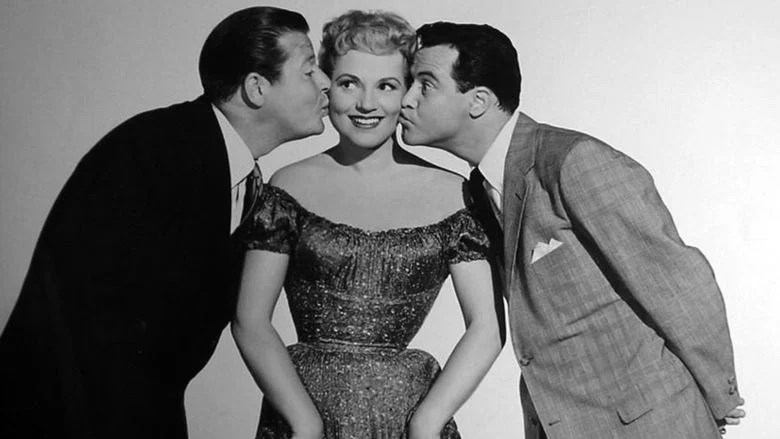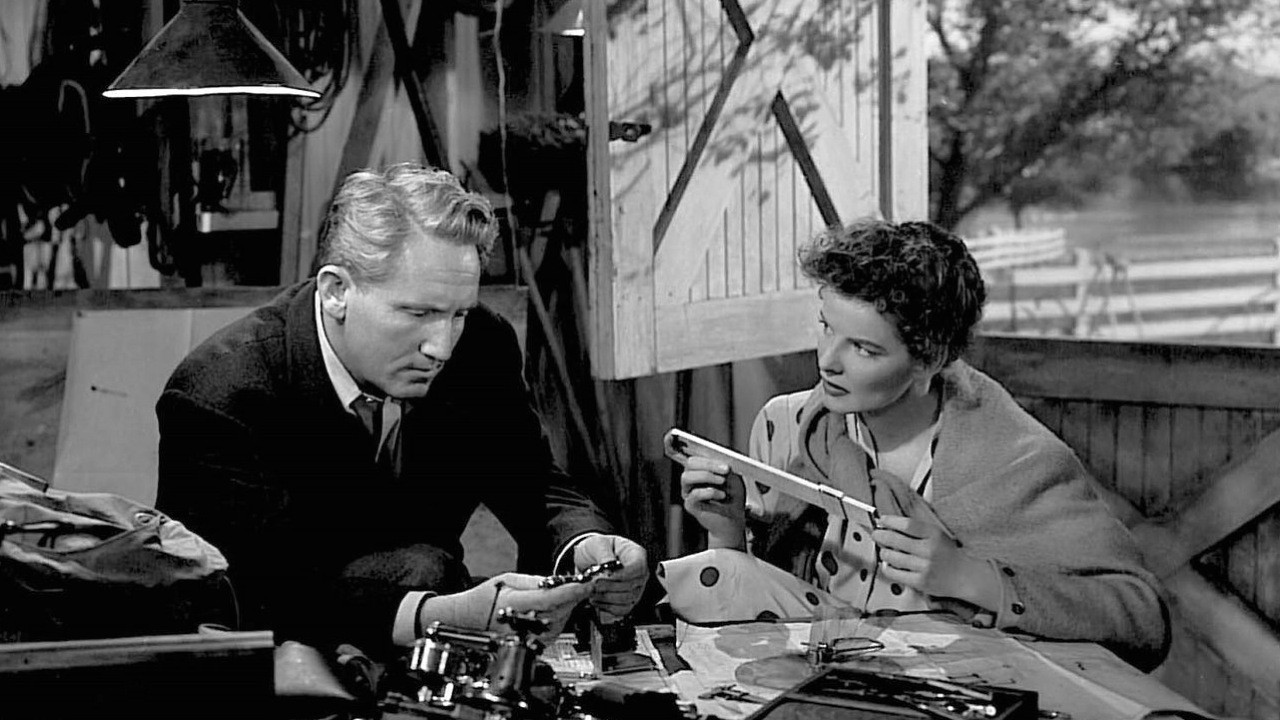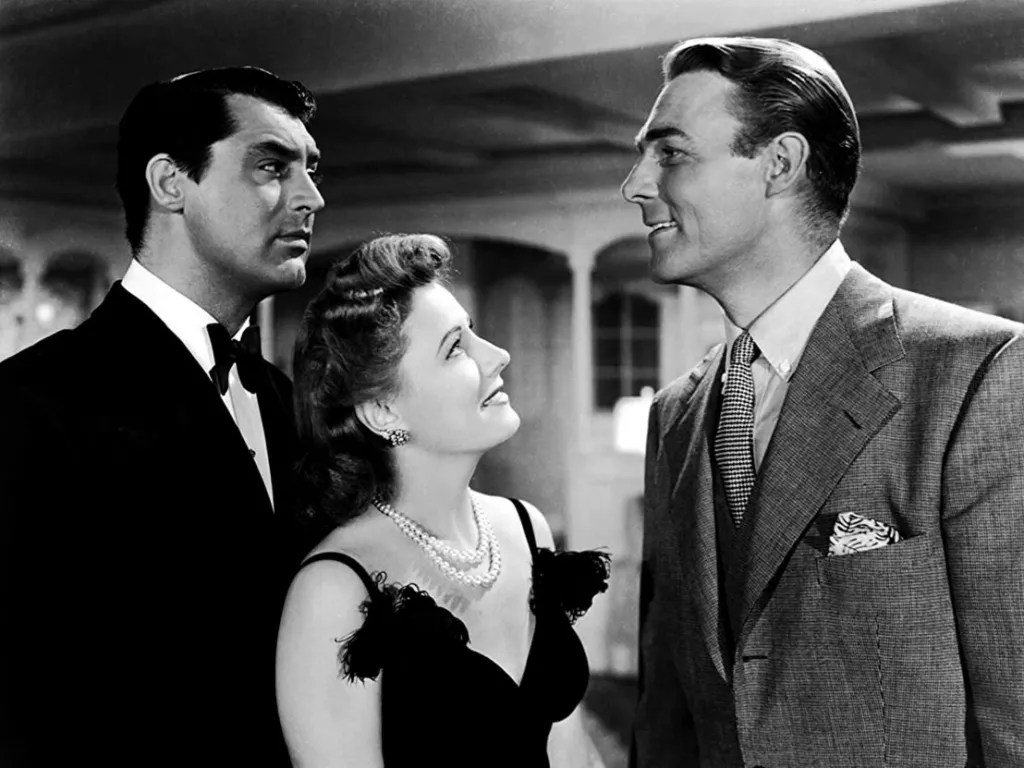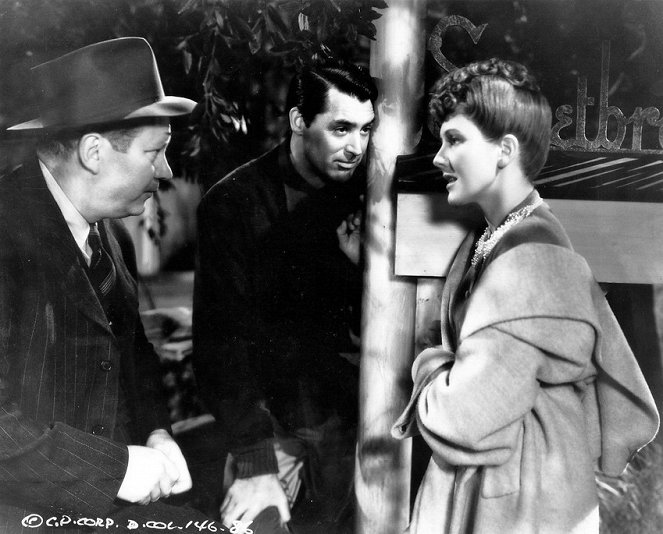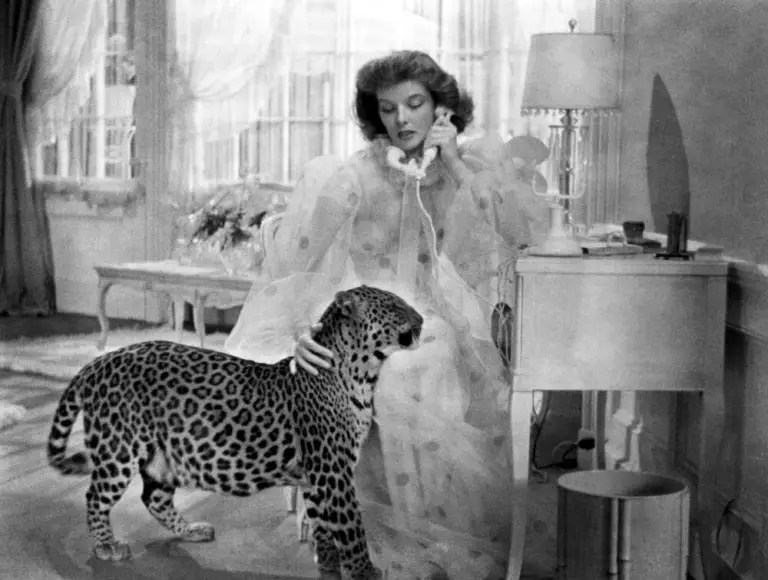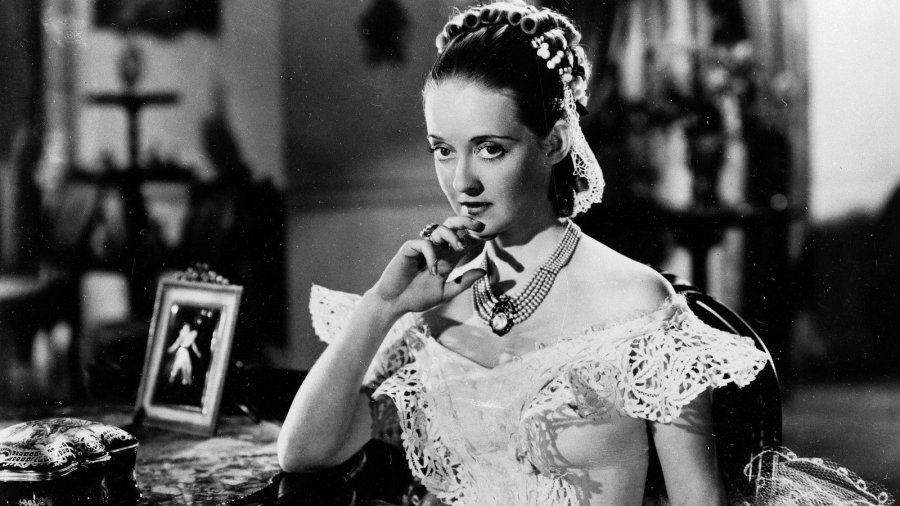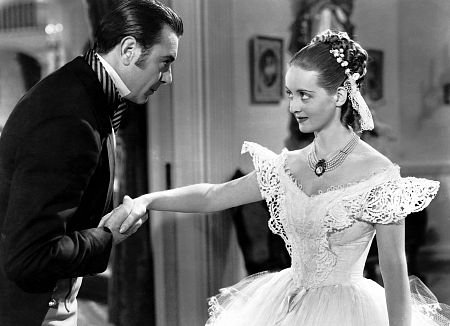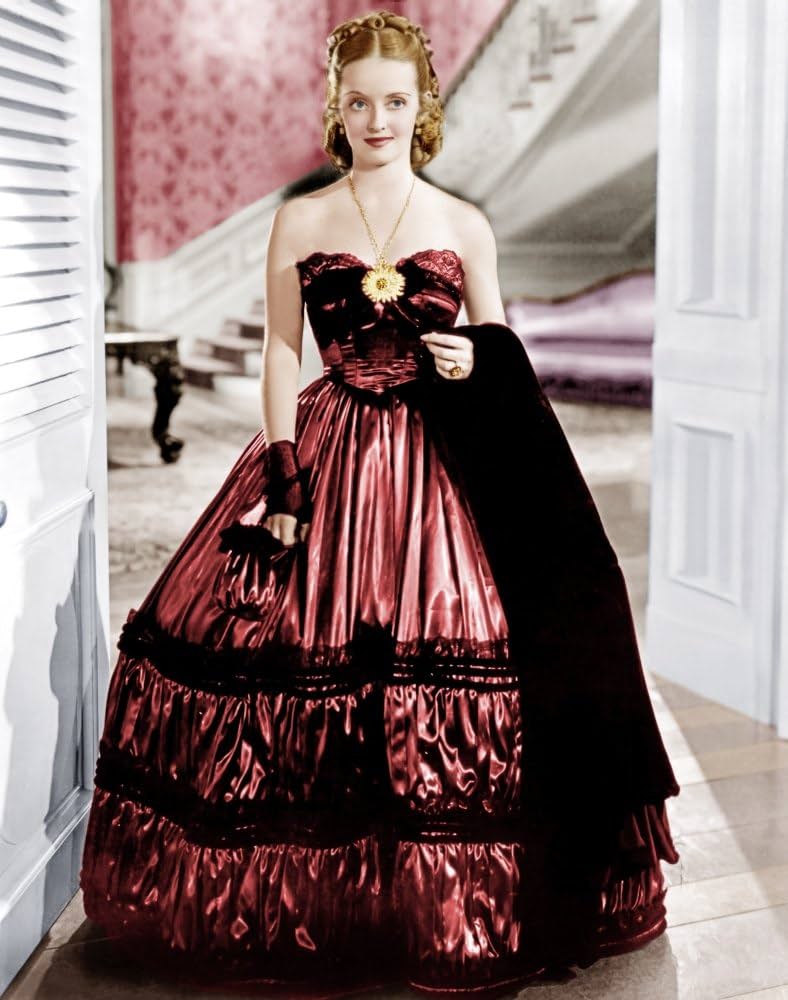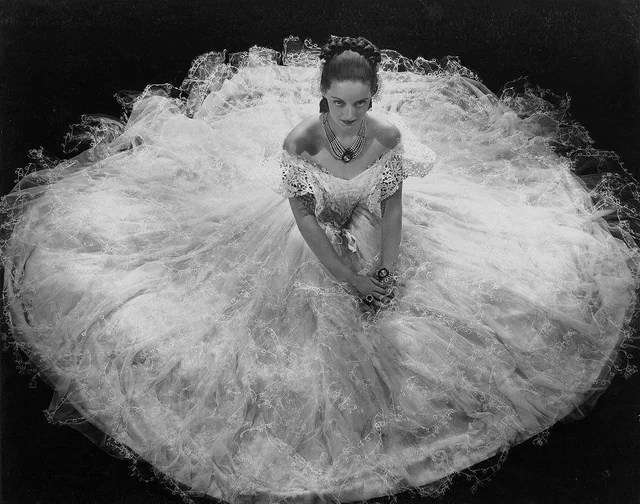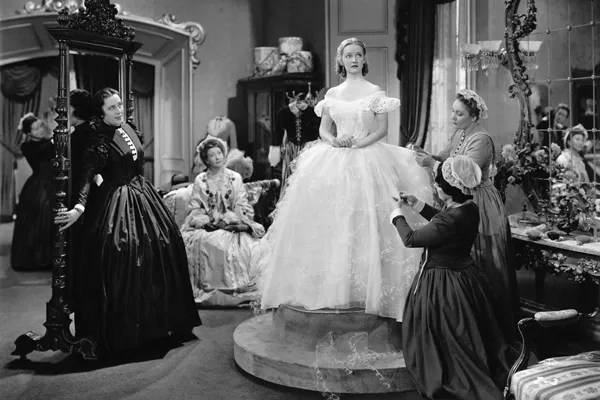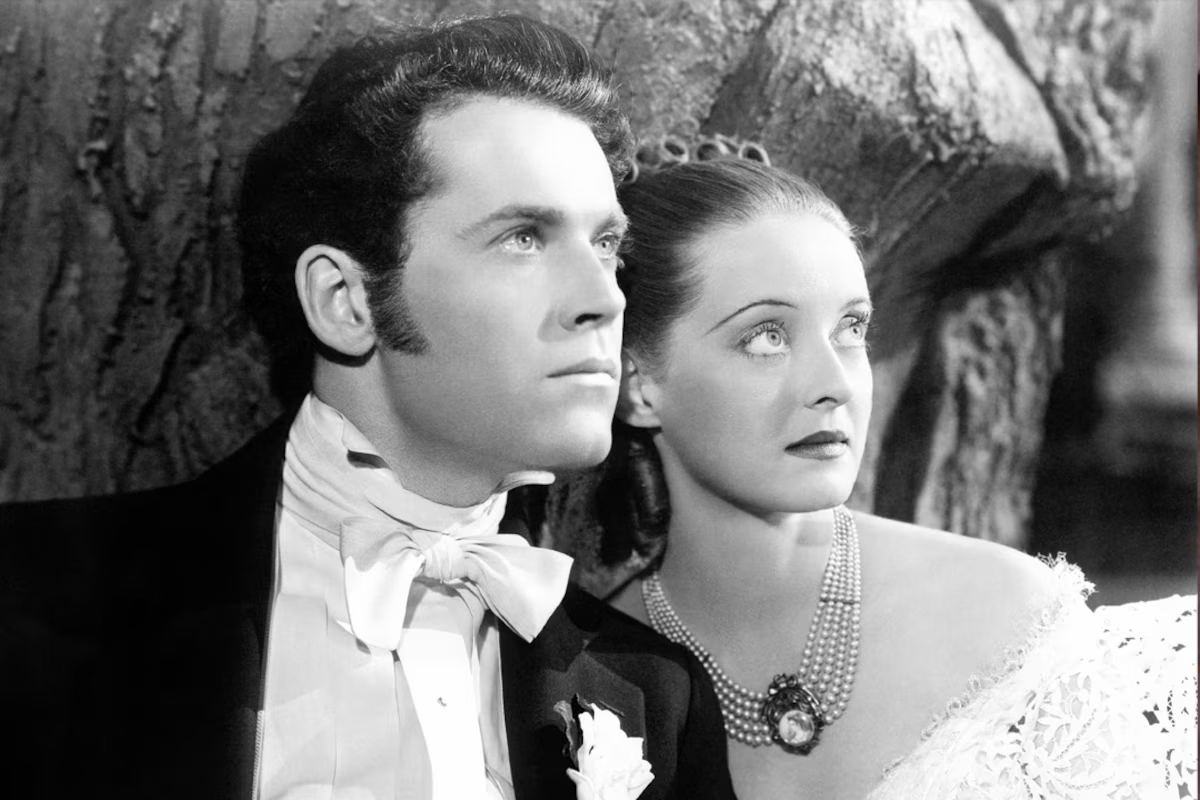
Classic Movie Impressions: It’s Love I’m After (Spring of Bette)

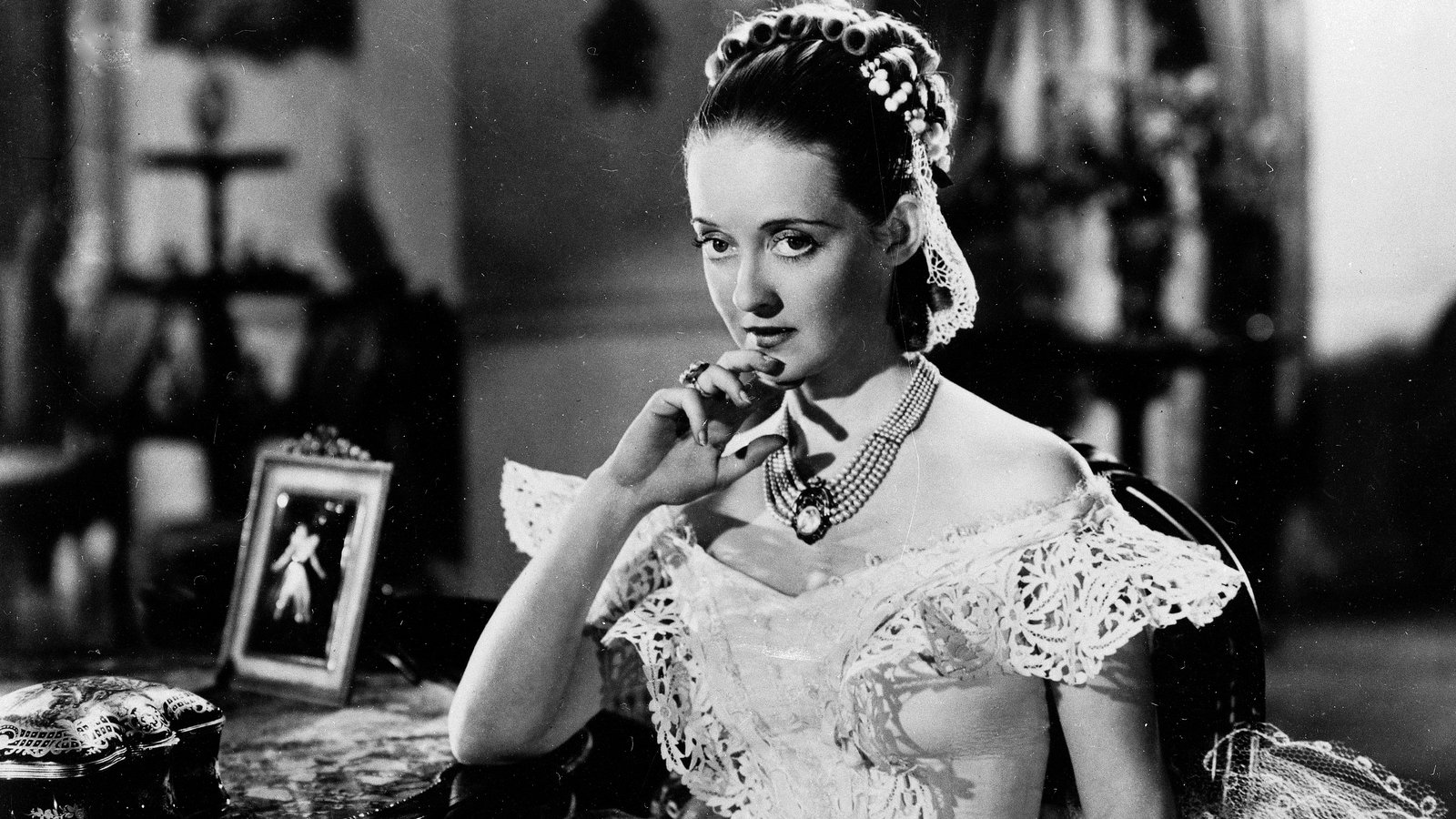
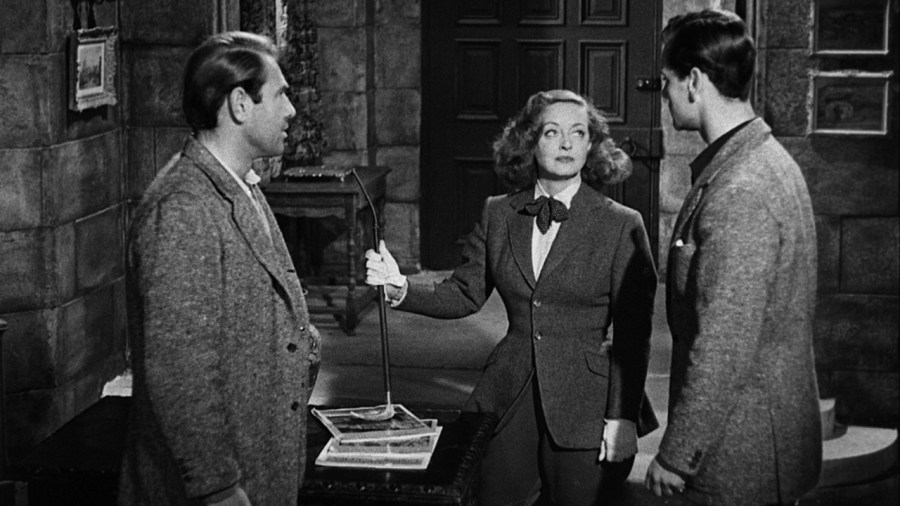
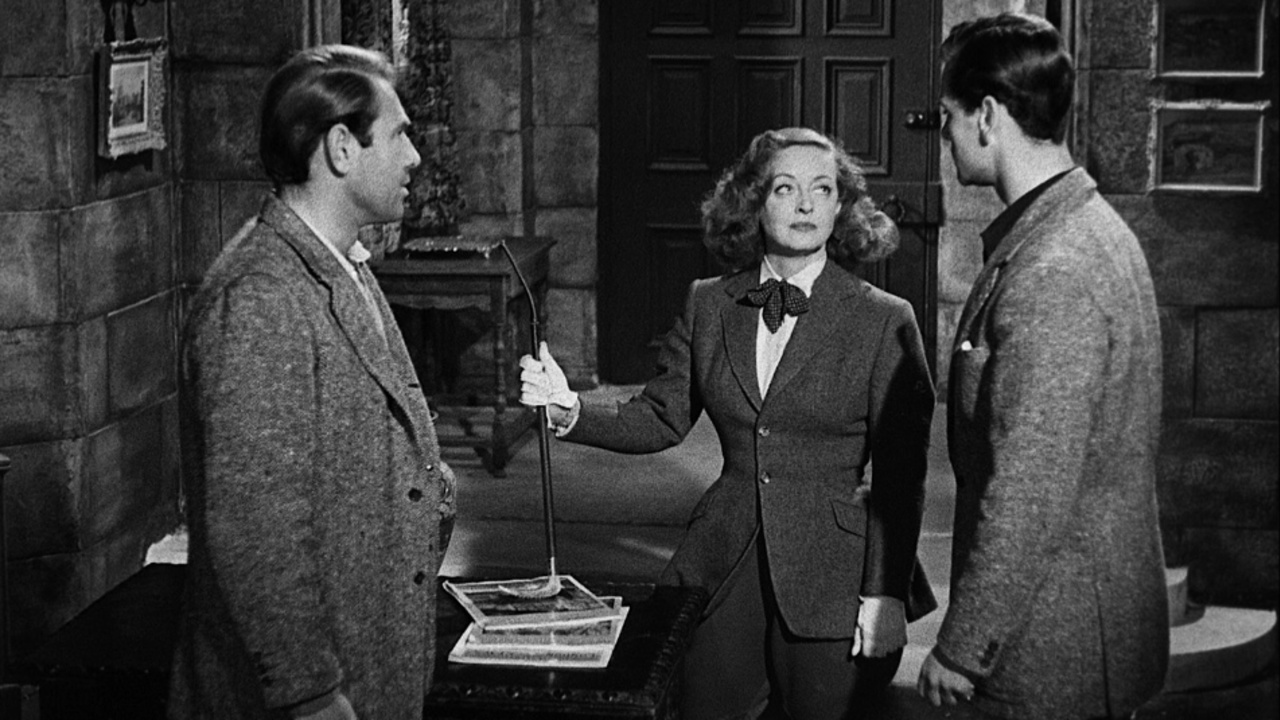
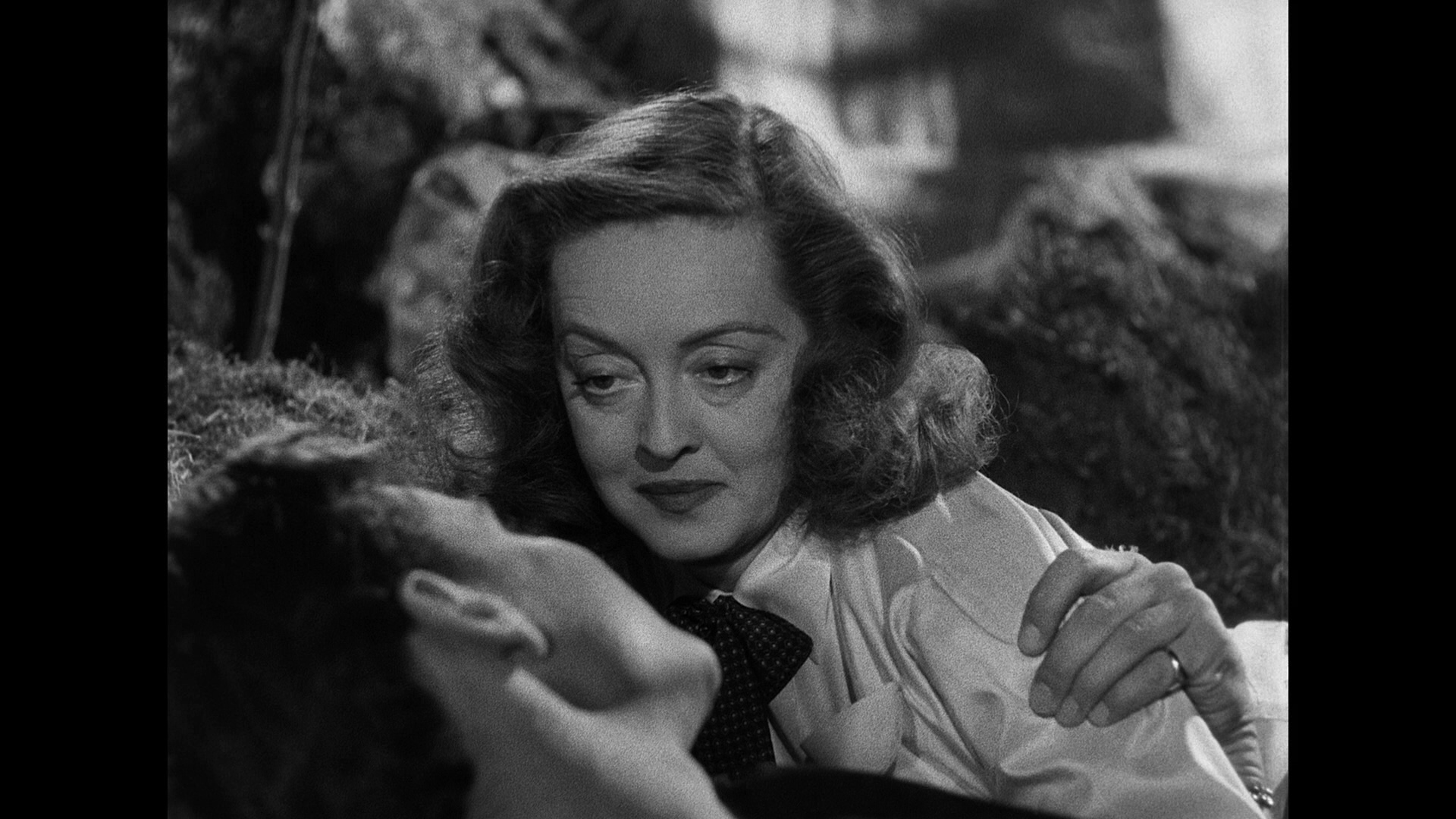
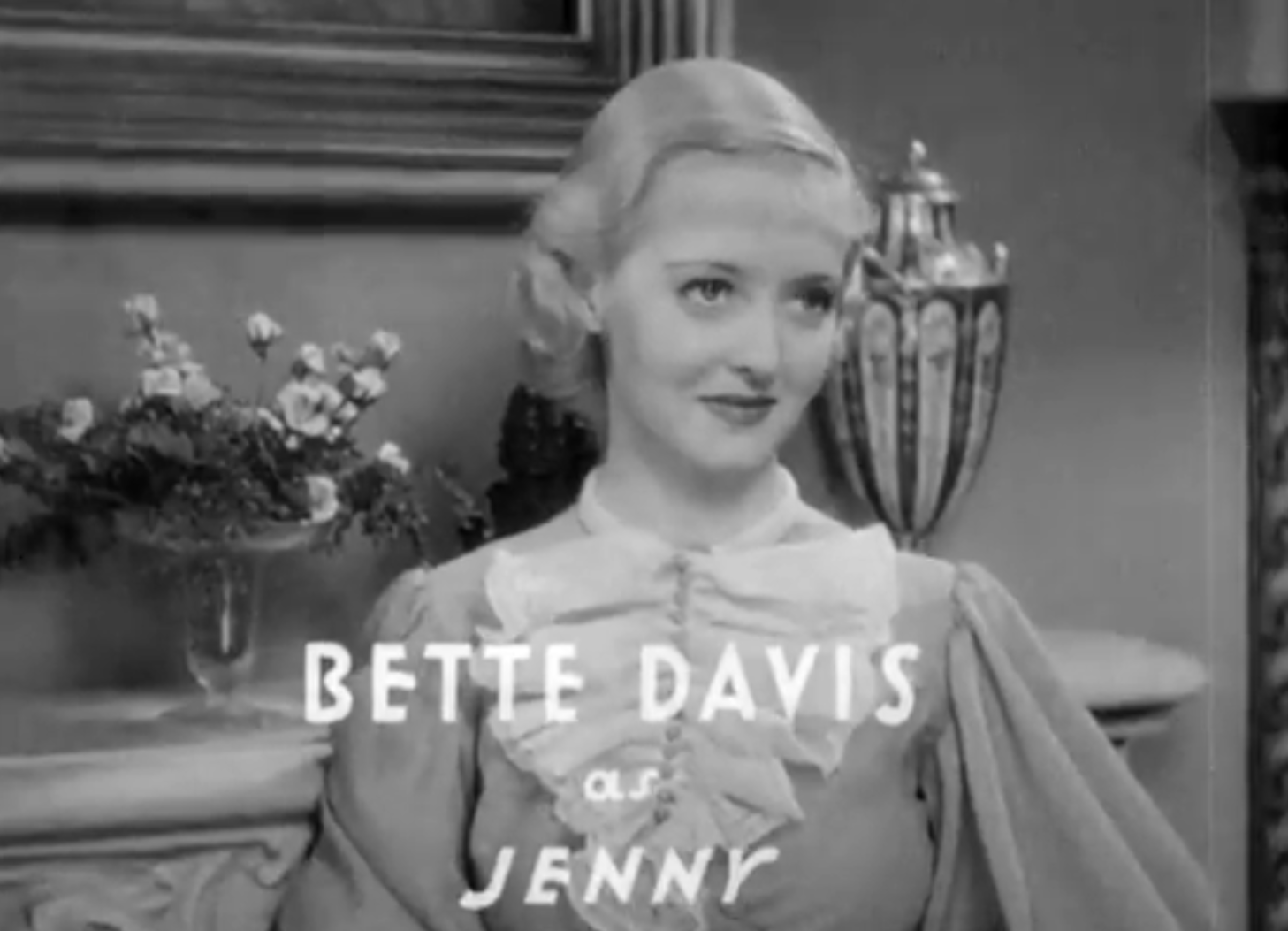
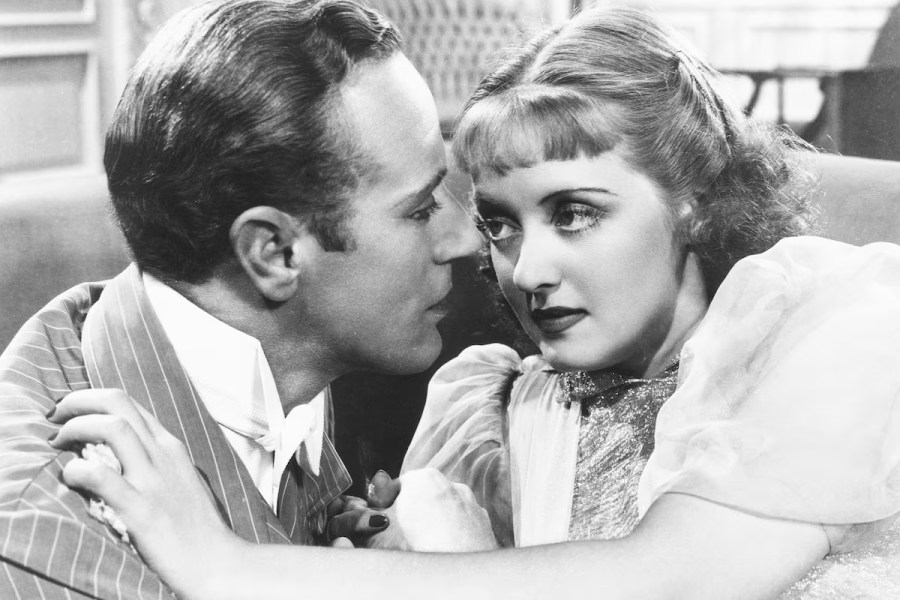
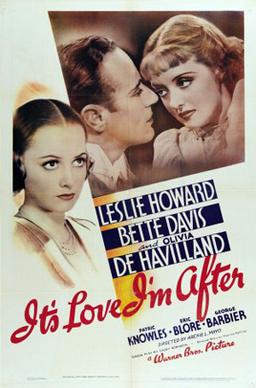
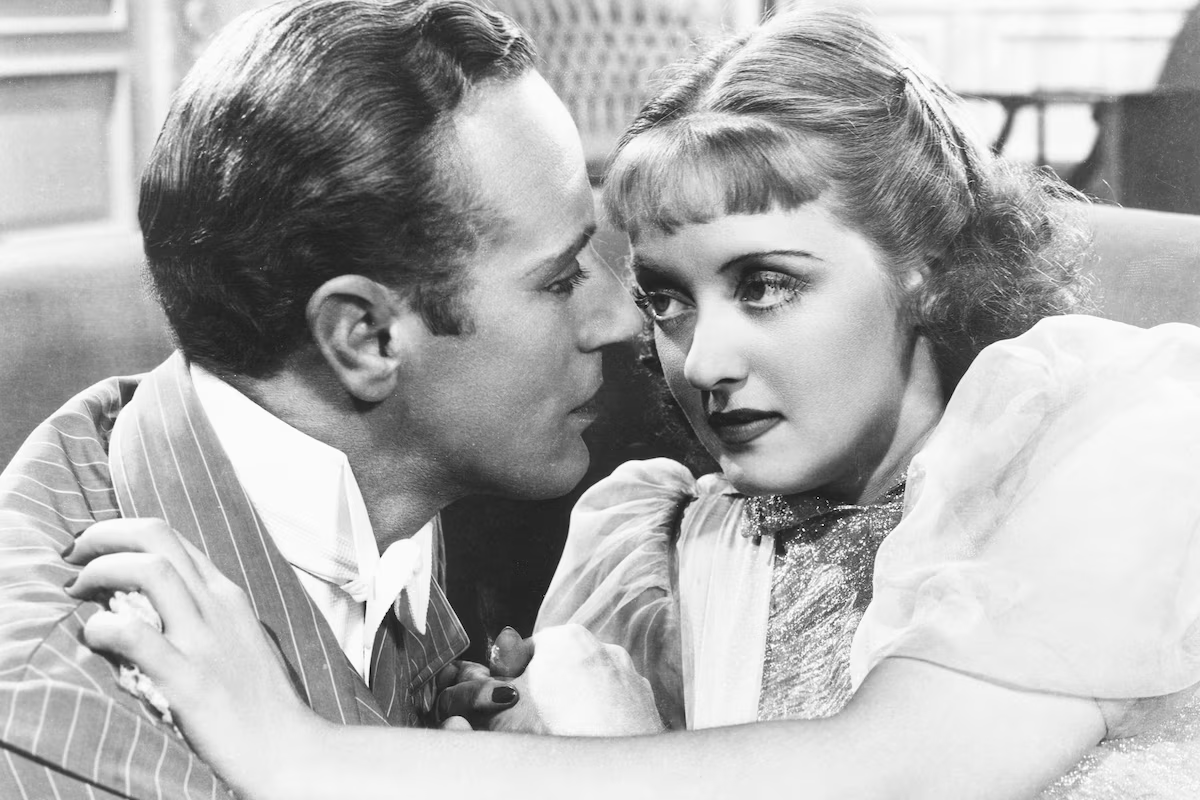
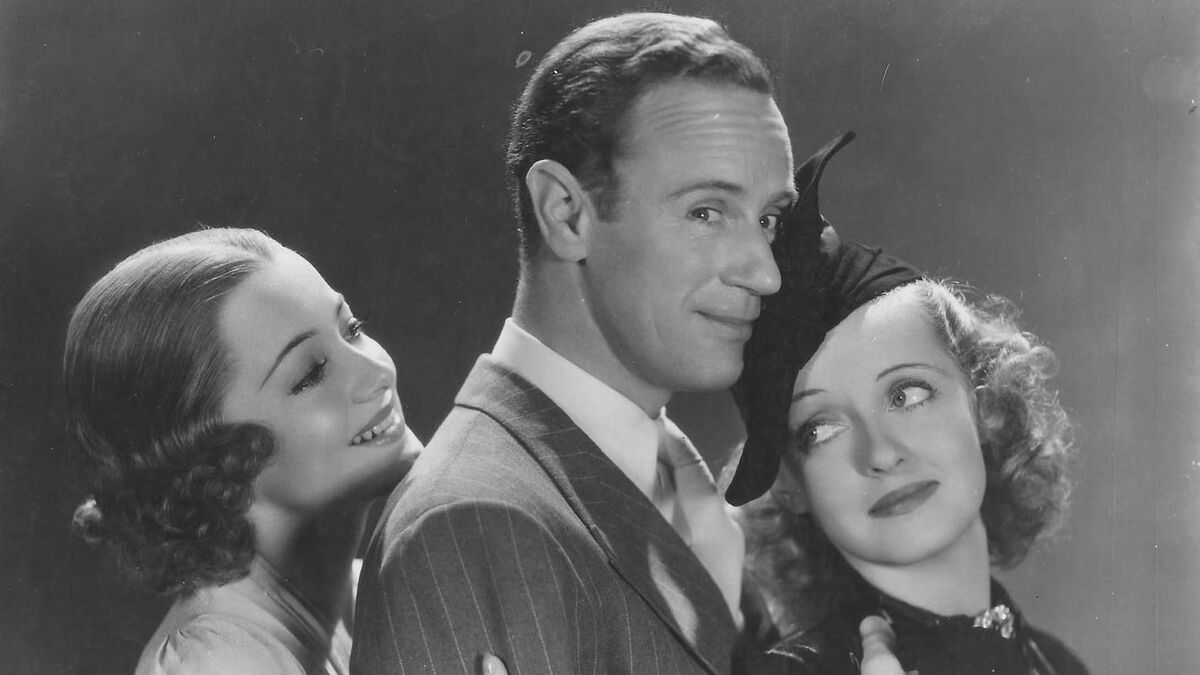
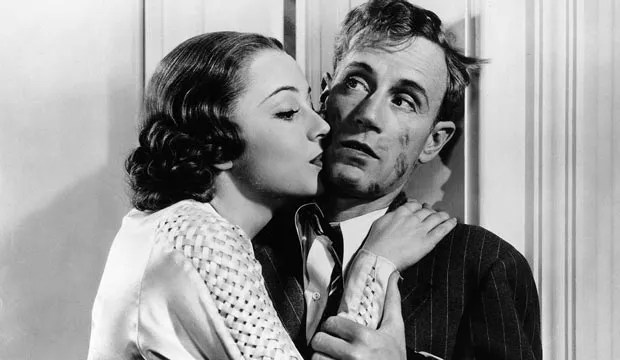
An arrogant, self-absorbed, womanizing stage actor and the actress who keeps putting up with him are the main characters in It’s Love I’m After, a 1937 romantic comedy starring Bette Davis, Leslie Howard, and Olivia De Havilland.

I stumbled on this one by accident while looking for Bette Davis movies to add to my Spring of Bette Davis feature and ended up absolutely loving it.

I didn’t even know it was a comedy when I started it, but when the pair started insulting each other in loud whispers during a scene from Romeo and Juliet, I knew this movie was going to be very entertaining.

And it was very entertaining, very funny, and a very nice surprise.

Leslie Howard plays the part of Basil Underwood, a famous stage actor who women fall all over.

Bette plays his co-star and on-again-off-again girlfriend, Joyce Arden, who joins Leslie’s drama with her own drama. In the beginning, we see the two sniping at each other right after their performance, going back to the hotel and continuing their arguing through the door separating their rooms.

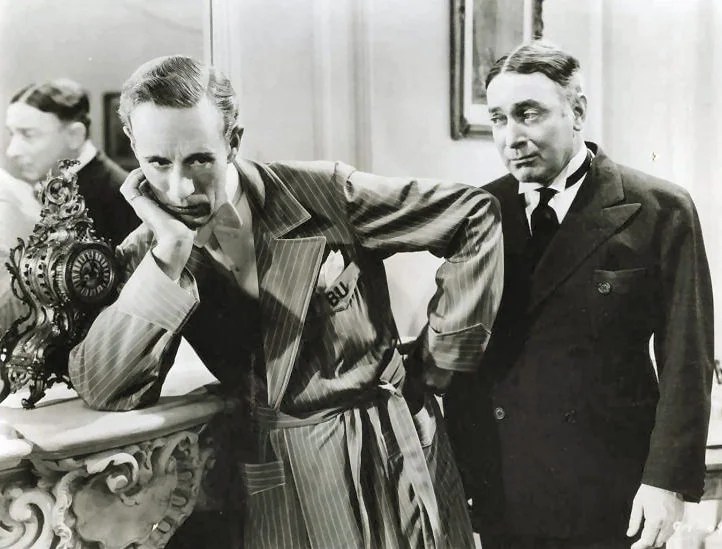
It is at the hotel where we meet Basil’s valet Digges played by Eric Blore. Their interaction reminded me so much of Jeeves and Bertie Wooster in the Jeeves books by P.G. Wodehouse. I absolutely loved their bantering, bickering, and joking.

They have this whole routine where Digges either gives or takes away points from Basil based on his behavior, and Basil’s behavior is often not good because he is frequently running off with married women or breaking hearts, all while in a relationship with Joyce.

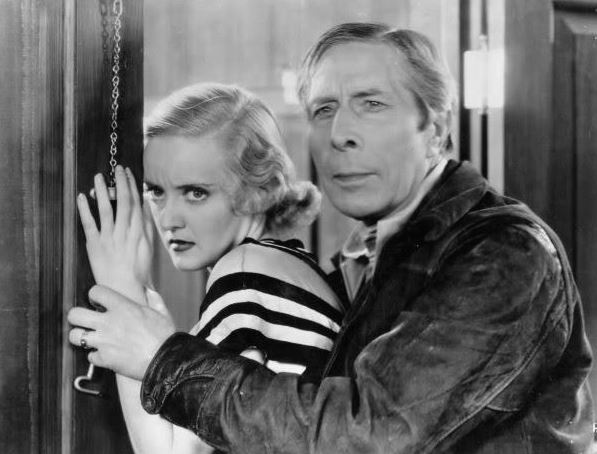
Leslie Howard and Eric Blore

Joyce and Basil have decided they are going to get married early on in the movie, but there is one problem. After their performance at the beginning of the movie, a young woman named Marcia West (De Havilland) comes to visit Basil and tells him she is in love with him. This is very exciting for him because, you know, he loves women and the attention of women. Marcia leaves without telling him her name, and Basil is left with a well-stroked ego.

Once he and Joyce have decided to marry, and Joyce has closed herself in her room to get ready to leave for the wedding at a justice of the peace, Marcia’s fiancé,  Henry Grant Jr. (Patrick Knowles) shows up and tells Basil he’s angry at him because Marica is in love with him.

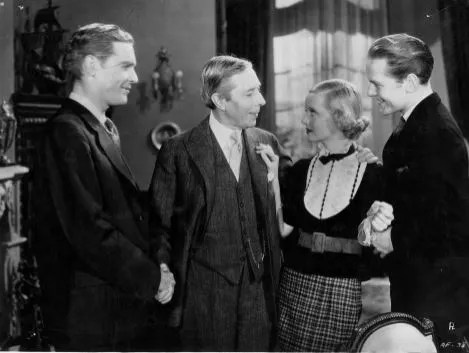
Leslie Howard and Bette Davis

There is this whole hilarious scene where Basil says the situation reminds him of a play he was once in and he and Digges act it out for Henry, who is bewildered and annoyed.

The play they act out is about a woman who is in love with a man, but the man wants to shake the woman, so he acts like a cad to get rid of her.

Henry is delighted and says that is what he wants Basil to do — come to Marcia’s family’s house that weekend and be an absolute jerk so she will be fall out of love with him.

What follows is an absolutely hilarious second act that had me in stitches. Olivia was absolutely perfect as a celebrity-obsessed woman, and Leslie was perfect as the arrogant, self-absorbed star.

The cast was just so perfect together.

There is one line that isn’t really a spoiler, so I just have to share it — at one point Olivia says that she was obsessed with Clark Gable for a month and Leslie says, “Who’s Clark Gable?”

I felt like such a nerd when I said, to myself because my daughter was not listening, “Do you know why that’s so funny? It’s so funny because Leslie, Olivia, and Clark were all in Gone with the Wind together and in that movie Olivia’s character was in love with Leslie’s character and Clark was in a relationship with Vivien Leigh.” Then I snorted a laugh.

Gone With the Wind was released two years after this movie. I thought it would have been funny if It’s Love I’m After had been made after Gone with The Wind.

Leslie Howard wanted the movie made to give himself a break after appearing in mostly heavy dramatic roles like The Petrified Forest (1936) and Romeo and Juliet (1936), according to TCM. The screenplay was based on the story Gentlemen After Midnight by Maurice Hanlin.

Producer Hal Willis wasn’t sure about Leslie’s ability to pull of comedy, but did accept the suggestion for the film. Casey Robinson wrote the screenplay, and Archie Mayo directed.

Leslie originally wanted a comedic actress from the stage, like Gertrude Lawrence or Ina Claire to play opposite him but after a few failed attempts, the picture began production without a leading lady.

Finally, Wallis decided that Bette Davis could use a change of pace after intensely dramatic roles in Marked WomanKid Galahad and That Certain Woman (all 1937).

Bette wasn’t so sure, though. She’d turned out a lot of films in a short time and actually wanted a break. This would be her third film with Leslie, and she liked working with him but didn’t like that he was going to receive top billing above her. The two had had a strained relationship during the filming of Of Human Bondage when Leslie was cold and dismissive and said to resent the fact an American had been cast in a very British story. He’d also run hot and cold during the filming of The Petrified Forest, sometimes ignoring her, and also, she said, coming on to her “rather crudely.”

In It’s Love I’m After he turned his attention to Olivia, reportedly driving her nuts with his persistence in trying to woo her.

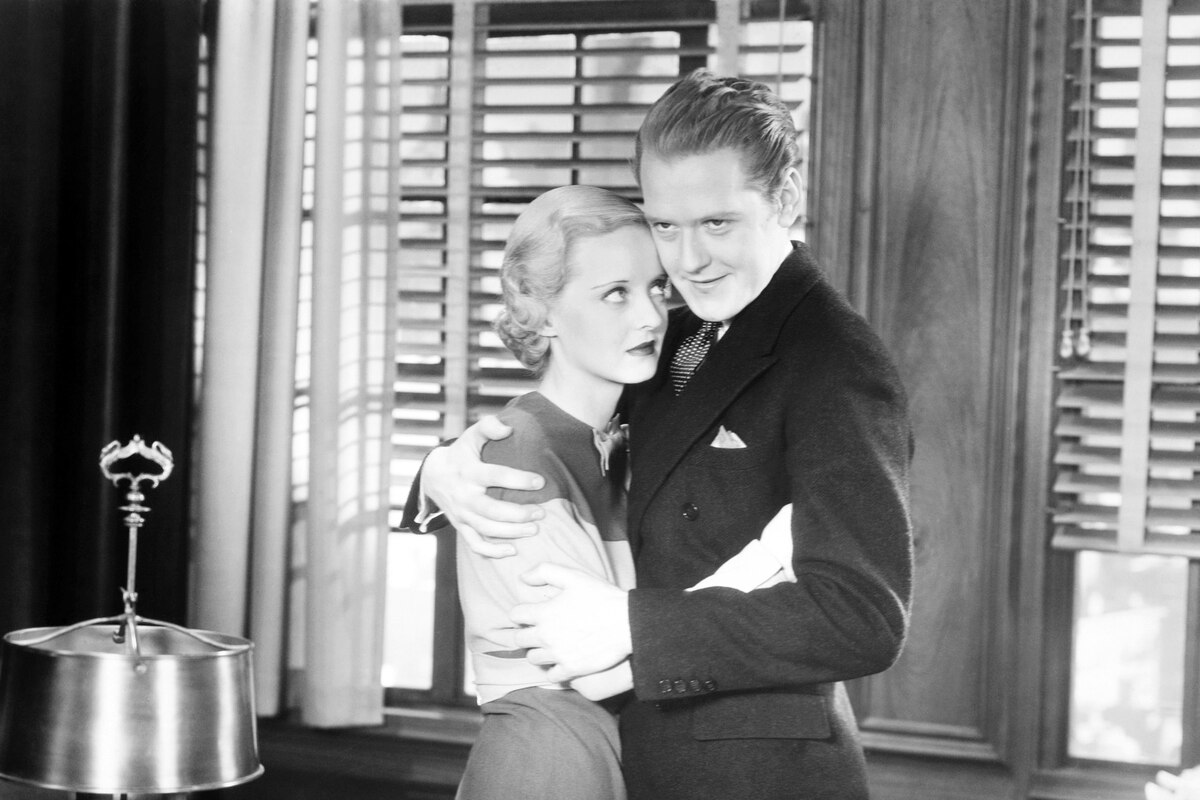
Olivia De Havilland and Leslie Howard

If it sounds like his character wasn’t too far off from the real Leslie, then you’d be right. He was known to be a womanizer, despite being married, and had many affairs.

Bette finally agreed to accept the role, but did ask for a cinematographer she liked to be hired to help her look good on screen.

Audiences proved that the producer had no reason to be worried about Leslie not doing well in a comedy, with over $1 million being brought in during its initial release.

Leslie followed this movie up by directing himself in George Bernard Shaw’s classic movie, Pygmalion (1938)

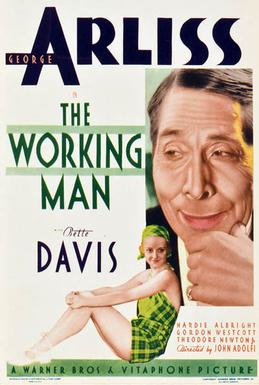
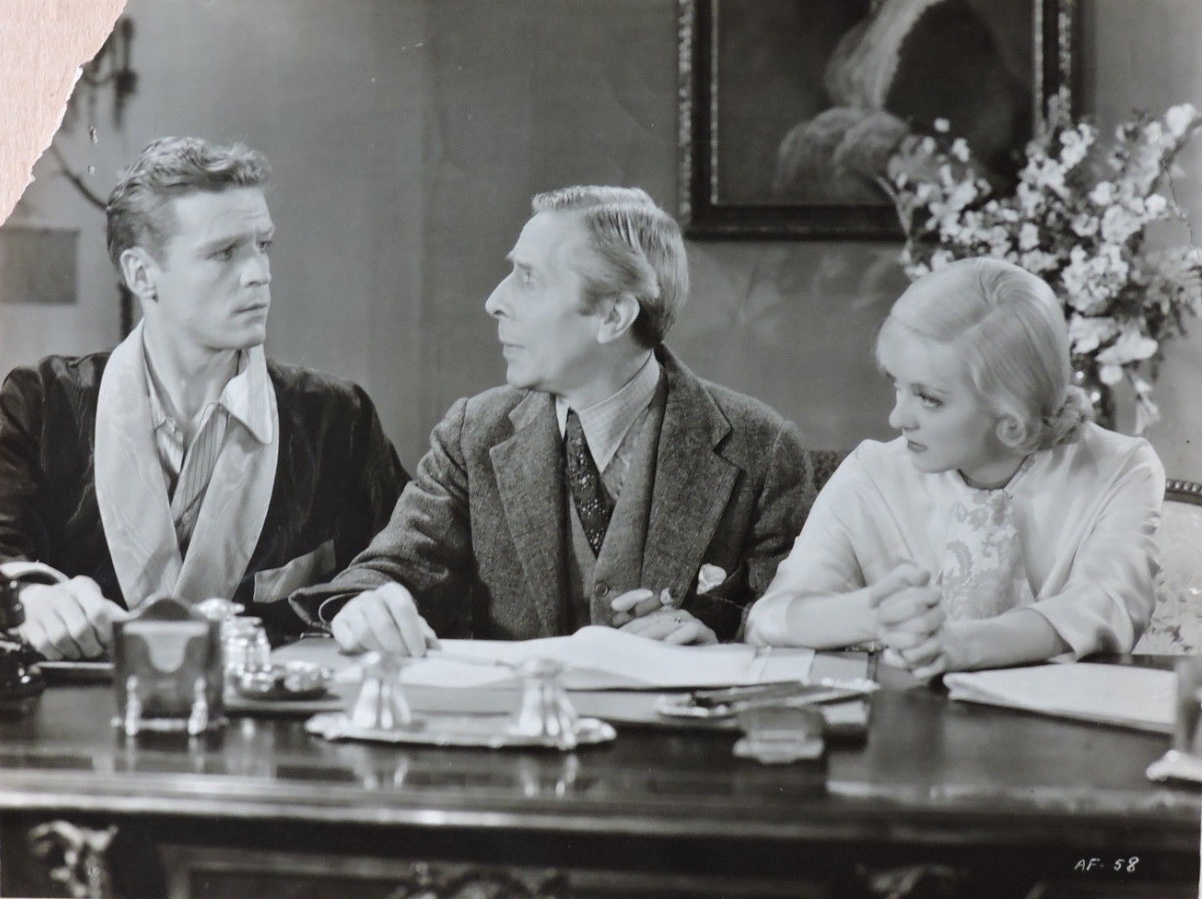
Up next for Spring of Bette, I will be writing about another one of her less-familiar movies, A Working Man, where she was in full blonde mode.

Here is the complete list of movies I will be watching during this feature:

It’s Love I’m After (April 15th)

A Working Man (April 17th)

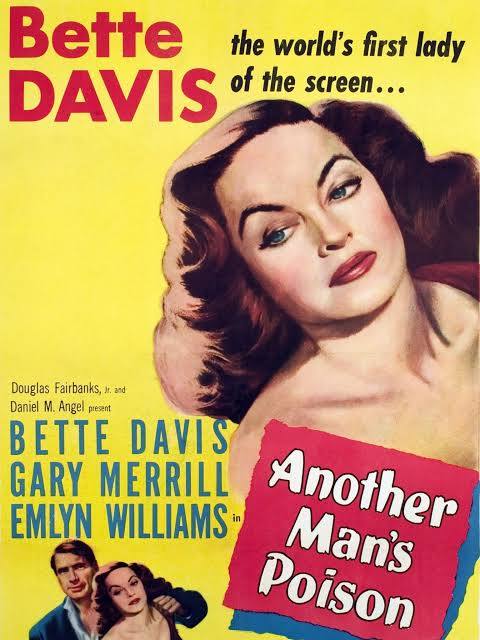
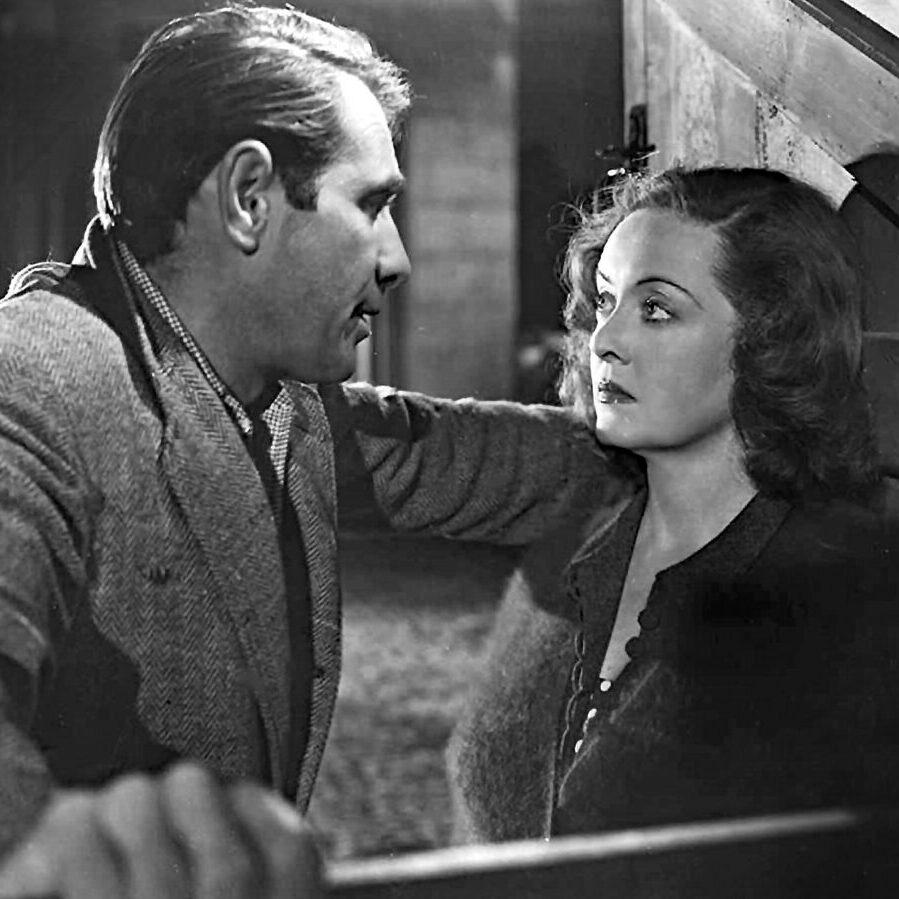
Another Man’s Poison (April 23th)

Dark Victory (April 30rd)

Jezebel (May 1)

Dangerous (May 7)

The Letter (May 12)

Of Human Bondage (May 21)

Now, Voyager (May 28)


Additional sources and resources

https://www.tcm.com/articles/92525/its-love-im-after

https://www.goldderby.com/gallery/best-bette-davis-movies-ranked/bette-davis-movies-ranked-all-about-eve/

If you want to find clips and thoughts about vintage movies and TV, you can visit me on Instagram on my Nostalgically Thinking Account (https://www.instagram.com/nostalgically_thinking/) or on my YouTube account Nostalgically and Bookishly Thinking here: https://www.youtube.com/@nostaglicandbookish


My March Reading and Watching Wrap-up and April Hopefuls

March was a pretty good reading and watching month.

In March, I read or finished seven books:

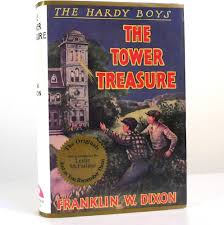
The Tower Treasure by Franklin W. Dixon

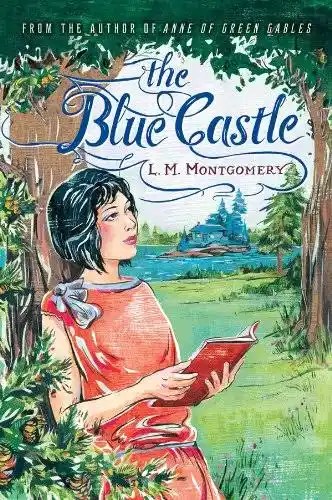
The Blue Castle by L.M. Montgomery

Whispering Walls by Mildred Wirt

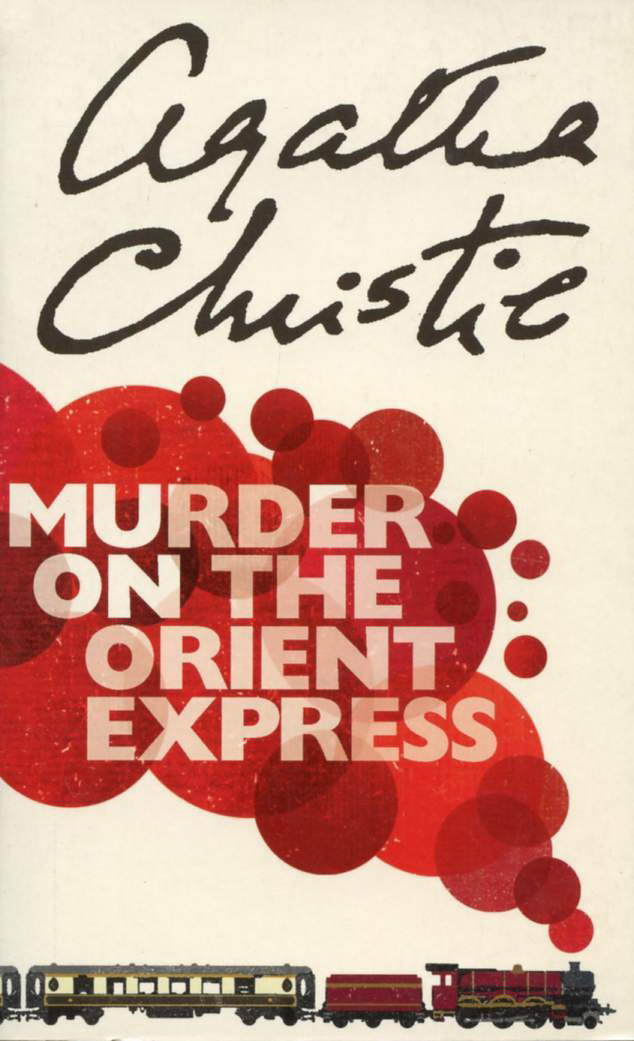
Murder on the Orient Express by Agatha Christie

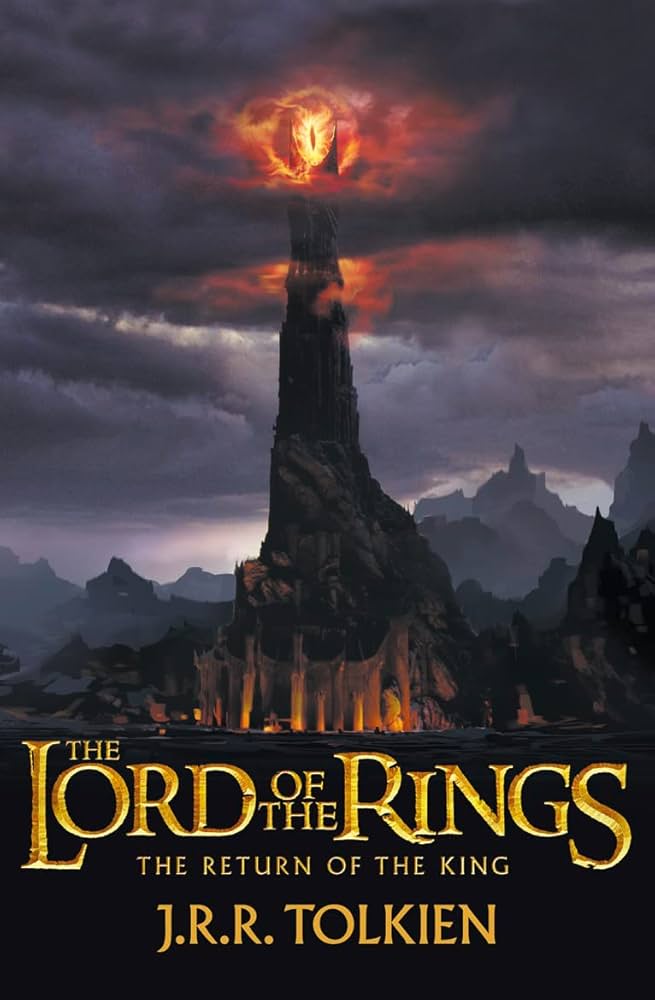
Return of the King by J.R.R. Tolkien

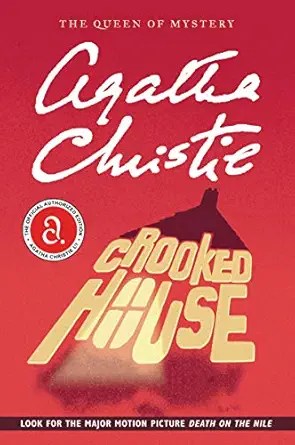
Crooked House by Agatha Christie

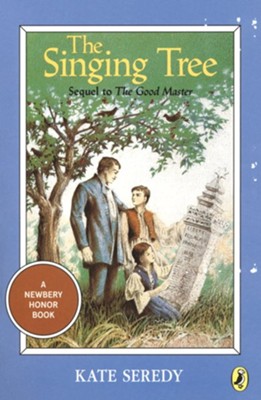
The Singing Tree by Kate Seredy.

Movies I watched:

Saving Grace

The Crystal Ball

It’s Tough to Be Famous

Libeled Lady

Eternally Yours

Another Thin Man

Her Cardboard Lover

Shows I watched:

The Puzzle Lady

All Creates Great and Small

The Knight of the Seven Kingdoms

Murder, She Wrote

Two’s Company

In April I plan to/hope to read:

Heidi by Johanna Spyri

The Caribbean Mystery by Agatha Christie

Mere Christianity by C.S. Lewis

A Damsel in Distress by P.G. Wodehouse

Murder, She Wrote: Aloha Betrayed by Donald Bain

Nancy Drew: Nancy’s Mysterious Letter by Carolyn Keene

I hope to watch:

Bette Davis movies for my Spring of Bette, including Now Voyager and Jezebel.

I’ve already watched It’s Love I’m After, The Working Man, and Another Man’s Poison for the feature.

How was your March, and what do you hope to read or watch in April?


If you write book reviews or book-related blog posts, don’t forget that Erin and I host the A Good Book and A Cup of Tea Monthly Bookish Blog Party. You can learn more about it here.

On Thursdays, I am part of the Weekend Traffic Jam Reboot blog link party. You can find the latest one in the sidebar to the right under recent posts.


Hello! Welcome to my blog. I am a blogger, homeschool mom, and I write cozy mysteries.

You can find my Gladwynn Grant Mystery series HERE.

You can also find me on Instagram and YouTube.

Classic Movie Impressions: The Third Man (1949)

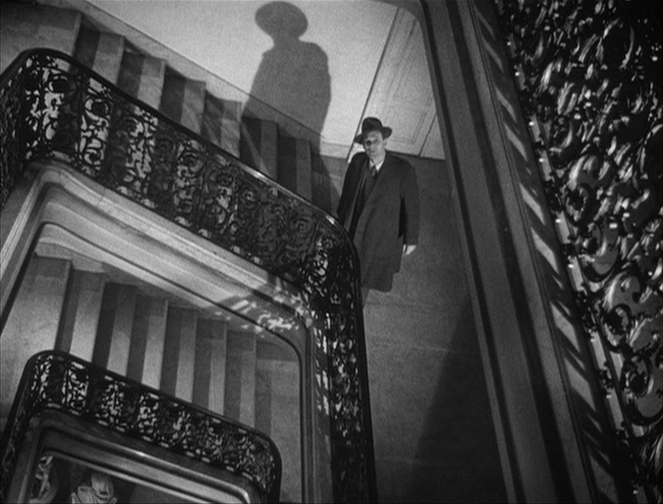
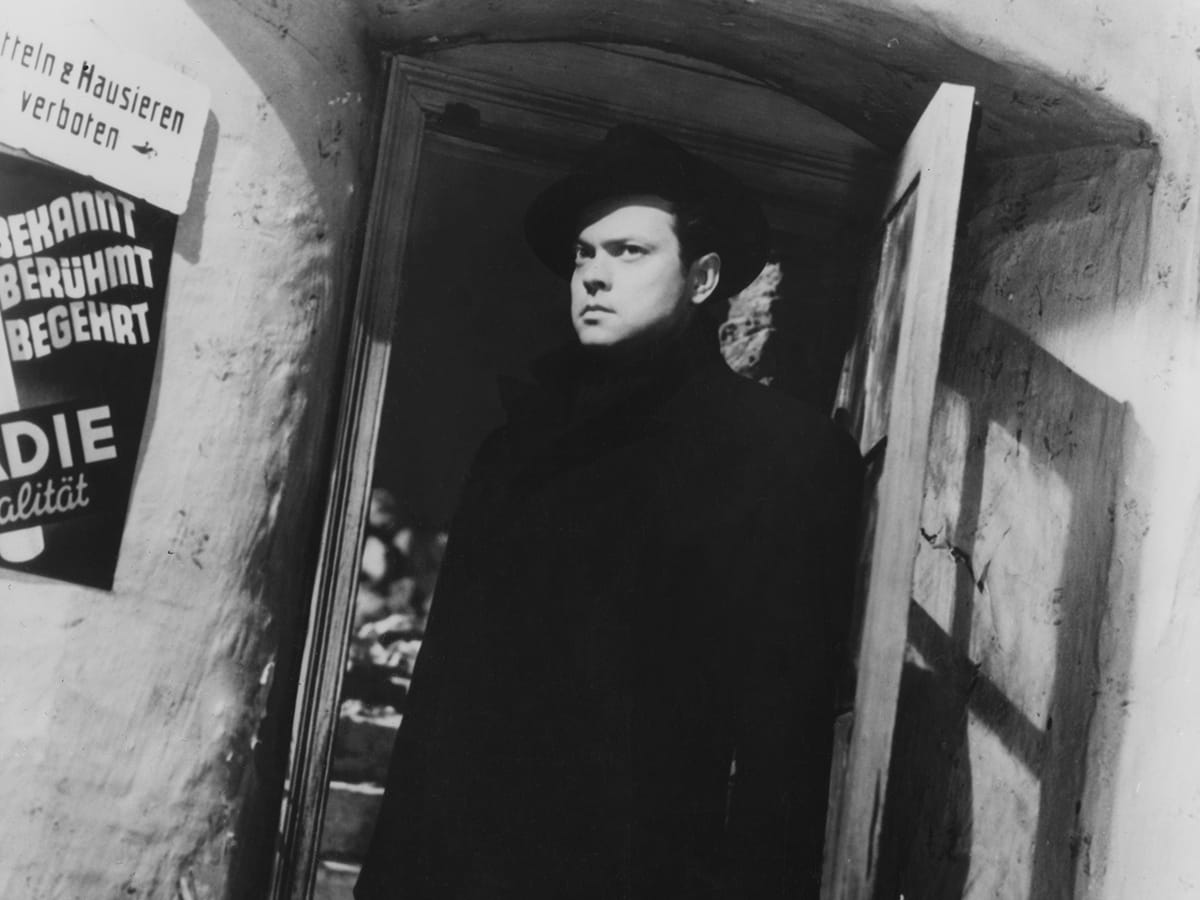
The cinematography in The Third Man (1949 ) is outstanding. The play of light with shadows, figures stepping in and out of light and dark both visually and metaphorically, makes this a movie you can’t look away from. If you do, you might miss a subtle exchange of looks, a quick smirk, someone moving in the shadows. You have to be on high alert while also relaxing into the story. You’re on the edge of your seat but also have plenty of moments to sit back and admire the superb acting of Orson Welles and Joseph Cotton.

The movie is set in post-World War II Vienna, Austria at a time when four political powers ­ America, Russia, England, and France ­ were overseeing a corrupt post-war environment.

 Cotton plays Holly Martins, a writer of pulp Westerns, who arrives without any money as the guest of his childhood friend Harry Lime (Welles). The problem is, when Martins arrives, he finds out Lime has been killed, hit by a car.

Martins wants to know how his friend died and why, and learns there was a “third man” who was present during the accident. This leads him down a path that gets him mixed up with Lime’s girlfriend and British intelligence and knocks him right into the middle of complicated moral and ethical issues.

A British noir film, The Third Man was directed by Carol Reed and produced by Reed, David Selznick, and Alexander Korda. The cinematographer was Robert Krasker, who won an Academy Award for Best Black-and-White Cinematography for his work on it.

It was written by Graham Greene for the screen, and later a novella was released.

According to information online, Korda was someone who repeatedly told Welles he would fund his projects, but at the last minute, would pull out.

“My whole time with Alex was things like that,” Welles once said. “I kept doing projects for him which I did not abandon, but which he did.”

When it came to casting for the film, everyone knew Welles fit the part  (with Greene essentially describing Welles when he described Lime) so Korda asked him. Welles agreed but then, as revenge for Korda’s past behavior, proceeded to tour Europe to film scenes for Othello (1952).

Korda wanted the contract signed and Welles locked in, so he sent his brother, Vincent, after Welles. Over the next week, Vincent had to chase Welles to Rome, Florence, Venice, Naples, and Capri because Wels would make sure they picked up and move to a new location each time Vincent was almost to them.

“I knew I was going to do it,” Welles later said, “but I was going to make it just as unpleasant as possible.”
I loved this part of the story shared by TCM.com:


“On the way back to London via a privately chartered plane, Welles played one final, brilliant prank on Alexander Korda. Vincent asked him to hold a basket of fruit that he had gathered for his brother during the pursuit. This was post-war Europe, so fresh fruit was an exceedingly rare item. “It was going to be offered as a great present,” Welles said. “He’d gone and picked each piece of fruit. It was too good to be true! I knew Alex wouldn’t touch any of it if it had been bitten into.” So, when Vincent was asleep, Welles carefully took a bite out of each piece.”

Yes, Welles was literally chased down for this role, and it paid off because the character he played became known as one of the most iconic villains in cinema history.

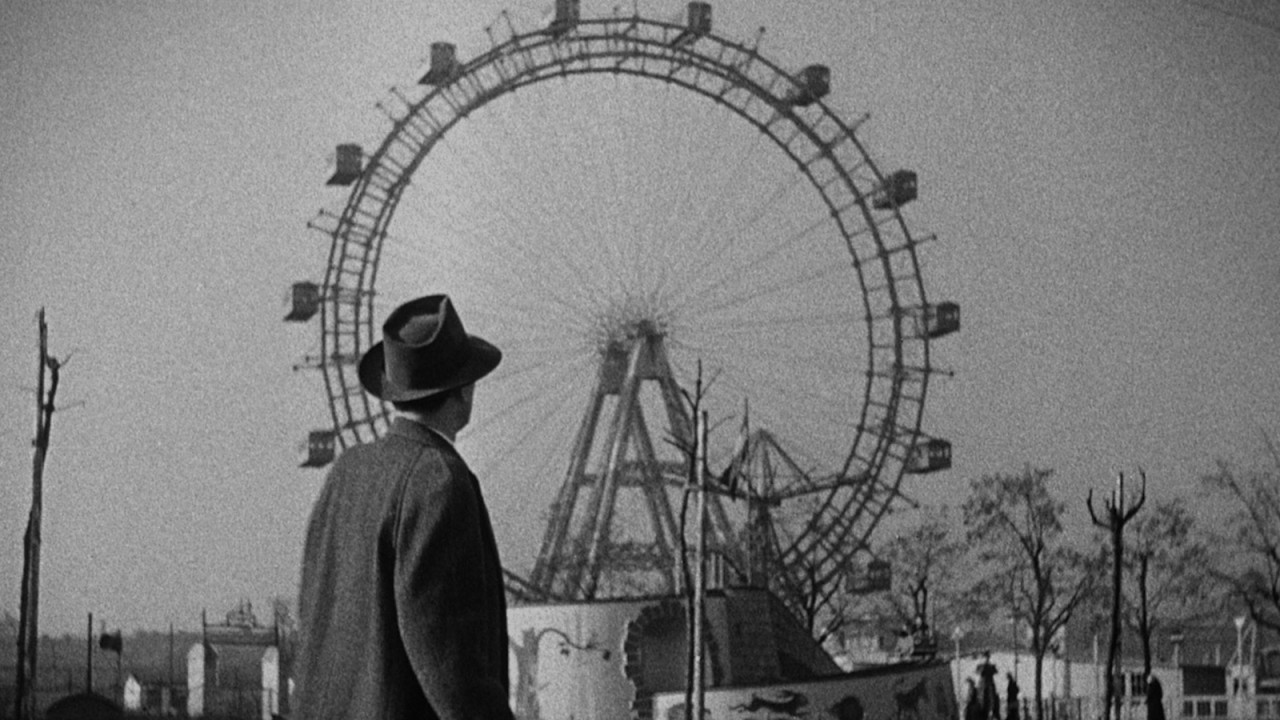
I can’t say enough about the brilliant imagery in this film. Maybe it is my photography background/experience and my absolutely obsession with black and white photography that had me gawking in amazement and visually enamored with so many of this movie’s scenes.

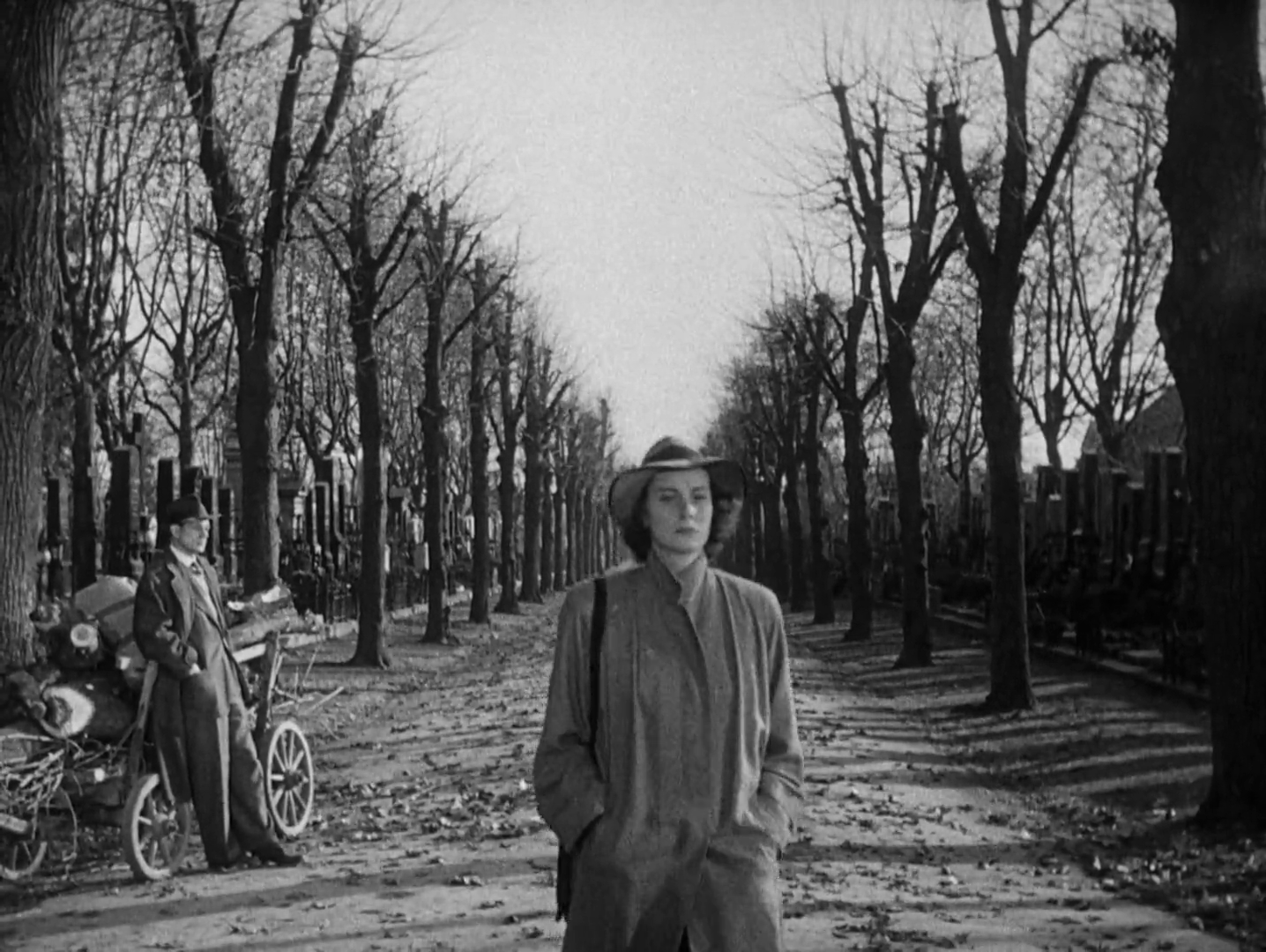
Here is a still from a scene in the cemetery.

Anna is standing in the middle of the shot, the focal point of the photo, and on either side of her are rows of naked trees, forcing the viewer’s eyes to follow the trees down to Anna and only then wander slowly to Holly, watching her walk away. There is a barren feeling to the scene — the nakedness of the trees, the pale white of the sky showing it’s an overcast day, Anna with her head down, clearly in thought as she’s walking away, Holly watching her with a hint of sadness in his gaze.

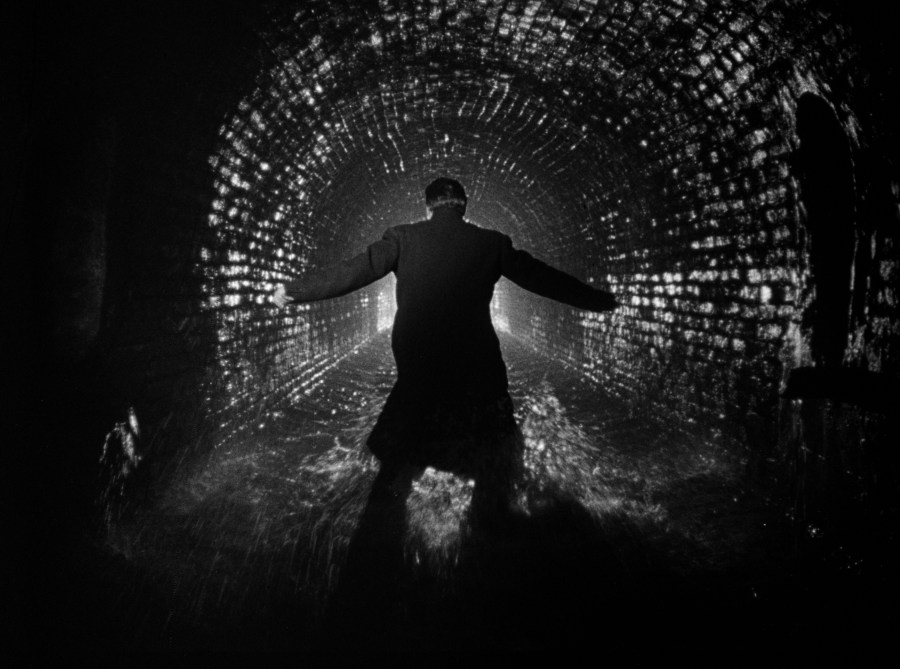
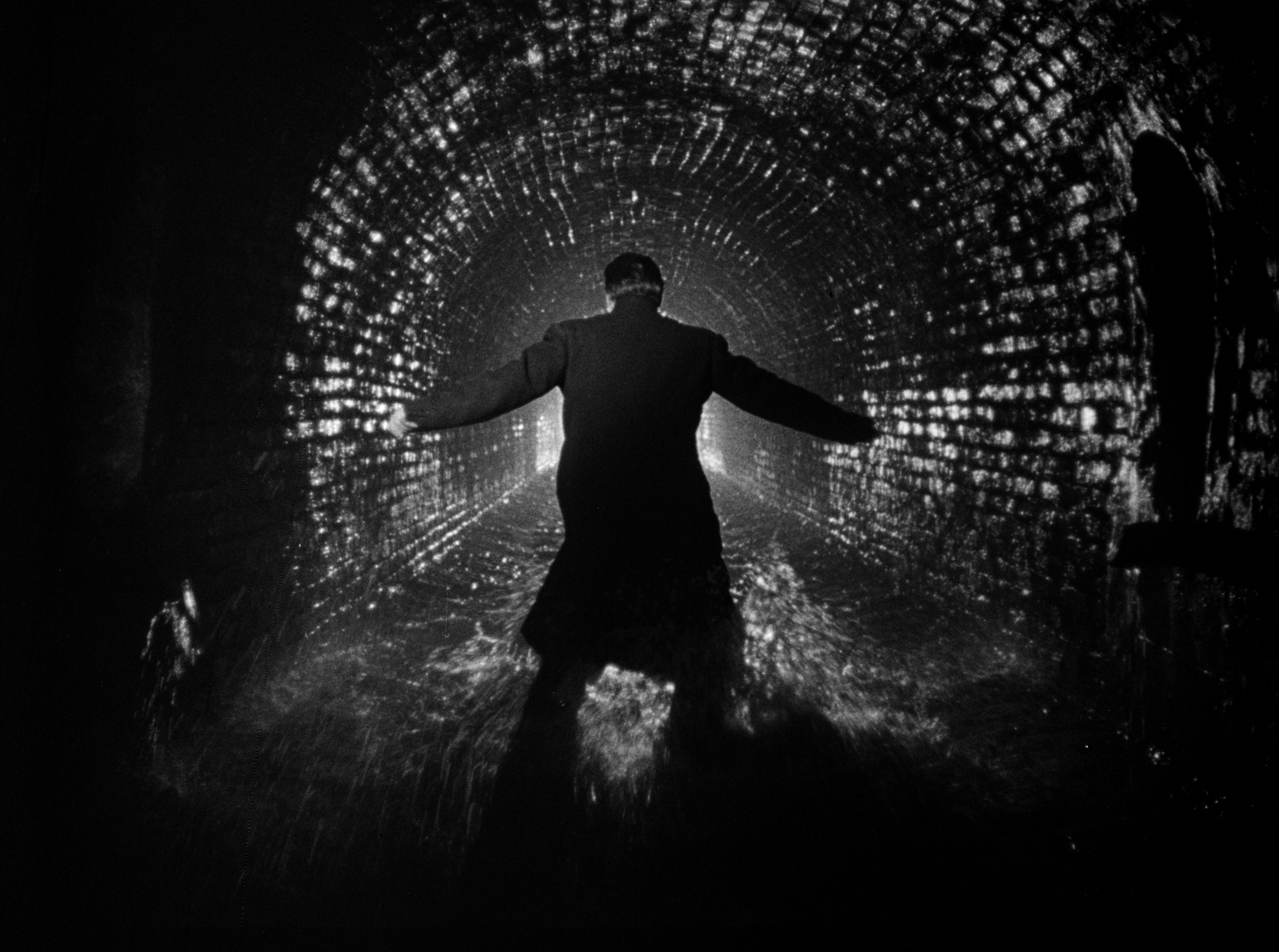
Then there is this still from one of the most famous scenes in the movie.

Orson Welles in Carol Reed’s THE THIRD MAN (1949). Courtesy: Rialto Pictures / Studiocanal

There’s a chase through the sewers going on, Welles’ character is on the run and what is so incredible about this entire scene is how the tunnel forms a tunnel for our eyes, once again bringing our focus right to the man running in the middle of the scene, toward the light, toward freedom that he may or may not ever reach.

It was hard for me to take my eyes off this film, not only because of the story but because of the visual smorgasboard.

There are quite a few reviews of the movie online, with many of them agreeing that The Third Man is one of, if not the, greatest noir film ever made.

Tom Spoors from Loud and Clear Reviews writes: “Almost every frame of The Third Man is a visual marvel, employing all kinds of cinematic techniques. There’s plenty of dutch angles, sure, but what I found even more interesting is the way that Reed uses shadows. He puts his main character in a situation and a location that is brand new to him, and builds this world to be one constantly cloaked in mystery. Reed places silhouettes around every corner, plasters every wall with them, creating a city that almost doesn’t feel real. It’s an atmosphere that I don’t think has ever been captured again to this extent, and perhaps the biggest reason why the moviehas gone on to be one of the most critically acclaimed noirs of all time. Simply put, no other film in its genre looks or feels quite like it.”

Philip French of The Guardian wrote about the movie: “From the moment the first audiences saw the opening image of Anton Karas’s zither filling the screen with the nerve-jangling Harry Lime Theme (before, indeed, they had heard the word “zither”), they knew that with the second collaboration between director Carol Reed and author Graham Greene they were in for something special. At its end they recognised (British spelling) they’d seen a near-perfect work, what we now call a noir classic.”

It’s become a tradition for me to share and then disagree with the late film critic Roger Ebert’s reviews on here but this time I can’t.

“Of all the movies I have seen, this one most completely embodies the romance of going to the movies. I saw it first on a rainy day in a tiny, smoke-filled cinema on the Left Bank in Paris. It told a story of existential loss and betrayal. It was weary and knowing, and its glorious style was an act of defiance against the corrupt world it pictured. Seeing it, I realized how many Hollywood movies were like the pulp Westerns that Holly Martins wrote: naive formulas supplying happy endings for passive consumption.”

If you haven’t seen the movie, you really need to and find out if this scene below is a flashback or … what’s really going on….


Sources:

https://www.tcm.com/articles/82839/the-third-man

https://loudandclearreviews.com/the-third-man-review/https://www.rogerebert.com/reviews/great-movie-the-third-man-1949


If you want to find clips and thoughts about vintage movies and TV, you can visit me on Instagram on my Nostalgically Thinking Account (https://www.instagram.com/nostalgically_thinking/) or on my YouTube account Nostalgically and Bookishly Thinking here: https://www.youtube.com/@nostaglicandbookish


If you enjoy the kind of content on my blog and all that goes into it, you can support my writing for $2.99 a month or a single donation. Learn more here: https://lisahoweler.com/support-my-writing/
Winter of Cagney: The Bride Came C.O.D.

This Winter I’ve been watching James Cagney movies.

I’ve switched the movie I was going to write about last week with the one I was going to write this week because I was going to watch the DVD of Angels With Dirty Faces I picked up, but I’ve been waiting for a night to watch it with The Husband, and that hasn’t come.

In the end, I decided to wait to watch that movie with him because he would like to see it as well, and it will be fun to watch together.

Angels with Dirty Faces stars Cagney with Humphrey Bogart, and Bogie is one of my husband’s favorite actors.

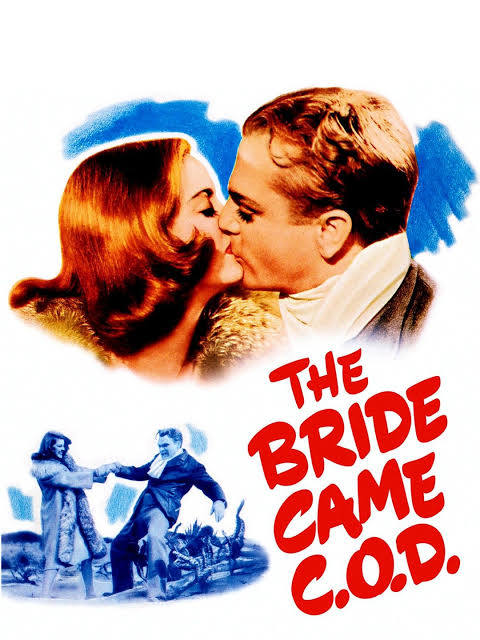
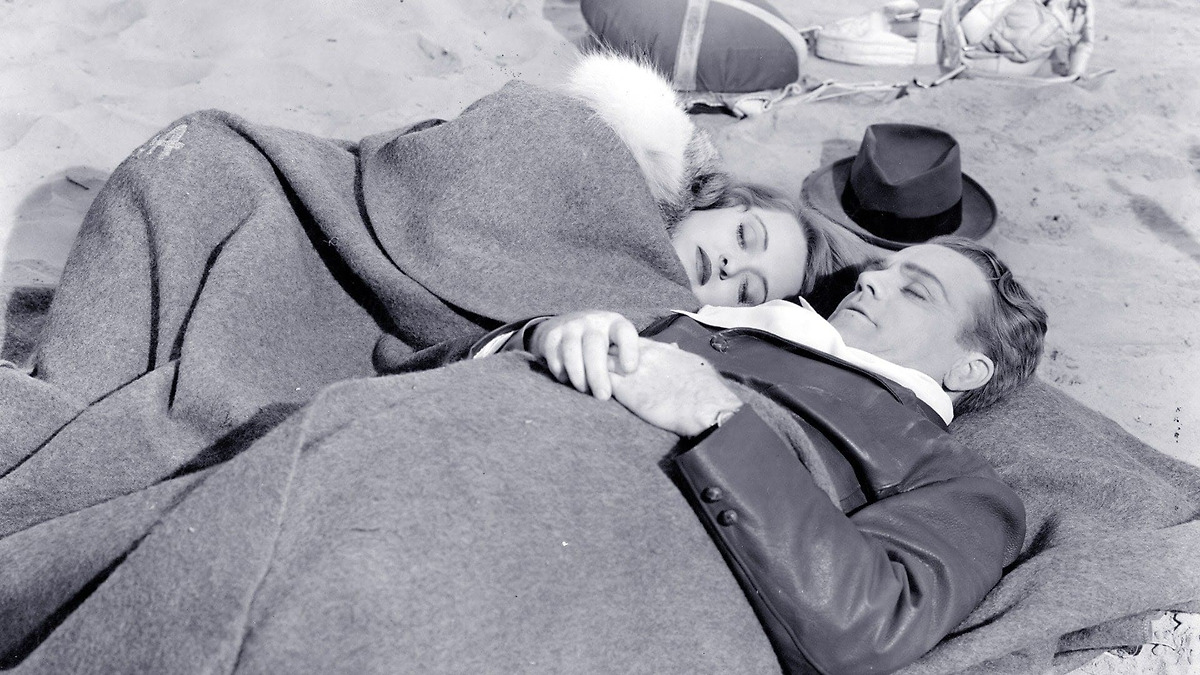
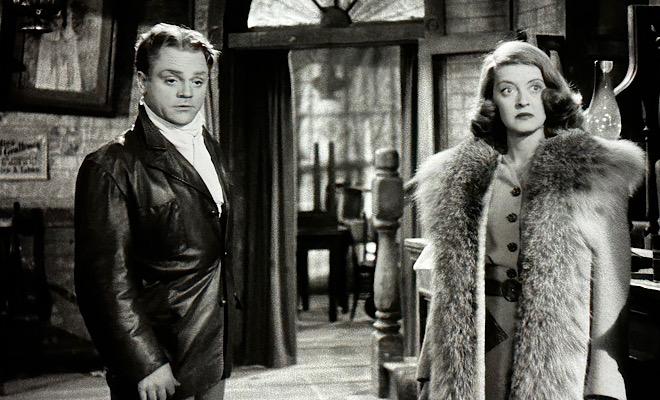
The Bride Came C.O.D. with Cagney and Bette Davis was a perfect substitute for this week, though.

It was a delightfully fun movie, and I needed it this week, so I’m glad I made the trade.

I will be watching this movie again with him soon, though, because it was just too much fun and should be watched with others.

This is a slapstick comedy where Cagney and Davis were both trying their acting talents at something a little different.

First, the premise: Davis is playing Joan Winfield, an heiress who makes impulsive decisions, and her latest impulsive decision is marrying Alan Brice (Jack Carson), a famous singer and band leader. The marriage announcement comes at just the right time for gossip and entertainment broadcaster named Hinkle who needs a big story.

He talks Brice into marrying Joan right away because it will make a great story for his broadcast.

The only issue is that Joan is on the phone with her father when Alan announces his engagement to Joan to the audience at the club and she is trying to work up the courage to tell her father she’s engaged.

Their call is cut short and she never tells him, but Hinkle arranges for her and Alan to go to a small airport to be flown by a private plane to Las Vegas where they can be married.

Steve Collins, a notorious womanizer who pretends  he is married with children so he doesn’t get roped into marriage by women who like to date married men,  owns the airport and the main plane. He’s never paid for the plane though and the finance company now wants it back.  Steve’s handy man, Pee Wee (George Tobias) tells him that Hinkle has arranged for their plane to take a famous couple to Las Vegas and Steve wonders if they will even have a plane to take them in.

Collins tries to think of a way to get the money and has no ideas until Joan’s father, oil tycoon Lucius K. Winfield (Eugene Pallette) calls the airport to try to reach his daughter and Collins strikes up a plan with Winfield to make sure his daughter doesn’t make it to Las Vegas to marry Alan Brice.

If Collins pulls off the delay, meeting Winfield with his daughter in tow in Texas instead, Winfield will pay Collins the money he needs to pay off the plane and keep the airport in business.

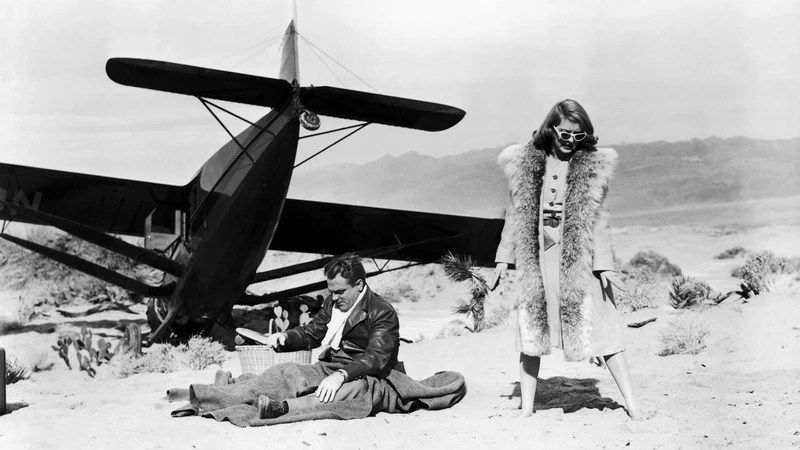
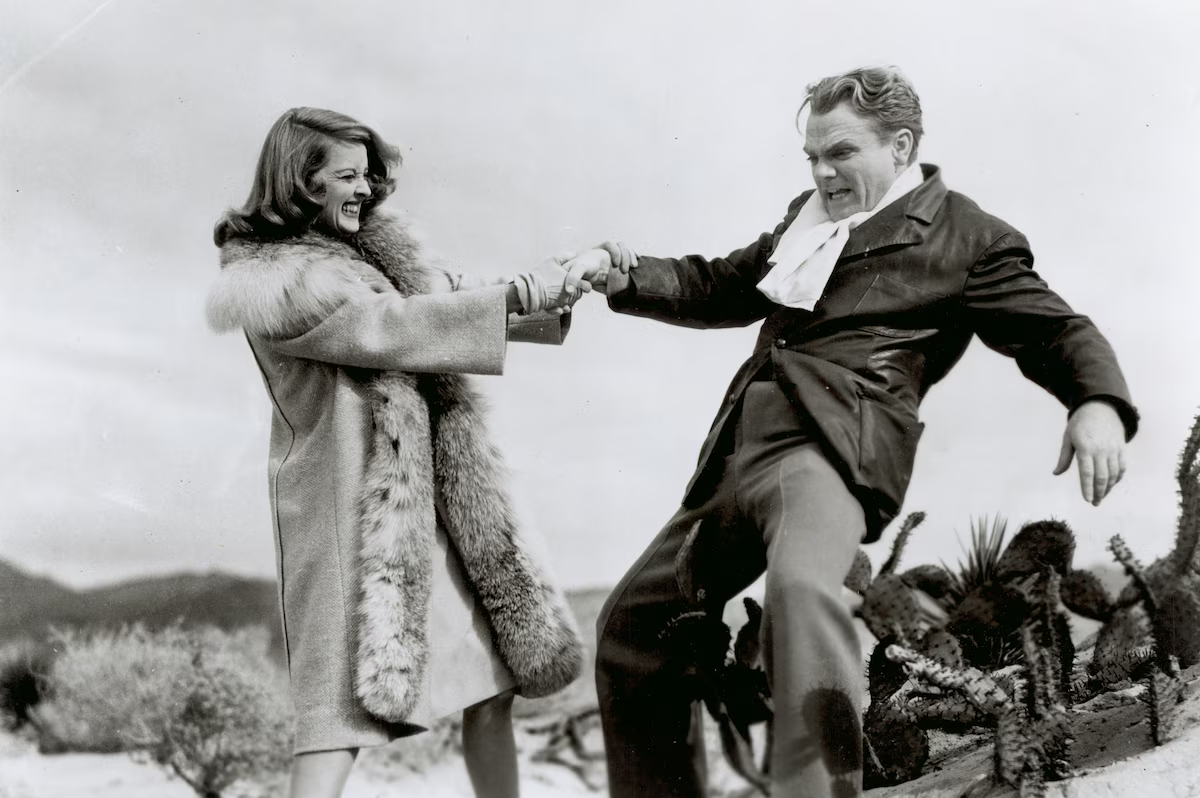
The first task at hand is to get rid of Hinkle and Alan which PeeWee helps Collins with. With them out of the way, Collins jumps in the plane and takes off with Joan, his plan to fly her to Texas. Unfortunately, Joan isn’t too happy with this arrangement and tries to escape, causing the plane to crash in the desert.

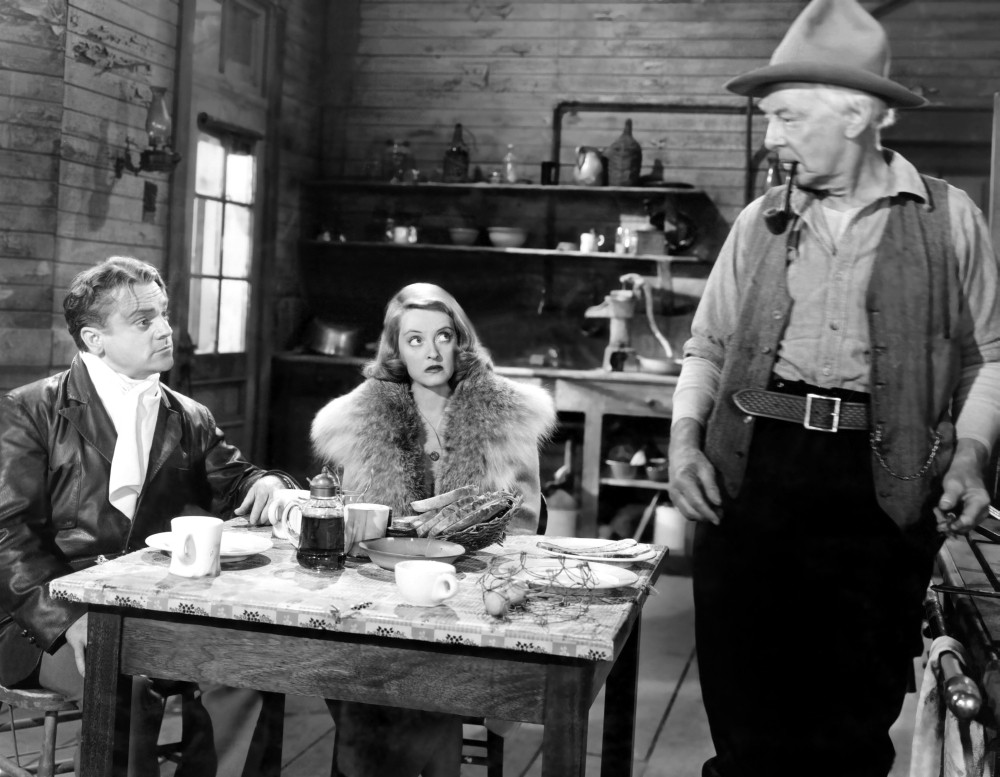
Here we will be introduced to Pop Tolliver (Harry Davenport), who I just loved.

I loved a lot about this movie.

It was very witty and fun, with some great lines.

Bette Davis was supposed to be 23 in the film which I found a little unbelievable but then again, Bette always looked older to me than she was.

She was actually 33 when this movie was made.

According to Frank Miller from TCM (yes, my go-to-source), Cagney made the movie on the heels of Strawberry Blonde because he wanted to break out of gangster roles.

Ann Sheridan, Ginger Rogers, and Rosalind Russell were considered for Davis’s role but when she expressed interest in trying out, Hal Willis, the producer of the movie, went to bat for her.

“In addition, she was eager to re-team with Cagney, who like her had a history of battles with the Warner Bros. management,” Miller wrote. “They had not worked together since 1934, when they teamed for the minor comedy Jimmy the Gent. Some biographers have suggested that the studio was punishing her with the film because of her notorious temperament, while others have suggested she may have wanted to emulate Katharine Hepburn, who had been equally successful in serious and comic roles. Also possible is that she was drawn to the film’s obvious similarities to It Happened One Night (1934), another tale of a runaway heiress saved from a bad marriage by the love of a simple working guy.”

There was a lot of trouble with the movie, including the writing and the fact Cagney wasn’t a fan of the sweltering heat at the shooting location of Death Valley.

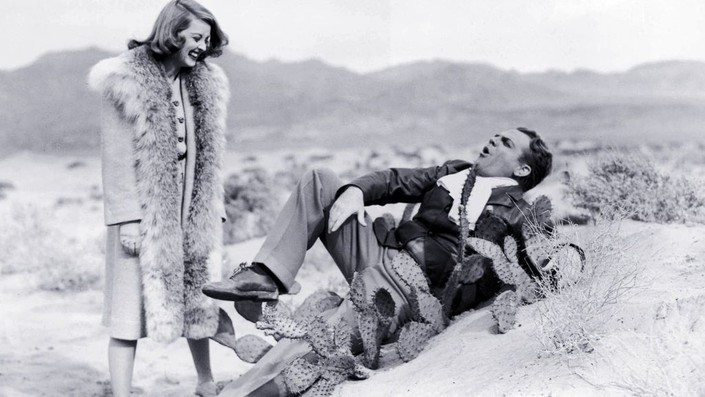
Davis also wasn’t happy because while a stunt double was supposed to take the fall into a cactus for her, she had a fall of her own and ended up with 45 cactus quills having to be removed from her behind.

Neither actor was very fond of the movie years down the road and even critics bashed it with one saying, “Okay, Jimmie and Bette. You’ve had your fling. Now go back to work.” 

As for me, I found the film a lot of fun and ended up snickering at the silliness and the exchanges between our main characters.

And as I said above, Harry Davenport really added some charm to the film for me.

Have you ever seen this one?

I found it for rent on Amazon Prime but it is also available on HBO Max, Hulu, YouTube, and AppleTV.

Next week I’ll wrap up my Winter of Cagney with Angels With Dirty Faces and two weeks after that I’ll start a bi-weekly movie watch of Bette Davis films.

If you want to catch up on the other Cagney films I’ve watched this winter you can do so here:

Yankee Doodle Dandy

Taxi

The Strawberry Blonde

Mister Roberts

The Public Enemy

Love Me or Leave Me

White Heat


If you want to find clips and thoughts about vintage movies and TV, you can visit me on Instagram on my Nostalgically Thinking Account (https://www.instagram.com/nostalgically_thinking/) or on my YouTube account Nostalgically and Bookishly Thinking here: https://www.youtube.com/@nostaglicandbookish


If you enjoy the kind of content on my blog and all that goes into it, you can support my writing for $2.99 a month or a single donation. Learn more here: https://lisahoweler.com/support-my-writing/
Winter of Cagney: White Heat (with some spoilers)

I’m watching James Cagney movies this winter and last week I watched one of his most acclaimed movies — White Heat (1949).

The movie is considered by film critics to be one of the best gangster films of all time.

As I often do, I’ll start this post with an online description of the movie:

“Gang leader Cody Jarrett (James Cagney) lives for his mother, planning heists between horrible headaches. During a train robbery that goes wrong, Cody shoots an investigator. Realizing Cody will never be stopped if he knows he’s being pursued, authorities plant undercover agent Hank (Edmond O’Brien) in Cody’s cell.”

This description is wrong, though, because the investigator is shot after the robbery. But the conductor is shot by Cody.

All that aside, the robbery does go wrong, partially because a member of the gang is horribly burned. The gang has to hide out and we learn that Cody is very close to his mother, who helps him plan crimes. Closer than he is to his wife who is very lazy and sleeps a lot.

This isn’t an inappropriate relationship like Hamlet or Macbeth or whichever play that was, but Cody relies on Ma for a lot — including helping him when raging headaches hit him and practically debilitate him. The gang believes his headaches are the same mental illness his father had.

His mother doesn’t want him to let the gang see him that way because he will look weak.

It doesn’t matter if he looks week because his gang is ready to turn on him and take the money they stole from the train and cut him out of the deal no  matter what.

He doesn’t know this, but he does know they have to split so the police don’t find them.

They have an injured gang member whom Cody orders one of his men to shoot. The man can’t do it, though, and leaves the burned man. The man still dies, and when he is found it is reported to the police, who eventually connect him to the gang.

A police officer sees Cody’s mom out by chance and they try to follow her back to the motel Cody, his mom and wife are staying at. She loses them but the police eventually find her car and corner Cody who shoots the investigator in the arm.

Cody is able to escape with his mom and wife, but finally decides if he really wants to shake the police, he will have to give himself up. He’s not going to admit to the big crime, though. He’s going to say he committed another crime that another criminal he knows pulled. He’ll only get about two years for that crime and it will be his alibi for the other crime. He couldn’t have robbed the train if he was committing a less serious robbery in another state, he says.

His wife and mom don’t like the idea, for different reasons.

His wife likes the idea a lot more when she realizes that her husband being in jail in another state will give her time with her husband’s second hand man, who she’s been having an affair with.

Cody’s plan works — sort of. The police figure out what he is trying to do, though, and still want to pin the first crime on him so they send an undercover cop into jail with him to try to make friends with him and find out where he hid the money from the train heist.

I’ll leave it there, so I don’t spoil what happens, but I am going to have to give a big spoiler here to discuss in the paragraph following this next one so if you don’t want to know, you need to stop here.

This movie was dark, intense, and while Cody Jarrett was a horrible man and easy to hate, I also couldn’t help feeling a little sorry for him because he felt crime was the only way to make a living.

SPOILER ALERT!!


Also, the one person who loved him and he loved dies halfway through the movie. I won’t say how his mom dies but it is her death that leads to a much-talked-about scene where Cody absolutely flips out after he finds out she’s gone.

What is interesting about this scene is a couple hundred extras were used as the inmates inside the cafeteria and none of them were told what Cagney was going to do. Most of the shocked faces focused on during that scene were authentic because they were kept in the dark about Cagney’s plans. Some of them really thought Cagney had flipped out.

Another scene we need to talk about happens at the end. Throughout the movie Cody’s mom always ends their conversations by saying, “Top of the world, son! Top of the world!”

This is a line that has been used in pop culture references and parodies for years and I never knew what it was. Now I do and it’s honestly quite heartbreaking. There is so much Cody could have done with his life and not only did he choose crime but his own mother encouraged him to do so.

Cagney came back to Warner Brothers for this film after leaving for several years to start his own movie-making business with his brother. When that failed, he accepted an offer from Warner Brothers, even though Jack Warner really didn’t want him back — mainly because he needed the money.

Warner famously called Cagney, “that little b******.”

Cagney famously said of Warner in Rolling Stone Magazine, “I used to like to walk out on him, frankly, whenever my contract didn’t suit me. I’d cuss him out in Yiddish, which I had learned from Jewish friends in my days at Studyvesant High School. Drove him wild. ‘What’d he say?!’ he’d yell. ‘What’d he just call me?!’”

Their arguments mainly started over Cagney’s contracts in the 30s.

Rob Nixon wrote for TCM.com that White Heat is considered Cagney’s last good gangster film.

“An exciting, dynamic film in its own right, White Heat also stands out as the flaming finale to the era of stark, fast-paced crime films made famous by Warner Brothers and James Cagney (among other stars) from the 1930s on ­ films in which the focus was on the often violent but charismatic gangster rather than the law enforcement officials who hunt him,” Nixon wrote. “It was also the apotheosis of Cagney’s brilliant career, a kind of summing up of the memorable outlaw characters he had created. His projects that followed in the 1950s were mostly lackluster affairs, and the cocky, pugnacious star audiences had come to love was glimpsed infrequently in such films as Love Me or Leave Me and Mister Roberts (both 1955).”

The film was directed by Raoul Walsh and in addition to Cagney it starred Virginia Mayo, Edmond O’Brien, and Margaret Wycherly as Ma.

Many scenes, such as the one mentioned above were adlibbed by Cagney or Walsh.

One of those was when he got annoyed at Mayo (his wife) and he was supposed to just glare at her but instead Walsh told Cagney to kick her off the chair she was standing on. For me, this showed how nasty and heartless Cody really was  – as if the opening scenes hadn’t already shown that.

The story for the movie was written by Virginia Kellogg and she was nominated for an Oscar for it, but didn’t win and no one else was nominated. Over the years, though, the film has been praised and named as the fourth best gangster movie by the American Film Institute, has been quoted or parodied too many times to count and in  2003, the American Film Institute named Cody Jarrett in its list of the best heroes and villains of the past 100 years.

I have to be honest and say that the end of the movie annoyed me. I don’t want to give it away but it was a typical movie from the 40s and 50s with the whole idea of the bad guy suffering and the “good guys/cops” being the heroes was very cliché.

In many ways there was nothing good that was going to come for Cagney’s character, though, so things ending badly for him was probably the only way for things to go.

Next week I will be watching Angels With Dirty Faces with Cagney and Humphrey Bogart. To end the event I will be watching The Bride Came C.O.D. (which will move me into my Spring of Bette Davis).

You can read about the other movies I watched by clicking the links below:


 Yankee Doodle Dandy

Taxi

The Strawberry Blonde

Mister Roberts

The Public Enemy

Love Me or Leave Me


Sources:

https://www.tcm.com/articles/89404/the-essentials-white-heat

https://en.wikipedia.org/wiki/White_Heat


If you want to find clips and thoughts about vintage movies and TV, you can visit me on Instagram on my Nostalgically Thinking Account (https://www.instagram.com/nostalgically_thinking/) or on my YouTube account Nostalgically and Bookishly Thinking here: https://www.youtube.com/@nostaglicandbookish


If you enjoy the kind of content on my blog and all that goes into it, you can support my writing for $2.99 a month or a single donation. Learn more here: https://lisahoweler.com/support-my-writing/
Classic Movie Impression: The Thin Man (1934)

For the next month or so I will be sharing posts here and there about The Thin Man movies with William Powell and Myrna Loy.

The series is my favorite movie series of all time. The six movies kick off with The Thin Man (1934).

The Thin Man will be 91 years old this year and, to me and many others, it still holds up.

This cozy mystery masterpiece has hit the Top 100 movies list from a variety of film organizations and critics over the years and for good reason. My family owns the DVD set of all six movies so we can watch any of the movies any time we want.
If you haven’t seen this movie or the five sequels involving witty, often intoxicated, private detective, Nick Charles (William Powell), and his equally witty and mouthy wife, Nora Charles (Myrna Loy), then you’re missing out.

Each of the six movies is full of mystery, zaniness, misunderstandings, mishaps, and hilarious interactions between Nick and Nora and everyone else. Oh and a crime or two is mixed in too.

The crimes themselves, and how they were committed, are a bit dark at times, but never graphic or gruesome and the darkness is always overshadowed by the Charles’ antics.

The pairing of Powell and Loy was the ticket for success in the 1930s as they were in a number of movies together and are still considered one of the best movie couples of all time.

Their first film was Manhattan Melodrama (1934) and directed by the same director of The Thin Man, W.S. “Woody” Van Dyke.

The Thin Man is based on a book by Dashiell Hammet and as the movie starts, we find Nick has retired from being a Private Investigator in New York City to help oversee Nora’s wealth as an heiress in San Francisco. This leaves Nick with a lot of time on his hand to go drinking, goof off and do some general carousing, though never with women because he is completely and utterly devoted to Nora.

Nora would like him to get back to work, though, so when they go back to New York for a visit and Nick’s former client, Clyde Wynant (who is later described as simply a thin man — hence the name of the book/movie), goes missing. His daughter Dorothy comes to Nick for help, Nora gently, and later not-so-gently, suggests he help.

What makes this movie such a fun one that might bring an occasional gasp from viewers is that it is a pre-Hays Code movie. That means it was filmed before a bunch of rules went into affect about what can and cannot be shown or said in movies. That’s why there were a couple comments from some of the characters in this that had me gasping and then laughing.

For example:


Nick: I’m a hero. I was shot twice in the Tribune.

Nora: I read where you were shot 5 times in the tabloids.

Nick: It’s not true. He didn’t come anywhere near my tabloids.

Before I forget, what makes these movies even more fun is the addition of Asta, the couple’s wife-fox terrier, who also acted in Bringing Up Baby with Cary Grant and Katherine Hepburn and The Awful Truth with Irene Dunn and Cary. He’s a fun addition who always adds  to a scene.  At one point Nick tells a  criminal, (Summarizing here): Stay right there or my dog will get you. He’s vicious.”

All the while Asta is finding a place to hide under a table.

Asta’s real name was Skippy, by the way, and there are some fun stories about him, but I will share more about Asta/Skippy in future posts about the series.

So back in the beginning of the movie, before we even see Nick  and Nora, Dorothy Wynant goes to her inventor father to tell him she’s getting married.

During that conversation we learn that Clyde cheated on Dorothy’s mother years ago with his secretary and they are now divorced. Later we will see that divorce really wasn’t such a bad thing because the ex-wife is absolutely batty.

Anyhow, shortly after Dorothy told her father she was getting married, we learn that Clyde Wynant’s former secretary and mistress, Julia Wolf, has stolen $50,000 worth of bonds from his safe. Those were going to go to Dorothy for her wedding gift. Clyde immediately suspects Julia, goes to her apartment, and finds her with a man named Joe Morelli.

Julia confesses she took the bonds, but she can’t give them back. She already spent $25,000 of them.

Clyde isn’t a very nice man and tells her she better get the $25,000 back or she’ll pay. He then leaves for a business trip and presumably never returns because three months later, Nick is out at a bar back in NYC for a visit when he runs into Dorothy who tells him her father is missing. She asks if Nick will help find him but Nick brushes her off by saying he’s sure her father will show up.

Things change later while Nick and Nora are throwing a party and Dorothy shows up to say Julia has been murdered and she truly feels her father is in danger. Now Nora pushes Nick to help out.

“You know, that sounds like an interesting case,” she says to Nick. “Why don’t you take it?”

Nick chuckles. “I haven’t the time. I’m much too busy seeing that you don’t lose any of the money I married you for.”

The really quirky and memorable characters show up when Dorothy goes to visit her mother, Mimi, who — like I said above — is crazy, but also is married to a loser, jobless husband named Chris. Living with her mother is her  Mama’s Boy macabre-obsessed brother  Gilbert.

Gilbert is a bit of a nerd who walks around with a book and shows everyone how smart he is by using very big words and even bigger theories about things. He’s also a smart mouth.

At one point, he asks one of the cops: “Could I come down and see the body? I’ve never seen a dead body.”

The cop asks why he’d want to, and he says, “Well, I’ve been studying psychopathic criminology and I have a theory. Perhaps this was the work of a sadist or a paranoiac. If I saw it, I might be able to tell.”

Dorothy’s mother,  Mimi, is self-focused and selfish and though she was cheated on and might have been a victim in any other movie, she’s a total mess in this movie. Her biggest worry is losing access to her ex-husband’s money, which she has been able to hold on to through alimony. When Julia is murdered, she sees an opportunity to get even more of her ex-husband’s money.

Going back to Nick and Nora … What makes them so memorable, beyond their amazing banter, is how they show that adventure, sex, and adoration doesn’t end after the wedding bells ring. I love how affectionate and playful they are throughout the series.

The writing for them is absolutely outstanding, which is probably because the screenwriters (Frances Goodrich and Albert Hackett) were told to focus less on Hammet’s story and more on the banter between the couple.

Some of my favorite exchanges:

Nora Charles: How many drinks have you had?

Nick Charles: This will make six Martinis.

Nora Charles: [to the waiter] All right. Will you bring me five more Martinis, Leo? Line them right up here.

——————

Nick Charles: Oh, it’s all right, Joe. It’s all right. It’s my dog. And, uh, my wife.

Nora Charles: Well you might have mentioned me first on the billing.

______________

Lieutenant John Guild: You got a pistol permit?

Nick Charles: No.

Lieutenant John Guild: Ever heard of the Sullivan Act?

Nora Charles: Oh, that’s all right, we’re married.

______________

Nora Charles: Pretty girl (about Dorothy Wynant)

Nick Charles: Yes. She’s a very nice type.

Nora Charles: You got types?

Nick Charles: Only you, darling. Lanky brunettes with wicked jaws.

_______________

Nora Charles: All right! Go ahead! Go on! See if I care! But I think it’s a dirty trick to bring me all the way to New York just to make a widow of me.

Nick Charles: You wouldn’t be a widow long.

Nora Charles: You bet I wouldn’t!

Nick Charles: Not with all your money…

According to information online, Hammett based Nick and Nora’s banter upon his rocky on-again, off-again relationship with playwright Lillian Hellman and the book itself on his experience as a union-busting Pinkerton.
MGM tried to prevent Myrna Loy from being cast in The Thin Man by telling director Van Dyke that he could have her “only if she was finished in three weeks to begin shooting Stamboul Quest (1934),” according to TCM. Van Dyke not only completed Loy’s scenes but all of the production somewhere between 12 and 18 days.

“Known as “One-Take Woody,” Van Dyke often did not bother with cover shots if he felt the scene was right on the first take, reasoning that actors “lose their fire” if they have to do something over and over,” Rob Nixon wrote for TCM. “It was a lot of pressure on the actors, who often had to learn new lines and business immediately before shooting, without the luxury of retakes, but Loy credited much of the appeal of The Thin Man to Van Dyke’s pacing and spontaneity.”

It was Van Dyke, with that whole desire of his to create natural reactions, who worked out Loy’s classic entrance into the bar and restaurant at the beginning of the movie — all her packages spilling on to the floor as Asta pulls her down the hall toward Powell.

Loy was told about the scene right before they shot it.

Van Dyke took a similar approach with Powell by telling him to take the cocktail shaker, go behind the bar, and walk through one of the early scenes while the crew checked lights and sound.

Powell did so and ad-libbed some comments to the crew as he worked out the scene. Before he knew it VanDyke yelled “That’s it! Print it!”

The director had had the cameras rolling the whole time.

He liked his actors as relaxed and natural as possible which is why a scene of Nick shooting the ornaments off the tree was added into the movie because “Powell playfully picked up an air gun and started shooting ornaments that the art department was putting up.”

I couldn’t find quotes from Powell about working with Van Dyke but there are quotes about working with Powell because he loved working with her.

“When we did a scene together, we forgot about technique, camera angles, and microphones. We weren’t acting. We were just two people in perfect harmony,” he said. “Myrna, unlike some actresses who think only of themselves, has the happy faculty of being able to listen while the other fellow says his lines. She has the give and take of acting that brings out the best.”

You can find plenty of opinions and articles about this movie online, most of them positive.

The Blonde at the Film wrote on her blog in 2014, “The Thin Man (1934) is a truly delightful mystery-comedy chock full of snappy dialogue, fantastic stars, art deco sets, magnificent costumes, enough mystery to make it suspenseful, and enough alcohol to give you a sympathy hangover.”

Christopher Orr wrote for The Atlantic: “As Nick and Nora, Powell and Loy subverted the classic detective film with comic aplomb and presented an impressively modern vision of marriage as an association of equals. They were also cinema’s most glamorous dipsomaniacs, a reminder of a bygone era when Hollywood could still imagine that charm, taste, and good humor might go hand-in-hand with the copious consumption of distilled spirits.”

His opinion of the mysteries in this movie and the others is fairly accurate, even though not altogether positive: “The mysteries themselves tend to be somewhat disappointing–needlessly convoluted, with solutions that often hinge on a last minute revelation or “clue” of dubious import (for example, whether or not someone announced themselves before opening a door). Rather, the chief pleasure of the films is in spending time with Nick and Nora as they tease, cajole, and romance their way toward the conclusion.”

Film critic Roger Ebert wrote of The Thin Man, “William Powell is to dialogue as Fred Astaire is to dance. His delivery is so droll and insinuating, so knowing and innocent at the same time, that it hardly matters what he’s saying.”

He continued: “Powell plays the character with a lyrical alcoholic slur that waxes and wanes but never topples either way into inebriation or sobriety. The drinks are the lubricant for dialogue of elegant wit and wicked timing, used by a character who is decadent on the surface but fundamentally brave and brilliant.”

Have you seen The Thin Man? What did you think of it?

Up next (at some point)  I will be writing about the next movie in the series, After The Thin Man.

__________

Sources:

https://www.theatlantic.com/entertainment/archive/2005/08/the-movie-review-the-thin-man/69449/

https://www.theatlantic.com/entertainment/archive/2005/08/the-movie-review-the-thin-man/69449/

https://en.wikipedia.org/wiki/The_Thin_Man_(film)

https://www.tcm.com/articles/behind-the-classics/133583/behind-the-classics-the-thin-man-1934

https://www.goldderby.com/film/2024/the-thin-man-william-powell-myrna-loy/


If you want to find clips and thoughts about vintage movies and TV, you can visit me on Instagram on my Nostalgically Thinking Account or on my YouTube account Nostalgically and Bookishly Thinking here: https://www.youtube.com/@nostaglicandbookish

Favorite movies I watched in 2025

This past year I watched 84 movies, some long and some short, the majority of them made before 1960.

At the end of this post, I’ll list them all, but for now, here are my favorites from the bunch. I did not include any movies that were rewatches for me in my favorites list, but I did include rewatches in the overall list.

  • Without Reservations
  • KPop Demon Hunters

  • It Happened One Night
  • Superman (2025 version)
  •  Take Me Out to the Ballgame
  •  They Got Me Covered
  • The Strawberry Blonde
  • Another Man’s Poison

The movies I watched in 2025:

  • Morning Glory
  • The Stranger
  • Gunga Din
  • The Power of the Press
  • The Prisoner of Zenda
  • The Young in Heart
  • The Exile
  • Angles Over Broadway
  • Sinbad The Sailor
  • The Rise of Catherine The Great
  • The Sun Never Sets
  • Almost Heroes
  • The Quiet Man
  • The Barkleys of Broadway
  • Mrs. Harris Goes to Paris
  • How to Steal A Million
  • The Intouchables
  • Paris Blues
  • Hugo
  • Charade
  • Paddington in Peru
  • The Assassination Bureau
  • The Honey Pot
  • The Manchurian Candidate (original)
  • Herbie Goes to Morocco
  • National Velvet
  • The Rains Came
  • Gaslight
  • Bedknobs and Broomsticks
  • Abbott and Costello: Jack and The Beanstalk
  • The Scarlet Pimpernel
  • The Pirates of Penzance
  • Take Me Out to the Ballgame
  • A Hole in the Head
  • The Canary Murder
  • Please Murder Me
  • Without Reservations
  • Death on the Nile
  • The Court Jester
  • They Got Me Covered
  • Raffles
  • The Picture of Dorian Gray
  • A Life At Stake
  • The Long, Hot Summer
  • Find Me Falling
  • KPop Demon Hunters
  • The Celtic Riddle
  • Nonnas
  • Benny and Joon
  • The Talk of the Town
  • The Bishop Murder Case
  • Autumn Harvest
  • It Happened One Night
  • What’s One More?
  • Pennie’s From Heaven
  • A Green Journey
  • Superman (2025)
  • Topper
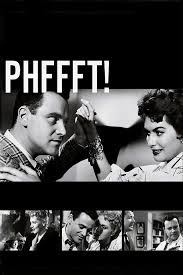
  • Pfffft!
  • The Mummy
  • Iron Man
  • Iron Man 2
  • Thor
  • Storm in A Teacup
  • The Englishman Who Went Up A Hill and Came Down A Mountain
  • The Storied Life of AJ Fickery
  • Iron Man 3
  • The Avengers
  • I’ll Take Sweden
  • Another Man’s Poison
  • The Strawberry Blonde
  • Meet Me In St. Louis
  • Condemned to Devil’s Island
  • Guardians of the Galaxy
  • Winter Soldier
  • Ball of Fire
  • It Happened on Fifth Avenue
  • A Christmas Story
  • The Falcon Takes Over
  • Tenth Avenue Angel
  • The Grinch Who Stole Christmas
  • The Thin Man
  • The Bishop’s Wife
  • The Benson Murder Case
  • Yankee Doodle Dandy

Have you seen any of these movies? Which ones did you enjoy?

Winter of Cagney: Yankee Doodle Dandy

For winter this year, I am watching James Cagney movies.

First up is Yankee Doodle Dandy (1942) which Cagney won an Oscar for.

This is a biopic about the entertainer George Cohan. Actually, though, he was more than just an entertainer. Under that umbrella, he was a playwright, lyricist, actor, singer, dancer, and theatrical producer.

Don’t think you know who Cohan is?

Well, if you’ve ever heard the songs “You’re A Grand Old Flag”, “Over There”, “Yankee Doodle Dandy Boy,” or “Give My Regards to Broadway,” then you have heard some of George’s work.

Yankee Doodle Dandy is his story, but . . . with some poetic license from what I’ve been reading. Cohan comes out looking a bit better than he might have been in real life, considering his first wife divorced him for adultery and that mysteriously didn’t make the movie. The movie did portray him as a bit of an arrogant kid who pushed his way to stardom, so he wasn’t portrayed as totally perfect, however. Plus, Cohan had the final say on the movie so maybe that’s why he looked a bit better in the movie. *wink*

Cohan was born July 3, 1878 according to baptismal records but according to him and his parents, he was born on the Fourth of July. This “fact” would be used throughout his career as he asserted his bold patriotism for the United States of America.

“I’m a Yankee Doodle Dandy
A Yankee Doodle, do or die
A real live nephew of my Uncle Sam
Born on the Fourth of July
I’ve got a Yankee Doodle sweetheart
She’s my Yankee Doodle joy”

  • From the musical Little Johnny Jones

Cohan’s was an Irish immigrant named Jeremiah (Keohane) Cohan. His mother was Helen “Nellie” Costigan Cohan, and his sister was Josephine “Josie” Cohan Niblo (1876–1916). Together the four of them would form a Vaudeville act called The Four Cohans.

George began singing and playing the violin at the age of 8 and toured with his family from 1890 to 1901.

During these years, he made famous a speech at the end of their show that you might have heard over the years, or even said yourself as a joke: “My mother thanks you, my father thanks you, my sister thanks you, and I thank you.”

The Four Cohans with George on the left.

He and his sister made their Broadway debuts in 1893 in a sketch called The Lively Bootblack.

I won’t give you his entire biography here, so if you want to know even more about his life, the movie will fill you in or there is a ton of information about him online.

Many people think of James Cagney with a New York accident asking questions like, “You talking to me?” because of the many mobster-themed movies he appeared in in the 1930s. (I don’t think he actually ever said that line, though. Much like he never actually said, ‘You dirty rat! The quote was actually longer and included the words “You yellow-bellied dirty rat” in the movie Taxi, 1931.)

“There is a story that James Cagney stood on his toes while acting, believing he would project more energy that way,” Roger Ebert wrote. That sounds like a press release, but whatever he did, Cagney came across as one of the most dynamic performers in movie history–a short man with ordinary looks whose coiled tension made him the focus of every scene.”

Yankee Doodle Dandee showed there was lot more to Cagney than many moviegoers realized.

For one, Cagney could dance, which he had showcased in other movies but really was able to showcase in this movie.

Cagney could also be funny and charming — which moviegoers had seen in other movies but really saw in Yankee Doodle Dandy.  

Cagney almost didn’t get the role that he would later call his favorite, according to an article on TCM.com.

Originally Cohan and MGM had combined to make a film that would cover when Cohan had toured with his family. It would have starred Mickey Rooney. The deal collapsed because the studio head, Louis B. Mayer, refused to let Cohan have the final cut on the film.

Samuel Goldwyn then expressed an interest in making a movie with Cohan and planned on giving the role of Cohan to Fred Astaire.

Astaire turned it down, and Warner Bros. picked up the rights and cast Cagney, who at the time was being suspected of being a communist sympathizer due to being president of the Screen Actors’ Guild a — gasp! — union!

“He wanted to show his patriotism on screen,” the TCM article reads. “And the George M. Cohan story was the perfect vehicle to do that.”

Cagney broke into infamy with this movie. I am sure many of you have seen one of his most famous scenes — when he tap dances down a long flight of stairs while leaving the white house after talking to President Franklin Roosevelt. This scene, like many others in his career, was improvised by Cagney, who called it his favorite moment in the movie.

“I didn’t think of it till five minutes before I went on,” Cagney later recalled. “And I didn’t check with the director or anything; I just did it.”

Yankee Doodle Dandy was directed by Michael Curtiz (most well-known for directing Casablanca).

According to TCM and other sources online, Curtiz letting Cagney have free rein in the role is what made it such a success and made him so enamored with Cagney as an actor.

“The ordinarily hard-boiled Curtiz was so moved by the scene in which Cohan bids farewell to his dying father (Walter Huston) that he reportedly ruined a take with his loud sobs,” reads the article on TCM.com. “According to Cagney biographer Michael Freedland, tears streamed down Curtiz’s face as he stumbled away to find a handkerchief and exclaimed to Cagney, “Gott, Jeemy, that was marvelous!’”

I can speak from the experience of seeing the movie that that scene was heartbreakingly marvelous. I wasn’t super emotionally invested in the movie as I watched it, but during that scene, I teared up and failed to hold back a small sob. Maybe it’s because my parents are older, so I could relate to that scene more than I might have been able to if I had watched this when I was younger.

Critic Brenden Gill said of Cagney’s role in the film: “George M. Cohan was by all accounts something of a scoundrel. He was an impossible human being, but he was a tremendous actor, comedian, showman, and he wrote great popular songs. He exists in our memories now not as George M. Cohan but as James Cagney in the movie.”

“Cagney managed to capture this persona that Cohan created,” another critic I heard (but couldn’t find the name of) said. “It was brash. It was pushy. It was aggressive. It was funny. Very American. Very New York. And Cohan created this character as his own persona on stage, but it really became the emblem of Broadway itself.”

Cagney, according to TCM.com writer Jeremy Arnold, wanted to portray Cohan correctly, not only because Cohan — 63 at the time the movie was made —had final approval over the film, but for accuracy.

“To perfect Cohan’s distinctive, strutting style of dance,” Arnold writes. “Cagney rehearsed with choreographer John Boyle, who had worked with Cohan extensively in the 1920s. Cagney also channeled Cohan’s singing voice, which was more like rhythmic speaking, and brought his own charismatic talent to the romantic, comedic, and dramatic scenes.”

There were liberties taken with Cohan’s life, as I mentioned above. For instance, his two wives were combined into a single character. Also, the chronology and order of his parents’ death was also switched around (probably to make that death bed scene even more emotional). Additionally, in one scene when he suffers a flop with a non-musical drama called Popularity, a newspaper seller announces the torpedoing of the Lusitania. The play flopped in 1906, but the Lusitania sunk in 1915, according to TCM.

Despite these changes, most critics agree that the movie captured Cohan’s life and music perfectly.

 “Yankee Doodle Dandy, with its many flag-waving musical numbers, proved just the ticket for World War II-era audiences and became the top-grossing movie of its year, as well as Warner Bros.’ top-grossing movie to that time,” Jeremy Arnold wrote for TCM.com.

In addition to Cagney, the movie also starred Joan Leslie, Walter Huston, Richard Worf, Irene Manning, Rosemary Decamp, Jeanne Cagney (Cagney’s sister who played his sister Josie in the movie), and Eddie Foy Jr as Eddie Foy Sr.

So, a pause here. Eddie Foy Sr. was another entertainer of a similar style and also performed vaudeville with his family, The Seven Foys.

There is a movie called The Seven Little Foys (1955) starring Bob Hope as Eddie Foy Sr. and in it there is a cameo by Cagney, who portrays George M. Cohan, reprising his role from Yankee Doodle Dandy.

The two dancers face off in a very fun tap-dancing routine on a boardroom table. You can catch that here:

As for what movie watchers or critics now think of Yankee Doodle Dandy, you can find a variety of opinions online — some calling it satire to make fun of capitalism and nationalism while others say it is a disgusting display of support for capitalism and nationalism.

Some love the over-the-top patriotism and some absolutely hate it.

I guess you’ll have to make up your own mind what it promotes or represents and what it doesn’t, but what many can’t deny is the talent Cagney displays in the movie.

I definitely enjoyed seeing Cagney’s talent, but at first glance didn’t enjoy his dancing style. It was floppy and lanky instead of smooth and debonair like Gene Kelley or Fred Astaire, who I am more used to, but after seeing footage of Cohan, I now get that Cagney was imitating Cohan’s dancing style.

After hearing and seeing recordings of Cohan this week, I realized how perfectly Cagney nailed Cohan in the movie. No wonder he won the Oscar for best actor that year. It was also his only Oscar, incidentally.

Cagney pulled the role off even though “he (couldn’t) really dance or sing,” observed critic Edwin Jahiel, “but he acts so vigorously that it creates an illusion, and for dance-steps he substitutes a patented brand of robust, jerky walks, runs and other motions.”

 Ebert wrote in his review of the film : “Unlike Astaire, whose entire body was involved in every movement, Cagney was a dancer who seemed to call on body parts in rotation. When he struts across the stage in the “Yankee Doodle Dandy” number, his legs are rubber but his spine is steel, and his torso is slanted forward so steeply we’re reminded of Groucho Marx.”

 I’ll have to check out Cagney’s dancing in other movies to really get an idea of his actual style.

Cohan saw the picture shortly before he died in November 1942, by the way, and reportedly said afterward, “My God, what an act to follow.” The next morning, he sent Cagney a congratulatory telegram. And then he died. Ha! Kidding. I have no idea when he actually died but I do know he was only 64 so it was shortly after the movie was released.

I was amazed by the amazing sets for the incredible musical scenes in this movie. The scenes — which included moving sets and fireworks, and a floor like a conveyor belt that made the actors seem like they were continuously marching toward the audience — were way ahead of moviemaking at that time

Maybe that is why the movie cost so much to make, which was $1.5 million and well above the standard for the time.

Luckily, it grossed $6 million.

You can catch some of that movie/Broadway magic here:

As for Cagney’s acting in the movie, I thought it was great and engaging. Even parts that could have been a bit cheesy were enhanced by Cagney’s performance.

I loved the dancing and singing sequences throughout the movie. Those snippets were perfect introductions to the style of musicals and Broadway at the time, though that style became the style of Broadway in the future as well, thanks to Cohan.

Have you seen this one?

You can learn a bit more about Cohan in this clip:

If you want to see Cohan himself perform “Over There,” you can see that here:

And for a sneak peek of the movie, here is the trailer from when it was released:

If you want to find clips and thoughts about vintage movies and TV, you can visit me on Instagram on my Nostalgically Thinking Account (https://www.instagram.com/nostalgically_thinking/)

If you would like to follow along with my Winter of Cagney and watch some of the movies yourself, here is my schedule for the winter:

 Yankee Doodle Dandy

The Man of A Thousand Faces

Taxi

The Strawberry Blonde

Mister Roberts

Angels With Dirty Faces

Public Enemy

Love Me or Leave Me

White Heat

Bonus: The Seven Little Foys


Additional Resources:

https://www.tcm.com/articles/afi-top-100/24022/yankee-doodle-dandy-1942

https://www.rogerebert.com/reviews/great-movie-yankee-doodle-dandy-1942

https://en.wikipedia.org/wiki/Yankee_Doodle_Dandy

https://en.wikipedia.org/wiki/The_Seven_Little_Foys


If you want to find clips and thoughts about vintage movies and TV, you can visit me on Instagram on my Nostalgically Thinking Account (https://www.instagram.com/nostalgically_thinking/) or on my YouTube account Nostalgically and Bookishly Thinking here: https://www.youtube.com/@nostaglicandbookish

James Cagney: One of the most versatile actors of the Golden Age

When people think of the actor James Cagney, many might think of his roles as gangsters, bad guys, and double-crossers. He was much more than that, though, in his acting roles and in his life.

This month I am watching James Cagney movies as part of my Winter of Cagney movie event.

To kick it off, I thought it might be good to share a little about the actor’s life.

Cagney was born to an Irish bartender father (James Francis Cagney) in the rough lower east side of New York City. His father, who Cagney says was an alcoholic, was also an accomplished boxer and at the age of 14 Cagney followed his footsteps and became one of Yorkville’s best fighters. James’ mother was Carolyn Elizabeth Cagney (my mom’s name is ironically Carolyn Elizabeth..but not Cagney).

“My childhood was surrounded by trouble, illness, and my dad’s alcoholism,” Cagney wrote in his autobiography, Cagney on Cagney. “But as I said, we just didn’t have the time to be impressed by all those misfortunes. I have an idea that the Irish possess a built-in don’t-give-a-damn that helps them through all the stress.”

While in high school, Cagney worked wrapping packages at Wanamaker’s Department Store, for $16 a week. His introduction into entertainment came when a fellow employee at Wanamaker’s told him a vaudeville troupe paid its players $35 a week. When Cagney auditioned, he told them he could sing and dance. He couldn’t do either, but he still had a successful audition. It was while working in Vaudeville that he met Frances Willard. They married in 1922 and remained married until his death 64 years later. She lived until 1994.

Cagney’s big break on the stage came in 1929 when he acted opposite Joan Blondell in Penny Arcade.

His big screen debut came in 1930 with Sinner’s Holiday, and he made four more films that year. Public Enemy (1931) and Taxi (1931) are two movies where the world was introduced to him as a gangster.

Growing up, I heard a lot of impressions of Cagney and those always claimed he said, “You dirty rat….” Or “All right, you guys.”

For the record, according to the Encyclopedia Britannica website, Cagney never actually said the words “You dirty rat,” or “All right, you guys” in any of his movies. Wow. Talk about a disappointing revelation there. Ha!

He did, however, say, “Come out here and take it, you dirty yellow-bellied rat or I’ll give it to you through the door,” in the 1931 movieTaxi.

According to The Kennedy Center website (he was honored there in 1980), “The unforgettable ‘fruit facial’ scene, in which he rams a grapefruit into Mae Clarke’s nose is exemplary of Cagney’s spontaneity, for the script called for him to slap Clarke with an omelet.”

Eventually, though, Cagney would tire of “packing guns and beating up women,” as he said in his autobiography, and after a string of movies where he played a gangster type figure, he did try some different roles, including the one he won an Oscar for — playing George M. Cohan in Yankee Doodle Dandy.

“No matter the genre of the film he was in, James Cagney always brought unique, riveting energy to the screen,” writes Jeremy Arnold for TCM.com. “Known best for his tough-guy and gangster roles, a persona cemented by his fourth picture, The Public Enemy (1931), Cagney had actually started his showbiz career in 1920s vaudeville as a song and dance man, and to the end of his life he thought of himself primarily as a hoofer. Hollywood didn’t give him a chance to show off those talents until his fourteenth film, Footlight Parade (1933), and even after that movie’s success, Cagney went on to make surprisingly few musicals.”

In 1934 and 1940, Cagney was accused of being a communist sympathizer and many say this is why he took the part in Yankee Doodle Dandy  — to attempt to clear his name and show that he really was a true patriot. His brother, in fact, urged him to take the part for that very reason.

Information online from various sources also suggests Cagney once had a hit on him by the mafia for work he did against the Chicago Outfit and the Mafia because they were extorting money from Hollywood studios by threatening to strikes by a mob-controlled labor union.

Cagney once shared that a hitman was sent and a heavy light was dropped on his head but it didn’t kill him, and the hit was eventually dropped when actor George Raft made a call to have the contract canceled. Raft was an American actor who played mobsters in movies and was (apparently) connected to the mob as well.

Some of Cagney’s most famous movies, besides the ones already mentioned, include:

White Heat (1949), Come Fill the Cup (1951), Love Me or Leave Me (1955), Mister Roberts (1955), and Man of a Thousand Faces (1957).

White Heat is one film that Cagney enthusiasts say you have to watch (and I will be). One reason is for the scene where Cagney breaks down after finding out his mother has been killed. The scene was shot with 300 extras in a prison cafeteria and none of the men knew what Cagney was going to do. Many of the men in the scene actually thought he had lost his mind which is why their reactions in the background are so real.

“I didn’t have to psych myself up for the scene in which I go berserk on learning of my mother’s death,” he wrote in his autobiography Cagney by Cagney. “You don’t psych yourself up for those things. You do them. I knew what deranged people sounded like. As a youngster I had visited Ward’s Island. A pal’s uncle was in the hospital for the insane. My God, what an education that was. The shrieks. The screams of those people under restraint. I remembered those cries. I saw that they fit the scene. I called on my memory to do as required. No need to ‘psych up.’”

White Heat is also where Cagney uttered one of his most famous lines, “On top of the world, Ma!”

After playing the manic Coca-Cola executive in Billy Wilder’s One Two Three in 1961, Cagney retired from acting and moved to an 800-acre farm in Dutchess County, NY with his wife where he relaxed, read, played tennis, raised horses, swam, and wrote some poetry.

It was on that farm where he died on Easter Sunday, 1986, of a heart attack at the age of 86.

I was saddened to read from a couple of sources that he did have adopted children, but the relationships with them fell apart, and his adopted son died of a heart attack when Cagney was 84, without them really speaking to each other for years..

Many actors and famous people have commented on Cagney, his acting, his movies, and his life in general.

One of those actors was George C. Scott who never worked with him but met him toward the end of Cagney’s life and borrowed a quote about General Robert E. Lee that Scott said fit Cagney as well: “What he seemed he was, a wholly human gentleman. The essential elements of whose positive character were two and only two — simplicity and spirituality.”

Scott said he was “perfectly himself” and “he was what he seemed to be.”

I will be watching the following movies for my Winter of Cagney:

 Yankee Doodle Dandy

The Man of A Thousand Faces

Taxi

The Strawberry Blonde

Mister Roberts

Angels With Dirty Faces

Public Enemy

Love Me or Leave Me

White Heat

Bonus: The Seven Little Foys

What Cagney movies have you watched?


Sources:

https://en.wikipedia.org/wiki/James_Cagney

https://www.kennedy-center.org/artists/c/ca-cn/james-cagney/

https://www.tcm.com/articles/021761/wb100-james-cagney

https://www.britannica.com/biography/James-Cagney


If you want to find clips and thoughts about vintage movies and TV, you can visit me on Instagram on my Nostalgically Thinking Account https://www.instagram.com/nostalgically_thinking/ or on my YouTube account Nostalgically and Bookishly Thinking here: https://www.youtube.com/@nostaglicandbookish