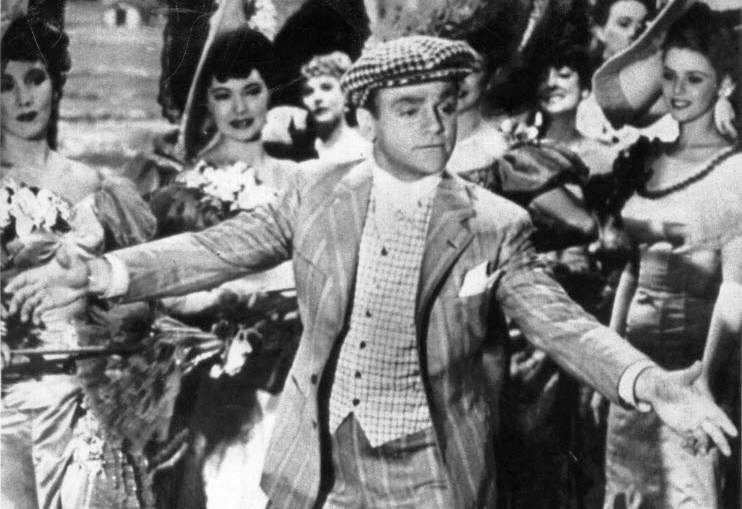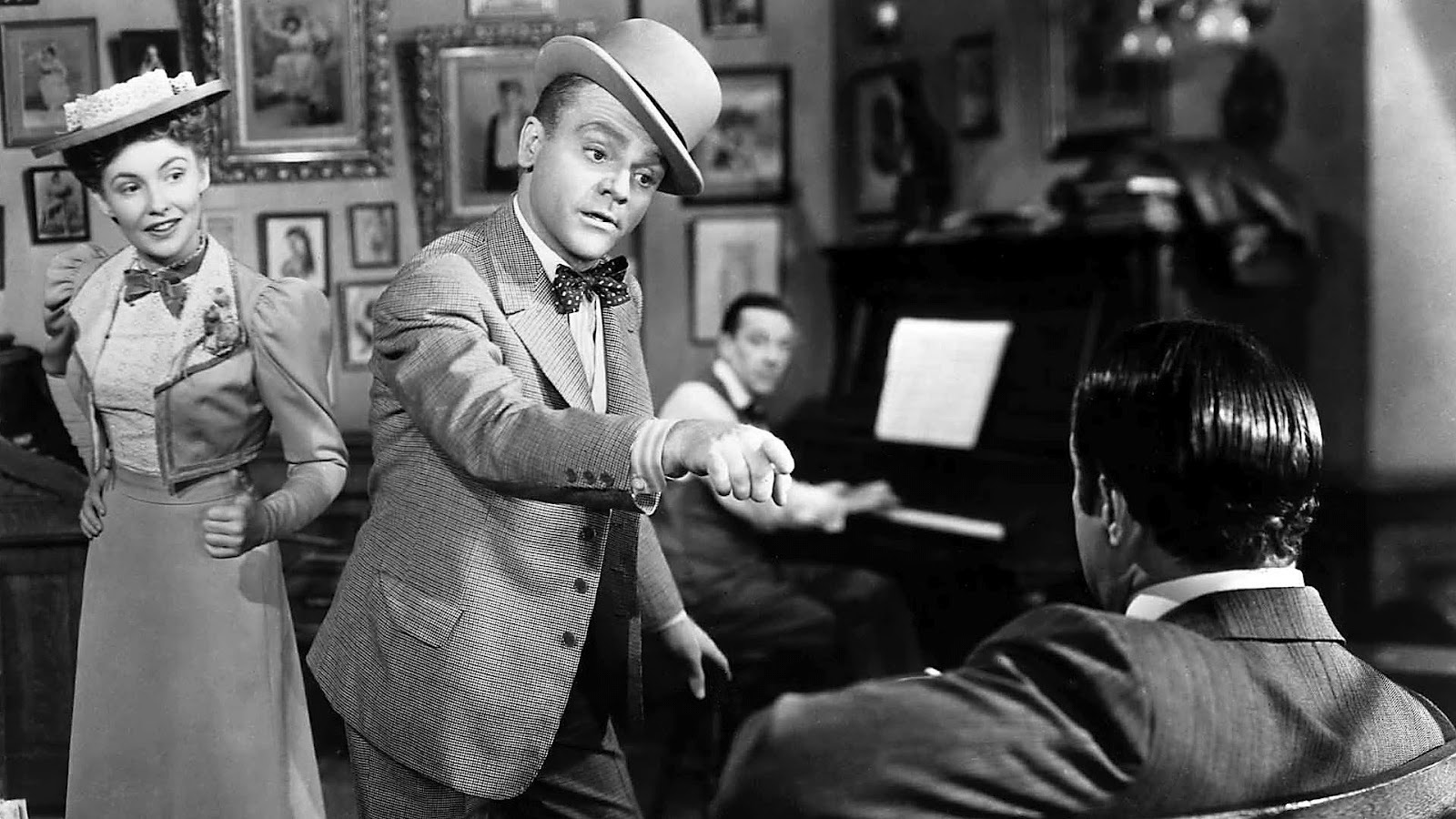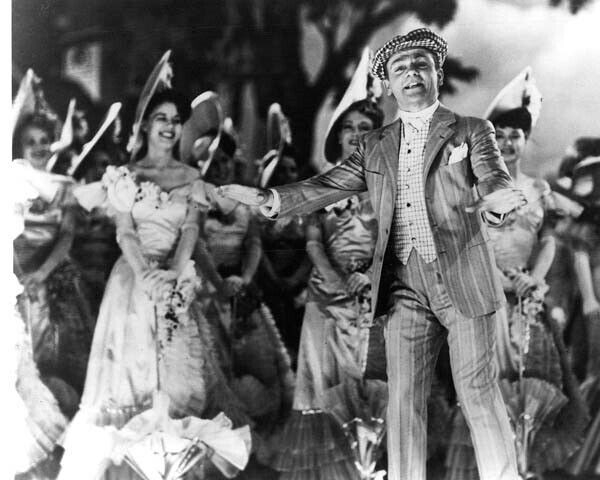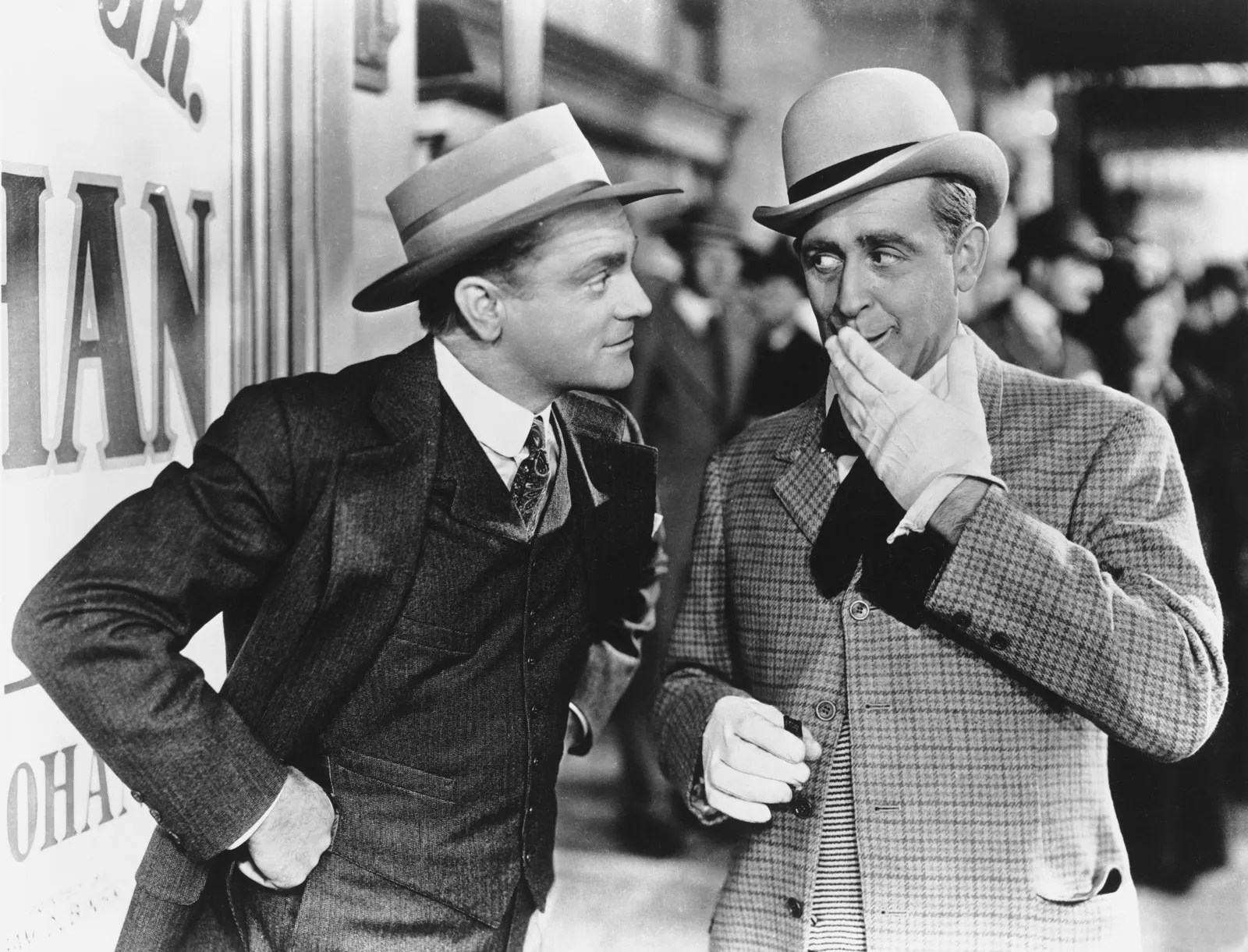

Comfy, Cozy Christmas: Meet Me In St. Louis and Have Yourself A Merry Little Christmas

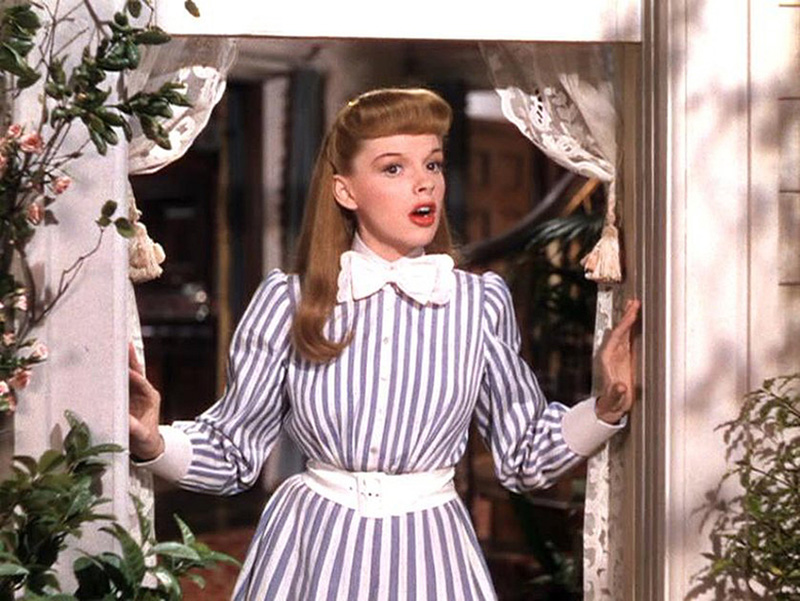
A vlogger I watch recently suggested watching Meet Me In St. Louis as a Christmas movie, mainly because of the song Have Yourself A Merry Little Christmas, which is sung toward the end of the movie.

I had never watched the movie because I’ve never felt like I was a big fan of Judy Garland, even though I haven’t seen her in much other than The Wizard of Oz.

I decided to give the movie a try a couple of weeks ago, though, and it turns out I don’t mind Judy as much as I thought and the movie does have a few Christmas-themed scenes (including a Christas Eve dance at the end), but it is much more than a Christmas movie.

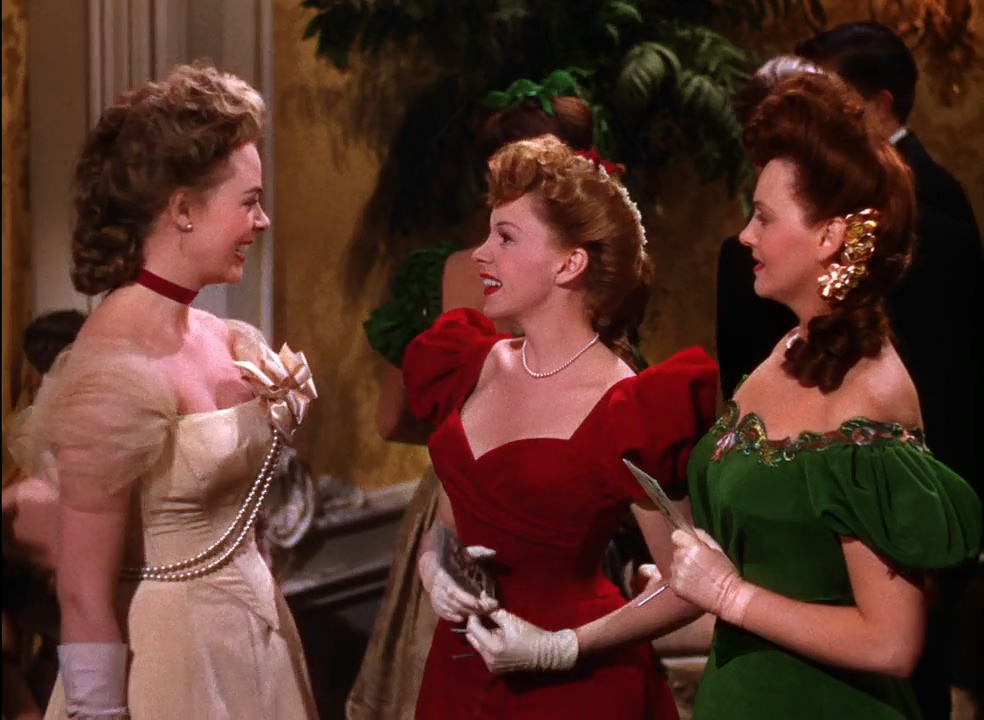
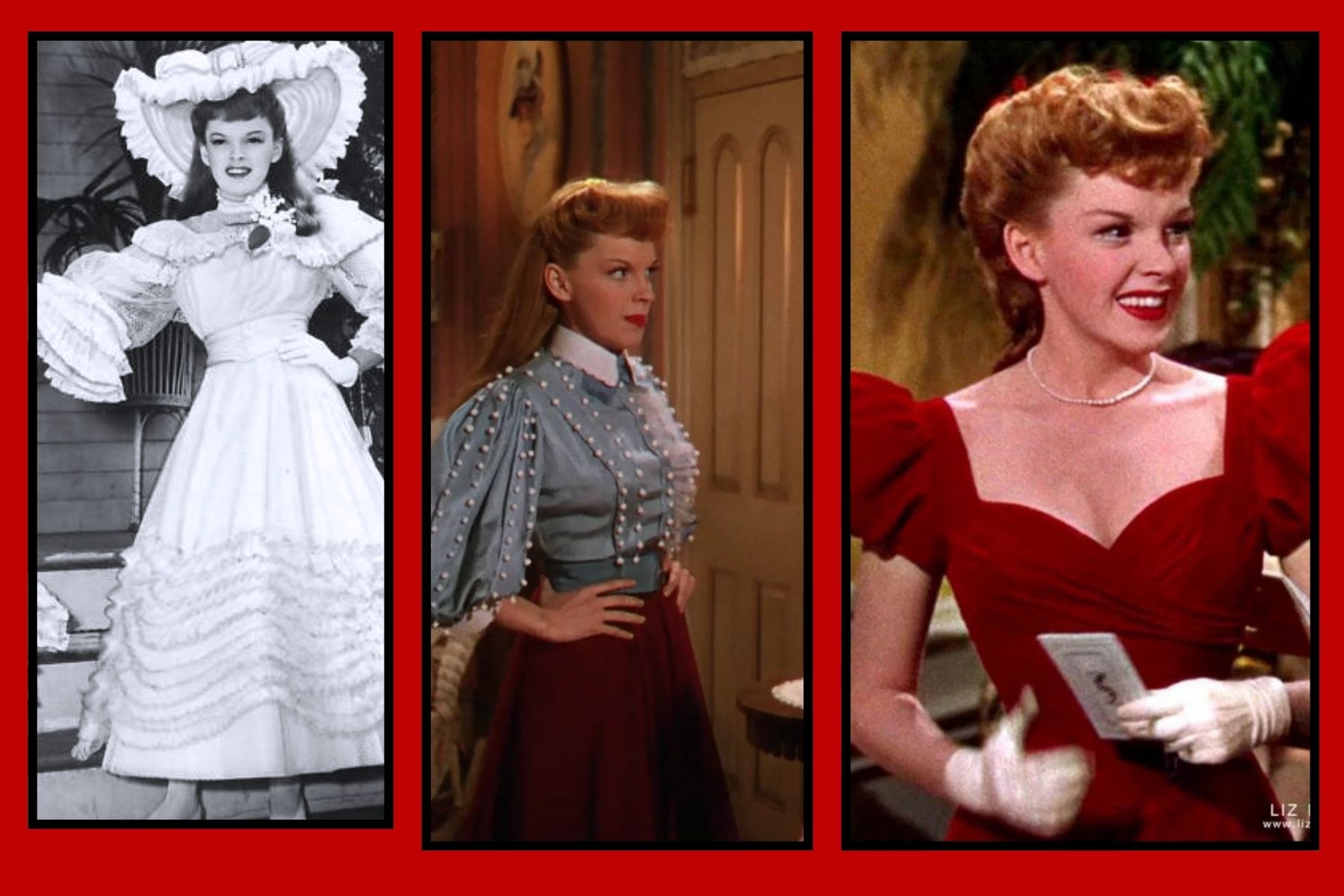
The movie is funny, fun, warmhearted, and full of really sweet or fun songs. The dresses worn by the young women are gorgeous and it was shot in technicolor which makes all the beautiful dresses even more captivating.

The movie is a musical, which I didn’t know when I started it. I didn’t even know that this is where the song Have Yourself A Merry Little Christmas came from. I also didn’t know this is where The Trolly Song (which I thought was just called Clang, Clang, Clang Goes the Trolly) came from. (That’s the song my husband always sings when he pretends he’s looped out from a knock on the head or when he is super tired. I’d say when he is drinking, but he doesn’t drink enough to get that drunk. I told him this movie is where the song he sings is from and he said he thought it was from The Simpsons. Ha! I think Homer does sing part of it in an episode.)

Yes, I have been living under a rock for my entire life.

If you’ve seen this movie you can skip over the next paragraph where I share what the movie is about.

The movie follows the Smith family, primarily Esther Smith (Judy) and her siblings as they grow up in St. Louis. The movie shows a year in the life of the family and there isn’t really a deep plot to the movie other than Judy trying to catch the eye of the college boy next door — John Pruitt — and her sister trying to get married. I don’t find the lack of a plot a detriment of the movie, by the way. The majority of the movie follows the different situations the youngest girls get themselves in, as well as the love life of Esther and her sister, and it is a fun journey.

The movie takes place in 1903.

The parents, grandfather, and housemaid are really all secondary characters but still very fun additions.

The youngest sisters, played by Margaret O’Brien (Tootie) and Joan Carroll (Agnes), are absolutely hilarious. The scenes with them are the funniest scenes in the movie. There is one that takes place on Halloween that is so insanely crazy I found myself gasping at the verbal “brutality” of these kids. (Written with a laugh, just to explain.)


If you’ve seen the movie, you know what I’m talking about. If you haven’t seen the movie, you’ll need to watch and find out.

In addition to Judy, the movie also stars Lucille Bremmer, Mary Astor, Leon Ames, and Harry Davenport.

The musical was released in 1944 and based on a series of short stories by Sally Benson.

Her stories story first appeared in the New Yorker magazine between June 21, 1941 and May 23, 1942. The twelve installments were published under at The Kensington Stories with Kensington referring to the fictional street address of the “Smiths’s” house.

Benson sold the rights to MGM in 1942 and was hired to work on the screenplay, which was ultimately written by Irving Brecher and Fred F. Finklehoffe with her help.

Benson published the stories as a novel of the same name with each chapter covering one month of the year the same year the movie came out.

According to AFI.com, Benson’s story was based on her own experiences growing up in St. Louis. “Tootie” was based on Benson, while “Esther” was inspired by her older sister.

The movie, incidentally, was directed by Vincent Morelli, who married Judy a year later. That marriage is a whole crazy story for another day.

Have Yourself A Merry Little Christmas was written by Hugh Martin and Ralph Blane who originally wrote it to be about celebrating Christmas during wartime. At the request of Judy, though, the lyrics were tweaked and the mood of the song was uplifted a bit. Judy, who was supposed to be 17 in the movie, is singing the song to her younger (5-year-old sister) in the movie and didn’t feel it was appropriate to sing a sad song at Christmastime to a little girl.

Meet Me In St. Louis was the second-highest grossing film that year behind the Bing Crosby movie Going My Way (the prequel to The Bells of St. Mary).

The movie produced three “standards” or songs that became very popular and well-known even years later: “The Trolley Song“, “The Boy Next Door” and “Have Yourself a Merry Little Christmas“, all written by Hugh Martin and Ralph Blane for the film.

According to TCM.com, Meet Me in St. Louis received a very large amount of awards in 1944 and beyond. Here are some of those:

  • It was nominated for four Academy Awards including Best Cinematography, Best Original Song (for “The Trolley Song”), Best Musical Score and Best Writing, Screenplay.


  • In 1989 it won an ASCAP Award for the song “Have Yourself a Merry Little Christmas” which they named the Most Performed Feature Film Standard.
  • The National Board of Review named it one of the top ten films of 1944.


  • In 1945 the Library of Congress selected it as one of 7 films to be the first inclusions in the library’s film collection.


  • In 2005 the American Film Institute ranked it the 10th Greatest Movie Musical of All Time.


  • In 2004 the American Film Institute ranked “The Trolley Song” from it as the 26th Greatest Movie Song of All Time.
  • In 2005 Time Magazine named it as one of the Top 100 All-Time Movies.

An interesting story I read while researching this movie was that Margaret O’Brien’s juvenile Oscar was stolen by a former maid of her family’s. The Academy gave her a replacement Oscar, but she still hoped to one day have her original Oscar returned to her. She used to search flea markets and collector auctions for it.

The story is a bit long, but the Oscar was eventually found and returned to her during a special ceremony held by the Academy.

At the time she said, “For all those people who have lost or misplaced something that was dear to them, as I have, never give up the dream of searching—never let go of the hope that you’ll find it because after all these many years, at last, my Oscar has been returned to me.”

There is plenty more information about the movie online, including on the TCM.com website: https://www.tcm.com/articles/musical/18523/meet-me-in-st-louis-1944

Have you ever seen this one?

______

Resources:

American Film Institute: https://catalog.afi.com/Catalog/moviedetails/24066

TCM.com: https://www.tcm.com/articles/musical/18523/meet-me-in-st-louis-1944


This post is part of the Comfy, Cozy Christmas feature hosted by me and Erin at Still Life, With Cracker Crumbs. If you have a blog post that you would like to share as part of this annual link-up, please find out more here.

Classic Movie Impression: It Happened On Fifth Avenue

I’ve been watching less popular Christmas-themed movies around Christmas for the last couple of years. One of those movies was It Happened on Fifth Avenue (1947).

I truly thought I’d written about this movie in previous years, but I can’t find it when I search so I am writing about it now.

The movie is about a group of people who are sort of thrown together but it starts with a man named Alyosius T. McKeever (Victor Moore) who sneaks in the mansion of businessman Michael O’Connor (Charlie Ruggles) in New York City early in November when O’Connor goes to his home in Virginia for the winter.

McKeever is a “vagabond” or homeless man.

He lives in the home, wearing O’Connor’s clothes, and eating any food left at the house in the pantry.

The movie opens with him sneaking inside through the back fence and will later learn that he’s been doing this for some twenty years.

I, of course, am surprised that no one has ever seen him or seen the lights on in the house but, it’s a movie. Let’s suspend belief.

There are police who patrol the grounds, but McKeever has a system where he hides in the icebox (or a room they call the icebox) until the police have passed by. He also has the lights hooked up so they will shut off as soon as someone opens the front door.

One day McKeever meets Jim Bullock played by Don DeFore, sleeping on a park bench. Jim, a veteran, has been evicted from his apartment building because it is being torn down. Michael O’Connor is putting up an 80-story building in its place.

When Jim gets to the mansion and is settling in, he sees an award shaped like a boat with the name Michael O’Connor on it and accuses McKeever of taking over homes of people who can’t afford to live in family homes like his.

McKeever tells Jim he’s not really O’Connor, but a friend of his. Jim accepts this explanation easily

Jim isn’t sure what to think of this arrangement, but he needs a place to stay so he accepts it.

Soon we see Michael O’Connor, who is in Virgina having a board meeting. During the board meeting he gets a call from his daughter Trudy’s school and been told that it’s possible she’s run away.

Michael looks at a photo of two women and asks his assistant if he thinks that she has run off to her mother in Florida.

The man doesn’t know so Michael orders him to hire a private investigator and find his daughter (played by … get this name…Gale Storm).

His daughter, though, is already found for us viewers. She is at her father’s mansion looking for her clothes when Jim finds her. He demands to know what she’s doing there and suggests she is stealing from the mansion. He threatens to call the police.

Trudy, apparently smitten with Jim merely based on his appearance, decides not to tell him who she really is and tells him to go ahead and call the police.

McKeever pulls Jim aside and confesses all. He is not a friend of O’Connor, but is, instead, simply someone who takes advantage of the home being empty for a few months out of the year. When O’Connor leaves, he moves in and when O’Connor leaves Virginia, McKeever hitches his way to Virginia and moves in that house until it’s time to come back to New York.

(Again…suspend belief).

Jim isn’t sure what to make of the arrangement, but is amused and impressed that McKeever hasn’t been caught yet.

Trudy listens in and overhears what McKeever has been doing and smiles in an amused way. She decides she will find a way to stay on with the men since it will be a way to hide from her father for a while. She tells the men the truth, which is that she’s going to get a job at a music store so she can get back on her feet again. She then says she only broke into the house because she was hungry and desperate and then does a lovely fake faint to add to her story.

The men agree that she can stay. From here the movie will start to get a bit more complicated as more people are invited to stay at the mansion, including a family with small children. What could make all of this even more chaotic? Add in Michael O’Connor returning to New York to try to find his daughter and planning to return to the mansion.

One little thing that bothered me about this movie was how young Gale Storm looked and was supposed to be. She was supposed to be 18 but a romance develops between her and Jim and he seems considerably older than her. That was…awkward at times. However, I’m not sure how old Jim is actually supposed to be so maybe it isn’t so awkward. Gale was 22 at the time the film was made.

The screenplay for this movie was written by Everett Freeman. The original story was created by Herbert Clyde Lewis and Frederick Stephani.

Harry Revel wrote the songs “It’s A Wonderful, Wonderful Feeling.” “That’s What Christmas Means to Me” and “Speak My Heart” for the movie, according to the opening credits, but I wouldn’t call this movie a musical. One of the main characters simply sings a bit.

Gale Storm thought she’d be singing the parts in the film, but, unfortunately, she was told her voice would be dubbed over.

She later wrote in her memoir: “I couldn’t believe it. I thought that maybe the director didn’t know I’d been singing and dancing in films, and that if I spoke to him he’d let me do my own numbers. Well, I asked him, and he said no. I asked him to look at some of my musicals, and he said no. I asked him if I could sing for him, and he said no. His theory was that if you were a dancer, you didn’t sing; if you were a singer, you didn’t dance; and if you were an actor, you didn’t sing or dance. It was humiliating.”

Another song in the movie is “You’re Everywhere” sung by The King’s Men at 1930s/1940s barbershop quartet.

According to TCM.com, Frank Capra originally acquired the rights to the movie but passed it on to Allied Artists, a new subsidiary of Monogram Pictures, which used to develop B movies. It Happened on Fifth Avenue was the companies first major motion picture and was developed by Roy Del Ruth.

Not only was Gale upset about not being able to sing in the film, but she also was disappointed Capra didn’t direct it, according to the TCM.com article. She felt the movie was decidedly “Capra-esque” — “a warmhearted human story about the little guy with underlying social and political commetary. She said that she felt Del Ruth didn’t make the most of the story’s potential, but she may have been holding a grudge since he didn’t let her do her own singing.

Gale said Del Ruth wasn’t easy on anyone.

“I wasn’t the only one Del Ruth humiliated,” continued Storm in her biography. “Victor Moore was a dear, sweet old man who was kind to everyone; we all loved him. Except Del Ruth. Whatever Victor did, the director made him redo it — again and again. And Del Ruth never told the old man what he might have been doing wrong.”

Despite these complaints from Gale, the movie did well when it was released, with the actors receiving praise by reviewers and critics. It has now become a beloved classic as well.

Is this one you’ve ever seen? What did you think about it?


This post is part of the Comfy, Cozy Christmas feature hosted by me and Erin at Still Life, With Cracker Crumbs. If you have a blog post that you would like to share as part of this annual link-up, please find out more here.


If you write book reviews or book-related blog posts, don’t forget that Erin and I host the A Good Book and A Cup of Tea Monthly Bookish Blog Party. You can learn more about it here.

Five Quirky Christmas Movies You Should Watch This Year

This post is part of the Comfy, Cozy Christmas feature hosted by me and Erin at Still Life, With Cracker Crumbs. If you have a blog post that you would like to share as part of this annual link-up, please find out more here.

A couple years ago, I decided to look for Christmas movies to watch that are not as well known or popular or maybe not exactly “Christmas movies” but are considered Christmas movies by those who have viewed them.

Alas, Die Hard is not on this list. Die Hard 2 isn’t either.

These are older, more classic films — though some might say Die Hard is old now and a classic.

Still…no Die Hard here.

Beyond Tomorrow/Beyond Christmas

Beyond Tomorrow, also called Beyond Christmas in later years after it was colorized, was released in 1940. It is quirky, but also very sweet.

The movie starts with the story of three old men (Michael O’Brien, George Melton, and Allan Chadwick) who served together in the army and are living in the same house and looking back on their lives with some sadness and regret. They want to help others to make up for some of their regrets and we learn that they have tossed wallets with money in them out into the street for Christmas. They want to see if anyone will be honest and return the money. Two people do. Schoolteacher Jean Lawrence (Jean Parker) and cowboy James Houston (Richard Carlson).

The three men begin to conspire how to bring the young man and woman together as a couple but in the middle of their matchmaking, they tragically die in a plane crash.

Stay with me here — the men come back as ghosts and work from the afterworld to keep the couple together.

Read my review: https://lisahoweler.com/2023/11/30/comfy-cozy-christmas-movie-review-beyond-tomorrow/

Where you can find it: Tubi, Amazon Prime and Hoopla.

We’re No Angels

We’re No Angels is certainly an out-of-the-box Christmas movie and a lot of fun. The subject matter and some of the lines were actually jaw-dropping to me and weren’t something I would have expected in a movie made in 1955.

The movie stars Humphrey Bogart (Joseph), Peter Ustinov (Jules), and Alto Ray (Albert).

The men are escaped convicts on an island called Devil’s Island off the coast of France. There are other convicts on the island in prison uniforms but they are on probation or parole, working at local businesses. The fact there are so many convicts wearing the same uniforms makes it easy for the men to blend in.

They make a plan to find a business they can rob and get money from so they can leave the island on a boat. A chance meeting with a doctor on a ship who needs to deliver a message leads them to a clothing store where they meet Felix Ducotel and his family. Felix is managing a store and they offer to repair his roof as a way to get their foot in the door, so to speak, so they can rob him later that night. He accepts and from the roof the three men begin to learn about Felix’s family – including his wife, Amelie and daughter, Isabelle.

Soon they are wrapped up in the family’s drama. They learn the business, owned by Felix’s cousin, is failing. Isabelle is in love with a man named Paul. Her mother wants to know why she isn’t married and giving them grandchildren already (umm…because she’s only 18. Hello??!) and the couple is stressed because the business is failing.

I will not spoil the movie but I will say that the men end up deciding to cook Christmas dinner for the family and steal most of what they need to do so. They keep offering to help the family, partially because they would like some of that dinner too, and partially to build trust so they can . . . um…kill and rob them. Ahem.

My review: https://lisahoweler.com/2023/12/14/comfy-cozy-christmas-were-no-angels/

Where you can find it: YouTube, AppleTV, Amazon Prime Video, Fandango

Holiday Affair

This movie stars Janet Leigh, Robert Mitchum, and Wendell Corey. 

Leigh plays Connie Ennis, a widower, whose husband died in World War II. She has a 6-year-old son, Timmy played by Gordon Gerbert , (ironically I worked with a man named Tim Ennis and my husband still works with him). She is dating a man named Carl (Wendell Corey) who is predictable and safe. You know, the ole’ boring boyfriend versus the dashing and bold potential boyfriend trope.

Mitchum plays Steve Mason, whom Connie meets at a department store when she’s there as a comparison shopper for another store. Steve pegs her in her role right away but doesn’t turn her in because she tells him she’s a single mom and her son’s only support.

That move gets him fired and one would think that means he is out of Connie’s life. On the contrary, they continue to have interactions when Connie goes to apologize to him and then he ends up helping her out on her next shopping trip.

That encounter leads to Steve meeting Timmy, who is enamored with Steve – much more so than Carl, who he knows wants to marry his mother.

Timmy acts out with Carl and is sent to his room and this leads to a heart-to-heart with Steve who learns Timmy wants a train for Christmas.

Steve makes this happen and yet another interaction occurs between him and Connie.

There is a lot of back and forth in this film and more than one interaction between Connie and Steve when she walks away from him angry and he just watches her walk away with a smug grin.

This is a movie with a definite love triangle, of course, and you’ll have to watch to see how all that works out. Some of the movie is predictable but some of it isn’t. There are plenty of surprises to make this movie a unique and non-traditional Christmas watch.

You can read my review here: https://lisahoweler.com/2023/12/07/comfy-cozy-christmas-movie-impressions-holiday-affair/

Where you can find it: Amazon, YouTube, Apple TV, Google Play, Fandango

Bells of St. Mary

I couldn’t believe it took me so long to watch this movie.

I ended up loving it when I did last year. The chemistry between the main stars, Bing Crosby and Ingrid Bergman, was outstanding. It was also nice to see Ingrid in a role with some humor because I’ve only ever seen her in more serious roles. And, of course, I love that Bing sang in this movie, even though it wasn’t a strict musical.

Bing Crosby arrives as the new priest at the St. Mary’s parish and is immediately told of how the former priest aged quickly because he had to help oversee a nun-run, school that is run-down and in the inner city.

The former priest also had to deal with Sister Superior Mary Benedict (Bergman), a woman with a strong personality who runs the school.

“I can see you don’t know what it means to be up to your neck in nuns,” the rectory housekeeper says.

Father O’Malley admits he doesn’t and the woman advises him to “sleep well tonight” as if implying it will be his last good night of sleep for a while.

Father O’Malley and Sister Benedict butt heads more than once but in passive-aggressive ways. One way they butt heads is in how to educate the children at the school. O’Malley is much softer in his approach while Sister Mary prefers levying harsher punishments.

There isn’t a ton of “Christmas” in this movie other than in the middle of the movie, there is an adorable rehearsal of the Christmas/nativity story with the cutest little kids – probably 5 to 7. Still, many consider this a Christmas movie.

“The Bells of St. Mary’s has come to be associated with the Christmas season,” a Wikipedia article states. “Probably because of the inclusion of a scene involving a Christmas pageant at the school, a major plot point involving an unlikely (yet prayed for) gift, and the film’s having been released in December 1945. In the 1946 film, It’s a Wonderful Life, in which Henry Travers, a co-star of The Bells of St. Mary’s, plays the guardian angel Clarence Odbody, the title of The Bells of St. Mary’s appears on the marquee of a movie theater in Bedford Falls, New York. In The Godfather (1972), Michael and Kay see The Bells of St. Mary’s at Radio City Music Hall.”

My review: https://lisahoweler.com/2023/12/12/comfy-cozy-christmas-the-bells-of-st-mary/

Where You Can Find It: Amazon Prime Video, Tubi, YouTube, Apple TV, Google Play, Roku Channel, etc.

A Christmas Carol Goes Wrong

Shortly after we moved to our current house, my son and I were looking for a show to watch late at night and found a show called The Goes Wrong Show on BritBox. We clicked on it and were, quite frankly, bewildered by it.

It was a group of about seven people acting out a play and completely messing up lines, tripping off props, and being all-out insanely weird.

We weren’t sure if these people were really messing up their plays or if they were pretending to mess up a play, or  . . .what was going on.

We watched the first episode and laughed so hard that our sides hurt. Obviously, we eventually caught on that the whole show was meant to be a joke and that the actors were real actors playing fake actors on a show about actors.

Later we watched the episodes with The Husband and he laughed so hard I thought he was going to burst a blood vessel.

We watched the whole season and I have to say the Christmas episode was my favorite that first season. Flash forward to a few years ago and we discovered this group — which we had since found out was called Mischief Theatre — had been featured in a special called A Christmas Carol Goes Wrong on the BBC.

With A Christmas Carol Goes Wrong we are getting more than just funny but also pure ridiculousness.

For a little background on the actor troupe who takes part in this Christmas special, according to Wikipedia, “Mischief Theatre is a British theatre company founded in 2008 by a group of students from The London Academy of Music and Dramatic Art in West London, and directed by Henry Lewis, Jonathan Sayer, and Henry Shields. The group originally began by doing improvised comedy shows, but by 2012 they expanded into comedic theatrical performances that include choreographed routines, jokes, and stunts.

The company is best known for its performances as the fictional theatre company, The Cornley Polytechnic Drama Society, who attempt several amateur performances that comedically go wrong.”

In this particular special, the comedy group has taken over the BBC’s production of A Christmas Carol by kidnapping and dragging out the main stars, including Derek Jacobi, a famous British actor.  Actress Diana Rigg plays the narrator part of the time, but literally has to “phone it in” because she is stuck in traffic.

Things, of course, go completely haywire and become even crazier when one of the actors believes he should be the lead actor and tries to knock out the director (Chris) to take over the lead as Scrooge. While trying to take out Chris, though, he injures other cast members or ends up destroying various sets.

My review: https://lisahoweler.com/2022/11/17/tis-the-season-cinema-a-christmas-carol-goes-wrong/

Where you can find it: Amazon, Tubi, YouTube, The CW, Pluto, Plex

Have you seen any of these movies?

What movies will you be watching this holiday season?


If you write book reviews or book-related blog posts, don’t forget that Erin and I host the A Good Book and A Cup of Tea Monthly Bookish Blog Party. You can learn more about it here.

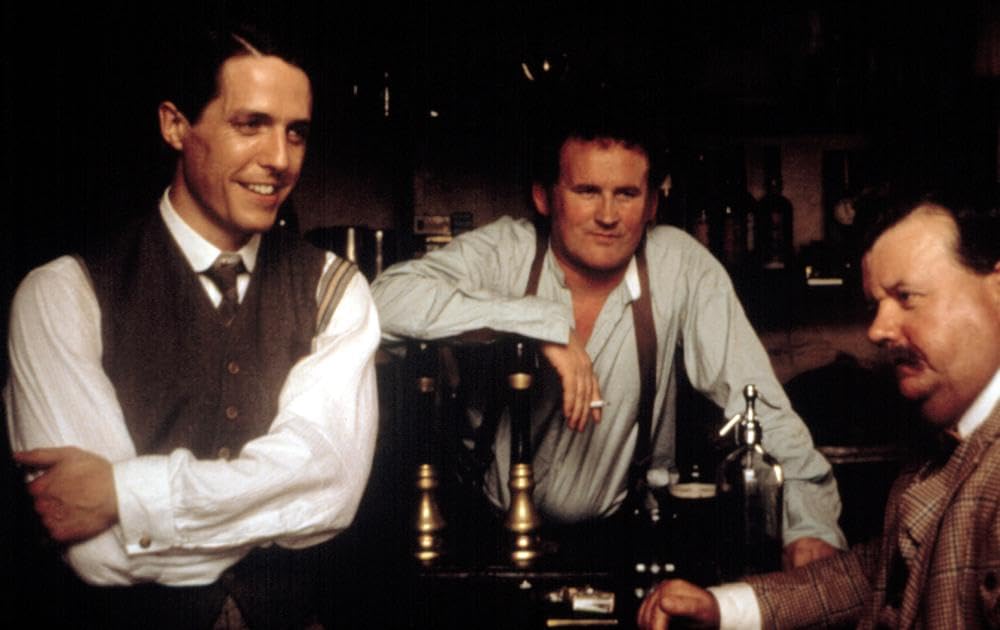
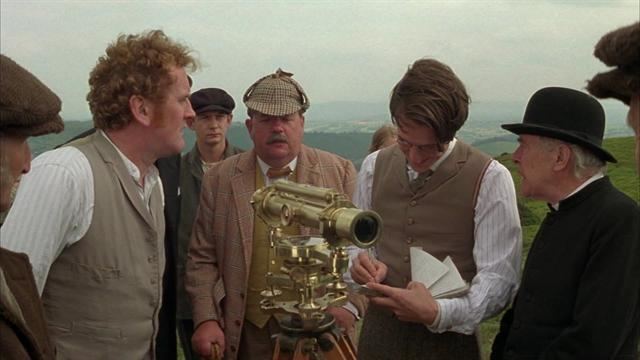
Comfy, Cozy Cinema: The Englishman Who Went Up A Hill But Came Down a Mountain

Erin from Still Life, With Cracker Crumbs and I are hosting the Comfy, Cozy Cinema again this year.

Our movie this week was The Englishman Who Went Up A Hill But Came Down A Mountain.

There are three things to know about this movie: It is based on a Welsh legend (but not actually true), it a romantic comedy, and it has the longest title of any movie I have ever watched.

First, let’s have a little description from online:

During the days of World War I, a small Welsh town relies on its local mountain as a source of pride. When two English cartographers, Reginald Anson (Hugh Grant) and George Garrad (Ian McNeice), arrive to measure the mountain, they discover the landmark is 16 feet short of achieving the official mountain classification. Disheartened that their mountain has been deemed a hill, the townsfolk devise a plan to make up those 16 feet. Meanwhile, Anson falls for a local woman (Tara Fitzgerald).

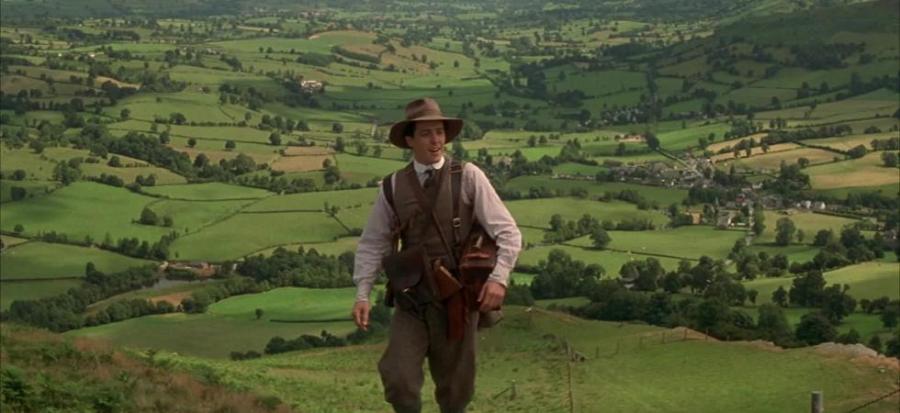
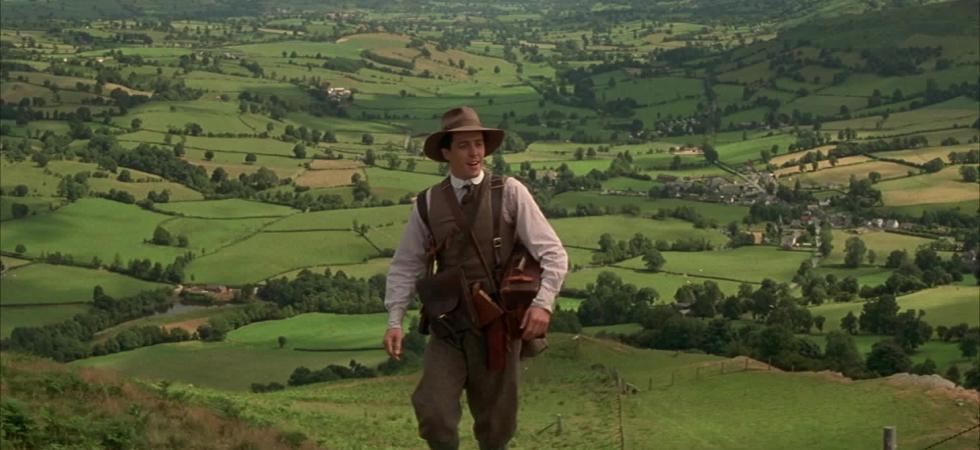
This movie has all the things I like — Quirky characters and story, beautiful views, dry British humor, and a bit of romance.

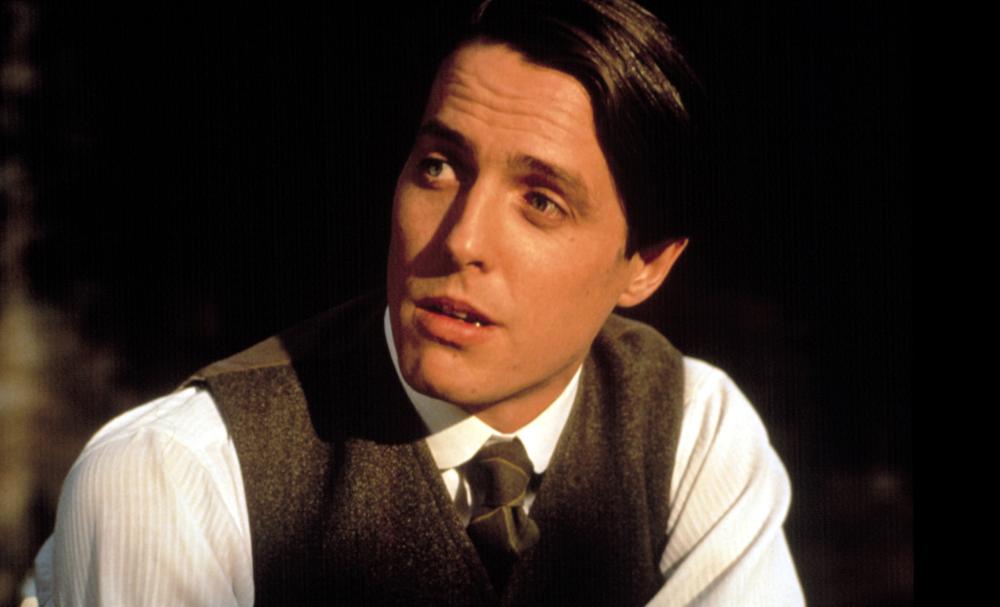
 Hugh Grant is adorable in it and Colm Meany ads a bit of humor (even if he is a dirty scoundrel).

It is free of bad language, sex, or violence.

Well, let’s talk about the sex a bit. There are suggestions of it being engaged in, but none is shown.

The movie starts with the narrator explaining that a lot of people in Wales, where the movie takes place, have the same last name so people began to attach their occupation to their name. This is why a little boy wants to know why one man had a very long occupation attached to his name. He asks his grandfather and the grandfather begins to tell the story.

We then switch to Hugh Grant’s character, Reginald Anson (there is no way to say that name without using a British accent by the way. Try it. I dare you. It doesn’t sound right in an American accent) riding into a small village with another man, George Garrad, portrayed by Ian McNeice.

They pull up to a barn and inn, looking for a place to stay. The bar is owned by Colm Meany’s character.

Colm Meany is called Morgan the Goat. Why is he called this? Well, Morgan is taking advantage of the fact that man of the men of this village are in France fighting in the war. He’s keeping the wives of these men company, shall we say. This is why the church is full of babies that look a lot like Morgan, which absolutely infuriates the minister, Rev. Jones, portrayed by Kenneth Griffith.

So, Reginald and George explain to Morgan that they are there to conduct some surveys to record the topography of the area for the war effort because it is important to know the lay of the land in case the enemy invades.

If they are going to be checking out the local topography, Morgan suggests they check out the only mountain in Wales —  Ffynnon Garw.

George a bit of a laugh but eventually they agree they will check the “mountain” out as part of their effort. The only problem is that they don’t really think it is a mountain. See, to be considered a mountain in the UK, the elevation has to be at least 1,000 feet. The cartagrophes don’t think that will be the case when they measure. This upsets the people of the town who have pride in the fact they have the only mountain in their country.

The reverend is especially riled up at the prospect of the mountain being classified as a hill.

When it is discovered that Ffynnon Garw isn’t a mountain, well, all hell breaks loose and many touching, ridiculous, and heartbreaking moments unfold as Morgan decides to delay Reginald and George from leaving while the town’s people find a way to make the hill a mountain.

The reverend and Morgan don’t get along at all but the reverend agrees that it is important to make the hill a mountain to boost morale of the village during the war.

Some of the fun or interesting characters in this movie are the twins with the same name, Johnny Shellshocked (who suffered PTSD in the war), William the Petroleum Man, and Davies the School.

One con of this movie, for me, though, I loved it, was the romance. It was late in the movie, no time for development and I felt like it was just thrown in as a last-minute idea. The posters for this movie with the actress and Hugh Grant on the front are baffling to me because she really wasn’t that important of a part of the movie for me.

Some trivia/facts about the movie:

  • This movie was written by  Ifor David Monger, the grandfather of the director Christopher Monger who told his son about the real village of Taff’s Well, in the old county of Glamorgan, and its neighboring Garth Hill.
  • Due to 20th century urbanisation of the area, it was filmed in the more rural Llanrhaeadr-ym-Mochnant and Llansilin in Powys.
  • The narrator begins by remarking that “For some odd reason, lost in the mists of time, there’s an extraordinary shortage of last names in Wales.” Actually there is a known reason: as part of their increased domination of Wales in the 16th century, the English abolished the Welsh system of patronymics and introduced surnames arbitrarily. (source IMbd)
  • “Despite the implication in the film, and the real-life local legend, the story is fiction. Historians have determined that the mound at the summit of Garth Mountain (the inspiration for the movie) is a Bronze Age burial mound. In 1999, local officials and the History Society placed a sign on the mountain, telling the many climbers who’ve been coming there because of the movie’s popularity of the site’s real significance – and warning that they face two years in prison if they disturb the burial mound.” (source IMbd)
  • When Williams the Petroleum breaks a piece of the Englishmen’s car and pretends to discover it, he says he doesn’t know the English name for it, but in Welsh it’s called a “beth-yn-galw.” “Beth-yn-galw” translates more or less to “whatchamacallit”. (source IMbd)

To read what Erin thought about the movie, visit her blog:

Have you ever seen this one? What did you think of it?

You can see the rest of the list of movies in this cool graphic that Erin made:

Comfy, Cozy Cinema: The Mummy (1999)

Erin from Still Life, With Cracker Crumbs and I are hosting Comfy, Cozy Cinema again this year and up this week was The Mummy!

The Mummy (1999) was a perfect watch for Halloween, though maybe not super comfy or cozy? I don’t know but we slip some creepier ones in for Halloweeeen too so it all evens out! This one isn’t super creepy all the way through, though, and oneee thing you should know is that The Mummy does not take itself too seriously.

Even though it isn’t really a horror film, it deals with the dead and ancient curses, gross bugs, the undead, and bringing people back from the dead and…., etc., etc.

And we also get to see when Brendan Frasier had a career. Ha! I kid. I kid. I know his career has been resurrected like some of the characters in this movie. I just thought it was a funny line.

This movie has become a cult classic after performing well in the theaters, but even better for video/DVD sales which raked in $1 billion for Universal in 2000. The movie’s success even led to a sequel, The Mummy Returns, which was must less successful and then yet another sequel, which was not a huge success either, if I remember right..

Even though I have seen this movie a couple of times, it’s been a long time since the last rewatch, so I rewatched it with my kids to remind myself of specific scenes, plot, etc.

Etc. is the word for today, by the way. I’m going to keep using it throughout this post just to be annoying, obnoxious, belligerent, etc. etc.

(I’m kidding about that too. I can’t keep that up for an entire post…..or can I?)

This movie starts with the affair between Imhotep and  Anck-su-namun, the mistress of the Pharoah. No one was to touch  Anck-su-namun  other than the Pharaoh but I guess Imhotep missed that memo because he started an affair with her.

The two are caught by the Pharaoh, the Pharaoh is killed, the Pharaoh’s men come in, Imhotep escapes while  Anck-su-namun reminds him that only he can resurrect her later so she kills herself before the Pharaoh’s men can.

Imhotep then steals  Anck-su-namun  body and tries to resurrect her but is interrupted by the pharaoh’s guard and is intombed with a bunch of creepy beetle things and buried alive “for all eternity.”

Ha. As if that line is going to stick. Of course, we know something is going to happen to disturb this dude’s resting place.

The Medjai, by the way, are sworn to prevent Imhotep’s return, as his resurrection would grant him immense power. They are guarding over him when Rick O’Connell (Brenden Frasier) is in the French Foreign Legion, fighting against an Arab Army, and finds the tomb, but runs away when the sand begins trying to attack him.

The Medjai decide not to kill him, but instead to “let the desert kill him instead.”

Bad idea because Rick lives and discovers an intricate box, which he takes home with him and has stolen by Jonathan Carnahan (John Hannah) who gives it to his sister, Evelyn (Rachel Weisz) a librarian and very green Egyptologist.

Evelyn finds a map inside the box that will lead them to buried Egyptian treasure but it is in the city of the dead. She takes it to her boss at the ancient library but he — oops — sets in it on fire. Was that an accident? Hmm…not so sure there.

Now Evelyn wants to know where Jonathan got it so they set off to find the man who Jonathan stole the box from.

Rick is in jail and actually looks way too clean to have been in jail and he agrees to help Evelyn get to the lost city of death if she will get him out of jail. She figures out a way, but the jailer says he is going to come along to keep an eye on his prisoner.

From there, hijinks ensue, especially when the group runs into a rival team also looking for the city and treasure and Rick runs into an old “friend” who always abandoned him at the most inopportune moments. That friend is Benji and he provides a lot of humor throughout the film, including an iconic scene where he uses symbols from several different religions to keep the mummy from attacking him.

This movie is a fun ride. My husband and I had seen this years ago in the theater when we were first dating — we think anyhow. Our memories are so fuzzy because we are so old.

The Boy said during this movie, “This movie is so fun. I’m really liking this.”

I could have sworn he’d seen this movie before, but he had not, and wanted to, so the timing was perfect, great, impeccable, etc. etc.

The movie is full of eye-candy for all with Rachel Weisz being pretty and Brenden and Oded Fehr and even Arnold Vosloo for those who like bald men.

As I mentioned above, The Mummy is not necessarily a “horror” film but there is a lot of grotesque scenes and moments involving — a bit of a spoiler here — the mummy trying to piece himself back together, which involves pulling other pieces off living humans.

The film was shot in Morocco and The United Kingdom. I found it interesting when I read that Universal took out kidnapping insurance on the crew and cast but didn’t tell them until filming was over. Yikes.

This is the movie where we almost lost Brendan Fraser to by the way

According to an interview with Brendan on The Kelly Clarkson Show, in the scene where Brendan is being hung, the director told him it wasn’t looking believable. Brendan pushed up on his tiptoes while the man who was holding the rope lifted up and Brendan had nowhere to go but try to push down.

“So he was pulling up and I was going down. And then the next thing I knew, my elbow was in my ear, the world was sideways and there was gravel in my teeth.”

He said the stunt coordinator was leaning over him clapping his hands and calling, “Brendan. Come on, Brendan.”

When he did, the coordinator told the actor, “‘Congratulations, you’re in the club — same thing happened to Mel Gibson on ‘Braveheart.’”

The Mummy became such a hit that there were two sequels and a spinoff. Yes, I saw the spinoff with Dwayne “The Rock” Johnson, The Scorpion King. No, I do not recommend it.

I never saw The Mummy: Tomb of the Dragon Emperor but I probably wouldn’t recommend it either.

This movie did get positive reviews when it came out, with most calling it lot of fun.

Roger Ebert of the Chicago Sun-Times gave the film a positive review, writing, “There is hardly a thing I can say in its favor, except that I was cheered by nearly every minute of it. I cannot argue for the script, the direction, the acting or even the mummy, but I can say that I was not bored and sometimes I was unreasonably pleased.”[

Trivia and facts:

*Disclaimer: always make sure to double check these as what I report is only as good as the sites I pull it from and they are not always accurate.

  • The library disaster in the beginning of the film was done in one take. It would have taken an entire day to re-shoot if a mistake had been made. (source IMdb)
  • The effects team was told “no gore” when designing the look of the Mummy. They actually did tests for “grossness threshold.” (source IMdb)
  • Erick Avari who portrayed Dr. Terence Bey now portrays Nicodemus on The Chosen. (source: me!)
  • With the exception of a loin cloth, a few pieces of jewelry, and pasties, Patricia Velasquez as  Anck-su-namun, was nude except for body paint, which took four hours to apply. (source IMdb)
  • This movie is a remake of the 1932 film of the same name. (various sources, including my husband.)
  • The white nightgown Evelyn wore when the ship was attacked became transparent when it got wet and had to be digitally painted white during post production so the film could keep its PG-13 rating. (source IMdb)
  • The Medjai were originally supposed to be tattooed from head to toe, but Stephen Sommers vetoed it because he thought Oded Fehr was “too good-looking” to be covered up. (source IMdb)
  • The crew could not shoot in Egypt because of the unstable political conditions. (source IMdb)
  • To avoid dehydration in the scorching heat of the Sahara, the production’s medical team created a drink that the cast and crew had to consume every two hours. (source IMdb)
  • Sandstorms were daily inconveniences. Snakes, spiders and scorpions were a major problem, with many crew members having to be airlifted out after being bitten. (source IMdb)
  • When Evelyn reads the inscription “He who shall not be named” on Imhotep’s sarcophagus, the hieroglyphs used are accurate. The inscription actually translates literally as “the one without a name.” (source IMdb)
  • The film is called The Mummy everywhere except Japan where it is called Hamunaptra: The Capital City of the Lost Desert. (source, TVTrops.org)
  • “John Hannah claimed in interviews that he didn’t have the best time shooting the film because he felt the character of Jonathan was pretty redundant: he had been hired as a comedic actor but Beni was far more prevalent as the comedy relief and he didn’t work as a sidekick either since Evy fulfilled that role as well. Whenever Hannah tried bringing this up to Stephen Sommers, the latter would just tell him to make something up. Luckily, later films in the series would give Jonathan a more focused role as the comic relief and give him more stuff to do.” (source, TVTrops.org)
  • “The original script’s opening had a number of edits. Imhotep was originally supposed to narrate, and following Seti’s murder Imhotep was supposed to lead the ritual to curse Anak-su-namun’s mummified body for her crime of regicide, only for Imhotep and his priests to dug up the body as soon as all the other witnesses were either dead or had left; in a scene mirroring Imhotep’s origin story in the original film, the diggers were to be killed by the soldiers after burying Anak-su-namun, and for the Med-jai to kill the soldiers afterwards in order to keep her grave a secret. During the ritual at Hamunaptra, Imhotep explains the ritual didn’t require a human sacrifice since Anak-su-namun’s organs were still fresh. When the Med-jai arrive to stop Imhotep, one of them smashes the jar containing Anak-su-namun’s heart, explaining why it it’s intact in one shot, and broken in the shot where her soul flees back to the underworld. Lastly, Imhotep explains how part of the Hom Dai works: the sacred scarabs would be able to enter his now tongue-free mouth and he’d be forced to consume them, cursing him, while the scarabs would become cursed as well upon consuming his flesh, creating a perversion of the cycle of life, death, and rebirth. Yes, the scarab swarms that plague our heroes later are all undead insects.”  (source, TVTrops.org)

 If you want to read Erin’s impressions of the movie, you can find it here

So, have you ever seen this one? What did you think of it?

Up next in our Comfy, Cozy Cinema will be The Englishman Who Went Up A Hill But Came Down a Mountain.

You can read my impressions of past movies in this year’s Comfy Cozy Cinema and past years here: https://lisahoweler.com/movie-reviews-impressions/

Our full list of movies is here:

Comfy, Cozy Cinema: The Young In Heart

Erin from Still Life, With Cracker Crumbs and I are hosting Comfy, Cozy Cinema again this year and up this week was The Young In Heart.

And, yes, that title is the actual title: The Young IN Heart.

I feel like I cheated a little bit this week because not only have I watched this movie, but I also wrote about it when I watched it for the Winter of Douglas Fairbanks Jr. That means   I had an advantage to Erin when it came to writing this week’s post because I am going to quote a lot of my original post.

 This is part of what I wrote in that post: “I absolutely loved Douglas in this one. He played a more prominent role than in Gunga Din and was simply … shall I sound completely cheesy? Yes, I shall. He was completely delightful.

At one point, I texted my friend Erin that a drunk Douglas is adorable.”

Yes, I did text Erin this past January to tell her he was adorable. Yes, I am weird.

Before I forget, I found this one for free on YouTube.

So, let’s get to the movie.

The Carlton family, of which Douglas is a part of in this movie, are not a family you would want to know in real life. They are swindlers and grifters. They mooch off and manipulate people to scrape by in life.

We open the movie in the French Riviera with Douglas’s character (Rick) ready to marry a young woman whose father is rich.

Everything falls apart, though, when the police find out about the family and reveal their conniving ways to the family of Rick’s future wife. The family is told to get out of France and end up on a train where they meet a ridiculously sweet woman (Minnie Dupree) who has only recently come into a great sum of money.

Ironically, her last name is Fortune. George-Anne sets out to swindle the woman out of paying for their lunch, but the plan expands as the woman explains she lives alone in a big mansion left to her by a former suitor. She is saying how lovely it would be if all of them came to stay with her when there is a train derailment. Their car tips and at first Rick and George-Anne believe the old woman has died. She’s still breathing so the siblings carry her from the car and George-Anne covers her with her own coat.

We begin to wonder if the family is rotten through and through and are still playing things up as the woman later recovers and invites the family to come live with her.

George-Anne suggests to the family that if Miss Fortune believes they are a respectable family she will be more willing to let them live there and maybe even leave them money when she leaves. To play up this ruse she suggests the men get actual jobs and she and her mother act like caretakers and women who don’t swindle people out of money.

This is all very baffling to the family who has always cheated and stole for a living. When the men decide George-Anne’s plan might work and go to look for jobs, the scenes that follow are some of the most hilarious tongue-in-cheek moments I’ve seen in a movie.

Spinning around in the background of the family’s drama is the romance between George-Anne and Duncan Macrae (Richard Carlson), who she originally considered marrying when she thought he was rich. Duncan learned she was a con-artist along with everyone else and was shattered but still ends up chasing her down on the train back to London to tell her he still loves her.

The rest of Rick’s family — father, Col. Anthony “Sahib” Carleton (Roland Young), mother Marmey Carlton (Billie Burke), and daughter George-Anne (Janet Gaynor) — are thrilled with this plan because they know it will also set them all up for a rich life. George Anne might be even more thrilled because then she can marry a poor Scottish man who she’s fallen in love with, and the rest of her family will support her financially.

She tells him to get lost, believing he’s much too good for her and . . . well, you’ll have to see where all that ends up.

Rick is also having his own romance with Leslie Saunders (Paulette Goddard), a secretary and the engineering business he applies at for a job.

This is the second – or shall I say third – movie I’ve watched in recent months with Billie Burke and there is no mistaking that voice if you have seen The Wizard of Oz.

Yes, she is Glenda the Good Witch.

The screenplay for this movie was written by Paul Osborn and adapted by Charles Bennett from the serialized novel, The Gay Banditti by I. A. R. Wylie. That title certainly would have had a different connotation in the modern day, eh?

Anyhow, the novel appeared in parts in The Saturday Evening Post from February 26 to March 26, 1938.

The movie was released in November of the same year. They certainly worked fast back then.

I found it interesting when I read that Broadway actresses Maude Adams and Laurette Taylor screen-tested for the role of Miss Fortune and that the footage is the only audio-visual samples that existed of both of them.

The movie was produced by – can you guess? Because it feels like every movie I write about lately is produced by him.

Yes. David Selznick. The man who produced what is considered one of the biggest movie triumphs in the world — Gone with the Wind.

This movie was one of many he produced leading up to Gone With The Wind. The Prisoner of Zenda, which I wrote about a couple of weeks ago, was another. Goddard was actually rumored to be being considered to play Scarlet O’Hara in Gone With The Wind, which later, of course, went to Vivien Leigh.

While I was watching the part of the movie where Mr. Carleton goes to apply for a job, I was fascinated by the fancy car they showed. It was spinning like a pig on a spit at the front of the building and it was a very modern looking car and a very modern looking set up altogether.

According to Ultimate Car Page and Wikipedia,  https://www.ultimatecarpage.com/car/1905/Phantom-Corsair.html

The six-passenger 2-door sedan Flying Wombat featured in that scene was actually the one-of-a-kind prototype Phantom Corsair. The Phantom Corsair concept car was built in 1938 and designed by Rust Heinz of the H. J. Heinz family and Maurice Schwartz of the Bohman & Schwartz coachbuilding company in Pasadena, California.”

I also found it interesting that this was Gaynor’s last movie before retiring while she was at the top of her career. She made one last movie in 1957 called Bernardine.

Like I said above, I loved this movie. It was just what I needed to watch this week with so much sadness going on in the world. There was a lot of humor from all the cast, but Douglas really had me smiling throughout. Not only because he is my latest old Hollywood star crush (watch out Paul Newman!).

Have you seen this one? What did you think of it?

You can read Erin’s impression of the movie on her blog.

Next week we will move into a bit of spooky with Coraline.

The rest of our movie list can be found on this graphic:

Comfy, Cozy Cinema: The Five Year Engagement

Erin from Still Life, With Cracker Crumbs and I are hosting Comfy, Cozy Cinema again this year and up this week was The Five-Year Engagement.

I am going to share right off the bat that this was not the movie for me. Erin enjoys it (though she had not watched in a long time and forgot some of the aspects of it) and you can find a more positive view of it on her blog.

Disclaimer: The fact I did not enjoy it is NOT an attack on anyone who did enjoy it. All views expressed here are my own opinions on the movie only. I don’t think anyone is awful for enjoying it. It simply was not my cup of tea. Everyone has different tastes.

I probably should have researched this one a little more when I agreed to watch it because it really wasn’t a movie I’d normally watch. It also was not cozy at all to me personally, but it probably has some sentimental value to others.

For my regular readers who know I usually recommend books and shows without a ton of swearing and crude “jokes” or references, you can know I don’t recommend this one because that’s the majority it.

When I did finally look up the movie this morning, I learned that it featured “more than 205 obscenities and profanities and lots of verbal sexual humor.”

Yeah. I really need to look this stuff up before I go into a movie. *wince*

I am  not going to sit here and say that I do not swear. I certainly do. I wish I didn’t, but I do. I’m in a deep depression this week and have sworn about ten times already today (and asked God to forgive me).

Despite that personal flaw confessional moment, movies that throw swear words in for no reason aren’t my thing. 

Here is a bit of a description of the movie from online:

“On their one-year anniversary, sous chef Tom Solomon (Jason Segel) plans to surprise his girlfriend, Violet Barnes (Emily Blunt), with an engagement ring. The lovers do end up engaged, but the fact that the proposal does not go exactly as planned proves to be a harbinger of things to come. Each time they try to set a date, various obstacles stand in their way. As more and more time passes, Tom and Violet begin to wonder if perhaps their marriage is not meant to be.”

The movie is rated R, so a lot of it the languag and sex scenes are to be expected but I just wasn’t comfortable with the level of crudeness or how many times I had to see Jason Segel having sex. Eek.

Also, Jason Segel plays pretty much the same character in every movie or TV show he has ever been in so if you like him in other movies or TV shows you should like this – just add a few more penis jokes, f-words, and views of his naked butt.

Again, Erin has more positive reasons she enjoyed the film (and I totally get her reasons!) so you can check out her views and more information on her blog here:


Next week we are writing about The Young In Heart (1938), starring Douglas Fairbanks Jr.

The other movies we will be watching are on this list:

Classic Movie Impressions: The Talk of the Town (1942)

This past weekend I watched the movie The Talk of the Town with Cary Grant, Jean Arthur, and Ronald Colman. I found this movie, among many other good ones, free on Tubi. It is also currently free on YouTube.

I had seen it before as a suggested move but ignored it, thinking it was a drama. After watching it, I asked myself, “What took me so long to watch this one?!”

I loved this movie and while I always love Cary Grant, I once again loved Ronald Colman who I first saw in The Prisoner of Zenda earlier this year.

This movie starts with a fire at a factory where a man dies. Cary, portraying Leopold Dilg, is arrested for arson and murder.

Soon he’s breaking out of jail and escaping through the woods on a rainy night. He makes his way in the dark toward a small house while dogs hunt him down. The name of the house is Sweetbrook and there is a woman inside getting it ready — maybe for a guest.

Leopold breaks in the door, startling the woman.

“Miss Shelley,” he says. “Please…let me…” And then he faints and falls down the stairs.

Miss Shelley wakes him up with a bucket full of water and he asks if she can stay at the house, which he knows is a rental. She tells him he can’t stay because she knows he has escaped jail. There is a knock on the door before she can finish explaining and she tells him to run upstairs and hide.

There is a Professor Michael Lightcap at the door and he’s standing in the rain. He reminds her that he’s rented the house out and he’s here to stay. Miss Shelley, whose first name is Nora, panics because Leopold is hiding upstairs and she doesn’t want the professor to find him.

Things will get more complicated as she makes up an excuse to stay in the house overnight to make sure the professor doesn’t find Leopold.

Complications just keep arising as Nora offers to become the professor’s secretary and housekeeper during his stay, a senator arrives to tell Professor Lightcap he’s up for nomination to the United States Supreme Court, and Leopold walks down one morning to argue about the role of the law in society and Nora has to introduce him as the gardener.

This is a non-stop movie full of hilarious mix-ups, near misses, and a love-triangle that won’t be resolved until the very last minute, literally, of the movie.

As I said above, I loved this movie.

It was engaging, funny, witty, and captivating. Mixed in all the lighthearted moments were a few philosophical moments about law and justice.

Jean Arthur was delightful as Nora Shelley, always quickly rescuing the day just at the last moment, taking care of both Leopold and the professor.

Ronald Colman pulled off the staunch, uptight professor well and it was fun to see him “let down  his hair” a bit later in the film. He didn’t let down his hair. It’s just a saying, of course.

Cary walked the line between an aggressive rebel and a falsely accused victim, putting his usual romantic charm on the backburner for most of the film and bringing it out in more subtle moments. This was a movie where he wasn’t a pursuing a woman as much as he was his own freedom and justice.

I spent much of the last half of the movie wondering which one of the men Nora was actually falling for and I think she was doing the same thing. She’d gathered affection for both of them but wasn’t sure if either of them had for her.

This movie was nominated for seven Oscars but it was about the same time that America started the war so more “patriotic” movies got the nod that year. Ironically the best picture went to Mrs. Minier, which was set in England, however.

According to TCM, even without the wins, The Talk of the Town “still marked an important moment in the careers of its stars Cary Grant and Ronald Colman.”

For Cary, it was a new movie after not working for a year and he was nominated for an Oscar as well. He didn’t win the Oscar but he did have his name legally changed  his name from Archibald Alexander Leach, became an American citizen and married heiress Barbara Hutton.

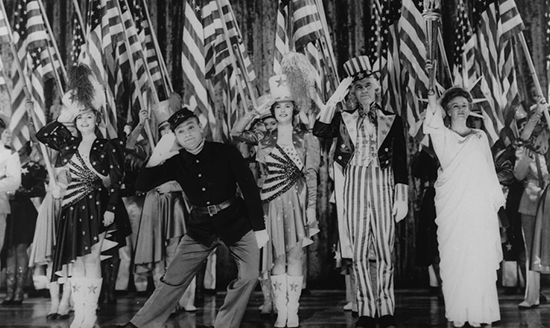
Colman was 51 at the time and needed a spark to reinvent his career. The Talk of the Town worked and he went on to star in Random Harvest, which earned him another Oscar nomination. He lost that to James Cagney in Yankee Doodle Dandy, but still kept him at a high point in his career. Films such as Kismet (1944) and Champagne for Caesar (1950).  He also finally earned his Oscar for portraying the delusional Shakespearean actor in A Double Life (1947).

I found it interesting to read that there was tension between Grant and Colman since both were used to being the lead actor and that tension was written into the script as they aggressively bantered back and forth with each other.

I also was fascinated to learn that two endings were filmed — one with Jean Arthur choosing Cary and the other with Colman. The director allowed the preview audiences to choose who she ended up with.

Trivia:

  • filming was to begin on January 17, 1942, the day Hollywood learned the sad news of Carole Lombard’s death in a plane crash. Stevens halted work on the set and sent both cast and crew home.
  •  
  • Screenwriter Sidney Buchman (who co-wrote the script with Irwin Shaw) was blacklisted in the 1950s. Consequently, Buchman, one of the men who penned Mr. Smith Goes to Washington (1939), left the U.S. and began working in Fox’s European division. Buchman would remain in France until his death in 1975.

When the professor is unconscious on the floor, Tilney (Rex Ingram) asks Sam if he is a doctor. Ironically, Rex Ingram was himself a trained physician in real life.

Cary Grant and Ronald Colman were both paid at least $100,000 for their work in the film. Jean Arthur, who was in Harry Cohn’s doghouse and just coming off suspension, was only paid $50,000.


Whilst many characters find Leopold Dilg’s penchant for adding an egg to his borscht unique (so much so that it becomes a means of determining his whereabouts), it was not an uncommon practice to add an egg to borscht in Poland and in Mennonite communities in Eastern Europe.

A radio theatre presentation of The Talk of the Town (1942) was broadcast on CBS radio on the Lux Radio Theatre on 5/17/1943 with Cary GrantRonald Colman, and Jean Arthur recreating their roles from the movie. It’s a 60-minute adaptation of the movie.

Nora tells the professor that he is, “as whiskered as the Smith Brothers.” This refers to a brand of cough drops with an illustration of the Smith Brothers on the front, both of whom have a beard. First introduced in 1852, they remained the most popular brand for a century.


Memorable quotes:

Well, it’s a form of self-expression. Some people write books. Some people write music. I make speeches on street corners.

– Leopold Dilg

What is the law? It’s a gun pointed at somebody’s head. All depends upon which end of the gun you stand, whether the law is just or not.

– Leopold Dilg

Stop saying “Leopold” like that, tenderly. It sounds funny. You can’t do it with a name like Leopold.

– Leopold Dilg

This is your law and your finest possession – it makes you free men in a free country. Why have you come here to destroy it? If you know what’s good for you, take those weapons home and burn them! And then think… think of this country and of the law that makes it what it is. Think of a world crying for this very law! And maybe you’ll understand why you ought to guard it.  – Michael Lightcap

He’s the only honest man I’ve come across in this town in 20 years. Naturally, they want to hang him. – Sam Yates


Sources:

TCM.com https://www.tcm.com/tcmdb/title/92288/the-talk-of-the-town#articles-reviews?articleId=187407

Comfy, Cozy Cinema: Benny & Joon (without major spoilers)

Erin from Still Life, With Cracker Crumbs and I are hosting Comfy, Cozy Cinema again this year and first up on our movie-watching list was Benny & Joon.

Benny & Joon (1993)is a quirky film I watched in 1990s and really enjoyed. It was when I first saw Johnny Depp because I never watched 21 Jump Street or anything else he was in back then.

I already knew Mary Stuart Masterson from Fried Green Tomatoes.

For the most part, the movie is funny, comfy, and sweet, but there are a couple of hard moments. In the end, though, (small spoiler ahead —–à) things actually turn out okay.

Let’s start with an online description of the movie:

Benny (Aidan Quinn), who cares for his mentally disturbed sister, Joon (Mary Stuart Masterson), also welcomes the eccentric Sam (Johnny Depp) into his home at Joon’s request. Sam entertains Joon while he dreams of a job at the video store. Once Benny realizes Joon and Sam have started a relationship, he kicks Sam out of the house. This leads to an altercation between brother and sister. Joon runs away with Sam, who soon realizes that she may need more support than he alone can provide.


This movie starts with someone painting and a train rolling across the tracks to the soundtrack of The Proclaimers singing I’m Gonna Be (500 miles). Yes, that very annoying song that is an earworm and was overplayed in 1993. Okay, it’s not actually annoying. I like it! But it won’t get out of my head once I’ve heard it. And I mean for more than a week!

Anyhow, back to the movie.

After we see a woman painting we are at Benny’s Car Clinic where we see Benny (Aiden Quinn) fixing a car and chatting with his friends when a call is made from his home. His sister Joon wants him to know that they are out of peanut butter Crunch cereal.

Later at Benny’s home we meet Joon who seem a little different but otherwise fairly sane and smart.

She’s clearly very intelligent with the way she uses large phrases and big words. Still, she also seems somewhat childlike.

As the movie goes on we will lean that Joon has mental issues and sometimes likes to light things on fire.

She rarely leaves the house alone, instead staying in the house and painting. Housekeepers take care of her during the day but on this day one of them, apparently one of many, is calling it quits.

Joon is out of control she tells Benny. That means Benny is without someone to sit with Joon during the day and he’ll have to miss his card game with his friends that night because Joon can’t be left home alone very much.

His friend, Eric (Oliver Platt), tells him just to bring Joon, but Benny hesitates.

“What’s the big deal?”Eric says. “She paints and she reads.”

“Yeah, she paints. She reads. She lights things on fire,” Benny responds.

As my Mom would say, “Oh. Oh. My.”

Once at the game, though, Joon does fairly well, even if she does like holding her hand over the flame of a candle a bit too much..

We learn that Benny’s friends place real items in the pot for their poker game and this will come into play later in the movie when Joon decides to play a round while Benny is outside and Benny’s friend Mike says if she loses the hand she has to take his eccentric cousin off his hands.

That cousin is a 26-year-old name Sam (Johnny Depp) who can’t read or write and doesn’t know what he wants to do with his life. He likes Buster Keaton and has been studying him, though, dressing like  him and taking on his persona while being generally …. Weird.

 At first Benny says he won’t take Sam but then he agrees and over time Sam becomes the housekeeper and a whole lot more to Joon who falls hard for him.

Before all of this, though, Joon’s doctor suggests that Benny have Joon placed in a group home where she will be among her peers.

Benny laughs. “She has a home.” Not only that but, “She hates her peers.”

The doctor sighs. “You might want to consider there are people more capable of handling these outbursts than you.”

Benny rejects this idea over and over again even though his whole life is put on hold so he can care for Joon. He doesn’t have a love life or any life outside of work.

There will come a time, though, when it does have to be seriously considered. I won’t give away anymore than all of this because this movie is worth a watch. It is actually sweet and when you think it is going some place you don’t want it to, it will change directions and pleasantly surprise you.

Don’t let the dark music that sometimes pops up scare you.

Mixed in with all the drama with Joon, by the way, is a potential romance between Benny and Ruthie, a local waitress who used to be in B-movies.

This movie  has always charmed me. It’s made me laugh, smile, and enchanted me. I’m a big sucker for quirky movies with quirky characters.

As I watched the movie this time around (maybe my fifth time watching it), I realized that I think I am attracted to this movie because my great-aunt was schizophrenic and an artist. Maybe I saw some of her in Joon, even though I never met her. Mental illness has always frightened me. My great-aunt was sent to a mental hospital when she was in her 40s after years of acting odd. From what I understand she was diagnosed with schizophrenia and I always wondered if it might happen to me too. I liked art and I was even a little odd at times. Ha! So far I’m just depressed and have anxiety. No schizophrenia.

I should clarify that this movie never defines what Joon has but many viewers suspect a combination of conditions, including schizophrenia.

There are several classic scenes in this movie for me.

One is when Sam uses forks to make buns dance:


The other is when Sam reenacts Ruthie’s horrible acting in the B-movie (which can also be seen at the above clip)

Another is the absolute look of delight Sam gets when Benny says Joon sometimes hears voices in her head. That makes me crack up every time. It’s like he thinks the idea of her hearing voices is absolutely delightful.

Then there is Sam making grilled cheese sandwiches with an iron.

Then there is also a scene toward the end of the movie that you will have to see — you’ll know what it is when you see it.

There are also so many good quotes that come from either Joon or Sam too

When Sam is staring at Joon at one point she says, “Having a Boo Radley moment are we?”

As a huge fan of To Kill A Mockingbird, that one always cracks me up.

Later when she and Benny watch Sam make the grilled cheese sandwiches she says, “Some cultures are defined by their relationship to cheese.”

In the restaurant one day Joon picks the raisins out of her tapioca pudding and Sam asks her why she doesn’t like raisins.

“They used to be fat and juicy and now they’re twisted,” she says. “They had their lives stolen. Well, they taste sweet, but really they’re just humiliated grapes. I can’t say I am a big supporter of the raisin council.”

He then asks her if she saw those dancing raisins on TV and she says they scare her. That always cracks me up because they used to scare me too!

Some Trivia and Facts

I always wondered this so I looked it up and Johnny does do his own stunts and tricks when imitating Buster Keaton. This does not surprise me in the least.

Apparently, Wynonna Ryder was going to play Joon but she had Johnny had been dating at the time and broke up so she dropped out. I think I could actually see her playing Joon, even though Mary Stuart Masterson did great.

Johnny improvised a scene where he tasted the paint of one of Joon’s paintings. This also doesn’t surprise me.

From IMdb: “During the filming of the scene where Benny rushes to Joon’s aid after she is put into an ambulance, a house party was happening less than a block away from the shooting in Spokane’s Peaceful Valley area (it was a day scene actually filmed at night). After hours of re-takes, Jeremiah S. Chechik bribed the local revelers with a cornucopia of food from the crew’s food tent, which kept them pacified long enough to finish the scene (at around midnight).”

Though released in the UK and Australia in 1988, the song I’m Gonna Be (500 Miles) was not well-known in the United States until this movie. Once it was in the movie it reached number three on the Billboard Charts in the U.S. and was played ad nauseum until many people, such as me, were sick of hearing it. (Again, I do like the song. It was just overplayed that year.)

Another tidbit directly quoted from IMbD: “In the restaurant scene between Sam and Joon, as they are discussing raisins, Sam says, “It’s a shame about raisins.” This is a tongue-in-cheek reference to the video for the Lemonhead’s hit, “It’s a Shame about Ray,” which was released the year before and in which Johnny Depp starred. (At the end of the video, Johnny can be seen carrying a curved cane almost identical to Sam’s.)”

Of the film, Rogert Ebert (a famous movie critic back  in the day) said, “Benny and Joon” is a film that approaches its subjects so gingerly it almost seems afraid to touch them. The story wants to be about love, but is also about madness, and somehow it weaves the two together with a charm that would probably not be quite so easy in real life.”

For once, he actually liked a film I liked and ended his review with this: ““Benny and Joon” is a tough sell. Younger moviegoers these days seem to shy away from complexities, which is why the movie and its advertising all shy away from any implication of mental illness. The film is being sold as an offbeat romance between a couple of lovable kooks. I was relieved to discover it was about so much more than that.”

Have you ever seen this one? What did you think if you did?

You can read Erin’s impressions of the movie here.

Up next in our Comfy, Cozy Cinema is: A Knight’s Tale.

You can see the rest of the list of movies in this cool graphic that Erin made: