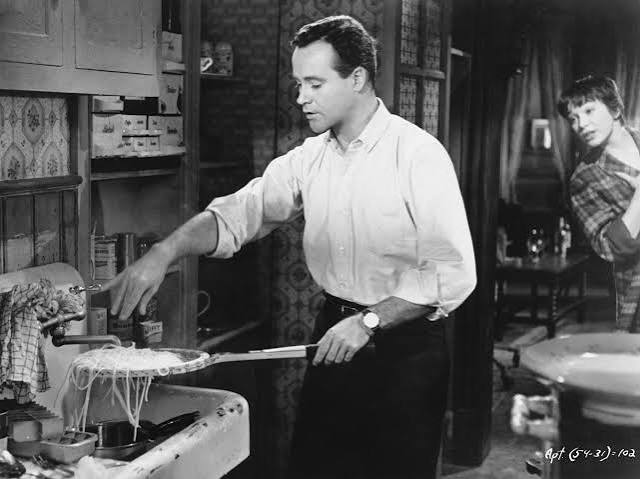
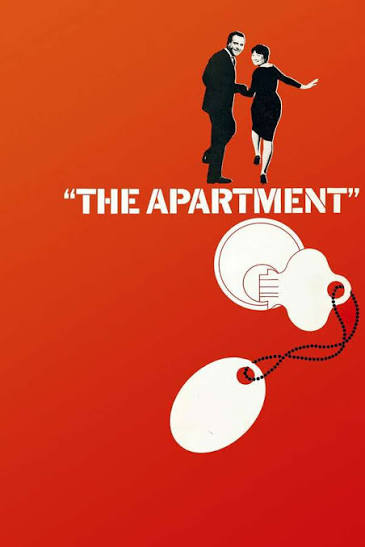
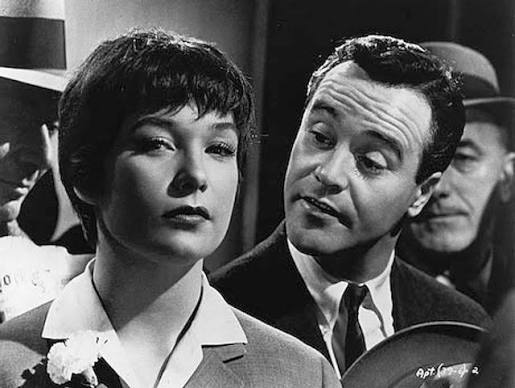
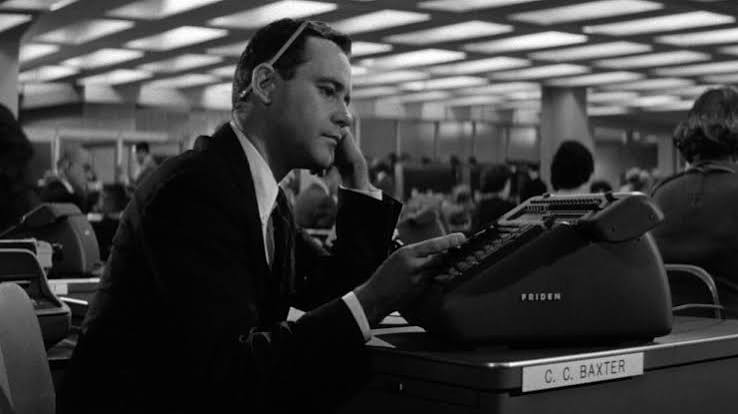
I used to think I was not a Jack Lemmon fan but the more movies I see him in, the more I like him. I really liked him in The Apartment from 1960, which I watched in July.
He starred in this one with Shirley MacClaine, Fred MacMurray, and Jack Krushan.
The movie is about C.C. Baxter (Lemmon) who rents his apartment out to the various bosses in the very large company he works for so those bosses can meet up with their mistresses.
This arrangement is sometimes an inconvenience, but helps Baxter get perks and promotions so he continues to do it until a wrench is thrown in the system when he finds out the president of the company (MacMurray) wants to use his apartment to meet up with the girl from work that he has a crush on (Fran Kubelick, Shirley’s character).
I wasn’t sure what to expect from this movie since I didn’t do any research going in. Was it a comedy? A drama? A parody?
Turns out it was a dramatic/romantic comedy directed by Billy Wilder, written by Wilder and I.A.L. Diamond, and in 1961 it won five Oscars, including Best Picture, Best Director, Best Story and Screenplay, Best Art Direction Black and White (Alexandre Trauner and Edward G. Boyle), Best Cinematography (Joseph LaShelle), and best film editing (Daniel Mandell).
Lemmon was also nominated for best actor, MacLaine for best actress, and Jack Krushan for best supporting actor.
This was a thought-provoking, sad, funny, dark-yet-light, movie that I would recommend watching at least once in your life.
If you are sensitive to the topic of suicide, please be aware it does come up in this movie.
The theme for The Apartment was written by Ferrante and Teicher and rose to number 10 on the Billboard Hot 100 chart in 1960.
“With this film, [Wilder] managed to make a commercially successful entertainment that, for all its laughter and romance, took a serious stab at the prevailing attitudes and way of life of a country in which getting ahead in business had become the greatest measure of personal success,” Rob Nixon wrote for TCM.com.
The film was released in mid-June and by the end of the year had doubled it’s cost to be made, which was $3 million.
“I always felt that Billy Wilder grew a rose in a garbage pail with this one,” Jack Lemmon, later stated. “He was throwing cold water right in our faces about the terrible false premises with which most of our society lives. He challenged our priorities and the way we rationalize our behavior on the grounds of getting ahead in America – at a time when it wasn’t fashionable to challenge these things. He gave us a pretty good jolt, and it hasn’t been done a hell of a lot better since then.”
Some interesting trivia:
This was the last black-and-white film to win Best Picture until Schindler’s List (1993), a project Wilder was once considered to direct.
In 1994, The Apartment was selected for preservation in the Library of Congress’s National Film Registry for being “culturally, historically, or aesthetically significant.”
Shirley MacLaine, drove Wilder nuts because she kept ad-libbing. He forced her to do one of the elevator scenes five times because she kept missing one word.
Wilder and cinematographer Joseph LaShelle sometimes argued about the look of the film. LaShelle wanted to use more close-ups, but Wilder didn’t like close ups. “In film making, I like the normal set-up, like Wyler uses, like John Ford, like Chaplin,” Wilder once said. “I’m against this fancy stuff. It reminds an audience that artisans have intruded. I don’t want them to grab their partner and say, ‘My God, look at that!’”
I own this one on Blu-Ray but you can find it streaming on most streaming services.
Up next in my Autumn of Jack feature is My Fellow Americans.
If you are interested in more reviews or blog posts about old movies, you can find a link to my past reviews at the top of the page and you can also visit The Classic Movie Blog Association.
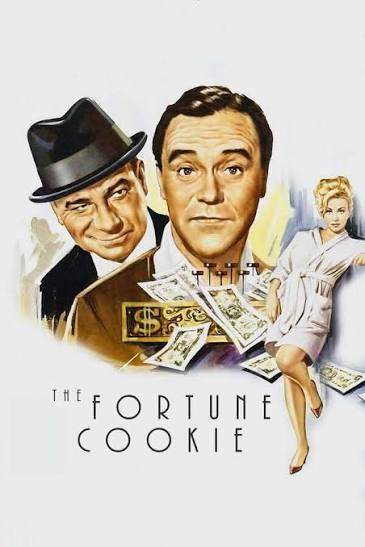
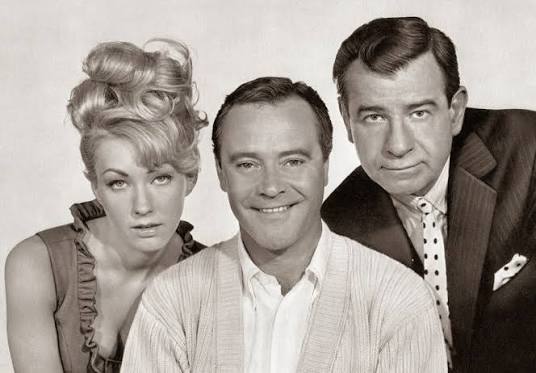
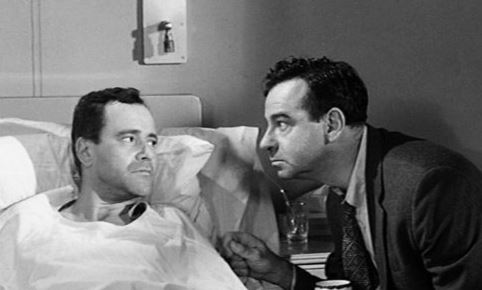
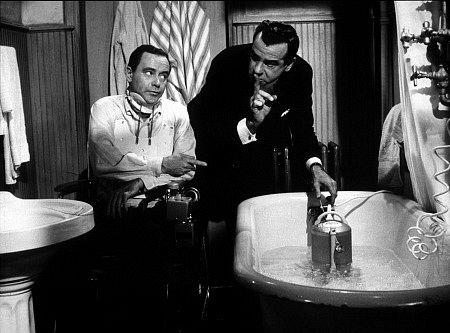
This autumn I am watching Jack Lemmon movies and this week I’m writing about Fortune Cookie from 1966 starring Jack and Walter Matthau.
This was one I watched on a whim before I decided on the Autumn of Jack feature.
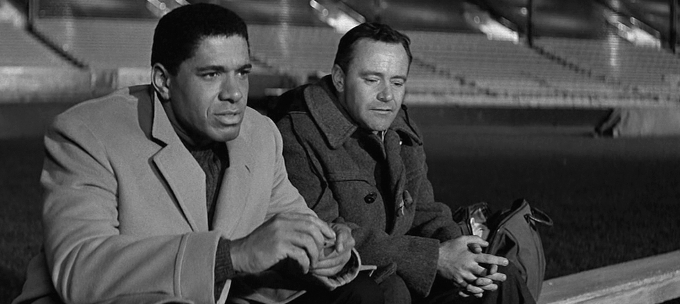
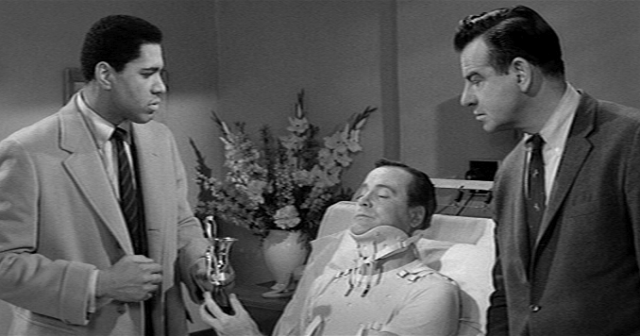
Jack plays a CBS cameraman named Harold “Harry” Hinkle who is hit by fiction football player Luther “Boom Boom” Jackson of the Cleveland Browns.
The hit is aired on TV and Harry goes to the hospital. While the injuries are fairly minor, Harry’s brother-in-law William H. “Whiplash Willie” Gingrich (Matthau), an ambulance chasing lawyer, pushes for Harry to pretend that his one leg is paralyzed so they can get a large payout from the insurance company.
Harry refuses at first but when his ex-wife Sandy sees the hit and calls to check on him, he quickly agrees if just to get her to come back with him.
The insurance company’s lawyers, O’Brien, Thompson, and Kincaid, suspect the paralysis is fake. Unfortunately, all but one of their medical experts say the injury is real because of a vertebra injury Harry sustained as a child and because Willie hired a paroled dentist to inject Harry with novocaine.
The one holdout medical expert, Swiss Professor Winterhalter, is convinced Harry is a fraud and thus begins the effort to prove that Harry is lying.
The movie is full of chaotic hiding, conniving, lying, and greed which are complicated for Harry by Boom Boom’s guilt and attempt to make amends for the injury he caused — even though the injury was a total accident.
TCM describes the movie as a satirical black comedy but I didn’t think it was as dark as some black comedies I have seen (which isn’t many).
Many people may know that Jack Lemmon and Walter Matthau were in ten movies together over the years. This was their first movie together, but it almost didn’t happen after Matthau had a heart attack two weeks into filming. The movie was delayed for a bit to give him time to recover.
It also almost didn’t happen because co-writer and director Billy Wilder had written the part for Matthau, but studio executives wanted someone with a bigger name. Jack suggested Frank Sinatra and Jackie Gleason.
Wilder held firm, though, and the rest was a longtime partnership between Jack and Matthau.
The two became close friends for the rest of their lives, with their last movie being The Odd Couple II in 1998 when they were both in their 70s.
While researching for this film, I came across a hilarious interview between a Seattle Times Reporter and them. Here is a little excerpt that shows how funny they were together.
Interviewer: “How did you two meet?”
“Matthau: I went into a deli in Brentwood – it was a Jewish deli – and there was Jack Lemmon and I said, `Hi, mind if I join you?’ He told me to sit down and I asked him what he was going to eat. He said, `I’m going to have fried shrimp and a chocolate frappe,’ and I said, `You’re going to have fried shrimp and a chocolate frappe in a Jewish deli?’ I figured he was nuts and as soon as I realized he was crazy, I fell madly in love with him.
Q: Jack, do you remember that same meeting?
Lemmon: Of course. It was at Sardi’s in New York. Matthau was leaning against a wall in the corner of the bar. I sat down at a stool near him and Bernie Hart, Moss Hart’s brother, introduced us. I could tell he was uncomfortable because he kept shifting his weight and I asked him what was wrong. He said he and his wife had gone to a party at Gloria Vanderbilt’s house the night before and it was so crowded that he couldn’t find a place to sit. So he sat down on the glass coffee table and it broke. There was glass everywhere and Walter said blood was spurting out from where he was cut near his groin. Gloria walked over, looked down at Walter and said, `Look what you’ve done to my coffee table.’
Rob Nixon wrote for TCM.com: “In filmmaker Cameron Crowe’s book Conversations with Wilder (Knopf, 1999), the Austrian-born director brushes The Fortune Cookie off as a movie made under contract, not one he particularly cared about. He even calls it ‘the beginning of my downfall.’ At the same time, however, he notes with pleasure the comic chemistry of Lemmon and Matthau and lists Matthau’s character, “Whiplash” Willie Gingrich, as one of the characters he was most reluctant to let go of upon completion of filming.”
Nixon added, “A couple of additional points in the argument that The Fortune Cookie is not the disappointment Wilder claimed it to be: The film is remarkable in its use – innovative at the time – of inter-cutting between television and film footage. And as Boom Boom Jackson, the sweet-natured player who crashes into Lemmon, Ron Rich is cast in one of the first major black roles in American movies that doesn’t depend on race as a story issue or plot point.”
A couple of other bits of trivia for you:
Scenes were filmed at Cleveland Municipal Stadium during the Cleveland Browns’ 27–17 loss to the Minnesota Vikings on the afternoon of October 31, 1965.
More than 10,000 Clevelanders served as extras.
According to The Saturday Evening Post, additional footage was shot the day after the game with Browns players as themselves and the Vikings.
Luther “Boom Boom” Jackson’s uniform number 44 was actually worn by Leroy Kelly, who was deemed “too small to pass for actor Ron Rich at close range”, according to the Post.
Because of Matthau’s heart attack he lost weight between the early scenes he filmed and the later scenes, which you can see happen in the movie. Luther “Boom Boom” Jackson’s uniform number 44 was actually worn by Leroy Kelly, who was deemed “too small to pass for actor Ron Rich at close range”, according to the Post.
The Fortune Cookie was Matthau’s 20th film since 1955, including roles in Elvis Presley’s King Creole (1958), Fail Safe (1964) and Ensign Pulver (1964), the sequel to Mr. Roberts (1955), in which Lemmon created the Pulver character and won and Oscar.
If you are interested in more reviews or blog posts about old movies, you can find a link to my past reviews at the top of the page and you can also visit The Classic Movie Blog Association.
It’s time to talk about our next movie in the Autumn of Lemmon feature.
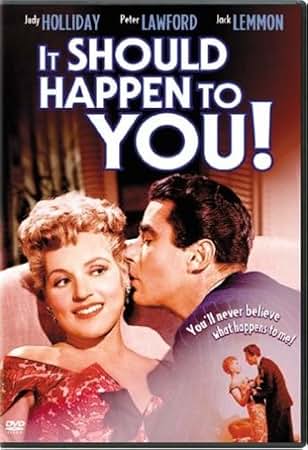
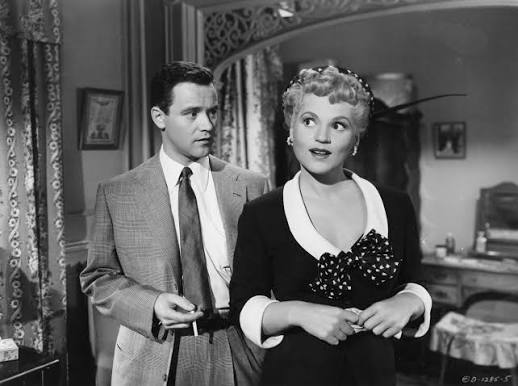
It Should Happen To You stars Jack Lemmon, Judy Holliday, and Peter Lawford and was suggested to me by someone on Instagram.
I loved this movie.
So funny, sweet, moving, thoughtful and just delightful.
Also, Jack’s first movie where he was in a lead role. Right before Phffft, which I watched last week.
Both Phffft and It Happened to You were released in 1954.
Here is a little description for you: “After a struggling actress in her early thirties with dreams of becoming a star rents a billboard to advertise herself, her life begins to change overnight.”
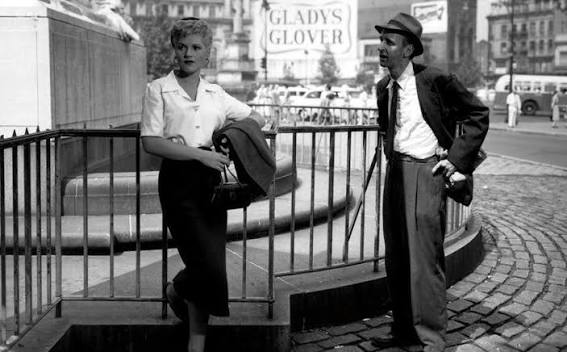
Judy Holliday portrays Gladys Glover, who is out of work and gets the idea to rent a billboard she sees to advertise herself. What is her talent? Well, she really doesn’t have any talent at all. She becomes famous because her name is on a billboard.
This movie fits right in today because that is happening a lot these days – people with no real talent becoming famous.
Jeffrey Stafford on TCM.com concurs with my thoughts, or I concur with his. You know what I mean.
”With a proliferation of television reality shows transforming unknowns into instant celebrities, the idea of someone becoming famous without possessing real talent or performing some remarkable deed is so commonplace today that George Cukor’s satire looks prophetic in retrospect,” Stafford wrote.
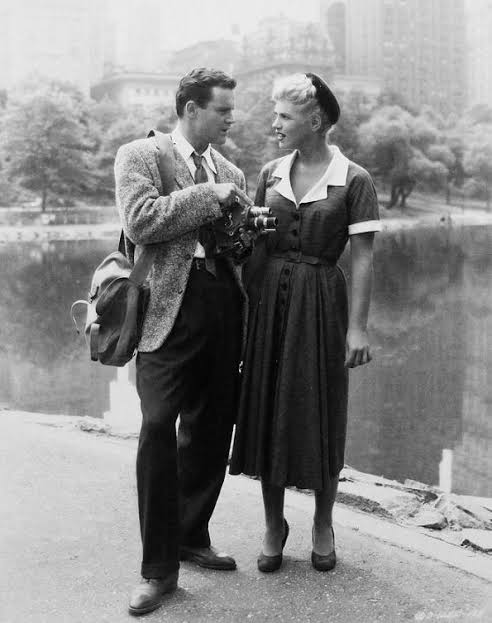
On the same day Gladys decides to rent the billboard she meets Jack Lemmon’s character, Pete, who is an aspiring documentary filmmaker.
Pete films her on his camera while she’s in Central Park and they have a cute little meeting and then go their separate ways. The two meet again when Pete rents an apartment next to Gladys’s.
By now, Gladys’s name is on the billboard and her purchase of the space on the billboard has riled the ire of Peter Lawford, CEO of the Adams Soap Company, which usually books the space.
Evan Adams III (Peter Lawford) decides to try to talk Gladys into giving up her billboard space, but she refuses, even as he attempts to wine, dine, and date her. What she does finally agree to is giving up the space for six other spaces around the city with her name on them.
The movie was directed by George Cukor who also directed Holliday in The Marrying Kind in 1952. That movie was also set in New York City and Holliday payed a comedic actress as a naïve newlywed with an idealistic view of marriage. I have not seen this one yet, but hope to soon.
Of the film, George Cukor said in an interview with author Gavin Lambert , “The idea of becoming a great celebrity without being able to do anything is a very important notion. Publicity can really do it, too. Today it makes Presidents. It’s really the name of the game.”
Before starring in It Should Happen to You, Jack had acted for a brief time in television, which caused him to overact a bit. Cukor suggested, “less is more”, which Jack took to heart for that movie and future roles.
“I’ve learned my craft from that advice,” Lemmon said in a book about Cukor by Gene D. Phillips. “ It’s the hardest thing in the world to be simple, and the easiest thing in the world to act your brains out and make an ass of yourself.”
A bit of other tidbits about the movie and actors:
Holliday was already recognized as a unique comic actress in films since winning an Oscar for her hilarious portrayal of Billie Dawn in Born Yesterday (1950). She first played that role on Broadway.
Holliday was 30 pounds overweight when she started filming after having only recently given birth to her son. The extra weight sent her on a diet but also depressed her. She had a sense of humor about it, though, once sharing about a photoshoot for glamour shots for the Columbia publicity department and how she had to as the photographer what he’d been eating to get the sexy look he wanted. He said he’d been eating a thick, sizzling steak. “Judy’s mouth began to water and her eyes became liquid. “That’s the look I want!” the photographer shouted” (from Judy Holliday by Gary Carey).
Holliday and Lawford briefly dated during filming of the movie.
Garson Kanin’s screenplay for It Should Happen to You was originally titled A Name for Herself
In the early stages the movie was actually being developed as a script for Danny Kaye.
If you haven’t seen this one, search it up however you can, sit down with your favorite snack and beverage and just enjoy. You won’t regret it.
If you’re a bit of a romantic, I think you’ll especially like where the two actors sing “Let’s Fall In Love” together. What’s nice about this movie is that it has a little bit of everything. Humor, romance, and a bit of a serious message as well.
If you are interested in more reviews or blog posts about old movies, you can find a link to my past reviews at the top of the page and you can also visit The Classic Movie Blog Association.
Welcome to the first week of my Autumn with Jack feature.
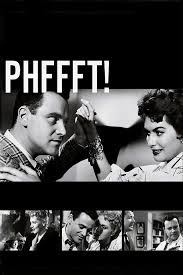
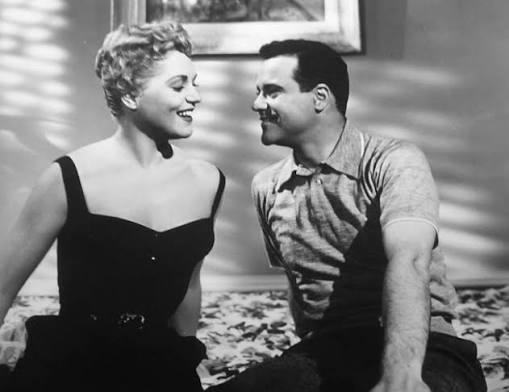
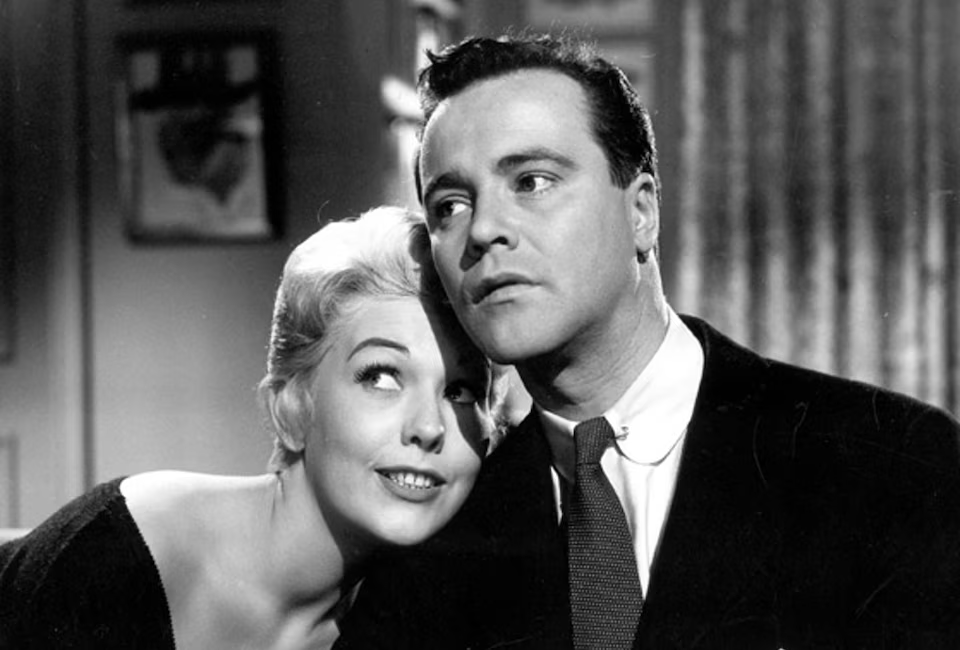
I watched the movie Phffft with Jack Lemmon, Judy Holliday, and Kim Novak on a whim at the beginning of this year.
Don’t ask me how to pronounce it and movie makers didn’t want you to try which is why their promotional materials announced: “Don’t say it – see it!”
This was my third Jack Lemmon film I’ve ever seen and it was quirky and fun one.
Released in 1954, the movie is about a married couple who divorce but fail at being divorced.
That sounds weird doesn’t it? Which is what makes the movie fun.
This movie came right after Jack’s breakthrough role in It Should Happen To You, also with Judy Holliday.
Phffft was directed by Mark Robson, for whatever that is worth to those of you who don’t know directors. I am one of those people much of the time.
We start the film with Jack doing something I commonly see in my house — reading a comic.
Nina is clearly annoyed with this activity and she’s been annoyed for a while. She’s trying to figure out how to tell him that she wants a divorce. Finally, she just blurts it out.
He says he’s been wanting a divorce too. Before we know it, our main characters are actually divorced and while they seem confident at times that they made the right decision there are other times you can hear the hesitation in their voice.
We learn about how these two met, how their marriage progressed, and eventually fell apart, through flashbacks as they talk to their friends or family.
They met when Robert helped Nina with her accounts. He was an attorney with the Navy at the time. She was a producer of radio and then television soap operas for NBC.
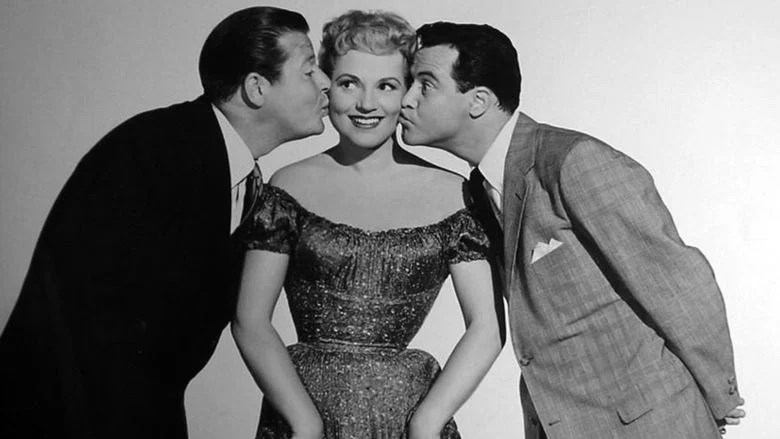
As Robert interacts with his scummy friend Charlie (Jack Carson), he reflects on his early days with Nina. Soon, though, Charlie is urging him to get out on the dating scene again, stop thinking about his ex-wife.
Charlie tries to date and one of those women he tries to date is portrayed by Kim Novak. That date is a disaster because she’s much younger than Robert, but also a bit of a ditz and a floozy. To me she was really putting on a Marilyn Monroe type act with him — breathy voice and coyness and all.
Throughout the movie, Nina and Robert keep running into each other, always trying to pretend they are doing better than they are while Nina’s mother and Charlie keep pushing them to get a new partner. They seem to think moving on with someone new will solve all of Robert and Nina’s problems.
If you want to know what ultimate becomes of the two, you’ll have to watch the movie.
Judy Holliday was sick with a viral infection during the film and later said she didn’t remember some of her scenes when she saw them later.
“It was the strangest sensation seeing the rushes of those scenes,” she told a magazine at the time. “I couldn’t even remember having done them and yet most of them were just fine. I’d made them when I was half-drugged, but I guess I just instinctively did the right thing.”
The movie was based on an unproduced play by George Axelrod, who also wrote The Seven Year Itch (1955) — which starred Marilyn and had many similarities but had been purchased by another studio.
This explains why Kim’s character was so much like Marilyn. The script called for it.
According to TCM, “Phffft made it to the screen first because The Seven Year Itch was still in production on Broadway, and under the terms of the movie agreement could not be filmed until the play’s run was over.”
Back to the title of the film, Jack had a specific memory to the final decision on the title.
“The thing I remember best about it was an emergency break that was called while we were filming a big ballroom scene,” he said. “[Director] Mark Robson had to shut everything down while he went to a front-office meeting. There must have been a hundred extras, plus all the technicians, just sitting around waiting for two and a half hours with money just pouring down the tubes. When Mark finally came back, he was in hysterics. I asked him what the meeting had been about, what was so urgent? ‘It was a meeting about a title change,’ he said. ‘They changed it from Phfffft to Phffft. They took out an f.'”
Have you seen this one? If not, I do recommend it for a fun escape.
Next up for my Autumn of Jack is It Should Happen to You, which was released the same year as Phffft and also sees Judy Holliday as his co-star, as I mentioned above.
Here is my full list of Jack Lemmon movies I am watching:
If you are interested in more reviews or blog posts about old movies, you can find a link to my past reviews at the top of the page and you can also visit The Classic Movie Blog Association.
If you’re looking for a few fun classic movie suggestions, I’ve got them.
Here are five movies that will entertain you and give you some laughs.
Without Love
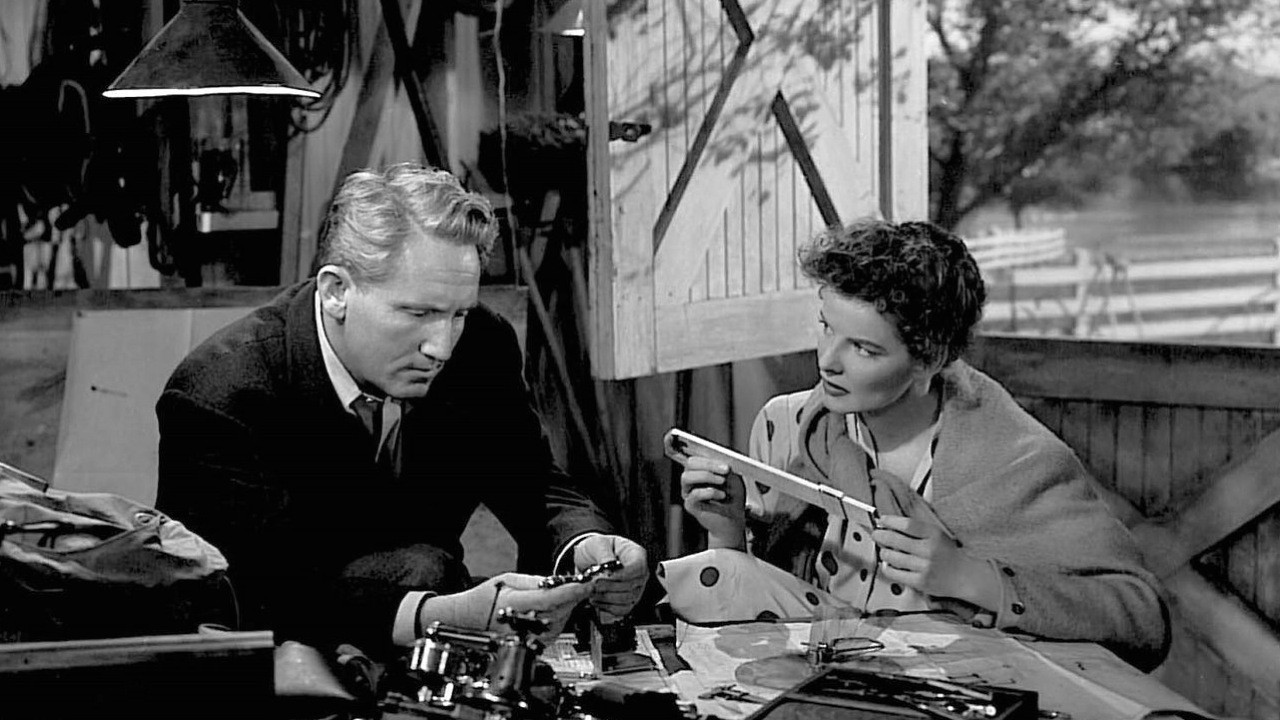
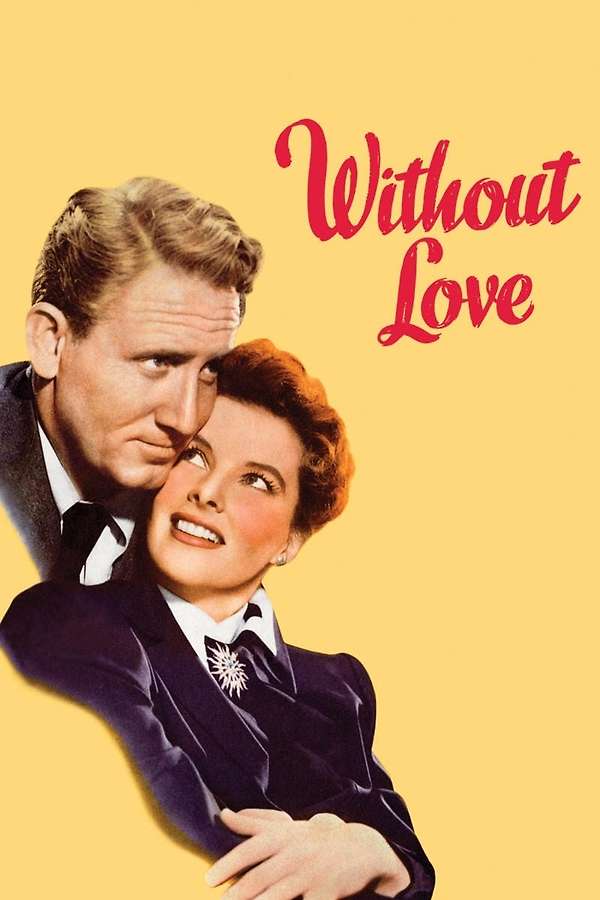
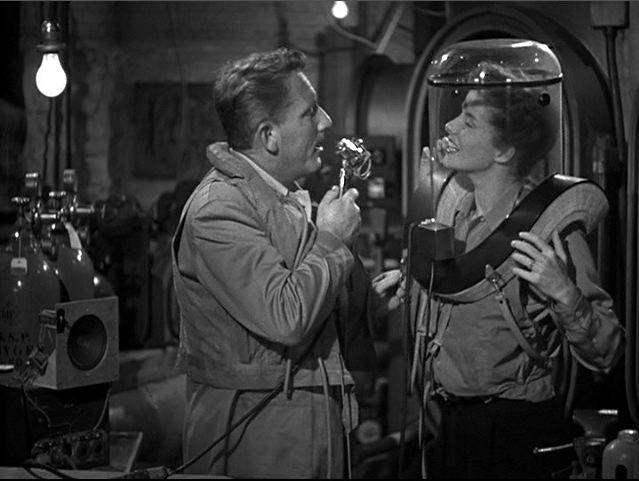
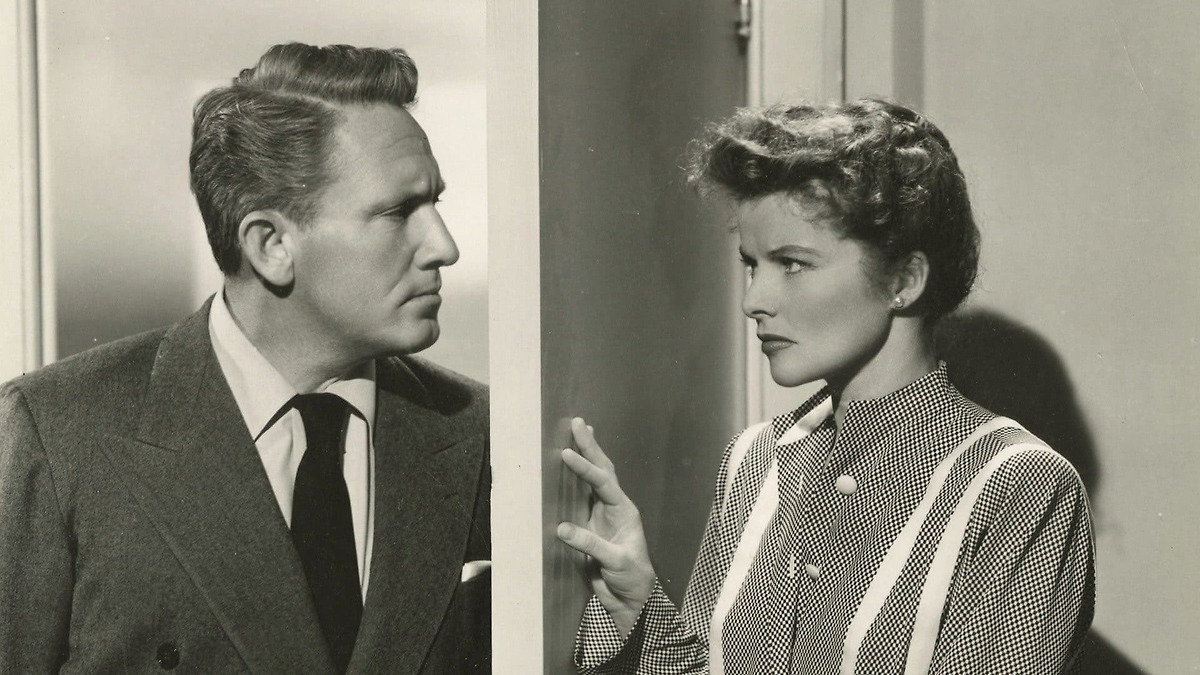
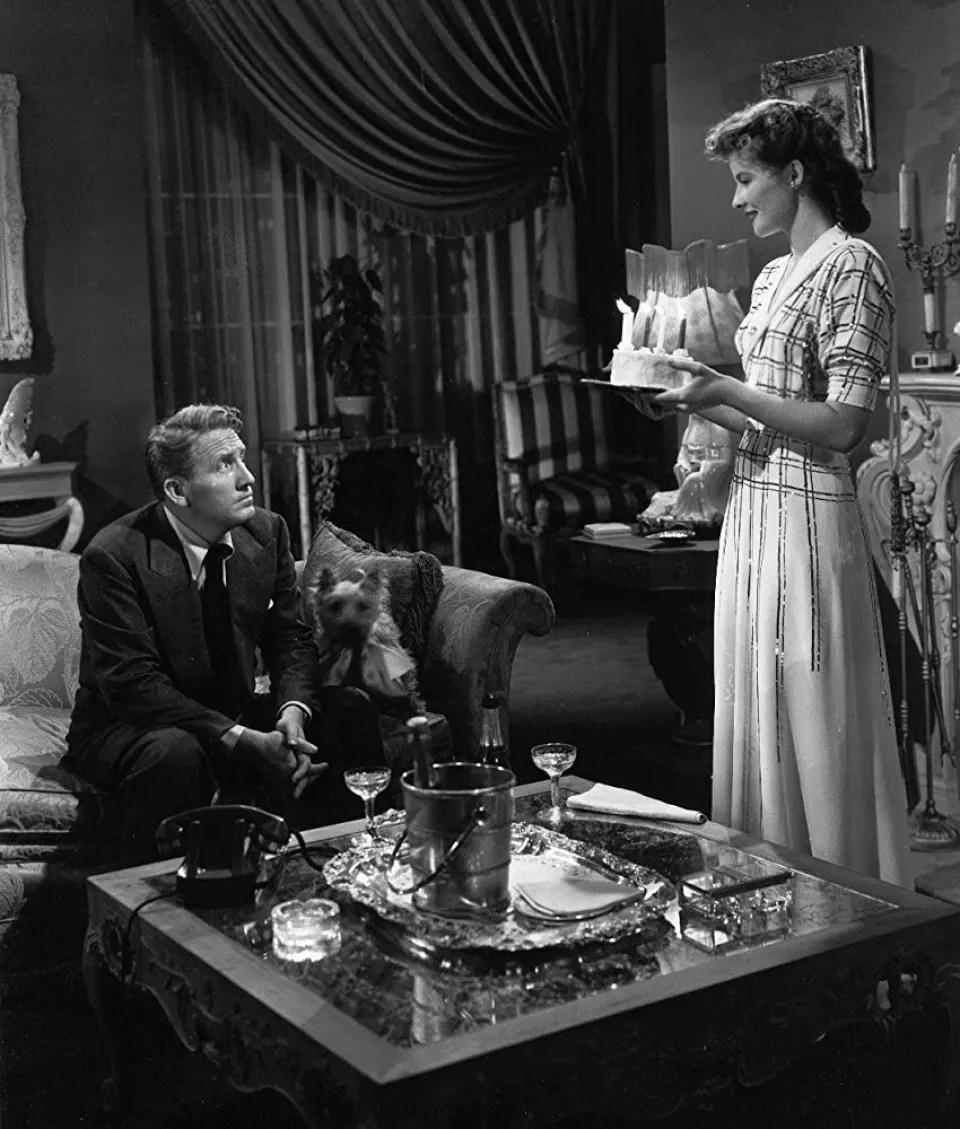
Without Love (1945) is a fun, quirky movie starring Spencer Tracy and Katharine Hepburn.
This was one of 9 films made by the pair between 1942 and 1967.
Most of their movies were romantic comedies like this one.
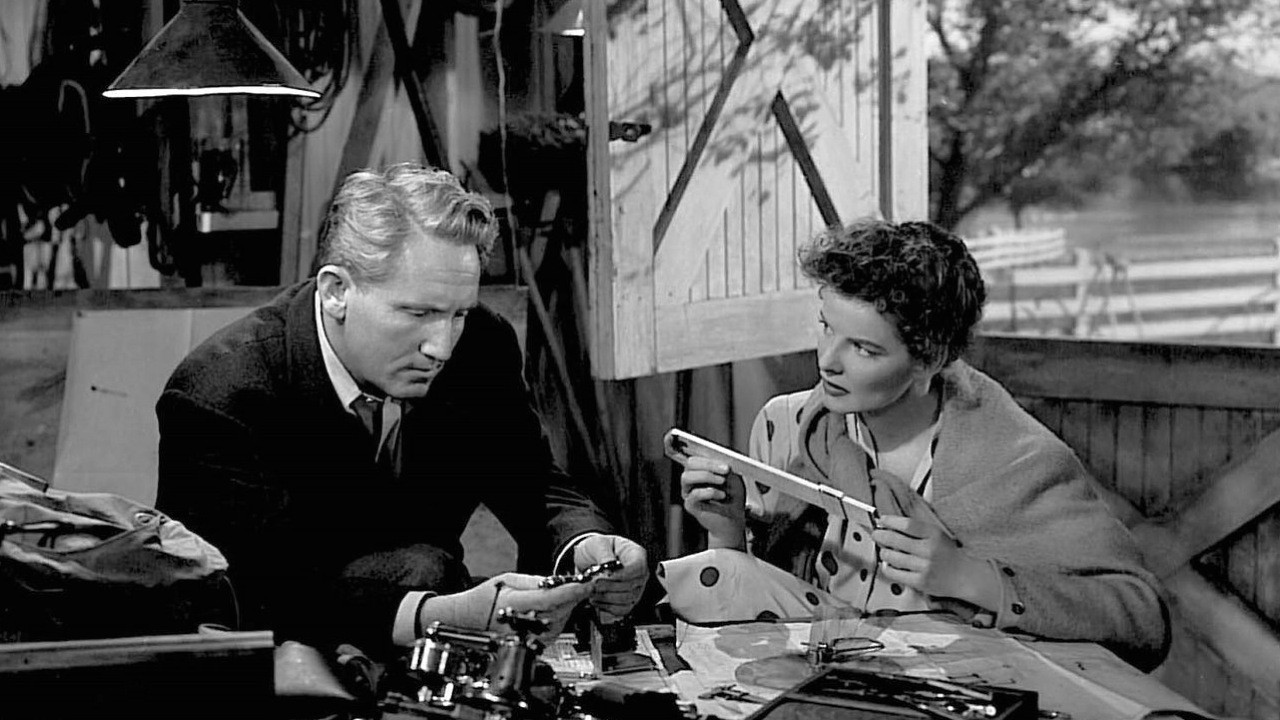
Spencer plays a scientist named Patrick Jamison who is down on his luck and looking for a place to stay.
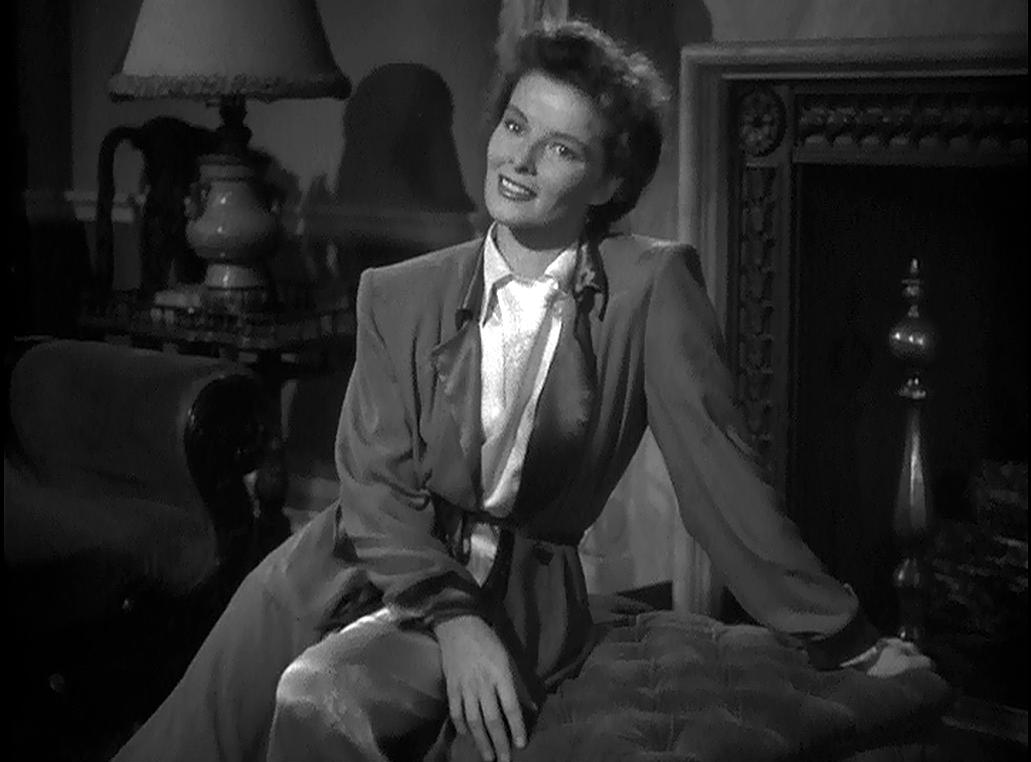
Katharine is a widow named Jamie who has a house she needs a caretaker for and hires Patrick to fill the position. They both learn they have a love for science and agree to marry to meet their “patriotic duty.” Both have been hurt in the past, though, and decide to keep the relationship platonic.
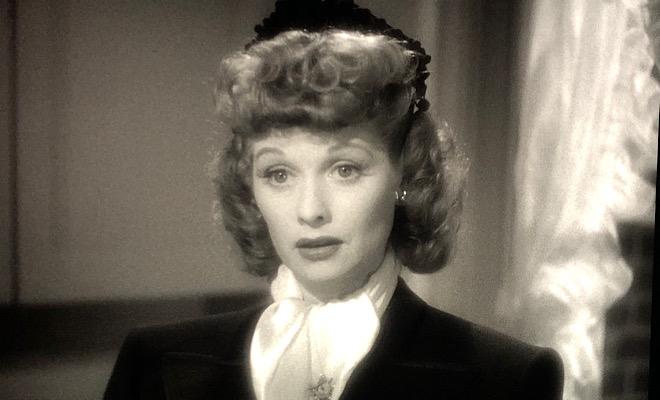
Lucille Ball plays Katharine’s friend, Kitty Tremble.
Jamie and Patrick are both very scientific, logical, and serious people who can’t let love get in the way. So, instead, they focus on working on experiments, including one involving velocity.
Parallel to their lack of romance is Lucille’s relationship with Keenan Wynn, where love is blooming even though Kitty isn’t sure she wants it to.
This one is currently streaming on Tubi and Plex for free with commercials and is avaialable for rent on Amazon Prime and AppleTV.
This movie had an interesting concept – if not a bit crazy. Hopefully, you’ll be able to tell as I begin to write about this movie, that this is meant to be a comedy. In fact it was defined back then and now as a screwball comedy.
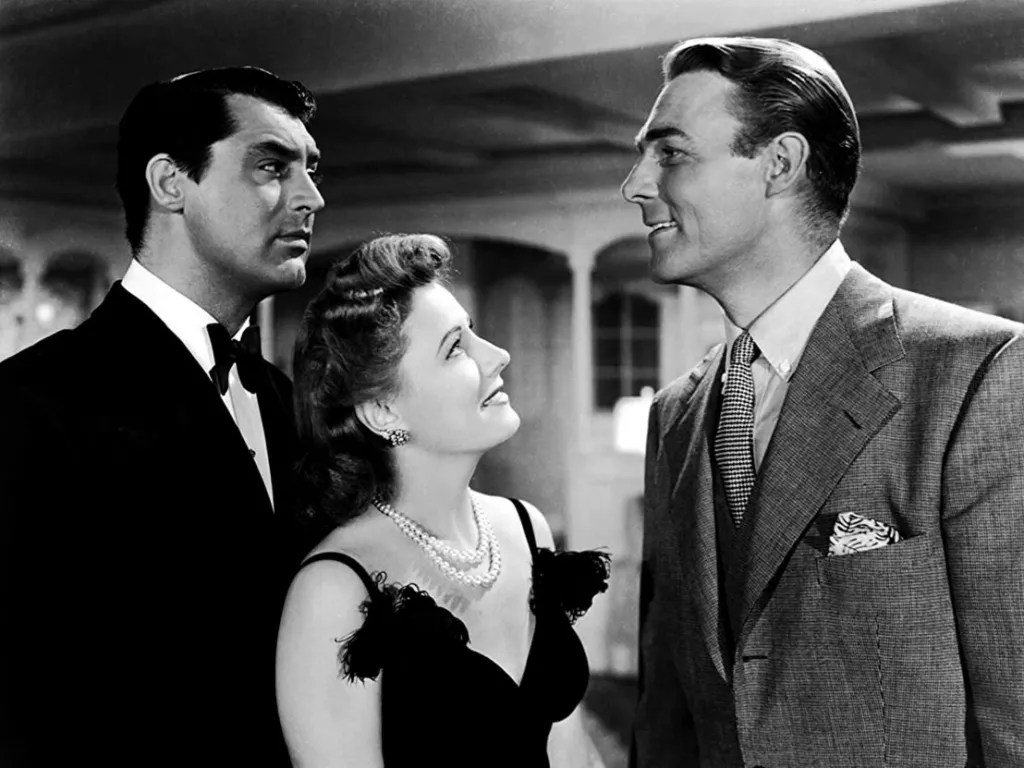
A man wants to get married, but before he can, he must declare his first wife Ellen (Irene Dunne) dead. She’s been missing at sea and was believed drowned seven years earlier.
It turns out, however, that she is not dead, and she returns while Nick Arden (Cary Grant) is on his honeymoon with wife number two, Bianca (Gail Patrick).
Nick is of course shocked and now has no idea what to do because he has two wives.
It turns out Ellen was stranded on an island all those years and it would have been lonely for her if it wasn’t for Steve Burkett (Randolph Scott) who was stranded with her.
That’s a fact she doesn’t immediately admit to her husband and a fact he’s not real pleased with, even though he’s remarried.
That new wife, by the way, is not a very nice woman.
Oh and don’t forget that Nick and Ellen have two children together and all of that will have to be figured out as well.
To break the news to Nick, Ellen heads to his honeymoon, which was the same hotel and place they had their honeymoon, I might add. How tacky is that of him?!
As the movie goes on we the viewers now have to figure out who we want Nick to end up with.
This one is currently streaming on several services, most for a rental fee, including YouTube, Hulu, GoogleTV, Amazon Prime and AppleTV.
I loved this movie and while I always love Cary Grant, I once again loved Ronald Colman who I first saw in The Prisoner of Zenda.
This movie starts with a fire at a factory where a man dies. Cary, portraying Leopold Dilg, is arrested for arson and murder.
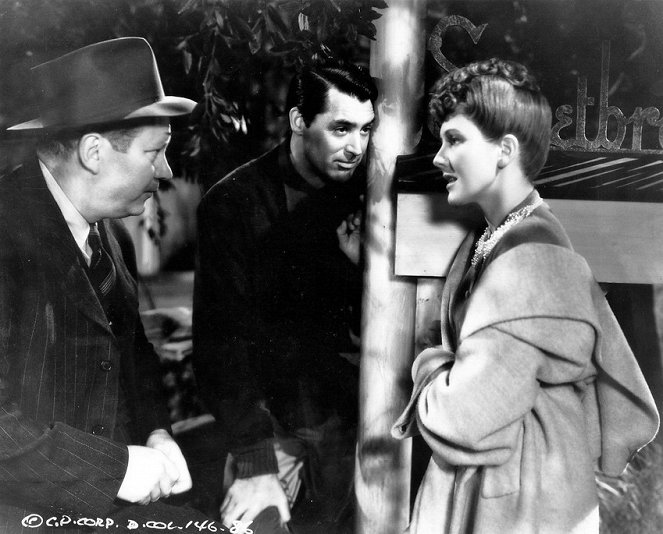
Soon he’s breaking out of jail and escaping through the woods on a rainy night. He makes his way in the dark toward a small house while dogs hunt him down. The name of the house is Sweetbrook and there is a woman inside getting it ready — maybe for a guest.
Leopold breaks in the door, startling the woman.
“Miss Shelley,” he says. “Please…let me…” And then he faints and falls down the stairs.
Miss Shelley (Jean Arthur) wakes him up with a bucket full of water and he asks if she can stay at the house, which he knows is a rental. She tells him he can’t stay because she knows he has escaped jail. There is a knock on the door before she can finish explaining and she tells him to run upstairs and hide.
There is a Professor Michael Lightcap (Colman) at the door and he’s standing in the rain. He reminds her that he’s rented the house out and he’s here to stay. Miss Shelley, whose first name is Nora, panics because Leopold is hiding upstairs and she doesn’t want the professor to find him.
Things will get more complicated as she makes up an excuse to stay in the house overnight to make sure the professor doesn’t find Leopold.
Complications just keep arising as Nora offers to become the professor’s secretary and housekeeper during his stay, a senator arrives to tell Professor Lightcap he’s up for nomination to the United States Supreme Court, and Leopold walks down one morning to argue about the role of the law in society and Nora has to introduce him as the gardener.
This is a non-stop movie full of hilarious mix-ups, near misses, and a love-triangle that won’t be resolved until the very last minute, literally, of the movie.
As I said above, I loved this movie.
This one is currently streaming on Tubi and FuboTV for free with commercials and is avaialable for rent on Amazon Prime, AppleTV, and Fandango.
Bringing Up Baby is absolute chaos and craziness. Everyone except poor Cary Grant is off their rocker and it is glorious.
The movie stars Cary Grant and Katharine Hepburn. (Yes, there is a theme going on here with actors and actresses……this was not on purpose. I just realized I did that when I hit this one. Oops.)
Katharine is absolutely batty in this film which makes it all even more hilarious.
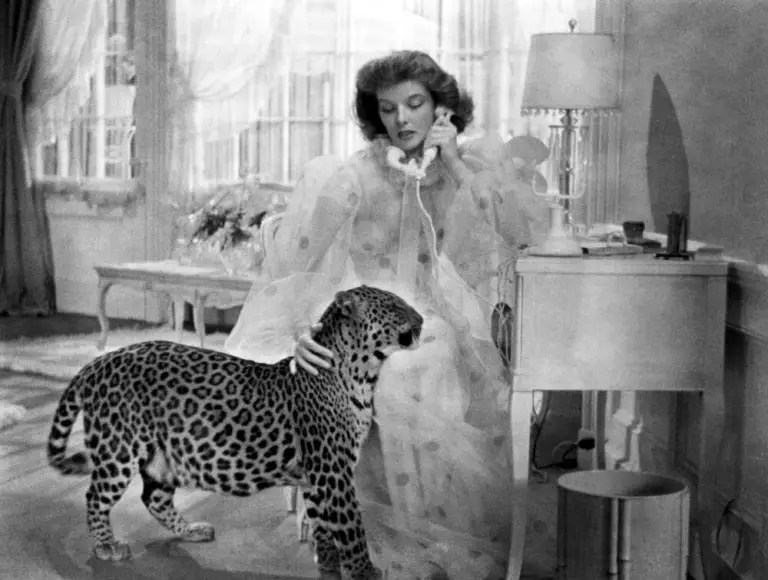
Cary Grant’s character (Dr. David Huxley) is a paleontologist who accidentally runs into Katherine Hepburn’s character (Susan Vance) a totally nuts socialite who immediately latches on to Cary and decides she’s going to become obsessed with him and make his life a living hell.
In the beginning of the movie, David has been building a dinosaur skeleton for years and the last piece of it has just been found. He and his fiancé – Alice Swallow – are thrilled that the intercostal clavical has been found and will be arriving soon in the mail. Alice – a very uptight, proper women who says the point of their marriage will be to only advance his research and not for love — also knows that more money needs to be secured for his research so she tells David he must go golfing with an important doner.
This is where he meets crazy Susan who tries to steal his car, takes off with him riding on the footboard while he tries to tell her it is his car, and then leads him on various crazy adventures. He runs into her again at a dinner where he is trying to secure a donation from a woman named Elizabeth Randall who is considering a $1 million donation.
The scenes at the dinner party include this a hilarious scene where Katherine’s dress gets ripped and she and Cary have to make their way through a crowded dining room with Cary against her back to make sure nothing is scene. It is so classic and hilarious and always has me laughing.
This one is currently streaming on for rent/buy on Amazon Prime, AppleTV, YouTube, and Fandango.
The Court Jester (1955) with Angela, Danny Kaye, and Basil Rathbone is a musical/comedy.
The main words to describe this movie are silliness, ridiculousness, and peak Danny Kaye moments.
First, a bit of the plot with a description from Google:
“Former carnival performer Hubert Hawkins (Danny Kaye) and maid Jean (Glynis Johns) are assigned to protect the infant royal heir from tyrannical King Roderick I (Cecil Parker). While Jean takes the baby to an abbey, Hawkins gains access to the court by impersonating the king’s jester, unaware that the jester is really an assassin hired by scheming Sir Ravenhurst (Basil Rathbone). When Princess Gwendolyn (Angela Lansbury), falls for Hawkins, a witch secretly aids him in becoming a knight.”
This film is just a lot of craziness caused by misunderstandings, misdirection, and generalized oopsies.
We start the movie by learning that an entire royal family was killed so that the current King, King Roderick I, could take the throne. Actually, though, the entire family wasn’t killed, according to rumors anyhow. The rumors say an infant survived and bears upon his bottom a birthmark of a purple pimpernel.
The rumors further say the child is being cared for in the forest by an “elusive, dashing outlaw” known as the black fox. As if to prove these rumors, one of the king’s men is killed as they are riding near the forest and a note attached to the arrow announces that the child is alive and The Black Fox has him.
Adventure ensues thereafter.
This one is currently streaming on for rent/buy on Amazon Prime, AppleTV, YouTube, and Fandango.
Without Love (1945) was a fun, quirky movie starring Spencer Tracy and Katharine Hepburn, which I stumbled on to it a few weeks ago. I wasn’t sure what to expect, but I enjoyed the witty and crisp dialogue.
This was one of 9 films made by the pair between 1942 and 1967.
Most of their movies were romantic comedies like this one.
Spencer plays a scientist named Patrick Jamison who is down on his luck and looking for a place to stay.
Katharine is a widow named Jamie who has a house she needs a caretaker for and hires Patrick to fill the position. They both learn they have a love for science and agree to marry to meet their “patriotic duty.” Both have been hurt in the past, though, and decide to keep the relationship platonic.
Lucille Ball plays Katharine’s friend, Kitty Tremble.
Jamie and Patrick are both very scientific, logical, and serious people who can’t let love get in the way. So, instead, they focus on working on experiments, including one involving velocity.
Parallel to their lack of romance is Lucille’s relationship with Keenan Wynn, where love is blooming even though Kitty isn’t sure she wants it to.
I will say the movie is a little awkward to watch if you read about Spencer and Katharine’s real life romance, which was a 27-year affair because Spencer was Catholic and wouldn’t divorce his wife. He and his wife lived separately for years but Katharine was apparently a frequent guest in his hotel bungalow or apartment. Their affair was an open secret that Kathrine spoke about after he and his wife were both dead.
So in this movie Katharine’s character asks Spencer’s character to marry him and I wonder if she did that in real life too. She seemed hopelessly devoted to a man who couldn’t commit to her and continued to break his wedding vows while saying he felt guilty but never stopping it. That’s pathetic of him to me.
Katharine and Spencer’s first movie together was Woman of the Year in 1942. The public loved it and another movie with them, Keeper of the Flame, was released the same year but flopped.
Philip Barry wrote the play version of The Philadelphia Story in 1939 and the movie was made with Katharine, Cary Grant, and Jimmy Stewart in 1940.
Barry wrote a play version of Without Love with Katharine in mind and she agreed to do the play in 1942. She wanted Spencer to do the play with her but even then his drinking was an issue and the producers cast Elliott Nugett.
Later, when MGM wanted one more try at a movie with them together, Katharine suggested a movie version of Without You.
The movie was directed by Harold S. Bucquet.
Donald Ogden Stewart wrote the screenplay from Barry’s play.
Critics liked the movie but some said Keenan and Lucille stole the show.
“It is good to see Lucille Ball doing so well with a kind of role new to her,” wrote James Agee in The Nation.
Lucille had moved to MGM from RKO and hadn’t had a lot to do since being in Stage Door with Katharine in 1937.
I was surprised to read on TCM.com that Lucy was married to Desi Arnaz at the time and suing him for divorce for infidelity. They reconciled and would, of course, go on to make the I Love Lucy Show that skyrocketed Lucy into stardom and made them both a household name.
They divorced for real in 1960 for the same reasons Lucy almost divorced him for in 1945.
I found this one on Amazon but you can also watch it for free on Tubi.
If you are interested in more reviews or blog posts about old movies, you can find a link to my past reviews at the top of the page and you can also visit The Classic Movie Blog Association.
Witness to Murder (1954) wasn’t the best thriller I have ever seen, but it did have its nail-biting moments. I was on the edge of my seat (quite literally) for most of the movie as Barbara Stanwyck did her best to get away from George Sanders.
We knew from the beginning of this one who the murderer was, so all we had to do was hold on for the ride and see if he found a way to shut down his accuser.
Description from TCM:
“In the 1954 Witness to Murder, Barbara Stanwyck plays a woman who, unable to sleep one night, looks across the courtyard from her apartment and sees a man choking a woman to death. The man is a pompous though obscure writer – he’s played by George Sanders – and there’s no doubt about what Stanwyck has witnessed.”
I’ve become a huge Sanders fan over the years. You might remember him in Hitchcock’s Rebecca. He was deliciously evil in that one. I also watched him in Lured with Lucille Ball.
Witness to Murder‘s plot is similar to Hitchcock’s Rear Window and that’s because was aimed at competing with Hitchcock’s movie. I’m not sure what they were thinking by trying that because the film was okay but it was no Rear Window.
The film was directed by Roy Rowland and, no, the plot wasn’t as tight as Rear Window (plus Rear Window was in color and this was in black and white) but Barbara and George’s performances make this one worth watching. I shouldn’t forget George Merrill, who was also very good.
“Sanders appears to be having a great deal of fun with this character, rolling his r’s with mischievous glee, making sure everyone knows how secure his place in the Universe is,” writes Stephanie Zacharek for TCM.com.
At one point he even rants in fluent German, which makes the scene even more spine-chilling and was probably even more chilling since it was only 10 years after the war and Nazis still lingered in everyone’s nightmares.
Zacharek calls the performance “slightly cartoony” and maybe it is, but I still liked it – well, as much as you can like watching a man mental torture a woman.
Barbara plays a strong, independent woman which makes her hysterical breakdowns a little odd at times – but then a lot of men are telling her she’s totally crazy.
What’s annoying about this part of the story is that their insistence that she’s crazy is absurd because they clearly know something bad has actually happened. Then again, men and women alike have been telling me for years that my various illnesses are in my head so I guess that part of the story isn’t too far fetched.
If you’re looking for a movie with an flawless story, maybe this isn’t for you, but if you like films with great performances that have you biting your nails and sliding to the edge of hour seat, then this is one for you. You can find it for free right now on YouTube.
It is also streaming on Netflix.
If you are interested in more reviews or blog posts about old movies, you can find a link to my past reviews at the top of the page and you can also visit The Classic Movie Blog Association.
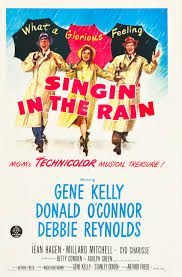
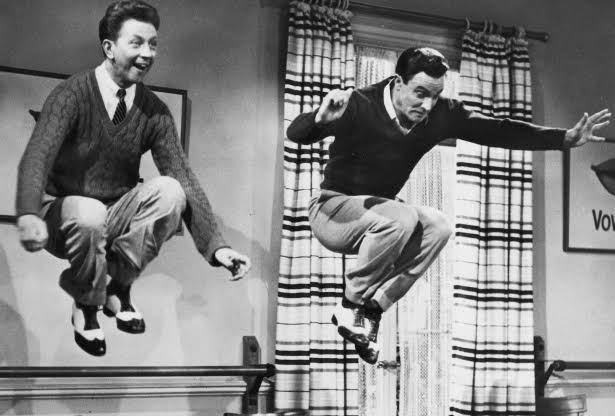
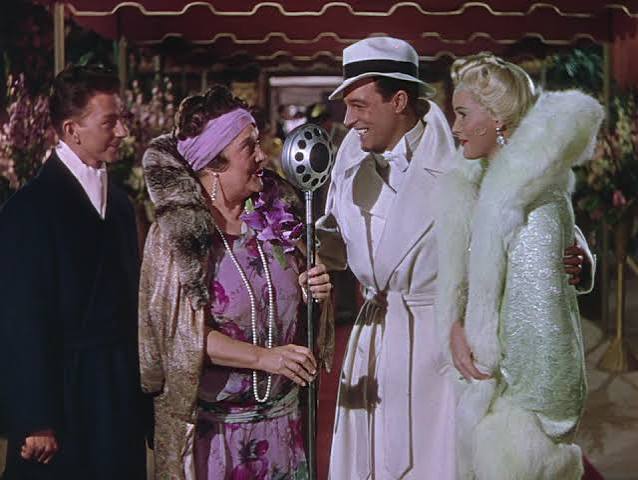
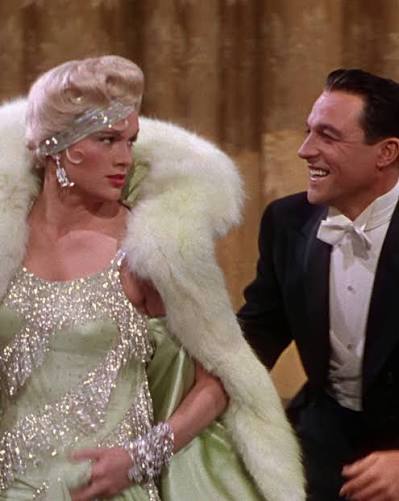
I’ve written about a lot of different movies on this blog and what shocks me is that I’ve never written about my favorite movie – Singing in the Rain (1952).
I have to be honest that I am actually nervous to do so because there is so much about this movie that I love, I am truly afraid I will forget to mention something important about it or it’s making or I will mess up a fact.
When I was a kid, we didn’t have cable. We had one black and white TV and an antenna on the back porch that my dad would adjust to help us get four channels — an ABC affiliate, a CBS affiliate, an NBC affiliate, and PBS. Because we only had those four channels, I often found myself watching old movies on PBS. I was fascinated with them, the light and shadow, the framing, the cinematography, and the acting. It all mesmerized me.
The stories seemed richer, more fascinating, deeper somehow, than the shows I would see on primetime or the cartoons on Saturday morning. As I grew older, my options grew, but I still always found myself turning that cable TV back to the classics, usually the black and white movies or a musical. To me, the writers of those old movies knew how to tell stories, not just make a movie for show or for special effects. Those great stories tied in with my love of reading and are probably what made me want to go into journalism (which I did for 14 years) and then write fiction books (which I do just for fun now).
My favorite movie was Singing in the Rain and it’s remained so all these years. I used to dance around the living room saying, “And I can’t stand ‘im!” in Jean Hagen’s high-pitched voice, putting on a show for my family. I would dance around the room like I was on that street dancing in the rain in that iconic dance sequence with Gene Kelly.
I would recite good chunks of the movie whether it was on or not and my mom said I should go into drama. Luckily I was too shy to get into drama because I am pretty sure if I had gone into drama I would have mentally crashed and burned out fast. My introvert self is not cut out for the crazy world of acting.
It wasn’t until my late teens, when my brother bought me a VHS copy of the movie, that I learned the movie was actually shot in Technicolor. I’d always watched it on that old black-and-white TV and now here it was in blazing, beautiful color.
Magnificent.
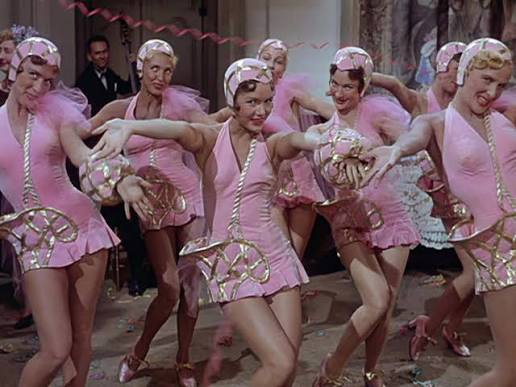
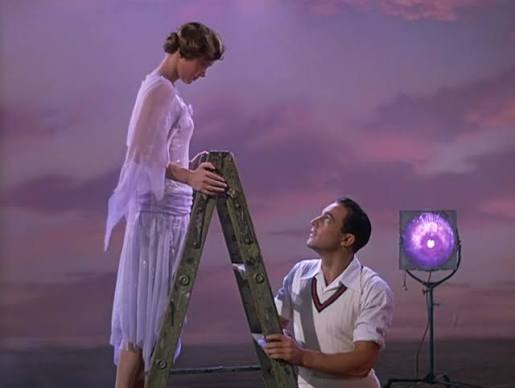
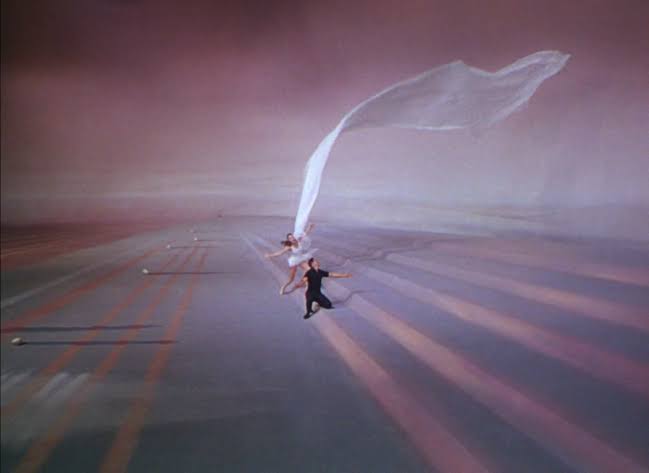
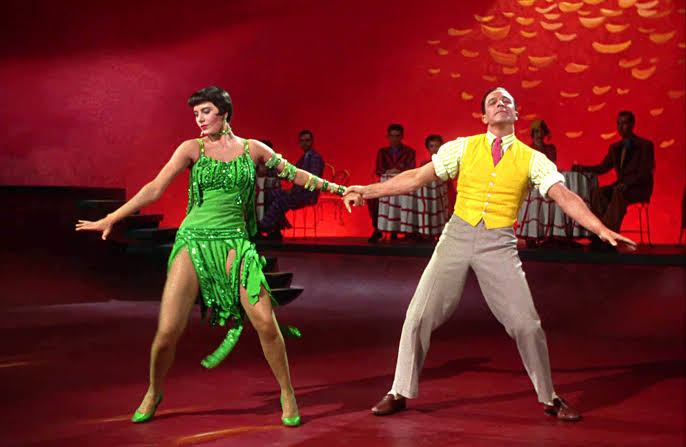
Singing in the Rain has so much going for it — an amazing story tied into the history of talking films replacing silent films, great songs, great actors with great performances, and amazing dance routines (though I maintain that the 20-minute one with Cyd Charisse is just a bit too long and a bit too much — yet also brilliant.)
For those who don’t know what Singing in the Rain is about — for shame! FOR SHAME!
Oh, I mean, please, let me tell you what it is about.
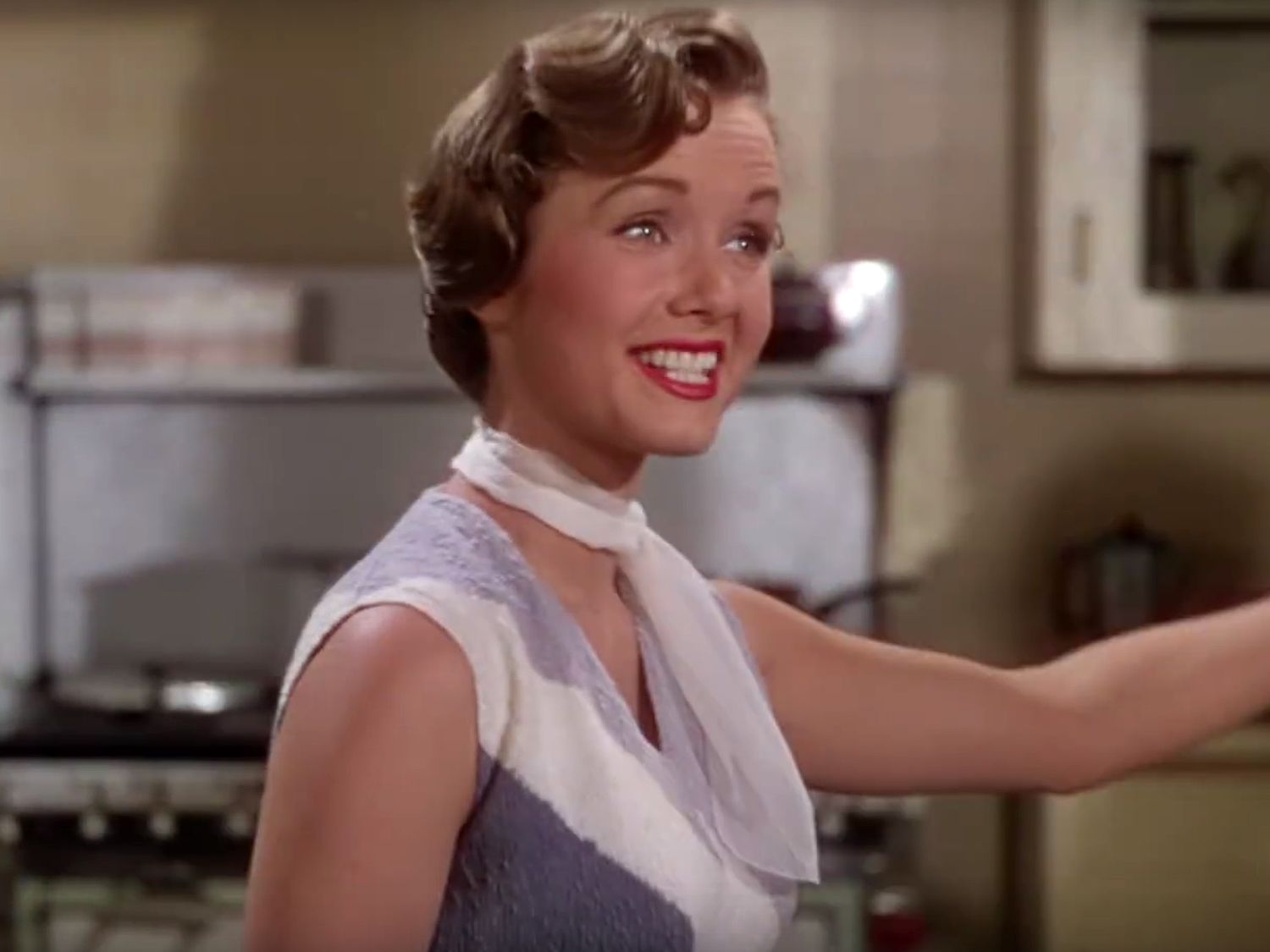
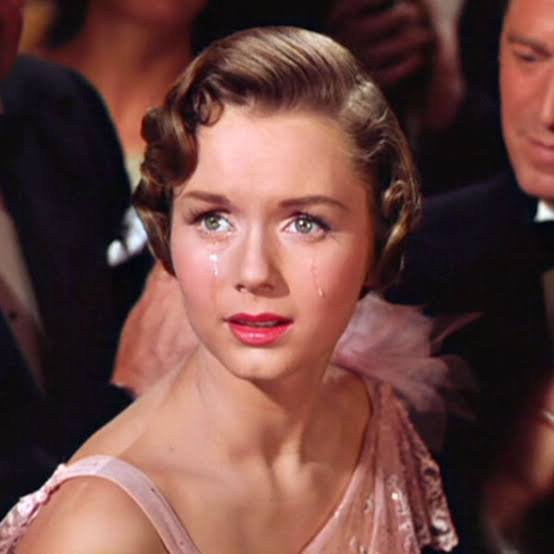
The movie, which takes place in 1927, has a couple underlying storylines. One is a love story between Gene Kelly’s character Don Lockwood and Debbie Reynold’s character, Kathy Selden.
The other is a historical story about the end of silent films and the beginning of talking films.
That’s the simple description, but there is so much more going on underneath the surface of this comedy/musical.
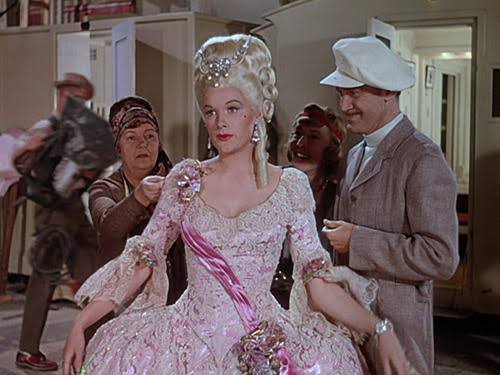
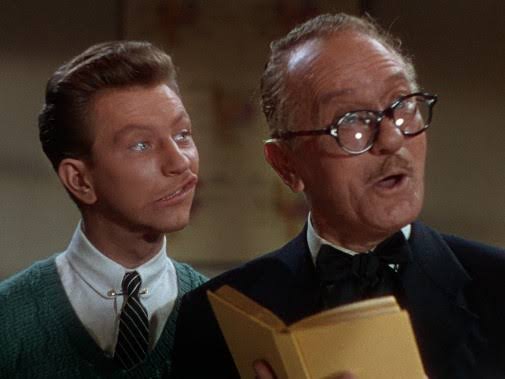
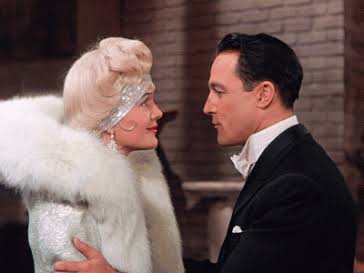
We start the movie with silent screen swashbuckler star Don Lockwood and his movie partner Lina Lamont (Jean Hagen) attending a movie premiere. They are kind of like the Fred Astaire and Ginger Rogers of their time, only they are silent film stars of Victorian-era romance-adventures.
It is only Don and his friend Cosmo Brown (Donald O’Connor) — the musical accompaniest for the Lockwood and Lamont movies — who speak during the red carpet interview. It seems like the men are keeping Lina from speaking to the interviewer.
Don provides a sanitized version of how he and Cosmo got into show business and how he and Lamont met, with his words not matching up to what we see on our screen. He says that his motto in his career was to always conduct himself with dignity and what we see is him and Cosmo doing crazy vaudeville acts or working as stuntmen when they were first starting out.
We also see how Don and Lina first met and though Don tells the audience at the premiere they had an immediate connection, moviegoers see her sticking her nose up at him when he was a stuntman but changing her tune when the head of the studio announces Don is going to be their next big star.
We go a full 20 or 30 minutes into the movie before we find out why no one would let Lina speak during the red carpet interview. I hate to ruin this for anyone who has not seen the movie but…. I’m going to so you have been warned.
You ready?
Don’t read on if you don’t want to know……
Lina has a very annoying, high pitched voice and says things like, “Why didn’t I get to talk out there. What do you think I am? Dumb or sumthin’…”
The studio executives, Cosmo, and Don do indeed believe, and know, that Lina is dumb. They also know that she thinks she and Don are really couple, when Don wants her to know they are not.
“There’s nothing between us, Lina,” he tells her. “There never has been. Just air.”
After the premiere, Don and Cosmo are on their way to the after party when Cosmo’s car gets a flat tire. Don is spotted by a bunch of fans who swarm him and begin to demand autographs and souveniers, ripping off part of his tuxedo jacket.
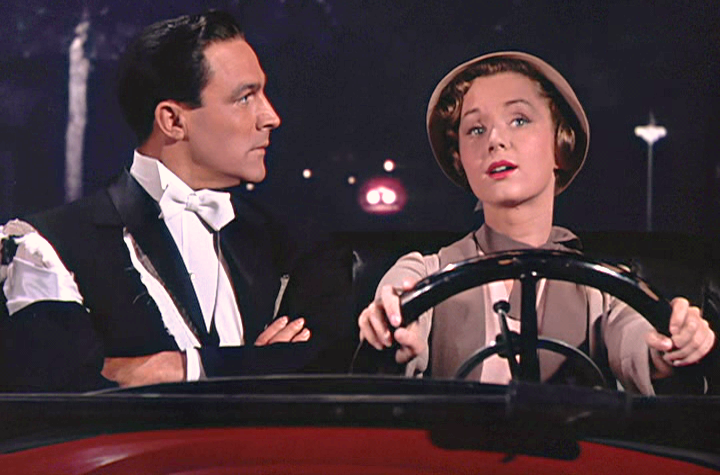
He runs away, through traffic, and ends up jumping into a car being driven by a shocked young woman named Kathy Selden.
Kathy doesn’t recognized Don right away. Instead, she thinks she’s seen his photo on a Most Wanted poster at the post office and begins to scream. She stops and tells a police officer that this man just jumped into her car and the police officer says, “Why you’re Don Lockwood!”
Kathy becomes much more cordial then and asks Don if he’d like her to drop him off somewhere. He says he would like to get changed out of the tuxedo his fans ripped up and the conversation goes along smoothly until Don starts to flirt with Kathy.
She catches on to his schtick pretty fast and then pretends to be unimpressed with him. She’s an actor on the stage, which she claims is much more prestigious than acting on film.
She informs Don that all he is is a shadow up on the screen, not a real person. He just makes faces and doesn’t really speak, which is what she believes acting really is.
Don is, of course, quite offended by her mocking his professionn and when she pulls over to let him out, now safe from the screaming fans, he leans toward her and says she shouldn’t be afraid of him. What can he do to her, after all, he’s but a mere shadow.
I pause in this recap to comment on how brilliant the acting is by both of them in this scene.
I’ve provided a clip here because it’s just so good. The quality of the clip is not good, however. It is all I could find online:
We flash forward to Don at the party with all the other stars and a bunch of other famous people. At the party, the studio owner R.F. Simpson (Millard Mitchell) shows everyone in attendance an example of talking film. Everyone is surprised but doesn’t think that it will ever replace silent films, or if it does it will be years off. R.F. disagrees and later on, after another studio releases the first talking picture, R.F. says that their studio is going to film its first talking film and their biggest stars, Don and Lina, will be the stars.
A second later, when Lina speaks, though, their hearts sink.
Lina can’t speak in the movie. Not with that voice.
This is all very ironic, of course, because in real life, Jean Hagen has a lovely, sultry voice. Her real voice is actually used later in the movie where Kathy is supposedly dubbing Lina’s high voice with a more sultry one. Instead, that more sultry voice is Jean’s actual voice.
I’ve jumped ahead a bit, so let me go back: Cosos gets the brilliant idea for Kathy to dub Lina’s voice so Lina will sound like she looks in the talking movies.
What could go wrong, right?
Umm…wrong. Lina . . . well, you’ll have to watch to see why Lina isn’t a big Kathy Seldon fan and what she does about her lack of love for Kathy.
I can say that one reason Lina doesn’t like Kathy is because of what happened at that after party. After R.F.’s big announcement about talking films, a large cake is pushed into the room and suddenly out pops Kathy Selden, the “more refined” actress, who actually turns out to be a chorus girl.
Don enjoys mocking her over this which prompts her to attempt to throw a pie in his face, which instead hits Lina square in the face.
Kathy is mortified by her behavior and runs from the room with Don behind her. She manages to escape and drive off before he can find her, though, and he spends several weeks trying to track her down after Lina gets her fired from her job.
An article on TCM says many critics and fans call Singing in the Rain the greatest musical ever made and I’d have to say I am one of those fans who feels that way. There is just so much about this musical that is superior to all other musicals.
The songs are amazing, with well-written and witty lyrics.
The acting is amazing.
The dance sequences are amazing.
The comedy is spot on.
The masterful way the writers created characters mocking Hollywood films and actors all while making a Hollywood film with actors is brilliant.
It is also a visual spectacle.
There is so much talent shoved into this one movie that it almost creates sensory overload, but delightful sensory overload. Not the sensory overload that sends you running to a quiet room with your soft blanket and a white noise machine.
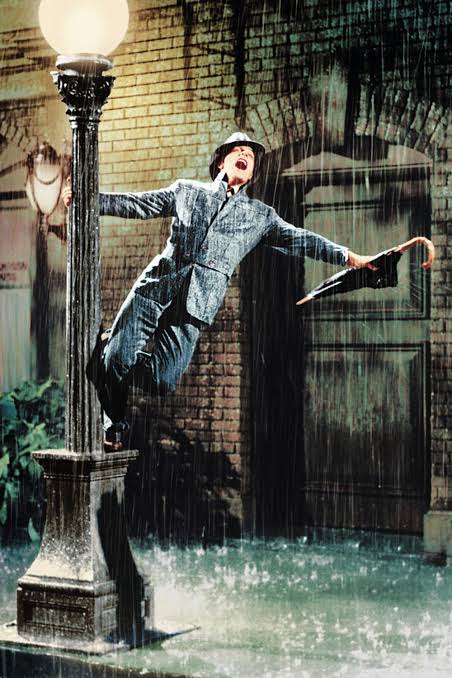
The most famous scene from the movie is, of course, Gene’s dancing in the rain in his hat and suit, with an umbrella.
I loved reading the following paragraph on TCM.com about the development and filming of the title song:
“While the film is chock full of musical highlights, Gene Kelly’s “Singin’ in the Rain” number is the genuine showstopper. Regarding his immortal solo number, Kelly later commented, quite graciously and modestly, on what made the scene work so well: “The concept was so simple I shied away from explaining it to the brass at the studio in case I couldn’t make it sound worth doing. The real work for this one was done by the technicians who had to pipe two city blocks on the backlot with overhead sprays, and the poor cameraman who had to shoot through all that water. All I had to do was dance.” The technicians’ efforts are all the more remarkable since there was a severe water shortage in Culver City, California, the day the sequence was shot.”
Here it is for your enjoyment (if WordPress lets the link work):
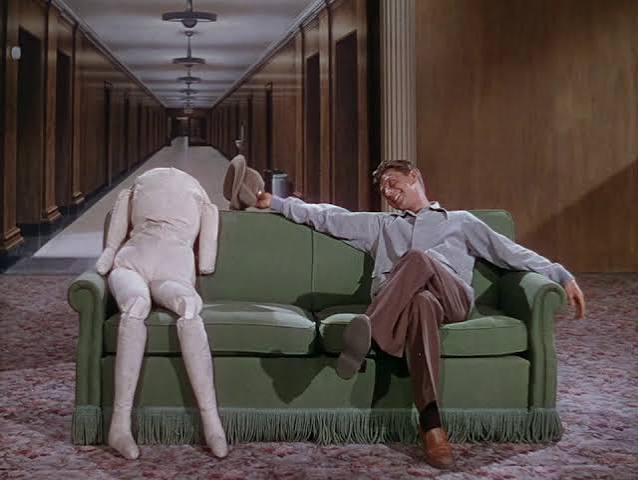
It is just about the best dance sequence I have ever seen in a movie but one can’t forget O’Connor singing and dancing (and participating in some serious slapstick/physical comedy) in “Make ‘Em Laugh” or Reynolds, Kelly, and O’Connor singing “Good Morning.”
This movie pokes fun at swashbuckling films and silent films and Kelly was all in, even though it poked some fun at him as an actor too.
The film was directed by Gene Kelly and Stanley Donan and Gene also choreographed mos of the dance sequences. Between all that and starring in the film, he must have been absolutely exhausted!
He’d started his career with the movie Cover Girl in 1944, revolutionizing the Hollywood musical with innovative and “free-flowing” dance routines.
After that movie, he earned an Oscar nomination for Anchors Aweigh (1945, with Frank Sinatra and Kathryn Grayson and a cute, little Dean Stockwell. I liked this one.)
It was On The Town from 1949 that really sent his career flying. That movie was the first of three collaborations with Donen.
Debbie Reynolds was only 19 when she first started filming as Kathy Seldon (though I’ve read interviews where she said she was 17 and watched an interview where she said she was 18) and you may have read that there was quite a bit of tension between her and Kelly during filming because Gene was a perfectionist. He was also 39-40 during filming and may have kissed her a bit more passionately than she was ready for, according to an interview she gave with The Pittsburgh Gazette, where she said he “stuck his tongue down my throat.” When she ran off crying, he was much more careful during future takes and kissed her more gently, she said, though he was a bit “pissed about it”.
Some say that Debbie called Gene abusive and she did refer to him in her 2013 memoir, Unsinkable, as a “cruel taskmaster”. Despite writing this, Debbie also remembered how his pushing her helped her to become a better actress later and how the movie shot her into stardom.
“He is a perfectionist and a disciplinarian – the most exciting director I’ve ever worked for,” she said. “And he has a good temper. Every so often he would yell at me and make me cry. But it took a lot of patience for him to work with someone who had never danced before. It’s amazing that I could keep up with him and Donald O’Connor.”
Years later Kelly expressed regret at how hard he pushed her and said he was truly shocked she still spoke to him after all he’d put her through. So clearly, they did still speak to each other even if she thought he was rough on her during filming.
The other day I was looking at the Facebook page of Gene’s last wife (he was married three times, with his final wife being 31 and him being 78 at the time of their marriage in 1990) and she had written about how Jean Hagen was hired for the film.
“Gene told me that the only dispute he had with Producer Arthur Freed and co-director Stanley Donen in casting Singin’ in the Rain was over the role of Lina Lamont,” she wrote. “Freed and Donen did not think that Jean Hagen was glamorous enough to play the part. As Gene said, “Stanley was very strong for a young lady from Fox, who was very pretty and a nice actress. She looked like a movie star, but she didn’t have enough depth to do the role. Arthur Freed had a couple of favorites that he wanted to put in. But they were both thinking of girls that look like movie stars. Beautiful, glamorous girls. Arthur even once mentioned Lana Turner, who just couldn’t have played the role that way.”
Patricia writes that the issue was neither of the men had ever seen Jean Hagen all dressed up and looking beautiful.
Kelly and Jean were friends and he thought she’d be wonderful in the role, according to Patricia.
“He did a test with her and the minute Freed and Done saw it, “they fell right in with it” and “when the first rushes came in on her, we were all mad about her.” Born Jean Shirley Verhagen in Chicago in 1923. She was nominated for an Oscar as Best Actress in a Supporting Role for Singin’ in the Rain but lost to Gloria Grahame in The Bad and the Beautiful. I have a feeling we can all agree with Gene that Jean Hagen was perfect for the role and, as he said, “she was the glue that held the picture together.”
I could go on and on about this movie and all the background of it, so I guess I’d better stop here and instead link you to a few articles or YouTube videos with more information. I will also leave you with some trivia and quotes from the movie.
Some trivia *wink*:
Despite all of Debbie’s hard work on the “Good Morning” number, Kelly decided that someone should dub her tap sounds, so he went into a dubbing room to dub the sound of her feet as well as his own.
It cost $2.5 million to make the movie, which was $665,000 over budget. The movie earned $7.7 million upon its initial release.
Donald O’Connor invited his brother to help him rehearse the stunt of running up the wall in Make ‘Em Laugh with a rope. O’Connor was smoking four packs of cigarettes day back thn and went to bed for a week after completing the scene. Sadly, an accident deleted all of his hard work and he had to reshoot the entire scene again later.
Cyd Charisse, who plays Gene Kelly’s dancing partner in the “Broadway Ballet” number, studied ballet in Los Angeles with Adolph Bolm and Bronislawa Nijinska. She danced with Ballets Russes under the name of Siderova. After World War II she was hired by Arthur Freed to be the resident ballet dancer at MGM.
From TCM: “The comical bit that Donald O’Connor does in the “Make ’em Laugh” sequence, where he pushes and pulls on his face to make absurd faces, is known as “gurning.”
Gene Kelly had a 103 degree fever when he shot the Singing in the Rain dance sequence.
Debbie Reynolds’ voice was dubbed by Betty Royce for the scenes where Reynolds’ character dubs Lina Lamont’s singing and speaking voice. In addition, in the scene where Kathy Selden is dubbing Lina Lamont, Hagen is actually dubbing Reynolds dubbing Hagen on screen for just one line.
Some hilarious quotes from the movie:
Lina: Oh Donny! You couldn’t kiss me like that and not mean it just a teensy bit! Don: Meet the greatest actor in the world! I’d rather kiss a tarantula. Lina: You don’t mean that. Don: I don’t— Hey Joe, get me a tarantula.
Lina: Gee, this wig weighs a ton! What dope’d wear a thing like this? Roscoe: Everybody used to wear them, Lina. Lina: Well, then everybody was a dope.
Cosmo: Talking pictures, that means I’m out of a job. At last I can start suffering and write that symphony. Simpson: You’re not out of a job, we’re putting you in as head of our new music department. Cosmo: Oh, thanks, R.F.! At last I can stop suffering and write that symphony.
Lina: Why, I make more money than – than – than Calvin Coolidge, put together!
Lina: “People”? I ain’t “people.” I am a – “a shimmering, glowing star in the cinema firmament.”
Lina: If we bring a little joy into your humdrum lives, it makes us feel as if our hard work ain’t been in vain for nothing.
[A dancer watching Lina Lamont in “The Royal Rascal”] Flapper: She’s so refined. I think I’ll kill myself.
Lockwood: What’s the matter with that girl? Can’t she take a gentle hint? Cosmo: Well haven’t ya heard? She’s irresistible. She told me so herself.
Cosmo Brown: Lina. She can’t act, she can’t sing, she can’t dance. A triple threat.
Lina Lamont: What’s wrong with the way I talk? What’s the big idea? Am I dumb or something?
Lina Lamont: What’s wrong with the way I talk? What’s the big idea? Am I dumb or something?
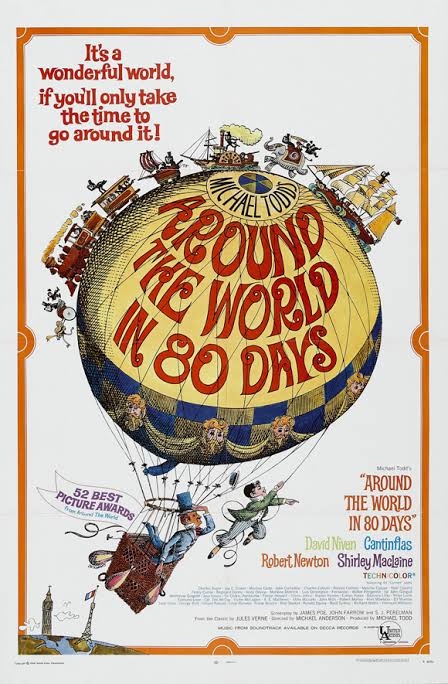
I finally watched Around the World in 80 Days from 1956 with David Niven, two years after reading Jules Verne’s novel, which I thoroughly enjoyed.
The movie, which won the Academy Award for Best Picture in 1956, was a ton of fun and I am going to watch it again just to catch all the moments I might have missed.
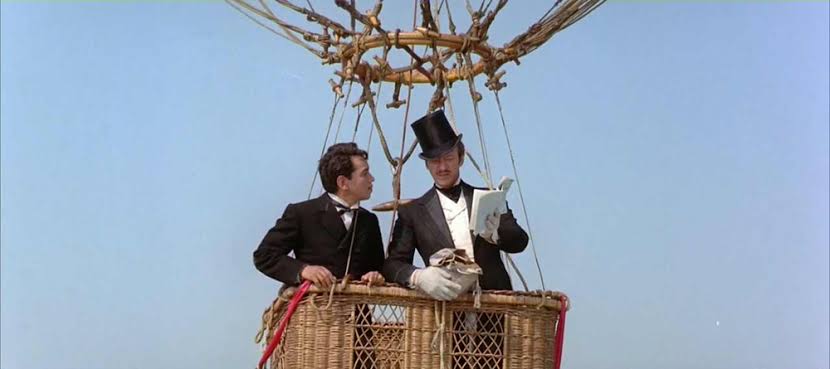
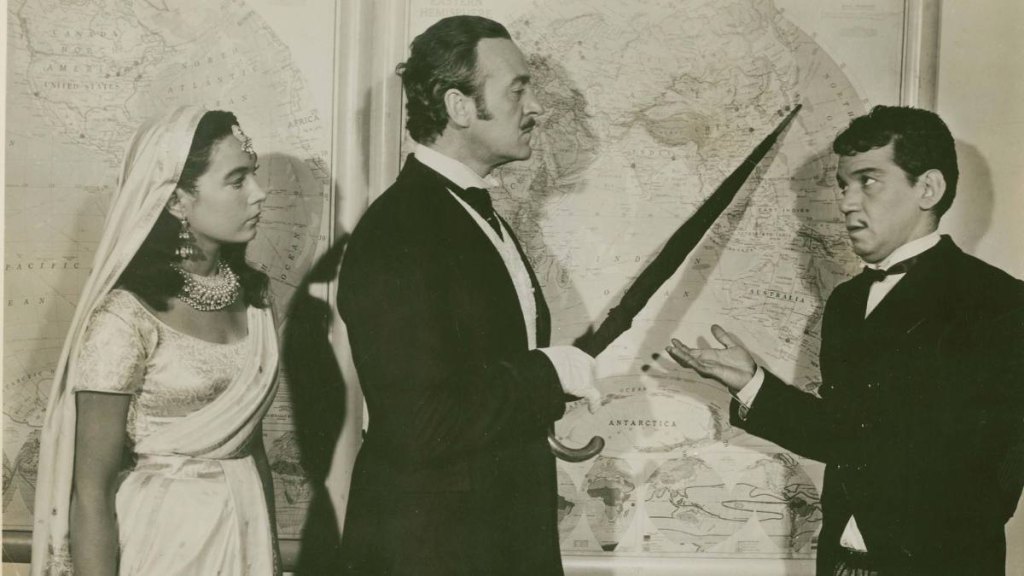
The book and the movie follow the story of Phileas Fogg, an English gentleman, who no one in his gentleman’s club can exactly figure out. During a discussion Phileas brags that he could go around the world in 80 days. A wager is made and he and his French valet (newly hired) Passepartout (Pass-par-too) head out, starting their journey in a large, hot air balloon.
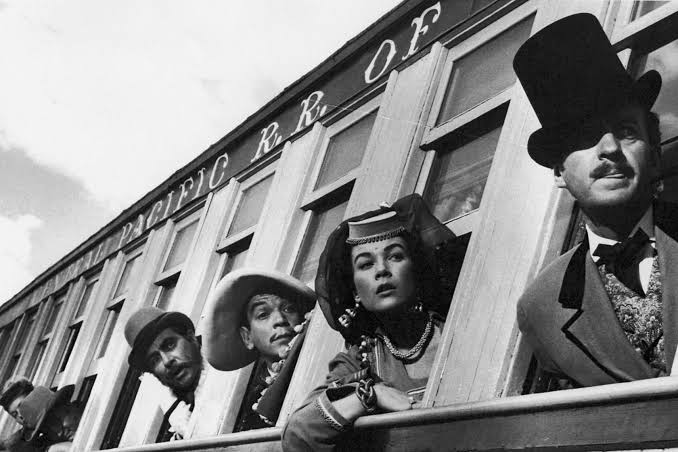
As you can imagine, all kind of situations arise on the journey and along the way they pick up a couple other travelers, one an Indian princess they rescue from being killed and another man who turns out to be a police officer who thinks that Phileas is actually the man who robbed the bank of England shortly before leaving on his trip.
(I may be the only one who thinks of Phineas and Ferb, the kids’ cartoon, when I read or hear the name Phileas but that is because I had a little one when the show first came out.)
In addition to Niven as Phileas Fogg, we also have Cantinflas as Passepartout, Shirley MacLaine as Aouda and Robert Newton as Inspector Fix.
I’m going to be upfront and say that I had no idea Shirley McClaine was Aouda, the Indian princess. I didn’t recognize her at all and didn’t realize it until I was working on this blog post and saw her name listed in the cast.
I found it interesting that the movie created the idea of “cameo roles” as a way to invite established stars to participate in a production. The cameos in this movie included the most I’ve ever head of at 40 cameos with some of the most notable being Frank Sinatra, Marlene Dietrich, Buster Keaton, Noel Coward, Charles Boyer, Caser Romero, Ronald Colman, Red Skelton, and Peter Lorre.
Of course there are some aspects of the movie that have not aged well but many of the racial stereotypes I expected luckily didn’t surface with the focus mainly being on our main characters and the adventures they find themselves in.
Clocking in at 2 hours and 55 minutes, this was one of the longer classic movies I have watched and I actually took several breaks from watching it to run errands, cook dinner, go to bed, and do several other things that needed doing. In other words it took me a couple of days to finish it. I actually do that a lot with movies, no matter the length, because it feels like I am constantly interrupted while watching them.
One couldn’t be expected to shove all that happens in Verne’s book into a 90-minute to 2-hour movie, though, right? The characters travel across several countries, including the US, while being chased by a man who thinks Phileas is a robber, and, for Passepartout, often getting lost or separated from the group.
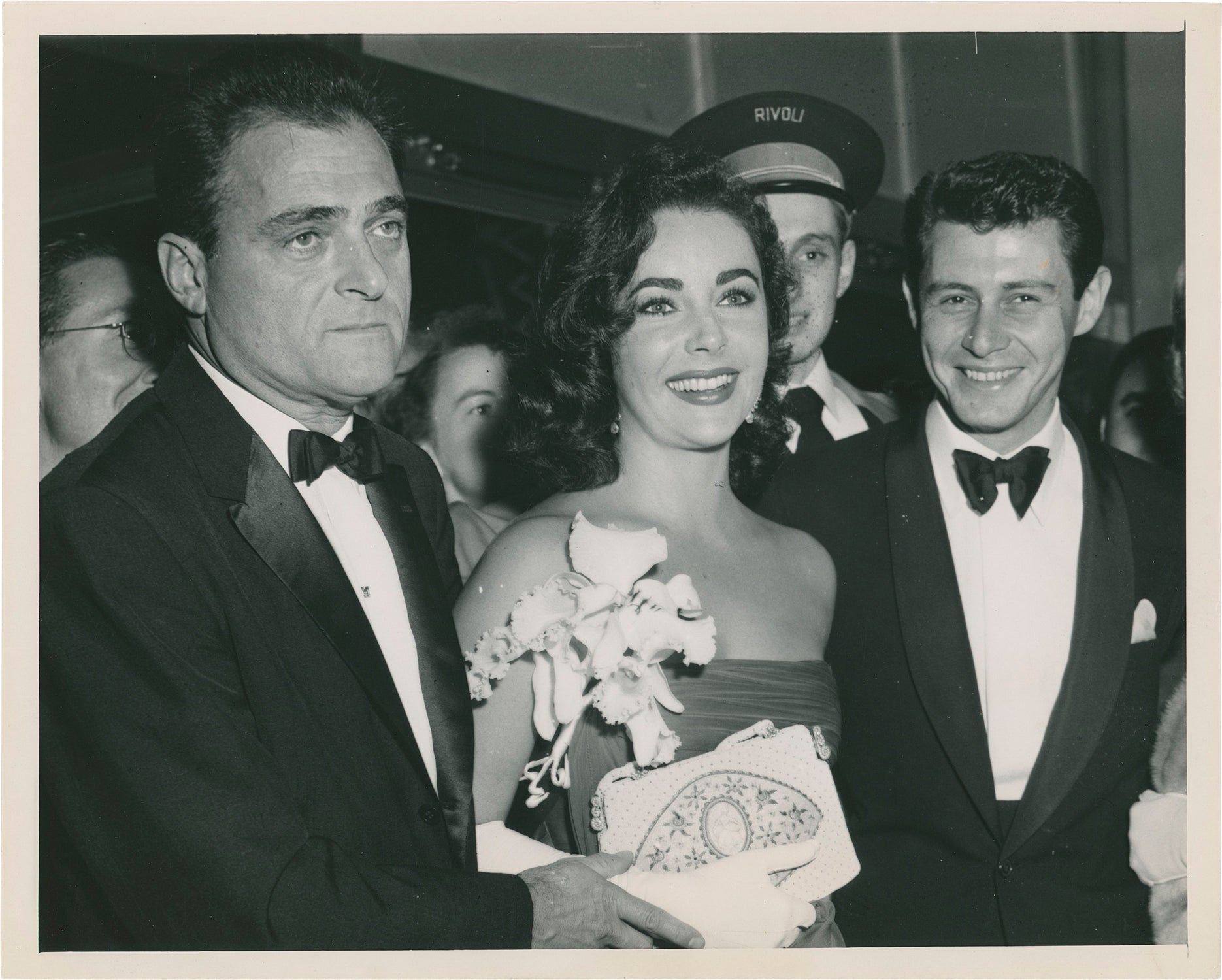
Michael Todd produced the movie and when it was released, he urged promoters not to refer to Around the World in 80 Days as a movie. To him it was an epic, a spectacle, an experience to immerse oneself in.
Michael Todd with his wife Elizabeth Taylor and movie director Michael Anderson.
“Do not refer to Around the World in 80 Days as a movie,” Todd wrote when the movie was distributed. “It’s not a movie. Movies are something you can see in your neighborhood theatre and eat popcorn while you’re watching them….Show Around the World in 80 Days almost exactly as you would present a Broadway show in your theatre.”
Critics and movie-goers agreed with the assessment, though some felt the movie would never end because it was so long.
Todd was a master at convincing stars to get involved, according to Jeff Stafford , writing for TCM.com.
“One of his talents was attracting marquee-name talent through his sheer extravagant nature,” Stafford wrote. “When he learned that the Jules Verne novel had been a childhood favorite of David Niven, he casually offered him the role of Phileas Fogg, to which Niven excitedly said, “I’d do it for nothing.” Todd’s famous remark was “You’ve got a deal.” He enticed other actors with gifts: Ronald Colman received a new yellow Cadillac for half a day’s work. Noel Coward was allowed to write his own dialogue for his cameo scene and received a Bonnard painting as a Christmas present. John Gielgud was seduced into appearing in a small role out of sheer curiosity. Todd recalled that “Gielgud asked me, ‘Why do you want me to play a sacked butler? I am a Shakespearean actor.’ I said, ‘Because I know you could do it so well and I know it’s right for you.’ He said, ‘Let me read it.’ I gave him the pages and he read it. Then he said, ‘My dear Mr. Todd, you really want me to play this? Why?…Who is playing the other part?’ I said, ‘Noel Coward.’ He said, ‘I’ve got to see that.’ I said, ‘One way for you to see it – be on the set tomorrow.’ And he was on the set.”
Todd went all out in other ways for this film too. He not only traveled the world to secure actors but props or locations for scenes.
From Stafford’s article: “He went to Chinchon, Spain, and hired the entire population of 6,500 residents to appear in a bullfight sequence. He visited his friend, the King of Thailand, who loaned him his 165-foot-long royal barge, complete with 70 glitteringly clad oarsmen, for a scene that lasted maybe 12 seconds. In China, Todd acquired a Chinese dragon used in holiday processions, which was 250 years old, thirty-feet-long, and required 24 men to operate it. In Pakistan, the producer persuaded the Nawab of Pritim Pasha to loan him his private elephant herd.”
And the train in the movie?
It was a Durango museum piece and used to run from San Francisco to Colorado in 1871 and Todd convinced the museum to loan it after a million dollar bond was secured.
The movie set some definite records, including:
the most people (68,894) ever photographed in separate worldwide locations; the greatest distance ever travelled to make a film (four million air passenger miles);
the most camera set-ups ever used (200 more than Gone With the Wind, 1939);
the most sets ever used (140 actual locations plus interiors on soundstages in London, Hong Kong, and Tokyo as well as six Hollywood studios);
the most costumes ever used (74,685);
and the most assistant directors (33).
The movie was directed by Michael Anderson.
Younger viewers may not recognize some of the cameos, I certainly didn’t, but it’s still fun to read about them later and learn who they were. I, honestly, only recognized Frank Sinatra until I read about who was in it after I watched it.
There were generations of people who came to know David Niven through this movie, not realizing his long career before it ever came out.
Gentleman’s Journal wrote that Niven represented the perfect English gentlemen in the minds of generations.
In his first movie he said “Good-bye, my dear,” to a lady getting on a train.
“In just a few words, Niven had distilled onto celluloid the perfect English gentleman – suave and cheerful, sleek and charming,” The website states. “His success skyrocketed overnight, and it echoes still today. Even now, when we think of the quintessential Englishman, it is Niven’s smiling face, pencil moustache, and effortless attire that flashes into view.”
Well, if not Niven, then Phileas Fogg.
A few tidbits of trivia I learned about the movie while researching:
Orson Welles was a little upset he did not get a cameo in the film. He was upset because before Michael Todd produced this film, he produced a stage version by Welles. The play flopped but Todd turned the project into a film anyway and it enjoyed great success. Welles felt he gave the idea to Todd in the first place. (Source Classic Movie Hub).
Shirley MacLaine wrote that filming a scene with thousands of extras ground to a complete halt because the propman forgot to put the bottle of champagne in the balloon with David Niven and Cantinflas.
Michael Todd never had anyone else other than David Niven in mind for the role of Phileas Fogg.
Michael Todd’s original estimate for the film’s budget was $3 million. The film ended up costing nearly double that, largely thanks to Todd’s demands for verisimilitude and location shooting.
Alexander Korda had previously taken an unsuccessful stab at the material. His advice to Michael Todd was “Back away from it, Mike. I’ve been trying to lick it for years. Total loss.”
If you write book reviews or book-related blog posts, don’t forget that Erin, Cat, And I host the A Good Book and A Cup of Tea Monthly Bookish Blog Party. You can learn more about it here.
On Thursdays, I am part of the Weekend Traffic Jam Reboot blog link party. You can find the latest one in the sidebar to the right under recent posts.
Notice: This post may contain affiiate links. If you purchase the product from these links I will receive a small compensation at no extra charge to you.
Hello! Welcome to my blog. I am a blogger, homeschool mom, and I write cozy mysteries.
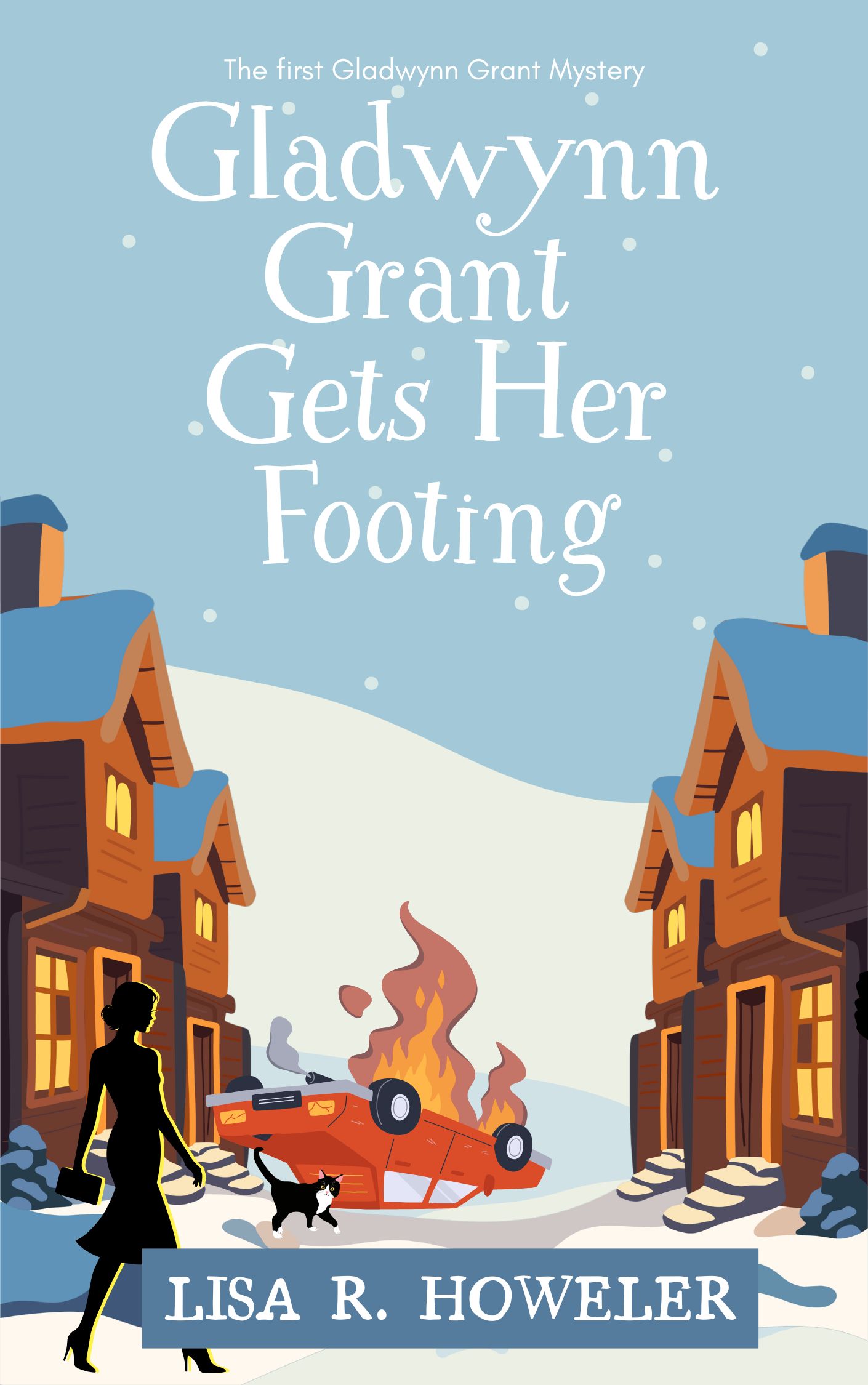
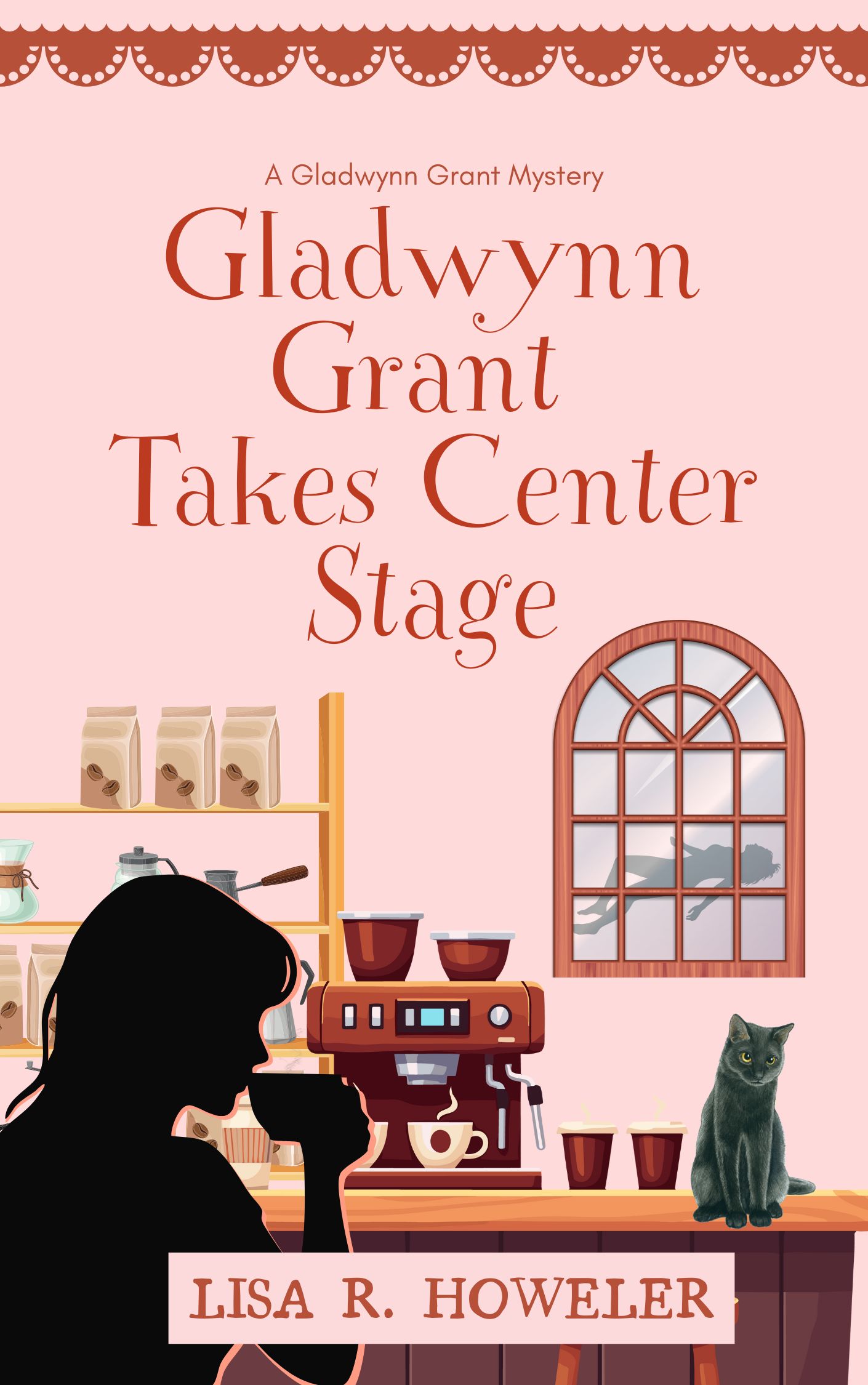
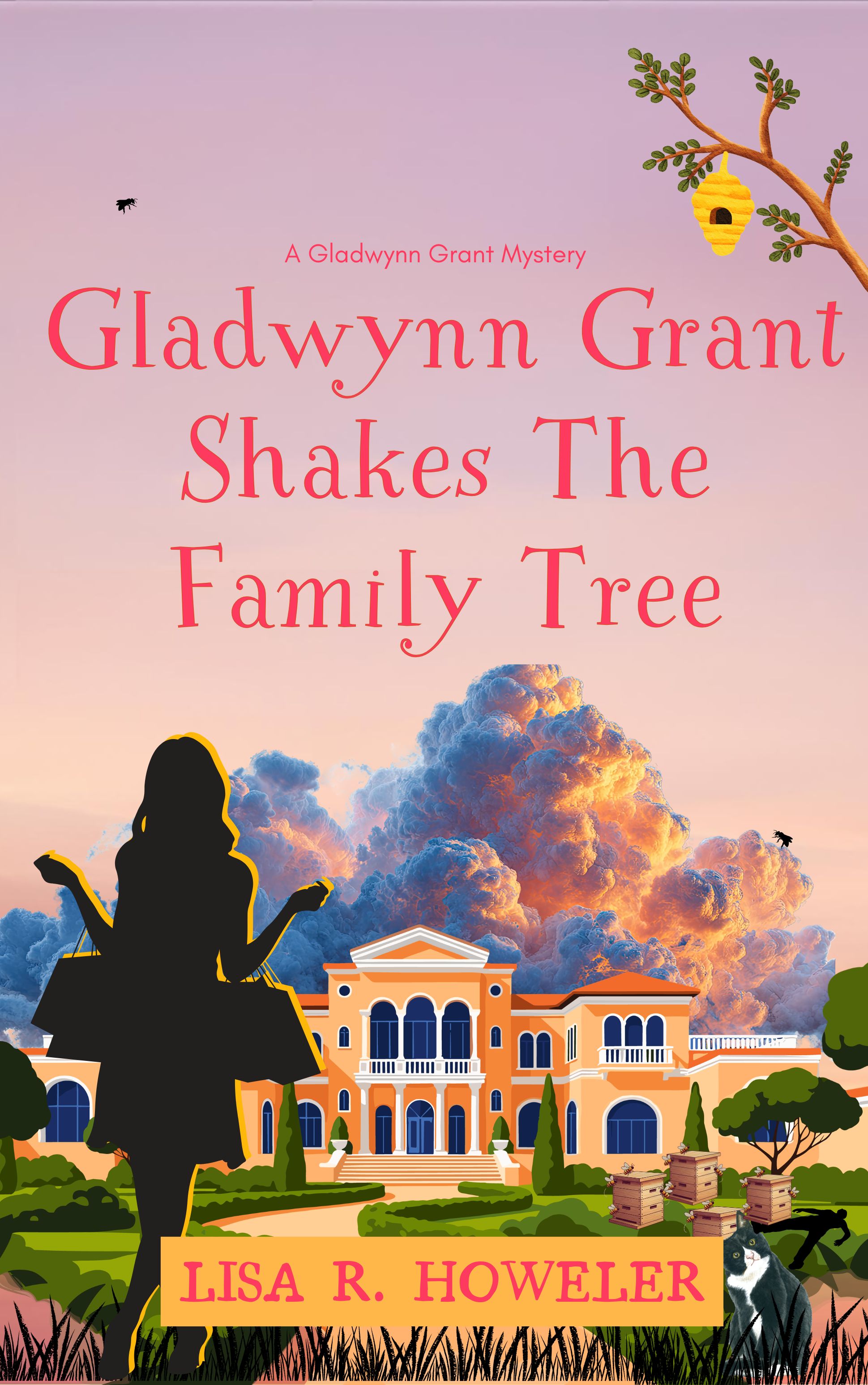
You can find my Gladwynn Grant Mystery series HERE.
If you would like to be the first to get news about my books or just have access to special posts for supporters, you can do so here for $2.99 a month https://lisahoweler.com/support-my-writing/