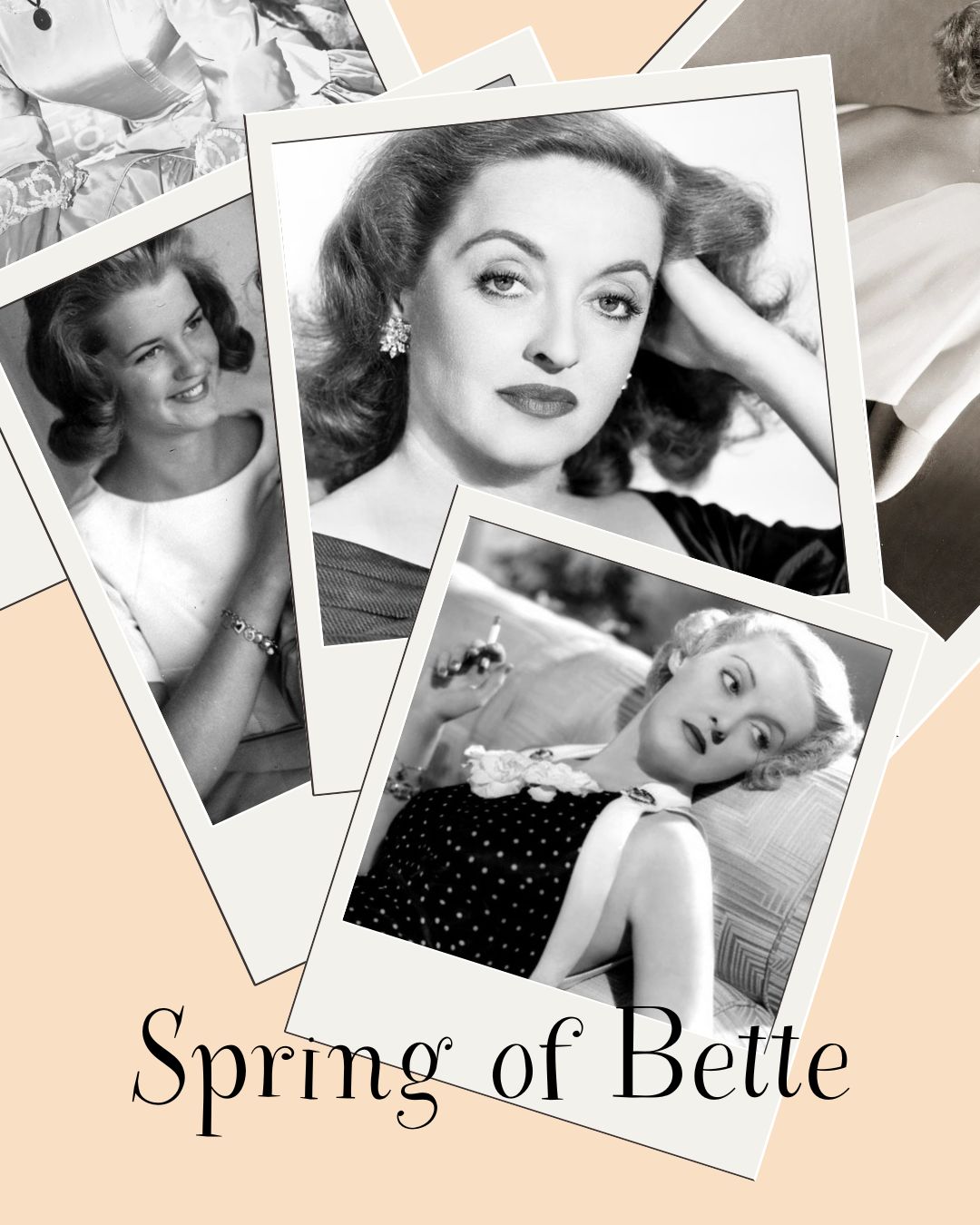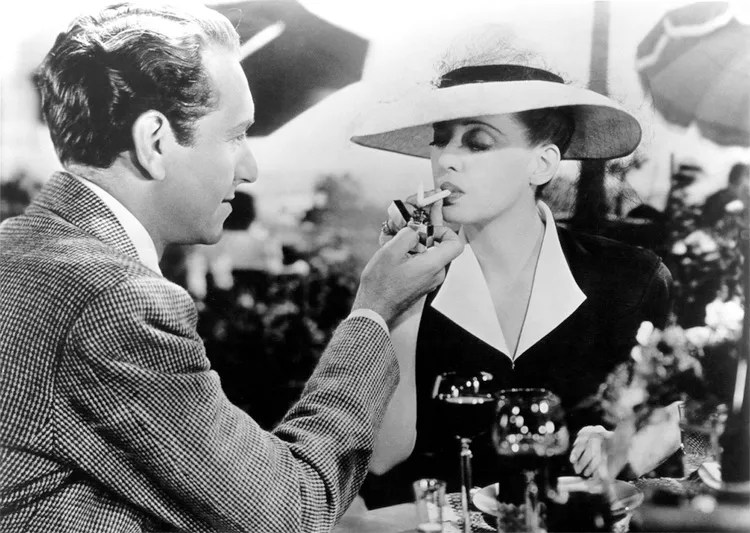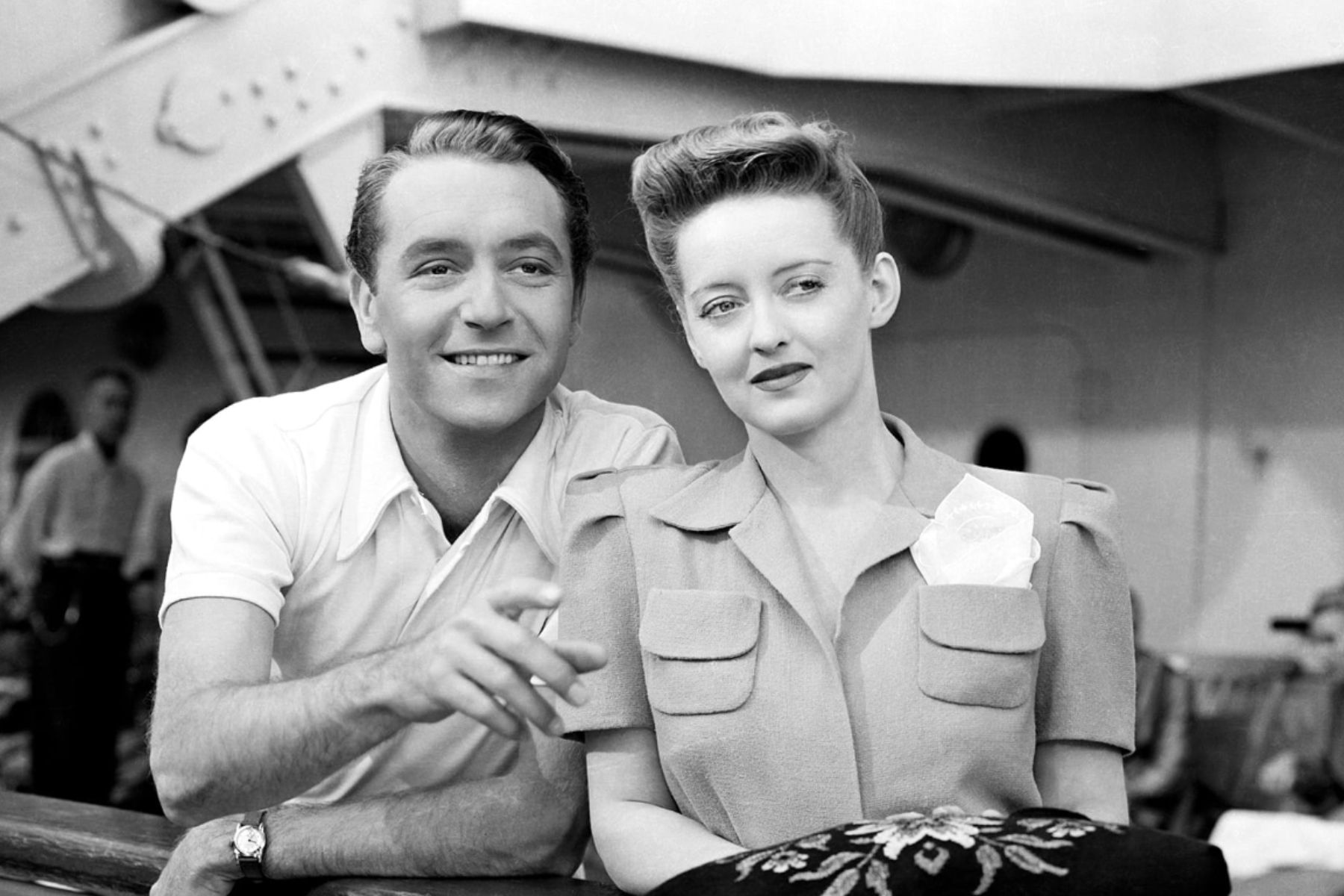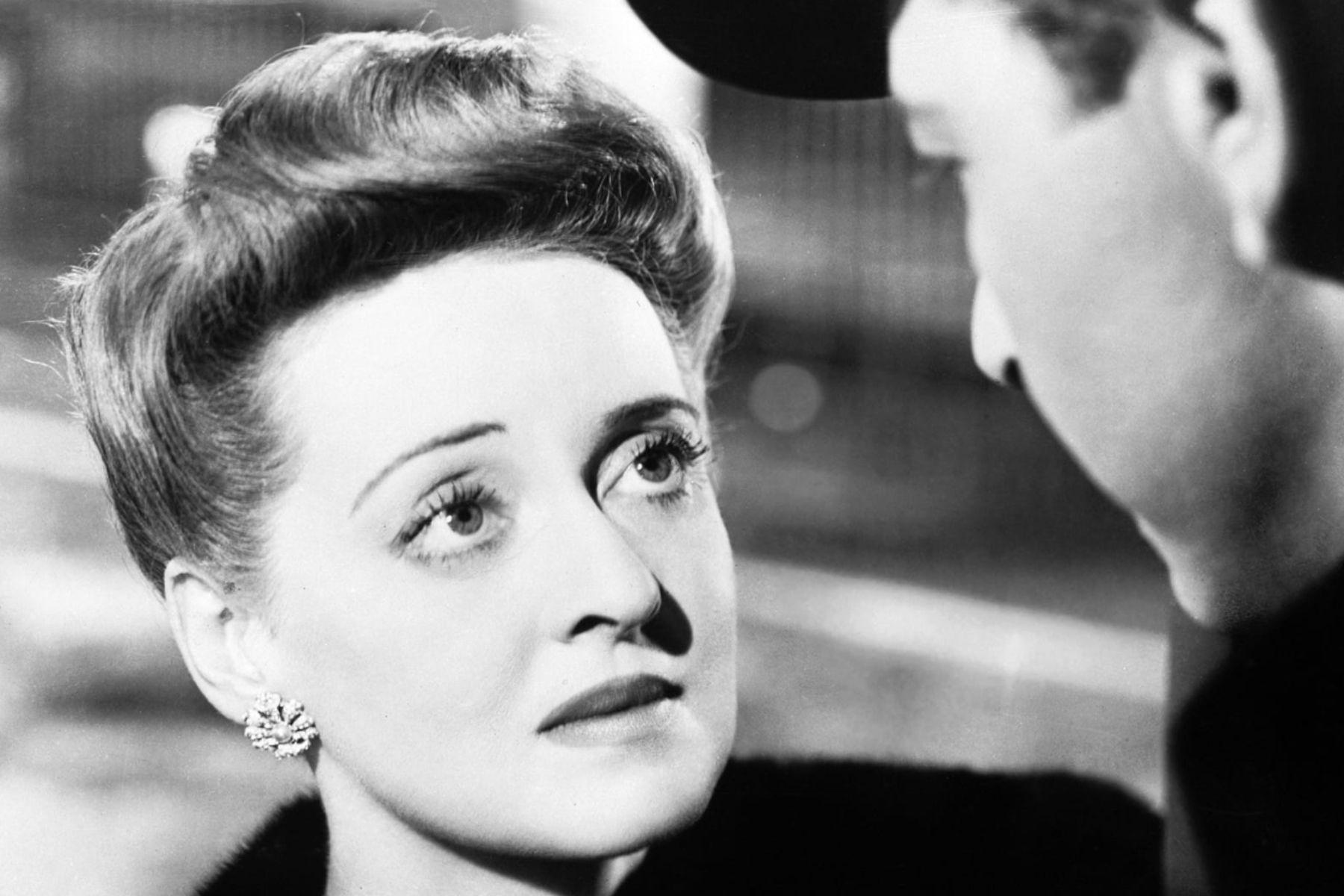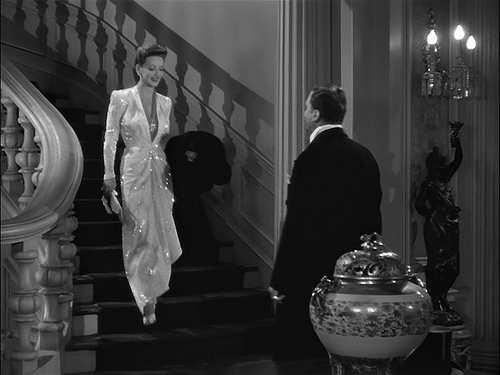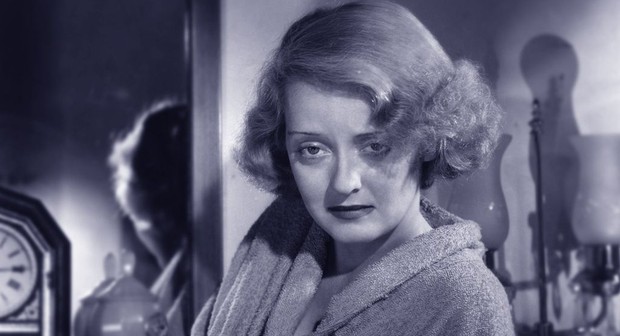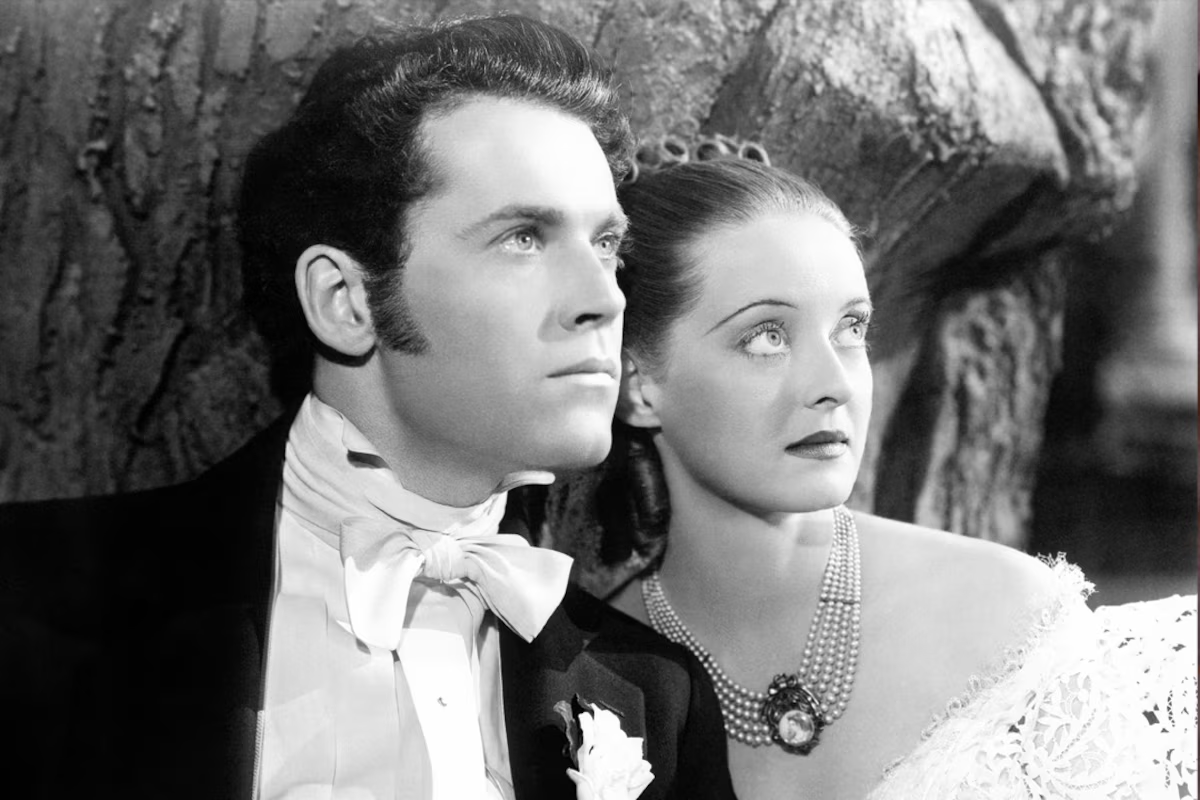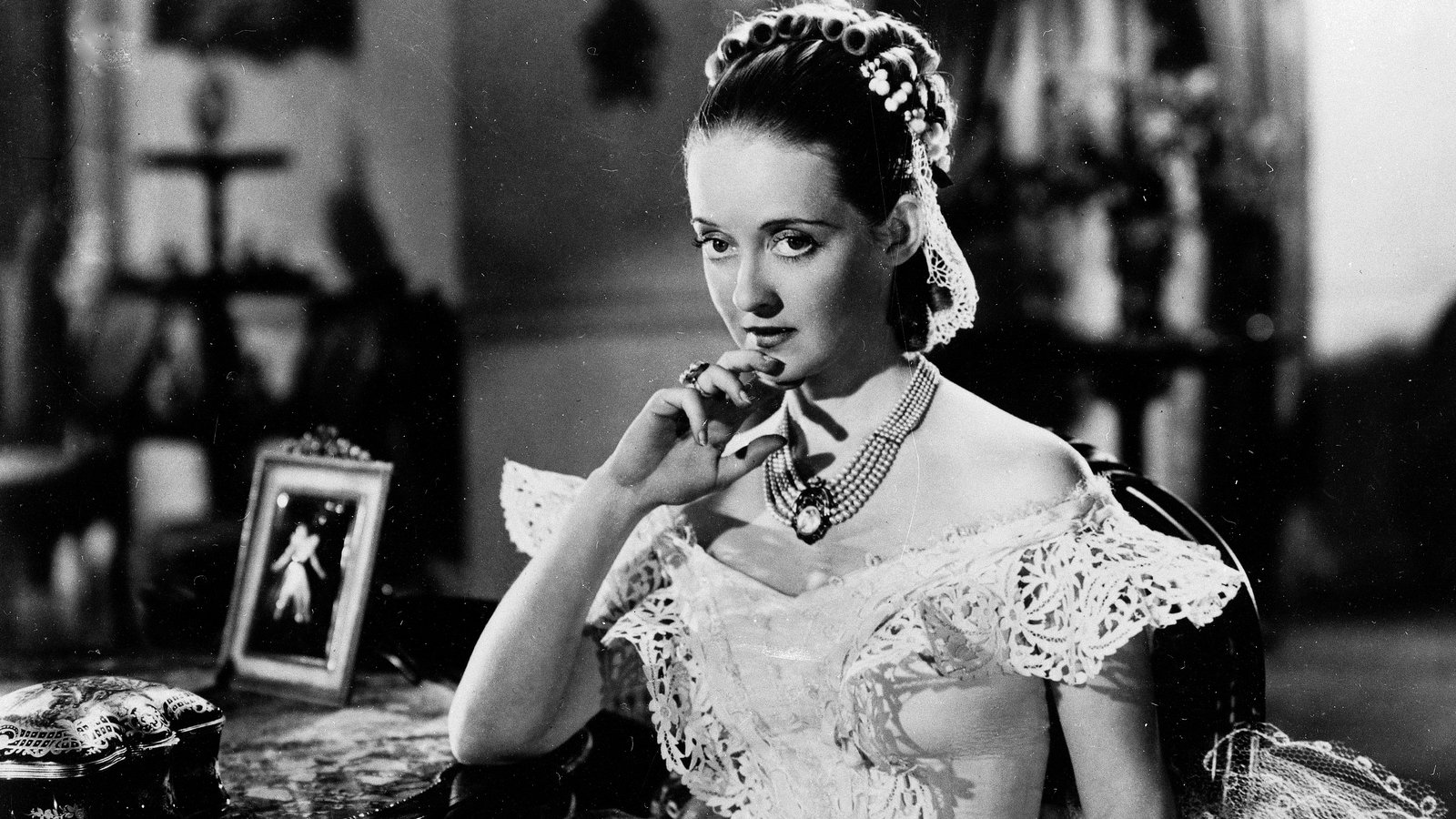
Spring of Bette: The Letter (1940)

I’ve been watching Bette Davis movies for spring and I’m stretching a bit into summer because of some delays but … no one really cares because I think two people (including me) read these posts. Ha! But it’s still fun for me so I keep writing them.

This week I am writing about The Letter.

This one was very suspenseful and fascinating.

I wondered what the truth was and when I did know it, I wondered how everyone in the movie would figure it out.

And the ending…oof. I sort of knew it was coming and am not sure what I think about it, but I am going to not talk about it here. I’ll let some of you watch it and then you can come back and tell me what you thought.

Here is a brief description of the movie from TCM.com:

Based on a short story and play by British author W. Somerset Maugham, The Letter is the story of Leslie Crosbie, who has killed her lover and claims self-defense. But an incriminating letter exists…

I couldn’t write any better what Margarita Landazuri wrote about the opening sequence of this movie:
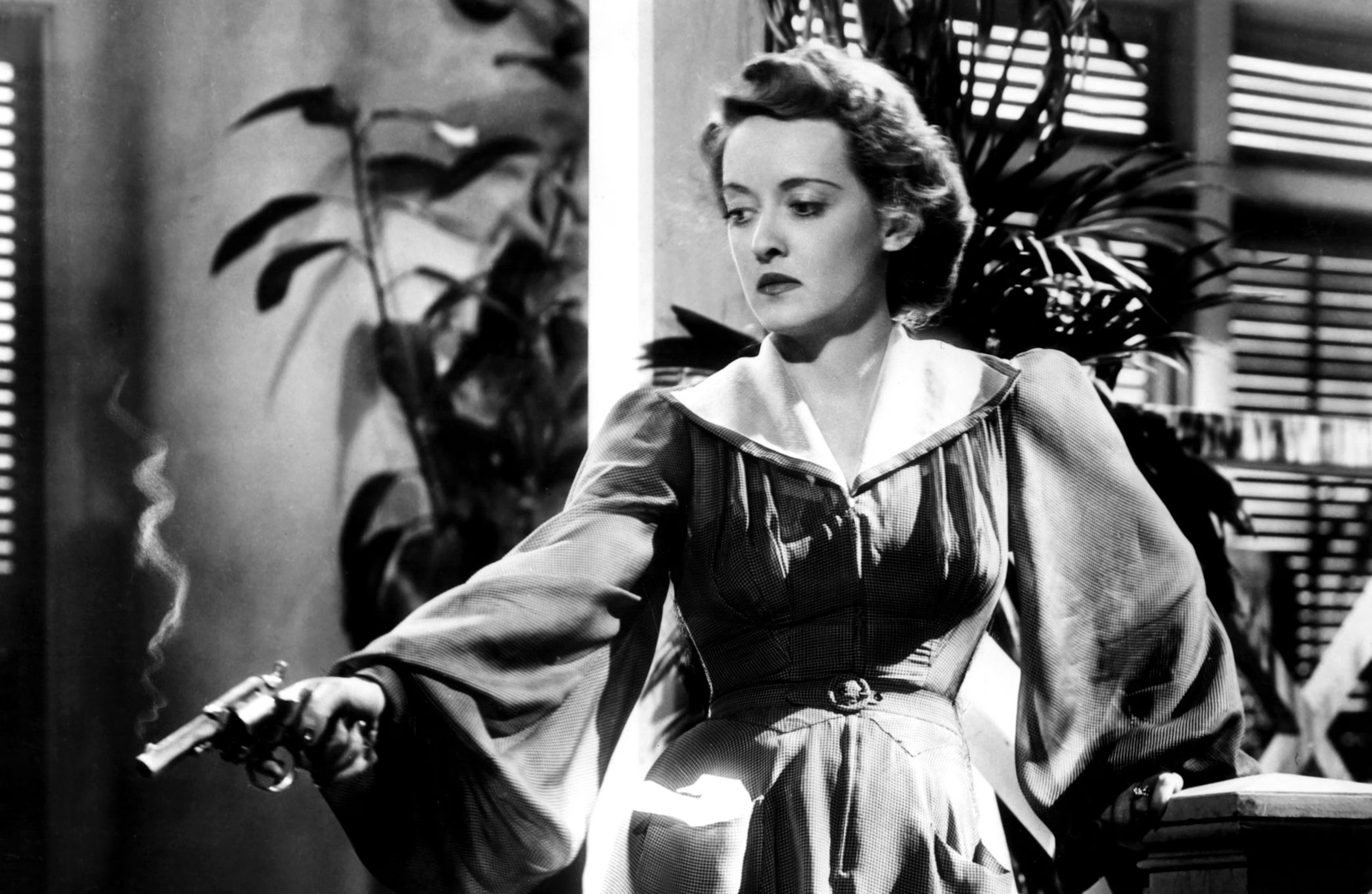
“It is a sultry, sweltering, moonlit night on a Malayan rubber plantation. The camera pans across the native workers sleeping fitfully in their hammocks, through the silent, menacing darkness. Suddenly, a shot rings out. A ghostly tropical bird, startled, flies off its perch. A man stumbles down the steps of the veranda, followed by a woman who pumps several more shots into him and drops the gun. In two wordless minutes, director William Wyler grabs the audience and sets the mood of The Letter (1940), with one of the most stunning opening sequences ever.”

This movie, released in 1940 is a remake of a 1929 movie starring Jeanne Eagels shortly before her death. It is one of the only, if not the only, surviving film she was ever in. There was a silent and a talking version with her in it released that year and it caused quite a stir with some towns in the U.S. banning it and calling it “too adult” for most audiences.

But we are talking about the 1940 version today.

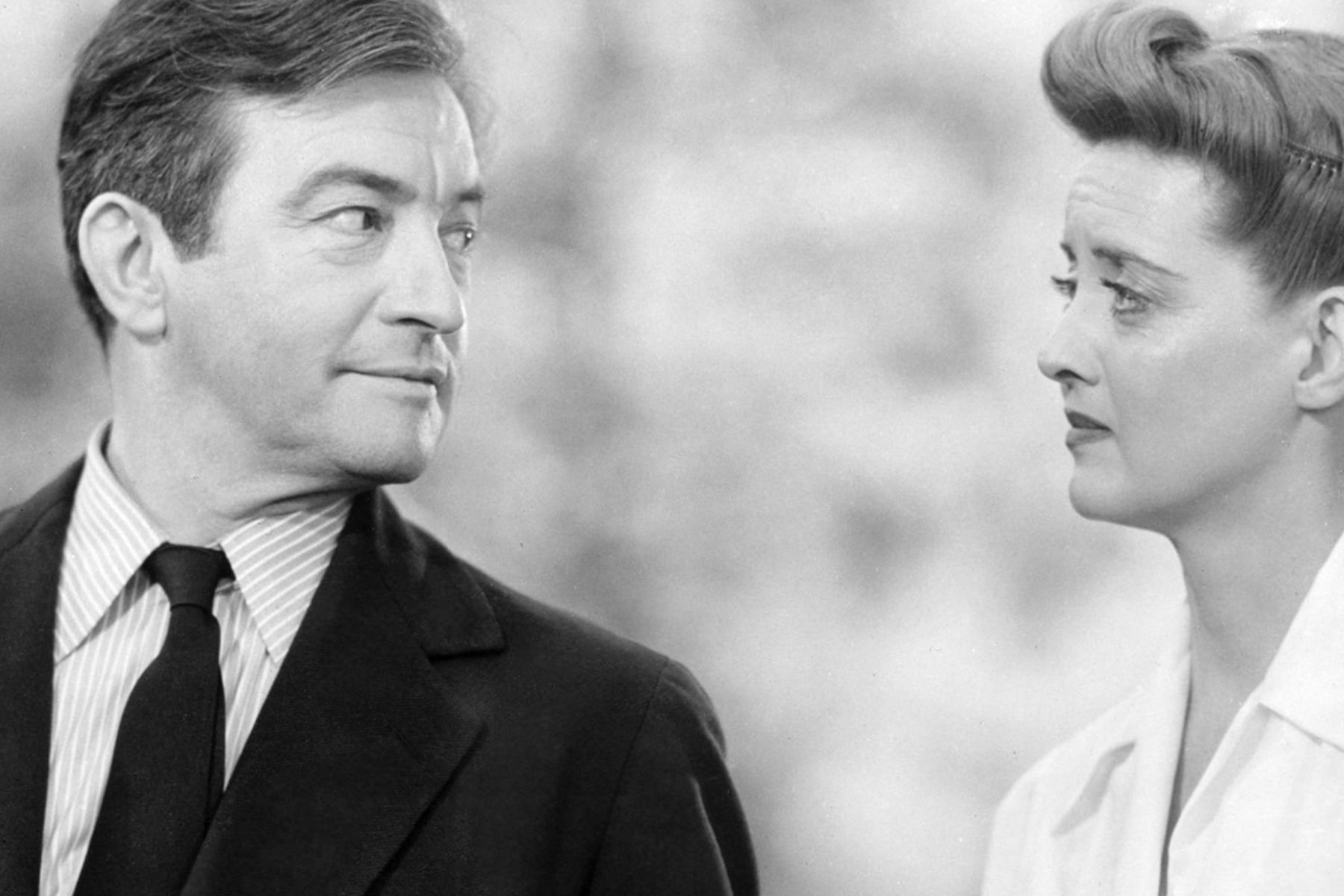
This version was directed by William Wyler who Bette Davis had worked with in Jezebel and had a brief affair with (like who didn’t she have an affair with at this point?!). Davis said there was no other director who she would trust and listen to as much as Wyler.

There were a couple of major challenges to this insistence by Davis, but, overall, their close friendship did prove to be a plus for the movie.

In addition to Davis, the movie also stars:

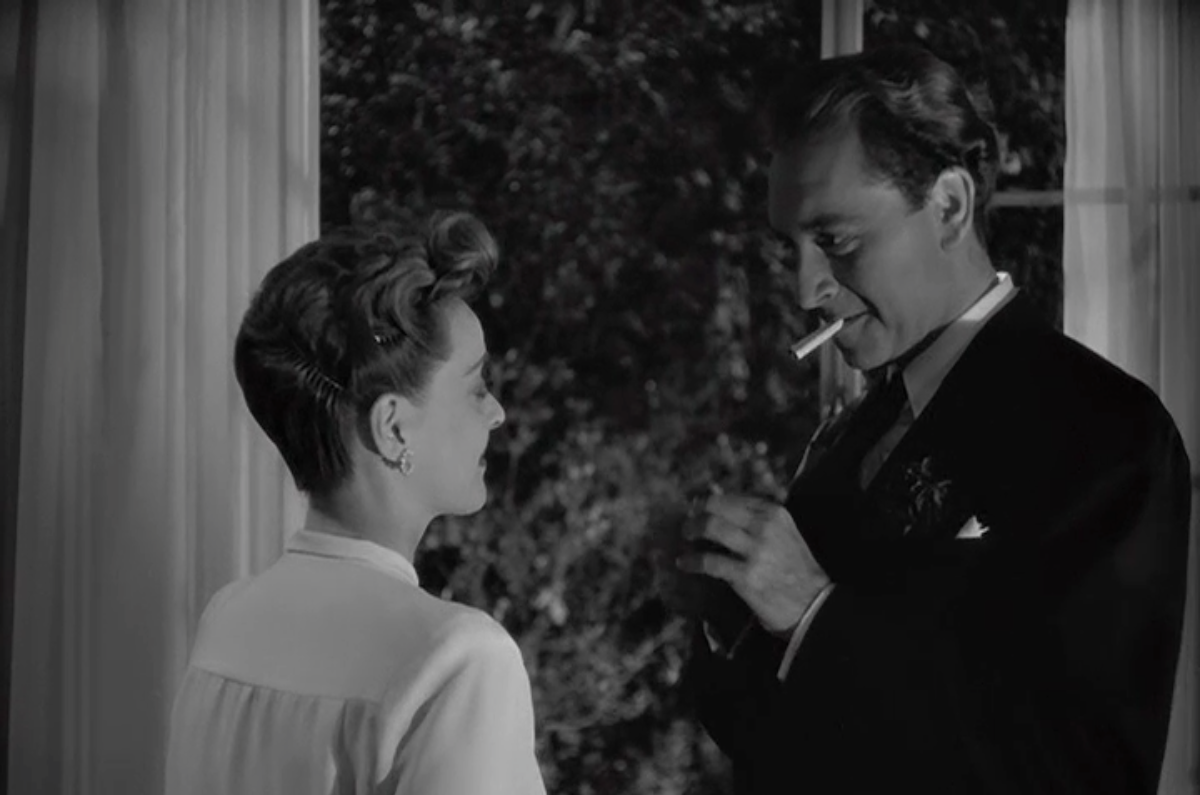
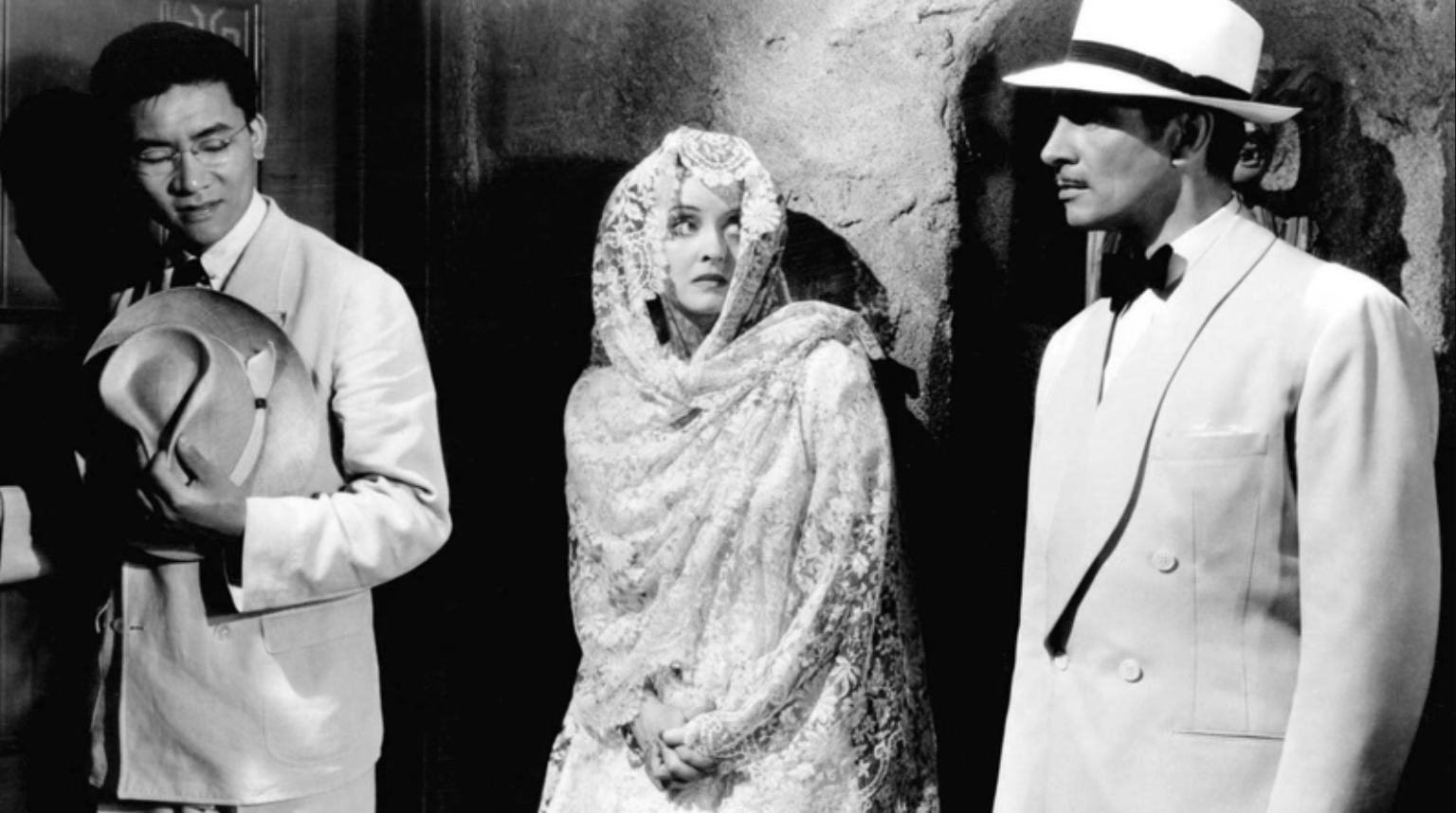
James Stephenson (an unknown British actor at the time who was nominated for an Oscar for his performance but sadly died a year later from a heart attack), Herbert Marshall, and Victor Sen Yung as Ong Chi Seng.

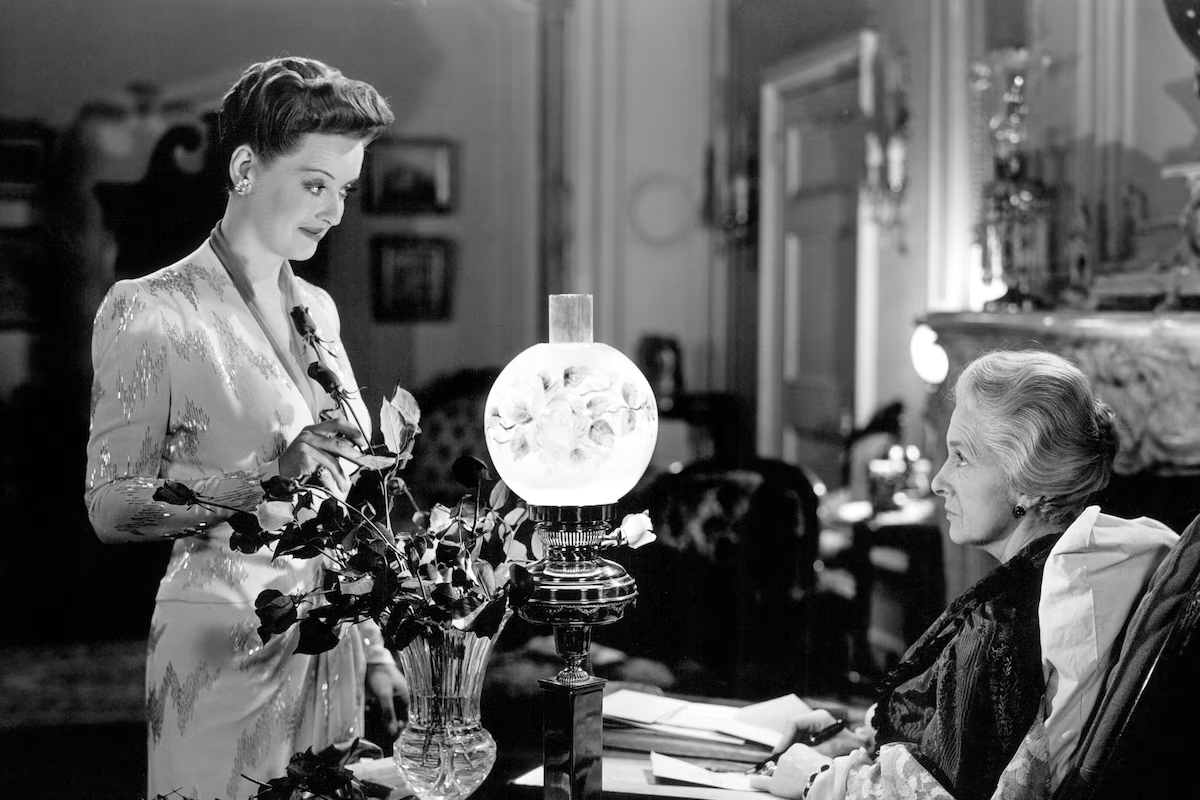
Sen Yung, Bette, and Stephenson

Sen Yung was amazing and a pivotal part of the movie all the way through. His subtle expressions and slight raise of his voice just when needed as absolutely perfect. I’d like to find out more about him and the roles he was able to, and not to, play in Hollywood back then.

I did read that he played Hop Sing on Bonanza and I’ve never seen Bonanza but I’m guessing it was pretty stereotypical. Not sure though.

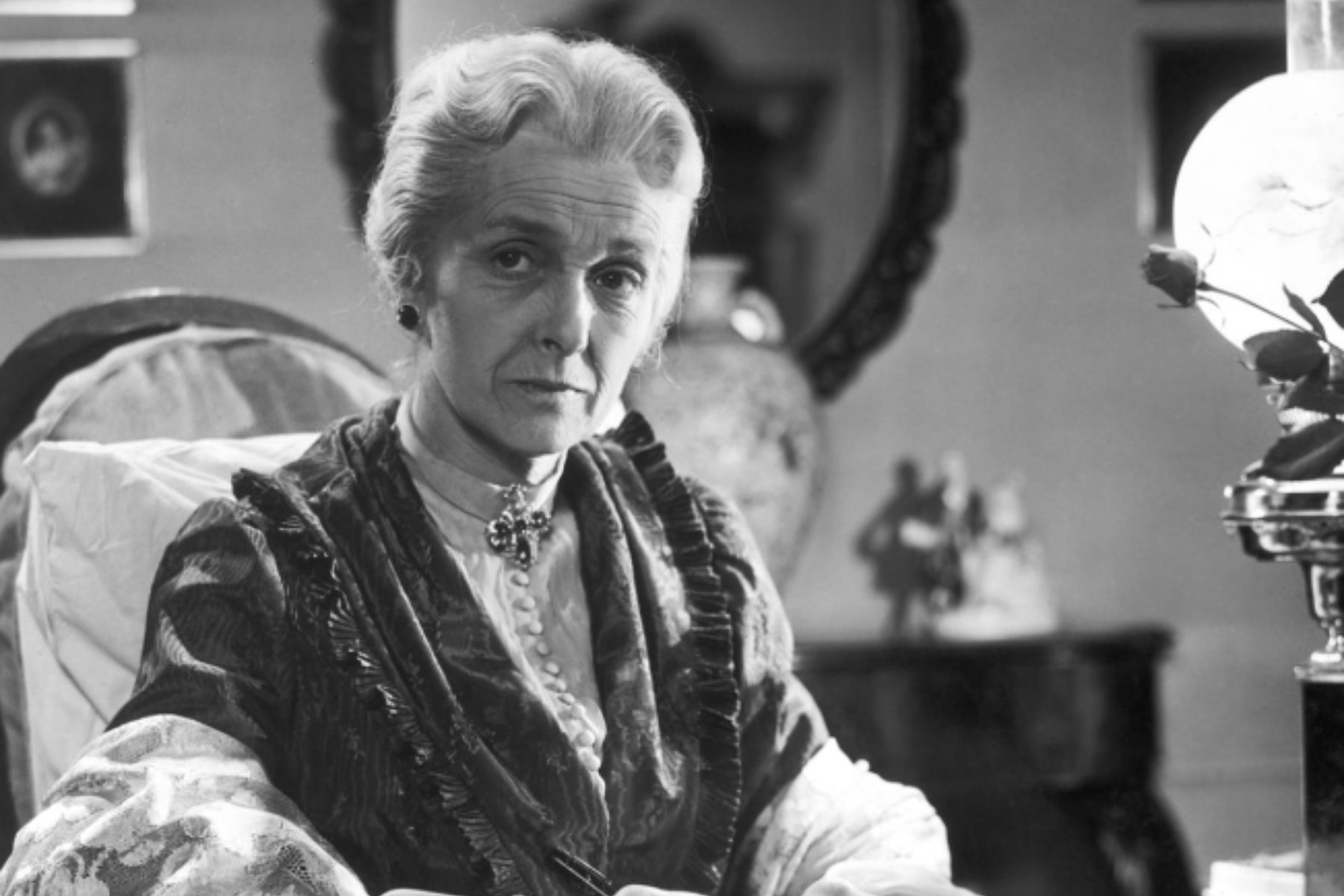
Gale Sondergaard plays an Asian woman, which was very odd, but also worked somehow. She was very intimidating and creepy but that was also enhanced with Wyler’s decision to cut the soundtrack in scenes with her, leaving only the sounds of wind or windchimes during her appearances.  

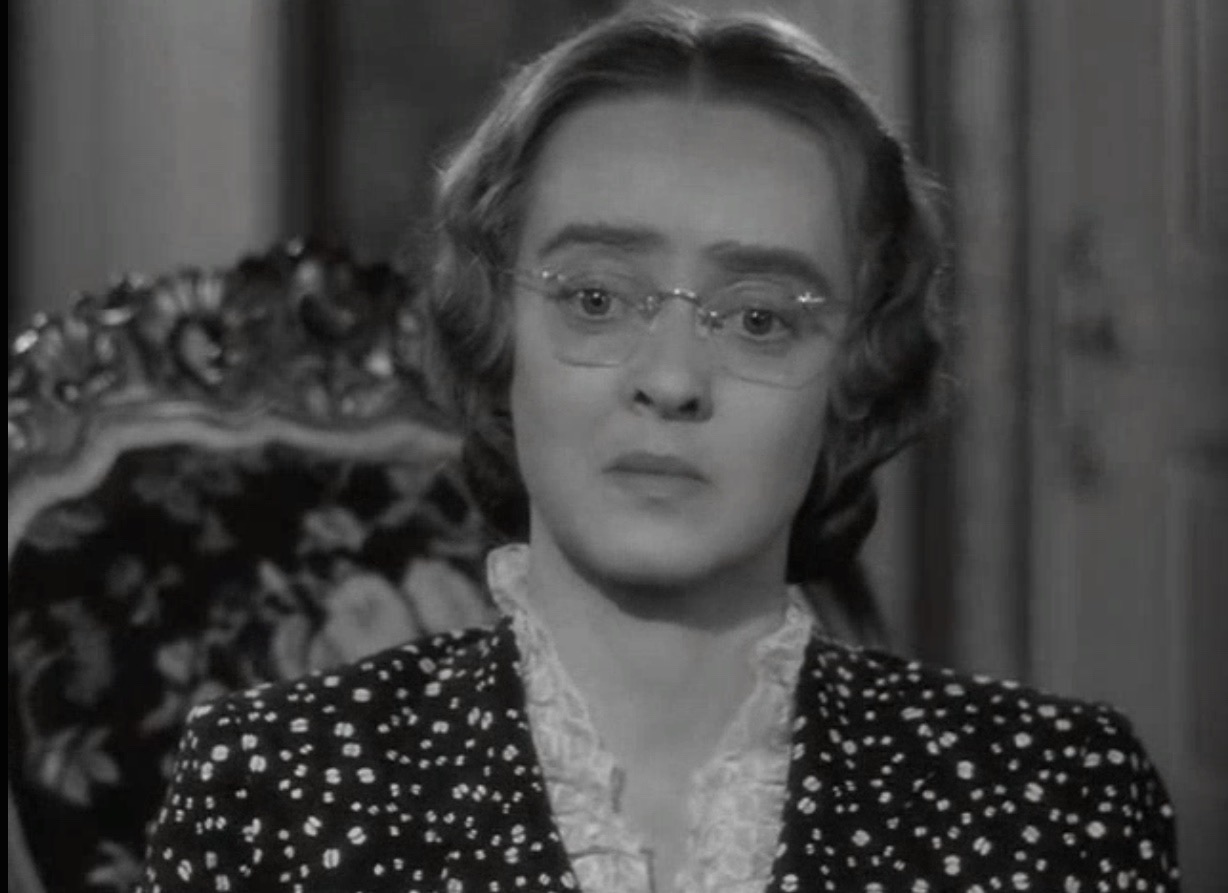
Davis was extremely intense during much of the  movie and her unflinching telling of the true story was chilling and unnerving. It had me gasping a couple of times but I gasped even more at her audacity at the end of the movie.

After watching all these movies with Bette, I don’t know that she is my favorite actress and sometimes I feel like she is the same person in a lot of movies, without much variety in her acting style, but she certainly commanded the screen with her presence. More so than what Bette says is how she looks in a scene. She has this subtle, and sometimes not subtle, way of cocking one eyebrow and lowering her eyelids at the same time that alerts you to an impending fit, temper tantrum, or epic take down.

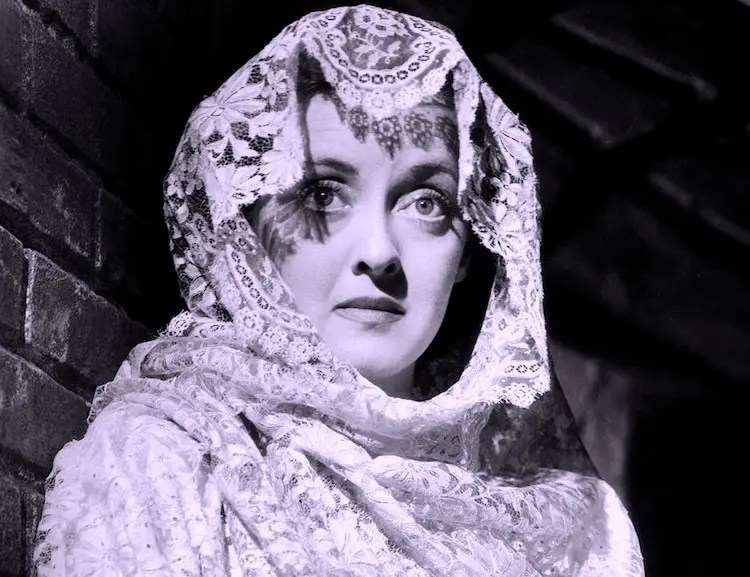
This movie, much like Jezebel, showcases Bette’s ability to convey so much through just a few looks. I couldn’t take my eyes off of her and found myself saying, “Oh no you didn’t…” a lot to the screen when she was on.

This one is definitely on of hers I would recommend if you have never seen a Bette Davis movie, or one that was good at least.

Here is the opening sequence I was talking about above:

Here is an explanation on why this movie is considered noir by many film buffs

Up next I am watching Of Human Bondage, one of Bette’s most acclaimed early films.

My watch list for this feature:

It’s Love I’m After 

The  Working Man 

Another Man’s Poison 

Dark Victory

Jezebel 

Dangerous

The Letter

Of Human Bondage (June 2)

Now, Voyager (June 5)              

The Petrified Forrest (June 11)

Sources:

https://www.tcm.com/articles/18603/the-letter

https://classicforareason.com/2017/07/04/the-letter-1940/

https://classiq.me/breaking-the-rules-of-a-leading-lady-bette-davis-in-the-letter


If you want to find clips and thoughts about vintage movies and TV, you can visit me on Instagram on my Nostalgically Thinking Account (https://www.instagram.com/nostalgically_thinking/) or on my YouTube account Nostalgically and Bookishly Thinking here: https://www.youtube.com/@nostaglicandbookish


You can also find me on Instagram and YouTube and Facebook.

Spring of Bette Davis: Dangerous (1935) (with spoilers)

This Spring, I am watching Bette Davis films.

 This week I watched Dangerous  (1935) and I will be honest before we get too far — I didn’t like it very much. I feel weird writing that because Bette won an Oscar for this movie and it is regarded as one of her breakout roles besides Human Bondage (1934). I think what I didn’t like about this film was the story. It didn’t seem super well written to me.

There are many film buffs who feel similar, according to what I read online.

Bette seemed a bit too over-the-top for me at times, but then she was playing a woman who wasn’t really mentally stable, especially toward the end of the movie.

The movie is about a former theater star who loses her career due to her alcoholism, but is rehabilitated by an architect/theater buff who falls for her.

I partially didn’t like the movie because, to me, it did what too many movies of the 30s through 50s did and made the woman out to be evil and the man innocent, even if he did the same thing as the woman.

How many movies of that period have you watched where everyone warned people of a man who was a womanizer instead of warning a man about the “floozy woman”?

I’ve watched a fair amount and it gets a bit old.

Bette’s character is a mess, and she does bring ruin to all men she’s around and encounters, yes. She’s also ruined her own acting career with her alcoholism.

You can’t help hoping throughout the movie that she’ll turn her life around, and at least once, it looks like she might.

I won’t give the end of the movie away, in case you ever want to try it, but I will say, don’t hold out too much hope. The ending is complex. Did she turn her life around, didn’t she? I’m not sure what to think, but I believe there was some character development.

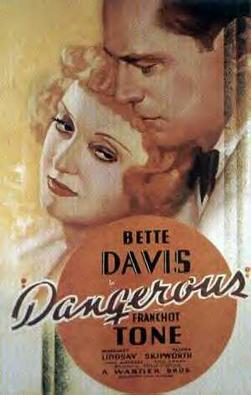
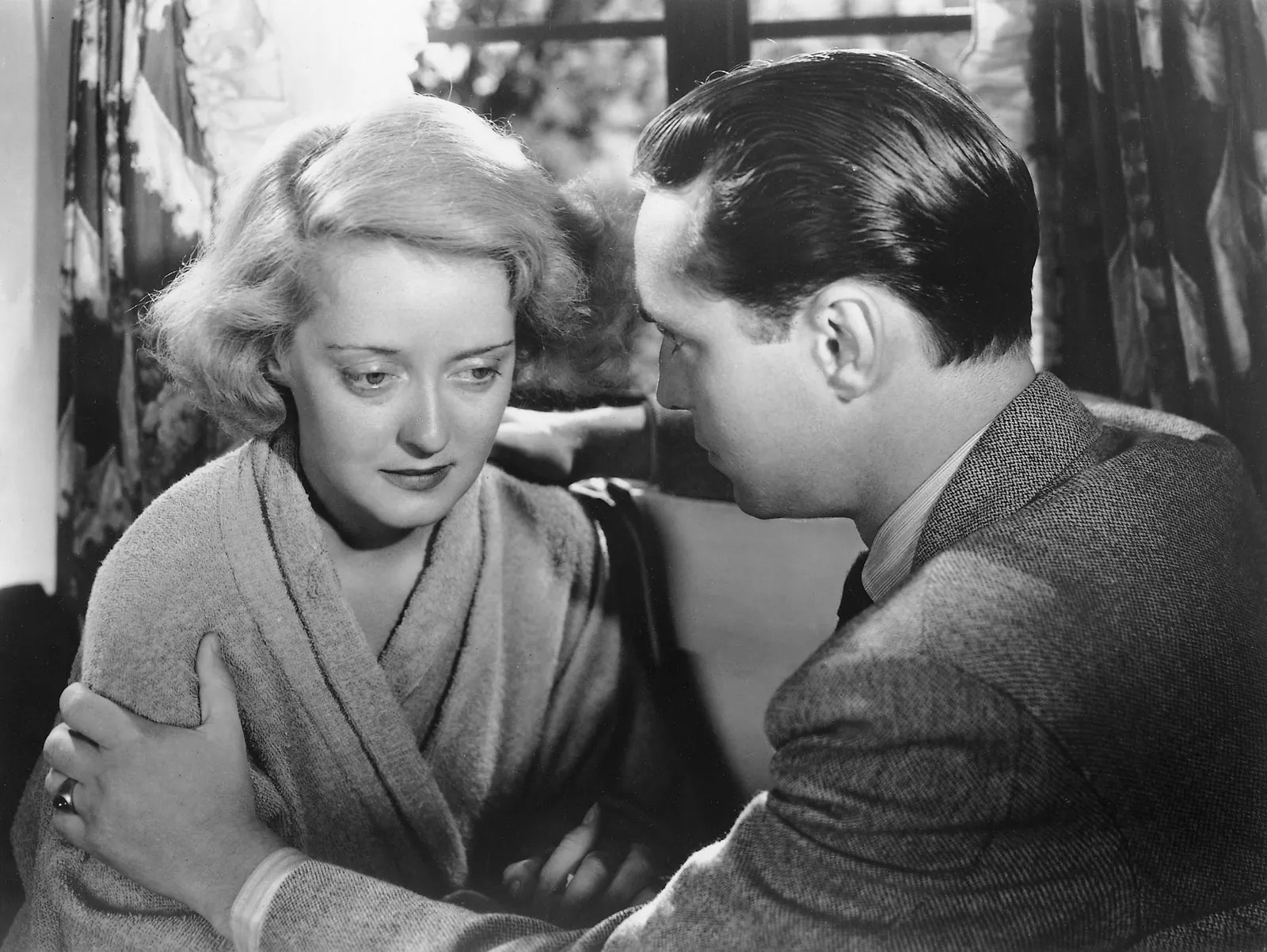
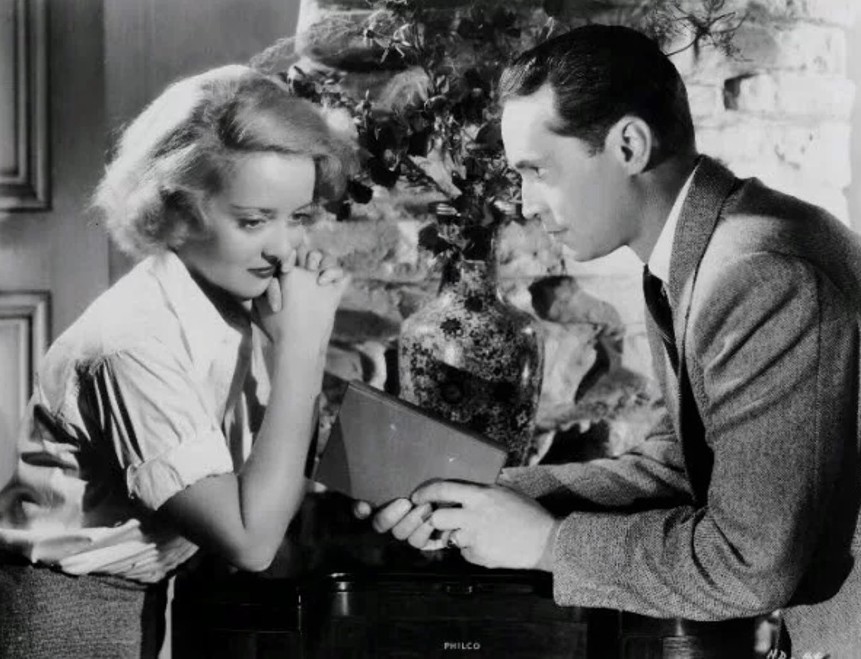
The beginning starts with our male main character, Don Bellows (Franchot Tone), who is an architect, hearing about what a trainwreck Bette Davis’s character (Joyce Heath) is, but having fond memories of seeing her on the stage.

Don is engaged to Gail Armitage when he sees Joyce, drunk in a bar, later in the movie (what a coinky-dink, eh?). He feels bad for her and wants to rescue her, so he offers to let her stay at his house in the country (White Knight Syndrome anyone?).

The big issue is that Joyce, and many others, believe that she is bad luck for any man who comes around her.

This proves to be true for poor Don, who falls for Joyce and works to rehabilitate her, even though she acts like a spoiled brat who hates the world. Eventually Joyce starts to act better, like a stray cat that finally lets its rescuer give it a pet. Don breaks his engagement with Gail and puts up his fortune to back Joyce in a Broadway show because no one else will hire her unless he offers money.

He wants to marry Joyce, but she refuses him.

That’s when we learn that dear Joyce is still married to a man who was loyal to her but who she financially ruined. She asks him for a divorce and . .. Well, you will have to watch and see what happens.

Bette almost didn’t make this movie, which seems to be a theme with her actually. I’ve read a couple times that she had to be talked into starring in certain films. Those films were later a success.

I’ve also read a couple of times now how she started affairs with her leading men. This one was no different, other than it might be what kicked off her years-long rivalry and bitter feelings toward Joan Crawford, or Joan’s feelings toward her.

Joan and Franchot (what a name) were engaged when Bette started an affair with him, although she claimed it was an unrequited crush. Years later, producer Harry Joe Brown said it was anything but that when he found the two “in a compromising position.”

Reports say that Crawford knew all about it but didn’t break the engagement. Instead, she simply increased her visits to the set to make Davis jealous. She eventually did marry Tone and, like most of her marriages, it lasted about four years.

Dangerous was originally titled Hard Luck Woman.

In the movie, Bette plays a wide range of personalities, from a drunk woman to a woman who hopes for a better future with a man she loves.

I wasn’t the only one who wasn’t thrilled with the movie overall. Critics didn’t like the story, but they did like Bette’s performance.

One critic is said by TCM.com to have given her one of the most famous reviews of her career:

E. Arnot Robertson in Picture Post wrote: “I think Bette Davis would probably have been burned as a witch if she had lived two or three hundred years ago. She gives the curious feeling of being charged with power which can find no ordinary outlet.”

So, while I didn’t like the storyline of the film as much as some, I did like Bette’s performance.

Up next, I am watching The Letter.

My watch list for this feature:

It’s Love I’m After 

The  Working Man 

Another Man’s Poison 

Dark Victory

Jezebel https://lisahoweler.com/2026/05/06/spring-of-bette-davis-jezebel-1938/

Dangerous

The Letter (May 26)

Of Human Bondage (May 28)

Now, Voyager (June 2)              

The Petrified Forrest (June 11)

I am tacking another movie on to this list — The Petrified Forrest with her and Leslie Howard and Humphrey Bogart. My husband watched this one years ago and says it is very good so I will use it to round out my Spring of Bette Davis, which will stretch a little bit into the summer.

Sources:

http://thefilmexperience.net/blog/2014/2/25/seasons-of-bette-dangerous-1935.html


If you want to find clips and thoughts about vintage movies and TV, you can visit me on Instagram on my Nostalgically Thinking Account (https://www.instagram.com/nostalgically_thinking/) or on my YouTube account Nostalgically and Bookishly Thinking here: https://www.youtube.com/@nostaglicandbookish


Spring of Bette (Davis): Jezebel (1938). Otherwise known as the movie that made me say, “Well, that escalated fast.”

This spring, I have been watching Bette Davis movies, and this past weekend, I watched Jezebel from 1938.

Wow.  What a wild ride.

The tagline for this one could be — well, that escalated fast.

Especially as the movie gets toward the end.

It just races forward like a freight train out of control, but in a good way.

Bette stars in this one with a very serious Henry Fonda (I think he’s serious in every movie he is in).

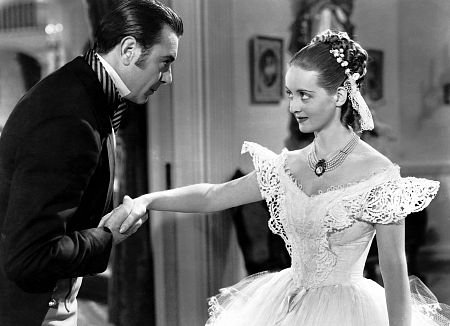
George Brent, who was also in Dark Victory with her, is in this one too.

George Brent and Bette Davis.
This is not my photo. Copyright Warner Bros.

Our story takes place outside of New Orleans in 1852.

Bette portrays a woman named Julie who comes from a wealthy family and is engaged to a banker named Preston. Preston is often busy, and this irks Julie, who is very headstrong and self-centered.

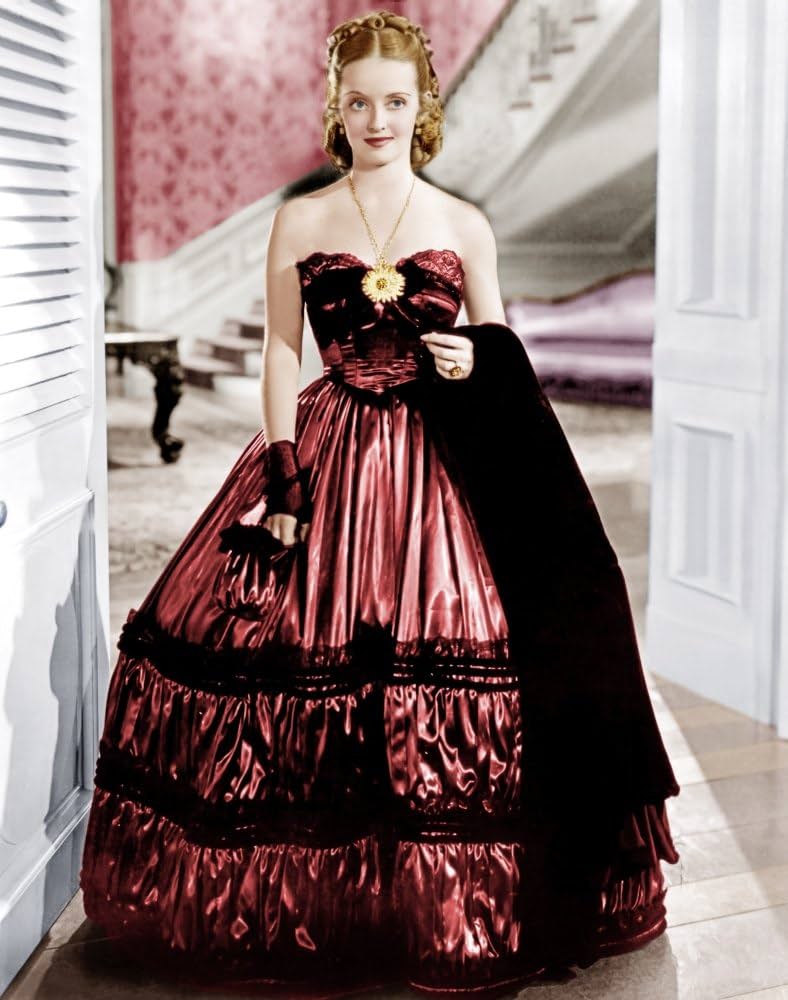
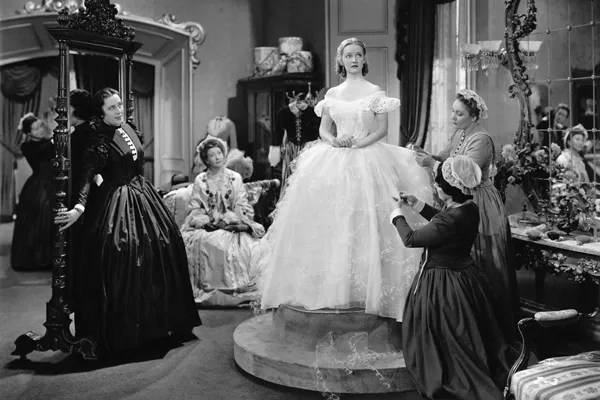
When she is getting fitted for a long white ballgown she is supposed to wear to a special ball, she sees a red dress and decides she’s going to stand out and wear that one.

Everyone in the shop and in her family is horrified.

You just don’t wear red in “polite Southern society” at this or any ball.

Forget that, Julie says, even when Preston sees the dress and tells her there is no way she is wearing it. She is wearing it, she tells him, and that is that. The dress is gorgeous, even in black and white, by the way. I wanted to see it color and looked online, but couldn’t actually find an official photo of it anywhere. There are some colorizations of it, but those were done by others, that I can see.

A Photoshopped-colorized image of Julie’s forbidden red dress. Not my photo.

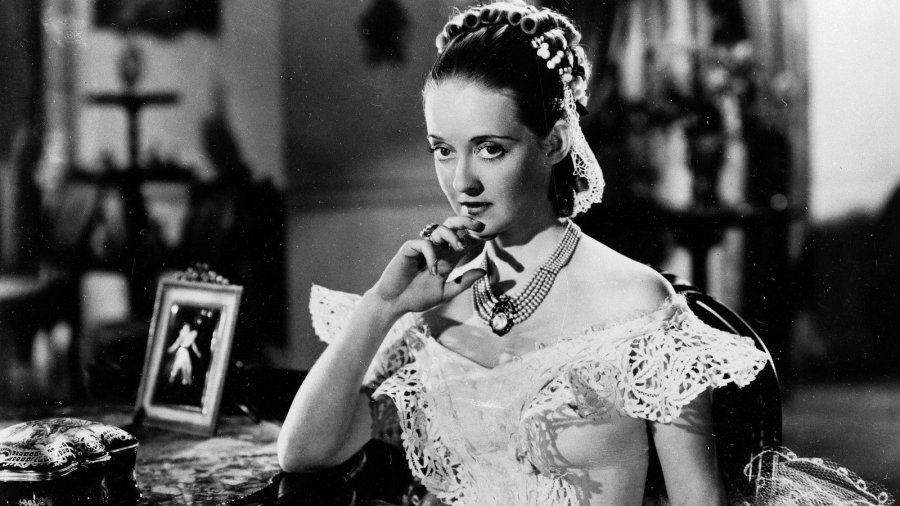
All of Bette’s clothes in this movie are stunning.

Back to the movie, though….Preston is furious but takes her to the ball anyhow. At the ball, people part like the Red Sea, not because they are impressed. They are scandalized by the dress and act like Julie is a — well, you know.

Preston returns Julie and her family home later that evening and says to Julie’s mother he wishes her a goodnight. To Julie, he says, “Goodbye, Julie.”

This is after they had known each other as children and always expected to marry. Oof!

Julie doesn’t believe it’s really happening, but things get real when Preston moves to the North to run a bank and leaves her behind.

I won’t ruin the rest of it for you. I will tell you that there is a reason the movie is called Jezebel and it is because Julie is called it by someone she knows.

Promotional image for Jezebel from Warner Bros.

For those who are not familiar with the name Jezebel, it refers to the wife of King Ahab of Israel, who was not a very nice woman at all. She would be called “immoral” by many.

I don’t tell you some of the details of the movie or the ending, but I will caution you that you need to fasten your seatbelt after this point in the movie if you do decide to watch it. There is going to be betrayal, talk of slavery failing the south on an economic level, slaves singing as part of the nightly entertainment, a yellow fever breakout, a dual, and so much more.

Your head is going to start spinning before it is all said and done.

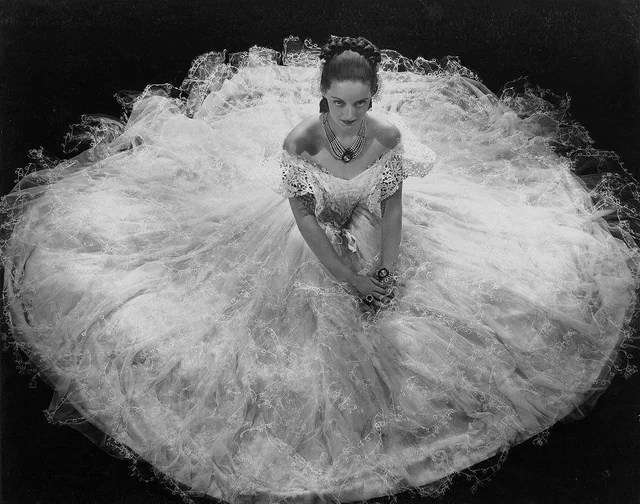
Bette in her white dress. (Not my photo.)

Overall, I enjoyed the rush of this movie. I couldn’t look away. It was a bit like Gone with the Wind but shorter. I was somewhat horrified at how women were expected to act and dress a certain way during that time, but,  of course, knowing the history, I know it was true.

While I am on the subject of Gone with the Wind, Bette Davis tried out for the role of Scarlet, but didn’t get it.

That worked out well for her in the end. This movie was her first big-budget film, and she won an Oscar for it in 1939. Bette’s co-star, Fay Bainter, who played her aunt Belle, also won an Oscar for best supporting actress.

Vivien Leigh won hers in 1940 for playing Scarlet O’Hara in Gone With The Wind.

Henry Fonda was very good as the brooding Preston, who was also facing his changing ideas of what the South really was.

I haven’t seen him in a ton of movies, but the ones I have seen him in, he was a lot older, so it was fun to see him so young.

Henry Fonda and Bette Davis. (Copyright TCM)

The acting from all of the cast was really very strong, and pulled me right into the time period. The black actors were great but I have a bad feeling they didn’t get the credit they should have at the time.

Warner Bros. had started planning Jezebel as a way for Davis to break out in a big movie as far back as 1935. They were going to buy playwright Owen Davis Sr.’s failed play back then, but passed on it.

But then the book Gone With The Wind took off.

Warner Bros didn’t get the rights to that, so they went back to get the rights to Jezebel.

They hired one of Hollywood’s top directors of that time, William Wyler.

Bette and William started an affair and when he later married another actress, Bette was said to be devastated and in later years called him the love of her life. They paired up again in a professional capacity in The Letter (1940) and The Little Foxes (1941).

So far, I would say this one, next to It’s Love I’m After, is my favorite movie of Bette’s I’ve watched so far.

Up next, I am watching Dangerous.

My watch list for this feature:

It’s Love I’m After 

The  Working Man 

Another Man’s Poison 

Dark Victory

Jezebel

Dangerous (May 9)

The Letter (May 14)

Of Human Bondage (May 21)

Now, Voyager (May 28)


Sources:

https://www.tcm.com/articles/136752/the-essentials-jezebel

If you want to find clips and thoughts about vintage movies and TV, you can visit me on Instagram on my Nostalgically Thinking Account (https://www.instagram.com/nostalgically_thinking/) or on my YouTube account Nostalgically and Bookishly Thinking here: https://www.youtube.com/@nostaglicandbookish