Creatively Thinking: Too much social media kills creativity

I’ve decided the more I’m off social media, the more creative I can be, which is why it looks like another social media detox is coming up in the next week or so and it may last 30-days like I did earlier this year.

Actually, saving my creativity isn’t the only reason for dropping off social media – saving my sanity is more important at this point. In May I actually deleted my Facebook account, except for a ghost account to keep my blog page on there. Ignoring my better judgment, I went back on at the end of the summer and I can’t see that it has improved my life much at all.

When I slip into a depression slump I find myself scrolling through social media too much and when I scroll through social media too much I don’t do things I need to do or really want to do, like write my book or write a blog post or take photographs or – blah – clean the house. I just end up a depressed, moody slug sitting in front of my computer. I also end up angry, bitter and frightened for my childrens’ future.

000010_DSC_8259 (1)

This past spring I did a social media detox and that’s when I started writing ‘A Story to Tell’ and decided to publish it as a weekly serial on here and then as a Kindle book. The success for me was simply how writing the story, and sharing it on my blog, was a distraction from social media, “news”, and from some challenging relationships in my life.

When I go on social media, I end up so wrapped up in the nonsense I read that I neglect the parts of my life that actually bring me joy — especially the more creative parts.


Social media is an addiction for many people. If you think it isn’t for you, do what I did last December and focus on how often you reach for your phone or computer to log into social media each day. Notice how many times you log into social media when you’re bored, lonely, procrastinating or avoiding real life (or certain people). I bet it’s more than you think because I know it was for me.

Another important aspect of learning how social media affects you is to notice how you feel after you sign off social media, or a news site.  Do you feel happier? I’m going to guess the majority of us can’t say that we feel anymore enlightened, elated, or hopeful about life after we’ve scrolled through a social media site. On the contrary, we probably feel like the world is on fire.

For creatives, it’s important to ask yourself if social media supports or hinders your creative flow. I’ve personally found that excessive social media use rarely supports creativity. In fact, for me, the constant digital noise I once engaged in silenced creativity altogether.

How can you think of new ideas, or use your imagination, when someone, or something, is constantly in your ear telling you what you think and who you are? More than once in the last two years, I have read about the need for all of us to seek more solitude and shut out the noise of the world around us.

Silence can facilitate daydreaming and daydreaming supports and strengthens our imagination. Imagination leads to creativity and then creativity leads to joy for even the most left-brained person out there. Creativity isn’t always about the arts . Creativity is also important for technical thinkers out there who need time create plans for projects or lists for completing whatever it is that helps them feel more organized. For many of us, organization helps us feel more grounded. Not having the time to create that organization because we are distracted by social media can leave us feeling discombobulated. 

000000_dsc_7107

I have asked myself why there were so many great writers hundreds of years ago and less of them today? I have a feeling it is because hundreds of years ago the only thing people had time to do when the sun went down was think and daydream.

It’s not that social media is all evil. It connects us with new people, new ideas, and different worlds. It helps us reach people in a way we never could before. The evil part of social media is that we have allowed it, and what is shared on it, to distract us to the point that we have pushed aside activities that could actually further our society. Social media has no power over us that we don’t give it and many of us (me included) have given it awhole lot of power, let me tell you.

I don’t have any proof that inventions and innovations have decreased since the Internet and social media took over the world, and the exact opposite may be true in some fields, but I wonder if cures for cancer, or solutions to climate change, would have been found already if half of us weren’t scrolling social media; watching the circuses that are our congresses and parliaments; judging our neighbors; tsk-tsking the family member or acquaintance  in the middle of a divorce who has decided to write about it on social media; comparing ourselves to every other mother, writer, photographer, human being on the planet; and trying to change ourselves to fit some imaginary ‘normal’ in society.

Think about all the positive changes we could have made, not only in our own personal lives but in the world in general, if we weren’t staring at cat memes on our phones all day long. I have a feeling Satan knows that and has enjoyed dangling stupidity in front of us so we wander off the path we should have been taking all along.

All of this to say, I need another social media detox and you probably need it too. During my break last year and earlier this year, I offered some tips how to “survive” (or rather thrive) when you leave social media (even if only for 30-days); what I had time to do once I set social media aside; and how I felt when I logged back into Facebook after such a long break.

I know some of my blog readers aren’t even on social media (God bless you!) and some were on and promptly logged back off again. What’s your experience with social media? Do you find it stifles your creativity or productivity? How do you handle that? Are you better than me at balancing social media with your real life? If so, I’d love some pointers about how you do it. Let me know your thoughts in the comments. The last time I wrote about social media (Facebook for most of us), I had some really fun and insightful comments. 


Currently . . . November

I saw this new theme at Erin at Still Life, with Cracker Crumb’s blog (hosted by Anne at In Residence) so I thought I would jump in this month for fun!

The idea is to post what your picking and preparing, trying, feeling, and following for the upcoming month. We’ll see how this goes!

Picking and preparing: I’m picking up butternut squash from my dad, or at least I was supposed to get more of it this week, so I can make some butternut squash soup for us, them and others. I made it last year and it was so good. I used the Pioneer Woman’s recipe but I made a lot of adjustments, to the point I pretty much only added the squash, a few potatoes, onion powder and a couple of cups of milk. I don’t need heavy whipping cream for everything like Ree does.

I think I also added carrots to mine. I cooked it all in the Instapot and then blended it with my immersion blender, put it in a pot on the stove and cooked it down some more. The only part that is a pain for me is softening the butternut squash enough that I can cut it up. I’m a wimp and can’t cut it while it is raw so I have to soften it in the Instapot and then scoop out the insides and cut it up and sometimes I overcook it in the Instapot and it becomes a mushy mess while I try to pull the skin off of it. Can you tell I am not a cook?

The most important tip for butternut squash soup is to pick up some mozerella and melt it all over the top of your bowl of soup. Sooo good!

000047_DSC_2274Trying: I am trying to count calories and keep a food diary. I’ve never thought counting calories was the way to go to lose weight but I’ve watched my mom do this in the last year and she’s down 50-some pounds, maybe even close to 60 now. I have a feeling one of my biggest issues is that I don’t actually eat enough calories and I don’t have enough protein throughout the day. My mom has a certain amount of protein and carbs at each meal and fills up on vegetables as well. I know perimenopause and hypothyroidism are against me in the weight loss effort but about seven years ago I lost close to 40 pounds by dropping all wheat, dairy and sugar and adding natural progesterone to balance my hormones I’m doing all of that again and am hoping it helps not only with the weight but with a myraid of symptoms.

DSC_5114

Feeling: Feeling is a difficult one. I’m feeling a mix of emotions these days. I’m lonely many days. I don’t have any close friends anymore. I’m feeling anxious because we need to find a house closer to my husband’s job and my parents and that has proved to be much easier said than done. But, in the midst of it all, I’m also feeling somewhat optimistic as I continue to work on my stories and simply have fun by posting them here on my blog, on Kindle, or wherever I want.

Following: Much less than I used to follow, if we are referring to social media. I’ve been taking longer breaks from all social media. I am following more authors on Instagram than I used to, but right now Instagram isn’t even on my phone. I find myself feeling super jittery after looking at Facebook or Instagram (don’t even ask about Twitter. I don’t have an account). I hate how I can be scrolling along looking at happy photos and bump into someone yelling about politics or the environment or any number of things. It’s just too much sometimes and my brain can’t keep up with it all.

000030_DSC_4265

Even the stuff that is good for me is overwhelming. “Read this Bible verse/devotional!” “Watch this sermon!” I can’t keep up with it all and I notice my heart starts racing and my breath quickens as I try to bounce from tab to tab. I’ve resorted to deleting it all from my phone and blocking Facebook throughout much of the day, only looking at it a couple of times to see updates from the few friends I have left on there.

So how about all of you? What are you all up to, or plan to be up to in November? Let me know in the comments!


All images by Lisa R. Howeler and available on Lightstock.com.

Fiction Friday: A New Beginning Chapter 1

This is a warning: If you haven’t read the first part of Blanche’s story, A Story to Tell, you might not want to read A New Beginning, which is the second part of her story. You can find the first part of Blanche’s story on Kindle or in Paperback, on Amazon (after December 17 it will be on all ebook readers and on other paperback sellers). However, you don’t have to read the first part to be able to enjoy A New Beginning.

As always, this is the first draft of a story. There will be typos and in the future, there will be changes made, some small, some large and as before I plan to publish the complete story later as an ebook.

You can find links to each chapter HERE, or at the top of the page.


Light, Shadows & Magic (2)Five years later I could still vividly remember the moment I broke Hank Hakes’ nose with my foot after he broke mine with his fist. I still heard the sick crunch of his bones under my heel like it was yesterday and could still clearly see in my mind his glazed eyes before they closed and his face fell into a pool of blood on the carpet.

I knew if I didn’t remember how Hank had beat me and I had fought back, I might let my walls down, and then my son and I would be left vulnerable again. I wasn’t about to let that happen.

Maybe that’s why I was so uncomfortable when my best friend Emmy Lambert said she couldn’t wait for me to meet her cousin from North Carolina. The truth was, I had met J.T. Waignwright years before, when we were both children, and the memory wasn’t one that overwhelmed with me an interest to meet him again. He’d been a scrawny kid with big ears, messy brown hair, and freckles all over his dirt-smudged nose. He had also been loud, obnoxious and downright rude. Imagining that in a 27-year-old man wasn’t making the meeting any more appealing for me.

“This isn’t an attempt to set you up, Blanche, I promise,” Emmy insisted. “J.T. is moving up to work with daddy in his construction business and I just want to introduce him to some people up here. I’ve invited your sister and brother-in-law and your parents too.”

I finally agreed to attend the dinner, hoping Emmy would change the subject.

Emmy tapped her finger against her chin, her eyes focused on the ceiling. “But, if I was setting you up, J.T. would definitely be a good one. He’s handsome, well-built, a former football player, and Southern, which is always a plus. . . .”

I knew Emmy had added the Southern reference because she was originally from North Carolina as well.

“Emmy, you know I’m not interested in dating anyone.”

“Okay. Okay. I was just saying…in case you change your mind.”

“I can assure you, I won’t, Emmy.”

Emmy sighed. “Blanche, you have to get back on the dating horse some day.”

“Do I really? Jackson and I are happy the way things are now. We don’t need anyone messing things up for us.”

“But what if a man simply adds to your happiness? Not every man is like Hank, you know.”

I handed Emmy the papers Daddy had asked me to drop off for Emmy’s father and smiled. “That’s something we can discuss another time. I’m meeting Edith back at the shop for a dress fitting.”

Stepping out onto the street into the sunlight I paused and smiled, shaking my head as I laughed at how Emmy had tried to “sell me” on her cousin. I knew she meant well and wanted to see me happy, but I was among the few in my life who didn’t feel I needed a man to make me happy.

Not long after my conversation with Emmy, I was in my small sewing shop with my older sister while she tried on the dress I had made her.

“Oh, Blanche! I just love the dress!”

Edith twirled in front of me, the bottom of the dress swirling around her in a blur of dark red.

She slid her hands down the front and resting them on her hips, she admired herself in the full-length mirror. “Do you think Jimmy will like it?”

I stuck the pin I had been holding between my lips into the pincushion next to the sewing table and stood, admiring the view of my older sister filling out the dress I’d made for her. I didn’t have to look at how it fit her to know her husband was going to love the dress she was wearing.

“He likes anything you wear, you know that. You could wear a garbage bag and he’d fall all over himself trying to get to you.”

Edith tipped her head back and laughed, dark curls spilling across her bare shoulders. “You think so? Even with all this weight I have on my hips?”

“I know so.”

Edith turned, admired herself in the mirror by looking back over her shoulder, eyes traveling down below her waist.

“It doesn’t make my – “

“Your bottom is fine,” I said with a laugh. “But I can loosen the fabric a little in that area if you like.”

Edith wrinkled her nose and tipped her head to one side as she studied her reflection. “Nah, I think this is going to work fine for our anniversary dinner. More than fine. You’ve done such a beautiful job, Blanche. Thank you so much.”

Edith had always been beautiful, but she never seemed to believe it. As a teen and young adult, she’d always needed some sort of reassurance that she was beautiful and wanted. At one time in our lives that reassurance came from the attention of boys – lots of boys. But six years ago, Edith began to see herself through the eyes of someone more important than the next boy in line – God. When she realized God loved her for who she was – faults and all – her opinion of herself shifted and she began to understand that she was loved – not for what she did or how she looked, but for who she was inside. Even with that realization Edith still had days she worried about her appearance. What was different now was that she worried exclusively about how one specific person saw her – her husband, and one-time high school sweetheart, Jimmy Sickler.

I unfurled a roll of fabric, spreading it across the cutting table. “Allie Davenport wants a summer dress in this fabric, what do you think?”

Edith snorted, tipped her chin up slightly and looked at herself in the mirror, pulling the top of the dress slightly down to reveal her shoulders

“I think Allie should worry more about the fact that everyone in town knows she’s running around behind Larry’s back with Jason Taylor than a summer dress.”

“Edith! That’s awful!”

“I know it’s awful. Larry proposed to her only a month ago – she’s going to break his heart.”

Edith had changed a lot since we were children, especially after she had started attending church more and even more so when she married Jimmy, but she still possessed a tendency to gossip and judge.

“God’s still working on me,” she liked to remind me.

I knew what she meant. God had been working on me as well in the last five years and he still had a lot of work to do. There were many days I looked at myself in the mirror, measuring tape hanging around my neck, pencil tucked behind my ear, and laughed at the irony of someone who had once hated sewing now working as a dressmaker. As a teenager, I couldn’t thread a needle, let alone create an entire fashionable outfit for the women in town or hem pants for the men. While I had once silently cursed the idea of attending sewing classes with my mom and sister, sewing was now supporting me and my 6-year old son Jackson.

“So, why do you think Emmy wants you to meet her cousin?” Edith asked, still admiring the dress in the mirror.

“She says she just wants to reintroduce him to us so he knows some people in town now that he’s moved up here to work with her dad,” I said. “But she’s probably like everyone else who thinks Blanche needs a man to fix her life.”

Edith frowned as she turned to look at me, then pursed her lips together in a disapproving expression. “Everyone? I’ve never said you need a man to fix you, so not everyone says that.”

I sighed as I folded the fabric for Allie’s dress and laid it on a shelf behind me. “Well, Mama and Daddy and Emmy then. Not you. Still, I don’t know why they all don’t understand that I like life the way it is right now. I’m content. Jackson is happy. We’re doing well.”

Edith folded her arms and leaned back against the sewing table, a smile tugging at her lips. “And you don’t have to let anyone in and risk being hurt again. Good plan.”

I playfully tossed a rolled-up piece of tissue paper at her. “Hush your mouth, as Emmy always says.”

Edith laughed. ‘Well, it’s true and you know it is.”

The front door to the shop opened and our father stepped inside, briefcase in hand, grinning as he saw Edith trying to reach to unzip the dress from behind.

“Well, you look nice, Edith,” he said. “Special occasion?”

Edith smirked and shook her head, tugging at the zipper. “Daddy…you know it’s Jimmy and my anniversary next week.”

“Oh? Is it? You’ve only mentioned it ten times in the last few days. I must have forgot.”

Edith playfully slapped her hand against Daddy’s shoulder as she walked past him toward the changing room. “Very funny, Daddy.”

“You ready to head home, kid?” he asked me. “Mama’s making fried chicken for dinner and I bet she’d love a break from that crazy kid of yours.”

I laughed, knowing my mama never called my son crazy and loved the days she was able to spend with him, playing with him, cooking him lunch and helping him prepare for Kindergarten, which he would start attending in a few months.

“I’m anxious to see him,” I said, gathering my measuring tape, scissors, and extra thread spools and shoving them in the top drawer of the sewing table. “But I doubt Mama wants a break from him.”

Daddy smiled. “I have to agree. She does love that boy.”

Edith stepped out of the dressing room in a button-up pink shirt and a flared light blue skirt, hooking her long, curly hair into a ponytail. “Speaking of being anxious to see someone, I’ve got a husband to head home to and cook up some dinner for.”

She hugged me quickly and kissed Daddy’s cheek. “Thanks again, Blanche. I’ll swing by next week to pick it up. I don’t want Jimmy to see it until that night.”

Locking the door to the shop, I thought about how I’d spent the first year after my divorce floundering, trying to get my footing as a single mom at the age of 20. I stayed home with Mama, helping her cook and clean and care for Jackson, but rarely left home, even for church, keeping myself emotionally locked up in the solitude of shame. Eventually, I took a part-time job at the library, began attending church again and visiting the sewing circle meetings with Mama on Wednesday nights. I also started writing a column for the local newspaper.

I’d left the library job when Doris Thompson asked me if I’d be interested in helping her in the sewing shop. I agreed and a year later Doris semi-retired, working three days a week at first and then one day. Six months ago, she’d signed the business over to me and remained on as landlord only, collecting a reasonable monthly rent from me.

“I have to stop and drop my column off to Stanley before we head out,” I called to Daddy over my shoulder, walking down the sidewalk and sliding a folded stack of papers out of my handbag.

Daddy grunted and looked disgusted as he opened the driver’s side door. “I’ll wait for you in the car. I can only feign politeness for so long with that man.”

I grinned as I walked, remembering Daddy’s dinner rant a few months ago about editor Stanley Jasper’s editorial about the war in Vietnam.

“What’s that fool even talking about, saying we should get involved in the conflict over there?” Daddy said, fuming as he read the paper. “There is no way we should be sending our boys over there. Who does that man think he is? Moves in here from the city and then acts like he knows it all. I am telling you – I have half a mind to go into that office and tell that editor what an ignoramus he is.”

And Daddy did go into the newspaper office, but he came out even angrier than when he’d gone in. Stanley’s name was off-limits most days and Daddy wasn’t thrilled with me submitting a column to the newspaper but said maybe my lifestyle column would help to offset the drivel Stanley typed out on the opinion page each Sunday.

The newspaper office was buzzing with the noise of reporters on the phone, typewriter keys clicking, the press in the back running, and sports reporters commenting on the latest home run by Mickey Mantel.

“Latest column, Blanche?”

Reporter Jerry Simms looked up from his typewriter, sliding a pencil behind his ear. He jerked his head toward Stanley’s office door on the other side of the office. “You know the drill. Hand it to Stanley so he knows it’s here.”

Stanley wasn’t originally from Dalton. He’d grown up in Philadelphia and was a transplant, referred to by many in the county as a “flatlander,” a term used affectionately when people agreed with him and with a sneer when they disagreed with him.

Stanley’s brown hair was speckled with gray and disheveled, as usual. His jawline was unshaven, circles darkened the skin under his eyes, and his clothes were wrinkled, his shirt untucked.  He was sitting where he usually was when I come in to drop off my column, behind his desk in the middle of a cloud of cigar smoke. Leaning back in a large leather chair, his feet were propped on top of the desk, a sheet of paper in one hand, the cigar in the other. He moved the paper to one side as I stepped inside the door and stuffed the cigar in the corner of his mouth.

“Good column last week, Blanche,” he said around the cigar. “I never thought I’d get so caught up in the story of a pregnant cat.” He shrugged and pulled the cigar from his mouth, holding it between his index finger and thumb. “Small town people eat that stuff up. Who knew?”

I wasn’t sure if the comment about small-town people was meant to be a compliment but I chose to accept it as one since it was as close as Stanley was probably going to get about a column he saw as “soft news.” In journalism lingo, soft news was considered low priority and traditionally thought of as inferior to the harder news. From what I could see, though, it was often the “soft news” that created more of a buzz at the local diner in a small town each morning.

“Well, this week we have an update on the cat and her kittens,” I said. “I’m sure the small-town folk you speak of will love that too.”

The newspaper’s typesetter Minnie Wilkes sashayed her way into the office and snatched the column from the top of Stanley’s desk.

She turned and looked at me with bright green eyes and long, dark eyelashes, made even darker by heavy, black eyeliner and brown eye shadow. “Hey, Blanche. I love typesetting your column. It’s way more interesting than the political stuff Stanley writes.”

Stanley rolled his eyes. “Thank you, Minnie. Your opinion is duly noted, though not asked for.”

Minnie winked at me as she walked out of the office again.

Stanley stuffed the cigar back in his mouth and moved the stack of papers he was holding back in front of his face.

“Keep up the folksy stuff, Blanche. It sells papers. And that’s what we’re in the business of doing, selling papers.”

Outside the office, standing in the sunlight I looked out at the town I’d gone to high school in and sighed. In front of me was the town square, a gazebo in the middle of it. Behind it was one of the oldest banks in the state, Community State Bank, and next to the bank was the Dalton Theatre, built-in 1893 and only slightly renovated since then. Down the other end of the street next to me was Bert’s Pharmacy and a few blocks over was Holden’s Supermarket. Across the street from the supermarket was the post office and two blocks away from the post office was the building where I’d spent many of my days after school, waiting for Daddy to finish at the office and drive us home  – The Dalton Public Library.

I’d never felt like I’d fit in at school or in this town and that feeling was even more prominent after I’d left Hank and returned. There were days I was sure I could feel the judging eyes of people on me when I walked into Bert’s Pharmacy or Holden’s Supermarket when really the feeling was probably something I’d conjured up in my own mind. Since coming home I had earned a General Education Diploma, started attending church again, was running my own business, writing for the local paper, and slowly working my way back into the community.

I still struggled with feeling out of place, still kept my eyes downcast most of the time, but more and more I was able to raise my eyes and see kind expressions and nods of greeting. It was beginning to feel like maybe I wasn’t the outcast I’d always thought I was.

“So, Blanche. . .”

Anytime Daddy started a sentence with “So, Blanche. . .” I knew he was about to suggest something I needed to do or should have done.

“Yes?”

“I’ve been thinking . . .”

I knew then the conversation was going to be an uncomfortable one. A ‘So, Blanche’ and an ‘I’ve been thinking….’ in less than thirty seconds? This was going to be interesting.

“Yes?”

“I think I should teach you how to drive so you can have a little more freedom.”

I let my breath out in a heavy sigh.

“You’re almost 25, Blanche,” Daddy continued. “You’ve been home five years now. I don’t mind driving you where you need to go, but I think it’s time you start, you know, spreading your wings a little bit, gaining some independence. I love having you and Jackson living with us, you know that but someday, well, you will – or you could – you might – meet someone and . . .”

“Daddy . . .”

“Well, you might. I mean there are plenty of eligible, good men in this county and it is possible you will, you know . . . Ah. You might want to drive out and meet him somewhere or – “

I could tell Daddy was nervous by the high number of “you knows” he was uttering. I knew he and Mama were “old school” and felt Jackson needed both a father and a mother, but I wasn’t willing to marry someone just to look good to others or fulfill my parents’ wish that I be a married mother instead of a single one.

It was hard for me to believe it had been five years since I had left Hank and returned home with a one-year-old on my hip and a heart full of hurt.  In the same way, I could remember the night I fought back, I could still hear the gunshot echoing in my parents’ house the night I thought Daddy had killed Hank.

“Y-you could have killed me, you crazy old man!” Hank had sputtered in disbelief, looking at the ground in front of his feet in shock.

“I could have, and I still can,” Daddy told him. “Now go before I have to.”

When the taillights faded into the darkness that night I closed my eyes against the tears and wondered if Hank would try to come back again someday. He never did. His mama told me one day when I took Jackson to see her, like I did every week, that she’d got a letter from Hank a year after I’d left him, saying he was moving out west. That was the last she’d heard from him. I knew it broke her heart that her oldest son never contacted her, but I could tell that seeing Jackson helped relieve the pain. I’d seen Hank once before he left to go out West, but he hadn’t seen me, and I never told my family about it. I didn’t know if I ever would.

“I’ll think about the driving lessons,” I told Daddy, hoping he would change the subject now.

“Well, you know, that’s all I can ask, I guess,” Daddy said, clearing his throat, looking at the road in front of him.

I looked out at the road too, watching as the paved road faded to dirt, dust billowing around the car as Daddy turned down the road that would take us home. I closed my eyes, tired from the long day, but also fighting back thoughts and emotions I had tried to bury for five years.

I was still consumed with an inability to forgive Hank or myself for all that had happened after I’d run away with him at the age of 17. I despised myself for letting him abuse me with his mouth and his hands. The times Hank shouted me down or tightened his hands around my wrist or arm seemed to finally give him the power his abusive father had stripped from him during his childhood.

The night I left him, he’d shoved me against a table, dragged me by my hair and tried to stop me from leaving our apartment with our son by grabbing my leg and yanking me to the floor. When I fought back and broke away, I ran to my friend Miss Mazie’s house and never looked back.

More than fighting to forgive myself for leaving with Hank, I couldn’t seem to find a way to forgive myself for the danger I’d put Jackson in by staying with Hank; how I’d caused Jackson to have a life without a father.

In that first year after I left Hank, life unfolded around me like a movie I was a part of but had no say in. I came home to my parents, a father who had barely spoken to me in three years, and a mother who welcomed me with open arms but somehow blamed herself for my smashed in nose and bruised face. I pushed the emotion of those years with Hank deep inside me and the darkness of it all lingered in the darkest caverns of my heart for two years, eventually leaving me in a state of emotional numbness.

Slowly I began to feel again – laugh again, trust again, hope again, at least when it came to my family and my future. I had no interest in a romantic relationship of any kind, though and still didn’t. I wasn’t about to let anyone break down the walls I had built around my life and heart, walls to protect me, but more importantly Jackson. I had exposed my son to darkness and pain once before. I refused to do it again.

I wouldn’t let my guard down for someone who could shatter the life I’d built for us like Hank almost had. Protecting Jackson, giving him a life free of hurt was my only goal and I made sure I stayed away from anyone who could threaten our security.
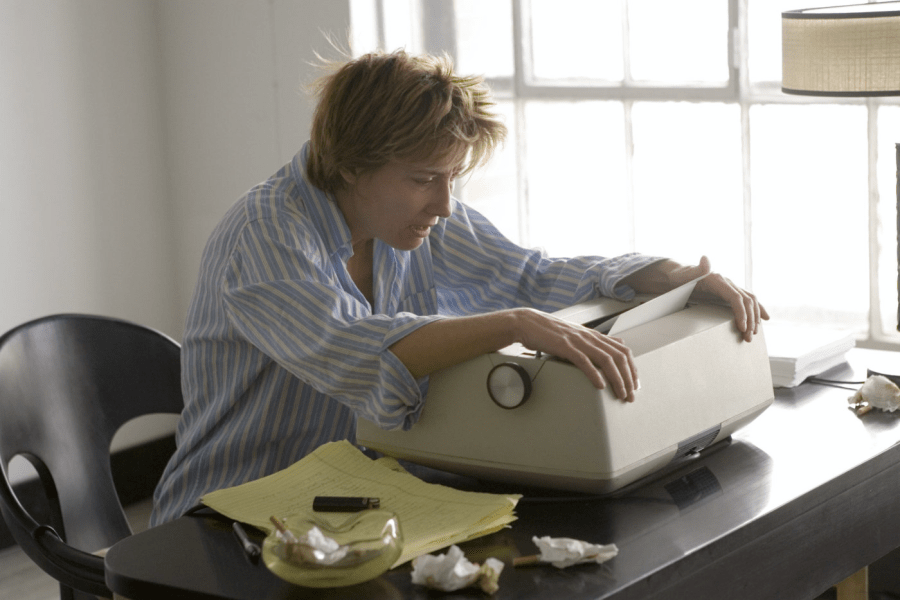
Oh. So that’s why writing book two has been such a challenge.

I have been having a hard time writing the second part of Blanche’s story and I think it is because I had so much fun sharing the first part on my blog and interacting with some of my readers about it as I went along, and I haven’t been doing that with this book.

A-Story-to-Tell

I was able to go back and make changes before I published the book on Kindle, but sharing it in pieces and receiving feedback as I wrote it, was fun. I’ve heard this is similar to how Wattpad works, but I don’t know if I’m really interested in sharing it with that many people. I don’t mind sharing it with the few people who read my blog, however, because my blog readers are cool people, with similar tastes, who aren’t afraid to give me polite pointers.

I’ve also been struggling with Blanche sharing with me the second part of her story like she did the first part. I’m fairly certain I just heard many of you say to yourselves: ‘I’m sorry what? You think your character is talking to you? How many drugs are you on?” I know. It sounds weird but, yes, sometimes I feel like my characters tell me their stories in bits and pieces and I wake up (because they don’t tell me when I’m awake apparently) and jot down what they’ve shared with me, flushing it out later.

The first part of Blanche’s story came out pretty quickly, but now I’m struggling with what happens since she’s (SPOILER ALERT IF YOU HAVEN’T READ THE FIRST STORY) left Hank and come home to live with her parents. I already have plenty of ideas and a few chapters in rough draft form, though, so it is coming together. The second part of the story will introduce a few new characters but also continue the story of other characters in Blanche’s life.

Will Hank find redemption, like my dad is vying for? Or will he disappear completely from the scene? We will have to wait and see – including this writer who hasn’t totally decided what will happen with Hank yet.

And what about the arrival of Blanche’s friend Emmy’s cousin? What role will Judson “J.T.” Waignwright play, if any? And then there is Edith, Blanche’s older sister. How is married life (and parenthood?) treating her? When we left her she was expecting. Hank’s mom was also on scene, hoping to have a relationship with her grandson, and searching for her own healing from her own abusive marriage.

What will happen to Emmy and who is Stanley Jasper?

We’ll see every Friday, starting this Friday when I start sharing chapters from “A New Beginning,” the sequel toA Story to Tell.”

When people support you even when you feel like you stink

I put a notice on my blog Facebook page yesterday that I had some paperback copies of my book because a couple of people I know had asked about them. I wasn’t thinking about it as an advertising opportunity, I simply wanted to find a way to let those people know I had a few copies.

More people asked for books than I had so I had to order some more, but that’s not the point of today’s post. Today’s post I thought I would talk about how hard it is for me to put myself out there. I don’t like to be seen. I like to hide. I don’t like to share. I like to keep it all to myself. I don’t want to be famous and pray every day I never am. I never feel what I have to offer is as good as what someone else has to offer. In other words, I’m human.

A Story to Tell, my first attempt at a novel, isn’t a masterpiece. I actually wish I had taken a little more time to work on it before I put it out, but I wanted to throw it out on Kindle by my birthday to simply say I accomplished a goal. Because my self-esteem swirls around a toilet bowl half the time, I handed my books out today with apologies for it not being the best it can be. Yes, I apologized for them buying my book. I know. I’m such a weirdo.

I told my brother people were probably buying my book because they felt sorry for me. Isn’t that awful? It may be true, or it may be true that they don’t expect the book to be good, or blow them away, but they are simply trying to support me. Apparently, the idea of people supporting me is a foreign concept, but it shouldn’t be since people have done so in the past. The last couple of years have been a little lonely, yes, but people have still supported me and that’s what was happening with requests for copies of my book.

I told myself today, ‘They are buying it to support you and even if the book stinks, at least they said: “Hey, you tried and we’re recognizing that.””

Maybe it isn’t that some of my friends see something great in what I wrote but maybe it is that they see potential and they want to support it.

Now if only I could see my own potential. If only we could all see our own potential.

So often others see potential in us that we don’t see.

So often God sees potential in us that we don’t see.

We see rejection.

We see failure.

We see fell short.

We see we should be further.

We see not enough.

But God sees: “I’m trying.”

God sees: “I put myself out there.”

God sees: “I obeyed and displayed the gifts God gave me and each time I do it, I pray he helps me to get better.”

God sees us as enough.

God sees as we are right where we need to be.

God sees what will be even when we see only what isn’t.


Fiction Friday: Another excerpt from He Leadeth Me

I’m sharing another excerpt from He Leadeth Me for this week’s Fiction Friday. This story is not yet published but hopefully will be in the summer of 2020. As always, this is a rough draft and there could be typos, missing words and the like. Let me know in the comments if you want but know they’ll probably be fixed on the final draft. 😉

My first novel is also on Kindle.

He’d asked her if she would take a walk with him after dinner and she’d been nervous, but she’d agreed. They walked for half an hour, chatting about the dinner they’d had, the weather in India, the weather in their perspective countries, the work they were each doing in India when suddenly he stopped, turned toward her and held his hand out.

“Have you had the chance to dance in the moonlight in India yet?”

His uniform had been replaced with khakis and a plain white button-up shirt like those commonly worn by the Indian men. His dirty blond hair was combed over to one side and though she couldn’t see his eyes clearly in the moonlight, she knew they were blue because she’d caught herself staring at them before when they were talking.

She looked nervously at her feet, unsure how to react to this pivot in their conversation. “I can’t say I have.”

“Well, come on,” he said with one corner of his mouth turned up. “Let’s be brave and see what happens.”

“There’s no music.”

“I can hum a tune or two.”

His hand was warm, the palms rough from days of working hard to build hangers for the Indian Air Force planes. He gently pulled her closer and placed his other hand lightly against her waist but pulled it back again.

“My apologies. Is it ok if my hand rests there?”

She immediately felt embarrassed and looked down at her feet.

“Um… yes? I guess so.”

She was ashamed to admit she had no idea how to dance and had never had a man ask to dance with her.

His hand barely touched her as he began to sway and gently guide her movements.

“Over in Killarney

Many years ago,

Me Mother sang a song to me

In tones so sweet and low.

Just a simple little ditty,

In her good old Irish way,

And l’d give the world if she could sing

That song to me this day.

“Too-ra-loo-ra-loo-ral, Too-ra-loo-ra-li,

Too-ra-loo-ra-loo-ral, hush now, don’t you cry!

Too-ra-loo-ra-loo-ral, Too-ra-loo-ra-li,

Too-ra-loo-ra-loo-ral, that’s an Irish lullaby.”

She couldn’t look up as he sang. Her heart was pounding and her head felt light.

What would her father think if he knew she’d come to India to care for orphans and tell others about the love of God but now she was dancing in the moonlight with an Irish airmen? And if Pastor James saw them? What might be said? Thoughts raced fast through her mind but she couldn’t seem to pull away, reveling in the feel of her hand in his and the smell of his cologne. She’d met him only a couple weeks before at the market, looking for vegetables and lamb for the mission and orphanage kitchen, and now here she was letting him lead her in a dance in the heat of the Indian summer.

He stopped singing, leaned back so he could look into her face and she looked up to see his blue eyes staring into hers.

“Tell me Emily Grant, the American girl with the very Scottish name, have you ever thought that God has made you for something more?”

The muscle in his jaw jumped a little as he started talking about what he expected for his future, not waiting for her answer.

“I mean, I grew up with my family, on a farm, thinking ‘There must be more to life than this.’ My brother loved farming, the shoveling of manure, and rounding up cows, but I just knew there was something more for me and I knew when I saw those children at the mission, my something more was here in India or at least in helping others.”

“Does it sound arrogant to say I believe God has a plan for me? A plan to show others His love not by what I say but by what I do? Is that what brought you here to India with your mission group? Did you think God would do something grand? That life could be something more and beautiful; the more you showed love and felt it back?”

Emily didn’t know what to say. She felt her face growing warm.

She knew exactly what Henry meant but she’d never known how to explain it. Her parents couldn’t understand why she had signed her name to the list to travel to India with the missionary who had been visiting their small rural church in Pennsylvania. They were worried for her safety, terrified she’d be killed by people her father called “Devil Worshippers” and “dark skinned heathens.” Emily had read the Bible. She believed God had created all humans and if that was true, then he had also created the Indian people and He loved them as much as he loved a white-skinned American farmer’s daughter.

“It doesn’t sound arrogant,” she said. “It sounds true and real and wonderful. I believe God has a plan for me, but I truly don’t understand it yet. All I knew was something inside me said I needed to follow Pastor James and Margaret here.”

Henry was still looking at her, eyes intensely focused on hers.

When his eyes glanced to her mouth as she spoke she tensed, suddenly self-conscious.

“Maybe God meant us to be here at the same time. For us to experience all this beauty together, ” he said, his voice slipping into a whisper.

He was too close.

Her heart was pounding too fast.

And when his lips touched hers it was too soon.

They’d only known each other two weeks and she hadn’t come to India to fall in love. She’d come to learn more about God’s will for her life.

She pulled away from him quickly and looked quickly at the ground.

“I’m past curfew at the mission. They’ll be concerned about me.”

She walked into the darkness before he could speak.

“Let me at least walk you home,” his voice followed her. “It’s dark and dangerous here at night.”

She paused and nodded an acceptance of his offer.

He fell in step beside her, silent as they walked. When they reached the gate of the mission she placed her hand on the gate and he reached out and wrapped his fingers around her hand.

“I’m sorry. I didn’t mean to overstep. I’ve never been so bold before. Will ya’ forgive me, Emily? I’ve enjoyed our time together. I hope you won’t disapprove of seeing me again.”

“It’s okay. I’m just – it’s – I’m here to be a servant to the mission. I shouldn’t get distracted. I don’t know – I just – wasn’t ready.”

She felt foolish as she spoke.

Wasn’t ready for what? To be loved? To let this young airman who spoke of wanting to serve God love her?

“I have to get to bed. We have open clinic in the morning for the village women. Thank you for the dance Henry.”

She pulled her hand from his and rushed through the gate, closed it and walked down the path toward the mission.

In her room, with the door closed behind her, she touched her fingertips to her lips, closed her eyes and remembered the warmth of his mouth on hers. She breathed deep, shook her head to clear her mind of the memory, and reached for her Bible to take her mind off the distraction she felt God didn’t want her to have.

Fiction Friday: The Librarian

For this week’s Fiction Friday I’m sharing part of a story I’m working on, a character I’m developing. As always, this is a work in progress and it hasn’t yet been proofed, so there can always be typos or errors in it. Feel free to let me know about typos in the comments.

My first novel is for sale on Amazon Kindle.


Ginny Jefferies unlocked the back door of the library and slipped inside as quickly as she could, slamming the door behind her and standing in the darkened doorway. She hoped no one had seen her enter, thinking that the library was already open. There were hours posted on the front door, but people rarely read them and often tried to open the door no matter the time.

“Can’t I just slip inside and grab that new Jan Karon book?” Mrs. Fraley had said one morning, waving at Ginny as she rushed across the parking lot in the pouring rain.

“I don’t even have the system up to check you out, but we’re open in an hour,” Ginny said, holding her umbrella against a gust of wind.

Mrs. Fraley clasped her bright pink rain hat against her head with both hands.

“Well, it will just take moment and you can write it down that I took it out,” she said, insistent. “I’ve been waiting for months for that book.”

“I’m not even sure if it’s been checked out or not.. .” Ginny started.

“All I need to do is check real quick,” Mrs. Fraley pushed past her.

Ginny shook the umbrella off inside the door, peeling her wet clothes off as Mrs. Fraley rushed across the front of the library in search of the book.

“You open?” Dan Bennett’s head appeared inside the door she’d forgot to lock behind her. He didn’t wait for her to answer. “Good because I need to print an important paper off for my insurance man. Wouldn’t you know it, the printer ran out of ink just last night.”

“I haven’t actually turned the computers on yet –“ Ginny started.

“No problem at all,” Dan said with a wave of his hand, stepping inside. “I’ll get them for you. One less thing for you to do this morning.”

“Ah, okay, but I-“

The door opened again.

“Is it time for storytime yet?” Mary Ellis was holding the hand of two toddlers with a third young child standing behind her, all three of them dripping water on the carpet inside the door.

“Storytime isn’t for another two hours,” Ginny said, hoping to usher them back outside.

“That’s okay,” Mary said pushing past her. “Well, just spend some time in the children’s room. You still have those blocks and toys here right? The kids will love that and it’s better than trying to entertain them at home.”

“I – -oh – dear,” Ginny decided then and there to make her entrance into the library as incognito as possible from then on.

Ginny leaned back against the closed door and sighed. So far so good. No one was pounding on the door and she seemed to have made it in unseen. She looked around the two-story library, lit only by the curved windows above the shelves on one side of the main room, and enjoyed the silence. Sunlight streamed in through a high window on the main floor, pouring light across the Women’s Literature section.

The building was the former Spencer Family mansion, built in 1901 and deeded to the town in 1967 to be used as a community library. Walls had been knocked down, floors removed, to create a large open room for six-foot high bookshelves, ten rows on each floor. The Spencer family patriarch, J.P. Spencer, had left the building to the library association in his will, much to the fury of his remaining family members, a son who already lived in a mansion on the other end of town and a daughter from a previous marriage who had never even lived in the town. J.P.’s family had founded the railroad company in the town in the mid-1800s, making the company the second largest employer in the county at one time, next to farming. These days railroad and farming were dying out, fading away like an actual physical newspaper.

Ginny refrained from turning the main lights on, still hoping to remain in silence at least until her first cup of coffee was finished. She plopped down in the plush chair at the front desk and stared blankly at the row of computers, urging her brain to turn on before she turned them on. The computers were fairly new, especially the ones in the gaming stations in the library basement.

The introduction of computers that ran video games was not something Ginny had been in favor of. The library board had overruled her, insisting they were needed to stay with the times and appeal to the younger generation. For Ginny, the library was a place to read, a place to fill a child’s head with knowledge, not somewhere for them to destroy brain cells playing ridiculous games on a computer.

“Well, who knows, maybe when they are done playing their games they’ll wander up the stairs and find books!” Frank Rouse had said during the meeting, talking with his hands, as usual, long arms flapping around like a chimpanzee on speed as he talked. “We’ve got to move into the future, Ginny or become a relic of the past. It isn’t me driving the demand, it’s society. We need to meet that demand or simply watch libraries be boxed up with the rest of the artifacts.”

Artifacts and relics. It was all Frank seemed to be able to talk about since he’d hit the age of 65 and Ginny wondered if it was because he felt like he was becoming both. There were days she knew she felt like it and she was 10 years younger than him.

With a deep sigh, Ginny walked back to the office in the back of the building flipped the light switch and walked to the coffee pot she’d brought in herself to keep her and her assistant Sarah awake for the day. As the dark roast brew hit her nostrils she closed her eyes and thought about how she’d bucked the stereotypical trend of being a spinster librarian, but sometimes she wished she hadn’t.

Ginny had been the librarian of the Spencer Valley Memorial Library for 20 years and married to Stan Jeffries, a small-town real estate star, for 30 years. Stan served two counties through Jeffries Real Estate and two years prior had been named Real Estate Agent of the year for this region of Pennsylvania. Stan and Ginny didn’t spend as much time together as they used to, but they had settled into a comfortable routine, especially since their last child had moved out a few years ago, and that was more than some couples had. Still, Ginny had recently begun to wonder if being a spinster would actually be less lonely than her marriage had become.

Sipping hot coffee 15 minutes later, she flicked her fingers across the row of light switches in the main room. Fluorescent highlighted the bookcases and tables, the children’s room, and the doorway of the conference room. The rectangle over the mysteries and thrillers section was still flickering, making her feel slightly off balance. She’d have to ask the volunteer maintenance man, George Farley, who was also the town’s funeral home director, self-proclaimed town historian, and director of the local community theater, to help her change it this week.

She picked up a book from the return pile and did what she always did to start her day – opened the book and inhaled the smell of ink and paper deep into her lungs. She loved the smell of books. She loved the feel of a book. She wasn’t a fan of what others called “ebooks.” She didn’t want to hold some device in her hand, she wanted to touch a book, hold it and lose herself into another world with each turn of the page.

Ginny had been reorganizing the bookshelves in the library for the last few weeks. Becoming more involved in her work meant she didn’t have to focus on how dull and mundane her life had become since the last of her children had moved out of the house the year before.

“If only one of them would give me a grandbaby already,” she said with a sigh as she sat at her desk and turned on the computer to start entering the returned books into the system. The switch from paper filing to computers was another update she had briefly fought against before admitting typing information into a computer was easier than pulling open drawers and flipping through rows of index cards.

The back door squeaked open and Ginny’s assistant Sarah Shultz slipped in quickly and slammed the door behind her, leaning against it as if to hold back some kind of nefarious onslaught.

“I think Ed Pickett just saw me from the diner front window,” she said breathlessly. “He knew I was coming here. He could be here any minute.”

“Oh good grief. It’s way too early and way too Monday for Ed,” Ginny said sipping her coffee and closing her eyes. “I hope he finally reads the hours on the front door.”

Ed, the incessantly question asking Ed.

“Do you think I’d like the new John Grisham book or the new Tom Clancy?”

“Should I try out this new book by this woman author? I don’t usually read women authors. Too much estrogen for me.”

“I’ll just sit over here with these books, read the first chapter of each and decide which one I’ll check out. Okay?”

Then there was that time he had read the same book she was reading.

“Ah, that’s a good one,” he said, leaning one elbow against the front desk. “Too bad he killed the love interest off in the last chapter. I really liked her.”

Sarah lifted the strap of her messenger bag over her head and laid it behind the front desk.

“Rough weekend?” she asked Ginny.

Ginny shrugged. “Boring one.”

“We need to get you a new hobby,” Sarah said.

Ginny bit her tongue.

Sarah was well-meaning but 24, bubbly and clueless about getting old. Ginny adored her but wanted to slide a book about menopause across to her and show her her future.

“I can’t imagine what I’d do,” Ginny smirked. “The library is my life.”

“Or so the library board thinks,” Sarah quipped.

Ginny snorted.

“God forbid I am not here at all times,” she said, walking toward the drop off box.

“Or be thinking about anything other than new programs,” Sarah called after her.

“And keep up the perfect appearance in the community,” Ginny called back, practicing her royal wave.

Ginny gathered the books in her arms and carried them back to the desk and stacked them on top of the returns from the previous day.

“You start entering them in,” Sarah said. “And I’ll start putting them back in their rightful places.”

“Get them done as quick as you can and make sure you get yourself some coffee,” Ginny said. “Ed will be here at the strike of 9, I’m sure.”

Fiction Friday: A Story To Tell Chapter 11

This is part of a serial story I share part of every Friday for Fiction Friday. Are you reading along with Blanche’s story? If you need to catch up, you can find the links to the other parts HERE, or at the link at the top of the page.


The sound of the ceiling fan barely drowned out the sound of the couple next door arguing. The humidity was stifling, the sheets sticky against my bare skin. My gaze traveled along the crack in the paint chipped ceiling above my head. I couldn’t sleep and I was hyper-aware of every sound, every smell, every touch. I felt Hank’s bare back against mine, hot, sweaty like mine and closed my eyes tight against the anxiety.

Even with Hank asleep next to me, I felt insanely alone. I missed my own room, my own bed. I missed talking with Edith. I missed Mama cooking breakfast in the mornings and Daddy sitting in his chair smoking his pipe, reading G.K. Chesterton in the evening. I missed feeling safe.

The judge’s office where Hank and I had got married was dark and smelled of stale cigars. We drove to the office before Hank had even shown me the apartment.

“I made the appointment last week,” Hank said, grinning as he parked the truck. “I knew you were going to come with me.”

My legs were weak as we walked up the steps of the courthouse, Hank’s hand tightly gripping mine. The courthouse towered above us, larger than any building this smalltown girl had ever seen.

The judge was kind, but I could feel the sting of disapproval in his gaze as it moved from me to Hank then back to me again.

“You’re sure you’re 18?” he asked me.

I nodded but didn’t speak.

“I just can’t believe we forgot that birth certificate,” Hank was saying, nervously shifting from one foot to another. “It means a lot to us that you’re doing this for us without it.”

The judge looked at Hank for a moment, then glanced out the window, appearing deep in thought.

“I’ll sign this, but I want you to know I’m not comfortable with it,” he said.

“I understand, sir, but you have nothing to worry about,” Hank said. “We’re old enough to know what we’re doing.”

I knew I wasn’t old enough to know what I was doing. I didn’t know what I was doing at all. Each time I repeated after the judge I was simultaneously asking myself if this was right, wondering if I’d regret it all.

“By the power vested in me by the state of New York, I pronounce you – “ The judge looked from Hank to me and back to Hank and cleared his throat. “Man and wife.”

When we left with the certificate we celebrated with a trip to a local diner, eating hamburgers and fries, sharing a milkshake, making plans about our future. We giggled, feeling like two young kids, which, really, we were.

Hank already had a job at the local factory and on the weekends he played and sang at local clubs for extra money. He sang to me from the stage, green eyes focused on me, so I felt like we were the only two in the room.

“Lee says I’ve got some real talent,” he told me as we walked back to the apartment one night. “He says he can get me some more gigs around town and hey – have you heard this new song by Hank Williams? It’s great! Lee played it for me at the club last night when I stopped after work. I’m going to try to learn it so I can play it at my next gig.”

His eyes lit up when he talked about his music and I loved to see him happy. I thought we’d always be happy like we were that first six months; late nights at the club, kissing and laughing as we fell into bed, bodies intertwined.

I started to enjoy cooking for him, making sure his food was hot and on the table when he got home from work like Mama had done for Daddy. I walked to a small market two blocks from our house and bought ingredients for dinner, never exactly sure what I was doing or how to cook it, learning as I went.

Hank would tell me I was a wonderful cook, even if I burned it, grabbing me around the waist, pulling me into his lap to kiss me.

When Hank was at work, I washed his work clothes in a small washing basin and dried them on a line that rolled out between the buildings.

As the days went by, I began to realize I was becoming exactly what Mama had said I would become. I loved being with Hank and I loved when he said I was a good cook, even though I knew I wasn’t. I washed his clothes, did my best to keep the apartment clean, but I’d left home to show Mama and Daddy I could be more than they thought I could be and now I was turning into exactly what Mama said I would be.

“I can’t sleep.”

Hank’s voice broke through my thoughts.

“Me neither.”

Hank rolled over to his back and slid his arms behind his head.

“I don’t know, maybe I’m never going to do anything with my music,” he said. “I hate that factory job. It’s wearing me down, Blanche.”

“You’ve only been there six months,” I said. “I’m sure it will get better. And the music will come. You said Lee said you’re great and I already know you are.”

I leaned down over him and covered his mouth with mine.

“You always know how to make me feel better,” he said when I pulled away.

He reached up and sank his hands into my hair and pulled my head down for another kiss.

“Get over here and take my mind off things, girl.”

He turned toward me and pulled me against him, laughing, kissing me fully on the mouth. I closed my eyes and thought about how I felt like I could never be happier than I was right now – his hands gently caressing me, his skin warm against mine.

***

I pressed the side of my face against the tiled floor of the bathroom and closed my eyes, my body curled up around the toilet. The coolness of the floor against my face was welcome after a night of throwing up. The vomiting had been ongoing for two weeks and was draining me of my energy. I knew it was more than a stomach bug. My belly felt empty and full at the same time. When I ate I rarely kept food down and the reflection looking back at me in the mirror each morning was pale and gaunt.

I knew something was horribly wrong, but I was too afraid to visit a doctor. I was afraid to call Mama or Daddy, Edith or Emmy. I was afraid even to pray. I had convinced myself God was punishing me for my sins. Hank and I had been married six months and I still hadn’t asked God to forgive me for leaving my family and running away with Hank.

“Blanche, you need to go to a doctor,” Hank said, standing in the doorway of the bathroom, groggy and leaning against the door frame. “You can’t keep sleeping and throwing up all day and night. Maybe he can give you something to make it stop.”

Later that morning I staggered into a doctor’s office, frail and my hair uncombed.

“Make it stop?” The doctor looked at me with a bewildered expression. “No, I can’t make it stop, but your sickness should go away in a month or so as you move out of the first trimester.”

I stared at him blankly. “First trimester?”

“You don’t get it, do you?” he asked a clipboard in his hand.

I shook my head, afraid if I opened my mouth, I’d throw up on him.

He placed a bottle of pills in my trembling hand, closed my fingers around it with his hand and looked me squarely in the eyes.

“This should help the nausea,” he said, his words slow and even. “You’re about three months along if the information you gave me is correct. Your due date is about seven months from now.”

Then, as if to reiterate the point he was trying to get across to me, he said, “You’re pregnant, young lady. Congratulations.”

I opened my mouth to speak and promptly threw up on his shoes.

No one had ever told me how it felt to have a baby growing inside. We didn’t talk about those things in my family. Maybe Mama would have told me when I got older – if I had waited, but I hadn’t, and Hank had been the one to show me what men and women did when they were married. I knew that’s how babies were made because I’d read about it in books, but I didn’t think it would really happen to me, not until I was ready, not this soon.

I walked back to the apartment, stopping three times to throw up in garbage cans or along the sidewalk along fences. Inside the apartment I gingerly took my coat off and stumbled to the couch, laying across it on my back.

“So, what did the doctor say?” Hank asked, walking out of the bedroom, rubbing his eyes.

I laid my arm across my eyes, gulping back bile, my stomach empty of the breakfast I’d tried to eat that morning. I sat up slowly and looked at him, trembling.

“He says I’m pregnant,” I said, terrified at the words.

Hank looked at me, incredulous. I could smell a mix of bitter and sweet in the room.

“You’re what?”

“Pregnant.”

“How did you let that happen?” he snapped.

I looked at him, shocked.

“I – I didn’t let it,” I stammered. “It just happened.”

I suddenly felt overwhelmed with exhaustion and anger.

“It’s not like you didn’t have anything to do with it,” I said sharply.

He walked toward the kitchen, snatched a half-empty bottle of whiskey from the counter and gulped some down, wiping his hand across his mouth.

“I don’t want to take care of any baby,” Hank said, anger thick in his words.

He drank more of the whiskey, his eyes narrowing, slightly glazed, as he looked at me.

“Is it even mine?” he asked suddenly.

I looked at him, trembling now, my head spinning. Did he really think I was seeing someone else behind his back? I had started attending an evening class at a small community college, studying to become a secretary, about a month after we had arrived and when I wasn’t there I was at the library. The teacher of the class had accepted me even though I didn’t have my high school diploma, telling me we’d work out how I would pay for the classes later.

“Are you serious?” I asked.

“I don’t know what you do here while I’m at work,” he snapped. “Do I? You could be doing anything.”

He stood over me, a smirk tugging at the corners of his mouth.

“It probably isn’t even mine,” he said. He repeated it, pacing in front of me as if he’d struck on an idea and was thinking how to use it. “It probably isn’t even mine.”

He tossed the empty whiskey bottle at the wall behind my head and it shattered, glass raining around me. I screamed in terror and fell to the floor on my knees, my hands over my head.

His fingers encircled my upper arm and he pulled me up to look him, his eyes wild.

“That’s it isn’t it? It isn’t even mine!” He shouted the words at me. “Maybe you’re just a whore like your sister.”

His face was twisted in a terrifying scowl and I turned my head from the overwhelming smell of alcohol on his breath.

“You’re just a little whore, aren’t you? Aren’t you?”

He was shouting and he pulled his hand back to hit me.

I closed my eyes, turning my face away from him, waiting for the blow. He wasn’t the Hank I had fallen in love with. He had turned into someone I didn’t even know – a monster with a beautiful face.

The blow never came.

He let go of my arm and I fell to the floor on my side, sobbing. I looked up and his hard expression had softened. He stumbled back a few steps, drawing his hand across his face, shaking his head as if to shake himself sober.

“I’m sorry, Blanche,” he said softly. “I’m drunk. I don’t know what I’m saying. I’m sorry I raised my hand to you. I don’t want to hurt you or .. or..” His eyes drifted to my stomach. “Or the baby.”

His gaze stayed on my stomach for a few moments, then he looked away, rubbing his hand across his face again, then through his hair and down the back of his neck.

“I’m going out for a while,” he said hoarsely. “We’ll talk about this when I sober up.”

The door clicked closed behind him, between us, and I sat at the kitchen table, laid my head on my arms and cried.

A Story to Tell Chapter 10

Need to catch up on Blanche’s story? Find the link to the previous chapters Here, or at the link at the top of the page. Following Blanche’s story? Let me know in the comments.


“He wanted to explain how people were never quite what you thought they were.” 
― William Golding, Lord of the Flies

At dinner one night I tried to talk to Daddy about the book I was reading.

“It’s called Lord of the Flies and it’s about some boys who are shipwrecked on an island,” I said.

“Mmmhmmm,” Daddy said, finishing the food on his plate.

“The boys in the book are trying to figure out who they are and what it means to be an adult or in society,” I said. “It’s sort of sad but makes me think.”

Daddy continued to eat, took a drink of his iced tea, and looked at the picture on the wall behind me.

Edith was at one of her beauty classes and Mama was beginning to clear the table. I felt tears welling up, wishing Daddy would treat me like his little girl again.

“Aren’t you ever going to talk to me again, Daddy?” I asked tears in my eyes.

Daddy tossed his napkin aggressively onto his plate.

“Maybe you should be reading your Bible instead of a book about boys on an island,” he snapped. He sat, elbows propped up on the table, looking at me with an angry expression, fingers together, under his chin.

“And why would I talk to you when you didn’t talk to me,” he continued. “I never expected this from you, Blanche. I thought you had a good head on your shoulders. Now I’ve got two daughters to try to keep from destroying their lives by running around with worthless boys. I can’t even imagine what you were thinking and I don’t know where to even start with you. I don’t know if I even want to start trying to figure all this out with you.”

“I’m sorry, Daddy, I never meant to upset you –“

“Never meant to upset me? You never even thought of me,” Daddy snarled. “You never thought of me or your mother. You never thought of anyone but yourself. You didn’t think of how people would talk or judge your parents if it got out you were seeing someone like – like – that man.”

“But no one knows – “

“And they’re not going to because you’re not going to see that fool again. Do you understand me?”

I nodded and looked at my hands clutched together on my lap.

“That’s all I’m going to say about all of this.”

Mama had stepped into the dining room from the kitchen, ready to be the peacemaker she always was.

“Alan…”

“No. Not tonight, Janie. I’m still too angry.”

Daddy pushed his chair back from the table, stood quickly and stomped from the dining room while I sat at the table, Mama’s hand on my shoulder as I cried.

At that moment I felt like Daddy would never love me again.


***

When Emmy slipped the letter into my hand I knew it was from Hank.

“He saw me at the market and asked me to give it to you,” she whispered as we stood by the bookshelf I was stacking. I shoved the letter in my skirt pocket to read later, looking back over my shoulder at Mrs. Hall, the librarian.

“Is your daddy still mad as a hornet?” She asked.

“He barely talks to me,” I said.

Emmy leaned back against a book shelf, huffing a book to her chest.

“Tell me, Blanche, what’s it like to be kissed by a man?” She asked, a wistful expression on her face. “Is it wonderful?”

I immediately felt embarrassed that I was the one Emmy was asking. These were questions we usually asked Edith.

“It’s definitely better than I thought it would be,” I admitted, unable to keep my smile contained.

“Does he smell as good as he looks?”

“Yes. Absolutely.”

I leaned against the opposite bookshelf and closed my eyes.

“And his hands – they are so manly and . . . I don’t know. . . sexy,” I said remembering how his touch had felt last time we had been together. “I just love when he touches me.”

I opened my eyes and watched Emmy’s eyes widen.

“How does he touch you?” She asked, sounding slightly alarmed.

“Oh, Emmy, nothing like that,” I said, rolling my eyes. “I mean, I know he wants to do more and the other day he tried to reach up my shirt, but I don’t let him. I’m not that kind of girl. You know that.”

“Do I?” Emmy’s eyes were still wide.

“Emmy! Yes. You do.”

“I didn’t even know you were seeing Hank.”

“No one knew I was seeing Hank,” I said. “I didn’t even know what I was doing with Hank. I just liked talking to him and I liked that he liked me.”

Emmy smiled and patted the pocket where the letter was.

“I don’t know why you keep talking in the past tense. It’s clear he doesn’t think of it that way,” she said. “Open it – what’s it say?”

“Emmy, we really need to get you a boyfriend,” I teased.

I pulled the letter from my pocket and opened it, looking over the books to see if Mrs. Hall, the librarian, was still at her desk. She was looking down at a book opened in front of her on the desk.

Blanche:

I’m no good at writing letters but I didn’t know how else to tell you I want to meet you again soon. It’s too risky to try to meet at your house. I don’t feel like pulling bullets out of my back. Meet me under the bridge tomorrow at noon if you can get away. I need to hold you in my arms again.

Love,

Hank

Emmy whispered a squeal which I didn’t think was possible.

“Love Hank? Oh my gosh. He loves you! It’s so exciting! Are you going to meet him?”

“I don’t know,” I said. “I’m supposed to be working here but I do get a lunch break about that time. Maybe he can meet me somewhere here in town.”

“You think you’re going to marry Hank?”

“Good grief, Emmy,” I said rolling my eyes. “I haven’t even decided if I’m going to meet him tomorrow, let alone marry him. I’m only in high school.”

I didn’t tell her he’d already asked me to marry him.

I quickly wrote a note back for Emmy to take to him on her walk home and handed it to her.

“I’ve got to get back to work, but I’ll talk to you later,” I told her.

I thought about Hank as I slid books back into their spots on the shelves.

“I don’t know, maybe I could do something with my music,” he told me one night before Daddy caught us. “Music takes me away from everything. I feel alive when I sing, especially one of my own songs. It would be a lot of hard work if I ever wanted to make a go of it and I definitely can’t live around here if I want to do something like that.”

He sighed and leaned back against the fence along the field, under the maple tree.

“Maybe I’m just being crazy, but it’s good to have dreams, right?”

I smiled at him and laid my hand against his face, suddenly overcome with tenderness for the boy I saw in the growing man.

“It is very good to have dreams,” I told him.

He laughed and took my hand in his, kissing my palm and then pressing it against his chest.

“You’re too sweet for me, Blanche,” he said, kissing my cheek.

He shook his head and let go of my hand, turning from me, his hands on the fence, looking at the moonlit field.

“I’m just sick of this town, you know?” he said, tightening his grip on the wood. “I’m sick of the people. I’m sick of the smell of cow poop and I am sick of being told I’ll never be anything because my old man tells everyone I’m worthless. I’m getting out of this place, Blanche.”

He turned and took my hands in his. “Come with me and we’ll make a life of our own,” he said, his eyes bright, a smile tugging at the corners of his mouth. “We’ll go find a new life and I’ll play music and you can read books and eat ice cream; get fat for all I care. There won’t be anyone to tell us who or what we’re going to be.”

“I can’t do that,” I looked down at the tip of my shoe and bent my ankle back and forth.

“Why not?” he touched my chin with his fingertips, and I looked up into his deep green eyes and my knees felt like bread that had been kneaded too long.

“My daddy would be so mad. He doesn’t like you.”

“Your daddy doesn’t like me ‘cause he knows you’re better than this little garbage farm town and I can take you away from it.”

I looked away. I didn’t know if Hank was right about how Daddy felt about him that night, but now, stacking the books in the quiet library, I knew how Daddy felt and I knew he’d be even more furious if he knew Hank wanted me to run away with him.

I met Hank behind the drugstore on my lunch break the next day, looking over my shoulder, anxious and wringing my hands, afraid someone would see us.

“I’m serious about leaving, Blanche,” Hank said. “I’m going to do it and soon. I want you to come with me.”

He stepped closer, touched me under my chin and kissed me gently. “Don’t you want to find something more exciting than this old town? These old people who want to tell us what to do?”

I closed my eyes, breathed in the smell of his cologne, let the feel of his hands against my skin fill my mind and lifted my face toward his. When his mouth covered mine I thought about Mama’s words to me about the difference between lust and love. What I felt for Hank was love, I was sure of it. I wanted to be in his world and experience life with him. I wanted to let him touch me and kiss me, teach me what love was all about.

I nodded slowly, my eyes still closed.

“I’m going to save up some money and then I’ll send a letter to you through Emmy,” he said, taking my hands in his, pressing his forehead against mine. “We’ll find a day to leave this town and never look back. We’re going to start our own life together.”

Two months later, a week before my senior year was supposed to start, I was holding a letter in my hand. It was one of many that Hank had been mailing to his cousin Jerry who had slid them on to Emmy, but somehow I knew this letter was different. My fingers trembled as I opened it, Emmy watching me, alternating between biting her lower lip and her fingernails.

Blanche:

It’s time to take our leap of faith. Old man Porter fired me yesterday and I’m getting out of this place. I’ve already found a job in Syracuse. The manager of a factory promised me a job on the manufacturing floor if I get up there next week. I’m going up to find a place for us to live and I’ll be back to pick you up in two weeks. If you want to come with me and start a life together meet me under our bridge May 22.

Love,

Hank

“What’s it say?” Emmy asked anxiously, trying to peek at it.

I folded it, looked at her, my best friend since seventh grade, and lied.

“He just says he loves me and wants to see me again sometime behind the drugstore.”

Emmy smiled but then her expression shifted to worry.

“I don’t know, Blanche,” she said. “Maybe you shouldn’t be sneaking around with him, you know? I mean, I know you really like him, but your parents would be really upset. They really love you – they probably think they’re protecting you.”

I hugged her and stood back, my hands on her shoulders.

“You don’t have to worry, Emmy,” I said. “They don’t have to protect me from anything. Hank loves me. Things will settle down eventually and they’ll accept Hank. It’s all going to be fine.”

I knew I was only telling Emmy what she wanted to hear. I didn’t believe my parents would ever accept Hank and I wasn’t sure if my parents were trying to protect me or control me. All I knew was I was sure Hank loved me and I was catching the fire he had to start a new life somewhere else together.

***

I could hear birds outside the window and Edith snoring softly in her bed. The Worley’s cows were mooing in their fields down the road and I could smell the bacon Mama was cooking.

It was the Saturday I was supposed to meet Hank. I’d barely slept the night before, my mind swirling around and around as I tried to decide what to do. I wanted to be with Hank, but I still had a year left of school and it was about to start. I knew if I left Mama and Daddy would never speak to me again.

I closed my eyes and pictured Hank, handsome and smiling, his promises of a better life still fresh in my mind. I thought about his kisses and the way my heart seemed to skip when he said my name. I thought about how I wished I could heal the wounds his father had inflicted on him. I thought about how Mama already had my life planned out for me. I thought how Daddy wouldn’t even talk to me and maybe he never would again, whether I left with Hank or not.

I remembered what Mama had said that night daddy caught us. “Sometimes we have to move past our feelings and do what we know is right.”

Then I remembered that record of Elvis skipping.

So lonely I could die…so lonely I could die…so lonely…

Holding the crumpled letter, I knew what was right. I knew I didn’t want to be so lonely one day that I could die.

When I reached Hank’s truck, parked by the bridge, I was breathing hard. I felt like I had escaped into one of my books. Edith was at the movies with Billy Tanner. Daddy was at the office finishing paperwork for the Bishop Oil account. I’d told Mama I was taking muffins to Mrs. Grant up the hill and I had thrown them into a basket and skipped out the door before she could ask why.

I had dropped my pillowcase filled with some clothes, my journal, my Bible and a copy of The Three Musketeers into the bushes under my bedroom window.

Hank was smiling as I climbed into the cab. He slid his arm around my middle, pulling me across the seat against him. I giggled as he kissed me and then whooped like he was at a rodeo.

“I knew you’d come,” he said. “This is going to be a new life for both of us. I have so much to tell you. You’re going to love the apartment I found. I booked a couple gigs. I’ve got a job at the factory and I found a judge who’s going to marry us. . . ”

I took a deep breath when I heard about the judge and getting married. Was I really doing this? Was I really leaving my family, throwing away my senior year and running away with a man to a city four hours from home?

As Hank pulled the truck out onto the road, I knew I really was doing all those things. I was writing my own story, not letting it be written for me. I was finding my own story to tell.