If you’re looking for a few fun classic movie suggestions, I’ve got them.
Here are five movies that will entertain you and give you some laughs.
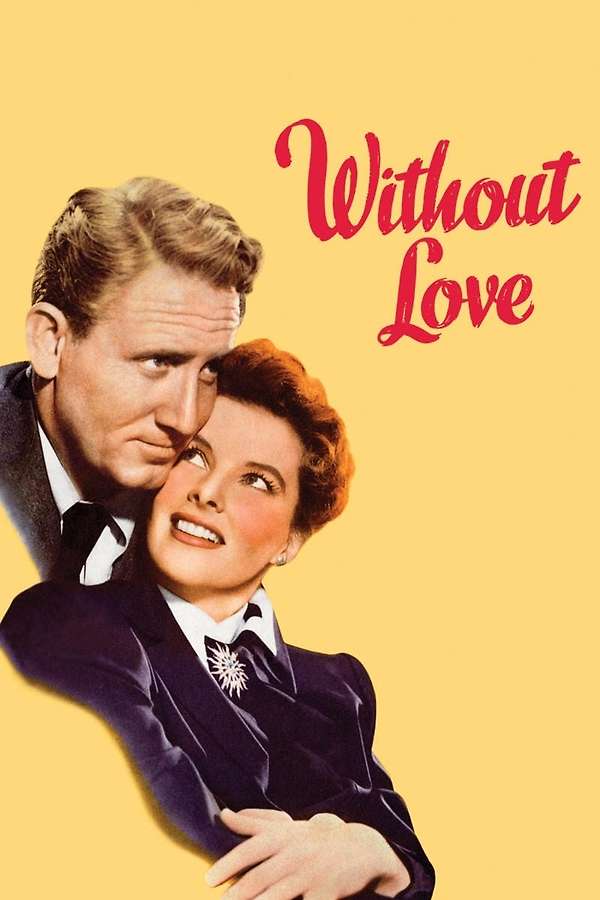
Without Love
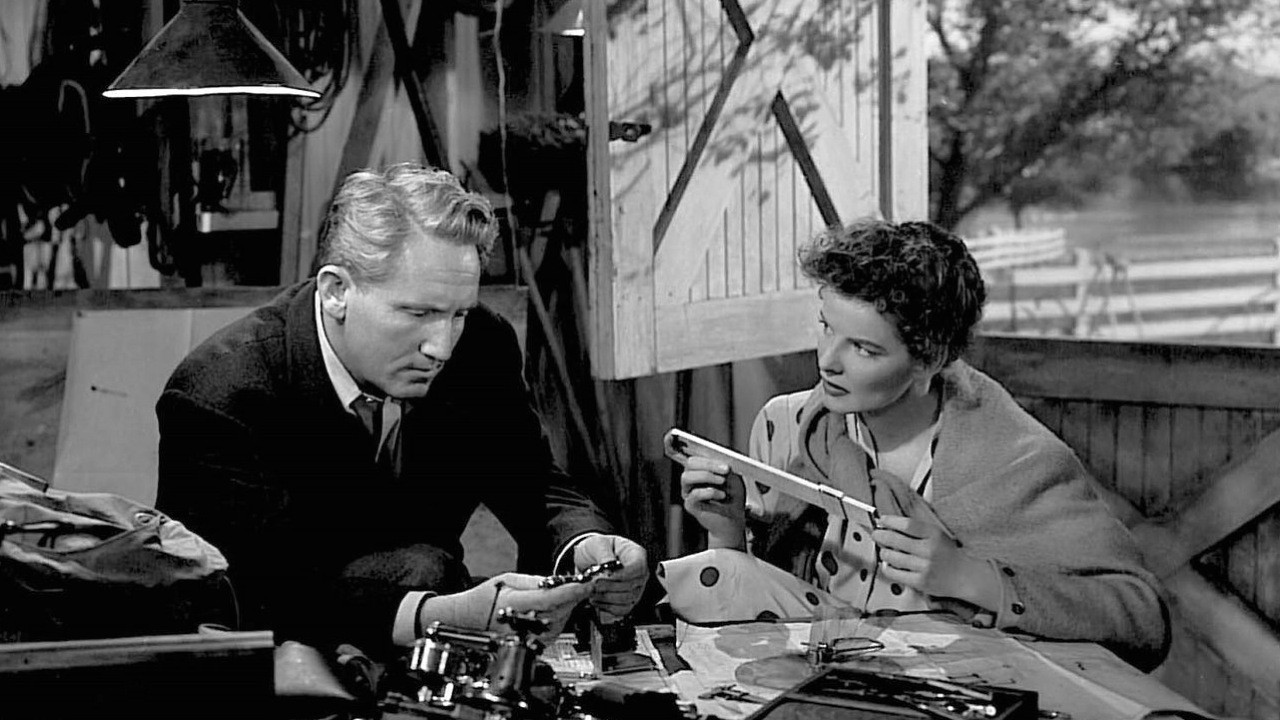
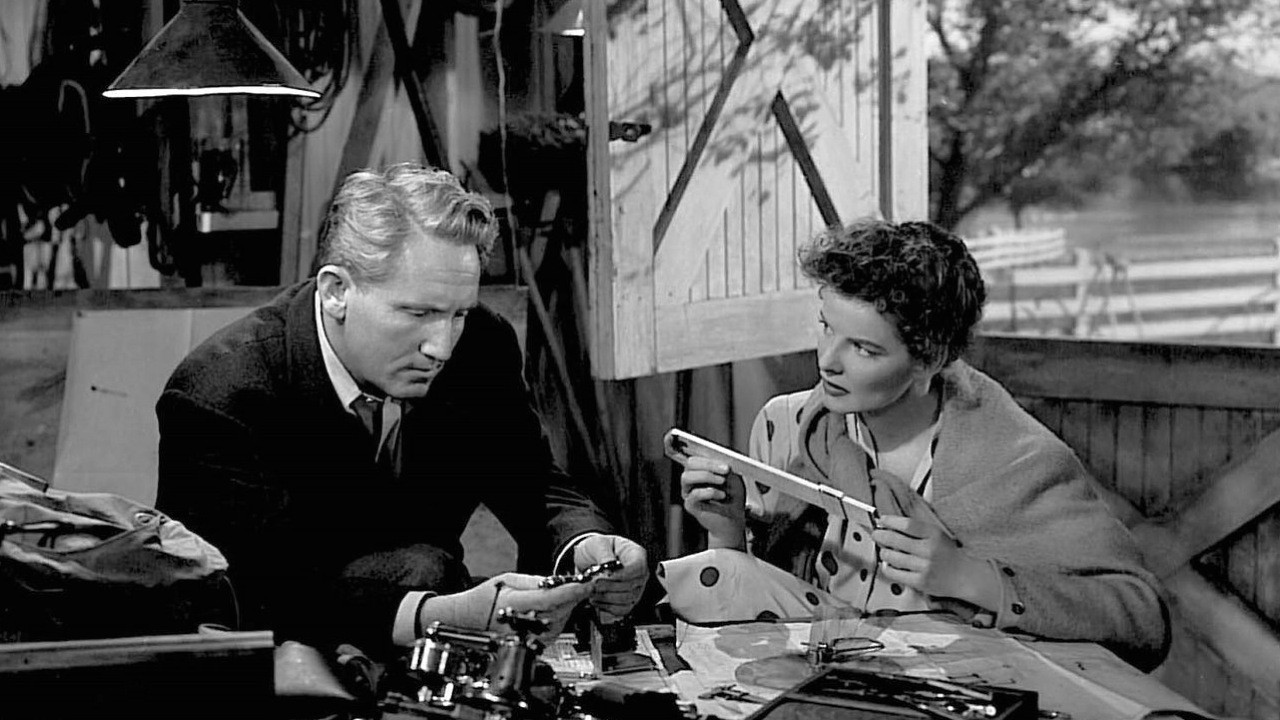
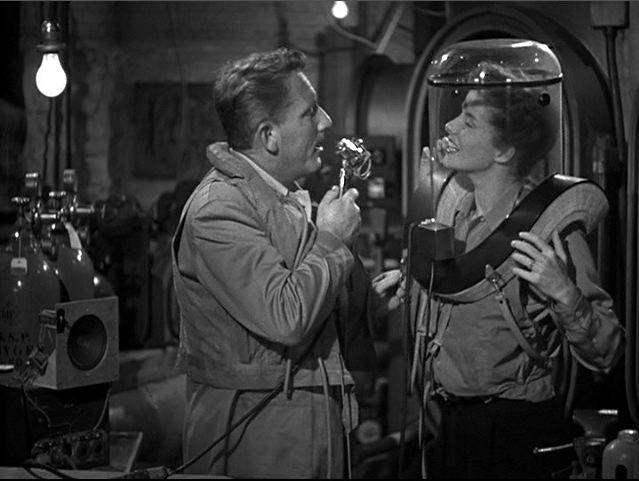
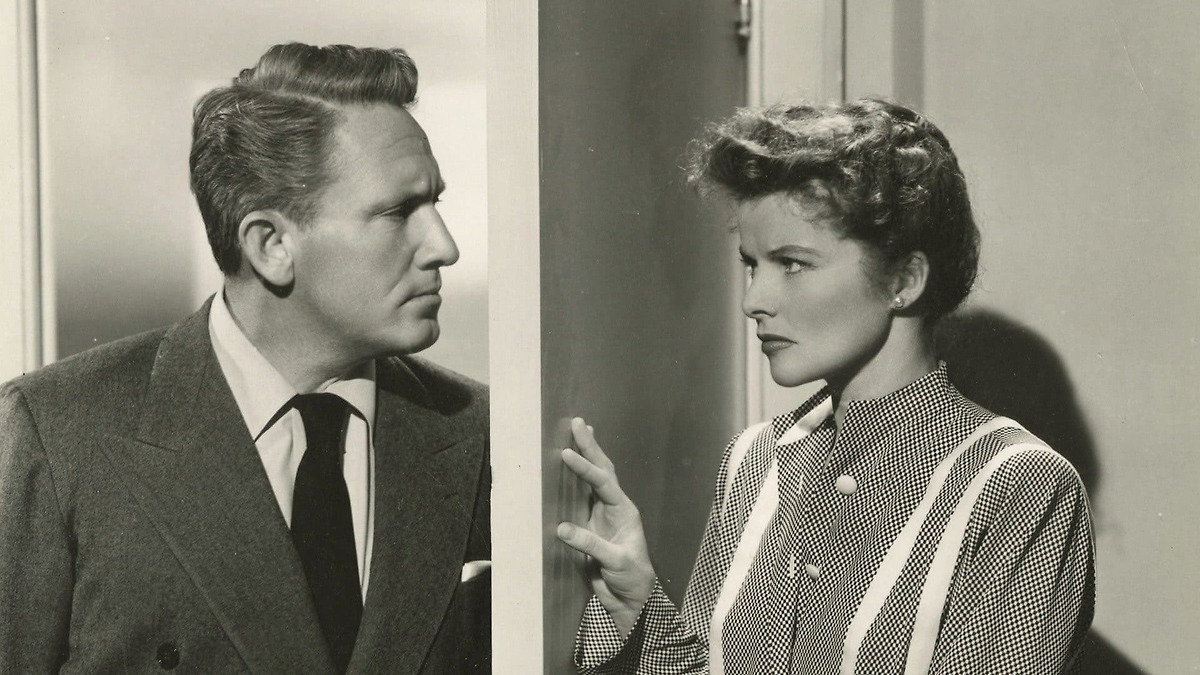
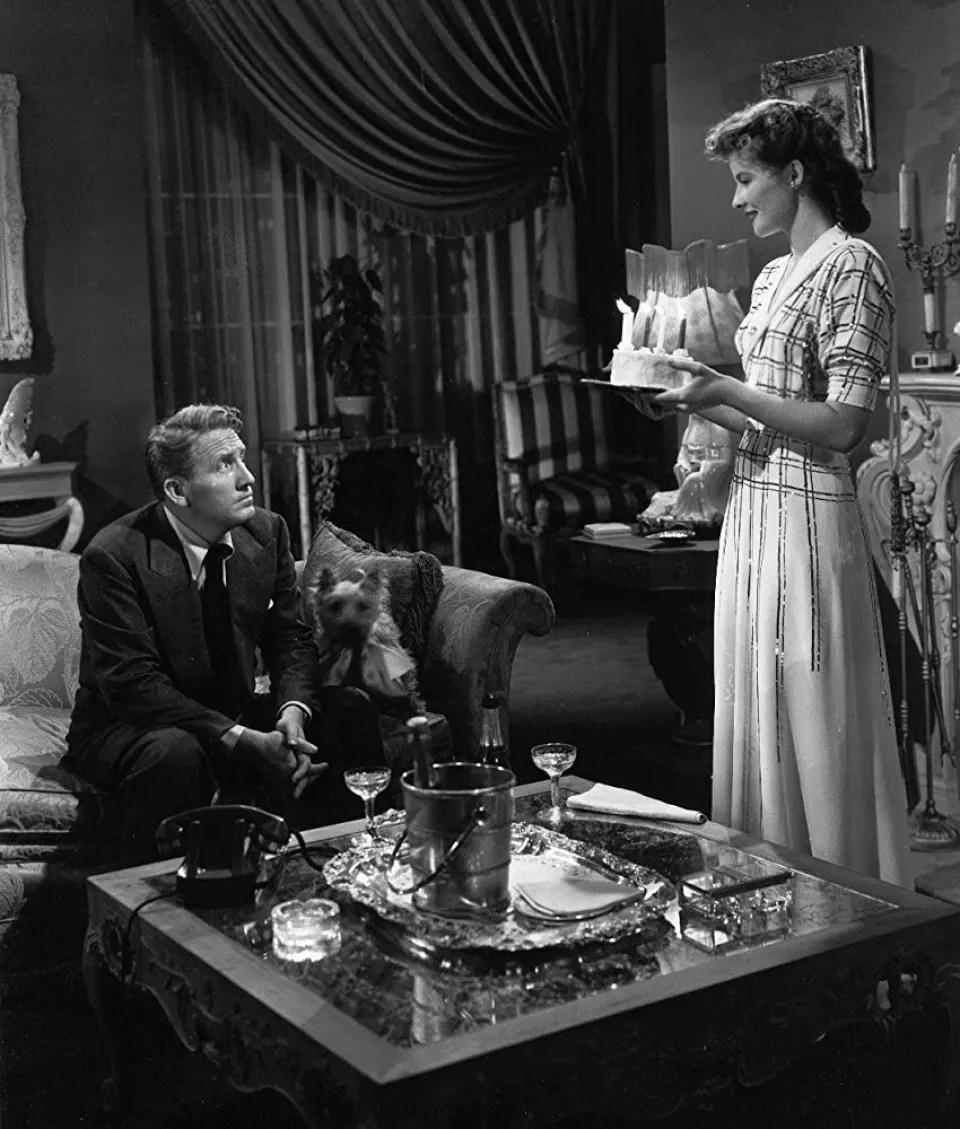
Without Love (1945) is a fun, quirky movie starring Spencer Tracy and Katharine Hepburn.
This was one of 9 films made by the pair between 1942 and 1967.
Most of their movies were romantic comedies like this one.
Spencer plays a scientist named Patrick Jamison who is down on his luck and looking for a place to stay.
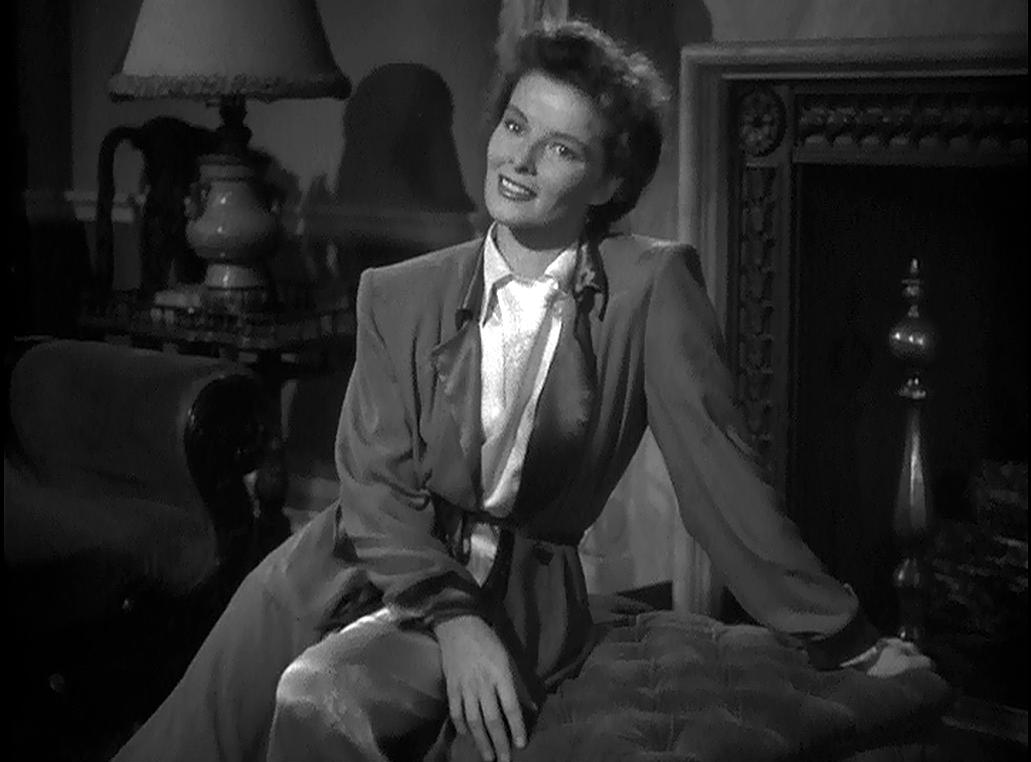
Katharine is a widow named Jamie who has a house she needs a caretaker for and hires Patrick to fill the position. They both learn they have a love for science and agree to marry to meet their “patriotic duty.” Both have been hurt in the past, though, and decide to keep the relationship platonic.
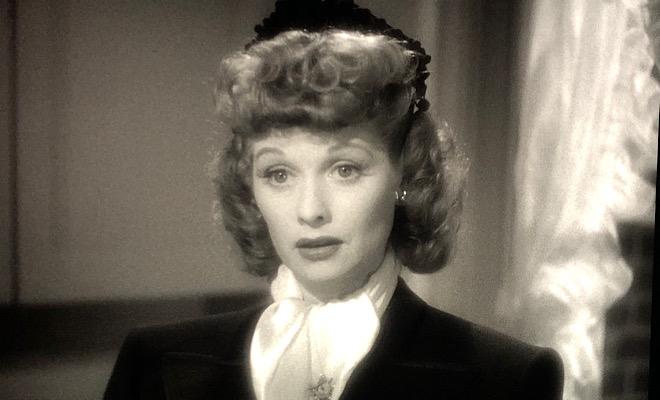
Lucille Ball plays Katharine’s friend, Kitty Tremble.
Jamie and Patrick are both very scientific, logical, and serious people who can’t let love get in the way. So, instead, they focus on working on experiments, including one involving velocity.
Parallel to their lack of romance is Lucille’s relationship with Keenan Wynn, where love is blooming even though Kitty isn’t sure she wants it to.
This one is currently streaming on Tubi and Plex for free with commercials and is avaialable for rent on Amazon Prime and AppleTV.
This movie had an interesting concept – if not a bit crazy. Hopefully, you’ll be able to tell as I begin to write about this movie, that this is meant to be a comedy. In fact it was defined back then and now as a screwball comedy.
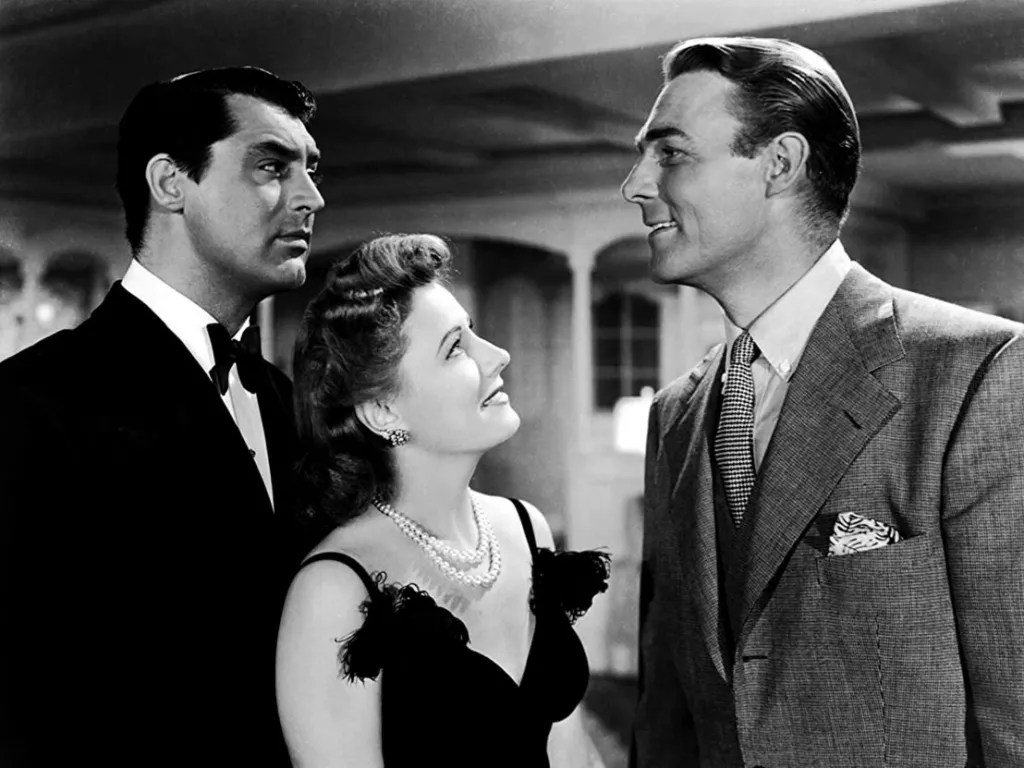
A man wants to get married, but before he can, he must declare his first wife Ellen (Irene Dunne) dead. She’s been missing at sea and was believed drowned seven years earlier.
It turns out, however, that she is not dead, and she returns while Nick Arden (Cary Grant) is on his honeymoon with wife number two, Bianca (Gail Patrick).
Nick is of course shocked and now has no idea what to do because he has two wives.
It turns out Ellen was stranded on an island all those years and it would have been lonely for her if it wasn’t for Steve Burkett (Randolph Scott) who was stranded with her.
That’s a fact she doesn’t immediately admit to her husband and a fact he’s not real pleased with, even though he’s remarried.
That new wife, by the way, is not a very nice woman.
Oh and don’t forget that Nick and Ellen have two children together and all of that will have to be figured out as well.
To break the news to Nick, Ellen heads to his honeymoon, which was the same hotel and place they had their honeymoon, I might add. How tacky is that of him?!
As the movie goes on we the viewers now have to figure out who we want Nick to end up with.
This one is currently streaming on several services, most for a rental fee, including YouTube, Hulu, GoogleTV, Amazon Prime and AppleTV.
I loved this movie and while I always love Cary Grant, I once again loved Ronald Colman who I first saw in The Prisoner of Zenda.
This movie starts with a fire at a factory where a man dies. Cary, portraying Leopold Dilg, is arrested for arson and murder.
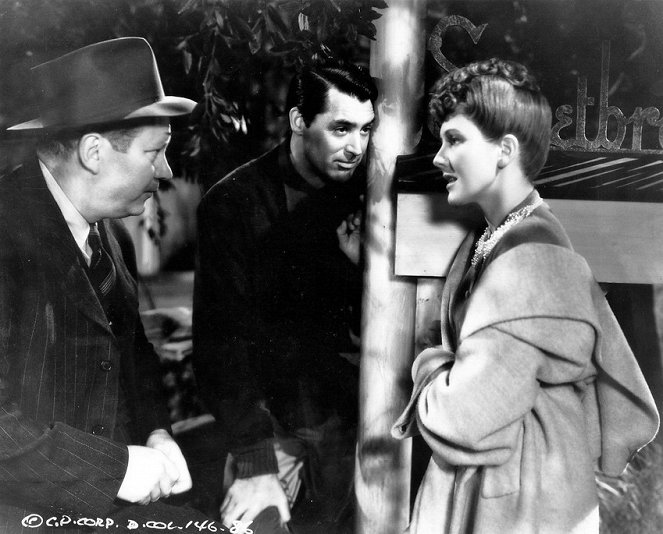
Soon he’s breaking out of jail and escaping through the woods on a rainy night. He makes his way in the dark toward a small house while dogs hunt him down. The name of the house is Sweetbrook and there is a woman inside getting it ready — maybe for a guest.
Leopold breaks in the door, startling the woman.
“Miss Shelley,” he says. “Please…let me…” And then he faints and falls down the stairs.
Miss Shelley (Jean Arthur) wakes him up with a bucket full of water and he asks if she can stay at the house, which he knows is a rental. She tells him he can’t stay because she knows he has escaped jail. There is a knock on the door before she can finish explaining and she tells him to run upstairs and hide.
There is a Professor Michael Lightcap (Colman) at the door and he’s standing in the rain. He reminds her that he’s rented the house out and he’s here to stay. Miss Shelley, whose first name is Nora, panics because Leopold is hiding upstairs and she doesn’t want the professor to find him.
Things will get more complicated as she makes up an excuse to stay in the house overnight to make sure the professor doesn’t find Leopold.
Complications just keep arising as Nora offers to become the professor’s secretary and housekeeper during his stay, a senator arrives to tell Professor Lightcap he’s up for nomination to the United States Supreme Court, and Leopold walks down one morning to argue about the role of the law in society and Nora has to introduce him as the gardener.
This is a non-stop movie full of hilarious mix-ups, near misses, and a love-triangle that won’t be resolved until the very last minute, literally, of the movie.
As I said above, I loved this movie.
This one is currently streaming on Tubi and FuboTV for free with commercials and is avaialable for rent on Amazon Prime, AppleTV, and Fandango.
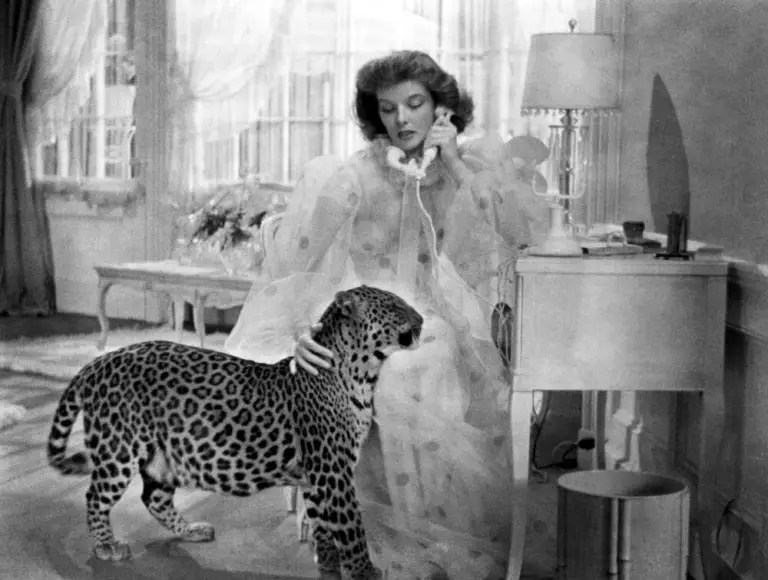
Bringing Up Baby is absolute chaos and craziness. Everyone except poor Cary Grant is off their rocker and it is glorious.
The movie stars Cary Grant and Katharine Hepburn. (Yes, there is a theme going on here with actors and actresses……this was not on purpose. I just realized I did that when I hit this one. Oops.)
Katharine is absolutely batty in this film which makes it all even more hilarious.
Cary Grant’s character (Dr. David Huxley) is a paleontologist who accidentally runs into Katherine Hepburn’s character (Susan Vance) a totally nuts socialite who immediately latches on to Cary and decides she’s going to become obsessed with him and make his life a living hell.
In the beginning of the movie, David has been building a dinosaur skeleton for years and the last piece of it has just been found. He and his fiancé – Alice Swallow – are thrilled that the intercostal clavical has been found and will be arriving soon in the mail. Alice – a very uptight, proper women who says the point of their marriage will be to only advance his research and not for love — also knows that more money needs to be secured for his research so she tells David he must go golfing with an important doner.
This is where he meets crazy Susan who tries to steal his car, takes off with him riding on the footboard while he tries to tell her it is his car, and then leads him on various crazy adventures. He runs into her again at a dinner where he is trying to secure a donation from a woman named Elizabeth Randall who is considering a $1 million donation.
The scenes at the dinner party include this a hilarious scene where Katherine’s dress gets ripped and she and Cary have to make their way through a crowded dining room with Cary against her back to make sure nothing is scene. It is so classic and hilarious and always has me laughing.
This one is currently streaming on for rent/buy on Amazon Prime, AppleTV, YouTube, and Fandango.
The Court Jester (1955) with Angela, Danny Kaye, and Basil Rathbone is a musical/comedy.
The main words to describe this movie are silliness, ridiculousness, and peak Danny Kaye moments.
First, a bit of the plot with a description from Google:
“Former carnival performer Hubert Hawkins (Danny Kaye) and maid Jean (Glynis Johns) are assigned to protect the infant royal heir from tyrannical King Roderick I (Cecil Parker). While Jean takes the baby to an abbey, Hawkins gains access to the court by impersonating the king’s jester, unaware that the jester is really an assassin hired by scheming Sir Ravenhurst (Basil Rathbone). When Princess Gwendolyn (Angela Lansbury), falls for Hawkins, a witch secretly aids him in becoming a knight.”
This film is just a lot of craziness caused by misunderstandings, misdirection, and generalized oopsies.
We start the movie by learning that an entire royal family was killed so that the current King, King Roderick I, could take the throne. Actually, though, the entire family wasn’t killed, according to rumors anyhow. The rumors say an infant survived and bears upon his bottom a birthmark of a purple pimpernel.
The rumors further say the child is being cared for in the forest by an “elusive, dashing outlaw” known as the black fox. As if to prove these rumors, one of the king’s men is killed as they are riding near the forest and a note attached to the arrow announces that the child is alive and The Black Fox has him.
Adventure ensues thereafter.
This one is currently streaming on for rent/buy on Amazon Prime, AppleTV, YouTube, and Fandango.
If you’re a regular around here, you’ll know that for the last couple of years I have been picking classic films starring one particular actor/actress to focus on for a season.
For example, I’ve had a Summer of Paul, Summer of Marilyn, Winter of Cagney, Spring of Cary, Spring of Bette, and Autumn of ….oh. I’ve never actually done an Autumn of…anyone. So this year I decided on an Autumn of Lemmon, which means I will be watching and writing about Jack Lemmon movies.
Actually, it turns out I’ve already watched more of Jack’s movies than I realized so this one should be easier than some of these features where I was rushing to watch movies and share about them in the same week.
I thought I would kick off this two-three month feature with an introduction post about the life and career of actor Jack Lemmon.
I’ll also let you know what movies I plan to watch at the end of the post so if you don’t want to read all about Jack, you can skip to the end.
Jack Lemmon was born in a way that would have fit in a movie —his mother gave birth to him in an elevator in Boston in 1925.
He was an only child who had some of his first acting experiences in prep schools. He learned to play piano at a young age, which would help sustain him in more ways than financially over the years
Some actors change their names when they go into the profession, but Jack kept his.
According to Britannica.com, Jack attended Harvard University and was the president of the Hasty Pudding Club, which was known for annual satiric revues.
He took a break from college to serve in the Navy during World War II and then graduated from Harvard in 1947. Broadway was calling so when he left he went to NYC and picked up some theaters jobs. In between he played piano accompaniment to silent films at the Old Knick Music Hall. He later said that watching Chaplin, Keaton, and Harold Lloyd taught him more about comic technique that acting school ever could have.
“I used to play at the Old Knick Music Hall on Second Avenue in New York, way back in the ’40s when I first started,” Lemmon said. “Some weeks, we didn’t get paid, because there wouldn’t be enough people in there to give us anything. Sometimes you’d get maybe five bucks. We’d split whatever was left on Saturday night. But you got a piece of chicken and French fries every night. You got a meal.”
Lemmon leaned into music in his later years when acting became stressful, his son Chris Lemmon remembered in an interview with NPR.
Jack Lemmon plays the piano at New York’s Old Knick Music Hall in 1947, his first job in the entertainment industry.
“Hollywood is an enormously invasive thing, especially when you reach a level of stardom that my father did,” Chris Lemmon said. “Hollywood owns you, basically — puts you in a headlock. And is a very jealous mistress when you reach that kind of stardom, especially back then. It’s a little less now. So [music] was his escape.”
He always downplayed his musical talents, though, saying it was merely another creative outlet.
Chris was Jack’s son from his first marriage, by the way. He was married to Chris’s mother, Cynthia Sone, from 1950 to 1956. He married Felicia Farr in 1966 and they remained married until his death in 2001.
In addition to working in theater and music, before going into movies, Jack also worked on radio and more than 140 live television shows.
Like other movie actors, he started in Broadway but his debut performance was not a success. Luckily, it still led him to a contract with Columbia Pictures in 1954.
His first two films — It Should Happen To You and Phffft! — came out that same year and both set him up opposite Judy Holliday, who was already well known for her Oscar performance in Born Yesterday. The tagline they used for It Should Happen to You:
“Introducing Jack Lemmon — a guy you’re gonna like.”
And many people did in that movie and many more over the years.
It didn’t take Jack long to be recognized for all his hard work. He won an Oscar in 1955 for Mr. Rogers for Best Supporting Actor, which surprises me a little because I’m not sure if that was a strong role for him. He was much better in Some Like It Hot (1959) (to me) and The Apartment (1960) which he received Oscar nominations for (both of them) but didn’t win.
He was nominated again for Days of Wine and Roses (1962). He won an Oscar for Best Actor in Save the Tiger in 1970.
All together Lemmon had 8 Oscar nominations.
The first Jack Lemmon film I ever saw, other than Grumpy Men when I was younger and actually just remembered as I was writing this, was— Some Like It Hot with Marilyn Monroe and Tony Curtis.
I watched it a couple of years ago and wrote about it here.
Lemmon was known to play socially awkward, self-depreciating, slightly clueless characters who often came to a wider understanding of their world by the end of the movie.
It wasn’t the only role he played, but it was the most popular for him. Most film fans agree that he could play serious characters as well as he could comedic roles.
He had a long-term acting partnership with Walter Matthau, with their most well-known partnership in The Odd Couple from 1968, which was based on the play by Neil Simon.
According to Britannica.com, “The film established the pattern for most of their appearances together, with a fussy neurotic (Lemmon) butting heads with a carefree scalawag (Matthau).”
Other Lemmon-Matthau films included The Front Page (1974), Buddy Buddy (1981), Grumpy Old Men (1993), Grumpier Old Men (1995), and The Odd Couple II (1998).
Matthau said that he was once injured on a set of one of their movies.
“Lemmon was white as a ghost. He ran down, and he took off his jacket, and he rolled his jacket up, and he put it under my head. And he said, “Are you comfortable?”… And I said, “I make a nice living.”
No wonder those two hit it off. Jack had his own knack at witty comments, but also thoughtful ones.
“I really can’t be funny unless it’s part of the character. It really bugs me when someone thinks of me as a comic. If I read ‘comedian Jack Lemmon,’ I gag. That means I’m not an actor – which I am.
It’s better to work with a Billy Wilder once or with a John Ford once than to work with four other directors who do not have that touch of genius.
Nobody deserves this much money – certainly not an actor.
“If I’d been bright, I’d have realized that I was horribly uncomfortable, amazingly frustrated, and like any sensible person, I’d have quit. But it never occurred to me that I wouldn’t be successful eventually.
And one of his most witty comments came when he died and had inscribed on his tombstone, “Jack Lemmon In:”
Now for the list of movies I’ll be watching and writing about:
Without Love (1945) was a fun, quirky movie starring Spencer Tracy and Katharine Hepburn, which I stumbled on to it a few weeks ago. I wasn’t sure what to expect, but I enjoyed the witty and crisp dialogue.
This was one of 9 films made by the pair between 1942 and 1967.
Most of their movies were romantic comedies like this one.
Spencer plays a scientist named Patrick Jamison who is down on his luck and looking for a place to stay.
Katharine is a widow named Jamie who has a house she needs a caretaker for and hires Patrick to fill the position. They both learn they have a love for science and agree to marry to meet their “patriotic duty.” Both have been hurt in the past, though, and decide to keep the relationship platonic.
Lucille Ball plays Katharine’s friend, Kitty Tremble.
Jamie and Patrick are both very scientific, logical, and serious people who can’t let love get in the way. So, instead, they focus on working on experiments, including one involving velocity.
Parallel to their lack of romance is Lucille’s relationship with Keenan Wynn, where love is blooming even though Kitty isn’t sure she wants it to.
I will say the movie is a little awkward to watch if you read about Spencer and Katharine’s real life romance, which was a 27-year affair because Spencer was Catholic and wouldn’t divorce his wife. He and his wife lived separately for years but Katharine was apparently a frequent guest in his hotel bungalow or apartment. Their affair was an open secret that Kathrine spoke about after he and his wife were both dead.
So in this movie Katharine’s character asks Spencer’s character to marry him and I wonder if she did that in real life too. She seemed hopelessly devoted to a man who couldn’t commit to her and continued to break his wedding vows while saying he felt guilty but never stopping it. That’s pathetic of him to me.
Katharine and Spencer’s first movie together was Woman of the Year in 1942. The public loved it and another movie with them, Keeper of the Flame, was released the same year but flopped.
Philip Barry wrote the play version of The Philadelphia Story in 1939 and the movie was made with Katharine, Cary Grant, and Jimmy Stewart in 1940.
Barry wrote a play version of Without Love with Katharine in mind and she agreed to do the play in 1942. She wanted Spencer to do the play with her but even then his drinking was an issue and the producers cast Elliott Nugett.
Later, when MGM wanted one more try at a movie with them together, Katharine suggested a movie version of Without You.
The movie was directed by Harold S. Bucquet.
Donald Ogden Stewart wrote the screenplay from Barry’s play.
Critics liked the movie but some said Keenan and Lucille stole the show.
“It is good to see Lucille Ball doing so well with a kind of role new to her,” wrote James Agee in The Nation.
Lucille had moved to MGM from RKO and hadn’t had a lot to do since being in Stage Door with Katharine in 1937.
I was surprised to read on TCM.com that Lucy was married to Desi Arnaz at the time and suing him for divorce for infidelity. They reconciled and would, of course, go on to make the I Love Lucy Show that skyrocketed Lucy into stardom and made them both a household name.
They divorced for real in 1960 for the same reasons Lucy almost divorced him for in 1945.
I found this one on Amazon but you can also watch it for free on Tubi.
If you are interested in more reviews or blog posts about old movies, you can find a link to my past reviews at the top of the page and you can also visit The Classic Movie Blog Association.
Witness to Murder (1954) wasn’t the best thriller I have ever seen, but it did have its nail-biting moments. I was on the edge of my seat (quite literally) for most of the movie as Barbara Stanwyck did her best to get away from George Sanders.
We knew from the beginning of this one who the murderer was, so all we had to do was hold on for the ride and see if he found a way to shut down his accuser.
Description from TCM:
“In the 1954 Witness to Murder, Barbara Stanwyck plays a woman who, unable to sleep one night, looks across the courtyard from her apartment and sees a man choking a woman to death. The man is a pompous though obscure writer – he’s played by George Sanders – and there’s no doubt about what Stanwyck has witnessed.”
I’ve become a huge Sanders fan over the years. You might remember him in Hitchcock’s Rebecca. He was deliciously evil in that one. I also watched him in Lured with Lucille Ball.
Witness to Murder‘s plot is similar to Hitchcock’s Rear Window and that’s because was aimed at competing with Hitchcock’s movie. I’m not sure what they were thinking by trying that because the film was okay but it was no Rear Window.
The film was directed by Roy Rowland and, no, the plot wasn’t as tight as Rear Window (plus Rear Window was in color and this was in black and white) but Barbara and George’s performances make this one worth watching. I shouldn’t forget George Merrill, who was also very good.
“Sanders appears to be having a great deal of fun with this character, rolling his r’s with mischievous glee, making sure everyone knows how secure his place in the Universe is,” writes Stephanie Zacharek for TCM.com.
At one point he even rants in fluent German, which makes the scene even more spine-chilling and was probably even more chilling since it was only 10 years after the war and Nazis still lingered in everyone’s nightmares.
Zacharek calls the performance “slightly cartoony” and maybe it is, but I still liked it – well, as much as you can like watching a man mental torture a woman.
Barbara plays a strong, independent woman which makes her hysterical breakdowns a little odd at times – but then a lot of men are telling her she’s totally crazy.
What’s annoying about this part of the story is that their insistence that she’s crazy is absurd because they clearly know something bad has actually happened. Then again, men and women alike have been telling me for years that my various illnesses are in my head so I guess that part of the story isn’t too far fetched.
If you’re looking for a movie with an flawless story, maybe this isn’t for you, but if you like films with great performances that have you biting your nails and sliding to the edge of hour seat, then this is one for you. You can find it for free right now on YouTube.
It is also streaming on Netflix.
If you are interested in more reviews or blog posts about old movies, you can find a link to my past reviews at the top of the page and you can also visit The Classic Movie Blog Association.
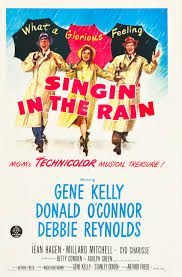
I’ve written about a lot of different movies on this blog and what shocks me is that I’ve never written about my favorite movie – Singing in the Rain (1952).
I have to be honest that I am actually nervous to do so because there is so much about this movie that I love, I am truly afraid I will forget to mention something important about it or it’s making or I will mess up a fact.
When I was a kid, we didn’t have cable. We had one black and white TV and an antenna on the back porch that my dad would adjust to help us get four channels — an ABC affiliate, a CBS affiliate, an NBC affiliate, and PBS. Because we only had those four channels, I often found myself watching old movies on PBS. I was fascinated with them, the light and shadow, the framing, the cinematography, and the acting. It all mesmerized me.
The stories seemed richer, more fascinating, deeper somehow, than the shows I would see on primetime or the cartoons on Saturday morning. As I grew older, my options grew, but I still always found myself turning that cable TV back to the classics, usually the black and white movies or a musical. To me, the writers of those old movies knew how to tell stories, not just make a movie for show or for special effects. Those great stories tied in with my love of reading and are probably what made me want to go into journalism (which I did for 14 years) and then write fiction books (which I do just for fun now).
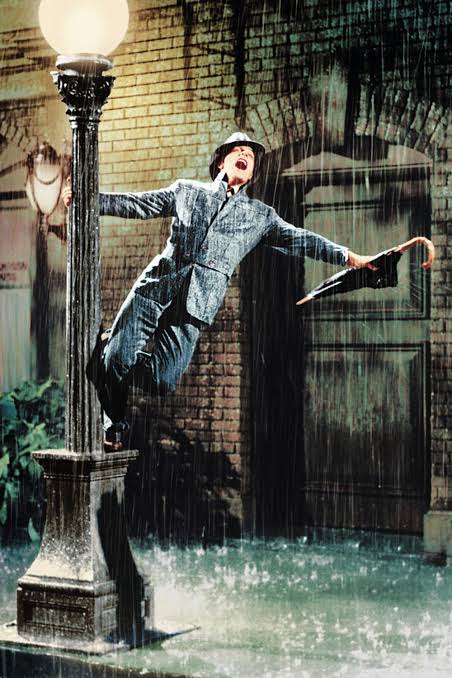
My favorite movie was Singing in the Rain and it’s remained so all these years. I used to dance around the living room saying, “And I can’t stand ‘im!” in Jean Hagen’s high-pitched voice, putting on a show for my family. I would dance around the room like I was on that street dancing in the rain in that iconic dance sequence with Gene Kelly.
I would recite good chunks of the movie whether it was on or not and my mom said I should go into drama. Luckily I was too shy to get into drama because I am pretty sure if I had gone into drama I would have mentally crashed and burned out fast. My introvert self is not cut out for the crazy world of acting.
It wasn’t until my late teens, when my brother bought me a VHS copy of the movie, that I learned the movie was actually shot in Technicolor. I’d always watched it on that old black-and-white TV and now here it was in blazing, beautiful color.
Magnificent.
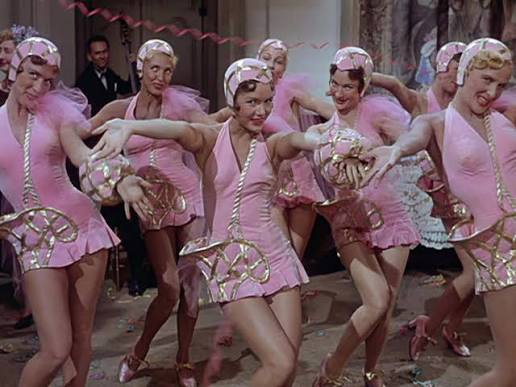
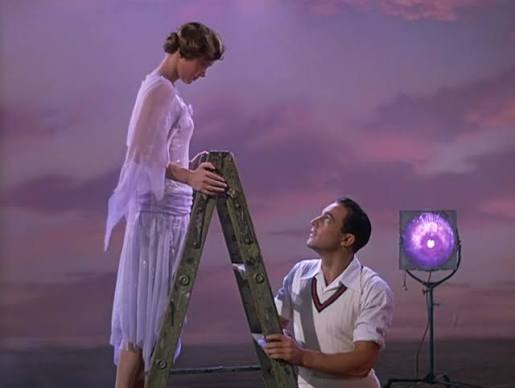
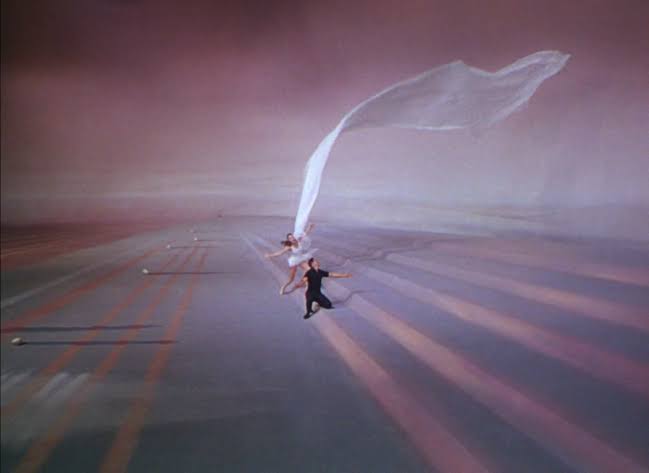
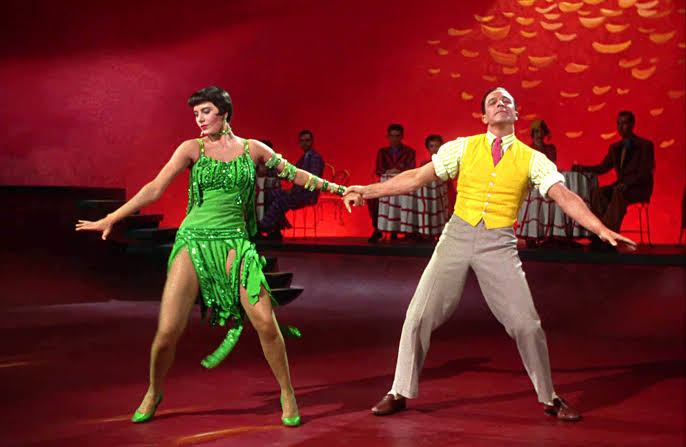
Singing in the Rain has so much going for it — an amazing story tied into the history of talking films replacing silent films, great songs, great actors with great performances, and amazing dance routines (though I maintain that the 20-minute one with Cyd Charisse is just a bit too long and a bit too much — yet also brilliant.)
For those who don’t know what Singing in the Rain is about — for shame! FOR SHAME!
Oh, I mean, please, let me tell you what it is about.
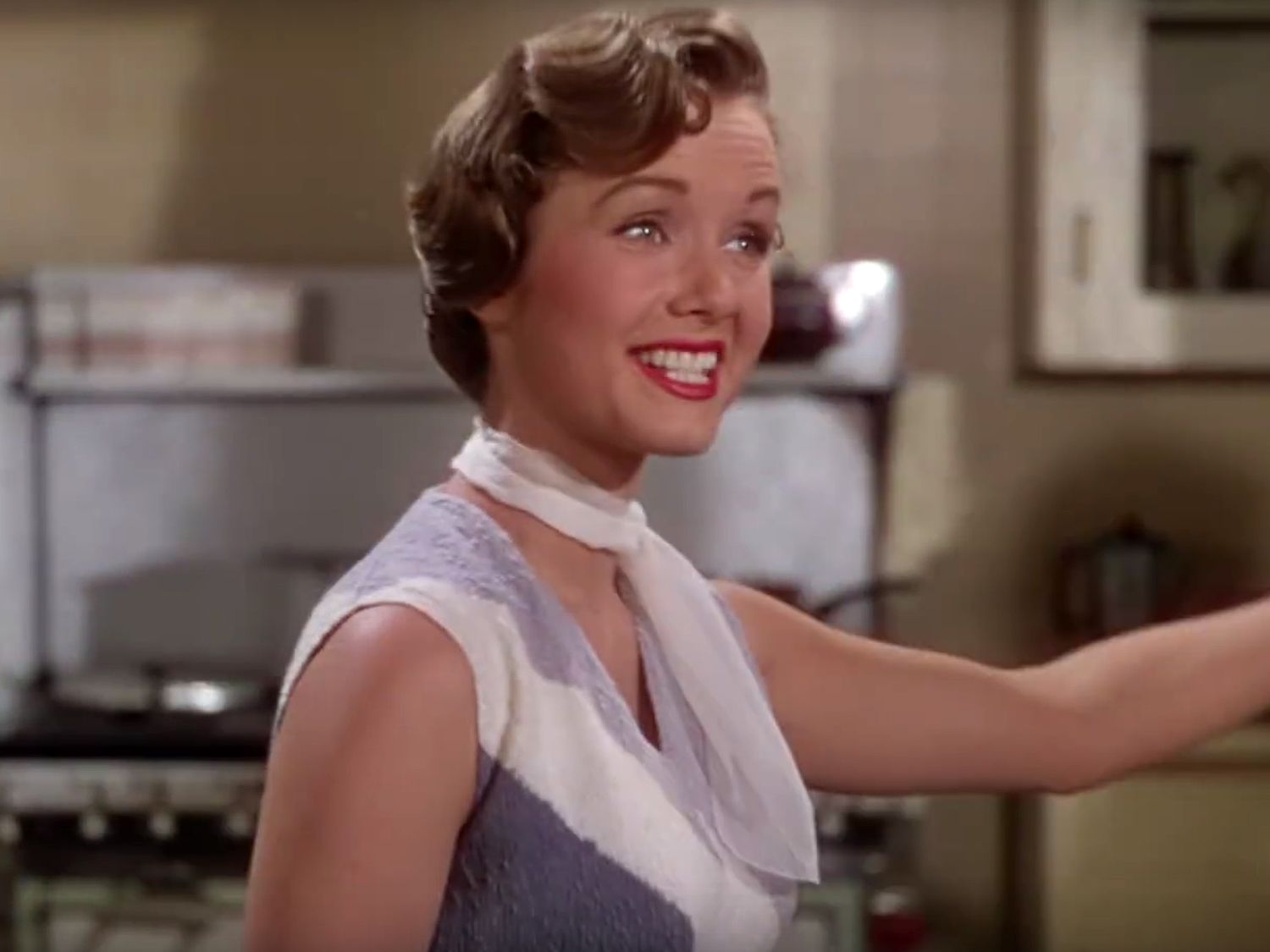
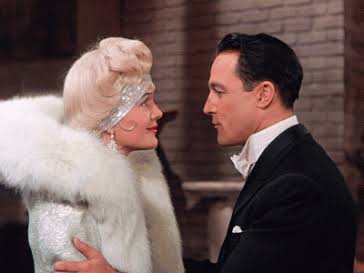
The movie, which takes place in 1927, has a couple underlying storylines. One is a love story between Gene Kelly’s character Don Lockwood and Debbie Reynold’s character, Kathy Selden.
The other is a historical story about the end of silent films and the beginning of talking films.
That’s the simple description, but there is so much more going on underneath the surface of this comedy/musical.
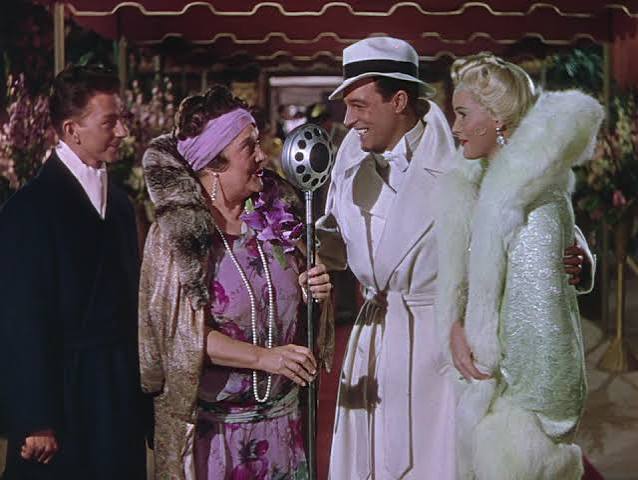
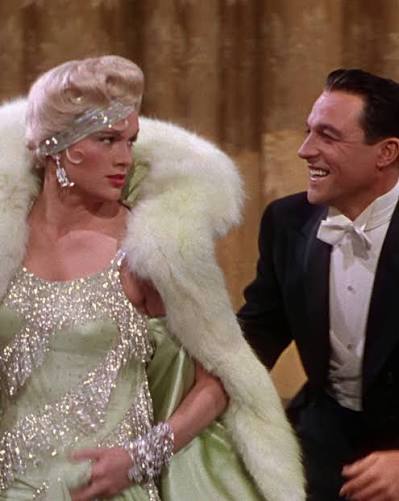
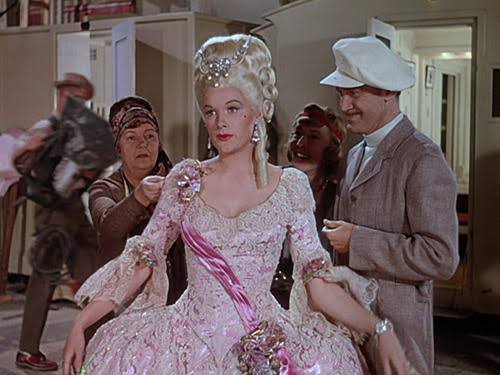
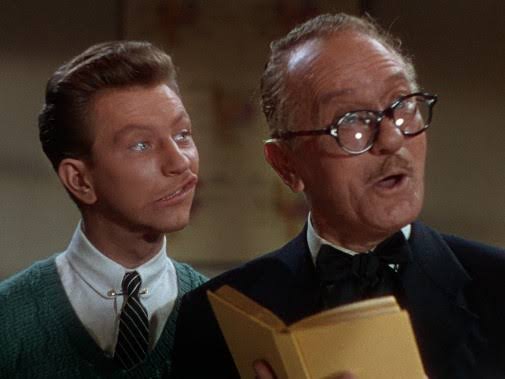
We start the movie with silent screen swashbuckler star Don Lockwood and his movie partner Lina Lamont (Jean Hagen) attending a movie premiere. They are kind of like the Fred Astaire and Ginger Rogers of their time, only they are silent film stars of Victorian-era romance-adventures.
It is only Don and his friend Cosmo Brown (Donald O’Connor) — the musical accompaniest for the Lockwood and Lamont movies — who speak during the red carpet interview. It seems like the men are keeping Lina from speaking to the interviewer.
Don provides a sanitized version of how he and Cosmo got into show business and how he and Lamont met, with his words not matching up to what we see on our screen. He says that his motto in his career was to always conduct himself with dignity and what we see is him and Cosmo doing crazy vaudeville acts or working as stuntmen when they were first starting out.
We also see how Don and Lina first met and though Don tells the audience at the premiere they had an immediate connection, moviegoers see her sticking her nose up at him when he was a stuntman but changing her tune when the head of the studio announces Don is going to be their next big star.
We go a full 20 or 30 minutes into the movie before we find out why no one would let Lina speak during the red carpet interview. I hate to ruin this for anyone who has not seen the movie but…. I’m going to so you have been warned.
You ready?
Don’t read on if you don’t want to know……
Lina has a very annoying, high pitched voice and says things like, “Why didn’t I get to talk out there. What do you think I am? Dumb or sumthin’…”
The studio executives, Cosmo, and Don do indeed believe, and know, that Lina is dumb. They also know that she thinks she and Don are really couple, when Don wants her to know they are not.
“There’s nothing between us, Lina,” he tells her. “There never has been. Just air.”
After the premiere, Don and Cosmo are on their way to the after party when Cosmo’s car gets a flat tire. Don is spotted by a bunch of fans who swarm him and begin to demand autographs and souveniers, ripping off part of his tuxedo jacket.
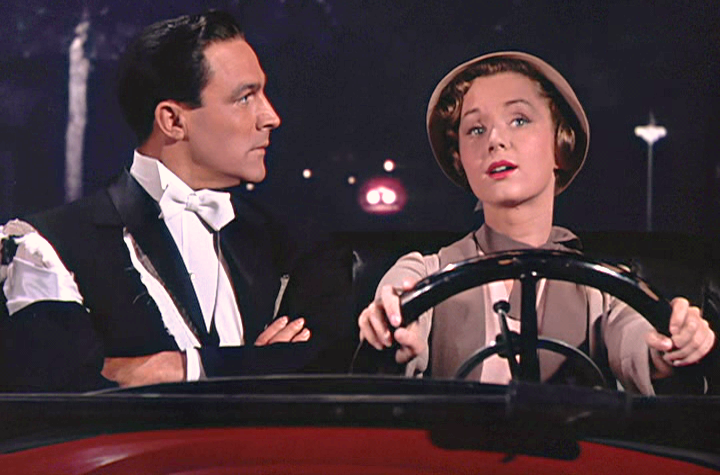
He runs away, through traffic, and ends up jumping into a car being driven by a shocked young woman named Kathy Selden.
Kathy doesn’t recognized Don right away. Instead, she thinks she’s seen his photo on a Most Wanted poster at the post office and begins to scream. She stops and tells a police officer that this man just jumped into her car and the police officer says, “Why you’re Don Lockwood!”
Kathy becomes much more cordial then and asks Don if he’d like her to drop him off somewhere. He says he would like to get changed out of the tuxedo his fans ripped up and the conversation goes along smoothly until Don starts to flirt with Kathy.
She catches on to his schtick pretty fast and then pretends to be unimpressed with him. She’s an actor on the stage, which she claims is much more prestigious than acting on film.
She informs Don that all he is is a shadow up on the screen, not a real person. He just makes faces and doesn’t really speak, which is what she believes acting really is.
Don is, of course, quite offended by her mocking his professionn and when she pulls over to let him out, now safe from the screaming fans, he leans toward her and says she shouldn’t be afraid of him. What can he do to her, after all, he’s but a mere shadow.
I pause in this recap to comment on how brilliant the acting is by both of them in this scene.
I’ve provided a clip here because it’s just so good. The quality of the clip is not good, however. It is all I could find online:
We flash forward to Don at the party with all the other stars and a bunch of other famous people. At the party, the studio owner R.F. Simpson (Millard Mitchell) shows everyone in attendance an example of talking film. Everyone is surprised but doesn’t think that it will ever replace silent films, or if it does it will be years off. R.F. disagrees and later on, after another studio releases the first talking picture, R.F. says that their studio is going to film its first talking film and their biggest stars, Don and Lina, will be the stars.
A second later, when Lina speaks, though, their hearts sink.
Lina can’t speak in the movie. Not with that voice.
This is all very ironic, of course, because in real life, Jean Hagen has a lovely, sultry voice. Her real voice is actually used later in the movie where Kathy is supposedly dubbing Lina’s high voice with a more sultry one. Instead, that more sultry voice is Jean’s actual voice.
I’ve jumped ahead a bit, so let me go back: Cosos gets the brilliant idea for Kathy to dub Lina’s voice so Lina will sound like she looks in the talking movies.
What could go wrong, right?
Umm…wrong. Lina . . . well, you’ll have to watch to see why Lina isn’t a big Kathy Seldon fan and what she does about her lack of love for Kathy.
I can say that one reason Lina doesn’t like Kathy is because of what happened at that after party. After R.F.’s big announcement about talking films, a large cake is pushed into the room and suddenly out pops Kathy Selden, the “more refined” actress, who actually turns out to be a chorus girl.
Don enjoys mocking her over this which prompts her to attempt to throw a pie in his face, which instead hits Lina square in the face.
Kathy is mortified by her behavior and runs from the room with Don behind her. She manages to escape and drive off before he can find her, though, and he spends several weeks trying to track her down after Lina gets her fired from her job.
An article on TCM says many critics and fans call Singing in the Rain the greatest musical ever made and I’d have to say I am one of those fans who feels that way. There is just so much about this musical that is superior to all other musicals.
The songs are amazing, with well-written and witty lyrics.
The acting is amazing.
The dance sequences are amazing.
The comedy is spot on.
The masterful way the writers created characters mocking Hollywood films and actors all while making a Hollywood film with actors is brilliant.
It is also a visual spectacle.
There is so much talent shoved into this one movie that it almost creates sensory overload, but delightful sensory overload. Not the sensory overload that sends you running to a quiet room with your soft blanket and a white noise machine.
The most famous scene from the movie is, of course, Gene’s dancing in the rain in his hat and suit, with an umbrella.
I loved reading the following paragraph on TCM.com about the development and filming of the title song:
“While the film is chock full of musical highlights, Gene Kelly’s “Singin’ in the Rain” number is the genuine showstopper. Regarding his immortal solo number, Kelly later commented, quite graciously and modestly, on what made the scene work so well: “The concept was so simple I shied away from explaining it to the brass at the studio in case I couldn’t make it sound worth doing. The real work for this one was done by the technicians who had to pipe two city blocks on the backlot with overhead sprays, and the poor cameraman who had to shoot through all that water. All I had to do was dance.” The technicians’ efforts are all the more remarkable since there was a severe water shortage in Culver City, California, the day the sequence was shot.”
Here it is for your enjoyment (if WordPress lets the link work):
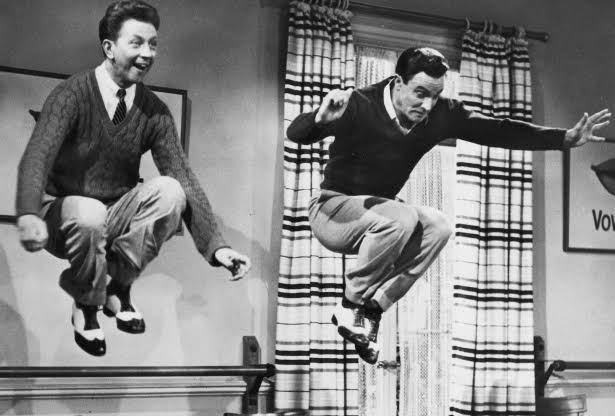
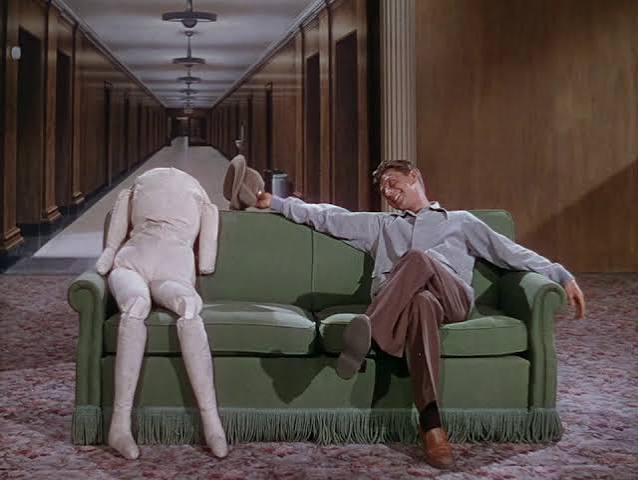
It is just about the best dance sequence I have ever seen in a movie but one can’t forget O’Connor singing and dancing (and participating in some serious slapstick/physical comedy) in “Make ‘Em Laugh” or Reynolds, Kelly, and O’Connor singing “Good Morning.”
This movie pokes fun at swashbuckling films and silent films and Kelly was all in, even though it poked some fun at him as an actor too.
The film was directed by Gene Kelly and Stanley Donan and Gene also choreographed mos of the dance sequences. Between all that and starring in the film, he must have been absolutely exhausted!
He’d started his career with the movie Cover Girl in 1944, revolutionizing the Hollywood musical with innovative and “free-flowing” dance routines.
After that movie, he earned an Oscar nomination for Anchors Aweigh (1945, with Frank Sinatra and Kathryn Grayson and a cute, little Dean Stockwell. I liked this one.)
It was On The Town from 1949 that really sent his career flying. That movie was the first of three collaborations with Donen.
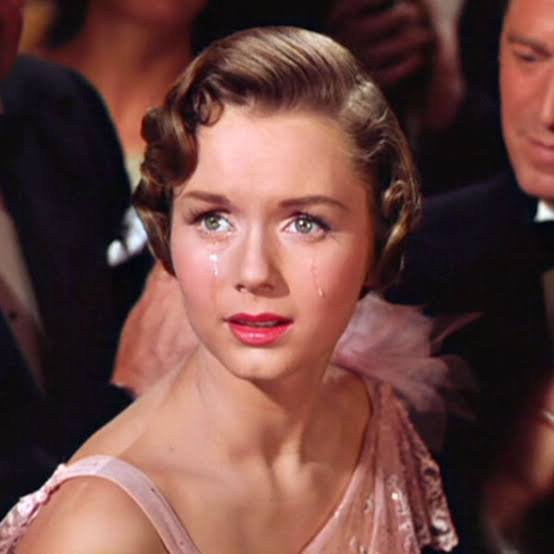
Debbie Reynolds was only 19 when she first started filming as Kathy Seldon (though I’ve read interviews where she said she was 17 and watched an interview where she said she was 18) and you may have read that there was quite a bit of tension between her and Kelly during filming because Gene was a perfectionist. He was also 39-40 during filming and may have kissed her a bit more passionately than she was ready for, according to an interview she gave with The Pittsburgh Gazette, where she said he “stuck his tongue down my throat.” When she ran off crying, he was much more careful during future takes and kissed her more gently, she said, though he was a bit “pissed about it”.
Some say that Debbie called Gene abusive and she did refer to him in her 2013 memoir, Unsinkable, as a “cruel taskmaster”. Despite writing this, Debbie also remembered how his pushing her helped her to become a better actress later and how the movie shot her into stardom.
“He is a perfectionist and a disciplinarian – the most exciting director I’ve ever worked for,” she said. “And he has a good temper. Every so often he would yell at me and make me cry. But it took a lot of patience for him to work with someone who had never danced before. It’s amazing that I could keep up with him and Donald O’Connor.”
Years later Kelly expressed regret at how hard he pushed her and said he was truly shocked she still spoke to him after all he’d put her through. So clearly, they did still speak to each other even if she thought he was rough on her during filming.
The other day I was looking at the Facebook page of Gene’s last wife (he was married three times, with his final wife being 31 and him being 78 at the time of their marriage in 1990) and she had written about how Jean Hagen was hired for the film.
“Gene told me that the only dispute he had with Producer Arthur Freed and co-director Stanley Donen in casting Singin’ in the Rain was over the role of Lina Lamont,” she wrote. “Freed and Donen did not think that Jean Hagen was glamorous enough to play the part. As Gene said, “Stanley was very strong for a young lady from Fox, who was very pretty and a nice actress. She looked like a movie star, but she didn’t have enough depth to do the role. Arthur Freed had a couple of favorites that he wanted to put in. But they were both thinking of girls that look like movie stars. Beautiful, glamorous girls. Arthur even once mentioned Lana Turner, who just couldn’t have played the role that way.”
Patricia writes that the issue was neither of the men had ever seen Jean Hagen all dressed up and looking beautiful.
Kelly and Jean were friends and he thought she’d be wonderful in the role, according to Patricia.
“He did a test with her and the minute Freed and Done saw it, “they fell right in with it” and “when the first rushes came in on her, we were all mad about her.” Born Jean Shirley Verhagen in Chicago in 1923. She was nominated for an Oscar as Best Actress in a Supporting Role for Singin’ in the Rain but lost to Gloria Grahame in The Bad and the Beautiful. I have a feeling we can all agree with Gene that Jean Hagen was perfect for the role and, as he said, “she was the glue that held the picture together.”
I could go on and on about this movie and all the background of it, so I guess I’d better stop here and instead link you to a few articles or YouTube videos with more information. I will also leave you with some trivia and quotes from the movie.
Some trivia *wink*:
Despite all of Debbie’s hard work on the “Good Morning” number, Kelly decided that someone should dub her tap sounds, so he went into a dubbing room to dub the sound of her feet as well as his own.
It cost $2.5 million to make the movie, which was $665,000 over budget. The movie earned $7.7 million upon its initial release.
Donald O’Connor invited his brother to help him rehearse the stunt of running up the wall in Make ‘Em Laugh with a rope. O’Connor was smoking four packs of cigarettes day back thn and went to bed for a week after completing the scene. Sadly, an accident deleted all of his hard work and he had to reshoot the entire scene again later.
Cyd Charisse, who plays Gene Kelly’s dancing partner in the “Broadway Ballet” number, studied ballet in Los Angeles with Adolph Bolm and Bronislawa Nijinska. She danced with Ballets Russes under the name of Siderova. After World War II she was hired by Arthur Freed to be the resident ballet dancer at MGM.
From TCM: “The comical bit that Donald O’Connor does in the “Make ’em Laugh” sequence, where he pushes and pulls on his face to make absurd faces, is known as “gurning.”
Gene Kelly had a 103 degree fever when he shot the Singing in the Rain dance sequence.
Debbie Reynolds’ voice was dubbed by Betty Royce for the scenes where Reynolds’ character dubs Lina Lamont’s singing and speaking voice. In addition, in the scene where Kathy Selden is dubbing Lina Lamont, Hagen is actually dubbing Reynolds dubbing Hagen on screen for just one line.
Some hilarious quotes from the movie:
Lina: Oh Donny! You couldn’t kiss me like that and not mean it just a teensy bit! Don: Meet the greatest actor in the world! I’d rather kiss a tarantula. Lina: You don’t mean that. Don: I don’t— Hey Joe, get me a tarantula.
Lina: Gee, this wig weighs a ton! What dope’d wear a thing like this? Roscoe: Everybody used to wear them, Lina. Lina: Well, then everybody was a dope.
Cosmo: Talking pictures, that means I’m out of a job. At last I can start suffering and write that symphony. Simpson: You’re not out of a job, we’re putting you in as head of our new music department. Cosmo: Oh, thanks, R.F.! At last I can stop suffering and write that symphony.
Lina: Why, I make more money than – than – than Calvin Coolidge, put together!
Lina: “People”? I ain’t “people.” I am a – “a shimmering, glowing star in the cinema firmament.”
Lina: If we bring a little joy into your humdrum lives, it makes us feel as if our hard work ain’t been in vain for nothing.
[A dancer watching Lina Lamont in “The Royal Rascal”] Flapper: She’s so refined. I think I’ll kill myself.
Lockwood: What’s the matter with that girl? Can’t she take a gentle hint? Cosmo: Well haven’t ya heard? She’s irresistible. She told me so herself.
Cosmo Brown: Lina. She can’t act, she can’t sing, she can’t dance. A triple threat.
Lina Lamont: What’s wrong with the way I talk? What’s the big idea? Am I dumb or something?
Lina Lamont: What’s wrong with the way I talk? What’s the big idea? Am I dumb or something?
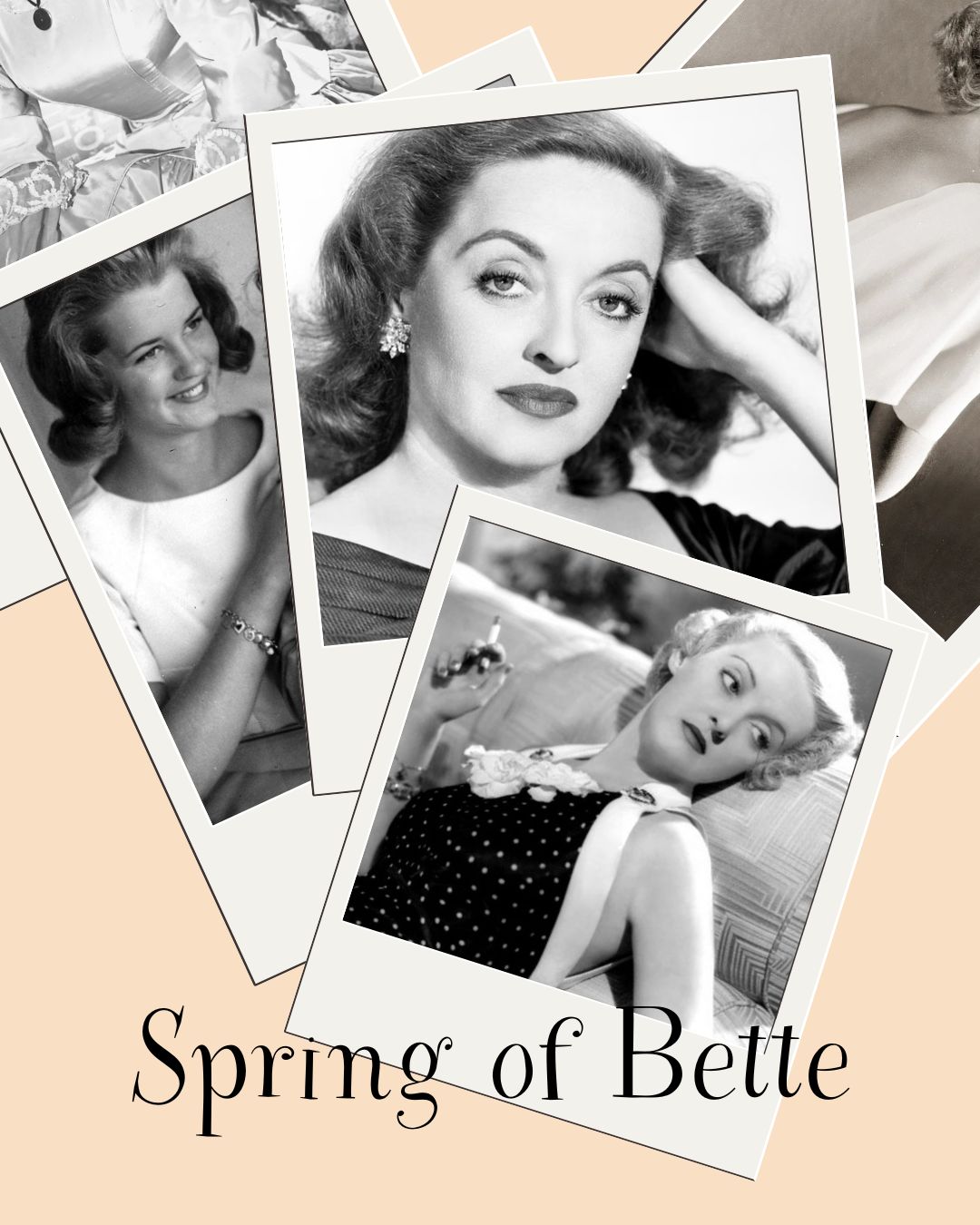
I have been watching Bette Davis movies for spring and clearly, it is stretching a bit into summer.
This week I am writing about Now, Voyager — a movie that chronicles the life of a mentally abused woman whose narcissistic mother held her back and down for years.
It was released in 1942, which was in an era where movies were being geared toward women, left home during World War II. It was a feminist-yet-not-feminist movie that was ahead of its time in some ways and right in line with the times in others.
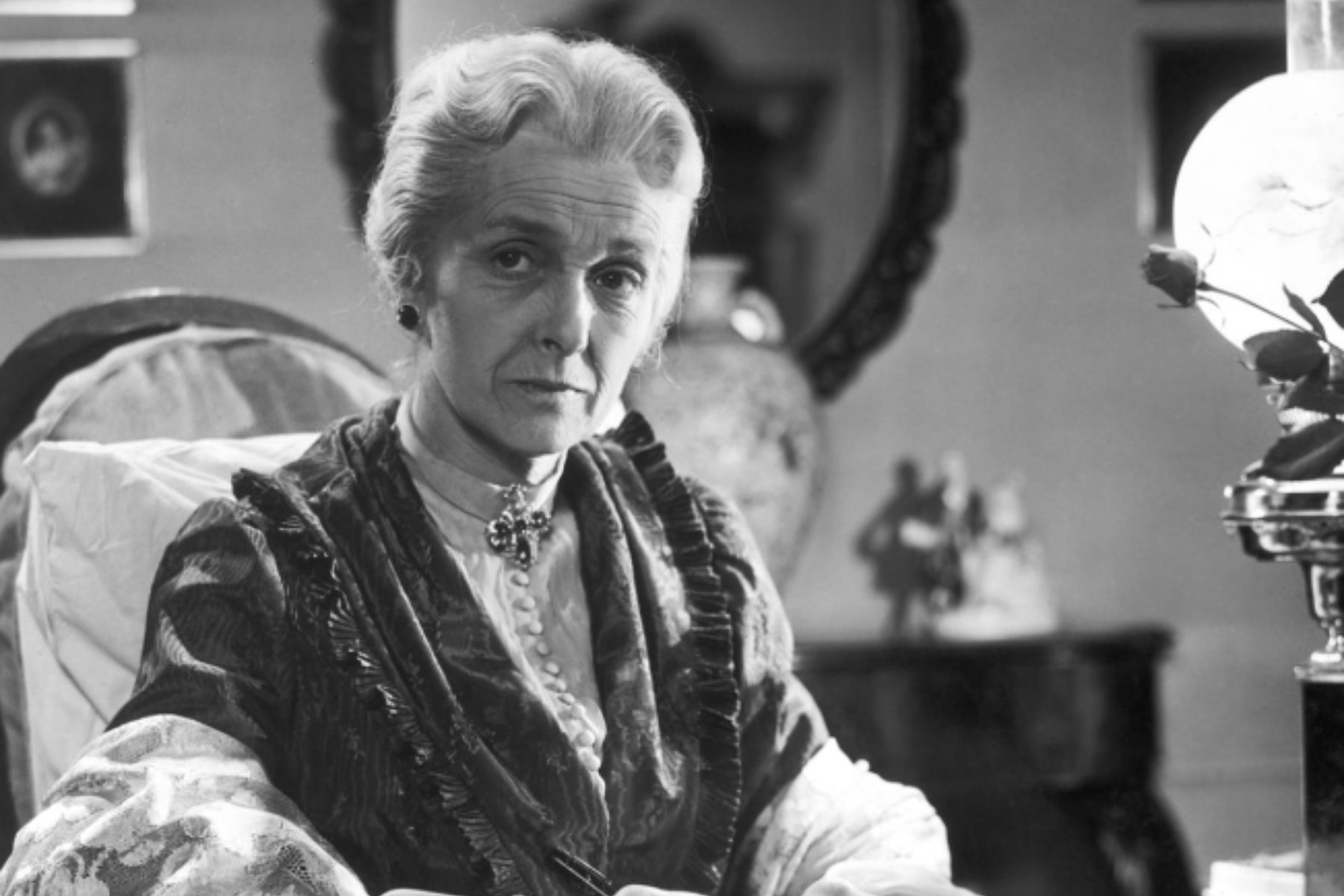
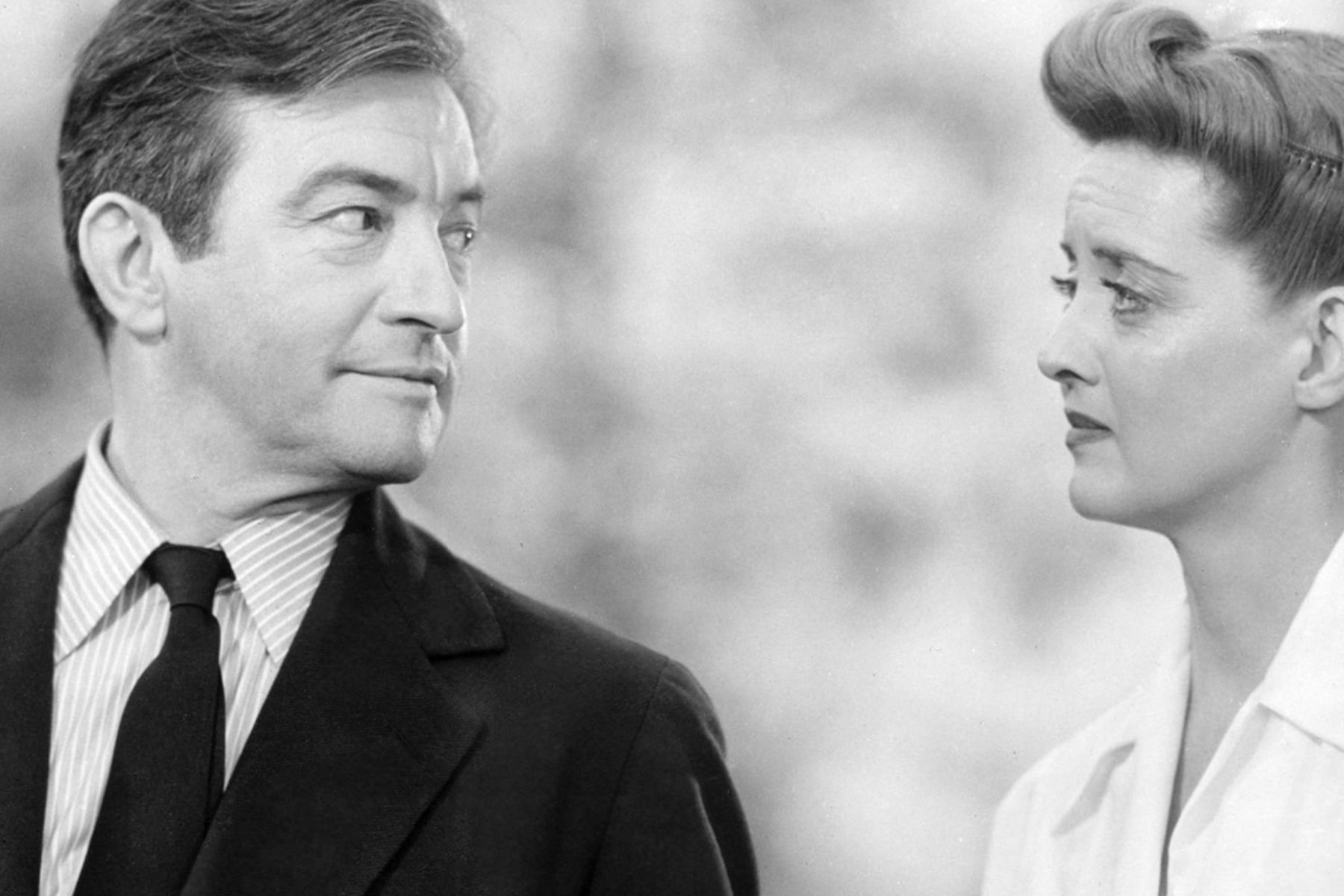
Bette portrays Charlotte Val, an abused woman who only escapes the horror of her mother (Gladys Cooper) when a psychiatrist named Dr. Jaquith (portrayed by Claude Rains) sees what is happening and suggests Charlotte come to a sanatorium. His hope is to unravel the neurotic mess caused by her domineering mother.
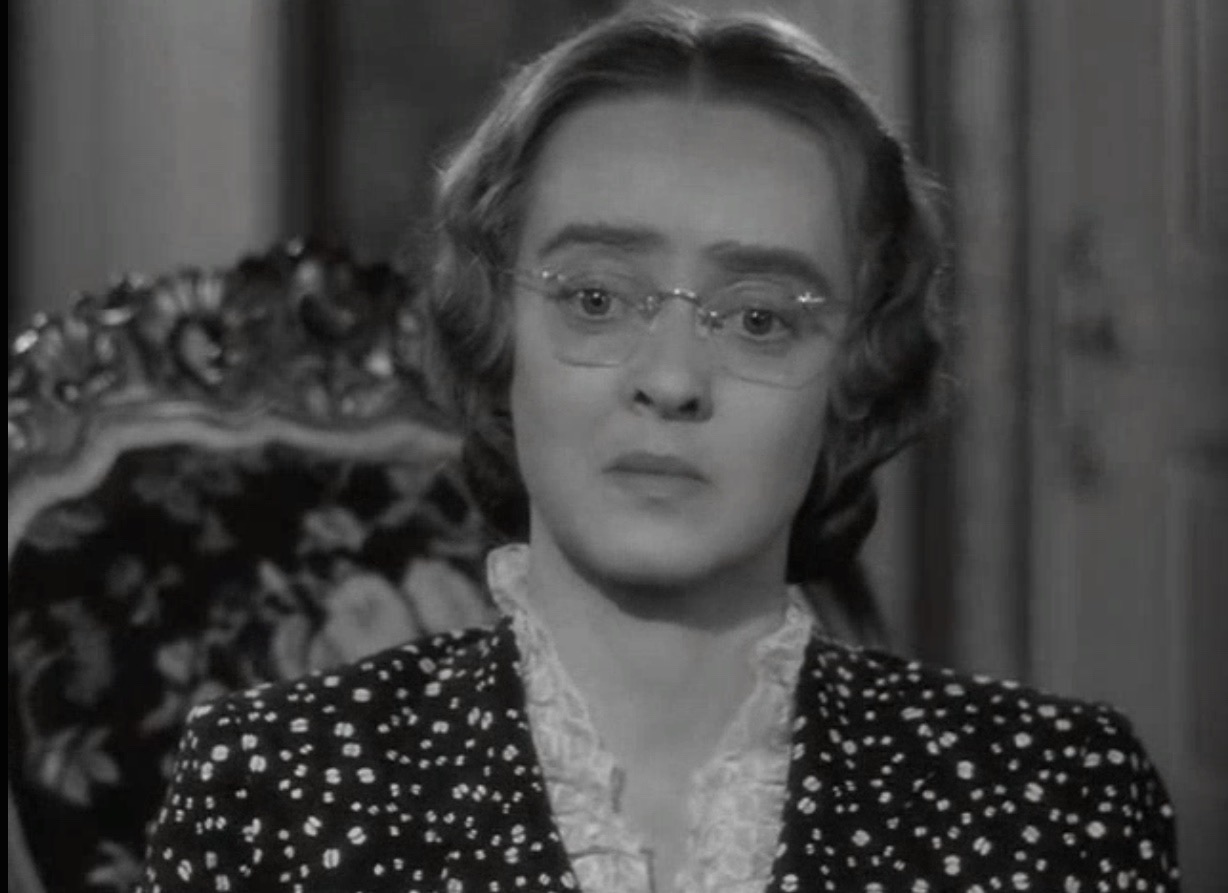
This movie starts with Bette looking very dowdy and old, with a unibrow. Online, it also says she was overweight but…well, that wasn’t what I think of as overweight. Different standards back then, of course.
We learn right off the bat that Charlotte’s mother is a domineering, crazy lady. Charlotte has three older brothers and was the “unwanted child” that her mother felt was a burden.
Charlotte’s sister-in-law, Lisa, (Ilka Chase) brings Dr. Jaquith to meet Charlotte, and I can’t help feeling she did this to try to help Charlotte escape her mother.
Ilka also has a teenage daughter (Bonita Granville, who was also in the old Nancy Drew movies) who laughs at her spinster aunt. She is not a lovely girl, but she does improve somewhat later on.
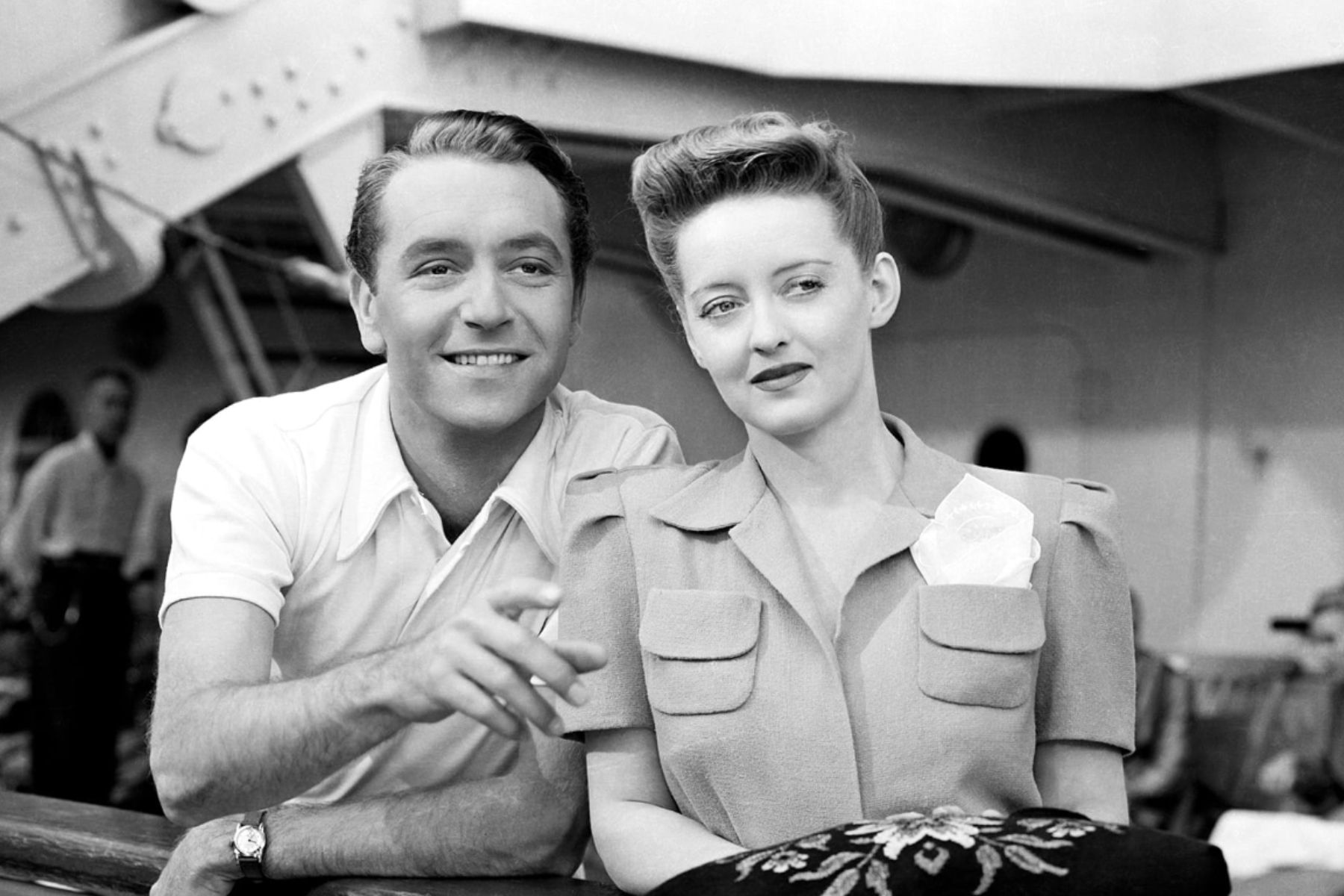
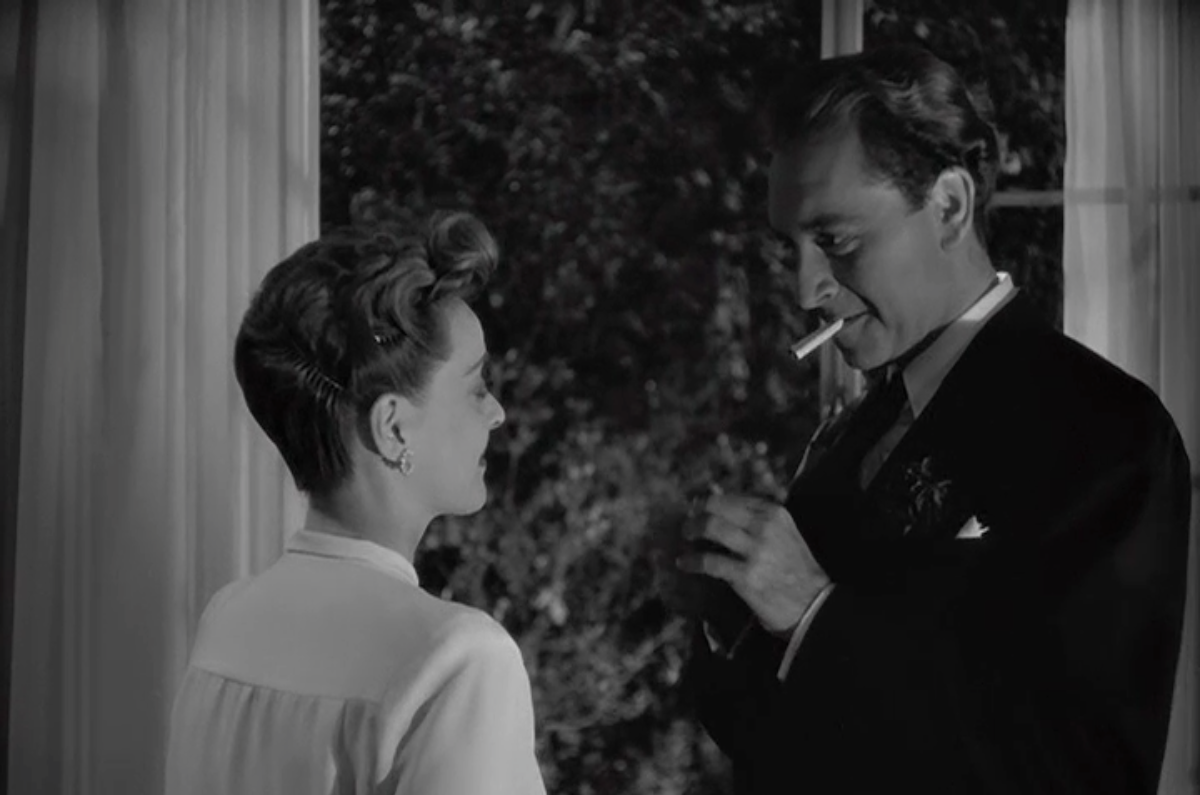
When Charlotte leaves the sanitorium — thinner, more beautiful, and full of more confidence than when she went in — Dr. Jaquith and Lisa suggest she delay her return to her mother and instead go on a cruise, which she does. There she meets Jerry (Paul Henreid), who is on a business trip, and who she falls in love with but soon learns is married, though unhappily. They end up pushed together a lot on this trip, and when they are involved in a car crash while going to see the sights on a stop in Rio de Janeiro, they spend the night together, cuddling (maybe more? Hmmm…), and then spend five days together after missing the ship.
Charlotte eventually catches up with the ship to return home after she and Jerry admit they can’t be together because of his marriage.
This movie was very good, suspenseful and fascinating, but I am going to share one annoyance for me — and please keep in mind that this was most likely a me issue and is probably due to some sensory overload issues I’ve been having as I get older — the music that constantly plays in the background of every single scene and never lets up was very distracting for me. I hesitate to even share this lest one of the enthusiastic Bette fans who have found my movie clips on social media come here and berate me, but the music, while very good, was very distracting for me. Maybe it was the sound on my TV? I have no idea.
I searched online to see if this bothered anyone else and it did (thank you Reddit and other forums), but I also read that this was to set the mood of the movie and to show how intense things kept getting for Charlotte throughout various stages of her breaking away from her mother.
That makes sense, but it was no less annoying for me. At times, I had trouble concentrating on the dialogue because of how prevalent the music was. It was a 2-hour movie and the music never, or at least rarely, stopped. The score, composed by Max Steiner, won an Oscar, though, so this is apparently just a “me” issue.
Like many of Bette’s movies, Now, Voyager is a melodrama, and melodramatic music is to be expected.
The blog The Hollywood Garden shared that Steiner scored 21 of Bette’s movies; she was a huge fan of his. Rightly so. The music is great — just a bit too great in some scenes where it was more prominent than the voices to me.
“In 1939, during the making of Dark Victory (dir. Edmund Goulding), Bette stopped the climactic scene and asked Goulding if Steiner was going to score the picture,” The Hollywood Garden wrote. “He said he didn’t know and asked what the big deal was. She famously said, ‘Either I’m going to climb those stairs or Max Steiner is going to climb those stairs. But I’ll be g******** if Max Steiner and I are going to climb those stairs together!’”
But, as usual, I have digressed a bit. Let’s get back to the rest of the movie.
From the first moment that Dr. Jaquith takes Charlotte from her mother’s home, I was rooting for her.
I was hoping she would break away, tell that old bitty to jump off a bridge, and start her own life. Some of this did happen, but then Charlotte was in a new cage — one of a mistress who can’t really have the man she wants because he’s already married with children. Ironically, one of his children, a daughter, is very similar to Charlotte and is treated as poorly by her mother as Charlotte was by hers.
That will come into play in the movie, of course.
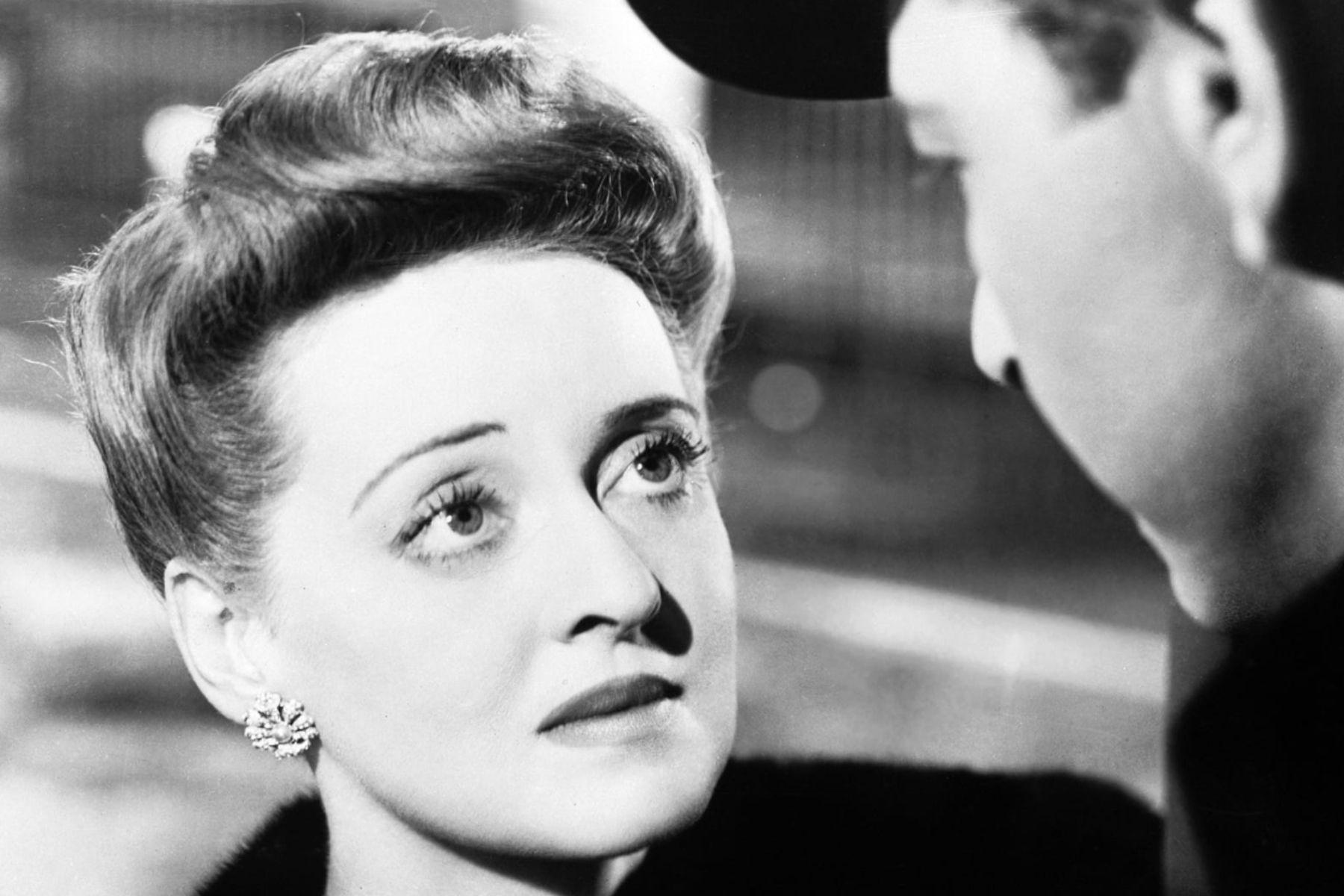
Bette showed her true range in this film. I almost forgot she was Bette. Instead of being brash and bold and yelling, like she was in many of her other films, she was withdrawn, subdued, quiet, and confused during the beginning of Now, Voyager, with a later transformation into a bold and determined woman.
It was fascinating to watch the process of where Charlotte started and where she eventually ended up.
I’ve almost forgotten to mention that this movie is based on the book by Olive Higgins Prouty. It was the third novel in a series about the wealthy Vale family of Boston and was released in 1941.
Bette was not the first choice for this film, which was directed by Michael Curtiz after the first director, Edmund Goulding, became ill.
Warner Bros. Production Head Hal Wallis first looked to Irene Dunne, who had starred in another melodramatic film, Love Affair, with Charles Boyer, a couple of years before. Also considered were Norma Shearer and Ginger Rogers.
None of those women were available in the end, and Bette was in the middle of yet another blow-up and battle with Jack Warner, head of Warner Bros.
When a friend at the studio told Bette that the rights had been obtained to Prouty’s novel, though, she began to lobby for the role. She was a native Bostonian and would understand the role more than other actresses, she said.
Warner said Bette wasn’t attractive enough to go from an ugly duckling to a glamorous woman.
Bette countered that her modest appearance would appeal to all women around the nation instead of a Hollywood beauty, and Wallis agreed, thus convincing Warner to cave and give her the role.
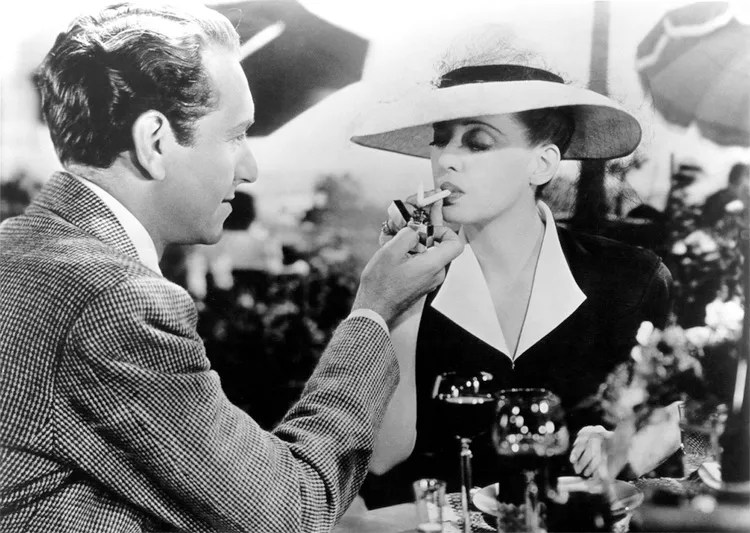
One famous scene or recurring action that came in this film was when Paul Henreid lit two cigarettes in his mouth and handed one to Bette’s character. It was a move that followed Paul around for years afterwards, with fans offering to light his cigarettes that way.
I rented this one, but I believe it is streaming on various sites.
After I finish one more Bette Davis movie, The Petrified Forrest, I’ll be taking a break from a set movie/actor theme until Autumn, when I will be watching Jimmy Stewart movies.
Notice: This post may contain affiiate links. If you purchase the product from these links I will receive a small compensation at no extra charge to you.
I’ve been watching Bette Davis movies for spring and I’m stretching a bit into summer because of some delays but … no one really cares because I think two people (including me) read these posts. Ha! But it’s still fun for me so I keep writing them.
This week I am writing about The Letter.
This one was very suspenseful and fascinating.
I wondered what the truth was and when I did know it, I wondered how everyone in the movie would figure it out.
And the ending…oof. I sort of knew it was coming and am not sure what I think about it, but I am going to not talk about it here. I’ll let some of you watch it and then you can come back and tell me what you thought.
Here is a brief description of the movie from TCM.com:
Based on a short story and play by British author W. Somerset Maugham, The Letter is the story of Leslie Crosbie, who has killed her lover and claims self-defense. But an incriminating letter exists…
I couldn’t write any better what Margarita Landazuri wrote on TCM.com about the opening sequence of this movie:
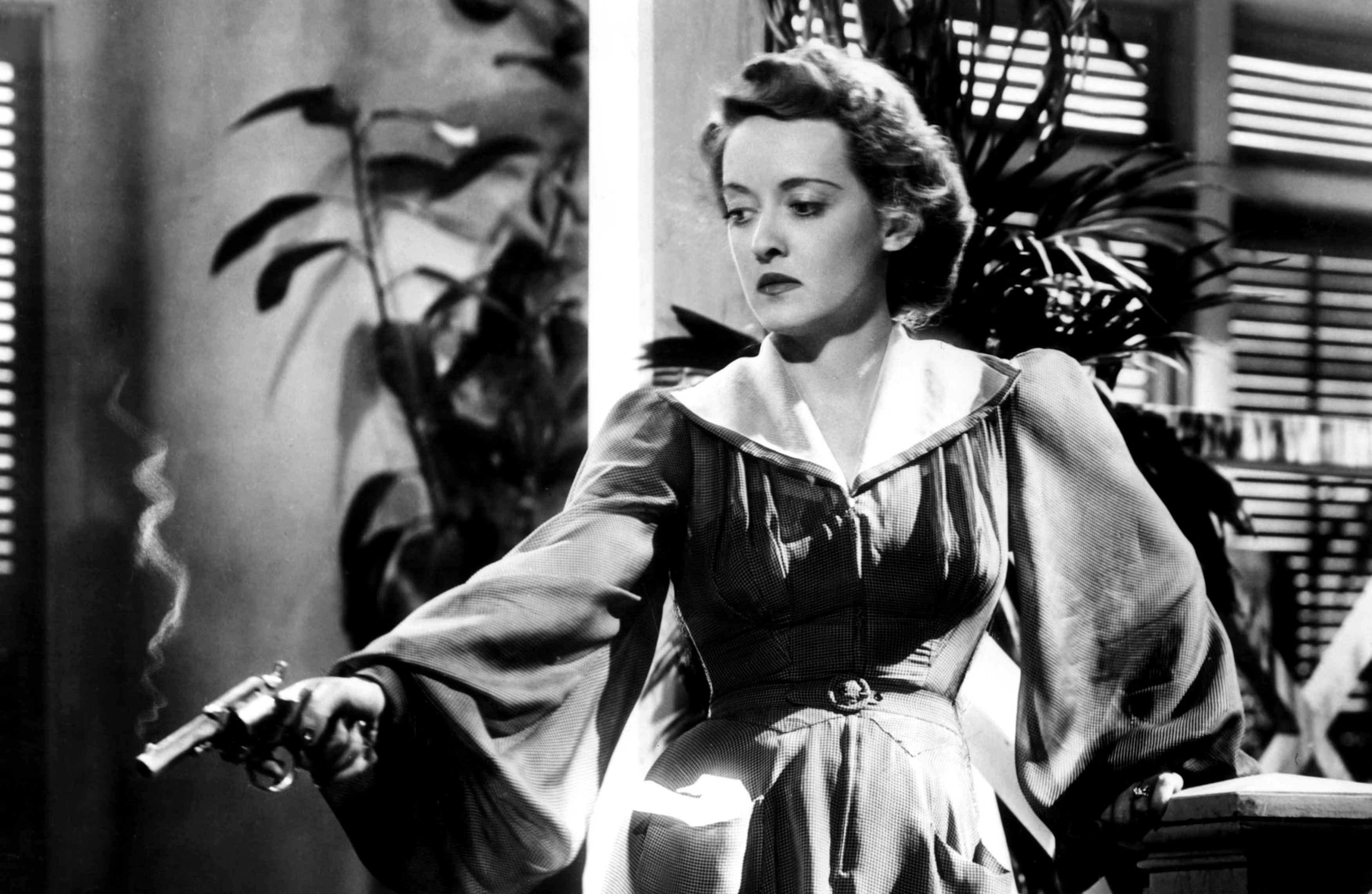
“It is a sultry, sweltering, moonlit night on a Malayan rubber plantation. The camera pans across the native workers sleeping fitfully in their hammocks, through the silent, menacing darkness. Suddenly, a shot rings out. A ghostly tropical bird, startled, flies off its perch. A man stumbles down the steps of the veranda, followed by a woman who pumps several more shots into him and drops the gun. In two wordless minutes, director William Wyler grabs the audience and sets the mood of The Letter (1940), with one of the most stunning opening sequences ever.”
This movie, released in 1940 is a remake of a 1929 movie starring Jeanne Eagels shortly before her death. It is one of the only, if not the only, surviving film she was ever in. There was a silent and a talking version with her in it released that year and it caused quite a stir with some towns in the U.S. banning it and calling it “too adult” for most audiences.
But we are talking about the 1940 version today.
This version was directed by William Wyler who Bette Davis had worked with in Jezebel and had a brief affair with (like who didn’t she have an affair with at this point?!). Davis said there was no other director who she would trust and listen to as much as Wyler.
There were a couple of major challenges to this insistence by Davis, but, overall, their close friendship did prove to be a plus for the movie.
In addition to Davis, the movie also stars:
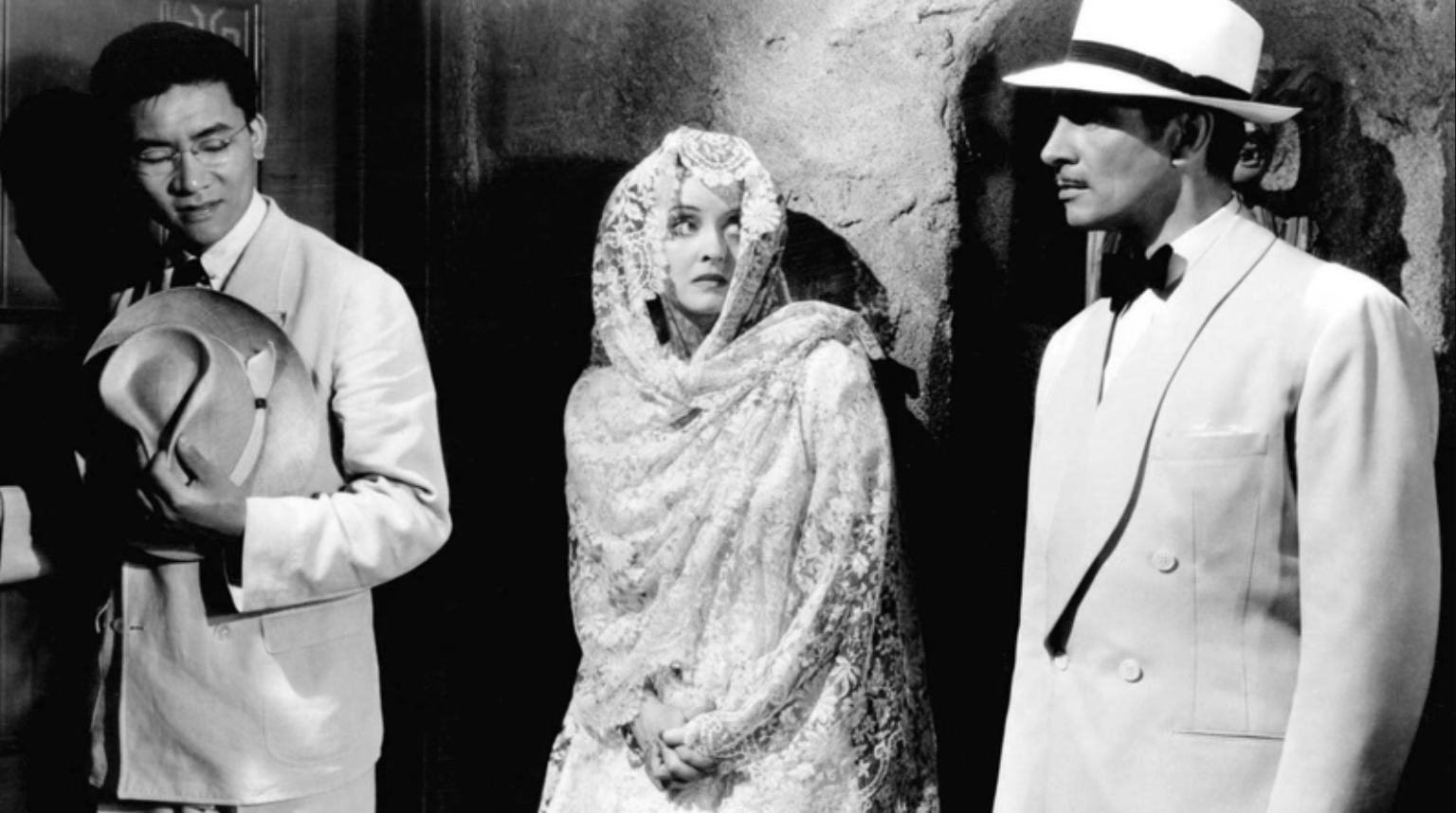
James Stephenson (an unknown British actor at the time who was nominated for an Oscar for his performance but sadly died a year later from a heart attack), Herbert Marshall, and Victor Sen Yung as Ong Chi Seng.
Sen Yung, Bette, and Stephenson
Sen Yung was amazing and a pivotal part of the movie all the way through. His subtle expressions and slight raise of his voice just when needed as absolutely perfect. I’d like to find out more about him and the roles he was able to, and not to, play in Hollywood back then.
I did read that he played Hop Sing on Bonanza and I’ve never seen Bonanza but I’m guessing it was pretty stereotypical. Not sure though.
Gale Sondergaard plays an Asian woman, which was very odd, but also worked somehow. She was very intimidating and creepy but that was also enhanced with Wyler’s decision to cut the soundtrack in scenes with her, leaving only the sounds of wind or windchimes during her appearances.
Davis was extremely intense during much of the movie and her unflinching telling of the true story was chilling and unnerving. It had me gasping a couple of times but I gasped even more at her audacity at the end of the movie.
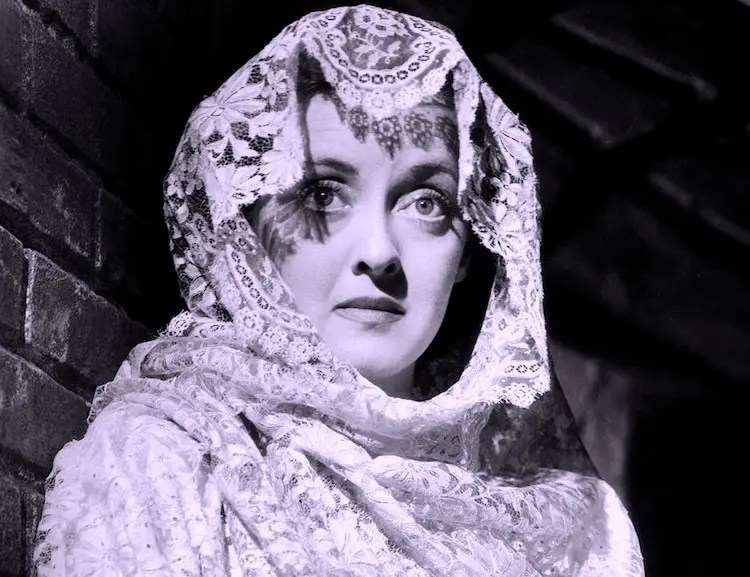
After watching all these movies with Bette, I don’t know that she is my favorite actress and sometimes I feel like she is the same person in a lot of movies, without much variety in her acting style (please, Bette fans, don’t throw things at me .. I wrote sometimes !) but she certainly commanded the screen with her presence. More so than what Bette says is how she looks in a scene. She has this subtle, and sometimes not subtle, way of cocking one eyebrow and lowering her eyelids at the same time that alerts you to an impending fit, temper tantrum, or epic take down.
This movie, much like Jezebel, showcases Bette’s ability to convey so much through just a few looks. I couldn’t take my eyes off of her and found myself saying, “Oh no you didn’t…” a lot to the screen when she was on.
This one is definitely on of hers I would recommend if you have never seen a Bette Davis movie, or one that was good at least.
Here is the opening sequence I was talking about above:
Here is an explanation on why this movie is considered noir by many film buffs
Up next I am watching Of Human Bondage, one of Bette’s most acclaimed early films.
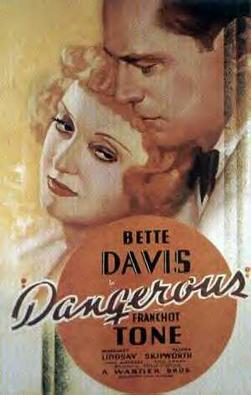
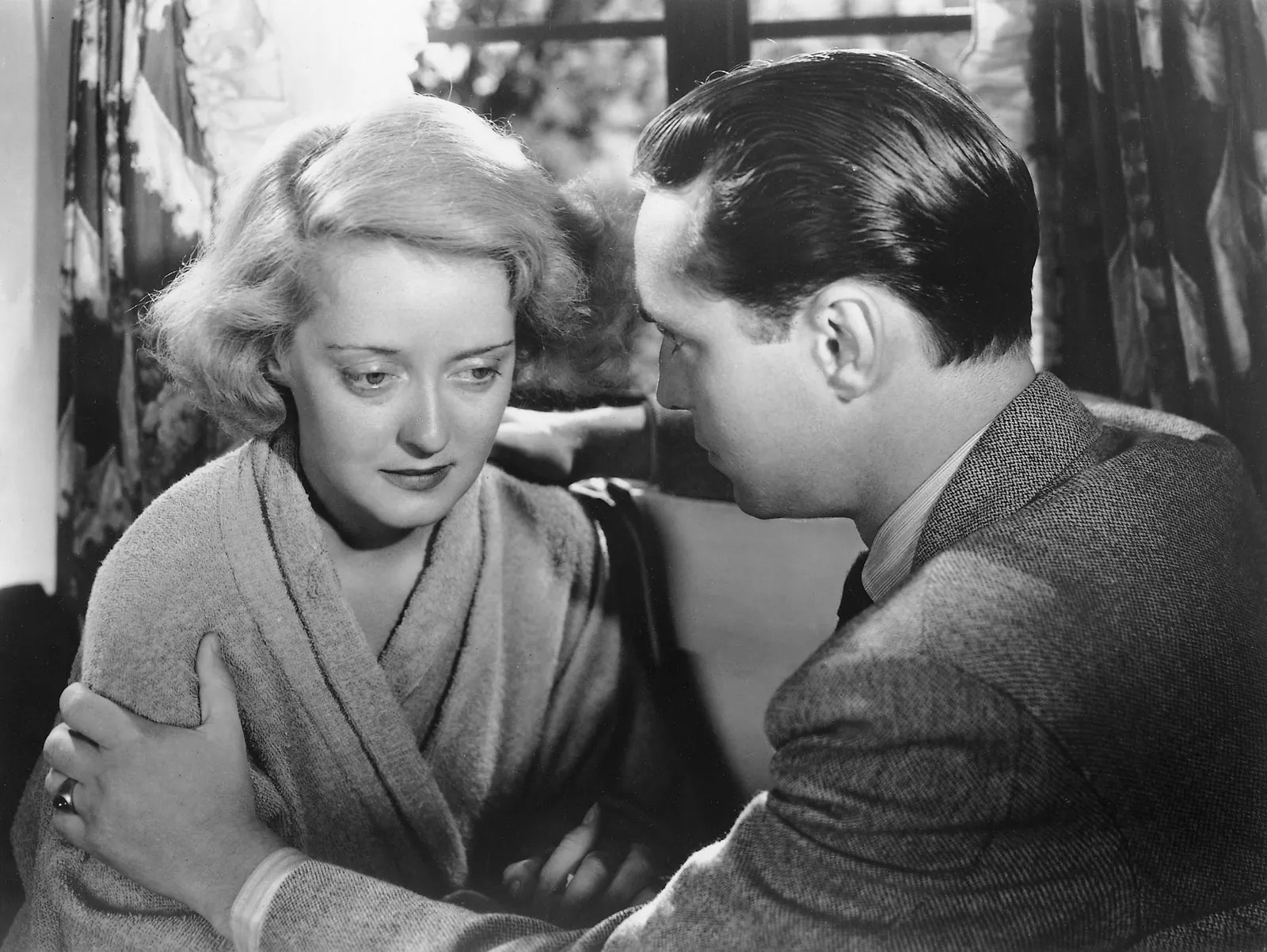
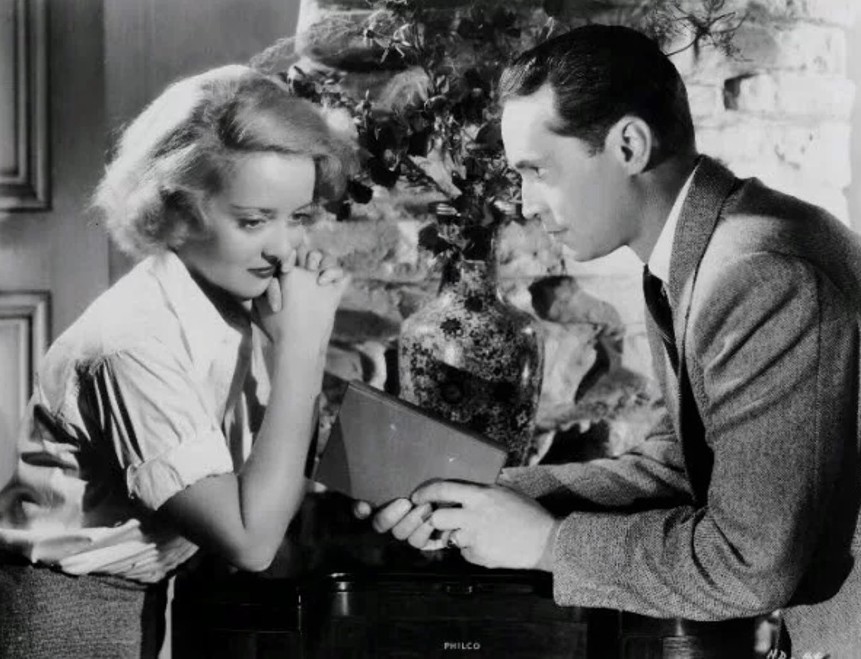
This week I watched Dangerous (1935) and I will be honest before we get too far — I didn’t like it very much. I feel weird writing that because Bette won an Oscar for this movie and it is regarded as one of her breakout roles besides Human Bondage (1934). I think what I didn’t like about this film was the story. It didn’t seem super well written to me.
There are many film buffs who feel similar, according to what I read online.
Bette seemed a bit too over-the-top for me at times, but then she was playing a woman who wasn’t really mentally stable, especially toward the end of the movie.
The movie is about a former theater star who loses her career due to her alcoholism, but is rehabilitated by an architect/theater buff who falls for her.
I partially didn’t like the movie because, to me, it did what too many movies of the 30s through 50s did and made the woman out to be evil and the man innocent, even if he did the same thing as the woman.
How many movies of that period have you watched where everyone warned people of a man who was a womanizer instead of warning a man about the “floozy woman”?
I’ve watched a fair amount and it gets a bit old.
Bette’s character is a mess, and she does bring ruin to all men she’s around and encounters, yes. She’s also ruined her own acting career with her alcoholism.
You can’t help hoping throughout the movie that she’ll turn her life around, and at least once, it looks like she might.
I won’t give the end of the movie away, in case you ever want to try it, but I will say, don’t hold out too much hope. The ending is complex. Did she turn her life around, didn’t she? I’m not sure what to think, but I believe there was some character development.
The beginning starts with our male main character, Don Bellows (Franchot Tone), who is an architect, hearing about what a trainwreck Bette Davis’s character (Joyce Heath) is, but having fond memories of seeing her on the stage.
Don is engaged to Gail Armitage when he sees Joyce, drunk in a bar, later in the movie (what a coinky-dink, eh?). He feels bad for her and wants to rescue her, so he offers to let her stay at his house in the country (White Knight Syndrome anyone?).
The big issue is that Joyce, and many others, believe that she is bad luck for any man who comes around her.
This proves to be true for poor Don, who falls for Joyce and works to rehabilitate her, even though she acts like a spoiled brat who hates the world. Eventually Joyce starts to act better, like a stray cat that finally lets its rescuer give it a pet. Don breaks his engagement with Gail and puts up his fortune to back Joyce in a Broadway show because no one else will hire her unless he offers money.
He wants to marry Joyce, but she refuses him.
That’s when we learn that dear Joyce is still married to a man who was loyal to her but who she financially ruined. She asks him for a divorce and . .. Well, you will have to watch and see what happens.
Bette almost didn’t make this movie, which seems to be a theme with her actually. I’ve read a couple times that she had to be talked into starring in certain films. Those films were later a success.
I’ve also read a couple of times now how she started affairs with her leading men. This one was no different, other than it might be what kicked off her years-long rivalry and bitter feelings toward Joan Crawford, or Joan’s feelings toward her.
Joan and Franchot (what a name) were engaged when Bette started an affair with him, although she claimed it was an unrequited crush. Years later, producer Harry Joe Brown said it was anything but that when he found the two “in a compromising position.”
Reports say that Crawford knew all about it but didn’t break the engagement. Instead, she simply increased her visits to the set to make Davis jealous. She eventually did marry Tone and, like most of her marriages, it lasted about four years.
Dangerous was originally titled Hard Luck Woman.
In the movie, Bette plays a wide range of personalities, from a drunk woman to a woman who hopes for a better future with a man she loves.
I wasn’t the only one who wasn’t thrilled with the movie overall. Critics didn’t like the story, but they did like Bette’s performance.
One critic is said by TCM.com to have given her one of the most famous reviews of her career:
E. Arnot Robertson in Picture Post wrote: “I think Bette Davis would probably have been burned as a witch if she had lived two or three hundred years ago. She gives the curious feeling of being charged with power which can find no ordinary outlet.”
So, while I didn’t like the storyline of the film as much as some, I did like Bette’s performance.
I am tacking another movie on to this list — The Petrified Forrest with her and Leslie Howard and Humphrey Bogart. My husband watched this one years ago and says it is very good so I will use it to round out my Spring of Bette Davis, which will stretch a little bit into the summer.