Extra Fiction Thursday: Quarantined, a novella, Chapter 6 and 7

*Warning: This week’s chapter deals with the topic of miscarriage.

Normal disclaimer: The fiction I share here is not usually the final draft. It also isn’t normally the first draft. Either way, it is edited and rewritten before the final “publication” as an ebook on Amazon and Barnes and Noble.

If you’d like to catch up on the story you can do so HERE.

I welcome feedback, suggestions and corrections.


Chapter 6

The bundle in Maddie’s arms, swaddled in a blue and white hospital blanket, had been so tiny, motionless. Liam wanted to run out of the room and never look back, but he knew he couldn’t. That was his baby in there, in  his wife’s arms; his baby who hadn’t lived. His legs felt like lead weights as he stepped across the room, nodding at the nurse who looked at him with concern and compassion, tears in her eyes.

The nurse’s hand on his shoulder was warm as he moved to stand next to the bed, looking down at Maddie. Eyes still on the small, lifeless face peeking out from the blanket, Liam sat next to his wife, sliding his arm around her as she cried. Maddie’s hair was soft against his face as he buried it there to try to hold the tears in.

“I thought it would be different this time,” she said through the tears. “I thought this time we’d make it.”

The three other miscarriages had been early in the pregnancies and one of them had been what the doctor’s called a blighted ovum – an empty sac, or a baby that never grew enough to be picked up by the ultrasound.

Liam kissed the top of Maddie’s head and closed his eyes. “I know, Maddie. I know. Me too.”

And he had thought they’d be bringing a baby home. The nursery had been ready, the baby clothes purchased, the crib set up. When the doctor told them that the placenta had ruptured and the baby wasn’t going to survive Liam’s ears had started ringing. When he learned Maddie might be lost too, colorful lights mixed with blackness faded across his vision.

A deep breath and a head shake had kept him from hitting the ground, but the doctor still took three long steps toward him and grabbed his arm to steady him.

“Please, Mr. Grant. Sit. We’re going to do everything we can to save your wife.”

In the midst of grief was joy that Maddie had survived; that even if he couldn’t carry a baby home with him, he still had Maddie. Sitting in the dimly lit den in the back of the house, he chewed at the nail on his thumb as he remembered that horrible day and the days that followed.

There was no denying those first few months had been beyond difficult. Maddie was stoic most days, angry others. Then there were the days she spent sobbing almost uncontrollably behind the closed bedroom door, unable to get out of bed and face life, or even face him. He comforted Maddie as best as he could, tried to be gentle, tried to understand her grief and most of all he tried not to burden her with his own grief.

He had to be strong for her. She wasn’t capable of helping him heal when she couldn’t heal herself; he knew that. He also knew he should have relied more on God to heal them both, but he was angry at God; furious that God had not only let him down, but most of all that he had let Maddie down.

All Maddie had ever wanted was to be a mother. Blow after crushing blow eviscerated that dream.

Liam blamed God.

He had been raised to believe God wanted his people to prosper not suffer, that he loved them. If that was true, then why had this so-called compassionate God let Maddie suffer so much and so often?

After the loss of the baby, who he and Maddie named Abrielle, Liam buried himself in work at the public relations firm he’d been employed by during that time. When he wasn’t working, he did his best to make Maddie happy — making her dinners, making sure she had quiet time, and not pressuring her to go back to work at the small magazine she’d been working at.

She was never happy, though. She didn’t want to take the medicine the therapist had suggested. She didn’t want to talk about it. She didn’t answer phone calls from her parents or come out of her room for visits by Cassie or her friends. She didn’t want him to hold her and tell her it was going to be okay.

 Many days it seemed like it was him she wasn’t happy with. He finally  gave up trying to make her happy. Maybe he should haven’t have given up. Maybe if he hadn’t, she wouldn’t have wanted the divorce.

He stood from the loveseat in the den and paused at the window, looking out at the side yard, barely lit by the half moon. He rubbed his chin, biting the inside of his lip.

“I want a divorce.”

Those had been her exact words and she’d said it without even flinching, other than a small muscle jumping in her right eye, right above the small scar she’d gotten when she fell off her bike at 8-years old. Liam had used to kiss that scar, then her cheek, on his way to her mouth.

He hadn’t really wanted a divorce, but he had known in that moment it was what Maddie wanted.

She felt he’d never been there for her, that he had abandoned her.

If she felt that way, there was no changing her mind, no matter how many times he reminded her of how often he had been there.

He shook his head and drank the last of his soda down.

Maybe after the divorce, they would find the healing and peace neither of them could find when they were together.

***

Maddie poured herself a glass of milk and squeezed in a large helping of chocolate syrup. She knew it wasn’t right, but during stressful times she reached for comfort food and that comfort food was usually full of fat and sugar.

Walking to the back deck she flopped in a lawn chair and guzzled the milk, looking out at an empty backyard, a backyard she had once thought would house a swing set, a tiny kiddie pool, and a sandbox.

She could still remember the conversation she’d had with Cassie after the loss of Abrielle.

“What is wrong with my body? Women’s bodies are supposed to grow babies! It’s natural! That’s what all the books say! I guess I’m just not natural.”

Cassie — beautiful, sweet and fertile Cassie, pregnant with baby number three — shook her head and reached out to take her hand.

“Maddie, that isn’t true. There isn’t anything wrong with you. If there is a medical reason you can’t carry a baby to term the doctors will find it. Having a medical reason for the miscarriages doesn’t mean you’re not a real woman.”

Maddie had known Cassie was right, but she still struggled with toxic thoughts, thoughts that told her that her body had failed her, but more importantly, Liam. She’d seen Liam with his nieces and nephews. She knew he’d be a wonderful father and she’d wanted to make him that father. It had never happened, though, and no matter how many times someone told her it wasn’t her fault, she knew it was.

She leaned back in the lawn chair and closed her eyes against hot tears.

It was her fault Liam wasn’t a dad.

It was her fault their marriage had fallen apart.

What had happened to her? When had she become so miserable? When had she become someone that even she wouldn’t want to be around? No wonder Liam had jumped at the opportunity to divorce her.

He needed someone who had as much passion for life as he did, who wasn’t miserable and depressed and cold.

“God,” she whispered, her eyes still closed. “How did I get here, at this miserable, lonely place? Why did you abandon me here?”

A tear slipped down her cheek and she brushed it away quickly with the back of her hand, choking out a small laugh. Maybe you’re asking why I abandoned you, huh? She shook her head. I don’t know anymore, Lord.  I don’t know where I’ve been or even who I am.

She pulled her knees up to her chest, bowing her head against them, letting the tears flow.

Father, help me let Liam go, so he can be happy again.

Chapter 7

Tiny fingers and toes, pudgy arms and pudgy legs. Cassie kissed Tyler’s newborn nose, tears streaming down her face part from exhaustion but also joy.

“I can’t believe he’s here,” Matt whispered near her ear and when she turned her head, she saw that her husband’s face was streaked with tears too.

There were days it felt like Tyler had been born yesterday, not the 13-years it actually was. Thirteen years. So much had happened during that time. Two more pregnancies and two more children, her retirement from social work, Matt’s campaign. . . . How had it all gone by so fast?

There were times Cassie thought she should have done more with her life by now, but there were other times she was happy with where she was. She’d decided to send the children to a small, private Christian school the year before last when Matt’s national profile had increased. She began volunteering there regularly, helping the children at the school sign out library books or teaching them art. Best of all, she was able to see her own children throughout the day, keep an ey on them and make sure they weren’t approached by anyone from Matt’s political world. So far, the media had left the children alone, even when they hadn’t left her alone.

The story on the opinion page of the Post last year had questioned her involvement with the school. If Senator Matt Grant’s children attended a Christian school where his wife also volunteered, could he be trusted to treat all of his constituents fairly? What about the Muslim children? Or the Buddhists? Or even the Jewish?

“How will Grant’s faith influence his oath of office to represent all of his constituents?” the columnist asked.

“It won’t,” Matt told a reporter who posed the same question at a press conference a few days later. “My faith is what inspires me to care about all of my constituents. I believe God created them and called for me to love them as he has loved me and them.” He told her later he had smiled easily, winking at the reporter good-naturedly, even though inside he had felt unsettled by the question. “And you, Jim. He has called for me to love even you.”

The critics continued to squawk, though, and after that Cassie decided to no longer read or listen to the news. She tried instead to focus all her attention on her children and family. She had buried herself in volunteering, in reading, in her Bible study, in anything to try to drown the critical voices of the world out.

She was beginning to realize now, though, that she’d also drowned out Matt and her marriage, subconsciously pushing aside anything she thought might threaten her family’s safety. Pouring herself a glass of milk she leaned back against the counter and winced. Did she really think being close to Matt was a risk to their safety? If anything, being closer to him should have been a comfort in a sea of chaos.

If she had been feeling like she had been in a sea of chaos, alone on a storm-tossed ship in the middle it, then how had Matt been feeling? He’d been the one at the brunt of it, the one taking the hits and, in almost every way, the one shielding the rest of the family from the blows.

Walking into the living room, sipping the milk, she watched Matt in the backyard with the children, tossing a rubber ball between each of them. He tipped his head back and laughed when it bounced off Gracie’s forehead and she tumbled backwards, giggling. Tyler picked it up and tossed it to Lauren, who quickly dropped it, giggling too much to hold on to it.

 Lauren bent to pick it up and Matt lunged for it at the same time, snatching it from her then gently bouncing it off her forehead, sending her into another fit of giggles. Cassie couldn’t hear what they all were saying, but she knew the children were finding whatever Matt was saying funny by their laughter and wide grins.

Cassie hadn’t seen Matt this relaxed and joyful in at least two years, probably longer. She watched him as he tossed the ball, his muscles still well defined and toned after all these years, visible underneath the t-shirt pulling against his stomach as he lifted his arms to catch the ball, stop it from sailing over the fence into the neighbor’s pool.

An ache filled her chest, moved up her throat, threatened to spill tears down her face. She bit her lip, trying to hold back the emotion but it didn’t work. Tears pooled in her eyes, streaked her cheeks and she let them roll, knowing they were as full of joy as they were sadness. She was so grateful for this time with her family, with Matt, but she was also sad that she hadn’t tried to have more of it in the last couple of years.

Matt deserved so much more from her. More of her attention, more of her comfort; simply more of her. She needed to stop holding back and lower her walls. She needed to be sure she was supporting him in every facet of life.

Running for re-election may not have been something she wanted, but it was something he wanted. He was running because he felt it was not right for the people who had voted for him, but his family.

“Lord, help me to be what Matt needs me to be for him,” she whispered, wiping another tear away. “Help us to both lay down what we want for what you want. For what you need us to do in this time.”

***

On the tenth night of quarantine, still with no sign of illness, Liam headed to bed early, shutting off his phone and laptop around 10 p.m. He slid under the covers, emotionally and physically drained. He was glad, though, that he hadn’t yet experienced any coughing, muscle aches, or sore throat. His mind was racing, filled with thoughts of work, thoughts of what this virus might mean to his parents, his older aunt and uncles, and anyone else whose health might be more vulnerable.

 His thoughts were also filled with Maddie.

She was sitting in the room down the hall, but she might as well have been thousands of miles away with all the interaction they’d had this past week.

Matt was right.

Liam still loved Maddie.

Sadly, it was growing more obvious that Maddie didn’t feel the same way about him. The anger she had for him radiated off her each time they passed each other in the house. He didn’t even try talking to her. She’d spoke her piece. Her mind was made up about their marriage.

To her it was over, and he needed to accept that.

Sleep had finally begun to slip over him when he heard a soft knock on his door. He rolled over and closed his eyes tighter, ignoring it. Ignoring her. Another knock. He pulled the blanket up around his shoulders.

The door squeaked open and then footsteps, soft across the floor.

What did she want? He was too tired for another fight.

“Liam?”

Maddie’s voice was barely audible. He ignored her again.

She spoke a little louder. “Liam?”

Silence.

She sighed in the darkness and he felt, rather than saw, her turn back toward the open doorway.

He rolled his eyes. “What?”

Silence fell over the room and he heard a breath drawn in sharply and slowly let out again.

“Will you hold me?”

He rolled over, squinting in the darkness, trying to make out her face to decide if she was serious or not.

“What?”

“Just hold me. Nothing else.”

Was this some kind of trick to lull him into a false-sense of security? He squinted again, trying to see if she was holding a weapon of some kind.

“Please?”

She seemed serious.

Very.

He heard a vulnerability in her tone he hadn’t heard in a long time.

“Um . . . yeah. Okay.”

She lifted the sheet and comforter, sliding next to him, her body warm, her feet cold. Her feet had always been cold, and she’d always slid them up his legs to warm them, making him squirm but laugh at the same time. There was a time he’d asked if she needed the rest of her body warmed up too and there was a time she’d say ‘yes’ and he’d snuggled close and nibbled at her earlobes.

He wasn’t going to ask if she needed warming up this time.

Surprise opened his eyes wide as she laid her head on his shoulder, a hand on his chest over his heart and closed her eyes.

They laid in the dark listening to each other breathe until she whispered: “I tried to stay away from the news but it’s like watching a train wreck. I can’t seem to look away.”

His voice as soft. “I know.”

“People are scared.”

“Yeah.”

“They’re convinced they’re all going to die.”

“They’re not. Fear does crazy things to your mind.”

Silence settled over them again.

She laughed softly again. “Yeah. Like that time you had that spider on your arm when we were driving to my parents and you almost drove us into a river.”

Liam snorted a laugh. “Well, spiders are scary, what can I say? All those legs. . .” He shuddered. “It’s just creepy.”

Silence stretched between them again.

“Liam?”

He stared into the darkness, at the light of the streetlight bleeding in under the blinds. “Yeah?”

“If this kills one of us —”

“Maddie, this isn’t going to kill either one of us. I already told you we don’t even know if my test is positive. And most of the cases are mild, especially in our age group. We’re not in the highest risk age group. Okay?”

“But if it does . . . ” Maddie took a deep breath and spoke fast as she exhaled. “I want you to know . . . I’ve always loved you. Even when I didn’t like you.”

Liam laughed softly.

“Thanks. I guess.”

“And, Liam?”

“Yeah?”

“I’m sorry you thought you had to fix me. Only God can fix me.”

Crickets chirped outside. A dog barked somewhere down the street. Liam closed his eyes and let out the breath he’d been holding.

 “Yeah. I know.”

He laid his hand over hers, the one laying on his chest.

“Maddie?”

“Yeah?”

“I’m sorry you thought I didn’t care. I did care. I’ve always cared.”

He had been trying not to be aware of her body warm against his, of the smell of her shampoo, of how soft the skin on her arm as he trailed his fingertips down it, of how her closeness made his heart rate increase.

But he was aware of it.

All of it.

Much more than he wanted to be.

He slid his other arm under her and she slumped into him as he moved his hand slowly up her arm, resting it just below her shoulder. He squeezed it gently then lightly touched his lips against the top of her head, her closeness suddenly intoxicating. “I love you, Maddie. Despite it all. I love you.”

He listened to her breathe and for a moment he thought she had fallen asleep.

 “I’m so tired. . .” she whispered against his neck, her breath warm. He could tell she was fading fast.

“Sleep. We can talk more in the morning.” He looked at the ceiling, barely visible in the darkness from the orange glow of the streetlight outside. “It’s not like we’re going anywhere.”

She slept but he couldn’t. Not now with her tucked against him soft and warm, kicking his thoughts into high gear. He hadn’t expected her to come to him for comfort. He hadn’t expected it, but he welcomed it and loved having her so close, even if that closeness was only physically.

 Had she meant what she said? That she still loved him?

Maybe it had been the stress and worry talking. The exhaustion even.

The only thing he was sure of was that those words had sparked a warm, comforting fire in the center of his chest. He closed his eyes, savoring the feel of her hand over his heart, trying to switch his brain off, knowing he’d meant it when he’d told her he still loved her.


Book review: A Cord of Three Strands, historical fiction

Book reviews won’t necessarily be a regular feature here but I’ve read a couple I’ve liked lately and wanted to share in case others are looking for a good distraction. Plus I “met” this author online and thought it would be cool to help her promote her first book. I mean she’s from Pennsylvania and the book takes place in Pennsylvania so she must be cool, right?

First, the Goodreads description of the book:

As 1756 dawns, Isaac Lukens leaves the Pennsylvania wilderness after two years with the Lenape people. He’s failed to find the families of his birth parents, a French trader and a Lenape woman. Worse, the tribe he’s lived with, having rejected his peacemaking efforts, now ravages frontier settlements in retaliation. When he arrives in the Quaker community where he was reared, questions taunt him: Who is he—white man or Lenape? And where does he belong?

Elisabeth Alden, Isaac’s dearest childhood friend, is left to tend her young siblings alone upon her father’s death. Despite Isaac’s promise to care for her and the children, she battles resentment toward him for having left, while an unspeakable tragedy and her discordant courtship with a prominent Philadelphian weigh on her as well.

Elisabeth must marry or lose guardianship of her siblings, and her options threaten the life with her and the children that Isaac has come to love. Faced with Elisabeth’s hesitancy to marry, the prospect of finding his family at last, and the opportunity to assist in the peace process between Pennsylvania and its Indian tribes, Isaac must determine where—and to whom—the Almighty has called him

My review:

To be honest, the prologue to this book made me think I might not enjoy it because the language seemed a little old fashioned. The important words in the previous sentence? Seemed and at first. Because by chapter 1 I realized the use of older language was a way to bring me closer to understanding the characters and their way of life. It wasn’t long before beginning it that I was hooked on the book and having a hard time putting it down. I was on the edge of my seat throughout, wondering what trial or triumph might face the main characters, Isaac and Elisabeth, next.

 This book is a romance in some ways, yes, but it is such a sweet, gradual romance that the reader isn’t overwhelmed with sappiness and drama. Much of the romantic nature of the story is over shadowed by the compelling story of the Lenape people through the eyes of Isaac and the story of the Quakers through both Isaac and Elisabeth’s eyes. This isn’t one of those romantic stories where romance is the main focus. Yes, love is the main thread that holds the characters and the story together but it is a love that is deeper than a physical and romantic attraction. It is a spiritual love and an emotional one.

From the beginning of this book I fell in love with the characters,  my heart broke for their trials, and my eyes were opened to the struggles faced by this nation’s early settlers and the natives who lived on the land before the settlers ever arrived. I literally wanted to crawl inside the book at times and hug Elisabeth close and then take her away from a world that could be so cruel in the early years of our nation’s founding.

I was never sure what adventure was coming next for Isaac and Elisabeth and I loved that. It kept me turning pages (and kept me up too late at some nights). As a Christian I don’t believe in fate so in this case I believe it was divine guidance that led me to discover Christy’s book. In the first few pages, Christy mentioned a town near where I grew up and now live, which hooked me on the book even more.

I later discovered the author lives in the same state and holds the same love for this state’s local and Native American history in the same way I do. This is Christy’s first book, but I expect to see many more from her in the future and I’m really looking forward to them.

If you’re not already a fan of historical fiction, this book will make you one. She could use some reviews for the book to get it some more attention so if you read it and like it, please leave her a review on Amazon.

Christy is also an editor (copy editing, content editing, line editing, proofreading, manuscript review) and you can find more information about that part of her life HERE.


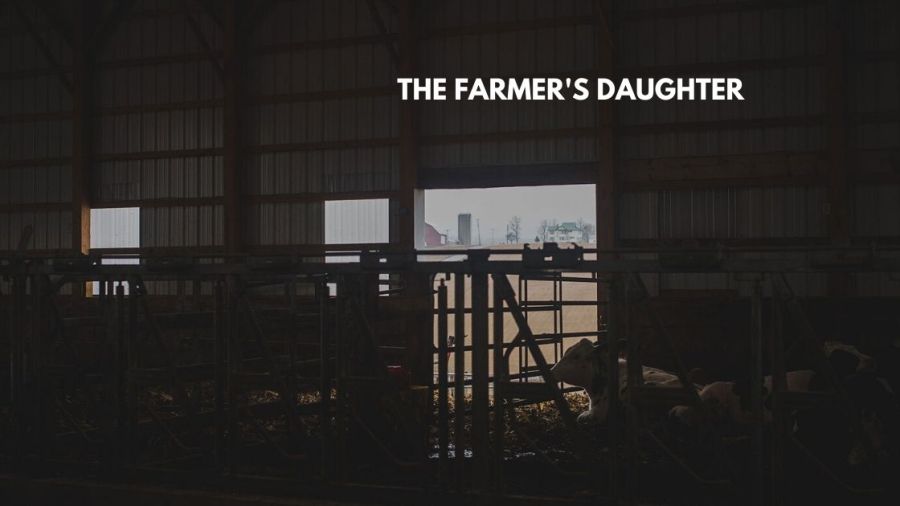
Fiction Friday: The Farmer’s Daughter Chapter 18

Chapter 18 of The Farmer’s Daughter? Really? It seems so strange to be this far already in some ways, but in other ways it isn’t because I actually started this story sometime last year and have been slowly working on it since I even wrote my other books.

I can already see some changes and additions I want to make, but so far I’m liking the direction of the story. I have a feeling I’ll be tweaking a lot before all is said and done, but for now – brace yourselves, one of our characters may get themselves in some trouble in the next couple of chapters.

Catch up on the story HERE.


Molly slid a pile of books across the library desk at Ginny, unsure of when she’d have time to read the books but knowing she needed to do something to distract her from life, or her lack of one, these days.

Ginny glanced at the title of the book on the top of the pile.

How To Get Out of A Rut in Your Life.

She cleared her throat, sliding it into the library bag and reaching for another book.

How To Spice Up Your Life.

And then, Does He Like You? Ten Ways to Tell If He’s Totally Into You.

Ginny raised one eyebrow and looked up at Molly who was chewing on her fingernails.

“So, Molly, have you figured out how you were feeling a few weeks ago about sort of being stuck in life?”

Molly shrugged. “Not really. Still not sure about things and still feel like my life is somewhat. . . Hmmmm..I’m not sure what to call it.”

Ginny knew what to call it.

“Stagnant,” she said bluntly.

“Yes. That’s it. Stagnant. Like dirty water.”

Ginny laughed softly, tapping the top of her pencil on top of the desk, leaning against her hand. “Trust me. I get it.”

Molly studied Ginny’s expression, the sadness there, and wondered what was making Ginny feel stagnant. She had a good job, was popular in the community, had three lovely, now grown children, and was married to the most successful real estate agent in the region.

“You?” Molly asked.

Ginny looked up at Molly, a faint smile tugging at her mouth. “Yes, Molly. Even old people feel stagnant in life sometimes.”

Molly laughed, flipping a strand of her hair off her shoulder. “Ginny. You are not old. Stop.”

Ginny shrugged. “I feel old. Much older than I actually am. Maybe we need to cheer both of us up. I’m not an expert on how to do that, unfortunately.”

“Maybe an art class?” Molly suggested, gesturing toward the flyer taped on the top of the counter. “There is one in two weeks that is entitled ‘Lessons in realistic sketching.’ The description says we will be drawing a life model.”

“Knowing my luck it will be some skinny model with a perky chest and perfect skin,” Ginny sighed, rolling her eyes.

Molly snorted a laugh. “It will be both our luck, but let’s try it anyhow.”

Ginny handed Molly her bag of books. “And maybe by getting out a little more you won’t need all these books. Except that one about finding out if he really likes you or not.”

Light pink spread along Molly’s cheeks.

“Um..just pretend you didn’t see that one.”

“You don’t need to read the book. He likes you. I already told you he was flirting.”

“Ginny . . .”

“I’m just saying.”

“I know you’re just saying, but I’m just saying hush.”

Ginny laughed as Molly walked toward the door. “Okay,” she said softly. “But he does.”

“See you Wednesday night, Ginny.”

During the drive to the farm Molly thought about the conversation she’d had with her parents, Jason and Alex earlier in the day.

“We didn’t want to tell you anything until we knew for sure what was going on,” her father had said after he told her about the financial trouble the farm was facing.

“I understand,” she said, deciding not to mention she’d already been tipped off about the situation when she’d eavesdropped on her aunt and uncle at the farm store.

Her parents had assured her and Jason that every effort was being made to keep the farm and the rest of the enterprise afloat  but she still couldn’t help feel a twinge of panic and alarm at the idea her family could be standing with so many others watching their lives being auctioned away.

Sure she felt stuck in some ways, but that didn’t mean she wanted her family’s farm to go under or the families who worked with them to be left without an income. The thought that it could happen terrified her. She’d called Liz shortly after talking to her parents. Liz had seemed concerned, but distant somehow.

“Are you okay?” Molly had asked.

“Yeah, fine,” Liz said. “I was just thinking about work, but that can wait until later. What are your parents going to do?”

Molly didn’t think Liz was fine at all. She could hear the tension in her voice, but she decided she wouldn’t push for an answer for now.

“We’re going to keep doing what we’re doing but add some different items for sale at the farm store, expand what we offer and hope we have a good crop this year. We are looking at opening a café. I don’t think we have time to pull it off, though, Liz. We had a lot of rain this spring, the crops aren’t growing as fast as they should and it will take time to expand what we offer at the store. This might be it. We might lose our farm.”

“It’s not going to happen, Molly,” Liz’s tone was firm. “Something is going to work out. It has to. I can’t imagine your family without their farm.”

Molly couldn’t either and as she pulled into the driveway toward it she felt tears choking her. She pulled the truck off next to the top field, shifted it into park and gulped back a sob. She’d spent her whole life here, took her first steps outside the barn, learned to ride her bike in this driveway with her grandfather’s hand on the back of the bike until she took off. She’d even had her first kiss ever on the front porch of her house. That kiss had been with Ben, of course, and even though her feelings for him weren’t as strong as they were back then, it was still her first kiss.

Her grandfather had taught her about cows and calving and how to store grain on this farm. She had shucked corn and snapped green beans with her mother and grandmothers on this porch before her mom’s mom had moved away. She didn’t even have to close her eyes to imagine her grandfather walking out of that barn wearing a pair of dirty overalls and a pair of manure and mud caked work boots, reaching into his front shirt pocket for a piece of hard candy to hand her before he headed back to his house for the evening. Somedays it was if she could still see him there, out of the corner of her eye, but when she turned it was her dad or the wind or nothing at all.

“God, what are we going to do?” Molly asked softly. “Please, please don’t take this farm from our family. Help us, somehow. Help us figure out how to save it.”

She wiped the back of her hand across her cheeks and couldn’t help laughing slightly. Only a few weeks before she’d been lamenting her life here on the farm and now she was asking for God to save this farm, save her family’s livelihood, save the very life she thought she hadn’t wanted.

***

Alex’s phone blinked a warning of awkwardness ahead.

He held it in his hands for a few moments, staring at the ID blinking at him, his thumb hovering over the decline button. He rolled his eyes and hit the accept button instead, bracing himself.

“Well, well, look who finally answered his phone.”

“Hey, mom.”

“Hey, yourself. I guess you’ve been busy. I’ve been getting kicked to voice mail for a month or more now.”

“Service isn’t always great out in the fields.”

“Hmmm..right. The fields.”

He heard the mocking tone and chose to ignore it.

“Have you heard from your father lately?”

“Nope.”

“Me either. Thank God. How about your brother?”

“Last week.”

“Is he doing okay? He never calls me anymore and I have to chase him down too. I guess I’m not as important to him as his father is.”

Alex ignored the passive aggressiveness. “Yeah. He’s fine. Got a promotion at the office.”

He heard an exhale, knew his mom was blowing a plume of cigarette smoke out. “Well, good for him.” She inhaled and exhaled again. “So, you’re happy? On that farm in the middle of nowhere?”

He laughed softly. “Yeah, mom. I’m happy here. On this farm, in the middle of nowhere.”

“And Jason is good?”

“Yes, Mom. He’s good.”

Jason grinned and pointed his thumbs toward his chest. “Is she talking about me?” he whispered.

Alex nodded and rolled his eyes.

“Did he ever ask that nice girl he’s been dating forever to marry him?”

Alex laughed out loud, looking at Jason.

“No, Mom, he hasn’t asked Ellie to marry him yet.”

Jason smirked, shaking his head. He stood and leaned close to the phone. “You too, Cecily? Thanks a lot.”

Alex wasn’t used to hearing his mom laugh, especially now that her laugh was hoarse from her years of smoking. The sound was slightly jarring to him. “You just tell that boy to do the right thing and propose,” she said.

“She says just propose already,” Alex told Jason as Jason walked toward the door.

He waved his hand at Alex. “Yeah, yeah. See you at the barn later.”

Alex turned his attention back to his mom. “So, what’s up, Mom?”

“Nothing is up. Can’t a mother just call her son?”

“Sure, she can, but you don’t usually do it unless something is going on.”

“It’s just — well,” his mother let out a heavy sigh, an exhale that probably include more smoke. “It’s your father.”

Alex rolled his eyes. “What about him?”

“I don’t think he’s doing well, health wise.”

“Why do you think that?”

“It’s just that your brother hinted that something was going on awhile back. He said he’d had some appointments with a doctor. He said it wasn’t anything to worry about, but I don’t know. I felt like he wasn’t being honest about what’s really going on.”

Alex shrugged. “Like I said before, I just talked to him and he didn’t say anything to me about Dad’s health. I’m sure it’s nothing.”

“You know I don’t care much about your father’s health for my own sake, Alex, but maybe you should call him, talk to him.”

Cecily Madigan Burke wasn’t sounding like herself and now Alex was wondering is something was wrong with her health.

“Mom, compassion toward Dad really isn’t like you. Are you okay?”

Cecily sighed again. “Alex, I just said I’m not worried about him for my own sake. I’m not even worried about him for his own sake, but I don’t want something to happen to him before you’ve talked to him and worked some things out. I don’t want you to carry that anger for him for the rest of your life. It’s not healthy. I’ve had to let a lot of it go or I’d have even more wrinkles than I do now. My Yoga instructor led me through this amazing meditation of forgiveness last week. Maybe you could do something like —”

“I think we’re rushing things a bit here,” Alex interrupted. “We don’t even know there is anything wrong with his health, okay? And you’re already acting like he is dying. Besides, Dad is the one who should be contacting me and, as you have always said, act like a real father for once. I’m not going to chase someone who obviously doesn’t care whether I live or die.”

“Alex, I don’t think it’s true that he doesn’t care, he’s just too selfish to show it.”

“He’s focused on himself, Mom. Always has been and always has. Listen, I’ll ask Sam about his health, but I think you’re reading too much into it. He’s probably just getting a vasectomy to make sure he doesn’t father anymore children in his old age.”

His mom laughed softly at the suggestion and then they said their goodbyes, with Alex agreeing he’d try to keep in touch more and insisting he was still happy on the farm. When he slid his finger over the end call button his phone, though, he knew he was only half telling the truth. He did love working on the farm, but right now he was struggling because of what he’d witnessed between Molly and Ben.  

He pulled a soda out of the fridge and cracked it open, pushing the refrigerator door closed hard behind him. He hadn’t been able to get the image of Molly and Ben together out of his mind for a week now. He’d been quiet in the barn, talking when talked to but not offering comments or jokes like he usually did. He’d been inside his head too much to feel relaxed enough to act like nothing had changed since he’d seen Molly laughing and lightly touching Ben’s arm outside the church that day.

He sat on the porch railing, his legs hanging down, the soda can cupped between his hands, glad Jason was still down at the farm bringing the cows into the barn for the night.

Sleep had been hard to come by for the last week. When he closed his eyes, he pictured Molly and Ben together, Ben’s arms around Molly, leaning down to kiss her, her leaning up to kiss him back. No, he hadn’t seen that actually happen, but in his mind it had or was going to.

He was tired of thinking about it, tired of knowing he wasn’t good enough for Molly. He needed to get out of his head, and he needed to get out of this house.

He crunched the empty soda can in his hand, jumped off the railing, and stood on the porch as he stared down the road that would lead him toward town. He had no chance with Molly. He was wasting his time imagining he did.

 She was a hundred times better than him. She believed in God; he didn’t know what to believe. She was sweet and gentle; he was hard and often cynical and bitter. She’d been talking to Ben outside a church.

A church.

They’d smiled, looked happy together. Because they were, like Jason had said, “meant to be together.” A good fit.

He and Molly weren’t a good fit and it was time he accepted that.

When it came down to it, she was good, and he wasn’t. 

He was restless, anxious to get away from his own rambling thoughts. He’d been avoiding the bars lately, avoiding the temptations they brought but he needed the distraction tonight, temptations or not. He reached inside the front door and snatched keys off the hanger then turned on his heel, walked briskly down the front steps and to his truck. 

He ripped out of the driveway, driving fast in the direction of town and away from the thoughts that tortured him at home.

Fiction Thursday: Fully Alive, Chapter 7

This is an excerpt from my Novella Fully Alive, currently in progress. I have not edited or rewritten the fiction posted here yet and do so before I publish it later on Kindle, so there are bound to be typos, plo. To read the other parts of Fully Alive, click HERE.


Josefa woke with a start, cold sweat beading across her forehead. She tried to remember where she was, the only sound her rapid, pulsating heartbeat . She looked around and slowly her room began to take shape in the moonlight. She’d had the nightmare again. The one she’d had night after night. The nightmare of that day in Jerusalem, when her family had been there for Passover.

The day Yeshua died.

The day five years ago when Yeshua had been murdered on Golgotha.

She remembered it like it had been yesterday.

Voices full of rage echoed within the city walls.

“Crucify him!”

Her father had trembled next to her with shock, anger, confusion. He pulled and her younger brother close. “Keep walking. Don’t stop.”

Her mother followed, tears streaking her face, sobs shaking her body.

“Father, why would they do this?” Tears soaked Josefa’s face as the crowd enveloped her, jostled her into other people.

She didn’t understand. Why were the priests of this city demanding the death of the man who had brought her back from the dead? What had he done that deserved death?

She screamed in protest, but no one could hear her and if they could, they weren’t listening.

“It’s not true! He saved me! He brought me back from the dead!” She tried again, her throat raw, her voice hoarse. “He gave me back my life!”

A man shoved her hard to the ground.

“Shut your mouth, you blaspheming liar!”

Saliva dripped down his chin as he screamed. A tremor of fear rushed through Josefa and she looked away quickly. It was as if he was possessed. Maybe he was.

Jairus stooped to protect her and swung around toward the man, anger clouding his vision. “Never touch my daughter!”

The man was screaming again, standing over her and her father. “You are nothing, Jew!”

“I am a leader in the synagogue, I am a holy —”

More people were shouting at Jairus and Josefa now, shouting at anyone they felt were followers of Yeshua.

“You are nothing!”

“Blaspheming scum, go back to whatever city you came from.”

“Do you follow this man? Then you should be put to death with him.”

Jairus jerked his head toward an open area near the city wall.

“Myriam, Ephra, Josefa, come. We must leave.”

Josefa turned to follow her family but paused, looking over her shoulder at the yelling crowd, at the sudden appearance of Yeshua through the crowd, struggling to walk under the weight of what looked like a large piece of wood. She watched in horror as he fell onto the stones, the wood on top of him. Blood dropped onto the dirt from his face, his hands, everywhere. Josefa couldn’t see any of Yeshua’ skin that wasn’t bleeding.

She broke from her father’s arms and stood along the edge of the crowd as Yeshua walked by, reaching out, her fingertips touching Yeshua’ bloody garment, hanging in rags off his shoulder. She jerked her hand away and held it to her mouth as she began to sob.

“Yeshua. Yeshua,” Josefa choked out. “I believe in you, Yeshua.”

Yeshua looked at the ground as he fell again, and she wondered if he even knew she was there. A Roman soldier dragged a man from the crowd and tossed him to the ground in front of Yeshua.

“Help him! Pick up the cross!” the soldier demanded.

As the man helped lift what the soldier had called a cross, another soldier lifted Yeshua to his feet. They watched the scene together and Josefa’s heart raced as Yeshua stood slowly, raised his eyes toward the crowd and found her gaze.

His eyelids were swollen, blood running in rivulets from what appeared to be thorns bent into the shape of a crown on his head. He looked at her with an unfocused gaze as he hooked one arm around the man and the other around the wood. Hot tears stung Josefa’s eyes, rushed down her cheeks as Yeshua moved his gaze from her and looked back to the ground, shuffling his feet forward in step with the other man.

A strong hand gripped her wrist and pulled her backward, through the crowd. She looked up into deep blue eyes, a smooth face stained with dirt under a Roman helmet. The soldier’s face was young, but his eyes were old. She expected a rebuke but instead his voice was gentle, filled with compassion.

“You must leave this area. It’s not safe for young girls like you.”

She could hear her father calling for her, but Josefa couldn’t seem to pull her eyes from the soldier’s.

“Come, Josefa!” Jairus said sharply, prying the soldier’s fingers from his daughter’s wrist. “Let’s get away from here.”

Her father’s voice was breaking with emotion and when she looked up at him, he was rubbing the back of his hand across his face.

“I can take no more,” he whispered hoarsely.

She looked up and the soldier had turned and was following the crowd, to where she didn’t know.

She followed her father and they found the rest of their family waiting for them by the city gates.

“We must leave, Jairus. It’s no longer safe,” Myriam whispered, trembling.

Jairus pulled her close and nodded. “We will go and collect our things from Lieber’s and begin our journey this evening. I will see if I can convince him and his family to come with us. The Romans are thirsty for blood this day.”

“What are they going to do to Yeshua, father?” Josefa asked, fear shivering through her.

Jairus shook his head. “I don’t know, Josefa. Keep walking.”

Jairus’ brother declined traveling away from Jerusalem, begging Jairus to remain for Passover.

“Traveling on Passover is forbidden. We will be safe here on this side of the city. The Romans are only taking care of a troublemaker, a man who called himself the Son of God.”

“But Uncle Leiber —”

Jairus scowled at his daughter. “Josefa. Be silent. Go prepare the afternoon meal with the women.”

All these years later, Josefa still remembered how darkness fell later that day, how the ground shook and she fell to the dirt courtyard outside her aunt and uncle’s home in fear.

She screamed, reaching out for something to hold onto but finding nothing. As the ground rose up beneath her, the sun darkened and she couldn’t see her parents or anyone else.

“Yeshua! Yeshua! Help me!”

Bricks fell from stone structures around her, striking her and then blackness settled over her and all was still.

“Josefa!” She woke to her mother’s voice that day and again, five years later, she heard her mother call to her.  And again her mother took her in arms and again she told her everything would be okay and prayed over her, asking for Adonai’s protection

Fiction Thursday: Fully Alive Chapter 6

Find the other parts of this story HERE or at the link at the top of the page. There are other works of fiction at the top of the page, as well, including The Farmer’s Daughter, Quarantined (a short story), Rekindle (the start of another story story), and links to my two books for sale on digital platforms.

P.S. The character in this section will have a name change before the final publication. I just have decided on the name I want for her yet.


Eliana couldn’t stop thinking about the day her healing had come. Cleaning flour from the bowl, preparing to cook a meal for her sister’s family after so long, tears were warm on her face.

The morning she had been healed she had sat in the room of the home she’d been confined to for so long, weak, her heart heavy with loneliness and despair, the same as almost every morning for 12 years. Her husband Josiah had divorced her years before, declaring her unclean and unfit to bear him children. She watched him with his new wife from a distance, watched their children grow and felt the ache in her own womb for a child of her own.

“He will come with healing in his wings,” she whispered the morning she had been healed, remembering the prophecy of Malachi.

His wings. She wasn’t sure what that meant but she thought of what she had heard – that John the Baptizer had spoken, saying that a man who came to him for baptism was the one they’d been waiting for, the prophesied messiah. This man was a rabbi, a teacher, but whispers said he was so much more. Healings at his hands. Blind men seeing, crippled walking, souls rejoicing. She closed her eyes, pictured the man and what he might look like. What he might be wearing. She pictured his prayer garment and thought of how the corner of it, the tzitziyot, was called the wings of the garment.

The wings of the garment.

The wings.

With wings.

She felt it first in the pit of her stomach, a hard, hopeful knot. From all she had heard this man was indeed the one who would come to heal, not only her, but all mankind.

He had been easy to find. She had simply followed the crowd that pushed against him. She walked with her head covered, the covering pulled across her face with her hands that she clutched before her face, her head bowed.

Even though Eliana felt that this man called Yeshua was the messiah and knew touching his garment could heal her, she was fearful as she approached him. She was impure and she knew that if she touched him – this pure man – he would also become impure. He paused to speak with a man and someone in the crowd bumped her and she stumbled forward. He was so close. So close. She lowered herself to the ground as he stood, slowing reaching out. If she could just touch — Her hand trembled and she clutched her fingers into a fist, biting her lower lip, closing her eyes, hesitating.

Adonai, Adonai. . .” she whispered, her lips dry.

She opened her eyes, drew a breath slow into her lungs, and stretched out her hand again, a sob gurling deep in her chest as her fingertips brushed the twisted wool at the edge his prayer shawl. Comfort and warmth flowed through her immediately and the pain she had suffered under for so long was gone. It was gone. She couldn’t feel the crunching agony within her womb. She couldn’t feel anything but peace.

The blood she had felt drip slowly down her leg, off and on, so many days for the last 12 years suddenly stopped. She felt dry where she had wet for so long. Eliana stood abruptly and turned to leave, to go home, get away from the crowds, think about what had happened, about what her future might hold now.

“Who touched my clothes?”

The voice of Yeshua startled Eliana and she looked back to see him looking around him, searching the crowd for the person who had touched him. A lightening bolt of fear coursed through her. She had been careful only to touch the tzitziyot, not him. How had he known? Even one of Yeshua’ followers expressed disbelief that he wanted to know who had touched him and pointed out that people were all around him. Anyone of them could have touched him.

“I felt power go out from me.”

Eliana trembled in fear, her breathing shallow. She clutched her hands together to try to stop the shaking. He knew someone had reached out for his healing. He knew.

How could he know?

How could he know unless. . .?

She watched him and fell instantly to her knees.

The words spilled out of her

“It was me, teacher.”

She felt, rather than saw him turn to her. Her eyes were on the ground, trembles shivering through her.  “I have been bleeding, unclean for 12 years. I have been to every doctor. I have tried everything. I was shunned by my family, my community. But when I heard about you – when I heard of those you had healed, I knew – I knew you could take it all away and heal me. I knew you were the one who has been prophesied.”

He kneeled to her level, cupped her chin in his hand. She lifted her eyes slowly, to eyes soft with compassion.

“Your trust has healed you,” he said softly, so soft she could barely hear him. Then he spoke again, louder. “Your trust, daughter, has healed you. Go in peace and be healed of your disease.”

Her sister’s voice yanked Eliana from her memories of the day.

“Eliana! Have you finished the bread?”

“Yes, Ledah, I have.”

“Well, bring it. We are ready for dinner.”

Sunlight poured in through the window of the family home and across the table lined with food. Ledah’s family sat on the floor, children with big brown eyes looking kindly and expectedly at Eliana as she handed her sister the bread mixture. Her sister immediately started cooking the bread over the small fire pit just outside the door.

“We shall celebrate today,” Ledah said with a smile at Eliana as she placed the bread in the bowl. “Jeremiah has slaughtered our best lamb to celebrate your healing. It still makes no sense, but I don’t care. It is a wonderful day!”

Eliana smiled and shrugged. “I don’t understand it either. All I know is when I touched his garment, I was healed. I can’t explain it. I can’t tell you more than that. But I no longer suffer the way I did.”

Ledah shook her head. “It makes no sense, Eliana. A mere man can not heal you by you touching his garment.”

“Then he is not a mere man, is he?”

“Eliana, we have all heard these stories before. Supposed messiahs come to rescue the Jews. Yet here we sit under Roman rule. Don’t start believing all that nonsense now.”

“I don’t know what to believe, yet, but I know what happened to me and I know I am healed, Ledah. I know I have a lightness I have not known for 12 years. This is a gift I can not take lightly.”

Ledah took her older sister’s hand, squeezed it and smiled. “And that’s all that matters. That you are back with us and soon you will live life again among your people.”

Live life again? Eliana didn’t even know what that meant. After so many year alone, watching her husband remarry and have children from afar, she didn’t even know how to enter life again.

She couldn’t imagine any man wanting to marry her, not after she’d been cast aside by her husband. Her chance of having children was gone.

Yet, she had her health again and that in itself opened up hope to her.

And hope? Well, hope meant anything was possible now.

Fiction Thursday: Fully Alive, Chapter 4. Atticus

This is a continuing serial, or a novella in progress. As always there could be typos, missing words, plot holes, etc., etc., which I will fix in rewrites, copy-editing and all that jazz. To read the other parts of the story you can follow along HERE or at the link at the top of the page.


The stench of death filled Atticus’ nostrils. Any other man would have gagged on vomit, but death was a smell Atticus was accustomed to. Before being stationed in Jerusalem he had been on the battlefields of Germania and before that he’d trained in Rome itself to one day become what his father had been — a Roman centurion.

He’d been 16 when he’d first started training. His legion leader had called him a wolf pup, wet behind the ears.

He still had a lot to learn but battle had burned the timid, cautious nature out of him. Sometimes he felt like he had aged more in the last three years than he had in his entire 22-years of life. Experience built a thick jaded wall around him.

Even with all the death he had witnessed in such a short time, he found it hard to get use to the sights and smells of corpses rotting under stones outside the city gates, or bodies half eaten by wild dogs. The Jews called the Romans cruel, but Atticus saw the ways they punished those in their community who had stepped outside the bounds of their laws as vicious and barbaric.

“What I don’t understand is why we’re moving their dead.” Theopholus spat saliva onto the ground and swiped a hand across his mouth. “They killed them they should dispose of them. Instead they leave them here to rot and we have to find somewhere to throw them.”

Atticus shook his head. “Me neither but we must follow orders.”

Theopholus lifted the other side of the cloth they had rolled the corpses into and they shuffled to one side before tipping the cloth and rolling the human remains into a large pit already partially filled with bodies and waste.

“Is that the last one?” Theopholus asked with a look of disgust.

Atticus looked across the field of blood-splattered stones. “It looks like it.”

Theopholus stepped back and leaned against the wall, opening his flask and taking a long swig. “Have you heard about his man in Judeah? This man they say is performing miracles?”

He handed the flask to Atticus and Atticus took it and drank from it. “Another healer, huh?”

Theopholus nodded. “The people think they have another Messiah.”

Atticus laughed and sneered. “Another one? Don’t we get a new one every few years? And yet they still are crap under our shoes.”

“This place will be crawling with them come Passover, you know,” Theopholus said. “They come here in droves to remember the day they say their God delivered them from Pharaoh. The streets smell of them and their food and drink. The only good thing about them is their women. They are worth a good —”

“That beggar is here again.”

Atticus changed the subject quickly. He didn’t want to hear about Theopholus’ sexual conquests today. He wasn’t in the mood, though he couldn’t say why. Maybe it was because he himself had not lain with a woman for more than a year now. It wasn’t for a lack of women that was for sure. Something about the harlots in Jerusalem left him with a sick feeling in his stomach. They were too willing, too eager, expecting he’d come to them quickly and willingly to burn off pent up energy from patrolling the streets all day.

But he didn’t want to release pent up energy as much as he once did. Instead he longed for someone to share his thoughts with not just someone who could meet his physical needs.

“I thought Aurelius told him to leave yesterday. You want me to take care of it?”

Atticus shook his head, still watching the man crouched in front of the wall near the city entrance.

“No. I’ll take care of him.”

“Okay. Then I’m going to the baths. Meet you there later?”

Atticus nodded, staring ahead, thinking about how much he hated this city. The land Atticus had come from, a few miles outside Rome, had been lusciously green, full of life and food. This city was dirty and barren, full of beggars and lepers and people looking for ways to take advantage of other people. It was full of these people called Jews who believed in one God and held strange rituals, though he had to admit their rituals were no stranger than those in his own world who slit the throats of young animals to sacrifice to many Gods, hoping one of them would take pity on them and answer their prayers for whatever their need was.

The Jews killed animals too but believed the blood of a young lamb would wipe out all of their misdeeds, which they called sins. He laughed ruefully to himself as he thought of all his misdeeds. If he ever tried to wipe all his sins away they’d need an entire herd of young sheep to slit the throats of.

He sighed and walked toward the beggar sitting crouched, his knees up, his back against the warm stones and his hand out with a small wooden cup.

“Find favor with God and give to the poor,” the man suggested in a frail, rasped voice as Atticus approached.

His face and clothes were smeared with dirt or at least Atticus hoped it was only dirt.

He sniffed.

It was not only dirt.

The beggar looked up as Atticus’ shadow fell over him, his held tilted back, his eyes obviously unseeing. He must have felt the warmth of the sun disappear from his skin.

Atticus considered the man for a moment, his thin figure, his dirty feet with shredded sandals, his matted hair and clouded eyes, his slightly gaped open mouth with missing teething.  Every day he sat out here, asking for money to buy food to fill his belly. The Jews said someone in his family must have done something wrong because as far as any of them knew, he’d been born blind. Anyone born with a deformity was being punished by God, they said.

 He had scoffed when he heard it, the absurdity of their god apparent. They called him loving yet believed he struck children down for the sins of their fathers? Each time he heard them speak of their god they grew more weak and pathetic in his mind.

Atticus tried not to feel pity for the beggar, but he did. He couldn’t imagine waking up every morning with your only goal being to sit in the middle of a city and beg for money so your belly wouldn’t ache with hunger when you went to bed that night. He didn’t want to chase him away, but he knew the prefect had told him to leave before and would soon use force to make sure he did.

“Who’s there?”

The man’s head tilted from side to side as he spoke, trying to hear what the person standing above him would say.

Atticus squatted next to the beggar so he could be heard over the merchants, animals, and carts passing by.

“You have been told before, old man, that you need to leave.”

The beggar’s expression faded from hopeful to deflated.

“I will not stay long, master. I need just a little bit for my second meal then I shall go.”

Atticus let out a long breath. “You know the rules.”

He wasn’t sure where the compassion he was beginning to feel for the man was coming from but he softened his tone as he spoke again. “Sir, if you don’t go, my concern is you will be forced to go. I think you know what I mean by that.”

The man nodded slowly, clutching the cup with both hands against his chest.  “Yes, centurian.”

Atticus laughed softly. “I am a legionary, sir, but thank you for the promotion.”

The beggar shrugged his shoulders, a grin tugging at his chapped lips. “I can’t keep up with all of the rankings of your army. My apologies.”

Atticus placed a gentle hand under the man’s upper arm and helped him to his feet. He slid two fingers into the pouch on his belt and felt two coins there then dropped them both into the man’s cup.

“This should feed you for today. Go, eat and keep yourself safe from the prefect, okay?”

The beggar’s face showed his surprise. He grasped Atticus’ stronger, rough hands with a gnarled one. “Thank you, master. Thank you. Adonai will smile upon you for your kindness.

Atticus looked around nervously, pried the man’s hand from his and stepped back. “Just go,” he said softly. “I have no need for blessings from your god.”

He watched the beggar limp through the crowd until he couldn’t see him anymore then turned to head back toward the baths to clean the filth and smell of death off himself.

“You won’t ever advance in this army with such softness, soldier.”

The voice of the man towering above him on a stallion was harsh, sharp. Atticus looked up into narrowed blue eyes, a square jawline fixed tight and lips pressed into a colorless thin line. Atticus averted his eyes quickly to the ground, recognizing the actual centurion of his unit, Marcus.

“Yes, sir. I understand.”

“I never want to see you handle our subjects in such a manner again. A firm hand is all that is needed, something you’re well aware of.”

“Yes sir.”

Marcus leaned forward, propping his arms over the leather of the saddle strapped to the horse. “Maybe we need to find a way to toughen you up, young Atticus. Sirius has an opening in his unit. They carry the bodies away from the crucifixions. It might just be what someone like you needs to burn the softness away.”

Atticus’ chest constricted. He’d watched a crucifixion once. He didn’t relish the idea of having to take down the bodies of the dead, their bodies limp and drained of fluids, sometimes their eyes eaten out by the birds.“Whatever you think is best, sir.”

Marcus laughed loudly. “We’ll see, boy. Just don’t let me see you coddling the subjects again. Do you understand?”

“Yes, centurion.”

Atticus watched Marcus ride away before he turned and walked slowly toward the baths, anxious to wash the blood and dirt — and this day — from his body.

Fiction Thursday: Fully Alive Chapter 3

I finally found some time to sit and finish Chapter 3. As always, this is a story in progress, so there will be most likely be typos, plot holes, etc. I’ll rewrite and edit it prior to publishing it in the future on Kindle.

If you’re looking for other fiction I’ve written you can find my first book, A Story to Tell, on Kindle; my second book, chapter by chapter, here, or at the link at the top of the page under A New Beginning, or my short story Quarantined. I’m also sharing The Farmer’s Daughter on Fridays.


“Eliana, you must understand. Your bleeding does not stop. You are tuma. Unclean. I can not continue our marriage covenant any longer. There isn’t even a possibility of continuing my family’s line with you in this condition and there is no possibility of us  . . .”

Josiah turned to look at Eliana, pain in his eyes. He shook his head and turned from her.

“My heart is broken but this is the way it must be. Arrangements have already been made and the divorce will be finalized within a fortnight. I will give you your certificate of divorce then.”

Eliana fell on her knees to the dirt floor of the home she had shared with her husband for only three years before the bleeding started and wouldn’t stop. Eventually he had cast her out and she’d been living in a small home behind theirs because Jewish law called her unclean.

Her body shook with sobs that rose from deep within her as Josiah continued to stand with his back to her.

“Josiah!” she cried out between sobs. “Please. I love you. I am your wife. You can not abandon me at such a time. I am frightened and no doctor has helped me. I already live away from you, I can’t make you unclean. Please, wait . . . wait for me to be healed.”

A cold shiver rushed through her body. She had been shamed so much already, would she now be further shamed by being cast away by the man she had loved for so long? Panic seized her and without thinking she lunged forward, grasping Josiah’s hand, pressing it to her cheek.

“Do not shame me further, Josiah!”

Josiah ripped his hand from hers and staggered back as if struck by a blow.

“Eliana! No! You have made me unclean! I must go to the mikvah now to be cleansed! Stop this! You must accept our marriage is over. I will no longer continue to be bound in marriage to a woman I can’t even touch or . . . or make love to, have children with. A man can’t be expected to live such a lonely existence without his needs being met.”

He turned away from her, yanking the door to the home open. “I will provide you with a small sum of money to help you find food and shelter,” he said, his tone cold and detached. “You may stay in the house I have provided until you find a new home. Please be gone from this house when I return. Goodbye, Eliana. May Yahweh protect and bless you in your future.”

Eliana screamed at the closed door several moments, but soon collapsed in exhaustion. She had no strength to mourn. Blood had flowed from her for so long she wondered how she still breathed at all, let alone how she had managed to function to prepare her own food, clean her clothes and wash the clothes of the gentiles who knew nothing of her lengthy bleeding.

Josiah spoke of loneliness. He knew nothing of the isolation and loneliness she had faced for 5 years now. He knew nothing of the looks of disgust from those in her own community. He knew nothing of what she had suffered because he had turned from her when she needed him most.

Looking around the room, prostrate on the floor, she remembered the early days of marriage with Josiah. She remembered laughter, warm kisses, intimate moments within the bonds of marriage.

“We shall call him Tikvah. ‘Hope’,” Josiah had said, his hands on her protruding belly.

She laughed. “But we don’t even know if it will be a boy or a girl.”

“It will be a boy,” he said, laughing as he leaned close to kiss her. “A big, strong boy to help me in the fields.”

Eliana had laughed with him and now she wished she could remember how to laugh.

The day she held their son, Tikvah, lifeless in her arms, mere minutes after birth, she had forgotten how to laugh or even what laughter sounded like.

Josiah had become more distant, snared in his own grief, unable to soothe Elaina’s emotional pain. When the bleeding wouldn’t stop after birth, trickling each day, she became worried.

“It will stop,” her mother told her. “Do not worry, Eliana. This happened to my sister after she lost her baby, but the bleeding stopped.”

And eventually the bleeding slowed, her energy returned and Eliana was certain happiness would one day return to her, Josiah would hold her in his arms, and another baby would come.

The water of the mikvah was warm and inviting the day the bleeding stopped, and she prayed it would cleanse her from the tuma, make her clean again, help Josiah love her again. His mouth was warm on her own that night as he believed she had been cleansed but she no longer felt the passion she had before the loss. Something had withered inside her, faded away.

A week later she woke and felt warmth beneath her garments. Looking at her bed clothes she stared in disbelief at the growing red stain. The bleeding had returned.

“I love you, Eliana, but you must stay here. I can no longer have you in the home.”

Josiah tossed blankets at her feet, a small sack of coins, a few weeks later. The barren room around her reminded her of her barren womb and she wept when he had closed the door, leaving her alone in the darkened room. She stayed there, alone, only her sister visiting her with food and company a few times a week, watching Josiah live his life at the bottom of the hill, inviting friends to his home, working in the fields, and eventually speaking with Baruch, the butcher, who Eliana knew had three young, unmarried daughters at home.

“Elohim. Please. Please.”

She had paced the floor, tears in her eyes. She clutched at the top of her dress and sat, weak again.

“Don’t let Josiah marry again, leave me behind,” she had whispered to herself.

She could not even reach out to him, beg him to not choose another wife. Touching him would make him unclean like she was. She should have known then that this day would come, the day he would tell her she was no longer wanted, and he would no longer wait for her to be healed.

Eliana wished for death the night after Josiah told her he was marrying another to give him children.

“You can remain as my wife and return if the bleeding stops,” he had told her in a soft, hopeful voice.

But the bleeding had not stopped, and Eliana had watched as Abbigail’s belly had grown rounder and then later when she held a small newborn against her chest.

She now wished for death again, knowing Josiah didn’t want to wait to see if she would be healed. He had decided he truly no longer wanted her, no longer loved her.

She dragged her nails along her skin, wished for something hard and sharp to stab through her veins, let the blood run from every inch of her like it had been seeping from beneath her garments for so long. She imagined death enveloping her like a black sheet, pulling her down and down until she no longer had to think about the pain, the hurt, the rejection, the loss.

Do it.”

A voice hissed at her from the darkness, barely audible.

Her hair and clothes damp against her felt like chains as she thrashed under the blanket, trapped between sleep and wakefulness.

End it.”

She was choking, fingers tight around her throat, squeezing.

No one loves you. No one ever will.”

She reached out, tried to scream, but no sound came.

Shame whispered, breath hot against her face. “You are unclean. You will never be clean.

Depression growled deep in her soul. “You’re worthless.”

Rejection taunted. “You’re nothing. Nothing but a burden to all you touch.

Despair urged her to stop the voices, stop the hurt, stop the terror gnawing at her insides. “Just one cut and it will all be over.”

Eliana screamed out, trying to pull away from the claws pulling her down. “Adonai! Adonai! Help me!”

She gasped as she awoke, sun pouring in on her from the small window above her bed. She threw her blankets from her and stood quickly looking around the room frantically.

Had it all been a dream? Were the spirts still there?

“Eliana? Are you awake?”

Her sister’s voice startled her and she backed against the wall, sliding down it and pulling her knees to her chest.

When Ledah opened the door, Eliana’s face was pressed against her knees as she rocked slowly and sobbed.

“Oh, Eliana.” Ledah kneeled beside her, wrapping her arms tightly around her and pulling her close. “Eliana, I am so sorry for these many years of suffering you’ve faced. I will not leave you. I am here and I am not afraid to touch you. Do you understand?”

Eliana nodded but couldn’t speak, sobs choking her words, tears soaking her hair and dirt stained robe.

Oh Adonai, she prayed, clutching to her sister’s garment. Save me. Don’t let the Spirit of Death torment me any longer. Please, bring healing to me.

***

The sound of footsteps outside her window woke Josefa. She rubbed her eyes as she looked out the window, watching a crowd of people walking, laughing, talking past. Women and men were carrying children on their shoulders or leading them through the crowds. Older women were walking slowly with walking sticks. Men were speaking in hushed tones while other men spoke loudly, debating theological subjects.

“Where are those people going?” she asked her mother when she walked bleary eyed into the living area.

Her mother was busy kneading flour to bake bread.

“They say Yeshua is speaking on the hill today. They want to hear what he has to say.”

“Can I go, mama?”

“We have things to do here, Josefa. And you have not had your morning meal yet. You should eat.”

“I can take bread with me. I could go and tell you what he says.”

“Go alone? I don’t like the idea of that. . .”

Josefa glanced behind her, out the window and caught a glimpse of her mother’s friend Elizabeth among the crowd.

“Look, there is Elizabeth! I could walk with her.”

Sitting back on her feet, Myriam saw her daughter, saw the brightness in her eyes, the hope. She sighed. There were worse things than her daughter learning from the man who so many, including herself, were beginning to believe was truly the son of God.

“Hurry and catch up with her but don’t stay long. Come home for lunch and tell us what he says.”

She wrapped a cloth around a piece of bread she’d made fresh that morning. “Take this with you and eat.”

Josefa threw her arms around her mama’s middle quickly, snatching the bread and darting from the room.

“Thank you, mama!” she called over her shoulder.

Outside the sun was bright. Excited voices mingled with the sounds of the street – creaks and groans of a merchant’s cart, a woman calling for her child, a man calling out the price of the fish he was selling, laughter from a group of men gathered together outside the synagogue. Josefa pushed forward through the crowd toward Elizabeth, reading out and touching arm.

“Mama said I can come with you. Are we going to hear Yeshua?”

Elizabeth’s dark hair hung loose down her back, bouncing as she walked. Her smile was sweet and welcoming as she turned to look at Josesfa.

“Yes, Josefa. We are going to hear what the teacher has to say. Is it okay with your mother that you come with me?”

“Yes. She said I could come if I was with you.”

 Elizabeth’s youngest daughter, Lydia, held tightly to her mother’s hand, her toddler cheeks flushed in the warm sun.

Josefa slid her hand into Elizabeth’s other hand.

Elizabeth squeezed her hand gently. “Tell me, Josefa. How do you feel since the teacher came to visit you?”

“Amazing, Elizabeth. The world has never been brighter, food never tasted so incredible. It’s as if life is new again.”

Elizabeth laughed. “Oh, Josefa, you always have sounded older than you are. Sometimes I think that you were born a little old woman.”

Josefa smiled, hoping that Elizabeth’s words were meant to be a compliment.

A man behind them walked faster so he was walking in step with them.

“Are you Jairus’ daughter?” he asked, breathless.

He didn’t wait for Josefa to answer.

“Yeshua brought you back to life, didn’t he? What was it like? What did he say? Who do you believe he is? Is he truly the son of God?”

Words rushed out of him quickly, too quick for Josefa to answer and even if she had been able to fit her response in between the questions, she didn’t know what to say.

The rabbi had told her parents to treasure the miracle as their own and not to share it with others.

Elizabeth pulled Josefa against her as they walked.

“She’s just a child,” she said to the man. “Don’t bother her with so many questions.”

The man fell silent, looked down at the ground as they walked.

“I’m sorry. I didn’t mean to frighten you.”

He looked up and they followed his gaze to the top of the hill where Yeshua stood with his disciples and other followers.

“What do you think?” Elizabeth asked the man as the crowd slowed their steps. “Who do you say he is?”

The man shook his head slowly, never taking is eyes off the teacher.

“I don’t know. Truly. I do not know.”

“Hear me, everyone, and understand.”

The voice of Yeshua drifted to Josefa and she strained to hear, walking beyond Elizabeth and the man, pushing through the crowd.

“There is nothing that enters a man from outside which can defile him, but the things which come out of him, those are the things that defile a man. If anyone has ears to hear, let him hear!”

Josefa sat among others near the front of the crowd, pondering Yeshua’ words as he spoke. So much of his words were a mystery to her but she silently prayed Jehovah would show her later what the words meant.

An hour passed before Yeshua’ raised his hand to those asking questions.

“There will be time for answers later. I must go and break bread with my disciples now.”

Josefa looked over her shoulder for Elizabeth but couldn’t see her. She knew she should turn around and find her so they could return home but instead she rushed to follow Yeshua and the men who followed him, careful to stay several steps behind.

They sat next to the water, under an olive tree as another man approached with baskets.

“I have found us food – bread and fish, some fruit. Let us eat.”

As the men began to eat Josefa crouched behind a mound of dirt several feet away, close enough to hear their words.

“Where shall we go next, Master?” a man asked Yeshua.

“Wherever people will listen to us,” Yeshua said, breaking a piece of bread off.

“Master, I have a question – about what you said earlier today,” a disciple sat close to Yeshua, knee propped up and an arm laying across his knee.

“Yes, Thomas . . . please ask.”

“When you were speaking about whatever enters a man will not defile him. Does this mean that there are no rules about what foods we should eat? Should we ignore the law Moses gave us?”

Yeshua took a drink of water from a cup one of the disciples offered him. He sighed and leaned toward the man he had called Thomas.

“Are you thus without understanding also? Do you not perceive that whatever enters a man from the outside cannot defile him because it does not enter his heart, but his stomach and is eliminated, thus purifying all foods. What comes out of a man, that defiles a man. For from within out of the heart of men proceed evil thoughts, adulteries, fornications, murders, thefts, covetousness, wickedness, deceit, lewdness, an evil eye, blasphemy, pride, foolishness. All these evil things come from within and defile a man.”

Josefa leaned back against the rock mulling the words over in her mind as the men ate and began to talk about their plans for the rest of the day, where they would rest that night and what cities they hoped to reach later in the week.

Hurried footsteps startled her. “Josefa!”

She looked up to see Elizabeth standing above her. “What are you doing? Your mother trusted me with you. Now come. It’s time to get home. Your mother will want you to help prepare for the afternoon meal.”

Josefa walked behind Elizabeth, the voice of Yeshua and his followers fading with each step. Her mind wandered to life before Yeshua had healed her as Lydia reached up and slipped her tiny had in hers.

Josefa thought about how every day had seemed routine, mundane, not full of life and hope before she’d been risen from the dead. She’d never thought about her future before then. She’d thought about chasing frogs with her friend Caleb and learning how to sow and make bread with her mother. She’d worried about who she might be betrothed to by her parents. But now she thought about so much more. She thought about how she could help others feel the way she felt; how she could show them how amazing life could really be and what a gift it was.

“Josefa, now that you are well life seems normal again,” her brother had told her one day after Yeshua had visited.

But Josefa didn’t want to go back to normal. She didn’t want to look back at the normal of her life before. She wanted to look forward to a new type of normal – a life full of opportunities to really live.

Fiction Friday: The Farmer’s Daughter Chapter 2

Life has been crazy in my neck of the woods, but revising Chapter 2 to share here this week helped distract me a little. Hopefully, it will actually post because my parents’ house (where we are staying for a while) has some pretty awful WiFi. That has been both a blessing and a curse. I’ve been frustrated at times being unable to access things online I’d like to but it’s also been a blessing because I am cut off in many ways from the negative news of the world. I can’t scroll Facebook or even access news sites at certain points in the day and I’m actually liking that.

If you missed Chapter 1, you can find the link HERE.


The Spencer Valley Community Center was the gathering place on Thursday nights for half the town of Spencer, population 3,000. In one conference room, the Spencer Valley Historical Society was meeting to discuss the upcoming history fair and fundraiser. In another room, there was a painting class, ages teen to 90s.

At the end of the hall a dance class was being held in the main gathering area and in a small conference room behind the kitchen, the Spencer Sewing and Knitting Club was holding its weekly gathering for amateurs and experts alike.

Molly was an amateur, which was clear from how she was sucking her index finger after stabbing it the third time in ten minutes while trying to learn to cross-stitch. She wasn’t even sure why she was at the sewing club. She’d never been interested in creating anything with thread and needle. She was usually at the community center for painting or sketching classes. When her friend Liz had invited her to the sewing club meeting she’d agreed, simply to break up the monotony of her evenings at the milking barn.

Molly laid her project down on her lap and rubbed her eyes.

“I haven’t been able to sleep all week,” she said through a yawn. “I don’t know what’s wrong with me.”

Liz Cranmer, Molly’s friend since seventh grade sat across from her in a cushioned wooden chair, her red-blond hair tied back in a neat ponytail.

“It’s all that worrying you do,” Liz said, matter-of-factly. “You have too much cortisol in your system.”

Oh, here we go again, Molly thought, fighting the strong urge to roll her eyes.

Liz was a self-proclaimed natural health expert. She was also a well-known hypochondriac. A half-filled water bottle with ice and freshly cut lemons sat next to her chair, which she sipped throughout the meeting.

“I don’t even know what cortisol is,” Molly said. She immediately regretted admitting her lack of knowledge.

Liz laid her project on her lap and looked up. “That’s what your adrenals make when you’re stressed. It’s a hormone that is produced by your body to try to help you —”

“My what?”

“Adrenals. They’re glands that sit on top of your kidneys.”

“Do they help me pee? Because I’m peeing fine.”

The other women, sitting on couches or chairs in a semi-circle, were starting to giggle.

“Oh boy. Here we go again,” Mildred McGee said with a shake of her head.

“No, they don’t help you pee,” Liz said. “They help regulate your flight or fight response.”

“By making me pee?” Molly asked.

“They aren’t related to peeing,” Liz said impatiently, rolling her eyes. “Anyhow, you need to buy some supplements to regulate your adrenals. Are you tired all day and wide awake at night?”

Molly sipped coffee from a thermos next to her and shook her head. If Liz wasn’t diagnosing herself with unusual ailments she read about in some magazine or online, then she was diagnosing her friends.

Ginny Jefferies, the town’s 50-year-old librarian, sighed. “Oh, Liz. You’ve been reading too many medical sites again. You know you’re a hypochondriac.”

“Well, I didn’t say I had it,” Liz pointed out. “I said Molly did.”

Louise McGroarty smiled and looked over her bifocals at Liz and Molly in amusement as she looped another piece of yarn around her needle.

“I don’t have adrenal issues,” Molly sighed. “I’ve just been thinking too much lately.”

“What have you been thinking about?” Liz asked.

“I don’t know. Life in general, I guess. Like what I want to do with mine besides working on the farm.”

“Molly, honey, you only live once and if you want to see what life is like beyond this town then you should finish that degree you started all those years ago and see where it takes you,” Louise said  as she tied off a piece of thread. “You’re almost 30, kid. It’s beyond time to figure out what you want in life and get on with it.”

“I’m 26, not almost 30,” Molly said.

“26 is the new almost 30,” Jessie Newberry, the mayor’s secretary, said with a grin.

Molly sighed. She had been sighing a lot lately.

“Really though, I like living on the farm,” Molly said. “It’s what I’m used to.”

“What you’re used to isn’t always what is best for you, honey,” Ginny said, pushing a needle through her project.

“Exactly. Besides helping your family, and maybe us wonderful ladies,” Lydia Walmsley smiled as she gestured around the room. “What else is keeping you in this town?

As if on cue, the side door to the community room opened and a quiet hush fell over the women as they looked up from their projects. Molly followed their gazes and watched Alex walking toward her wearing a dirty pair of jeans and a stained white t-shirt. The expressions on the women’s faces made it seem like he was strutting down a catwalk on fashion week in Paris instead of into the community room in his farm clothes.

“Hey,” he said, stopping and standing in front of her, hooking his thumbs through his belt loops. “Your mom wants to know if you can stop by the store on the way home and pick up some more flour and sugar for the rest of the cakes.”

She furrowed her eyebrows and smiled slightly. “You don’t know how to buy flour and sugar?”

“You know I always buy the wrong thing,” Alex said with a grin, pushing his fingers back through his ruffled brown hair.

Molly noticed that almost all the women were watching her and Alex, or more accurately Alex as if Alex was standing shirtless under a waterfall.

“I can pick it up,” she told him. “Now get out of here and go be productive somewhere.”

Alex offered a mock salute. “Sure thing, drill sergeant,” Alex said. He turned to walk away and then looked over his shoulder and smirked. “Have fun sewing and knitting, ladies.”

Liz looked at Molly with one eyebrow raised, her back to Alex.

“We sure will, Alex,” she said. “You have a good day now.”

Alex walked through the doorway, his back to the women. “Oh, I plan to.”

As the door closed firmly behind Alex, Liz smirked.

“And that, my dear ladies, is what is really keeping Molly Tanner in Spencer Valley,” she said as warmth rushed into Molly’s cheeks.

“Ooooh…” several of the women cooed together as Molly rolled her eyes.

“That could not be further from the truth,” she said.

“He’d keep me here,” Maddie Simpson said with a smile. “I’d just follow him around anywhere like I was a lost puppy dog.” The other women laughed in agreement.

Hannah Barks fanned her chest with her hand. “Same here. Oh my, Molly, where have you been hiding him?”

“I haven’t. He’s been working at our farm for the last five years. Of course, unless you live at the local bars or attend a rodeo you’ve probably never met him.”

“Sounds like someone is trying to pretend she’s not interested,” Allie Jenkins said with a smirk.

Molly started to fold her project as she shook her head.

“I’m going to go get those baking supplies for mom to avoid the wrath of Mavis.”

“No matter what you do, you’ll never avoid the wrath of Mavis,” Ginny said with a snort.

The other women laughed and nodded in agreement.

“Isn’t that the truth?” Allie said. “That woman is never happy.”

Liz shoved her project into her bag quickly. “I’ll follow you,” she told Molly.

Outside in the parking lot, the sun was just starting to set. Golden light poured across the small town of Spencer, making it look almost picturesque. Molly always thought that if it hadn’t been for several dilapidated, abandoned buildings along Main Street and the empty shoe factory on the edge of town, her hometown could be mistaken for one of those quaint villages in a Hallmark movie.

Many of the homes were well maintained, fairly new siding, matching shutters, the stereotypical white picket fence surrounding the neatly mowed front and back yards. The homes that were less maintained were where every book and movie always placed them – on the other side of the train tracks and well out of view of most visitors, who usually looked for the small, unique shops on Main Street instead.

The tracks were mainly used to transport cars to and from the railcar repair station. The repair center was the last remnant of the railroad company that once employed the majority of the town, helping to facilitate its growth more than 100 years ago, along with farming and the local medical center. When train transportation became less prominent, its demise was part of what started the town down the slippery slope of its economic decline.

Across from the community center was St. Peter and Paul’s Catholic Church; one of many churches in town. Molly looked up at the building, a tall cross illuminated from behind and adhered to the front of the stone structure, near the middle of the bell tower. In front of it was a statue of Mary and in front of Mary were a bouquet of fresh flowers that someone must have placed there earlier in the day.

The small farming community was host to a variety of small churches, representing a variety of the main Christian denominations. While Molly had always admired the stunning architecture and stained-glass windows of the Catholic Church, her idea of how to approach her faith had led her to what was called a “non-denominational church” thirty minutes away, in the neighboring town of Millsburg. The church hadn’t hitched itself to any one denomination and this was a concept that appealed to Molly.

“So, are you really thinking of leaving the farm?” Liz asked after she had finished chatting with the ladies and met Molly in the parking lot.

“I don’t know,” Molly admitted. “I like helping dad and mom with the farm. I like helping with the cows and at the farm, working at the farm store, and I even like collecting the eggs from those cranky hens.  On some days I can’t really see myself doing anything else, but on other days – I don’t know. I just want something different.”

Liz flipped a strand of hair off her shoulder. “I hear you. Change is good. Why do you think I left my job at the school district? I needed something more exciting than answering phones and scheduling the superintendent’s meetings.”

“You work at a health food store,” Molly said with a laugh. “Is that really more exciting?”

Liz tilted her head and laughed. “Sometimes it is actually. Yes. Last week a woman came in and asked if the crystals we have would help her to realign her shakra. I don’t even know what a shakra is. I just told her it was possible and left off that I had no idea.”

Reaching their cars, Liz unlocked hers and tossed her bag into the passenger seat. She leaned back against the closed door.

“But enough about me, back to you. You’ll have to think about what you want to do beyond the farm, but I know one thing you can do now: come to the gym with me and get in shape and snag that sexy Alex.”

Molly unlocked her own car and shook her head at her friend. “Liz, no. Alex is — well, Alex. And he wouldn’t be interested in me at all anyhow.”

“I highly doubt that’s true and besides, are you interested in him?”

Molly raised her arm and looked at an imaginary watch. “Oh, my. Look at the time. Don’t you have a cat to get home and feed, Liz?”

Liz sighed  as she turned to slid into the front seat. “Go ahead, Molly Tanner. Chase away your best friend who is only trying to help you lose your —”

Molly waved over her shoulder at her friend. “Bye, Liz. Will I see you at the ladies’ group Tuesday?

“I don’t know.” Liz shrugged. “I might have to work. Jane has been out sick this week.”

Jane Wilcox was Liz’s boss and the owner of Nature’s Best Health Food Store. Molly thought that for someone who touted healthy living and eating she sure was sick a lot.

“Well, I hope you can come. We’re studying Esther this week.”

“Again? Oh my gosh, I get it,” Liz said with an eye roll. “Esther was wonderful and we should all be like Esther.”

“There are a lot of good lessons in her story, but, no, we can’t all be like her,” Molly said. “I’m sure she wasn’t perfect. We’re only hearing one story of her life.”

Liz laughed. “I know, like how Facebook and Instagram only show the highlights of someone’s life. I’ll see what I can do. Drive home safe, lady. And for Godsake, don’t let Mavis rope you into manning that bake sale table again.”

Pulling the door closed Molly thought about how Liz felt she needed to change her looks to get the attention of a man. She was probably right, still it was weird thinking about the need to become someone you weren’t simply to be paid attention to by the opposite sex. What happened when the man found out Molly wasn’t who he had thought she was? That would certainly be an awkward transition unless the woman simply pretended to be someone else the rest of her life.

Molly shuddered as she drove, thinking about a woman she had known who was doing exactly that and was probably miserable because of it. Dana Priester always had her hair styled perfectly, her make up just so, her clothes always the latest design, and a smile always plastered on her face. How awful it must be for her to always have to be “on” and never be allowed to let down her hair and simply be herself. Then again, Molly thought with a shrug, maybe stuck up and fake was who Dana really was.

Just as awkward as Liz’s suggestion that she get in shape to catch a man was the man Liz had mentioned. Molly had definitely found her mind wandering more than once to Alex’s handsome appearance but she had never thought about trying to “win him over” or “catch him.” Alex was — well, Alex. He was simply there. Her brother’s best friend, her dad and uncle’s employee, her co-worker, for lack of a better word.

He was attractive, easy to talk to and fun to be around but Molly knew he would never be anything more than those things to her. He was too attractive, too charming, and maybe even too fun for her. There was no way he would ever be interested in someone like her; someone who weighed more than she should, didn’t pay much attention to her feminine side and who he most likely merely thought of as his best friend’s little sister who he worked with at the barn.

Passing the town limits and relaxing as the comforting sight of fields of hay rose up around her, Molly shifted her thoughts from Alex to the ladies’ group and how it had been helping her study the Bible more. She still had a long way to go before she felt as “spiritual” as some of the women in the group, who seemed to trust God in every step of their lives, but she felt more equipped to handle life than she had five years ago when her grandfather was first diagnosed and she had started caring for him.

She knew she should have been praying more about what God wanted for her life too, but she’d prayed she had prayed a lot when her Grandfather’s health had taken a turn for the worse and never heard an answer. Why would God now give her an answer about what steps she should take in her life? And even if he did give her answers, how would he give her answers?

She knew answers from God weren’t like an audible voice from the clouds, but she had been seeking answers about her next step in life for seven years and, yet, here she was, almost 26, and feeling stuck in a deep, boring, frustrating rut. She didn’t know if leaving the farm was what she needed to get out of it, but she knew she needed some kind of change and she needed to make that change sooner rather than later.

Fiction Thursday: Fully Alive Chapter 2

Here we are at Holy Week! I know it seems odd that we will be celebrating Easter this weekend without full church services, but we can worship together at our computers and celebrate that Christ is Risen. I didn’t even think about that I was sharing this Biblical fiction story in the Easter season, but I suppose it is fitting.

If you missed the first chapter of Fully Alive, you can find it HERE.


The busy sounds of people rushing by to complete their daily chores quieted as Jairus pushed the door to the synagogue closed. He leaned against the door and closed his eyes for a moment as he tried to quiet his racing thoughts.

He focused on the words he had said to Josefa the night after the teacher had healed her. Healed her? Brought her back to life?

Is that really what had happened?

Even now it was all too unbelievable to him. He wondered, did he really believe what he had told Josefa? That this man, this Yeshua was the true Messiah that the prophets had spoken of?

Maybe he had been wrong to say so; to tell his daughter this man must be the true savior of his people. He’d spent his whole life studying the scrolls, learning of Moses and Elijah, about the prophesies of the Messiah. Now here he was almost completely convinced the man he had followed in the street, begging for him to come and heal his only daughter was indeed the Messiah. He knew he was being ridiculed behind his back by the other leaders of the synagogue for asking for Yeshua’s help but he couldn’t deny what he had witnessed that day.

He remembered Josefa’s fever and how she’d no longer been able to stand. Myriam, his wife, had soaked a cloth and laid it across Josefa’s forehead, hoping the cool water from the stream would revive her. For days they sat by her cot, holding her hand, Myriam weeping as Josefa moaned and faded in and out of consciousness.

Jairus had paced the room, rubbing his beard. He stopped and looked at his wife kneeled over their daughter. “You know I told you about this teacher, this man they call Yeshua?” Myriam was looking at Josefa, not responding, merely crying. “Myriam, are you listening? He’s been healing people. I saw him heal a man’s hand in the synagogue last week. The leaders were upset because it was the sabbath, but I saw the man’s hand. It was diseased, scarred, withered but Yeshua held it, touched it and the hand was whole again.”

Myriam dabbed her eyes with her shawl as her husband spoke, barely listening as she watched her daughter’s breathing become more and more shallow. Dark circles were now under Josefa’s eyes.

“I will go to him, ask him to come,” Jairus was speaking again. He paced again, rubbing and pulling at the hairs of his beard as he always did when thoughts overwhelmed him.

“Do we now believe in such men who call themselves healers?” Myriam asked softly, her shoulders slumped forward, her body weary from worry.

Josefa’s body shuddered with a convulsion. Myriam gasped and lifted her daughter, holding the girl’s small frame against her chest. Josefa’s breathing was now labored. Jairus saw the panic in his wife’s eyes and felt it rising in himself as well.

“We are losing her! Go! Go to this teacher and ask him to come!” Myriam’s voice filled with fear. “He’s our only hope now!”

Jairus’ heart pounded as he ran from the house, out onto the crowded paths, pushing his way through travelers and locals and animals being led to market. He could see a crowd around a man in front of him. They were all moving one direction, calling out “Yeshua!” Questions were being asked, some voices mocked, some sounded hopeful.

An image of Josefa’s pale frame flashed in Jairus’ mind and he tried to move faster, pushing more people aside. His chest felt tight, his breathing more labored, reminding him of how old he was getting now. Was this man he was trying to reach a heretic as the synagogue leaders and other rabbis said? What if he was crazy like the man who people called John the Baptist, the man who was covered in dirt and smelled? This John the Baptist, Yochanan the Immerser, had spoken of a healer and prophet who would come to save the Jews. Was this Yeshua that man?

Jairus’ foot caught a stone and he felt himself falling. Dirt flew into his face and pebbles cut at his palms. As he pushed himself up he felt tears hot stinging his eyes. He would never reach Yeshua now.

His head still down he saw a pair of sandal clad feet against the dirt.

“Let me help you.”

Jairus looked up as a man with kind eyes and a smile held a hand out to him. He took it and stood slowly.

“Thank you.”

Jairus barely looked at the man, instead searching the crowd to see where Yeshua had gone.

“Do you seek Yeshua?”

“Yes.”

“Come. I’m one of his followers. I will bring you to him.”

Jairus looked at the man, noticed his unkempt beard and slightly frayed clothes. He nodded at him, seeing kindness and concern in his gaze.

The man gently touched the shoulders of those around them and people began to move aside. Ahead of them Jairus saw that Yeshua had paused and turned to the crowd. His eyes focused on Jairus who suddenly felt unsure, uneasy. Jairus dropped his gaze, overwhelmed with worry for his daughter and overwhelmed with the presence of this man who had performed so many miracles. His body felt weak from running, from being awake for so many days watching over his daughter.

His knees give way suddenly and he fell to the ground before Yeshua. Sobs wracked his body as he bowed low, losing control of his emotions.

“Yeshua.”

He gasped out the name.

“Yeshua.”

 A sob choked his words and he thought he wouldn’t be able to finish speaking.

“Yeshua, my little girl is dying. She is my only daughter. Please. Please, come and lay hands on her so that she will be healed and live.”

Tears streamed warm on his face and he shook his head as if to shake them away. He was startled by emotions he usually kept locked inside. A hand touched his head, on the covering he wore there. He sat back on his knees, lifted his face upwards and stared into the eyes of the man he had once seen heal a man’s shriveled hand, an act that had enraged other leaders in the synagogue.  

“Come.” Yeshua’ voice was gentle, yet firm. “Rise and let us go to her.”

Two followers of Yeshua helped Jairus to his feet and Yeshua motioned for Jairus to lead the way to his home. The crowd surged around them as they tried to move forward, moving with them, as if one combined force, following Yeshua. Several moments of chaos followed and Jairus felt a rush of frustration as the crowd pushed between him and Yeshua.

“Yeshua! What does God ask of us?”

“Yeshua, what happens when we die?”

“Yeshua, will I find wealth?”

People pushed against each other; each person wanting to get closer to the man being called a healer and a prophet, each wanting answers to benefit their own life.

Jairus faintly heard Yeshua’ voice over the noise of the crowd.

“Who touched me?”

Jairus tried to push forward in the crowd, looking over his shoulder every few steps to be sure Yeshua was following.

“I felt power go from me,” Yeshua spoke louder to one of his followers. He stopped and turned to look behind him. “Who has touched me?”

The people in the crowd murmured and grew quiet.  Jairus stopped to see why Yeshua wasn’t following him, panic growing in the pit of his stomach.

“Master, there are people all around you and you are asking ‘who touched me?’” one of Yeshua’ disciples scoffed. His tone was incredulous, tinged with annoyance.

Jairus knew this was the man called Kefa, or Peter – a fisherman from Gailee who now followed Yeshua. Many whispered in surprise that Peter, known as brash and abrupt, was following a teacher of God.

 “Somebody touched me,” Yeshua said. “For I perceived power going out from me.”

 His eyes scanned the crowd around him, but no one answered. People looked at each other confused and unsure why Yeshua was concerned. Why did it matter who touched him? Many people had probably touched him, without even meaning to.

 Suddenly a woman’s voice could be heard barely above a whisper.

“It was me.”

Then louder, over the murmurs of the crowd. “It was me.”

“Who is speaking?” another of Yeshua’ disciples asked. “Please, come forward. Answer the teacher.”

The crowd moved aside and a woman, head down, moved toward the front. She dropped to her knees trembling, her head bowed low and covered with a shawl, her clothes tattered and stained. Tears dripped off her face and into the dirt as she clutched her hands before her.

Jairus swallowed hard, shifting in place, anxious. He wanted to grab Yeshua by the arm and drag him forward, back to his house and his daughter, but at the same time he was entranced by the scene unfolding before him. He couldn’t look away.

The woman glanced upwards at Yeshua.

“It was me,” she said softly. “I knew if I could just touch the hem of your garment…”

Her gaze fell again to the ground. She let out a shaky breath. “I heard all that was said about you. About who you are. About what you can do. . . Rabbi, I’ve been bleeding for 12 years. No one will come near me. I am unclean. I’ve been to every doctor, but no one can help me. No one has ever healed me.”

Some in the crowd winced and a few stepped away from her, covering their mouths.

Tears continued to stream down her face.

“I have tried everything. I heard of your miracles and I knew – if I just touched the fringes of your robe – the fringes – that healing would come.

Her fingertips grazed the edge of his robe again. She could barely speak as she sobbed.

“And it did. It did. The healing came the moment my fingertips grazed the tzitziyot of your robe. I felt it. I felt it stop. The pain stopped. It all stopped.” Soft murmurs of awe rippled through the crowd, mingling with her sobs.

Jairus’ heart pounded hard and fast. If this woman was saying that simply touching the hem of the rabbi’s garment was enough to heal her, then he was indeed a powerful man, a messenger of God. If healing flowed from him so easily then there was hope for Josefa.

Yeshua kneeled before the woman, reached out and took her hands in his. He touched her chin and lifted her face up to look at him.

“Daughter, your faith has made you well.”

Yeshua kissed her forehead gently and wiped the tears from her face. He stood and helped her to stand with him.

“Go in peace.”

A sob escaped her lips again and then she smiled and laughed loudly with joy. She kissed Yeshua’ hand as she held it, still laughing. Then she backed slowly away.

“Thank you,” she said, tears of joy now spilling down her face. “Thank you.”

A hush had settled over the crowd. Women dabbed their eyes and men talked quietly to each other, shaking their heads with furrowed eyebrows, trying to make sense of what they had witnessed. Jairus felt a sense of urgency rushing through him, tensing his muscles. He needed Yeshua to hurry. New hope surged within him at what he had seen and he wanted the same for Josefa and his family.  

“Yeshua, my daughter… please …”

Yeshua turned toward him again.

“Of course. Let us go…Lead me to her.”

Jairus felt a hand on his shoulder and turned to see Josiah, standing next to him, his face stained with tears and dirt.

“Master, there is no need to hurry now. Josefa . . .” his voice trailed off and Jairus began to shake his head. “There is no need to bother the teacher now. She’s —”

“No! No!” Jairus wouldn’t let him finish.

He felt bile rushing up into his throat and his hands began to shake. He pressed his hands to his head, as if trying to wake himself from a dream, rocking slightly where he stood.

“Josefa…” he felt the tears hot on his face and he clutched his robe against him as pain seared through his chest. “Oh Adonai. Adonai help me.”

He looked up as Yeshua touched his arm.

“Do not be afraid.” Yeshua’s voice was soft, comforting. “Just keep trusting.”

Yeshua’s eyes were kind but Jairus’ mind was reeling. If only Yeshua had moved faster. If only that woman hadn’t stopped them. Josefa would still be alive and her laughter would still fill their home.

“She’s gone,” he told Yeshua. “We cannot save her now. You can not heal her. If only . . .”

Yeshua looked over Jairus’ shoulder, his gaze moving above the crowd.

“Come. Lead me to your home.”

Jairus did as Yeshua told him but his legs felt as if they were weighted down. Before they even reached the corridor near his home he could hear the wailing and knew the mourning had already begun.

Mourners were outside the home, trying to comfort Myriam, who was clearly in shock as she pulled at her clothes and repeated “No. No. No.”  
Jairus rushed toward his wife, grasped her by the shoulders and pulled her against him. She clutched at his clothes and shoved her face into his chest.

“She’s gone. She’s gone. Oh, Jairus. Our little girl is gone.”

Yeshua pushed forward in the crowd. He laid his hand against Myriam’s back to comfort her.

“There is no need for tears,” he said with a gentle firmness. “The girl is not dead. She is merely sleeping.”

An angry voice shouted over the noise of the crowd.

“She’s dead! You give these people false hope! You are a liar and a fool! Like all who have come before you!”

Other voices joined in agreement.

“You say you can heal but you only bring hallow promises to these people,” a man sneered.

Yeshua stood with his back to the crowd, kneeling down beside Myriam and Jairus who had collapsed together into the dirt by their front door.

“Send these people away and come inside with me,” he instructed. “Peter, James, John, come with me.”

Jairus opened his eyes to the sound of someone moving inside the temple, interrupting his thoughts and memories of that day.

“Jairus? Is that you?”

He recognized the voice of Ezra, another leader in the synagogue.

“Yes, Ezra. Good morning.”

Ezra walked toward him holding scrolls.

“Have you come to help me organize these for the scribes?” his mouth lifted in a wry smile.

“I did not but I am glad to help,” Jairus said returning the smile.

The men laid the scrolls on the table next to a bottle of ink.

“I do not know how so much has become in disarray in here – and outside,” Ezra said.

He looked at is friend and noticed Jairus was pulling at his beard, as he often did when deep in thought.

“Tell me, Jairus. How is Josefa recovering?”

Jairus smiled. “Well. She is well. It is – dare I say it?”

Ezra nodded but his expression grew serious.

“Jairus, I must ask you – I’ve heard many talk of what happened with Josefa. Is it true, what they say? Was she dead before Yeshua arrived?”

Jairus felt his muscles tense. He was unsure what Ezra hoped to learn with his questions. He pondered how to answer, but knew telling the truth might encourage Ezra to help him understand more what had happened.

“Myriam and her hand maiden said there was no breath. She was cold when I entered the home and I felt no heartbeat beneath my hand. Her skin . . .” he felt his breath catch in his throat and he paused to choke back emotion. He shook his head as if to shake the image from his mind. “Her skin was pale, tinged with blue. And… so cold.”

Ezra laid his hand on Jairus arm and squeezed it gently.

“You’ve been through much, my friend,” Ezra said.

He opened a scroll to read its contents, rolled it again and stuck it back in a space in the temple wall.

“What do you believe happened that day?” Ezra asked.

“I don’t know, friend. I truly don’t. All I know is she was gone and when Yeshua came she arose at his bidding. He took her hand and instructed her to rise and live and she did.”

“After all you have seen .. .” Ezra paused in stacking the scrolls and turned to look to Jairus “After meeting this man who calls himself the Son of God – who do you say he is?”

Jairus realized he didn’t know how to answer. He had seen Yeshua do miraculous things and heard of even more. He believed his daughter was still living because Yeshua touched her, but was he truly the son of Jehovah or was he simply a great teacher, so holy Jehovah used him to heal?

He looked Ezra in the eyes, opened his mouth to answer and then closed it again. “Ezra – I wish I could say, but truly, I do not know what to believe about this man.”