
Lord Edgware Dies by Agatha Christie is a wild ride full of Hollywood starlets, mistaken identities, greed, trickery, and hilarious verbal sparring between Arthur Hastings and Poirot.

This is the second Poirot book I’ve read and I thoroughly enjoyed it.
This is the story of the death of Lord Edgware, whose wife – American actress Jane Wilkinson — declares she’d like to kill him – maybe hit him with her car so she can marry another man. The focus on the suspect flies right to her when he is found dead in his library the next day – stabbed in the neck.
There are other suspects in the play too, though – his nephew Ronald Marsh who wants his uncle’s fortune, his daughter who Lord Edgware wasn’t very nice to, an actress named Carlotta Adams who does an amazing impression of Jane Wilkinson, and even Lord Edgware’s secretary.
Jane is the obvious suspect, though, because she asked Poirot if he would go to her husband and ask him for the divorce she’s been asking for so she can remarry.
Originally, she wanted a divorce to marry an actor but now it is a duke. Poirot agrees to meet with Lord Edgware, who informs him that he’s already told Jane she could get a divorce.
The problem with Jane being the suspect is that she was seen at a dinner party the night her husband was killed and there is a witness who says he heard and saw her receive a phone call at exactly the time of the murder.
This spins the case right on its head.
Before the book is done there will be more than one murder, more than one suspect, and a big reveal scene at the end that twists and turns the reader to the answer.
Hastings reveals his affectionate aggravation with Poirot during the book, including how Poirot constantly talks about how he (Poirot) needs to go sit and use his “gray matter.”
“I have noticed that when we work on a case together, you are always urging me on to physical action, Hastings. You wish me to measure footprints, to analyse cigarette ash, to prostrate myself on my stomach for the examination of detail. You never realize that by lying back in an armchair with the eyes closed one can come nearer to the solution of any problem. One sees then with the eyes of the mind.”
“I don’t,” I said. “When I lie back in an armchair with my eyes closed one thing happens to me and one thing only!”
“I have noticed it!” said Poirot. “It is strange. At such moments the brain should be working feverishly, not sinking into sluggish repose. The mental activity, it is so interesting, so stimulating! The employment of the little grey cells is a mental pleasure. They and they only can be trusted to lead one through fog to the truth…”
While I enjoyed this book very much, I was bothered by the many negative or stereotypical references toward Jewish characters in the book. I apparently downloaded a copy to my Kindle where they hadn’t taken these references out since such references were edited out from some versions years ago.
A quick search online revealed a complicated relationship between Agatha and her views on Jews – views that partially came from the attitudes toward Jews of the wealthy class of people she was a part of in Great Britain. Agatha did indeed have some antisemitic views but also wrote about Jews being wealthy in a good way in her books – like that they were bright so that is how they were able to be so wealthy. She used a seriously disturbing number of tropes against them in this particular book, often calling them shrewd and money-hungry – but then seeming to say being shrewd was a good thing.
At one point in Lord Edgware Dies Poirot says, “Misfortune may always be waiting about to rush upon us. But as to your question, Miss Adams, I think, will succeed. She is shrewd and she is something more. You observed without a doubt she is Jewish?”
Hastings says he hadn’t but now that he thinks about it he does “see the faint traces of Semitic ancestry.”
Poirot continues, “It makes for success – that. Though there is still one avenue of danger – since its danger we are talking of.”
“You mean?” Hastings asks.
“Love of money,” Poirot tells him. “Love of money might lead such a one from the prudent and cautious path.”
So while we have a stereotype here, we also have a compliment, making it confusing what Agatha is really trying to say about Jews. The fact she continues to negatively reference Jews throughout the book (one has the traditional big Jewish nose, one character comments), is awkward but she also seems to assign some positive elements to those characters, as well as showing admiration of those who are Jewish from other characters in the book.
According to information I read online, an autobiography about Agatha details a few stories that point to her apparent antisemitism, including one during World War II when a high-ranking British official involved with the Nazi party commented that all Jews should be killed. This is said to be a moment when Agatha was shocked at the idea of killing anyone based on their ethnicity or faith and she was appalled at the comment. Her portrayal of Jews changed some after that incident. Nothing I read can definitively say that Agatha didn’t like Jews, blacks, or any other race she described in a stereotypical way in her books, plays, and short stories. Some critics, and even her own family members, feel that she was writing about how certain groups were described at that time, not that she herself felt hatred toward any group.
There are, however, repeated negative references to Jewish people in this particular novel and I struggled to be simply entertained by the story because of them. After feeling uncomfortable with the continued references, I did read a very interesting article by a writer named Benjamin Ivry on Forward.com. Forward.com is a site focused on Jewish culture. In summary, Ivery said that some of the language against Jews Agatha used in her writing was wrong and stereotypical but that many Jews still enjoy Agatha’s work, seeing it as a product of a time when many ethnicities were not respected. May of Jews can still see the brilliance in Agatha’s plots, while recognizing her propensity to overgeneralize Jewish stereotypes, he said.
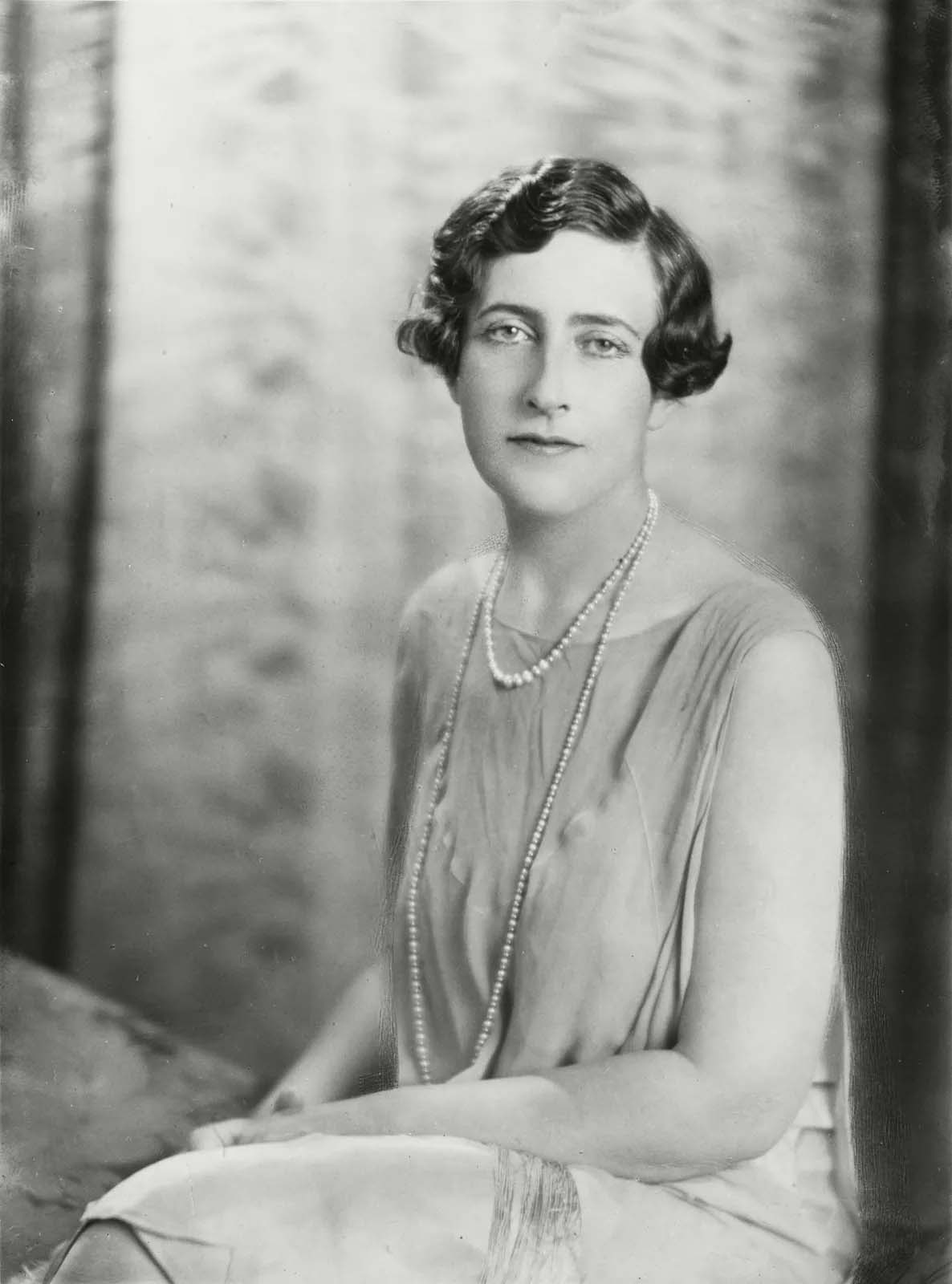
In his article, he wrote: “Christie specialist Gillian Gill was unequivocal:
‘A kind of jingoistic, knee-jerk anti-Semitism colors the presentation of Jewish characters in many of her early novels, and Christie reveals herself to be as unreflective and conventional as the majority of her compatriots… Christie’s anti-Semitism had always been of the stupidly unthinking rather than the deliberately vicious kind. As her circle of acquaintances widened and she grew to understand what Nazism really meant for Jewish people, Christie abandoned her knee-jerk anti-Semitism. What is more, even at her most thoughtless and prejudiced, Christie saw Jews as different, alien, and un-English, rather than as depraved or dangerous – people one does not know rather than people one fears.”
Jane Arnold likewise observed that in Christie’s writings, “No particular Jewish characteristic is completely negative.” This ambiguity may have been due in part to an incident recounted in Christie’s autobiography. In 1933, she accompanied her husband, an archaeologist, to the Middle East for an excavation. There they met Julius Jordan, Germany’s Director of Antiquities in Baghdad. When someone mentioned Jews, Jordan retorted: “Our [German] Jews are perhaps different from yours. They are a danger. They should be exterminated. Nothing else will really do but that.”
Christie’s reaction was to stare at Jordan “unbelievingly” and observe to herself: “There are things in life that make one truly sad when one can make oneself believe them.” The UK National Archives website further explains that Julius Jordan was Nazi Party leader and propaganda director for Iraq. So Christie had encountered the local equivalent of Joseph Goebbels.
While Christie was shocked at the idea of Jews being killed, a Jewish journalist, Chrisopher Hitchens, later said when he attended a dinner with Christie and her husband in the 1960s the conversations about Jews was still “vividly unpleasant.”
Ivry says for many Jews, Agatha remains “a recreational delight.”
Indeed, in an article in the Canadian Jewish News, journalist Michael Taube writes: “Was Christie a racist or an anti-Semite? Her family and friends always denied it. They argued that most of the characters who made intolerant remarks were, in fact, seen in a negative light in her works. That’s true, which means she was more likely a product of her times than a hateful soul.”
As for my personal opinion, I enjoy Agatha Christie’s novels and plan to keep reading them. Since I was never able to speak to the woman herself and will never have the chance I will hold on to hope that the negative references she made toward Jews and other ethnicities were simply what others have said they were – ignorance or a reflection of the character saying them.
Discover more from Boondock Ramblings
Subscribe to get the latest posts sent to your email.

Pingback: Top Ten Tuesday: My 10 most recent reads. – Boondock Ramblings
Pingback: Sunday Bookends: It’s hot. It’s hot. It’s way too hot. And reading. – Boondock Ramblings
It really is difficult, isn’t it, when you read older books with the slurs and tropes in them. Do we overlook that and say it was a different time? Do we recognize we have moved on and the books serve as a reminder of how far (or not) we’ve come? It’s such a hard one to decide. It appears the Jewish community has accepted Christie and her books so maybe that’s forgive but not forget at work? I just never know.
Thanks for the review. I’ve got two books I’m reading and have to finish before they go back to the library (or I have to place another lengthy hold on them). I should reread the Christie books because she was always about 25 steps ahead of me!
https://marshainthemiddle.com/
LikeLike