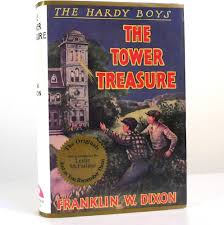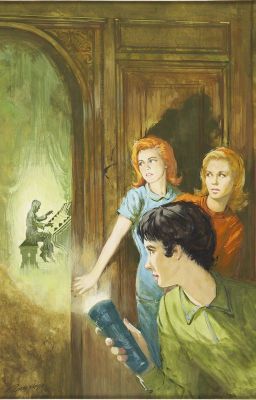
Nancy Drew: Nancy’s Mysterious Letter by Carolyn Keene
I hope to watch:
Bette Davis movies for my Spring of Bette, including Now Voyager and Jezebel.
I’ve already watched It’s Love I’m After, The Working Man, and Another Man’s Poison for the feature.
How was your March, and what do you hope to read or watch in April?
If you write book reviews or book-related blog posts, don’t forget that Erin and I host the A Good Book and A Cup of Tea Monthly Bookish Blog Party. You can learn more about it here.
On Thursdays, I am part of the Weekend Traffic Jam Reboot blog link party. You can find the latest one in the sidebar to the right under recent posts.
Hello! Welcome to my blog. I am a blogger, homeschool mom, and I write cozy mysteries.
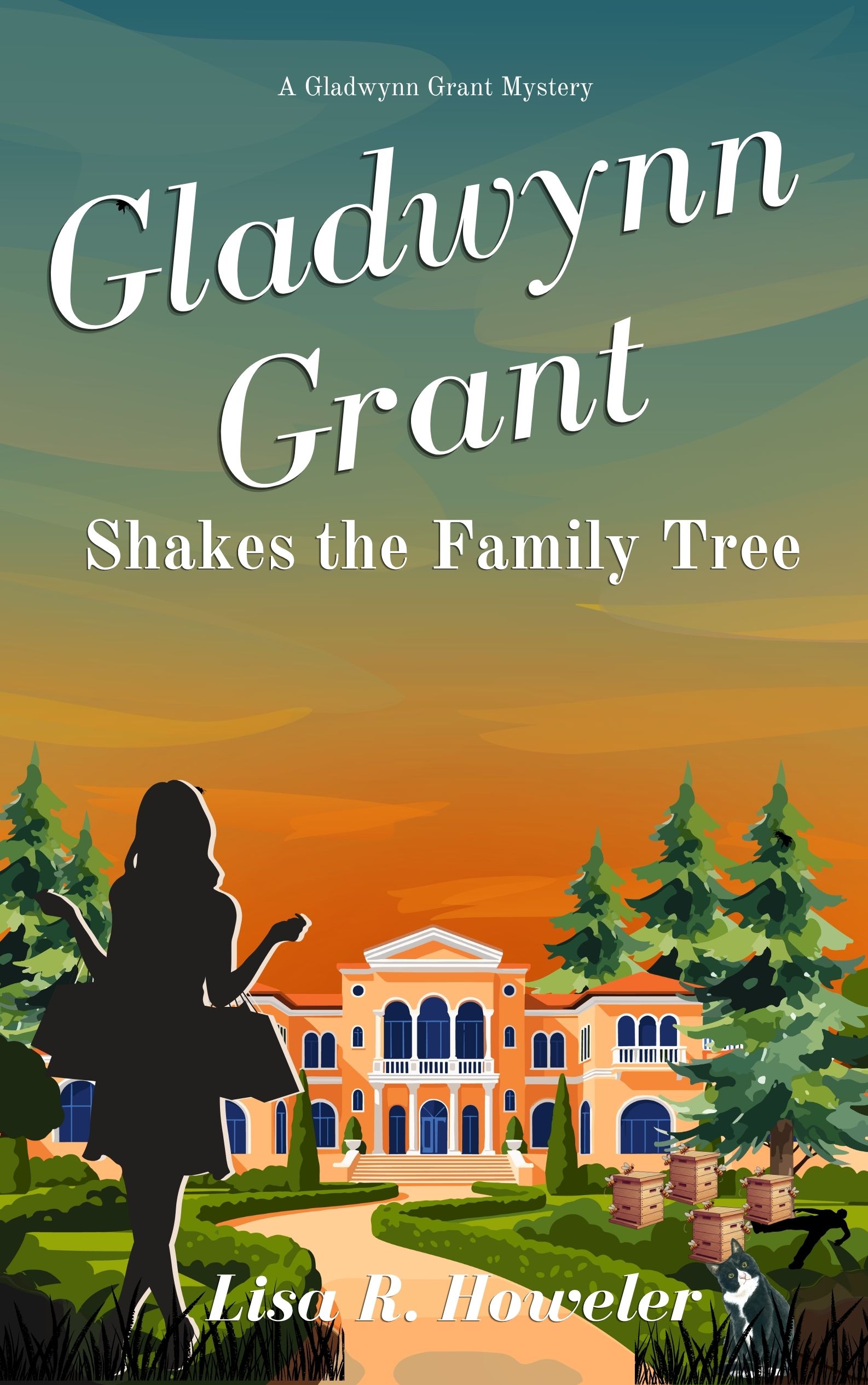
You can find my Gladwynn Grant Mystery series HERE.
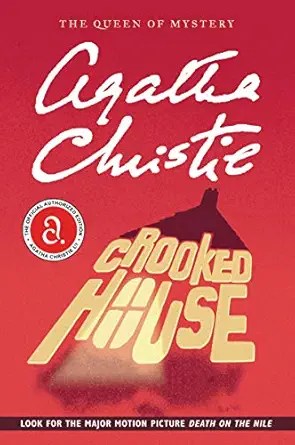
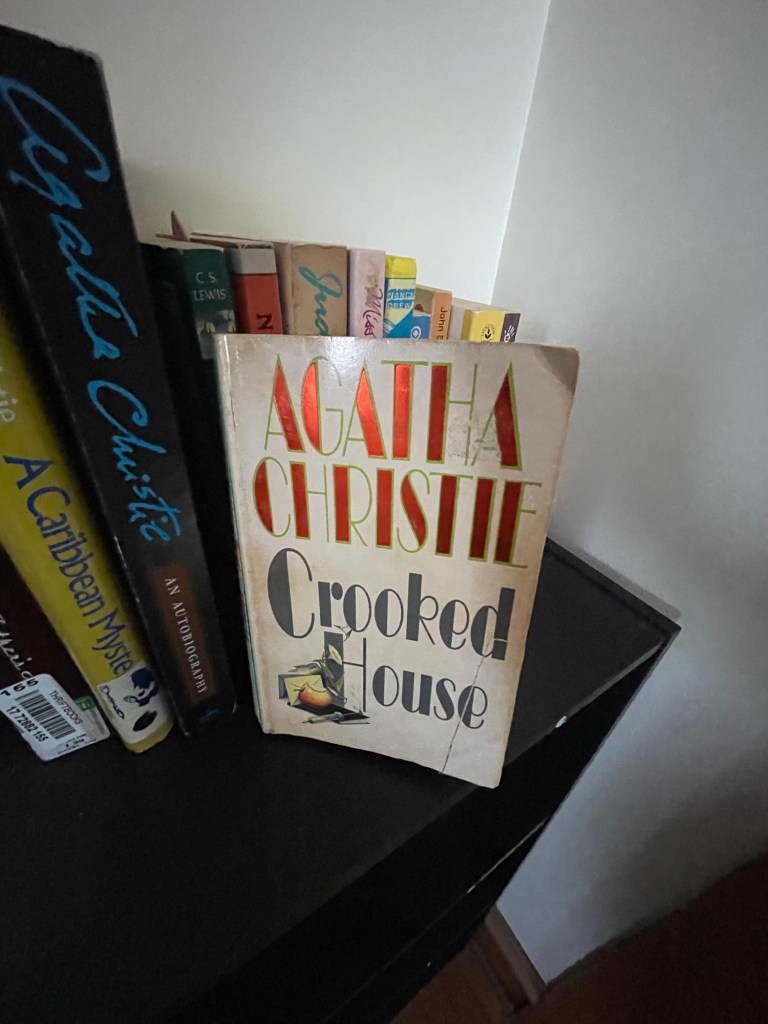
Here is some advice for you if you decide to read Crooked House by Agatha Christie: If you think that you know who the guilty party is, but you’re uncomfortable with who you think the guilty party is, go with that feeling and your choice.
That won’t make sense until you read the book, so here is a little background on this one, which does not feature one of Christie’s famous detectives.
This book is a standalone novel that starts with the main character Charles Hayward planning to marry Sophia Leonides who he met in Egypt toward the end of the war. They hang out while in Eqypt and correspond some afterward, but drift apart until he returns to England two years later. It’s after his return that he reads in the paper that Sophia’s grandfather has died. He knows it is her grandfather because she once told him all about her family.
“’We live in a crooked little house . . .’”
“I must have looked startled, for she seemed amused, and explained by elaborating the quotation. ‘And they all lived together in a little crooked house,’ That’s us. Not really such a little house either. But definitely crooked — running to gables and halftimbering!”
In this case the crooked little house quote is a play on the nursery rhyme “There Was a Crooked Little Man,” but I am not familiar with that nursery rhyme.
Due to the blitz, Sophia’s extended family was all living in the house with the patriarch, Aristide Leonides, a short Greek man who commanded a lot of presence. Her family includes her younger brother and sister, her parents, her uncle and an aunt by marriage, her grandfather, a great aunt, and a step-grandmother.”
Charles reaches out to her by telegram, and she asks to meet that night at a local restaurant. The connection they had two years ago is still strong, and he still wants to marry her, but she says she can’t marry him now, and maybe never. She believes her grandfather has been murdered, and she doesn’t want to ruin Charles’ reputation as a member of the Diplomatic Service because she feels certain the murder was committed by someone in her family.
The main suspect is her step-grandmother, Brenda, with the tutor for Sophia’s siblings a close second because the family believes the two were having an affair.
In the first part of the book, we get to know the entire family, and it isn’t very pretty. Many of them are selfish and bitter people looking out for themselves, and the ones who don’t seem that way may be putting on an act. Maybe even Sophia is putting on an act. Figuring out who committed the crime will baffle Charles and Scotland Yard, and when you get to the ending — oof. It’s definitely a plot twist, one I saw coming, but still had to find out how and why.
I would definitely recommend this one if you’ve never read Agatha before or even if you have. I think it’s one of her best, and I read today that she called it one of her favorites to write. It is definitely a book that will stick with you over the years, making you think (and shudder a bit) long after you’ve put it down.
Some quotes from it I enjoyed:
“Curious thing, rooms. Tell you quite a lot about the people who live in them.”
***
“I think people more often kill those they love than those they hate. Possibly because only the people you love can really make life unendurable to you.”
***
“I’ve never met a murderer who wasn’t vain… It’s their vanity that leads to their undoing, nine times out of ten. They may be frightened of being caught, but they can’t help strutting and boasting and usually they’re sure they’ve been far too clever to be caught.”
***
“Murder, you see, is an amateur crime… One feels, very often, as though these nice ordinary chaps, had been overtaken, as it were, by murder, almost accidentally. They’ve been in a tight place, or they’ve wanted something very badly, money or a woman – and they’ve killed to get it. The brake that operates with most of us doesn’t operate with them… They continue to be aware that murder is wrong, but they do not feel it. I don’t think, in my experience, that any murderer has really felt remorse… Murderers are set apart, they are ‘different’ – murder is wrong – but not for them – for them it is necessary – the victim has ‘asked for it,’ it was ‘the only way.”
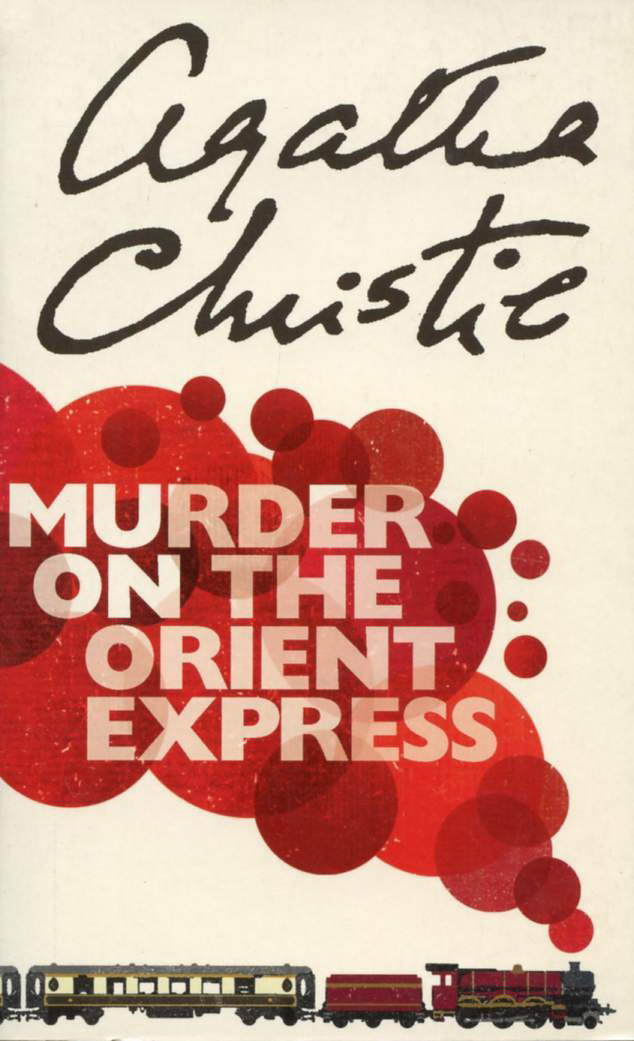
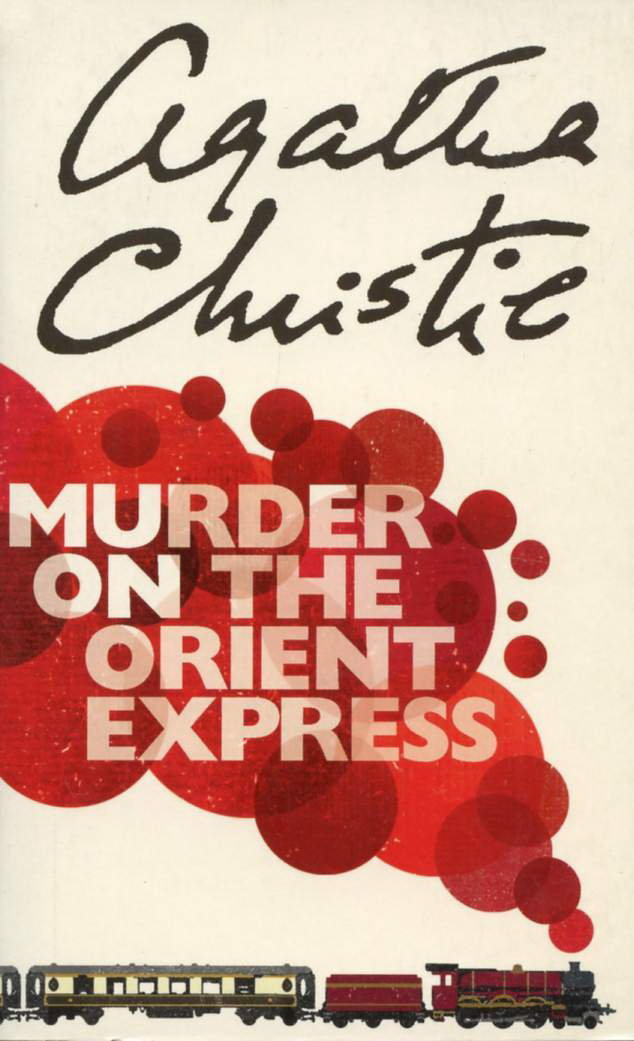
I read Murder on the Orient Express by Agatha Christie for the first time this month as part of Read Christie 2026 with the Official Agatha Christie site.
I’ve read plenty of Christie’s books already but have always steered clear of the “big ones” that everyone knows because I’ve usually seen the movies and know the stories. I have learned, though, that there can be changes in the movies and sometimes they aren’t always for the better.
One example was And Then There Were None. If you have not read that one, you really need to, even if you saw any of the movies. It was the first Christie I read and … whoa. I sat there at the end feeling horrified and in awe at the same time. What a twisted, but well-written story.
(An aside…anyone who doesn’t think Agatha disappeared for 11 days as a way to get back at Archie and buys the whole “temporary amnesia” story hasn’t read enough of Agatha’s books. The woman had a million ideas how to get back at someone and how to kill them. If you don’t know what I am talking about – do a quick online search. It’s like the plot of one of her books but actually real life.)
For those who have never read this one, here is simple summary: a group of people end up stranded on the Orient Express (a train in Europe) during a blizzard when one of them is murdered. Too bad for the murderer, renowned detective Hercule Poirot has hopped on at the last minute and is working hard to solve the case while everyone waits for help to arrive.
What is so funny in the Poirot books is how Poirot always expects everyone to know who he is, and most people look at him in confusion when he introduces himself.
It’s always like, “Surely you must know me,” and then the other person looks confused and says, “No, I’m afraid not.”
Here are some actual quotes from the book that I enjoyed:
“Mon ami, if you wish to catch a rabbit you put a ferret into the hole and if the rabbit is there he runs. That’s all I have done.”
***
“When he passed me in the restaurant,” he said at last. “I had a curious impression. It was as though a wild animal — an animal savage, but savage, you understand — had passed me by.”
“And yet he looked altogether of the most respectable.”
“Precisement! The body — the cage — is everything of the most respectable — but through the bars, the wild animal looks out.”
***
“But I know human nature, my friend, and I tell you that, suddenly confronted with the possibility of being tried for murder, the most innocent person will lose his head and do the most absurd things.”
***
“You’ve a pretty good nerve,” said Ratchett. “Will twenty thousand dollars tempt you?” It will not.”
If you’re holding out for more, you won’t get it. I know what a thing’s worth to me.”
I, also M. Ratchett.”
What’s wrong with my proposition?”
Poirot rose. “If you will forgive me for being personal – I do not like your face, M. Ratchett,” he said.”
***
“All around us are people, of all classes, of all nationalities, of all ages. For three days these people, these strangers to one another, are brought together. They sleep and eat under one roof, they cannot get away from each other. At the end of three days they part, they go their several ways, never, perhaps, to see each other again.”
***
I’ve already read my Christie for this month, but I’ve tossed Crooked House in the mix as an extra Christie read because my husband recommended it.
In April, I’ll be reading a Miss Marple — A Caribbean Mystery.
Have you read this one or any Christie books? If you have read her books, do you have a favorite?
If you write book reviews or book-related blog posts, don’t forget that Erin and I host the A Good Book and A Cup of Tea Monthly Bookish Blog Party. You can learn more about it here.
On Thursdays, I am part of the Weekend Traffic Jam Reboot blog link party. You can find the latest one in the sidebar to the right under recent posts.
I also post a link-up on Sundays for weekly updates about what you are reading, watching, doing, listening to, etc.
Hello! Welcome to my blog. I am a blogger, homeschool mom, and I write cozy mysteries.
You can find my Gladwynn Grant Mystery series HERE.
It’s time for our Sunday morning chat. On Sundays, I ramble about what’s been going on, whatthe rest of the familyand I have been reading and watching, andwhat I’ve been writing. Some weeks I share what I am listening to.
As I am starting this post on Saturday night, we had temps — er – temp of 5. In the morning snow is supposed to start and when it all ends Monday night, we are supposed to have close to 18 inches of snow.
I really hope we don’t get as much as they say, though, because the high temp is supposed to be 15 degrees, which I think means this will be a very heavy, wet snow. We live in a rural area so that could mean power outages. We have a woodstove that could keep us warm downstairs but we would have to worry about our pipes freezing since we do not have a generator. I believe that’s something we will need to invest in at some point soon. Our neighbors have generators, which I think they purchased after a tornado hit here on our street about six years ago, wiping out power for several days.
I’m sure many of you, if you are in the Northern and Middle U.S. are facing a similar situation as us. Stay safe out there, everyone.
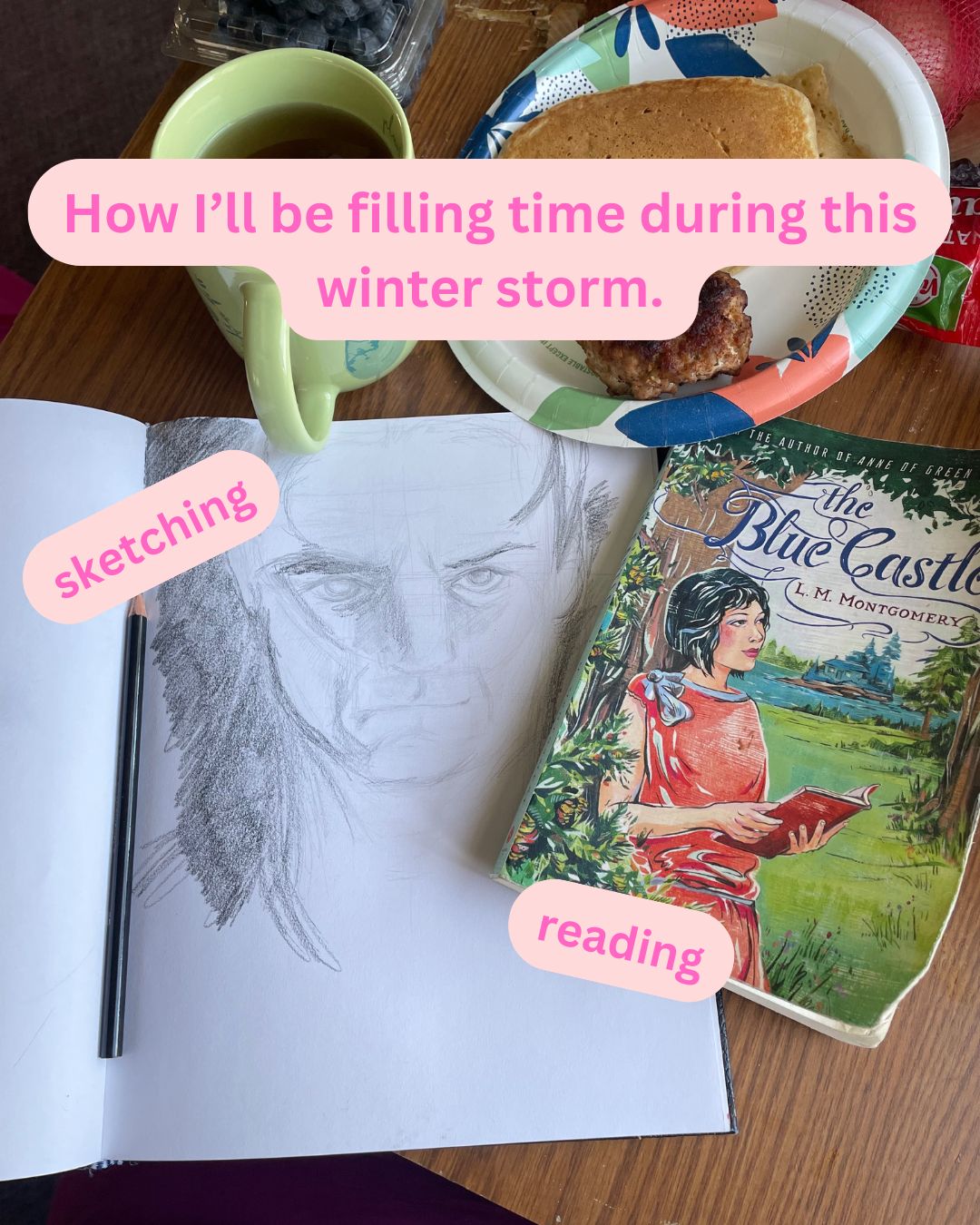
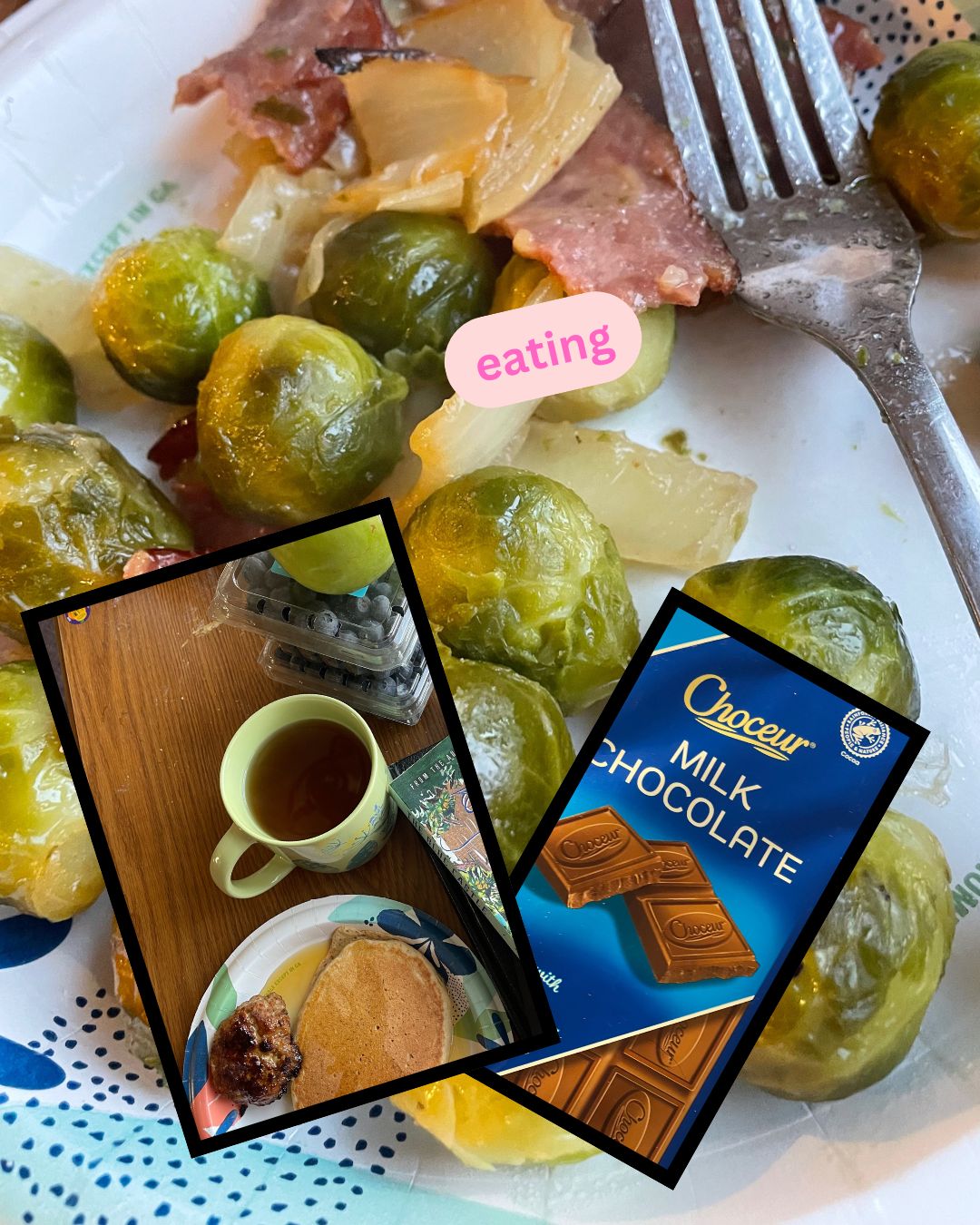
Since we are going to be snowed in, I have been planning how to get through it all without worrying too much. I plan to watch movies, read books, and sip tea or cocoa.
To keep themselves occupied, Little Miss has been video chatting with her friend and The Boy has been chatting with his friend and playing video games. The Husband has been cleaning the house (he’s much better at that than I am) and reading and doing a little work for the newspaper he is at the editor at.
He expects to be snowed in Monday and will work from home. As long as we have power that is.
Erin (www.crackercrumblife.com) and I held our Crafternoon Zoom call yesterday and it was very nice to chat with people from all over the world. We chat while we craft and if you are interested in taking part, please let me or Erin know. It is just a relaxed time to chat, make new friends, and forget about our troubles. We keep conversations as free of politics or hard stuff as much as we can.
UPDATE:
It is 12:24 P.M. as I am finishing up this post and it is about 10 degrees out (-12 C) and we have about six inches of snow on the ground. The snow is supposed to stop sometime tonight and we are expected to have up to 18 inches of snow when it is all done.
What I/We’ve Been Reading
Just Finished
I didn’t finish anything this weekend.
In Progress
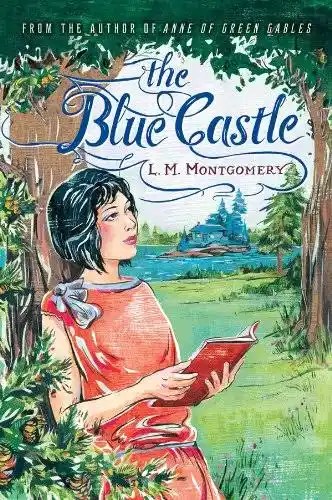
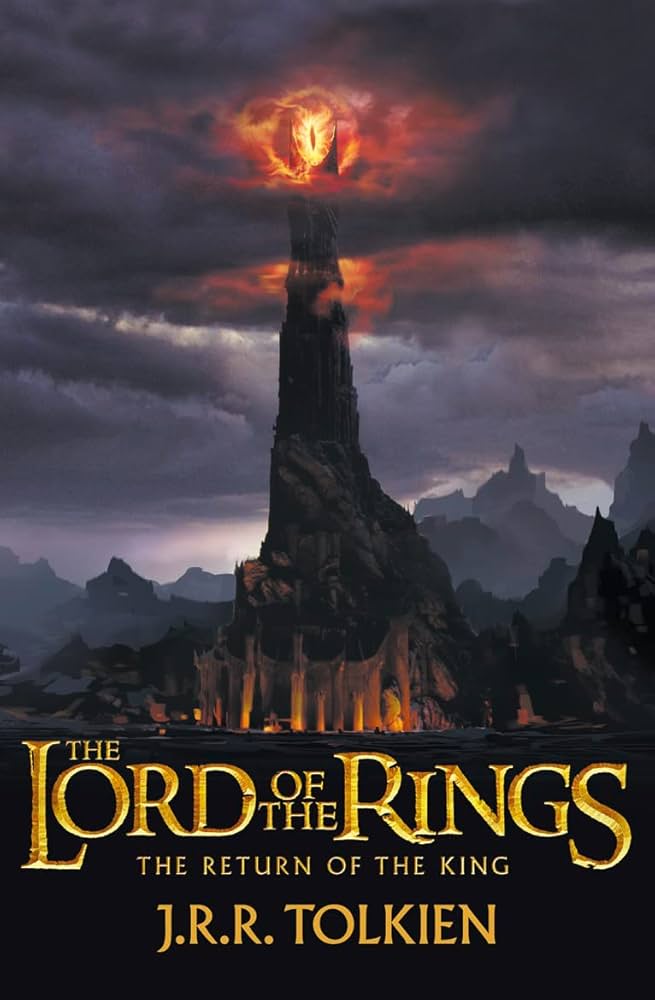
I’ve been reading Miss Read’s Village Diary by Miss Read, The Blue Castle by L.M. Montgomery (a reread), and just started Return of the King by J.R.R. Tolkien.
I’m enjoying all three. Miss Read’s books are such easygoing, relaxing reads.
Up Soon
I hope to finish Miss Read this week so I can add The Tiger in the Smoke by Margery Allingham to my reading line up.
I read the first few pages about a month ago and it intrigued me.
Cat from Cat’s Wire needs to let me know if it is good or not. *wink*
After that I plan to start the February Agatha Christie Read for the Agatha Christie challenge, Mrs. McGinty’s Dead.
What The Family is Reading
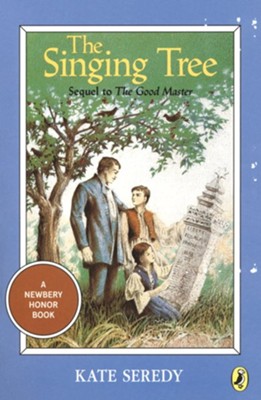
Little Miss and I started The Singing Tree by Kate Seredy. We’ve also been listening to Winnie The Pooh on Audible.
The Husband is reading….
What I/We’ve Been Watching
I loved this YouTube video about how to read more classic books.
And this video about how to cut back on buying books you never read.
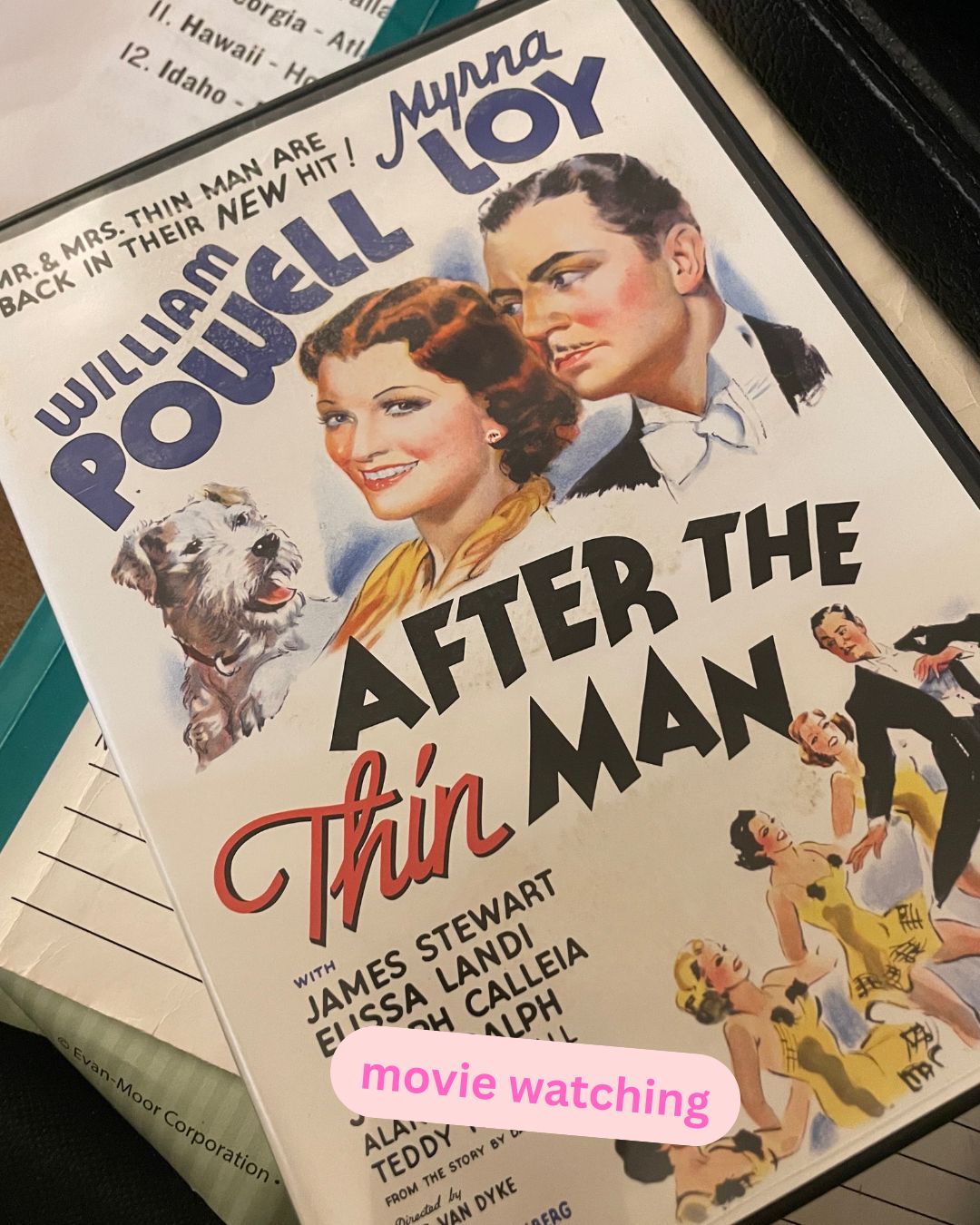
I watched After The Thin Man, the second movie in The Thin Manseries, yesterday, and earlier in the week I watched episode two of season six of All Creatures Great And Small.
Today I hope to watch another old movie, probably a James Cagney, for my Winter of Cagney.
I’ve had to change my schedule of Cagney movies again because I have found yet another movie that is not streaming anywhere and can’t be found for very cheap on DVD. Two movies now, Man of a Thousand Faces and Angels With Dirty Faces, are going to have to be taken off my list as I figure out how to watch them in the future.
The Husband says these movies are most likely no longer in print and have not been licensed for streaming, hence my challenge in finding them. Man of A Thousand Faces costs $40 most places and is mainly on BluRay and Angels With Dirty Faces (a movie with Cagney and Humphrey Bogart) is on DVD but $19.95. I will probably set the aside for another time and slide two Cagney movies that I can find streaming into my list instead.
David Phelps with Laura Osnes singing a song from The Phantom of the Opera.
Photos From Last Week
Some Housekeeping
Erin (Still Life, With Cracker Crumbs) and I host a monthly bookish link party called A Good Book and A Cup of Tea. This link-up is for book and reading posts or anything related to books and reading (even movies based on books!). Each link party will be open for a month. You can find that link up for this month here.
Each week, I host the Weekend Traffic Jam Reboot with some great hosts. It goes live Thursday night but you can share any kind of blog posts (family-friendly) there until Tuesday of each week. You can check my recent posts on the sidebar to the right for the most recent link-party.
Now It’s Your Turn
What have you been doing, watching, reading, listening to, or writing? Let me know in the comments or leave a blog post link if you also write a weekly update like this.
Angela Lansbury once said in an interview that one of the more exciting moments of her career was working with Bette Davis in Death on the Nile (1978).
That’s the movie I watched this week for my Summer of Angela feature.
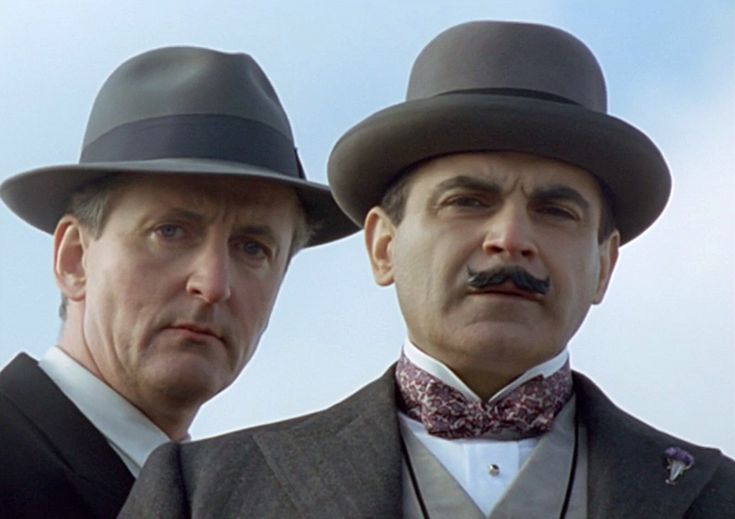
The movie is full of A-list movie stars: Angela, Bette, David Niven, Maggie Smith, Mia Farrow, and, of course, Peter Ustinov as Hercule Poirot.
I’m not a fan of Ustinov as Poirot since David Suchet plays the part so brilliantly, and I can’t see anyone else as Poirot, but the movie is still okay overall. I only added it to my watch list because Angela is in it. I had fun watching her be absolutely over the top as an eccentric romance writer and Maggie Smith be an overall jerk throughout, which is a role that she seemed to always play well.
Mia Farrow was …er…creepy as always.
Let’s talk about the plot a little for those who aren’t familiar with this one from either the book by Agatha Christie or the movie.
The online description:
“On a luxurious cruise on the Nile River, a wealthy heiress, Linnet Ridgeway (Lois Chiles), is murdered. Fortunately, among the passengers are famed Belgian detective Hercule Poirot (Peter Ustinov) and his trusted companion, Colonel Race (David Niven), who immediately begin their investigation. But just as Poirot identifies a motley collection of would-be murderers, several of the suspects also meet their demise, which only deepens the mystery of the killer’s identity.”
Angela portrays an eccentric romance writer named Salome Otterbourne who based a character in one of her books on Linnet. She and Linnet confront each other on the boat and Linnet tells Salome she’s going to sue her for libel. Just about everyone on the boat seems to have an issue with Linnet, which makes me wonder how they all ended up on the boat together. Planned or just coincidence, I don’t know, but they all seem to know each other and Linnet is angry with just about everyone and they are angry with her.
Salome is on the boat with her daughter Rosalie who is embarrassed by her mother’s behavior.
Angela’s character isn’t in the movie as much as other characters, but when she is, she certainly fills the screen with her crazy personality and outfits.
She makes all kinds of semi-suggestive comments about possible couples or what people need to do to feel more relaxed. Some of the characters refer to her books as “lurid.”
At one point, she and her daughter talk about whether or not Poirot would know her from her books. Rosalie says, “Somehow, I don’t think Monsieur Poirot is a very keen reader of romantic novels, Mother.”
Mrs. Otterbourne responds: “Well, of course he is! All Frenchmen are. They’re not afraid of good, strong sex!”
She is such an obnoxious character that after the murder occurs David Niven’s character comments to Poirot: “What a perfectly dreadful woman. Why doesn’t somebody shoot her, I wonder?
Poirot responds, “Perhaps one day, the subscribers of the lending libraries will club together and hire an assassin.”
The film was shot on location in Egypt so many of the experiences the characters had were actually had by the actors and actresses. I think some of the reactions that were filmed when they were climbing on the donkeys and camels were totally adlibbed because they were so authentic and funny.
According to TCM, makers of the film were trying to cash in on the success of the 1974 film Murder on the Orient Express, also based on an Agatha Christie book. That cast was also star-studded with Lauren Bacall, Ingrid Bergman, and Anthony Perkins.
Unfortunately, while Murder on the Orient Express brought in $27.6 million, this movie only grossed $14.5 million in the U.S. and Canada. Despite the lackluster success at the time it was released, many Christie fans see it as one of the better adaptations of the book — at least according to the many comments about it that I read online.
One thing that might have made the movie less of a success was the filming locations.
TCM.com stated this in an article about the movie: “Despite the exotic locale, split between Egypt and London, filming conditions for the movie were less than ideal. Filmed on a little boat called The Carnock, the actors took a speedboat back and forth each day from their hotel in Aswan down river to the shooting location. The Carnock was also apparently too small for all the actors to have their own dressing rooms. One unpleasant incident involved Bette Davis, Olivia Hussey and some Eastern chant records Hussey liked to play early in the morning. After Davis asked Hussey not to play her music, it was reported that the actresses did not speak to each other again while aboard The Carnock. If tensions weren’t high enough, the temperature climbed well above 100 degrees everyday and filming often was halted at noon.”
What Angela said about the movie:
As I mentioned in the beginning of this post, Angela remembers what a delight it was to work with Bette Davis.
“She was a very fascinating woman,” Angela told Studio Canal. “I got to know her quite well on that occasion. She had been a great, great Warner Brothers star and I had been a fan of hers as a child. She was a great deal older than me and I remembered her and all her great roles.”
Angela remembered Bette as being a “special and unique” actress.
“Unique looking and sounding and I was delighted to meet her and work with her.”
Angela also reflected on working with Ustinov who was her ex-brother-in-law.
“My role was such an interesting, farcical character anyways and there was so much comedy involved,” she said. “David Niven and Peter Ustinov and myself and my husband and I, we were all great friends and knew each other from other times.”
As for the conditions, Angela confirmed that they were not very nice at times.
“We were billeted in a hotel in the middle of the Nile,” she said. “To get to it, we had to get on a boat, having to cross water. We all lived in this luxury hotel in the middle of the Nile in Egypt and that was a special and wonderful experience I would say. I mean you couldn’t have been more comfortable. Swimming pools, wonderful food, everything you could possibly want and then we would get 4 or maybe 3 in the morning because of the heat at the time in Egypt. We had to do the shooting before noon. Otherwise, it would be too hot. So, we were dealing with that and also an old riverboat we were working on which was trundling its way down the Nile, pulled by little boats and sometimes under its own steam.”
The boat made so much noise, though, that it was often tugged along by the little boats, she said.
The only dressing room in the bottom of the boat in a four-bed cabin.
“It was a bed up and a bed down, so the fittings had to take place between the two beds,” Angela said. “I remember that Bette would lie down on one bunk and Maggie Smith was on the other and I was on the third. We would take turns being fitted in the ‘well’, in the middle. It was one of those extraordinary circumstances where we forced to not be the stars we were supposed to be.”
The costumes in this movie were amazing and were designed by Anthony Powell, who won an Oscar for his work on the film (the film’s only award). Angela had nothing but praise for him.
“My costumes on that film I thought were absolutely extraordinary and quite original and marvelous,” she said. “They were built in New York City by my friend Barbara Matera and he worked with her and we all worked together and we came up with this extraordinary look but Anthony was at the root of it all.”
I have to agree that her costumes were dazzling and something else. Not sure I’d ever wear them, but they fit her character for sure.
You can see the full interview here:
My thoughts:
I watched this one in pieces because it comes in at a whopping 2 hours and 20 minutes!! I didn’t remember it being that long when I first watched it with my husband, but, thinking back, I seem to remember we watched one half one night and the other half the next night.
While I did enjoy the movie, and watching Angela’s antics when she was on screen, the movie was really too long for my taste. I know they needed to take us down some twists and turns to keep us guessing but two and a half hours? Gah!
Also, what always gets me about these movies is how a bunch of people can die (the number of deaths in this one was excessive if you ask me and I’d like to read the book to see if Agatha wrote that many deaths) and at the end everyone just shrugs it off. I won’t give it away but there was one death in particular that just got waved off as no big deal at the end with the characters smiling and walking away arm in arm. So bizarre and left me wondering if the person they said killed that person wasn’t actually someone else.
In addition to Angela’s performance, I loved the witty and sarcastic banter between Maggie Smith and Bette Davis’ characters.
Maggie’s character, Miss Bowers, was supposed to be Bette’s nurse and companion. Bette portrayed Marie Van Schuyler, a socialite. Maggie was horrible to Bette’s character, though! It was sort of crazy but also hilarious. They had some of the best exchanges.
“Mrs. Van Schuyler: Come on, Bowers, time to go. This place is beginning to resemble a mortuary.
Miss Bowers: Thank God you’ll be in one yourself before too long, you bloody old fossil!
***
Mrs. Van Schuyler: Shut up, Bowers. Just because you’ve got a grudge against her, or rather her father, no need to be uncivil.
Miss Bowers: *Grudge*? Melhuish Ridgeway ruined my family!
Mrs. Van Schuyler: Well, you should be grateful. If he hadn’t, you would have missed out on the pleasure of working for me.
Miss Bowers: I could kill her on that score alone!
Miss Bowers was definitely not a respectful employee, but I think that Mrs. Van Schuyler liked that.
One other observation: This movie seems to feature a lot of scenes of rich people sitting around in drawing rooms, all dressed up with nowhere to go. I’m very confused why they got all dressed up to sit around every night together and then just go to bed. Didn’t any of them own clothes that weren’t fancy? Of course, I’m teasing here because I really did love the outfits for the women. The dresses were all so eye-catching.
Trivia or Facts About the movie:
According to producer Richard Goodwin, Bette Davis brought her own make-up, mirrors, and lights to Egypt. (source IMdB)
Peter Ustinov was David Niven’s personal attendant during World War II. Ustinov was a private and Niven was a Lt. Colonel (various sources)
Location shooting in Egypt consisted of four weeks on the riverboat “S.S. Karnak” and three weeks filming in places such as Luxor, Cairo, Aswan, and Abu Simbel. (various sources)
Ustinov portrayed Poirot five more times. (various sources)
Albert Finney was initially asked to reprise his role as Poirot from Murder on the Orient Express (1974). However, he had found the make-up he had to wear for the first movie very uncomfortable in the hot interior of the train, and on realizing that he would have to undergo the same experience, this time in temperatures exceeding 100 degrees Fahrenheit (38 degrees Celsius), he declined the role. (source IMdB)
Angela Lansbury had never seen the finished film until she attended a 40th Anniversary screening on November 9, 2018. (source IMdB)
Dancer Wayne Sleep, relatively unknown at the time, choreographed the tango scene. He reported in 2018, “I was being paid an hourly rate, which was great as nobody turned up to the rehearsal and I had to go and find David Niven and persuade him to come.” (source IMdB)
Producer John Brabourne said no telephones were available while on-location in Egypt. They had to communicate by telex. . (source IMdB)
Agatha Christie was inspired to write the source novel in 1937, during an Egyptian vacation. The hotel scenes were shot at the Old Cataract Hotel in Aswan, where Christie stayed. The hotel’s front had to be “redressed” to appear more 1930s, and the furniture on the hotel’s terrace was replaced with custom period-authentic pieces. (source IMdB)
Notable quotes:
Jacqueline De Bellefort: Simon was mine and he loved me, then *she* came along and… sometimes, I just want to put this gun right against her head, and ever so gently, pull the trigger. When I hear that sound more and more…
Hercule Poirot: I know how you feel. We all feel like that at times. However, I must warn you, mademoiselle: Do not allow evil into your heart, it will make a home there.
Jacqueline De Bellefort: If love can’t live there, evil will do just as well.
Hercule Poirot: How sad, mademoiselle.
***
Mrs. Van Schuyler: [Remarking on Linnet’s pearls] Oh, they’re beautiful!
Linnet Ridgeway: Thank you.
Mrs. Van Schuyler: And extraordinary, if you know how they’re made. A tiny piece of grit finds it’s way into an oyster, which then becomes a pearl of great price, hanging ’round the neck, of a pretty girl like you.
Linnet Ridgeway: I never thought of it that way.
Mrs. Van Schuyler: Well, you should. the oyster nearly dies!
***
Jim Ferguson (to Rosalie): Karl Marx said that religion was the opium of the people. For your mother, it’s obviously sex.
***
Miss Bowers: I think a shot of morphia will meet the case. I’ve always found it very effective when Mrs Van Schuyler is carrying on.
***
Mrs Otterbourne: I suppose that uncouth young man will appear now and attempt to seduce you. Well, don’t let him succeed without at least the show of a struggle. Remember, the chase is very important.
Rosalie Otterbourne: Oh, mother!
Mrs Otterbourne: I tell you that I, Salome Otterbourne, have succeeded where frail men have faltered. I am a finer sleuth than even the great Hercule Porridge.
Have you seen this one? What did you think?
Here is what is left of my Summer of Angela:
August 1 – The Court Jester
August 8 – The Picture of Dorian Gray
August 15 – A Life At Stake
August 22 – All Fall Down
August 29 – Something for Everyone
If you want to read about some of the other movies I watched you can find them here:
I know I talk a lot on here about Agatha Christie, but I actually have not yet read a ton of her books. Quite a few, but not a ton.
Most of the Agatha Christie books I have read have been either Poirot or Miss Marple mysteries. I decided to read The Pale Horse, which is not about either of those sleuths when the Agatha Christie official website suggested it a few months back as one of the challenges for their 2024 reading challenge. I have not kept up on that challenge this year but might try for the remainder of the year.
This month they are suggesting Come, Tell Me How You Live, which is a memoir of Agatha’s travels with her husband Archie. This is perfect timing because I have been watching Travels with Agatha Christie with Sir David Suchet and though he isn’t talking about this book in the show, it would still tie into her traveling. The book he actually mentions would have focused on her trip with her husband Archie and this book was written after she remarried years later. It’s actually listed under Agatha Christie Mallowan. I will probably have to order it new or through Thriftbooks, but I think it would be a fun read.
Anyhow, on to The Pale Horse.
I didn’t actually read the description of this book before I started it but as I was getting into it I saw a review of it and became a little nervous. The review mentioned that it deals with the occult and seances, etc., and that is just not my thing. I decided to plow forward, though, and in the end the book did mention those topics but — without giving too much away — that is not where the story landed, shall we say.
The story is written in both third and first person, which threw me off a bit.
We start with a man named Mark Easterbrook trying to write a mystery and switch to an actual mystery when a dying woman asks for a priest to come so she can tell him something before she dies. We don’t know what she tells him, but we know that he is murdered shorty before she does tell him.
Eventually we are led back to the man we met in the first chapter and he finds himself trying to figure out why the priest was murdered and what three creepy women living together in an old inn called The Pale Horse, might have to do with his murder and the mysterious deaths of several others in the community.
When the priest died, he had a list of last names in his shoe and the police are eventually joined by Easterbrook to find out who the people on the list are or were. Sadly, some of them are in the past tense and Easterbrook is worried that if he doesn’t hurry up and figure out what is going on, more of them will be in the same tense.
One of Mark’s friends is a mystery writer, Mrs. Oliver, and she is friends, sort of, with the creepy women but she doesn’t enjoy the way they talk about occult and seances, etc. In this scene I am Mrs. Oliver:
Thyrza shot her a quick glance.
“Yes, it is in a way.” She turned to Mrs. Oliver. “You should write one of your books about a murder by black magic. I can give you a lot of dope about it.”
Mrs. Oliver blinked and looked embarrassed.
“I only write very plain murders,” she said apologetically
Her tone was of one who says, “I only do plain cooking.”
“Just about people who want other people out of the way and try to be clever about it,” she added.
I wasn’t sure where the book was going part of the time and that made me a bit nervous and I got even more nervous when Mark and a new friend of his decided they would set up the people they thought might be involved in the murders. I was also caught up in it all before that but was biting my nails (literally) once the plot moved to entrapment.
I’ve mentioned before that one thing I am not a fan of when it comes to Agatha is how she doesn’t add a lot of description of surroundings or characters. I don’t like a ton of description in my books but a little more than what she offers sometimes would be nice. Her lack of description was not an issue for me in this book, which felt like a more well-rounded novel to me than some of the ones from the series.
A description example I don’t remember reading much in other of her novels I have read (which remember is very few):
The vicarage sitting room was big and shabby. It was much shaded by a gargantuan Victorian shrubbery that no one seemed to have had the energy to curb. But the dimness was not gloomy for some peculiar reason. It was, on the contrary, restful. All the large shabby charis bore the impress of resting bodies in them over the years. A fat clock on the chimneypiece ticked with a heavy, comfortable regularity. Here there would always be time to talk, to say what you wanted to say, to relax from the cares brought about by the bright day outside.”
A couple of other quotes I enjoyed from the book:
“My husband’s a very good man,” she said. “Besides being the vicar, I mean. And that makes things difficult sometimes. Good people, you see, don’t really understand evil.” She paused and then said with a kind of brisk efficiency. “I think it had better be me.”
“People are so proud of wickedness. Odd, isn’t it, that people who are good are never proud of it? That’s where Christian humility comes in, I suppose. They don’t even know they are good.”
I considered Hermia disapassionately across the table. So handsome, so mature, so intellectual, so well read! And so — how could one put it? So — yes, so damnably dull!”
“Yes,” I said. “The supernatural seems supernatural. But the science of tomorrow is the supernatural of today.”
Have you read this one? What did you think?
Lisa R. Howeler is a blogger, homeschool mom, and writes cozy mysteries.
You can find her Gladwynn Grant Mystery series HERE.
Today’s prompt is: Ten Unpopular Bookish opinions, but I decided to change the topic up and share a list of top ten literary friendships (for me anyhow) instead because I could only think of one or two unpopular bookish opinions I have.
Lt. Tragg and Perry Mason from the Perry Mason Mystery books by Earle Stanley Gardner.
Are these two really friends? No. They are usually on the opposite side of things or competing for information but there is still a kind of friendship between the two. They play off each other, exchange witty banter, and would probably miss each sparring with each other if one of them was gone. Tragg in the books is much younger than the one depicted on the show from the 1960s, by the way.
2. Sherlock Holmes and John Watson from the Sherlock Holmes books and stories by Sir Arthur Conan Doyle
Of course these two are close friends -solving crimes together with John Watson having to deal with an erratic, drug-addicted, brilliant Sherlock Holmes. John saves Sherlock from danger and himself more than once.
3. Sam and Frodo from The Fellowship of the Ring trilogy by J.R.R. Tolkien
In the movies, it’s Sam that does most of the work for Frodo it seems. I’m only on the second book of the trilogy so I will have to see if the books are the same. Frodo, a hobbit from Hobbiton must carry a magic ring to Mount Doom to throw it in and destroy it to stop evil from taking over Middle Earth. Sam, loyal beyond anything imaginable, sticks close to Frodo’s side, battling Orcs, huge spiders, and many other perils to make sure his friend makes it safely to his destination. I would love to have a friend who is even half as dedicated to me as Sam is to Frodo.
4. Anne Shirley and Diana Barry from Anne of Green Gables by L.M. Montgomery
These two young ladies become fast friends when Anne Shirley is taking in my Marilla and Matthew Cuthbert. Diana lives not far from the Cuthbert farm and she and Anne quickly become “bossom buddies” or “kindred spirits” after meeting. I love their friendship, which survives many ups and downs and challenges.
5. Nancy Drew, Bess Marvin, and George Fayne from The Nancy Drew Mysteries by Carolyn Keene
Teen amateur sleuth Nancy Drew often solves her mysteries with the help of her friends Bess Marvin and George Fayne. Bess and George are cousins. Bess is a bit plump and afraid of everything and George is brash and, honestly, sometimes rude to her cousin Bess.
The interaction between these three are fun and keep the books interesting as readers watch to see what trouble the girls will get into next and whether or not Bess will faint during the investigation.
6. Hercule Poirot and Captain Arthur Hastings from the Hercule Poirot Mystery series by Agatha Christie
Some might call Captain Hastings, lackey and friend of infamous private detective Hercule Poirot an idiot since he always seems to stumble into trouble or ask really ridiculous questions but he is a support system for the brash and sometimes blunt Poirot. Hastings’ presence helps to soften the interactions Poirot has with interviewees and others as he conducts his various investigations.
7. Piglet and Winnie the Pooh from the Winnie the Pooh series by A.A. Milne
Oh, who can forget these darling friends. Of course we could add in Eyore and Rooh and Tiger too but Piglet and Winnie are the closest of the group and the most darling. When I think of them I think of a cartoon I once saw of them walking away from our view, hand in hand. Piglet says to Winnie, “Winnie?” Winnie responds, “yes, Piglet?” and Piglet simply responds, “Just checking you are still there.” Or something along those lines. It always makes me weepy.
8. Scout, Jem, and Dill from To Kill A Mockingbird by Harper Lee
This is my favorite book and has been since I was in sixth grade. The friendship between young Scout Finch, her brother Jim Finch, and their friend Dill during the tumultuous summer when their father represents a black man accused of rape in Alabama in the 1930s, is bittersweet, heartwarming, and impactful. This book and their friendship hit me even harder when I reread it as an adult two years ago with my son for his English course.
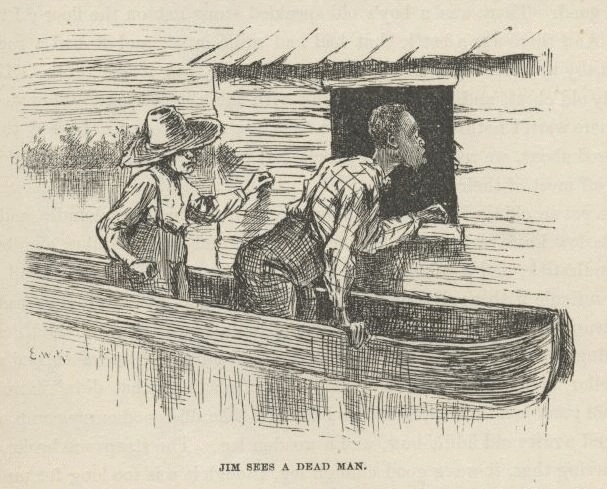
9. Huckleberry Finn and Jim from Huckleberry Finn by Mark Twain
Huckleberry is a young boy whose abusive father disappears and reappears over and over again, pulling Huckleberry from the warm and (sort of) comforting home with Widow Douglass and Miss Watson. When Huckleberry decides to run away from the widow and Miss Watson and his father to have an adventure on the Mississippi River, he meets runaway slave Jim. The two continue on their journey together and form a storm, unlikely, friendship that forces Huckleberry to examine his ideas about slavery and black people.
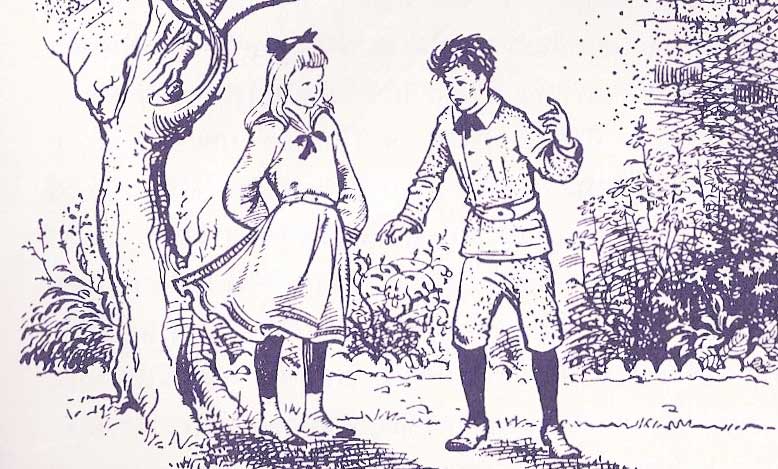
10. Digory Kirke and Polly Plummer from The Magician’s Nephew by C.S. Lewis
Digory and Polly meet one afternoon, begin to play by hopping across the rafters in the attics of the connecting row houses and it all takes off from there. Polly is pulled through a portal when she touches a ring that belongs to Digory’s evil uncle and Digory has to follow her. Evil queens, talking animals, and much more will await these children who become fast friends thanks the adventure they are thrown into.
Are you familiar with any of these literary friendships and if so, do you have a favorite?
It’s time for our Sunday morning chat. On Sundays, I ramble about what’s been going on, whatthe rest of the familyand I have been reading and watching, andwhat I’ve been writing. Some weeks I share what I am listening to.
Throughout my childhood and teenage years my family and I would visit my mom’s side of the family in Jacksonville, N.C. for Christmas at my grandmother and aunt’s house.
One day when I was about 18 or so, my parents told me we were going to drive a couple hours west to see my mom’s aunt and uncle and cousins in a little town called Farmville.
I had never met this part of the family before so I didn’t know what to think of them. The house was full of chatter as soon as we arrived. Chatter and offers of food.
“Y’all come on in here and get yourself some food,” Cousin Joyce said from the kitchen.
Conversations began to take the path they usually do in Mom’s family — several of them being held at once all at the same time, back and forth between each other. I did my best to keep track. The conversations were mainly between my grandmother, mom, aunt Dianne, Cousin Joyce, Cousin Janet and Aunt Mattie.
Uncle Ray — full name Ashley Ray Waignwright (isn’t the quentissintial Southern name?!), a short man with very little hair, wearing a pair of small, wire-rimmed glasses, and looking a bit somber, was sitting in a little rocking chair. He was participating in some of the conversations but not much. Mainly he was observing.
At some point I developed the hiccups. They were painful and wouldn’t stop.
Mom suggested I drink some water. Aunt Dianne said a spoonful of sugar. Someone else suggested holding my breath.
Uncle Ray narrowed his eyes.
“Heard what you been saying about me, girl.”
I was startled. Was he looking at me? I looked behind me. There was no one there. It had to be me he was talking to.
“I—I’m sorry?”
He frowned. “You. I heard what you been saying about me.”
“I-I – know I haven’t said anything.”
Mom hadn’t mentioned her uncle Ray was going senile but this conversation was getting weirder by the moment.
“You sure did,” he said. “You know it and I know it so you just need to apologize.”
“I—I .. but…”
His grim expression didn’t crack. “Where those hiccups gone?”
“What? What do you mean?”
A small smile tipped the corner of his mouth upward. “Your hiccups. They’re gone, aren’t they?”
I dragged in a ragged breath and let it out again.
The rest of the conversations had stopped during this exchange and I heard my mom laugh.
It was beginning to hit me now.
“He got you, didn’t he?” Mom asked.
Uncle Ray was smiling more now. Yes, he’d got me, and the panic I’d felt at thinking he thought I’d said something awful about him had been enough to stop the hiccups
I am juggling a few books right now – I know that sounds weird, but I do that because I read one during the day and one at night sometimes.
I prefer to read my mysteries during the day and more relaxing or light books before bed. I’ve found if I read mysteries before bed, I dream about people dying or chasing me. Even with cozier mysteries. Not always, but sometimes. If the mystery is too good, I still read it at night and just put up with the weird dreams.
Anyhow, I just finished The Tuesday Night Club (Miss Marple short stories) by Agatha Christie and ended up liking it more as I continued it. It is a series of short stories involving several familiar characters from Miss Marple books all gathered together discussing mysterious cases they’d heard of or investigated and asking if everyone listening could figure out what really happened.
There was a lot of subtle humor in the book that ended up making the repetitiveness of how almost each story ended with Miss Marple solving the case presented by each person and then that person, who previously said they didn’t know the solution, or someone else in the room, saying that they suddenly had remembered she was right and they had heard what had really happened. It was a bit tedious but not every story ended that way, luckily. I mean, Miss Marple did solve it every time, but there wasn’t always a sudden realization from someone else in the room knew what really happened.
I will finish Every Living Thing by James Herriot this week, as far as I know anyhow.
I’ve already started The Thursday Murder Club by Richard Osman and I’m not sure what I think so far. POV’s keep changing and there is a lot more detail about a lot of characters than I think is needed so….we will see if I can make it through or not. I’ve heard good things about it, so I’m sure I will end up liking it.
I will need a slightly lighter read for nights later this week so I will be picking up Little Men again or finishing up Nancy Drew: The Sign of the Twisted Candles.
Little Miss and I have almost finished Sign of the Beaver for history.
The Boy and I are still pushing through Frankenstein. I don’t want to talk about it. I just can’t wait to graduate him this year. We are starting Romeo and Juliet in March. Lord, be with us.
He’s also listening to No Country For Old Men by Cormac McCarthy
The Husband is reading Hot Property by Mike Lupica.
This week I watched Murder She Wrote, Victorian Farm, All Creatures Great and Small, Sonic the Hedgehog 3 with the kids (let’s be honest. I didn’t pay much attention to it.), my farmer on YouTube (Just a Few Acres), and Sinbad the Sailor.
Upcoming in April: Erin from Still Life, With Cracker Crumbs, and I are planning on a Paris themed movie marathon. We will keep you updated.
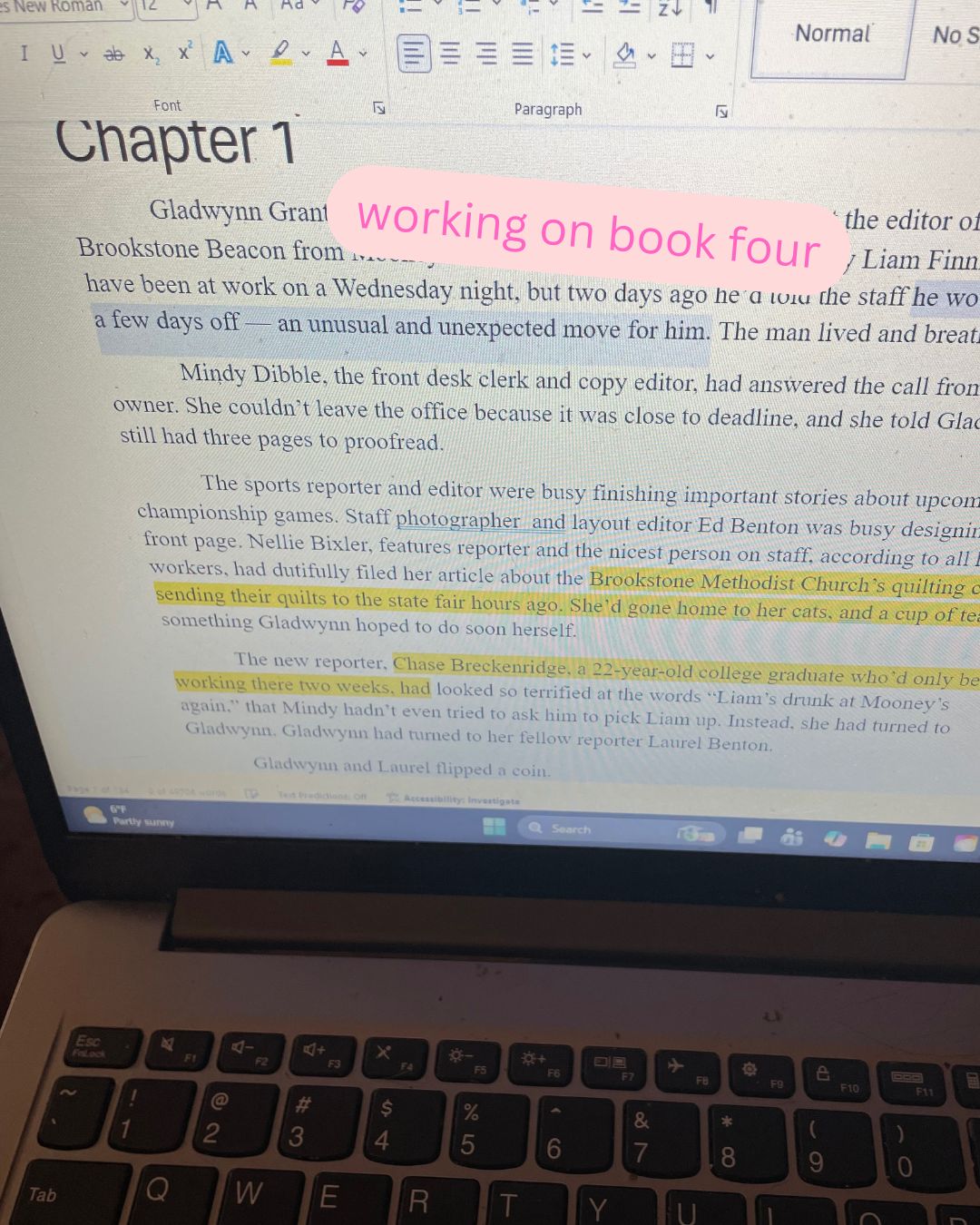
I’ll be starting book four in the Gladwynn Grant series soon and have decided I’ll probably only write six books in this series and, yes, I will wrap up that “love triangle” in book four or five. Probably book four. It’s boring even for me at this point.
I am listening to Frankenstein on Audible and hope to continue it this week
Now It’s Your Turn!
What have you been doing, watching, reading, listening to or writing? Let me know in the comments or leave a blog post link if you also write a weekly update like this.
Sometimes there are issues with commenting on WordPress. If you can’t comment, but want to, please feel free to hit the contact link at the top of the page.
You can also support my writing and chat about books, mysteries, old movies, vintage books, mystery shows, etc. for $3 a month at my Patreon here: https://patreon.com/LisaHoweler.
If you like my content you can subscribe to my posts for free here too.
Lord Edgware Dies by Agatha Christie is a wild ride full of Hollywood starlets, mistaken identities, greed, trickery, and hilarious verbal sparring between Arthur Hastings and Poirot.
This is the second Poirot book I’ve read and I thoroughly enjoyed it.
This is the story of the death of Lord Edgware, whose wife – American actress Jane Wilkinson — declares she’d like to kill him – maybe hit him with her car so she can marry another man. The focus on the suspect flies right to her when he is found dead in his library the next day – stabbed in the neck.
There are other suspects in the play too, though – his nephew Ronald Marsh who wants his uncle’s fortune, his daughter who Lord Edgware wasn’t very nice to, an actress named Carlotta Adams who does an amazing impression of Jane Wilkinson, and even Lord Edgware’s secretary.
Jane is the obvious suspect, though, because she asked Poirot if he would go to her husband and ask him for the divorce she’s been asking for so she can remarry.
Originally, she wanted a divorce to marry an actor but now it is a duke. Poirot agrees to meet with Lord Edgware, who informs him that he’s already told Jane she could get a divorce.
The problem with Jane being the suspect is that she was seen at a dinner party the night her husband was killed and there is a witness who says he heard and saw her receive a phone call at exactly the time of the murder.
This spins the case right on its head.
Before the book is done there will be more than one murder, more than one suspect, and a big reveal scene at the end that twists and turns the reader to the answer.
Hastings reveals his affectionate aggravation with Poirot during the book, including how Poirot constantly talks about how he (Poirot) needs to go sit and use his “gray matter.”
“I have noticed that when we work on a case together, you are always urging me on to physical action, Hastings. You wish me to measure footprints, to analyse cigarette ash, to prostrate myself on my stomach for the examination of detail. You never realize that by lying back in an armchair with the eyes closed one can come nearer to the solution of any problem. One sees then with the eyes of the mind.”
“I don’t,” I said. “When I lie back in an armchair with my eyes closed one thing happens to me and one thing only!”
“I have noticed it!” said Poirot. “It is strange. At such moments the brain should be working feverishly, not sinking into sluggish repose. The mental activity, it is so interesting, so stimulating! The employment of the little grey cells is a mental pleasure. They and they only can be trusted to lead one through fog to the truth…”
While I enjoyed this book very much, I was bothered by the many negative or stereotypical references toward Jewish characters in the book. I apparently downloaded a copy to my Kindle where they hadn’t taken these references out since such references were edited out from some versions years ago.
A quick search online revealed a complicated relationship between Agatha and her views on Jews – views that partially came from the attitudes toward Jews of the wealthy class of people she was a part of in Great Britain. Agatha did indeed have some antisemitic views but also wrote about Jews being wealthy in a good way in her books – like that they were bright so that is how they were able to be so wealthy. She used a seriously disturbing number of tropes against them in this particular book, often calling them shrewd and money-hungry – but then seeming to say being shrewd was a good thing.
At one point in Lord Edgware Dies Poirot says, “Misfortune may always be waiting about to rush upon us. But as to your question, Miss Adams, I think, will succeed. She is shrewd and she is something more. You observed without a doubt she is Jewish?”
Hastings says he hadn’t but now that he thinks about it he does “see the faint traces of Semitic ancestry.”
Poirot continues, “It makes for success – that. Though there is still one avenue of danger – since its danger we are talking of.”
“You mean?” Hastings asks.
“Love of money,” Poirot tells him. “Love of money might lead such a one from the prudent and cautious path.”
So while we have a stereotype here, we also have a compliment, making it confusing what Agatha is really trying to say about Jews. The fact she continues to negatively reference Jews throughout the book (one has the traditional big Jewish nose, one character comments), is awkward but she also seems to assign some positive elements to those characters, as well as showing admiration of those who are Jewish from other characters in the book.
According to information I read online, an autobiography about Agatha details a few stories that point to her apparent antisemitism, including one during World War II when a high-ranking British official involved with the Nazi party commented that all Jews should be killed. This is said to be a moment when Agatha was shocked at the idea of killing anyone based on their ethnicity or faith and she was appalled at the comment. Her portrayal of Jews changed some after that incident. Nothing I read can definitively say that Agatha didn’t like Jews, blacks, or any other race she described in a stereotypical way in her books, plays, and short stories. Some critics, and even her own family members, feel that she was writing about how certain groups were described at that time, not that she herself felt hatred toward any group.
There are, however, repeated negative references to Jewish people in this particular novel and I struggled to be simply entertained by the story because of them. After feeling uncomfortable with the continued references, I did read a very interesting article by a writer named Benjamin Ivry on Forward.com. Forward.com is a site focused on Jewish culture. In summary, Ivery said that some of the language against Jews Agatha used in her writing was wrong and stereotypical but that many Jews still enjoy Agatha’s work, seeing it as a product of a time when many ethnicities were not respected. May of Jews can still see the brilliance in Agatha’s plots, while recognizing her propensity to overgeneralize Jewish stereotypes, he said.
In his article, he wrote: “Christie specialist Gillian Gill was unequivocal:
‘A kind of jingoistic, knee-jerk anti-Semitism colors the presentation of Jewish characters in many of her early novels, and Christie reveals herself to be as unreflective and conventional as the majority of her compatriots… Christie’s anti-Semitism had always been of the stupidly unthinking rather than the deliberately vicious kind. As her circle of acquaintances widened and she grew to understand what Nazism really meant for Jewish people, Christie abandoned her knee-jerk anti-Semitism. What is more, even at her most thoughtless and prejudiced, Christie saw Jews as different, alien, and un-English, rather than as depraved or dangerous – people one does not know rather than people one fears.”
Jane Arnold likewise observed that in Christie’s writings, “No particular Jewish characteristic is completely negative.” This ambiguity may have been due in part to an incident recounted in Christie’s autobiography. In 1933, she accompanied her husband, an archaeologist, to the Middle East for an excavation. There they met Julius Jordan, Germany’s Director of Antiquities in Baghdad. When someone mentioned Jews, Jordan retorted: “Our [German] Jews are perhaps different from yours. They are a danger. They should be exterminated. Nothing else will really do but that.”
Christie’s reaction was to stare at Jordan “unbelievingly” and observe to herself: “There are things in life that make one truly sad when one can make oneself believe them.” The UK National Archives website further explains that Julius Jordan was Nazi Party leader and propaganda director for Iraq. So Christie had encountered the local equivalent of Joseph Goebbels.
While Christie was shocked at the idea of Jews being killed, a Jewish journalist, Chrisopher Hitchens, later said when he attended a dinner with Christie and her husband in the 1960s the conversations about Jews was still “vividly unpleasant.”
Ivry says for many Jews, Agatha remains “a recreational delight.”
Indeed, in an article in the Canadian Jewish News, journalist Michael Taube writes: “Was Christie a racist or an anti-Semite? Her family and friends always denied it. They argued that most of the characters who made intolerant remarks were, in fact, seen in a negative light in her works. That’s true, which means she was more likely a product of her times than a hateful soul.”
As for my personal opinion, I enjoy Agatha Christie’s novels and plan to keep reading them. Since I was never able to speak to the woman herself and will never have the chance I will hold on to hope that the negative references she made toward Jews and other ethnicities were simply what others have said they were – ignorance or a reflection of the character saying them.