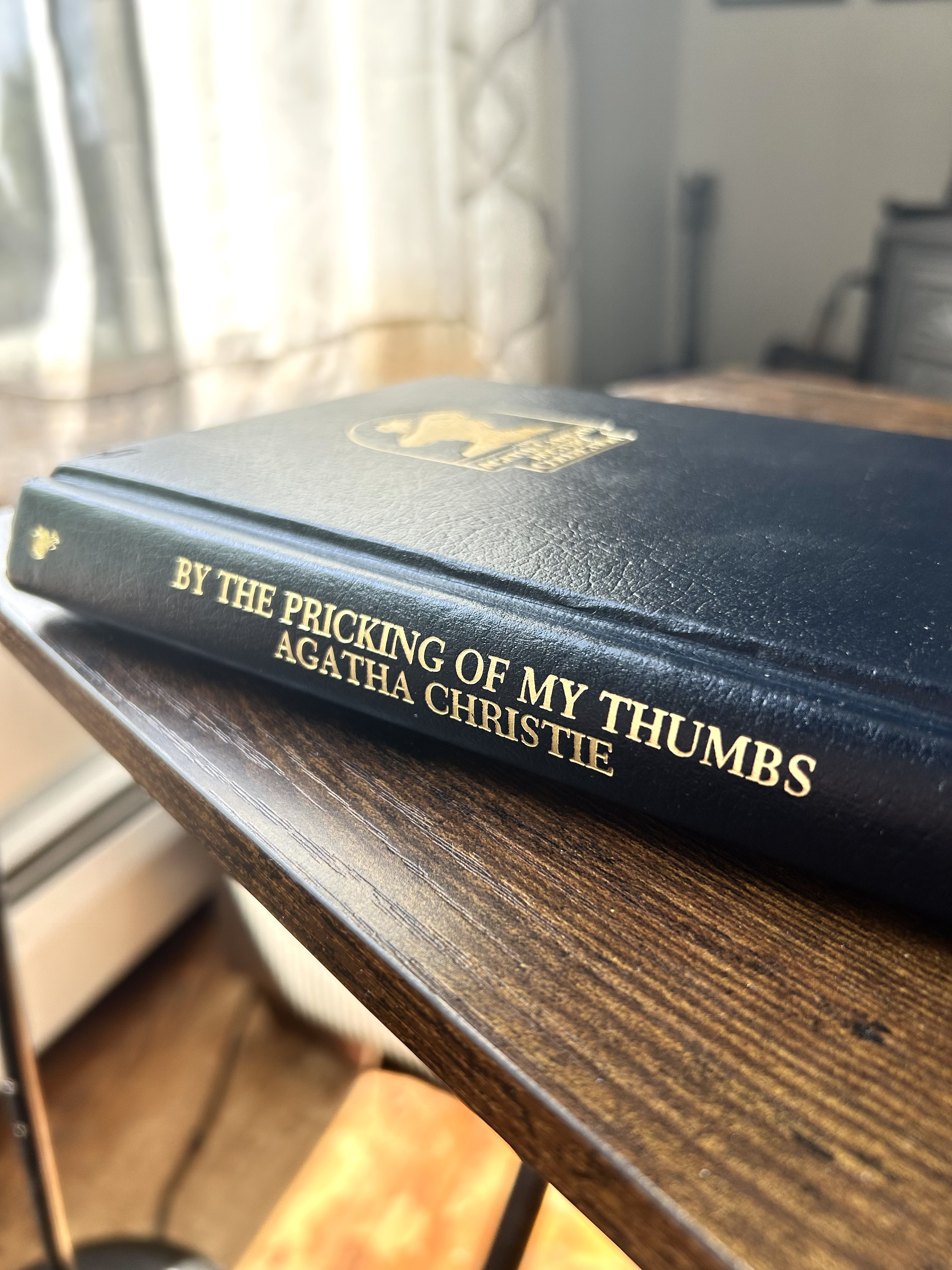
Book Recommendation: Crooked House by Agatha Christie

That won’t make sense until you read the book, so here is a little background on this one, which does not feature one of Christie’s famous detectives.

This book is a standalone novel that starts with the main character Charles Hayward planning to marry Sophia Leonides who he met in Egypt toward the end of the war. They hang out while in Eqypt and correspond some afterward, but drift apart until he returns to England two years later. It’s after his return that he reads in the paper that Sophia’s grandfather has died. He knows it is her grandfather because she once told him all about her family.

“’We live in a crooked little house . . .’”

“I must have looked startled, for she seemed amused, and explained by elaborating the quotation. ‘And they all lived together in a little crooked house,’ That’s us. Not really such a little house either. But definitely crooked — running to gables and halftimbering!”

In this case the crooked little house quote is a play on the nursery rhyme “There Was a Crooked Little Man,” but I am not familiar with that nursery rhyme.

Due to the blitz, Sophia’s extended family was all living in the house with the patriarch, Aristide Leonides, a short Greek man who commanded a lot of presence. Her family includes her younger brother and sister, her parents, her uncle and an aunt by marriage, her grandfather, a great aunt, and a step-grandmother.”

Charles reaches out to her by telegram, and she asks to meet that night at a local restaurant. The connection they had two years ago is still strong, and he still wants to marry her, but she says she can’t marry him now, and maybe never. She believes her grandfather has been murdered, and she doesn’t want to ruin Charles’ reputation as a member of the Diplomatic Service because she feels certain the murder was committed by someone in her family.

The main suspect is her step-grandmother, Brenda, with the tutor for Sophia’s siblings a close second because the family believes the two were having an affair.

In the first part of the book, we get to know the entire family, and it isn’t very pretty. Many of them are selfish and bitter people looking out for themselves, and the ones who don’t seem that way may be putting on an act. Maybe even Sophia is putting on an act. Figuring out who committed the crime will baffle Charles and Scotland Yard, and when you get to the ending — oof. It’s definitely a plot twist, one I saw coming, but still had to find out how and why.

I would definitely recommend this one if you’ve never read Agatha before or even if you have. I think it’s one of her best, and I read today that she called it one of her favorites to write. It is definitely a book that will stick with you over the years, making you think (and shudder a bit) long after you’ve put it down.

Some quotes from it I enjoyed:

“Curious thing, rooms. Tell you quite a lot about the people who live in them.”

***

“I think people more often kill those they love than those they hate. Possibly because only the people you love can really make life unendurable to you.”

***

“I’ve never met a murderer who wasn’t vain… It’s their vanity that leads to their undoing, nine times out of ten. They may be frightened of being caught, but they can’t help strutting and boasting and usually they’re sure they’ve been far too clever to be caught.”

***

“Murder, you see, is an amateur crime… One feels, very often, as though these nice ordinary chaps, had been overtaken, as it were, by murder, almost accidentally. They’ve been in a tight place, or they’ve wanted something very badly, money or a woman – and they’ve killed to get it. The brake that operates with most of us doesn’t operate with them… They continue to be aware that murder is wrong, but they do not feel it. I don’t think, in my experience, that any murderer has really felt remorse… Murderers are set apart, they are ‘different’ – murder is wrong – but not for them – for them it is necessary – the victim has ‘asked for it,’ it was ‘the only way.”

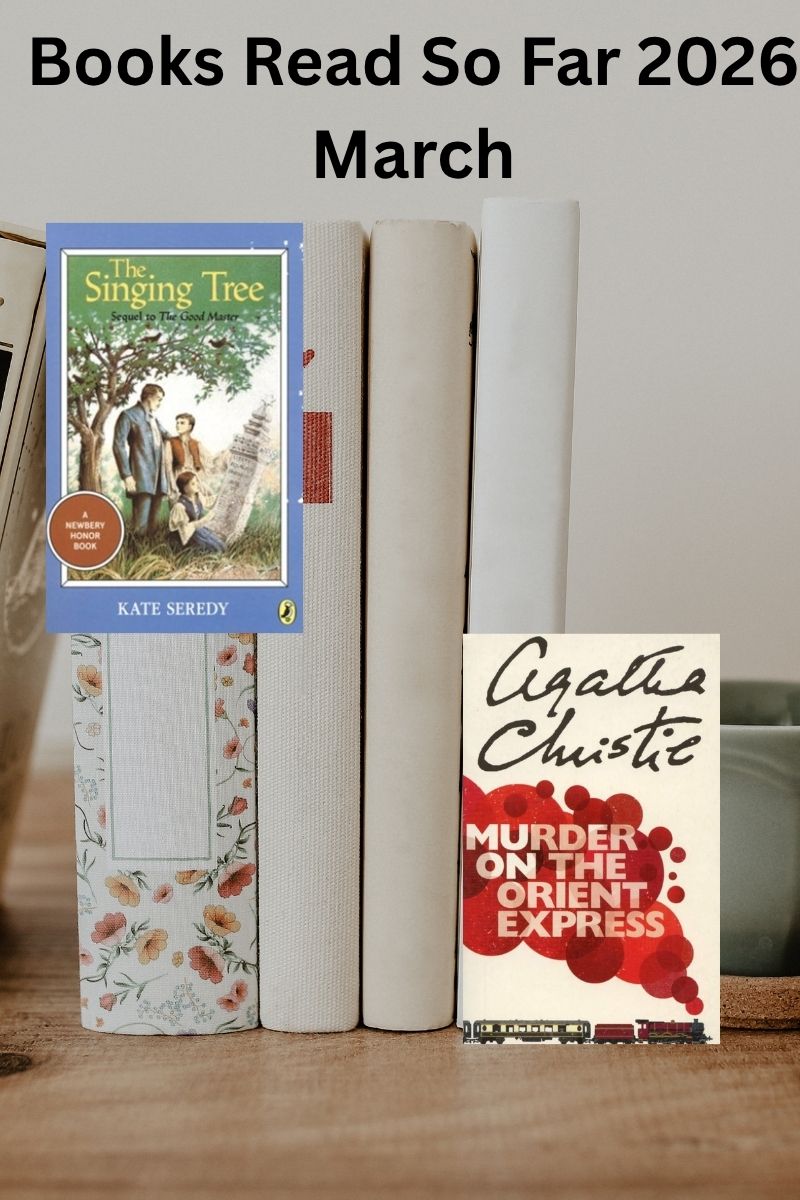
Book Recommendation: Murder on the Orient Express by Agatha Christie

I read Murder on the Orient Express by Agatha Christie for the first time this month as part of Read Christie 2026 with the Official Agatha Christie site.

I’ve read plenty of Christie’s books already but have always steered clear of the “big ones” that everyone knows because I’ve usually seen the movies and know the stories. I have learned, though, that there can be changes in the movies and sometimes they aren’t always for the better.

One example was And Then There Were None. If you have not read that one, you really need to, even if you saw any of the movies. It was the first Christie I read and … whoa. I sat there at the end feeling horrified and in awe at the same time. What a twisted, but well-written story.

(An aside…anyone who doesn’t think Agatha disappeared for 11 days as a way to get back at Archie and buys the whole “temporary amnesia” story hasn’t read enough of Agatha’s books. The woman had a million ideas how to get back at someone and how to kill them.  If you don’t know what I am talking about – do a quick online search. It’s like the plot of one of her books but actually real life.)

For those who have never read this one, here is simple summary: a group of people end up stranded on the Orient Express (a train in Europe) during a blizzard when one of them is murdered. Too bad for the murderer, renowned detective Hercule Poirot has hopped on at the last minute and is working hard to solve the case while everyone waits for help to arrive.

What is so funny in the Poirot books is how Poirot always expects everyone to know who he is, and most people look at him in confusion when he introduces himself.

It’s always like, “Surely you must know me,” and then the other person looks confused and says, “No, I’m afraid not.”

Here are some actual quotes from the book that I enjoyed:

“Mon ami, if you wish to catch a rabbit you put a ferret into the hole and if the rabbit is there he runs. That’s all I have done.”

***

“When he passed me in the restaurant,” he said at last. “I had a curious impression. It was as though a wild animal — an animal savage, but savage, you understand — had passed me by.”

“And yet he looked altogether of the most respectable.”

“Precisement! The body — the cage — is everything of the most respectable — but through the bars, the wild animal looks out.”

***

“But I know human nature, my friend, and I tell you that, suddenly confronted with the possibility of being tried for murder, the most innocent person will lose his head and do the most absurd things.”

***

“You’ve a pretty good nerve,” said Ratchett. “Will twenty thousand dollars tempt you?”

It will not.”

If you’re holding out for more, you won’t get it. I know what a thing’s worth to me.”

I, also M. Ratchett.”

What’s wrong with my proposition?”

Poirot rose. “If you will forgive me for being personal – I do not like your face, M. Ratchett,” he said.”

***

“All around us are people, of all classes, of all nationalities, of all ages. For three days these people, these strangers to one another, are brought together. They sleep and eat under one roof, they cannot get away from each other. At the end of three days they part, they go their several ways, never, perhaps, to see each other again.”

***

I’ve already read my Christie for this month, but I’ve tossed Crooked House in the mix as an extra Christie read because my husband recommended it.

In April, I’ll be reading a Miss Marple — A Caribbean Mystery.

Have you read this one or any Christie books? If you have read her books, do you have a favorite?


If you write book reviews or book-related blog posts, don’t forget that Erin and I host the A Good Book and A Cup of Tea Monthly Bookish Blog Party. You can learn more about it here.

On Thursdays, I am part of the Weekend Traffic Jam Reboot blog link party. You can find the latest one in the sidebar to the right under recent posts.

I also post a link-up on Sundays for weekly updates about what you are reading, watching, doing, listening to, etc.


Hello! Welcome to my blog. I am a blogger, homeschool mom, and I write cozy mysteries.

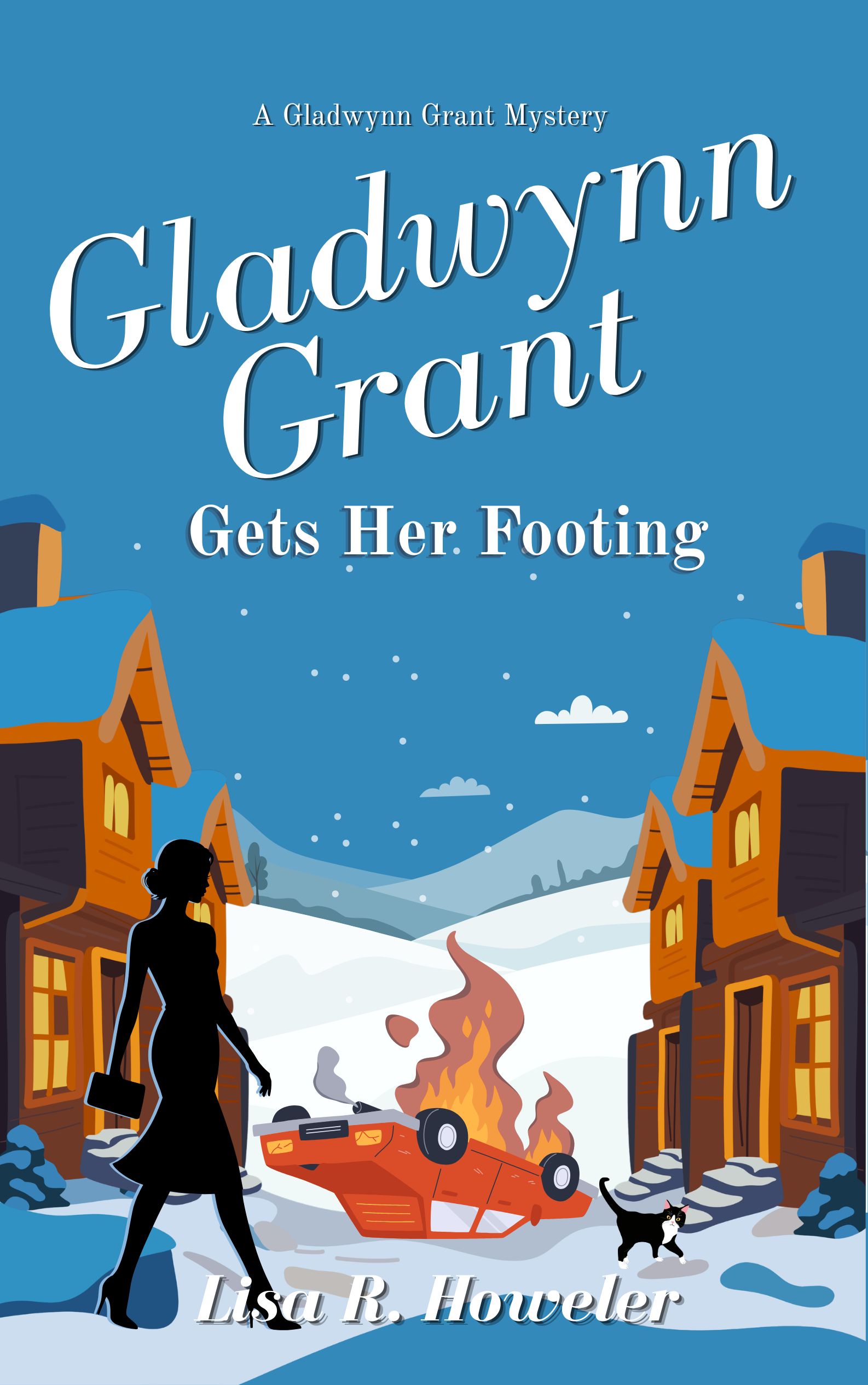
You can find my Gladwynn Grant Mystery series HERE.

You can also find me on Instagram and YouTube.

22 Books I Recommend for Middle Grade March

This is the month when adults read chapter books that were actually written for children. Middle Grade March. Sometimes, they are so good that we don’t even realize they were written for children.I read a lot of middle-grade books throughout the year because I have a middle-grade child. She and I have already read many of the books other readers have on their lists each year.

If you participate or want to participate in Middle Grade March, I have a few suggestions of books you can choose from to read. Many of these are “lesser known” middle-grade books that don’t always get a lot of attention in bookish circles.

Gone Away Lake by Elizabeth Enright

Return to Gone Away Lake by Elizabeth Enright

The Magician’s Nephew by C.S. Lewis

Caddie Woodlawn by Carol Ryrie Brink

The Green Ember by S.D. Smith

Roll of Thunder Hear My Cry by Mildred D. Taylor

Children of the Longhouse by Joseph Bruchac

Johnny Tremain by Esther Forbes

The Good Master by Kate Seredy

Benjamin West and His Cat Grimalkin by Marguerite Henry

Children of the Longhouse by Joseph Bruchac

Freedom Crossing by Margaret Groff Clark

Miracle on Maple Hill by Virginia Sorenson

The Moffatts by Eleanor Estes

The Middle Moffatt by Eleanor Estes   

The Saturdays by Elizabeth Enright

The Sign of the Beaver by Elizabeth George Spear

The Cabin Faced West by Jean Fritz

The Borrowers by Mary Norton

The Secret Garden by Frances Hodgson Burnett

The Adventures of Tom Sawyer by Mark Twain.

King of the Wind by Marquerite Henry


Do you participate in Middle Grade March, or have you?

If you have, what did you read or if you are this month, what are you reading?


If you write book reviews or book-related blog posts, don’t forget that Erin and I host the A Good Book and A Cup of Tea Monthly Bookish Blog Party. You can learn more about it here.

On Thursdays, I am part of the Weekend Traffic Jam Reboot blog link party. You can find the latest one in the sidebar to the right under recent posts.


Hello! Welcome to my blog. I am a blogger, homeschool mom, and I write cozy mysteries.

You can find my Gladwynn Grant Mystery series HERE.

You can also find me on Instagram and YouTube.

Book recommendation: The Tiger in the Smoke by Margery Allingham

This was my first Margery Allingham book, and I was very impressed with her writing style and storytelling.

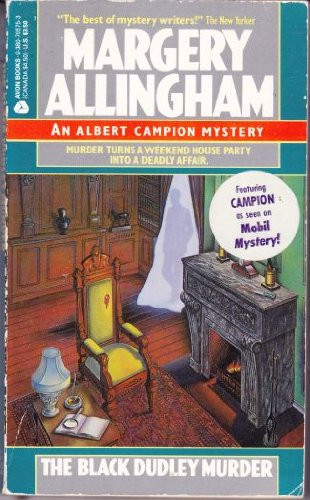
This book is called by Golden Age mystery enthusiasts one of her best. It is the fourteenth book in the Albert Campion series, but Campion isn’t really in this book as much as I expected him to be.

First, a little bit of a description that I pulled off Goodreads:

A fog is creeping through the weary streets of London—so too are whispers that the Tiger is back in town, undetected by the law, untroubled by morals. And the rumors are true: Jack Havoc, charismatic outlaw, knife-wielding killer, and ingenious jail-breaker, is on the loose once again.
 
As Havoc stalks the smog-cloaked alleyways of the city, it falls to Albert Campion to hunt down the fugitive and put a stop to his rampage—before it’s too late . . .

This one is more of a psychological thriller than a detective mystery with Allingham walking us through the story through action but also a lot of mental contemplations of four different characters, Campion being one but on a smaller scale.

Our characters are Havoc, Geoffrey Leavett, Canon Avril, Inspector Charlie Luke, Campion, and Meg Elgenbrodde.

Points of views are offered for most of them but not consistently, which sounds confusing, but it really isn’t.

If you have read detective or Golden Age mysteries from the 1930s to the 1960s, then you know there is a lot of what we writers call “head hopping.” The author hops in and out of various characters heads, telling us what each one is thinking in the same scene. These days we writers are told to never head hop. Stick to one character’s point of view per scene. If you want to show the thoughts of another character, then wait until a scene break of a new chapter.

Back in the old days, there were less rules, so authors just wrote whatever they wanted to and however they wanted to and readers just went with it. Sure, it could get confusing,s but if the story was strong enough no one cared.

I found myself nervous through a lot of this book as characters seemed to put themselves in the most precarious situations.

We start the book with Meg and George in a car together, talking about Meg preparing to go to a meeting with a man who insists he is her husband who died during World War II, which ended several years before. The man has been sending her letters. Meg and George are supposed to be married soon, so of course this development is unsettling to them both.

Meg takes her cousin, Campion, a private detective, and London Police Inspector Charlie Luke to meet with the man.

I won’t tell you if the man is really her husband or not, because I don’t want to give anything away, but I will say that there is a mystery involving her husband and a treasure and it is tied to Havoc, an evil man who has killed many, just escaped jail, and will kill again to get what he wants.

I loved opening this book up on my Kindle when I had time to read it and had a hard time putting it down. I hope to get a paperback copy at some point so I can reread it.

There are some really well-written lines and paragraphs in it.

Here are a few I enjoyed:

“He was watching her, trying to appraise her reaction. The face she turned to him was both disappointed and relieved. Hope died in it, but also hope appeared. She was saddened and yet made happy.”

The rumbling ceased abruptly and a clipped schoolmasterish voice remarked acidly: “Very tood of you to bother about my immortal soul, Chief Inspector. I’m afraid I’d ceased to concern myself about yours.”

“Then he dropped lightly to the ground and a smile split a wide thin-lipped cat’s mouth in which the teeth were regular and beautiful.

‘Dad’s back,’ he said, and his voice was smooth and careful. Only the shadow flitting like a frown across his forehead and his pallor, which was paper-like, betrayed his weariness. His spirit danced behind his shallow eyes, mocking everything.”

His beauty, and he possessed a great deal, lay in his hands and face and in the narrow neatness of his feet. His hands were like a conjurer’s, large, masculine, and shapely, the fingers longer than the palms, and the bones very apparent under the thin skin.”

He was a man who must have been a pretty boy, yet his face could never have been pleasant to look at. Its ruin lay in something quite peculiar, not in an expression only but something integral to the very structure. The man looked like a design for tragedy. Grief and torture and the furies were all there naked, and the eye was repelled even while it was violently attracted. He looked exactly what he was. Unsafe.”

When he came to the part which was most important of all to him that night, he paused and said it twice. ‘Lead us not into temptation but deliver us from evil.’

That was it. That was what he meant. Lead us not into temptation, for of that we have already enough within us and must resist it as best we can in our own way. But deliver us, take us away, hide us from Evil. From that contamination of death, cover us up.”

I am looking forward to reading more of this series.

Have you read any of Allingham’s books?

Also, I just found out there was a movie based on this book made in the UK in 1956. You know that I am going to have to find it and watch it!

Book review: Come, Tell Me How You Live by Agatha Christie Mallowan


I’m surprised more people don’t talk  or write about Agatha Christie’s non-fiction books, especially Come, Tell Me How You Live, which reveals so much of her witty sense of humor.

Of course, she only wrote three non-fiction books — this one, her autobiography, and The Grand Tour, a collection of her letters and photographs from her 1922 tour to promote the British empire.

Christie writes this book under her full name of Agatha Christie Mallowen, with Mallowen being the name of her second husband and she’s wrong in her introduction.

I don’t read non-fiction often so I wasn’t sure I would enjoy this one but when the opening pages describe Agatha looking for outfits she can wear on her husband’s archaeological dig in Syria and the clerk lets her know they might not be able to accommodate her larger size, which Agatha handles hilariously, I knew I had to keep going.

As Agatha says in the intro of this book, “This is not a profound book. It will give you no interesting sidelights on archaeology, there will be no beautiful descriptions of scenery, no treating of economic problems, no racial reflections, no history. It is, in fact, small beer — a very little book, full of everyday doings and happenings.”

This book does actually include some beautiful descriptions and a few interesting sidelights on archaeology.

Agatha started writing this book before World War 2 and finished it afterward, sending it out into the world to be published.

As I mentioned already, the book begins with Agatha looking for traveling clothes. Her humor immediately kicks in.

“Shopping for a hot climate in autumn or winter presents certain difficulties. One’s last year’s summer clothes, which one has optimistically hoped will “do”, do not “do” now the time has come. For one thing, they appear to be (like the depressing annotations in furniture removers’ lists) “Bruised, Scratched, and Marked.” (And also Shrunk, Faded, and Peculiar!). For another — alas, alas that one has to say it! — they are too tight everywhere.

So, to the shops and the stores and:

“Of course, Modom, we are not being asked for that kind of thing now! We have some very charming little suits here — O.S. in the darker colors.”

I’m guessing O.S. means oversized because Agatha then writes: “Oh, loathsome O.S. How humiliating to be O.S.! How even more humiliating to be recognized at once as O.S.!”

If I have done my math right, Agatha would have been around 45 at the time this trip was taken.

She and her husband, Max, traveled to Syria and Iraq. Max was an archaeologist and Agatha actually met him on an archaeologist dig in 1930, years after divorcing her cheating first husband, Colonel Archibald Christie.

What’s so fun about this book is how Agatha writes about different she and Max approach situations in life, with her being a bit more high strung and him being laid back and acting like everything will turn out all right. Agatha was about 15  years older that Max, I might add, which I did not realize while I was reading the book. I read that while I was researching for the review. No wonder he seemed so aloof and laid back. He was still young and a bit naïve in some ways.

In addition to sharing details of her marriage, Agatha also writes about the quirky men who travel with her and her husband.

I would not be surprised if some of the people they worked with or met along their travels popped up in Agatha’s mysteries.

Mac, her husband’s architect assistant, gets the bulk of the secondary character playback throughout the book and it is hilarious. His full name was Robin Maccartney.

Mac is extremely serious, a perfectionist, and also lacks any sense of humor.

Agatha and Max traveled off and on between 1935 and 1936, with stays in Syria long enough that they had a house remodeled for them to stay in. Mac, an architect by trade, has been designing blueprints for Agatha’s bathroom.

“I ask Mac that evening at dinner what is fist architectural job as been.

“This is my first bit of practical work,” he replies. “—your lavatory!”

He sighs gloomily, and I feel very sympathetic. It will not, I fear, look well in Mac’s memoirs when he comes to write them.

The budding dreams of a young architect should not find their first expression in a mud-brick lavatory for his patron’s wife!”

Agatha shares some of her most savage lines in the book when she is writing about Mac, who almost seems uptight and perfect to be human at times.

It isn’t until he can’t light a gas lamp that he has a meltdown which Agatha says reveals his humanity.

I steal a glance at him when another five minutes have gone by. He is getting warm. He is also looking not nearly so superior. Scientific principal or no scientific principal the petrol lamp is holding out on him. He lies on the floor and wrestles with the thing. Presently he begins to swear… A feeling that is almost affection sweeps ove me. After all, our Mac is human. He is defeated by a petrol lamp!

Agatha writes that from that point on, Mac is one of them, someone who can easily get frustrated and swear about it.

Agatha did take her typewriter and some manuscripts with her and writes about working on a book while there. One of their friends, Louis Osman, an architect and member of the archaeological team, who was affectionately nicknamed “Bumps” by the group, and who Agatha simply calls “B” in her book, came into her office one day to chat, but she wants him to leave because she’s in the middle of writing a murder scene.

“He goes into the drawing office and talks to Mac, but, meeting with no response, he comes sadly into the office, where I am busy on the typewriter getting down to the gory details of a murder.

‘Oh,’ says B. “you’re busy?”

I say, ‘Yes,’ shortly.

“Writing?” asks B.

‘Yes’ (more shortly).

‘I thought, perhaps,’ says B wistfully. ‘I might bring the labels and the objects in here. I shouldn’t be disturbing you should I?’

I have to be firm. I explain clearly that it is quite impossible for me to get on with my dead body if a live body is moving, breathing and in all probability talking, in the near vicinity!

Poor B goes sadly away, condemned to work in loneliness and silence. I feel convinced that, if B ever writes a book, he will do so most easily with a wireless and a gramophone turned on close at hand and a few conversations going on in the same room!”

Agatha also tells about the women of the middle east and how they want to get to know her and learn more about her. I was surprised to learn in this section that Agatha had had a series of miscarriages over the years, which may be one reason she and Archie only had one daughter.

There are some parts of the book I found a tiny bit slow but so much of it was so fascinating that I didn’t mind a little bit of slowness

I really enjoyed Agatha’s recollections and her thoughts about the faith of the people compared to the faith of the people in England.

I also found it interesting to read her views on public education, which would probably surprise people today.

After sharing about watching some of the village children play and experiencing every day life she wrote:

“I think to myself how happy they look, and what a pleasant life it is like the fairy stories of old, wandering about over the hills herding cattle, sometimes sitting and singing. At this time of day, the so-called fortunate children in European lands are setting out for the crowded classroom, going in and out of the soft air, sitting on benches or at desks, toiling over letters of the alphabet, listening to a teacher, writing with cramped fingers. I wonder to myself whether, one day a hundred years or so ahead, we shall say in shocked accents: ‘In those days they actually made poor little children go to school, sitting inside buildings at desks for hours a day! Isn’t it terrible to think off! Little children!’”

Have you ever read this one or any of Agatha’s non-fiction books?

Book review: The Secret of Chimneys by Agatha Christie

The Secret of Chimneys by Agatha Christie is the first of two books which feature Superintendent Battles and in the autumn my husband picked me up a gorgeous copy of it during a trip to a Barnes and Noble about 90 minutes away.

I had looked at the copy the year before so the gift was exciting and I enjoyed reading it as my third book this year.

Anthony Cade dominated the majority of the story, more so than Battle, and I was fine with that. He was a blast and had all the best lines. For some reason, I kept picturing Cade as Hugh Fraser, who plays Colonel Hastings in the Poirot TV show and movies, as I was reading.

From what I have read about this series, this is also where we Agatha readers meet Bundle – real name Lady Eileen Brent, but I also didn’t feel she dominated much of the story either. I read that she is even more in the second book of this duology, Seven Dials, which was recently released as a mini-series on Netflix. No, I haven’t seen it as I don’t a subscription to Netflix.

Sh was a fun addition who I would have liked to seen more of in the book really. So many Agatha fans seem to love her. This is not a complaint in anyway. Just an observation of a character I liked and wanted more of. I believe I will get that in the second book.

This one features a ton of political intrigue and some call it more of a thriller than a detective/crime fiction book, like many of Agatha’s other books. There is also a bit of romance, though, and I found the romance so sweet and the romantic lines swoon-worthy.

A quick description from the Agatha Christie site: A young drifter finds more than he bargained for when he agrees to deliver a parcel to an English country house. Little did Anthony Cade suspect that a simple errand on behalf of a friend would make him the centerpiece of a murderous international conspiracy.”

Chimneys, by the way, is the name of the house/estate – not an appendage on a roof.

Here are some quotes from the book that I enjoyed:

“Detective stories are mostly bunkum,” said Battle unemotionally. “But they amuse people, he added, as an afterthought. And they’re useful sometimes.”

“In what way?” asked Anthony curiously.

“They encourage the universal idea that police are stupid. When we get an amateur crime such as a murder, that’s very useful indeed.”

***

‘Lord no. It’s the red signal again. When I first saw you—that day in Pont Street, I knew I was up against something that was going to hurt like fun. Your face did that to me—just your face. There’s magic in you from head to foot—some women are like that, but I’ve never known a woman who had so much of it as you have. You’ll marry someone respectable and prosperous, I suppose, and I shall return to my disreputable life, but I’ll kiss you once before I go—I swear I will.’

***

“I wouldn’t go so far as to say I’ve got a plan. But I’ve got an idea. It’s a very useful thing sometimes, an idea. – Superintendent Battle

***

“You understand well enough, I dare say,” said Anthony, breaking the silence. “You know when a man’s in love with you. I don’t suppose you care a hang for me – or for anyone else – but, by God, I’d like to make you care.”

As for the mystery, I didn’t fully guess the guilty party but was starting to get an idea of who certain people really were toward the end of the book.

Have you read this one? What did you think?


If you write book reviews or book-related blog posts, don’t forget that Erin and I host the A Good Book and A Cup of Tea Monthly Bookish Blog Party. You can learn more about it here.

On Thursdays, I am part of the Weekend Traffic Jam Reboot blog link party. You can find the latest one in the sidebar to the right under recent posts.

I also post a link-up on Sundays for weekly updates about what you are reading, watching, doing, listening to, etc.

If you would like to support my writing (and add to the fund for my daughter’s online art/science classes), you can do so here.


Hello! Welcome to my blog. I am a blogger, homeschool mom, and I write cozy mysteries.

You can find my Gladwynn Grant Mystery series HERE.

You can also find me on Instagram and YouTube.

Book review: My Beloved by Jan Karon

I declared I was not finishing a Jan Karon book for the first time ever a couple of weekends ago when I was more than halfway through My Beloved, the 15th book in the Mitford series.

The book was released in October, a little over a decade after the last one was written, and my husband purchased it for me for my birthday. I was so excited to read it but let my mom read it first.

She wanted to tell me about it but decided to wait to see what I thought.

Last week, after pushing through the first half of the book due to my loyalty to Jan, I gave up and tossed the book onto the floor.

I snapped out a quick complaint on my Instagram stories. Then I went to Goodreads to see if I was alone. I wasn’t but I was in the minority.

I don’t like to criticize books because I write fiction and my books are not award winning in the least. Also, books can be subjective. Every reader has different tastes.

So what I’m going to say in this post about My Beloved is simply my feelings about a book I was looking forward to and was mostly disappointed with.

First, the description from Goodreads:

As snow blankets the quaint town of Mitford, Father Tim pens a list of Christmas gifts for his loved ones. But what present could possibly come close to relaying the depth of his affection for his wife, Cynthia? After all, she has changed his life—made him laugh more, feel more, love more than he ever imagined possible.

He decides to write a personal love letter to his beloved, but soon after he finishes, he discovers that it has gone missing. In ways extraordinary and unexpected, the letter makes its way into the hands of each of the townsfolk—the Kavanaugh family, Esther Cunningham, Miss Pringle, Puny, and others—bringing healing, hope, and a touch of Christmas magic to the people who need it most.

Filled with Jan Karon’s signature blend of humor and warmth, My Beloved invites old and new readers alike back to the cozy world of Mitford, where love and community shine brightest during the holiday season. Because sometimes, the greatest miracles come in the most unexpected packages.

Now, back to my thoughts:

After I tossed the book to the floor, I picked it back up. I tried again. I must have misunderstood some of what I thought was awkward or weird.

Maybe things flowed better than I thought but —  no! There it was – one character who is supposed to be a Christian saying, “Jesus,” he said. “I’m sorry. I—”

And he wasn’t talking to Jesus so all I could read it as was a swear word.

Even if it wasn’t meant that way, the rest of the book was all over the place.

Flowery, clipped paragraphs made so much of the book vague and unclear. I guess we were supposed to read between the lines on many topics and storylines that weren’t really storylines but little excerpts about people.

There were too many of these excerpt storylines, which there often is in a Mitford book, but this was beyond ridiculous. The main storyline got lost in the shuffle so bad that part way through I wondered if we’d ever hear about it again.

We did read about it again eventually but the contents of this letter Father Tim writes for his wife and loses was never revealed to us, which made the book feel a tiny bit pointless. On the other hand, I suppose the idea was to show the letter was too personal and intimate to be revealed.

There were little excerpts from the points of views of 19 people in this book, by the way. There are no chapters in the book. Instead, every page few pages or every other page there is a name at the top of the page and then their “perspective” which was often a list of dialogue written like an author who is getting the conversation on the page but plans to go back later and give the reader some idea of who was saying what.

Only no one went back to fix any of the dialogue so all we got was a stream of conversations back and forth with no attributions, which made it very confusing and convoluted.

There were so many tidbits of stories about characters we love but so many of them weren’t really expounded on our wrapped up.

I was shocked how many good reviews there are for this book on Goodreads. I think people are blinded by their love for Jan and the series and all Jan has gone through the last few years with the death of her daughter and brother.  I really do understand that. I almost fell into that too. At times there were glimpses of the old Mitford within these pages that made me pause and say, “Maybe it’s not that bad.” There were beautifully written sentences or sections.

But then Buck Leeper says the Lord’s name in vain, Jessie Barlow tells her brother Dooley, “I think I’m gay…” and then that subject is never broached again, and Father Tim lets loose and says things so out of character for him I was floored. And Pauline, the  mother of the Barlow children had gotten clean, sober, and much better in past books. Now here we were more than halfway through the book without time to seriously elaborate on her storyline and Jan is taking her back to the beginning and making her to be a total crazy person who never changed.

Did the woman forget that she’d already addressed Pauline’s changes in past books?

I feel like editors did not look over this book despite Jan thanking them at the end of the book.

So much of this book was left open ended and some readers hope that means there will be another book.

I certainly hope there isn’t another one if it is anything like this one.

I do, however, recommend all of the ones before this one.


If you write book reviews or book-related blog posts, don’t forget that Erin and I host the A Good Book and A Cup of Tea Monthly Bookish Blog Party. You can learn more about it here.

On Thursdays, I am part of the Weekend Traffic Jam Reboot blog link party. You can find the latest one in the sidebar to the right under recent posts.

I also post a link-up on Sundays for weekly updates about what you are reading, watching, doing, listening to, etc.


Hello! Welcome to my blog. I am a blogger, homeschool mom, and I write cozy mysteries.

You can find my Gladwynn Grant Mystery series HERE.

You can also find me on Instagram and YouTube.

Book recommendation: Christmas in Harmony

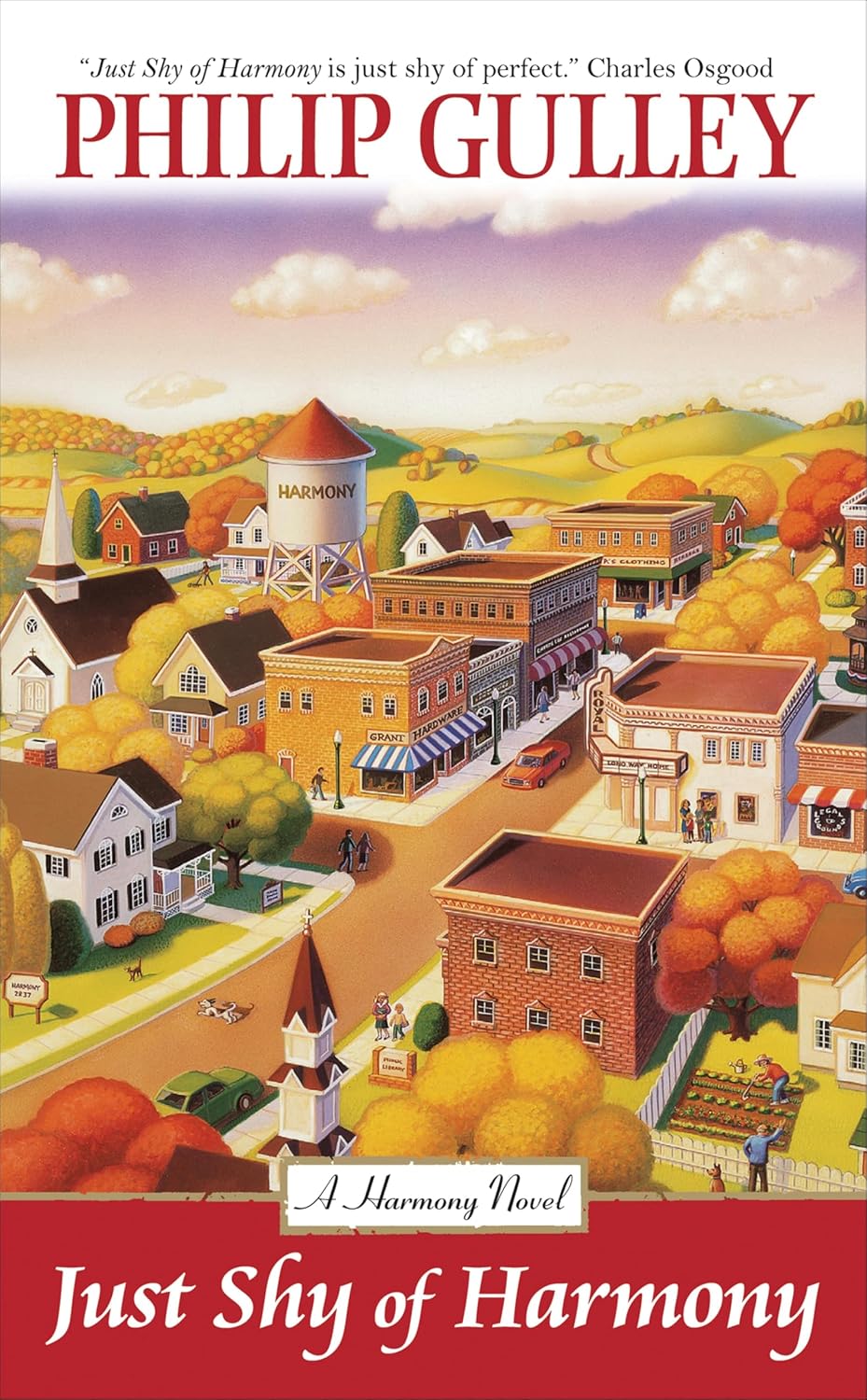
I have only read one of the Harmony books by Phillip Gulley, but I loved it, so I last week I looked to see if there was a Christmas one in the series, and there are two Christmas novellas. I downloaded Christmas in Harmony to my Kindle and breezed through it. It was short, yes, but it was also so charming, sweet, and funny that I couldn’t put it down!

The Harmony series is about Sam Gardner, the pastor of a Quaker Church in the town of Harmony. In the first book, each chapter was essentially its own story, with some connections, but this book was connected a great deal as it relayed the story of troublemaker church member Dale Hinshaw, who decides the church should sponsor a “Progressive Living Nativity” for the Christmas season.

His plan keeps getting more out of hand when he suggests, first, that different parts of the nativity be held on the front lawns of church members, so participants will have to drive around town to get the next part of the story. Then he suggests sponsors for the event.

“This is what came from putting Dale Hinshaw in charge. The birth of Jesus was now compliments of Grant’s Hardware. . . . ‘Why don’t you see if Kivett’s will donate a toy doll,’ I suggested. ‘They look pretty close to the real thing.’ As soon as I said it, I regretted it. I had a vision of Dale painting This Year’s Messiah Compliments of Kivett’s Five and Dime on the other side of the manger.”

The relationship Sam has with his wife comes up more in this cute book and they are so funny together. She’s definitely not a pushover. She tells Sam she will not write his Christmas cards for him this year and also lets him know he’s not very good at gift giving, which is a theme throughout the novella.

He reminds her that when they were first married he bought her a bracelet that turned her wrist green. Instead of understanding that meant the bracelet was cheap, he thinks she’s allergic to jewelry.

There is a hilarious scene in the local store where the female owner tries to steer him toward a gift his wife would like but he’s completely oblivious.

“Racines suggests a silver picture frame to hold a picture of the boys. Levi and Addison don’t think so. ‘She spends a lot more time washing dishes than she does looing at pictures,’ Levi points out. I look down at my sons and beam with pride. That they have mastered the subtleties of gift giving at such a tender age thrills me. Racine sighs and wraps the pot scrubbers.”

There are so many funny moments in this short book but also so many poignant lessons.

“He grew quiet, remembering. You close your eyes in a dead-still room and rewind the tape. Revisit snatches of time. A late summer day with your father on the porch. You are eight years old, he is your world. Spin forward. Taking your daughter by her hand, setting her on Santa’s lap. Sorting through the Christmas trees, searching for perfection. Coming home after midnight from the Christmas Eve service, carrying your little girl up the stairs tucking her in, then staying up to set presents under the tree.”

“Christmas, I tell my wife, is not the time to hold back. It is the bold stroke, the song in the silence the red hat in a gray-suit world.”

I loved so much of this book. The sweet messages about what Christmas is all about is wrapped neatly in a package of humor, lovely prose, and heartwarming narrative.

Bonus points? If you are trying to meet your goal of the year and need a short book — this should be your choice.


This post is part of the Comfy, Cozy Christmas feature hosted by me and Erin at Still Life, With Cracker Crumbs. If you have a blog post that you would like to share as part of this annual link-up, please find out more here.


If you write book reviews or book-related blog posts, don’t forget that Erin and I host the A Good Book and A Cup of Tea Monthly Bookish Blog Party. You can learn more about it here.

Book Review: The Tale of Hill Top Farm

My feelings about The Tale of Hill Top Farm by Susan Wittig Albert are mixed, and part of that is because I listened to others who had read it and said it was something it actually isn’t.

Many who recommended this book, and even a couple of the descriptions, suggested it was about Beatrix Potter — the children’s book author — acting as an amateur sleuth.

If you read the description on Goodreads, though, which I did not read before I read the book, Beatrix isn’t the sleuth. The pets in town are, however.

Here is that description:

The author of Peter Rabbit and other creature tales, Beatrix Potter is still, after a century, beloved by children and adults the world over. In this first Cottage Tale, Albert introduces Beatrix, an animal lover who has just bought a farm in England’s beautiful Lake District. As Beatrix tries to win over the hearts of her fellow villagers, her animal friends set out to solve a mystery all their own.

And that is what happens in this book. We read about Beatrix getting to know the villagers, trying to overcome a tragedy in her life, and trying to figure out where she is going to live in the village after the farm she’s purchased is already being lived in by the family that runs it. Meanwhile, there has been a possible suspicious death and the theft of a couple of objects and some money and the pets in the village decide to solve the crimes.

I had expected Beatrix to be the main character and for her to do some of the sleuthing. Instead, she is more of a background character when it comes to the mystery, though she does throw in a couple of tips to the other three or four characters from the village who are also subjects of this book. The animals, who talk amongst themselves but aren’t understood by the human characters, solve the crimes while the humans seem to mainly ponder things.

Beatrix actually doesn’t solve anything. In at least one case, the mystery is solved while she is there, but she is simply told what has happened.

And you know what? It just needs to be said. There are too many characters in this book. There were four or five points of view going on with just the humans and several more with rabbits, mice, cats, and a dog.

It was confusing. I couldn’t remember who said what to who because two of the female human characters seemed so similar. If even two characters had been dropped, it would have made things a lot easier to keep track of.

I have to agree with what a reviewer on Goodreads said about the book: “Less of a mystery and more of life in a small town with well-drawn characters and a sentimental fantasy of Beatrix Potter’s life in Sawrey.”

Does it being “less of a mystery and more of a life in a small town” make it a bad book?

No, but having too many characters and too much background information about characters that never coincided with the overall plot, did make it a less of an enjoyable read for me.

Even with not being a fan of all of the POVs and with it not being as much of an enjoyable read as I hoped, I am willing and interested in reading another book in the series.