I have been exchanging classic movie suggestions with Erin from Still Life, With Cracker Crumbs this summer and I think we are going to continue doing it into the fall because it has been a lot of fun and a nice distraction from life stressors.
Today I am discussing Breakfast At Tiffany’s and Erin is discussing my suggestion of The Philadelphia Story.
You can find Erin’s post HERE.
On to my impressions of Breakfast At Tiffany’s:
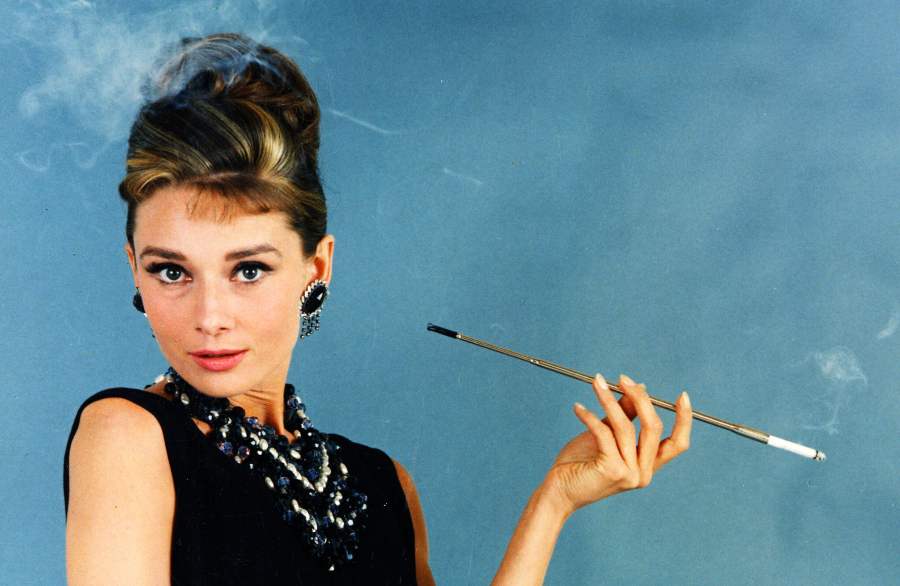
I think this is the first movie I watched at Erin’s suggestion that I really didn’t enjoy as much as I hoped I would. I didn’t completely hate it by any means. In fact, there were aspects of it I liked very much, but I did not love this movie and I think it was because of one very specific reason — Audrey Hepburn’s accent.
I feel awful saying that, since I have never actually had an issue with her accent, but in this movie, she was supposedly a girl from the South running away from her problems but he had some odd European accent the entire movie. I mean, she couldn’t at least fake a Southern accent? Isn’t that what actresses are supposed to do? Except for Kevin Costner in Robin Hood, of course. Har. Har. In all the reviews of this movie I saw, not one of them seemed to have an issue with her accent for this character, so I’m pretty sure this is just a “me problem.”
The whole back story for Audrey’s character in this movie just wasn’t believable at all because of her accent, but I am sure it was more believable in the book by Truman Capote that it was based on. He released the book in 1958.

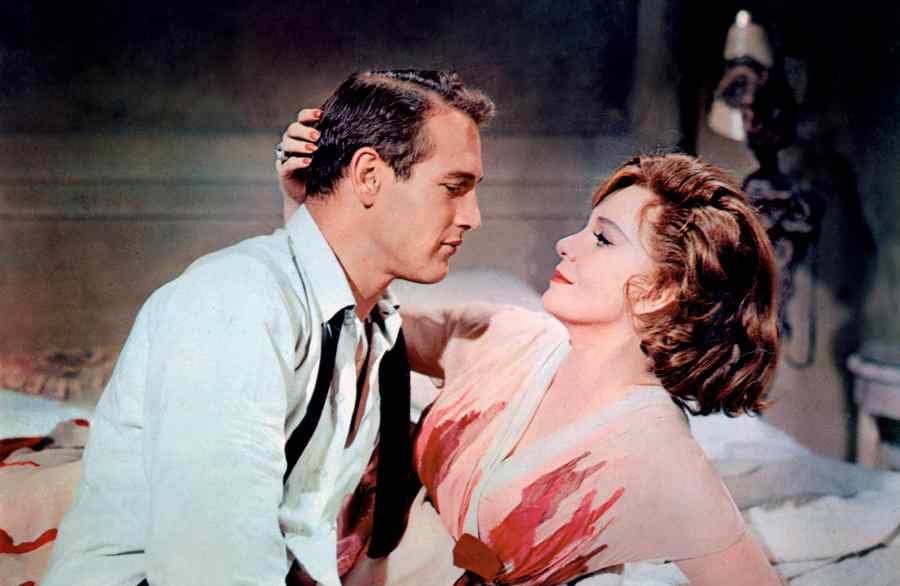
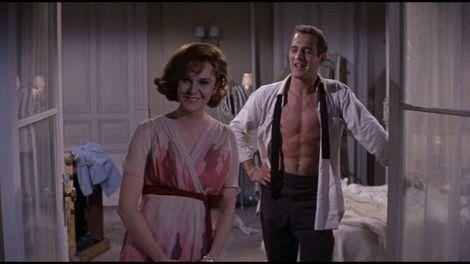
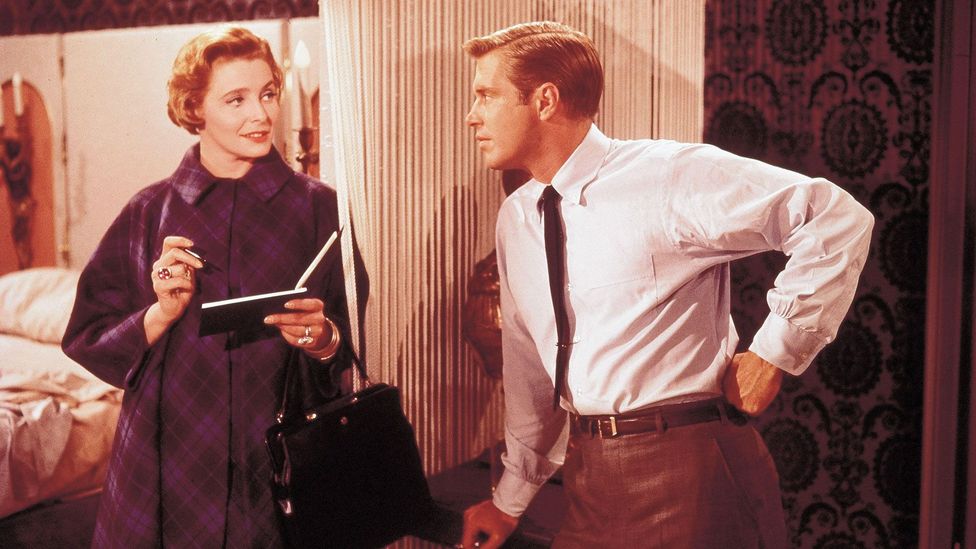
The idea behind this movie is that Audrey is a free-spirited young woman living alone in New York City when she meets Paul, played by George Peppard (who would later star in the A-Team), a gigolo who gets paid to sleep with a married socialite, living in her apartment the next floor up from Audrey. He is supposed to be a writer, but that avenue has dried up so he’s earning money by selling his body. I think we, as movie watchers, are supposed to see this as normal behavior in some ways, but also see that it isn’t what he wants for his life — to be used and dragged along with the promise of a publishing career someday.
Audrey has reinvented herself as Holly Golightly, changing her name from Lulamae and leaving behind an extremely odd and rather inappropriate upbringing.
The entire movie is essentially about her making a number of bad decisions in an effort to be on her own, yet at the same time not having to support herself. She is always looking for a situation where an older, richer man will take care of her and let her live her laid-back life where she imagines going to Tiffany’s jewelry store and buying whatever she wants for her breakfast, so to speak.
Honestly, I think Audrey’s character is a horrible brat, yet I don’t blame her for wanting to get away from the terrible situation she grew up in and I think that’s the point of the movie. She acts like a spoiled, selfish brat because she’s been traumatized. She’s not tied down to anything and she’s afraid to be because when she was tied down, she was told what to do at a very young age.
I really loved the end of the movie, but I won’t share it here in case someone reading this has never seen the movie . . . . then again the movie is 61 years old this year and I did write a disclaimer in my headline that there would be spoilers so — [SPOILER ALERT ABOUT THE ENDING OF THE MOVIE AHEAD!!]
I love that at the end Holly realizes that Cat (which is her name for her cat, that she never really named because naming the cat would mean she has to commit to something and that is a very frightening idea for her based on her past childhood issues) is the one constant in her very unstable life. When she goes back to look for the cat – after she tosses him from a cab and tells him to get lost in the city – she also realizes that Paul is her other constant and she is ready to open herself up to at least a couple constants in her life.
This ending is not how the novel ends, however. In the book the reader is left with not actually knowing whatever happened with Holly
So it doesn’t sound like I totally hated Audrey’s portrayal of Holly, I do want to say that I loved how Audrey was so laissez-faire about life, even if that attitude was leading her into a life void of real love.
She reminded me a lot of a friend I had in college, except my friend wasn’t trying to run away from anything in her life, she was simply extremely laid back and casual about things. She was also a little bit ditzy and that could make her both aggravating and a blast to be friends with.
One quick warning too — this movie does contain an absolutely racist portrayal of an Asian person by Mickey Rooney. I didn’t even believe it was Mickey Rooney when my husband told me it was him.
The bottom line on Breakfast At Tiffany’s is that I do recommend it, even if I didn’t like that Audrey’s accent was not authentic.