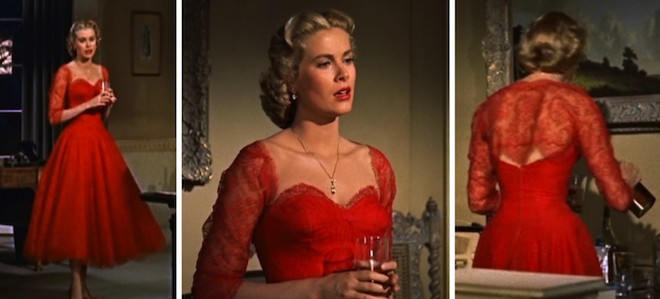
Comfy, Cozy Cinema: The Lady Vanishes

For the rest of October and all of November, Erin from Still Life, With Cracker Crumbs and I will be watching cozy or comfy movies and some of them will have a little mystery or adventure added in.

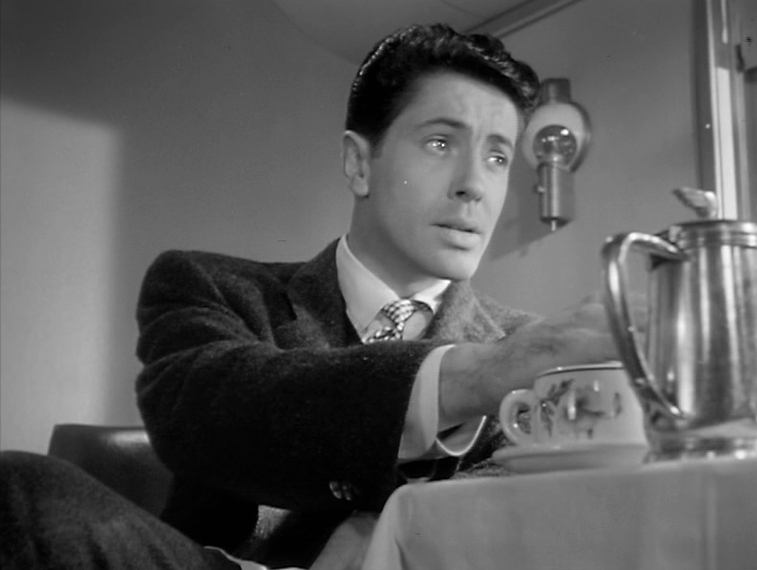
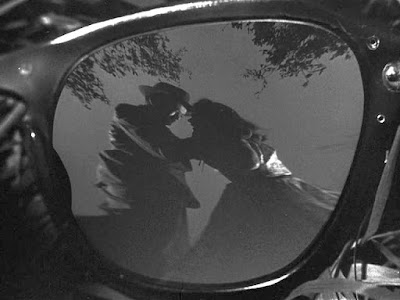
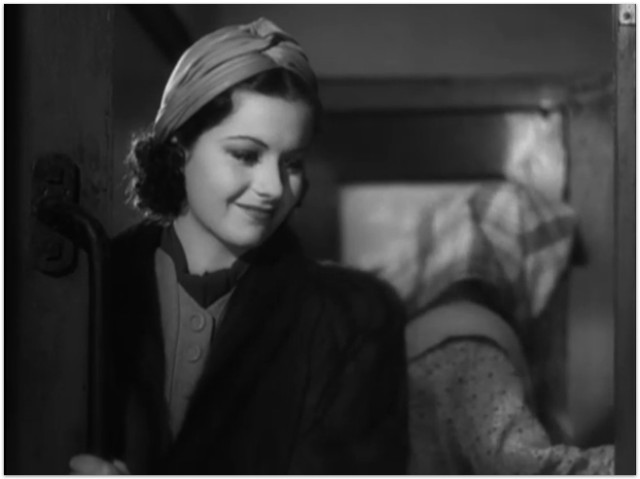
This week we watched the 1938 Alfred Hitchcock Film The Lady Vanishes. This was my second time watching it but I honestly had forgotten half of it so I was glad Erin suggested it.

I needed the distraction watching it provided this week. I know. I say this every time I write about the movie we are watching, but I need a lot of distractions these days and this week especially.

The movie begins in the fictional country of Bandrika where Iris Henderson (Margaret Lockwood) is vacationing with friends before she goes home to the United States to get married.

She is staying at a hotel with her friends and others, most of whom got stranded when an avalanche wiped out the train tracks. She interacts with the musician — Gilbert Redman (Michael Redgrave) — after he wakes her up with his loud music when she’s trying to get enough sleep for her trip the next day. Because she complains, the manager of the hotel kicks Gilbert out of his room. He makes a very nervy move and walks into her room uninvited and tells her he is going to stay and tell everyone she invited him in unless she calls the manager and tells him to put him back in his room.

There are so very funny quips in this movie and one of them is after Iris calls the manager back to get Gilbert out of her room.

“For the record, I think you are the most contemptible man I have ever met!” she yells at the door as he leaves.

He looks around the door and says in a soft voice. “Confidentially, I think you’re a bit of a stinker too.”

Earlier in the movie the manager tells two British men who are trying to return to Britain for a test match of Cricket in Manchester that he doesn’t have a room for them but they can stay in the maid’s room. There are a couple of funny scenes with the maid trying to change in front of them and them trying to tell her she can’t but her not understanding because her English isn’t very good.

There is actually a lot of humor in this movie, which isn’t always the case in an Alfred Hitchcock movie.

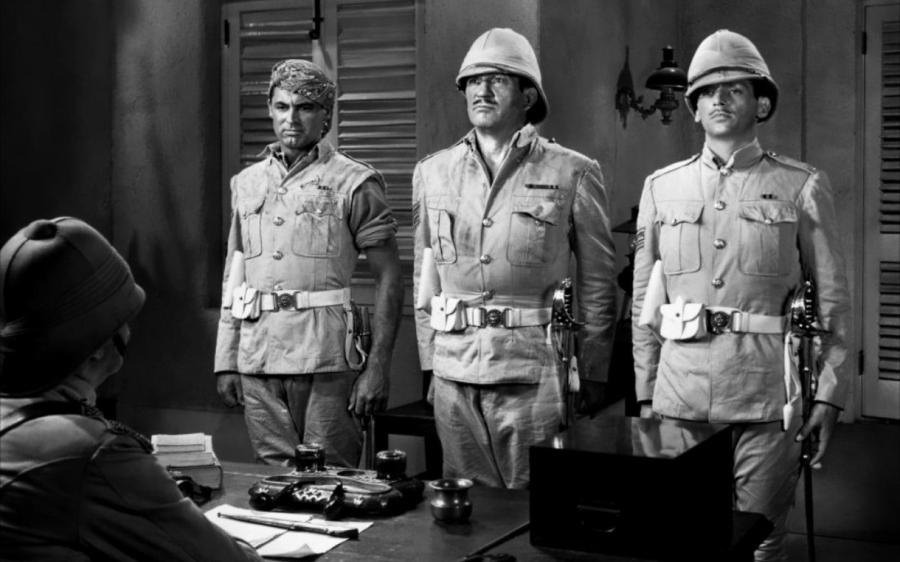
The two British men need some food so they head to the dining room, but are told by the waiter that there is no more food because there have been so many unexpected people staying there due to the avalanche. They can’t understand him because he doesn’t speak English so a woman named Miss Froy translates for them.

They chat with her for a while and she tells them how much she loves looking at the mountains in this country and how she’s been a nanny there for six years and is going home to England the next day.

Miss Froy also speaks to Iris when they both try to figure out where the music is coming from. That’s right before Iris has Gilbert removed from his room.

The movie seems to be all fun and games until someone strangles the musician Miss Froy enjoys listening to. She doesn’t know the man has been murdered, of course. She just thinks the music has stopped.

She also seems clueless the next day at the train station when someone tries to kill her by pushing a large concrete flower box out of the window. Instead of hitting her, though, it hits Iris in the head, which leaves Iris dazed – a perfect setup for a train ride that gets really weird when Miss Froy eventually disappears.  

Iris clearly has a concussion but Miss Froy seems to think putting perfume on a hankie and handing it to Iris to put on her head will help. Was that ever a thing for head injuries? I have no idea but it seemed weird. Anyhow, Iris falls asleep and when she wakes up Miss Froy is there and they walk to the dining car and have tea.

After they have tea, Miss Froy tells Iris to rest again. She does and when she wakes up Miss Froy is gone and when she asks the other couple in the car where she went, they tell her they never saw an older British woman and imply Iris is insane.

Implying Iris is insane is the plot for the next 20 minutes of the movie as everyone begins to say they never saw Miss Froy. We learn everyone has a various reason for saying they never saw the woman.

The British Cricket enthusiasts don’t want to be delayed any longer. They have a cricket match to get to. Another couple doesn’t want any attention brought to them because they are cheating on their spouses.

This movie is a master class in gaslighting.

If you don’t know what gaslighting is, it is saying something that happened isn’t what really happened or that the reason you think it happened isn’t the reason it happened. It’s also when a person tries to distract them from what they are concerned about by saying there is another issue altogether. Like if a woman catches her husband cheating and she confronts him, he might say, “You’re so bitter and mean all of the time. I don’t even know what is wrong with you,” to try to convince the woman she imagined it all and the real issue is that she’s mean and bitter. The goal is to make the person feel like they are crazy for being concerned or accusing someone of something.

When everyone starts lying, Iris is about to lose her mind and the only one who will listen to her is Gilbert – the musician she clashed with at the hotel.

Eventually, after seeing a wrapper for a certain tea (you’ll have to watch the movie to see what this means), Gilbert starts to believe Iris that the woman really was there and they begin to look for her together. They both feel something criminal is going on and eventually, it is implied that this crime is related to spying on another country.

Though the plot and issue is a serious one, there is humor involved. For example, humor is employed often in a fight scene between Gilbert and a man who is determined to take evidence of Miss Froy’s existence away from Gilbert and Iris.  Not only do animals in the freight car of the train watch the fight going on, but the fight also continues into a magic box placed there by the cheating man, who they learn is a musician.

There seemed to be quite a few subtle slams in this movie against the British who just can’t imagine anything bad is happening on the train and gets upset when anything interrupts their tea time, but I think Hitchcock did that a lot.

The movie is based on a book called The Wheel Spins by Ethel Lina White, but apparently deviated heavily from the plot of the novel. Actually, after reading the plot of the novel, I really want to read it because it sounds very good.

The British cricket enthusiasts were not in the book at all and were added to the movie.

The book was written in 1936 and the movie was released in 1938. The novel and movie’s plot clearly references the events leading up to the start of World War II.

Michael Redgrave was known for his work on the stage and almost didn’t agree to take part in the movie but in the end, his decision to take the park when Hitchcock offered it paid off for him because it made him an international star.

He and Hitchcock never worked together again, however, because Redgrave wanted more rehearsals and Hitchcock wanted more spontaneity.

The movie was a hit in the UK and the U.S. when it was released according to information online.

Geoffrey O’Brien from The Criterion (a movie review site) states: The Lady Vanishes (1938) is the film that best exemplifies Alfred Htchcock’s often-asserted desire to offer audiences not a slice of life but a slice of cake. Even Claude Chabrol and Eric Rohmer, in their pioneering study of Hitchcock, for once abandoned the search for hidden meanings and—though rating it “an excellent English film, an excellent Hitchcock film”—decided it was one that “requires little commentary,” while François Truffaut declared that every time he tried to study the film’s trick shots and camera movements, he became too absorbed in the plot to notice them. Perhaps they were disarmed by pleasure . .”

O’Brien points out that the screenwriters of the film, Sidney Gilliat and Frank Launder, were the ones who really added the rich wit that made the film a joy rather than an ominous mystery.

This film was filmed in England and at that time they didn’t have a large budget, which is why much of the movie was filmed in only two places – the hotel and a 90-foot-long train car or two. This constraint would have limited most movie makers, but not Hitchcock, who was still able to line up amazing, eye-catching shots, including one that I noticed with the camera focused squarely on two glasses where a drug has been placed all while a tense conversation is going on in the background.

The whole time there is this tension for the viewer, who knows that those glasses have a drug in them and leaves the viewer with a desperate desire to cry out for the characters not to drink the tainted wine.

I really liked what O’Brien said about the performance of Dame May Whitty and agreed: Since in a moment she is going to vanish, Miss Froy must for a moment dominate everything, and Whitty achieves just that, and even more: she makes us feel an affection for Miss Froy deep enough that her disappearance will seem an unspeakable affront, an assault on Englishness itself in its least threatening form.

If you want to read more of O’Brien’s view of the film you can find it HERE.

If you want to catch up with Erin’s thoughts on the movie, click here: https://crackercrumblife.com/2023/10/12/comfy-cozy-cinema-the-lady-vanishes/

If you want to join in on the review yourself feel free to add your link below.

Next week we are watching Strangers on a Train and will write about it on October 19.

After that we are watching:

Rebecca (Oct. 26)

Little Women (November 2)

Tea with The Dames (November 9)

A break for Thanksgiving

And

Sense and Sensibility (November 30th)

You are invited to the Inlinkz link party!

Click here to enter
https://fresh.inlinkz.com/js/widget/load.js?id=c0efdbe6b4add43dd7ef

Comfy, Cozy Cinema: The African Queen

For the next three months, Erin from Still Life, With Cracker Crumbs and I will be watching cozy, mysterious, or comfy movies. Erin made these awesome graphics detailing what we are doing and what movies we will be watching.

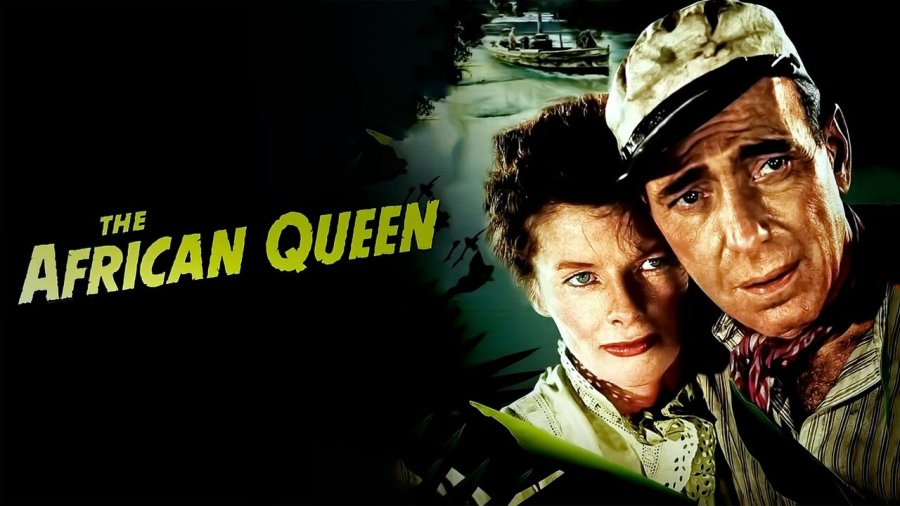
This week we watched The African Queen, which I am not sure was really a comfy, cozy movie but I forgot some of the details when I suggested it. I’m not sure why I picked it for this feature, but it’s still a good movie and we did find some cozy(ish) moments in it as a romance began to blossom in the middle of a very stressful situation.

The movie, released in 1951, stars Katherine Hepburn and Humphrey Bogart. It was directed by John Huston.

It is both an adventure movie and a romance.

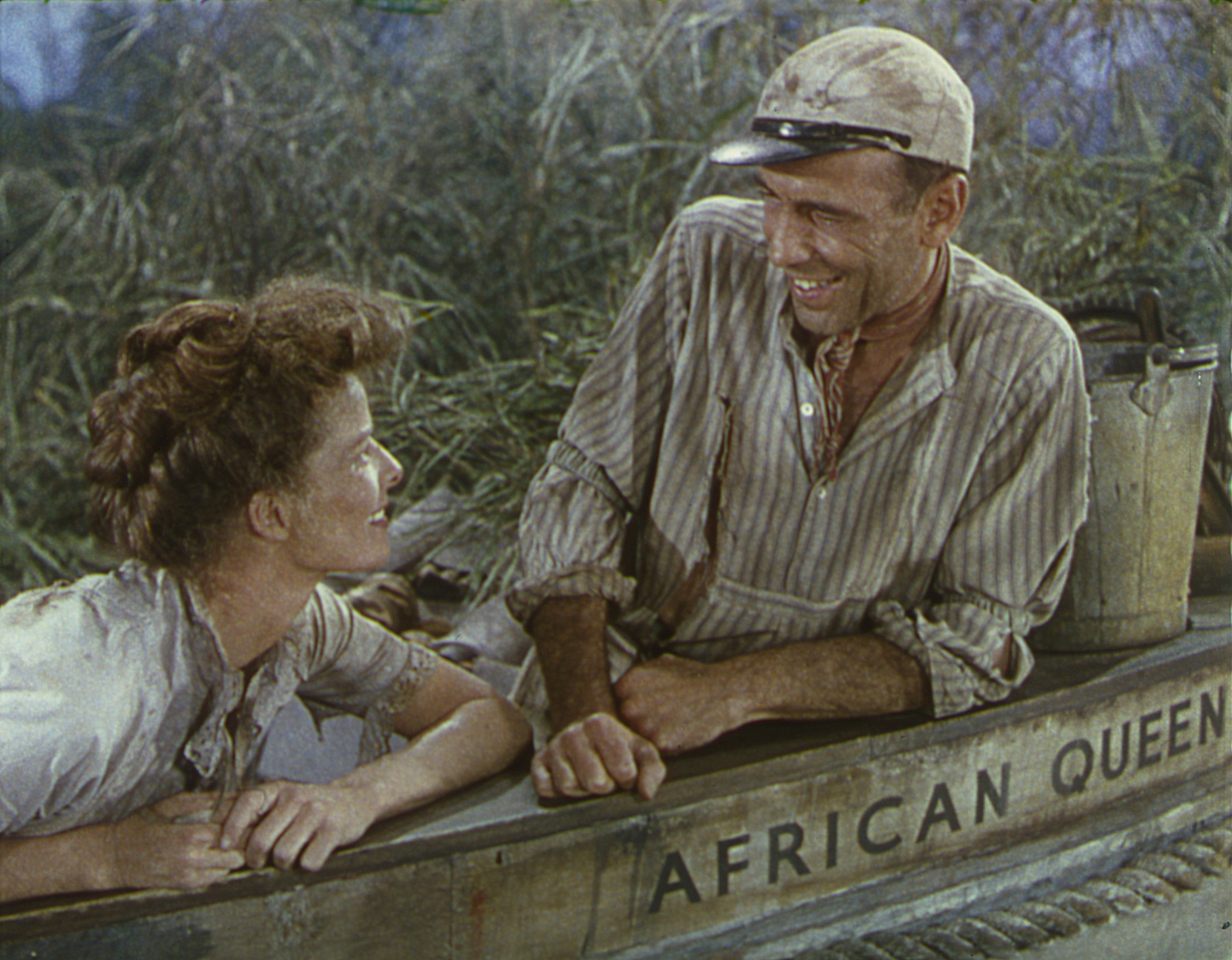
Katherine plays Rose Sayer, a missionary in Africa, and Humphrey portrays Charlie Allnut (which Katherine pronounces as Ulna throughout the movie).

Rose had stationed been in African villages with her brother for a decade and meets Charlie when he travels up the river in his small, rickety steamboat to deliver mail and other supplies. The steamboat was dubbed The African Queen by Charlie.

On one visit Charlie tells Rose and her brother Sam that he probably won’t be there for two months because war has broken out. The movie starts in 1914 so this is the beginning of World War I.

He leaves and within a matter of hours or days, or I’m not sure which, the Germans march through with an army made up of Africans and begin to burn down the village. This leaves Rose’s brother in a state of shock and also affects his physical health and he passes away a couple months or so later.

Rose is now alone in the village but luckily not for long as Charlie finds her and she asks him to take her with him up the river.

Rose and Charlie are very different. She is very prim and proper and British and he is very “uncouth” one might say. My husband said that the movie is based on a 1935 novel and that the main characters in the novel are both British. Charlie has a cockney accent.  Humphrey refused to try to pull that accent off so he was made Canadian for the sake of this movie.

The chemistry between the two is great with them bouncing quips off each other throughout the film.

When Rose finds out they are upriver from a German ship that will be used to launch an offensive against the British, and that Charlie has potential weapons on The African Queen, she decides they will travel this very dangerous river with rapids, crocodiles, and a German fort, and blow up the German ship.

Charlie, for his part, thinks she’s nuts but agrees to help her – that is until things get more and more dangerous and he’s certain they are going to die in the rapids.

When he tells her in the beginning that it isn’t possible to take the steamboat down the river she says, “How would you know? You’ve never tried.”
He scoffs. “I’ve never tried shooting myself in the head either.”

In another scene, Charlie gets drunk on the gin that’s on the boat and Rose is not happy about it.

“Oh come on,” Charlie says. “It was just human nature.”

Rose raises her chin and says, “Human nature, Mr. Allnut, is what we are put on this world to rise above.”

There are several comments or lines like that throughout the film which turns romantic somewhat by accident when Charlie celebrates one of their accomplishments and kisses Rose on impulse.

Kissing and being romantic was most likely a huge challenge for Katherine because she, like most of the cast and staff, caught dysentery and malaria and was very sick for the time in Africa.

Huston wanted the film to be as realistic as possible so he shot on location in Uganda and the Congo for part of the film with the rest being shot in London, outside and on a sound stage. Scenes where the actors were in the water were deemed to be too dangerous in Africa.

It was so realistic that Katherine and others got sick, as I mentioned, and during one scene when she’s playing the piano, she actually had a puke bucket off-scene just in case and I guess there were a few “cases.” Poor woman.

Boggie later joked that he and Huston didn’t get sick because they drank whiskey instead of the local water.

As a bit of trivia, the only Oscar Boggie ever won was for this film. Katherine was nominated for best actress but did not win. Huston was also nominated for best director but didn’t win.

Katherine won four Oscars and was nominated 12 times over the years. She also won an Emmy and two Tony Awards.

This comment came from my husband who always has a cheery note about when or how one of the actors died as we watch a movie: “To think he (Boggie) would only have five more years after this.”

At one point, when Charlie apologizes for getting drunk Rose says that is not upset about that.

“You think it was your nasty drunkenness I minded? You promised me you’d go down the river.”

“Well, I’m taking my promise back,” Charlie says.

Little Miss looked at me and said, “Fun fact. You can’t take back a promise.”

So there you go. Some wisdom for your day.

When this movie came out, both Boggie and Hepburn were older and some critics said moviegoers wouldn’t want to see two old actors fall in love.

According to movie critic Roger Ebert, though, that wasn’t true. Many people wanted to see the movie and loved it despite it being released at the same time as A Streetcar Named Desire with Marlon Brando and Vivien Leigh.

The novel was much darker but Huston credited Boggie and Hepburn with making the movie have some humor in it.

“They were just naturally funny when they worked together.” Miss Hepburn, on the other hand, gives the credit to Huston. “The humor didn’t just grow, it was planted. The picture wasn’t going well until Huston came up with the inspiration that Rosie, my role, should be played as Eleanor Roosevelt.”

Ebert said of Bogart’s role: “Whatever the case, the many scenes Bogie and Kate play together are superb. Bogart, as the gin-swilling proprietor of a banged-up riverboat, created a strange little laugh for his role. He was shy, amused and intimidated by this Bible-reading missionary lady who washed out her unmentionables each and every night. And the laugh, meant to conceal his unease, also serves to display the thoughts of a taciturn man. He does not often laugh at the things Rosie finds funny.”

There was one scene with leeches and I wanted to know if they were really on Boggie. A quick search online brought me to a site full of trivia which let me know that: “While filming the scene where Charlie finds his body covered with leeches, Humphrey Bogart insisted on using rubber leeches. John Huston refused, and brought a leech-breeder to the London studio with a tank full of them. It made Bogart queasy and nervous, qualities Huston wanted for his close-ups. Ultimately, rubber leeches were placed on Bogart, and a close-up of a real leech was shot on the breeder’s chest.”

It is an interesting site and I was going to leave a link here to it but it says the site is not secure so I won’t do that – just in case.

The bottom line was that I did like this film but it wasn’t necessarily comfy, cozy or creepy. I guess it was a mix of comfy and adventure.

To read about Erin’s take on the movie, hop on over to her blog: https://crackercrumblife.com/

If you would like to join in on our Comfy, Cozy Cinema you can print out our watch/post schedule here:


Arsenic and Old Lace (Sept. 28)

Oct. 5 (break for us or you to catch up!)

The Lady Vanishes (October 13)

Strangers on a Train (Oct. 19)

Rebecca (Oct. 26)

Little Women (November 2)

Tea with The Dames (November 9)

Summer of Marilyn: The Seven Year Itch

So here I am, behind yet again on my Marilyn movie-watching.

That’s okay, though. Summer is meant to be easy going and relaxed so I will take my time on these and if summer busyness gets in the way, I’ll just have to push my posts off.

If you are new here, I am watching Marilyn Monroe movies this summer and I have called the The Summer of Marilyn.

This week I watched The Seven Year Itch, which was nothing like I expected it to be.

I thought this movie was a drama until I started it and realized it was definitely not a movie to be taken seriously. This is the movie with the famous scene of Marilyn’s dress being blown upward by her standing over the subway grate.

This is a movie made in 1955 that jokingly explores the idea that middle-aged men who have been married seven years feel like they need to break out of the mundane and sow some more wild oats. I, personally, did not find it that funny that the movie makers thought it was funny to make fun of men in New York City sending their wives and children to the country for the summer so they can go meet other women and have parties, therefore feeling free and easy again.

We start the movie with Richard Sherman, a man working in book design, who sends his wife and son off to the country for the summer. Richard is determined he won’t be like other men who drink, smoke, and chase after women while their wives are gone.

Not long after he decides this, though, he heads home to a house that’s been made into apartments and starts complaining as he unlocks the door about how his wife wants to live in a house and not an apartment. Their apartment is nice, he decides, especially with nice neighbors upstairs and – he turns around and someone needs help being buzzed in through the main door.

That someone is Marilyn Monroe who is looking, of course, drop-dead gorgeous.

Richard has to renew his resolve not to forget himself and go crazy while his wife and son are gone with Marilyn acting all clueless and walking around upstairs either naked or half naked. When she almost drops a tomato pot on his head his resolve cracks and he invites her down for a drink.

It’s then he realizes she’s gorgeous but not too bright and that is totally fine with him.

He’s already been daydreaming a lot and Marilyn kicks his daydreams into high gear.

He enjoys daydreaming about how Marilyn will fall for him but, truly, Marilyn is just absolutely clueless to his advances and his more interested in getting into his apartment to take advantage of his air conditioning, which she does not have in her apartment.

Marilyn, incidentally, does not have a name in this movie. Her name is just The Girl.

This is another Billy Wilder film with Marilyn – like Some Like It Hot.

The movie is based on a play written by George Axelrod.

In addition to Marilyn it stars Tom Ewell who played Richard Sherman in the play as well.

Many lines from the play had to be cut because they were deemed indecent by the Hayes office, which determined what was and wasn’t allowed in movies at that time.

There has long been rumors that during the filming of the famous scene with Marilyn, there was too much noise to use the final footage and it had to be shot again on a sound stage. While it is true that the scene was shot twice, footage was used from both shoots, according to an article on Wikipedia. Marilyn really did stand over a grate outside the Trans-Lux 52nd Street Theater, then located at 586 Lexington Avenue in Manhattan. She also did get a lot of attention from the press and onlookers when this happened because Wilder invited them to drum up attention for the film.

This left Marilyn’s then-husband Joe DiMaggio pretty ticked off, but, alas, the scene became one of the most iconic ever in a movie.

Overall I enjoyed this movie, even if I didn’t like some of the messages underlying the plot. In the end, the craziness was drawn to a close before it got too crazy but the in-between stuff that seemed to suggest that men running around on their wives was okay wasn’t a great message for me. I do know that most of it was being said as a joke and that part of the message really was that it wasn’t actually okay to be done.
And, yes, I really liked Marilyn in this movie. She was so free and joyful. Yes, she was sexualized, just like in her other movies, but she also held her own as an actress, playing the comedic parts with ease and pure entertainment.

Next up for me for Marilyn Movies is Monkey Business.

After that, I only have two more movies:

All About Eve and The Misfits.

Both are dramas.

If all goes to plan, I’ll be writing about Monkey Business next week, on August 3, All About Eve on August 10 and The Misfits on August 17th.

(Monkey Business is available for free on YouTube, for those who might like to watch along.)

Summer of Marilyn: How to Marry A Millionaire

Two weeks ago I watched How to Marry A Millionaire and decided that weekend I would watch Marilyn Monroe movies for the summer, similar to how I watched Paul Newman movies last summer.

How to Marry A Millionaire stars Marilyn, Lauren Bacall, and Betty Grable and was considered a screwball comedy.

It was released in 1953.

It follows the story of Schatze Page (Lauren), Loco Dempsey (Betty), and Pola Debevoise (Marilyn) who are all looking for ways to marry a rich man and live the high life.

Or at least that’s the goal when the movie starts.

As we progress into the movie, we see the goals of the women begin to shift based on the men who they end up meeting along the way.

Each woman works on snagging a rich man and to do that they need a home base, so Schatze finds a home to rent from a man who is out of the country. She’ll need money to pay for the rental, though, so she begins to sell off the fancy furniture in the home, even though it isn’t hers.

Eventually, she and the other women will meet men who they decide they can snag and marry. Schatze meets William Powell, one of my favorite “classic Hollywood” actors. He’s 30 years older than her and a widower. More importantly, he’s rich.

She sets out to make him her own, but there’s a man named Tom who is trying to get her attention. She wants nothing to do with Tom, though, since he’s poor and won’t support her high-end needs.

Marilyn’’s character meets a wealthy businessman who is also a crook and she’s about to run off with him when she gets on the wrong plane and meets the man who owns the apartment on the plane. The apartment owner, it turns out, is trying to escape the IRS.

Betty’s character meets a married man and thinks she’s on her way to a Elk’s Club meeting in Maine, but has actually been invited to his personal lodge. She tries to leave when she realizes what is going on, but comes down with the mumps and is quarantined. While there, and after the man she came with becomes ill himself, she meets a poor but charming forest ranger and has to decide if she wants to pursue love or money.

Betty was supposed to be the star of the film, according to some articles, but, of course, Marilyn ended up with top billing.

According to the blog, Classic Movie Hub, Fox created the movie using anamorphic lenses developed by Henri Chretien in France. These lenses “expanded the audience’s peripheral vision by creating a panoramic, curved screen triple the size of a conventional screen,” according to the blog. This was in an effort to combat the rise of televisions in the American home.

Fox had two things to compete with television with this movie – Marilyn and these new lenses. They made a movie called The Robe first with the technology, however, because they felt that movie would appeal more to a wider audience and was more family-friendly.

The Robe was about a Roman centurion who commanded the unit responsible for the crucifixion of Christ.

(I think it is interesting that the woman in this photo by Lauren’s name looks nothing like her.)

Marilyn originally wanted Betty’s role since that role had more “snappy lines.” Playing Pola would mean playing a nearsighted woman who felt insecure wearing her glasses and often slammed into walls when she took her glasses off. Marilyn wasn’t confident in her comedic skills and wanted to back out, but the director convinced her to continue and she managed to pull it off amazingly well.

Lauren Bacall was already a well-known actress at this point and I felt she really held the group together.

In some ways I felt Marilyn did overshadow the others with her performance and not just because of her beauty. She pulled off the quirky-plus-innocent role well.

I felt like Lauren was out of place in a comedy but that’s probably because I am used to watching her in Noir-type films with Humphrey Bogart (who she later married).

Betty impressed me with her comedic skills and matched Marilyn’s quirkiness. I guess Lauren was more of the “straight-man” in the trio.

I loved William Powell in this. None of the other men really stood out to me, but that may be because William was so sweet and doted on Lauren’s character even though he really should have known she was a gold digger. And because I have a soft spot for him after watching him in the Thin Man movies.

I won’t share the ending of the movie, but I will say that the women redeemed themselves from their selfishness as the movie progressed.

As for stories from the set, the Classic Movie Hub blog relayed that Lauren and Betty were annoyed that Marilyn was late on set a lot and there were other minor snits between the three women.

From the blog: “When the three female stars assembled on the soundstage for the first time, the press awaited a mushroom cloud of conflict and cattiness or, at least, Grable’s bitter resentment of Monroe. However, Grable immediately embraced Monroe and ceremoniously told her, “Honey, I’ve had mine. Go get yours. It’s your turn now.” In response to Bacall grumbling about Monroe’s tardiness, Grable said, “Honey, give it to her. Let’s listen to records until she gets here. It’s her time now. Let her have fun.” Before long, Bacall found herself also feeling protective of Monroe.

I think this is my first time watching a movie with Marilyn all the way through. I enjoyed it and am looking forward the other films, though I know at least a couple of them are much darker than this one.

The next movies I plan to watch and when I plan to write about them are:

June 22: Gentlemen Prefer Blonds

June 29: Some Like It Hot

July 6: Niagra

July 13: The Seven Year Itch

July 20: Monkey Business (because it’s Marilyn and Cary together)

July 27: All About Eve

August 3: The Misfits

Next Classic Movie Impressions feature: Summer of Marilyn

I am going to be doing another Classic Movie Impressions feature this summer and so far, I am offering it up for whomever might like to jump in during the rest of June and part of July.

Erin from Still Life, with Cracker Crumbs is too busy in June for this feature and I know Katja has been busy as well, but the invitation for her to join in is totally there.

Anyone else who wants to join may do so as well and at any point. You don’t have to watch or write about all of the movies to be a part.

Now, onto who I am featuring this summer.

Marilyn Monroe.

So yes, the feature will be called A Summer of Marilyn.

If you have been following this blog for a while, you know I featured Paul Newman for my summer movie watching last year and Cary Grant for this spring.

I thought I should choose an actress this time around and decided on Marilyn when I discovered how many of her movies we own on blu-ray. I’ve also been a little fascinated with Marilyn because of how Hollywood really abused and used her until there was nothing left of her. It’s a story with a sad ending but I guess I am looking for some happiness she might have experienced in the making of at least a couple of these movies.

I’m going to kick off the feature this Thursday with How To Marry A Millionaire, which I watched on that wonderful Saturday where I had where five hours to myself with no responsibilities and no one else to care for.

If you want to quickly watch it, or have already seen it, and want to jump in, go for it. Or you can share a post later and just link to mine and I’ll let readers know you’ve shared your views too.

Without further ado, here are the movies I plan to watch and the dates I plan to blog about them on:

June 15: How To Marry A Millionaire

June 22: Gentlemen Prefer Blonds

June 29: Some Like It Hot

July 6: Niagra

July 13: The Seven Year Itch

July 20: Monkey Business (because it’s Marilyn and Cary together)

July 27: All About Eve

August 3: The Misfits

Spring of Cary: Operation Petticoat

For Spring Erin from Still Life, With Cracker Crumb, Kajta of Breath of Hallelujah, and I have been watching and writing about Cary Grant movies. I always add this disclaimer: the movies we watched were chosen because I had never seen them before, not because they are his best. I was trying to watch movies of his I had not seen so thought I’d do a challenge similar to my Summer of Paul last summer.

Now, with that disclaimer out of the way, last week we delayed writing about Operation Petticoat because Erin and I both had busy weeks and felt frazzled. We found out later that Katja also had a weird week so that worked out well.

Okay, now back to the movie, which is a comedy and that is really what I needed last week and still need this week. I find it surprising that this movie, out of all of Cary’s movies was actually the highest grossing of his career at $9.3 million. It was extremely popular when it was released in 1959 and is still considered the highest-grossing comedy of all time. Crazy, right?

Anyhow, we open with Cary Grant in a naval officer’s uniform.

This is actually a photograph from the end, but close enough.

At this point, I pause and sigh as I admire the view. I pause the film for a moment and sigh again.

In a world where men are being feminized more and more, it is refreshing to see a real man looking like a real man in uniform. Again, in case you don’t understand what I am saying, he does look nice in a uniform.

Now, on with the show.

Cary is an admiral in the Navy in the beginning of the movie. He’s gone back to a submarine that he was once the captain of. He finds his way to the captain’s cabin and waits for him to arrive and while he does he reminisces about when he was captain and all the craziness that happened one day in the beginning of the U.S.’s involvement in World War II.

Here is a bit of background and plot of the movie from Wikipedia so I don’t have to explain it all in my awkward way.:

In 1959, U. S. Navy Rear Admiral Matt Sherman (Cary Grant) boards the obsolete submarine USS Sea Tiger, prior to her departure for the scrapyard. Sherman, her first commanding officer, begins reading his wartime personal logbook, and a flashback begins.

On December 10, 1941, a Japanese air raid sinks Sea Tiger while she is docked at the Cavite Navy Yard in the Philippines. Lieutenant Commander Sherman and his crew begin repairs, hoping to sail for Darwin, Australia before the Japanese overrun the port. Believing there is no chance of repairing the submarine, the squadron commodore transfers most of Sherman’s crew to other boats, but promises Sherman that he will have first call on any available replacements. Lieutenant (junior grade) Nick Holden (Tony Curtis), an admiral’s aide, is reassigned to Sea Tiger despite a total lack of submarine training or experience.”

Nick, in fact, has so little experience he walks up in an all-white dress uniform and talks about all the mundane and unimportant things he did for the admiral. None of it includes being at sea.

Nick does have another talent – ideas for how to get supplies that the captain will need to get his ship running again.

His ideas are “less than proper” shall we say and it turns out the admiral’s aide isn’t a waste of space after all. While the commander thought he was soft, it turns out he’s a real con-man, which is what is needed to get the submarine back on its way to Australia.

Nick strikes deals with ex-cons, witchdoctors, and many others to make sure they can get their supplies or help.

While out to see they find an island on and on that island are nurses who were stranded there when their plane had to land in an emergency because they were being fired at by the Japanese.

Cary/Matt isn’t really very interested in taking the nurses on his ship of all men, but the men, of course, are thrilled.

Many suggestive and flirty comments begin at this point, especially between Nick and Second Lt. Barbara Duran who he offers his pajamas to on her first night aboard.

In this moment things become quite bawdy (though not dirty) when she says she couldn’t possibly take his pajamas and he says it is totally fine as long as he is not in them at the same time. When she asks what he’s going to wear he says, “I’ll take the bottoms, if you like the tops. Do you like the tops? You can have the bottoms if you want.”

Oh, dear.

Matt tries to take the women to an army base but the Army says they can’t take the women without the proper orders because the Japanese are closing in. It is because the Japanese are closing in that Matt allows Nick to set up a casino-like operation where enlisted men can bring them the parts they need and get paid for them. The hull was damaged in the initial attack and the torpedo man would like some paint to fix the chips and nicks in it. The only issue is that they can’t get their hands on any gray paint so they finally settle on red and white. We all know what color that makes so eventually the hull is painted – yes, pink.

As you can imagine, this makes the submarine a perfect target and creates even more hilarious moments on board as they try to make their way to safety. The real problem with the pink submarine and then some repairs that still need to be taken care of, is that eventually, their own side doesn’t know that it is them. I won’t tell you how they finally let the U.S. Navy know it’s them and not the Japanese, but let’s just say it involves some unmentionables.

A little bit of trivia from Wikipedia: Tony Curtis took credit for the idea for the movie because he joined the Navy during World War II to work on a submarine partly because he had seen Cary’s movie Destination Tokyo. After the war and after he became a star, Tony said he’d love to be in a movie with Cary where Cary would be a submarine captain.

An actress who was going to be in the movie actually pulled out because she felt there were too many sex jokes. She was probably right, but the jokes were still way tamer than the jokes that are in movies today.

One risqué quote that did crack me up from Cary was, “It’s like watching a striptease. Don’t ask how it’s done. Just enjoy what is coming off.”

The U.S. Navy supported the movie and allowed it to be filmed around Naval Station Key West, which is now called the Truman Annex of Naval Station Key West. The submarine was portrayed by three different World War II-era submarines.

I kept being too technical watching this movie and saying “You can’t bring a submarine up and down like that.”

My husband had to keep reminding me that this is meant to be a goofball comedy. “It is a typical Blake Edwards comedy.” Which I guess means that Blake Edward created crazy and unrealistic comedies.

And, yes, in case you are wondering or don’t know, the show Operation Petticoat (which I have never seen) was based on the movie.

Overall I really enjoyed this movie and it came at a time I needed something silly.

To catch up on what Erin thought of the movie you can find her blog here (the post might be late today) and you can find Katja’s blog here (her post might also be late but it will be up later).

Here is the original trailer

Next up to finish up Spring of Cary:

Suspicion (May 25)

Notorious (May June 1)

I’d love to do a Summer of Bogart and watch Humphrey Bogart movies, but I haven’t run that by Erin or Katja yet. I’ll see what they think. Maybe I’ll do it on my own for fun.

Spring of Cary: Holiday

Here we are to another week of Spring of Cary where Erin from Still Life, With Cracker Crumbs and I are watching Cary Grant movies for the spring. Katja from Breath of Hallelujah is joining in when she is able to.

I chose the list of movies from the ones of Cary’s I hadn’t watched before.

Our movie this week is Holiday and it was released in 1938, so it was one of Cary’s early films.

The movie kicks off with Johnny Case (Cary) coming back from a visit out of town where he says he has fallen in love with a woman and is going to marry her.

His friends don’t believe him and think he’s going to be destitute with a woman and her family leaching off of him.

They have nothing to worry about because when Johnny goes to the address that the woman he wants to marry gave him he finds out her family is super duper rich and live in a house that looks like, as he describes it, Grand Central Station.

The potential bride-to-be, Julia Seton (Doris Nolan), lets him know she’s from the famous, well-to-do Seton family. She also tells him that her father will expect him to start working with the company and become a businessman and Johnny really isn’t sure that’s something he’s interested in. He just wants to have fun. Like he told his friends at the beginning of the movie:

“She wants the life I want, the home I want, the fun I want.”

But does Julia really want all that? We will have to find out.

After Johnny first arrives at the big, fancy house, Julia tells Johnny she’s going to go to church and tell her father about them, and on their way out the door, in walks Julia’s sister Linda (Katherine Hepburn), who is very intrigued with this man her sister says she’s going to marry. It is clear that Linda has an entirely different spirit than Julia. A much freer spirit.

Linda wants to make sure that Johnny is good enough for the sister she loves. Deep down she doesn’t want Julia to get married. We learn later that one reason she doesn’t want Julia to get married is because she doesn’t want Julia to move out of the house and have a home of her own, This will leave Linda alone to be bored and unsure of her own future. For now, she’s simply rattling around in the big house where the men in the family and their goal of succeeding is the main focus and she is expected to attend business parties.

Early on we learn that Julia and Linda’s mother has died at some point in the past, but she was a fun mother who wanted her children to stay somewhat grounded so she had a playroom built in the house that featured more common furniture and the tools each child needed to explore their passions in life (a drum set, paints, and workout equipment for example).

Johnny isn’t very interested in impressing the patriarch of the family. He wants to work for a bit to save some money and then take several years off of work and go back to work when he learns why he’s been working his whole life. This is what he tells Linda, saying he wants to take a bit of a holiday in between his working years. The term “holiday” is sort of a British term to me but I know he means a type of break or vacation.

Linda likes the sound of that because she’d like to take a holiday from her rather mundane life where she feels like her family has lost touch with – well, each other. She longs for the days when her mother was alive and everything felt more real and wasn’t all about money.

Linda can tell right from the beginning that Johnny is a free spirit and while Julia is nice, she is not a free spirit. She is a “this is the way we’ve always done it and it needs to be done this way still” type of person.

As much as Linda is worried about Johnny ruining Julia’s spirit, she also seems worried that Julia will do the same to Johnny.

It all comes to a head at the New Year’s Eve party where Julia and Linda’s father announces the couple’s engagement but Linda refuses to come to it because she was going to throw a smaller, less public, and more intimate party for her sister instead.

The sisters also have a brother, Ned, who keeps himself liquored up to deal with life.

This was really just a fun movie and I absolutely loved Katherine Hepburn in it. Critics called this her comeback movie after she had developed a reputation with RKO Pictures as being box office poison. I feel that in this movie she really showed them that they made a mistake. One critic in 1938 said the same, writing, “”If she [Hepburn] is slipping, as Independent Theatre Owners claim, then her ‘Linda’ should prove that she can come back–and has.”

She was sweet and touching in this movie and just pulled me into Linda’s world so easily. She and Cary had an amazing chemistry and as much as I liked Cary in this movie, I was mesmerized by her performance and simply impressed with his.

I really enjoyed Cary’s youthful exuberance in this movie. According to Wikipedia, he was 34 when the movie was made. He just seemed more chipper and happy in this movie than the previous movies I’ve seen him in. Since Cary was much younger in this movie, he was able to pull off a lot more of the physical comedy. Katherine got in on some of her own physical comedy during at least one scene.

This was one of four movies that Cary and Katherine were in together. The others were Bringing Up Baby (I absolutely recommend this one), the Philadelphia Story (I also recommend this one), and Sylvia Scarlett which The Husband just realized we have on DVD in a collection of Cary movies.

Incidentally, the director of the movie, George Cukor, almost cast Irene Dunne in the movie, which was the actress who was in The Awful Truth and My Favorite Wife with Cary. In the end, though, he chose Hepburn, which, as I mentioned above, did worry some in the industry.

I enjoyed this movie more than any of the others we have seen so far. To me, Cary and Katherine are simply a winning combination.

To see Erin’s impression of the movie hop on over to her blog (later Thursday for this week. She’s been delayed.)

I don’t know if Kajta will have a post today or not but if she does you can find her blog here.

Next up in our lineup for movies to watch:

Operation Petticoat (May 11)

Suspicion (May 18)

Notorious (May 25)

Spring of Cary: An Affair To Remember


I am watching Cary Grant movies with Erin from Still Life, With Cracker Crumbs this spring. I picked movies of Cary’s I had not seen before.

I love this graphic Erin designed!!

Today we are discussing An Affair to Remember from 1957, which was nominated for four Oscars.

In this movie, Cary plays Nick Ferrante, a “international playboy”. He is a man who likes to date rich women – as many as he can at a time it seems.

As the movie starts, though, it appears that he is finally settling down. It’s worldwide news when he becomes engaged. He’s on a cruise, though, where there is a lot of women available to him and it’s there that he meets Terry McKay portrayed by Deborah Kerr.

He can’t seem to break himself from the habit of picking up women,so he starts with picking her up as well.

“You saved my life,” he tells her. “I was bored to death. I didn’t think I’d find one attractive woman on this boat. . . . I said to myself, ‘Don’t beautiful women travel anymore?’ And then I saw you.”

Then he proceeds by essentially trying to get into her pants. Excuse me for being blunt but he suggests they find something fun to do and he is her cabin. She, however, lets him know that she is romantically involved with someone. He keeps trying to get her to cheat and, well, eventually, that will happen with a few kisses, but nothing beyond that, as far as we are shown anyhow.

We see from the beginning that the connection is real, but then I did find myself wondering how real it was with two people who were willing to cheat on their romantic partners, especially the one who is used to moving from woman to woman. That’s the cynical side of me, of course. I mean they weren’t actually married yet.

They do try to stay away from each other on the ship but no matter where they go, they seem to bump into each other.

It is a literal bumping incident at the pool that leads Nick to invite Terry to meet his French grandmother during a stop by the ship in France. His grandmother adores Terry and Terry adores her and her beautiful villa. Terry learns more about Nick that makes her fall for him even more. He’s an artist, but he always destroys his paintings because they are never good enough, his grandmother says.

It’s at his grandmother’s that Terry breaks out her singing voice and shows she has hidden talents as well. But the ship horn is blowing, and they have to leave the grandmother, much to the grandmother and their sadness.

Terry clearly doesn’t want to love the grandmother because then she has to admit she’s falling for man who is not the man she has been romantically involved with and if she can’t have Nick, then she can’t have the grandmother either. But she does love the woman and  . . . yes, Nick.

An additional challenge for the now blossoming couple is that Nick is a famous socialite and everyone on the ship is watching them to see if they really are a couple so they can gossip about it.

Soon the cruise will be over, though, and they need to decide what they are going to do about their newfound love for each other. That’s when Terry decides they need to get their lives in order in the next six months and then if they both want the relationship, they will meet at the top of the Empire State Building in July.

They each go back to their lives, and we follow their journeys there until July. They both pursue their real passions in life during this time – art for Nick and singing for Terry. They both also change during this time, finding out what is real and most important in their lives.

You’ll have to watch the movie if you want to know if they meet or not, but if you’ve ever seen that one scene in Sleepless in Seattle, you probably know what happens. Or the gist of it. It really is a classic ending and I have my opinions on it, but I don’t want to share so I don’t ruin the ending for anyone who hasn’t seen it. All I know is that I wanted to yell at the screen a couple of times and that I had to wipe my eyes a bit.

I enjoyed this movie a lot more than My Favorite Wife. I did not expect Kerr to sing two or three songs in it, since it wasn’t a musical, but the songs were very nicely done. Overall, I felt the movie was well done. I did feel the ending was a bit rushed and would have liked to have learned a little bit more about what happened after it.

This movie was directed by Leo McCarey who also directed Cary in The Awful Truth, which, if you remember from my previous blog post about The Awful Truth, was a director that Cary clashed with originally. Cary didn’t understand McCarey’s style of directing, which included simply telling the actors the gist of the scene and then having them improvise. Cary eventually warmed to McCarey’s style and even expressed disappointment that he was not in McCarey’s movie Love Affair from 1939. He was so disappointed he talked McCarey into remaking the movie, which is what An Affair to Remember was, according to Wikipedia.

Cary and Kerr did improvise many of their lines and many of those were what appeared in the film according to trivia on IMBd.

Another bit of trivia on IMBd that I found interesting:

“Deborah Kerr plays Terry McKay, previously played by Irene Dunne in Love Affair (1939), of which this film is a remake. Both were directed by Leo McCarey. The year before this film was made, Kerr played Anna Leonowens in The King and I (1956), also a role that had previously been played by Irene Dunne in the black-and-white classic Anna and the King of Siam (1946). “The King and I” is a musical based on the same book.”

Next up for our Spring of Cary feature is the movie Holiday with Cary and Katherine Hepburn.

After that we have:

Operation Petticoat (May 11)

Suspicion (May 18)

Notorious (May 25)

To read Erin’s impression of An Affair to Remember, hop on over to her blog.

Spring of Cary: My Favorite Wife


For the third movie in Spring of Cary (Grant) with Erin from Still Life, With Cracker Crumbs (and anyone else who wants to join – I’m looking at you kajta, but I know you’ve been busy), we watched My Favorite Wife with Cary and Irene Dunne.

Yes, Irene was in last week’s movie too.

This movie was an interesting concept – if not a bit crazy. Hopefully, you’ll be able to tell as I begin to write about this movie, that this is meant to be a comedy. In fact it was defined back then and now as a screwball comedy.

A man wants to get married, but before he can, he must declare his first wife Ellen (Irene) dead. She’s been missing at sea and was believed drowned seven years earlier.

It turns out, however, that she is not dead, and she returns while Nick Arden (Cary) is on his honeymoon with wife number two, Bianca (Gail Patrick).

Nick is of course shocked and now has no idea what to do because he has two wives.

It turns out Ellen was stranded on an island all those years and it would have been lonely for her if it wasn’t for Steve Burkett (Randolph Scott) who was stranded with her.

That’s a fact she doesn’t immediately admit to her husband and a fact he’s not real pleased with, even though he’s remarried.

That new wife, by the way, is not a very nice woman.

Oh and don’t forget that Nick and Ellen have two children together and all of that will have to be figured out as well.

To break the news to Nick, Ellen heads to his honeymoon, which was the same hotel and place they had their honeymoon, I might add. How tacky is that of him?!

As the movie goes on we the viewers now have to figure out who we want Nick to end up with and for me, of course, it’s Ellen (Irene), his first wife.

It’s clear from the moment that Nick sees his first wife that he is still in love with her.

The problem is that he has to find a way to tell Bianca that his first wife has returned and this is a task he drags out in comical ways. He drags it out so long that eventually, Ellen has to pretend to be a visitor of Nick’s mother. A wild Southern friend.

Of course, the movie keeps it tasteful and never touches on Nick and Bianca “consummating” the marriage, which we are guessing they never have.

Even though Bianca is stuck up, it is very unfair of Nick to keep dragging it out and not tell her the truth. She believes he’s her husband and that he might be running around behind her back. He keeps chickening out because he doesn’t want to upset her but she’s already upset, thinking something horrible is wrong with her and he’s fallen out of love with her.

Every time he has a chance to tell her the truth something interrupts them and he runs off again, leaving her in even more despair.

Of course, one of these interruptions comes from an insurance man who reveals that Ellen was stranded on the island with another man for seven years. Not only that but the man is quite interested in her and he lets Nick know about it.

This was a hilariously ridiculous movie, if not a little bit cringeworthy at times.

I mean are we really supposed to expect they were on an island seven years and nothing “untoward” happened? Hmmm….Well, I suppose it is a movie so we can suspend belief for a bit.

This movie was very similar to The Awful Truth, including Cary’s purposeful awkwardness and the silly and suggestive ending.

Overall it was a cute movie, but I wouldn’t say it was one of my favorites of Cary’s.

Have you ever seen the movie? What did you think about it?

To read Erin’s impression of the movie, visit her blog here: https://crackercrumblife.com/2023/04/20/the-spring-of-cary-grant-my-favorite-wife/

The rest of the movies we will be watching for Spring of Cary include:

An Affair To Remember (April 27)

Holiday (May 4)

Operation Petticoat (May 11)

Suspicion (May 18)

Notorious (May 25)