Summer of Marilyn: The Seven Year Itch

So here I am, behind yet again on my Marilyn movie-watching.

That’s okay, though. Summer is meant to be easy going and relaxed so I will take my time on these and if summer busyness gets in the way, I’ll just have to push my posts off.

If you are new here, I am watching Marilyn Monroe movies this summer and I have called the The Summer of Marilyn.

This week I watched The Seven Year Itch, which was nothing like I expected it to be.

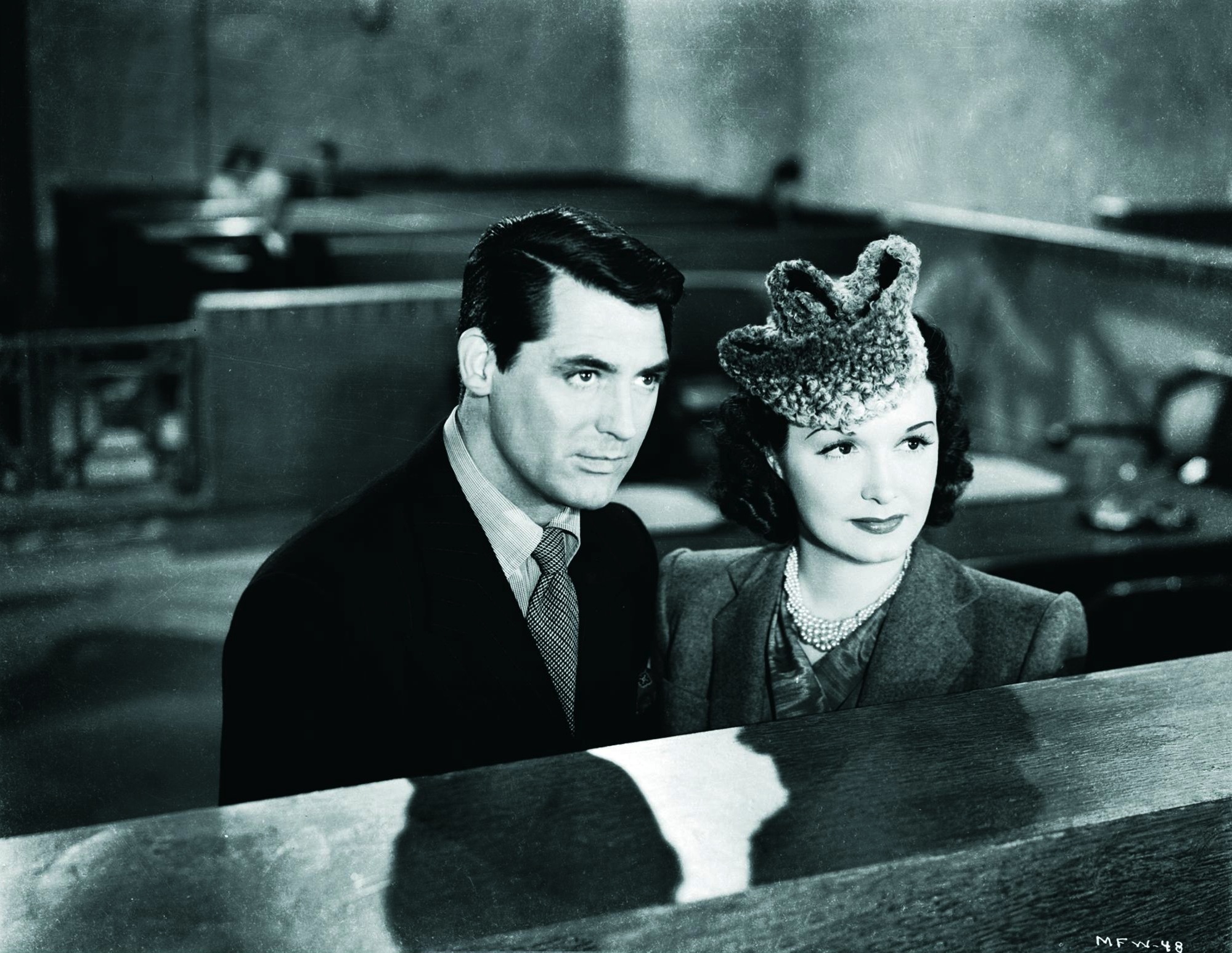
I thought this movie was a drama until I started it and realized it was definitely not a movie to be taken seriously. This is the movie with the famous scene of Marilyn’s dress being blown upward by her standing over the subway grate.

This is a movie made in 1955 that jokingly explores the idea that middle-aged men who have been married seven years feel like they need to break out of the mundane and sow some more wild oats. I, personally, did not find it that funny that the movie makers thought it was funny to make fun of men in New York City sending their wives and children to the country for the summer so they can go meet other women and have parties, therefore feeling free and easy again.

We start the movie with Richard Sherman, a man working in book design, who sends his wife and son off to the country for the summer. Richard is determined he won’t be like other men who drink, smoke, and chase after women while their wives are gone.

Not long after he decides this, though, he heads home to a house that’s been made into apartments and starts complaining as he unlocks the door about how his wife wants to live in a house and not an apartment. Their apartment is nice, he decides, especially with nice neighbors upstairs and – he turns around and someone needs help being buzzed in through the main door.

That someone is Marilyn Monroe who is looking, of course, drop-dead gorgeous.

Richard has to renew his resolve not to forget himself and go crazy while his wife and son are gone with Marilyn acting all clueless and walking around upstairs either naked or half naked. When she almost drops a tomato pot on his head his resolve cracks and he invites her down for a drink.

It’s then he realizes she’s gorgeous but not too bright and that is totally fine with him.

He’s already been daydreaming a lot and Marilyn kicks his daydreams into high gear.

He enjoys daydreaming about how Marilyn will fall for him but, truly, Marilyn is just absolutely clueless to his advances and his more interested in getting into his apartment to take advantage of his air conditioning, which she does not have in her apartment.

Marilyn, incidentally, does not have a name in this movie. Her name is just The Girl.

This is another Billy Wilder film with Marilyn – like Some Like It Hot.

The movie is based on a play written by George Axelrod.

In addition to Marilyn it stars Tom Ewell who played Richard Sherman in the play as well.

Many lines from the play had to be cut because they were deemed indecent by the Hayes office, which determined what was and wasn’t allowed in movies at that time.

There has long been rumors that during the filming of the famous scene with Marilyn, there was too much noise to use the final footage and it had to be shot again on a sound stage. While it is true that the scene was shot twice, footage was used from both shoots, according to an article on Wikipedia. Marilyn really did stand over a grate outside the Trans-Lux 52nd Street Theater, then located at 586 Lexington Avenue in Manhattan. She also did get a lot of attention from the press and onlookers when this happened because Wilder invited them to drum up attention for the film.

This left Marilyn’s then-husband Joe DiMaggio pretty ticked off, but, alas, the scene became one of the most iconic ever in a movie.

Overall I enjoyed this movie, even if I didn’t like some of the messages underlying the plot. In the end, the craziness was drawn to a close before it got too crazy but the in-between stuff that seemed to suggest that men running around on their wives was okay wasn’t a great message for me. I do know that most of it was being said as a joke and that part of the message really was that it wasn’t actually okay to be done.
And, yes, I really liked Marilyn in this movie. She was so free and joyful. Yes, she was sexualized, just like in her other movies, but she also held her own as an actress, playing the comedic parts with ease and pure entertainment.

Next up for me for Marilyn Movies is Monkey Business.

After that, I only have two more movies:

All About Eve and The Misfits.

Both are dramas.

If all goes to plan, I’ll be writing about Monkey Business next week, on August 3, All About Eve on August 10 and The Misfits on August 17th.

(Monkey Business is available for free on YouTube, for those who might like to watch along.)

Summer of Marilyn: How to Marry A Millionaire

Two weeks ago I watched How to Marry A Millionaire and decided that weekend I would watch Marilyn Monroe movies for the summer, similar to how I watched Paul Newman movies last summer.

How to Marry A Millionaire stars Marilyn, Lauren Bacall, and Betty Grable and was considered a screwball comedy.

It was released in 1953.

It follows the story of Schatze Page (Lauren), Loco Dempsey (Betty), and Pola Debevoise (Marilyn) who are all looking for ways to marry a rich man and live the high life.

Or at least that’s the goal when the movie starts.

As we progress into the movie, we see the goals of the women begin to shift based on the men who they end up meeting along the way.

Each woman works on snagging a rich man and to do that they need a home base, so Schatze finds a home to rent from a man who is out of the country. She’ll need money to pay for the rental, though, so she begins to sell off the fancy furniture in the home, even though it isn’t hers.

Eventually, she and the other women will meet men who they decide they can snag and marry. Schatze meets William Powell, one of my favorite “classic Hollywood” actors. He’s 30 years older than her and a widower. More importantly, he’s rich.

She sets out to make him her own, but there’s a man named Tom who is trying to get her attention. She wants nothing to do with Tom, though, since he’s poor and won’t support her high-end needs.

Marilyn’’s character meets a wealthy businessman who is also a crook and she’s about to run off with him when she gets on the wrong plane and meets the man who owns the apartment on the plane. The apartment owner, it turns out, is trying to escape the IRS.

Betty’s character meets a married man and thinks she’s on her way to a Elk’s Club meeting in Maine, but has actually been invited to his personal lodge. She tries to leave when she realizes what is going on, but comes down with the mumps and is quarantined. While there, and after the man she came with becomes ill himself, she meets a poor but charming forest ranger and has to decide if she wants to pursue love or money.

Betty was supposed to be the star of the film, according to some articles, but, of course, Marilyn ended up with top billing.

According to the blog, Classic Movie Hub, Fox created the movie using anamorphic lenses developed by Henri Chretien in France. These lenses “expanded the audience’s peripheral vision by creating a panoramic, curved screen triple the size of a conventional screen,” according to the blog. This was in an effort to combat the rise of televisions in the American home.

Fox had two things to compete with television with this movie – Marilyn and these new lenses. They made a movie called The Robe first with the technology, however, because they felt that movie would appeal more to a wider audience and was more family-friendly.

The Robe was about a Roman centurion who commanded the unit responsible for the crucifixion of Christ.

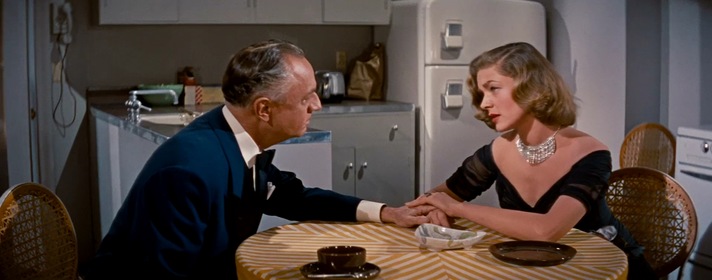
(I think it is interesting that the woman in this photo by Lauren’s name looks nothing like her.)

Marilyn originally wanted Betty’s role since that role had more “snappy lines.” Playing Pola would mean playing a nearsighted woman who felt insecure wearing her glasses and often slammed into walls when she took her glasses off. Marilyn wasn’t confident in her comedic skills and wanted to back out, but the director convinced her to continue and she managed to pull it off amazingly well.

Lauren Bacall was already a well-known actress at this point and I felt she really held the group together.

In some ways I felt Marilyn did overshadow the others with her performance and not just because of her beauty. She pulled off the quirky-plus-innocent role well.

I felt like Lauren was out of place in a comedy but that’s probably because I am used to watching her in Noir-type films with Humphrey Bogart (who she later married).

Betty impressed me with her comedic skills and matched Marilyn’s quirkiness. I guess Lauren was more of the “straight-man” in the trio.

I loved William Powell in this. None of the other men really stood out to me, but that may be because William was so sweet and doted on Lauren’s character even though he really should have known she was a gold digger. And because I have a soft spot for him after watching him in the Thin Man movies.

I won’t share the ending of the movie, but I will say that the women redeemed themselves from their selfishness as the movie progressed.

As for stories from the set, the Classic Movie Hub blog relayed that Lauren and Betty were annoyed that Marilyn was late on set a lot and there were other minor snits between the three women.

From the blog: “When the three female stars assembled on the soundstage for the first time, the press awaited a mushroom cloud of conflict and cattiness or, at least, Grable’s bitter resentment of Monroe. However, Grable immediately embraced Monroe and ceremoniously told her, “Honey, I’ve had mine. Go get yours. It’s your turn now.” In response to Bacall grumbling about Monroe’s tardiness, Grable said, “Honey, give it to her. Let’s listen to records until she gets here. It’s her time now. Let her have fun.” Before long, Bacall found herself also feeling protective of Monroe.

I think this is my first time watching a movie with Marilyn all the way through. I enjoyed it and am looking forward the other films, though I know at least a couple of them are much darker than this one.

The next movies I plan to watch and when I plan to write about them are:

June 22: Gentlemen Prefer Blonds

June 29: Some Like It Hot

July 6: Niagra

July 13: The Seven Year Itch

July 20: Monkey Business (because it’s Marilyn and Cary together)

July 27: All About Eve

August 3: The Misfits

Next Classic Movie Impressions feature: Summer of Marilyn

I am going to be doing another Classic Movie Impressions feature this summer and so far, I am offering it up for whomever might like to jump in during the rest of June and part of July.

Erin from Still Life, with Cracker Crumbs is too busy in June for this feature and I know Katja has been busy as well, but the invitation for her to join in is totally there.

Anyone else who wants to join may do so as well and at any point. You don’t have to watch or write about all of the movies to be a part.

Now, onto who I am featuring this summer.

Marilyn Monroe.

So yes, the feature will be called A Summer of Marilyn.

If you have been following this blog for a while, you know I featured Paul Newman for my summer movie watching last year and Cary Grant for this spring.

I thought I should choose an actress this time around and decided on Marilyn when I discovered how many of her movies we own on blu-ray. I’ve also been a little fascinated with Marilyn because of how Hollywood really abused and used her until there was nothing left of her. It’s a story with a sad ending but I guess I am looking for some happiness she might have experienced in the making of at least a couple of these movies.

I’m going to kick off the feature this Thursday with How To Marry A Millionaire, which I watched on that wonderful Saturday where I had where five hours to myself with no responsibilities and no one else to care for.

If you want to quickly watch it, or have already seen it, and want to jump in, go for it. Or you can share a post later and just link to mine and I’ll let readers know you’ve shared your views too.

Without further ado, here are the movies I plan to watch and the dates I plan to blog about them on:

June 15: How To Marry A Millionaire

June 22: Gentlemen Prefer Blonds

June 29: Some Like It Hot

July 6: Niagra

July 13: The Seven Year Itch

July 20: Monkey Business (because it’s Marilyn and Cary together)

July 27: All About Eve

August 3: The Misfits

Spring of Cary: Operation Petticoat

For Spring Erin from Still Life, With Cracker Crumb, Kajta of Breath of Hallelujah, and I have been watching and writing about Cary Grant movies. I always add this disclaimer: the movies we watched were chosen because I had never seen them before, not because they are his best. I was trying to watch movies of his I had not seen so thought I’d do a challenge similar to my Summer of Paul last summer.

Now, with that disclaimer out of the way, last week we delayed writing about Operation Petticoat because Erin and I both had busy weeks and felt frazzled. We found out later that Katja also had a weird week so that worked out well.

Okay, now back to the movie, which is a comedy and that is really what I needed last week and still need this week. I find it surprising that this movie, out of all of Cary’s movies was actually the highest grossing of his career at $9.3 million. It was extremely popular when it was released in 1959 and is still considered the highest-grossing comedy of all time. Crazy, right?

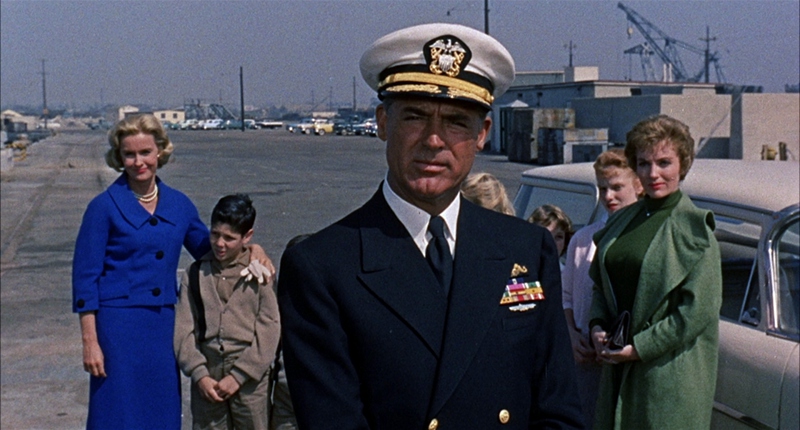
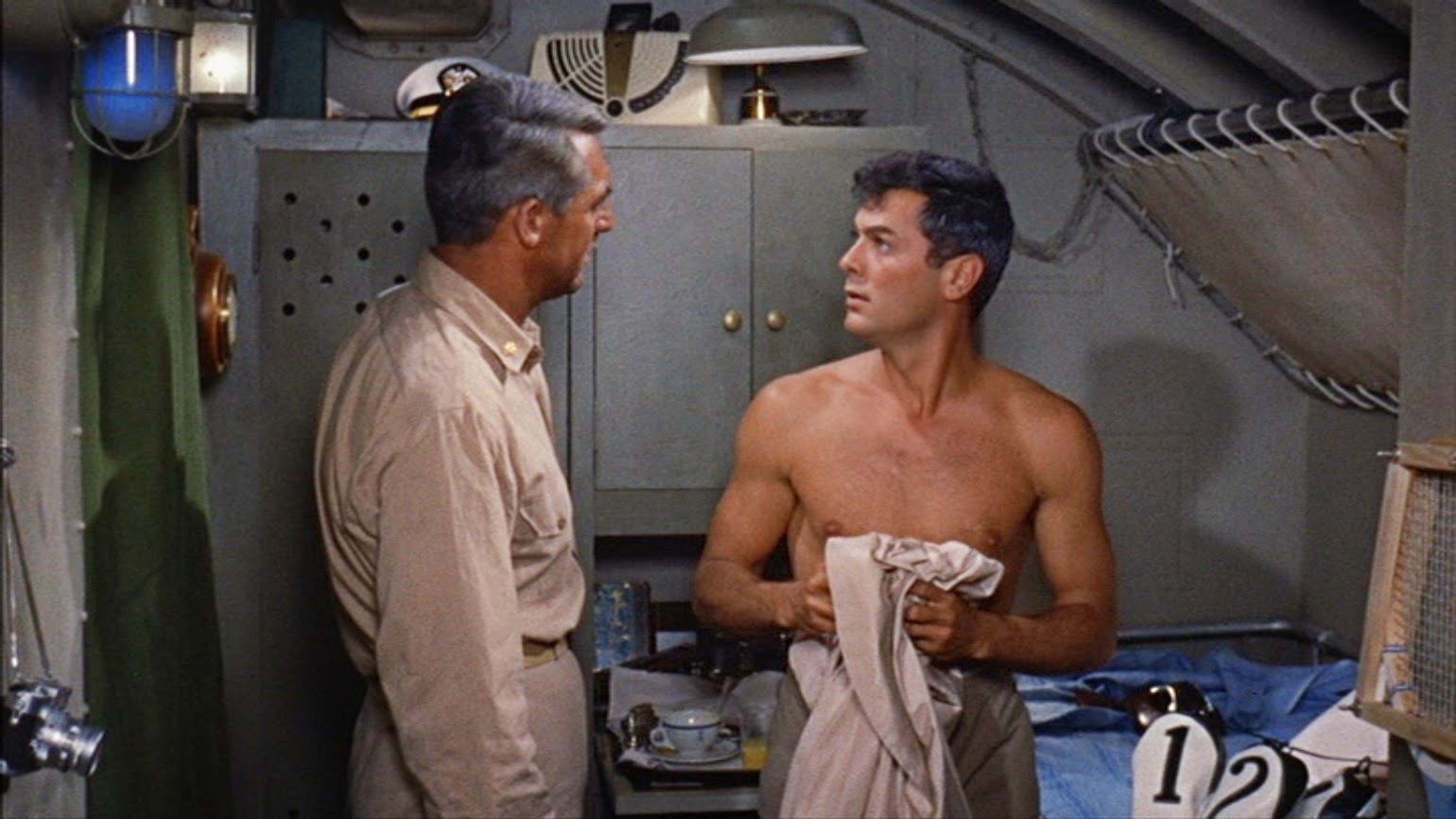
Anyhow, we open with Cary Grant in a naval officer’s uniform.

This is actually a photograph from the end, but close enough.

At this point, I pause and sigh as I admire the view. I pause the film for a moment and sigh again.

In a world where men are being feminized more and more, it is refreshing to see a real man looking like a real man in uniform. Again, in case you don’t understand what I am saying, he does look nice in a uniform.

Now, on with the show.

Cary is an admiral in the Navy in the beginning of the movie. He’s gone back to a submarine that he was once the captain of. He finds his way to the captain’s cabin and waits for him to arrive and while he does he reminisces about when he was captain and all the craziness that happened one day in the beginning of the U.S.’s involvement in World War II.

Here is a bit of background and plot of the movie from Wikipedia so I don’t have to explain it all in my awkward way.:

In 1959, U. S. Navy Rear Admiral Matt Sherman (Cary Grant) boards the obsolete submarine USS Sea Tiger, prior to her departure for the scrapyard. Sherman, her first commanding officer, begins reading his wartime personal logbook, and a flashback begins.

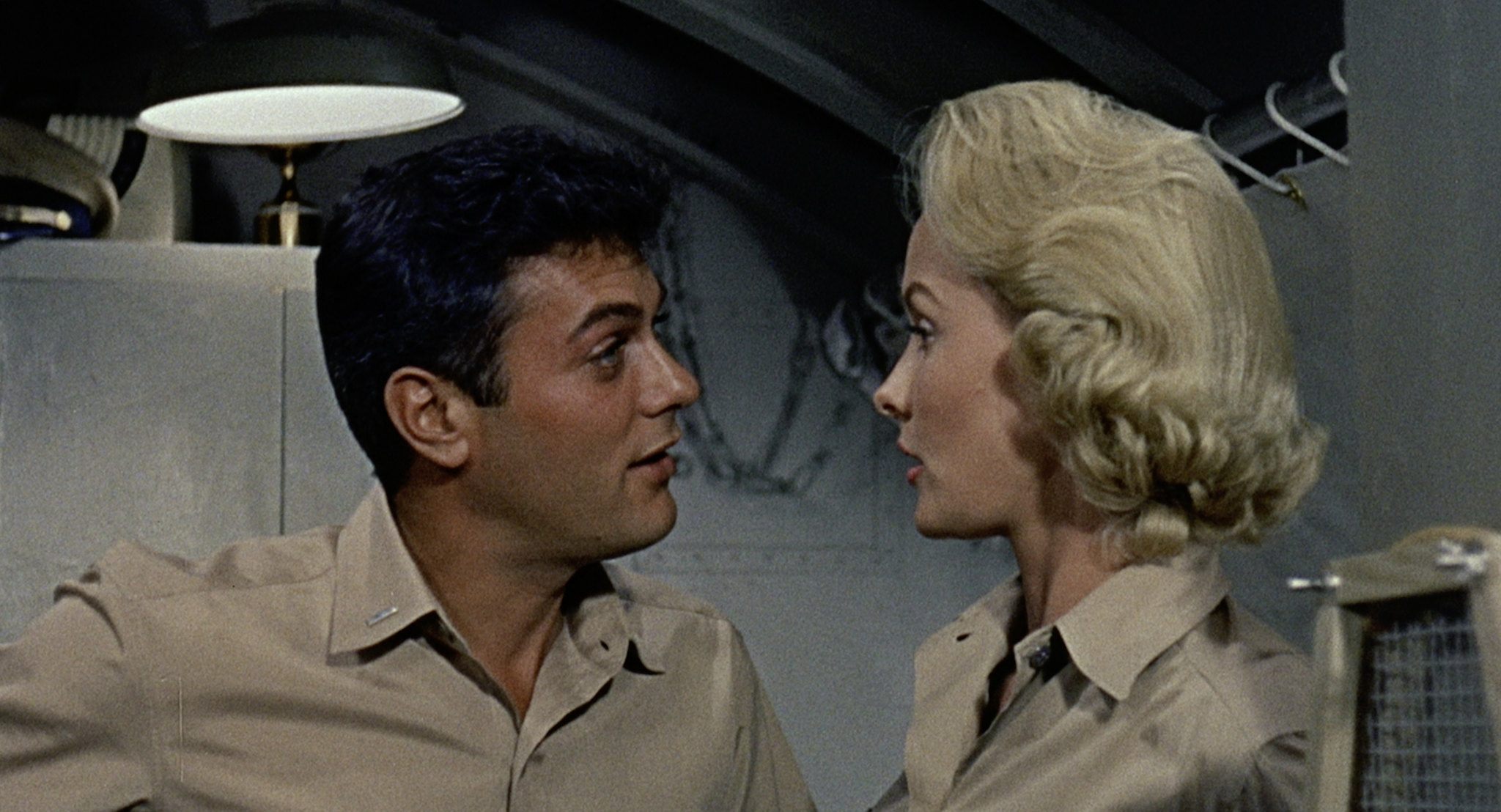
On December 10, 1941, a Japanese air raid sinks Sea Tiger while she is docked at the Cavite Navy Yard in the Philippines. Lieutenant Commander Sherman and his crew begin repairs, hoping to sail for Darwin, Australia before the Japanese overrun the port. Believing there is no chance of repairing the submarine, the squadron commodore transfers most of Sherman’s crew to other boats, but promises Sherman that he will have first call on any available replacements. Lieutenant (junior grade) Nick Holden (Tony Curtis), an admiral’s aide, is reassigned to Sea Tiger despite a total lack of submarine training or experience.”

Nick, in fact, has so little experience he walks up in an all-white dress uniform and talks about all the mundane and unimportant things he did for the admiral. None of it includes being at sea.

Nick does have another talent – ideas for how to get supplies that the captain will need to get his ship running again.

His ideas are “less than proper” shall we say and it turns out the admiral’s aide isn’t a waste of space after all. While the commander thought he was soft, it turns out he’s a real con-man, which is what is needed to get the submarine back on its way to Australia.

Nick strikes deals with ex-cons, witchdoctors, and many others to make sure they can get their supplies or help.

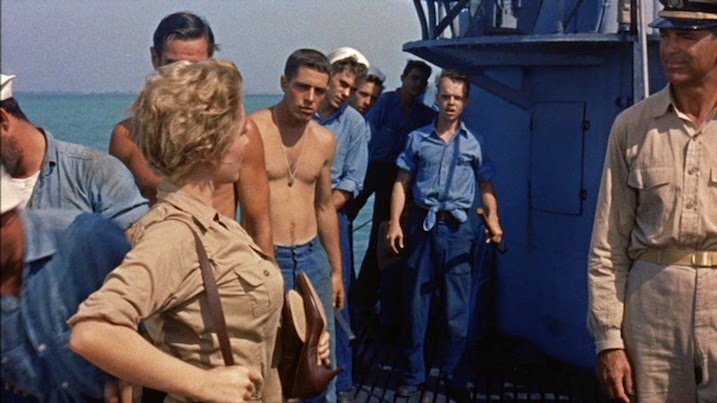
While out to see they find an island on and on that island are nurses who were stranded there when their plane had to land in an emergency because they were being fired at by the Japanese.

Cary/Matt isn’t really very interested in taking the nurses on his ship of all men, but the men, of course, are thrilled.

Many suggestive and flirty comments begin at this point, especially between Nick and Second Lt. Barbara Duran who he offers his pajamas to on her first night aboard.

In this moment things become quite bawdy (though not dirty) when she says she couldn’t possibly take his pajamas and he says it is totally fine as long as he is not in them at the same time. When she asks what he’s going to wear he says, “I’ll take the bottoms, if you like the tops. Do you like the tops? You can have the bottoms if you want.”

Oh, dear.

Matt tries to take the women to an army base but the Army says they can’t take the women without the proper orders because the Japanese are closing in. It is because the Japanese are closing in that Matt allows Nick to set up a casino-like operation where enlisted men can bring them the parts they need and get paid for them. The hull was damaged in the initial attack and the torpedo man would like some paint to fix the chips and nicks in it. The only issue is that they can’t get their hands on any gray paint so they finally settle on red and white. We all know what color that makes so eventually the hull is painted – yes, pink.

As you can imagine, this makes the submarine a perfect target and creates even more hilarious moments on board as they try to make their way to safety. The real problem with the pink submarine and then some repairs that still need to be taken care of, is that eventually, their own side doesn’t know that it is them. I won’t tell you how they finally let the U.S. Navy know it’s them and not the Japanese, but let’s just say it involves some unmentionables.

A little bit of trivia from Wikipedia: Tony Curtis took credit for the idea for the movie because he joined the Navy during World War II to work on a submarine partly because he had seen Cary’s movie Destination Tokyo. After the war and after he became a star, Tony said he’d love to be in a movie with Cary where Cary would be a submarine captain.

An actress who was going to be in the movie actually pulled out because she felt there were too many sex jokes. She was probably right, but the jokes were still way tamer than the jokes that are in movies today.

One risqué quote that did crack me up from Cary was, “It’s like watching a striptease. Don’t ask how it’s done. Just enjoy what is coming off.”

The U.S. Navy supported the movie and allowed it to be filmed around Naval Station Key West, which is now called the Truman Annex of Naval Station Key West. The submarine was portrayed by three different World War II-era submarines.

I kept being too technical watching this movie and saying “You can’t bring a submarine up and down like that.”

My husband had to keep reminding me that this is meant to be a goofball comedy. “It is a typical Blake Edwards comedy.” Which I guess means that Blake Edward created crazy and unrealistic comedies.

And, yes, in case you are wondering or don’t know, the show Operation Petticoat (which I have never seen) was based on the movie.

Overall I really enjoyed this movie and it came at a time I needed something silly.

To catch up on what Erin thought of the movie you can find her blog here (the post might be late today) and you can find Katja’s blog here (her post might also be late but it will be up later).

Here is the original trailer

Next up to finish up Spring of Cary:

Suspicion (May 25)

Notorious (May June 1)

I’d love to do a Summer of Bogart and watch Humphrey Bogart movies, but I haven’t run that by Erin or Katja yet. I’ll see what they think. Maybe I’ll do it on my own for fun.

Spring of Cary: Holiday

Here we are to another week of Spring of Cary where Erin from Still Life, With Cracker Crumbs and I are watching Cary Grant movies for the spring. Katja from Breath of Hallelujah is joining in when she is able to.

I chose the list of movies from the ones of Cary’s I hadn’t watched before.

Our movie this week is Holiday and it was released in 1938, so it was one of Cary’s early films.

The movie kicks off with Johnny Case (Cary) coming back from a visit out of town where he says he has fallen in love with a woman and is going to marry her.

His friends don’t believe him and think he’s going to be destitute with a woman and her family leaching off of him.

They have nothing to worry about because when Johnny goes to the address that the woman he wants to marry gave him he finds out her family is super duper rich and live in a house that looks like, as he describes it, Grand Central Station.

The potential bride-to-be, Julia Seton (Doris Nolan), lets him know she’s from the famous, well-to-do Seton family. She also tells him that her father will expect him to start working with the company and become a businessman and Johnny really isn’t sure that’s something he’s interested in. He just wants to have fun. Like he told his friends at the beginning of the movie:

“She wants the life I want, the home I want, the fun I want.”

But does Julia really want all that? We will have to find out.

After Johnny first arrives at the big, fancy house, Julia tells Johnny she’s going to go to church and tell her father about them, and on their way out the door, in walks Julia’s sister Linda (Katherine Hepburn), who is very intrigued with this man her sister says she’s going to marry. It is clear that Linda has an entirely different spirit than Julia. A much freer spirit.

Linda wants to make sure that Johnny is good enough for the sister she loves. Deep down she doesn’t want Julia to get married. We learn later that one reason she doesn’t want Julia to get married is because she doesn’t want Julia to move out of the house and have a home of her own, This will leave Linda alone to be bored and unsure of her own future. For now, she’s simply rattling around in the big house where the men in the family and their goal of succeeding is the main focus and she is expected to attend business parties.

Early on we learn that Julia and Linda’s mother has died at some point in the past, but she was a fun mother who wanted her children to stay somewhat grounded so she had a playroom built in the house that featured more common furniture and the tools each child needed to explore their passions in life (a drum set, paints, and workout equipment for example).

Johnny isn’t very interested in impressing the patriarch of the family. He wants to work for a bit to save some money and then take several years off of work and go back to work when he learns why he’s been working his whole life. This is what he tells Linda, saying he wants to take a bit of a holiday in between his working years. The term “holiday” is sort of a British term to me but I know he means a type of break or vacation.

Linda likes the sound of that because she’d like to take a holiday from her rather mundane life where she feels like her family has lost touch with – well, each other. She longs for the days when her mother was alive and everything felt more real and wasn’t all about money.

Linda can tell right from the beginning that Johnny is a free spirit and while Julia is nice, she is not a free spirit. She is a “this is the way we’ve always done it and it needs to be done this way still” type of person.

As much as Linda is worried about Johnny ruining Julia’s spirit, she also seems worried that Julia will do the same to Johnny.

It all comes to a head at the New Year’s Eve party where Julia and Linda’s father announces the couple’s engagement but Linda refuses to come to it because she was going to throw a smaller, less public, and more intimate party for her sister instead.

The sisters also have a brother, Ned, who keeps himself liquored up to deal with life.

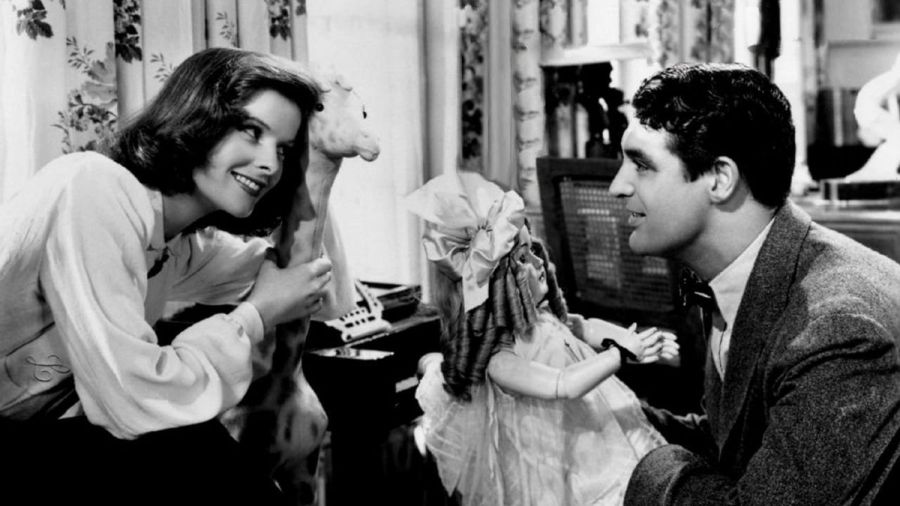
This was really just a fun movie and I absolutely loved Katherine Hepburn in it. Critics called this her comeback movie after she had developed a reputation with RKO Pictures as being box office poison. I feel that in this movie she really showed them that they made a mistake. One critic in 1938 said the same, writing, “”If she [Hepburn] is slipping, as Independent Theatre Owners claim, then her ‘Linda’ should prove that she can come back–and has.”

She was sweet and touching in this movie and just pulled me into Linda’s world so easily. She and Cary had an amazing chemistry and as much as I liked Cary in this movie, I was mesmerized by her performance and simply impressed with his.

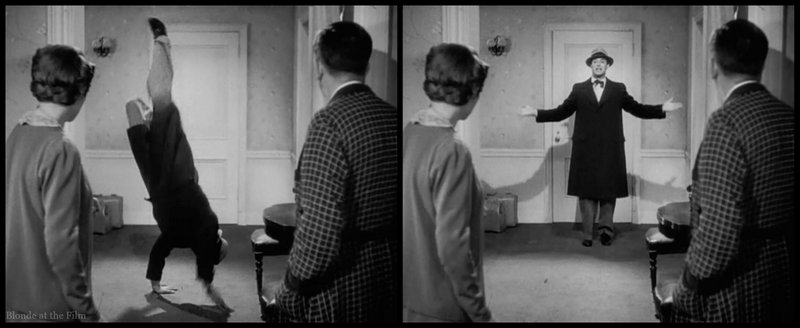
I really enjoyed Cary’s youthful exuberance in this movie. According to Wikipedia, he was 34 when the movie was made. He just seemed more chipper and happy in this movie than the previous movies I’ve seen him in. Since Cary was much younger in this movie, he was able to pull off a lot more of the physical comedy. Katherine got in on some of her own physical comedy during at least one scene.

This was one of four movies that Cary and Katherine were in together. The others were Bringing Up Baby (I absolutely recommend this one), the Philadelphia Story (I also recommend this one), and Sylvia Scarlett which The Husband just realized we have on DVD in a collection of Cary movies.

Incidentally, the director of the movie, George Cukor, almost cast Irene Dunne in the movie, which was the actress who was in The Awful Truth and My Favorite Wife with Cary. In the end, though, he chose Hepburn, which, as I mentioned above, did worry some in the industry.

I enjoyed this movie more than any of the others we have seen so far. To me, Cary and Katherine are simply a winning combination.

To see Erin’s impression of the movie hop on over to her blog (later Thursday for this week. She’s been delayed.)

I don’t know if Kajta will have a post today or not but if she does you can find her blog here.

Next up in our lineup for movies to watch:

Operation Petticoat (May 11)

Suspicion (May 18)

Notorious (May 25)

Spring of Cary: An Affair To Remember


I am watching Cary Grant movies with Erin from Still Life, With Cracker Crumbs this spring. I picked movies of Cary’s I had not seen before.

I love this graphic Erin designed!!

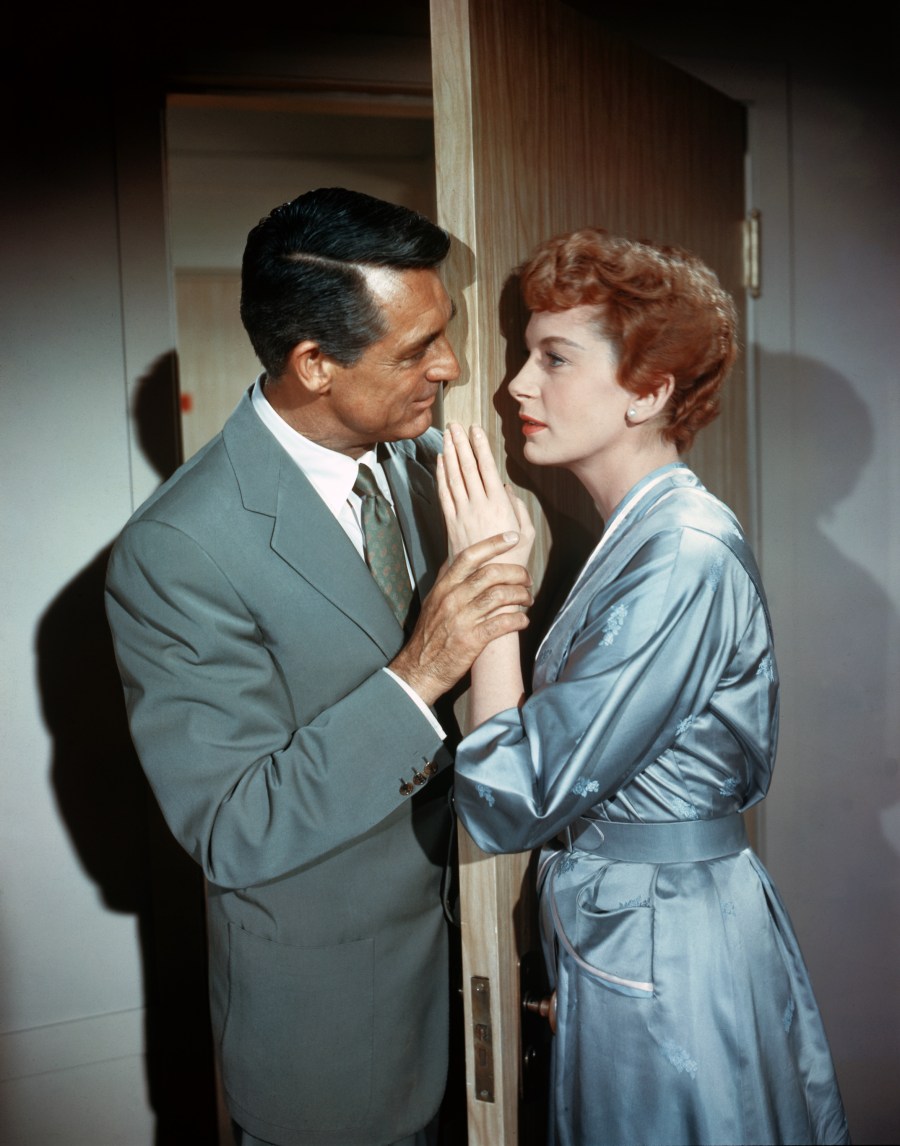
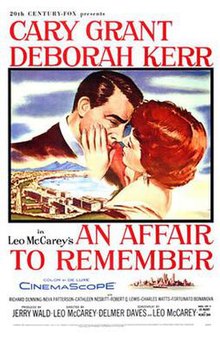
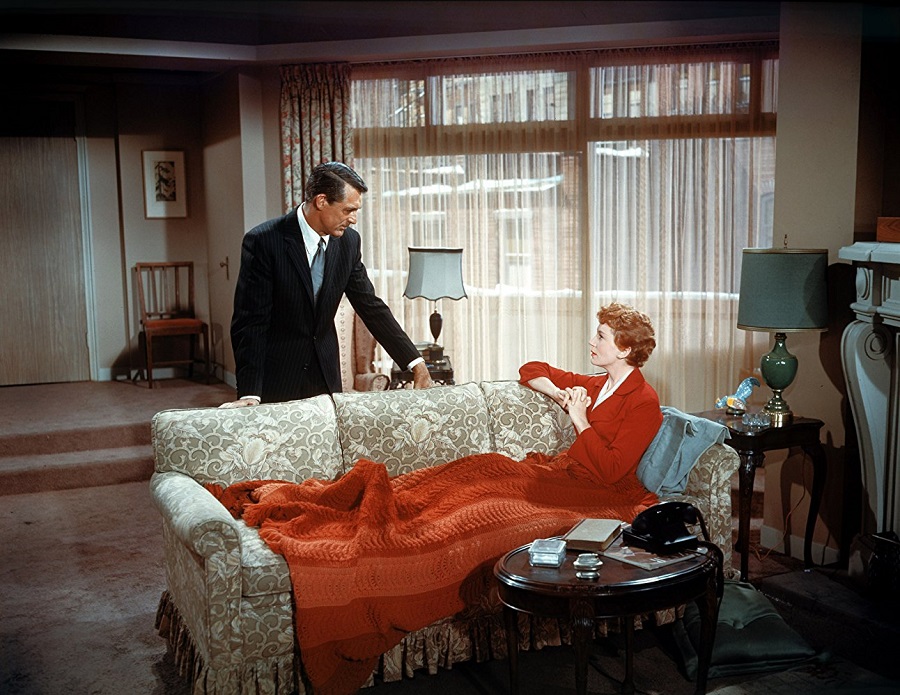
Today we are discussing An Affair to Remember from 1957, which was nominated for four Oscars.

In this movie, Cary plays Nick Ferrante, a “international playboy”. He is a man who likes to date rich women – as many as he can at a time it seems.

As the movie starts, though, it appears that he is finally settling down. It’s worldwide news when he becomes engaged. He’s on a cruise, though, where there is a lot of women available to him and it’s there that he meets Terry McKay portrayed by Deborah Kerr.

He can’t seem to break himself from the habit of picking up women,so he starts with picking her up as well.

“You saved my life,” he tells her. “I was bored to death. I didn’t think I’d find one attractive woman on this boat. . . . I said to myself, ‘Don’t beautiful women travel anymore?’ And then I saw you.”

Then he proceeds by essentially trying to get into her pants. Excuse me for being blunt but he suggests they find something fun to do and he is her cabin. She, however, lets him know that she is romantically involved with someone. He keeps trying to get her to cheat and, well, eventually, that will happen with a few kisses, but nothing beyond that, as far as we are shown anyhow.

We see from the beginning that the connection is real, but then I did find myself wondering how real it was with two people who were willing to cheat on their romantic partners, especially the one who is used to moving from woman to woman. That’s the cynical side of me, of course. I mean they weren’t actually married yet.

They do try to stay away from each other on the ship but no matter where they go, they seem to bump into each other.

It is a literal bumping incident at the pool that leads Nick to invite Terry to meet his French grandmother during a stop by the ship in France. His grandmother adores Terry and Terry adores her and her beautiful villa. Terry learns more about Nick that makes her fall for him even more. He’s an artist, but he always destroys his paintings because they are never good enough, his grandmother says.

It’s at his grandmother’s that Terry breaks out her singing voice and shows she has hidden talents as well. But the ship horn is blowing, and they have to leave the grandmother, much to the grandmother and their sadness.

Terry clearly doesn’t want to love the grandmother because then she has to admit she’s falling for man who is not the man she has been romantically involved with and if she can’t have Nick, then she can’t have the grandmother either. But she does love the woman and  . . . yes, Nick.

An additional challenge for the now blossoming couple is that Nick is a famous socialite and everyone on the ship is watching them to see if they really are a couple so they can gossip about it.

Soon the cruise will be over, though, and they need to decide what they are going to do about their newfound love for each other. That’s when Terry decides they need to get their lives in order in the next six months and then if they both want the relationship, they will meet at the top of the Empire State Building in July.

They each go back to their lives, and we follow their journeys there until July. They both pursue their real passions in life during this time – art for Nick and singing for Terry. They both also change during this time, finding out what is real and most important in their lives.

You’ll have to watch the movie if you want to know if they meet or not, but if you’ve ever seen that one scene in Sleepless in Seattle, you probably know what happens. Or the gist of it. It really is a classic ending and I have my opinions on it, but I don’t want to share so I don’t ruin the ending for anyone who hasn’t seen it. All I know is that I wanted to yell at the screen a couple of times and that I had to wipe my eyes a bit.

I enjoyed this movie a lot more than My Favorite Wife. I did not expect Kerr to sing two or three songs in it, since it wasn’t a musical, but the songs were very nicely done. Overall, I felt the movie was well done. I did feel the ending was a bit rushed and would have liked to have learned a little bit more about what happened after it.

This movie was directed by Leo McCarey who also directed Cary in The Awful Truth, which, if you remember from my previous blog post about The Awful Truth, was a director that Cary clashed with originally. Cary didn’t understand McCarey’s style of directing, which included simply telling the actors the gist of the scene and then having them improvise. Cary eventually warmed to McCarey’s style and even expressed disappointment that he was not in McCarey’s movie Love Affair from 1939. He was so disappointed he talked McCarey into remaking the movie, which is what An Affair to Remember was, according to Wikipedia.

Cary and Kerr did improvise many of their lines and many of those were what appeared in the film according to trivia on IMBd.

Another bit of trivia on IMBd that I found interesting:

“Deborah Kerr plays Terry McKay, previously played by Irene Dunne in Love Affair (1939), of which this film is a remake. Both were directed by Leo McCarey. The year before this film was made, Kerr played Anna Leonowens in The King and I (1956), also a role that had previously been played by Irene Dunne in the black-and-white classic Anna and the King of Siam (1946). “The King and I” is a musical based on the same book.”

Next up for our Spring of Cary feature is the movie Holiday with Cary and Katherine Hepburn.

After that we have:

Operation Petticoat (May 11)

Suspicion (May 18)

Notorious (May 25)

To read Erin’s impression of An Affair to Remember, hop on over to her blog.

Spring of Cary: My Favorite Wife


For the third movie in Spring of Cary (Grant) with Erin from Still Life, With Cracker Crumbs (and anyone else who wants to join – I’m looking at you kajta, but I know you’ve been busy), we watched My Favorite Wife with Cary and Irene Dunne.

Yes, Irene was in last week’s movie too.

This movie was an interesting concept – if not a bit crazy. Hopefully, you’ll be able to tell as I begin to write about this movie, that this is meant to be a comedy. In fact it was defined back then and now as a screwball comedy.

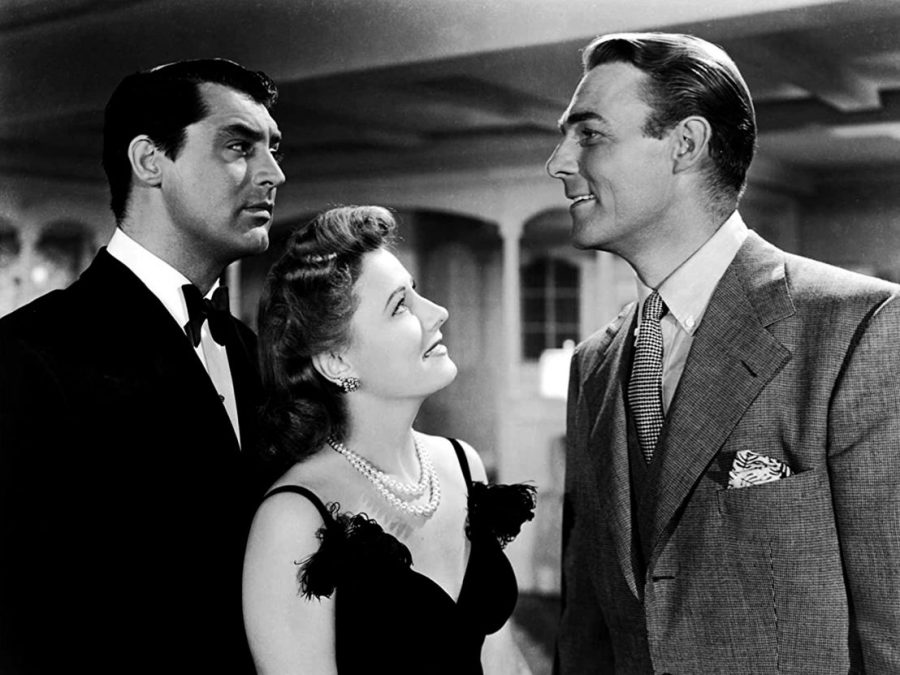
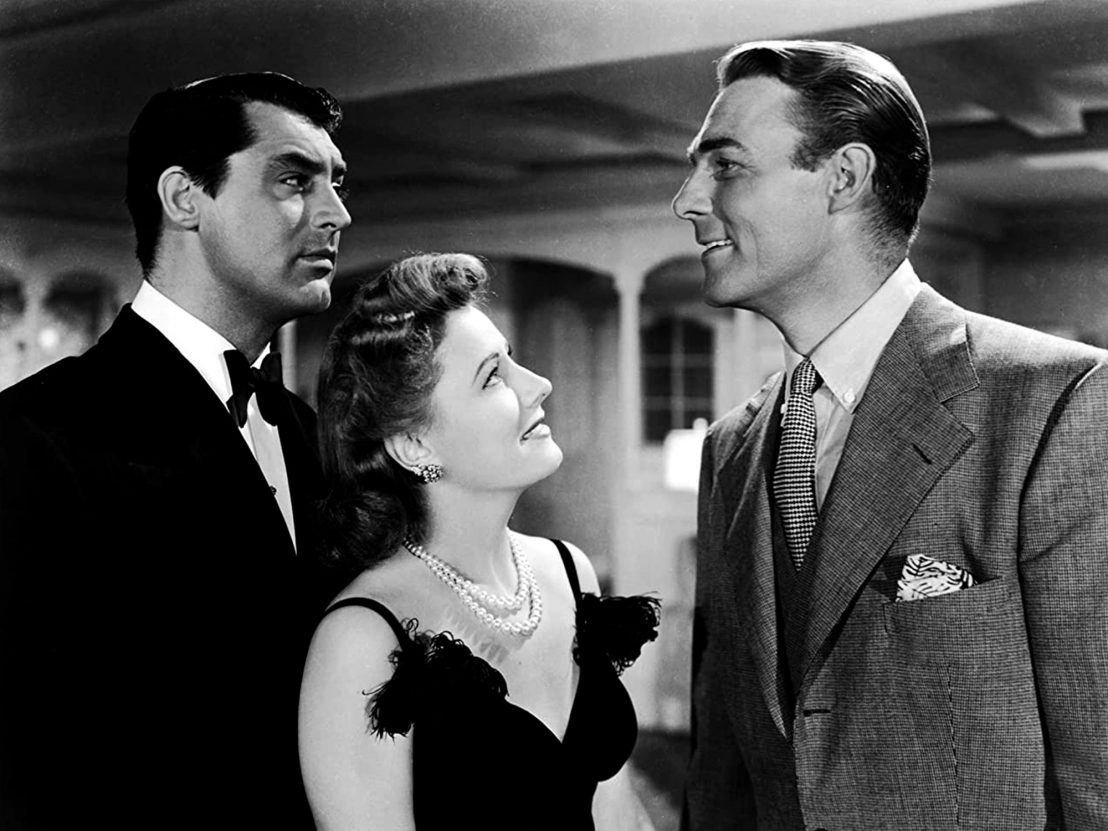
A man wants to get married, but before he can, he must declare his first wife Ellen (Irene) dead. She’s been missing at sea and was believed drowned seven years earlier.

It turns out, however, that she is not dead, and she returns while Nick Arden (Cary) is on his honeymoon with wife number two, Bianca (Gail Patrick).

Nick is of course shocked and now has no idea what to do because he has two wives.

It turns out Ellen was stranded on an island all those years and it would have been lonely for her if it wasn’t for Steve Burkett (Randolph Scott) who was stranded with her.

That’s a fact she doesn’t immediately admit to her husband and a fact he’s not real pleased with, even though he’s remarried.

That new wife, by the way, is not a very nice woman.

Oh and don’t forget that Nick and Ellen have two children together and all of that will have to be figured out as well.

To break the news to Nick, Ellen heads to his honeymoon, which was the same hotel and place they had their honeymoon, I might add. How tacky is that of him?!

As the movie goes on we the viewers now have to figure out who we want Nick to end up with and for me, of course, it’s Ellen (Irene), his first wife.

It’s clear from the moment that Nick sees his first wife that he is still in love with her.

The problem is that he has to find a way to tell Bianca that his first wife has returned and this is a task he drags out in comical ways. He drags it out so long that eventually, Ellen has to pretend to be a visitor of Nick’s mother. A wild Southern friend.

Of course, the movie keeps it tasteful and never touches on Nick and Bianca “consummating” the marriage, which we are guessing they never have.

Even though Bianca is stuck up, it is very unfair of Nick to keep dragging it out and not tell her the truth. She believes he’s her husband and that he might be running around behind her back. He keeps chickening out because he doesn’t want to upset her but she’s already upset, thinking something horrible is wrong with her and he’s fallen out of love with her.

Every time he has a chance to tell her the truth something interrupts them and he runs off again, leaving her in even more despair.

Of course, one of these interruptions comes from an insurance man who reveals that Ellen was stranded on the island with another man for seven years. Not only that but the man is quite interested in her and he lets Nick know about it.

This was a hilariously ridiculous movie, if not a little bit cringeworthy at times.

I mean are we really supposed to expect they were on an island seven years and nothing “untoward” happened? Hmmm….Well, I suppose it is a movie so we can suspend belief for a bit.

This movie was very similar to The Awful Truth, including Cary’s purposeful awkwardness and the silly and suggestive ending.

Overall it was a cute movie, but I wouldn’t say it was one of my favorites of Cary’s.

Have you ever seen the movie? What did you think about it?

To read Erin’s impression of the movie, visit her blog here: https://crackercrumblife.com/2023/04/20/the-spring-of-cary-grant-my-favorite-wife/

The rest of the movies we will be watching for Spring of Cary include:

An Affair To Remember (April 27)

Holiday (May 4)

Operation Petticoat (May 11)

Suspicion (May 18)

Notorious (May 25)

Classic Movie Impressions. Spring of Cary: The Awful Truth

“What wives don’t know won’t hurt them.” That’s what Cary Grant as Jerry Warriner says in the beginning of The Awful Truth, the second movie that Erin of Still Life, With Cracker Crumbs and I are watching for our Spring of Cary.

Now, last week I was a bit of a downer when I shared some of Cary’s personal life and the tension while filming Houseboat because of his affair with Sofia Loren. I will do my best this week to not be a downer! Ha!

This is a fun, silly movie so I will be able to keep things pretty light in this post. Lucky for all of you. *wink*

So, back to the storyline of the movie, which was released in 1937.

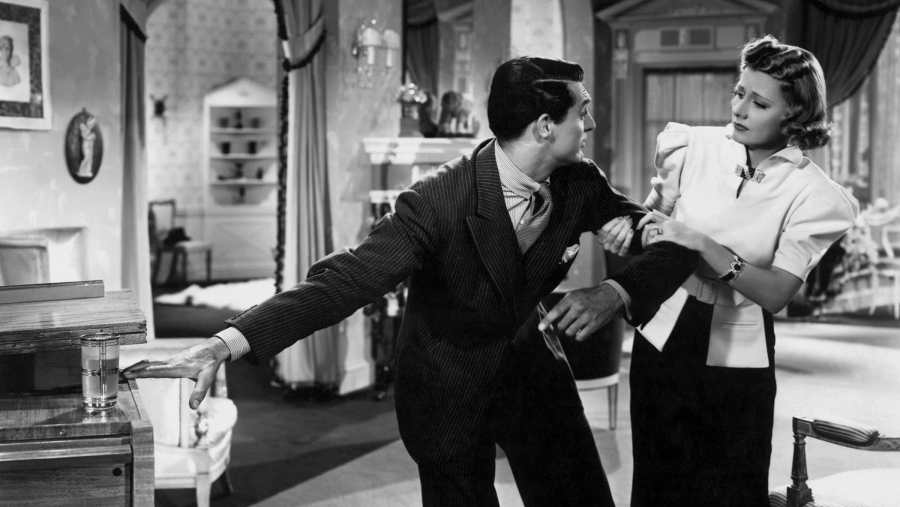
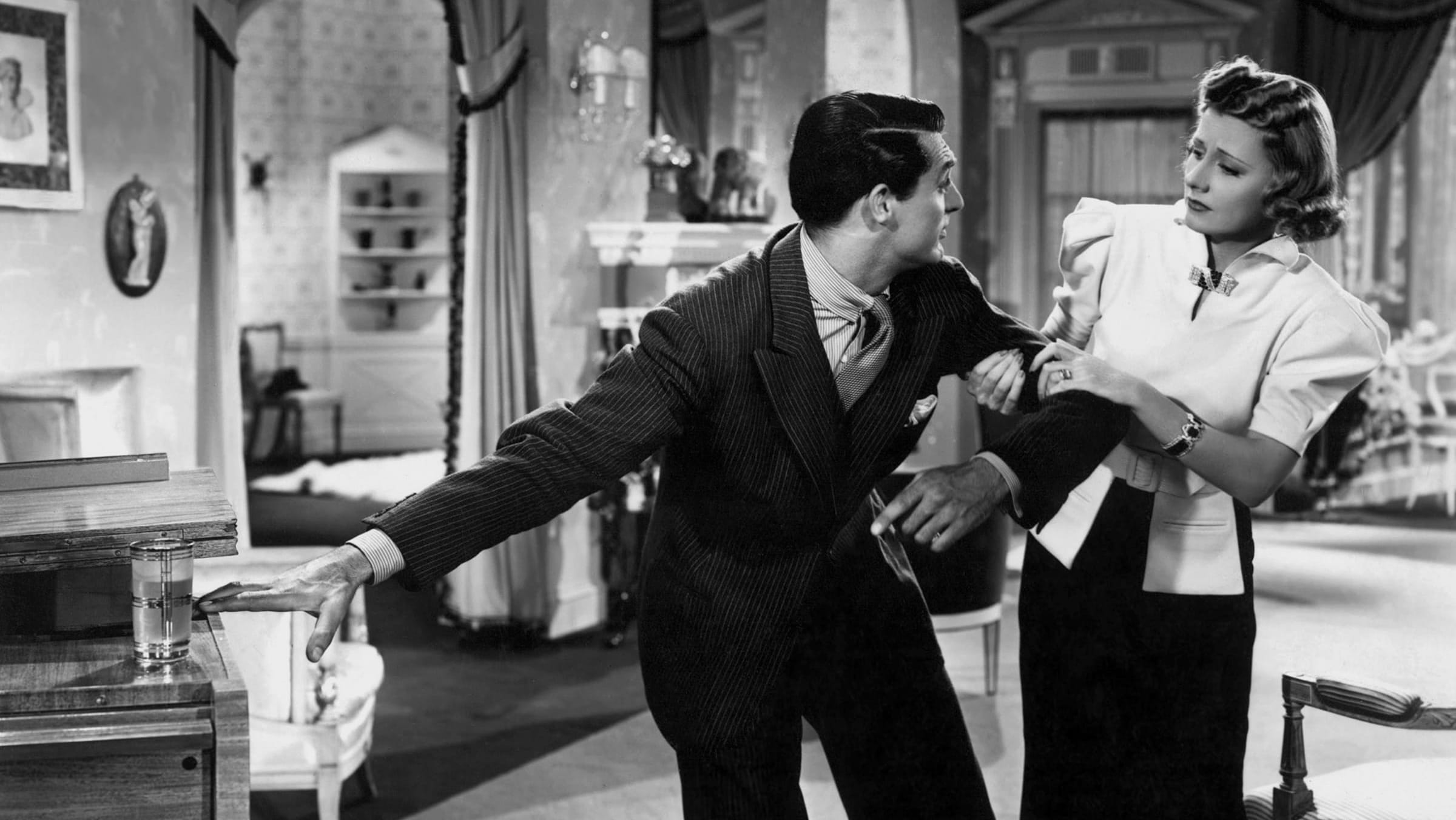
Here is a description on IMBd: Before their divorce becomes final, Jerry and Lucy Warriner both do their best to ruin each other’s plans for remarriage, Jerry to haughty socialite Barbara Vance, she to oil-rich bumpkin Daniel Leeson. Among their strategies: Jerry’s court-decreed visitation rights with Mr. Smith, their pet fox terrier, and Lucy doing her most flamboyant Dixie Belle Lee impersonation as Jerry’s brassy “sister” before his prospective bride’s scandalized family.

We start the movie out with Jerry trying to find a way to look tan so Lucy believes he was really in Florida. Not sure where he was for two weeks, but it apparently was not in Florida. We never really find the truth about that particular story.

Jerry goes home to his wife and finds out she isn’t home either. So, where has she been?

Jerry’s wife, portrayed by Irene Dunn, has secrets of her own, though they may not be quite as nefarious as Jerry’s – or are they? It’s never completely clear who is sneaking around on who in the beginning of the movie.

Eventually, it is clear that both of them are somewhat running around on their spouses, though maybe not full-blown affairs. They are, however, hanging around the opposite sex who are not their spouse.

In fact, both spouses are trying to pull the wool over each other’s eyes.

They’ve grown apart in a way and maybe have grown bored with each other so they are both living their own lives in a way and just when they decide they should officially live their lives apart by filing for divorce, they find there is still something between them they’re not ready to let go of just yet.

All it takes is a bit of jealousy to be stirred up when Lucy starts seeing another man, even before the divorce is final (gasp). From there the misunderstandings, mix-ups, and silliness kicks off and never slows down.

There are so many laugh-out-loud moments. One that stands out for me is Lucy’s call with her lawyer who is trying to talk to her about the beauty of marriage while his wife nags him in the background and he says to her, “Please shut your mouth” and then progresses to, “You shut your mouth! I’ll eat dinner when I want to!”

Irene and Cary are great together – tossing barbs back and forth fast and furious like the ball in a tennis match at Wimbleton.

They made three movies together: this one, Penny Serenade, and My Favorite Wife.

I have My Favorite Wife on our list to watch next week.

According to articles online, there were many parts of the movie that were adlibbed, which added even more to the charm of the movie for me.

The film was directed by Leo McCarey and you can read more about him HERE

According to an article on Criterion.com: (McCarey’s) claims to greatness, reaching far back into silent film, include Laurel and Hardy two-reelers; the Marx Brothers comedy Duck Soup (1933); a beloved melodrama that, astonishingly, he wrote and directed twice—as Love Affair in 1939 and, in 1957, as An Affair to Remember; and two surprise blockbusters, Going My Way (1944) and The Bells of St. Mary’s (1945), gentle Catholic comedies starring Bing Crosby that reflect McCarey’s own devout Catholicism and feeling for the workings of divine providence.”

I have An Affair to Remember on our list for April 27th and I just added The Bells of St. Mary’s to my personal list to watch.

According to Wikipedia, the movie is based on a play of the same name written by Arthur Richman. It was also made into a radio theater program with Lux Radio Theater with Cary and Claudette Colbert in 1939. I’ve listened to the Lux Radio productions before and really enjoyed them. There was one of Mr. Blandings Builds His Dream House with Cary and Myrna Lloyd, who were the leads in the movie version as well and that one was superb.

The same article details that the actors at first struggled immensely with McCarey’s freestyle method of directing. They were not provided with a script or much direction, which infuriated Cary who was used to having set scripts and assembly-line type movies with Paramount. He tried to get out of the movie several times, which irked McCarey and he allegedly held a grudge against the actor for decades over that move.

Despite the rocky start, though, the actors eventually determined that McCarey was a comic genius and looked back on the experience fondly, remembering how hard they laughed each day.

The whole article, which details the process of filming and the improvisation on the set is very interesting. If you want to read more of it, you can do so here: https://en.wikipedia.org/wiki/The_Awful_Truth

To read Erin’s impressions of The Awful Truth, well…she doesn’t have one this week so check out her blog next week. *ahahaaaaha* She told me she didn’t have one after I put mine up.

Our remaining schedule for the Spring of Cary:

My Favorite Wife (April 20th)

An Affair To Remember (April 27)

Holiday (May 4)

Operation Petticoat (May 11)

Suspicion (May 18)

Notorious (May 25)

The Spring of Cary: Houseboat (1958)

I love this graphic that Erin madr

Today Erin of Still Life, With Cracker Crumbs, and I are starting a spring feature called Spring of Cary Grant. We will be watching one Cary Grant movie a week and sharing our impressions of it on Thursdays.

I gathered this list of movies together not because they are his best movies, but because I either hadn’t seen them yet or had not seen them in years.

This week we are writing about Houseboat. Next week we will be writing about The Awful Truth.

Houseboat was released in 1958 and stars Cary and Sophia Loren.

Cary plays Tom Winters, a man whose estranged wife has passed away.

Sophia portrays Cinzia Zaccardi, the daughter of a famous Italian composer who is in the United States while he is touring and wants to experience life in the United States before she has to go back. She’s supposed to be 22 and I thought she looked older but she was actually 24 when the movie was made.

Cary was 54. I’ll just leave that where it is.

The opening of the movie was pretty heartbreaking and it doesn’t give too much away to say that the mother of Tom’s children has passed away and their father, who they rarely see, has returned from Europe. He was preparing to divorce their mother and they had been separated for four years so he didn’t know the children very well.

There is a definite undercurrent of sadness in the movie, but thankfully there is plenty of comedy.

As we get into the movie we realize Cary’s character truly is clueless about how to be a father.

He’s also a bit of a jerk. Then again the other men in the movie are sort of jerks too. Most of them needed slapping. A few of the women did as well.

Luckily,  he learns how to be a better father and a better person as the movie goes on.

There are some downright ridiculous moments in this movie, but I need a bit of ridiculous this week.

There were also a lot of heartbreaking moments of children really acting out in grief and their lives being turned upside down.

The child actors were excellent in this. I think they might have actually had more range than Cary in this one.

There was something awkward about this movie for me and I thought it was only because of the age gap, but when I read about the movie and how it came about, the awkwardness continued.

According to IMBD: “The original screenplay was written by Betsy DrakeCary Grant‘s wife at the time. Grant originally wanted it to star her, but his extramarital affair with Sophia Loren complicated the project. Grant decided to have Loren replace Drake. Adding insult to injury, it was drastically rewritten to accommodate Loren by two other writers, Jack Rose and Melville Shavelson (who also directed), bearing little resemblance to her original script, she received no writing credit, and the reworked script was Oscar®-nominated for Best Original Story and Screenplay.”

Ouch. I can’t even imagine that heartache. But here is some more complication – Sophia apparently wasn’t as in love with Cary as he was with her because before filming started she married another man, which is why I think the chemistry between them really wasn’t there for me. Cary, who was reportedly heartbroken, tried to back out of the movie but couldn’t because of his contract and so the director helped make it go smoothly – how, I have no idea.

I guess Cary got over it eventually since he was married five times (two times after that) Ha!

I guess this wasn’t a great kick off for The Spring of Cary Grant – learning about his personal life, but I still enjoy his movies. I hope that he apologized to his previous wife for that one before they both passed away. Eek! I did read that they actually remained friends until his death, so I think they did make amends.

Also, Cary had a lot of issues from his childhood that he carried into adulthood and that affected his relationships with women, unfortunately. It’s not an excuse but it does help me understand his issues in that area a little bit better.

And, again, it doesn’t take away from his acting ability or his movies.

I’m looking forward to writing about The Awful Truth next week, which I already watched when I planned on doing this feature myself. I’m so glad Erin decided to jump in with me. You can find her impressions of Houseboat on her blog.

The movies of Cary’s that we will be watching next include:

The Awful Truth

My Favorite Wife

An Affair To Remember

Holiday

Operation Petticoat

Suspicion

Notorious