The Blue Castle Chapters 23 to 44

I am going to be honest with my blog readers — I forgot to write the last blog post for our read along!

My husband was having horrible jaw pain, had to go to the ER (which he never does!)  and will need oral surgery so my mind just blanked on the fact I was supposed to write a final post about the last chapters of the book!

But on with the show.

These are my favorite chapters.

The chapters where all the sweet and subtle romance happens.

There are also some slower chapters for me in this part of the book, but I believe those slower chapters are meant to build up a picture for us of the love growing between Barney and Valancy.

It’s in these chapters where Valancy asks Barney to marry her after Cissy passes away.

She confesses to him about her heart condition and tells him she simply wants to experience some living before she dies.

She wants to live with him on his island and spend time with him and then she will  be dead and gone and he can move on with his life.

Barney agrees, and we aren’t sure if it is because he loves her or he feels sorry for her.

She isn’t either but she is amazed when they travel to his little island across the water, and she realizes his home, amongst the trees and nature, is how she pictured her blue castle.
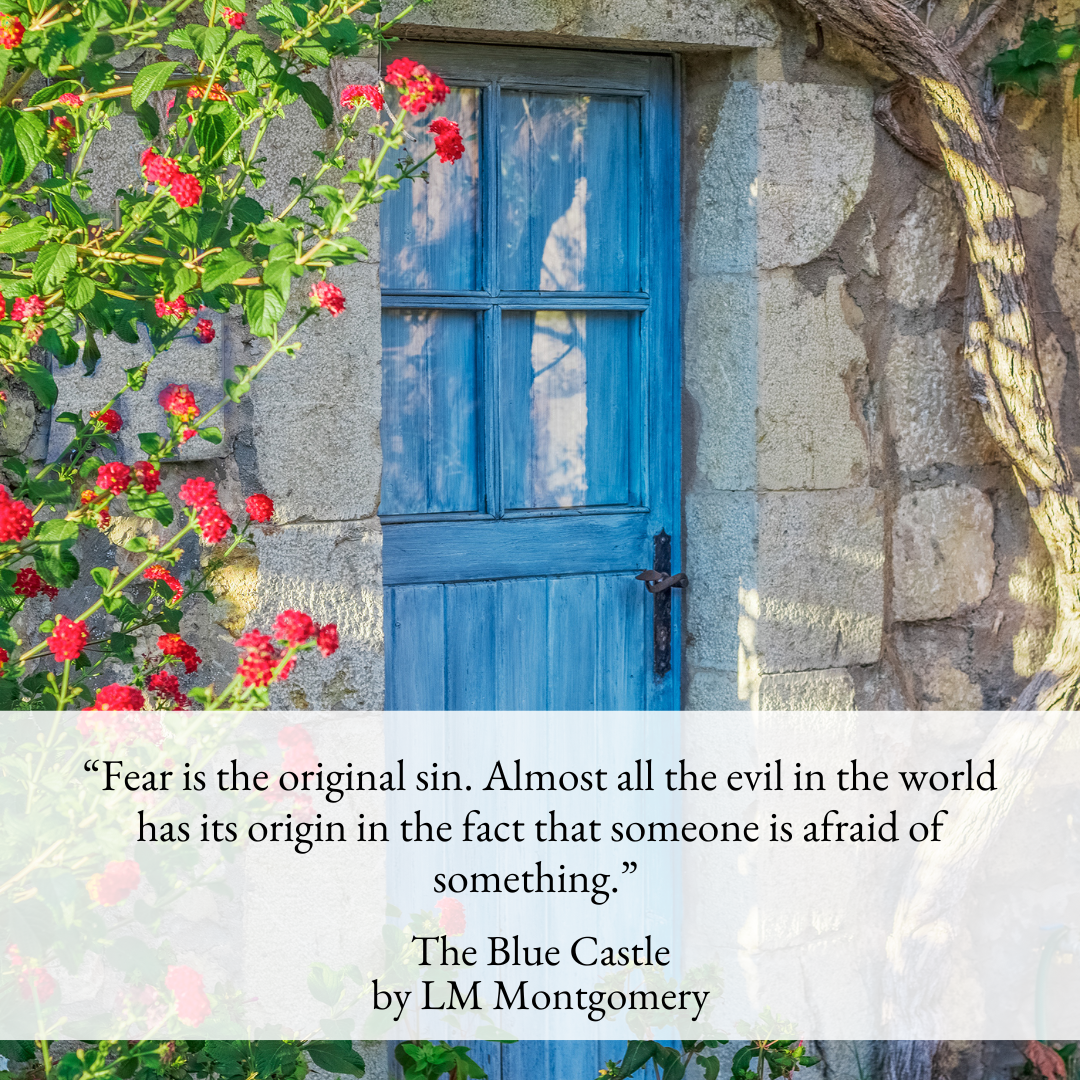
Valancy loves Barney.

She loves his idiosyncrasies and the way he loves nature and how he cares about the animals, such as his cats.

When they first get married, he makes her promise that she will not go into his little shed out back and she says she doesn’t care about his shed or what he does in there, even if he has a dead wife hanging on the wall. Lucy Maud’s sense of humor  was so odd and quirky and I’m here for it.


They carry on life, scandalizing Valancy’s family who goes apoplectic when they learn Valancy has married a rumored womanizer and criminal.

Valancy likes to read and quote John Foster to Barney as they walk in the woods and he always rolls  his eyes and ask how she can read such silliness.

Gradually Valancy begins to look and feel better. She’s full of joy and her physical appearance is showing it. The dark circles have disappeared and she’s putting on healthy weight.

The chest pains and dizzy spells she used to have have just about disappeared.

Life is wonderful and then something crazy happens.

She and Barney are on their way back from town and are crossing the train tracks when her shoe gets stuck in the track. Before they know it, a train if barreling down on her.

Barney tries to get her loose but she tells him to leave her. She was going to die anyhow but he has a future.

Barney refuses and is able to get her loose and drag her to safety.

Afterwards Valancy realizes that if anything should have caused her weakened heart to fail, it should have been that near death experience.

She is mystified and horrified.

She worries Barney will think she somehow manipulated him into marriage, that she really isn’t dying. She believes this is how Barney feels when he becomes distant and announces he will be leaving for a while.

Cue the misunderstanding trope, which I often hate in modern romances, but which works well here.

It’s at this point that I was hoping what I thought might happen all along — that Valancy will find out that she isn’t really dying.

How exciting it was when Dr. Trent finds out he sent the wrong letter and how realistic for me, someone with chronic illness, to see a doctor screw up a diagnosis or send the wrong letter. Apparently, this whole thing of some/many doctors being inept isn’t a new thing. Unlike some doctors of today, though, Dr. Trent apologizes profusely.

Valancy is happy she isn’t dying, for the most part, but realizes how much she enjoyed life when she thought she didn’t have a lot of it left.

Her world has been turned upside yet again, but her day isn’t over yet.

She’s about to find out who Barney Snaith really is for an old man is waiting by the river when she arrives home, looking for a way to the island.

Valancy soon learns this man is Barney’s father, Mr. Redfern the man who founded the company that produces the elixirs her family always tried to make her take when they decided she was ill. Barney isn’t a poor man who just loves walking through the woods with her and listening to trees blow in the wind. He’s the son of a millionaire. He hasn’t talked to his father in years, but he still has wealthy connections.

There is this whole hilarious part where during her conversation with Mr. Redfern, Valancy would think of one of the advertising phrases for the elixir.

“Dr. Redfern took out a yellow handkerchief, removed his hat, and mopped his brow. He was very bald and Valancy’s imp whispered, “Why be bald? Why lose your manly beauty? Try Redfern’s Hair Vigor. It keeps you young.”

Dr. Redfern tells her that Barney was engaged once but then ran off and now Valancy thinks he would probably rather be married to the woman he used to be engaged to.

I could relate to Valancy feeling overwhelmed at this point. She’s just been told she isn’t dying, she finds out her husband is the son of one of the richest men in Canada, she’s worried her husband thinks she manipulated him— everything is completely messed up.

I truly felt her sadness and despair.

After Mr. Redfern leaves, telling her he’s shocked that Barney couldn’t even tell him he had a wife, even though they haven’t spoken in almost five years, Valancy decides she needs to leave because she feels like Barney definitely only married her because he thought she was going to die.

She wants to write a farewell letter to Barney but can’t find a pencil so goes into the shed she was never supposed to go in and learns that Barney is really John Foster! All those beautiful things that John Foster wrote are really coming from Barney! He was derisive about John Foster because he didn’t want her to know who he was in case she liked him only because he was the writer she loved so much.

If you’ve read the book, then you might have been like me and yelling at the page because you just feel in your gut this is not why Barney left.  Maybe he was trying to process things but I just felt that he was not leaving Valancy.

It was so hard to see Valancy go back to her depressing life with her mother and aunts and uncles.

I was just praying that Barney would come back to rescue her and when he did, I was so thrilled! The way he tells her that he wasn’t running away from her, and how he realized the day she almost died on the train tracks how much he loved her is just so special and lovely.

“But I didn’t realize what you actually meant to me till that moment at the switch. Then it came like a lightning flash. I knew I couldn’t live without you — that if I couldn’t live without you — that if I couldn’t pull you loose in time I’d have to die with you. I admit it bowled me over — knocked me silly. I couldn’t get my bearings for a while.”

What really upset him was that he knew he loved her, but he also knew she was going to die, and it drove him mad with sadness.

He tells her how his previous fiancé only wanted him for his money and when he first met Valancy he needed to know she wanted him for him, not his money.

Sure, he felt sorry for her at first when he married her, but then he fell hard for her.

“You made me believe again in the reality of friendship and love,” he says. “The world seemed good again just because you were in it honey. I’d have been willing to go on forever just as we were. I knew that, the night I came home and saw my homelight shining out from the island for the first time and knew you were there waiting for me. After being homeless all my life it was beautiful to have a home. To come home hungry at night and know there was a good supper and a cheery fire — and you.”

*sniff*

I mean, seriously…I just love this whole section. No, I don’t like some romances as much as other genres, but this romance is just so sweet.
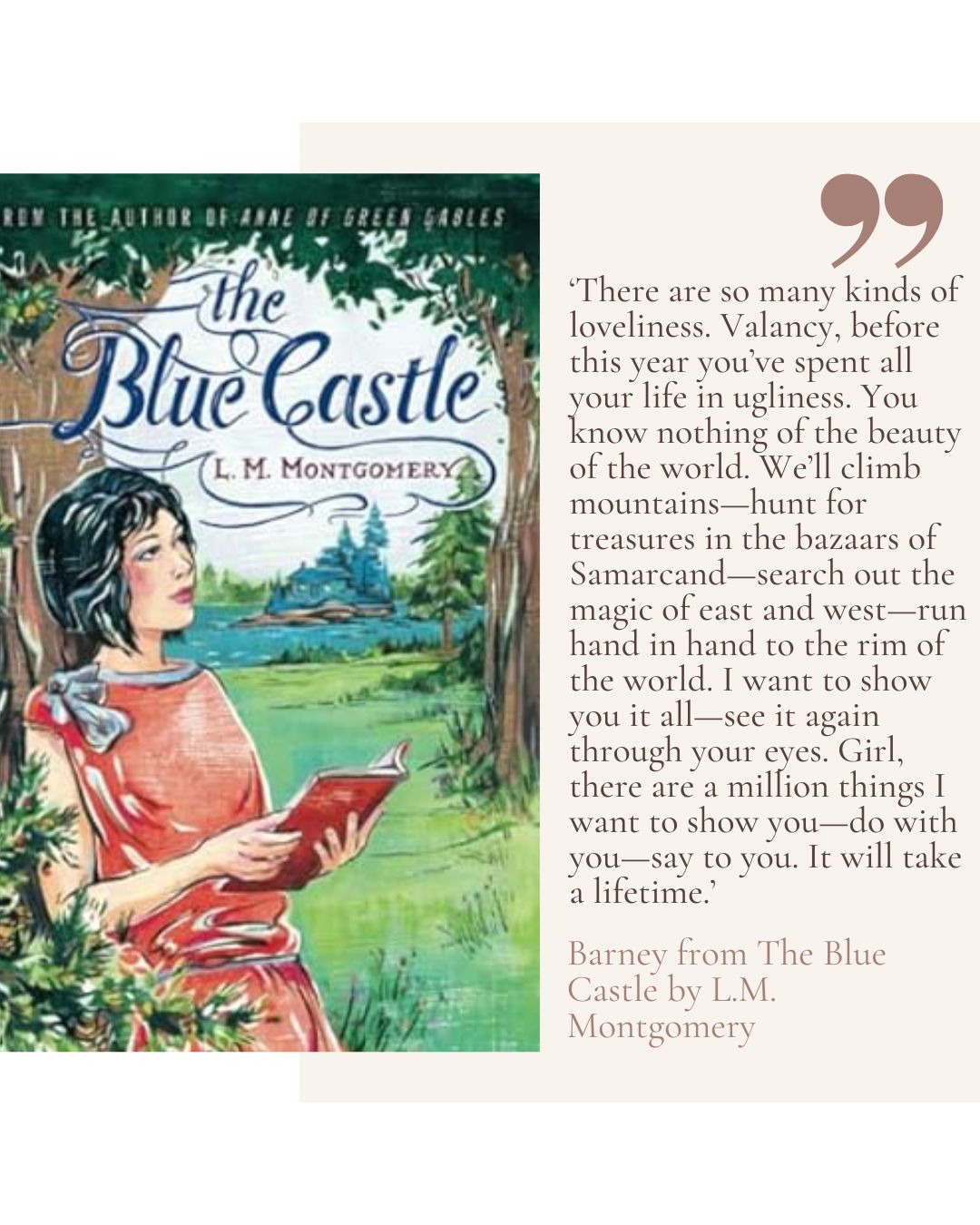
I love when she says he shouldn’t love her and he says, “Love you! Girl, you’re in the very core of my heart. I hold you there like a jewel. Didn’t I promise you I’d never tell you a lie? Love you! I love you with all there is of me to love. Heart, soul, brain. Every fiber of body and spirit thrilling to the sweetness of you. There is nobody in the world for me but you Valancy!”

Valancy doesn’t believe him for a bit, and I just wanted to reach inside the book and shake her a bit and yell, “Girl! Wake up!! He really loves you!”

I don’t know about you but I was a little disappointed when they decide to travel the world instead of stay on their island, or at Valancy’s blue castle. I’m glad they plan to stay there for summers but I don’t like the idea that the two of them may become jaded by the world without nature to ground them. I guess that is why they decided to keep the little island and plan to return to it as often as they can.

This bring us to the end of our read along of The Blue Castle.

What did you think of the book as a whole and especially the ending?

Winter Reading Wrap Up and Spring Book Hopefuls


Today I am sharing all the books I read this winter and my “hopefuls” for this spring. My hopefuls list is really of books I know I want to read so I’ve set them aside to choose from in March, April, and May. I’m a mood reader so sometimes I get to them and sometimes I don’t.

As usual, I didn’t read as many in Winter as I hoped I would, but I enjoyed the ones I did read.

Winter Reads:

Christmas In Harmony by Philip Gulley

Caddie Woodlawn’s Family/Magical Melons by Carol Ryrie Brink

Hercule Poirot’s Christmas by Agatha Christie

Waiting for Christmas by Lynn Austin

My Beloved by Jan Karon

Miss Read’s Village School by Miss Read

Miss Read’s Village Diary by Miss Read

The Secret of Chimneys by Agatha Christie

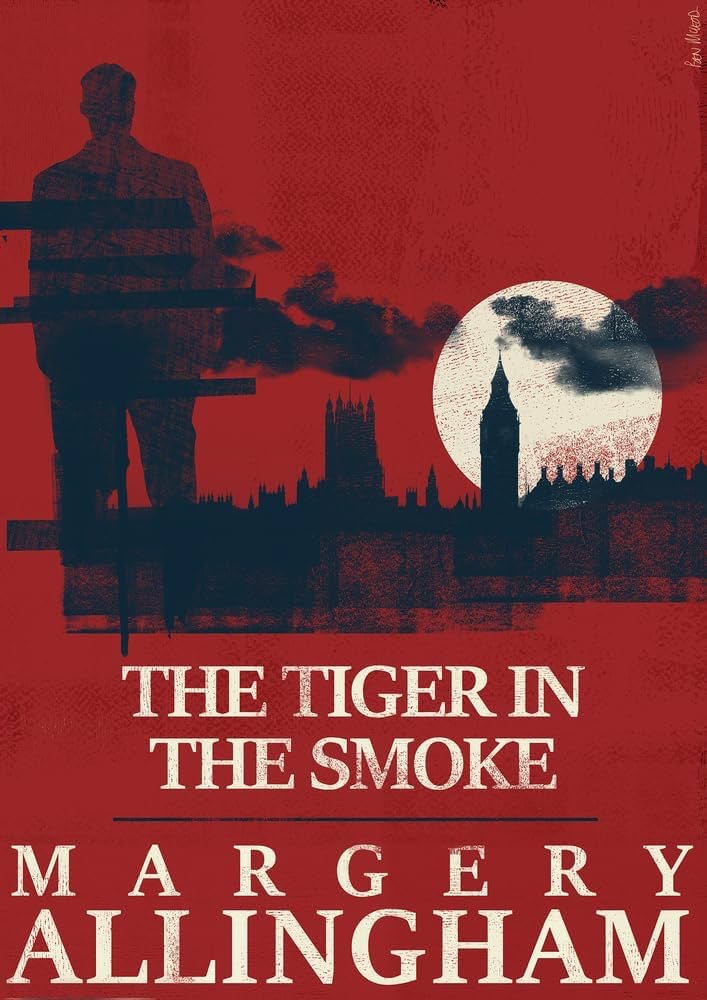
The Tiger in the Smoke by Margery Allingham

Mrs. McGinty’s Dead by Agatha Christie

Murder, She Wrote: Bullets and Brandy by Donald Bain

Spring hopefuls:

The Hardy Boys: The Tower Treasure by Franklin W. Dixon (just finished)

Emily of New Moon by L.M. Montgomery

A Damsel In Distress by P.G. Wodehouse

Bombs on Auntie Dainty by Judith Kerr

The Honorable Imposter by Gilbert Morris

Nancy Drew: Nancy’s Mysterious Letter by Carolyn Keene

Murder, She Wrote: Aloha Betrayed by Donald Bain

The Silver Chair by C.S. Lewis

The Enchanted April by Elizbeth Van Arnim

A Tramp Abroad by Mark Twain

‘Tis Herself by Maureen O’Hara (currently reading)

Murder on the Orient Express by Agatha Christie (just started)

An Autobiography by Agatha Christie (I will be reading this one slowly so probably beyond Spring)

Thrush Green by Miss Read

Return of the King by J.R.R. Tolkien (already half way through after starting it a month ago)

Heidi by Johanna Spry (this will be a buddy read with Erin)

What books are you looking forward to reading this spring? Anything special?

22 Books I Recommend for Middle Grade March

This is the month when adults read chapter books that were actually written for children. Middle Grade March. Sometimes, they are so good that we don’t even realize they were written for children.I read a lot of middle-grade books throughout the year because I have a middle-grade child. She and I have already read many of the books other readers have on their lists each year.

If you participate or want to participate in Middle Grade March, I have a few suggestions of books you can choose from to read. Many of these are “lesser known” middle-grade books that don’t always get a lot of attention in bookish circles.

Gone Away Lake by Elizabeth Enright

Return to Gone Away Lake by Elizabeth Enright

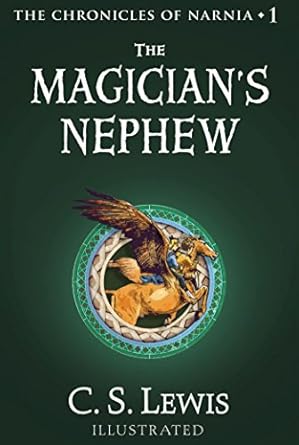
The Magician’s Nephew by C.S. Lewis

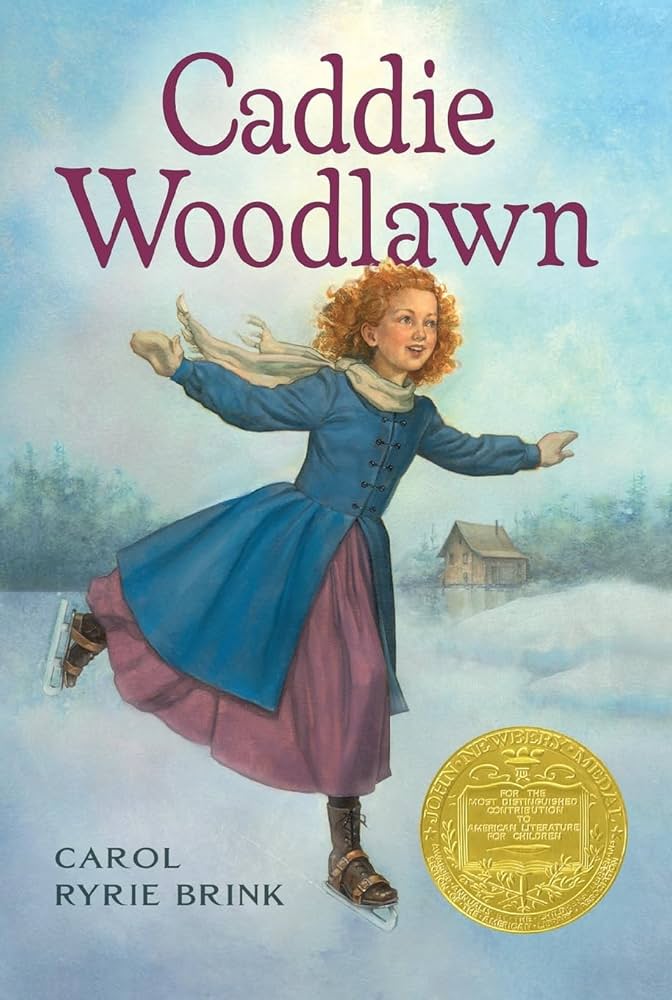
Caddie Woodlawn by Carol Ryrie Brink

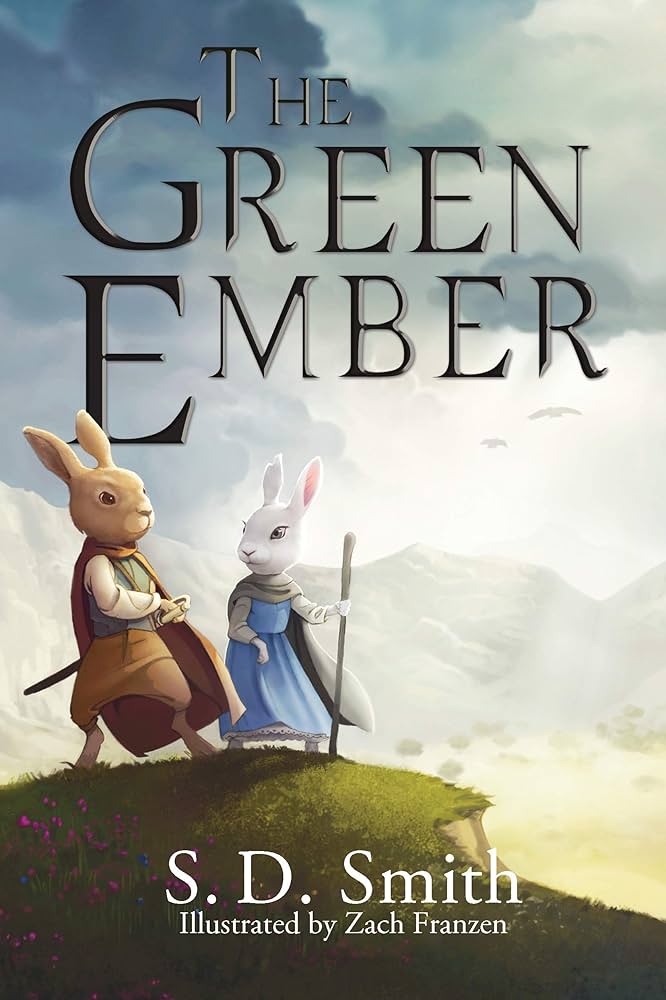
The Green Ember by S.D. Smith

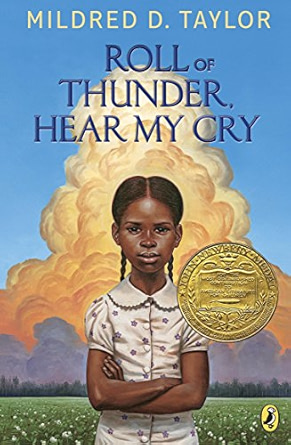
Roll of Thunder Hear My Cry by Mildred D. Taylor

Children of the Longhouse by Joseph Bruchac

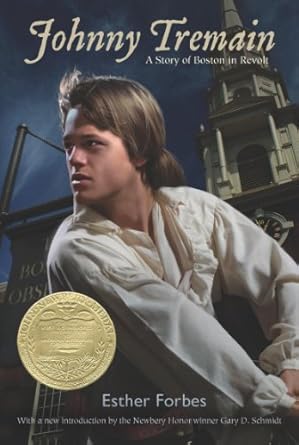
Johnny Tremain by Esther Forbes

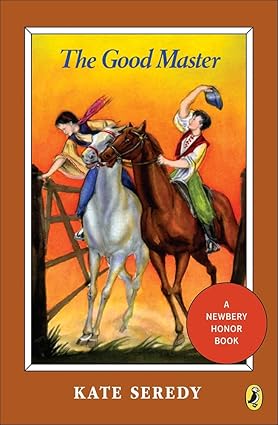
The Good Master by Kate Seredy

Benjamin West and His Cat Grimalkin by Marguerite Henry

Children of the Longhouse by Joseph Bruchac

Freedom Crossing by Margaret Groff Clark

Miracle on Maple Hill by Virginia Sorenson

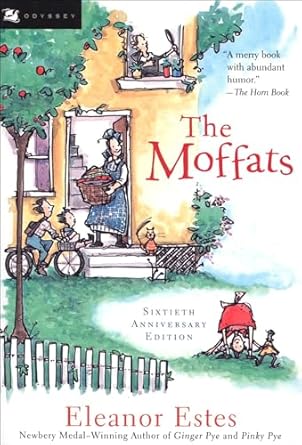
The Moffatts by Eleanor Estes

The Middle Moffatt by Eleanor Estes   

The Saturdays by Elizabeth Enright

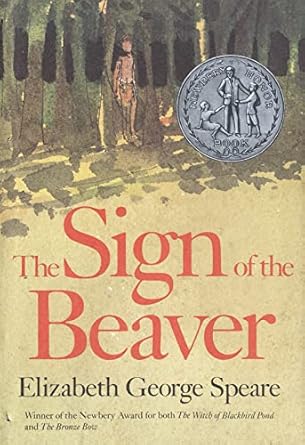
The Sign of the Beaver by Elizabeth George Spear

The Cabin Faced West by Jean Fritz

The Borrowers by Mary Norton

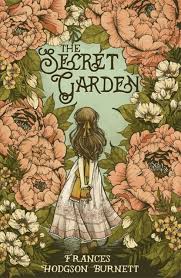
The Secret Garden by Frances Hodgson Burnett

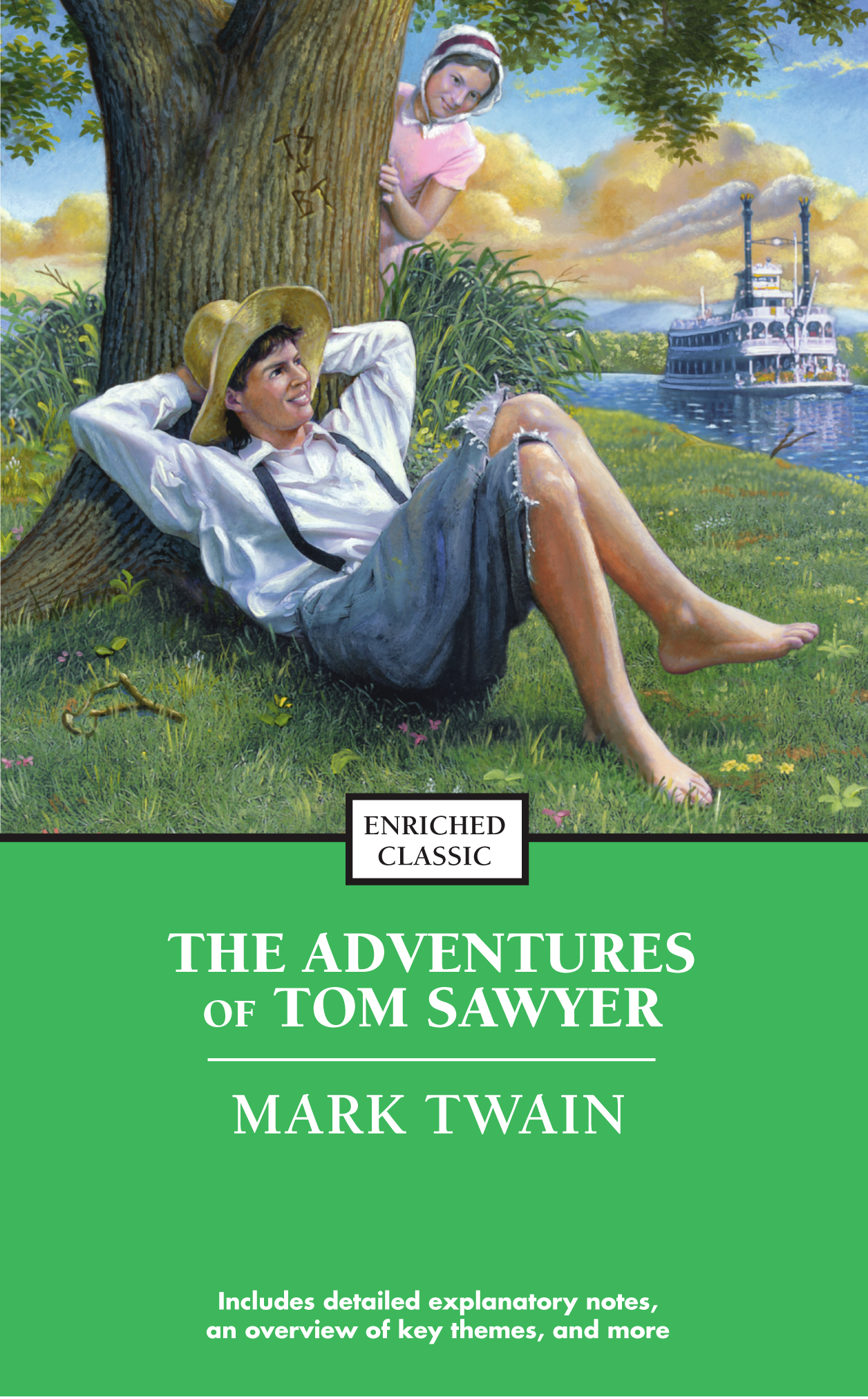
The Adventures of Tom Sawyer by Mark Twain.

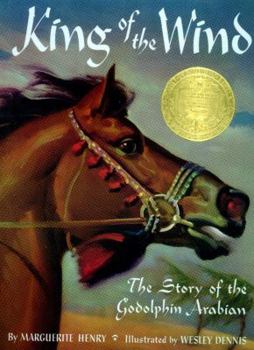
King of the Wind by Marquerite Henry


Do you participate in Middle Grade March, or have you?

If you have, what did you read or if you are this month, what are you reading?


If you write book reviews or book-related blog posts, don’t forget that Erin and I host the A Good Book and A Cup of Tea Monthly Bookish Blog Party. You can learn more about it here.

On Thursdays, I am part of the Weekend Traffic Jam Reboot blog link party. You can find the latest one in the sidebar to the right under recent posts.


Hello! Welcome to my blog. I am a blogger, homeschool mom, and I write cozy mysteries.

You can find my Gladwynn Grant Mystery series HERE.

You can also find me on Instagram and YouTube.

Top Ten Tuesday: Mystery books with a reporter as the protagonist.

Top Ten Tuesday is hosted by That Artsy Reader Girl.

Today’s prompt is: Genre Freebie (Pick a genre and build a list around it. You could do historical fiction featuring strong female leads, contemporary romance set in foreign countries, mysteries starring unreliable narrators, lyrical fiction books in verse, historical romance featuring pirates, Gothic novels with birds on the cover, etc. There are so many options!)

So today I picked mystery books with a reporter as the protagonist.

And no, I am not going to name my own! Ha! I didn’t even actually think of my book when I thought of the prompt. I was thinking of how my family has been connected to newspapers for more than 25 years now, with me having been a reporter for 14 years and my husband now being a reporter and editor of a newspaper. My brother also used to be an editor and reporter.

None of us has been involved in murder or crime mysteries, but we have had to dig information out for stories. I think that is why reporters can be good main characters for mysteries. They are digging for the truth so they have a reason to snoop — that’s the theory anyhow.

This list includes protagonists in any kind of media/journalist field and there may be books or series I haven’t read yet so I can’t vouch for the clean level of every one of them.  I’ll let you know if I haven’t read them yet and you may have to do some research on your own if you aren’t familiar with them.  I have a mix of cozy mysteries and regular mystery/thrillers.

  1. Jim Qwilleran of The Cat Who series…


I have to start this list with my favorite cozy mystery series about a reporter as the main character. I absolutely love newspaper reporter/columnist Jim Qwilleran and the mysteries he stumbles into with his cats Koko and Yum-Yum. This series is an oldie but a goodie and comfort reads for me.

   2. The Replacement Child by Christine Barber (have not read)

Description: Late one night, Capital Tribune editor Lucy Newroe receives a tip from Scanner Lady, an anonymous reader who frequently calls with police scanner tidbits. When Lucy checks out the tip, she discovers Scanner Lady has been killed. That same night, the body of a seventh-grade teacher, Melissa Baca, is found at the bottom of a local bridge. As Lucy and police detective Gil Montoya hunt down the culprits in each murder, they discover their cases are intertwined in the most intimate ways.

3. The Henrie O. Mystery series by Carolyn G. Hart (have not read but very interested)

An online description: “The Henrie O book series is a cozy mystery series by author Carolyn Hart, featuring retired, tenacious newswoman Henrietta “Henrie O” O’Dwyer Collins, who solves murders while traveling the world. The series, which began in 1993 with Dead Man’s Island, combines travel and murder mysteries, with Henrie O investigating cases in various locations like private islands, resorts, and cruise ships. 

4. Puzzle Lady Mystery series by Parnell Hall (have not read, but watched the show)

This one isn’t a reporter but a woman who works as a crossword puzzle writer in syndicate for newspapers. There is a show on PBS/BBC based on this series now.

Online description of the first book: When Benny Southstreet, a small-time hustler with a big-time gift for constructing crosswords, accuses Cora of stealing one of his creations, it’s clearly a case of mistaken identity…until Cora’s own attorney files a plagiarism suit against her. To add to the enigma, when Benny is found dead, the police charge Cora with his murder!

At the heart of the matter is the not-so-little white lie Cora has been living for years: assuming the grandmotherly public face of her publicity-shy niece Sherry, who designs crossword puzzles and publishes them under Cora’s name—aka the Puzzle Lady. It turns out that Sherry’s and Benny’s cruciverbalist paths had recently crossed, resulting in the current incriminating conundrum.

As if Sherry’s wedding engagement jitters and a nasty battle over missing antique chairs weren’t enough to deal with, now Cora has to solve the ultimate mystery: how to keep the secret of her identity without losing her life. Because not only does all evidence point to Cora, but someone seems to want her dead. It looks like a riddle with no answer. Luckily for Cora and Sherry, that’s their favorite kind!

5. Front Page Murder by Joyce Tremel (haven’t read but want to)

Online description:  This is a WWII-set mystery about Irene Ingram, whose newspaper publisher father has gone to work as a war correspondent. She’s the editor-in-chief in her father’s absence, and that rankles some men in the newsroom. She also ruffles feathers when she starts asking questions about the death of the paper’s star crime reporter. (source www.crimereads.com)

6. A Dash of Death by Michelle Hillen Klump (have not read): 

Description: Laid off journalists are a staple in real life, and it was good to see Klump reflect this reality in her book. Samantha Warren lost her investigative reporting job and her fiancé — but she’s starting a new mixology company and is featuring her homemade bitters at an event. Someone turns up dead and one of Samantha’s drinks was poisoned with oleander. This book features lots of investigation and great descriptions of the Houston food scene. (source www.crimereads.com)

7. Off the Air by Christina Estes (have not read)

Description: Jolene Garcia is a local TV reporter in Phoenix, Arizona, splitting her time between covering general assignments—anything from a monsoon storm to a newborn giraffe at the zoo—and special projects. Jolene investigates the murder of a controversial talk show host, who died under suspicious circumstances. Jolene conducted his final interview, giving her and her station an advantage. But not for long… (source www.crimereads.com).

8. The Poet  by Michael Connelly (haven’t read, but just a heads up for more clean readers, Connelly’s books usually have harsh language, violence, etc.)

Online description:

Reporter Jack McAvoy is obsessed with stories about murder and death. But when he comes across the work of a serial killer — a particularly terrifying one — it forces him to investigate a story that might make him the next victim. Incredibly plotted, and really … scary. The killer leaves a calling card with a quotation from Edgar Allan Poe. Yikes. Connolly is the master of suspense.

9. White Collar Girl  by Renée Rosen (haven’t read)

Version 1.0.0

Online description: It’s 1955, in the city room of the Chicago Tribune. And in walks a woman. A female cub reporter. Can’t you picture it? If that isn’t perfect enough, she refuses to be relegated to society news and manages to unearth some secret information about Mayor Daley. It’s about ambition, politics, and the struggle of smart women in an antagonistic workplace and it’s completely entertaining.

10. Three Words For Goodbye by Hazel Gaynor and Heather Webb

Amazon Description: Three cities, two sisters, one chance to correct the past . . .

New York, 1937: When estranged sisters Clara and Madeleine Sommers learn their grandmother is dying, they agree to fulfill her last wish: to travel across Europe—together. They are to deliver three letters, in which Violet will say goodbye to those she hasn’t seen since traveling to Europe forty years earlier; a journey inspired by famed reporter, Nellie Bly.


Clara, ever-dutiful, sees the trip as an inconvenient detour before her wedding to millionaire Charles Hancock, but it’s also a chance to embrace her love of art. Budding journalist Madeleine relishes the opportunity o develop her ambitions to report on the growing threat of Hitler’s Nazi party and Mussolini’s control in Italy.


Constantly at odds with each other as they explore the luxurious Queen Mary, the Orient Express, and the sights of Paris and  Venice,, Clara and Madeleine wonder if they can fulfil Violet’s wish, until a shocking truth about their family brings them closer together. But as they reach Vienna to deliver the final letter, old grudges threaten their
reconciliation again. As political tensions rise, and Europe feels increasingly volatile, the pair are glad to head home on the Hindenburg, where fate will play its hand in the final stage of their journey.


If you write book reviews or book-related blog posts, don’t forget that Erin and I host the A Good Book and A Cup of Tea Monthly Bookish Blog Party. You can learn more about it here.

On Thursdays, I am part of the Weekend Traffic Jam Reboot blog link party. You can find the latest one in the sidebar to the right under recent posts.

I also post a link-up on Sundays for weekly updates about what you are reading, watching, doing, listening to, etc.


Hello! Welcome to my blog. I am a blogger, homeschool mom, and I write cozy mysteries.

You can find my Gladwynn Grant Mystery series HERE.

You can also find me on Instagram and YouTube.

Book recommendation: The Tiger in the Smoke by Margery Allingham

This was my first Margery Allingham book, and I was very impressed with her writing style and storytelling.

This book is called by Golden Age mystery enthusiasts one of her best. It is the fourteenth book in the Albert Campion series, but Campion isn’t really in this book as much as I expected him to be.

First, a little bit of a description that I pulled off Goodreads:

A fog is creeping through the weary streets of London—so too are whispers that the Tiger is back in town, undetected by the law, untroubled by morals. And the rumors are true: Jack Havoc, charismatic outlaw, knife-wielding killer, and ingenious jail-breaker, is on the loose once again.
 
As Havoc stalks the smog-cloaked alleyways of the city, it falls to Albert Campion to hunt down the fugitive and put a stop to his rampage—before it’s too late . . .

This one is more of a psychological thriller than a detective mystery with Allingham walking us through the story through action but also a lot of mental contemplations of four different characters, Campion being one but on a smaller scale.

Our characters are Havoc, Geoffrey Leavett, Canon Avril, Inspector Charlie Luke, Campion, and Meg Elgenbrodde.

Points of views are offered for most of them but not consistently, which sounds confusing, but it really isn’t.

If you have read detective or Golden Age mysteries from the 1930s to the 1960s, then you know there is a lot of what we writers call “head hopping.” The author hops in and out of various characters heads, telling us what each one is thinking in the same scene. These days we writers are told to never head hop. Stick to one character’s point of view per scene. If you want to show the thoughts of another character, then wait until a scene break of a new chapter.

Back in the old days, there were less rules, so authors just wrote whatever they wanted to and however they wanted to and readers just went with it. Sure, it could get confusing,s but if the story was strong enough no one cared.

I found myself nervous through a lot of this book as characters seemed to put themselves in the most precarious situations.

We start the book with Meg and George in a car together, talking about Meg preparing to go to a meeting with a man who insists he is her husband who died during World War II, which ended several years before. The man has been sending her letters. Meg and George are supposed to be married soon, so of course this development is unsettling to them both.

Meg takes her cousin, Campion, a private detective, and London Police Inspector Charlie Luke to meet with the man.

I won’t tell you if the man is really her husband or not, because I don’t want to give anything away, but I will say that there is a mystery involving her husband and a treasure and it is tied to Havoc, an evil man who has killed many, just escaped jail, and will kill again to get what he wants.

I loved opening this book up on my Kindle when I had time to read it and had a hard time putting it down. I hope to get a paperback copy at some point so I can reread it.

There are some really well-written lines and paragraphs in it.

Here are a few I enjoyed:

“He was watching her, trying to appraise her reaction. The face she turned to him was both disappointed and relieved. Hope died in it, but also hope appeared. She was saddened and yet made happy.”

The rumbling ceased abruptly and a clipped schoolmasterish voice remarked acidly: “Very tood of you to bother about my immortal soul, Chief Inspector. I’m afraid I’d ceased to concern myself about yours.”

“Then he dropped lightly to the ground and a smile split a wide thin-lipped cat’s mouth in which the teeth were regular and beautiful.

‘Dad’s back,’ he said, and his voice was smooth and careful. Only the shadow flitting like a frown across his forehead and his pallor, which was paper-like, betrayed his weariness. His spirit danced behind his shallow eyes, mocking everything.”

His beauty, and he possessed a great deal, lay in his hands and face and in the narrow neatness of his feet. His hands were like a conjurer’s, large, masculine, and shapely, the fingers longer than the palms, and the bones very apparent under the thin skin.”

He was a man who must have been a pretty boy, yet his face could never have been pleasant to look at. Its ruin lay in something quite peculiar, not in an expression only but something integral to the very structure. The man looked like a design for tragedy. Grief and torture and the furies were all there naked, and the eye was repelled even while it was violently attracted. He looked exactly what he was. Unsafe.”

When he came to the part which was most important of all to him that night, he paused and said it twice. ‘Lead us not into temptation but deliver us from evil.’

That was it. That was what he meant. Lead us not into temptation, for of that we have already enough within us and must resist it as best we can in our own way. But deliver us, take us away, hide us from Evil. From that contamination of death, cover us up.”

I am looking forward to reading more of this series.

Have you read any of Allingham’s books?

Also, I just found out there was a movie based on this book made in the UK in 1956. You know that I am going to have to find it and watch it!

Top Ten Tuesday: Five quotes from books and five quotes about books

Top Ten Tuesday is hosted by That Artsy Reader Girl.

Today’s prompt is: Quotes From/About Books (Share book quotes you love, quotes about being a reader, etc.)

So today I thought I’d share five quotes I enjoyed from books I read and five quotes about books and/or reading.

Five quotes I enjoyed from books I read

“When I first saw you—that day in Pont Street, I knew I was up against something that was going to hurt like fun.”  ~ The Secret of Chimneys by Agatha Christie

“Christmas, I tell my wife, is not the time to hold back. It is the bold stroke, the song in the silence the red hat in a gray-suit world.” ~ Christmas in Harmony by Philip Gulley

“The public should enjoy what the experts have decided the public should enjoy. That’s the system we use in this country, and we’re going to stick with it.”  ~ Dave Barry Isn’t Taking This Sitting Down by Dave Barry

‘”Isn’t it better to have your heart broken than to have it wither up?” queried Valancy. “Before it could be broken it must have felt something splendid. That would be worth the pain.”‘ ~ The Blue Castle by L.M. Montgomery

“She answered: “All your words are but to say: you are a woman, and your part is in the house. But when the men have died in battle and honour, you have leave to be burned in the house, for the men will need it no more. But I am of the House of Eorl and not a serving-woman. I can ride and wield blade, and I do not fear either pain or death.” ~ Return of the King by J.R.R. Tolkien

Quotes about reading/books:

“No book is really worth reading at the age of ten which is not equally – and often far more – worth reading at the age of fifty and beyond.” – C.S. Lewis

“Classic’ – a book which people praise and don’t read.” 

Mark Twain

“Literature is the most agreeable way of ignoring life.” – Fernando Pessoa

 “It is a great thing to start life with a small number of really good books which are your very own.” — Arthur Conan Doyle

“Some books are so familiar that reading them is like being home again.” – Louisa May Alcott, Little Women


If you write book reviews or book-related blog posts, don’t forget that Erin and I host the A Good Book and A Cup of Tea Monthly Bookish Blog Party. You can learn more about it here.

On Thursdays, I am part of the Weekend Traffic Jam Reboot blog link party. You can find the latest one in the sidebar to the right under recent posts.

I also post a link-up on Sundays for weekly updates about what you are reading, watching, doing, listening to, etc.

If you would like to support my writing (and add to the fund for my daughter’s online art/science classes), you can do so here.


Hello! Welcome to my blog. I am a blogger, homeschool mom, and I write cozy mysteries.

You can find my Gladwynn Grant Mystery series HERE.

You can also find me on Instagram and YouTube.

How to read more classics and enjoy them while you’re doing it (if you don’t enjoy them already)


 I recently saw a YouTube video where a booktuber suggested reading just 12 pages a day of a classic to make it feel less daunting for readers who don’t usually read classics.

There are a couple of reasons he suggested this tactic.

One: it gives you time to read slowly and truly immerse yourself in the story.

Two: it helps you pay attention to the writing, the words connected together, the style of that particular author.

Three: Gives you time to write notes about what you are reading or underline a quote that really stands out to you. This gives you time to really think about that quote or section that really stands out to you.

Four: It gets you off a device. Stops you scrolling on “the attention hog” that has trained you to keep scrolling through 30-second to 1-minute clips. Doing this mentally and physically fatigues us. The makers of social media know how to addict us but our mind biologically loves to dwell on things, to feel like it is learning something and this is done better at a slower pace. Reading instead of scrolling releases the brain from repeated dopamine hits.

Five: Creates a sense of patience, self-control,  and a “stick-to-it” attitude. As humans we feel a sense of pride when we push through something and accomplish what we set out to do.

Six: It helps to quell comparison to other readers that we need to do; the fear-of-missing-out tendency, the desire to “have read” certain books. We want to be able to say “I have read…” but don’t want to sit and really read something well. Reading this way, we can focus on reading well — taking our time to really take it in and not worry about rushing on to the next book. Those books will be there when we are done with this one.

Extra tips: Doing this at night can help you feel like you don’t have to rush and “get through” your allotted pages before you have to do something else.  You can do this with other books, not just classics.

What do you think of reading some books this way? Yay or Nay? What say you?

Source: Tristan Reads Classics. Video: The One Tip You Need More Classics and Enjoy Them.

If you want a fuller explanation of what Tristan was talking about, you can watch his video here:

Armchair Traveler books I want to read and one I did read

Top Ten Tuesday is hosted by That Artsy Reader Girl.

This week’s prompt was: Books for Armchair Travelers (Submitted by Laurie C @ Bay State Reader’s Advisory)

I have not read a lot of travel or adventure or even non-fiction books, but I do have a list I want to read so I thought I’d share that list today.

  1. A Walk in the Woods: Rediscovering America on the Appalachian Trail by Bill Bryson

I actually had this book in my Libby at the end of last year, but ran out of time to read it. I’ll try again this year.

Description: The Appalachian Trail stretches from Georgia to Maine and covers some of the most breathtaking terrain in America—majestic mountains, silent forests, sparkling lakes. If you’re going to take a hike, it’s probably the place to go. And Bill Bryson is surely the most entertaining guide you’ll find. He introduces us to the history and ecology of the trail and to some of the other hardy (or just foolhardy) folks he meets along the way—and a couple of bears. Already a classic, A Walk in the Woods will make you long for the great outdoors (or at least a comfortable chair to sit and read in).

2. Murder on the Orient Express by Agatha Christie

I will be reading this one in March for the Christie 2026 Challenge.

Description:

“The murderer is with us—on the train now . . .”

Just after midnight, the famous Orient Express is stopped in its tracks by a snowdrift. By morning, the millionaire Samuel Edward Ratchett lies dead in his compartment, stabbed a dozen times, his door locked from the inside. Without a shred of doubt, one of his fellow passengers is the murderer.

Isolated by the storm, detective Hercule Poirot must find the killer among a dozen of the dead man’s enemies, before the murderer decides to strike again.

3. The Enchanted April by Elizabeth von Arnim

A relative recommended this one.


Description:

The women at the center of The Enchanted April are alike only in their dissatisfaction with their everyday lives. They find each other—and the castle of their dreams—through a classified ad in a London newspaper one rainy February afternoon. The ladies expect a pleasant holiday, but they don’t anticipate that the month they spend in Portofino will reintroduce them to their true natures and reacquaint them with joy. Now, if the same transformation can be worked on their husbands and lovers, the enchantment will be complete.

4. Heidi by Johanna Spyri

I’ve always wanted to read this one but have never got around to it.

Description:

At the age of five, little orphan Heidi is sent to live with her grandfather in the Alps. Everyone in the village is afraid of him, but Heidi is fascinated by his long beard and bushy grey eyebrows. She loves her life in the mountains, playing in the sunshine and growing up amongst the goats and birds. But one terrible day, Heidi is collected by her aunt and is made to live with a new family in town. Heidi can’t bear to be away from her grandfather; can she find a way back up the mountain, where she belongs?

5. Under the Tuscan Sun by Frances Mays.

I’ve seen this movie but have not read the book.

Description:

Frances Mayes entered a wondrous new world when she began restoring an abandoned villa in the spectacular Tuscan countryside. There were unexpected treasures at every turn: faded frescos beneath the whitewash in her dining room, a vineyard under wildly overgrown brambles in the garden, and, in the nearby hill towns, vibrant markets and delightful people. In Under the Tuscan Sun, she brings the lyrical voice of a poet, the eye of a seasoned traveler, and the discerning palate of a cook and food writer to invite readers to explore the pleasures of Italian life and to feast at her table.

6. Travels with Charley: In Search of America by John Steinbeck


Description: To hear the speech of the real America, to smell the grass and the trees, to see the colors and the light—these were John Steinbeck’s goals as he set out, at the age of fifty-eight, to rediscover the country he had been writing about for so many years.

With Charley, his French poodle, Steinbeck drives the interstates and the country roads, dines with truckers, encounters bears at Yellowstone and old friends in San Francisco. Along the way he reflects on the American character, racial hostility, the particular form of American loneliness he finds almost everywhere, and the unexpected kindness of strangers.

7. My Life in France by Julia Child

Description: Here is the captivating story of Julia Child’s years in France, where she fell in love with French food and found “her true calling.” From the moment she and her husband Paul, who worked for the USIS, arrived in the fall of 1948, Julia had an awakening that changed her life. Soon this tall, outspoken gal from Pasadena, California, who didn’t speak a word of French and knew nothing about the country, was steeped in the language, chatting with purveyors in the local markets, and enrolled in the Cordon Bleu. She teamed up with two fellow gourmettes, Simone Beck and Louisette Bertholle, to help them with a book on French cooking for Americans. Filled with her husband’s beautiful black-and-white photographs as well as family snapshots, this memoir is laced with wonderful stories about the French character, particularly in the world of food, and the way of life that Julia embraced so wholeheartedly. Bon appétit!-

8. All God’s Children Need Traveling Shoes by Maya Angelou

In 1962 the poet, musician, and performer Maya Angelou claimed another piece of her identity by moving to Ghana, joining a community of “Revolutionist Returnees” inspired by the promise of pan-Africanism. All God’s Children Need Walking Shoes is her lyrical and acutely perceptive exploration of what it means to be an African American on the mother continent, where color no longer matters but where American-ness keeps asserting itself in ways both puzzling and heartbreaking. As it builds on the personal narrative of I Know Why the Caged Bird Sings and Gather Together in My Name , this book confirms Maya Angelou’s stature as one of the most gifted autobiographers of our time.

9. A Room with a View by E.M. Forester

I have seen this movie but thought I should read the book some day.

Description:

“But you do,” he went on, not waiting for contradiction. “You love the boy body and soul, plainly, directly, as he loves you, and no other word expresses it …”

Lucy has her rigid, middle-class life mapped out for her, until she visits Florence with her uptight cousin Charlotte, and finds her neatly ordered existence thrown off balance. Her eyes are opened by the unconventional characters she meets at the Pension Bertolini: flamboyant romantic novelist Eleanor Lavish, the Cockney Signora, curious Mr Emerson and, most of all, his passionate son George.

Lucy finds herself torn between the intensity of life in Italy and the repressed morals of Edwardian England, personified in her terminally dull fiancé Cecil Vyse. Will she ever learn to follow her own heart?

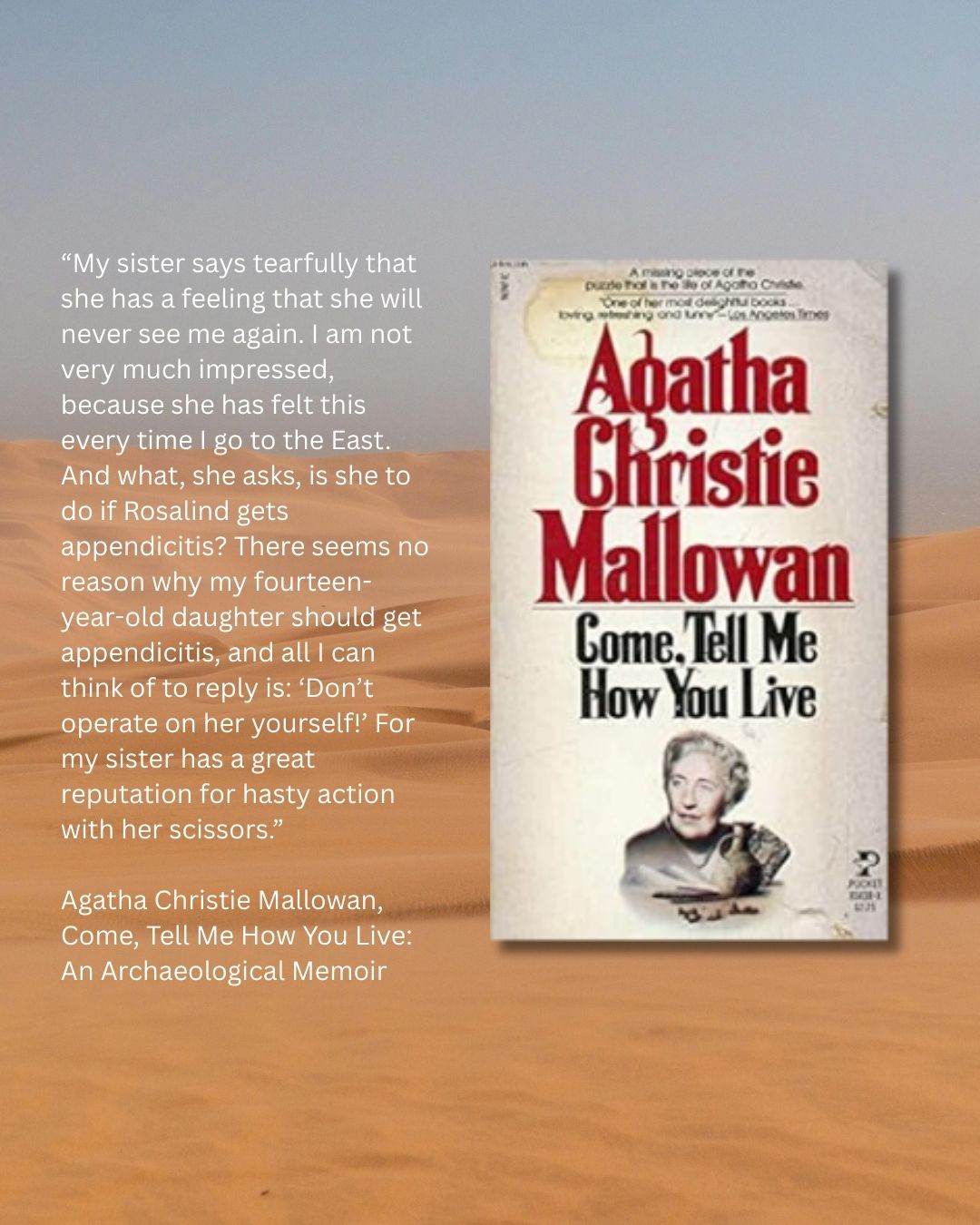
10. Come, Tell Me How You Live by Agatha Christie Mallowan

I have read this one and enjoyed it.

Description:

Over the course of her long, prolific career, Agatha Christie gave the world a wealth of ingenious whodunits and page-turning locked-room mysteries featuring Miss Marple, Hercule Poirot, and a host of other unforgettable characters. She also gave us Come, Tell Me How You Live, a charming, fascinating, and wonderfully witty nonfiction account of her days on an archaeological dig in Syria with her husband, renowned archeologist Max Mallowan. Something completely different from arguably the best-selling author of all time, Come, Tell Me How You Live is an evocative journey to the fascinating Middle East of the 1930s that is sure to delight Dame Agatha’s millions of fans, as well as aficionados of Elizabeth Peters’s Amelia Peabody mysteries and eager armchair travelers everywhere.

Have you read any of these books? What did you think of them, if you did?


If you write book reviews or book-related blog posts, don’t forget that Erin and I host the A Good Book and A Cup of Tea Monthly Bookish Blog Party. You can learn more about it here.

On Thursdays, I am part of the Weekend Traffic Jam Reboot blog link party. You can find the latest one in the sidebar to the right under recent posts.

I also post a link-up on Sundays for weekly updates about what you are reading, watching, doing, listening to, etc.

If you would like to support my writing (and add to the fund for my daughter’s online art/science classes), you can do so here.


Hello! Welcome to my blog. I am a blogger, homeschool mom, and I write cozy mysteries.

You can find my Gladwynn Grant Mystery series HERE.

You can also find me on Instagram and YouTube.

Book review: Come, Tell Me How You Live by Agatha Christie Mallowan


I’m surprised more people don’t talk  or write about Agatha Christie’s non-fiction books, especially Come, Tell Me How You Live, which reveals so much of her witty sense of humor.

Of course, she only wrote three non-fiction books — this one, her autobiography, and The Grand Tour, a collection of her letters and photographs from her 1922 tour to promote the British empire.

Christie writes this book under her full name of Agatha Christie Mallowen, with Mallowen being the name of her second husband and she’s wrong in her introduction.

I don’t read non-fiction often so I wasn’t sure I would enjoy this one but when the opening pages describe Agatha looking for outfits she can wear on her husband’s archaeological dig in Syria and the clerk lets her know they might not be able to accommodate her larger size, which Agatha handles hilariously, I knew I had to keep going.

As Agatha says in the intro of this book, “This is not a profound book. It will give you no interesting sidelights on archaeology, there will be no beautiful descriptions of scenery, no treating of economic problems, no racial reflections, no history. It is, in fact, small beer — a very little book, full of everyday doings and happenings.”

This book does actually include some beautiful descriptions and a few interesting sidelights on archaeology.

Agatha started writing this book before World War 2 and finished it afterward, sending it out into the world to be published.

As I mentioned already, the book begins with Agatha looking for traveling clothes. Her humor immediately kicks in.

“Shopping for a hot climate in autumn or winter presents certain difficulties. One’s last year’s summer clothes, which one has optimistically hoped will “do”, do not “do” now the time has come. For one thing, they appear to be (like the depressing annotations in furniture removers’ lists) “Bruised, Scratched, and Marked.” (And also Shrunk, Faded, and Peculiar!). For another — alas, alas that one has to say it! — they are too tight everywhere.

So, to the shops and the stores and:

“Of course, Modom, we are not being asked for that kind of thing now! We have some very charming little suits here — O.S. in the darker colors.”

I’m guessing O.S. means oversized because Agatha then writes: “Oh, loathsome O.S. How humiliating to be O.S.! How even more humiliating to be recognized at once as O.S.!”

If I have done my math right, Agatha would have been around 45 at the time this trip was taken.

She and her husband, Max, traveled to Syria and Iraq. Max was an archaeologist and Agatha actually met him on an archaeologist dig in 1930, years after divorcing her cheating first husband, Colonel Archibald Christie.

What’s so fun about this book is how Agatha writes about different she and Max approach situations in life, with her being a bit more high strung and him being laid back and acting like everything will turn out all right. Agatha was about 15  years older that Max, I might add, which I did not realize while I was reading the book. I read that while I was researching for the review. No wonder he seemed so aloof and laid back. He was still young and a bit naïve in some ways.

In addition to sharing details of her marriage, Agatha also writes about the quirky men who travel with her and her husband.

I would not be surprised if some of the people they worked with or met along their travels popped up in Agatha’s mysteries.

Mac, her husband’s architect assistant, gets the bulk of the secondary character playback throughout the book and it is hilarious. His full name was Robin Maccartney.

Mac is extremely serious, a perfectionist, and also lacks any sense of humor.

Agatha and Max traveled off and on between 1935 and 1936, with stays in Syria long enough that they had a house remodeled for them to stay in. Mac, an architect by trade, has been designing blueprints for Agatha’s bathroom.

“I ask Mac that evening at dinner what is fist architectural job as been.

“This is my first bit of practical work,” he replies. “—your lavatory!”

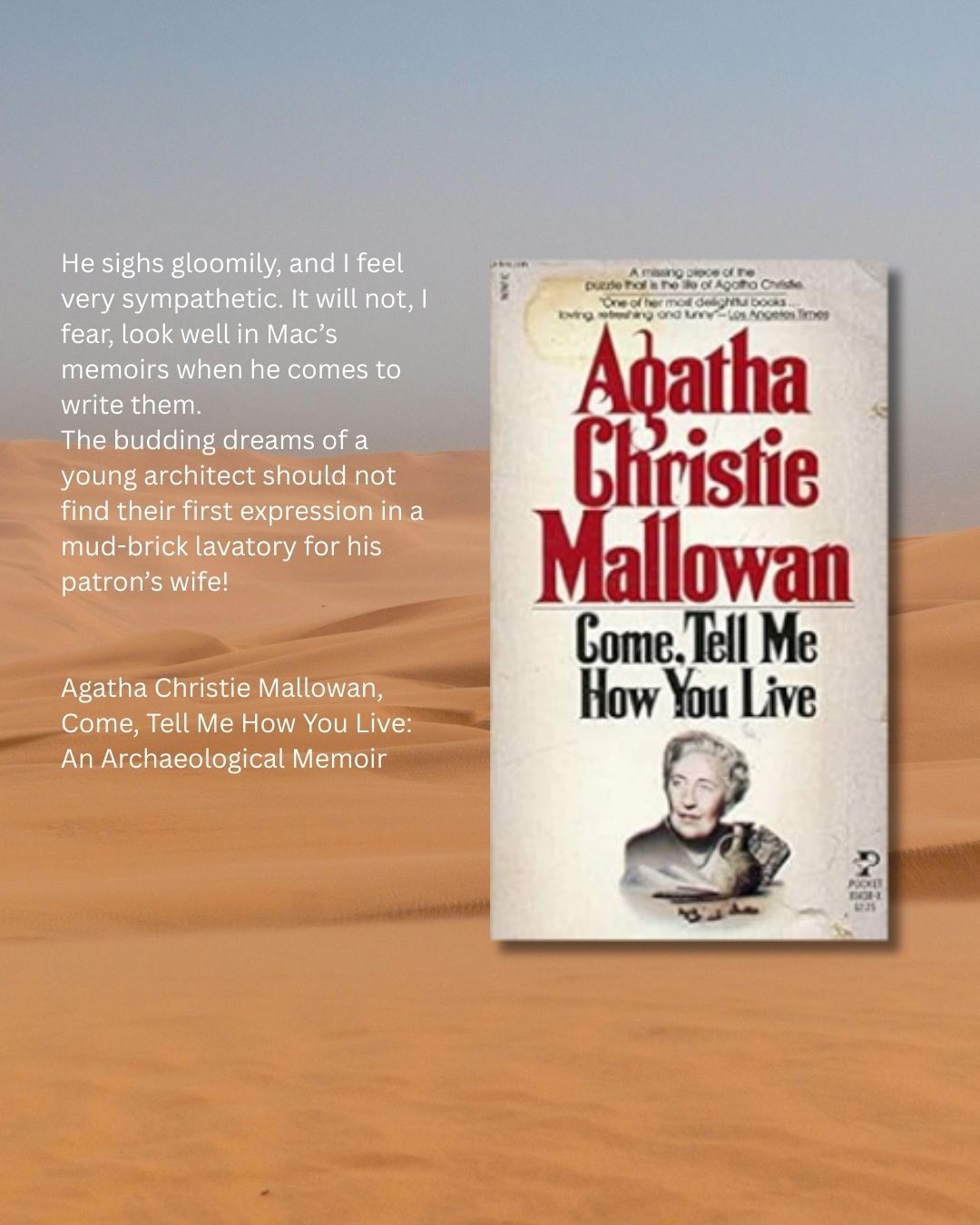
He sighs gloomily, and I feel very sympathetic. It will not, I fear, look well in Mac’s memoirs when he comes to write them.

The budding dreams of a young architect should not find their first expression in a mud-brick lavatory for his patron’s wife!”

Agatha shares some of her most savage lines in the book when she is writing about Mac, who almost seems uptight and perfect to be human at times.

It isn’t until he can’t light a gas lamp that he has a meltdown which Agatha says reveals his humanity.

“I steal a glance at him when another five minutes have gone by. He is getting warm. He is also looking not nearly so superior. Scientific principal or no scientific principal the petrol lamp is holding out on him. He lies on the floor and wrestles with the thing. Presently he begins to swear… A feeling that is almost affection sweeps ove me. After all, our Mac is human. He is defeated by a petrol lamp!”

Agatha writes that from that point on, Mac is one of them, someone who can easily get frustrated and swear about it.

Agatha did take her typewriter and some manuscripts with her and writes about working on a book while there. One of their friends, Louis Osman, an architect and member of the archaeological team, who was affectionately nicknamed “Bumps” by the group, and who Agatha simply calls “B” in her book, came into her office one day to chat, but she wants him to leave because she’s in the middle of writing a murder scene.

“He goes into the drawing office and talks to Mac, but, meeting with no response, he comes sadly into the office, where I am busy on the typewriter getting down to the gory details of a murder.

‘Oh,’ says B. “you’re busy?”

I say, ‘Yes,’ shortly.

“Writing?” asks B.

‘Yes’ (more shortly).

‘I thought, perhaps,’ says B wistfully. ‘I might bring the labels and the objects in here. I shouldn’t be disturbing you should I?’

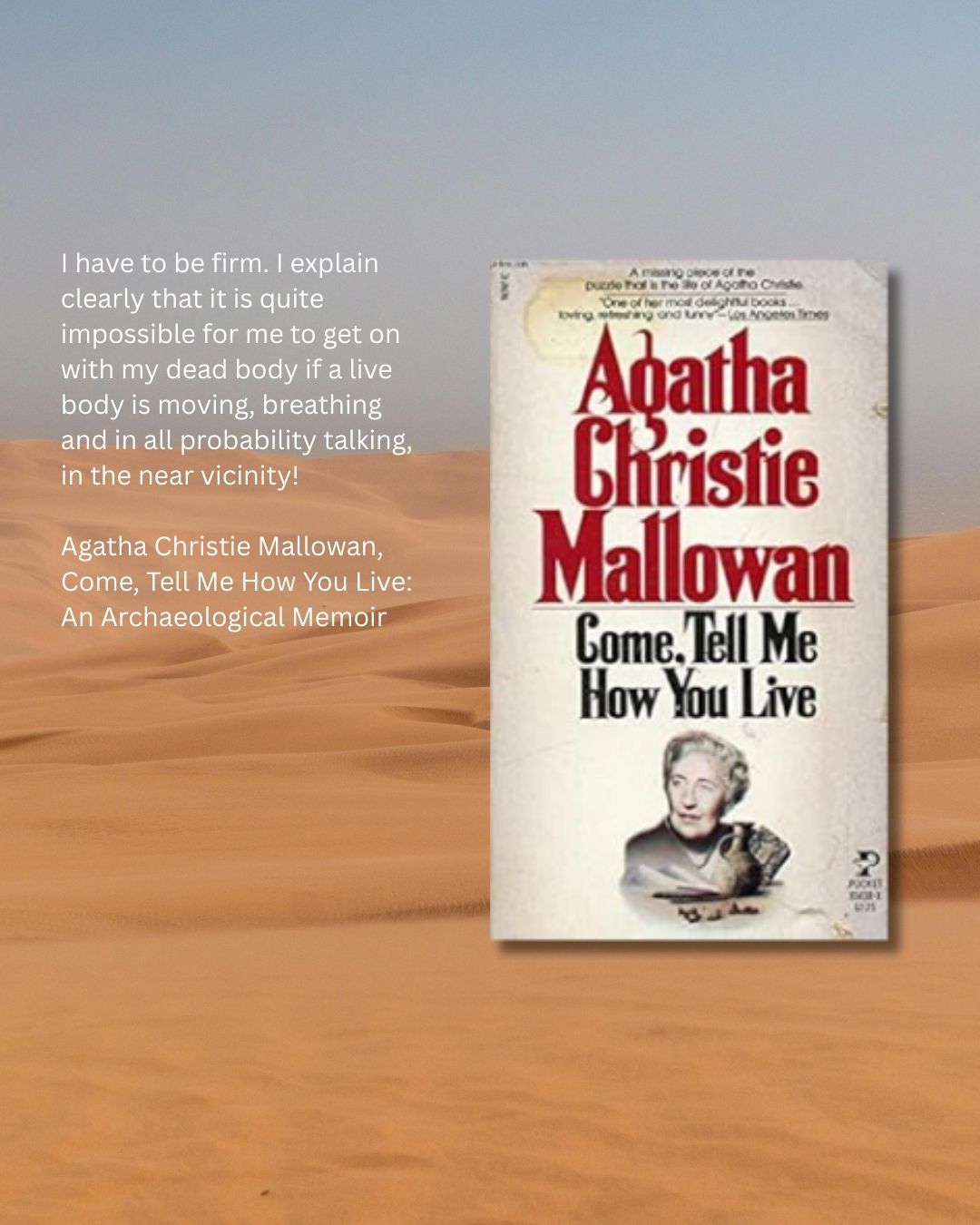
I have to be firm. I explain clearly that it is quite impossible for me to get on with my dead body if a live body is moving, breathing and in all probability talking, in the near vicinity!

Poor B goes sadly away, condemned to work in loneliness and silence. I feel convinced that, if B ever writes a book, he will do so most easily with a wireless and a gramophone turned on close at hand and a few conversations going on in the same room!”

Agatha also tells about the women of the middle east and how they want to get to know her and learn more about her. I was surprised to learn in this section that Agatha had had a series of miscarriages over the years, which may be one reason she and Archie only had one daughter.

There are some parts of the book I found a tiny bit slow but so much of it was so fascinating that I didn’t mind a little bit of slowness

I really enjoyed Agatha’s recollections and her thoughts about the faith of the people compared to the faith of the people in England.

I also found it interesting to read her views on public education, which would probably surprise people today.

After sharing about watching some of the village children play and experiencing every day life she wrote:

“I think to myself how happy they look, and what a pleasant life it is like the fairy stories of old, wandering about over the hills herding cattle, sometimes sitting and singing. At this time of day, the so-called fortunate children in European lands are setting out for the crowded classroom, going in and out of the soft air, sitting on benches or at desks, toiling over letters of the alphabet, listening to a teacher, writing with cramped fingers. I wonder to myself whether, one day a hundred years or so ahead, we shall say in shocked accents: ‘In those days they actually made poor little children go to school, sitting inside buildings at desks for hours a day! Isn’t it terrible to think off! Little children!’”

Have you ever read this one or any of Agatha’s non-fiction books?