Fiction Friday: Gladwynn Grant Gets Her Footing Chapters 9 and 10

Welcome to a serial fiction series of my book Gladwynn Grant Gets Her Footing, a light cozy mystery.

You will be able to read chapters of this book each Friday. You can also find a list of chapters HERE.

If you don’t want to wait for the next installment or click through each chapter, and would instead like to read the book in full, you can purchase the book in paperback ($12.99) or ebook ($2.99) on Amazon and Barnes and Noble and now on Kobo in their Kobo Plus program.


Chapter 9

Gladwynn hadn’t been inside the Covenant Heart Church since her grandfather’s funeral. She’d made every excuse possible to avoid it, but this morning she’d known she couldn’t put it off any longer. If she was going to be living in Brookstone, she needed a home church and she couldn’t imagine attending anywhere other than where her grandfather had served for 50 years.

The church looked the same as it always had with its mahogany columns, high ceilings, tall stained-glass windows, and ornate chandeliers. Even the wooden pews that had probably been built and installed sometime in the 1950s were the same, though they now featured blue cushions to make sitting more comfortable.

Sunlight streamed across the sanctuary, falling on the people greeting each other as they sat. At the front of the church, the pulpit where her grandfather used to preach looked smaller than it used to somehow.

The church as a whole looked smaller in some ways, which was probably because she had so many memories of being in the church when she was a young child. Everything looks bigger when you’re a child.

She followed Lucinda to the front of the church, to the pew where they’d always sat as a family when she was young. The man who approached her and Lucinda was young, maybe 30, with short blond hair combed neatly across his forehead like he was about to pose for a professional headshot photo. He was the epitome of the term baby face with his smooth-shaven jawline and Hollywood-star smile.

He held his hands out to Lucinda, taking both of hers in his. “Lucinda, so lovely to see you this morning. You’re looking wonderful.” His attention turned to Gladwynn. “Is this the granddaughter you’ve been telling us about?”

His accent was thick. Irish. It suddenly clicked for Gladwynn who he was. She hadn’t recognized him not in uniform and all cleaned up, but it was the firefighter from Ellory Brooks’s accident. The one who had kept her from falling.

Lucinda’s face beamed. “It certainly is.” She turned to Gladwynn. “Gladwynn, this is our pastor, Luke Callahan. Luke, this is my granddaughter Gladwynn.”

Gladwynn took his hand, and he clasped his other hand around hers. “Ah, so we meet again. A pleasure to officially meet you, Gladwynn. Your grandmother has been so excited about you coming to stay with her. Are you settling in well?”

For a moment, staring into his bright blue eyes, Gladwynn forgot she was supposed to answer. She didn’t detect insincerity in his greeting, which made him even harder to look away from.

“Yes,” she answered after a few seconds delay. “I am. It’s nice to be back – to be here this morning.”

He let go of her hand, still smiling. “Well, I’m glad you could make it and that you’re wearing sensible shoes this time.” He winked and took a step back. “I’d better get going and get this service started or we’ll be here well past lunch and the congregation gets grumpy if that happens.” He turned to head to the pulpit, quickly shaking a couple more hands on his way up.

Lucinda looked at her. “You two have met before?”

“He was at the accident the other night. He kept me from falling on the ice.”

“He’s unmarried,” Lucinda said as she sat.

Gladwynn scowled. “Grandma, really? We’re in church.”

“Don’t get all excited. I’m not talking about him for you. He’s already got someone he’s courting, shall we say? The new young library director. They’re so cute together. Her name is Summer. Like the season. That’s a thing anymore, to name your children after seasons and flowers.”

“Weren’t there like a thousand girls named Rose or Daisy when you were growing up? It’s not that new of a trend.”

“I suppose that’s a point.”

Gladwynn watched with interest as several people stepped on stage, including someone who slid behind a clear plastic enclosure at a drum set. One man picked up a guitar and another a bass while a man with his hair in a ponytail sat at the piano.

This was different from when her grandfather had been the pastor. Back then, there had been a pianist who also doubled as an organist and maybe someone with an acoustic guitar.

Luke welcomed everyone with his lilting accent and his charming smile. Then the music began. Gladwynn couldn’t wait to ask Lucinda how someone with an accent like him had ended up in little Brookstone.

Gladwynn had a hard time not thinking of a British sitcom she’d watched as Luke gave the sermon but did her best to focus on his message and not his linguistics. She glanced around the sanctuary to see if she recognized anyone from when she used to visit in the summer. She didn’t, but she did recognize two of the firefighters she’d seen at the accident and Justin, the fire chief. Next to Justin was a blond woman with her hair pulled back in a long braid, and next to her was a line of children. Gladwynn counted five of them.

When the sermon was over, she stood with Lucinda, realizing quickly that getting out of the church was going to take a long time. They were stopped every few seconds by someone who wanted to hug Lucinda or tell her about their new grandchild or update her on how a family member they’d been praying for was doing. Each time they were stopped, Lucinda would introduce Gladwynn, which required smiling and a level of extrovert behavior she was not accustomed to.

There was something much different about forcing herself to talk to someone to gather information from them for a story than talking to someone for no other reason than chit-chatting. The one she got paid for and could push herself through. The other was excruciatingly uncomfortable and it made her want to run home and bury herself under a quilt.

She pushed through for the sake of Lucinda, though, imagining that running screaming from the sanctuary would definitely create a scene that wouldn’t be easy for either of their reputations to recover from.

Half an hour later, the warm sun was her reward for her resilience. Standing on the top step outside the church, she breathed in deeply and enjoyed the warmth for a brief second until her brain kicked into gear and alerted her that the air was still cold and stinging any skin exposed, especially her cheeks.

Lucinda leaned close to her, pulling on a pair of gloves. “I hope you don’t mind, but I invited Pastor Callahan over for lunch today.”

Gladwynn looked over her shoulder, confused. “When? While we were in there? I never saw you talk to him.”

Lucinda started down the steps. “I asked him when you rushed off to the bathroom. You know, the moment your social barometer got too high.”

Her grandmother really did know her better than almost anyone.

“That meter is still a bit full,” she said as she walked down the steps. “I hope I can muster up some more outgoing personality this afternoon.”

Lucinda patted her on the back. “Oh, you’ll be fine. Just pretend you’re interviewing him for the paper.”

Gladwynn may have taken her grandmother a little too literally an hour later when she found herself sitting across from Pastor Blue Eyes with A Captivating Irish Accent and asked him what part of Ireland he was from and how he’d come to live in Brookstone.

“I’m from Northern Ireland, actually. Grew up in a little town just outside Belfast. My family moved to southern Pennsylvania when I was in high school. My father had family living outside of Philadelphia and after he lost his job as a worker in the local factory, his cousin offered him a job at his construction company. I finished my high school career here, and moved back to Northern Ireland for a time to figure out what my calling in life was. Then when I felt like God was telling me to go into the ministry, I returned to the States to attend seminary.”

“And to also volunteer for local fire departments?”

He grinned. “Yes, and to volunteer for local fire departments. I like to serve whatever community I’m living in as well as I can.”

Lucinda set a bowl of mashed potatoes in the center of the table.

“Grandma, I really wish you would let me help you.”

Lucinda waved her off. “Sit. Chat. Enjoy the downtime. I’m almost done here and besides I’m making you wash the dishes later.”

“Your grandmother says you used to work at a college library,” Luke said as Lucinda disappeared back through the swinging door into the kitchen.

“Yes. For about six years. Right out of college until a few months ago.”

“And now you’re working for the Beacon.”

“Yes.”

She inwardly cringed at her apparent inability to communicate like a normal person. All she could manage to offer was the bare minimum. She’d completely lost the art of conversation somewhere over the years.

“Before I went into the seminary, I thought about going into journalism, actually. I guess we are both in the people business, though. In different ways.”

Gladwynn laughed. “Yes, definitely in different ways.”

Was that all she could say? Good grief. This was so embarrassing.

She cleared her throat, desperate to not be so awkward. “And how long have you been with the church?”

He flashed a broad smile, his teeth so white and perfect it was a little unsettling. “About three years, but in some ways, it feels longer. Not for a bad reason, but because I feel like I’ve always been here in some ways. You ever hear people say that when they moved somewhere it just felt like home? That’s how this county has been for me. The hillsides even remind me of Northern Ireland.”

She knew exactly what he was talking about. Coming back to Brookstone had felt a lot like coming home for her too.

Lucinda came in with the platter full of roast and carrots and set it in the center of the table before finally sitting. Gladwynn was relieved someone else could help carry on the conversation.

Lucinda did carry it on too, asking him what was needed for an upcoming potluck and what she should bring for the Easter breakfast, how his parents were doing (because she’d so enjoyed their company when they came to visit last summer), if he’d enjoyed his fishing trip to Canada (did he catch any bass?), and if he’d like some more seeds for his garden (because he’d come to her with questions about what he should plant).

Gladwynn’s head was spinning by the time dinner was finished and though she’d enjoyed the company and the conversation, she was ready for a long nap. Lucinda, however, suggested they sit in the sunroom for some dessert and coffee.

Luke gravitated toward the combination record and CD player Gladwynn had brought with her. The records she brought were stacked underneath it in a record holder. Luke stooped to look through them, his face lighting up as he pulled out an album by jazz duo Rachael and Vilray.

“I’ve heard these guys are great. Do you listen to them?”

Gladwynn sat sideways in the chair, hanging her legs over the arms briefly until she remembered she was wearing a skirt. She quickly sat up with her legs over the front of the chair at the exact moment Luke turned around with the record in his hand.

“Yes, actually.” She winked. “That’s why it’s there.”

Gladwynn noticed immediately that her teasing comment had thrown off his usual confidence.

Red flushed along his cheeks. “Of course. I don’t know why I asked that.” He pointed at the record player. “May I?”

Gladwynn gestured toward the player. “Help yourself.”

Lucinda came in with a tray filled with plates of apple pie and cups of coffee. She sat it down on a small table as a smooth melody filtered through the speakers.

Luke was smiling as he sat on a wicker chair across from Gladwynn. “When I was growing up in Northern Ireland, there was this little record store in our little town that had imported a bunch of records from the States. They had a record player for sale, and I saved up to get it by working on a neighbor’s farm. I shoveled a lot of manure for that record player while everyone else was saving up for MP3 players. The first album I bought after I got it was Miles Davis’s Kind of Blue. I played that album until it warped.”

Gladwynn shared with him her love for that same album and for Harry Connick Jr. as well as any music from the 1940s through the 1960s. He asked her if she also liked movies from the 40s.

“And from the ‘30s and ‘50s as well,” she answered. “Just about anything that’s in black and white.”

“Who’s your favorite actor from those days of black-and-white movies?”

Gladwynn pushed a hand through her hair and laughed softly. “That’s like being asked to pick a favorite child–if I were a mother. I mean, I absolutely love Bogart, of course, but for looks, I’d go with either Clark Gable or Cary Grant.”

Luke scoffed. “Eh, Gable. So overrated. What about the women?”

“Lauren Bacall, Myrna Loy, and Katharine Hepburn.”

Gladwynn glanced at her grandmother as Luke listed off his favorite actresses, then asked her about what movies she had or hadn’t seen.

Lucinda was sipping from a flower-covered teacup, a small smirk pulling at her mouth. It was an expression Gladwynn didn’t appreciate at all.

She set her own teacup down and cleared her throat. “I really hate to be rude, but I have a couple of things I need to do to get ready for work tomorrow.” She stood. “It was so nice meeting you, Pastor Callahan.”

He stood quickly. “It was nice to meet you as well and please, call me Luke. I should be going too. I have a meeting with the board tomorrow afternoon and I have some paperwork I need to put together for them.” He looked at Lucinda. “Thank you so much for the invite. It was very nice not to have to eat my burned cooking today.”

Lucinda laughed and shook her head. “Oh, I’m sure you don’t burn everything, but I was glad to offer you a homecooked meal.”

Gladwynn gestured toward the front door. “Let me walk you to the door.”

After she and Luke had said their perfunctory goodbyes, complete with him saying he hoped he would see her again in church next Sunday, she returned to the sunroom with a deep scowl. She cocked one leg out to the side and folded her arms across her chest.

“What was that smirk all about?”

Lucinda looked up innocently as she finished her tea. “Smirk? What do you mean?”

“I saw you smirk when Luke and I were talking. I thought you said you weren’t trying to fix me up with your pastor.”

Lucinda stood and gathered the cups. “I don’t remember having any such conversation with you. All I said was he was unmarried and that he had been seen courting Summer Bloomfield.”

Summer Bloomfield? That was her full name?

“Which implies that he’s already taken and that the former pastor’s wife shouldn’t be trying to set her granddaughter up with him.”

Lucinda straightened, holding the tray. “Gladwynn Grant, you certainly do like to accuse me of the strangest things. I invited my pastor here simply to be kind. I had no idea that you and he would hit it off so well. Now why don’t you go on and do whatever you claimed you had to do to get ready for work tomorrow and I’ll clean up.” She continued toward the kitchen, pausing briefly to look over her shoulder and offer a sweet smile.

Gladwynn rubbed her hand across her forehead and down her cheek. “Oh, Lucinda Grant. Whatever am I going to do with you?”

Chapter 10

The more she thought about it, the more Gladwynn began to wonder if someone really had messed with Ellory Brooks’ car that night.

If so, why?

She couldn’t imagine that people did stuff like that in real life. Those kinds of things were reserved for movies and books.

Stirring honey into her tea, she wondered if there was any connection to Ellory’s accident and the threats that Daryl had received. She couldn’t see any way the two incidents would be related, but the possibility was there. He had let her see the letter before she’d written the story and thankfully, the visit had been brief after she’d been interrupted by a phone call from the children’s librarian looking for a photo of story hour the next day.

The letter had been typed with no signature, which didn’t offer much clue as to the author of it. It had even been mailed from out of the area.

She’d made a copy of it and slid it in her filing cabinet in a folder marked Birchwood.

Daryl:

You’re not very good at keeping promises, are you?

You made a promise you couldn’t keep and now you’ll pay.

Sell that property to the development company and you’ll pay an even higher price.

You’re being watched.

Thinking of the story she’d written about the letter made her think about what she’d overheard Vince Giordano saying the other day about the story being completely inaccurate. Which story did he mean and what did he mean by “inaccurate”? That bothered her because she’d co-written the first story with Laurel after attending the meeting and the second one by herself. If he’d had an issue with either story, he could have contacted her or Laurel and let them know.

Gladwynn rolled her chair behind Laurel’s and dropped her voice to a whisper. “I’m thinking about bypassing the police and asking Ellory Brooks herself about the accident. What do you think?”

Laurel swiveled her chair around, sliding a pencil behind her ear. “Go for it. Is she still in the hospital? If she’s not in the ICU, I’m sure you can get in. If she says she doesn’t know what she was talking about, she was looped out of her head, or she doesn’t really know, then at least you tried.”

Gladwynn knew she should probably run her idea behind Liam before pursuing it, but she didn’t want to get his hopes up. There might be nothing to the story and she might as well find out now. He’d already told her he wanted a story about Ellory’s husband’s accusations and if she couldn’t get it from the state police, she’d have to find another way.

She had a feeling Ellory, or at least Ellory’s husband would be more than willing to talk to her. If her husband called the editor of the local newspaper, it was clear he wanted the situation to be brought to light.

Brookstone Memorial was a one-story building on the upper end of town. It had been built a few years ago but it was still one of the smallest hospitals that Gladwynn had ever seen.

The receptionist at the front desk asked if she was family when she asked to see Ellory. After she said she wasn’t, the woman said she’d call the room before allowing her to go back.

“Mr. Brooks said to send you back,” the woman said a few minutes later. “She’s in room 123.”

A short man with light brown hair swept over a possible bald spot met her in the hallway. “Miss Grant, I’m Marvin Brooks, Ellory’s husband. She’s recovering, but she said she’s up to talking to you. I’m just hoping we can keep this brief, so we don’t tire her out too much. Also, maybe don’t tell her I told you I suggested we keep it brief so she doesn’t get annoyed with me.” He flashed a good-natured smile at her after the last comment.

“I can totally keep the conversation brief,” she said. “I really only have a couple of quick questions about her accident.”

Marvin motioned for her to step inside the room. “About her brakes being messed with, right?”

Gladwynn stepped past him into the room, looking over her shoulder as she walked. “Does she really think they were messed with?”

A woman’s voice answered. “Yes, I do.”

Gladwynn’s brow dipped as she looked at a small woman with graying brown hair sitting in the hospital bed. “Why do you think that?”

Ellory’s response was matter of fact. “Because my brother is our mechanic, and he had checked those brakes only two weeks ago.”

Marvin added, “This wouldn’t have happened if Ellory had taken the sedan like I told her to. That can’t happen in newer cars anymore with the way they are built. She wanted to take the Mustang, though, so –”

Ellory scoffed. “Oh, I see. I brought this on myself for wanting to drive the car that you had refurbished for me. Excuse me for being touched that you fixed the car up for me.”

Marvin sighed. “I’m just saying, it wasn’t really the best night weatherwise to be driving it, so . . .”

“So, I made a mistake.” Ellory’s voice was cold and sharp. “Do you think I should be punished for that?”

Marvin tipped his head down and cleared his throat. “Of course not, honey. I’m just frustrated with all of this and–”

Ellory’s voice softened. “I am too. You know that. I mean, who would want to damage my brakes? Even if it hadn’t been snowing that night, I might have still wrecked the car.”

Marvin looked at Gladwynn as if he just remembered she was still there. “It has something to do with Stabler’s property. I’m sure of it. There are a lot of people out in Birchwood who don’t want that land sold. They think it should go to the township for the fire hall.”

“What do you have to do with it, though?” Gladwynn asked Ellory.

“Marvin’s overthinking this. I’m the chairperson for the county planning board. Maybe people think I have more control over the decision of what is allowed at that location than I do. I’m not sure.”

Gladwynn pulled out her notebook. “And you work at the bank too, right?”

Ellory winced as she tried to push herself up straighter. “Yes, but I can’t imagine what that would have to do with anything.” She paused and touched a hand to the collar around her neck. “I did talk with someone from the developmental company about the potential sale, but it was Colleen Harris who showed the representatives the land. She’s with the county progress authority.” She laughed softly. “A lot of people say we look alike. Maybe someone mixed us up.”

Gladwynn looked up from her notepad. “What are the police saying about the brakes?”

Marvin sat down in a chair next to his wife’s bed and leaned back, propping his arm on the railing. “The trooper just says they are investigating, and they’ll let us know when they know more.”

“Which trooper?”

“Trooper Tanner Kinney He’s a good guy,” Ellory said. “I’m sure he’ll look into it. His mother and I went to school together.” She leaned her head back against the pillow and closed her eyes. “I’m sorry. I seem to just give out of energy out of the blue some days.”

Gladwynn jotted down the trooper’s name, even though she knew who he was and that he’d most likely not give her much information – the same way he had the last two times she’d tried to speak to him. “I’m sure you do after all you’ve been through. I should go and let you rest.”

She closed her notebook and stood. “I hope you feel better soon.”

Ellory opened her eyes again, her eyelids heavy. “What are you doing to do with this information?”

That was a very good question. “I don’t know yet, honestly. I’ll run it by my editor and see what he says we should do with this.” She slid her pen into her coat pocket. “Right now, we don’t have proof that anything criminal happened, but I’ll see what else I can find out.”

Back in the car, she thought about Ellory’s question. What was she going to do with the information, even if Liam approved of her using it? She couldn’t run with a story without proof.

For right now, she’d better sit on the information and see what else she learned by talking to a few more people, including Colleen Harris.

Weekend Traffic Jam Reboot: Come Join Us!

Welcome to the Weekend Traffic Jam Reboot where we offer a place for bloggers to link up and get a fresh set of eyes on their posts. We also feature one blog a week, letting our readers know about the blog and providing a link so readers can learn more about them.

Look for the post to go live about 9:30 PM EST on Thursdays.

We’ve had a slow week here, which I don’t think is a bad thing. Some more sun than normal a couple of days but as I am writing this it is very gloomy, dark, and rainy out. Tomorrow we are back into some colder temps and Sunday looks to be horrible with a  high only of 26 but I am hopeful that our very, very cold temperatures are behind us as we move toward Spring.

I read a lot this week, trying to finish two books from my winter TBR because, for me, Spring starts March 1, even if it isn’t officially spring.

Let’s move on to introducing our hosts this week:

Marsha from Marsha in the Middle started blogging in 2021 as an exercise in increasing her neuroplasticity.  Oh, who are we kidding?  Marsha started blogging because she loves clothes, and she loves to talk or, in this case, write!  

Melynda from Scratch Made Food! & DIY Homemade Household  – The name says it all, we homestead in East Texas, with three generations sharing this land. I cook and bake from scratch, between gardening and running after the chickens, and knitting! 

Lisa from Boondock Ramblings shares about the fiction she writes and reads, her faith, homeschooling, photography and more. 

Sue from Women Living Well After 50 started blogging in 2015 and writes about living an active and healthy lifestyle, fashion, book reviews and her podcast and enjoying life as a woman over 50.  She invites you to join her living life in full bloom.

We would love to have additional Co-Hosts to share in the creativity and fun! If you think this would be a good fit for you and you like having fun (come on, who doesn’t!) while still being creative, drop one of us an email and someone will get back with you!

WTJR will be highlighting a different blogger each week this year! We invite you to stop by their blog, take a look around and say hello! This week we are spotlighting Cat’s Wire!

I love Cat’s posts about her cats, old movies, her beading, books, and so much more. She and I sometimes watch the same movies and chat about them through our blog posts and blogs. We’ve also chatted through the Crafternoon zoom calls that Erin from Still Life, With Cracker Crumbs and I have.

Here is a little about her from her about section: Bookworm, movie fan, crazy cat lady, armed with wire, cabs, and beads!

I hope you will take the time to check out her blog.

And now on to my highlights from our links for this week:

|| Winter Skin Care Over 40 by Doused in Pink ||

|| What are you imagining? by A New Lens ||

|| The Queens of Crime and More by Cat’s Wire ||

Thank you so much for joining us for our link-up! Please remember that this is a link-up where you can share posts from the previous week or posts from weeks, months, or years ago. All we ask is that they be “family-friendly”.

You are invited to the Inlinkz link party!

Click here to enter
https://fresh.inlinkz.com/js/widget/load.js?id=c0efdbe6b4add43dd7ef

Winter of Fairbanks Jr.: The Rise of Catherine The Great (1934)

This winter I am watching movies starring Douglas Fairbanks Jr.

This week I watched The Rise of Catherine The Great from 1934. The movie was also just called Catherine The Great at one point.

I watched it on YouTube and the reproduction of it wasn’t really very good at some points.

This movie, which takes place in 1745, was not a happy one for sure. I mean how could it be when it was about Catherine The Great Empress of all of Russia.

Douglas Fairbanks Jr. was definitely not a nice man in this movie. He portrayed  Peter III or Duke Peter, who Catherine the Great historically overthrew to become queen. This movie, like most history books, portrays Peter III as a bad guy, but in the 1990s questions about him really being that bad were raised, especially considering he attempted to make peace with many countries Russia was once at war with.

From what I have learned about royals over the years and during this marathon, many are degenerates who thrive on doing what they want no matter who it hurts, sleeping around, and having power, fame, and riches. This movie further sealed that opinion for me as I felt like I couldn’t sympathize with any of the characters.

They were all simply awful or broken people.

In this movie we are given the popular idea that Peter is the bad guy, and Catherine is the poor misunderstood young queen who feels she has to take over the kingdom after repeatedly being rejected by a mentally ill Peter. Peter  has mistresses and loves to flaunt them in front of his wife and anyone else who will listen.

At the beginning of the movie we have a young German princess named Princess Sophie Auguste Frederika (portrayed by Elisabeth Bergner), arriving at the castle as the woman who will marry Grand Duke Peter, at the order of Peter’s aunt, Empress Elizabeth (Flora Robson).

Flora Robson as Empress Elizabeth

The Grand Duke throws a fit about marrying her because he doesn’t want to be told what to do. The Empress wants him to marry her so the family line will continue since she didn’t have any children herself, or even a husband. Instead, she has many lovers.

Princess Frederika, soon to be Catherine (a name given to her by Empress Elizabeth who doesn’t like the name Frederika) is crushed by the Duke’s rejections and tries to flee the palace but gets lost and ends up telling who she thinks is a guard about her displeasure at being rejected by the Duke.

She says she has loved the Duke for years since she was told about him when she was a child. The man is, of course, actually the Duke and her saying she has loved him for years, even though they never met, impresses him and he decides to marry her.

Right before the wedding, though, a servant suggests that the future queen simply said she wanted to love him and not to have power over Russia, Peter’s heart hardens again, and he spends their wedding night with a mistress. What a catch. Har. Har.

Having mistresses and lovers one isn’t married to isn’t unusual in the family since his aunt has had many lovers over the years. In fact, when she demands Peter marry Catherine  she says if he won’t marry and father an heir then she will have to have a child. He laughs and asks which lover she’s going to make “an honest man.”

This movie shows Catherine doing all she can possibly do to win the love of Peter, even pretending she has many lovers after they are married to attempt to make him jealous, but later telling him she really had none. He apologizes for all the lovers he’s had, they fall into each other’s arms, and the camera pans away to an empty bed being prepared by the footman.

Hubba. Hubba.

This is a movie where there are all kinds of innuendo and hints toward what people are doing in their bedrooms.

It’s like, “Tell me you’re talking about sex the whole time without telling me you’re talking about sex.”

At one point Peter asks Catherine what she and her lover did together and she says they went for walks and then curled up in front of a fire to read together.

“Then what?” Peter asks.

Catherine giggles and says, “Well, eventually one does get bored of reading.”

At this point she’s making it all up, but it infuriates Peter. It’s fine for him to have lovers, but not for his wife to have them and make him look less of a man, I guess.

The acting in this movie was really well done.

Flora Robson’s portrayal of the self-focused, master manipulator Empress Elizabeth was chilling and unnerving. I’m not sure how this queen really was in real life but how she is portrayed here is absolutely psychotic.

Bergner, as Catherine was the perfect mix of sweet, broken, and conniving. I was never sure what was real and what wasn’t about her.

Douglas pulled off his role as Peter brilliantly and I honestly think it was one of his better performances of the movies I watched so far.

This movie was banned in Germany when it was released because the director Paul Czinner and Bergner, who was also his wife, had Jewish backgrounds.

This ban prompted a discussion in the House of Parliament in Britain during which it was asked, “Is it to be understood that no British film in which there is a Jewish actor or actress will be permitted to be shown in Germany in future?”

I’m going to guess the answer to that was an emphatic yes.

Reminds me of things happening these days.

According to TCM, this movie was unfortunately released the same year a much more famous movie —  Josef von Sternberg’s The Scarlet Empress — was released.

“Consequently, Catherine has become somewhat lost to film history,” the article on TCM.com states.

Marlene Deitrich was in The Scarlet Empress, a very dazzling movie, so her performance pushed Bergner’s out of the limelight, but article writer Jeremy Arnold says Bergner’s performance was still very good.

I think I may have to find this The Scarlet Empress and check it out to compare the two.’

The Rise of Catherine the Great was adapted from a 1912 play, The Czarina, by Lajos Biro and Melchior Lengyel. 

Douglas was 24 and virtually unknown when he landed the part.

“Now I would have a chance to show Hollywood’s producers what I could do with a real character-lead,” he later said in an autobiography. “No longer would I have to play nice young light comedies or listen to offers to ape my father’s swashbuckling fantasies.”

Although he would try his hand at swashbuckling fantasies later as we saw with The Exile and Sinbad the Sailor.

Douglas almost didn’t get the part, though. He had double pneumonia and had been forced to drop out of another movie before being offered the part. He was determined to be in the movie, even though his doctor warned he could develop tuberculosis if he took the part instead of resting.

Arnold writes in his article: “Fairbanks later wrote that the real Peter III “was stubby with a puffy, pockmarked face” and “I looked nothing at all like [him]. I wanted to create a real character in the part, but [director Paul] Czinner and Korda insisted our story was essentially romantic.” Camera tests followed with Fairbanks donning a wig, satin suits and knee britches, and wearing white makeup, lipstick and even beauty marks. “Had I not been so in love with my part and delighted with my good fortune in landing it, I might have been more stubborn, but I was afraid I would be paid off and replaced…. When Korda saw the tests, he said I looked all right, though ‘far too young and pretty.'” Fairbanks grew a mustache to counter this effect. “The result,” he wrote, “was inauthentic but apparently satisfactory.’”

There was plenty of praise for Douglas’s performance too.

“His definition of the fuming Peter is one of the best he has ever done,” Variety wrote in their review. “His appearance does much to help the authors mold the character away from repugnant and to make Catherine’s devotion to him reasonable.”

This was an interesting bit of trivia from the TCM article:  Sir Gerald du Maurier, father of novelist Daphne du Maurier and a giant on the British stage, had a small part in the movie.

Douglas was reportedly so thrilled to have a chance to work with du Maurier that when he found out that the man had only been given a small dressing room he removed his name tag off his door and switched it with du Maurier’s so he would have one of the larger rooms. Du Maurier never found out and he and Douglas remained good friends until the man passed.

Have you ever seen this one? What did you think of it?

Next week I’ll be writing about my last Douglas movie for the winter as we move toward Spring: The Sun Never Sets. I have no idea what to expect from this one which I could only find on an obscure website.

Top Ten Tuesday: Books Set In Another Time

|| Top Ten Tuesday is hosted by That Artsy Reader Girl. ||

Today’s prompt was: Books Set in Another Time (These can be historical, futuristic, alternate universes, or even in a world where you’re not sure when it takes place you just know it’s not right now.)

This prompt wasn’t difficult this week because most of the books I read take place in the past. Very few take place in another world, like a fantasy, but a couple I’ve read have.

  1. The Rhise of Light by Max Sternberg

Description:

This is not your typical Christian Fiction story…

The entirety of living civilization stands on the very brink of death. Undead hordes have rampaged across the world. Determined to do his part, Leon Rhise left his wealthy father’s estate and chose to defend the last living kingdom by joining the military. It had seemed to be a good idea at the time.

After his career in the airship navy came to an abrupt end Leon arrived home, hoping for a warm reception. Instead, he was abruptly tossed out. Disowned, unemployed, and friendless. All hope seems lost. Then Leon discovers a mysterious relic, which opens up the possibility of him becoming a Judge: a hero of legend. One that has not been seen for centuries.

As Leon travels the road less taken his destiny converges with newfound companions, each one surrounded by mystery. Advised by strange beings in dreams and visions, Leon learns that the undead onslaught the world has suffered is part of a much larger problem. A solution can be found by learning about the forgotten being known as Adonai. But the world is ending, and time is running out.

Delve into a world that brings a unique twist and interpretation to faith-based high fantasy. With emotional highs and lows, certain peril, dysfunction, and humor; tough questions are asked, and answers will come to light.

2. The Regal Pink by Jenny Knipfer 

Description: A young man who can grant wishes. A fairy hoping for her wings. A king and queen seeking an heir.

Far, far away, in the fairy tale kingdom of Evermoor, young, gifted Daniel dreams of escaping his life in captivity and his dastardly Uncle Aldrich. Diana, a flower fairy charged with guiding Daniel, helps him channel his ability to grant wishes, but his uncle exploits Daniel’s gift, stealing the wishes for himself.

Warned not to fall prey to mortal love, Diana keeps a friendly distance from Daniel, but she cannot deny her growing feelings for him. Will she shield her heart or risk losing the chance to ever go back home to the Green Glade and gain her fairy wings?

In the same kingdom, childless King Roderick and Queen Rosalind have become divided by a great sorrow. Battling the wounds of the past, the monarchs make a valiant effort to move forward, but can they learn to trust each other again? What future can the kingdom have without an heir?

Readers of fantasy, Christian fantasy, clean romance, and YA fantasy will be enraptured with this gripping tale of overcoming the past and embracing hope, layered with romance for both the young and the young at heart.

3. In My Father’s Houseby Brock and Bodie Thoene (I read this one and the series in high school)

Description: They just fought the War to End All Wars in France. Now they return home to a different kind of battle . . . one more fierce than they could imagine.

From every conceivable culture, men joined together in foxholes to fight World War I—the Great War that all hoped would bring the world together in peace, for all time. Jews and Irish, blacks and whites became brothers, tied by the common bonds of life, heroism, and death.

When the Armistice is declared, the soldiers make their way back to America. But it is no longer the place of their dreams. Undercurrents of racial, religious, and cultural intolerance threaten the very foundations of the nation.

In My Father’s House follows the lives of four young soldiers: Max Meyer, an orphan from the poor Orchard Street neighborhood of New York; Ellis Warne, an Irish doctor’s son from Ohio; Birch Tucker, an Arkansas farm boy; and Jefferson Canfield, the son of a black sharecropper.

Will these four men—and those who love them—be able to find any freedom, any peace, on the warring home front?

4. Moriarty by Anthony Horowitz — a Sherlock Holmes story written with the permission of the Arthur Conan Doyle trust. It takes place sometime in the 1890s.

Description:

The game is once again afoot in this thrilling mystery from internationally bestselling author Anthony Horowitz, sanctioned by the Conan Doyle estate, that explores what really happened when Sherlock Holmes and his arch nemesis Professor Moriarty tumbled to their doom at the Reichenbach Falls.

Horowitz’s nail-biting novel plunges us back into the dark and complex world of detective Sherlock Holmes and Moriarty—dubbed the Napoleon of crime” by Holmes—in the aftermath of their fateful struggle at the Reichenbach Falls.

Days after the encounter at the Swiss waterfall, Pinkerton detective agent Frederick Chase arrives in Europe from New York. Moriarty’s death has left an immediate, poisonous vacuum in the criminal underworld, and there is no shortage of candidates to take his place—including one particularly fiendish criminal mastermind.

Chase and Scotland Yard Inspector Athelney Jones, a devoted student of Holmes’s methods of investigation and deduction originally introduced by Conan Doyle in “The Sign of Four”, must forge a path through the darkest corners of England’s capital—from the elegant squares of Mayfair to the shadowy wharfs and alleyways of the London Docks—in pursuit of this sinister figure, a man much feared but seldom seen, who is determined to stake his claim as Moriarty’s successor.

A riveting, deeply atmospheric tale of murder and menace from one of the only writers to earn the seal of approval from Conan Doyle’s estate, Moriarty breathes life into Holmes’s dark and fascinating world.

5. Christy by Catherine Marshall

I finished this one in the beginning of February. It takes place in 1912

Description:

50th Anniversary Edition of the New York Times Bestselling Novel

The train taking nineteen-year-old teacher Christy Huddleston from her home in Asheville, North Carolina, might as well be transporting her to another world. The Smoky Mountain community of Cutter Gap feels suspended in time, trapped by poverty, superstitions, and century-old traditions. But as Christy struggles to find acceptance in her new home, some see her — and her one-room school — as a threat to their way of life. Her faith is challenged and her heart is torn between two strong men with conflicting views about how to care for the families of the Cove.  Yearning to make a difference, will Christy’s determination and devotion be enough?

6. Little Women by Louise Mae Alcott

Most people know that this one takes place around the time of the Civil War and a bit beyond.

Description:

One of the best loved books of all time. Nominated as one of America’s best-loved novels by PBS’s The Great American Read

Lovely Meg, talented Jo, frail Beth, spoiled Amy: these are hard lessons of poverty and of growing up in New England during the Civil War. Through their dreams, plays, pranks, letters, illnesses, and courtships, women of all ages have become a part of this remarkable family and have felt the deep sadness when Meg leaves the circle of sisters to be married at the end of Part I. Part II, chronicles Meg’s joys and mishaps as a young wife and mother, Jo’s struggle to become a writer, Beth’s tragedy, and Amy’s artistic pursuits and unexpected romance. Based on Louisa May Alcott’s childhood, this lively portrait of nineteenth- century family life possesses a lasting vitality that has endeared it to generations of readers.

7. The Blue Castle by L.M. Montgomery.

This one takes place sometime in the early 1900s.

Description:

Step into the enchanting world of The Blue Castle, one of L.M. Montgomery’s most beloved and timeless novels. Set against the breathtaking backdrop of a picturesque lakeside, this heartwarming story follows the transformation of Valancy Stirling, a young woman who has lived her life in the shadow of family expectations and societal norms. Everything changes when a life-altering diagnosis forces Valancy to break free from her repressed existence and pursue the life she has always secretly longed for.

As Valancy begins to embrace her newfound courage, she embarks on a journey to the idyllic Blue Castle by the lake—a place of dreams, secrets, and unanticipated love. Montgomery masterfully captures the essence of self-discovery, freedom, and the complexities of love in this delightful novel. Through the beautifully crafted characters and emotionally resonant storylines, readers will be drawn into a world where the ordinary becomes extraordinary, and the impossible suddenly seems possible.

8. Return To Gone Away by Elizabeth Enright

This middle-grade book, a sequel to Gone Away Lake, takes place in the 1960s.

Description:

“Return to Gone-Away” by Elizabeth Enright follows the adventures of a group exploring an old house filled with history and mystery. Portia, Julian, Foster, and Davey uncover secrets and hidden treasures, leading to their decision to make the house their permanent home. As they restore the house and discover a hidden safe with family heirlooms, the family finds joy and contentment in their new life at Amberside.

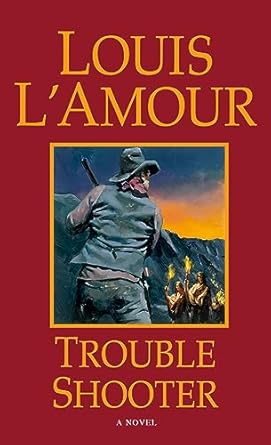
9. Trouble Shooter by Louis L’Amour

I am not definite on the timeline of this one but I believe it is the 1800s.

Description:

Hopalong Cassidy has received a message from the dead. Answering an urgent appeal for help from fellow cowpuncher Pete Melford, he rides in only to discover that his old friend has been murdered and the ranch Pete left to his niece, Cindy Blair, has vanished without a trace. Hopalong may have arrived too late to save Pete, but his sense of loyalty and honor demands that he find that cold-blooded killers and return to Cindy what is rightfully hers.

Colonel Justin Tredway, criminal kingpin of the town of Kachina, is the owner of the sprawling Box T ranch, and he has built his empire with a shrewd and ruthless determination. In search of Pete’s killers and Cindy’s ranch, Hopalong signs on at the Box T, promising to help get Tredway’s wild cattle out of the rattler-infested brush. But in the land of mesquite and black chaparral, Cassidy confronts a mystery as hellish as it is haunting—a bloody trail that leads to the strange and forbidding Babylon plateau, to $60,000 in stolen gold, and to a showdown with an outlaw who has already cheated death once . . . and is determined to do it again.

10. Johnny Tremain by Esther Forbes

This one takes place around 1775 and is about the events leading up to the Revolutionary War.

Description:

Johnny Tremain, winner of the 1944 Newbery Medal, is one of the finest historical novels ever written for children. As compelling today as it was fifty years ago, to read this riveting novel is to live through the defining events leading up to the American Revolutionary War. Fourteen-year old Johnny Tremain, an apprentice silversmith with a bright future ahead of him, injures his hand in a tragic accident, forcing him to look for other work.

In his new job as a horse-boy, riding for the patriotic newspaper, the Boston Observer, and as a messenger for the Sons of Liberty, he encounters John Hancock, Samuel Adams, and Dr. Joseph Warren. Soon Johnny is involved in the pivotal events shaping the American Revolution from the Boston Tea Party to the first shots fired at Lexington. Powerful illustrations by American artist Michael McCurdy, bring to life Esther Forbes’ quintessential novel of the American Revolution.

Do you read a lot of books that take place in a different time or place than “now?”

Sunday Bookends: The Get Rid of Hiccups Trick, what I thought of the Miss Marple Short Stories, and a Paris movie marathon being planned

It’s time for our Sunday morning chat. On Sundays, I ramble about what’s been going on, what the rest of the family and I have been reading and watchingand what I’ve been writing. Some weeks I share what I am listening to.

Throughout my childhood and teenage years my family and I would visit my mom’s side of the family in Jacksonville, N.C. for Christmas at my grandmother and aunt’s house.

One day when I was about 18 or so, my parents told me we were going to drive a couple hours west to see my mom’s aunt and uncle and cousins in a little town called Farmville.

I had  never met this part of the family before so I didn’t know what to think of them. The house was full of chatter as soon as we arrived. Chatter and offers of food.

“Y’all come on in here and get yourself some food,” Cousin Joyce said from the kitchen.

Conversations began to take the path they usually do in Mom’s family — several of them being held at once all at the same time, back and forth between each other. I did my best to keep track. The conversations were mainly between my grandmother, mom, aunt Dianne, Cousin Joyce, Cousin Janet and Aunt Mattie.

Uncle Ray — full name Ashley Ray Waignwright (isn’t the quentissintial Southern name?!), a short man with very little hair, wearing a pair of small, wire-rimmed glasses, and looking a bit somber, was sitting in a little rocking chair. He was participating in some of the conversations but not much. Mainly he was observing.

 At some point I developed the  hiccups. They were painful and wouldn’t stop.

Mom suggested I drink some water. Aunt Dianne said a spoonful of sugar. Someone else suggested holding my breath.

Uncle Ray narrowed his eyes.

“Heard what you been saying about me, girl.”

I was startled. Was he looking at me? I looked behind me. There was no one there. It had to be me he was talking to.

“I—I’m sorry?”

He frowned. “You. I heard what you been saying about me.”

“I-I – know I haven’t said anything.”

Mom hadn’t mentioned her uncle Ray was going senile but this conversation was getting weirder by the moment.

“You sure did,” he said. “You know it and I know it so you just need to apologize.”

“I—I .. but…”

His grim expression didn’t crack. “Where those hiccups gone?”

“What? What do you mean?”

A small smile tipped the corner of his mouth upward. “Your hiccups. They’re gone, aren’t they?”

I dragged in a ragged breath and let it out again.

The rest of the conversations had stopped during this exchange and I heard my mom laugh.

It was beginning to hit me now.

“He got you, didn’t he?” Mom asked.

Uncle Ray was smiling more now. Yes, he’d got me, and the panic I’d felt at thinking he thought I’d said something awful about him had been enough to stop the hiccups

I am juggling a few books right now – I know that sounds weird, but I do that because I read one during the day and one at night sometimes.  

I prefer to read my mysteries during the day and more relaxing or light books before bed. I’ve found if I read mysteries before bed, I dream about people dying or chasing me. Even with cozier mysteries. Not always, but sometimes. If the mystery is too good, I still read it at night and just put up with the weird dreams.

Anyhow, I just finished The Tuesday Night Club (Miss Marple short stories) by Agatha Christie and ended up liking it more as I continued it. It is a series of short stories involving several familiar characters from Miss Marple books all gathered together discussing mysterious cases they’d heard of or investigated and asking if everyone listening could figure out what really happened.

There was a lot of subtle humor in the book that ended up making the repetitiveness of how almost each story ended with Miss Marple solving the case presented by each person and then that person, who previously said they didn’t know the solution, or someone else in the room, saying that they suddenly had remembered she was right and they had heard what had really happened.  It was a bit tedious but not every story ended that way, luckily. I mean, Miss Marple did solve it every time, but there wasn’t always a sudden realization from someone else in the room knew what really happened.

I will finish Every Living Thing by James Herriot this week, as far as I know anyhow.

I’ve already started The Thursday Murder Club by Richard Osman and I’m not sure what I think so far. POV’s keep changing and there is a lot more detail about a lot of characters than I think is needed so….we will see if I can make it through or not. I’ve heard good things about it, so I’m sure I will end up liking it.

I will need a slightly lighter read for nights later this week so I will be picking up Little Men again or finishing up Nancy Drew: The Sign of the Twisted Candles.

Little Miss and I have almost finished Sign of the Beaver for history.

The Boy and I are still pushing through Frankenstein. I don’t want to talk about it. I just can’t wait to graduate him this year. We are starting Romeo and Juliet in March. Lord, be with us.

He’s also listening to No Country For Old Men by Cormac McCarthy

The Husband is reading Hot Property by Mike Lupica.

This week I watched Murder She Wrote, Victorian Farm, All Creatures Great and Small, Sonic the Hedgehog 3 with the kids (let’s be honest. I didn’t pay much attention to it.), my farmer on YouTube (Just a Few Acres), and Sinbad the Sailor.

Upcoming in April: Erin from Still Life, With Cracker Crumbs, and I are planning on a Paris themed movie marathon. We will keep you updated.

I’ll be starting book four in the Gladwynn Grant series soon and have decided I’ll probably only write six books in this series and, yes, I will wrap up that “love triangle” in book four or five. Probably book four. It’s boring even for me at this point.

On the blog I wrote:

I am listening to Frankenstein on Audible and hope to continue it this week

Now It’s Your Turn!

What have you been doing, watching, reading, listening to or writing? Let me know in the comments or leave a blog post link if you also write a weekly update like this.


This post is linked up with The Sunday Post at  Kimba at Caffeinated Reviewer, The Sunday Salon with Deb at Readerbuzz, and Book Date: It’s Monday! What are you reading hosted by Kathyrn at The Book Date.


Sometimes there are issues with commenting on WordPress. If you can’t comment, but want to, please feel free to hit the contact link at the top of the page.


In addition to my blog, I write fiction, and you can learn more about my books here: https://lisahoweler.com/my-books-2/


You can also support my writing and chat about books, mysteries, old movies, vintage books, mystery shows, etc. for $3 a month at my Patreon here: https://patreon.com/LisaHoweler.

If you like my content you can subscribe to my posts for free here too.

Saturday Afternoon Chat: Remembering the times I had to drive in the snow and hated it

This week we were surprised by snow and unfortunately it wasn’t a pleasant surprise since I was driving in it at the time. I thought it was merely going to be flurries, but oh no…it started sticking. Driving with snow on the road? No. that’s not something I do. Like ever anymore.

But there I was driving to my parents to return their car to them, thinking the entire seven minute drive that it really wasn’t as slippery as it probably was. You ever ask yourself, “Why are people out in this?” when the weather is bad?

I am normally one of those people who ask that, not one who is driving in it but I just kept thinking the snow would stop and the road would clear up.

I made it to my parents with white knuckles. The plan was for my husband to pick me up on his way home from work but Dad decided he’d better drive me home so my husband didn’t get our car, which doesn’t have great tires, stuck on my parents’ dirt road.

Honestly, I think Dad was excited to be needed and get out in that snow. He loves driving in the snow. That’s crazy to me. On the way back to my house he said, “If there isn’t six inches on the road it doesn’t bother me.”

We made it back to my house fine and Dad made it back to his house as well. Another inch or so fell that night and The Boy didn’t have to go to school the next morning.

While I don’t usually drive in snow at all, there was two other times I had to do it — both while working for newspapers.

The first time I was working at the local daily newspaper and when I left work the roads were covered. I was nervous but started inching my way the 15 miles to  home. There was one hill I was very worried about and I did well going up it but was nervous going down. There was a line of cars behind me but only one of them seemed annoyed by me going slow. Everyone else was also going slow since there was maybe three inches of white slush covering the roads. Well, almost everyone. One driver of a pickup truck decided he needed to get by us so he passed a couple of cars.

I might have muttered something like, “You idiot,” as he went by.

Several feet in front of me he fishtailed but was able to gain control again.

“See!” I shouted at my windshield. “There’s a reason we’re all going slow!”

He ended up having to drive slowly all the way to the area called The Valley where we lived.

The other time I was stuck in snow was, again, coming home from a newspaper job. This time I was working in New York State, about 50-minutes from our apartment at the time.

I kept asking to go home but the editor wanted me to finish a couple of things. He finally allowed me and by then the main highway was covered in snow and ice. There are two lanes going east and two going west on this highway and I was going east to get home. I was not going very fast and no one was passing me because it was that snow with a layer of ice on top.

At one point I hit some of that ice and my car started to spin until I was all the way around facing the oncoming cars. Thank God I didn’t go into panic mode, causing my brain to freeze up. Instead, I ripped the car into reverse and backed it into the median and waited for the other cars to pass me before trying again.

A 50-minute drive took probably 90-minutes that day, but I was so glad to be home.

All this being said, I am really looking forward to some temps in the 40s this upcoming week where we live. Even a couple days of sun would be so nice.

Other than my driving adventure, we didn’t do too much else this week. I did take Little Miss to Kid’s Club at a local church on Wednesday and it was nice to get out of the house a little bit.

I’m not sure if I shared this photograph of a bald eagle eating a rabbit that The Husband took a couple of weeks ago on here or not. I’m going with not.

He took this shot with his iPhone. The eagle was close to the edge of the road, and I am so excited that Little Miss was able to get a look at it because she often misses the wildlife we see.

How was your week last week?

Do anything fun or interesting? What teas are you drinking this day if you are a tea drinker? Let me know in the comments.

Weekend Traffic Jam Reboot: Come Link Up With Us!

Welcome to the Weekend Traffic Jam Reboot where we offer a place for bloggers to link up and get a fresh set of eyes on their posts. We also feature one blog a week, letting our readers know about the blog and providing a link so readers can learn more about them.

Look for the post to go live about 9:30 PM EST on Thursdays.

I think weather forecasters have just given up on trying to figure out our weather in Pennsylvania. Today we were told we’d have some sun but instead we got half an inch of snow and me driving to my parents with white knuckles. I had borrowed their car and was taking it back with plans for my husband to pick me up after work. My dad ended up driving me back because the tires are better on his car and he didn’t want my husband to get stuck on their dirt road. So, we headed back with Dad driving because I honestly think he loves driving in snow. I, however, hate it and don’t want to drive at all the rest of this winter – especially if these unexpected snow events are going to happen.

Anyhow….on to introducing your hosts for Weekend Traffic Jam Reboot!

Marsha from Marsha in the Middle started blogging in 2021 as an exercise in increasing her neuroplasticity.  Oh, who are we kidding?  Marsha started blogging because she loves clothes, and she loves to talk or, in this case, write!  

Melynda from Scratch Made Food! & DIY Homemade Household  – The name says it all, we homestead in East Texas, with three generations sharing this land. I cook and bake from scratch, between gardening and running after the chickens, and knitting! 

Lisa from Boondock Ramblings shares about the fiction she writes and reads, her faith, homeschooling, photography and more. 

Sue from Women Living Well After 50 started blogging in 2015 and writes about living an active and healthy lifestyle, fashion, book reviews and her podcast and enjoying life as a woman over 50.  She invites you to join her living life in full bloom.


We would love to have additional Co-Hosts to share in the creativity and fun! If you think this would be a good fit for you and you like having fun (come on, who doesn’t!) while still being creative, drop one of us an email and someone will get back with you!

WTJR will be highlighting a different blogger each week this year! We invite you to stop by their blog, take a look around and say hello! This week we are spotlighting Style Yourself Confident.

Pamela says about her blog, “Hi – I’m Pamela thank you so much for visiting my corner of the Internet.

This website is about LOOKING GOOD and FEELING GOOD about yourself, whatever your age shape or size!

Although most women will tell you that looking good and feeling good generally go hand in hand, each of us has a different agenda for what makes that happen. 

Many years ago, I trained as an Image Consultant but I’ve always been reluctant to use the title because it’s so pretentious. We’re overdosed with patronizing makeover shows on TV which have nothing whatsoever to do with real life!

The world as a whole often regards the older woman as invisible but it’s easy to take back control of the way you look and feel with a little fun, flexibility and plain old fashioned common sense. 

Let me help you discover a little about the COLORS and SHAPES that nature designed for you because it’s never too late to discover STYLE CONFIDENCE!”

Thank you for being part of the Weekend Traffic Jam Reboot, Pamela!

Now for my highlights this week:

|| Reading is a discount ticket to everywhere by Where The Wild Things Are||

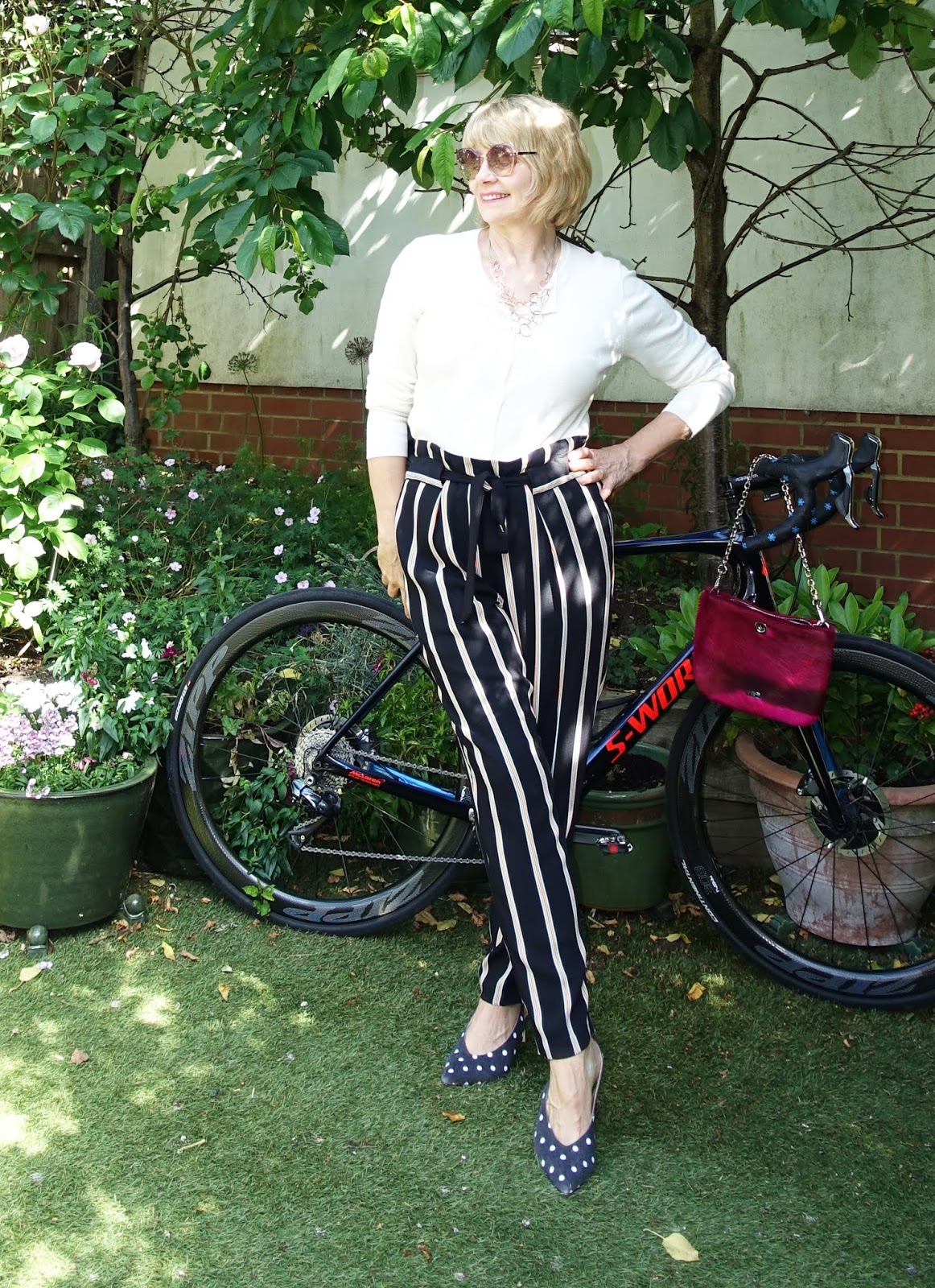
|| Ideas for Styling Stripes and Spots by Is This Mutton ||

|| Friday Morning Catch Up by Still Life, With Cracker Crumbs ||

|| Outfit Inspiration With a Neutral Long Cardigan by Chez Mireille Fashion Travel Mom ||

Thank you so much for joining us for our link-up! Please remember that this is a link-up where you can share posts from the previous week or posts from weeks, months, or years ago. All we ask is that they be “family-friendly”.

You are invited to the Inlinkz link party!

Click here to enter
https://fresh.inlinkz.com/js/widget/load.js?id=c0efdbe6b4add43dd7ef

Winter of Fairbanks: Sinbad the Sailor. Not even my crush on Fairbanks Jr. could get me through this one.

This week for Winter of Fairbanks Jr. I watched Sinbad the Sailor.

Oh my, readers.

I watched this one with a face you make after you’ve taken gross tasting medicine.

Not even my crush on Fairbanks Jr. could get me through this one.

What was I even thinking? I really should have read up on it more or watched a preview first.

Cheesy? Check.

Sort of disrespectful to other cultures? Check.

Horrid, garish colors and really bad makeup jobs complete with darkened skin and dark eyeliner? Check.

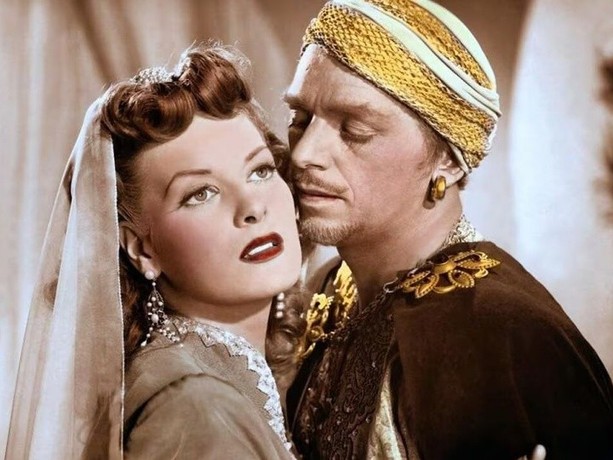
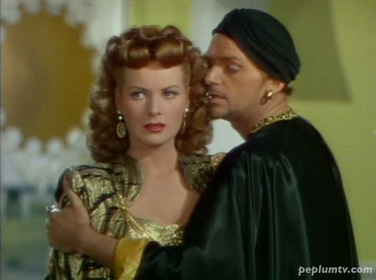
A red-haired Irish woman who is supposed to be a Middle Eastern princess? Check.

There were so many yikes with this one, I just couldn’t wait for it to end. I wasn’t sure if it was supposed to be in the adventure or slapstick comedy genre. I found myself singing “It’s Sinbad the Sailor man” to the tune of Popeye’s theme song throughout much of it.

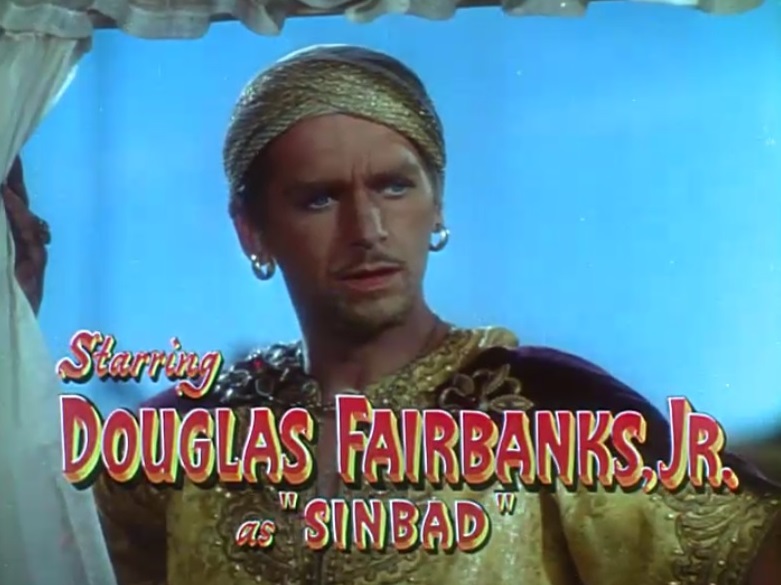
We’re supposed to believe this American man wearing blue eye shadow and dark eyeliner is a Muslim from Baghdad? Oh be still my horrified heart.

There is nothing like hearing a thick Irish accent say, “I am Shireen, Princess of Baghdad” to really emerse you into a movie about a middle-eastern folklore hero. *facepalm*

That darkened skin? They apparently got bored of using it about 15 minutes in because everyone miraculously appeared white again for a scene or two. No idea what that was about because a few scenes later they were dark again. I think there might have been only two or three actors in this movie who were actually not white. Anthony Quinn was one of them but not even he was middle-eastern since he was born in Mexico.

*I just want to add a clarification here (that wasn’t in here when I originally posted this): I do not mean to imply that the people making this movie or starring in it were racist at all. I just mean that it jarred me out of the story to have them be so clearly pale, American, and Irish, or with horrible makeup. I don’t think any ill-will was meant toward any culture. It was common in the early days of movies just to want to make something fun and not really think about how they might be slighting cultures. I am not excusing that but I also don’t think that movie makers set out to be offensive.

Another thing that always puzzles me about these old movies — couples meeting each other one day and already kissing each other that same day.

What was with that anyhow?

I’ve done my share of ranting about the movie so far so how about a little plot for you as presented by an article on TCM.com:

“Surrounded by friends, charming storyteller and adventurer Sinbad (Douglas Fairbanks, Jr.) regales his audience with a tale of his derring-do in exotic lands. In this particular adventure, his ocean journey with sidekick Abbu (George Tobias) pauses in the remote Daibul where nefarious auctioneers commandeer his ship. A bidding war erupts between rightful owner Sinbad and the feisty Shireen (Maureen O’Hara), resolved only through a bit of Sinbadian sleight of hand.”

“Meanwhile the powerful Emir (Anthony Quinn) notices Sinbad’s attentions towards the headstrong Shireen, who saves the sailor’s life before being captured by the Emir. This time salvation arrives in the form of Eastern sailor Melik (Walter Slezak) who enlists the couple’s aid in tracking down the elusive treasure of Deryabar, located beneath the palace of Alexander the Great. Loyalties and vows shift as the trio races to the treasure with the furious Emir hot on their heels.”

The film was shot in Technicolor so it is way out there with crazy colors from the paint on the ship to Maureen’s gaudy dresses.

TCM says Douglas was “famously ignored by his father as a child” but still wanted to make the movie in honor of his father’s swashbuckling movies. It was the first movie that Douglas Jr. made after returning from voluntarily serving in the United States Navy during World War II.

The writer of the article on TCM, Nathaniel Thompson, did have an “obsession” (as I’m sure many did) with what he called Maureen’s “exquisitely endowed bosom.”

He wrote, “which she was wisely but discreetly at pains to exploit and which I, ever an untiring student of such anatomical addenda, discreetly admired.”

Writing in his autobiography, A Hell of A War, Fairbanks wrote that he knew no one in a lead in the movie was Arab at all.

“After all, I was not exactly a typical Arab any more than Walter Slezak was even remotely (with his taped-up blue eyes) Oriental.”

 And I guess none of them really saw a problem with that. Sigh.

Anyhow…if you want to watch this movie simply to see how much you can cringe in 1 hr and 57 min (I felt like this movie would never end and fast forwarded a couple of times to get there), I would recommend it.

I am hoping my next choice, The Rise of Catherine The Great (1934), is a bit better. It is streaming for free on YouTube. At least in the United States.

After that I am watching  The Sun Never Sets (1939). It is available for free on PBS and I also found it here: https://archive.org/details/sun.-never.-sets.-1939

You can find my impressions of previous movies in the series, as well as other classic movies here: https://lisahoweler.com/movie-reviews-impressions/

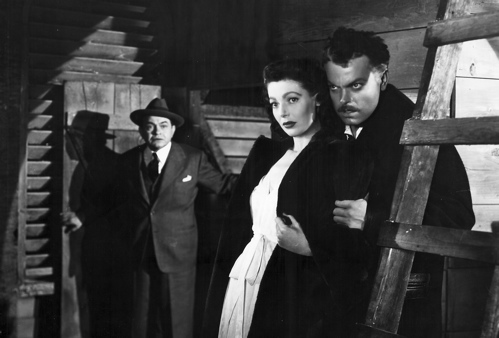
Classic movie impressions: The Stranger (1946)

A few weeks ago, my husband suggested we watch an Orson Welles movie. Since I’ve liked other movies by and starring Orson, I agreed to it.

The Stranger was released in 1946 and tells the story of a war crimes investigator who tracks a high-ranking Nazi fugitive to a small Connecticut town.

Welles both directed and co-wrote the film but was uncredited for the writing, which was most likely part of the many concessions he made for the opportunity to direct it. This is a movie that some call his most conventional. It’s also one he wasn’t as fond of because so many changes were made to the final cut without his consultation.

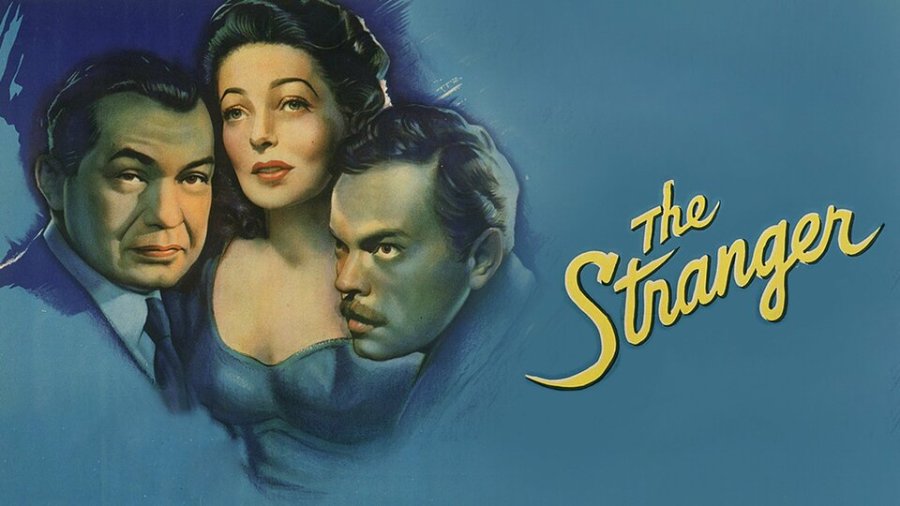
The movie stars Welles, Edward G. Robinson, and Loretta Young.

The creepy undertone throughout the entire movie left me always waiting for the other shoe to drop.

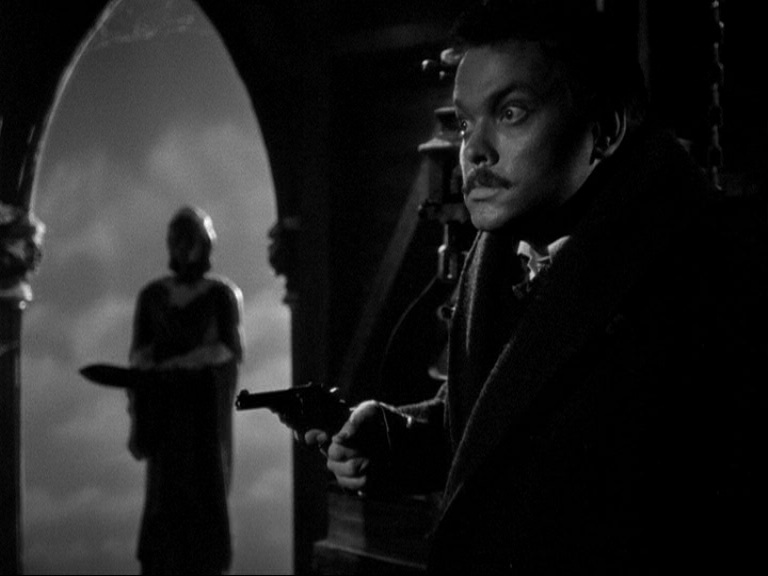
Nazi fugitive, Franz Kindler (Welles), has done his best to assimilate into American society. He’s even about to marry the daughter of a justice of the U.S. Supreme Court.

Edward G. Robinson, playing war crimes investigator Mr. Wilson, follows one of the recently released followers of Kindler to the town, hoping he’ll lead him to Kindler. The man suddenly disappears though, and Wilson is certain he’s been murdered by Kindler, but still doesn’t know who Kindler actually is. Only that he is somewhere in the town.

We the viewer, know all along what happened to the man and who made it  It happens about 15 minutes into the movie, but Robinson has to spend much of the movie trying to figure it out and once he does figure it out, he spends the rest of the movie trying to make Kindler admit who he really is. The only thing Robinson’s character really knows when he comes to the town is that Kindler had an almost unhealth obsession with old clocks.

It’s a fantastic, stressful game of cat and mouse that had me literally biting my nails part of the time.

The music of the movie is very interesting – mixing in a creepy violin-based humming, with happier melodies to try to show the contrast between an innocent, happy world being infiltrated by pure evil.

It always amazes me how quickly movies were made back then. Filming for this movie took place from September to November of 1945 and was released July 2, 1946.

Originally the film was going to be directed by John Husten, but he entered the military and Welles begged producer Sam Spiegel (also called S.P. Eagle at the time) to let him direct the film. Spiegel agreed as long as Welles agreed to several concessions and to be let go as director if he stepped out of those perimeters. Welles would still have to continue on as the lead actor, even if he was let go as director, however.  

Welles agreed. He needed the job if he wanted to continue in Hollywood. Five years earlier Welles had been essentially backlisted with the release of Citizen Kane, which won 9 Academy Awards, including Best Director, Best Movie, and Best Actor for Welles. This should have made Welles a sought-after director and actor. Citizen Kane was based on the life of one of the most powerful men in the world at the time — William Randolph Hearst, a newspaper publisher and owner — though and Hearst wasn’t happy. In fact, he was furious. He made life very difficult for Welles and anyone else associated with the making of the movie, which is now considered the greatest movie all time thanks to its innovative filmmaking techniques, complex story, and influential impact on cinema history.

“In September 1945 Welles and his wife Rita Hayworth signed a guarantee that Welles would owe International Pictures any of his earnings, from any source, above $50,000 a year if he did not meet his contractual obligations,” an article on Wikipedia states. “He also agreed to defer to the studio in any creative dispute.”

This became a challenge when Editor Ernest J. Nims was given the power to cut any material he considered extraneous from the script before shooting began.

“He was the great supercutter,” Welles said, “who believed that nothing should be in a movie that did not advance the story. And since most of the good stuff in my movies doesn’t advance the story at all, you can imagine what a nemesis he was to me.”

Reading about all the cuts that were made from the script, and the final product helps me to understand why this movie feels so choppy at times. It feels like elements that would have helped to explain some of the plot better are missing.

What is really missing is building up Welles’ character and helping the viewer get to know who he is. As I read online, I found out that there were scenes removed from the beginning of the movie that would have given us more character development for Welles’ character.

I feel like Nims really overdid things and should probably be ashamed of chopping up Welles’ work.

I also thought that it was interesting that Welles wanted a female actress to portray the investigator.

“I thought it would be much more interesting to have a spinster lady on the heels of this Nazi,” Welles said. 

Welles would later say in interviews that nothing of The Stranger was his in the end. Biographer Frank Brady disagrees, “Welles has said, since the making of The Stranger—which he completed one day before schedule and under budget—that nothing in the film was his, this despite the fact that the unmistakable Wellesian moods, shadows, acute angles, and depth-of-focus shots are pervasive. Within the film is a second film, another Wellesian touch, consisting of snatches of documentary footage showing Nazi atrocities.”

One unique aspect of The Stranger is that it was the first commercial film to use documentary footage from the Nazi concentration camps.

Welles viewed Nazi Concentration Camps (1945), a film used as evidence in the Nuremberg Trials in early May 1945 as a correspondent and discussion moderator at the United Nations Conference on International Organization

One thing I didn’t remember until reading about it this week was that in the 1940s, many in the world simply couldn’t accept that the concentration camps were real.

Welles wrote about the footage in a column for the New York Post:

“No, you must not miss the newsreels. They make a point this week no man can miss: The war has strewn the world with corpses, none of them very nice to look at. The thought of death is never pretty but the newsreels testify to the fact of quite another sort of death, quite another level of decay. This is a putrefaction of the soul, a perfect spiritual garbage. For some years now we have been calling it Fascism. The stench is unendurable.”

Though the studio did not think The Stranger would be a success, it actually was and right out of the gate too. It cost $1 million to make and earned $2.25 million in U.S. rentals in its first six months. Fifteen months later had grossed $3.2 million.

I very much enjoyed the film, but I do wish that Kindler’s German accent would have come back as soon as his cover was blown. Having him keep the American accent he’s been using to keep his cover, even when under pressure, seemed unrealistic to me.

Despite that small issue, Welles is so deliciously evil in this. His excuses for his crimes against humanity were presented with a lecherous smile that sent shivers down my spine. The tension throughout the film is extreme. I never knew when Kindler would finally snap and reveal himself or worse — kill someone to keep his identity secret.

I found this one on YouTube for free, but it is also streaming in better quality on several streaming sites, including Amazon Prime.

Have you ever watched this one? What did you think?