The Prisoner of Zenda (1937) is a cinematic spectacle. Grand halls, sweeping ballrooms, wildly decorated courtyards, and captivating costumes.
I absolutely loved it and am so glad I stumbled on to Douglas Fairbanks Jr. and decided to do a marathon of his movies to learn more about him so that I could discover this movie.

Douglas Fairbanks Jr. is not the leading man in this one but he steals the show in every scene he is in. He is deliciously evil.
The leading man, Ronald Colman, is absolutely amazing as well, especially since he is playing two parts in this one. He is so amazing I feel another marathon coming on but of his movies.
An article on TCM.com agrees with me about this version (Okay, I agree with the article).
“ . . . of all the dramatized versions of Anthony Hope’s 1894 tale of adventure, love and honor, the 1937 black-and-white movie version, produced by David O. Selznick for his Selznick International Pictures stands as the definitive adaptation.”

It is easy to see why this movie is called by critics one of the best “Swashbuckler” movies of all time. I say that since this is one of the original Swashbuckler movies without it we wouldn’t have Pirates of the Caribbean, The Princess Bride, and other more modern adventure movies.
And without the 1894 novel — The Prisoner of Zenda: Being the History of Three Months in the Life of an English Gentleman by Anthony Hope — we wouldn’t have had the movie at all. Anthony Hope Hawkins was a part-time lawyer who wrote the book in one month from what I read.
The novel sold more than 30,000 copies in Britain and the U.S. and helped to establish the adventure genre that would later be explored even more by authors such as Sir Arthur Conan Doyle and H. Rider Haggard. The book, according to an article to TCM, has never gone out of print and has continued to sell thousands of copies each year.
The movie is the most referenced Swashbuckler film, TCM further states, which is probably why it was remade at least seven (!!) more times over the years, including one only about 15 years after the 1937 version, which was not the first. There were actually two silent movies of the book made before this version.
The 1952 version was shot frame for frame, according to articles I read online. I think I might watch the one released in 1952 later on and then compare the two, but I highly doubt that the 1952 movie or any of the others (including two made-for-TV movies and three television shows) will top the 1937 one, especially when it comes to Douglas’s performance. Yes, Doug and I are on a first-name basis now. I feel that we are getting to know each other enough now that we can dispatch with the formalities.
When I first saw Douglas in The Rage of Paris, I immediately thought how much he reminded me of Cary Elwes in The Princess Bride – his smile, his delivery, his expressions.

In this movie that similarity came even more into focus and especially during an amazingly well-choreographed and filmed fencing scene between him and Colman.
The two enjoyed a sparring of words while sparring with their swords, reminding me of the scene between Elwes and Mandy Patinkin on the Cliffs of Insanity in The Princess Bride. Perhaps Golding was influenced by the movie? I don’t know but if I research any more for this post, I’ll never publish it.

Let’s finally get to the plot of the movie. Finally…I know!
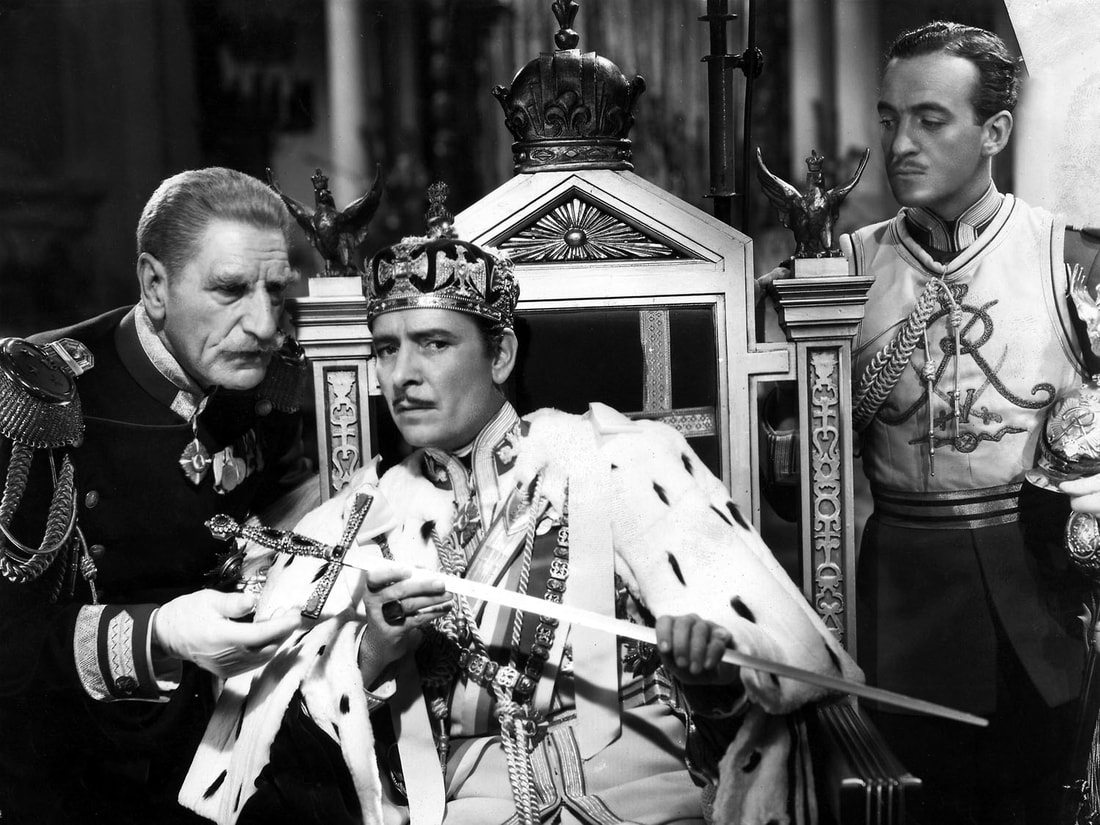
We have an Englishman named Rudolf Rassendyll (Colman) who has gone to a small country located somewhere between Vienna and Bucharest (not named in the film, but in the book it was called Ruritania). He has gone there for a fishing expedition at the same time the king of the country is being coronated. Zenda is a small area in this unnamed country where there is good fishing and boar hunting and where the king, Rudolph V (also portrayed by Colman), has a hunting preserve and cabin. RudolfV and his advisors Col. Zapt (C. Aubrey Smith) and Captain Fritz von Tarlenheim (David Niven, who I recognized immediately from other movies I’ve seen him in) run into Rassendyll in the woods and realize how much the two look alike.
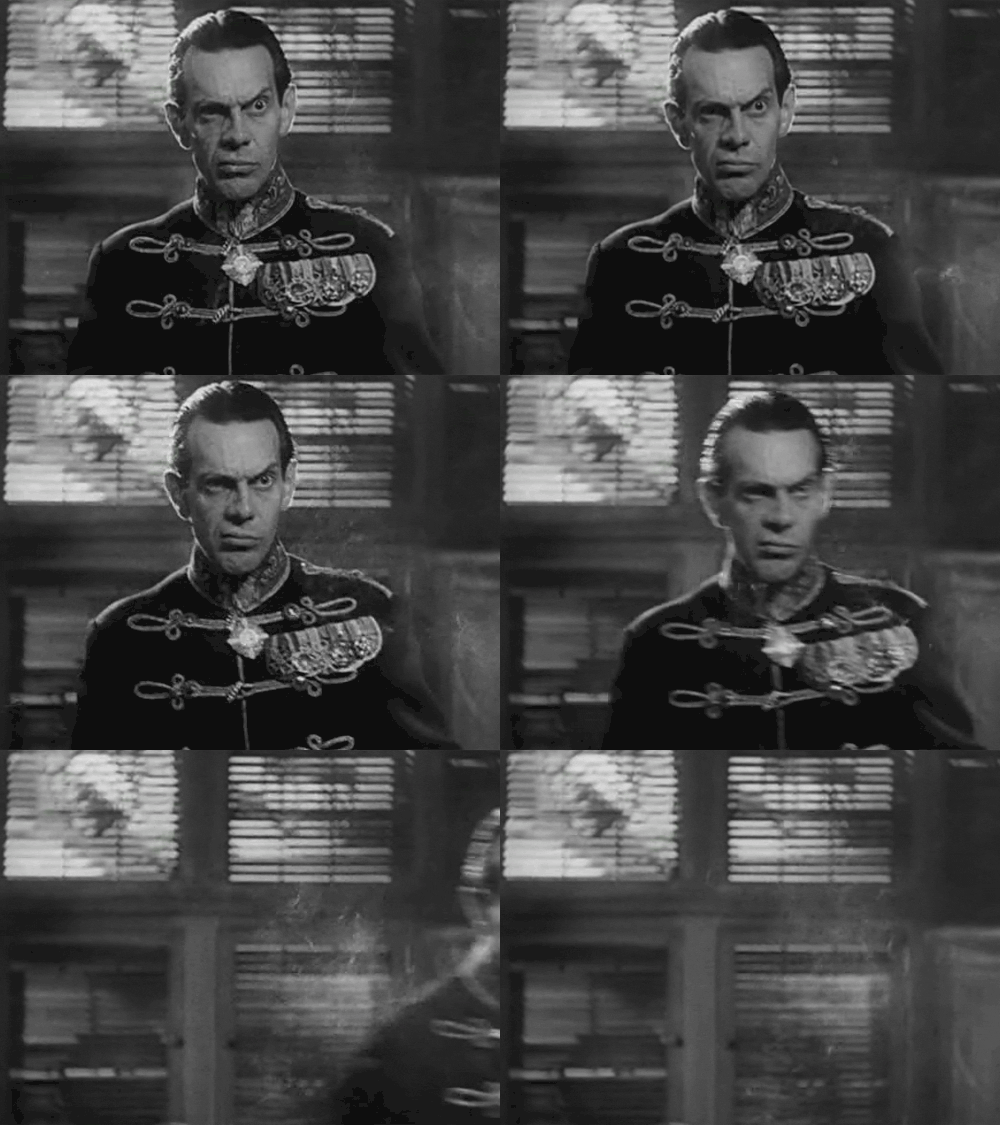
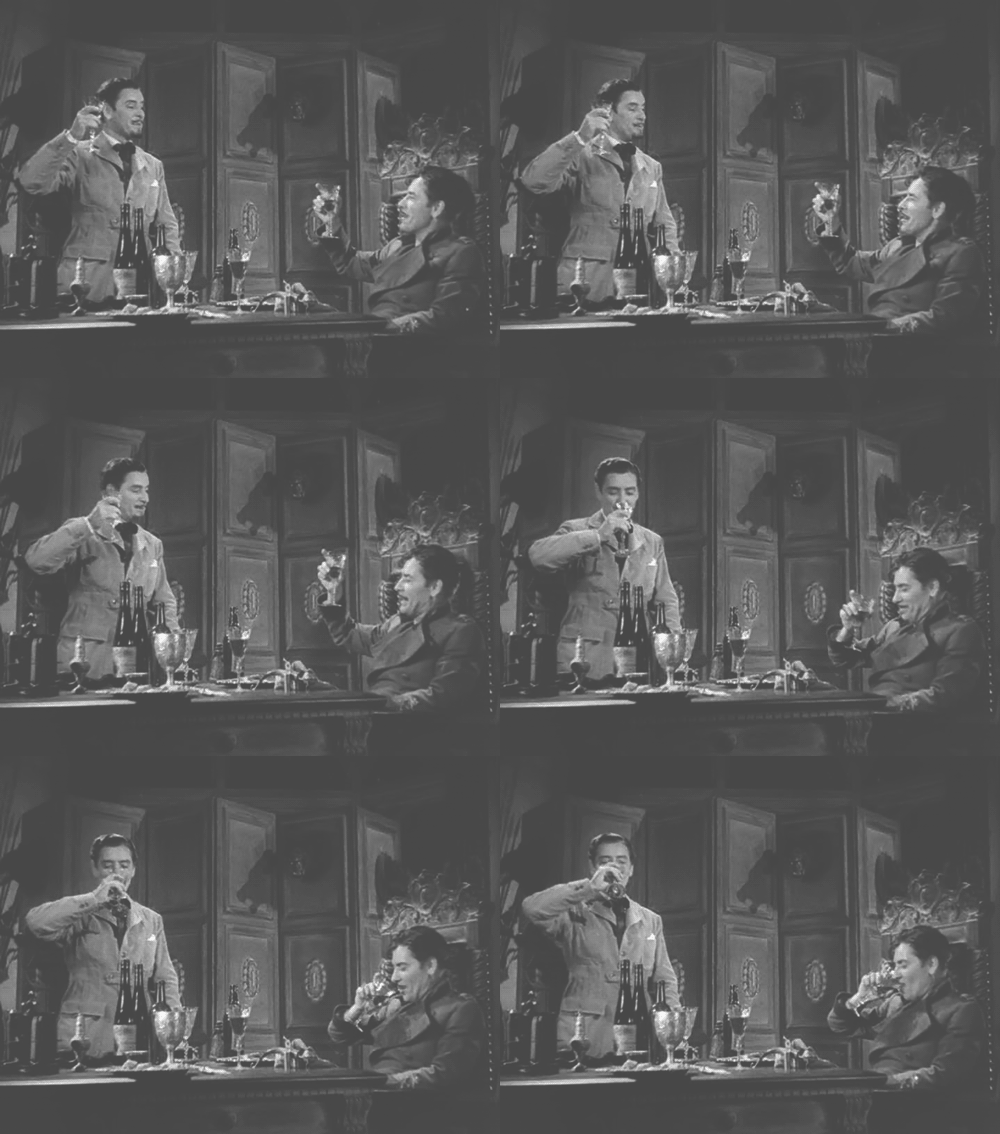
I’m a little confused by the scene where Rassendyll tells the king they look alike because of their ancestors — the king’s great-great-great grandfather and Rassendyll’s great-great-great grandmother — most likely had an illicit affair. In the beginning of the film, he acts like he’s coming to the country to hunt and knows nothing about the king or how much he looks like him but five minutes later in the film he’s telling the king he knows he looks like him and why. This is probably something that is explained better in the book.
All I can say is thankfully they both have the same British accent even though the King is from a kingdom in Eastern Europe, or they wouldn’t be able to understand each other. Har. Har.
Minor complaint. Let us move on.
This news from Rassendyll about their probable relationship cracks the king up and he invites Rassendyll back to his hunting cabin where they get completely roaring drunk and Rudolftalks about his coronation scheduled for the next day and his half-brother Duke Michael, who hates him. He also speaks of his cousin Princess Flavia (Madeleine Carroll) who he will wed shortly after the coronation. After everyone else is unconscious from drinking too much, Rudolfdecides to drink a bottle of wine gifted to him by Michael.
Uh-oh. Bad idea.
When Rassendyll wakes up the King is unconscious on the floor, drugged. The king’s advisor says the king isn’t dead, but he won’t be in any shape to be coronated that which means that Michael could be crowned instead. A plan is hatched to have Rassendyll pose as the king only for the coronation and then to be smuggled out of the country and sent back home.
Of course, we have foreshadowing here that tells us that all will not go as planned and, indeed, it does not.
Douglas portrays Robert of Hentzau, the henchman (for lack of a better word) of Duke Michael, the king’s brother who wants to take over the throne.
He shows up for the first time with a crooked, mischievous smile, like in many of his movies, and lets us know immediately he is the comic relief and a completely swarmy cad. A very attractive cad, though, I must say.
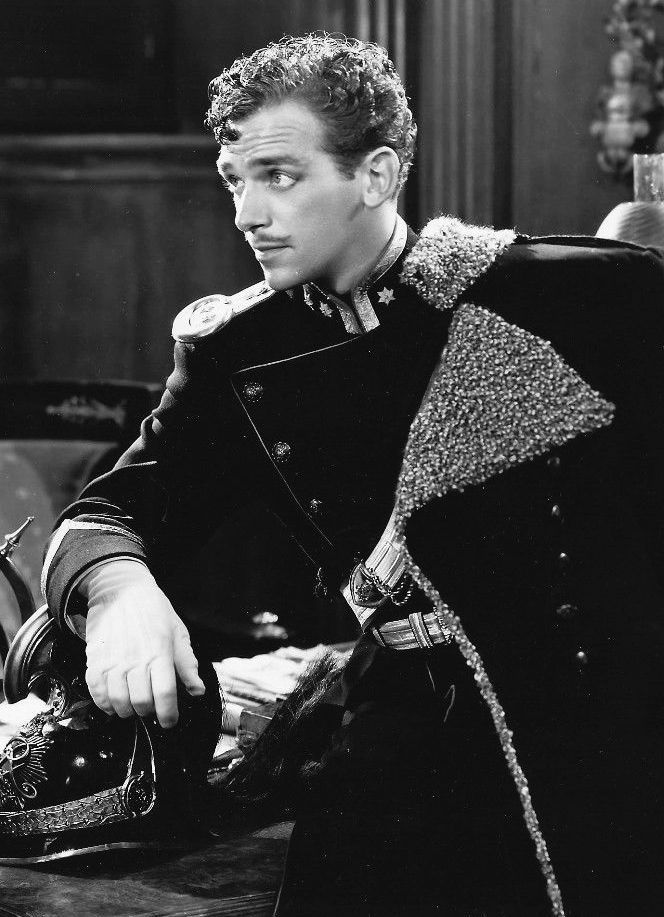

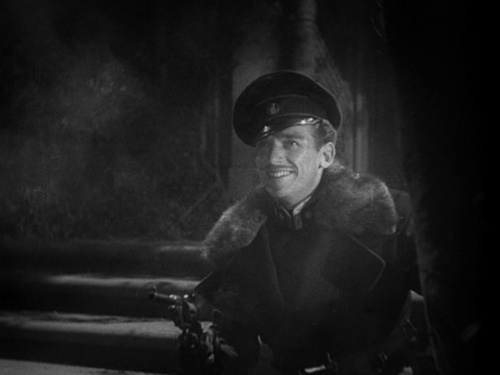

Let’s put it this way —Hentzau is all frat boy, and I could not stop watching him when he was on screen.
There was a lot about this movie I could not stop watching — the acting, the scenery, and the exquisitely detailed and breathtaking costumes designed by Ernest Dryden.
The Prisoner of Zenda was originally going to be released by MGM, but was bought by Selznick for his own studio, right around the same time he was working on Gone With The Wind (1939).
If MGM had produced it, they were going to use it as a vessel for more money makers from power team William Powel and Myrna Loy of the Thin Man movies. A musical was also a possibility. That all went out the window when Selznick bought it.
“Zenda was already a proven commodity in print, on the stage and in previous film versions,” writes Roger Fristoe for TCM.com. “And the recent abdication of England’s Edward VIII led Selznick to think that a story of kings and coronations would be timely.”
John Cromwell, a former actor who had previously only directed romantic dramas, was chosen to direct, which some questioned.
Selznick explained the decision had to do with Cromwell’s experience with European audiences.
“In doing a picture like The Prisoner of Zenda, which is aimed at least fifty percent toward a foreign market,” he wrote in a memo. “It becomes important to get a director who at least has the judgment and taste to respect the sensibilities of audiences which are sensitive, particularly in England, about the behavior of royalty.”

Cromwell had a lot of complaints about the cast, though, including Niven and Douglas, who he called lazy and overindulged. He even dismissed Niven at one point because he didn’t find his humor humorous. Ha. But Selznick overruled him and brought Niven back, saying he was bringing life to an otherwise dull role.
James Wong Howe was the cinematographer for the movie and his work was amazing, in my humble opinion. The various angles, the lighting, all of it.
Look at this fencing scene..the shadows on the walls..
The cinematography, great acting, and astounding costume and set design made this movie overwhelmingly enchanting.
There are a couple of scenes where Colman is filmed talking to himself and I was really interested to know how that was done before the days of digital special effects. Luckily the TCM article explained that for me.
“The special effects created by Howe included a subtle and convincing scene where Colman appears to shake hands with himself. A 3 X 4′ optical glass was placed in front of the camera, and Colman exchanged the handshake with a double, whose head and shoulders were subsequently matted out with masking tape on the glass. The scene was re-photographed with Colman in a different costume and everything matted out except his head and shoulders. When the images were combined, the effect was complete and quite realistic.”

Because I loved Douglas as Hentzau so much, I thought I’d close this post by sharing some quotes that show how delightfully jerky he is in the movie:
“I don’t like women who lie to me. They don’t usually do it, as a matter of fact. I usually do them to them.”
“Someone once called fidelity a fading woman’s greatest defense and a charming woman’s greatest hypocrisy. And you’re very charming. And Michael’s very busy and likely to be more so.”
[during his sword fight with Rupert, Rudolf Rassendyll “retreats” towards the drawbridge’s controls]: “You’d be a sensation in a circus. I can’t understand it. Where did you learn such roller skating?”
To Rassendyll: “Why don’t you let me kill you quietly?”
Rassendyll: Oh, a little noise adds a touch of cheer. You notice I’m getting closer to the drawbridge rope?
Henztau: You’re so fond of rope, it’s a pity to finish you off with steel. What did they teach you on the playing fields of Eton? Puss in the corner?
Rassendyll: Oh, chiefly not throwing knives at other people’s backs. (A reference to a previous scene).
Have you ever seen this version or any version of The Prisoner of Zenda?
What was your impression of it?
Up next in my series will be Gunga Din, one of his more famous movies, from what I’ve read.
The rest of the movies I will be watching include:
The Young At Heart (January 30)
Having Wonderful Time (February 6)
Chase a Crooked Shadow (February 13)
Sinbad The Sailor (February 20)
The Rise of Catherine the Great (February 27)
The Sun Never Sets (March 6)
You can also find my impressions of previous movies in the series, as well as other classic movies here: https://lisahoweler.com/movie-reviews-impressions/
Discover more from Boondock Ramblings
Subscribe to get the latest posts sent to your email.

Pingback: Favorite movies I watched in 2025 | Boondock Ramblings
Pingback: Sunday Bookends: It’s cold. No. Really cold. Reading the same books but planning for others. Crafternoon Again! And some podcasts I want to listen to. – Boondock Ramblings
I got this in a double-pack with the 1952 remake starring Stewart Granger, James Mason, and Deborah Kerr. I watched this one first, and then the other one a few weeks later, both after having read the book. I’ve seen the 1952 version more often because my kids fell in love with it, so we’ve seen it repeatedly at their behest, but I think this original is a slightly stronger film.
The remake uses the same shooting script, down to camera angles and staging sometimes. Though they make one major change: Stewart’s Rudolf Rassendyll is kind of cheery and devil-may-care, while Mason’s Rupert of Hentzau is snidely serious and plotty. Whereas in the 1937, it’s rather the opposite! As you said, Rupert here is kind of a frat boy, and Rudolf is rather a serious chap at times. That change keeps them from feeling tooooooooo similar, which I like.
LikeLike
This looks like such a fun movie, Lisa! I’m going to look for it on the various streaming services we have. Thanks for the review!
https://marshainthemiddle.com/
LikeLiked by 1 person
It was on Amazon and a couple of others (I always forget to metion where I watched it.) I also found it free on YouTube today!
LikeLike
I love the Princess Bride so I may have to check this out
LikeLike