Movie review/recommendation: When Hitler Stole Pink Rabbit

I read When Hitler Stole Pink Rabbit by Judith Kerr late last year and was swept up in the story, written for middle schoolers but with a message for all ages.  The book was heartbreakingly beautiful.

Last week I watched a German movie based on it and it was as breathtakingly beautiful as the book.

So much of the movie was exactly how I pictured it in the book.
Before I continue, I want to mention that the movie is in German so if you don’t speak German you will have to read the subtitles.

When Hitler Stole Pink Rabbit is a semi-autobiographical book based on the facts of Kerr’s life. The main character of the book is Anna Kemper and the story is told her from her point of view.

Her father, like Judith’s, was a newspaper columnist from Berlin who spoke out against Hitler right before Hitler won a majority to take over in Germany. Because he spoke out against Hitler, Arthur Kemper is on the Nazi’s hit list. A member of the police who is not a Nazi warns him that he needs to get out of Germany before Hitler is elected.

Anna’s father escapes to Switzerland and the family joins him even before they know the results of the election because they are warned by their father through their Uncle Julius to do so.

When Hitler Stole Pink Rabbit is the story of the family’s life in Switzerland and then Paris, France.  There are other books after this book that tell of their move to London, where they eventually settled. I believe Judith eventually moved to New York City.

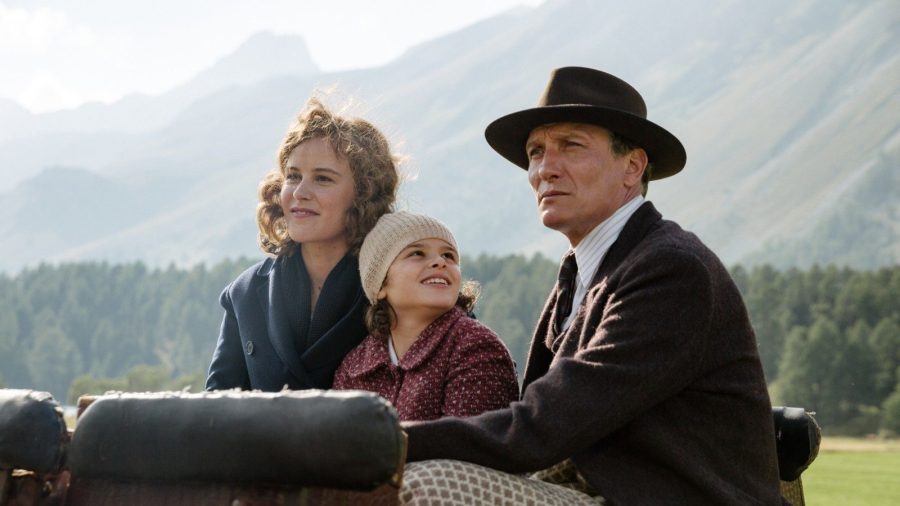
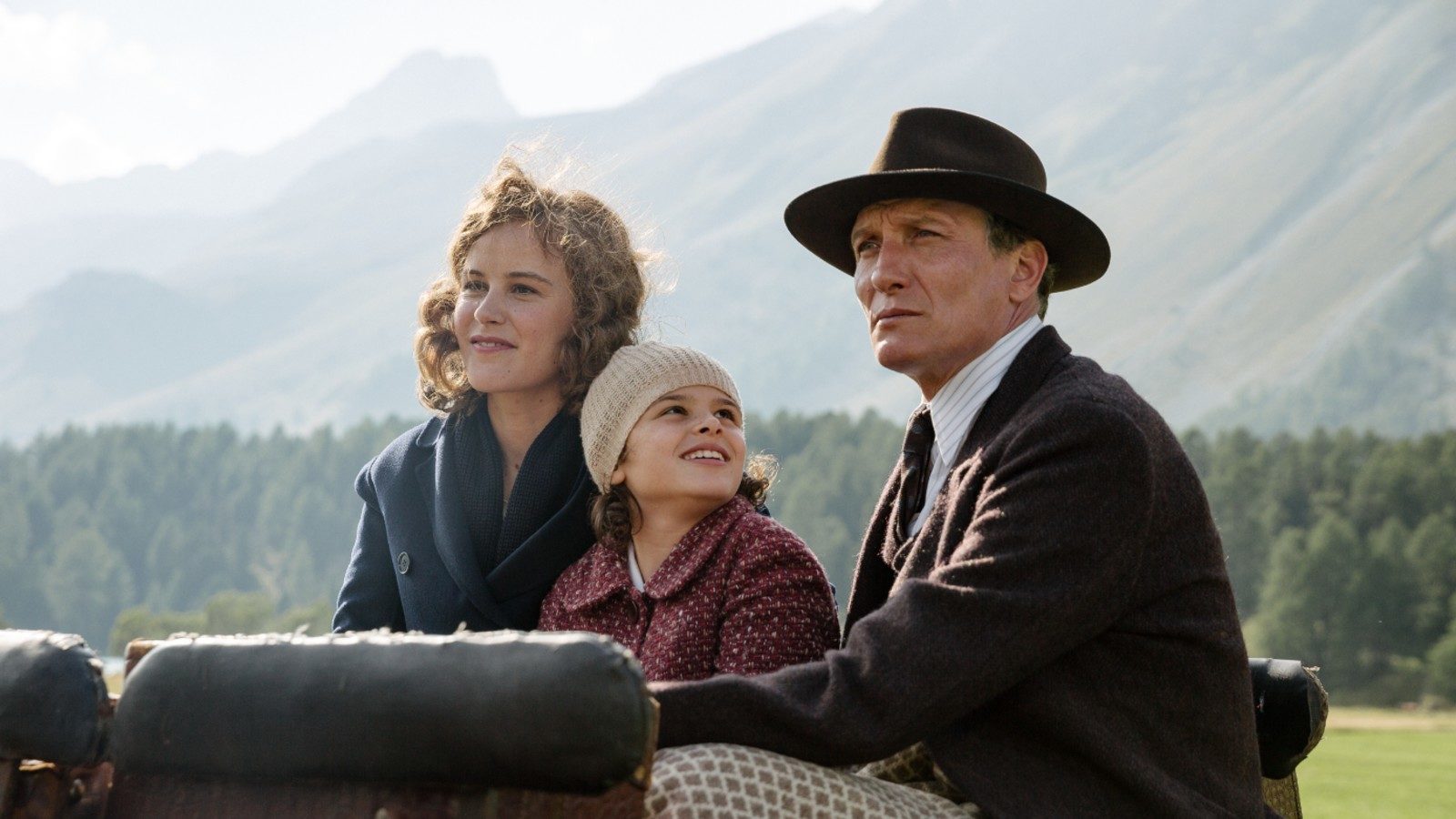
The movie begins in Berlin in 1933 and then shifts to Switzerland. I was thrilled to find out that the movie was actually shot on location in Switzerland and then in various places in Germany.

The views when they moved to the country were absolutely beautiful and I didn’t see how they couldn’t have actually been shot in Switzerland.

  • The movie filmed scenes in
  • Berlin, Germany 
  • Prague, Czech Republic 
  • Bodensee, Baden-Württemberg, Germany 
  • Soglio, Switzerland 
  • And Munich, Baveria, Germany’

All of the actors are outstanding in this, especially the little girl, Riva Krymalowski, who plays Anna. Her expressions and line delivery are subtly powerful.

The woman who played the mother – was also outstanding in my opinion.

This is a movie that could have been extremely dark, but because the book keeps a lighthearted tone (as light as you can when writing about Nazis chasing people down for their faith or political beliefs) the movie keeps a similar lighthearted tone mixed in with somber themes.

When the children move to Switzerland they have to learn a new language and new customs. They also deal with antisemitism, which becomes more apparent when non-religious Germans come for vacation at the hotel they are staying at but the Germans would not speak to them or let their children play with them because they are Jews who left Germany.

In the book, the children who usually play with Anna and her brother Max don’t play with Anna and Max while the other German children are there because the German children won’t play with them. This was cut out of the movie but in the book they all remain friends after the other German children leave and Anna’s Swedish friend apologizes for abandoning her.

I know everyone thinks Paris is beautiful but I was disappointed when the movie left the gorgeous scenery that Sweden provided. I’m not as thrilled with buildings – even ones in Paris.

What I did love is how free Anna’s mother and father felt in Paris and how they showed their love to each other — finally feeling like they weren’t being hunted down while there.

Like in the book, the children have to learn the languages of the countries they move to and Anna is better at this than her brother Max. She quickly learns and excels at French for example.

While she learns the languages, though, she still struggles with feeling like a refugee. Her father reminds her that Jews have always been refugees and they are no different. He encourages his children to always act respectfully and kind so that people who hear from the Nazis that Jews are awful, selfish people will not those lies aren’t true.

I found it interesting to read that Kerr held her German citizenship until 1941 and then was considered to be “stateless” or not a citizen of anywhere from 1941 to 1947. In 1947 until she died she was a citizen of Britain, where she eventually earned an OBE.

One thing that the movie brought home for me more than the book was the mother’s character, including how hard it was on her to leave Germany, as well as how strong she had to be for her family. I didn’t catch on to this as clearly when I read the book, but she was a musician who wrote operas so when she had to leave her piano behind in Berlin, it was like losing a part of herself.

 In the movie there is a scene where they visit a rich family who left Berlin (and who they knew because Anna’s father once wrote a scathing review against the husband) and Anna’s mother is excited to see they have a piano. She has the chance to play it and it lifts her spirits immensely.

I felt like the movie developed her character even more.

The scene between the Kemper family and the richer family also demonstrated to me the huge disparity that developed between classes among the Jewish people during that time. The Kempers lost everything when they fled and were living in poverty. This man was somehow able to keep all of his wealth when they left Germany and ended up living in a wealthy area of Paris with plenty of food and clothes and other items for their children.

In both the book and the movie, Anna talks about how she’s read books where famous people all have difficult trials to overcome before they become famous. She comments to her brother, “Maybe that means I will be famous one day.”

When Hitler Stole Pink Rabbit is part of a three-book series of semi-autobiographical children’s books that Kerr wrote. She also wrote and illustrated 57 books in her lifetime – including The Mog series – and they have sold over 10 million copies worldwide.

When Hitler Stole Pink Rabbit was translated into 20 languages.

In London, where she lived until she died in 2019 at the age of 95, Kerr finally found the home she’d been craving since her family left Germany in 1933.

When Hitler Stole Pink Rabbit review and did we really mean never again?

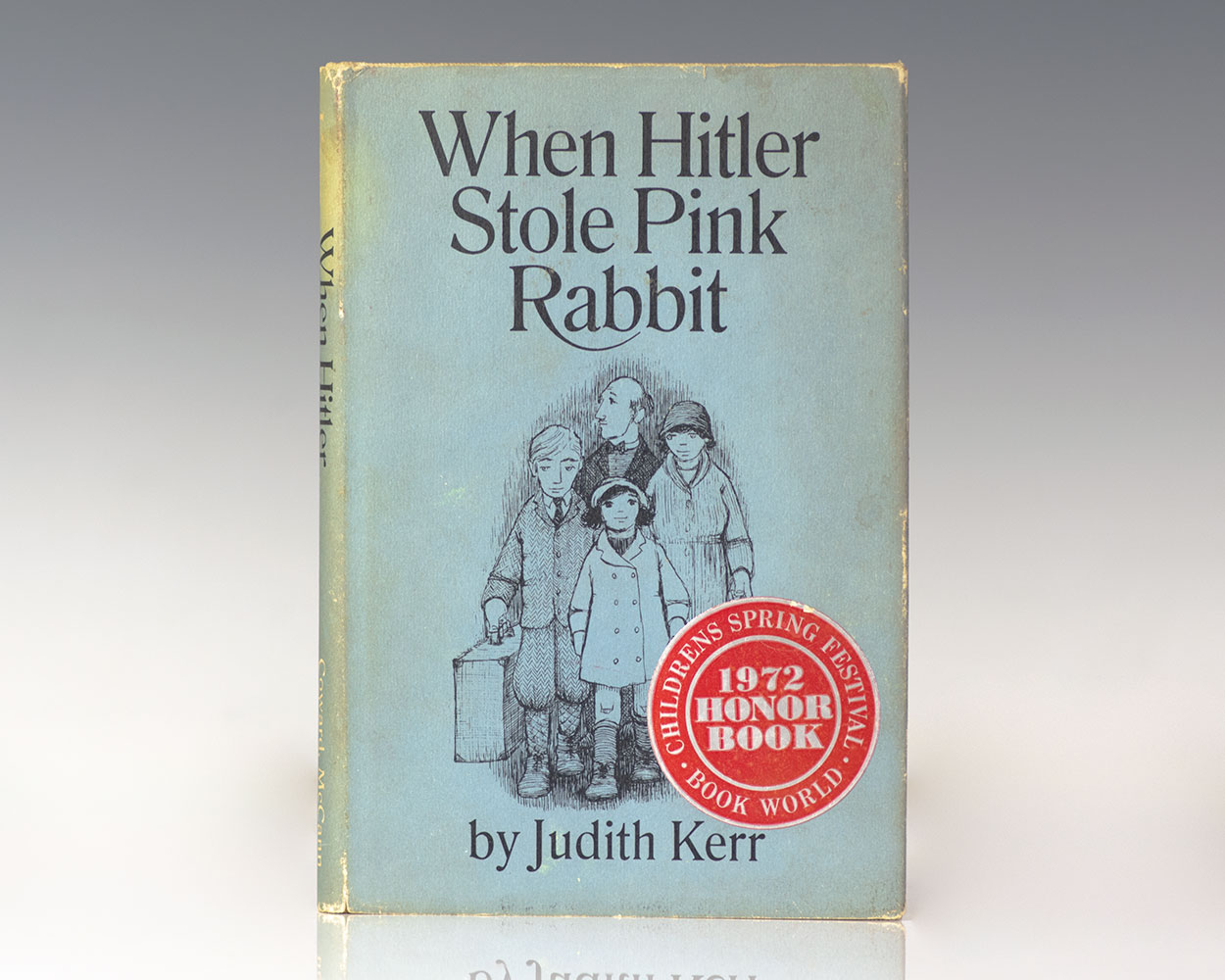
Title: When Hitler Stole Pink Rabbit

Author: Judith Kerr

Genre: Middle Grade Fiction

Rating: 5 out of 5

I was roaming the bookshelves in the children’s section of our local library a few months ago when a book title caught my attention: When Hitler Stole Pink Rabbit.

I felt like this was an odd book for the children’s section, even if it was middle grade, at least based on the title. I took it home and started to read it and was pulled in quickly. The only issue was that the book was old and the mildew smell triggered my allergies and gave me a weird headache. I really wanted to finish the book, though, so I found a cheap copy on Thriftbooks and prayed it wouldn’t have that “way too old” book smell.

It did have a bit of an old book smell but it wasn’t enough to keep me from reading and finishing it last week. While the topic of this book is heavy, there are some humorous and sweet moments that balance out the dark subject matter.

The book is written by children’s book author Judith Kerr and is semi-autobiographical. It is the first book in a four-book series called Out of The Hitler Time. Kerr wrote 48 children’s books besides this series. A German movie based on When Hitler Stole Pink Rabbit and directed by Oscar-nominated director Caroline Link was released in 2019, the same year Kerr died at the age of 95.

I plan to watch it and write about it in a future blog post.

 Kerr changed the name of the characters and fictionalized parts of the story of When Hitler Stole Pink Rabbit, but the story is very close to the real-life story of her and her family and their escape from Germany in 1933.

In the book, Anna is the main character’s name. She has a brother Max and her parents who are just called Mama and Papa. Anna’s family is Jewish and her papa is a newspaper columnist who has been very critical of the Nazi party.

In the beginning of the book, as it begins to appear it will become a reality that the Nazi party will be elected, Anna and her friends begin to discuss Adolf Hitler and what his election might mean for the country. They aren’t sure what to make of him or the Nazi party but Anna’s non-Jewish friend, Elsbeth, announces to Anna that after Hitler gets elected he’s going to “take care of the Jews.”

“It’s another picture of that man,’ said Elsbeth. ‘My little sister saw one yesterday and thought it was Charlie Chaplin.’

Anna looked at the staring eyes, the grim expression. She said, ‘It’s not a bit like Charlie Chaplin except for the moustache.’

They spelled out the name under the photograph. Adolf Hitler.”

Anna wakes up one morning after this discussion and finds out Papa has disappeared. Mama tells her that her father has gone to Switzerland and they are all going to meet him to live there, though she isn’t sure for how long.

Since the family can only take enough to fit inside a few suitcases, Anna has to decide which toys to take with her.

“Deciding which toys to take was the hardest part. They naturally wanted to take the games compendium but it was too big. In the end there was only room for some books and one of Anna’s stuffed toys. Should she choose Pink Rabbit or a newly acquired wooly dog? It seemed a pity to leave the dog when she had hardly had time to play with it, and Heimpi packed it for her. Max took his football. They could always have more things sent on to them in Switzerland, said Mama.”

Heimpi is the family’s nanny. She’s supposed to move with them, but in the end, she can’t get across the border and finds a new family to work for.

The family leaves on a train and while traveling Anna begins to feel sick. Her Papa left with a cold and it’s clear she now has it. By the time they arrive in Lake Zurich, Switzerland, Anna is extremely sick and falls in and out of sleep for days as she tries to recover. At one point the doctor that comes to check on her says he’s concerned she might not make it.

When she wakes up recovered, she learns the details about her father’s escape and her surroundings. Her brother, Max, explains to her what has happened in Germany. Hitler has been elected and their house was raided by the Nazis.

Trying to make light of the situation, Anna and Max joke about the toys that Hitler is probably playing with at their house, including Pink Rabbit. The joking is their way of dealing with the sadness and fear, of course.

“When she was safely back in bed, she said, ‘Max, this . . .  confiscation of property, whatever it’s called – did the Nazis take everything – even our things?”

Max nodded.

Anna tried to imagine it. The piano was gone . .  the dining room curtains with the flowers. . . her bed . . .all her toys, which included her stuffed Pink Rabbit. For a moment she felt terribly sad about Pink Rabbit. It had had embroidered black eyes – the original glass ones had fallen out years before – and an endearing habit of collapsing on its paws. Its fur, though no longer very pink had been soft and familiar. How could she have ever chosen to pack that characterless wooly dog in its stead? It had been a terrible mistake, and now she would never be able to put it right.

‘I always knew we should have brought the games compendium,” said Max. “Hitler’s probably playing Snakes and Ladders with it this very minute.”

‘And snuggling my Pink Rabbit!’ said Anna and laughed.

But some tears had come into her eyes and were running down her cheeks all at the same time.”

The family stays in a small tavern (or a Gasthof) in Lake Zurich for the next six months. Papa looks for work but it’s hard to find a paying job in newspapers in that area.

The family is mainly welcomed into the community. Adjusting to their new life is a challenge but eventually, they make friends. During one playdate with their new friends, a new set of children come to play. Their family is visiting the lake but they don’t want to play with Anna and Max because they are Jewish.

At one point their uncle Julius, who isn’t actually their uncle but a family friend who they call uncle, visits and tells their parents about how bad things are getting in Germany. He decides not to leave and laments about missing going to the zoo with the children. The letters he sends to the family in the future are coded and get sadder and sadder each time.

Anna had once imagined what it would be like to have a tough life after reading a story about someone who had a rough life but became famous. She thinks about this on her tenth birthday, which she celebrates in Switzerland instead of Germany where she wanted to be instead.

“Am I ten yet?” asked Anna. Papa looked at his watch.

“Ten years old exactly.” He hugged her. “Happy, happy birthday, and very many happy returns.”

And just as he said it the boat’s lights came on. There was only a sprinkling of white bulbs around the rails which left the dock almost as dark as before, but the cabin suddenly glowed yellow and at the back of the boat the ship’s lantern shone a brilliant purply-blue.

“Isn’t it lovely!” cried Anna and somehow, suddenly, she no longer minded about her birthday and her presents. It seemed rather fine and adventurous to be a refugee, to have no home and to not know where one was going to live. Perhaps a a pinch it might even count as a difficult childhood like the one in Gunther’s book and she would end up being famous.

As the boat steamed back to Zurich she snuggled up to Papa and they watched the blue light from the ship’s lantern trailing through the dark water behind them.

“I think I might quite like being a refugee,” said Anna.

Eventually, Papa needs to find work and travels to Paris to look for a newspaper job. He returns and takes Mama with him so they can look for a place to live. They leave the children but they are checked on by the tavern owner.

The family moves to Paris and they all have to learn French, which is a struggle for Anna until one day it clicks for her and she begins to speak it fluently.

By then, though, Papa has decided they will move to England in hopes he can find even more work as a columnist and writer. A movie company has even offered to make a movie from a screenplay he’s written. From what I understand the second book in this series continues the family’s story while in England.

There are so many moving and heartbreaking quotes in this book.

When Anna tells her father she doesn’t want to leave Paris, he assures her they will return again one day.

″‘We’ll come back,’ said Papa.
‘I know,’ said Anna.
She remembered how she had felt when they had gone back to the Gasthof Zwirn for the holidays and added, ‘But it won’t be the same- we won’t belong. Do you think we’ll ever really belong anywhere?’
‘I suppose not,’ said Papa.”  ‘Not the way people belong who have lived in one place all their lives. But we’ll belong a little in lots of places, and I think that may be just as good.‘”

Link, the director of the film based on the book, said about the story that “it is not shocking but still deep.”

That is exactly the takeaway I had after reading it. I hope to read the rest of the books of the series soon and when Little Miss is a little older I will either read the books to her or have her read them herself.

I started this book in July or August and finished it about two weeks after the massacre occurred in Israel on Oct. 7.

I’ve read many stories about the horrible treatment of the Jews during and prior to World War II either fictional based on real events or non-fictional.

I won’t get too much into the specifics of the conflict currently going on right now, but I will say that I’ll never get used to the complete idiocy of hating a group of people simply because they are of a different faith or ethnicity than you. I’ll also never get used to the barbarism and sick actions against the Jewish people since pretty much the beginning of time. On October 7 we saw it happening again.

I found myself crying as I read the book because, after the Holocaust, the world said, “Never again,” but here we are again, letting it happen and, once again, turning a blind eye to the fact that antisemitism is very real and still very much alive.

Sunday Bookends: Reading mysteries, enjoying the last drops of summer, and still watching Marilyn


It’s time for our Sunday morning chat. On Sundays, I ramble about what’s been going on, what the rest of the family and I have been reading and watching, and what I’ve been writing. Some weeks I share what I am listening to.

This week I’m joining up with Kimba at Caffeinated Reviewer and Kathyrn at The Book Date.


What I/we’ve been Reading

Last week I finished The Word is Murder by Anthony Horowitz. I enjoyed it very much and will have a review up for it at some point this week (I hope! My plans keep getting messed up each week, so we will see).

This week I am reading Meet Your Baker by Ellie Alexander. It is a cozy mystery.

I also plan to read a couple chapters of Anne of Ingleside because I enjoy the little stories in the book and it’s just something lovely and light to read.

I may also start one of the books I picked up at the library book sale last week. As I mentioned in my post yesterday – I went a little crazy with picking up books. My son claims I won’t read any of them and tried to say I hadn’t read any of the ones I’d picked up at the last sale. That’s actually untrue. I read at least one or two and my daughter and I read a few together as well. This year I picked up a lot of books we can use for homeschooling so I am very sure I will read those too.

I really want to finish When Hitler Stole Pink Rabbit by Judith Kerr that I picked up from the library but it has an awful smell to it because it is so old and it is giving me a headache. I have to be careful with mildew smells. They tend to overwhelm me. I got halfway through the book before it really bothered me so maybe I can push through because I am enjoying it. It is a middle grade book but it has a lot of deep themes.

The Husband is reading The Devil’s Hand by Jack Carr.

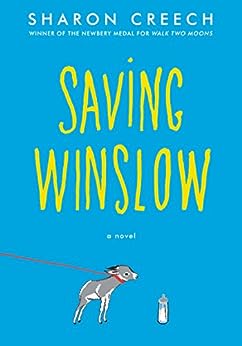
Little Miss and I finished The Boxcar Children: Surprise Island this past week and have not started a new book yet. She’s reading Saving Winslow by Sharon Creech on her own or I read some at night.

I also ordered her her own copy of Fortunately the Milk by Neil Gaiman and she breezed through most of that on two car rides this week. I thought she’d love to hold the book and look at the photos since we’ve mainly listened to it and the other copy we have is my son’s. He’s very possessive about it because that’s one of the main books his dad read to him when he was little and it’s a core memory for him. She was happier when she opened that book than when she opened a stuffed toy I picked her up this past week and if you knew Little Miss, you would know she’s obsessed with what she calls “stuffies.” I wish I had taken a photo of her holding that book and jumping up and down.

What’s Been Occurring

Things were crazy last week and I wrote about it in yesterday’s post if you want to check it out.

Writing it all out here again would be tedious, traumatizing and exhausting so I don’t think I will.

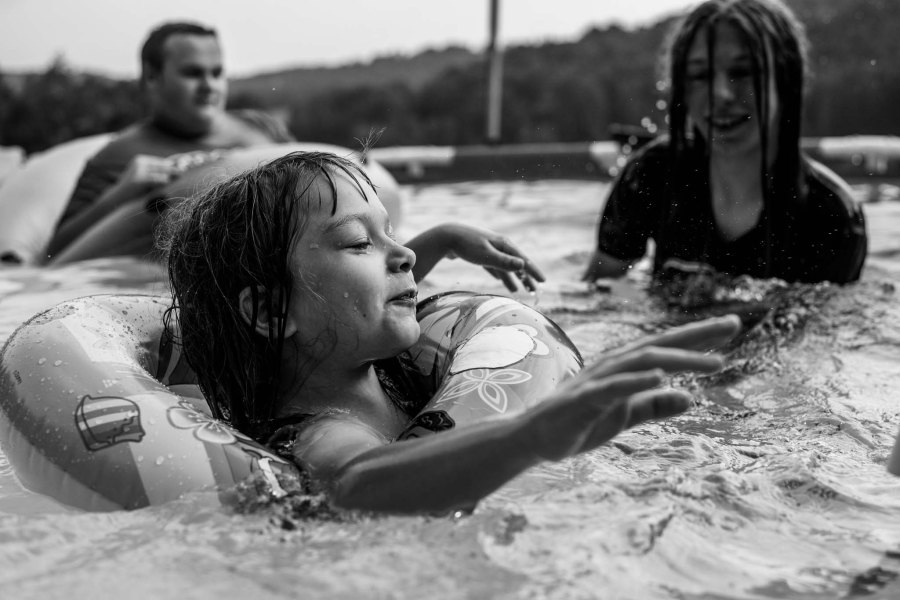
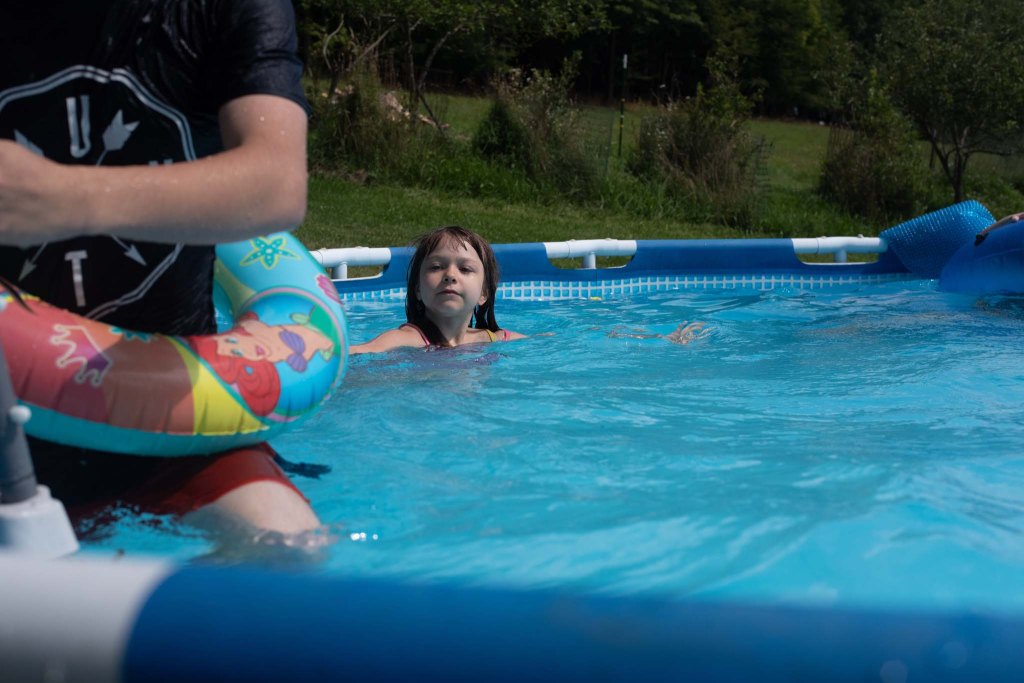
Photos from Last Week

What We watched/are Watching

I watched All About Eve and will have a post about it and Monkey Business for my Summer of Marilyn feature this week. I also plan to watch The Misfits and write about it. that will close out my Marilyn Monroe feature for this summer and then Erin from Still Life, With Cracker Crumbs and I will be joining together for a fall and winter feature of movies that I will update you on later.

This week I also clamored for comfort watches like All Creatures Great and Small (the new one), Anne of Green Gables from 1985 (Which Little Miss and I are making The Husband watch with us), and Newhart.

I will probably watch a lot of those same shows this week.

What I’m Writing

I’ve been working on Gladwynn Grant Takes Center Stage off and on and I hope to write more this week but, again, my plans have been all over the place. I also have several blog posts started that I hope to finish.

Last week on the blog I shared:

Blog Posts I Enjoyed This Past Week

I didn’t have a lot of time to read blog posts this week but here are two I enjoyed:

Hamelette’s Soliloquy: A Sunshine Blogger Award  

Mama’s Empty Nest: Tuesday’s Tour: Land of Sculptures

Now it’s your turn

Now it’s your turn. What have you been doing, watching, reading, listening to or writing? Let me know in the comments or leave a blog post link if you also write a weekly update like this.