
If you’ve been following along I have been watching The Thin Man movies with William Powell and Myrna Loy.
We are now up to the fifth movie in this six movie series, The Thin Man Goes Home, which was released in 1944, ten years after the first one.
You can find my recaps/reviews of the previous four movies here: https://lisahoweler.com/the-thin-man-movies/
In this installment, Nick Charles returns home to where he grew up and where his father thinks he’s a failure and roaring drink. He is a not a failure, but he has, many times throughout this series, been a roaring drunk.
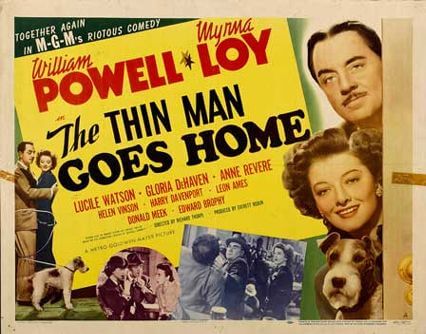
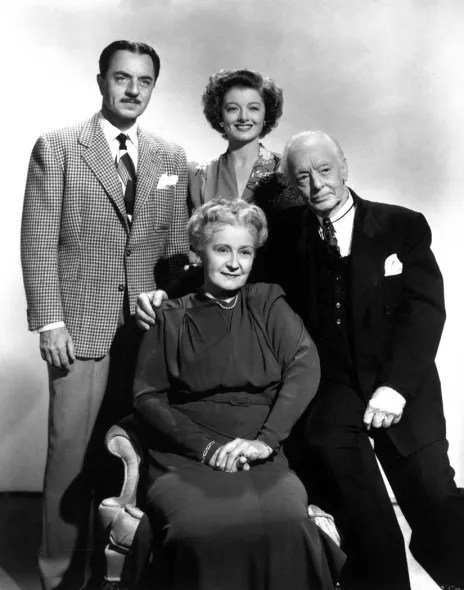
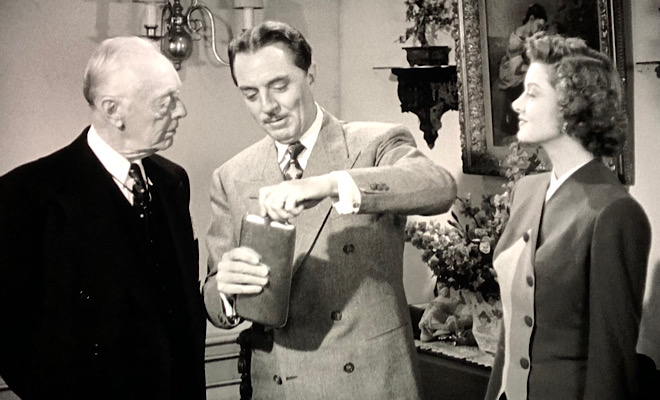
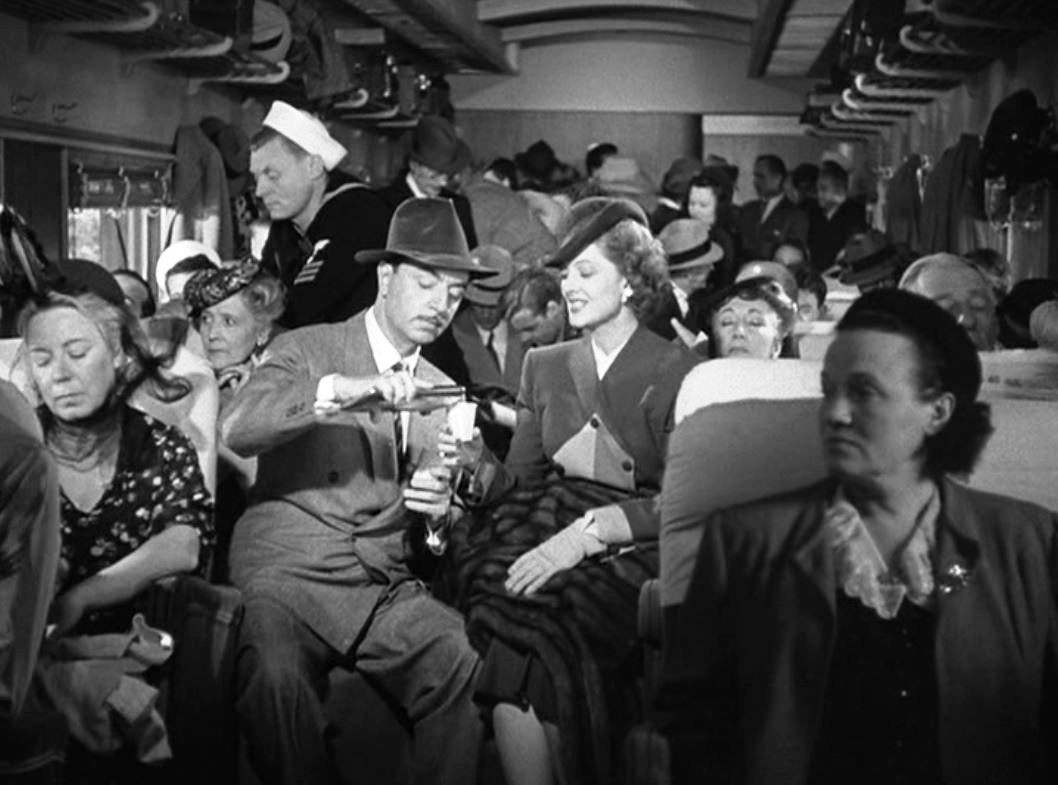
His father, played by Harry Davenport (I love him in anything I see him in) has not been impressed by his son’s detective endeavors. He wanted his son to become a doctor. Nick is attempting to change at least his drinking ways, which is why on the train to see his parents he is drinking apple cider instead of whiskey, or whatever it is he usually has in his flask.
While home, Nick, of course, gets mixed up in a mystery, which puts his job on full display for his disapproving father.
Lucile Watson joined Davenport, portraying Nick’s mother.
TCM describes the Thin Man movies as being about a “sophisticated married couple with a knack for solving murders,” and I guess that works but they are so much more. There is witty banter between Nick and his heiress wife Nora, quirky characters, a cute and funny dog, slapstick comedy, and quick little quips that sometimes make you gasp from the audacity of the writers to slip that in there.
This was a fun movie, even though they wrote Nick Jr. out of it by saying he had to stay home to attend kindergarten.
I read a quote from Myrna Loy that the movies after the second weren’t very good, but I actually liked this movie more than the third. Adding Nick’s parents in was a good decision and added a new dynamic and new life to the franchise, in my opinion.
The jokes about Nick’s alcoholism were rich in this one, especially when he arrives home and tries to fix an old desk for his mother while his father is out. Part of the desk falls, hitting him on the head, and knocking him down on his face on the floor. Of course at that moment, his father and believes he’s been on yet another drunken binge.
There are always jokes in these movies about Nick drinking too much but this time around his family is appalled by the drinking, instead of encouraging it, which Nora tends to do.
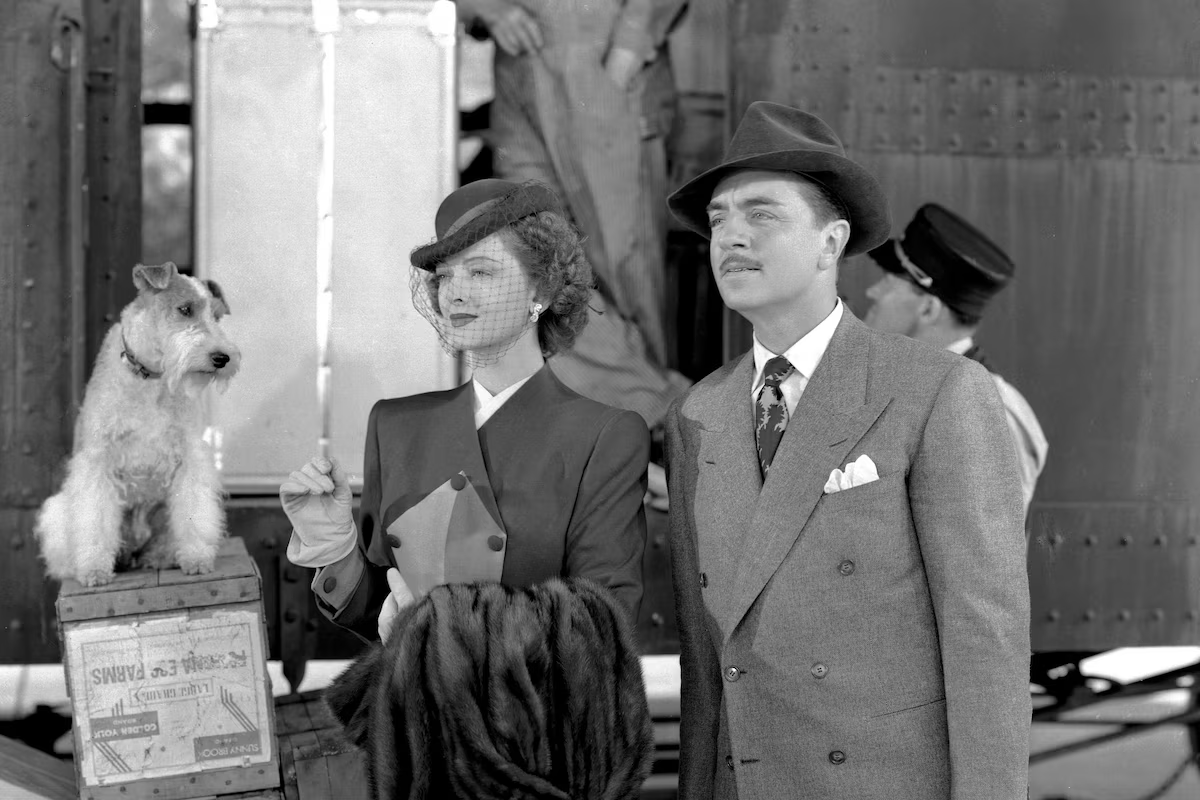
We start the film on the train with Nick, Nora, and Asta on their way to New England to see Nick’s parents and celebrate his birthday.
The reunion is full of funny moments and the funny continues as people in town start to hear that Nick is home and circulate rumors that he’s there to solve a case.
Edgar Draque even tells his wife Helena that they must leave town immediately after she goes and acquires painting by local artist Peter Berton. It won’t be until much later that we find out why that painting is important and not until Nora buys the painting for Nick’s birthday before Helena can get there. Nora thinks the painting, which features a windmill outside of town, will remind Nick of good times he had at the windmill as a child.
The artist of the painting arrives at the Charles’s home that night, starts to confess something, but is shot in the back before he can finish his sentence.
Things roll on into total chaos from there and I found that chaos a lot of fun. It was a complex case with a solution that was actually very ahead of it’s time, in my humble opinion.
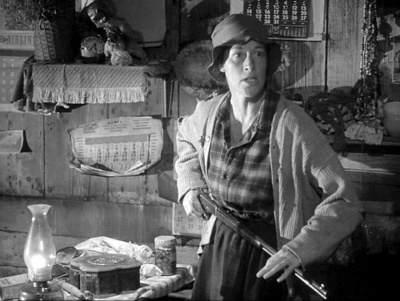
The woman who played Crazy Mary (Anne Revere) was amazing, by the way. There is a scene where she talks about something very emotional that happened to her and she blew me way. It was one of the few serious moments of the film and it had tears welling up in my eyes. She was the mother in National Velvet and was in a ton of other movies, in case you have never heard of her. She was an amazing actress.
This was the first of the series not to be directed by W.S. Van Dyke, since he died in 1943. Instead, Richard Thorpe directed it and was familiar with William and Myrna after directing them in Double Wedding in 1937.
I watched Double Wedding this past weekend and didn’t enjoy it as much as their other films, but that’s probably because I am so used to seeing them as Nick and Nora.
Myrna had been away from the screen for three years when the suggestion to make the film came up. She had been busy with the home-front war effort and a marriage to car-rental heir John Hertz in New York. Thin Man fans wanted another film and were horrified when studio executives let it slip they might replace Myrna with Irene Dunne.
“The fans wanted Myrna, and they didn’t want anyone else,” Powell later recalled. “And I wanted Myrna, too. Besides the favorable reception our pictures always received, I must say it was certainly a pleasure to work with her.”
The cast and crew was pleased to see her too, William said.
“I’ve never seen a girl so popular with so many people,” he said. “Everybody from wardrobe was over the set, everybody from makeup, everybody from property, everybody from miles around, it looked like.”
While the characters were based on Dashiell Hammet’s characters, the screenplay was written by Robert Riskin, Dwight Taylor, from story by Riskin and Harry Kurnitz.
The couple’s dog, Asta (real name Skippy), was back for the movie and provided his usual comedic relief.
Up next I will be watching the final movie in the series, The Song of the Thin Man.
Sources/Additional Resources:
https://www.tcm.com/articles/81422/the-thin-man-goes-home
https://www.deepfocusreview.com/reviews/the-thin-man-goes-home/
