I’m going to preface this post with a clarification – I am not whining about not making money or book sales. I’m just rambling to blog friends about some disappointments I’ve experienced and lessons I’m learning along this writing and life journey.
I have a love-hate relationship with social media and lately, that relationship has tipped into the hate category more than the love.
As a self-published author, I need to have some sort of presence online if I want to sell books and that includes social media. I started writing my fiction books for fun and to escape anxiety and depression. I shared them here on the blog, chapter by chapter, again, as an escape and for fun.
Selling books was secondary. When I saw that I might be able to provide a tiny amount to the monthly family income, I became more interested in selling. Unfortunately, to earn any money as an independent author you need to be willing to put out more money than you earn at first and when you already don’t have a lot of money, that’s a definite challenge.
I’ve been pushing posts and sharing about my books fairly consistently for five years now (while also trying not to always be pushing books) and in the end it really hasn’t mattered. Every month I make about $40 on book sales. Previously I would make between $10 and $20.
I work hard for that $40 but it’s really not a good return on all the time and money I’ve put into my books. A lot of it’s been – dare I even say it – a waste of time. One of those things are the posts I make and share to Instagram.
I have a lot of fun making memes, laughing over them, sharing them, and meeting people on social media through them. I don’t find everything I’ve done online a waste of time.
I’ve met some of the coolest people.
I’ve had some amazing opportunities.
I’ve found a way to distract myself from depression and anxiety that doesn’t involve drinking or eating myself into oblivion.
There is some good that has come from the time I’ve spent online.
A lot of good.
But I’ve also spent way too much time on things that haven’t mattered and aren’t helping my soul.
Balance is definitely key when it comes to social media.
Spending too much time on there can eat up your soul.
Spending too little time means you can’t connect and meet more people who might be interested in buying, or at least reading, your book.
This weekend I decided my soul was more important.
Now, this isn’t an announcement that I’m leaving social media, never to return. It isn’t even an announcement that I’m taking a break (even though I’m taking a small one that doesn’t involve going cold turkey but does involve backing off a bit). It’s just me sharing some thoughts about how social media has changed so many of us, how draining it can be, and how it steals a little part of our soul when we get too wrapped up in it.
I have seen people change as they become more popular on social media.
They’re more willing to compromise their values and morals as they become popular.
They often seem to be more interested in gaining followers, pats on the back, and overall attention than they are in sticking to their beliefs on a variety of issues. I get it. That shot of endorphins when someone likes a post or a lot of someones likes a post is addicting. Been there. Done that.
I have just decided I’d rather be unknown and poor than have to pretend I am someone I am not, to completely overshare every aspect of my personal life, or to compromise my integrity to get those likes.
The bottom line about my relationship with social media is . . . it’s complicated but I have my lines drawn and I intend to do my best to stay within those boundaries.
Maybe you’ve never heard the term, but I bet you’ve done it.
And if you haven’t done it, then it’s been done to you.
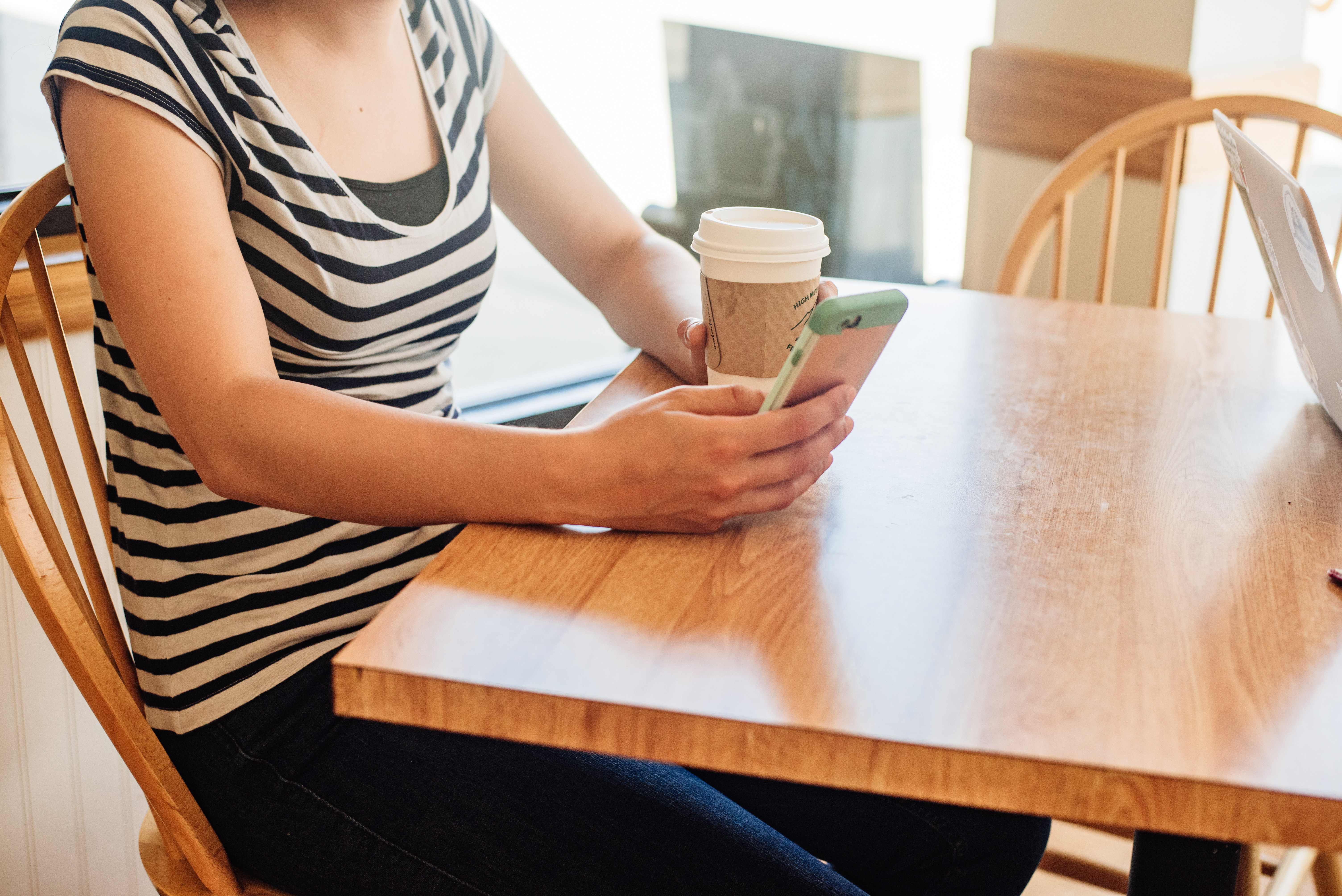
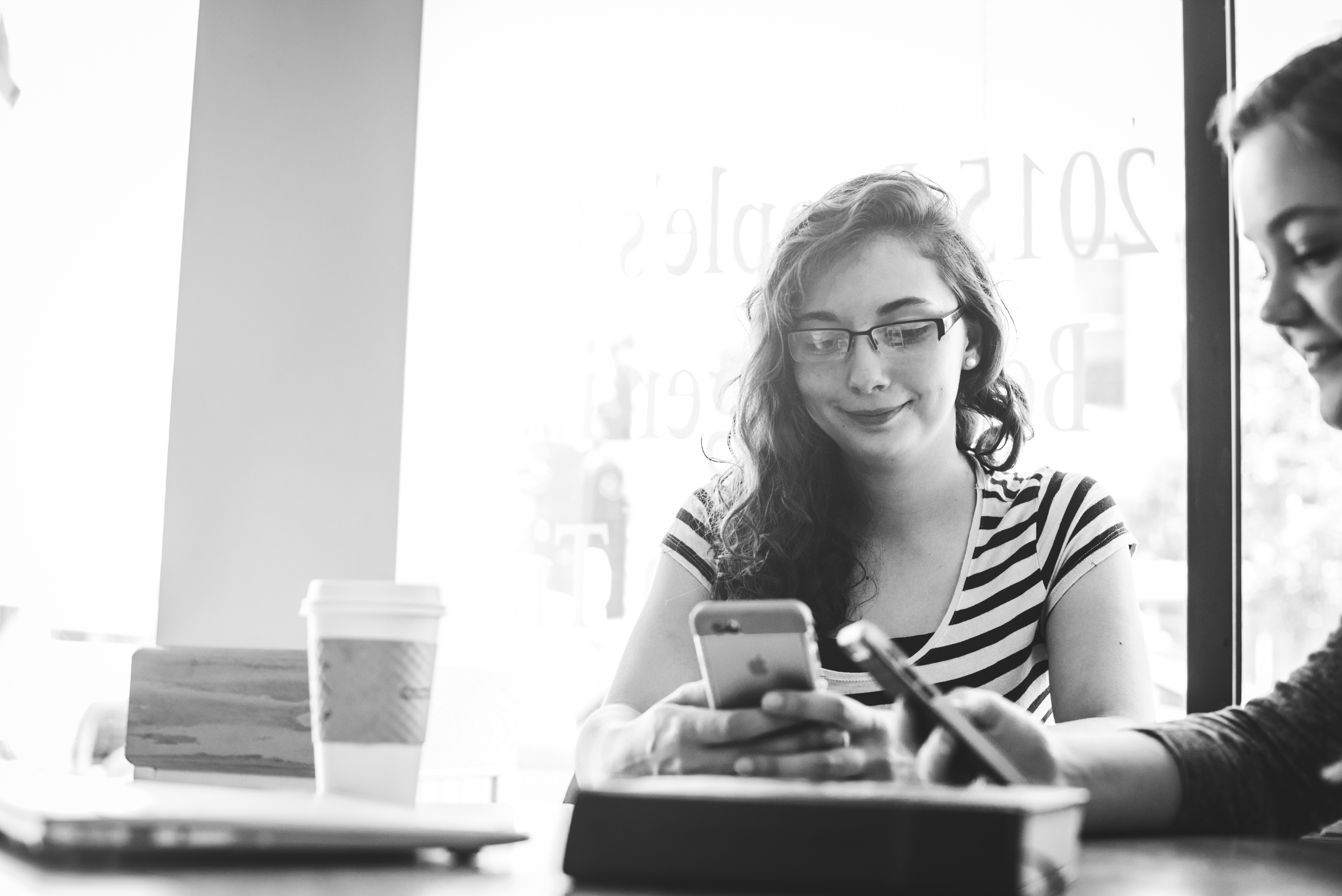
According to Psychology Today, phubbing is “the practice of snubbing others in favor of our mobile phones.”
We can all do it, without meaning to, but then there are those who do it because they are simply so addicted to their phones they don’t know how not to do it.
I knew someone with an addiction like this at one time. Honestly, I got tired of being shown I was not important by how often the person surfed on their phone while I was sitting in front of them. They could not stop touching it. It became very clear to me I was a complete bore to them and nothing I said mattered when they even started answering phone calls from people in mid-conversation with me and proceeded to start a conversation with that person.
I remember them saying when they picked up the phone, “No. No problem. I’m just at a friend’s house.” And then continued to have a conversation like I wasn’t there for the next five to ten minutes. They hung up and went back to scrolling Facebook while I sat across from them, bewildered why they had stopped by. The same person couldn’t even handle walking from the soccer field to our cars without scrolling and showing me cat memes as we walked while I tried to ask about their day.
When I brought this up to the person, finally, after a year of being treated this way, their answer was “I’m not going to apologize for trying to escape the stresses of my life.” I said, “Was I the stress? I was sitting across from you when you were doing it” I didn’t get an answer to my question, but this person wasn’t going to apologize and saw nothing wrong with their behavior so we haven’t spoken in about nine months, not that we were “talking” before then either.
So what are we saying when we do this to people? We’re telling them whatever is on our phone is more important. Cat memes, the news, the latest fashions, celebrity gossip, politics, and trite comments on social sites are all more important than the person across from us. In that case, why is the person across from us even there? Why are we even there?
I think there are those of us who would crawl inside our phones and live thereto escape life if we could. I get it. Sometimes life really is stressful and we feel like we have to medicate to handle it. Sometimes we medicate with drugs, sometimes with alcohol, sometimes with food and in this day and age, we medicate with escapism. No matter what we use, we are filling our lives with things that really won’t actually fill the voids in our lives or the holes within us. And while we are medicating ourselves we are pushing away people who really care about us and what to actually communicate with us and we are pushing away God.
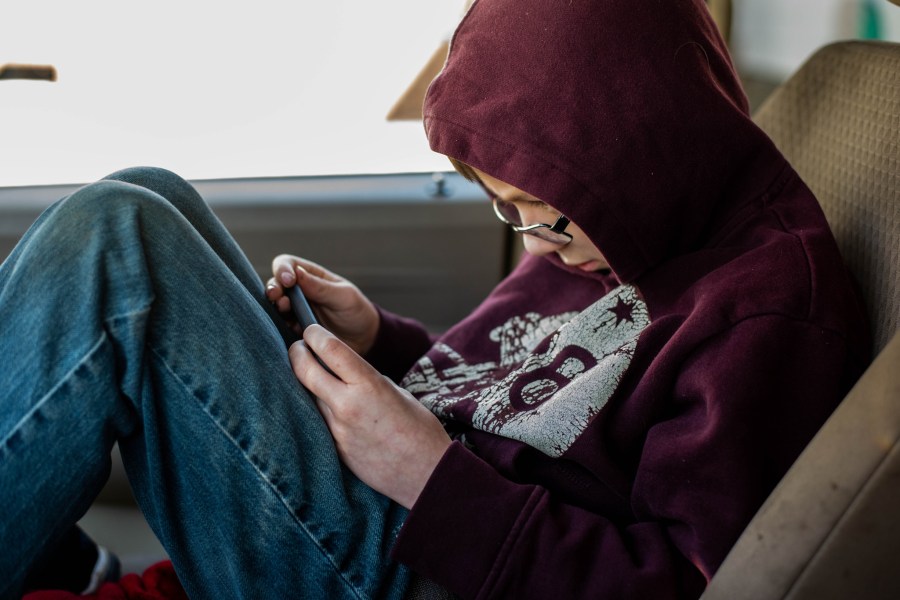
All photos by Lisa R. Howeler
I’ve fallen into the trap of burying myself in social media to avoid the stress of life. That may be why I accepted the phubbing that was done to me for so long, but when it hit me how much I was missing by being completely absorbed in my phone – in things that will not matter in the long run — I put the phone down. I looked around me and realized how pervasive technology addiction had become in our society. Sitting at soccer practice one time, I looked down an entire row of parents, all sitting, their necks bent over their phones, their fingers simply scrolling, while their children practiced soccer in front of them.
None of them talked to each other or looked at their children. They were like robots working for the tech companies, lining their pockets with their views and their purchases and their “hits.” It made me sick to my stomach and it made me sick to my stomach that that had been me at one point, though for a more brief time than some.
The sad thing is that eventually the person who you chose your phone over stops trying to interact with you and also stops caring if you interact with them.
That’s what happened with the person in my life. I realized they could care less that I cared about them. They were more interested in their phone, in what they could pin on Pinterest, and what photo of their latest diet they could post on Instagram. I stopped wondering how they were, what they thought, or what was going on in their life.
Honestly, I do still wonder about the person from time to time, even pray for them, but the idea of trying to engage them in friendship again gives me a sick feeling in my stomach. The human part of me doesn’t want to be rejected again but I also realize now that if that person had cared about me, they would have listened when I told them I felt their phone was more important than our friendship, instead of saying “I’m not going to apologize.”
Hopefully, the person has since resolved this issue and now shows family and other friends they do care about them, by putting the phone down when talking to them. I know where my place was in their life, thought, and wouldn’t step back into that place again for anything.
photo by Lisa R. Howeler available on Lightstock.com
The one good thing that came from that situation is it showed me how addicted I had also become to social media and how it was causing me to ignore people and activities in my life that were not only more important but more edifying to my overall life. After the repeated phubbing done to me, I worked harder not to do it others and I also cut back on social media, even deleting my Facebook account for four months. I realized that social media-based relationships were completely unfulfilling to me.
Since then I’ve decided to try to implement some changes to my life to help reduce technology addiction, as well as phubbing. Some of them I had already implemented two years ago.
Changes I plan to implement or have already started to (some of these were suggested from an article about phubbing on Healthline, others simply from various sites, and others simply from my own ideas):
Making meals a place where no phones are allowed (we already do this at my parents when we have Sunday dinners, only allowing my dad to take a photo of dinner before we start, if it is a particularly lovely looking dinner that is);
Leave my phone behind for some trips, though this always makes me nervous because I worry someone will need to reach me in an emergency;
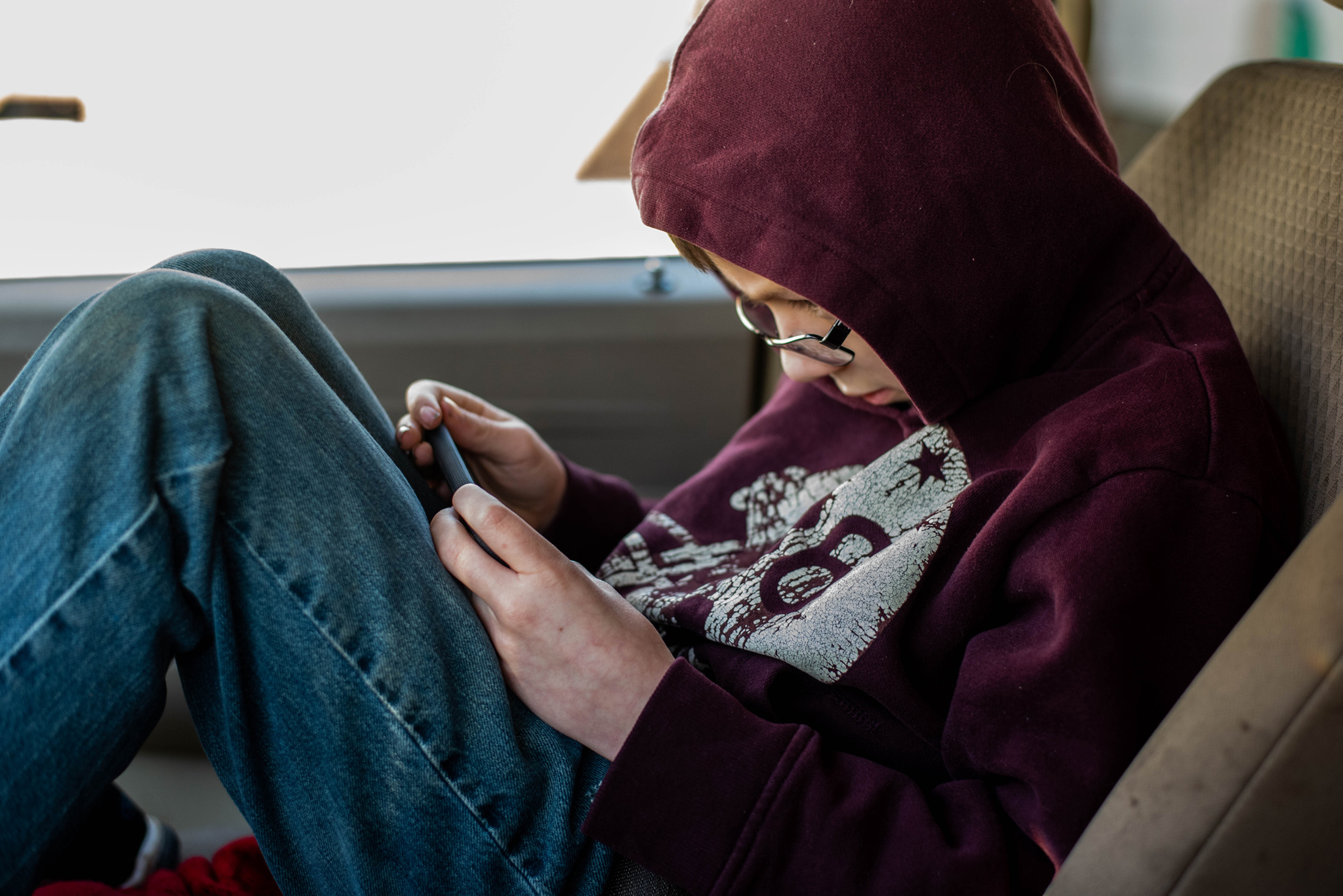
Institute a no-technology hour which has become even more important for me to do now that my son has his own phone and is showing signs of addiction. We’ve done this before and have really enjoyed the quiet, the increase opportunity for creativity and the way we can connect on a deeper level as a family;
Make people charge their phones or devices in a central area of the house, which will encourage them to engage with others when they come to hook up their devices. I have not tried this yet, but since reading about it earlier today I absolutely want to try it.
Changes I made two years ago (maybe more), include:
No Facebook app on my cellphone, so the temptation to look at it while talking to someone in person is gone. I’ve also stepped this up and removed Instagram and YouTube as well. Sometimes I even shut the sounds off to keep the dinging notification sound of texting from triggering dopamine and causing me to want to see who has sent me a message. There are actually only two people who message me regularly: my brother or my husband. Any other messages I receive are people who want something from me and then ignore me all other times of the year.
No looking at social media at least two hours before bed (somedays I do better at this than others, especially if there is a breaking news story unfolding.)
No devices or computer at all, other than my Kindle, up to an hour before trying to sleep (this works only when I’m not working on a book because I tend to write a little before bed since it is one of the only times during the day I have to write.) I really like this one when I stick to it because it helps me slow down my thoughts and relax more.
We can implement all the changes to our technology habits we want, but until we look at how our choosing our devices over people we love affects the psyche of those people, we probably won’t implement any changes.
We have to ask ourselves, in the long run, will what we read on Facebook matter when we are looking back on our life at the end of it? Will the latest cat meme, the latest celebrity gossip, or the latest political rant by your dad matter at the end of your life if it caused you to lose your connection with someone in your life who wanted to connect with you in person?
I think for most of us, the answer to those questions will be ‘no.’
I’ve decided the more I’m off social media, the more creative I can be, which is why it looks like another social media detox is coming up in the next week or so and it may last 30-days like I did earlier this year.
Actually, saving my creativity isn’t the only reason for dropping off social media – saving my sanity is more important at this point. In May I actually deleted my Facebook account, except for a ghost account to keep my blog page on there. Ignoring my better judgment, I went back on at the end of the summer and I can’t see that it has improved my life much at all.
When I slip into a depression slump I find myself scrolling through social media too much and when I scroll through social media too much I don’t do things I need to do or really want to do, like write my book or write a blog post or take photographs or – blah – clean the house. I just end up a depressed, moody slug sitting in front of my computer. I also end up angry, bitter and frightened for my childrens’ future.
This past spring I did a social media detox and that’s when I started writing‘A Story to Tell’ and decided to publish it as a weekly serial on here and then as a Kindle book. The success for me was simply how writing the story, and sharing it on my blog, was a distraction from social media, “news”, and from some challenging relationships in my life.
When I go on social media, I end up so wrapped up in the nonsense I read that I neglect the parts of my life that actually bring me joy — especially the more creative parts.
Social media is an addiction for many people. If you think it isn’t for you, do what I did last December and focus on how often you reach for your phone or computer to log into social media each day. Notice how many times you log into social media when you’re bored, lonely, procrastinating or avoiding real life (or certain people). I bet it’s more than you think because I know it was for me.
Another important aspect of learning how social media affects you is to notice how you feel after you sign off social media, or a news site. Do you feel happier? I’m going to guess the majority of us can’t say that we feel anymore enlightened, elated, or hopeful about life after we’ve scrolled through a social media site. On the contrary, we probably feel like the world is on fire.
For creatives, it’s important to ask yourself if social media supports or hinders your creative flow. I’ve personally found that excessive social media use rarely supports creativity. In fact, for me, the constant digital noise I once engaged in silenced creativity altogether.
How can you think of new ideas, or use your imagination, when someone, or something, is constantly in your ear telling you what you think and who you are? More than once in the last two years, I have read about the need for all of us to seek more solitude and shut out the noise of the world around us.
Silence can facilitate daydreaming and daydreaming supports and strengthens our imagination. Imagination leads to creativity and then creativity leads to joy for even the most left-brained person out there. Creativity isn’t always about the arts . Creativity is also important for technical thinkers out there who need time create plans for projects or lists for completing whatever it is that helps them feel more organized. For many of us, organization helps us feel more grounded. Not having the time to create that organization because we are distracted by social media can leave us feeling discombobulated.
I have asked myself why there were so many great writers hundreds of years ago and less of them today? I have a feeling it is because hundreds of years ago the only thing people had time to do when the sun went down was think and daydream.
It’s not that social media is all evil. It connects us with new people, new ideas, and different worlds. It helps us reach people in a way we never could before. The evil part of social media is that we have allowed it, and what is shared on it, to distract us to the point that we have pushed aside activities that could actually further our society. Social media has no power over us that we don’t give it and many of us (me included) have given it awhole lot of power, let me tell you.
I don’t have any proof that inventions and innovations have decreased since the Internet and social media took over the world, and the exact opposite may be true in some fields, but I wonder if cures for cancer, or solutions to climate change, would have been found already if half of us weren’t scrolling social media; watching the circuses that are our congresses and parliaments; judging our neighbors; tsk-tsking the family member or acquaintance in the middle of a divorce who has decided to write about it on social media; comparing ourselves to every other mother, writer, photographer, human being on the planet; and trying to change ourselves to fit some imaginary ‘normal’ in society.
Think about all the positive changes we could have made, not only in our own personal lives but in the world in general, if we weren’t staring at cat memes on our phones all day long. I have a feeling Satan knows that and has enjoyed dangling stupidity in front of us so we wander off the path we should have been taking all along.
I know some of my blog readers aren’t even on social media (God bless you!) and some were on and promptly logged back off again. What’s your experience with social media? Do you find it stifles your creativity or productivity? How do you handle that? Are you better than me at balancing social media with your real life? If so, I’d love some pointers about how you do it. Let me know your thoughts in the comments. The last time I wrote about social media (Facebook for most of us), I had some really fun and insightful comments.
The mental noise stirred up by social media is deafening – so deafening we can’t hear ourselves think. Instagram, Facebook, Twitter, Pinterest are all blaring in our ears and the words they are screaming are “Look at me! Look at me! Look at me!” Every one of those sites wants our attention and that means our focus is divided in at least five different digital-based ways throughout the day. Add to that the attention we need for our jobs and our families that doesn’t leave much time for us to think or catch our mental breath. It certainly doesn’t leave much time for ourselves, or more importantly, God.
Last week I found myself caught up in scrolling too much. I scrolled this site and that site and flipped from this app to that app. Throw in some family, and other, life stresses and my brain was practically buzzing by the end of the week, and not in a good way. My thoughts were flitting from one quandary to the next, every few moments. It was like I was turning the channels on the TV or flipping through YouTube videos, only it was my panicked thoughts.
Sitting in the bathtub in a near panic attack from the inability to focus on one thought at a time, I knew what I had to do. I picked up my phone and started deleting apps. I deactivated Facebook, took Instagram off my phone (Facebook hasn’t been on my phone for over a year) and then slid the phone far away from me and picked up a book.
My brain is a jumbled mess on speed even without social media. Throw in a thousand photos or articles at me a day about God knows what, and my brain overloads and eventually shuts down, sending me to a corner, hyperventilating and repeating “There’s nothing like silence” over and over again. Honestly, our brains weren’t made for social media. Our brain can’t comprehend so much information being shoved at it at one time.
When I first started all this social media nonsense, I could handle a few hours of it a day before my brain filter broke and I had to log off. Eventually, I could only be on a couple hours a day and then it was an hour and now I can barely handle five minutes (some days much, much less) before I simply log back off again. Everyone has an opinion and I’m tired of having to muster up the mental energy to either agree or disagree with that opinion. So often I can’t even manage to care what someone else is thinking about or doing, let alone care what hundreds of people think about an issue.
Detoxing from social media helps my mental health immensely, but it also increases my creativity and productivity. Imagine what we could all accomplish if we turned over our phones and computers more often – or at least silenced the social media monster.
_____
In need of stock photography for your blog, event, church, or other organization? You can find my stock images at Lightstock.com or Alamy.com.
Some people probably even think you have died. You haven’t posted in a week and you’re not liking their posts to show them you still care about their thoughts (because this is the only way people communicate or feel validated anymore). They don’t see you in person because, well, you’re not online so they figure you might be depressed (and who wants to deal with depressed people? Yuck!) or sick or mad about something and they don’t want to know about any of that stuff.
If they do see you in person they tell you how much they love the photos of your kids, which you stopped posting several months ago, and then stare awkwardly at you because, since you no longer post status updates, they don’t know what is really happening in your life. I mean, what if it is bad? Then they’ll feel bad they didn’t know. And what if it is good? Either way they’ll be trapped listening to you share about your life without the ability for them to simply click like and scroll by you so they can quickly move on to the meme with the kitten clinging to a limb (aaaawww! Kitties!)
I thought leaving Facebook back in December would make in-person interactions with friends become more of an occurrence and when they did happen it would be more meaningful. Such was not the case and I know it will not be the case again when I walk away from Facebook again in March.
I accidentally restricted my posts from someone even before I left Facebook and they told me they had no idea what was going on in my life because they couldn’t see my status updates. They told me this on messenger. Because apparently picking up the phone would have been way too mentally taxing. Can you imagine if they had had to speak to me in person? Why I just shudder to think of the horrors that might have entailed. Actual human interaction? Ew.
Thankfully they sent an apology for their actions via messenger to a family member of mine. I feel much better now, knowing they still don’t care enough to pick up the phone or actually speak to me about what’s actually happening in my life, but hey, at least they can talk to a relative about me – via text.
So, yes, I went back to Facebook after my break from it in December and instead of being excited and feeling refreshed to handle it all again I almost immediately felt annoyed. The break was a wake-up call to me to how vapid and ridiculous Facebook is.
The first week or so I was back on I watched someone rant about people complaining about the walk to their car in the morning being cold. People had no right to complain about how cold it was to walk to their cars because by doing so they were clearly spitting in the face of every farmer in the world that has to go out at 4 a.m. to milk the cows in such awful cold. I wasn’t sure of the logic behind this post but I guess the poster wanted us to be sure that we remembered that farmers are suffering in the arctic cold. In other words all they had to write was: “Remember that farmers have to go out in this cold, no matter what. They don’t have a choice. Think of them and say a prayer.” That was way easier than the virtual smackdown that was clearly unnecessary but is a common occurrence on Facebook, where someone is always more important than someone else (and don’t you forget it because if you do they’ll be sure to remind you in a passive aggressive meme.)
Then there were the passive-aggressive, leading questions.
“Does anyone know why school is even closed today?”
The person could have easily written: “It’s stupid that school is closed today” because that was obviously their opinion in the first place or they wouldn’t have added “EVEN” to their question. The leading questions dripping in sarcasm are always fun to read – over and over and over again throughout our feeds.
And, really, that’s what my disdain for Facebook comes down to these days. Ninety-eight percent of what is there is unnecessary. I’m not only preaching to other people here. I’m preaching to me too. Almost everything I have posted there in the last ten years (my word! Ten years?!) has been much of the same. Looking back at my posts over the years is like looking at my journals from seventh grade. It’s definitely cringe-worthy; like mental fingernails on the chalkboard of my immature past. I would definitely say the site has brought out the worst in me, the grumpy, judgmental and complaining person I used to keep locked in my private, tangible journal. For many of us Facebook has made us think complaining about everything under the sun should be a normal part of our life when, newsflash, it shouldn’t.
Choosing to no longer log on to Facebook every day or maybe even every week has been a decision I have felt I’ve needed to make for a long time. I can’t imagine how much further in life I’d be if I had never logged on to the site in the first place, all those years ago. It will be interesting to see where life will take me as I plan to log out and leave it behind for a long while, if not for good.
For now the breaks from it have taken me behind the scenes of the real-life walking dead (in some ways) and out back into the land of living, where I am able to seek out new friends who can still talk to me even if I don’t post for everyone to see which emotion I’m feeling at any given moment.
When bloggers and others talk about a social media break let’s be honest, we know they (we) are talking about Facebook. As far as social media goes, Facebook is the biggest time suck for most people. Not only that but Facebook has more information on you than anyone else and their tentacles reach into so many facets of the Internet, disconnecting from them for a while, or all together, is probably a pretty good idea.
You might be thinking to yourself, “I don’t spend that much time on Facebook” and while it may be true that you don’t spend a large, continuous block of time there I have a feeling you spend much more than you think. In the same way someone who wants to lose weight benefits from keeping a food diary, someone who is considering a break from social media should write down each time they log on to Facebook, Instagram, Pinterest or YouTube.
Photo by Lisa R. Howeler (available on Lightstock)
I bet many of you would be shocked, or at least surprised, at how often you check those sites throughout the day. You may check first thing in the morning, at lunch, while waiting in line, while waiting at a doctor’s office, while waiting anywhere you have to wait more than ten seconds, throughout your evening and before falling asleep. I would bet that there are many times you intend to log on to the site only a few moments but before you know it an hour or two or more has passed and your children are wandering to the neighbors to ask if the neighbor will cook them dinner because you’ve been swallowed by the internet.
In December I started a Facebook detox after realizing how addicted I’d become to social media. It was keeping me from enjoying life and accomplishing tasks. It was actually Facebook’s own fault that I left the site for 30-days. They sent me a video featuring various images as a celebration of the fact I had been on Facebook for close to 12 years. Twelve, time sucking, anxiety-inducing, life-wasting years, with some chances for staying connected to faraway friends and family (the only positive I could think of).
The realization of how much time I had wasted staring and scrolling, comparing and crying over things I had read or watched there hit me hard and all I could think was “how much further would I be in life without this stupid site?”
I feel almost embarrassed to admit that the detox was difficult and tested my will-power, showing me how much Facebook and it’s validation-psychology actually had a hold over me. I would have been more embarrassed if I hadn’t known there were thousands more who felt like me based on the fact that an internet search yielded page after page of links either focusing on the author’s own decision to detox or an article showing you how to do your own detox.
I’m not sure why I feel the need to offer yet another blog post offering advice about how to prepare for and succeed with a detox from social media but since all our experiences are unique I’ll offer the plan of action that worked best for me.
Write down how you plan to fill your time while you’re on the break. Maybe I’m the only one that over thinks and overly prepares (at least for some things) but list ideas of what you will do during the free time you’ll have now that you’re not logging on to social media. List things like “read that book I bought two years ago and never read,” or “stain the deck,” or “organize the bedroom closet.” Include things in the list you know you’ve wanted to accomplish but haven’t because you’ve let your brain take a walk around the block while scrolling on your phone.
Make a list of hobbies or interests you have been wanting to explore more. When you take a break from social media you’ll suddenly discover you have more free time, almost too much free time. Now that you have more free time you can explore hobbies you either used to do or always wanted to do. For me, I’ve started to learn more about cooking, delved back into sketching, and am considering archery. I’m kidding about the archery. I have no interest in that. I’m actually focusing on low-impact workouts versus picking up a bow and arrow. You never know where exploring a new hobby will lead you either; maybe even a new career.
Charge up your Kindle, or e-reader, or get a stack of actual, physical books together. Reading is an amazing way to escape from the world and your stress. I highly recommend something in the fiction genre to truly distract you from the real-life drama around us. Right now I’m reading the first in a series about a British aristocrat and her “lady in waiting” who investigate mysteries together. I’m not exactly sure when the stories take place but it seems to be the 20s or 30s. The first book is titled “A Quiet Life in the Country: A Lady Hardcastle Mystery.” by TE Kinsey. (Edited to add: I wouldn’t recommend book two. It is just dragging on and on and on. It’s a bit like being tortured in with David Copperfield in high school at this point. I don’t recommend continuing the series.)
4. Make a list of tasks you haven’t got to that you know you would complete if you put away the distractions of social media. For me this included updating my stock photography portfolios, updating this blog, updating my online photography portfolio, keeping track of what I’m eating, and cleaning my closet out. Guess which ones I still haven’t tackled, even with the social media break?
Photo by Lisa R. Howeler (available on Lightstock)
5. Call friends and ask if they want to actually meet in person. That’s right. People really can still meet in person and have face-to-face conversations. Try it while you’re on your detox and enjoy remembering the old days of actual human interaction. Personally, this has been a bit of a failure for me as my friends are too busy to meet in person right now (maybe they need an intervention for their social media addiction?), but I’ll keep trying. Their life has to slow down at some point, right? Right?!
Seriously, I’m sure we will get together in person soon. And even if you don’t meet up with friends, go out and talk to actual people. Visit a museum, visit a local coffee shop and smile at people – look at the world around you and notice some things you didn’t notice before because your head was down, looking at your phone or device. Yes, as an introvert, this particular advice is hard for me to follow myself, but I’m working on it. One little step at a time, okay? Be patient with me.
6. Find a good documentary to watch and learn more about the world. While I don’t recommend trading one addiction for another, finding a good documentary or Netflix series that teaches you about another part of the world or about those who lead a different life than you is an excellent way to expand your mind. Learning about life somewhere else doesn’t always happen on social media where we mainly associate with people we know or who are interested in the same things we are. I’ve been watching a few of these types of documentaries and two I recommend happen to be related to food.
In Search of Israeli Food is about the food of Israel and it also touches on the different cultures there and the conflicts between the Israeli’s and Palestinians. It follows the journey of Michael Solomonov an award-winning American chef who was born in Israel. He travels to Israel and meets various chefs there and also reflects on his own childhood, which was affected by the death of his brother, killed by Palestinians along the border.
Another is called Theatre of Life and it is about Massimo Bottura, the top chef in the world, who helped open missions in Italy feeding the poor with the waste from restaurants and supermarkets and cooked by world-renowned chefs. It not only shares the story of the chefs but the stories for the people who come to the centers because of their life situations.
Massimo Bottura by Gentleman’s Journal
Some other suggestions on what to do during your break (a few are repeats from above):
Go for a hike or just a walk
Start an exercise program
Take up a hobby
Clean out your closets
Declutter your house
Order and frame all photos stuck on your hard drive
Make a photo book full of all the photos still stuck on your hard drive
Paint a room in your house that you hate the color of
Start volunteering at local nursing homes
Call friends you haven’t talked to in a long time
Visit local museums
take an online class (many universities offer them for free)
So, the bottom line is this: you will be fine if you detox yourself from social media. In fact, you might have more of a life if you put the phone down, shut off the computer and simply walk away from it all for a while, or for good.




 ading is an amazing way to escape from the world and your stress. I highly recommend something in the fiction genre to truly distract you from the real-life drama around us. Right now I’m reading the first in a series about a British aristocrat and her “lady in waiting” who investigate mysteries together. I’m not exactly sure when the stories take place but it seems to be the 20s or 30s. The first book is titled “A Quiet Life in the Country: A Lady Hardcastle Mystery.” by TE Kinsey. (Edited to add: I wouldn’t recommend book two. It is just dragging on and on and on. It’s a bit like being tortured in with David Copperfield in high school at this point. I don’t recommend continuing the series.)