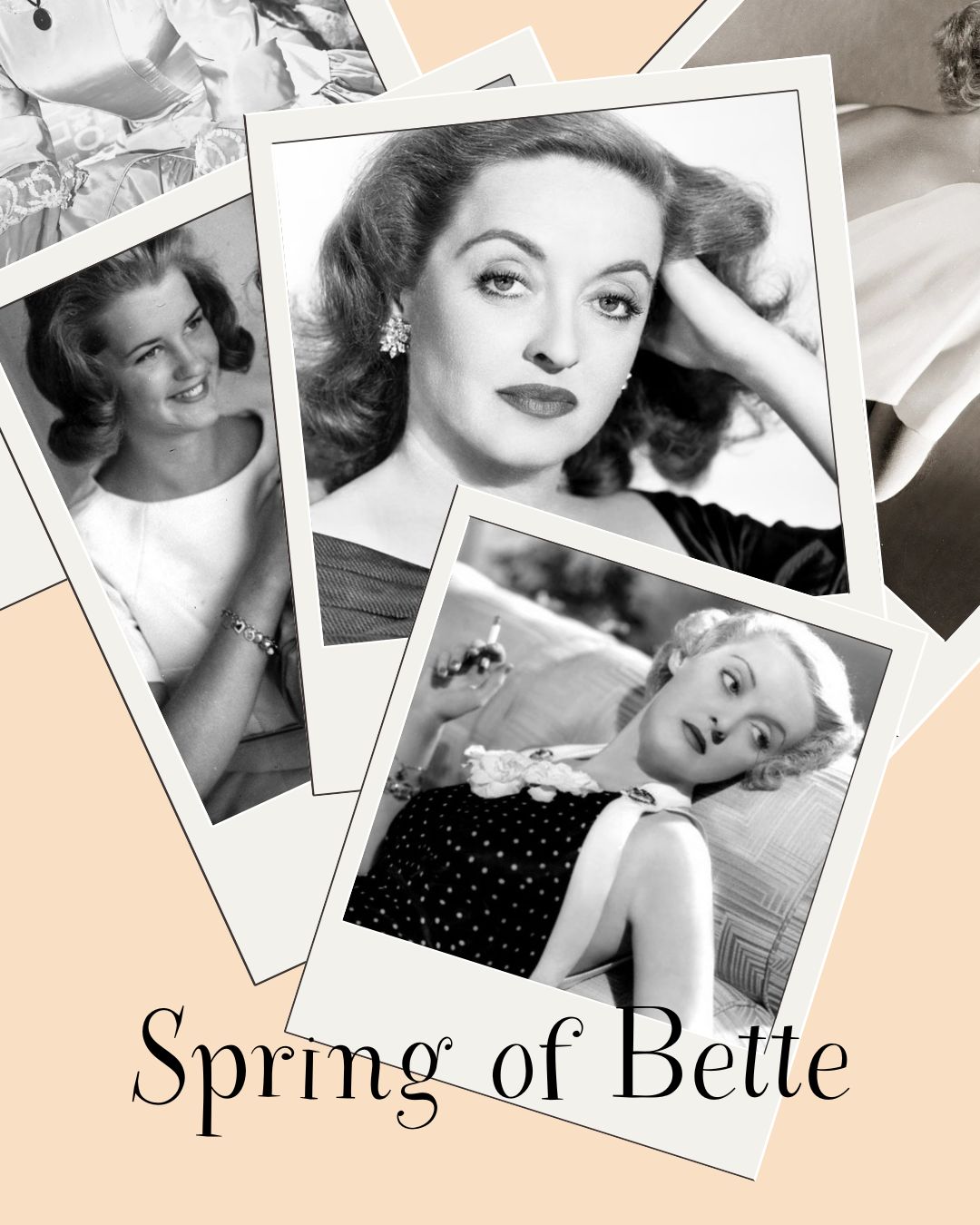
Classic Movie Impressions: It’s Love I’m After (Spring of Bette)

An arrogant, self-absorbed, womanizing stage actor and the actress who keeps putting up with him are the main characters in It’s Love I’m After, a 1937 romantic comedy starring Bette Davis, Leslie Howard, and Olivia De Havilland.

I stumbled on this one by accident while looking for Bette Davis movies to add to my Spring of Bette Davis feature and ended up absolutely loving it.
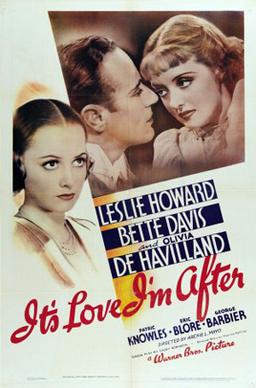
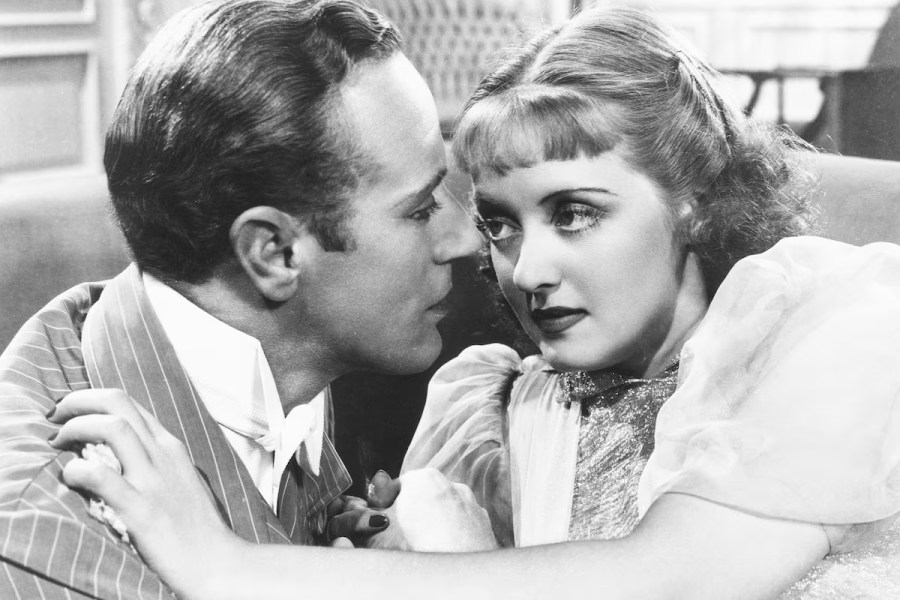
I didn’t even know it was a comedy when I started it, but when the pair started insulting each other in loud whispers during a scene from Romeo and Juliet, I knew this movie was going to be very entertaining.

And it was very entertaining, very funny, and a very nice surprise.

Leslie Howard plays the part of Basil Underwood, a famous stage actor who women fall all over.

Bette plays his co-star and on-again-off-again girlfriend, Joyce Arden, who joins Leslie’s drama with her own drama. In the beginning, we see the two sniping at each other right after their performance, going back to the hotel and continuing their arguing through the door separating their rooms.

It is at the hotel where we meet Basil’s valet Digges played by Eric Blore. Their interaction reminded me so much of Jeeves and Bertie Wooster in the Jeeves books by P.G. Wodehouse. I absolutely loved their bantering, bickering, and joking.

They have this whole routine where Digges either gives or takes away points from Basil based on his behavior, and Basil’s behavior is often not good because he is frequently running off with married women or breaking hearts, all while in a relationship with Joyce.
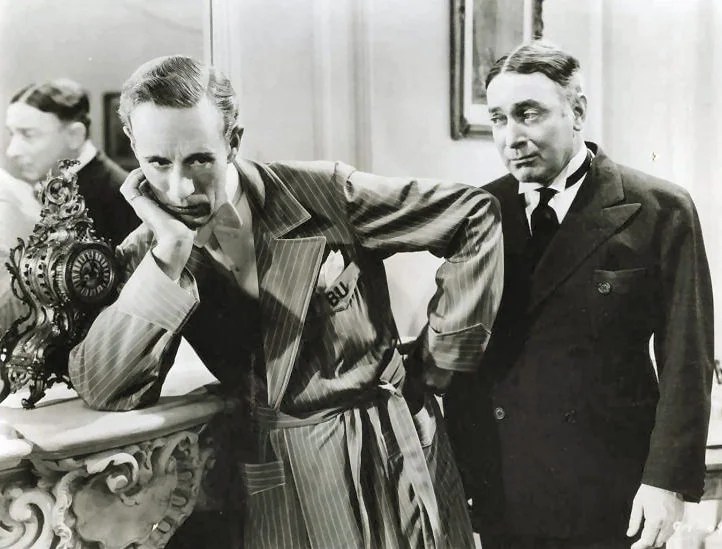
Leslie Howard and Eric Blore

Joyce and Basil have decided they are going to get married early on in the movie, but there is one problem. After their performance at the beginning of the movie, a young woman named Marcia West (De Havilland) comes to visit Basil and tells him she is in love with him. This is very exciting for him because, you know, he loves women and the attention of women. Marcia leaves without telling him her name, and Basil is left with a well-stroked ego.

Once he and Joyce have decided to marry, and Joyce has closed herself in her room to get ready to leave for the wedding at a justice of the peace, Marcia’s fiancé,  Henry Grant Jr. (Patrick Knowles) shows up and tells Basil he’s angry at him because Marica is in love with him.
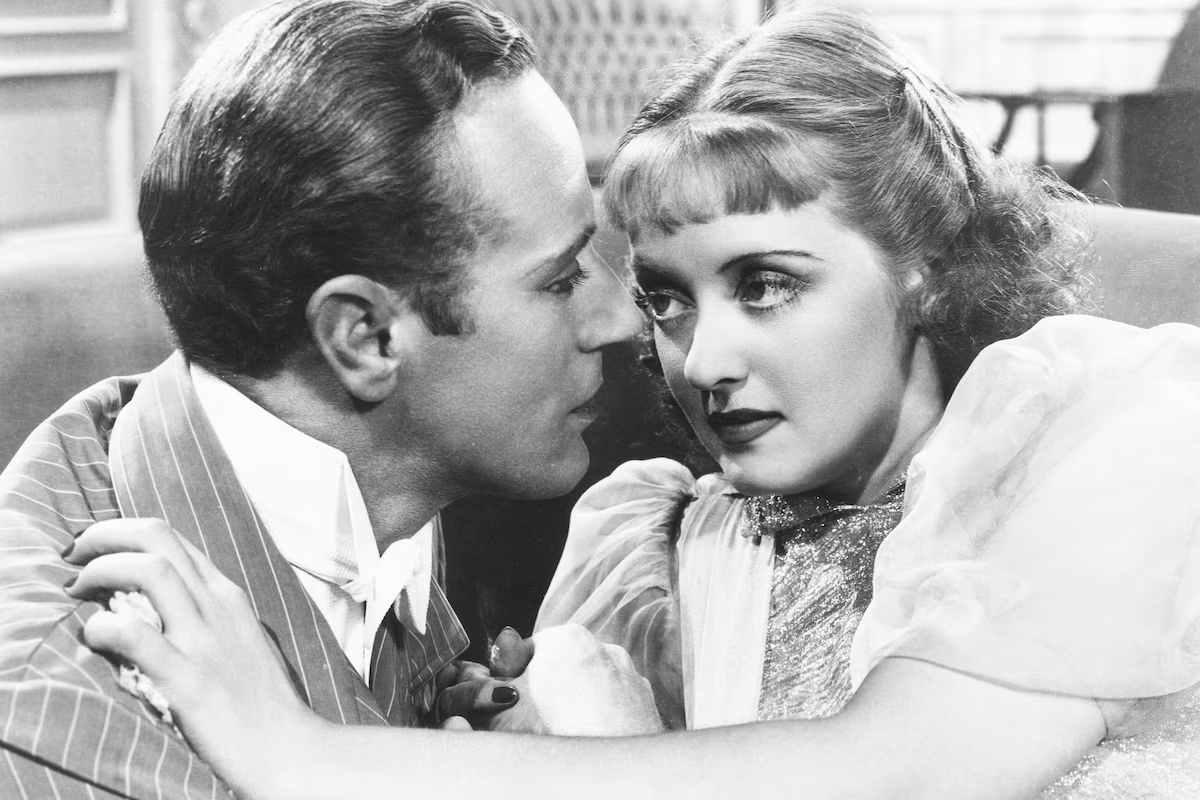
Leslie Howard and Bette Davis

There is this whole hilarious scene where Basil says the situation reminds him of a play he was once in and he and Digges act it out for Henry, who is bewildered and annoyed.

The play they act out is about a woman who is in love with a man, but the man wants to shake the woman, so he acts like a cad to get rid of her.

Henry is delighted and says that is what he wants Basil to do — come to Marcia’s family’s house that weekend and be an absolute jerk so she will be fall out of love with him.

What follows is an absolutely hilarious second act that had me in stitches. Olivia was absolutely perfect as a celebrity-obsessed woman, and Leslie was perfect as the arrogant, self-absorbed star.
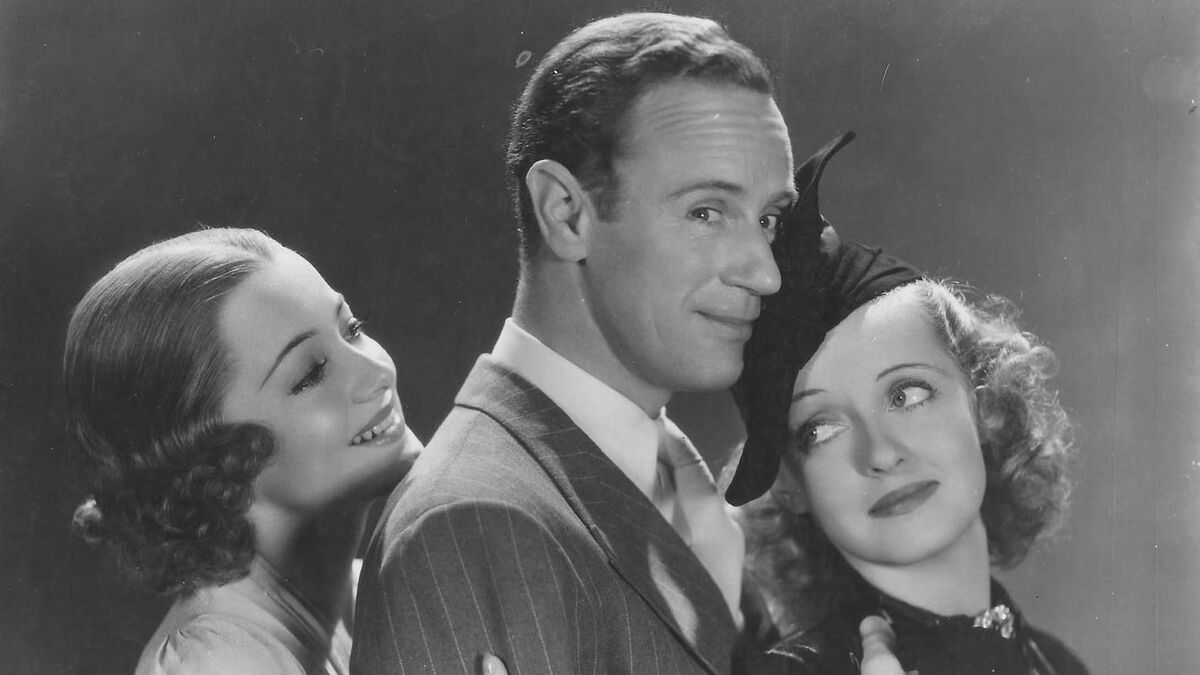
The cast was just so perfect together.

There is one line that isn’t really a spoiler, so I just have to share it — at one point Olivia says that she was obsessed with Clark Gable for a month and Leslie says, “Who’s Clark Gable?”

I felt like such a nerd when I said, to myself because my daughter was not listening, “Do you know why that’s so funny? It’s so funny because Leslie, Olivia, and Clark were all in Gone with the Wind together and in that movie Olivia’s character was in love with Leslie’s character and Clark was in a relationship with Vivien Leigh.” Then I snorted a laugh.

Gone With the Wind was released two years after this movie. I thought it would have been funny if It’s Love I’m After had been made after Gone with The Wind.

Leslie Howard wanted the movie made to give himself a break after appearing in mostly heavy dramatic roles like The Petrified Forest (1936) and Romeo and Juliet (1936), according to TCM. The screenplay was based on the story Gentlemen After Midnight by Maurice Hanlin.

Producer Hal Willis wasn’t sure about Leslie’s ability to pull of comedy, but did accept the suggestion for the film. Casey Robinson wrote the screenplay, and Archie Mayo directed.

Leslie originally wanted a comedic actress from the stage, like Gertrude Lawrence or Ina Claire to play opposite him but after a few failed attempts, the picture began production without a leading lady.

Finally, Wallis decided that Bette Davis could use a change of pace after intensely dramatic roles in Marked WomanKid Galahad and That Certain Woman (all 1937).

Bette wasn’t so sure, though. She’d turned out a lot of films in a short time and actually wanted a break. This would be her third film with Leslie, and she liked working with him but didn’t like that he was going to receive top billing above her. The two had had a strained relationship during the filming of Of Human Bondage when Leslie was cold and dismissive and said to resent the fact an American had been cast in a very British story. He’d also run hot and cold during the filming of The Petrified Forest, sometimes ignoring her, and also, she said, coming on to her “rather crudely.”

In It’s Love I’m After he turned his attention to Olivia, reportedly driving her nuts with his persistence in trying to woo her.
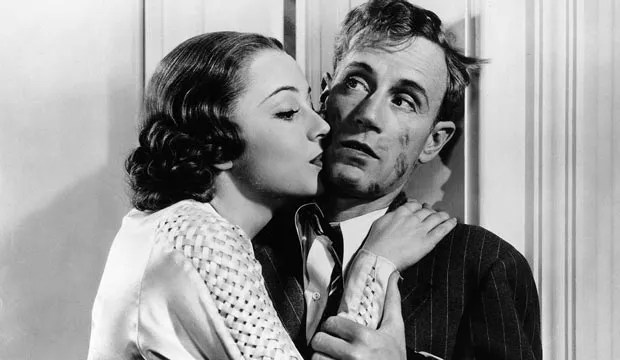
Olivia De Havilland and Leslie Howard

If it sounds like his character wasn’t too far off from the real Leslie, then you’d be right. He was known to be a womanizer, despite being married, and had many affairs.

Bette finally agreed to accept the role, but did ask for a cinematographer she liked to be hired to help her look good on screen.

Audiences proved that the producer had no reason to be worried about Leslie not doing well in a comedy, with over $1 million being brought in during its initial release.

Leslie followed this movie up by directing himself in George Bernard Shaw’s classic movie, Pygmalion (1938)

Up next for Spring of Bette, I will be writing about another one of her less-familiar movies, A Working Man, where she was in full blonde mode.

Here is the complete list of movies I will be watching during this feature:

It’s Love I’m After (April 15th)

A Working Man (April 17th)

Another Man’s Poison (April 23th)

Dark Victory (April 30rd)

Jezebel (May 1)

Dangerous (May 7)

The Letter (May 12)

Of Human Bondage (May 21)

Now, Voyager (May 28)


Additional sources and resources

https://www.tcm.com/articles/92525/its-love-im-after

https://www.goldderby.com/gallery/best-bette-davis-movies-ranked/bette-davis-movies-ranked-all-about-eve/

If you want to find clips and thoughts about vintage movies and TV, you can visit me on Instagram on my Nostalgically Thinking Account (https://www.instagram.com/nostalgically_thinking/) or on my YouTube account Nostalgically and Bookishly Thinking here: https://www.youtube.com/@nostaglicandbookish
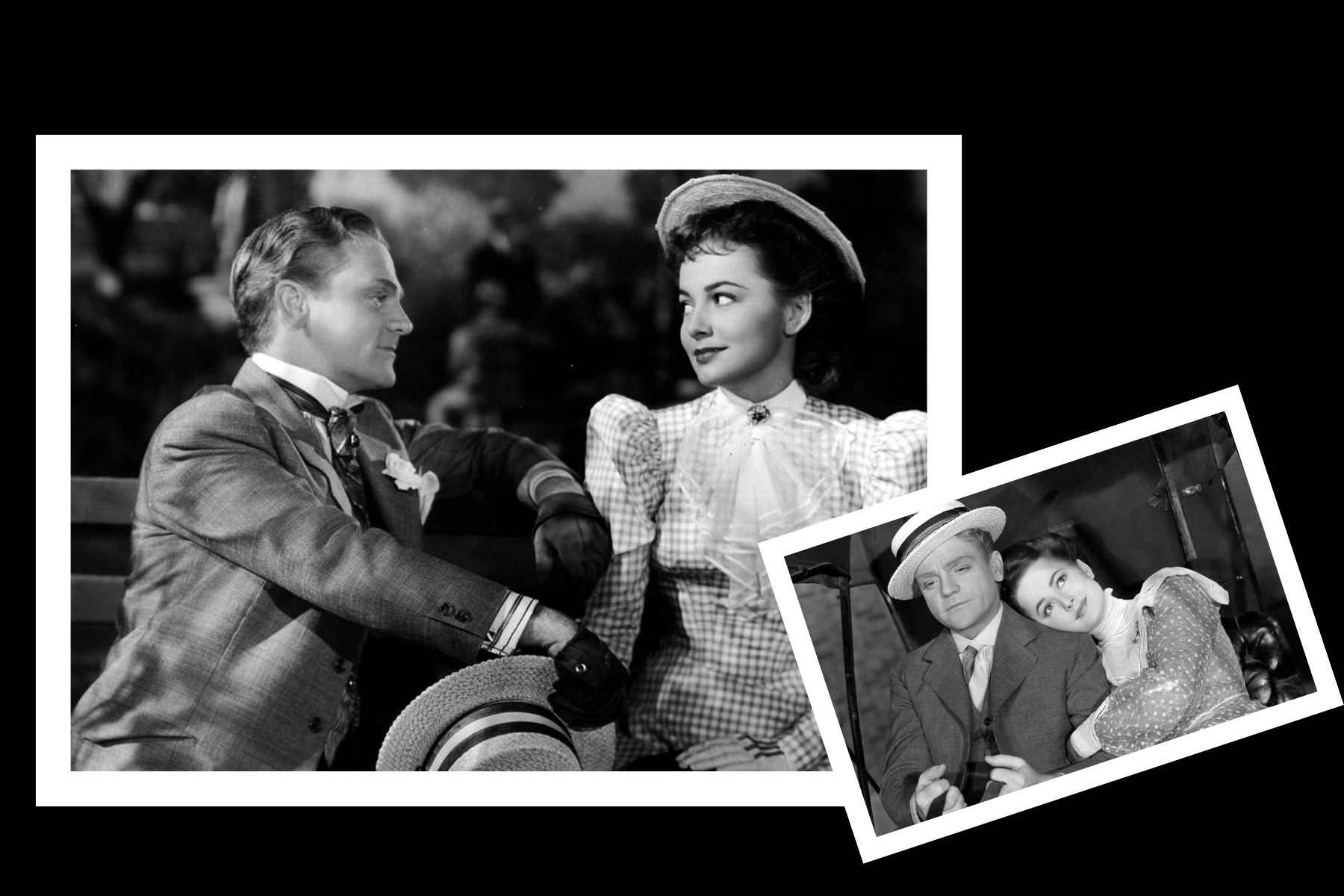
Winter of Cagney: Strawberry Blonde

I am watching James Cagney movies this winter.

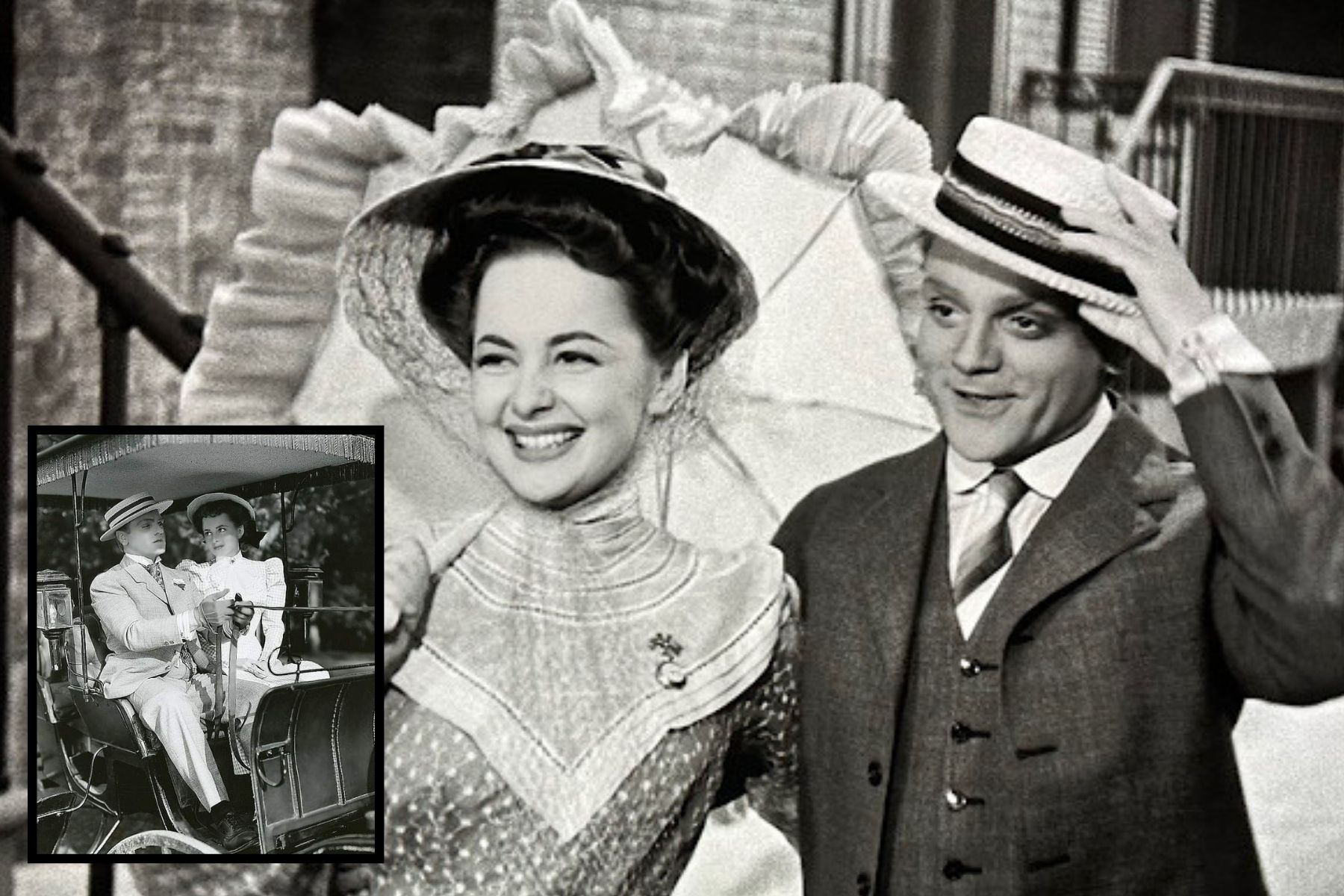
This week I’m writing about Strawberry Blonde (1941). Some listings add a “The” to the name, but the original title was just Strawberry Blonde.

Here we have another Cagney film (like Yankee Doodle Dandy) that isn’t a gangster film but does show him as a bit of a rough guy. Rough, but ultimately good.

This movie, told in one long flashback, shows a slow transformation of Cagney’s character and leaves you wondering throughout the first part of the movie whether you like him or not.

By the end, you’re rooting for him and maybe for him to get a bit of revenge on some people too.

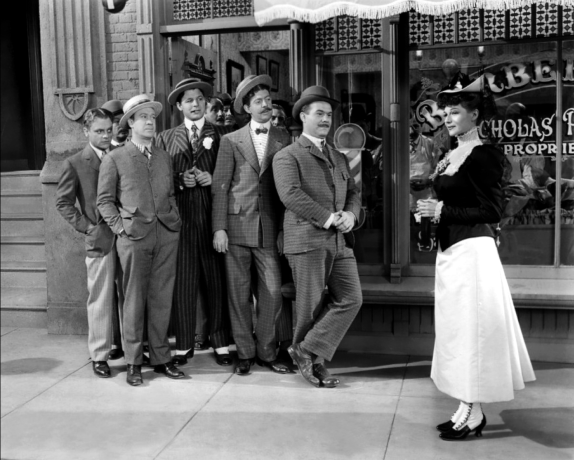
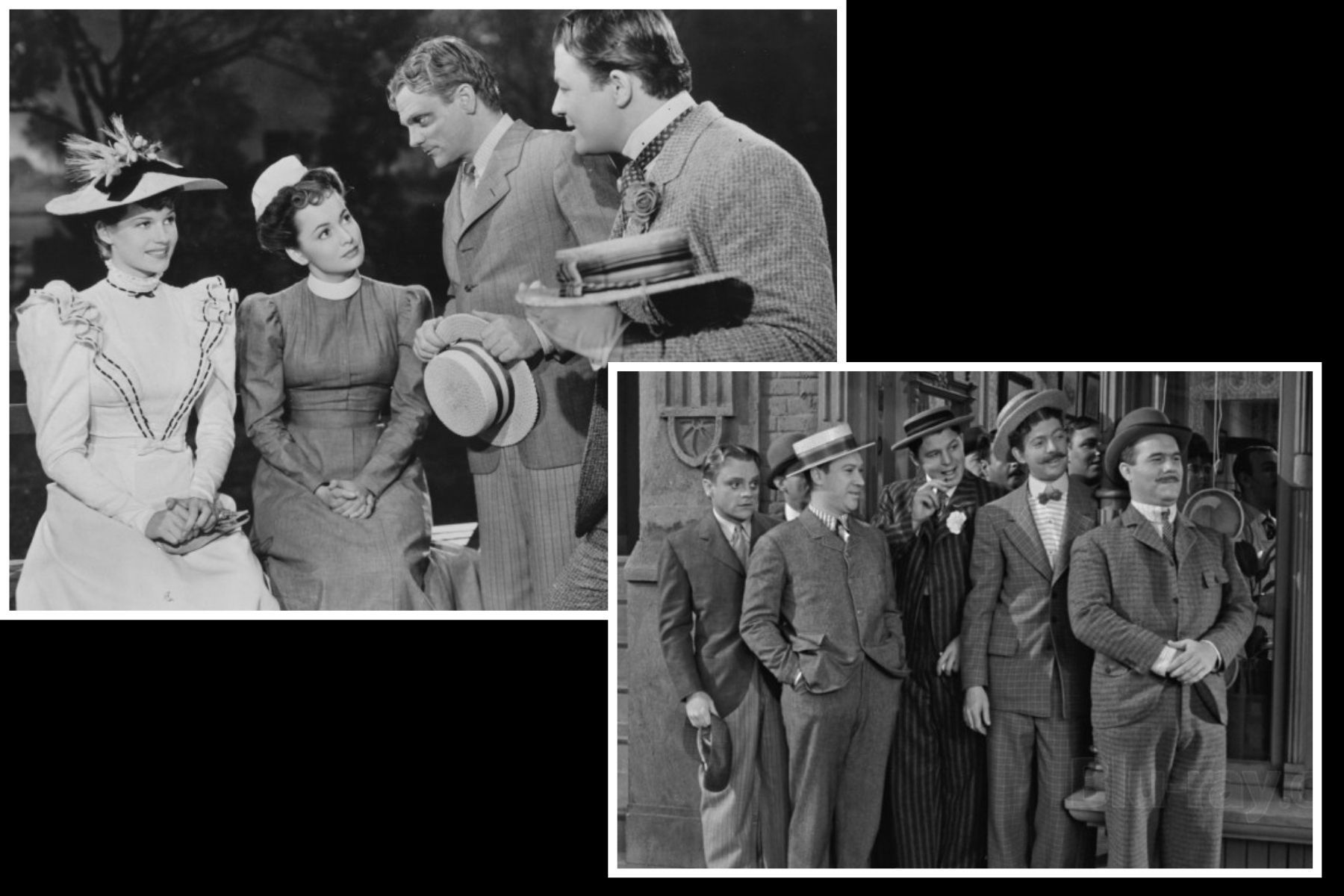
James’ character is Biff Grimes, a young and scrappy dental student with a good heart who lives in New York City. He’s obsessed with a strawberry blonde named Virginia Brush played by Rita Hayworth, who likes to walk past the barber shop each day and rile up all the men.  I’m going to say upfront that I didn’t recognize Rita in this movie at all. First, I’m used to her as a brunette, second, I actually haven’t seen her in that many movies. (Summer of Rita? Hmmm….good idea! Spring has been reserved for Bette Davis.)

The only problem with this obsession is that his friend Hugo Barnstead (Jack Carson) is also interested in Virginia.

Hugo and Virginia work to push Virginia’s friend, Amy, a nurse and women’s rights activist played by Olivia de Havilland, on to Biff, especially after Hugo promises Virginia a wealthy life if she elopes with him.

Biff has no interest in Amy, who annoys him and says solicitous and suggestive things to him to show him that women are just as good as men. We get the impression, however, that Amy doesn’t believe everything she’s saying. She simply likes to shock people.

Eventually, though, love blooms in a very authentic way between Biff and Amy, but not without some mix-ups, difficulties, and trials along the way, culminating when Hugo reveals even more of his crooked ways after he hires Biff.

You’ll have to watch the movie to see what happens.

I love Olivia de Havilland’s character in this. She wants to be bold at the same time she doesn’t want to be. It’s like how James’ character wants to be a tough guy but yet doesn’t.

The movie is ahead of its’ time in my opinion, with so many suggestive (yet not crude) subjects raised, and witty banter exchanged back and forth between James and Olivia. I was very charmed by this movie, which I watched before I officially decided I was going to do a marathon of Cagney movies.

Each time I watch one of his movies I fall more in love with him as an actor. He was witty, charming, and that grin was so infectious.  

The movie is based on a Broadway play called One Sunday Afternoon by James Hagan. It’s a bit of a musical, comedy, and drama, but not a super, super heavy drama. It was first made into a non-musical film by the same name as the play in 1933. That movie was directed by Stephen Roberts and starred Gary Cooper. Unlike the earlier picture,  Strawberry Blonde was a hit.

Director Raoul Walsh remade the film again as a full musical in 1948, according to TCM.com, changing the name back to One Sunday Afternoon, but Strawberry Blonde still remained the more popular version.

The part of Viriginia was originally supposed to be played by Ann Sheridan, the Oomph Girl from Warner Pictures, (No, I have no idea what or who that is!) but instead Rita was loaned to Warners by Columbia for the role. Sheridan was in a contract dispute with Warner at the time and refused to do it.

All the better for Rita.


Felicia Feaster wrote for TCM.com, that Hayworth “brought her typical enigmatic, frosty perfection to the role. Her fortuitous securing of the role in The Strawberry Blonde helped establish her sex queen status as the “Love Goddess.” Though a confident mantrap on camera, Hayworth was just a shy, reserved girl off, causing Cagney to marvel at how, after her scenes, she would just “go back to her chair and sit there and not communicate.’”

Olivia was also praised for her role in the film.

Many critics commented on her gift for comedy and said it matched Cagney’s perfectly in this movie and I have to agree.

A bit of trivia about the movie:

  • Hayworth received $450 per week for the film
  • She also dyed her hair for the movie to fit the title name.
  • This film marked the first time Hayworth was seen as a redhead and the only time that audiences heard her real singing voice.
  • When Warner Bros. released Strawberry Blonde on February 21, 1941, “the studio knew it had a hit on its hands.” Walsh considered it his most successful picture to date, and he called it his favorite film.
  • Cagney looked at the movie as a way to break out of playing tough guys  and it was his brother William Cagney who suggested he take the project on as a gift to their mother Carrie, “who would only live a few more years.”
  • Jack Warner (of Warner Bros) screened the 1933 film and wrote a memo to his production head Hal B. Wallis telling him to watch it also: “It will be hard to stay through the entire running of the picture, but do this so you will know what not to do.”
  • James Cagney was past forty at the time of filming but was playing much younger, and was in fact only seven years younger than his on-screen father Alan Hale.
  • The TCM print ran 99 minutes; the extra two minutes was due to a ‘follow-the-bouncing-ball’ sing-along after “The End”, to the main song “The Band Played On.”
  • In March 1941, Warner Brothers distributed this film on a double bill with another comedy, Honeymoon for Three (1941) starring Ann Sheridan and George Brent.
  • Even though IMDb and some other websites use the title “The Strawberry Blonde,” the Warner Bros. collateral at the time of release and the Warner Archives DVD do not include “The,” leaving the title as simply “Strawberry Blonde.”
  • James Cagney and Olivia de Havilland previously co-starred in The Irish in Us (1935). They both also appeared in A Midsummer Night’s Dream (1935).

So, have you ever seen this one? What did you think of it?

If you haven’t seen it, I really would recommend it for a fun, lighthearted (for the most part) watch.

Next week I am watching Mister Roberts.

If you would like to follow along with my Winter of Cagney and watch some of the movies yourself, here is my schedule for the winter:

 Yankee Doodle Dandy

Taxi

The Strawberry Blonde

Mister Roberts

Angels With Dirty Faces

Public Enemy

Love Me or Leave Me

White Heat

Man of A Thousand Faces

Bonus: The Seven Little Foys


Additional sources:


If you want to find clips and thoughts about vintage movies and TV, you can visit me on Instagram on my Nostalgically Thinking Account (https://www.instagram.com/nostalgically_thinking/) or on my YouTube account Nostalgically and Bookishly Thinking here: https://www.youtube.com/@nostaglicandbookish