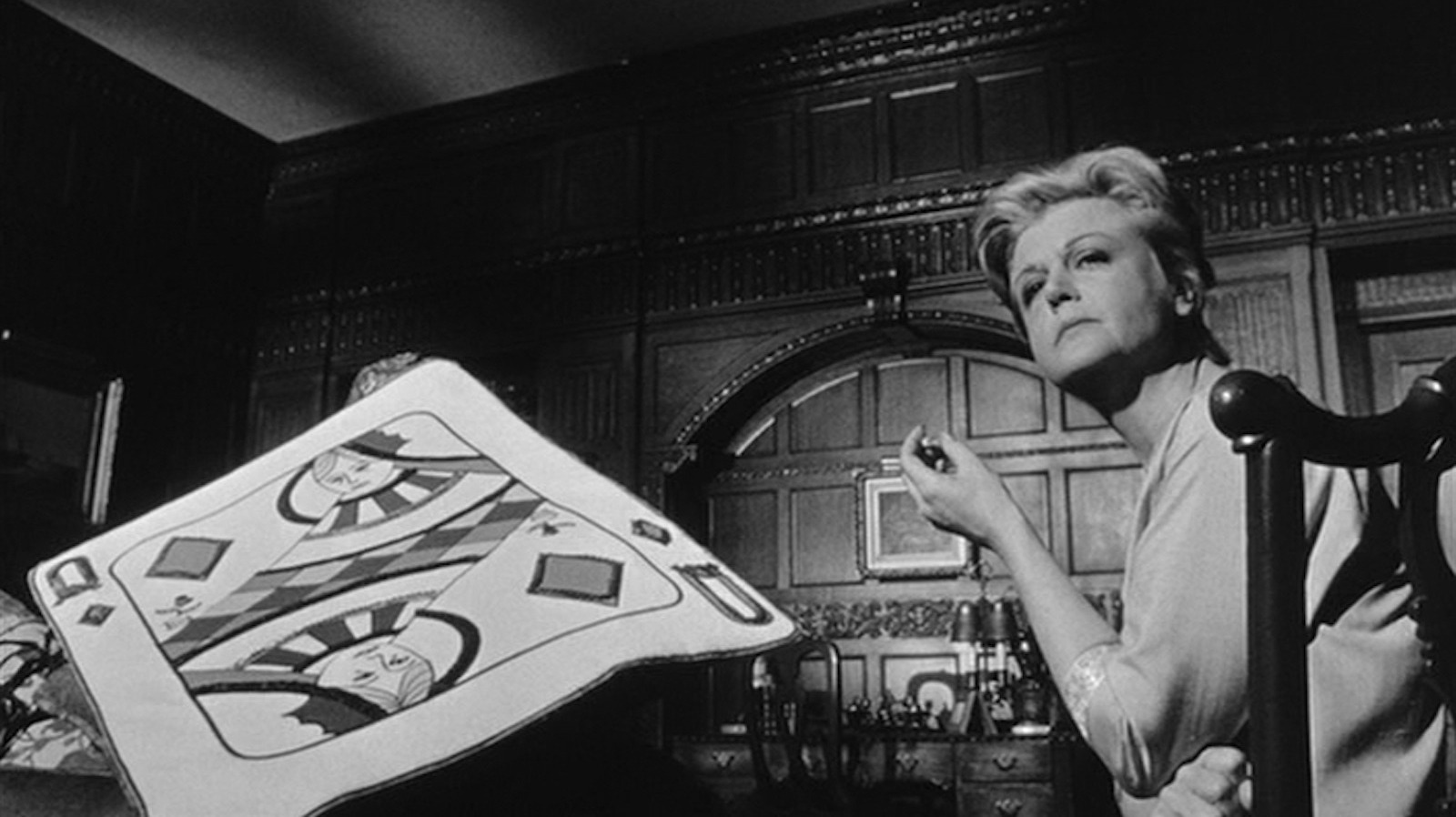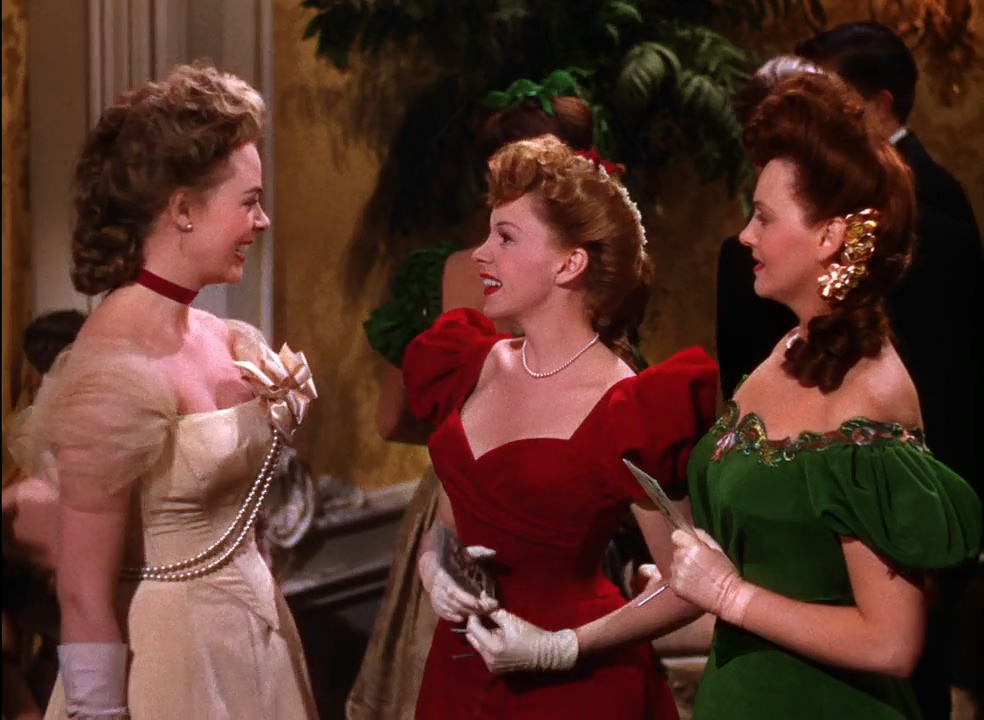
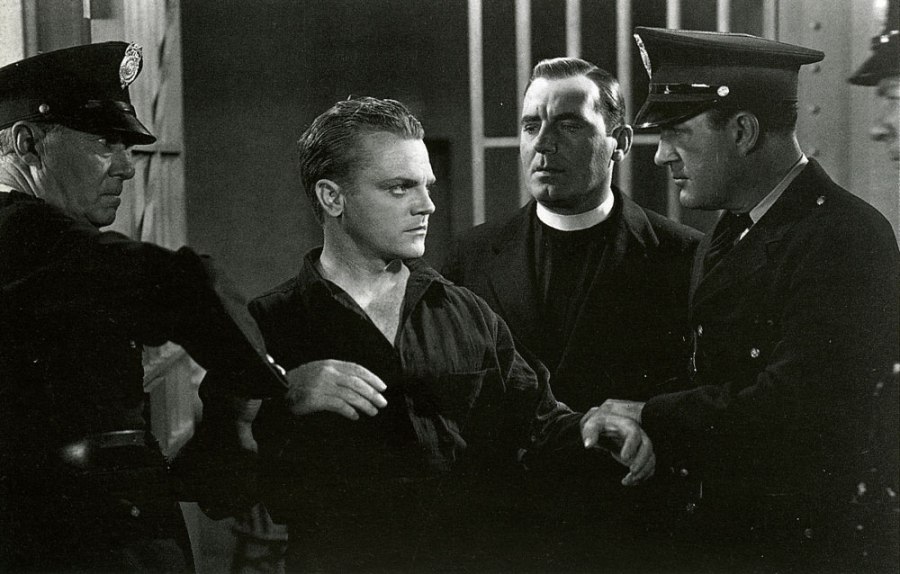
Summer of Angela: A Life At Stake (1954) with minor spoilers

This summer I am watching Angela Lansbury movies for the Summer of Angela.

Up this week was A Life At Stake, another crime noir “B-movie” and another chance for Angela to show her evil side. Honestly, she’s been evil in a lot of the movies I watched with her throughout this summer, which cracks me up since a lot of people associate her with being sweet in kind from things like Murder She Wrote and Bedknobs and Broomsticks.

This movie was not the best I’ve ever seen plot-wise but the dialogue was actually very well written and the sexual tension was something I didn’t expect for a 1954 movie.

The movie is essentially about a man who is very paranoid and thinks everyone is out to get him. Or, as Google describes it: “After an out of work architect accepts a business proposition from a married woman, he soon begins to suspect her motives, and fear for his life.”

Edward Shaw, portrayed by Keith Andes had a business failing and now he’s been approached by a lawyer with the prospect of a new business.

Edward tells the lawyer he really doesn’t really want to get involved. He keeps a $1000 bill framed on his wall to remind him of his failures and encourage him to try again. I didn’t know there was such a thing as a $1,000 bill by the way.

Anyhow, I digress, the lawyer puts him in contact with Doris Hillman (Angela), wife of Gus Hillman (Douglass Dumbrille). Edward goes to Doris’s home and the housekeeper says he needs to call out before he goes to the pool because Doris has been known to swim in the nude. Edward quips back, “That’s okay. I’ve been known to swim in the nude too.”

Doris isn’t naked but she does tell Edward he should have called out. From their first meeting the flirting begins in earnest. Doris even covers herself with a towel but removes the top of her swim suit underneath it because she says it’s uncomfortable.

Eventually they get to business talks and Doris says Gus wants Edward to run the company, buying up property with money Gus will give him and for Doris to sell the property using her past real estate experience.

Edward is agreeable but feels suspicious about it all, especially when Doris says they will need to take an insurance policy out on him for half a mil. He doesn’t, however, seem to feel suspicious about Doris and later that night at home when he gets a call, he asks his land lady if it is a woman calling. It is clear he’s hopeful Doris will be calling soon and about a lot more than business.

Doris does call another day and asks him to meet her a hotel room. From there he’s laying it on heavy, flirting all over the place, but she lets him know she’s not interested. She’s only interested in business. Edward (sort of a  horny jerk if you ask me) leaves but later that night Doris pulls up outside his apartment.

She says something flirty and then before we know it, he’s in the car practically shoving his tongue own her throat.

All is going well with their little liaisons and business dealings until Edward meets Doris’s sister, Madge (Claudia Barrett). Madge thinks he’s just lovely and starts hitting on him. She invites him to dinner in front of Doris and Gus and because he doesn’t want Gus to know about his affair with Doris, he agrees.

During dinner Madge drops a bombshell and says that Gus is Doris’s second husband because her first husband died a few years ago in an accident. What’s weird is that Doris and Gus were in a business with him too and when he died Gus and Doris got the insurance money since they’d taken out a policy on each of them for the business.

Edward is incensed. He had a feeling Doris and Gus were up to something and now he knows what it is. They really do want to kill him and get the money for the insurance policy they took out in his name.

He’s still thinking about this when Doris calls and says she wants to show him something.

He reluctantly agrees and she drives him up on a hill. She shows him some property she says will be great for development but when she goes to park, the brake slips and the car keeps rolling. She gets it in park and says she’s going to go get the property owner because he said he would show them around.

After she leaves, though, with Edward sitting in the passenger side, the car starts to roll toward a bank with a long drop and Edward just barely stops it.

That cinches it for him. Doris and Gus are in on this together and they are going to kill him.

I won’t give away the ending but most of the rest of the 70 minute movie (yes, it’s that short) will be Edward waffling back and forth between suspecting the couple and being in love with Doris while Madge is in love with Edward and knows all about the affair. Later she also knows about Edward’s suspicions.

This is a dark movie and it took the path I thought it might but I did think there might be more of a plot twist toward the end. Actually, there did seem to be a bit of a plot twist based on something said by a character right at the end but I wasn’t sure if I was reading too much into it or not.

I will share that I did read Cat’s review (found on her blog Cat’s Wire)   before finishing this post up and I have to agree that I did not really connect with or like the main character.

I don’t think I would have cried much if he had been murdered (okay, so I gave a little away here…..he isn’t murdered). He was very unlikable and rude. He wanted to have his little fling with Doris but also keep her and her husband from killing him. He was sort of ruled by his privates to me and it severely affected his judgment. And though there were some good lines in this one – the writing overall was just not very strong.

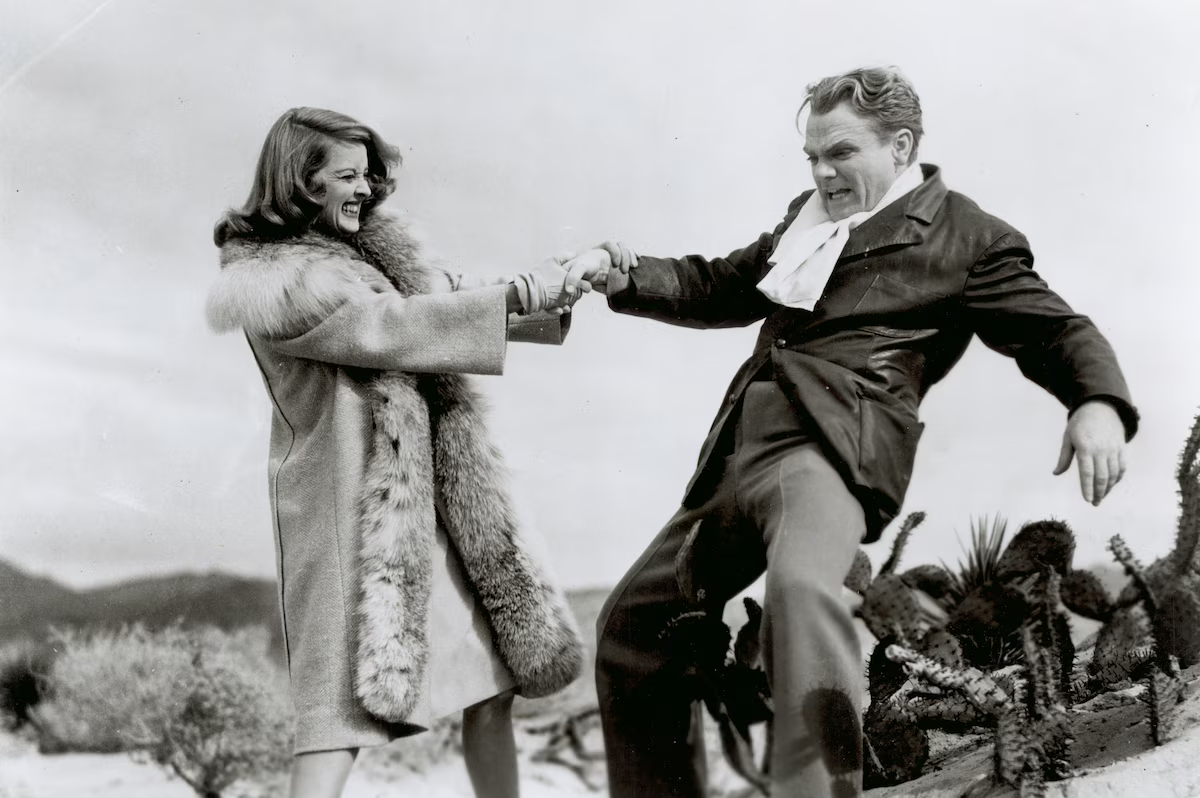
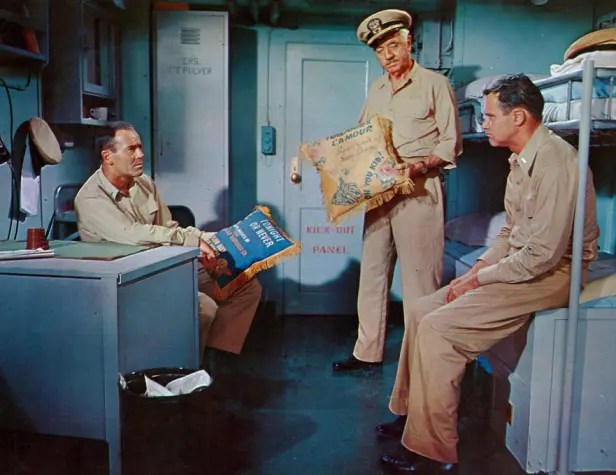
I’m sure this is just motion blur in the image, but all I can think of when I see Angela’s hand in this photo is that episode of Seinfeld when Jerry dates a woman with “man hands.”

I liked Angela’s performance and thought she succeeded once again in pulling off playing someone evil and making it hard for the viewer to figure out if she was really in love with Edward or not.

I listened to an interview with Angela last week when writing about The Picture of Dorian Gray, and she said she made a lot of not-so-great movies over the years. This may be one of them she was referring to.

The movie was directed by Paul Guilfoyle, for those who care about such things. The film was restored in 2021 and resulted in a few noir crime movie buffs blogging about it.

One of those, Michael Barrett from the site Pop Matters, wrote: “You’d have to know me to understand how unlikely it is that I’d never heard of this picture, but the commentary by scholar Jason A. Ney points out that this film is so obscure, it’s not listed in most noir references, despite the presence of a major star. So this might count as more of a rediscovery than restoration.”

About the acting and plot he writes, “The film runs only 76 minutes, but a bunch of stuff happens at a nice clip, sometimes too quickly for us to analyze how much adds up, with some elements more obvious than others. In a sense, everyone is clumsy and transparent, and that feels reasonably credible. The story mixes common sense (e.g., going to the cops and the insurance company) with devious cupidity and lust amongst tawdry, small-minded people.”

Glenn Erickson on Trailers from Hell wrote: “Filmed in 1954, producer Hank McCune’s A Life at Stake is notable for its fairly competent production and a decent if somewhat thrill-challenged screenplay — and the fact that it stars an actress one wouldn’t think would be associated with an 11-day cheapie thriller. The great Angela Lansbury is the odd star out on a list of creatives that reads like a call sheet for ambitious Hollywood underachievers, all thirsting for the right show to get their career in motion.”

I have to agree with Erickson when he writes: “The movie generates some tension but can’t quite convince us that Ed Shaw is as helpless as presented.”

I enjoyed Erickson’s entire review and background so if you would like to know even more about the film and Angela’s role in it, please check it out.

Some facts and trivia:

  • “The unusual convertible Doris Hillman (Dame Angela Lansbury) drove was a Kaiser Darrin. Only 435 production Darrins and six prototypes were built. Its entry doors slid on tracks into the front fender wells behind the front wheels, which was patented in 1946, had no side windows and a three-position Landau top. The car’s only criticism by enthusiasts was the front grill, which looked like it “wanted to give you a kiss.” (Source: imdb)
  • This was an independent feature produced by Hank McCune, who briefly starred in his own free-wheeling TV sitcom, The Hank McCune Show.  (source: Pop Matters)
  • McCune created the story and hired people from his television series, including writer Russ Bender and supporting actor Frank Maxwell. (source: Pop Matters)
  • The director’s wife, Kathleen Mulqueen, plays Shaw’s mom-like secretary. (source: Pop Matters)
  • Directly from imbd.com: “In the first scene, Edward Shaw (Keith Andes) roams about his room in the boarding house wearing only form-fitting pajama bottoms and stripped to the waist, giving audiences ample chance to view his impressive musculature from every conceivable angle. In a comic twist, an attorney enters the room, and one of his first lines of dialogue to Edward is “Come now, you’re not the first man to lose his shirt!””
  • In order to please the Italian music unions, an agreed number of American films had to be re-scored by Italian composers for release in Italy. A bit of irony is that Les Baxter had his original music replaced by Costantino Ferri, Baxter himself would later join AIP and re-score over a dozen movies previously done by Italian composers. (Source: imbd)
  • When Edward Shaw (Keith Andes) gets into a taxi after leaving his office, in the background, the old Sunset Theatre is seen, which was located on Western Avenue just north of Sunset Boulevard; the double feature shown on the marquee is Da Vinci also Julius Caesar (with Marlon Brando) , which dates the shot as May 1954. The theatre no longer exists. The intersection has been redeveloped.

Left on my Summer of Angela list for August are:

August 22 – I’ve decided to substitute A Long Hot Summer for All Fall Down for a couple reasons — I’ve watched A Long Hot Summer before and it will allow me to admire Paul (Newman) again and I watched a preview for the film and this annoying kid kept calling the main character Barry-Barry and that just seemed super, super annoying. Plus, I’ve heard it is a dark film. I originally wanted to watch it because I’ve never seen a Warren Beatty film (don’t you dare ever remind me of Dick Tracy! Never! Ever! I would like to burn that memory out of my brain with the end of a cigarette! My brother and I walked out of that film and I have never attempted to watch it again and I still have PTSD!). I can always watch another Warren Beatty film instead.

August 29 – Something for Everyone

If you want to read about some of the other movies I watched, you can find them here:

Bedknobs and Broomsticks

The Manchurian Candidate

National Velvet

The Pirates of Penzance

Gaslight

The Pirates of Penzance

Gaslight

Please Murder Me

Death on The Nile

The Court Jester

The Picture of Dorian Gray


Sources:

https://www.popmatters.com/paul-guilfoyle-life-at-stake

https://www.imdb.com/title/tt0047178/trivia/
https://trailersfromhell.com/a-life-at-stake/

Summer of Angela: The Picture of Dorian Gray

This summer I am watching Angela Lansbury movies for the Summer of Angela.

This week I watched The Picture of Dorian Gray (1945), which I had never seen before. I’ve also never read the book that it is based on.

I had to sit and process this one for a bit and also watch a comedy or two afterward.

Wow, what a creepy, dark, and unsettling film.

Yes, unsettling is the perfect word for this movie and while I am glad to see the second film that Angela received an Oscar nomination for, I don’t plan to watch it again.

I shuddered too many times while watching it.

First, a quick description of the movie for those who are not familiar with it.

From TCM.com, this one-sentence description tells us what we need to know about the movie:

“A man remains young and handsome while his portrait shows the ravages of age and sin.”

The movie is based on the book of the same name by Oscar Wilde, written in 1898. There is even a moment where the main character quotes Wilde.

The movie stars Angela, Hurd Hatfield, George Sanders, Donna Reed, and Peter Lawford.

Dorian Gray is a young man without any family who gets mixed up with a man who is a bit of a chauvinist, cynical jerk. This man, Lord Henry Wotton (George Sanders, who plays villains absolutely perfectly), comments on how awful it is to age when he is looking at a painting of Dorian being made by artist Basil Hallward.

Lord Henry, a man who enjoys manipulating the lives of others and talking down to women and everyone around him, says that youth is fleeting and that the pursuit of desire should be the only real goal in life.  Dorian, who seems super impressionable to me, thinks about what Lord Henry has said and says that he would give his soul if the painting would grow old while he remained forever young.

Lord Henry tells him to be careful about making such a wish in front of his Egyptian statue of a cat.

Dorian decides to explore new places, experience new things, and later he visits a bar where he watches a beautiful young woman names Sibyl Vane (Angela) performing a song called Little Yellow Bird. He is enamored with her and her with him.

Consider yourself warned that the song she sings, Goodbye, Little Yellow Bird, is an earworm. I’ve been humming the thing all week!

He’s in love, but Lord Henry is cynical and mean and tells Dorian to give Sibyl a challenge. Invite her to stay overnight, and depending on what she decides, Dorian will know if she is virtuous or not.

Things will go downhill for Dorian after the outcome of the challenge. Tragedy strikes, causing him to become hardened to the world. He decides that living only for his own pleasure, no matter who it hurts, is the way to go in life.

I won’t spoil the whole movie in case you haven’t watched the movie or read the book, but want to. I will say: be prepared to be fairly depressed by the end.

I will say that two additional characters were added to this movie that were not in the book — a woman named Gladys (Donna Reed) who has loved Dorian since she was a child, and her boyfriend David Stone (Peter Lawford). Gladys was terribly annoying and stupid to me. They should have left her and David out, quite frankly.

The part of Dorian Gray is played by Hurd Hatfield.

His absolutely creepy and dead-behind-the-eyes expression is the central reason I felt unsettled by the movie.

I saw his demeanor as perfect for this part but one critic I read said it resulted in his character feeling too one-dimensional and detached.

“On all accounts, (director Alfred) Lewin micromanaged Hatfield’s every gesture (to the point of not letting the actor perform after four o’clock in the afternoon, for fear fatigue would show), resulting in a central performance that is appropriately strange, but which never engages,” wrote Richard Harlin Smith on TCM.com. “One doesn’t see what others see in this Dorian Gray, who seems as inflexible as a mortician’s wax even in his mysteriously protracted youth.”

I thought not emotionally engaging with anyone is the point of a character who essentially gives up his soul, feelings, and love for anything, to be as nasty as he wants to be (yes, a bit of a spoiler there).

The movie was only Hatfield’s second film (his first being Dragonseed from 1944).

Smith wrote in his review of the film on TCM that, “Hurd Hatfield, in his second screen appearance, was so effectively evil in the title role that it actually handicapped his career with casting directors.”

According to Hurd Hatfield Luv on Tumbler, Angela once said that Lewin would stop rolling the cameras once Hatfield made an obvious expression on his face. This was frustrating to Hurd because his usual acting style was animated and he wanted to perform the character like he was written in the novel.

Lewin’s wishes always overrode the wishes of the actors, though.

“Also to point out, halfway through the film Dorian said he wanted to be in control of his emotions and refrain from yielding to them,” the author of the Tumbler site wrote. They continued: “Here’s another possible reason on why Lewin wanted Hatfield to act with little feeling in this film. Now this is actually my conjecture, but it makes sense with my research.  As many would understand, making strong facial expressions would wrinkle the face.   Smile lines and crows’ feet form when happy.  Forehead creases when worrying.  Eyebrows close in and skin folds in between when angry. Bursting up in tears crying gives out the most unflattering face of all.  To put it short, it’s impossible to look extraordinarily “beautiful” without scrunching the face.”

Ronald Bergen wrote in The Guardian that he interviewed Hatfield on time about his role in the film The Diary of a Chambermaid and the actor said he was glad to speak about something other than Dorian Gray.

Hatfield called the role both a blessing and a curse.

“A blessing in that it gave him a reputation; a curse in that he found it difficult to escape,” Bergen wrote.

After the movie, he was cast mainly as handsome, narcissistic young men.

Hatfield was ambivalent about having played Dorian Gray, according to the magazine Films in Review, feeling that it had typecast him. “You know, I was never a great beauty in Gray…and I never understood why I got the part and have spent my career regretting it.”

The casting director for The Picture of Dorian Gray, Robert Alton, referred Angela to the casting director for Gaslight. He saw her in the role of Sibyl, but also felt she might work for the maid in Gaslight.  That role as the maid led to her first Oscar nomination.

Angela’s role as Sibyl was her second Oscar nomination and came only a year after the first.

“Great send off,” she joked in an interview with the Screen Actors Guild Foundation. “Everything went down hill from there.”

By the time Angela worked on The Picture of Dorian Gray she had filmed Gaslight and National Velvet and had started to become used to working on a set. And she meant “working.” She said in the SAG Foundation interview that she was very conscientious as a young person. She was conscientious of how she needed to be professional for the sake of the other actors and the film overall.

This was  both a good and a bad thing.

“I never had any fun. I never goofed off,” she said. “I missed a lot of fun along the way but perhaps in the end it contributed to me to being able to build such a very strong base for what would was to later become an enormously successful career.”

Facts and Triva about the movie:

Lansbury’s mother appears in the movie as “The Duchess” in the dinner scene at “Lady Agatha’s”. (source Jay’s Classic Movie Blog)

The hideous portrait of Dorian shown later in the movie was painted by Ivan Le Lorraine Albright. According to TCM.com, he was hired after director Lewin saw a painting of his at the Art Institute of Chicago entitled That Which I Should Have Done I Did Not Do. It is not owned by the Art Institute of Chicago.

A scene in the movie staged beneath a wildly swinging chain lamp was an effect that would be duplicated by Alfred Hitchcock in Psycho some fifteen years later.

Several years after this movie premiered, a friend of Hurd Hatfield’s bought the Henrique Medina painting of young Dorian Gray that was used in this movie at an MGM auction, and gave it to Hatfield. On March 21, 2015, the portrait was put up for auction at Christie’s in New York City (from the Collection of Robert Hatfield Ellsworth) with a pre-auction estimate of between five thousand and eight thousand dollars. It sold for one hundred forty-nine thousand dollars. (source IMdB)

Oscar Wilde’s Dorian was blond-haired, blue-eyed, and highly emotional, but Writer and Director Albert Lewin’s conception of Dorian was of an icy, distant character.

The dark musical piece that is heard repeatedly is Frédéric Chopin’s “Prelude in D Minor”, the last of the twenty-four pieces of “Opus 28”.  (Source IMdB)

Writer and Director Albert Lewin was obsessed with retakes. In this movie, he asked for one hundred and ten retakes and ended up using only one. (Source IMdB)

Basil Rathbone campaigned in vain for the part of Lord Henry Wotton and believed that his typecasting as Sherlock Holmes was the reason he failed to get it. MGM’s loaning of Rathbone to Universal Pictures to play Holmes was very profitable for the studio, another reason for not casting him. (Source IMdB)

According to Angela, a friend of hers, Michael Dyne, was considered for the role of Dorian Gray. Dyne suggested Lansbury for the role of Sibyl Vane. The casting director liked her for the part and suggested her to George Cukor for Gaslight (1944). She saw Cukor and Writer and Director Albert Lewin the same day and was cast for her first two movies. (source IMdb)

My overall view of the movie:

This movie creeped me out immensely and made me very sad. It was extremely thought-provoking. As I mentioned above, the movie left me with a very unsettled feeling. I didn’t really want to keep going at points but knew I had to find out how it ended.

The cinematography and the use of light and shadows was amazing. The best example of this is during a climatic turning point in the movie that involves a very dark action by Dorian. As the act is completed he stands with a light swinging back and forth above him and it’s casting light on his face, then it swings back and he’s in darkness. The shadows around and behind him move in the pattern of a monster’s mouth, as if signaling he’s been officially swallowed by and turned into a monster.  

Another shocking part of this movie is the use of color. Yes, the movie was filmed and presented in black and white, but there are three scenes that are shown in brilliant, and later terrifying, technicolor. You have been warned because a couple of the images truly are terrifying.

I probably wouldn’t watch this movie again, but only because it disturbed me, not because it is a good movie. It is a good movie, and it is too good in presenting that icky, dark, and demoralizing feeling it’s meant to present.

Have you seen this movie? What did you think of it?

Cat from Cat’s Wire wrote about her views of it here and she does have spoilers, but it is such a good, interesting post. I loved it. If you’ve already seen the movie or read the book, definitely hop over to her blog.

Left on my Summer of Angela list for August are:

August 15 – A Life At Stake

August 22 – All Fall Down (keep an eye out. I might switch this one up.)

August 29 – Something for Everyone

If you want to read about some of the other movies I watched, you can find them here:

Bedknobs and Broomsticks

The Manchurian Candidate

National Velvet

The Pirates of Penzance

Gaslight

The Pirates of Penzance

Gaslight

Please Murder Me

Death on The Nile

The Court Jester


Sources:

Hurd Hatfield Luv/Tumbler: https://www.tumblr.com/hurdhatfieldluv/123743916003/hurd-hatfield-in-the-picture-of-dorian-gray

The Picture of Dorian Gray on TCM.com: https://www.tcm.com/tcmdb/title/2821/the-picture-of-dorian-gray#articles-reviews?articleId=214451

A second article on The Picture of Dorian Gray on TCM.com

https://www.tcm.com/tcmdb/title/2821/the-picture-of-dorian-gray#articles-reviews?articleId=508

Angela Lansbury Career Retrospective | Legacy Collection | SAG-AFTRA Foundation Conversations: https://youtu.be/vFFOVmCXy1o?si=uencecf3ZhFjWrib

Jay’s Classic Movie Blog: https://www.jaysclassicmovieblog.com/post/the-picture-of-dorian-gray-1945

Summer of Angela: Death on the Nile (1978) Without spoilers

Angela Lansbury once said in an interview that one of the more exciting moments of her career was working with Bette Davis in Death on the Nile (1978).

That’s the movie I watched this week for my Summer of Angela feature.

The movie is full of A-list movie stars: Angela, Bette, David Niven, Maggie Smith, Mia Farrow, and, of course, Peter Ustinov as Hercule Poirot.

I’m not a fan of Ustinov as Poirot since David Suchet plays the part so brilliantly, and I can’t see anyone else as Poirot, but the movie is still okay overall. I only added it to my watch list because Angela is in it. I had fun watching her be absolutely over the top as an eccentric romance writer and Maggie Smith be an overall jerk throughout, which is a role that she seemed to always play well.

Mia Farrow was …er…creepy as always.

Let’s talk about the plot a little for those who aren’t familiar with this one from either the book by Agatha Christie or the movie.

The online description:

“On a luxurious cruise on the Nile River, a wealthy heiress, Linnet Ridgeway (Lois Chiles), is murdered. Fortunately, among the passengers are famed Belgian detective Hercule Poirot (Peter Ustinov) and his trusted companion, Colonel Race (David Niven), who immediately begin their investigation. But just as Poirot identifies a motley collection of would-be murderers, several of the suspects also meet their demise, which only deepens the mystery of the killer’s identity.”

Angela portrays an eccentric romance writer named Salome Otterbourne who based a character in one of her books on Linnet. She and Linnet confront each other on the boat and Linnet tells Salome she’s going to sue her for libel. Just about everyone on the boat seems to have an issue with Linnet, which makes me wonder how they all ended up on the boat together. Planned or just coincidence, I don’t know, but they all seem to know each other and Linnet is angry with just about everyone and they are angry with her.

Salome is on the boat with her daughter Rosalie who is embarrassed by her mother’s behavior.

Angela’s character isn’t in the movie as much as other characters, but when she is, she certainly fills the screen with her crazy personality and outfits.

She makes all kinds of semi-suggestive comments about possible couples or what people need to do to feel more relaxed. Some of the characters refer to her books as “lurid.”

At one point, she and her daughter talk about whether or not Poirot would know her from her books. Rosalie says, “Somehow, I don’t think Monsieur Poirot is a very keen reader of romantic novels, Mother.”

Mrs. Otterbourne responds: “Well, of course he is! All Frenchmen are. They’re not afraid of good, strong sex!”

She is such an obnoxious character that after the murder occurs David Niven’s character comments to Poirot: “What a perfectly dreadful woman. Why doesn’t somebody shoot her, I wonder?

Poirot responds, “Perhaps one day, the subscribers of the lending libraries will club together and hire an assassin.”

The film was shot on location in Egypt so many of the experiences the characters had were actually had by the actors and actresses. I think some of the reactions that were filmed when they were climbing on the donkeys and camels were totally adlibbed because they were so authentic and funny.

According to TCM, makers of the film were trying to cash in on the success of the 1974 film Murder on the Orient Express, also based on an Agatha Christie book. That cast was also star-studded with Lauren Bacall, Ingrid Bergman, and Anthony Perkins.

Unfortunately, while Murder on the Orient Express brought in $27.6 million, this movie only grossed $14.5 million in the U.S. and Canada. Despite the lackluster success at the time it was released, many Christie fans see it as one of the better adaptations of the book — at least according to the many comments about it that I read online.

One thing that might have made the movie less of a success was the filming locations.

TCM.com stated this in an article about the movie: “Despite the exotic locale, split between Egypt and London, filming conditions for the movie were less than ideal. Filmed on a little boat called The Carnock, the actors took a speedboat back and forth each day from their hotel in Aswan down river to the shooting location. The Carnock was also apparently too small for all the actors to have their own dressing rooms. One unpleasant incident involved Bette Davis, Olivia Hussey and some Eastern chant records Hussey liked to play early in the morning. After Davis asked Hussey not to play her music, it was reported that the actresses did not speak to each other again while aboard The Carnock. If tensions weren’t high enough, the temperature climbed well above 100 degrees everyday and filming often was halted at noon.”

What Angela said about the movie:

As I mentioned in the beginning of this post, Angela remembers what a delight it was to work with Bette Davis.

“She was a very fascinating woman,” Angela told Studio Canal. “I got to know her quite well on that occasion. She had been a great, great Warner Brothers star and I had been a fan of hers as a child. She was a great deal older than me and I remembered her and all her great roles.”

Angela remembered Bette as being a “special and unique” actress.

“Unique looking and sounding and I was delighted to meet her and work with her.”

Angela also reflected on working with Ustinov who was her ex-brother-in-law.

“My role was such an interesting, farcical character anyways and there was so much comedy involved,” she said. “David Niven and Peter Ustinov and myself and my husband and I, we were all great friends and knew each other from other times.”

As for the conditions, Angela confirmed that they were not very nice at times.

“We were billeted in a hotel in the middle of the Nile,” she said. “To get to it, we had to get on a boat, having to cross water. We all lived in this luxury hotel in the middle of the Nile in Egypt and that was a special and wonderful experience I would say. I mean you couldn’t have been more comfortable. Swimming pools, wonderful food, everything  you could possibly want and then we would get 4 or maybe 3 in the morning because of the heat at the time in Egypt. We had to do the shooting before noon. Otherwise, it would be too hot. So, we were dealing with that and also an old riverboat we were working on which was trundling its way down the Nile, pulled by little boats and sometimes under its own steam.”

The boat made so much noise, though, that it was often tugged along by the little boats, she said.

The only dressing room in the bottom of the boat in a four-bed cabin.

“It was a bed up and a bed down, so the fittings had to take place between the two beds,” Angela said. “I remember that Bette would lie down on one bunk and Maggie Smith was on the other and I was on the third. We would take turns being fitted in the ‘well’, in the middle. It was one of those extraordinary circumstances where we forced to not be the stars we were supposed to be.”

The costumes in this movie were amazing and were designed by Anthony Powell, who won an Oscar for his work on the film (the film’s only award). Angela had nothing but praise for him.

“My costumes on that film I thought were absolutely extraordinary and quite original and marvelous,” she said. “They were built in New York City by my friend Barbara Matera and he worked with her and we all worked together and we came up with this extraordinary look but Anthony was at the root of it all.”

I have to agree that her costumes were dazzling and something else. Not sure I’d ever wear them, but they fit her character for sure.

You can see the full interview here:

My thoughts:

I watched this one in pieces because it comes in at a whopping 2 hours and 20 minutes!! I didn’t remember it being that long when I first watched it with my husband, but, thinking back, I seem to remember we watched one half one night and the other half the next night.

While I did enjoy the movie, and watching Angela’s antics when she was on screen, the movie was really too long for my taste. I know they needed to take us down some twists and turns to keep us guessing but two and a half hours? Gah!

Also, what always gets me about these movies is how a bunch of people can die (the number of deaths in this one was excessive if you ask me and I’d like to read the book to see if Agatha wrote that many deaths) and at the end everyone just shrugs it off. I won’t give it away but there was one death in particular that just got waved off as no big deal at the end with the characters smiling and walking away arm in arm. So bizarre and left me wondering if the person they said killed that person wasn’t actually someone else.

In addition to Angela’s performance, I loved the witty and sarcastic banter between Maggie Smith and Bette Davis’ characters.

Maggie’s character, Miss Bowers, was supposed to be Bette’s nurse and companion. Bette portrayed Marie Van Schuyler, a socialite. Maggie was horrible to Bette’s character, though! It was sort of crazy but also hilarious. They had some of the best exchanges.

Mrs. Van Schuyler: Come on, Bowers, time to go. This place is beginning to resemble a mortuary.

Miss Bowers: Thank God you’ll be in one yourself before too long, you bloody old fossil!

***

Mrs. Van Schuyler: Shut up, Bowers. Just because you’ve got a grudge against her, or rather her father, no need to be uncivil.

Miss Bowers: *Grudge*? Melhuish Ridgeway ruined my family!

Mrs. Van Schuyler: Well, you should be grateful. If he hadn’t, you would have missed out on the pleasure of working for me.

Miss Bowers: I could kill her on that score alone!

***

Mrs. Van Schuyler: How would a little trip down the Nile suit you?

Miss Bowers: There is nothing I would dislike more. There are two things in the world I can’t abide: it’s heat and heathens.

Mrs. Van Schuyler: Good. Then we’ll go. Bowers, pack.

Miss Bowers was definitely not a respectful employee, but I think that Mrs. Van Schuyler liked that.

One other observation: This movie seems to feature a lot of scenes of rich people sitting around in drawing rooms, all dressed up with nowhere to go. I’m very confused why they got all dressed up to sit around every night together and then just go to bed. Didn’t any of them own clothes that weren’t fancy? Of course, I’m teasing here because I really did love the outfits for the women. The dresses were all so eye-catching.

Trivia or Facts About the movie:

According to producer Richard GoodwinBette Davis brought her own make-up, mirrors, and lights to Egypt. (source IMdB)

Peter Ustinov was David Niven’s personal attendant during World War II. Ustinov was a private and Niven was a Lt. Colonel (various sources)

Location shooting in Egypt consisted of four weeks on the riverboat “S.S. Karnak” and three weeks filming in places such as Luxor, Cairo, Aswan, and Abu Simbel. (various sources)

Ustinov portrayed Poirot five more times. (various sources)

Albert Finney was initially asked to reprise his role as Poirot from Murder on the Orient Express (1974). However, he had found the make-up he had to wear for the first movie very uncomfortable in the hot interior of the train, and on realizing that he would have to undergo the same experience, this time in temperatures exceeding 100 degrees Fahrenheit (38 degrees Celsius), he declined the role. (source IMdB)

Angela Lansbury had never seen the finished film until she attended a 40th Anniversary screening on November 9, 2018.   (source IMdB)

Dancer Wayne Sleep, relatively unknown at the time, choreographed the tango scene. He reported in 2018, “I was being paid an hourly rate, which was great as nobody turned up to the rehearsal and I had to go and find David Niven and persuade him to come.” (source IMdB)

Producer John Brabourne said no telephones were available while on-location in Egypt. They had to communicate by telex. . (source IMdB)

Agatha Christie was inspired to write the source novel in 1937, during an Egyptian vacation. The hotel scenes were shot at the Old Cataract Hotel in Aswan, where Christie stayed. The hotel’s front had to be “redressed” to appear more 1930s, and the furniture on the hotel’s terrace was replaced with custom period-authentic pieces.  (source IMdB)

Notable quotes:

  • Jacqueline De Bellefort: Simon was mine and he loved me, then *she* came along and… sometimes, I just want to put this gun right against her head, and ever so gently, pull the trigger. When I hear that sound more and more…
  • Hercule Poirot: I know how you feel. We all feel like that at times. However, I must warn you, mademoiselle: Do not allow evil into your heart, it will make a home there.
  • Jacqueline De Bellefort: If love can’t live there, evil will do just as well.
  • Hercule Poirot: How sad, mademoiselle.

***

Mrs. Van Schuyler: [Remarking on Linnet’s pearls] Oh, they’re beautiful!

Linnet Ridgeway: Thank you.

Mrs. Van Schuyler: And extraordinary, if you know how they’re made. A tiny piece of grit finds it’s way into an oyster, which then becomes a pearl of great price, hanging ’round the neck, of a pretty girl like you.

Linnet Ridgeway: I never thought of it that way.

Mrs. Van Schuyler: Well, you should. the oyster nearly dies!

***

  • Jim Ferguson (to Rosalie): Karl Marx said that religion was the opium of the people. For your mother, it’s obviously sex.

***

Miss Bowers: I think a shot of morphia will meet the case. I’ve always found it very effective when Mrs Van Schuyler is carrying on.

***

Mrs Otterbourne: I suppose that uncouth young man will appear now and attempt to seduce you. Well, don’t let him succeed without at least the show of a struggle. Remember, the chase is very important.

Rosalie Otterbourne: Oh, mother!

Mrs Otterbourne: I tell you that I, Salome Otterbourne, have succeeded where frail men have faltered. I am a finer sleuth than even the great Hercule Porridge.

Have you seen this one? What did you think?

Here is what is left of my Summer of Angela:

August 1 – The Court Jester

August 8 – The Picture of Dorian Gray

August 15 – A Life At Stake

August 22 – All Fall Down

August 29 – Something for Everyone

If you want to read about some of the other movies I watched you can find them here:

Bedknobs and Broomsticks

The Manchurian Candidate

National Velvet

The Pirates of Penzance

Gaslight

Please Murder Me


Additional resources:

TCM.com

https://www.tcm.com/tcmdb/title/16698/death-on-the-nile/#articles-reviews?articleId=87814

Interview with Angela about the movie:

https://youtu.be/6vmY6_WMbeU?si=zZIs2jq3mVZGofZi

IMdB listing: https://www.imdb.com/title/tt0077413/trivia/


Lisa R. Howeler is a blogger, homeschool mom, and writes cozy mysteries.

You can find her Gladwynn Grant Mystery series HERE.

You can also find her on Instagram and YouTube.

Summer of Angela: Gaslight (1944)

This summer I am watching Angela Lansbury movies for the Summer of Angela.

This week I watched Gaslight (1944), which was Angela’s first movie and also her first nomination for an Academy Award. I think I stated before that she won the Oscar, but she didn’t. Whoops!

She was 18 years old when she portrayed Nancy, the odd, boisterous and flirty housemaid of Ingrid Bergman’s character.

After I watched it, I knew this movie was going to be hard for me to write about without giving tons of spoilers and without expressing my strong desire for one particular character to die, or at least suffer greatly by the end of the film, but I am going to try not to in case any of you who haven’t watched it want to watch it later.

Ahem.

Sorry for being so blunt about wanting a character to die or suffer, but…. it is true.

This movie is about a woman who is made to believe she is insane.

That’s pretty much the description. Here is a little more from Google, though: “After the death of her famous opera-singing aunt, Paula (Ingrid Bergman) is sent to study in Italy to become a great opera singer as well. While there, she falls in love with the charming Gregory Anton (Charles Boyer). The two return to London, and Paula begins to notice strange goings-on: missing pictures, strange footsteps in the night and gaslights that dim without being touched. As she fights to retain her sanity, her new husband’s intentions come into question.”

It stars Ingrid Bergman as Paula Alquist, Charles Boyer as Gregory Anton, Angela Lansbury as Nancy Oliver, and Joseph Cotten as Brian Cameron. 

When I asked my 80-year-old mom if she wanted to watch the movie with me this week, she said, “No! Oh no!” and looked horrified.

That didn’t make me feel excited to watch it until she explained it wasn’t a bad movie, just somewhat dark and creepy. I told her that her response reminded me of how she might react if I asked her if she wanted to watch The Birds with me. The Birds is my mom’s least favorite movie.

When I was a child, she once came rushing into the house from mowing the lawn.

“The birds!” she cried waving her arms over her head, brushing at her hair. “The birds! They were swooping! Swooping down at me like in that movie! Swarming me! The Birds!! The Biiiiirds!”

Needless to say, that was not a movie I ever watched with her and won’t ask her to watch again.

Anyhow, Gaslight is based on a UK version of the movie, which was based on a play called Gas Light (two words). As far as I know, the American version is considered the better version since it was nominated for seven Oscars, winning two, including one for best actress for Ingrid.

Joseph Cotten portrays a police inspector, whose interest in an decade-old murder case is piqued when he sees a woman who looks like the victim. It turns out the woman is the niece of the murdered woman.

Cameron wants to know more about what is going on and why the niece never leaves the house, or if she does it is for a very short time and never without her husband. He finally gets his chance when Paula stands up to the controlling Gregory and tells him she wants to leave the house for an event they were invited to by a woman she knew as a child.

Throughout the movie her husband has been accusing her of stealing or moving things, suggesting she doesn’t remember when she does the these things and hinting, more than once, that she might be insane. Even at the event she finally is able to go to he accuses her of stealing his watch, which leads her to having a near mental breakdown in public.

As the movie goes on, we begin to wonder who is actually crazy, but we do know that her husband seems pretty horrid and abusive. We also know that one reason Paula thinks she is crazy is because she notices the brightness of the gaslights decreasing and increasing throughout the evening, something no one else in the house seems to notice.

I don’t want to give too much away, but this movie did have me on edge throughout the entirety. I felt such anxiety for Ingrid’s character and a lot of anger toward her husband, though I wasn’t sure what was really going on.

Angela’s character was evil and selfish. That’s the only way I know how to describe her. She definitely was brilliant in her role because she made me so uncomfortable. If I could describe her even more succinctly, I would say “what a trashy little tart.”

What Angela said about the movie:

Angela was 17 when she auditioned for the movie.

“As far as I was concerned, I was very consciousness at the age,” Angela said in an interview with the SAG-AFRTA Foundation. “So I went about learning my lines and listening to George Cukor direction and he directed the test . . .I did it with an actor called Hugh Marlow who played the part of Charles Boyer’s role (for the test) and we did a very extensive test.  I’m glad we did. Cukor took great care because I think he really wanted me although the first decision was that I wouldn’t play it, you know, I was too young. But I signed a contract anyhow because Albie Mayer saw my test when he came back from a trip back east to see his horses … and he saw my test and said ‘sign that girl.’”

Angela said she had a lot of interaction with L.B. Mayer, who ran Metro-Golden-Mayer (MGM) studios and that she was very fond of him. Not only did he sign her but also her mother and wanted to sign her twin brothers, but they decided not to let the twin sign. Instead, they later became writers for the movie and television industry.

After being nominated for Oscars for both Gaslight (1944) and The Picture of Dorian Gray (1945), Angela says she was never considered a starlet, always an actress. That made her job a little easier.

Angela said that she was glad in many ways that she didn’t win the Oscars she was nominated for because in her view many people who win Oscars second guess what their next steps will be. They often overthink what roles they need to take next because they are always thinking about being as good as an Oscar winning role, she said. She thinks that for her she didn’t have that pressure. She just went with whatever she wanted to do next, though she was a little disappointed that MGM didn’t have anything lined up for her so she could use the momentum of the success from her first two movies.

She went on with laughter in the interview saying that she was nominated for her first two movies and “it all went downhill from there.”

Angela was  nominated again, however, for The Manchurian Candidate in 1963 where she played the role of a mother to an actor who was only three years younger than her. She told the interviewer that she felt the fact she was given roles where she was playing older women showed her that she was always a character actor.

In a 2000 interview with NPR’s Fresh Air, Angela recalled how the audition for Gaslight really came about.

“Well, I was introduced to the studio, which was MGM, by a young man who was being considered for the role of Dorian Gray. His name was Michael Dyne. And he arranged that the casting director would see me, this young English girl, who at that time was – I think I was 17. And I went to the studio with my mother and was interviewed for the part of Sibyl Vane in “Dorian Gray.” And the head of casting, a man called Billy Grady, came into the room while I was sitting there. He said, sort of whispered in the ear of Mr. Ballerino, the man I was seeing, you know, you should suggest that this young lady meets George Cukor, who’s trying to cast the role of the maid in “Gaslight.” And so right then and there, I was whipped off to meet George Cukor. And so, well, the rest, as they say, is history.”

The interviewer asked Angela if she was aware of some of the darker elements of the film, or was she a little naïve because she was so young at the time.

“I can’t honestly say, except by my on-set demeanor,” she responded. “I think my on-set demeanor was a very, very careful, covered, rather shy attitude about what I was doing. And when I say that, I don’t mean that I was aware of that, but I know from my own uncertainty about my personal – you see; I’ve always been a very private person. When it comes to the work, I’m on solid ground. When it comes to the – Angela Lansbury the young woman, I was on very uncertain ground.”

She continued: “So, I had to marry those two rather carefully. And that’s why, as I say, I always felt that I had to, shall we say, tread rather warily from a personal point of view. Just listen and hear and do what I was told and asked to do. I could discuss it, but I – in most instances, I was pretty quick to pick up directorial indications from somebody like George Cukor because he was extremely clear and funny and helpful. And what he said I understood. So you could say I was fortunate in that I could understand what he wanted and then deliver it. This is what I do, and this is what I always maintained throughout my career – was that I had that ability to take direction and also to understand what the – what was required of the character.”

Angela turned 18 on the set and had this to say about that time: “Oh, it was required that there was a social worker with me until my 18th birthday, which I celebrated on the set of “Gaslight,” actually. And I always remember it because Ingrid and Charles and George Cukor were so wonderfully kind. And Ingrid gave me lovely bottles of Strategy, which was a lovely, smelly cologne, which – I’d never had anything as lovely as that – and powder, you know, sort of talcum powder and things that, you know, set. I always remember that. It’s interesting, the things you do remember.”

This part made me laugh so I had to include it: “And we celebrated. And I was able to take a cigarette out of a packet in my purse and smoke it, which I hadn’t been able to let on, that I had been smoking from the time I was, really, about 14 years old. I say that without any sense of pride at all. And I stopped smoking 30 years ago. But nevertheless – I don’t know if you remember, but I do smoke a rather long Cigarettello in the movie. And that was part of the business in the movie of “Gaslight.” But they only let me puff it. And I wasn’t allowed to inhale, as Mr. Clinton would say.”

As Mr. Clinton might say. Wahahaha! I remember that interview with him. He didn’t inhale and he didn’t have sexual relations with that woman…well, we all know how that second one went.

Anyhow,

You can read and listen to the full interview with Angela here https://www.npr.org/2022/05/27/1101435407/angela-lansbury-looks-back-on-her-great-performances-on-stage-and-screen

 It was fascinating to me.

A bit of trivia or facts:

  • According to TCM.com: “MGM head Louis B. Mayer, determined to eliminate the competition for what was expected to be one of the studio’s biggest hits of the year, ordered all prints of the 1939 British version purchased and destroyed. Prints, however, did survive, and the film turned up again in the 1950s, often under the title of the original 1938 stage production, Angel Street.”
  • MGM tried to sue Jack Benny in the 50s because he presented a spoof of the movie called Autolight. Benny played Charles Boyer’s character and Barbara Stanwyck performed as Bergman. The comedians lawyers argued the skit was in the realm of parody and therefore not a copyright violation and the suit was dropped.
  • Ingrid Bergman was filming The Bells of St. Mary’s when she won her Oscar for Gaslight. The star of the film, Bing Crosby, and the director, Leo McCarey, had previously won Oscars. In her acceptance speech Ingrid quipped: “I am particularly glad to get the Oscar this time because I’m working on a picture at the moment with Mr. Crosby and Mr. McCarey and I’m afraid if I went on the set tomorrow without an award, neither of them would speak to me.”
  • From TCM: “In the big confrontation scene between the chambermaid and the lady of the house, Lansbury was required to light a cigarette in defiance of her mistress’s orders. But because she was only 17, the social worker and teacher assigned to her would not allow her to smoke until she was a year older. When her 18th birthday arrived, Bergman and the cast threw her a party on the set, and the scene was done shortly after.”
  • Director George Cukor suggested that Ingrid Bergman study the patients at a mental hospital to learn about nervous breakdowns. She did, focusing on one woman in particular, whose habits and physical quirks became part of the character. (source IMdB)
  • The first time Ingrid Bergman encountered Charles Boyer was the day they shot the scene where they meet at a train station and kiss passionately. Boyer was the same height as Bergman, and in order for him to seem taller, he had to stand on a box, which she kept inadvertently kicking as she ran into the scene. Boyer also wore shoes and boots with two-inch heels throughout the movie. (source IMdB)
  • Charles Boyer‘s wife, Pat Paterson, was pregnant with what would be the couple’s only child. Boyer and Paterson had been trying to have a baby for many years, and Boyer was exceptionally nervous while making Gaslight. He rushed between takes to call and check on his wife’s health as the expected birth date grew nearer. The baby was expected to come after Boyer had finished working on this movie, but he arrived early. Boyer broke down in tears when he was notified, and he informed the rest of the cast and crew of his son’s birth. Production was halted for the day and the cast and crew opened up bottles of champagne to celebrate the birth. (source IMdB)
  • Angela had been working at Bullocks Department Store in L.A. before getting the part in Gaslight. When she told her boss that she was leaving, he offered to match the pay at her new job, expecting it to be in the region of her Bullocks salary of the equivalent of twenty-seven dollars a week. He was shocked to find out she’d be earning $500 a week. (source IMdB)

Cat from Cat’s Wire also watched the movie this week and you can read her thoughts here. She compared the British and American movie versions and a German televised version of the original play. I absolutely loved how she compared these three!

Here is my full schedule of movies I am watching for the Summer of Angela:

Blue Hawaii

The Manchurian Candidate

National Velvet

Bedknobs and Broomsticks

July 11 –  The Shell Seekers

July 18 – Murder She Wrote: The Celtic Riddle

July 25 – The Mirror Cracked

August 1 – The Court Jester

August 8 The Picture of Dorian Gray

August 15 – A Life At Stake

August 22 – All Fall Down

August 29 – Something for Everyone

Additional resources:

Angela Lansbury Looks Back on Her Great Performances on Stage and Screen:

https://www.npr.org/2022/05/27/1101435407/angela-lansbury-looks-back-on-her-great-performances-on-stage-and-screen

Gaslight Review: The Hollywood Reporter: https://www.hollywoodreporter.com/movies/movie-news/gaslight-review-1944-movie-999932/

From TCM: https://www.tcm.com/tcmdb/title/166/gaslight#articles-reviews?articleId=29976

The Essentials (Gaslight): https://www.tcm.com/tcmdb/title/166/gaslight#articles-reviews?articleId=89327

In the Good Old Days of Classic Hollywood, Gaslight: https://crystalkalyana.wordpress.com/2015/10/04/gaslight-1944/


Lisa R. Howeler is a blogger, homeschool mom, and writes cozy mysteries.

You can find her Gladwynn Grant Mystery series HERE.

You can also find her on Instagram and YouTube.

Summer of Angela: Bedknobs and Broomsticks (1971)

This summer I am watching Angela Lansbury movies. This week — well, last week — I watched Bedknobs and Broomsticks.

First, a movie description:

During the Battle of Britain, Miss Eglantine Price (Angela Lansbury), a cunning witch-in-training, decides to use her supernatural powers to defeat the Nazi menace. She sets out to accomplish this task with the aid of three inventive children who have been evacuated from the London Blitz. Joined by Emelius Brown (David Tomlinson), the head of Miss Price’s witchcraft training correspondence school, the crew uses an enchanted bed to travel into a fantasy land and foil encroaching German troops.

The children come to live with Eglantine Price not because she wants them to, mind you. She is sort of cohersed into it by a lady from the community who ran out of room for the other children who came from London.

Once there the children decide they are going back to London. Miss Price doesn’t eat normal food (she doesn’t eat any sausages at all!). Miss Price can’t let them go back to London because the city is being bombed but..oddly enough…later in the movie she takes them all back to London via a magical bed. Yes, you read that right. A magical, flying bed.

The movie is based on two novels by Mary Norton, The Magic Bed-Knob (1945) and Bonfires and Broomsticks (1957), about the adventures of an apprentice witch and the three children who come to stay with her to escape the bombing of London during World War II.

In some parts, the movie mixes live action and animation, similar to Mary Poppins.

Walt Disney (the man, not the company) purchased the rights to the first book the year it was published, but the movie wouldn’t be made until five years after his death, partially because of  Mary Poppins. It took Disney years and years to convince P.L. Travers to give the rights to Mary Poppins. Walt wanted to make a movie based on Bedknobs and Broomsticks but decided he’d hold on to that one if he couldn’t get Mary Poppins. Of course, he did get Mary Poppins so Bedknobs was pushed aside for a bit.

Walt said the stories were very similar, so he wanted to wait to make Bedknobs and Broomsticks, a title that combined both book titles, when the frenzy from Mary Poppins had died down a bit. In the end, Walt died before Bedknobs and Broomsticks was developed and released.

Observer.com says this about the movie: “Bedknobs and Broomsticks is just as unhinged as it sounds. The 1960s through the 1980s was a period of decline for Disney, and the internal drama at the studio plus the Mary Poppins-related delays are evident in Bedknobs and Broomsticks, a film that’s all over the place (ironic, as Lansbury called her performance “acting by the numbers;” each scene was storyboarded ahead of time). At first, it strikes the same chord as Chitty Chitty Chitty Bang Bang (1968), but then it veers into West Side Story (1961) territory with extended dance numbers (including dancers in brownface). The scenes where the group travels using Miss Price’s magical bed are bizarrely psychedelic à la the tunnel scene in Willie Wonka and the Chocolate Factory, which premiered the same year. And the arcs featuring a mix of live action and animation, particularly the soccer scene on the cartoon island of Naboombu, feel like precursors to future hits like Space Jam (1996).”


Who is in it:

The movie stars Angela Lansbury and David Tomlinson (the father in Mary Poppins, incidentally) and three wonderful child actors Ian Weighill, Roy Snart, and Cindy O’Callaghan.

Highlights for me:

The children in this movie were absolutely amazing. They were hilarious, quick-witted and delivered their lines perfectly.

In one scene, the oldest boy decides he’s going to blackmail Miss Price into giving them better food (not vegetarian food that she eats) by telling her that the kids know she’s a witch. They know this because when they were trying to sneak out of the house to go back to London, they saw her trying to ride a broom for the first time and falling off into a bush.

“What we have here is an opportunity,” he says when he sees her fall off her broom. “She don’t want us to tell anyone she’s a witch so….”

Oh gosh, the kid is so funny in his delivery. His sister isn’t very pleased with him trying to manipulate Miss Price, by the way, and Miss Price isn’t easily manipulated so it doesn’t really work.

Angela, of course, was very good in this movie. I have to agree with some reviews that said she wasn’t as animated in the movie as she could have been. However, later in life she talked about how technical these types of movies have to be, adding that it is hard to improvise or do anything that breaks too much from the script when the movie is storyboarded so exact for the technical aspects.

There was one song that sort of made my eyebrows raise: Portobello Road. Mainly because of the women who come up to the professor on Portobello Road and seem to be flirting with him. They are dressed in brightly colored dresses that have a certain “look” to them. These same women are in the background of the song flirting with the soldiers and even get their own break out dance moment. As my mom would say, “Oh. Oh my!”

I’m really surprised they put “those type of women” in the movie, which was, clearly, meant for children. I kept looking for any commentary online about this and did find some, but mainly from bloggers.

“I mean, it wasn’t until this viewing that I worked out that, yes, those are prostitutes attempting to pick up Professor Browne and not just friendly women,” Gillianred on The Solute.com wrote. “Which is . . . not something I expected from a Disney movie. But if you look at what they’re wearing and exactly how they size him up, it seems to me that, yup, they’re wondering if he’s got a few bob in his pocket to spare for a little bit of fun.”

I also enjoyed all the different cultures represented during the Portobello Road song. Soldiers who fought for the British during World War II were shown dancing in their own moments during the song, including Scottish, Indian, and  Jamaica.  Online there was at least one site that called this scene racist but I guess I didn’t see it that way. I just thought it was nice they were representing the other countries who fought with England.

 I also felt that the Jamaican section in particular was very respectful because they were dancing to traditional music, the Jamaican women had the best dresses of anyone else in the dance sequence and everyone around them was clapping and enjoying themselves.

The children were even enjoying watching the dances and weren’t making fun of them, but trying to mimic them and try to dance like the people. To me the sequence is a chance to talk to children about the differences between culture. While the depictions are not completely accurate, to me, they are an attempt to bring awareness to all of those different countries that fought with the British during that time.

Eglantine’s cat looked like it had died – so that was funny to see. It looked like the cat we had, who we loved dearly, but was 19 when she died and looked awful. She looked like an animatronic cat that had gone through a garbage disposal at that point.

What I thought overall:

I liked this movie a lot but I don’t know that I would watch it again and again. Maybe if I had watched it as a child and had a sentimental connection, I would have loved it. Instead, I only liked it.

I almost loved it, maybe that’s a better way to say it. This was a comfy, cozy movie for me, even if it wasn’t my favorite Disney film. Yes, I know comfy and cozy are essentially the same word. Just go with it.

I loved the humor of the children and how they made the movie. I loved the silliness and the absolute detachment from reality it had , something people in the 40s would have really needed. Since the movie was released in 1971 it would have provided some people a happier way to frame that period, which was so dark for the world, but especially British people.

I’m actually glad children back then couldn’t see movies like this or read books like the Narnia Chronicles. They might have thought they were all going to mansion with professors or witches where they would disappear into a magical land via a wardrobe or fly away to adventure on a bed.

Nazis showing up at the end of the film was awkward and I imagine would have been very scary for children who watched it when really young.

Mr. Brown dreaming of Angela in a revealing acrobat outfit was also…er…interesting.  Not inappropriate but a bit strange. In a funny way.

And, of course, the ending when — well, have you seen the film? I hate to give it away but I will say that a spell is cast and very exciting things happen to help make sure there is a happy ending.

If I were to boil down my overall opinion of the movie into one sentence I would say that it was a magical adventure for me that allowed me to escape life stresses and that is exactly what I think the makers of this movie wanted to do.

What Angela said about the movie:

I could not find the source for this again, but at some point, I was watching an interview with Angela and she said that what really made the movie was the children. Their acting was so good and, of course, children love to watch movies with other children in them.

In 1998 Disney released an extended version of the movie, adding in deleted scenes and musical numbers. Interviewed by Disney for the project, Angela said only those who acted in the movie knew what was missing all these years, but they were so glad to add those parts back.

“It was my passport to an entire generation of youngsters,” Angela said in the interview for Disney. “Now those children are all grown up and they are showing Bedknobs and Broomsticks to their kids.”

“To fly is everybody’s dream,” she continued in the interview. “And to have that experience of being suspended and moving freely through the air is a lovely feeling.”

Pullies and wires were used to help Angela and the other actors seem to fly but special effects also came into play.

“It has to do with make believe,” Angela said. “We had to understand that we were interacting with an animated creature, so your hand had to be in a certain position for  him to put his hand on yours in the final print.”

A bit of trivia or facts:

  • Julie Andrews was offered the role of Miss Price in the movie but declined. When she made up her mind she did want to do it, it was too late. Angela had been offered the role and had accepted.
  • The Beautiful Briny was actually written for Mary Poppins, but saved out and filmed for Bedknobs and Broomsticks instead.
  • The song A Step in the Right Direction was cut from the movie and the footage could never be found to restore it to the restored version of the movie. Disney did, however, clip together some images and present it on the Disney Channel before airing the movie with all the deleted scenes added back in. (https://youtu.be/J-VwRkQGkAw?si=QpQ0jjsfKoP5H9wa
  • In the establishing shot of the animated soccer game, a bear wearing a Mickey Mouse T-shirt can be spotted in the crowd on the right side of the picture.
  • There were differences between the books and the movie. For example, in the first book of the series, the warm is not explicitly mentioned and the children are not orphans but are instead sent to spend the summer with their aunt in the country. It’s heard they meet Eglantine Price, who gives them the magic bedknob in exchange for not revealing she is a witch. In the second book, set two years after the first, the children travel back in time to 1666 before the Great Fire of London and that’s where they meet Emelius Jones (not Brown) and bring him back with them to the future.
  • Another difference between the movie and book is that Eglantine ends up traveling back with him to his time and takes the bed with her, which means the children will not have any more adventures or trips.
  • From TCM.com: “In an interview filmed for the thirtieth anniversary of the film that was included as added content on the DVD release, Richard M. Sherman and Robert B. Sherman, the brothers who were the film’s composer-lyricists, stated that they were given the task to write songs for Bedknobs and Broomsticks while the studio awaited permission from author P. L. Travers to film Mary Poppins. In an interview reprinted in a modern source, the brothers reported that Disney assured them that he owned another story about magic for which their songs could be used if Mary Poppins was not produced. According to the Shermans, the song “The Beautiful Briny” actually was written for, but never used in, Mary Poppins.”
  • According to 1971 studio production notes, three blocks of Portobello Road as it looked in 1940 were reproduced on Disney Studio soundstages. Among the props used for this sequence were carts rented from A. Keehn, a company that had a monopoly on them, according to set decorator Emile Kuri, who stated that for over a hundred years the company had collected a shilling a day for each barrow rented by vendors on Portobello Road. (Source TCM.com).
  • All longer scenes with Roddy McDowall as the local pastor “Mr. Jelk,” were cut from the film and he ended up in only a three-minute clip in the original film.
  • The New York Times stated in their review that Angela projected a “healthy sensuality” in the movie. (*giggle*)
  • This was the last Disney movie released while Roy O. Disney was still alive. He died a week after its U.S. premiere.
  • The armor in the climactic battle with the Nazis was authentic medieval armor, previously used in Camelot (1967) and El Cid (1961). When any item of armor was to be destroyed, exact fiberglass replicas were created and used.
  • In this movie, the King of Naboombu’s name is Leo. In official merchandise guidebooks, his full name is King Leonidas, after the Spartan King who died at the Battle of Thermopylae in 480 B.C.
  • This was the last Disney-branded movie to receive an Academy Award until The Little Mermaid (1989). Others received nominations, and two Touchstone Pictures movies, The Color of Money (1986) and Who Framed Roger Rabbit (1988), received awards before that.

If you want to read a very fun review of this film, I enjoyed this one by Mutant Reviewers Movies: https://mutantreviewersmovies.com/2013/03/25/deneb-does-bedknobs-and-broomsticks/

Cat from Cat’s Wire also watched this one this week and you can find her thoughts here:

Up next in my Summer of Angela is Gaslight.

Here is my full schedule of movies I am watching:

July 4 – Gaslight

July 11 –  The Shell Seekers

July 18 – Murder She Wrote: The Celtic Riddle

July 25 – The Mirror Cracked

August 1 – The Court Jester

August 8 The Picture of Dorian Gray

August 15 – A Life At Stake

August 22 – All Fall Down

August 29 – Something for Everyone


Additional resources:

https://www.tcm.com/tcmdb/title/68329/bedknobs-and-broomsticks#notes

https://www.tcm.com/tcmdb/title/68329/bedknobs-and-broomsticks#articles-reviews?articleId=188901

https://www.tcm.com/tcmdb/title/68329/bedknobs-and-broomsticks#photos-videos

https://www.the-solute.com/disney-byways-bedknobs-and-broomsticks/#:~:text=I%20mean%2C%20it%20wasn’t,a%20little%20bit%20of%20fun.

https://www.imdb.com/title/tt0066817/trivia/


Lisa R. Howeler is a blogger, homeschool mom, and writes cozy mysteries.

You can find her Gladwynn Grant Mystery series HERE.

You can also find her on Instagram and YouTube.

Summer of Angela: National Velvet (1944)

This summer I am watching movies starring or co-starring Angela Lansbury.

Up this week I watched National Velvet, which Angela only has a very small part in. It was  her third movie and she was 19-years old.

This was after she had won an Oscar in her first movie, Gaslight. This was certainly not a film I would expect an Oscar-winning actress in, but it was a sweet, cozy, and wholesome film.

I find it funny that Angela was playing a character who was supposed to be younger than she actually was in real life.

Her character, Edwina Brown, was supposed to be 14 in the movie. She was the most mature 14-year-old I ever saw.

But let’s get back to what National Velvet is about.

Movie description:

When Velvet Brown (Elizabeth Taylor), an equine-loving 12-year-old living in rural Sussex, becomes the owner of a rambunctious horse, she decides to train it for England’s Grand National race. Aided by former jockey Mi Taylor (Mickey Rooney) and encouraged by her family, the determined Velvet gets her steed, affectionately called “The Pie,” ready for the big day. However, a last-minute problem arises with the jockey and an unexpected rider must step in as a replacement.


The movie, released in 1945 was based on the 1935 book, National Velvet, by Enid Bagnold. It was directed by Clarence Leon Brown.

It begins with Velvet Brown and her sisters at school. Her older sister is daydreaming about boys while Velvet is daydreaming about horses.

She wants to ride horses all of the time and on her way home from school she sees a horse after meeting wandering jockey Mi Taylor, who is actually on his way to see her mother. She doesn’t know Mi is a former jockey, but she thinks he is fascinating anyhow. The horse Velvet sees is called The Pie, or at least that is what she calls him. He’s wild and crazy and escapes the paddock where he is kept, leading an absolutely huge stone wall.

Mi is excited when he sees the jump but it isn’t until later that we will learn why.

Velvet stops The Pie from running and the owner says she should be more careful because he is wild. Velvet takes Mi home to her parents and he presents an autograph book to her mother. The book has her name in it and he wants to know how she knew his father.

She doesn’t tell him that night but we learn later in the movie how they knew each other. After some humorous moments, Mi is invited to stay with the family and later in the movie The Pie, a troublemaker horse, is auctioned off and the Brown family buys a ticket, hoping to win him for Velvet.

Highlights for me:

This movie had beautiful scenery.

It was supposed to take place in England but was actually filmed primarily in California and very few of the actors used British accents, other than a couple of actual English actors, including Angela.

I love watching The Pie race across the gorgeous hills with the backdrop of the ocean.

Angela wasn’t in the movie very long at all but when she was, she had some fun moments, and it was really fun to see her so young. I’m really looking forward to watching her in Gaslight, when she was even younger.

I loved Velvet’s mother. The actress (Anne Revere, who won an Oscar for her performance) pulled her off perfectly. She seemed stern at first, but she was truly the glue that held the family together and the motivation for Velvet to reach for her dreams.

Velvet’s mother crossed the channel when she was young, something no other woman had done before. When Velvet wants to race her horse in England’s Grand National, her mother wanted her daughter to have the same excitement she had with her accomplishment.

“We’re alike,” Mrs. Brown tells her. “I, too, believe that everyone should have a chance at a breathtaking piece of folly once in his life. I was twenty when they said a woman couldn’t swim the Channel. You’re twelve; you think a horse of yours can win the Grand National. Your dream has come early; but remember, Velvet, it will have to last you all the rest of your life.”

Mrs. Brown had quite a few good quotes in the movie actually. Here is another one:

“What’s the meaning of goodness if there isn’t a little badness to overcome?”

She was my favorite character.

What I thought of Angela in the movie

As I’ve mentioned above, Angela was in this movie very little. In the parts she was in she was very good and provided humor or sweet moments.

Here character, Edwina, was starting to get interested in boys and Velvet was excited to tell their teacher about Edwina meeting a boy later that night after the last day of school. Of course, when Edwina walks past the boy she intends to meet later she ignores him.

Velvet says she doesn’t understand why she did that and Edwina responds with, “Velvet, you’re too young to understand some things.”

The sisters, their arms around each other as they walk, talk about growing up.

“Haven’t you really felt keen about anything?” Edwina asks.

“Oh yes!” Velvet says looking at a horse as they pass.

“Horses!” Edwina says with an eyeroll. “What’s it feel like to be in love with a horse?”

“I lose my lunch,” Velvet says.

“Oh no,” Edwina says with a dramatic flourish, touching her hand to her throat and upper chest. “It’s here where you feel it. It skips a beat.”

And off she wanders to follow Teddy who has just ridden by on his bike.

Later, when Mr. Brown is tucking the three girls in at night, Edwina has just come in from seeing Teddy a bit earlier and is now in bed with the covers up to her chin. She’s “fast asleep” and her father is amazed she can sleep through all the noise.

Before he leaves the room he tells Edwina she’d better change into her nightclothes and Edwina is furious he found her out.

I’m guessing that she intended to sneak out that night.

Later in the movie she shows her true teenage self when she yells that she’s sick of hearing about Velvet’s horse and hopes he dies.

She apologizes for this outburst before Velvet leaves to go the Grand National, hugging her sister and telling her she should have never said it.

What I thought overall:

I didn’t expect to like this movie. Elizabeth Taylor’s little child voice was a bit annoying to me at first because it was almost as if it was overdone.

I just decided that was her voice and got used to it finally. Then I really enjoyed the movie, especially the humorous moments among the family members, including Velvet’s little brother Donald. He was hilarious and reminded me of kids I’ve met before.

This exchange was so cute:

Donald Brown: I was sick all night!

Mr. Herbert Brown: Donald, you told a story, didn’t you?

Donald Brown: Yes, sir, it was a story.

Mr. Herbert Brown: Well, you know what to do.

Donald Brown: What?

Mr. Herbert Brown: You say you’re sorry.

[Donald puts his head on his hand]

Mr. Herbert Brown: Well?

Mrs. Brown: He’s thinking.

Mr. Herbert Brown: [to Donald] Well, make up your mind.

Donald Brown: Alright, I’m sorry.

[continues eating his dinner]

Mr. Herbert Brown: Well, go on. Sorry for what?

Donald Brown: For being sick all night!

Mr. Herbert Brown: That boy will make a lawyer.

What Angela said about the movie:

At a Lifetime Achievement award ceremony for Elizabeth Taylor, Angela talked about meeting Elizabeth and how she (Angela) felt like she was superior to Elizabeth who was seven years younger.

“I had already done Gaslight and I was playing a 14-year-old, your sister and I thought I was really beyond that, you know, I was all of 18 and smoked cigarettes with Charles Boyer and worked with Ingred Bergman,” she said with a laugh.

In an interview with Studio 10 shortly before she died, Angela said she and Elizabeth remained friends from the time they met on National Velvet until Elizabeth died in 2011. Angela presented Elizabeth with the Jean Hersholt Humanitarian Award in 1993 and talked about Elizabeth’s impact on the industry and said when she first met her on the set of National Velvet she knew there was something special about her.

I couldn’t find many other interviews where Angela talked about National Velvet, but I am sure they are out there.

A bit of trivia or facts:


  • Elizabeth, 11 when filming started, did most of her own riding and stunts, bonding with the horse for months leading up to the film.
  • The Pie, real name King Charles, was gifted to Elizabeth Taylor for her birthday when filming was over.
  • Andy Rooney’s scenes had to be filmed first and in one month because he had been drafted by the Army and was expected to show up for duty June of 1944.
  • The movie was released during World War II, during a time when a wholesome story was really needed.
  • The equine star, The Pie, was played by a 7-year-old Thoroughbred called King Charles. A grandson of the legendary Man o’ War, King Charles was reportedly purchased by MGM for $800. 
  • Elizabeth was originally told she couldn’t have the role because she didn’t yet have boobs. Over the next few months Elizabeth, who loved the National Velvet book, started a special diet full of high protein, trained heavily, exercised and grew three inches from October to December. She returned to tell the producer who said she needed boobs that she had come back with boobs!
  • National Velvet won a total of five Academy Award nominations, including one for Brown as Best Director; and two Oscars — for Anne Revere as Best Supporting Actress as Velvet’s understanding mother and Robert Kern for Film Editing.
  • After the winners of the Oscars had been announced, an Academy spokesman said that Taylor had narrowly missed winning a special Oscar for best juvenile performance — an award that went instead to Peggy Ann Garner for A Tree Grows in Brooklyn (1944).
  • Anne Revere’s performance as Mrs. Brown was so entrancing that neither audiences nor critics pointed out that it was rendered with a pronounced New York accent.
  • King Charles, playing The Pie, was first-cousin of champion thoroughbred Seabiscuit, subject of two biopics. Both had Man o’ War as grand-sire.
  • From IMDb: “The story that Mi Taylor (Mickey Rooney) tells Donald Brown (Jackie ‘Butch’ Jenkins) about a shipwrecked horse is a legend based on fact. In 1904, a New Zealand-bred thoroughbred named “Moiffa” won the Grand National race. It was reported at the time that Moiffa had survived being shipwrecked on a deserted island. However, according to the Grand National’s web site, another horse named “Kiora,” who also ran in the Grand National that same year, was the shipwreck survivor. In January, 1901, a steamship bearing Kiora had gone down in a storm in the Cape of Good Hope. Kiora escaped the shipwreck, and swam to Mouille Point, a beach in Cape Town, South Africa, where he was rescued by local fishermen. In 1904, the newspaper reporters simply assumed that Moiffa, the Grand National winner, was also the shipwrecked horse. In 1979, Mickey Rooney starred in The Black Stallion (1979), which was about a shipwrecked horse that goes on to win a major race.”

Next week I will be writing Bedknobs & Broomsticks.

Other movies I will be watching (the dates are the day I will be writing about them):

July 4 – Gaslight

July 11 –  The Shell Seekers

July 18 – Murder She Wrote: The Celtic Riddle

July 25 – The Mirror Cracked

August 1 – The Court Jester


Additional Resources:

National Velvet Movie Facts: https://www.willowbrookridingcentre.co.uk/national-velvet-movie-facts/

National Velvet Trivia IMDb: https://www.imdb.com/title/tt0037120/trivia/

National Velvet article on TCM.com: https://www.tcm.com/tcmdb/title/84601/national-velvet#articles-reviews?articleId=12668


Lisa R. Howeler is a blogger, homeschool mom, and writes cozy mysteries.

You can find her Gladwynn Grant Mystery series HERE.

You can also find her on Instagram and YouTube.

Join me for a Summer of Angela (Lansbury that is)

For fun I decided I am going to watch Angela Lansbury movies this summer.

This is the list I’ve come up with. It’s subject to change, of course.

You can join along and watch the movies or just read the blog posts about them. I won’t be offering spoilers for the movies. The dates are the dates I will be writing about the movie.

June 13th – Manchurian Candidate

June 20 – National Velvet

June 27 – Bedknobs & Broomsticks

July 4 – Gaslight

July 11 –  The Shell Seekers

July 18 – Murder She Wrote: The Celtic Riddle

July 25 – The Mirror Cracked

August 1 – The Court Jester

To kick off my Summer of Angela, here is a link to my impressions of Blue Hawaii, which she played Elvis’s mother in. I’ve updated it a bit with a little more information about Angela’s role in the film and what she thought of Elvis.


Lisa R. Howeler is a blogger, homeschool mom, and writes cozy mysteries.

You can find her Gladwynn Grant Mystery series HERE.

You can also find her on Instagram and YouTube.

Classic Movie Impressions: That Touch of Mink

I needed something to distract me from every day life last week so I watched That Touch of Mink with Doris Day and Cary Grant. I am very certain I’ve watched either all or part of this movie before but it has been years so I didn’t remember much about it.

This is quite a modern movie for 1962.

Cary Grant is a no nonsense, yet still kind and understanding, businessman and Doris Day is a young woman from a small town living in a big city and trying to find a job.

This movie was meant to be a comedy, so I tried not to be too uptight about how Cary Grant was essentially trying to get into Doris Day’s pants without actually committing to a relationship for the entire movie.

I have to say that I didn’t really like Cary for most of this movie and my husband said it is probably because of the fact Cary really didn’t want to make the movie, according to articles he has read about it. While I didn’t find articles online specifically saying he didn’t like the film, I did find information that Doris Day wrote in her autobiography that Cary was polite and professional on set but that there was really no “give and take” between them.

First a little summary:

This movie takes place in 1962 starts with Doris Day walking down the street and getting splashed by a car that Cary’s character (Philip Shayne) is riding in. He feels bad but he can’t stop because he is on his way to a very important meeting. We find out later that Doris’s character (Cathy Timberlake) is looking for a job and Philip is a shrewd but also generous businessman with a friend, Roger, (played by Gig Young) who is a bit of a leach. Philip does actually feel awful about splashing Cathy and tells Roger he’d love to find the woman and apologize.

Luckily they are looking out the office window not long afterward and see Cathy walking into a diner across the street.

He orders Roger to take her some money to apologize. Roger is hoping the woman will want to tell Phillip off. He’s sick of Phillip getting all the women despite his flippant attitude. Cathy does want to tell Phillip off so Roger takes her to Phillip immediately.

Unfortunately for Roger, Cathy falls for Phillip immediately. Phillip sees this as a chance to sweep another woman off her feet by taking her on trips around the world.

He starts to do just that and Cathy wants him to like her so she goes along with him — flying to Baltimore for a speech he’s giving, then to Philadelphia for a quick dinner. One night he even takes  her to a New York Yankees game, into the dugout where we meet the real Roger Maris, Mickey Mantle, and Yogi Berra.

Soon though, Phillip wants her to go on vacation with him to Bermuda and she’s not sure if she means he wants her to stay in the same room with him or if they will have separate rooms. He definitely wants her to stay in the room with him, which causes her to breakout in a full body rash and skuttles his plans.

She’s a good girl from Sandusky, Ohio after all. Girls from Sandusky don’t go running off with men on vacation and sleep with them unless they have a ring on their finger and have said “I do” to marriage vows.

Cathy returns home disappointed in herself because she didn’t sleep with Phillip but also fairly annoyed at him for thinking she would after they’ve known each other for only a short time.

She wants to break out of her boring girl mold, though, and decides to try again — telling Phillip she’ll go with him again to Bermuda and she will give him what he wants. She doesn’t say exactly that but the viewer gets her drift.

Sadly, things don’t work out this time either but you will have to watch the movie to find out why.

The movie is a series of miscommunications, silly tropes, and goofy interactions. One of those miscommunications is between Roger and his therapist. Roger is sharing the story about Cathy and Phillip but the therapist walks out of the room and only hears part of the story, leading him to believe that Roger is becoming involved with another man, which I thought was a very progressive (for lack of a better word) joke for the early 1960s. That joke carries on throughout the movie with Roger continually trying to update the therapist on Phillip and Cathy but the therapist instead believing that Phillip has been trying to woo Roger instead.

I found it interesting that this movie was one of the last ones where Cary was a leading man.

It was his 69th movie and he was in his 50s. An article on TCM.com states that he must have known his time for playing leading men was waning.

“He made one more picture in which he was the dashing leading man, Charade (1963), opposite Audrey Hepburn,” the article reads. “After that, he appeared as a grizzled old beachcomber in Father Goose (1964), then as a British gentleman who plays Cupid for the young romantic leads in Walk Don’t Run (1966), his last film before retiring from the screen.

The article goes on: “Doris Day’s string of box office hits continued though with somewhat diminishing returns over the next six years in ten more films. After With Six You Get Eggroll (1968), the actress retired from the big screen. Her hit TV sitcom, The Doris Day Show, ran from 1968 to 1973, changing formats and storylines almost very season.”

As for my feelings on the film, I liked it overall but didn’t like the message that women should just go sleep with men they are not married to. The end of the movie would have feminists of today growling in anger but it was most likely what made most every day movie goers happy at the time.

I couldn’t figure out while I watched it if Cary was bored during the movie or if it was how he was playing Phillip Shayne. Maybe he wanted Phillip to have no real personality beyond seeming bored and like he expected women to fall in bed with him. The man didn’t even seem excited by the prospect of sex. He just seemed to expect that it would happen, and he would move on to the next woman.

Years ago, I was reading about Cary and his use of LSD as an attempt to help him with his depression and other mental issues. Many psychiatrists at the time prescribed LSD as part of psychological therapy. It wasn’t yet a recreational drug.

Both Gig Young and Cary used the therapy and as I researched for this film I read that Gig sadly killed his 31-year-old wife and then himself in 1978 when  he was 64. I wonder how much the drug affected his brain at the time and left him worse off than he had been. He was also an alcoholic, though, so that most likely played an even larger role than the LSD. Either way it is sad.

 I also sometimes wonder if the drug was why Cary seemed so blasé and uninterested in his movies during this particular time period.

I don’t think this is a movie I would watch again but it was a fun escape.

I should also  mention the other star of the movie: The Automat.

The Automat was an automatic-type diner where restaurant goers could go in and choose what they wanted by pushing a button on what looked like post office boxes and then could open a door and the food would be slid to them through the tiny hole. I had never seen anything like it before this movie. Cathy’s friend Connie worked at one and delivered the food. That’s where Cathy would go to talk to her. It seemed like a very busy job since Connie and only one or two other co-workers would have to slide the food into the little box for the people to retrieve.

Have you ever seen this movie? What did you think of it?

Winter of Fairbanks: Sinbad the Sailor. Not even my crush on Fairbanks Jr. could get me through this one.

This week for Winter of Fairbanks Jr. I watched Sinbad the Sailor.

Oh my, readers.

I watched this one with a face you make after you’ve taken gross tasting medicine.

Not even my crush on Fairbanks Jr. could get me through this one.

What was I even thinking? I really should have read up on it more or watched a preview first.

Cheesy? Check.

Sort of disrespectful to other cultures? Check.

Horrid, garish colors and really bad makeup jobs complete with darkened skin and dark eyeliner? Check.

A red-haired Irish woman who is supposed to be a Middle Eastern princess? Check.

There were so many yikes with this one, I just couldn’t wait for it to end. I wasn’t sure if it was supposed to be in the adventure or slapstick comedy genre. I found myself singing “It’s Sinbad the Sailor man” to the tune of Popeye’s theme song throughout much of it.

We’re supposed to believe this American man wearing blue eye shadow and dark eyeliner is a Muslim from Baghdad? Oh be still my horrified heart.

There is nothing like hearing a thick Irish accent say, “I am Shireen, Princess of Baghdad” to really emerse you into a movie about a middle-eastern folklore hero. *facepalm*

That darkened skin? They apparently got bored of using it about 15 minutes in because everyone miraculously appeared white again for a scene or two. No idea what that was about because a few scenes later they were dark again. I think there might have been only two or three actors in this movie who were actually not white. Anthony Quinn was one of them but not even he was middle-eastern since he was born in Mexico.

*I just want to add a clarification here (that wasn’t in here when I originally posted this): I do not mean to imply that the people making this movie or starring in it were racist at all. I just mean that it jarred me out of the story to have them be so clearly pale, American, and Irish, or with horrible makeup. I don’t think any ill-will was meant toward any culture. It was common in the early days of movies just to want to make something fun and not really think about how they might be slighting cultures. I am not excusing that but I also don’t think that movie makers set out to be offensive.

Another thing that always puzzles me about these old movies — couples meeting each other one day and already kissing each other that same day.

What was with that anyhow?

I’ve done my share of ranting about the movie so far so how about a little plot for you as presented by an article on TCM.com:

“Surrounded by friends, charming storyteller and adventurer Sinbad (Douglas Fairbanks, Jr.) regales his audience with a tale of his derring-do in exotic lands. In this particular adventure, his ocean journey with sidekick Abbu (George Tobias) pauses in the remote Daibul where nefarious auctioneers commandeer his ship. A bidding war erupts between rightful owner Sinbad and the feisty Shireen (Maureen O’Hara), resolved only through a bit of Sinbadian sleight of hand.”

“Meanwhile the powerful Emir (Anthony Quinn) notices Sinbad’s attentions towards the headstrong Shireen, who saves the sailor’s life before being captured by the Emir. This time salvation arrives in the form of Eastern sailor Melik (Walter Slezak) who enlists the couple’s aid in tracking down the elusive treasure of Deryabar, located beneath the palace of Alexander the Great. Loyalties and vows shift as the trio races to the treasure with the furious Emir hot on their heels.”

The film was shot in Technicolor so it is way out there with crazy colors from the paint on the ship to Maureen’s gaudy dresses.

TCM says Douglas was “famously ignored by his father as a child” but still wanted to make the movie in honor of his father’s swashbuckling movies. It was the first movie that Douglas Jr. made after returning from voluntarily serving in the United States Navy during World War II.

The writer of the article on TCM, Nathaniel Thompson, did have an “obsession” (as I’m sure many did) with what he called Maureen’s “exquisitely endowed bosom.”

He wrote, “which she was wisely but discreetly at pains to exploit and which I, ever an untiring student of such anatomical addenda, discreetly admired.”

Writing in his autobiography, A Hell of A War, Fairbanks wrote that he knew no one in a lead in the movie was Arab at all.

“After all, I was not exactly a typical Arab any more than Walter Slezak was even remotely (with his taped-up blue eyes) Oriental.”

 And I guess none of them really saw a problem with that. Sigh.

Anyhow…if you want to watch this movie simply to see how much you can cringe in 1 hr and 57 min (I felt like this movie would never end and fast forwarded a couple of times to get there), I would recommend it.

I am hoping my next choice, The Rise of Catherine The Great (1934), is a bit better. It is streaming for free on YouTube. At least in the United States.

After that I am watching  The Sun Never Sets (1939). It is available for free on PBS and I also found it here: https://archive.org/details/sun.-never.-sets.-1939

You can find my impressions of previous movies in the series, as well as other classic movies here: https://lisahoweler.com/movie-reviews-impressions/