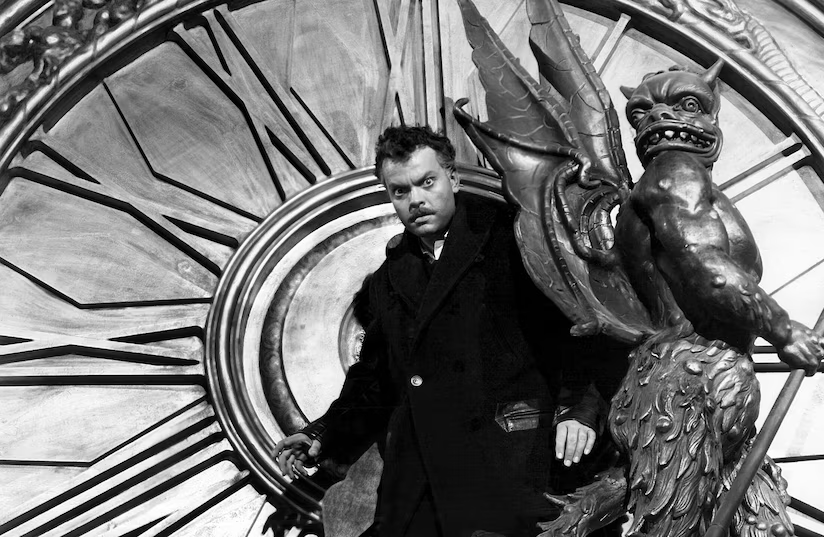
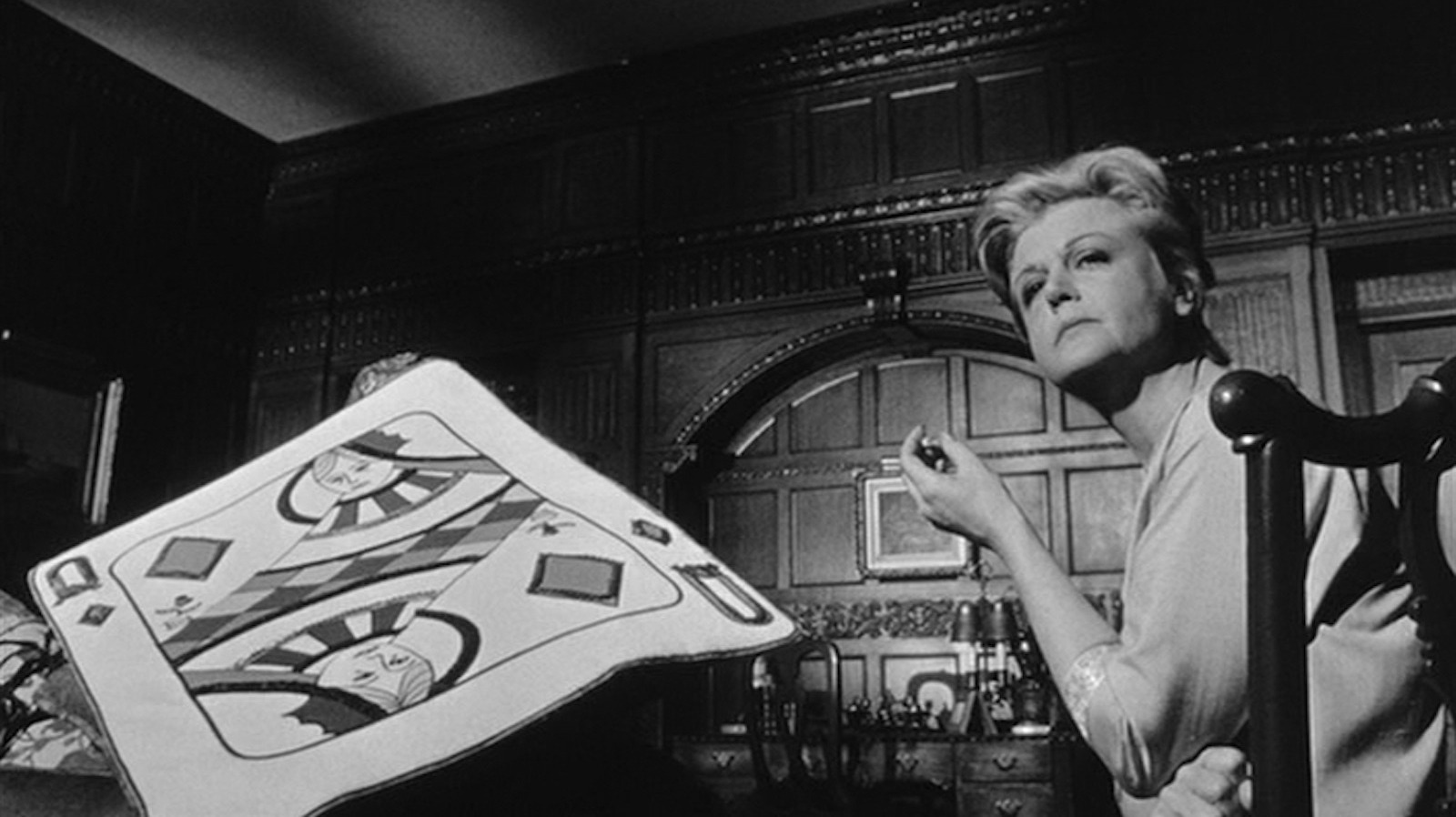
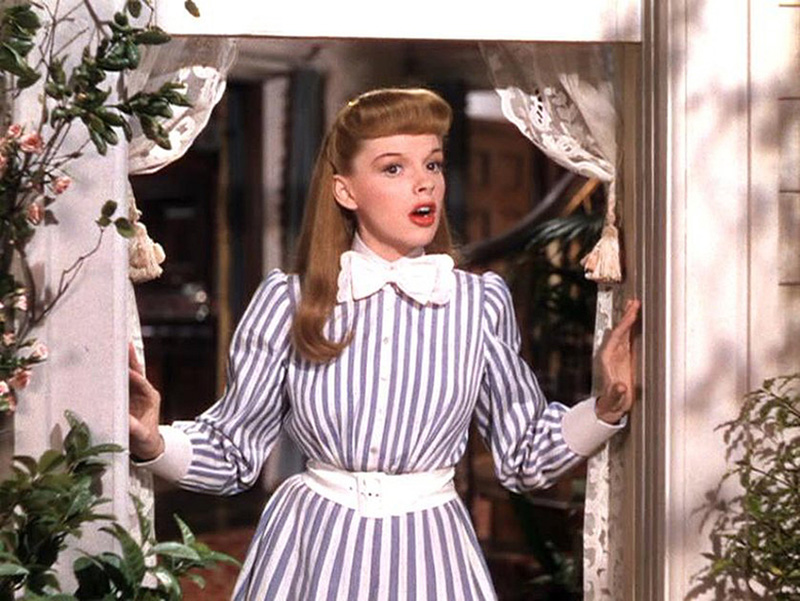
This past year I watched 84 movies, some long and some short, the majority of them made before 1960.
At the end of this post, I’ll list them all, but for now, here are my favorites from the bunch. I did not include any movies that were rewatches for me in my favorites list, but I did include rewatches in the overall list.
A vlogger I watch recently suggested watching Meet Me In St. Louis as a Christmas movie, mainly because of the song Have Yourself A Merry Little Christmas, which is sung toward the end of the movie.
I had never watched the movie because I’ve never felt like I was a big fan of Judy Garland, even though I haven’t seen her in much other than The Wizard of Oz.
I decided to give the movie a try a couple of weeks ago, though, and it turns out I don’t mind Judy as much as I thought and the movie does have a few Christmas-themed scenes (including a Christas Eve dance at the end), but it is much more than a Christmas movie.
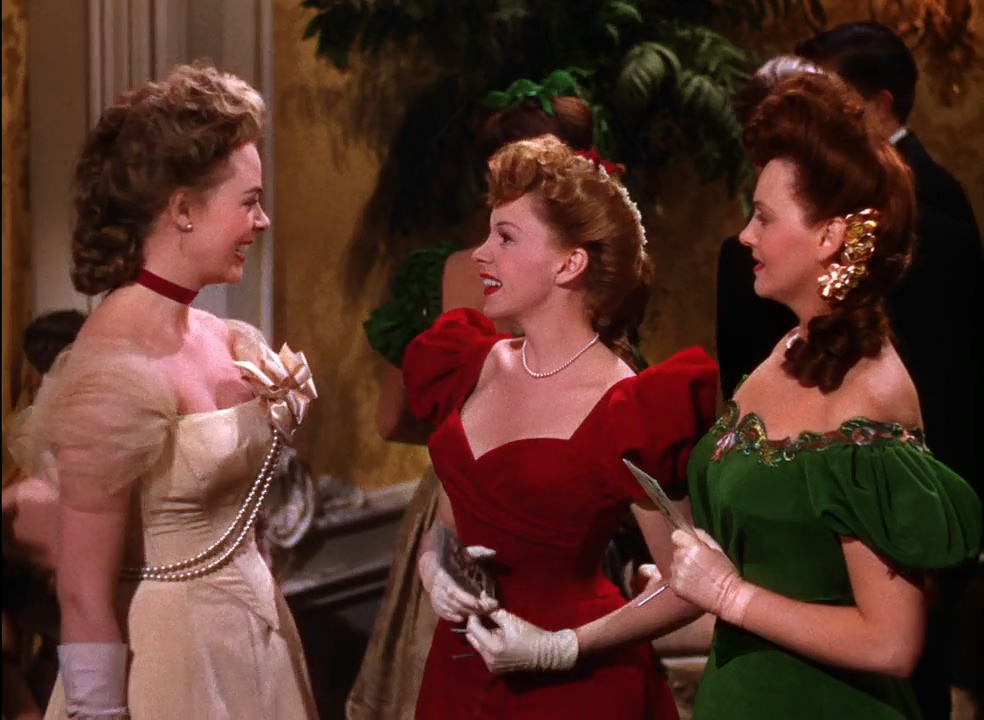
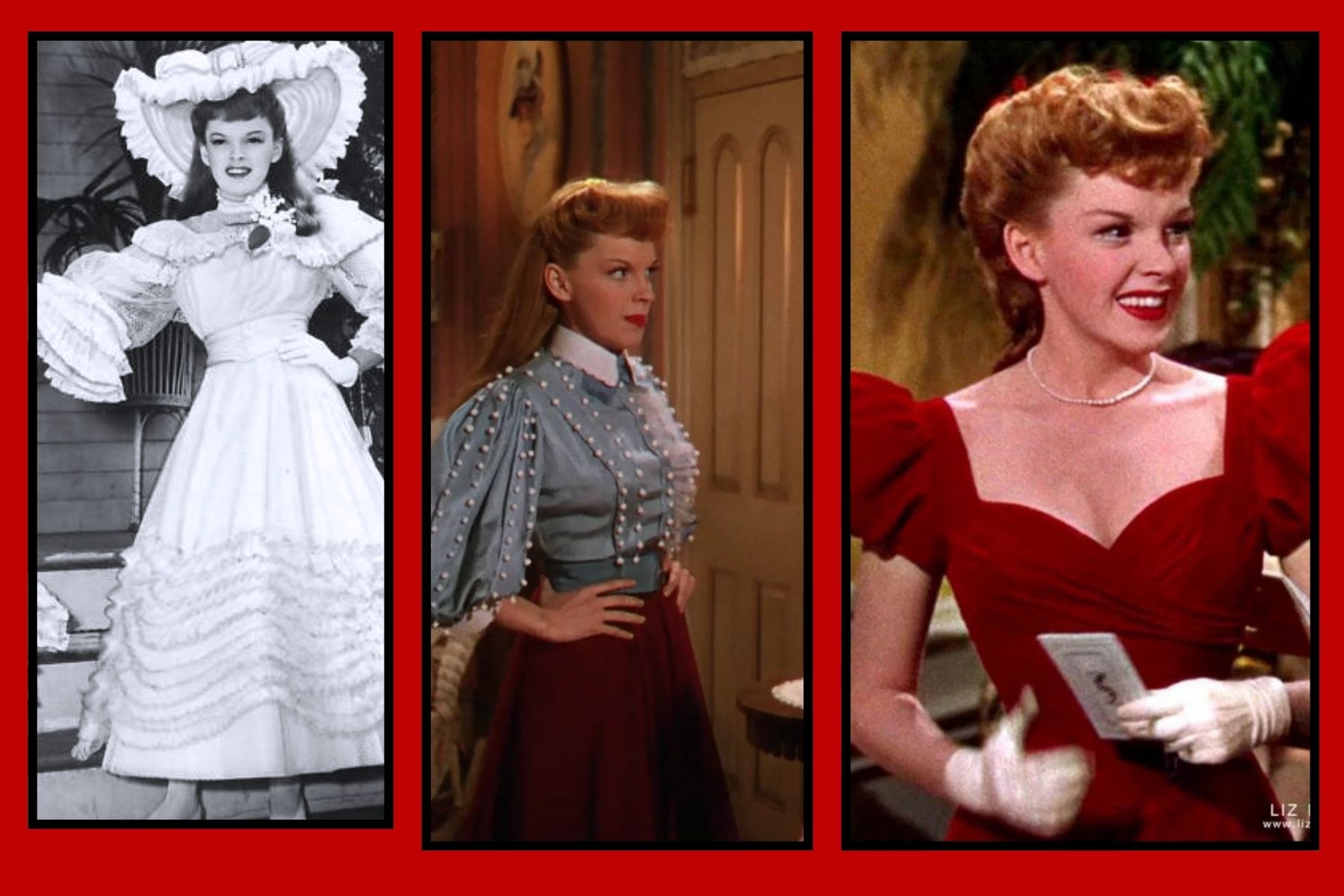
The movie is funny, fun, warmhearted, and full of really sweet or fun songs. The dresses worn by the young women are gorgeous and it was shot in technicolor which makes all the beautiful dresses even more captivating.
The movie is a musical, which I didn’t know when I started it. I didn’t even know that this is where the song Have Yourself A Merry Little Christmas came from. I also didn’t know this is where The Trolly Song (which I thought was just called Clang, Clang, Clang Goes the Trolly) came from. (That’s the song my husband always sings when he pretends he’s looped out from a knock on the head or when he is super tired. I’d say when he is drinking, but he doesn’t drink enough to get that drunk. I told him this movie is where the song he sings is from and he said he thought it was from The Simpsons. Ha! I think Homer does sing part of it in an episode.)
Yes, I have been living under a rock for my entire life.
If you’ve seen this movie you can skip over the next paragraph where I share what the movie is about.
The movie follows the Smith family, primarily Esther Smith (Judy) and her siblings as they grow up in St. Louis. The movie shows a year in the life of the family and there isn’t really a deep plot to the movie other than Judy trying to catch the eye of the college boy next door — John Pruitt — and her sister trying to get married. I don’t find the lack of a plot a detriment of the movie, by the way. The majority of the movie follows the different situations the youngest girls get themselves in, as well as the love life of Esther and her sister, and it is a fun journey.
The movie takes place in 1903.
The parents, grandfather, and housemaid are really all secondary characters but still very fun additions.
The youngest sisters, played by Margaret O’Brien (Tootie) and Joan Carroll (Agnes), are absolutely hilarious. The scenes with them are the funniest scenes in the movie. There is one that takes place on Halloween that is so insanely crazy I found myself gasping at the verbal “brutality” of these kids. (Written with a laugh, just to explain.)
If you’ve seen the movie, you know what I’m talking about. If you haven’t seen the movie, you’ll need to watch and find out.
In addition to Judy, the movie also stars Lucille Bremmer, Mary Astor, Leon Ames, and Harry Davenport.
The musical was released in 1944 and based on a series of short stories by Sally Benson.
Her stories story first appeared in the New Yorker magazine between June 21, 1941 and May 23, 1942. The twelve installments were published under at The Kensington Stories with Kensington referring to the fictional street address of the “Smiths’s” house.
Benson sold the rights to MGM in 1942 and was hired to work on the screenplay, which was ultimately written by Irving Brecher and Fred F. Finklehoffe with her help.
Benson published the stories as a novel of the same name with each chapter covering one month of the year the same year the movie came out.
According to AFI.com, Benson’s story was based on her own experiences growing up in St. Louis. “Tootie” was based on Benson, while “Esther” was inspired by her older sister.
The movie, incidentally, was directed by Vincent Morelli, who married Judy a year later. That marriage is a whole crazy story for another day.
Have Yourself A Merry Little Christmas was written by Hugh Martin and Ralph Blane who originally wrote it to be about celebrating Christmas during wartime. At the request of Judy, though, the lyrics were tweaked and the mood of the song was uplifted a bit. Judy, who was supposed to be 17 in the movie, is singing the song to her younger (5-year-old sister) in the movie and didn’t feel it was appropriate to sing a sad song at Christmastime to a little girl.
Meet Me In St. Louis was the second-highest grossing film that year behind the Bing Crosby movie Going My Way (the prequel to The Bells of St. Mary).
According to TCM.com, Meet Me in St. Louis received a very large amount of awards in 1944 and beyond. Here are some of those:
It was nominated for four Academy Awards including Best Cinematography, Best Original Song (for “The Trolley Song”), Best Musical Score and Best Writing, Screenplay.
In 1989 it won an ASCAP Award for the song “Have Yourself a Merry Little Christmas” which they named the Most Performed Feature Film Standard.
The National Board of Review named it one of the top ten films of 1944.
In 1945 the Library of Congress selected it as one of 7 films to be the first inclusions in the library’s film collection.
In 2005 the American Film Institute ranked it the 10th Greatest Movie Musical of All Time.
In 2004 the American Film Institute ranked “The Trolley Song” from it as the 26th Greatest Movie Song of All Time.
In 2005 Time Magazine named it as one of the Top 100 All-Time Movies.
An interesting story I read while researching this movie was that Margaret O’Brien’s juvenile Oscar was stolen by a former maid of her family’s. The Academy gave her a replacement Oscar, but she still hoped to one day have her original Oscar returned to her. She used to search flea markets and collector auctions for it.
The story is a bit long, but the Oscar was eventually found and returned to her during a special ceremony held by the Academy.
At the time she said, “For all those people who have lost or misplaced something that was dear to them, as I have, never give up the dream of searching—never let go of the hope that you’ll find it because after all these many years, at last, my Oscar has been returned to me.”
This post is part of the Comfy, Cozy Christmas feature hosted by me and Erin at Still Life, With Cracker Crumbs. If you have a blog post that you would like to share as part of this annual link-up, please find out more here.
I’ve been watching less popular Christmas-themed movies around Christmas for the last couple of years. One of those movies was It Happened on Fifth Avenue (1947).
I truly thought I’d written about this movie in previous years, but I can’t find it when I search so I am writing about it now.
The movie is about a group of people who are sort of thrown together but it starts with a man named Alyosius T. McKeever (Victor Moore) who sneaks in the mansion of businessman Michael O’Connor (Charlie Ruggles) in New York City early in November when O’Connor goes to his home in Virginia for the winter.
McKeever is a “vagabond” or homeless man.
He lives in the home, wearing O’Connor’s clothes, and eating any food left at the house in the pantry.
The movie opens with him sneaking inside through the back fence and will later learn that he’s been doing this for some twenty years.
I, of course, am surprised that no one has ever seen him or seen the lights on in the house but, it’s a movie. Let’s suspend belief.
There are police who patrol the grounds, but McKeever has a system where he hides in the icebox (or a room they call the icebox) until the police have passed by. He also has the lights hooked up so they will shut off as soon as someone opens the front door.
One day McKeever meets Jim Bullock played by Don DeFore, sleeping on a park bench. Jim, a veteran, has been evicted from his apartment building because it is being torn down. Michael O’Connor is putting up an 80-story building in its place.
When Jim gets to the mansion and is settling in, he sees an award shaped like a boat with the name Michael O’Connor on it and accuses McKeever of taking over homes of people who can’t afford to live in family homes like his.
McKeever tells Jim he’s not really O’Connor, but a friend of his. Jim accepts this explanation easily
Jim isn’t sure what to think of this arrangement, but he needs a place to stay so he accepts it.
Soon we see Michael O’Connor, who is in Virgina having a board meeting. During the board meeting he gets a call from his daughter Trudy’s school and been told that it’s possible she’s run away.
Michael looks at a photo of two women and asks his assistant if he thinks that she has run off to her mother in Florida.
The man doesn’t know so Michael orders him to hire a private investigator and find his daughter (played by … get this name…Gale Storm).
His daughter, though, is already found for us viewers. She is at her father’s mansion looking for her clothes when Jim finds her. He demands to know what she’s doing there and suggests she is stealing from the mansion. He threatens to call the police.
Trudy, apparently smitten with Jim merely based on his appearance, decides not to tell him who she really is and tells him to go ahead and call the police.
McKeever pulls Jim aside and confesses all. He is not a friend of O’Connor, but is, instead, simply someone who takes advantage of the home being empty for a few months out of the year. When O’Connor leaves, he moves in and when O’Connor leaves Virginia, McKeever hitches his way to Virginia and moves in that house until it’s time to come back to New York.
(Again…suspend belief).
Jim isn’t sure what to make of the arrangement, but is amused and impressed that McKeever hasn’t been caught yet.
Trudy listens in and overhears what McKeever has been doing and smiles in an amused way. She decides she will find a way to stay on with the men since it will be a way to hide from her father for a while. She tells the men the truth, which is that she’s going to get a job at a music store so she can get back on her feet again. She then says she only broke into the house because she was hungry and desperate and then does a lovely fake faint to add to her story.
The men agree that she can stay. From here the movie will start to get a bit more complicated as more people are invited to stay at the mansion, including a family with small children. What could make all of this even more chaotic? Add in Michael O’Connor returning to New York to try to find his daughter and planning to return to the mansion.
One little thing that bothered me about this movie was how young Gale Storm looked and was supposed to be. She was supposed to be 18 but a romance develops between her and Jim and he seems considerably older than her. That was…awkward at times. However, I’m not sure how old Jim is actually supposed to be so maybe it isn’t so awkward. Gale was 22 at the time the film was made.
The screenplay for this movie was written by Everett Freeman. The original story was created by Herbert Clyde Lewis and Frederick Stephani.
Harry Revel wrote the songs “It’s A Wonderful, Wonderful Feeling.” “That’s What Christmas Means to Me” and “Speak My Heart” for the movie, according to the opening credits, but I wouldn’t call this movie a musical. One of the main characters simply sings a bit.
Gale Storm thought she’d be singing the parts in the film, but, unfortunately, she was told her voice would be dubbed over.
She later wrote in her memoir: “I couldn’t believe it. I thought that maybe the director didn’t know I’d been singing and dancing in films, and that if I spoke to him he’d let me do my own numbers. Well, I asked him, and he said no. I asked him to look at some of my musicals, and he said no. I asked him if I could sing for him, and he said no. His theory was that if you were a dancer, you didn’t sing; if you were a singer, you didn’t dance; and if you were an actor, you didn’t sing or dance. It was humiliating.”
Another song in the movie is “You’re Everywhere” sung by The King’s Men at 1930s/1940s barbershop quartet.
According to TCM.com, Frank Capra originally acquired the rights to the movie but passed it on to Allied Artists, a new subsidiary of Monogram Pictures, which used to develop B movies. It Happened on Fifth Avenue was the companies first major motion picture and was developed by Roy Del Ruth.
Not only was Gale upset about not being able to sing in the film, but she also was disappointed Capra didn’t direct it, according to the TCM.com article. She felt the movie was decidedly “Capra-esque” — “a warmhearted human story about the little guy with underlying social and political commetary. She said that she felt Del Ruth didn’t make the most of the story’s potential, but she may have been holding a grudge since he didn’t let her do her own singing.
Gale said Del Ruth wasn’t easy on anyone.
“I wasn’t the only one Del Ruth humiliated,” continued Storm in her biography. “Victor Moore was a dear, sweet old man who was kind to everyone; we all loved him. Except Del Ruth. Whatever Victor did, the director made him redo it — again and again. And Del Ruth never told the old man what he might have been doing wrong.”
Despite these complaints from Gale, the movie did well when it was released, with the actors receiving praise by reviewers and critics. It has now become a beloved classic as well.
Is this one you’ve ever seen? What did you think about it?
This post is part of the Comfy, Cozy Christmas feature hosted by me and Erin at Still Life, With Cracker Crumbs. If you have a blog post that you would like to share as part of this annual link-up, please find out more here.
If you write book reviews or book-related blog posts, don’t forget that Erin and I host the A Good Book and A Cup of Tea Monthly Bookish Blog Party. You can learn more about it here.
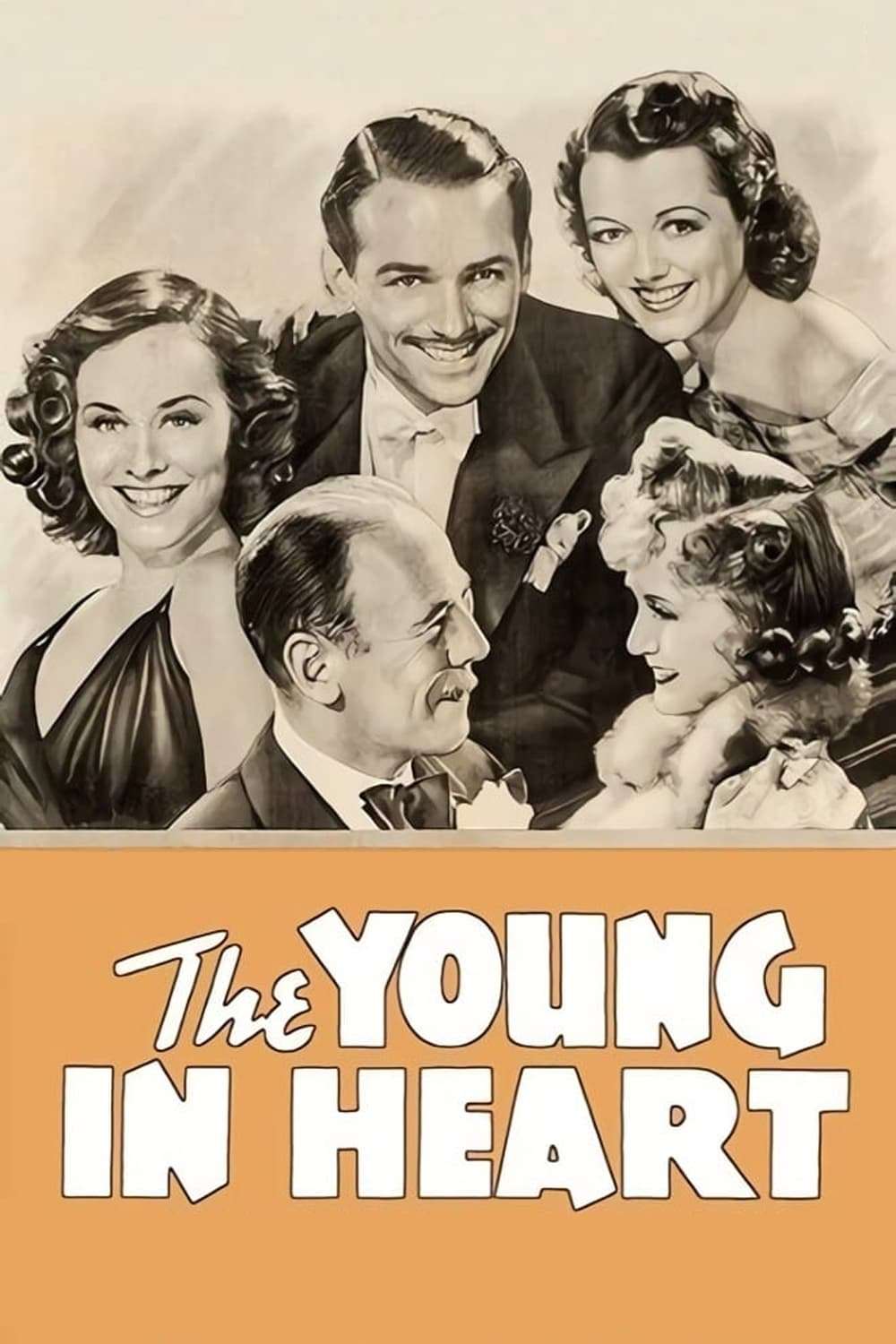
Erin from Still Life, With Cracker Crumbs and I are hosting Comfy, Cozy Cinema again this year and up this week was The Young In Heart.
And, yes, that title is the actual title: The Young IN Heart.
I feel like I cheated a little bit this week because not only have I watched this movie, but I also wrote about it when I watched it for the Winter of Douglas Fairbanks Jr. That means I had an advantage to Erin when it came to writing this week’s post because I am going to quote a lot of my original post.
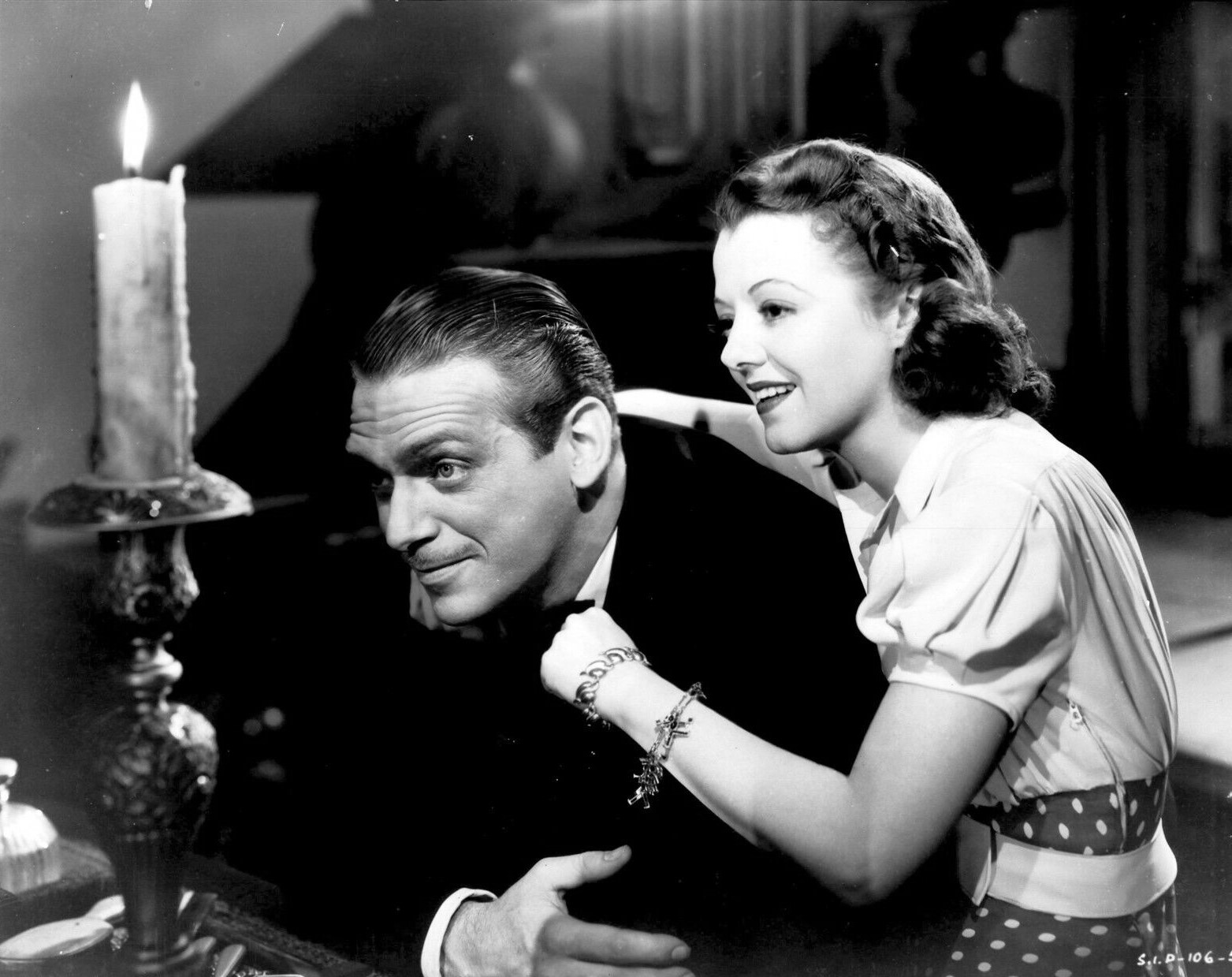
This is part of what I wrote in that post: “I absolutely loved Douglas in this one. He played a more prominent role than in Gunga Din and was simply … shall I sound completely cheesy? Yes, I shall. He was completely delightful.
At one point, I texted my friend Erin that a drunk Douglas is adorable.”
Yes, I did text Erin this past January to tell her he was adorable. Yes, I am weird.
Before I forget, I found this one for free on YouTube.
So, let’s get to the movie.
The Carlton family, of which Douglas is a part of in this movie, are not a family you would want to know in real life. They are swindlers and grifters. They mooch off and manipulate people to scrape by in life.
We open the movie in the French Riviera with Douglas’s character (Rick) ready to marry a young woman whose father is rich.
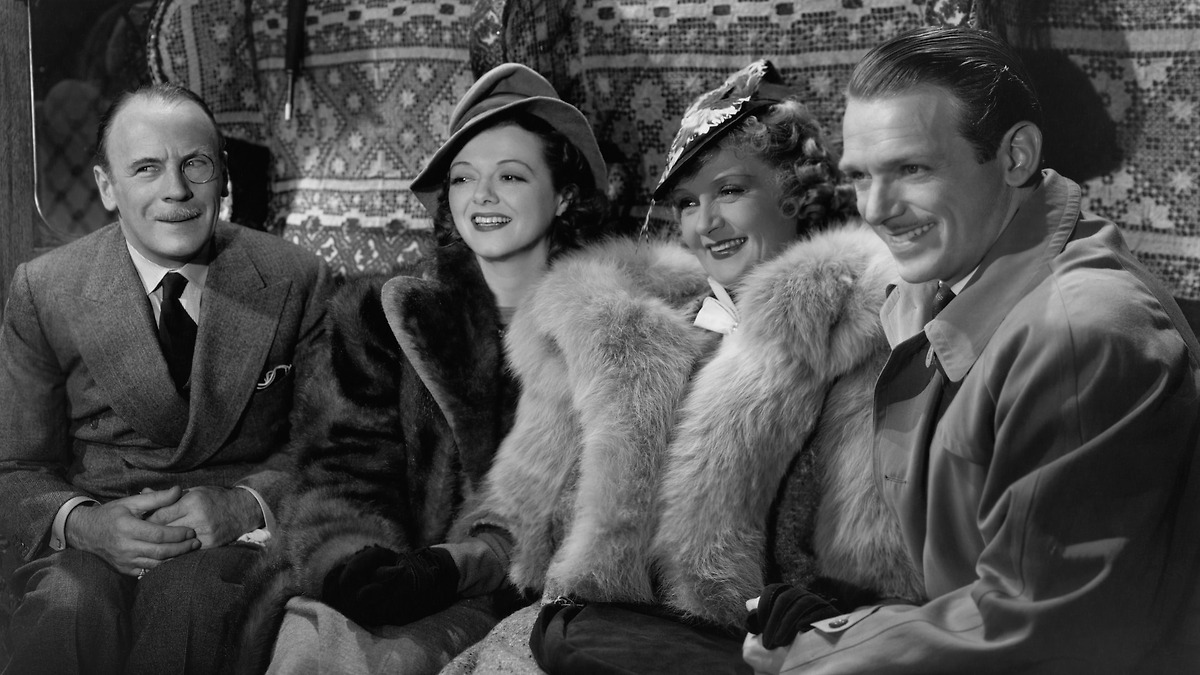
Everything falls apart, though, when the police find out about the family and reveal their conniving ways to the family of Rick’s future wife. The family is told to get out of France and end up on a train where they meet a ridiculously sweet woman (Minnie Dupree) who has only recently come into a great sum of money.
Ironically, her last name is Fortune. George-Anne sets out to swindle the woman out of paying for their lunch, but the plan expands as the woman explains she lives alone in a big mansion left to her by a former suitor. She is saying how lovely it would be if all of them came to stay with her when there is a train derailment. Their car tips and at first Rick and George-Anne believe the old woman has died. She’s still breathing so the siblings carry her from the car and George-Anne covers her with her own coat.
We begin to wonder if the family is rotten through and through and are still playing things up as the woman later recovers and invites the family to come live with her.
George-Anne suggests to the family that if Miss Fortune believes they are a respectable family she will be more willing to let them live there and maybe even leave them money when she leaves. To play up this ruse she suggests the men get actual jobs and she and her mother act like caretakers and women who don’t swindle people out of money.
This is all very baffling to the family who has always cheated and stole for a living. When the men decide George-Anne’s plan might work and go to look for jobs, the scenes that follow are some of the most hilarious tongue-in-cheek moments I’ve seen in a movie.
Spinning around in the background of the family’s drama is the romance between George-Anne and Duncan Macrae (Richard Carlson), who she originally considered marrying when she thought he was rich. Duncan learned she was a con-artist along with everyone else and was shattered but still ends up chasing her down on the train back to London to tell her he still loves her.
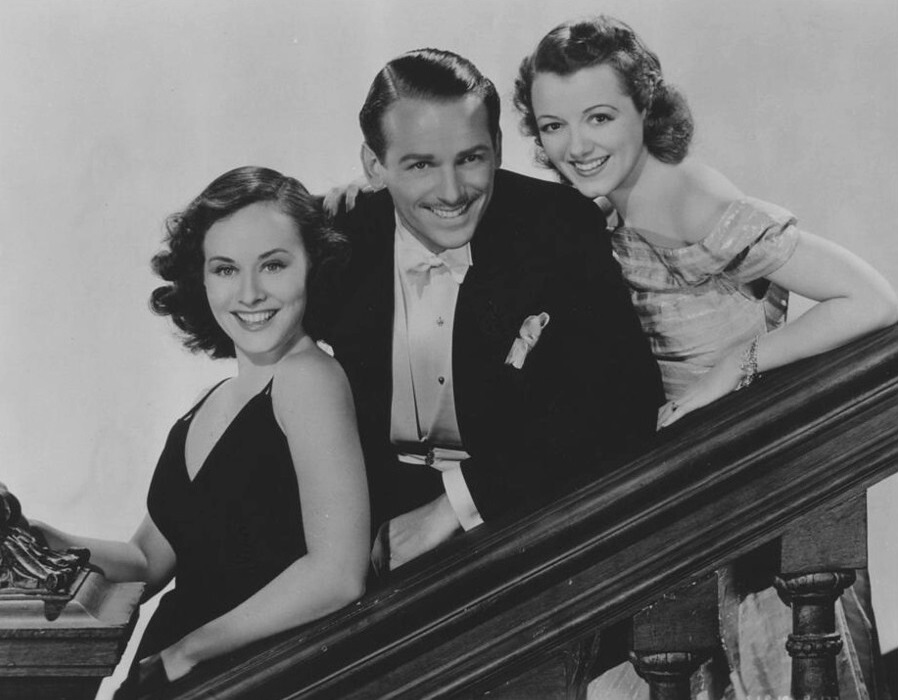
The rest of Rick’s family — father, Col. Anthony “Sahib” Carleton (Roland Young), mother Marmey Carlton (Billie Burke), and daughter George-Anne (Janet Gaynor) — are thrilled with this plan because they know it will also set them all up for a rich life. George Anne might be even more thrilled because then she can marry a poor Scottish man who she’s fallen in love with, and the rest of her family will support her financially.
She tells him to get lost, believing he’s much too good for her and . . . well, you’ll have to see where all that ends up.
Rick is also having his own romance with Leslie Saunders (Paulette Goddard), a secretary and the engineering business he applies at for a job.
This is the second – or shall I say third – movie I’ve watched in recent months with Billie Burke and there is no mistaking that voice if you have seen The Wizard of Oz.
Yes, she is Glenda the Good Witch.
The screenplay for this movie was written by Paul Osborn and adapted by Charles Bennett from the serialized novel, The Gay Banditti by I. A. R. Wylie. That title certainly would have had a different connotation in the modern day, eh?
Anyhow, the novel appeared in parts in The Saturday Evening Post from February 26 to March 26, 1938.
The movie was released in November of the same year. They certainly worked fast back then.
I found it interesting when I read that Broadway actresses Maude Adams and Laurette Taylor screen-tested for the role of Miss Fortune and that the footage is the only audio-visual samples that existed of both of them.
The movie was produced by – can you guess? Because it feels like every movie I write about lately is produced by him.
Yes. David Selznick. The man who produced what is considered one of the biggest movie triumphs in the world — Gone with the Wind.
This movie was one of many he produced leading up to Gone With The Wind. The Prisoner of Zenda, which I wrote about a couple of weeks ago, was another. Goddard was actually rumored to be being considered to play Scarlet O’Hara in Gone With The Wind, which later, of course, went to Vivien Leigh.
While I was watching the part of the movie where Mr. Carleton goes to apply for a job, I was fascinated by the fancy car they showed. It was spinning like a pig on a spit at the front of the building and it was a very modern looking car and a very modern looking set up altogether.
The six-passenger 2-door sedan Flying Wombat featured in that scene was actually the one-of-a-kind prototype Phantom Corsair. The Phantom Corsair concept car was built in 1938 and designed by Rust Heinz of the H. J. Heinz family and Maurice Schwartz of the Bohman & Schwartz coachbuilding company in Pasadena, California.”
I also found it interesting that this was Gaynor’s last movie before retiring while she was at the top of her career. She made one last movie in 1957 called Bernardine.
Like I said above, I loved this movie. It was just what I needed to watch this week with so much sadness going on in the world. There was a lot of humor from all the cast, but Douglas really had me smiling throughout. Not only because he is my latest old Hollywood star crush (watch out Paul Newman!).
Have you seen this one? What did you think of it?
You can read Erin’s impression of the movie on her blog.
Next week we will move into a bit of spooky with Coraline.
The rest of our movie list can be found on this graphic:
I was surprised this past weekend to find a ton of classic movies for free on Tubi so I thought I’d share some of the better classic (before 1970) movies with my blog readers today. I have watched these and really enjoyed them! I’ll have a part two for this one down the road sometime.
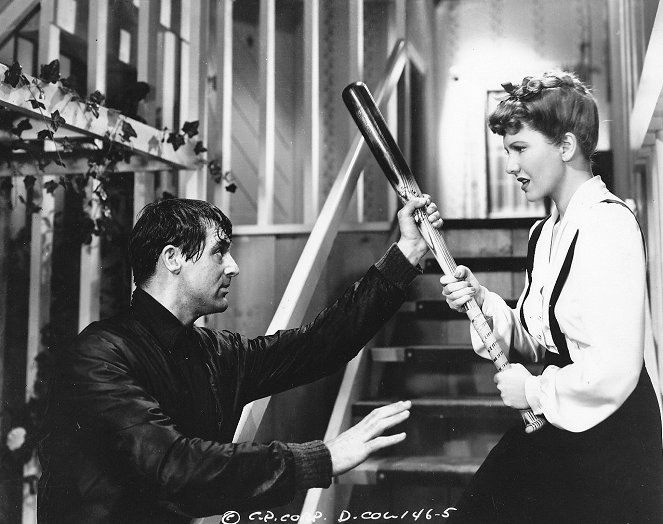
Talk of the Town
Leopold Dilg (Cary Grant), who was wrongfully convicted of arson, manages to escape from prison. While on the lam, he finds the home of Nora Shelley (Jean Arthur), an old friend from school for whom he harbors a secret affection. Nora believes in Dilg’s innocence and lets him pose as her landscaper; meanwhile, Professor Lightcap (Ronald Colman), a legal expert, has just begun renting a room in Nora’s home. Lightcap, like Dilg, also has eyes for Nora, leading to a series of comic misadventures.
My Man Godfrey
Fifth Avenue socialite Irene Bullock needs a forgotten man to win a scavenger hunt, and no one fits that description more than Godfrey Park, who resides in a dump by the East River. Irene hires Godfrey as a servant for her riotously unhinged family, to the chagrin of her spoiled sister, Cornelia, who tries her best to get Godfrey fired. As Irene falls for her new butler, Godfrey turns the tables and teaches the frivolous Bullocks a lesson or two.
The Philadelphia Story
This classic romantic comedy focuses on Tracy Lord (Katharine Hepburn), a Philadelphia socialite who has split from her husband, C.K. Dexter Haven (Cary Grant), due both to his drinking and to her overly demanding nature. As Tracy prepares to wed the wealthy George Kittredge (John Howard), she crosses paths with both Dexter and prying reporter Macaulay Connor (James Stewart). Unclear about her feelings for all three men, Tracy must decide whom she truly loves.
The Third Man
Set in postwar Vienna, Austria, “The Third Man” stars Joseph Cotten as Holly Martins, a writer of pulp Westerns, who arrives penniless as a guest of his childhood chum Harry Lime (Orson Welles), only to find him dead. Martins develops a conspiracy theory after learning of a “third man” present at the time of Harry’s death, running into interference from British officer Maj. Calloway (Trevor Howard) and falling head-over-heels for Harry’s grief-stricken lover, Anna (Alida Valli).
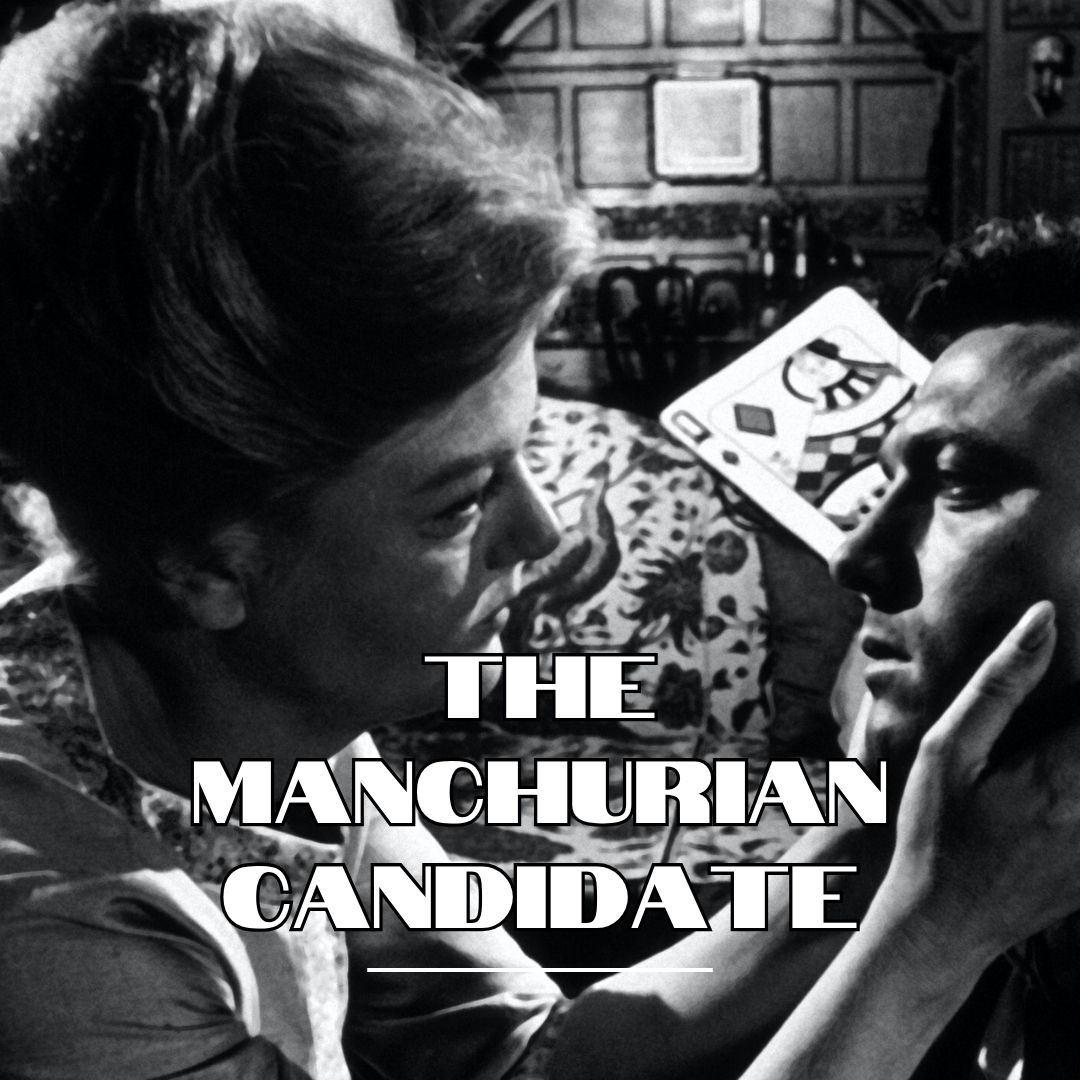
The Manchurian Candidate
Near the end of the Korean War, a platoon of U.S. soldiers is captured by communists and brainwashed. Following the war, the platoon is returned home, and Sergeant Raymond Shaw (Laurence Harvey) is lauded as a hero by the rest of his platoon. However, the platoon commander, Captain Bennett Marco (Frank Sinatra), finds himself plagued by strange nightmares and, together with fellow soldier Allen Melvin (James Edwards), races to uncover a terrible plot.
Merrily We Live
The wealthy Kilbourne family is tired of Mrs. Kilbourne (Billie Burke) hiring ex-convicts as servants. After a servant steals the family’s silver, Mrs. Kilbourne agrees to never hire another drifter for help. But when a rough-looking man named Rawlins (Brian Aherne) arrives at her doorstep, she cannot help but hire him as the new chauffeur. As Rawlins catches the eye of their oldest daughter, Jerry (Constance Bennett), the Kilbournes realize that he may not be the vagrant he claims to be.
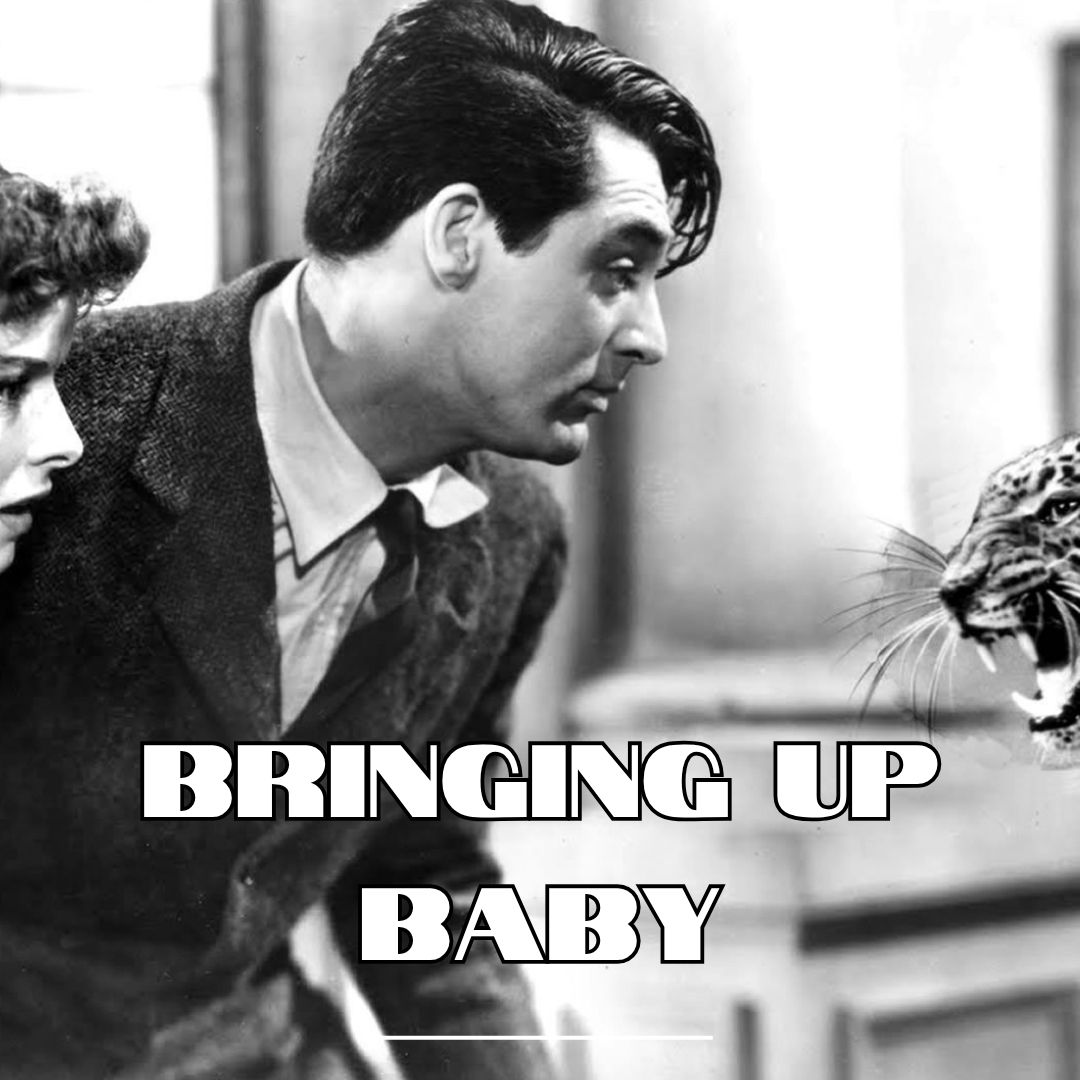
Bringing Up Baby
Harried paleontologist David Huxley (Cary Grant) has to make a good impression on society matron Mrs. Random (May Robson), who is considering donating one million dollars to his museum. On the day before his wedding, Huxley meets Mrs. Random’s high-spirited young niece, Susan Vance (Katharine Hepburn), a madcap adventuress who immediately falls for the straitlaced scientist. The ever-growing chaos — including a missing dinosaur bone and a pet leopard — threatens to swallow him whole.
Without Reservations
Famous author “Kit” Masterson (Claudette Colbert) needs an actor to portray the lead character, a soldier, in the upcoming movie version of her book. While on a train to California, she meets Marine Rusty Thomas (John Wayne) and his friend, Dink (Don DeFore). She begins to imagine the macho Rusty as the lead, and attempts to stay in his company. However, since Rusty did not like her book, Kit must conceal her identity, all the while growing more attracted to her potential actor.
It Happened One Night
In Frank Capra’s acclaimed romantic comedy, spoiled heiress Ellie Andrews (Claudette Colbert) impetuously marries the scheming King Westley, leading her tycoon father (Walter Connolly) to spirit her away on his yacht. After jumping ship, Ellie falls in with cynical newspaper reporter Peter Warne (Clark Gable), who offers to help her reunite with her new husband in exchange for an exclusive story. But during their travels, the reporter finds himself falling for the feisty young heiress.
A Woman of Distinction
Reserved college dean Susan Middlecott (Rosalind Russell) is all business and can’t be bothered with love. However, when Susan meets charming British astronomy professor Alec Stevenson (Ray Milland), it seems that romance could be in the air. Though she resists being paired with Alec, things don’t go as planned — particularly when a publicity agent and even Susan’s amiable father (Edmund Gwenn) get involved. Soon, Susan may just be in love, whether she likes it or not.
This past weekend I watched the movie The Talk of the Town with Cary Grant, Jean Arthur, and Ronald Colman. I found this movie, among many other good ones, free on Tubi. It is also currently free on YouTube.
I had seen it before as a suggested move but ignored it, thinking it was a drama. After watching it, I asked myself, “What took me so long to watch this one?!”
I loved this movie and while I always love Cary Grant, I once again loved Ronald Colman who I first saw in The Prisoner of Zenda earlier this year.
This movie starts with a fire at a factory where a man dies. Cary, portraying Leopold Dilg, is arrested for arson and murder.
Soon he’s breaking out of jail and escaping through the woods on a rainy night. He makes his way in the dark toward a small house while dogs hunt him down. The name of the house is Sweetbrook and there is a woman inside getting it ready — maybe for a guest.
Leopold breaks in the door, startling the woman.
“Miss Shelley,” he says. “Please…let me…” And then he faints and falls down the stairs.
Miss Shelley wakes him up with a bucket full of water and he asks if she can stay at the house, which he knows is a rental. She tells him he can’t stay because she knows he has escaped jail. There is a knock on the door before she can finish explaining and she tells him to run upstairs and hide.
There is a Professor Michael Lightcap at the door and he’s standing in the rain. He reminds her that he’s rented the house out and he’s here to stay. Miss Shelley, whose first name is Nora, panics because Leopold is hiding upstairs and she doesn’t want the professor to find him.
Things will get more complicated as she makes up an excuse to stay in the house overnight to make sure the professor doesn’t find Leopold.
Complications just keep arising as Nora offers to become the professor’s secretary and housekeeper during his stay, a senator arrives to tell Professor Lightcap he’s up for nomination to the United States Supreme Court, and Leopold walks down one morning to argue about the role of the law in society and Nora has to introduce him as the gardener.
This is a non-stop movie full of hilarious mix-ups, near misses, and a love-triangle that won’t be resolved until the very last minute, literally, of the movie.
As I said above, I loved this movie.
It was engaging, funny, witty, and captivating. Mixed in all the lighthearted moments were a few philosophical moments about law and justice.
Jean Arthur was delightful as Nora Shelley, always quickly rescuing the day just at the last moment, taking care of both Leopold and the professor.
Ronald Colman pulled off the staunch, uptight professor well and it was fun to see him “let down his hair” a bit later in the film. He didn’t let down his hair. It’s just a saying, of course.
Cary walked the line between an aggressive rebel and a falsely accused victim, putting his usual romantic charm on the backburner for most of the film and bringing it out in more subtle moments. This was a movie where he wasn’t a pursuing a woman as much as he was his own freedom and justice.
I spent much of the last half of the movie wondering which one of the men Nora was actually falling for and I think she was doing the same thing. She’d gathered affection for both of them but wasn’t sure if either of them had for her.
This movie was nominated for seven Oscars but it was about the same time that America started the war so more “patriotic” movies got the nod that year. Ironically the best picture went to Mrs. Minier, which was set in England, however.
According to TCM, even without the wins, The Talk of the Town “still marked an important moment in the careers of its stars Cary Grant and Ronald Colman.”
For Cary, it was a new movie after not working for a year and he was nominated for an Oscar as well. He didn’t win the Oscar but he did have his name legally changed his name from Archibald Alexander Leach, became an American citizen and married heiress Barbara Hutton.
Colman was 51 at the time and needed a spark to reinvent his career. The Talk of the Town worked and he went on to star in Random Harvest, which earned him another Oscar nomination. He lost that to James Cagney in Yankee Doodle Dandy, but still kept him at a high point in his career. Films such as Kismet (1944) and Champagne for Caesar (1950). He also finally earned his Oscar for portraying the delusional Shakespearean actor in A Double Life (1947).
I found it interesting to read that there was tension between Grant and Colman since both were used to being the lead actor and that tension was written into the script as they aggressively bantered back and forth with each other.
I also was fascinated to learn that two endings were filmed — one with Jean Arthur choosing Cary and the other with Colman. The director allowed the preview audiences to choose who she ended up with.
Trivia:
filming was to begin on January 17, 1942, the day Hollywood learned the sad news of Carole Lombard’s death in a plane crash. Stevens halted work on the set and sent both cast and crew home.
Screenwriter Sidney Buchman (who co-wrote the script with Irwin Shaw) was blacklisted in the 1950s. Consequently, Buchman, one of the men who penned Mr. Smith Goes to Washington (1939), left the U.S. and began working in Fox’s European division. Buchman would remain in France until his death in 1975.
When the professor is unconscious on the floor, Tilney (Rex Ingram) asks Sam if he is a doctor. Ironically, Rex Ingram was himself a trained physician in real life.
Cary Grant and Ronald Colman were both paid at least $100,000 for their work in the film. Jean Arthur, who was in Harry Cohn’s doghouse and just coming off suspension, was only paid $50,000.
Whilst many characters find Leopold Dilg’s penchant for adding an egg to his borscht unique (so much so that it becomes a means of determining his whereabouts), it was not an uncommon practice to add an egg to borscht in Poland and in Mennonite communities in Eastern Europe.
A radio theatre presentation of The Talk of the Town (1942) was broadcast on CBS radio on the Lux Radio Theatre on 5/17/1943 with Cary Grant, Ronald Colman, and Jean Arthur recreating their roles from the movie. It’s a 60-minute adaptation of the movie.
Nora tells the professor that he is, “as whiskered as the Smith Brothers.” This refers to a brand of cough drops with an illustration of the Smith Brothers on the front, both of whom have a beard. First introduced in 1852, they remained the most popular brand for a century.
Memorable quotes:
Well, it’s a form of self-expression. Some people write books. Some people write music. I make speeches on street corners.
– Leopold Dilg
What is the law? It’s a gun pointed at somebody’s head. All depends upon which end of the gun you stand, whether the law is just or not.
– Leopold Dilg
Stop saying “Leopold” like that, tenderly. It sounds funny. You can’t do it with a name like Leopold.
– Leopold Dilg
This is your law and your finest possession – it makes you free men in a free country. Why have you come here to destroy it? If you know what’s good for you, take those weapons home and burn them! And then think… think of this country and of the law that makes it what it is. Think of a world crying for this very law! And maybe you’ll understand why you ought to guard it. – Michael Lightcap
He’s the only honest man I’ve come across in this town in 20 years. Naturally, they want to hang him. – Sam Yates
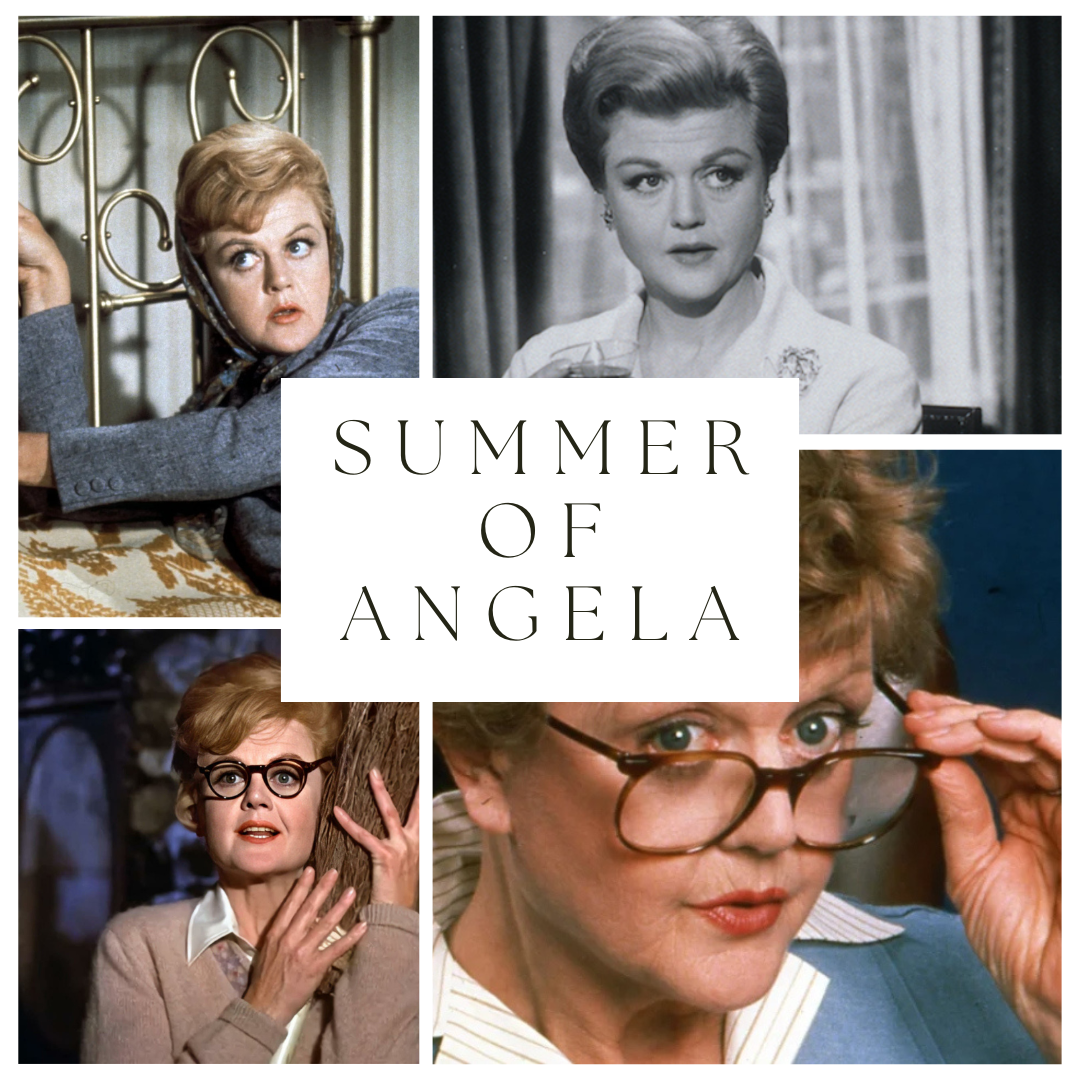
This summer I am watching Angela Lansbury movies for the Summer of Angela.
Up this week was A Life At Stake, another crime noir “B-movie” and another chance for Angela to show her evil side. Honestly, she’s been evil in a lot of the movies I watched with her throughout this summer, which cracks me up since a lot of people associate her with being sweet in kind from things like Murder She Wrote and Bedknobs and Broomsticks.
This movie was not the best I’ve ever seen plot-wise but the dialogue was actually very well written and the sexual tension was something I didn’t expect for a 1954 movie.
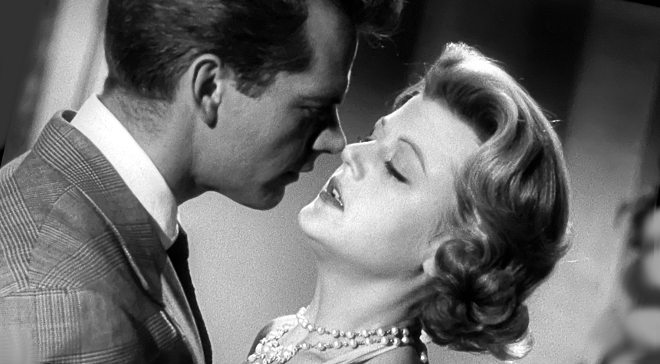
The movie is essentially about a man who is very paranoid and thinks everyone is out to get him. Or, as Google describes it: “After an out of work architect accepts a business proposition from a married woman, he soon begins to suspect her motives, and fear for his life.”
Edward Shaw, portrayed by Keith Andes had a business failing and now he’s been approached by a lawyer with the prospect of a new business.
Edward tells the lawyer he really doesn’t really want to get involved. He keeps a $1000 bill framed on his wall to remind him of his failures and encourage him to try again. I didn’t know there was such a thing as a $1,000 bill by the way.
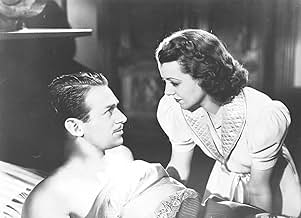
Anyhow, I digress, the lawyer puts him in contact with Doris Hillman (Angela), wife of Gus Hillman (Douglass Dumbrille). Edward goes to Doris’s home and the housekeeper says he needs to call out before he goes to the pool because Doris has been known to swim in the nude. Edward quips back, “That’s okay. I’ve been known to swim in the nude too.”
Doris isn’t naked but she does tell Edward he should have called out. From their first meeting the flirting begins in earnest. Doris even covers herself with a towel but removes the top of her swim suit underneath it because she says it’s uncomfortable.
Eventually they get to business talks and Doris says Gus wants Edward to run the company, buying up property with money Gus will give him and for Doris to sell the property using her past real estate experience.
Edward is agreeable but feels suspicious about it all, especially when Doris says they will need to take an insurance policy out on him for half a mil. He doesn’t, however, seem to feel suspicious about Doris and later that night at home when he gets a call, he asks his land lady if it is a woman calling. It is clear he’s hopeful Doris will be calling soon and about a lot more than business.
Doris does call another day and asks him to meet her a hotel room. From there he’s laying it on heavy, flirting all over the place, but she lets him know she’s not interested. She’s only interested in business. Edward (sort of a horny jerk if you ask me) leaves but later that night Doris pulls up outside his apartment.
She says something flirty and then before we know it, he’s in the car practically shoving his tongue own her throat.
All is going well with their little liaisons and business dealings until Edward meets Doris’s sister, Madge (Claudia Barrett). Madge thinks he’s just lovely and starts hitting on him. She invites him to dinner in front of Doris and Gus and because he doesn’t want Gus to know about his affair with Doris, he agrees.
During dinner Madge drops a bombshell and says that Gus is Doris’s second husband because her first husband died a few years ago in an accident. What’s weird is that Doris and Gus were in a business with him too and when he died Gus and Doris got the insurance money since they’d taken out a policy on each of them for the business.
Edward is incensed. He had a feeling Doris and Gus were up to something and now he knows what it is. They really do want to kill him and get the money for the insurance policy they took out in his name.
He’s still thinking about this when Doris calls and says she wants to show him something.
He reluctantly agrees and she drives him up on a hill. She shows him some property she says will be great for development but when she goes to park, the brake slips and the car keeps rolling. She gets it in park and says she’s going to go get the property owner because he said he would show them around.
After she leaves, though, with Edward sitting in the passenger side, the car starts to roll toward a bank with a long drop and Edward just barely stops it.
That cinches it for him. Doris and Gus are in on this together and they are going to kill him.
I won’t give away the ending but most of the rest of the 70 minute movie (yes, it’s that short) will be Edward waffling back and forth between suspecting the couple and being in love with Doris while Madge is in love with Edward and knows all about the affair. Later she also knows about Edward’s suspicions.
This is a dark movie and it took the path I thought it might but I did think there might be more of a plot twist toward the end. Actually, there did seem to be a bit of a plot twist based on something said by a character right at the end but I wasn’t sure if I was reading too much into it or not.
I will share that I did read Cat’s review (found on her blog Cat’s Wire) before finishing this post up and I have to agree that I did not really connect with or like the main character.
I don’t think I would have cried much if he had been murdered (okay, so I gave a little away here…..he isn’t murdered). He was very unlikable and rude. He wanted to have his little fling with Doris but also keep her and her husband from killing him. He was sort of ruled by his privates to me and it severely affected his judgment. And though there were some good lines in this one – the writing overall was just not very strong.
I’m sure this is just motion blur in the image, but all I can think of when I see Angela’s hand in this photo is that episode of Seinfeld when Jerry dates a woman with “man hands.”
I liked Angela’s performance and thought she succeeded once again in pulling off playing someone evil and making it hard for the viewer to figure out if she was really in love with Edward or not.
I listened to an interview with Angela last week when writing about The Picture of Dorian Gray, and she said she made a lot of not-so-great movies over the years. This may be one of them she was referring to.
The movie was directed by Paul Guilfoyle, for those who care about such things. The film was restored in 2021 and resulted in a few noir crime movie buffs blogging about it.
One of those, Michael Barrett from the site Pop Matters, wrote: “You’d have to know me to understand how unlikely it is that I’d never heard of this picture, but the commentary by scholar Jason A. Ney points out that this film is so obscure, it’s not listed in most noir references, despite the presence of a major star. So this might count as more of a rediscovery than restoration.”
About the acting and plot he writes, “The film runs only 76 minutes, but a bunch of stuff happens at a nice clip, sometimes too quickly for us to analyze how much adds up, with some elements more obvious than others. In a sense, everyone is clumsy and transparent, and that feels reasonably credible. The story mixes common sense (e.g., going to the cops and the insurance company) with devious cupidity and lust amongst tawdry, small-minded people.”
Glenn Erickson on Trailers from Hell wrote: “Filmed in 1954, producer Hank McCune’s A Life at Stake is notable for its fairly competent production and a decent if somewhat thrill-challenged screenplay — and the fact that it stars an actress one wouldn’t think would be associated with an 11-day cheapie thriller. The great Angela Lansbury is the odd star out on a list of creatives that reads like a call sheet for ambitious Hollywood underachievers, all thirsting for the right show to get their career in motion.”
I have to agree with Erickson when he writes: “The movie generates some tension but can’t quite convince us that Ed Shaw is as helpless as presented.”
I enjoyed Erickson’s entire review and background so if you would like to know even more about the film and Angela’s role in it, please check it out.
Some facts and trivia:
“The unusual convertible Doris Hillman (Dame Angela Lansbury) drove was a Kaiser Darrin. Only 435 production Darrins and six prototypes were built. Its entry doors slid on tracks into the front fender wells behind the front wheels, which was patented in 1946, had no side windows and a three-position Landau top. The car’s only criticism by enthusiasts was the front grill, which looked like it “wanted to give you a kiss.” (Source: imdb)
This was an independent feature produced by Hank McCune, who briefly starred in his own free-wheeling TV sitcom, The Hank McCune Show. (source: Pop Matters)
McCune created the story and hired people from his television series, including writer Russ Bender and supporting actor Frank Maxwell. (source: Pop Matters)
The director’s wife, Kathleen Mulqueen, plays Shaw’s mom-like secretary. (source: Pop Matters)
Directly from imbd.com: “In the first scene, Edward Shaw (Keith Andes) roams about his room in the boarding house wearing only form-fitting pajama bottoms and stripped to the waist, giving audiences ample chance to view his impressive musculature from every conceivable angle. In a comic twist, an attorney enters the room, and one of his first lines of dialogue to Edward is “Come now, you’re not the first man to lose his shirt!””
In order to please the Italian music unions, an agreed number of American films had to be re-scored by Italian composers for release in Italy. A bit of irony is that Les Baxter had his original music replaced by Costantino Ferri, Baxter himself would later join AIP and re-score over a dozen movies previously done by Italian composers. (Source: imbd)
When Edward Shaw (Keith Andes) gets into a taxi after leaving his office, in the background, the old Sunset Theatre is seen, which was located on Western Avenue just north of Sunset Boulevard; the double feature shown on the marquee is Da Vinci also Julius Caesar (with Marlon Brando) , which dates the shot as May 1954. The theatre no longer exists. The intersection has been redeveloped.
Left on my Summer of Angela list for August are:
August 22 – I’ve decided to substitute A Long Hot Summer for All Fall Down for a couple reasons — I’ve watched A Long Hot Summer before and it will allow me to admire Paul (Newman) again and I watched a preview for the film and this annoying kid kept calling the main character Barry-Barry and that just seemed super, super annoying. Plus, I’ve heard it is a dark film. I originally wanted to watch it because I’ve never seen a Warren Beatty film (don’t you dare ever remind me of Dick Tracy! Never! Ever! I would like to burn that memory out of my brain with the end of a cigarette! My brother and I walked out of that film and I have never attempted to watch it again and I still have PTSD!). I can always watch another Warren Beatty film instead.
August 29 – Something for Everyone
If you want to read about some of the other movies I watched, you can find them here:
This summer I am watching Angela Lansbury movies for the Summer of Angela.
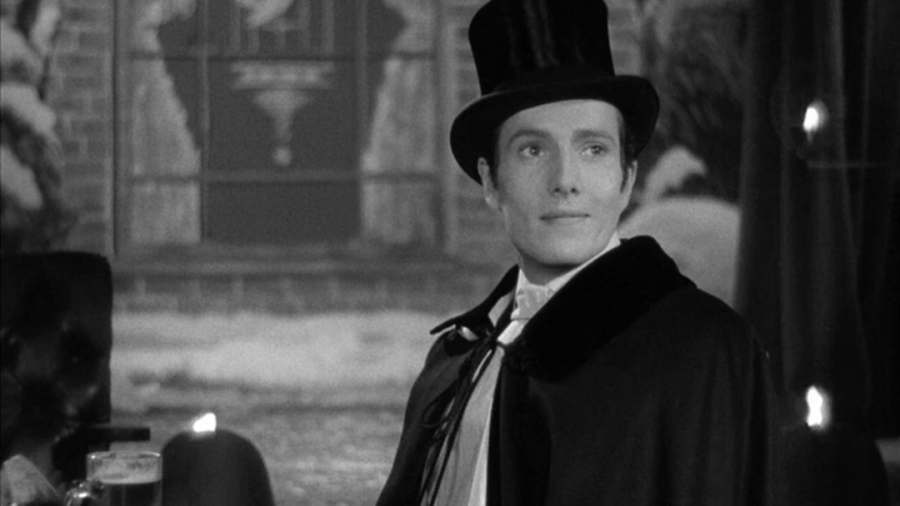
This week I watched The Picture of Dorian Gray (1945), which I had never seen before. I’ve also never read the book that it is based on.
I had to sit and process this one for a bit and also watch a comedy or two afterward.
Wow, what a creepy, dark, and unsettling film.
Yes, unsettling is the perfect word for this movie and while I am glad to see the second film that Angela received an Oscar nomination for, I don’t plan to watch it again.
I shuddered too many times while watching it.
First, a quick description of the movie for those who are not familiar with it.
From TCM.com, this one-sentence description tells us what we need to know about the movie:
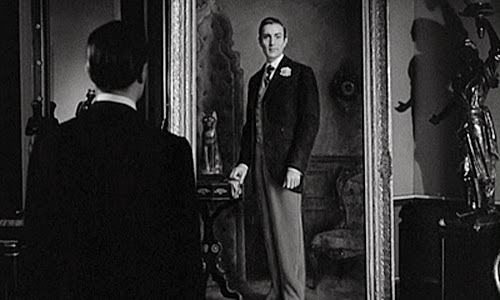
“A man remains young and handsome while his portrait shows the ravages of age and sin.”
The movie is based on the book of the same name by Oscar Wilde, written in 1898. There is even a moment where the main character quotes Wilde.
The movie stars Angela, Hurd Hatfield, George Sanders, Donna Reed, and Peter Lawford.
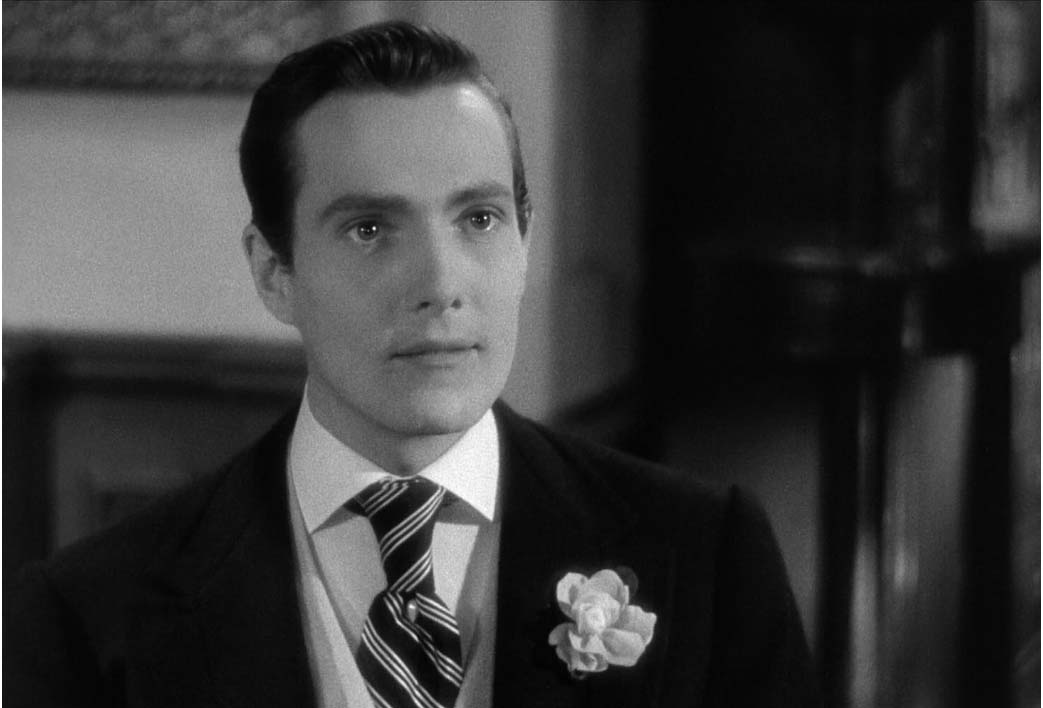
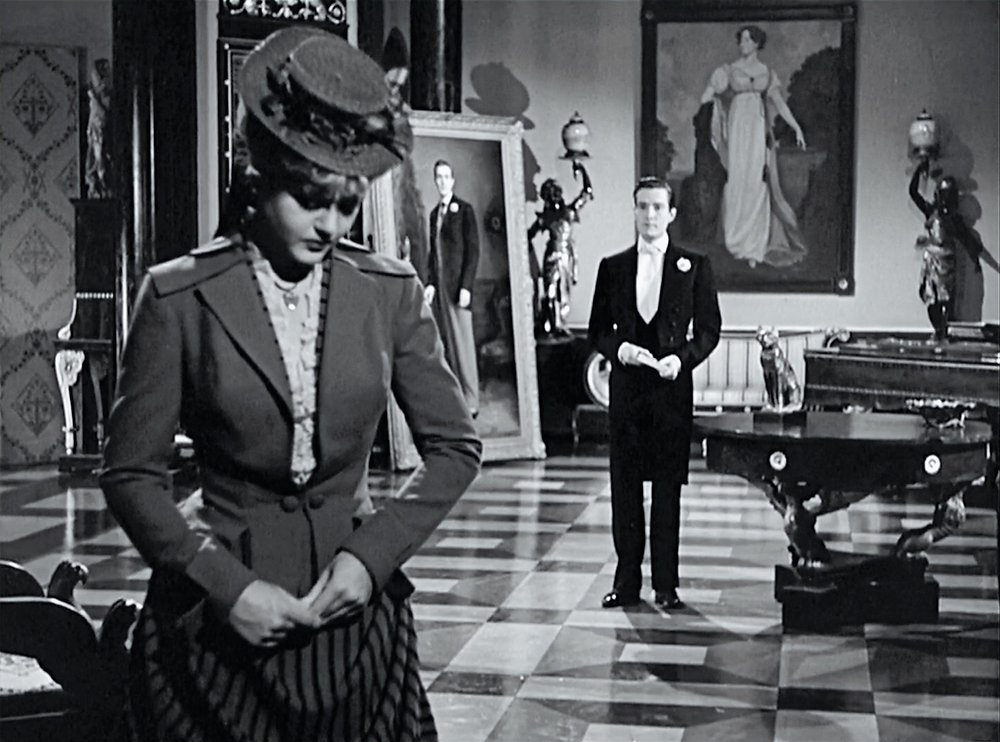
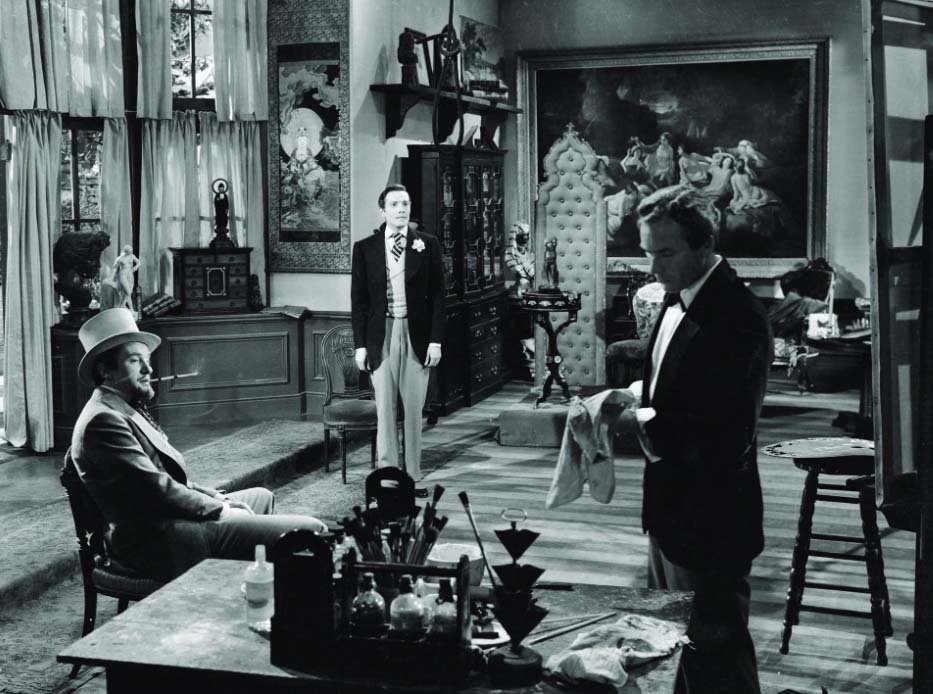
Dorian Gray is a young man without any family who gets mixed up with a man who is a bit of a chauvinist, cynical jerk. This man, Lord Henry Wotton (George Sanders, who plays villains absolutely perfectly), comments on how awful it is to age when he is looking at a painting of Dorian being made by artist Basil Hallward.
Lord Henry, a man who enjoys manipulating the lives of others and talking down to women and everyone around him, says that youth is fleeting and that the pursuit of desire should be the only real goal in life. Dorian, who seems super impressionable to me, thinks about what Lord Henry has said and says that he would give his soul if the painting would grow old while he remained forever young.
Lord Henry tells him to be careful about making such a wish in front of his Egyptian statue of a cat.
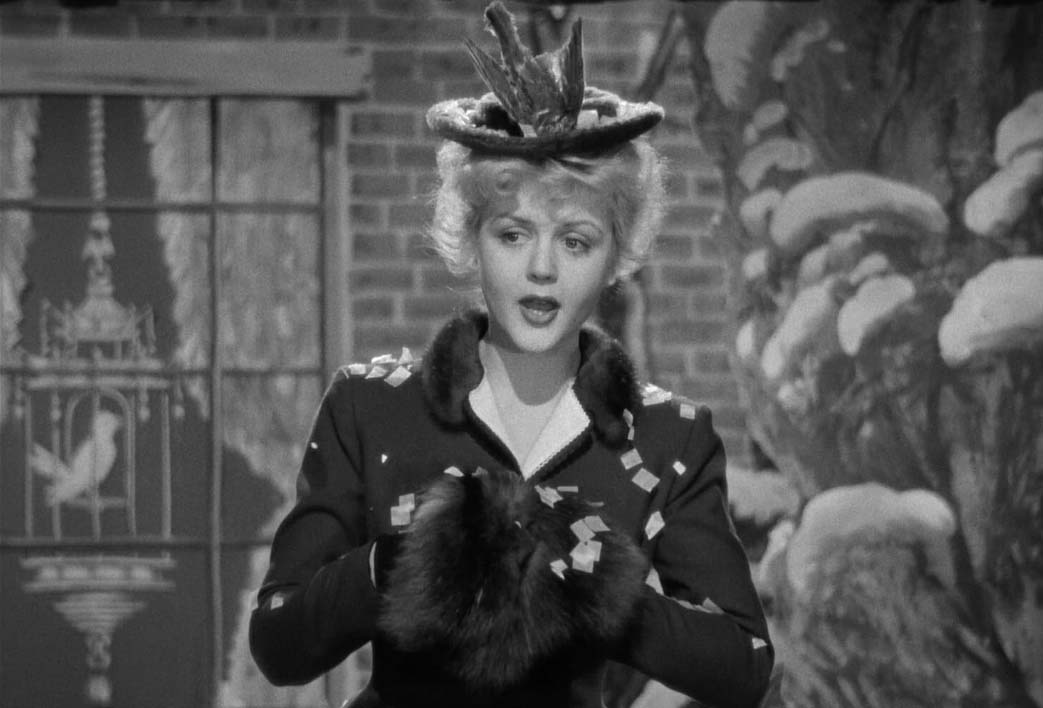
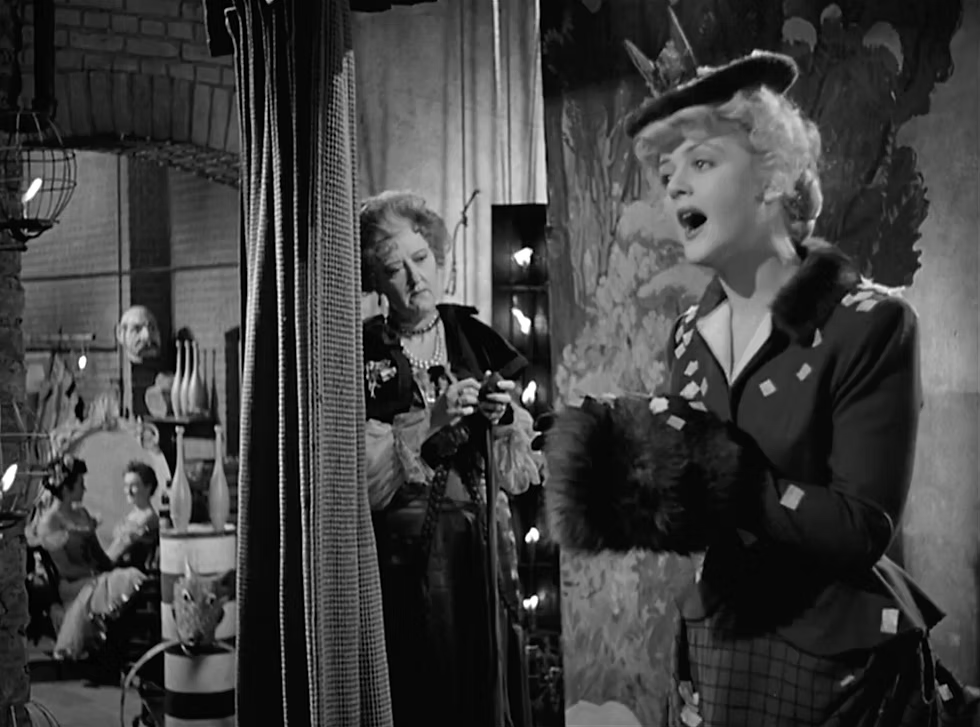
Dorian decides to explore new places, experience new things, and later he visits a bar where he watches a beautiful young woman names Sibyl Vane (Angela) performing a song called Little Yellow Bird. He is enamored with her and her with him.
Consider yourself warned that the song she sings, Goodbye, Little Yellow Bird, is an earworm. I’ve been humming the thing all week!
He’s in love, but Lord Henry is cynical and mean and tells Dorian to give Sibyl a challenge. Invite her to stay overnight, and depending on what she decides, Dorian will know if she is virtuous or not.
Things will go downhill for Dorian after the outcome of the challenge. Tragedy strikes, causing him to become hardened to the world. He decides that living only for his own pleasure, no matter who it hurts, is the way to go in life.
I won’t spoil the whole movie in case you haven’t watched the movie or read the book, but want to. I will say: be prepared to be fairly depressed by the end.
I will say that two additional characters were added to this movie that were not in the book — a woman named Gladys (Donna Reed) who has loved Dorian since she was a child, and her boyfriend David Stone (Peter Lawford). Gladys was terribly annoying and stupid to me. They should have left her and David out, quite frankly.
The part of Dorian Gray is played by Hurd Hatfield.
His absolutely creepy and dead-behind-the-eyes expression is the central reason I felt unsettled by the movie.
I saw his demeanor as perfect for this part but one critic I read said it resulted in his character feeling too one-dimensional and detached.
“On all accounts, (director Alfred) Lewin micromanaged Hatfield’s every gesture (to the point of not letting the actor perform after four o’clock in the afternoon, for fear fatigue would show), resulting in a central performance that is appropriately strange, but which never engages,” wrote Richard Harlin Smith on TCM.com. “One doesn’t see what others see in this Dorian Gray, who seems as inflexible as a mortician’s wax even in his mysteriously protracted youth.”
I thought not emotionally engaging with anyone is the point of a character who essentially gives up his soul, feelings, and love for anything, to be as nasty as he wants to be (yes, a bit of a spoiler there).
The movie was only Hatfield’s second film (his first being Dragonseed from 1944).
Smith wrote in his review of the film on TCM that, “Hurd Hatfield, in his second screen appearance, was so effectively evil in the title role that it actually handicapped his career with casting directors.”
According to Hurd Hatfield Luv on Tumbler, Angela once said that Lewin would stop rolling the cameras once Hatfield made an obvious expression on his face. This was frustrating to Hurd because his usual acting style was animated and he wanted to perform the character like he was written in the novel.
Lewin’s wishes always overrode the wishes of the actors, though.
“Also to point out, halfway through the film Dorian said he wanted to be in control of his emotions and refrain from yielding to them,” the author of the Tumbler site wrote. They continued: “Here’s another possible reason on why Lewin wanted Hatfield to act with little feeling in this film. Now this is actually my conjecture, but it makes sense with my research. As many would understand, making strong facial expressions would wrinkle the face. Smile lines and crows’ feet form when happy. Forehead creases when worrying. Eyebrows close in and skin folds in between when angry. Bursting up in tears crying gives out the most unflattering face of all. To put it short, it’s impossible to look extraordinarily “beautiful” without scrunching the face.”
Ronald Bergen wrote in The Guardian that he interviewed Hatfield on time about his role in the film The Diary of a Chambermaid and the actor said he was glad to speak about something other than Dorian Gray.
Hatfield called the role both a blessing and a curse.
“A blessing in that it gave him a reputation; a curse in that he found it difficult to escape,” Bergen wrote.
After the movie, he was cast mainly as handsome, narcissistic young men.
Hatfield was ambivalent about having played Dorian Gray, according to the magazine Films in Review, feeling that it had typecast him. “You know, I was never a great beauty in Gray…and I never understood why I got the part and have spent my career regretting it.”
The casting director for The Picture of Dorian Gray, Robert Alton, referred Angela to the casting director for Gaslight. He saw her in the role of Sibyl, but also felt she might work for the maid in Gaslight. That role as the maid led to her first Oscar nomination.
Angela’s role as Sibyl was her second Oscar nomination and came only a year after the first.
“Great send off,” she joked in an interview with the Screen Actors Guild Foundation. “Everything went down hill from there.”
By the time Angela worked on The Picture of Dorian Gray she had filmed Gaslight and National Velvet and had started to become used to working on a set. And she meant “working.” She said in the SAG Foundation interview that she was very conscientious as a young person. She was conscientious of how she needed to be professional for the sake of the other actors and the film overall.
This was both a good and a bad thing.
“I never had any fun. I never goofed off,” she said. “I missed a lot of fun along the way but perhaps in the end it contributed to me to being able to build such a very strong base for what would was to later become an enormously successful career.”
Facts and Triva about the movie:
Lansbury’s mother appears in the movie as “The Duchess” in the dinner scene at “Lady Agatha’s”. (source Jay’s Classic Movie Blog)
The hideous portrait of Dorian shown later in the movie was painted by Ivan Le Lorraine Albright. According to TCM.com, he was hired after director Lewin saw a painting of his at the Art Institute of Chicago entitled That Which I Should Have Done I Did Not Do. It is not owned by the Art Institute of Chicago.
A scene in the movie staged beneath a wildly swinging chain lamp was an effect that would be duplicated by Alfred Hitchcock in Psycho some fifteen years later.
Several years after this movie premiered, a friend of Hurd Hatfield’s bought the Henrique Medina painting of young Dorian Gray that was used in this movie at an MGM auction, and gave it to Hatfield. On March 21, 2015, the portrait was put up for auction at Christie’s in New York City (from the Collection of Robert Hatfield Ellsworth) with a pre-auction estimate of between five thousand and eight thousand dollars. It sold for one hundred forty-nine thousand dollars. (source IMdB)
Oscar Wilde’s Dorian was blond-haired, blue-eyed, and highly emotional, but Writer and Director Albert Lewin’s conception of Dorian was of an icy, distant character.
The dark musical piece that is heard repeatedly is Frédéric Chopin’s “Prelude in D Minor”, the last of the twenty-four pieces of “Opus 28”. (Source IMdB)
Writer and Director Albert Lewin was obsessed with retakes. In this movie, he asked for one hundred and ten retakes and ended up using only one. (Source IMdB)
Basil Rathbone campaigned in vain for the part of Lord Henry Wotton and believed that his typecasting as Sherlock Holmes was the reason he failed to get it. MGM’s loaning of Rathbone to Universal Pictures to play Holmes was very profitable for the studio, another reason for not casting him. (Source IMdB)
According to Angela, a friend of hers, Michael Dyne, was considered for the role of Dorian Gray. Dyne suggested Lansbury for the role of Sibyl Vane. The casting director liked her for the part and suggested her to George Cukor for Gaslight (1944). She saw Cukor and Writer and Director Albert Lewin the same day and was cast for her first two movies. (source IMdb)
My overall view of the movie:
This movie creeped me out immensely and made me very sad. It was extremely thought-provoking. As I mentioned above, the movie left me with a very unsettled feeling. I didn’t really want to keep going at points but knew I had to find out how it ended.
The cinematography and the use of light and shadows was amazing. The best example of this is during a climatic turning point in the movie that involves a very dark action by Dorian. As the act is completed he stands with a light swinging back and forth above him and it’s casting light on his face, then it swings back and he’s in darkness. The shadows around and behind him move in the pattern of a monster’s mouth, as if signaling he’s been officially swallowed by and turned into a monster.
Another shocking part of this movie is the use of color. Yes, the movie was filmed and presented in black and white, but there are three scenes that are shown in brilliant, and later terrifying, technicolor. You have been warned because a couple of the images truly are terrifying.
I probably wouldn’t watch this movie again, but only because it disturbed me, not because it is a good movie. It is a good movie, and it is too good in presenting that icky, dark, and demoralizing feeling it’s meant to present.
Have you seen this movie? What did you think of it?
Cat from Cat’s Wire wrote about her views of it here and she does have spoilers, but it is such a good, interesting post. I loved it. If you’ve already seen the movie or read the book, definitely hop over to her blog.
Left on my Summer of Angela list for August are:
August 15 – A Life At Stake
August 22 – All Fall Down (keep an eye out. I might switch this one up.)
August 29 – Something for Everyone
If you want to read about some of the other movies I watched, you can find them here:
Angela Lansbury once said in an interview that one of the more exciting moments of her career was working with Bette Davis in Death on the Nile (1978).
That’s the movie I watched this week for my Summer of Angela feature.
The movie is full of A-list movie stars: Angela, Bette, David Niven, Maggie Smith, Mia Farrow, and, of course, Peter Ustinov as Hercule Poirot.
I’m not a fan of Ustinov as Poirot since David Suchet plays the part so brilliantly, and I can’t see anyone else as Poirot, but the movie is still okay overall. I only added it to my watch list because Angela is in it. I had fun watching her be absolutely over the top as an eccentric romance writer and Maggie Smith be an overall jerk throughout, which is a role that she seemed to always play well.
Mia Farrow was …er…creepy as always.
Let’s talk about the plot a little for those who aren’t familiar with this one from either the book by Agatha Christie or the movie.
The online description:
“On a luxurious cruise on the Nile River, a wealthy heiress, Linnet Ridgeway (Lois Chiles), is murdered. Fortunately, among the passengers are famed Belgian detective Hercule Poirot (Peter Ustinov) and his trusted companion, Colonel Race (David Niven), who immediately begin their investigation. But just as Poirot identifies a motley collection of would-be murderers, several of the suspects also meet their demise, which only deepens the mystery of the killer’s identity.”
Angela portrays an eccentric romance writer named Salome Otterbourne who based a character in one of her books on Linnet. She and Linnet confront each other on the boat and Linnet tells Salome she’s going to sue her for libel. Just about everyone on the boat seems to have an issue with Linnet, which makes me wonder how they all ended up on the boat together. Planned or just coincidence, I don’t know, but they all seem to know each other and Linnet is angry with just about everyone and they are angry with her.
Salome is on the boat with her daughter Rosalie who is embarrassed by her mother’s behavior.
Angela’s character isn’t in the movie as much as other characters, but when she is, she certainly fills the screen with her crazy personality and outfits.
She makes all kinds of semi-suggestive comments about possible couples or what people need to do to feel more relaxed. Some of the characters refer to her books as “lurid.”
At one point, she and her daughter talk about whether or not Poirot would know her from her books. Rosalie says, “Somehow, I don’t think Monsieur Poirot is a very keen reader of romantic novels, Mother.”
Mrs. Otterbourne responds: “Well, of course he is! All Frenchmen are. They’re not afraid of good, strong sex!”
She is such an obnoxious character that after the murder occurs David Niven’s character comments to Poirot: “What a perfectly dreadful woman. Why doesn’t somebody shoot her, I wonder?
Poirot responds, “Perhaps one day, the subscribers of the lending libraries will club together and hire an assassin.”
The film was shot on location in Egypt so many of the experiences the characters had were actually had by the actors and actresses. I think some of the reactions that were filmed when they were climbing on the donkeys and camels were totally adlibbed because they were so authentic and funny.
According to TCM, makers of the film were trying to cash in on the success of the 1974 film Murder on the Orient Express, also based on an Agatha Christie book. That cast was also star-studded with Lauren Bacall, Ingrid Bergman, and Anthony Perkins.
Unfortunately, while Murder on the Orient Express brought in $27.6 million, this movie only grossed $14.5 million in the U.S. and Canada. Despite the lackluster success at the time it was released, many Christie fans see it as one of the better adaptations of the book — at least according to the many comments about it that I read online.
One thing that might have made the movie less of a success was the filming locations.
TCM.com stated this in an article about the movie: “Despite the exotic locale, split between Egypt and London, filming conditions for the movie were less than ideal. Filmed on a little boat called The Carnock, the actors took a speedboat back and forth each day from their hotel in Aswan down river to the shooting location. The Carnock was also apparently too small for all the actors to have their own dressing rooms. One unpleasant incident involved Bette Davis, Olivia Hussey and some Eastern chant records Hussey liked to play early in the morning. After Davis asked Hussey not to play her music, it was reported that the actresses did not speak to each other again while aboard The Carnock. If tensions weren’t high enough, the temperature climbed well above 100 degrees everyday and filming often was halted at noon.”
What Angela said about the movie:
As I mentioned in the beginning of this post, Angela remembers what a delight it was to work with Bette Davis.
“She was a very fascinating woman,” Angela told Studio Canal. “I got to know her quite well on that occasion. She had been a great, great Warner Brothers star and I had been a fan of hers as a child. She was a great deal older than me and I remembered her and all her great roles.”
Angela remembered Bette as being a “special and unique” actress.
“Unique looking and sounding and I was delighted to meet her and work with her.”
Angela also reflected on working with Ustinov who was her ex-brother-in-law.
“My role was such an interesting, farcical character anyways and there was so much comedy involved,” she said. “David Niven and Peter Ustinov and myself and my husband and I, we were all great friends and knew each other from other times.”
As for the conditions, Angela confirmed that they were not very nice at times.
“We were billeted in a hotel in the middle of the Nile,” she said. “To get to it, we had to get on a boat, having to cross water. We all lived in this luxury hotel in the middle of the Nile in Egypt and that was a special and wonderful experience I would say. I mean you couldn’t have been more comfortable. Swimming pools, wonderful food, everything you could possibly want and then we would get 4 or maybe 3 in the morning because of the heat at the time in Egypt. We had to do the shooting before noon. Otherwise, it would be too hot. So, we were dealing with that and also an old riverboat we were working on which was trundling its way down the Nile, pulled by little boats and sometimes under its own steam.”
The boat made so much noise, though, that it was often tugged along by the little boats, she said.
The only dressing room in the bottom of the boat in a four-bed cabin.
“It was a bed up and a bed down, so the fittings had to take place between the two beds,” Angela said. “I remember that Bette would lie down on one bunk and Maggie Smith was on the other and I was on the third. We would take turns being fitted in the ‘well’, in the middle. It was one of those extraordinary circumstances where we forced to not be the stars we were supposed to be.”
The costumes in this movie were amazing and were designed by Anthony Powell, who won an Oscar for his work on the film (the film’s only award). Angela had nothing but praise for him.
“My costumes on that film I thought were absolutely extraordinary and quite original and marvelous,” she said. “They were built in New York City by my friend Barbara Matera and he worked with her and we all worked together and we came up with this extraordinary look but Anthony was at the root of it all.”
I have to agree that her costumes were dazzling and something else. Not sure I’d ever wear them, but they fit her character for sure.
You can see the full interview here:
My thoughts:
I watched this one in pieces because it comes in at a whopping 2 hours and 20 minutes!! I didn’t remember it being that long when I first watched it with my husband, but, thinking back, I seem to remember we watched one half one night and the other half the next night.
While I did enjoy the movie, and watching Angela’s antics when she was on screen, the movie was really too long for my taste. I know they needed to take us down some twists and turns to keep us guessing but two and a half hours? Gah!
Also, what always gets me about these movies is how a bunch of people can die (the number of deaths in this one was excessive if you ask me and I’d like to read the book to see if Agatha wrote that many deaths) and at the end everyone just shrugs it off. I won’t give it away but there was one death in particular that just got waved off as no big deal at the end with the characters smiling and walking away arm in arm. So bizarre and left me wondering if the person they said killed that person wasn’t actually someone else.
In addition to Angela’s performance, I loved the witty and sarcastic banter between Maggie Smith and Bette Davis’ characters.
Maggie’s character, Miss Bowers, was supposed to be Bette’s nurse and companion. Bette portrayed Marie Van Schuyler, a socialite. Maggie was horrible to Bette’s character, though! It was sort of crazy but also hilarious. They had some of the best exchanges.
“Mrs. Van Schuyler: Come on, Bowers, time to go. This place is beginning to resemble a mortuary.
Miss Bowers: Thank God you’ll be in one yourself before too long, you bloody old fossil!
***
Mrs. Van Schuyler: Shut up, Bowers. Just because you’ve got a grudge against her, or rather her father, no need to be uncivil.
Miss Bowers: *Grudge*? Melhuish Ridgeway ruined my family!
Mrs. Van Schuyler: Well, you should be grateful. If he hadn’t, you would have missed out on the pleasure of working for me.
Miss Bowers: I could kill her on that score alone!
Miss Bowers was definitely not a respectful employee, but I think that Mrs. Van Schuyler liked that.
One other observation: This movie seems to feature a lot of scenes of rich people sitting around in drawing rooms, all dressed up with nowhere to go. I’m very confused why they got all dressed up to sit around every night together and then just go to bed. Didn’t any of them own clothes that weren’t fancy? Of course, I’m teasing here because I really did love the outfits for the women. The dresses were all so eye-catching.
Trivia or Facts About the movie:
According to producer Richard Goodwin, Bette Davis brought her own make-up, mirrors, and lights to Egypt. (source IMdB)
Peter Ustinov was David Niven’s personal attendant during World War II. Ustinov was a private and Niven was a Lt. Colonel (various sources)
Location shooting in Egypt consisted of four weeks on the riverboat “S.S. Karnak” and three weeks filming in places such as Luxor, Cairo, Aswan, and Abu Simbel. (various sources)
Ustinov portrayed Poirot five more times. (various sources)
Albert Finney was initially asked to reprise his role as Poirot from Murder on the Orient Express (1974). However, he had found the make-up he had to wear for the first movie very uncomfortable in the hot interior of the train, and on realizing that he would have to undergo the same experience, this time in temperatures exceeding 100 degrees Fahrenheit (38 degrees Celsius), he declined the role. (source IMdB)
Angela Lansbury had never seen the finished film until she attended a 40th Anniversary screening on November 9, 2018. (source IMdB)
Dancer Wayne Sleep, relatively unknown at the time, choreographed the tango scene. He reported in 2018, “I was being paid an hourly rate, which was great as nobody turned up to the rehearsal and I had to go and find David Niven and persuade him to come.” (source IMdB)
Producer John Brabourne said no telephones were available while on-location in Egypt. They had to communicate by telex. . (source IMdB)
Agatha Christie was inspired to write the source novel in 1937, during an Egyptian vacation. The hotel scenes were shot at the Old Cataract Hotel in Aswan, where Christie stayed. The hotel’s front had to be “redressed” to appear more 1930s, and the furniture on the hotel’s terrace was replaced with custom period-authentic pieces. (source IMdB)
Notable quotes:
Jacqueline De Bellefort: Simon was mine and he loved me, then *she* came along and… sometimes, I just want to put this gun right against her head, and ever so gently, pull the trigger. When I hear that sound more and more…
Hercule Poirot: I know how you feel. We all feel like that at times. However, I must warn you, mademoiselle: Do not allow evil into your heart, it will make a home there.
Jacqueline De Bellefort: If love can’t live there, evil will do just as well.
Hercule Poirot: How sad, mademoiselle.
***
Mrs. Van Schuyler: [Remarking on Linnet’s pearls] Oh, they’re beautiful!
Linnet Ridgeway: Thank you.
Mrs. Van Schuyler: And extraordinary, if you know how they’re made. A tiny piece of grit finds it’s way into an oyster, which then becomes a pearl of great price, hanging ’round the neck, of a pretty girl like you.
Linnet Ridgeway: I never thought of it that way.
Mrs. Van Schuyler: Well, you should. the oyster nearly dies!
***
Jim Ferguson (to Rosalie): Karl Marx said that religion was the opium of the people. For your mother, it’s obviously sex.
***
Miss Bowers: I think a shot of morphia will meet the case. I’ve always found it very effective when Mrs Van Schuyler is carrying on.
***
Mrs Otterbourne: I suppose that uncouth young man will appear now and attempt to seduce you. Well, don’t let him succeed without at least the show of a struggle. Remember, the chase is very important.
Rosalie Otterbourne: Oh, mother!
Mrs Otterbourne: I tell you that I, Salome Otterbourne, have succeeded where frail men have faltered. I am a finer sleuth than even the great Hercule Porridge.
Have you seen this one? What did you think?
Here is what is left of my Summer of Angela:
August 1 – The Court Jester
August 8 – The Picture of Dorian Gray
August 15 – A Life At Stake
August 22 – All Fall Down
August 29 – Something for Everyone
If you want to read about some of the other movies I watched you can find them here: