Top Ten Tuesday is hosted by That Artsy Reader Girl. It was created by The Broke and the Bookish in June of 2010 and was moved to That Artsy Reader Girl in January of 2018. It was born of a love of lists, a love of books, and a desire to bring bookish friends together.
Today’s theme is: all-Themed Freebie (or Spring if you live in the Southern Hemisphere)
I decided to share ten mystery books that take place in Autumn for my theme.
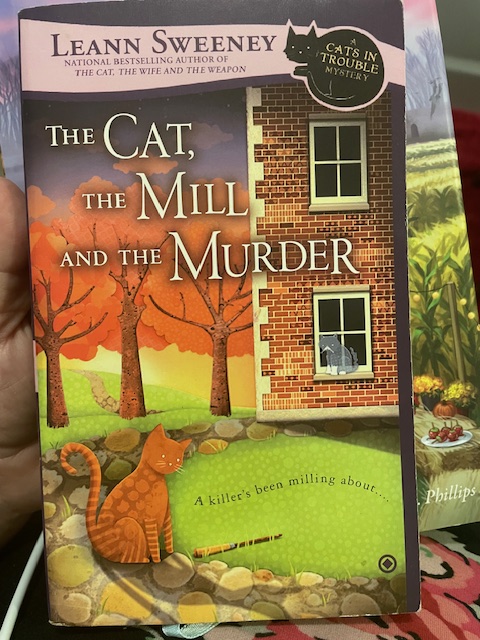
The Cat, The Mill, and the Murder by Leann Sweeney
I’ve had this one on my shelf for a few years but still haven’t read it.
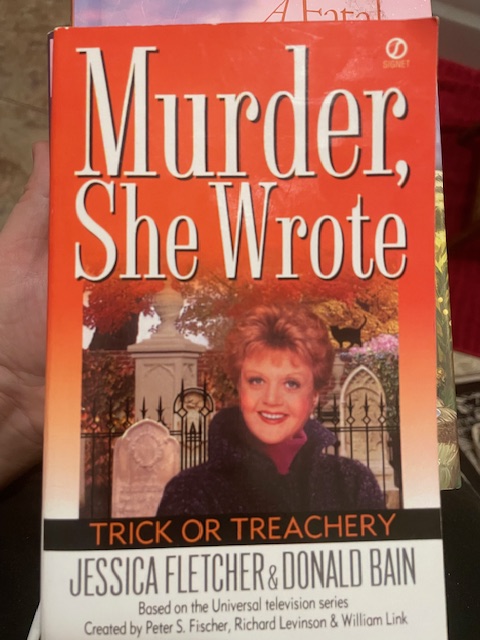
2. Murder, She Wrote: Trick or Treachery by Donald Bain
I’ve read this one. Liked it.
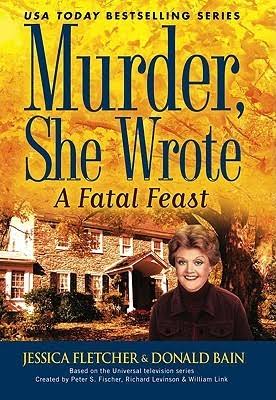
3. Murder, She Wrote: A Fatal Feast by Donald Bain
I’m listening to this one on Audible now.
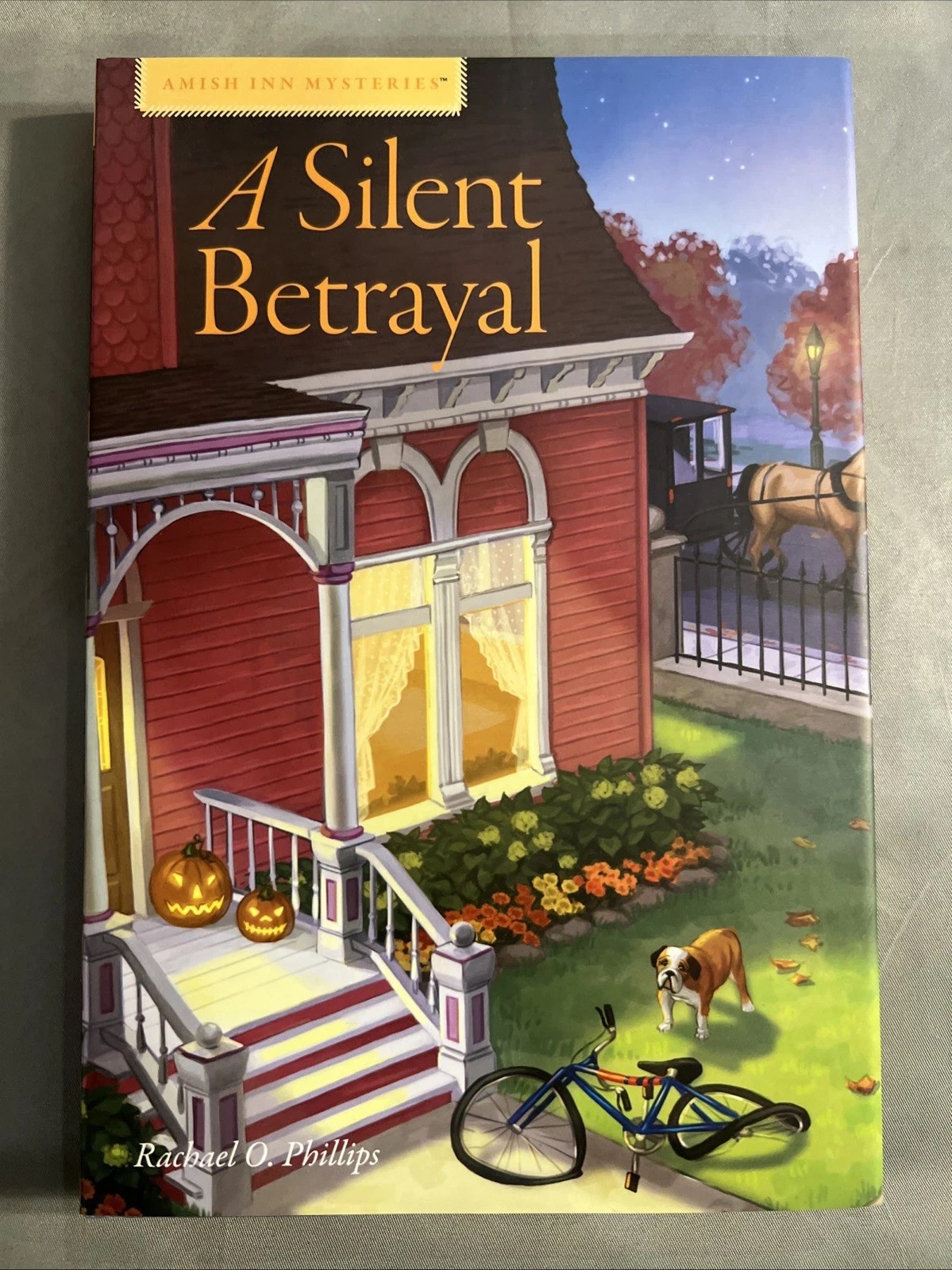
4. An Amish Inn Mystery: A Silent Betrayal by Rachael O. Phillips
I haven’t read this one yet but plan to this month
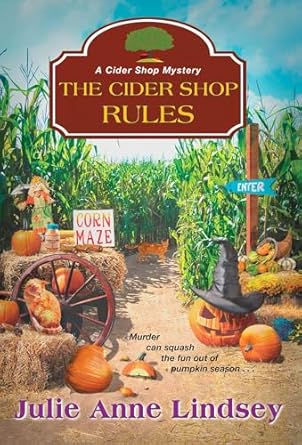
5. The Cider Shop Rules by Julie Anne Lindsey
I haven’t read this one yet but did read another one in the series and liked it.
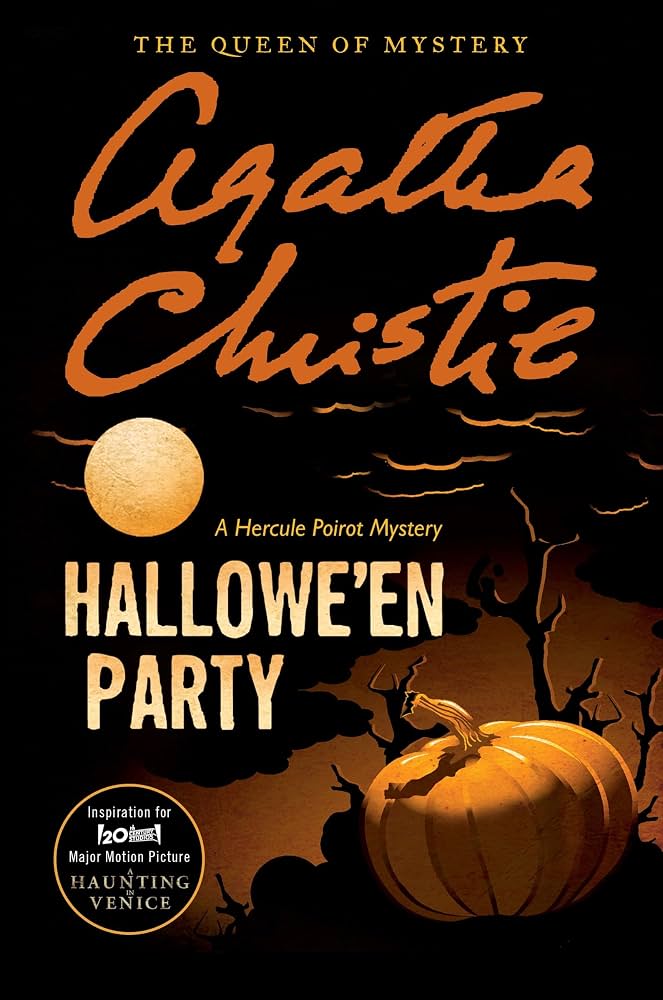
6. Hallowe’en Party (Hercule Poirot) by Agatha Christie
This one is on my list to read.
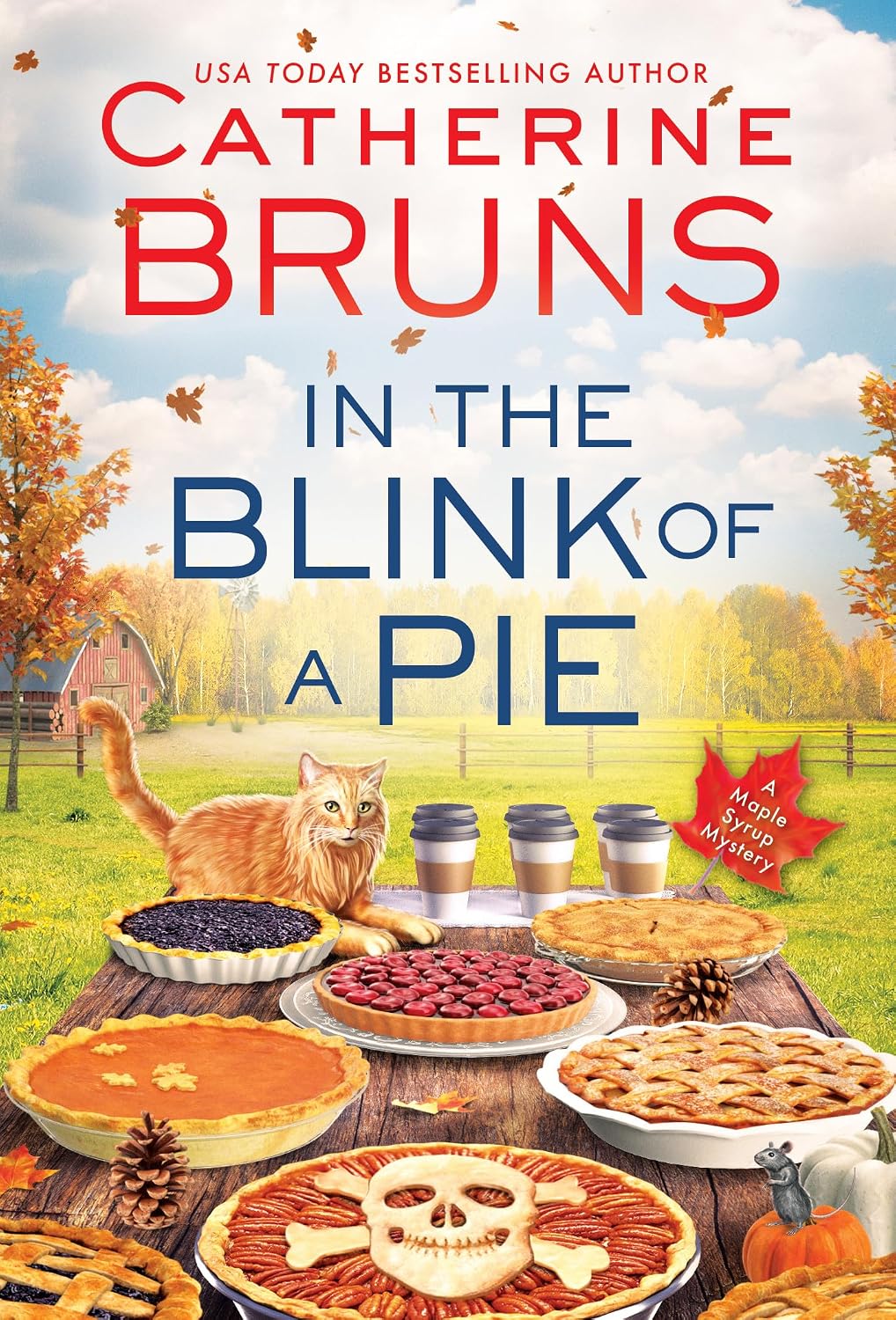
7. In the Blink of a Pie by Catherine Brune
I have not read this one but want to.
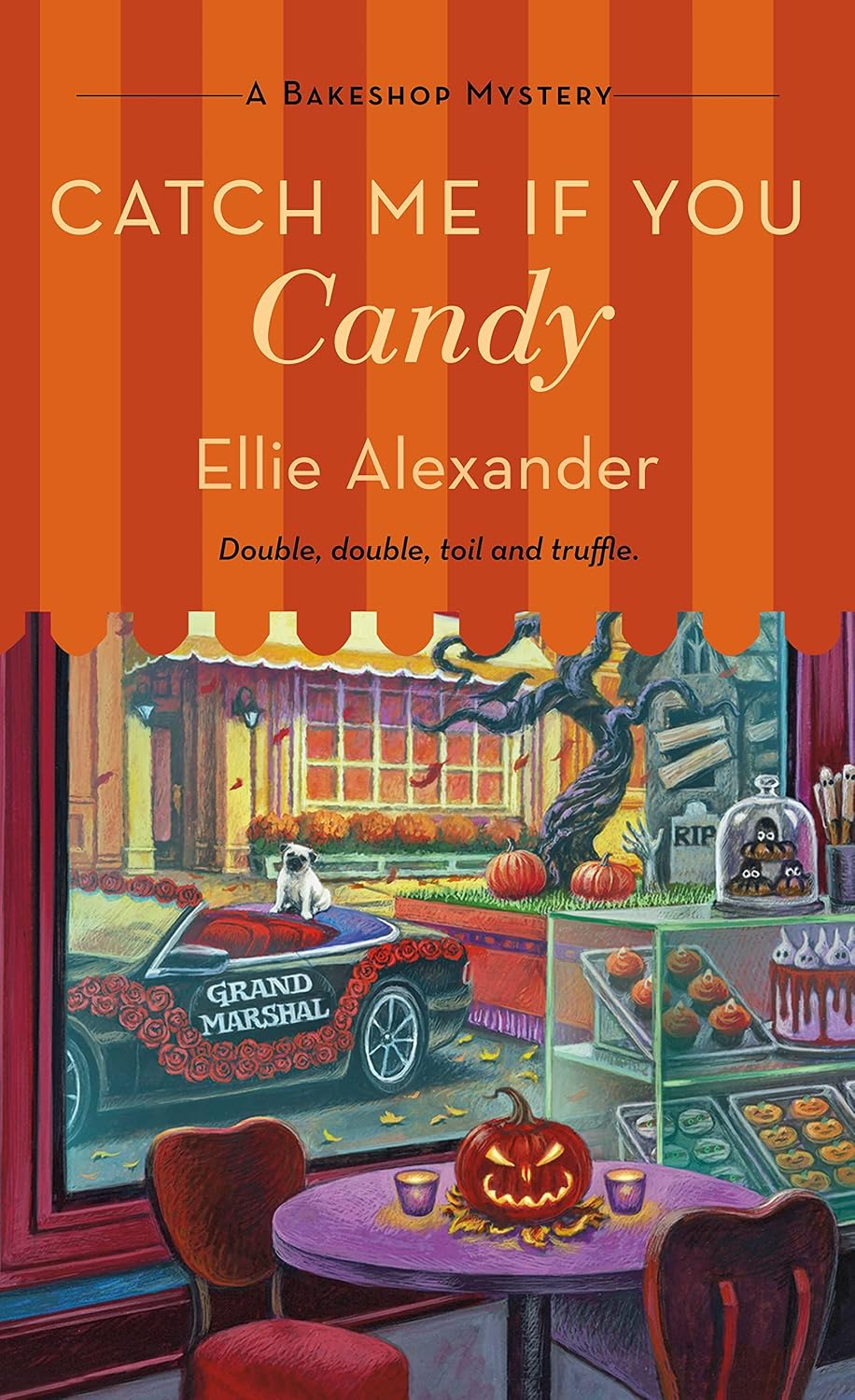
8. Catch Me if You Candy by Ellie Alexander
It’s on my list to read.
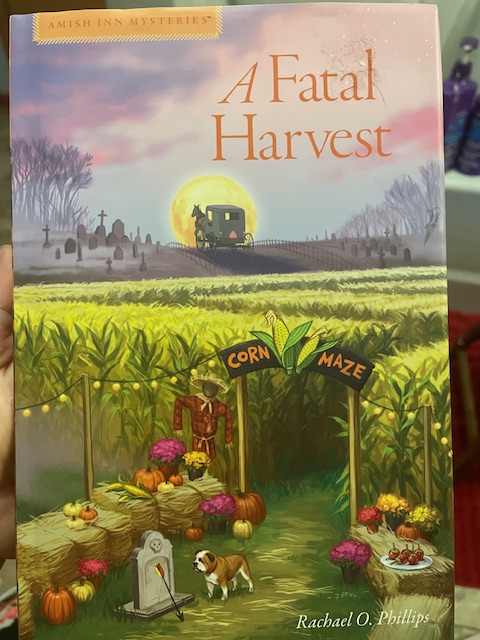
9. An Amish Inn Myserty: A Fatal Harvest by Rachael O. Phillips
I read this one last fall and enjoyed.
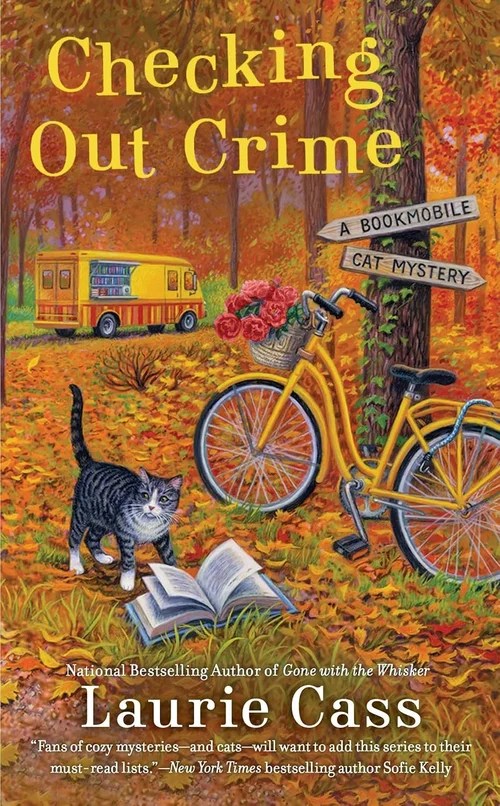
10.Checking Out Crime by Laurie Cass
I still need to read this series!
If you are new to my blog, I just wanted to share with you that I co-host a monthly bookish link party called A Good Book and A Cup of Tea (no, you don’t have to drink tea to participate) with Erin (Still Life, With Cracker Crumbs) and Cat (Cat’s Wire). You can find a link to it at the top of the page. The link party is for all book-related posts from reviews and recommendations to …well, anything related to books at all. Including Top Ten Tuesday, if you want to link your top ten there too!
On Thursdays, I am part of the Weekend Traffic Jam Reboot blog link party. You can find the latest one in the sidebar to the right under recent posts.
Hello! Welcome to my blog. I am a blogger, homeschool mom, and I write cozy mysteries.
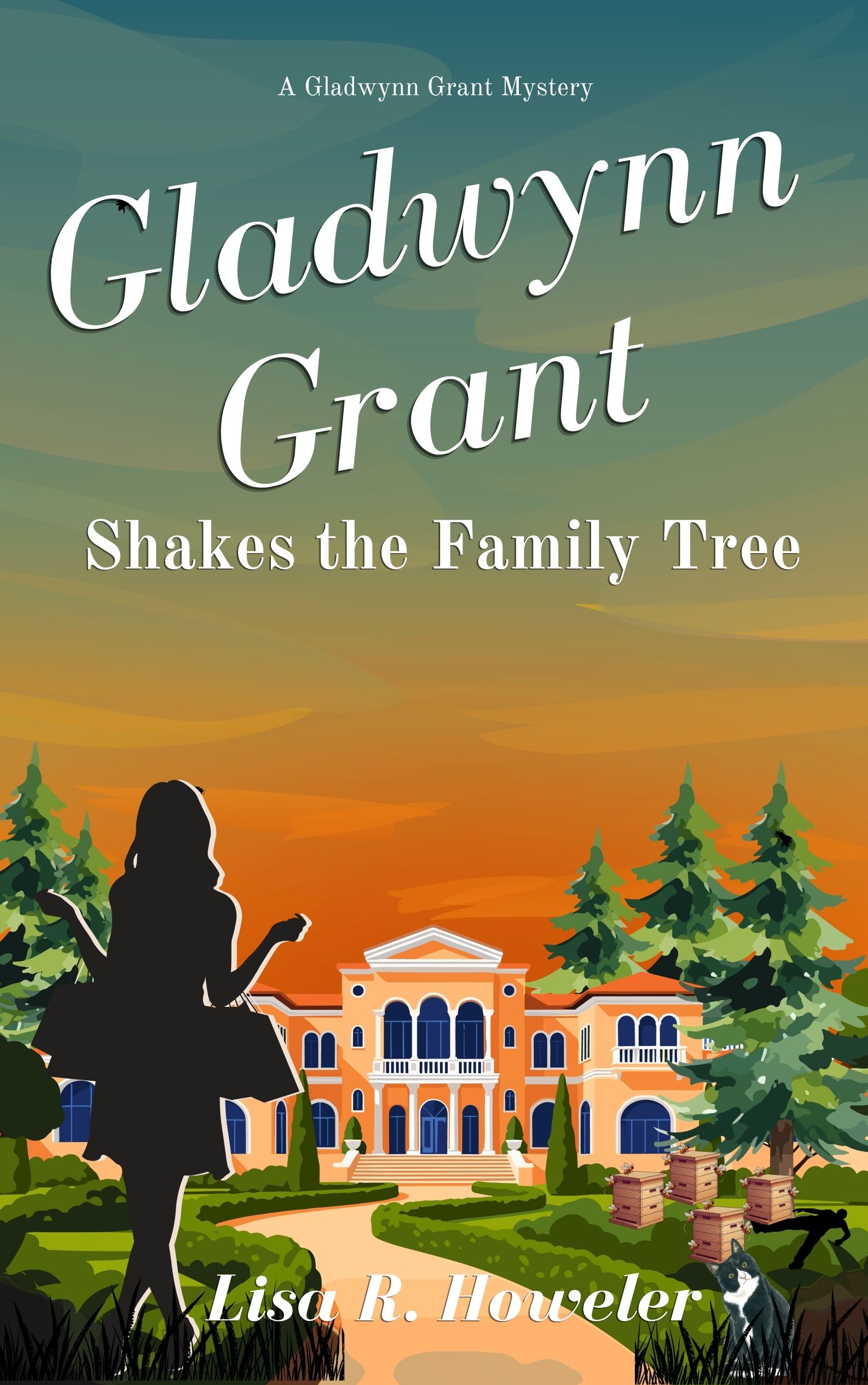
You can find my Gladwynn Grant Mystery series HERE.
If you would like to be the first to get news about my books or just have access to special posts for supporters, you can do so here for $2.99 a month : https://lisahoweler.com/support-my-writing/
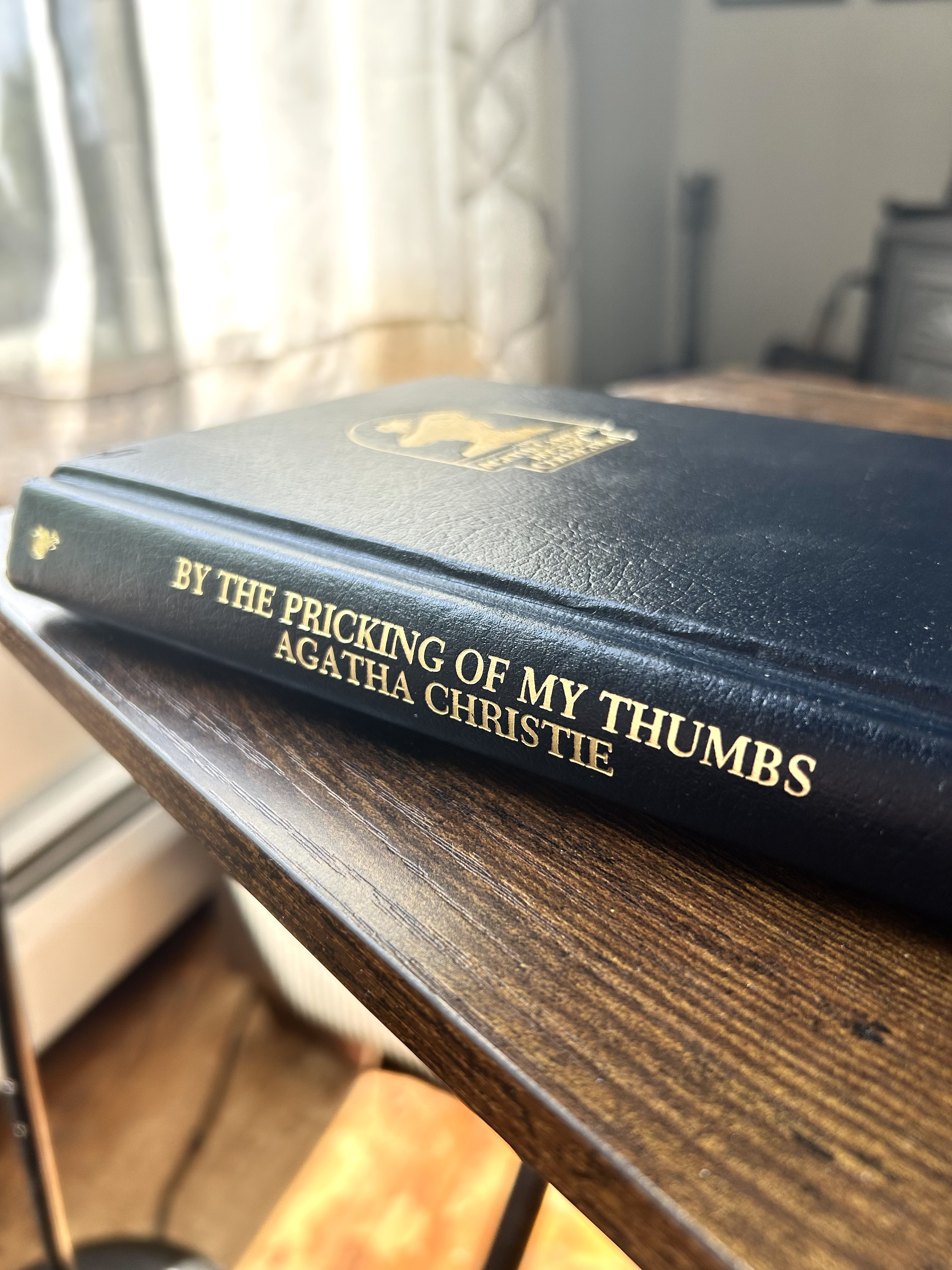
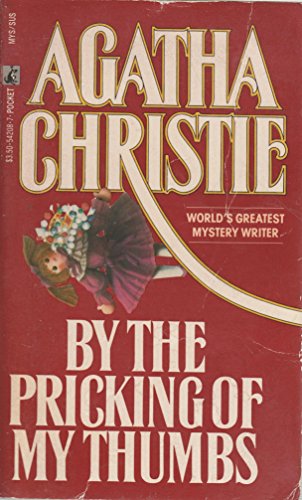
By The Pricking of My Thumbs by Agatha Christie was a nail-biter with some fun humor and banter mixed in between a husband and wife sleuthing team.
This was my first time reading a Tommy and Tuppence book by Christie and wow, what an introduction. I am glad I started with this one, even though the husband and wife team are now older than they were in the first books.
There are five books in the series: The Secret Adversary (1922), Partners in Crime (1929), N or M? (1941), By The Pricking of My Thumbs (1968), and a collection of short stories Postern of Fate (1978).
Before I start talking about the book, I will share a description from the official Agatha Christie site.
Although now considered ‘old’ by fellow society, this novel opens with the couple considering the sad fate of Tommy’s elderly Aunt Ada… now residing in an equipped facility named Sunny Ridge. Neither Beresford is particularly looking forward to the trip, but duty bound, they arrive to find Ada in a disagreeable mood. Banished to the communal lounge, Tuppence meets a troubled Mrs Lancaster with a secret to tell. Just weeks later, Tommy’s aunt has died, and a mysterious pronouncement is still troubling Tuppence…
I truly loved both Tuppence and Tommy and their hilarious butler Arthur. They are such fun characters. I just had to laugh at times because after all their years of espionage, both Tommy and Tuppence seemed very laid back about situations that were clearly going to become dangerous.
Maybe it is because they are upper-class British or just British in genera. I’m kidding, of course. It’s just how their characters are written and I love it.
It’s very clear that Tuppence and Tommy love each other and since I didn’t look up this book before I read it or know the history of the series, I wasn’t really sure what was going to happen to Tuppence at one point.
What I really liked about this book was how we were taken on a journey with just Tuppence for most of the book while she tried to get to the bottom of whether or not any crime had really taken place.
I enjoyed learning about Tuppence and her tenacity because if I had been her, I would have stopped searching for answers long before she did.
I’ve read some reviews that this book was slow or had too many “boring and mundane” conversations, and while I can see that in some places, I also thought it added some charm to the book to have some everyday conversations.
When I read reviews that the plot was complicated I think….well, yeah, it’s a mystery and a Christie so it will be but I can also understand the complaint some. Complication and even some plot holes can be normal in her books, but, to me, the storytelling overall is still brilliant.
Personally, I enjoyed this book, even the parts that were more easy going or dragged just a bit. It was all worth it to read one of the creepier endings I have read in a Christie book.
If I was going to have one criticism, though, it would be the weird thing Agatha did through part of the book when she kept switching between the titles Mrs. Beresford and Tuppence or Mr. Beresford and Tommy. I needed her to pick one title for her main characters and then leave it.
The humor was well placed in this book. When Tommy and Tuppence go to visit Tommy’s aunt, that aunt decides she doesn’t like Tuppence.
“I seem to have a bad effect on her, don’t I?” said Tuppence. “Rather cheering in a way.”
“Why cheering?”
“Well, at my age,” said Tuppence. “and what with my neat and respectable and slightly boring appearance, it’s nice to think that you might be taken for a depraved woman of fatal sexual charm.”
“Idiot,” said Tommy, pinching her arm affectionately. “Who were you hobnobbing with? She looked a very nice fluffy old lady.”
“She was very nice,” said Tuppence. “A dear old think, I think. But unfortunately bats.”
The nursing home staff apologizes to Tuppence for the aunt’s rudeness.
“Well, it’s been very kind of you to come, I’m sure,” said Miss Packard. Turning to Tommy, she said, “And I know Miss Fanshawe has enjoyed your visit very much. I’m sorry she was rude to your wife.”
“I think that gave her a lot of pleasure too,” said Tuppence.
“Yes, you’re quite right. She does like being rude to people. She’s unfortunately rather good at it.”
A couple of other quotes I enjoyed:
“I hate mourning,” she said. “It always smells of moth balls because it’s been laid up somewhere.”
“You don’t need to go on wearing mourning. It’s only to go to the funeral in,” said Tommy.
“Oh no, I know that. In a minute or two I’m going to go up and put on a scarlet jersey just to cheer things up. You can make me another White Lady.”
“Really, Tuppence, I had no idea that funerals would bring out this party feeling.
***
“You don’t stop being in love with anyone because you get old. People like Derek and Deborah think you do. They can’t imagine anyone who isn’t young being in love.”
***
“They were in the time of life when they thought of themselves as old. And they had no idea that they and many others were automatically pronounced deadly dull solely on that account. Only by the young of course, but then, they would have thought indulgently, young people knew nothing about life. Poor dears, they were always worrying about examinations, or their sex life, or buying some extraordinary clothes, or doing extraordinary things to their hair to make them more noticeable. Mr. and Mrs. Beresford from their own point of view were just past the prime of life. They liked themselves and liked each other and day succeeded day in a quiet but enjoyable fashion.”
Have you read this one? What did you think of it?
_____
You can find my book reviews, movie reviews, and ramblings about the books I write on Instagram.
Hello! Welcome to my blog. I am a blogger, homeschool mom, and I write cozy mysteries.
You can find my Gladwynn Grant Mystery series HERE.
Sad Cypress was my read for July for the Christie Reading Challenge for 2026 after I ended up not finishing The Rose and the Yew Tree by Mary Westmacott, which was Agatha’s pseudonym.
I’m glad I switched because I got into Sad Cypress much faster than The Rose and the Yew Tree.
I’m more of a mystery fan than a romantic suspense fan, apparently. Plus, The Rose and the Yew Tree was terribly depressing and slow.
I do think I will go back at some point and try to finish it, however, because it did pique my interest. Just not as much as Sad Cypress.
I did not know that Sad Cypress was a Poirot book when I started it. It is, in fact, the 21st Poirot book.
This one involves jealousy, two murders, and is split into three parts, with the first part from the main character, Elinor Carlisle’s, point of view, the second focused on Poirot’s investigation, and the third back to Elinor again. Usually we get the point of view of the investigators, sometimes a mixed view of the investigators and the accused, but not usually a mix like this one.
Here is a quick description from Goodreads:
An elderly stroke victim dies without having arranged a will…
Beautiful young Elinor Carlisle stood serenely in the dock, accused of the murder of Mary Gerrard, her rival in love. The evidence was damning: only Elinor had the motive, the opportunity and the means to administer the fatal poison.
Yet, inside the hostile courtroom, only one man still presumed Elinor was innocent until proven guilty; Hercule Poirot was all that stood between Elinor and the gallows.
I also liked this description/short excerpt from Storygraph:
“Elinor flushed: “Will you ask me – again – did I kill Mary Gerrard”? Poirot rose to his feet. He said quickly, “I shall ask you – nothing. There are things I do not want to know” But even Hercule Poirot sometimes deceived himself. He did want to know – badly.”
Poirot is talked into taking on the case by the doctor, Peter Lord, who took care of Elinor’s aunt, the elderly stroke victim. This is a bit of a spoiler, but Peter has a wee crush on Elinor.
I liked how this one was set up with no Poirot at first. This allowed us to get to know the characters better before the mystery unfolded and he started asking his questions.
No matter what Poirot does in this case, at least to start with, all evidence seems to point to the person already being pinpointed as the guilty person. He wants to help Peter Lord, who has fallen in love with Elinor, but he has to admit that things don’t look good for her.
She herself has given up, sitting in jail, thinking about how the odds are stacked against her, and dreading the court proceedings. There are chapters that include some court drama and it was interesting to see it from the point of view of the accused.
What is great is that Christie showed us Elinor’s point of view but never made it clear, even as we knew her thoughts, whether she was guilty or not, until the end. You’ll have to read this one to find out if she was truly guilty or not.
There were some pretty cool lines in this one, including:
“You must be an incredibly simple man. Don’t you realize how easy it is for me to lie to you?”
Hercule Poirot said placidly:
“It does not matter.”
She was puzzled. “Not matter?”
“No, for lies, Mademoiselle, tell a listener just as much as truth can. Sometimes they tell more.”
***
”Yes, now it is necessary. Because now I know exactly what I’m looking for. One must understand with the cells of one’s brain before one uses one’s eyes.
****
Eleanor Carlisle said with a touch of weariness, “He has a great reputation.”
“Yes, for defending criminals. I have a great reputation for demonstrating innocence.”
****
At 21, Mary Gerrard was a lovely creature with a kind of wild-rose unreality about her; a long, delicate neck, pale, golden hair, lying close to her exquisitely shaped head and soft, natural waves and eyes a deep, vivid blue.
If you are new to my blog, I just wanted to share with you that I co-host a monthly bookish link party called A Good Book and A Cup of Tea (no, you don’t have to drink tea to participate) with Erin (Still Life, With Cracker Crumbs) and Cat (Cat’s Wire). You can find a link to it at the top of the page. The link party is for all book-related posts from reviews and recommendations to …well, anything related to books at all. Including Top Ten Tuesday, if you want to link your top ten there too!
Today’s Top Ten Tuesday prompt is: Top Ten Tuesday July 7
Book Titles That Include the Word “[insert word of your choice here]” (Pick a word and share ten book titles that include that word!) I chose the word “secret.”
This is a list of books I have read, want to read, would very likely, or possibly, read.
I should note that I could make this entire list out of just Nancy Drew titles alone, since a ton of the books in that series have secret in the title, but I decided to give some variety to the list and instead have three Agatha Christie titles. Ha!
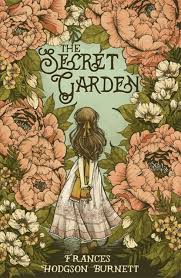
|| The Secret Garden by Frances Burnett Hodgson (have read) ||
|| The Secret of the Old Clock by Carolyn Keene (a Nancy Drew Mystery. Have read) ||
|| The Secret Adversary (Tommy and Tuppence Mysteries, #1) by Agatha Christie (haven’t read but sure I will at some point) ||
|| The Secret, Book & Scone Society (Secret, Book, & Scone Society, #1) by Ellery Adams (haven’t read but will probably soon) ||
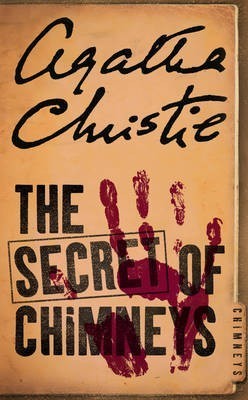
|| The Secret of Chimneys (Superintendent Battle, #1) by Agatha Christie (have read and enjoyed) ||
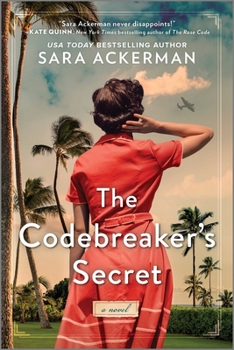
|| The Codebreaker’s Secret by Sara Ackerman (haven’t read but it looks good) ||
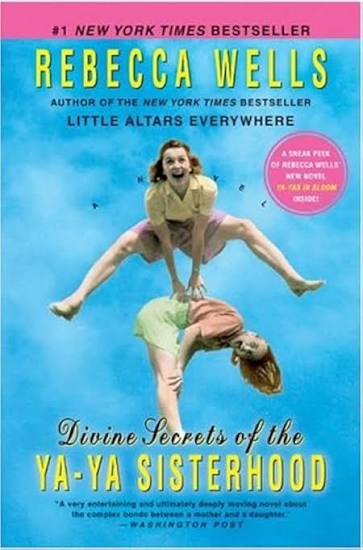
|| Divine Secrets of the Ya-Ya Sisterhood by Rebecca Wells (haven’t read but probably will eventually) ||
|| The Secret Life of Walter Mitty James Thurber (haven’t read but it interests me because I’ve seen one of the movie adaptations) ||
|| The Secret Agent by Joseph Conrad (never read it, think I’ve heard of it. Probably will read some day.) ||
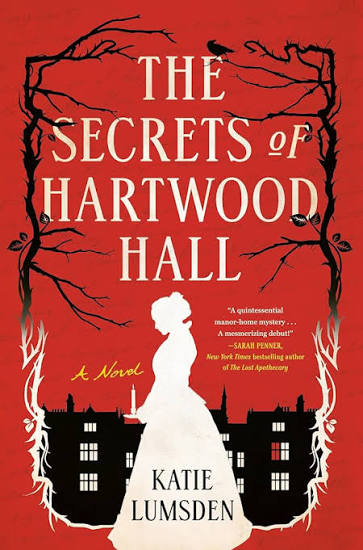
|| The Secrets of Hartwood Hall by Katie Lumsden (I don’t know anything about it but it popped up when I was searching for books with the word secret in the title and it looks good.) ||
Have you read any of these? Let me know in the comments, especially for the ones I have not read yet.
On Thursdays, I am part of the Weekend Traffic Jam Reboot blog link party. You can find the latest one in the sidebar to the right under recent posts.
Hello! Welcome to my blog. I am a blogger, homeschool mom, and I write cozy mysteries.
You can find my Gladwynn Grant Mystery series HERE.
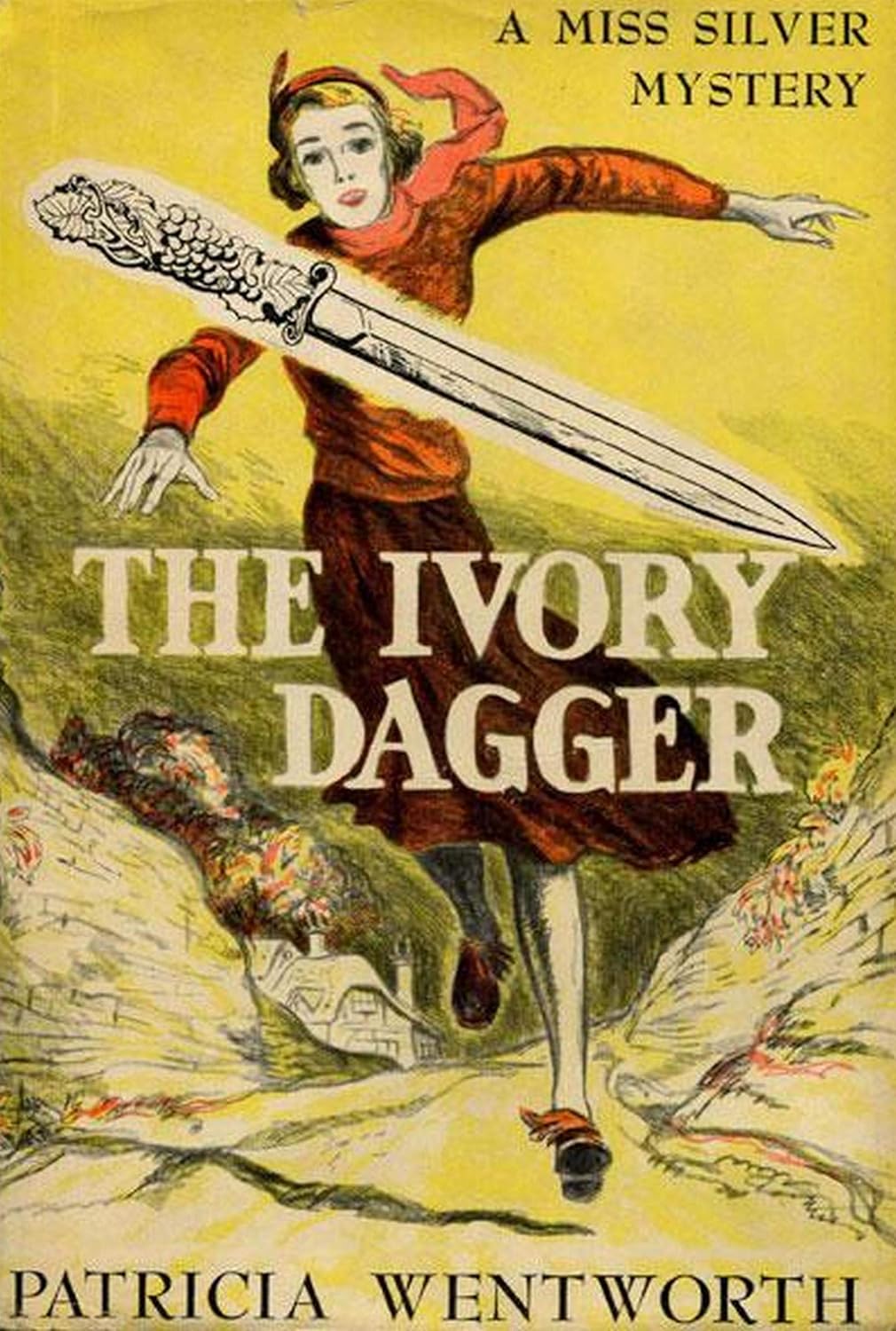
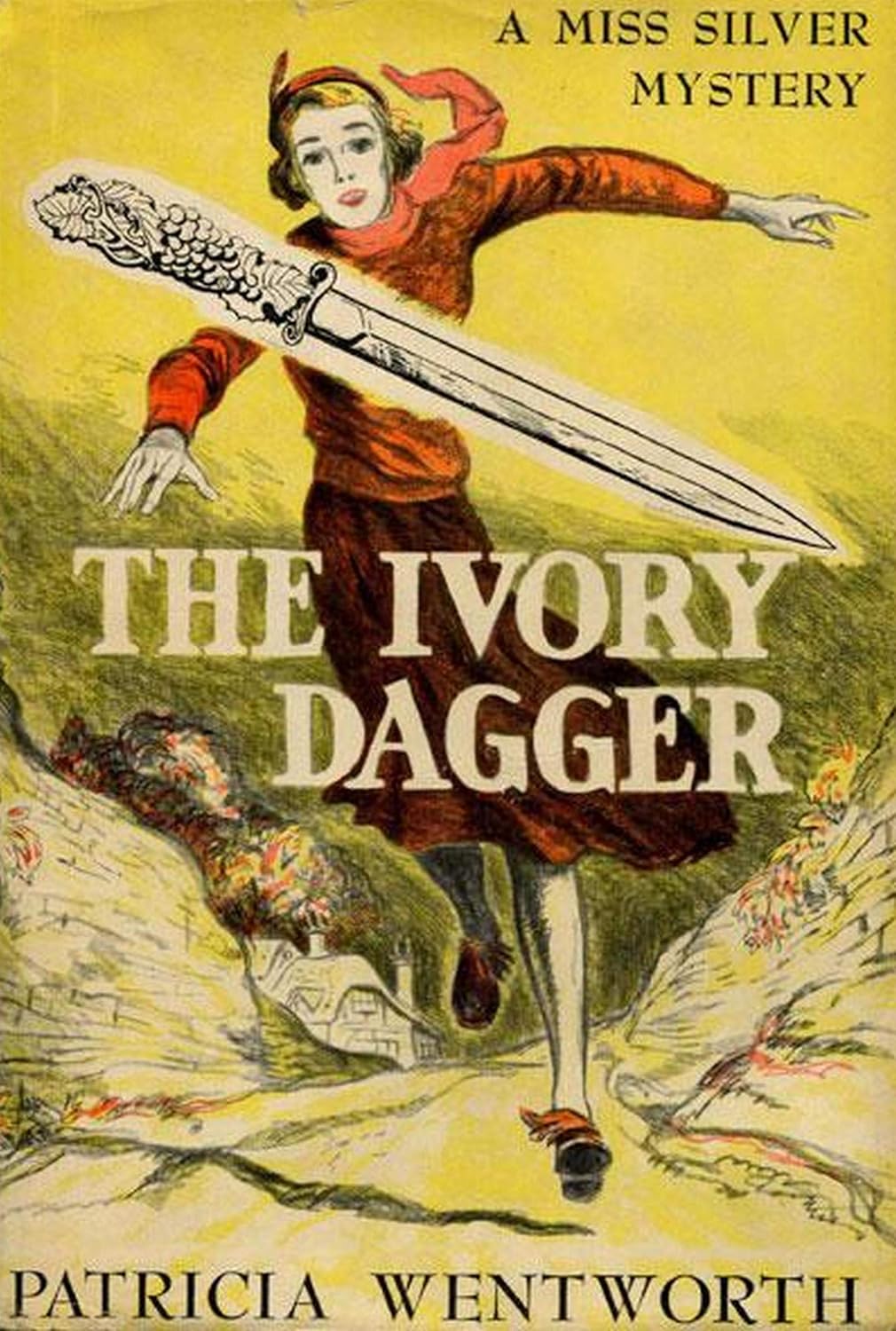
The Ivory Dagger was my first Patricia Wentworth book so it was also my first Miss Silver Mystery as well.
This was number 18 in the series and it didn’t matter that I had not read the previous 17 books. I was able to catch on with the characters and their backgrounds very quickly. Wentworth was a British Mystery writer who published books between the 1920s and the 1960s. The Ivory Dagger was written in 1953.
I liked Maud Silver, the elderly woman called in to help solve the crime, immediately. I also liked Detective Inspector Frank Abbott immediately.
It was made clear, without too much supposition on past cases, that these two had worked together before and had a very teasing and affectionate relationship because of that.
I absolutely loved their interactions.
Let’s go back and grab a description of the book from online, though:
Bill Waring, collecting his wits in hospital after a train crash, receives only one letter from Lila Dryden, his fiancée. When he discovers Lady Dryden, Lila’s guardian, has pressured her into an engagement with Herbert Whitall, he is furious. Herbert Whitall is aggressive, with a cold-hearted possessiveness that expands past the bounds of his ivory collection he can’t bear to lose. His employees hate him, Lila is terrified of him and it appears he has a hold on Lady Dryden. When a dagger in Whitall’s collection becomes the instrument of his own death there are many suspects. Maud Silver must see that justice is done, not merely to punish the guilty, but to protect the innocent.
One thing left out of this particular description, but is in others, is that Lila becomes the prime suspect because she is found standing over his body, holding an ivory dagger that belonged to him.
She has a history of sleep walking, though, and this seems to be another one of those incidents. Could she have killed Herbert in her sleep? Even she is worried about that.
I won’t lie – I wasn’t a big fan of Lila through parts of this book. She was pretty weak and cruel to Bill and others at times, but, then, she was also very young and inexperienced at life.
It’s Lady Dryden who calls in Miss Silver because she has heard about the previous cases Miss Silver has solved.
Miss Silver doesn’t know when she comes to the mansion, that Frank Abbott has been assigned the case but she is pleasantly surprised. Frank is pleasantly surprised with her appearance as well.
“Frank Abbott took the hand and reciprocated the smile. Adrian Gray having mentioned that there was a Miss Silver staying in the house, he was by no means unprepared for the appearance of the lady who he had been known in moments of expansion to address as Revered Preceptress. They were, all jesting apart, on a footing of deep attachment, and, upon Frank’s side, of a most unfeigned respect.”
Miss Silver knows that the focus is on Lila but there is a list of people who didn’t like Whitall, so she must look at them all. She doesn’t think Lila is guilty. Neither does Frank so they will need to join their efforts to find out who really is guilty.
Miss Silver reminds me of Agatha Christie’s Miss Marple and has similar hobbies and mannerisms. Miss Silver also has similar great comebacks or lines as Miss Marple.
They both appear to be innocent old ladies just sitting and knitting away while they are actually listening in to solve the crime. In this one, Miss Silver is knitting a vest for a great niece or relative, I can’t remember which. Wentworth likes to remind us she’s just simply knitting along with such lines as, “The crocket hook went in and out, making a delicate shell pattern about the neck of little Josephine’s vest.”
One difference between Miss Silver and Miss Marple is that Miss Silver is an actual private investigator and Miss Marple is simply a spinster living in a small town who becomes involved in solving crimes.
If you’re curious which one came first, it was Miss Marple by a year. Her first story was published as a short story in 1927. The first Miss Silver book came out in 1928.
What I like about Wentworth’s writing is that she is light on description of characters, scenery, and other aspects of the story, but still heavier than Christie. She provides more literary imagery to draw from to create an image in the readers mind of the main characters and the surroundings than Christie does. This doesn’t mean that one is better than the other. Christie was a brilliant stripped back storyteller and Wentworth is also a wonderful storyteller who simply adds a bit more personality and description to her characters.
Wentworth’s writing reminded me more of Margery Allingham, another Golden Age mystery writer, than Agatha’s. Both Wentworth and Allingham were great at creating engaging and well-written sentences or paragraphs that left you wanting to read it again, highlight it, or write it down.
“They sat facing one another. Feature and expression were hidden by the darkness, yet each knew the other so well that his darkness was only a black screen upon which memory could throw its pictures. Bill holding doggedly to what he had said and saying it all over again, as if battering repetition was an argument in itself. Ray on the defensive – quick thrust and parry to met his bludgeon blows, eyes wide and the colour in her cheeks like flame.”
Though this wasn’t the first book in the series, it was a good introduction for me and I am looking forward to reading more.
If you write book reviews or book-related blog posts, don’t forget that Erin, Cat, and I host the A Good Book and A Cup of Tea Monthly Bookish Blog Party. You can learn more about it here.
On Thursdays, I am part of the Weekend Traffic Jam Reboot blog link party. You can find the latest one in the sidebar to the right under recent posts.
Notice: This post may contain affiiate links. If you purchase the product from these links I will receive a small compensation at no extra charge to you.
Hello! Welcome to my blog. I am a blogger, homeschool mom, and I write cozy mysteries.
You can find my Gladwynn Grant Mystery series HERE.
If you would like to be the first to get news about my books or just have access to special posts for supporters, you can do so here for $2.99 a month https://lisahoweler.com/support-my-writing/
If you are new to my blog, I just wanted to share with you that I co-host a monthly bookish link party called A Good Book and A Cup of Tea (no, you don’t have to drink tea to participate) with Erin (Still Life, With Cracker Crumbs) and Cat (Cat’s Wire). You can find a link to it at the top of the page. The link party is for all book-related posts from reviews and recommendations to …well, anything related to books at all. Including Top Ten Tuesday, if you want to link your top ten there too!
Today’s Top Ten Tuesday prompt is: Books on My Summer 2026 To-Read List
Since I listed 15 books I want to read this summer in a blog post last week, I thought today I would list 9 mystery books I want to read this summer and one I already read. There are four Agatha Christe books listed here — one I already read, two I’ll be reading for the Agatha Christie Reading Challenge (July and August) and one I threw in for extra.
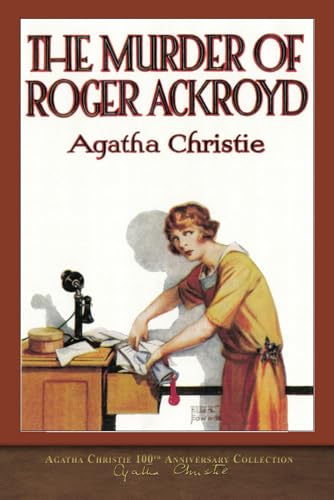
Already read: 1. The Murder of Roger Ackroyd by Agatha Christie
Description:
The peaceful English village of King’s Abbot is stunned. The widow Ferrars dies from an overdose of Veronal. Not twenty-four hours later, Roger Ackroyd—the man she had planned to marry—is murdered. It is a baffling case involving blackmail and death that taxes Hercule Poirot’s “little grey cells” before he reaches one of the most startling conclusions of his career.
2. The Ivory Dagger (A Miss Silvers Mystery) by Patricia Wentworth (already started)
Description: When Lila Dryden is discovered standing over her fiance’s body with dagger in hand, Miss Silver is called in to investigate, only to discover Lila’s sleepwalking patterns, the return of her former lover, and the victim’s circle of acquaintances–all of whom occasionally wished him dead.
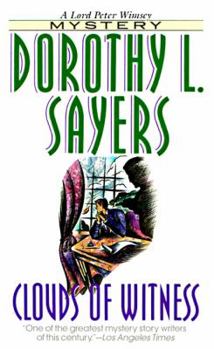
3. Clouds of Witness by Dorothy Sayers
Description: In a shocking scandal, the likes of which has not been seen in the English aristocracy since the 18th century, the Duke of Denver stands accused of the foul murder or his sister’s fiance, shot through the heart on a cold, lonely night at Riddlesdale Hall in Yorkshire. The Duke’s brother, Lord Peter Wimsey, attempts to prove Denver’s innocence, but why is the Duke refusing to cooperate? And what does his sister, Lady Mary, know about the affair? Trying to reveal the truth, Wimsey uncovers a web of lies and deceit within the family and finds himself faced with the unhappy alternative of sending either his brother or his sister to the gallows – until he himself becomes a target…
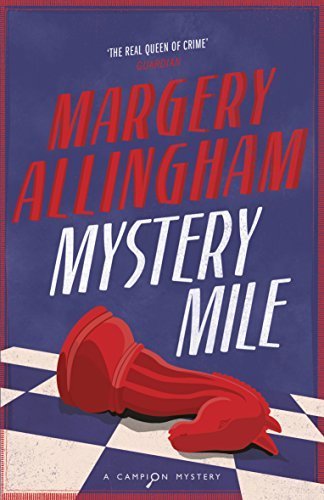
4. Mystery Mile by Margery Allingham
Description: A red chess piece… An improbable suicide… A disappearing judge… These were the clues to a killer whose victims never escaped. Judge Lobbett has found evidence pointing to the identity of the criminal mastermind behind the deadly Simister gang that is terrorizing New York. After four attempts on his life, he seeks the help of enigmatic and unorthodox amateur sleuth, Albert Campion, during his travel to England. For safety, Campion sends the Judge and his family to a secluded house in an island on the Suffolk coast.
But that safety is it seemed fitting that odd things should happen in a town called “Mystery Mile”. Soon after their arrival the local vicar is killed – a clear message from the gang. Its a race against time for Campion to get the judge to safety and decipher the clue to their mysterious enemy’s name. But even a connoisseur of crime as Scotland Yard’s Albert Campion had never encountered such elusive clues. He had to trace a mastermind of crime in time to save his client’s life–and his own. Luckily for Judge Lobbett, underneath his constant stream of banter, Campion displays a diamond-sharp intelligence and a natural detective’s instinct… Blackmail, abduction and sudden death bring matters to a climax.
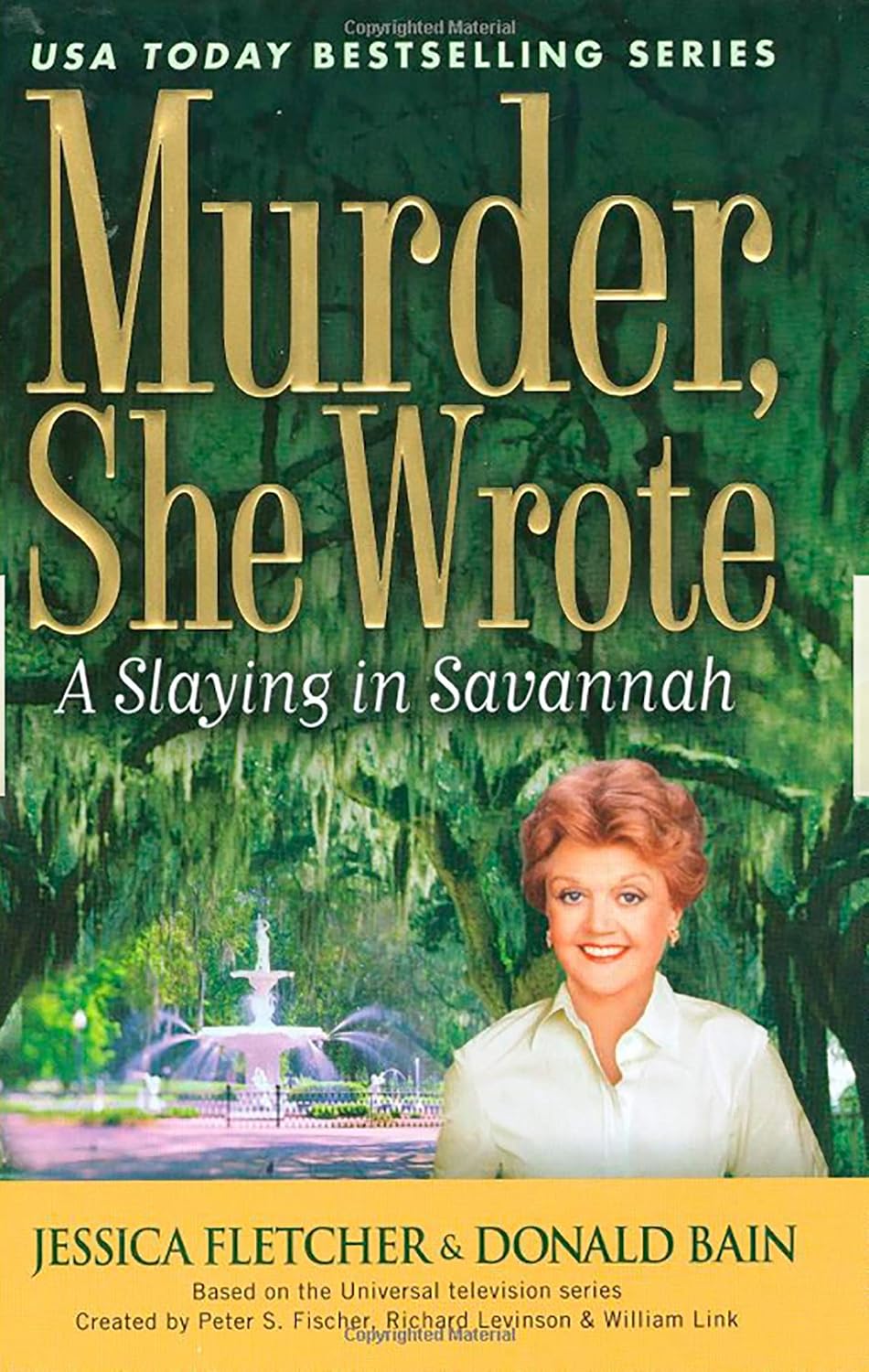
5. Murder, She Wrote: Slaying in Savannah by Donald Bain
Description: Jessica is saddened when her eccentric old friend Tillie Mortelaine passes away—and surprised to learn that Tillie has left her a million dollars. But there are strings attached. Jessica must use the money to help the literacy fund she and Tillie established years ago in Savannah, Georgia. And she will receive the money only if she can solve a mystery within the month: the murder of Tillie’s fiancé, Wanamaker Jones.
As Jessica settles into Tillie’s Savannah mansion and meets Tillie’s boarders, she also discovers that the spirit of Wanamaker Jones haunts the grounds. And that there are those in Savannah who are looking to cash in on Tillie’s demise—and Jessica’s failure…
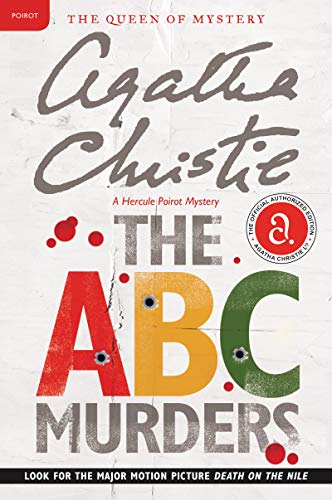
6. ABC Murders by Agatha Christie
Version 1.0.0
Description:
When Alice Asher is murdered in Andover, Hercule Poirot is already looking into the clues. Alphabetically speaking, it’s one letter down, twenty-five to go.
There’s a serial killer on the loose. His macabre calling card is to leave the ABC Railway Guide beside each victim’s body. But if A is for Alice Asher, bludgeoned to death in Andover, and B is for Betty Bernard, strangled with her belt on the beach at Bexhill, who will then be Victim C? More importantly, why is this happening?
Often considered to be one of Agatha Christie’s best.
7. By The Pricking of My Thumbs by Agatha Christie
Version 1.0.0
Description:
Tommy and Tuppence Beresford, Agatha Christie’s delightful sleuthing duo, investigate the strange and troubling doings behind the scenes at a gothic British nursing home in By the Pricking of My Thumbs
When Tommy and Tuppence visit an elderly aunt in her gothic nursing home, they think nothing of her mistrust of the doctors; after all, Ada is a very difficult old lady.
But when Mrs. Lockett mentions a poisoned mushroom stew and Mrs. Lancaster talks about “something behind the fireplace,” Tommy and Tuppence find themselves caught up in a spine-chilling adventure that could spell death for either of them.
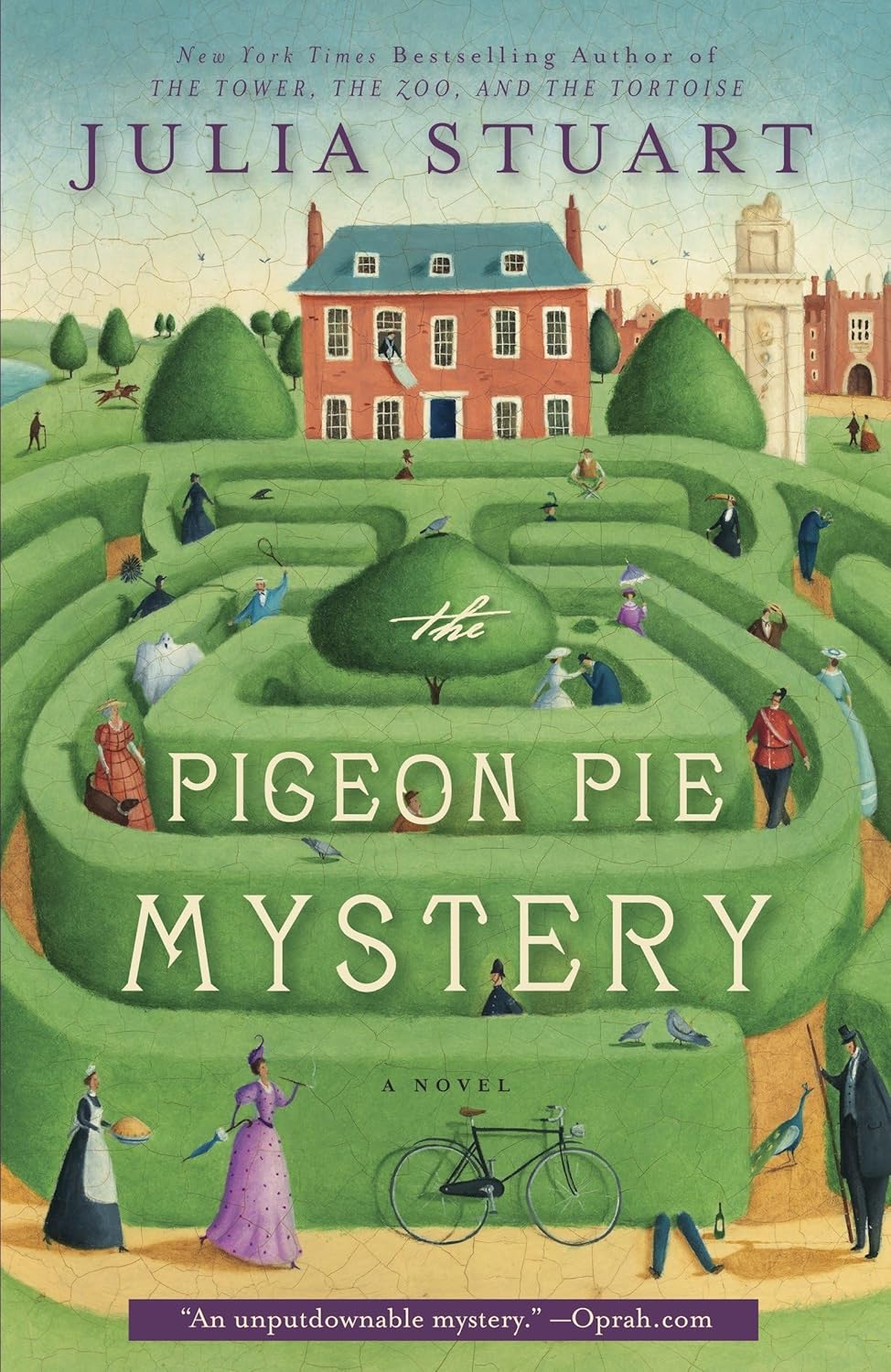
8. Pigeon Pie Mystery by Julia Stuart
Description: When Indian Princess Alexandrina is left penniless by the sudden death of her father, the Maharaja of Brindor, Queen Victoria grants her a grace-and-favor home in Hampton Court Palace. Though rumored to be haunted, Alexandrina and her lady’s maid, Pooki, have no choice but to take the Queen up on her offer. Aside from the ghost sightings, Hampton Court doesn’t seem so bad. The princess is soon befriended by three eccentric widows who invite her to a picnic with all the palace’s inhabitants, for which Pooki bakes a pigeon pie. But when General-Major Bagshot dies after eating said pie, and the coroner finds traces of arsenic in his body, Pooki becomes the #1 suspect in a murder investigation. Princess Alexandrina isn’t about to let her faithful servant hang. She begins an investigation of her own, and discovers that Hampton Court isn’t such a safe place to live after all. With her trademark wit and charm, Julia Stuart introduces us to an outstanding cast of lovable oddballs, from the palace maze-keeper to the unconventional Lady Beatrice (who likes to dress up as a toucan—don’t ask), as she guides us through the many delightful twists and turns in this fun and quirky murder mystery. Everyone is hiding a secret of the heart, and even Alexandrina may not realize when she’s caught in a maze of love.
9. Sad Cypress by Agatha Christie
Description:
Beautiful young Elinor Carlisle stood serenely in the dock, accused of the murder of Mary Gerrard, her rival in love. The evidence was only Elinor had the motive, the opportunity, and the means to administer the fatal poison.
Yet, inside the hostile courtroom, only one man still presumed Elinor was innocent until proven Hercule Poirot was all that stood between Elinor and the gallows.
10.The Cat Who Had 60 Whiskers by Lilian Jackson Braun
(Little nervous about this one as it is the last in the series before Lilian died and the later books really weren’t very good.)
Description: A twenty-ninth installment of the popular series finds Moose County in an uproar over a string of lucrative inheritances and a bee sting-related death, throughout which Polly departs for Paris, Koko the irrepressible Siamese meets a piano tuner, and Qwill writes a play.
Have you read any of these? What did you think of them?
On Thursdays, I am part of the Weekend Traffic Jam Reboot blog link party. You can find the latest one in the sidebar to the right under recent posts.
Hello! Welcome to my blog. I am a blogger, homeschool mom, and I write cozy mysteries.
You can find my Gladwynn Grant Mystery series HERE.
If you would like to be the first to get news about my books or just have access to special posts for supporters, you can do so here for $2.99 a month : https://lisahoweler.com/support-my-writing/
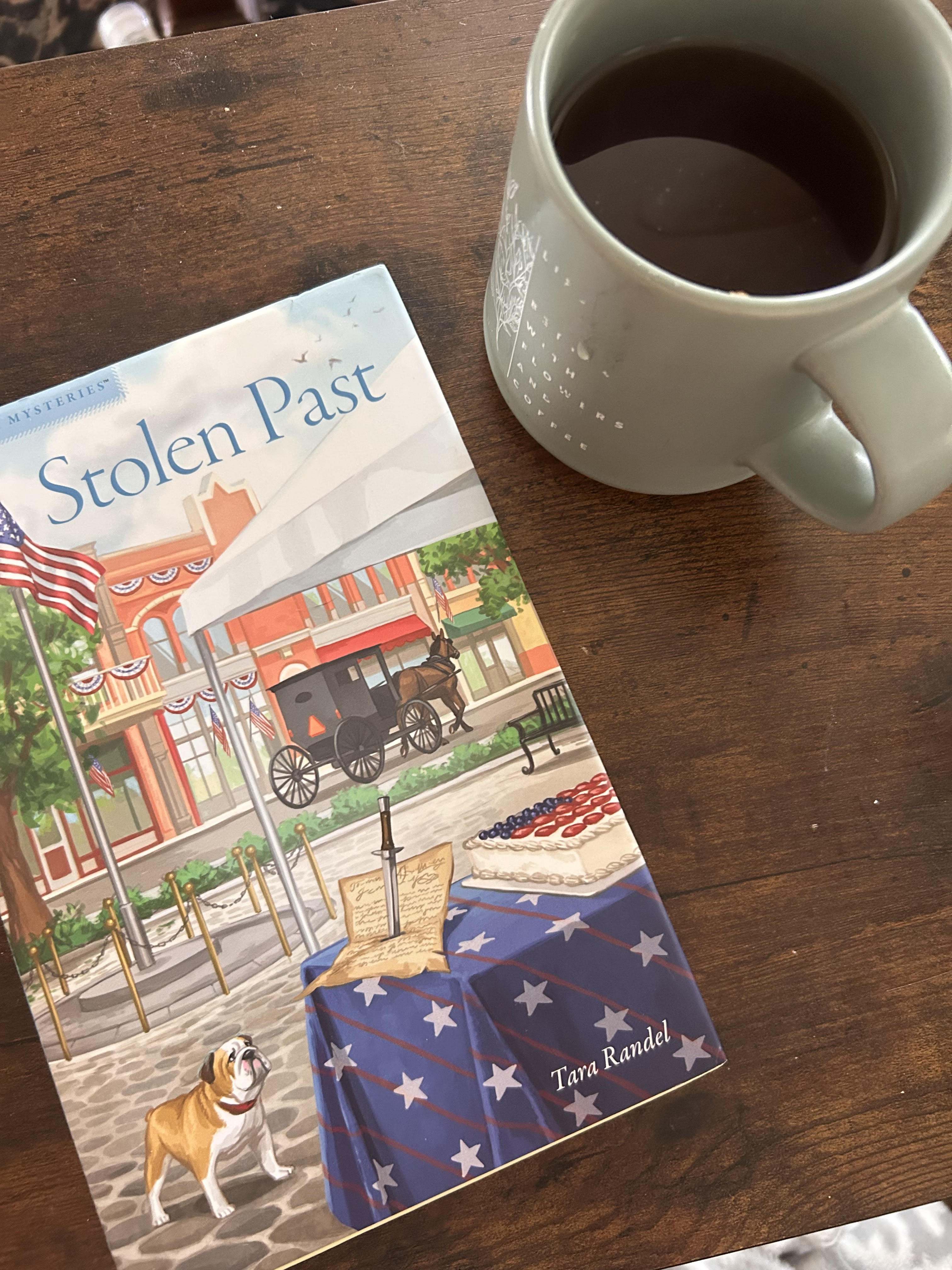
I was looking for a simple cozy mystery with lovable characters and a straight mystery recently and that’s what I found in Stolen Past by Tara Randel.
The book is part of the Amish Inn Mysteries from the now defunct Annie’s Attic.
The books were written by a few different authors, but all feature the same characters: inn owner Liz Eckhardt and her friends Mary Ann and Sadie, mayor (love interest but subtle) Jackson Cross and lazy bulldog Beans.
This time around the town of Pleasant Creek is set to celebrate a special anniversary but someone in town is stirring up trouble by stealing historically-related items and threatening to make trouble if a play about the signing of the town charter isn’t presented the way we want it.
This series includes a very slow burn romance between Liz and the mayor with just a few mild hints made here and there but very secondary to the mystery itself.
Liz’s friends Sadie and Mary Ann are “older ladies” who often pop up in the mysteries and in this one Sadie plays a bigger role than usual as a former friend comes out as the front runner for being the possible town thief.
This one may not have you on the edge of your seat, but it will have you pondering who the guilty party is while enjoying reading about the connections between Liz and her friends.
If you write book reviews or book-related blog posts, don’t forget that Erin and I host the A Good Book and A Cup of Tea Monthly Bookish Blog Party. You can learn more about it here.
On Thursdays, I am part of the Weekend Traffic Jam Reboot blog link party. You can find the latest one in the sidebar to the right under recent posts.
Notice: This post may contain affiiate links. If you purchase the product from these links I will receive a small compensation at no extra charge to you.
Hello! Welcome to my blog. I am a blogger, homeschool mom, and I write cozy mysteries.
You can find my Gladwynn Grant Mystery series HERE.
If you would like to be the first to get news about my books or just have access to special posts for supporters, you can do so here for $2.99 a month https://lisahoweler.com/support-my-writing/
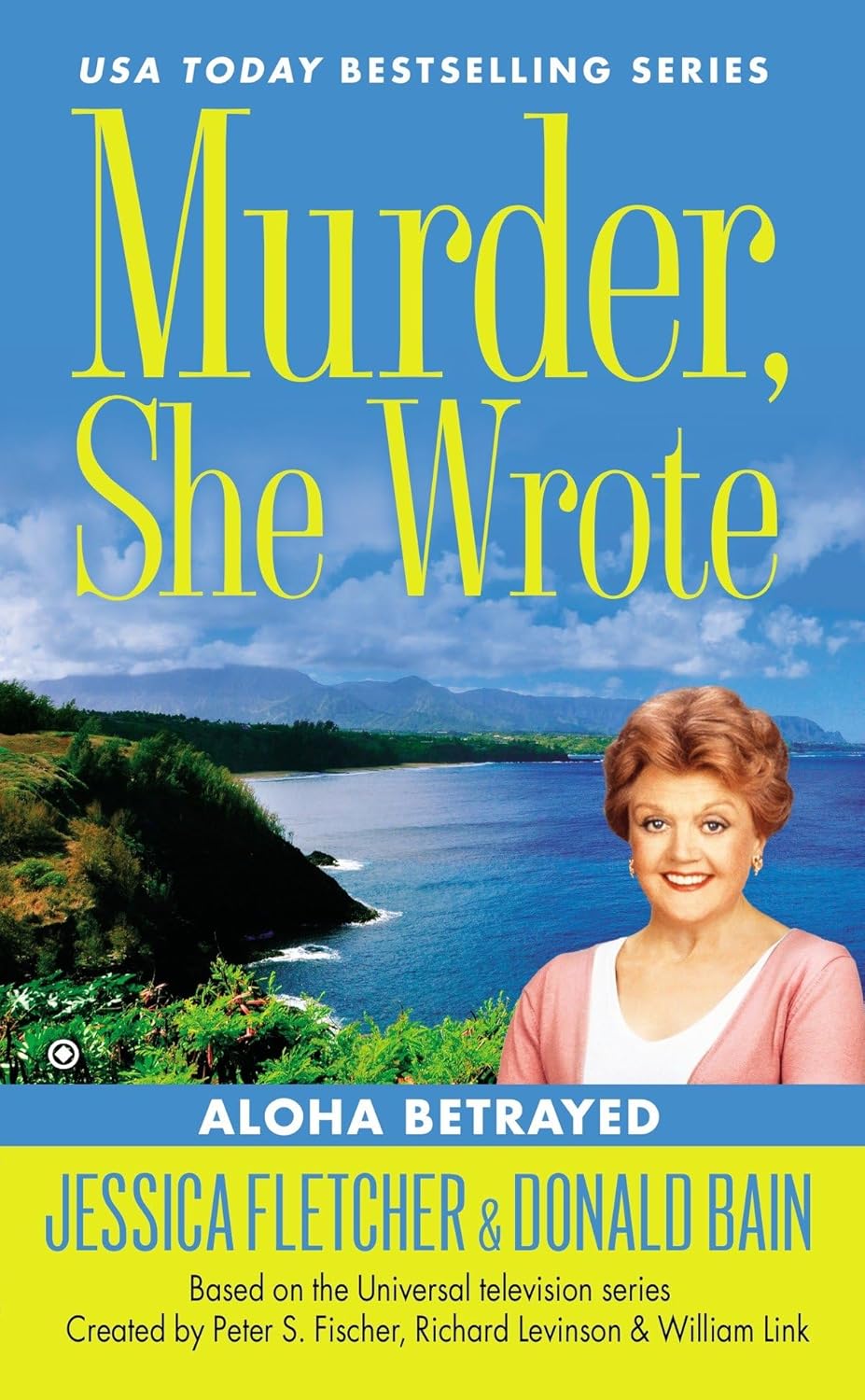
Aloha Betrayed, a Murder, She Wrote book by Donald Bain and “Jessica Fletcher,” is the 41st book in the 63-book series. Bain wrote 47 of those books.
This is the fifth book I’ve read from this series and, no, I have not read these books in order, and I don’t feel you need to.
This was a fun, slower paced mystery and my only complaint is that there were a couple of plot points left hanging at the end and that Bain seems to have done that on purpose.
He left us not totally sure if the victim was a totally good person or not but mainly making us think she was being manipulated in some way, while not totally confirming if that was true or not.
Here is a quick description of the book from the publisher:
Jessica is on the Hawaiian island of Maui, giving a lecture at Maui College on community involvement in police investigations—a subject she knows well. Her co-lecturer is legendary retired detective Mike Kane, a behemoth of a man who shares his love of Hawaiian lore, legends and culture with Jessica.
Sadly, all the talking stops when the body of a colleague is found at the rocky foot of a cliff.
Mala Kapule was a botanist and popular professor at the school, known for her activism and efforts on behalf of the volcanic crater Haleakala. The high altitude crater is already the site of an observatory, but plans to place the world’s largest solar telescope there split the locals, with Mala fiercely arguing to preserve the delicate ecology of the area. Was someone trying to muffle the protestors? Or was Mala’s killer making a more personal statement?
Now, it’s up to Jessica, along with Mike, to uncover who was driven to silence the scientist…and betray the true meaning of Aloha.
I read some reviews of this book that said the Hawaiian history mixed in with the story slowed the book down but I actually thought the history was naturally woven into the story with information being given to us through conversations between Jessica and the other characters.
It was not an “info dump” by any means.
Donald Bain wrote Jessica very naturally. He was a ghost writer for many years, and he clearly learned how to write from the point of view of a woman very well. All the books are in first person (from what I have read so far) and I often forget that Jessica is being written by a man.
He writes Jessica as tender, but not too tender, sensitive and concerned, but not too much of either, and more concerned about the feelings of victims and the perpetrators than a male sleuth would most likely be — or at least show.
He also wrote her as someone who thinks deeply about the issues of the world.
“I’ve had many discussions with Seth Hazlitt, and other friends in Cabot Cove about how today’s frenetic lifestyle, fueled by all the technology that surrounds us, takes away from precious time to think. I needed think time. We all need think time to avoid making some of the mistakes we humans are prone to.”
This is a good one to read if you are looking for a quick escape and not anything super deep — similar to the show.
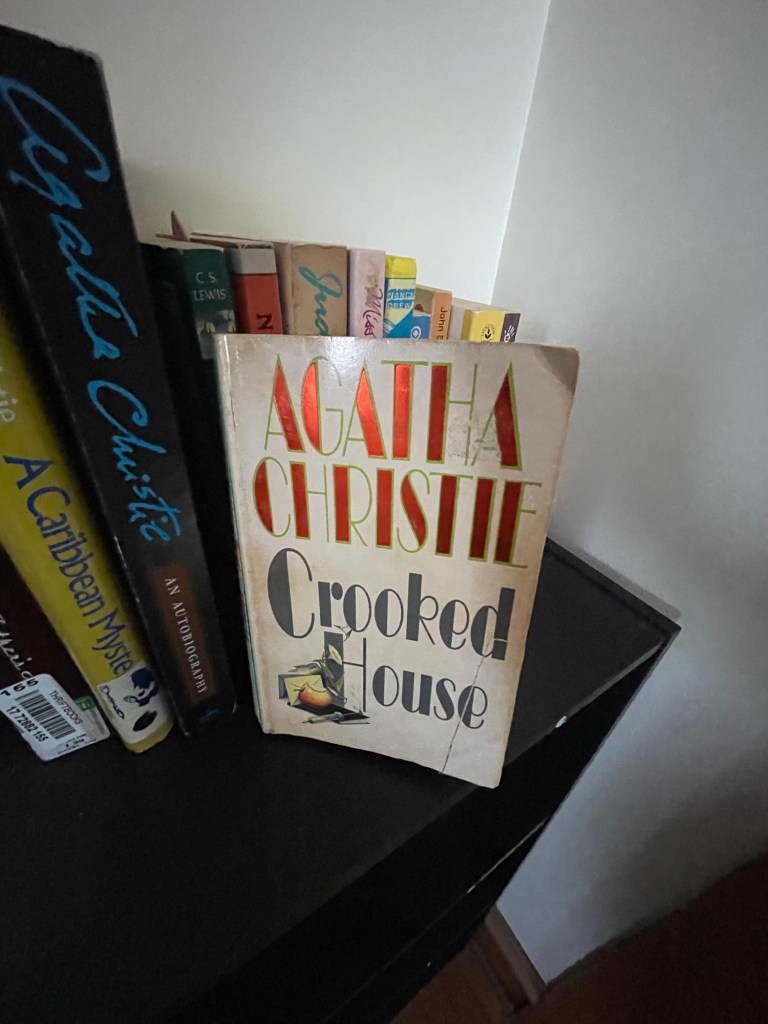
Here is some advice for you if you decide to read Crooked House by Agatha Christie: If you think that you know who the guilty party is, but you’re uncomfortable with who you think the guilty party is, go with that feeling and your choice.
That won’t make sense until you read the book, so here is a little background on this one, which does not feature one of Christie’s famous detectives.
This book is a standalone novel that starts with the main character Charles Hayward planning to marry Sophia Leonides who he met in Egypt toward the end of the war. They hang out while in Eqypt and correspond some afterward, but drift apart until he returns to England two years later. It’s after his return that he reads in the paper that Sophia’s grandfather has died. He knows it is her grandfather because she once told him all about her family.
“’We live in a crooked little house . . .’”
“I must have looked startled, for she seemed amused, and explained by elaborating the quotation. ‘And they all lived together in a little crooked house,’ That’s us. Not really such a little house either. But definitely crooked — running to gables and halftimbering!”
In this case the crooked little house quote is a play on the nursery rhyme “There Was a Crooked Little Man,” but I am not familiar with that nursery rhyme.
Due to the blitz, Sophia’s extended family was all living in the house with the patriarch, Aristide Leonides, a short Greek man who commanded a lot of presence. Her family includes her younger brother and sister, her parents, her uncle and an aunt by marriage, her grandfather, a great aunt, and a step-grandmother.”
Charles reaches out to her by telegram, and she asks to meet that night at a local restaurant. The connection they had two years ago is still strong, and he still wants to marry her, but she says she can’t marry him now, and maybe never. She believes her grandfather has been murdered, and she doesn’t want to ruin Charles’ reputation as a member of the Diplomatic Service because she feels certain the murder was committed by someone in her family.
The main suspect is her step-grandmother, Brenda, with the tutor for Sophia’s siblings a close second because the family believes the two were having an affair.
In the first part of the book, we get to know the entire family, and it isn’t very pretty. Many of them are selfish and bitter people looking out for themselves, and the ones who don’t seem that way may be putting on an act. Maybe even Sophia is putting on an act. Figuring out who committed the crime will baffle Charles and Scotland Yard, and when you get to the ending — oof. It’s definitely a plot twist, one I saw coming, but still had to find out how and why.
I would definitely recommend this one if you’ve never read Agatha before or even if you have. I think it’s one of her best, and I read today that she called it one of her favorites to write. It is definitely a book that will stick with you over the years, making you think (and shudder a bit) long after you’ve put it down.
Some quotes from it I enjoyed:
“Curious thing, rooms. Tell you quite a lot about the people who live in them.”
***
“I think people more often kill those they love than those they hate. Possibly because only the people you love can really make life unendurable to you.”
***
“I’ve never met a murderer who wasn’t vain… It’s their vanity that leads to their undoing, nine times out of ten. They may be frightened of being caught, but they can’t help strutting and boasting and usually they’re sure they’ve been far too clever to be caught.”
***
“Murder, you see, is an amateur crime… One feels, very often, as though these nice ordinary chaps, had been overtaken, as it were, by murder, almost accidentally. They’ve been in a tight place, or they’ve wanted something very badly, money or a woman – and they’ve killed to get it. The brake that operates with most of us doesn’t operate with them… They continue to be aware that murder is wrong, but they do not feel it. I don’t think, in my experience, that any murderer has really felt remorse… Murderers are set apart, they are ‘different’ – murder is wrong – but not for them – for them it is necessary – the victim has ‘asked for it,’ it was ‘the only way.”