I don’t participate in book challenges very often but this month I am participating in Middle Grade March.
This is the month when adults read chapter books that were actually written for children. Sometimes, they are so good that we don’t even realize they were written for children.
I read a lot of these books throughout the year because I have a middle-grade child. She and I have already read many of the books other readers have on their lists each year.
This year I decided I wanted to read Miracles on Maple Hill with Little Miss since I read it last March and really enjoyed it. I like that it takes place in Pennsylvania around maple syrup season which is this time of year. I also just like the overall story.
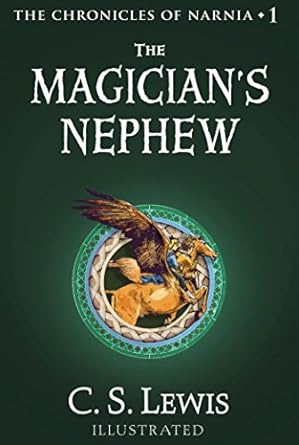
I also decided to read The Magician’s Nephew by C.S. Lewis because I haven’t read all of the Chronicles of Narnia since I was about middle-grade age myself.
Emily of New Moon by L.M. Montgomery is one that has been recommended to me a couple of times so I also put that on my list.
I hope to also get to Violet Jenkins Saves The Day by Stacy Faubion and The Moffats by Eleanor Estes. I will at least get to Violet by April since I’ve been meaning to read it for a few months now.
Do you participate in Middle Grade March, or have you?
If you have, what did you read or if you are this month, what are you reading?
The cover of Miracles on Maple Hill caught my attention at a used book sale so I grabbed it up to read with my 9-old daughter at some point. There are actually two covers to the book – the original and the updated one I have.
When a friend mentioned she was reading the book and then I saw someone else online mention they were reading it, I decided I would read it for fun as well. I read it in February but it is timely that I am writing about it during Middle Grade March, which is when some readers pick up middle grade books to read or read again.
I don’t usually read middle-grade books at any time but last year I read When Hitler Stole Pink Rabbit by Judith Kerr and enjoyed it so decided I’d try another one. I now, incidentally, have a stack of them I want to read.
The story follows Marly and her family as they visit her mother’s grandmother’s house in rural Pennsylvania. The family lives in the Pittsburgh area but decides to visit Maple Hill to help Marly’s dad who is dealing with PTSD from being a prisoner of war and presumed dead. The book doesn’t specify which war but the book was published in 1956 so it could either be World War II or the Korean War.
Marly’s family includes her mom, dad, and brother Joe. When they arrive in Maple Hill, Marly’s mom hopes that the time at the farm, even if it is only weekends, will help her husband feel better and less hopeless.
When they arrive they meet neighbors of Marly’s Mom’s grandmother, Mr. and Mrs. Chris. It’s a little confusing is Chris is the man’s first or last name since the wife calls him both during the book, but it doesn’t really matter. They are a sweet older couple and when Marly first meets him he is tapping maple trees for sap.
According to information online, Sorensen based the book on her real-life experiences while visiting Edinboro, Pennsylvania.
Someone I follow (though I can’t remember who) had mentioned that this book took place in Pennsylvania but I completely forgot that until I started it. The fact that the book begins and ends during maple syrup collecting and cooking season was interesting to me since that is the season we were in when I started the book.
My husband, in fact, had just come back from a demonstration at a local farm where they collect the sap and make maple syrup. He had attended it for work as a reporter/editor at the local paper and I suggested he use a quote from the book for his story. He ultimately rejected that idea even though he liked the quote.
“The sap running gives me a feeling I can’t describe,” Mr. Chris said. “Like it is the blood of the earth moving.”
Mr. Chris has a lot of great quotes in the book including: “Everything has its own sap, I guess,” he said. “It’s got to rise, that’s all. Nobody knows why. It’s like the sun in the morning.”
There was one disturbing scene in the beginning of the book that made me almost abandon it. In the scene Marly finds a nest of baby mice. Her mother is disgusted and tells her husband to do something about it. He tells Joe to throw the nest into the stove downstairs where they have just started a fire.
Marly is horrified but the rest of the family doesn’t understand what her problem is. The mice can carry disease, they argue. They needed to go. To Marly the mice were alive – they were potential pets and she decides she can never just accept that a life can be snuffed out because it is inconvenient. She is comforted when Mr. Chris agrees when he discusses the mice living in his sugar shack and how they have become his friends.
I’m glad I didn’t give up on the book based on that scene, however, because it is a pivotal motion that launches off changes in the family as the book progresses. We go from a dead and dark feeling inside the father where baby mice don’t matter to him to a place in his life where life becomes bright and enjoyable again. I won’t spoil how we get there or the incidents that show that but it is very heartwarming when it begins and continues.
I sobbed through much of the last three chapters of the book. Things became tense, the family had to rally together, and I wasn’t sure who would be left when it was over. I knew this was an older book and they didn’t always end on a happy note (hello Old Yeller) so I read it with trepidation. I will not ruin the ending for those who never read the book but I will say I was not disappointed with the ending and felt a sense of hope based on it.
According to Wikipedia, the Hurry Hill Maple Farm Museum in Edinboro features an exhibit dedicated to the book and the author.
The book won the 1957 Newberry Medal and was illustrated by Beth and Joe Krush.
Sorensen, who was born in Utah, was called a Mormon writer but once said she did not have a great deal of interest in Mormons or the faith. Despite that, she wrote several adult books tying her faith into life and is considered by most to be a Mormon author – even though most of her books had nothing to do with the Mormon life. She wrote seven children’s books and nine adult books.
I enjoyed Maple Hill and will be looking for other books by her to read in the future.
Have you read this or any of Sorensen’s other books?