
Full disclaimer this week: the subject matter of this movie made it too difficult for me to watch all the way through, so I’m telling you what the movie is about, but I skimmed a lot of this movie.
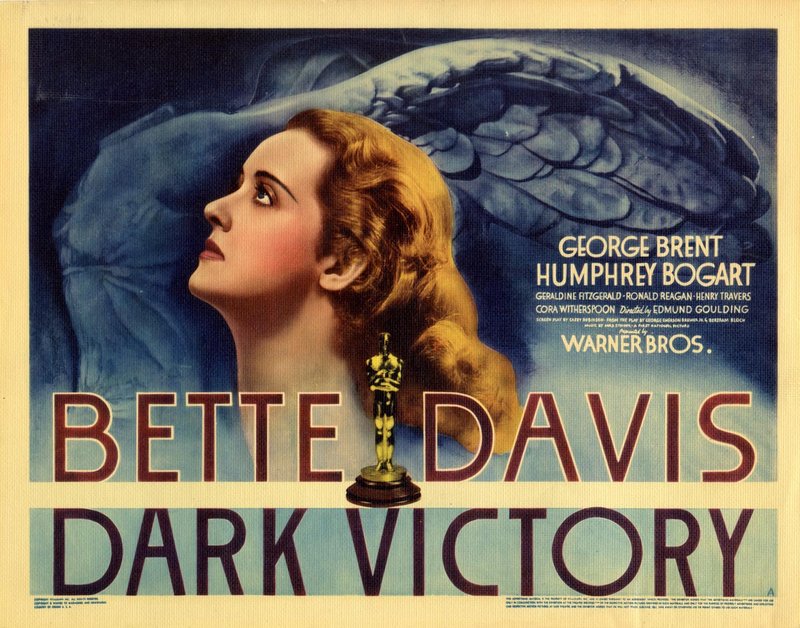
I’ve been watching Bette Davis movies for spring and this week the one I chose was Dark Victory, released in 1939.
Sadly, for personal reasons, I could not make it all the way through this one. I did read what it was about before watching it, and I thought I could handle it, but I could not.
Bette acted well in this one — though I do think she is a tad bit overacting at times in many of her films. That is her style, so it’s okay, but her delivery is often more abrasive than I think it needs to be.
In this film, she had reason to be abrasive.
It is not a spoiler to say that in this movie, Bette’s character is diagnosed with a brain tumor.
It’s in the description of the movie online, such as Google:
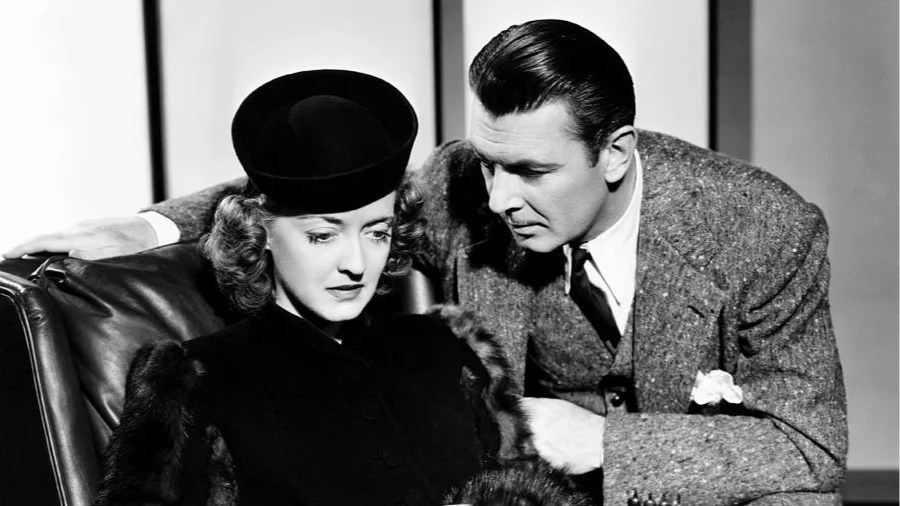
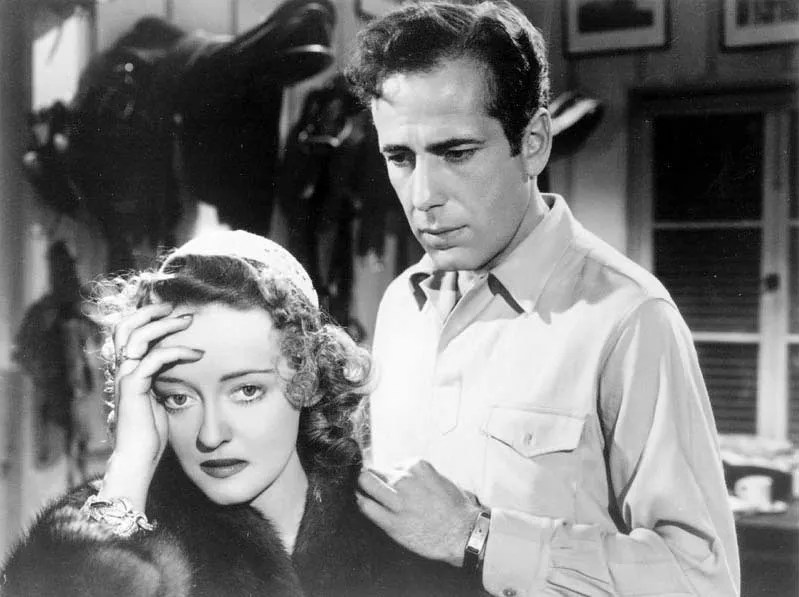
“Socialite Judith Traherne (Bette Davis) lives a lavish but emotionally empty life. Riding horses is one of her few joys, and her stable master (Humphrey Bogart) is secretly in love with her. Told she has a brain tumor by her doctor, Frederick Steele (George Brent), Judith becomes distraught. After she decides to have surgery to remove the tumor, Judith realizes she is in love with Dr. Steele, but more troubling medical news may sabotage her new relationship, and her second chance at life.”
This is not a totally accurate description, however. Let me preface all this by saying the next bit will be a spoiler of sorts so if you haven’t seen the movie and want to, you will want to skip this.
Are you ready?
I’m going to tell you something about the movie that the description didn’t. Ready?
You sure?
Okay….
Here goes….
Judith is told by her doctor that she is fine when in reality she has a cancerous brain tumor that will take her life in about 10 months. Dr. Steele wants her to live her life fully, believing she is fine because, I guess, he is in love with her love of life (even though a lot of it was drinking and sleeping around) and with her and doesn’t want to see the light go out of her when she finds out she is dying. He tells her sister she is dying because he feels guilty for lying and then he makes her also lie about it so Judith will have a good life until the end.
I think it is horrible and cruel, honestly, but at the same time, I understand Dr. Steele’s reasoning.
This movie is very melodramatic with a lot of tearjerker moments that I struggled with because when I worked for a newspaper, I had to write several stories about fundraisers for a little boy who was born with a brain tumor.
He was an amazing little boy, wise beyond his years. He died when he was seven years old, and not long after that his mother was diagnosed with the same type of brain tumor and died a few years later. She’d had another son, married another man (the first son’s father was a total dirt bag who just recently was charged with some inappropriate behavior as a judge and I am so happy about that), and was just starting to have her happy ending when she was diagnosed. I wrote a lot of stories about fundraisers for her, after I interviewed her about the death of her son. He had become somewhat of a community celebrity because of all his issues and the fundraisers held for him.
His name was Jordan. Her name was Jodi. They had the same brain tumor that this character has.
This sounds very selfish after all they went through, but I think I still have some PTSD after getting to know them, writing stories about them, and then having them both die. They deserved so much more.
Even writing all this out makes me sick to my stomach and has me crying so that’s the reason I couldn’t stomach this movie beyond skimming through it.
Back to the movie before I make my keyboard a safety hazard from all the wetness.
According to TCM, Bette and her co-star, George Brent, who plays Dr. Steele, were in 11 films together between 1932 and 1942.
They were never romantically linked off screen until after this film. Brent was divorcing his wife and Bette’s first husband was divorcing her and her affairs with Howard Hughes and director William Wyler were ending. The pair remained together for about a year and later in life Bette said of him, “Of the men I didn’t marry, the dearest was George Brent.”
The role was already intensely emotional and with Davis at her emotional breaking point, her performance ended up being one praised by critics when the film was released and for years to come.
Bette was the one who pushed for the rights for the play to be purchased but when they were, she said she didn’t feel she could pull off the role.
Margarita Landazuri writes for TCM that after only a few days of shooting, “Bette begged to be released from the film, claiming she was sick. Producer Hal Wallis replied, ‘Bette, I’ve seen the rushes – stay sick!’”
This movie is called a “three-hanky hit” because of how emotional it was. Viewers knew they were being emotionally manipulated by it but it was so well made, they didn’t mind.
It is a well-made film, Bette carries herself through the role beautifully, and it was fun seeing Humphrey Bogart in a side-role as her a man who has unrequited love for Judith.
Maybe it is because the movie was made so well that it made it impossible for me to watch it all the way through.
If you do decide to watch it, bring your tissues and muster through better than I did.
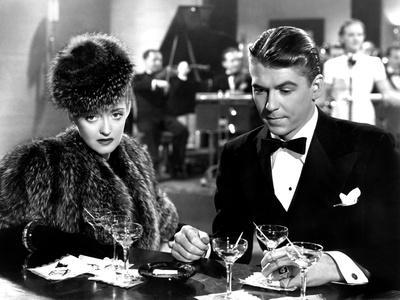
I should also mention that our former president Ronald Reagan was in this one and he was a roaring drunk, loser. Ha! He didn’t play it very convicingly so I don’t think that was his normal state, even as a young guy, but maybe I’m wrong?
Next up I’ll be watching Jezebel from 1938.
Here is a description of that movie in case you are interested: “In one of her most renowned roles, Bette Davis portrays Julie Marsden, a spoiled Southern belle who risks losing her suitor with her impetuous behavior. Engaged to successful banker Preston Dillard (Henry Fonda), Julie pushes him away with her arrogant and contrary ways, leading to a scandalous scene at a major social event and his subsequent departure. When Preston eventually returns and Julie attempts to win him back, she discovers that it may be too late.”
My watch list for this feature:
It’s Love I’m After (April 15)
The Working Man (April 21)
Another Man’s Poison (April 27)
Dark Victory (April 30)
Jezebel (May 1)
Dangerous (May 7)
The Letter (May 12)
Of Human Bondage (May 21)
Now, Voyager (May 28)
Additional sources/resources:
https://www.tcm.com/articles/29905/dark-victory
https://theblondeatthefilm.com/2015/02/02/dark-victory-1939/
If you want to find clips and thoughts about vintage movies and TV, you can visit me on Instagram on my Nostalgically Thinking Account (https://www.instagram.com/nostalgically_thinking/) or on my YouTube account Nostalgically and Bookishly Thinking here: https://www.youtube.com/@nostaglicandbookish
