Classic Movie Impressions (Winter of Douglas Fairbanks Jr.): Gunga Din

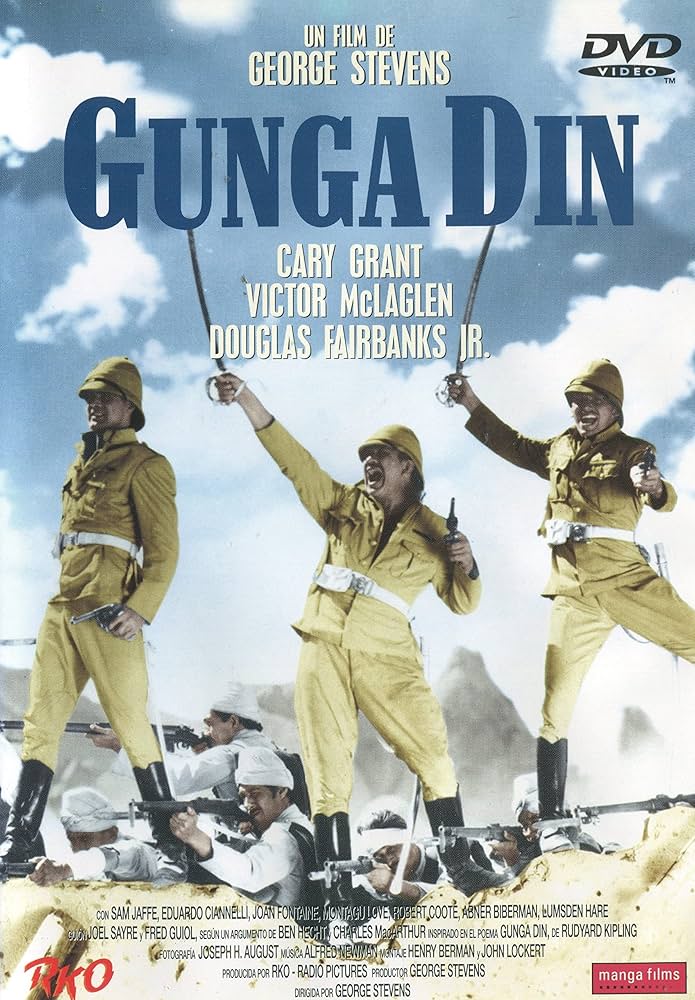
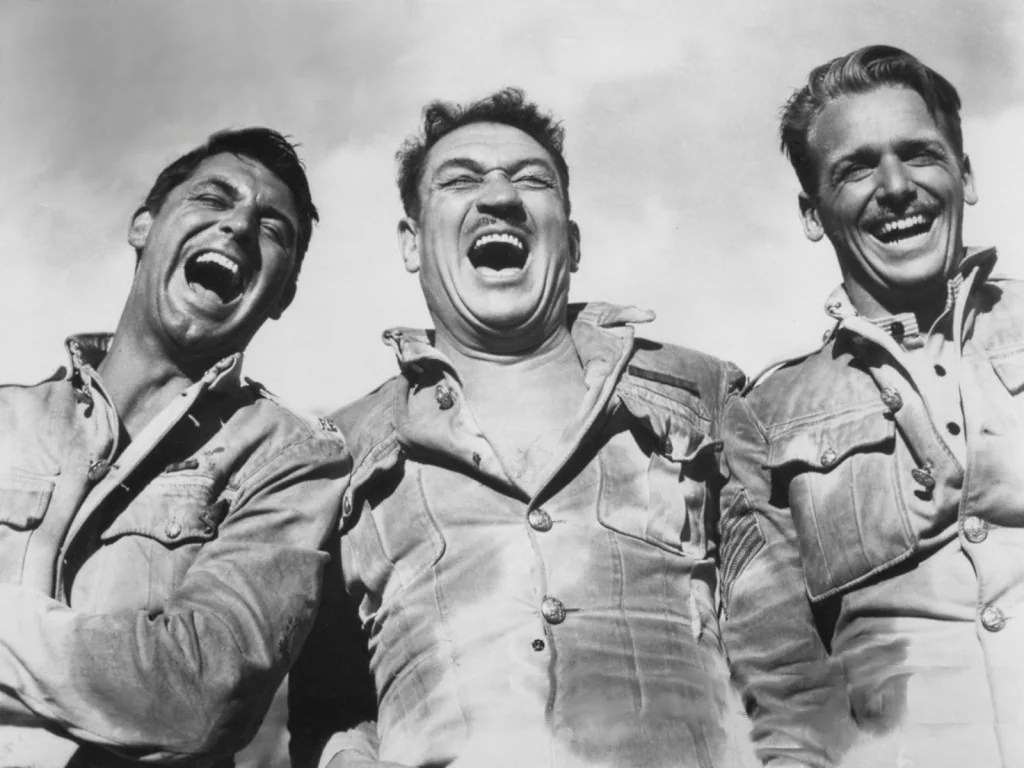
Up this week for the Winter of Douglas Fairbanks Jr. is Gunga Din (1939), said to be one of his most famous movies.

I am going to let you know right up front that I rarely hate classic movies that I watch, but I pretty much hated this movie. This movie was a train wreck for me from beginning to end. Possibly a bit of a racist train wreck at that. It had a severe identity crisis — it wasn’t sure if it was a comedy or a drama.

For me this movie was Gunga Do..n’t.

When I first started it I thought, “Two of my favorite actors. Cary Grant and Douglas Fairbanks, Jr! Be still my heart!!!”

As I continued it, I thought things like:

 “Are these guys supposed to be British?”

“What accent is that? Is he trying to do an accent? Why is he trying to do an accent?”

“Why didn’t they let the Irish actor just have an Irish accent? His British accent is horrible.”

“Douglas looks bored out of his mind and like he wishes he could get out of his contract.”

“Is that a white man painted brown to look Indian? And that one too? And that one? And…

First a snippet of the synopsis of the movie from TCM.com:

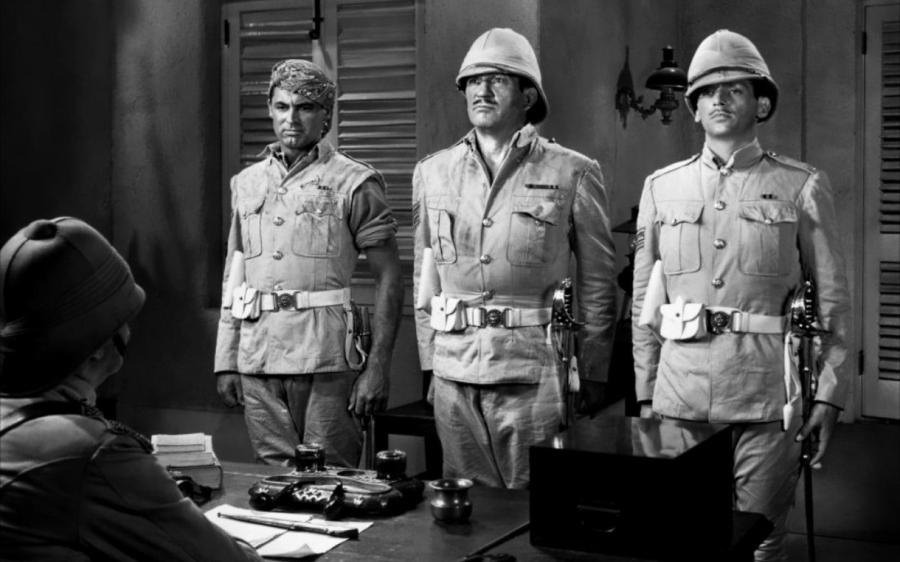
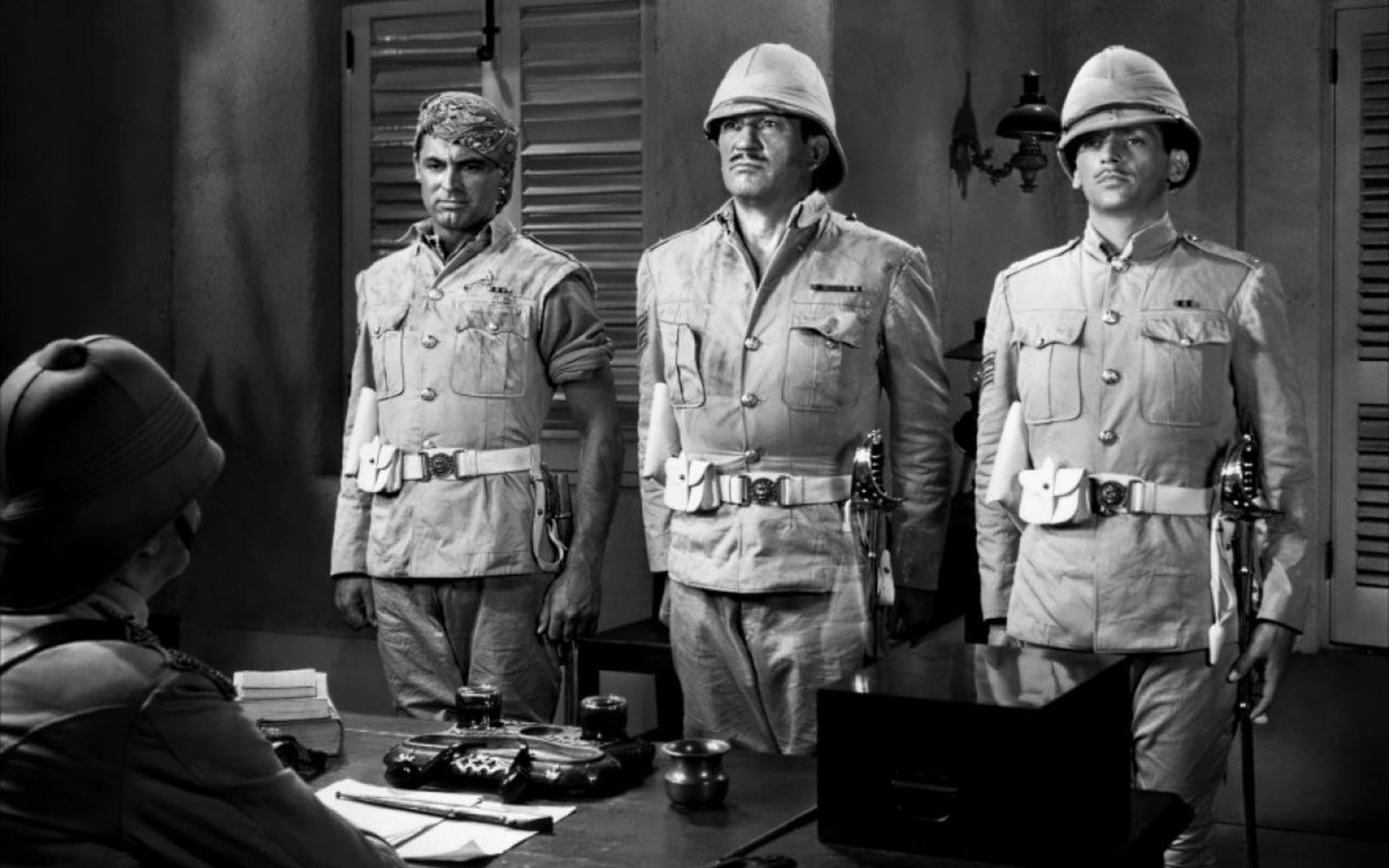
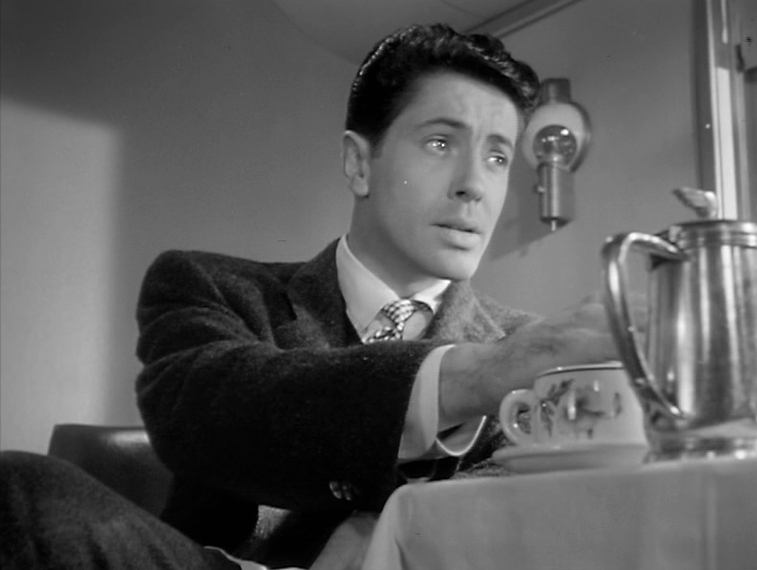
In an encampment of Her Majesty’s Lancers in Colonial India, the commanding officer (Montagu Love) is distressed by the cutoff of communications from an outpost ten miles distant. He wants three of his most dependable sergeants to embark on an investigative mission; however, the trio must first be pulled away from a bar brawl to receive their orders. The comrades in arms include the calculating Cutter (Cary Grant), ever dreaming of finding a cache of riches; the grizzled veteran MacChesney (Victor McLaglen); and the gentlemanly Ballantine (Douglas Fairbanks, Jr.), whose sole focus is his imminent discharge and marriage to his fiancée (Joan Fontaine), much to the chagrin of his comrades.

Among the troops taken on the mission is the humble bhisti Gunga Din (Sam Jaffe), for whom life would hold no greater honor than to serve as regular Army. They arrive at the outpost to find the streets empty; the soldiers’ rousting of the homes turns up one small cluster of ostensible survivors.

Cutter’s drunken fixation with a legendary golden temple leads to a one-sided slugfest with MacChesney, a stint in the brig, and an audacious escape courtesy of Din and MacChesney’s beloved pet elephant. In their flight, Cutter and Din discover the mythical temple which, as they unfortunately learn too late, is also the gathering place of a criminal sect devoted to the Hindustani goddess of destruction Kali. Cutter offers himself to the cult to buy Din time to escape, and the quest for his rescue drives Gunga Din to its rousing conclusion.”

I don’t know what to say about this movie. I really don’t. It was a mix between a comedy and drama with a lot of racist undertones against the Indian people who Great Britain took over for no reason other than greed and power.

Then at the end they acted like these three idiots were heroes, when half of the people who died wouldn’t have if Cary’s character hadn’t been looking for gold.

To me it was a great big statement on imperialism and while the movie was trying o portray British patriotism I found it fairy sickening to watch them gun down Indians whose land it was in the first place.

And the music playing throughout this movie tried to make it seem like it was a goofy romp, even while the footage before our eyes tried to play it off as a serious epic. I was so thoroughly confused.

Also, Douglas Fairbanks Jr. looked so bored in much of this movie. It was like he was trying to figure out what was going on with the rest of us.

The movie was overbudget and took longer to film than promised, according to an article on TCM.com.

“Filming began in June of 1938 and was set to last for 64 days. Due to the working methods of director Stevens and to a studio anxious to produce its most prestigious picture to date, Gunga Din would ultimately go over budget, miss its release date of Christmas, 1938, and the shooting schedule would stretch well beyond the allotted 64 days to a total of 104 days.”

The movie was shot in the deserts of Lone Pine, California, and temperatures of up to 115 degrees took a toll on the cast and crew.

A number of scenes that involved journalist and poet Rudyard Kipling — who wrote the poem and short stories that the movie was based on — were cut at the request of his widow who knew that at that time audiences would have been shocked and laughed at the idea of a journalist being embedded with the army. This is something modern audiences wouldn’t even blink an eye at today.

I found it interesting that author William Faulkner worked on the original screenplay for $750 a week. I guess I always thought of him as more highbrow than writing screenplays for movies. In the end it wasn’t his screenplay that was used, but instead one by  Charles MacArthur and Ben Hecht.

The expenses paid out for the movie was one reason the movie ended up costing the most of any movie that the RKO Studio had made so far at $1.9 million. Of course it wasn’t the most expensive movie released that year. That went to Gone With The Wind produced by David Selznick’s Selznick International Pictures and Metro-Goldwyn-Mayer with $3.8 million.

Gunga Din only brought in $2.8 million but was re-released in 1941 and again in the 50s and gained back even more of it’s production costs over the years.

While I thought Douglas looked bored in this movie, he looked back on it with fondness, even though a biography on Cary reports that the veteran actor stole a scene from Douglas so Cary would look better.

From TCM.com: “In his biography Cary Grant: A Touch of Elegance, Warren G. Harris relates a story from the set in which “…Grant deliberately cheated Douglas Fairbanks, Jr., out of one of the most memorable moments in the picture. In a rooftop scene, Fairbanks had to wrestle with a native, pick him up and hurl him into the street below. Grant coveted the bit himself, so he told his co-star, ‘Doug, you really shouldn’t do this. It looks like you’ve killed the guy. It wouldn’t help your image. And you know your father would never have done such a thing on the screen.'” The ruse worked, and when Stevens asked for a volunteer for the shot, Grant jumped at the chance.”

This didn’t stop Douglas from still admiring Cary though because he later told another biographer writing about Cary: “ . . . .the most generous player I’ve ever worked with. He wasn’t just taking his salary. He was concerned that the picture be a good picture. He thought that what was good for the picture was good for him, and he was right. He was very shrewd that way. He was a master technician, which many people don’t realize, meticulous and conscious of every move. It might have looked impetuous or impulsive, but it wasn’t. It was all carefully planned. Cary was a very sharp and intelligent actor who worked out everything ahead. I called him Sarge or Sergeant Cutter, and he called me Ballantine right to the end of his life.”

There are other reviews online bothered by the racist undertones of the movie and just the confusing antics of the three main characters.

“I can see how the film would be epic at the time,” writes the author of Opus.ing.com. “But in this day and age, where epics are tossed off every six months or so, it’s hard to look past the film’s dated-ness and timely flaws. Not an unenjoyable film, but if you’re looking for a “classic” epic, you may wish to look elsewhere — and if you’re looking for an honest, unromantic view of British imperialism, you’ll definitely want to look elsewhere.”

This author also noticed Cary’s accent issues: “Far too much time is spent on the hijinks of the three officers, played by Victor McLaglen, Douglas Fairbanks Jr., and Cary Grant (whose accent seems to change with every scene), such that the titular character, an Indian bugler who wants more than anything to prove himself a soldier, easily becomes overshadowed.”

When I describe Cary’s accent issue, think Kevin Costner in Robin Hood: Prince of Thieves.

Yeah.

That bad.

TCM admits that there have always been issues with the movie regarding it’s political correctness (for lack of a better term). The film was even banned in India.

“But as a pure adventurous lark,” writes TCM’s Jay Steinberg. “Gunga Din holds up as well now as then, and retains its place amongst the top films of 1939, Hollywood’s greatest year.”

If he thinks so….I will just agree to disagree.

Have you ever seen this one? What did you think of it?

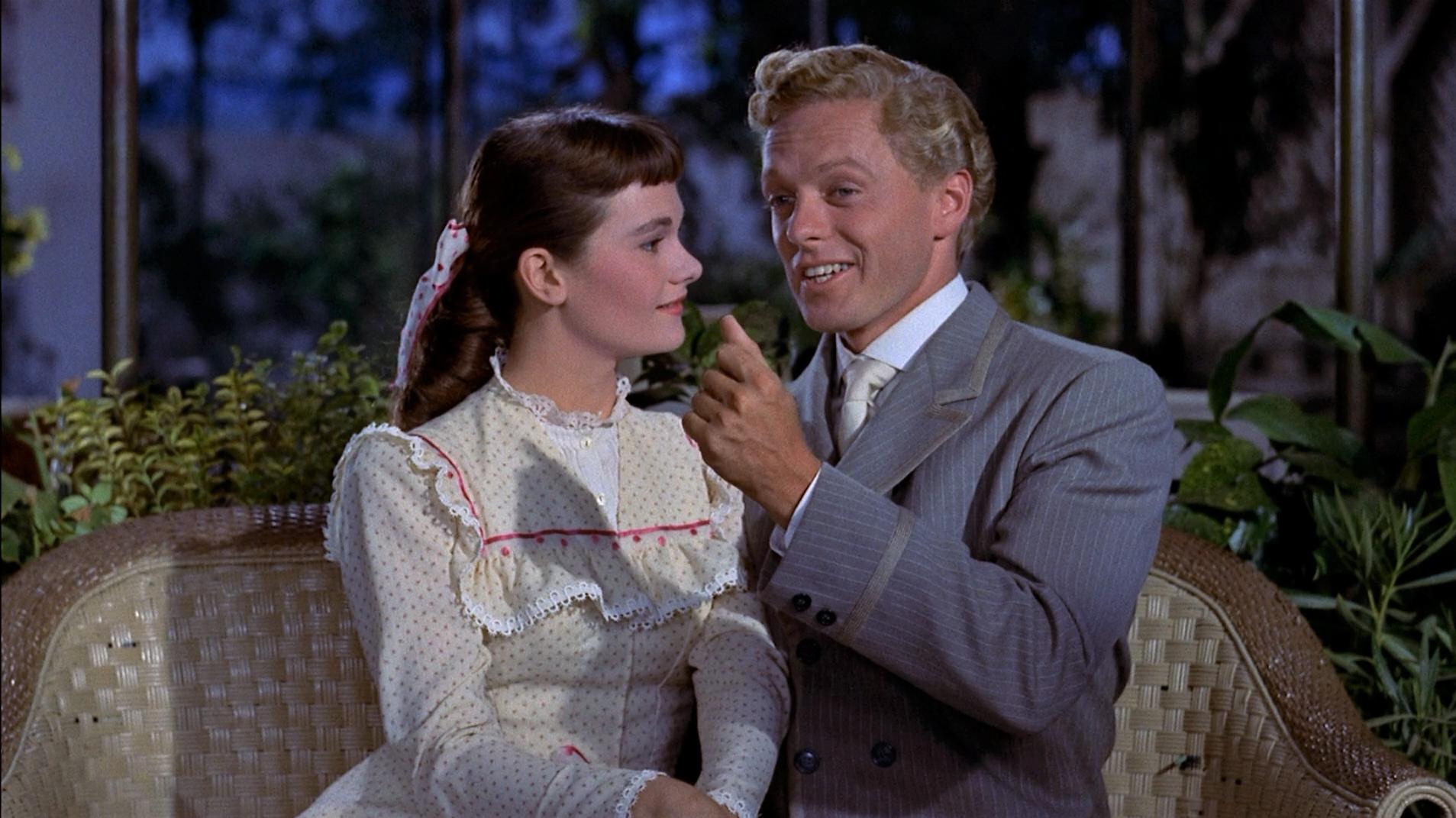
Up next for my Winter of Fairbanks Jr. is: The Young At Heart 

The rest of the movies I will be watching include:

Having Wonderful Time (February 6)

Chase a Crooked Shadow (February 13)

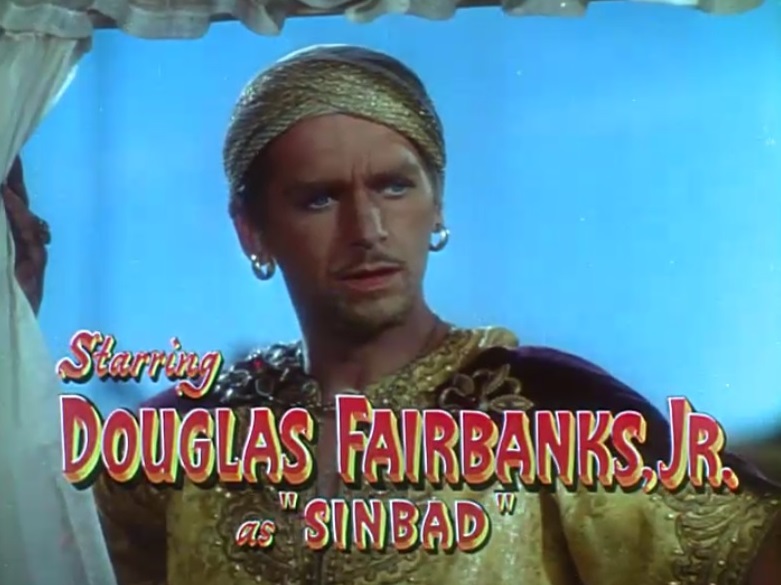
Sinbad The Sailor (February 20)

The Rise of Catherine the Great (February 27)

The Sun Never Sets (March 6)

You can also find my impressions of previous movies in the series, as well as other classic movies here: https://lisahoweler.com/movie-reviews-impressions/

I loved this history-filled post about the movie by Cat’s Wire.

Winter of Fairbanks Jr.: The Power of the Press

For the last couple of years, I’ve been taking a season or time period and watching movies with one actor or actress. I kicked it off in 2022 with a Summer of Paul by watching the movies of one of my favorite actors, Paul Newman.

Last spring it was Spring With Cary (Grant that is) and in 2023 it was the Summer of Marilyn.

This winter I’ve chosen Winter with Fairbanks Jr. (Douglas Fairbanks Jr.) because I just watched my first movie with him  — The Rage of Paris — a couple of months ago and thought it would be fun to explore his other movies, which I know I’ve never seen before because before The Rage of Paris I had never even heard of the guy.

I’ve already written about The Rage of Paris, so I kicked off my marathon with the first movie Douglas Fairbanks Jr. had a lead in The Power of The Press (1928). It is a silent movie directed by Frank Capra. This movie is one of the shortest I’ve watched in my life at about 59 minutes long.

I can’t say I’ve ever watched a silent movie all the way through before this one, so this was a new experience for me. I ended up getting very caught up in the story, especially the crazy car chase scene, which had me captivated.

Right before the scene there was an odd clip where one minute Clem is being held at gunpoint and the film glitches and then the man with the gun is tied up, but I was willing to overlook that because of the age of the movie and how challenging editing could be.

I was surprised how much of the story I could follow even without having constant dialogue. The acting by the actors really was well done and I can imagine they would have been very good in a talkie too. Their expressions told me all I needed to know in each scene.

The movie is about a rookie reporter named Clem Rogers (Fairbanks Jr.) who is frustrated with being relegated to the weather desk. He wants a chance to cover a big story but the editor deflects his requests.

This rejection amuses some of the more seasoned reporters who like to mock Clem, trip him, and, quite frankly, bully him. Having been in newspapers for about 15 years, I can confirm that cub or rookie reporters do go through a bit of initiation session from the more experienced reporters. Usually, it is very affectionate and non-violent, luckily.

Clem finally gets his chance to cover a big story when everyone else is out of the office and he’s the only one available to run to the sight of a murder. The murder victim turns out to be the city’s district attorney.

Once on the scene, Clem shows what a rookie he is by losing his press pass and being denied entrance to the scene. Instead, one of the other reporters from the paper shows up and tells Clem to get back to the office because he’ll take it from there.

Clem is depressed and leaves the scene around the back of the building where he sees a woman climbing out of a window from the crime scene.

He tries to chase her down but she’s able to get away. Luckily a man sees Clem chasing her and asks what’s going on. Clem tells him she’s running from the scene of a murder and the man says he’d be shocked if the woman was involved because she’s the daughter of the city mayor.

This leads Clem to run back to the newspaper and tell his editor he has a breaking story — the daughter of the mayor killed the district attorney.

Clearly Clem was never taught to check his sources or even find sources for a story and neither did the editor because the editor runs with it and splashes it all over the front page that the woman is a murderer.

She’s crushed by this and confronts Clem after the paper comes out. For his part, Clem is strutting around the office like a proud peacock because of his big scoop.

The mayor’s daughter — Jane Atwill (Jobyna Ralston) — comes to Clem, though, and is like (summary ahead), “Excuse me?! Why would you tell the world I killed a man! You don’t know anything about me.”

I’ll give Clem some credit because he’s like (more summation), “Oh. Wow. I screwed up. I’m so sorry. I’ll ask my editor to print a retraction.”

Ha. Good luck, buddy. If there is anything an editor hates more than missing a big scoop it is printing retractions. You have to have a very, very good reason to retract a story that big and Clem is going to need to prove somehow that Jane is not guilty.

This launches the pair of them on an investigation to find out who the true killer is.

A total aside here, but I loved how Fairbanks Jr.’s hair looked like Leonardo DiCaprio’s, or many other young men, from the 1990s. In some ways the movie looked modern for that reason – or it looked like they’d cut a modern actor into an old silent film.

I watched this one on Amazon but while researching for this post, I found it for free on YouTube. As far as I know it is the full movie, but you might want to double check.

The information online is a bit conflicting, but a couple different sources say that The Power of the Press was Fairbanks Jr.’s first outright leading role. While he played bigger roles in other movies (including his first movie at the age of 13 in 1923) he had not yet had a lead.

His career really picked up in 1929 after he married actress Joan Crawford. That marriage ended in 1933 and he later married Mary Lee Epling, who he remained married to until she passed away in 1988.

I’ve been enjoying reading about Fairbanks Jr. on Prince of Hollywood (link here), a blog dedicated to him, in case you are interested in learning more about him as well: https://douglasfairbanksjr.wordpress.com/filmography/

Up next in my Winter of Fairbanks Jr. Movie Marathon is:

Morning Glory – staring Fairbanks Jr. and Katherine Hepburn (1933)

Here is my complete list of planned watches if you want to join in:

The Power The Press (January 2)

Morning Glory (January 9)

The Prisoner of Zenda (January 16)

Gunga Din (January 23)

The Young At Heart (January 30)

Having Wonderful Time (February 6)

Chase a Crooked Shadow (February 13)

Sinbad The Sailor (February 20)

The Rise of Catherine the Great (February 27)

The Sun Never Sets (March 6)

Comfy, Cozy Cinema: Dial M for Murder

Erin from Still Life, With Cracker Crumbs and I are watching Comfy, Cozy movies from September through November.

This week we watched Dial M for Murder (1954), directed by Alfred Hitchcock.

This was a great follow up to Rear Window and I’m so glad Erin suggested both of these. I’ve been wanting to watch Dial M for Murder for years but just never got around to it with all the other great movies out there to watch.

Now that I’ve watched it, I wouldn’t say it’s my favorite Hitchcock movie of all time but I really did enjoy it. In some ways I thought things fell together a little too easily at points in this movie but the way they fell into place made me enjoy it – if that makes any sense. It might not make sense if you haven’t watched the movie but if you have then you probably know what I mean.

xr:d:DAEexVzeeIc:4716,j:6082518224336963441,t:23102317

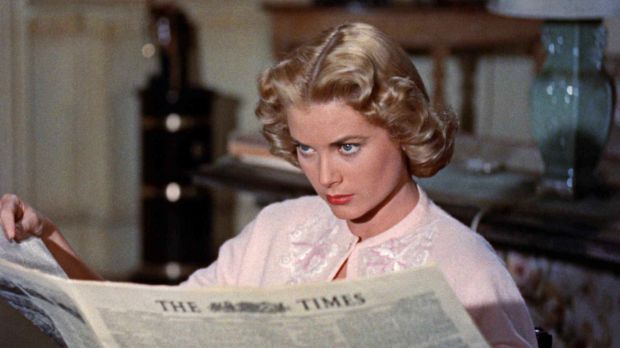
Here we have another Hitchcock movie with one of his favorite actresses, Grace Kelly. The movie also stars Ray Milland and Robert Cummings.

Dial M for Murder, based on a very popular play and screenplay by Frederick Knott, was made before Rear Window but both movies released at the same time. It was this movie that made Hitchcock decide he wanted Kelly for Rear Window.

First a little bit about the plot of the film. Tony Wendice is a retired professional British tennis player who is married to his socialite wife, Margot, who has had an affair in the past with American crime-fiction writer Mark Halliday.

Margot doesn’t think Tony knows about the affair. She burned all the letters she received from Mark when she broke it off with him. All the letters except one. She kept that one in her handbag and though we are never definitely sure what was in the letter, we know it was something that meant a lot to her.

Mark has now come to London for a visit and wants to see both Margot and Tony. They are set to go out to a performance together that night but Tony bails at the last minute and tells  them to go on without him and have some fun.

Tony’s eagerness to stay home is what first clued me in that something a bit criminal was about to go down and go down it does.

Tony blackmails a former college classmate to kill Margot. Tony jokes with Mark later when he and Margot come home about how he, Mark, would know more about how to murder a person since he’s a crime writer.

Margo suggests that he and Tony write a book together after Mark is looking through all their clippings of all they did while Tony was a tennis pro and suggests Mark write a book.

“Yes, Mark, will you provide me with the perfect murder?” Tony asks.

Mark quips back, that his books focus less on the detecting and more on the crime itself. “I usually put myself in the criminal’s shoes and then ask what do I do next.”

Mark laughs and says he thinks he can plan a murder on his own but knows that in real life mistakes can be made. It’s not the same as it is in the book, he reminds Tony.

Tony is cocky though. He seems to think he’s a murder-planning master.

Foreshadow much?

My husband says that Hitchcock loved Grace Kelly for his movies and when I looked online that was indeed true. While I thought I had once read that Hitchcock had a strange obsession with Kelly, The Husband says it is more like he felt she was like his muse. That weird obsession thing was with another actress – Tippi Hedren.

To Hitchcock, Kelly was simply extremely beautiful and talented and he felt like there was no actress like her.

According to Offscreen.com, Hitchcock told Donald Spoto, who wrote his biography, that “The subtlety of Grace’s sexuality —her elegant sexiness— appealed to me. That may sound strange, but I think that Grace conveyed so much more sex than the average movie sexpot. With Grace, you had to find out – you had to discover it.”

Before concluding production on Dial M for Murder Hitchcock was already planning his next film – with Kelly in the lead. That next film was Rear Window.

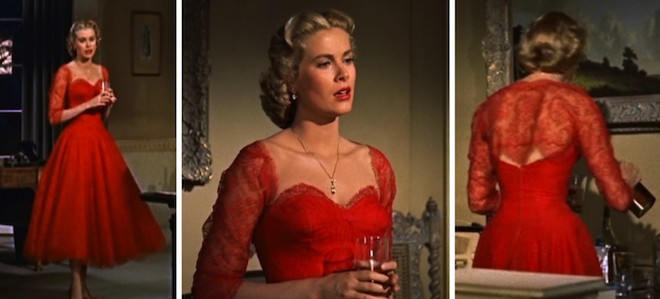
Like Rear Window, Kelly wears some amazing outfits in this movie, by the way. The one that stands out for me is the red dress in the beginning. What a stunner.

I like what the writer on Offscreen said about the dress and the relationship of her outfits to scenes in the movie:

“Hitchcock starts the opening sequence at a breakfast table where Kelly is dressed demurely in a beige dressing gown; she reads a notice about the arrival of her lover on the Queen Mary; the ship arrives in dock; in seconds she is costumed in a red dress, embracing him in the flat where hours earlier she breakfasted with her supposedly unsuspecting husband. They are in the classic London flat but the picture presented is quite different as a result of clever writing, editing and colour coding. It also played on Hitchcock’s private perception of Kelly: he nicknamed her “the snow princess.”

I thought it was interesting that it was Cary Grant who told Hitchcock about the play version of Dial M for Murder, which debuted in 1952. Grant saw himself as the potential wife-killer, something Offscreen.com says Hitchcock always wanted Grant to play. Unfortunately Grant’s agents asked for way too much money so Hitchcock turned to Milland.

As a huge fan of Cary Grant I can honestly say I could see him playing the part Milland played, but Milland pulled it off in more dramatic fashion than I think Cary might have. Sometimes I have trouble seeing Cary in a dramatic role because even when I know he’s trying to be serious I think of his more playful movies and struggle to focus on him being the “bad guy.”

Milland, by the way, had won an Academy Award in 1945 for The Lost Weekend, so Hitchcock felt he was a good second pick.

Hitchcock chose not to change the play when he made the film and was quoted as saying this: “You buy a play for its construction. It’s the construction that makes it a hit. If you change that you’re ruining the very thing you bought. Just shoot the play.”

I thought this was ironic since he did change the endings of films that were based on novels he bought the rights to.

Have you ever seen this one? What did you think of it? Is it among your favorite Alfred Hitchcock films?

I was looking through a list of Alfred Hitchcock films the other day and I realized there are a ton I have never seen. I hope to make a marathon of his movies sometime soon.

I found Dial M For Murder on Tubi, by the way.

You can read Erin’s impression of the movie here:https://crackercrumblife.com/2024/10/24/comfy-cozy-cinema-dial-m-for-murder/

Up next in our Comfy, Cozy Cinema is a Halloween wildcard but Erin and I are both watching Practical Magic if you want to join us.

Here is our complete list of movies that we’ve watched and will be watching.

You can find links to my impressions of the ones we’ve watched so far here.

If you want to link up your own post about this movie, or even other ones, you can do so at this link:

You are invited to the Inlinkz link party!

Click here to enter
https://fresh.inlinkz.com/js/widget/load.js?id=c0efdbe6b4add43dd7ef

Summer Movie Marathon: Gidget (1959)

This month I will be writing about classic summer movies that I’ve picked out on my own or that were suggested to me. These will be movies released before 1970.

Some will be campy, some will be about the cheesiest thing you’ve ever seen, but all will have an element of fun in them.

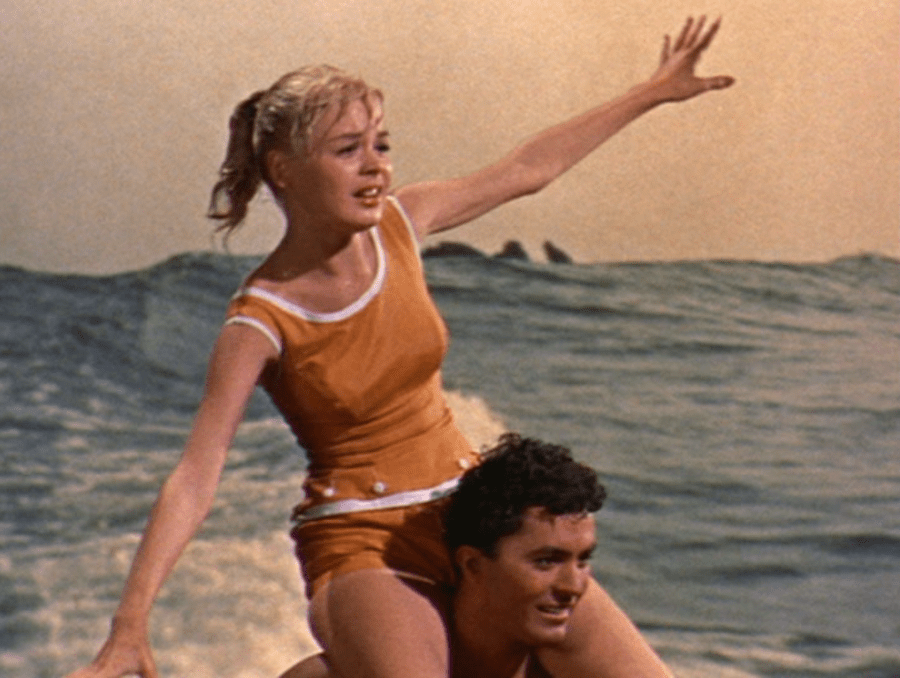
First up is Gidget (1959) starring Sandra Dee.

This movie had me all kinds of nervous and stressed, let me tell you.

First, they seemed to be rushing very young girls toward sex and romance way too early and that surprised me for a movie from the late 50s.

Second, while much of the scenes were meant to be funny, I just kept thinking about how dangerous many of the situations young Gidget was in were.

I was practically yelling at the TV at one point.

We start with Francine Lawerence in her bedroom and her friends are telling her it’s time she grew up and tried to get a man. She’s about to turn 17 and her friends are taking her to the beach so she can join them in trying to hunt men.

Of course, much of the movie is meant to be silly so when her mother asks why she doesn’t look excited to go, Francine’s friend says it’s because she’s going on her first “manhunt.”

The mom is a little shocked but sort of shrugs it off when Francine’s dad protests that she’s too young for that.

Francine is of the age when young girls look for boyfriends, her mother says.

Again, I was a bit shocked with this declaration but continued on.

On the beach, Francine’s friends undress to their bathing suits and do their best to catch the attention of a group of young men lounging on the beach next to their surf boards.

Francine isn’t as – ahem – developed as her friends so she doesn’t garner much attention.

The boys are also on to the girl’s ploys and mock and ignore them for the most part.

Francine would rather go swimming than catch boys anyhow so she sets out into the ocean and gets herself caught in some seaweed, which leads to her calling for help.

A young surfer named Jeffrey “Moondoggie” Matthews (James Darren) comes to her rescue and once she is rescued his friends mock him and Francine, but one of them offers to take Francine back to their hut and help her learn about life. Eek.

Francine is naïve and clueless about the flirting surfer so she ignores him and instead wants to know how she can get a surfboard too. She’d love to be part of the gang, she says.

They all wave her off and tell her to go home but the next day she is back at the beach to buy a surfboard and meets the Burt “The Big Kahuna” Vail, played by Cliff Robertson  – a man who is close to 30 but spends his days surfing the waves all over the world.

Francine eventually inserts herself into the group and gains the nickname Gidget from them. Moondoggie isn’t too happy with her being in the group because he knows his fellow surfers aren’t the nicest guys and will try to take advantage of her.

At point he has to rescue her from the first guy who suggested teaching her how life works – ahem again – and tells her to go home.

“The lessons you’re going to get here aren’t what you are looking for.”

And they aren’t because the lessons Gidget wants are ones that will teach her how to surf so she can fit in with the guys, especially Moondoggie, who she’s fallen for.

Meanwhile at home, while Dad was once nervous about his little girl becoming a manhunter, he decides he should use her to get in good with his boss by having her go out with the boss’s son who is visiting.

The word pimp came to my mind at this point, I’m sorry to say.

There is a ton of humor in this movie, even if I was cringing at some of the scenes with men trying to take advantage of Gidget’s innocence.

I didn’t like the idea that a girl is expected to start dating men at such a young age, even if it was a different time.

Still, I had some fun with the movie and liked the surfing and beach scenes, even if the surfing scenes were very fake.

I thought it was interesting that Elvis was the first choice to play Moondoggie but he was in the U.S. Army at the time. Luckily he went on to make some dumb beach movies on his own in the future, including Clam Bake, which is one my list to watch for this series.

The movie was based on the book Gidget, the Little Girl with Big Ideas by Frederick Kohner who based the main character on his daughter Kathy. According to Wikipedia, the screenplay was written by Gillian Houghton, who was then head writer of the soap opera The Secret Storm, using the pen name Gabrielle Upton. 

There were a few more Gidget movies made after this including Gidget Goes Hawaiian, Gidget Goes to Rome, Gidget Grows Up, Gidget Gets Married, and Gidget’s Summer Reunion.

Different actresses played Gidget in each movie.

There was also a series called Gidget that ran for one season in 1965 and starred Sally Fields.

The original movie is said to have kicked off the “beach genre” movies, a couple of which I plan to watch.

I didn’t look up a ton of reviews and trivia about this one but did see this excerpt of a review by Craig Butler in Allmovie notes: “Although the very title prompts snorts of derision from many, Gidget is actually not a bad little teenaged flick from the ’50s. Great art it definitely isn’t, but as frivolous, lighthearted entertainment, it more than fits the bill. Those who know it only by reputation will probably be surprised to find that it does attempt to deal with the problems of life as seen by a teenager—and that, while some of those attempts are silly, many of them come off quite well. It also paints a very convincing picture of the beach-bum lifestyle, much more so than the Frankie Avalon–Annette Funicello beach party movies.”

Have you ever seen Gidget or any of the other Gidget movies?

My complete Summer Movie Marathon list (with some additions possible):

Gidget (August 1)

Beach Blanket Bingo (August 8)

Mr. Hobbs Takes A Vacation (August 15)

Summertime (August 22)

Having A Wonderful Time (August 27)

Clambake (August 29)

Comfy, Cozy Christmas: We’re No Angels

Erin from Still LIfe, With Cracker Crumbs and I have been posting about Christmas movies, books, and all things Christmas for the month of December. We’ve been sort of doing our own thing – such as watching whatever movies we wanted to watch on our own — but this week we both watched We’re No Angels (1955) so we would blog about it together. (This post is part of our Comfy, Cozy Christmas. Don’t forget to share your Christmas memory posts or any posts related to Christmas on our link up HERE, or at the top of my page.)

Erin suggested this movie and I’m glad she did because I had never heard of it before. It was certainly an out-of-the-box Christmas movie and a lot of fun. The subject matter and some of the lines were actually jaw-dropping to me and weren’t something I would have expected in a movie made in 1955.

The movie stars Humphrey Bogart (Joseph), Peter Ustinov (Jules), and Alto Ray (Albert).

The men are escaped convicts on an island called Devil’s Island off the coast of France. There are other convicts on the island in prison uniforms but they are on probation or parole, working at local businesses. The fact there are so many convicts wearing the same uniforms makes it easy for the men to blend in.

They make a plan to find a business they can rob and get money from so they can leave the island on a boat. A chance meeting with a doctor on a ship who needs to deliver a message leads them to a clothing store where they meet Felix Ducotel and his family. Felix is managing a store and they offer to repair his roof as a way to get their foot in the door, so to speak, so they can rob him later that night. He accepts and from the roof the three men begin to learn about Felix’s family – including his wife, Amelie and daughter, Isabelle.

Soon they are wrapped up in the family’s drama. They learn the business, owned by Felix’s cousin, is failing. Isabelle is in love with a man named Paul. Her mother wants to know why she isn’t married and giving them grandchildren already (umm…because she’s only 18. Hello??!) and the couple is stressed because the business is failing.

I will not spoil the movie but I will say that the men end up deciding to cook Christmas dinner for the family and steal most of what they need to do so. They keep offering to help the family, partially because they would like some of that dinner too, and partially to build trust to they can kill and rob them.

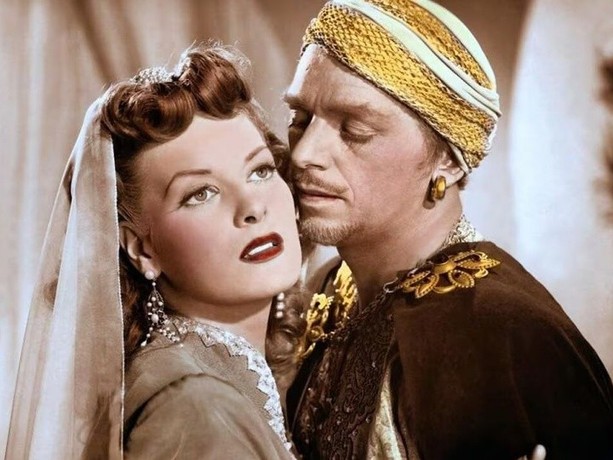
Things are crazy enough with their plan but get even crazier when Felix’s cousin (portrayed by Basil Rathbone, who was in the Sherlock Holmes movies of the 40s) arrives with Paul. Yes, that Paul. The Paul that Isabelle is in love with.

Absolute chaos ensues for the rest of the movie. So much of it was so funny but at times I felt bad for laughing at either how suggestive some of the jokes were or how they made light of horrible crimes. I would definitely say this movie featured a lot of dark humor.

Some particularly memorable quotes from this movie for me:

Isabelle: “I’ve never been attractive to men.”

Albert: “I’m a man.”

Isabelle: “And you find me attractive.”

Albert: “I could go to jail for the way I feel if I wasn’t there already. Now put a pretty smile on your face and don’t hurt your family.”

Isabella expresses surprise that Albert is a convict with the way he talks.

“I wasn’t born in a cell you know,” he tells her.

Isabella says, “You don’t look like a criminal to me.”

He responds. “If crime showed on a man’s face, there wouldn’t be any mirrors.

***

We came here to rob them and that’s what we’re gonna do — beat their heads in, gouge their eyes out, slash their throats. Soon as we wash the dishes.

– Joseph

***

  • Albert I read someplace that when a lady faints, you should loosen her clothing.

Joseph [Sarcastically]  It’s that kind of reading that got you into trouble.

****

  • Joseph I’m going to buy them their Christmas turkey.

Albert “Buy”? Do you really mean “buy”?

Joseph Yes, buy! In the Spirit of Christmas. The hard part’s going to be stealing the money to pay for it.

This movie was based on a play called We Three Angels. When it released as a movie some critics said it wasn’t as good at the Broadway play and that it was a “misguided” film.

The movie grossed only $3 million and was the 34th highest grossing film.

There was a remake of this movie in 1989 starring Robert DeNiro, Sean Penn, and Demi Moore.

The film was directed by Michael Curtiz whom Bogart had worked with three times before in the movies Angels with Dirty Faces (1938), Casablanca (1942) (Curtiz won a best director Oscar for this), and Marseille (1944).

This film was definitely a departure from their previous films.

To see what Erin thought of the film, hop on over to her blog:https://crackercrumblife.com/

Have you seen the film? What did you think of it?

I hope you will join Erin and me in January when we will be watching movies based on Jane Austen’s books. We’ll be sharing more about that toward the end of this month.

Comfy, Cozy Cinema: Strangers on a Train

For the rest of October and all of November, Erin from Still Life, With Cracker Crumbs and I will be watching cozy or comfy movies and some of them will have a little mystery or adventure added in.

This week we watched Strangers on a Train directed by Alfred Hitchcock and starring Robert Walker, Farley Granger, Ruth Roman, Kasey Rogers, and Pat Hitchcock (Aflred’s daughter). This was yet another movie based on a book. This one was based on Patricia Highsmith’s first book. She also wrote The Talented Mr. Ripley.

This movie kicks right off. No leading into things slowly.

The main characters immediately meet on a train (hence the title) aaaaand immediately I felt uncomfortable with both of them.

The younger one, Guy Haines, a tennis player just seemed quite monotone and bored in his delivery and also anxious to get a divorce from his wife so he could run off with the senator’s daughter. Later, though, I learned the wife was not so nice so I felt better about him. My first impression was not good.

My first impression of Bruno Antony was definitely not good.

Dude gave off serial killer vibes from second one.

For good reason, I might add.

He wants to know, pretty quick into the movie, what way Guy would like to kill his wife. Then he talks about how he’d like to kill his own father.

Then there is this convo:

Bruno: That reminds me of a *wonderful* idea I had once. I used to put myself to sleep at night – figuring it out. Now, let’s say that – that you’d like to get rid of your wife.

Guy: That’s a morbid thought.

Bruno: Oh, no, no, no, no. Just suppose. Let’s say you had a very good reason.

Guy: No, let’s – let’s not say…

Bruno: No, no! Let’s say. Now, you’d be afraid to kill her. You’d get caught. And what would trip you up? The motive. Ah. Now here’s my idea.

Guy: I’m afraid I haven’t time to listen, Bruno.

Bruno: Listen, it’s so simple, too. Two fellows meet accidentally, like you and me. No connection between them at all. Never seen each other before. Each one has somebody he’d like to get rid of. So they swap murders.

Guy: Swap murders?

Bruno: Each fellow does the other fellow’s murder. Then there’s nothing to connect them. Each one has murdered a total stranger. Like you do my murder and I do yours. Criss Cross.

Guy humors Bruno enough to get off the train at his stop and when Bruno says, “So, you liked my plan,” Guy is like, “Sure, sure. Gotta go, dude.”

When we see Bruno later at home with his mother, we see how serious he was about this whole murder thing. That and he may be pretty far out there mentally. Like lunatic level.

His mother is filing his fingernails and wants to know if he’s given up that crazy notion he’d had about blowing up the White House.

Mrs. Anthony: Well, I do hope you’ve forgotten about that silly little plan of yours.

Bruno: Which one?

Mrs. Anthony: About blowing up the White House.

Bruno: Oh, Ma, I was only fooling. Besides, what would the President say?

Mrs. Anthony: You’re a naughty boy, Bruno.

Only, we, the viewers, are pretty sure Bruno wasn’t kidding at all. Not like even a little bit.

Meanwhile, Guy has confronted his ex-wife who is a real “winner”. She says she wants a divorce but then she says maybe she doesn’t, now that Guy wants to marry the senator’s daughter. It’s in all the papers that they are going to get married and Miriam, the estranged wife, doesn’t like that at all. She threatens Guy by telling everyone that he wants to divorce her even though she’s pregnant. She’s pregnant, by the way, with another man’s baby.

Or…is she?

This is all called into question later when she’s running around with two guys at a carnival. That’s where Bruno catches up to her and proves to the viewers that he really is a psychopath who thinks if he kills Guy’s wife then Guy will kill his father.

As in all of Hitchcock’s movies, the angles and cinematography are insanely captivating.

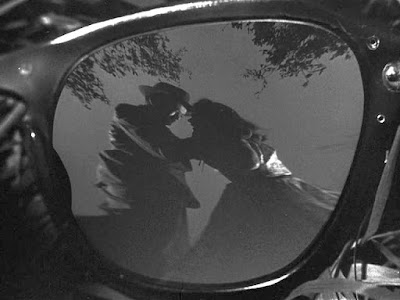
It isn’t a spoiler to say Bruno takes Miriam out and when he does so we watch the killing through the reflection of Miriam’s glasses, which she knocked off in the struggle.

After the deed is done, Bruno can’t wait to tell Guy.

Guy is horrified, not thrilled, and tells Bruno he’ll call the police.

Bruno, however,  says, “You can’t call the police. We were both in on it, remember? You’re the one who benefits, Guy. You’re a free man now. I didn’t even know the girl.”

Yikes. Now Guy is trapped and the way the bars of the fence he is standing outside of fall across his face they look like prison bars.

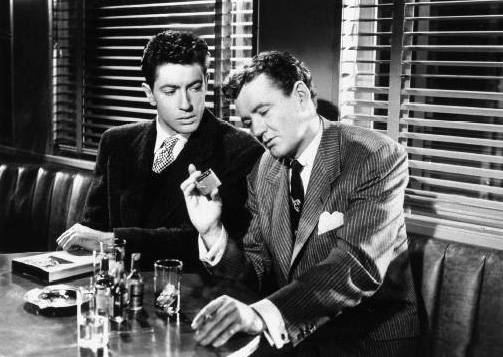
If you want to know if he gets out of trouble, you will have to watch the rest of the movie, which involves a heart-pounding climax where Guy tries to make sure Bruno can’t pin the murder on him by planting Guy’s lighter at the scene.

Almost every scene with Bruno freaks me out but when he starts showing up everywhere Guy is, asking people weird questions like if they’ve ever thought about how to murder people, I really got freaked out.

Especially the scene where he asks a woman at a fancy party at the senator’s house how she would kill her husband. Then he starts to talk about how to strangle a person and offers to show her and – again. Creepy.

He says to her, as he puts his hands around her neck, “You don’t mind if I borrow your neck, do you?”

Shudder.

You’ll have to watch the movie but it’s pretty messed up.

It’s also very messed up to me that Bruno seems to get a thrill from talking about and committing murder. Like a sexual thrill. Yuck. He also seems to have a crush on Guy and when he tells Guy, “I like you,” Guy punches him so I am pretty sure Guy has the same impression.

 You can find plenty of critiques of this movie online, including one by Adrian Martin on filmcritic.com.au that states: “The film is ingeniously structured like an obsessive, inescapable nightmare – with uncanny repetitions of events, ghostly echoes of small details, and an ambiguous, implicitly homoerotic emotional transference between the central characters.”

See? I wasn’t the only one that got the vibe that Bruno was “after” Guy.

My husband read that the man who played Bruno (Robert Walker) actually died shortly after production. He accidentally died after he had a psychological breakdown and his housekeeper called a doctor. The doctor gave him amobarbital but Walker had drank alcohol earlier and the two interacted and he died at the age of 32. Ahem. He does not look 32. I thought for sure the dude was in his 50s. Either way, his death was very sad, especially because there is some mystery surrounding it. A friend claims he was there at the time and Walker was acting normally but that the doctor showed up and said he needed an injection and the friend actually held the man down when Walker refused. Walker died not long after. The friend is not mentioned as having been there in the official inquiry, however. Very strange.

A little aside here about Hitchcock: in case you don’t know, he was a sexist. He didn’t like certain women and really liked other women. So if he didn’t like a woman he harassed them nonstop on set. If he really liked them he stalked them. Not a great guy in real life even if he was a brilliant movie maker.

His issues with women showed up in this movie as well as shown in this paragraph on Wikipedia, which is also backed up by other articles about the making of the movie: “Warner Bros. wanted their own stars, already under contract, cast wherever possible. In the casting of Anne Morton (the senator’s daughter), Jack L. Warner got what he wanted when he assigned Ruth Roman to the project, over Hitchcock’s objections. The director found her “bristling” and “lacking in sex appeal” and said that she had been “foisted upon him.” Perhaps it was the circumstances of her forced casting, but Roman became the target of Hitchcock’s scorn throughout the production. Granger described Hitchcock’s attitude toward Roman as “disinterest” in the actress, and said he saw Hitchcock treat Edith Evanson the same way on the set of Rope (1948). “He had to have one person in each film he could harass,” Granger said.”

Hitchcock also didn’t get along with author Raymond Chandler who he hired to write the screenplay for the movie. Chandler didn’t like Hitchcock’s changes to the original novel, for one, and he also hated working with Hitchcock who liked to ramble and analyze what they should do in the movie instead of just getting to the point and letting Chandler write the screenplay. Chandler apparently became so annoyed at Hitchcock that at one point, while watching Hitchcock get out of his car, Chandler said loudly, where Hitchcock could hear him, “Look at that fat b****** trying to get out of that car.” He quit not long after and the screenplay was written by Czenzi Ormond, a beautiful woman, which Hitchcock liked. There is a bunch of information online about his relationship with her as well, but you can look that up if you are curious. Ormond finished the screenplay with associate producer Barbara Keon and Hitchcock’s wife Alma Reville.

The production section of the Wikipedia article is very interesting, but I only have so much space for a blog post so I’ll leave the link here if you want to check it out: https://en.wikipedia.org/wiki/Strangers_on_a_Train_(film)

If you want to read Erin’s impression of the movie you can see it here: https://crackercrumblife.com/2023/10/19/comfy-cozy-cinema-strangers-on-a-train/

If you want to follow along with us for our next movies, here is the list:

Rebecca (Oct. 26)

Little Women (November 2)

Tea with The Dames (November 9)

A break for Thanksgiving

And

Sense and Sensibility (November 30th)

You can also link up today below if you watched Strangers on a Train as well.

You are invited to the Inlinkz link party!

Click here to enter
https://fresh.inlinkz.com/js/widget/load.js?id=c0efdbe6b4add43dd7ef

Comfy, Cozy Cinema: The Lady Vanishes

For the rest of October and all of November, Erin from Still Life, With Cracker Crumbs and I will be watching cozy or comfy movies and some of them will have a little mystery or adventure added in.

This week we watched the 1938 Alfred Hitchcock Film The Lady Vanishes. This was my second time watching it but I honestly had forgotten half of it so I was glad Erin suggested it.

I needed the distraction watching it provided this week. I know. I say this every time I write about the movie we are watching, but I need a lot of distractions these days and this week especially.

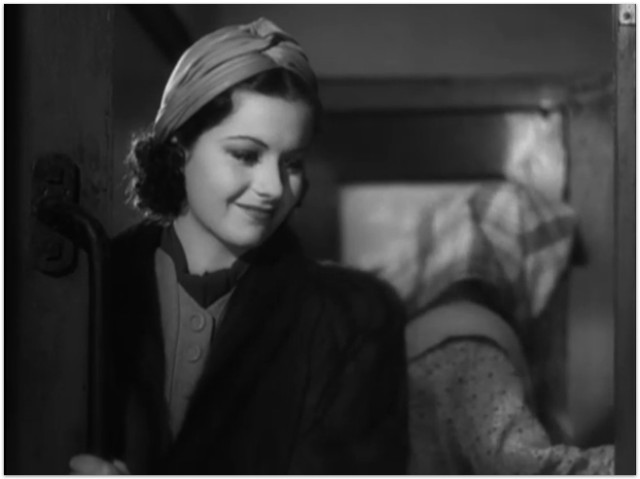
The movie begins in the fictional country of Bandrika where Iris Henderson (Margaret Lockwood) is vacationing with friends before she goes home to the United States to get married.

She is staying at a hotel with her friends and others, most of whom got stranded when an avalanche wiped out the train tracks. She interacts with the musician — Gilbert Redman (Michael Redgrave) — after he wakes her up with his loud music when she’s trying to get enough sleep for her trip the next day. Because she complains, the manager of the hotel kicks Gilbert out of his room. He makes a very nervy move and walks into her room uninvited and tells her he is going to stay and tell everyone she invited him in unless she calls the manager and tells him to put him back in his room.

There are so very funny quips in this movie and one of them is after Iris calls the manager back to get Gilbert out of her room.

“For the record, I think you are the most contemptible man I have ever met!” she yells at the door as he leaves.

He looks around the door and says in a soft voice. “Confidentially, I think you’re a bit of a stinker too.”

Earlier in the movie the manager tells two British men who are trying to return to Britain for a test match of Cricket in Manchester that he doesn’t have a room for them but they can stay in the maid’s room. There are a couple of funny scenes with the maid trying to change in front of them and them trying to tell her she can’t but her not understanding because her English isn’t very good.

There is actually a lot of humor in this movie, which isn’t always the case in an Alfred Hitchcock movie.

The two British men need some food so they head to the dining room, but are told by the waiter that there is no more food because there have been so many unexpected people staying there due to the avalanche. They can’t understand him because he doesn’t speak English so a woman named Miss Froy translates for them.

They chat with her for a while and she tells them how much she loves looking at the mountains in this country and how she’s been a nanny there for six years and is going home to England the next day.

Miss Froy also speaks to Iris when they both try to figure out where the music is coming from. That’s right before Iris has Gilbert removed from his room.

The movie seems to be all fun and games until someone strangles the musician Miss Froy enjoys listening to. She doesn’t know the man has been murdered, of course. She just thinks the music has stopped.

She also seems clueless the next day at the train station when someone tries to kill her by pushing a large concrete flower box out of the window. Instead of hitting her, though, it hits Iris in the head, which leaves Iris dazed – a perfect setup for a train ride that gets really weird when Miss Froy eventually disappears.  

Iris clearly has a concussion but Miss Froy seems to think putting perfume on a hankie and handing it to Iris to put on her head will help. Was that ever a thing for head injuries? I have no idea but it seemed weird. Anyhow, Iris falls asleep and when she wakes up Miss Froy is there and they walk to the dining car and have tea.

After they have tea, Miss Froy tells Iris to rest again. She does and when she wakes up Miss Froy is gone and when she asks the other couple in the car where she went, they tell her they never saw an older British woman and imply Iris is insane.

Implying Iris is insane is the plot for the next 20 minutes of the movie as everyone begins to say they never saw Miss Froy. We learn everyone has a various reason for saying they never saw the woman.

The British Cricket enthusiasts don’t want to be delayed any longer. They have a cricket match to get to. Another couple doesn’t want any attention brought to them because they are cheating on their spouses.

This movie is a master class in gaslighting.

If you don’t know what gaslighting is, it is saying something that happened isn’t what really happened or that the reason you think it happened isn’t the reason it happened. It’s also when a person tries to distract them from what they are concerned about by saying there is another issue altogether. Like if a woman catches her husband cheating and she confronts him, he might say, “You’re so bitter and mean all of the time. I don’t even know what is wrong with you,” to try to convince the woman she imagined it all and the real issue is that she’s mean and bitter. The goal is to make the person feel like they are crazy for being concerned or accusing someone of something.

When everyone starts lying, Iris is about to lose her mind and the only one who will listen to her is Gilbert – the musician she clashed with at the hotel.

Eventually, after seeing a wrapper for a certain tea (you’ll have to watch the movie to see what this means), Gilbert starts to believe Iris that the woman really was there and they begin to look for her together. They both feel something criminal is going on and eventually, it is implied that this crime is related to spying on another country.

Though the plot and issue is a serious one, there is humor involved. For example, humor is employed often in a fight scene between Gilbert and a man who is determined to take evidence of Miss Froy’s existence away from Gilbert and Iris.  Not only do animals in the freight car of the train watch the fight going on, but the fight also continues into a magic box placed there by the cheating man, who they learn is a musician.

There seemed to be quite a few subtle slams in this movie against the British who just can’t imagine anything bad is happening on the train and gets upset when anything interrupts their tea time, but I think Hitchcock did that a lot.

The movie is based on a book called The Wheel Spins by Ethel Lina White, but apparently deviated heavily from the plot of the novel. Actually, after reading the plot of the novel, I really want to read it because it sounds very good.

The British cricket enthusiasts were not in the book at all and were added to the movie.

The book was written in 1936 and the movie was released in 1938. The novel and movie’s plot clearly references the events leading up to the start of World War II.

Michael Redgrave was known for his work on the stage and almost didn’t agree to take part in the movie but in the end, his decision to take the park when Hitchcock offered it paid off for him because it made him an international star.

He and Hitchcock never worked together again, however, because Redgrave wanted more rehearsals and Hitchcock wanted more spontaneity.

The movie was a hit in the UK and the U.S. when it was released according to information online.

Geoffrey O’Brien from The Criterion (a movie review site) states: The Lady Vanishes (1938) is the film that best exemplifies Alfred Htchcock’s often-asserted desire to offer audiences not a slice of life but a slice of cake. Even Claude Chabrol and Eric Rohmer, in their pioneering study of Hitchcock, for once abandoned the search for hidden meanings and—though rating it “an excellent English film, an excellent Hitchcock film”—decided it was one that “requires little commentary,” while François Truffaut declared that every time he tried to study the film’s trick shots and camera movements, he became too absorbed in the plot to notice them. Perhaps they were disarmed by pleasure . .”

O’Brien points out that the screenwriters of the film, Sidney Gilliat and Frank Launder, were the ones who really added the rich wit that made the film a joy rather than an ominous mystery.

This film was filmed in England and at that time they didn’t have a large budget, which is why much of the movie was filmed in only two places – the hotel and a 90-foot-long train car or two. This constraint would have limited most movie makers, but not Hitchcock, who was still able to line up amazing, eye-catching shots, including one that I noticed with the camera focused squarely on two glasses where a drug has been placed all while a tense conversation is going on in the background.

The whole time there is this tension for the viewer, who knows that those glasses have a drug in them and leaves the viewer with a desperate desire to cry out for the characters not to drink the tainted wine.

I really liked what O’Brien said about the performance of Dame May Whitty and agreed: Since in a moment she is going to vanish, Miss Froy must for a moment dominate everything, and Whitty achieves just that, and even more: she makes us feel an affection for Miss Froy deep enough that her disappearance will seem an unspeakable affront, an assault on Englishness itself in its least threatening form.

If you want to read more of O’Brien’s view of the film you can find it HERE.

If you want to catch up with Erin’s thoughts on the movie, click here: https://crackercrumblife.com/2023/10/12/comfy-cozy-cinema-the-lady-vanishes/

If you want to join in on the review yourself feel free to add your link below.

Next week we are watching Strangers on a Train and will write about it on October 19.

After that we are watching:

Rebecca (Oct. 26)

Little Women (November 2)

Tea with The Dames (November 9)

A break for Thanksgiving

And

Sense and Sensibility (November 30th)

You are invited to the Inlinkz link party!

Click here to enter
https://fresh.inlinkz.com/js/widget/load.js?id=c0efdbe6b4add43dd7ef

Comfy, Cozy Cinema: The African Queen

For the next three months, Erin from Still Life, With Cracker Crumbs and I will be watching cozy, mysterious, or comfy movies. Erin made these awesome graphics detailing what we are doing and what movies we will be watching.

This week we watched The African Queen, which I am not sure was really a comfy, cozy movie but I forgot some of the details when I suggested it. I’m not sure why I picked it for this feature, but it’s still a good movie and we did find some cozy(ish) moments in it as a romance began to blossom in the middle of a very stressful situation.

The movie, released in 1951, stars Katherine Hepburn and Humphrey Bogart. It was directed by John Huston.

It is both an adventure movie and a romance.

Katherine plays Rose Sayer, a missionary in Africa, and Humphrey portrays Charlie Allnut (which Katherine pronounces as Ulna throughout the movie).

Rose had stationed been in African villages with her brother for a decade and meets Charlie when he travels up the river in his small, rickety steamboat to deliver mail and other supplies. The steamboat was dubbed The African Queen by Charlie.

On one visit Charlie tells Rose and her brother Sam that he probably won’t be there for two months because war has broken out. The movie starts in 1914 so this is the beginning of World War I.

He leaves and within a matter of hours or days, or I’m not sure which, the Germans march through with an army made up of Africans and begin to burn down the village. This leaves Rose’s brother in a state of shock and also affects his physical health and he passes away a couple months or so later.

Rose is now alone in the village but luckily not for long as Charlie finds her and she asks him to take her with him up the river.

Rose and Charlie are very different. She is very prim and proper and British and he is very “uncouth” one might say. My husband said that the movie is based on a 1935 novel and that the main characters in the novel are both British. Charlie has a cockney accent.  Humphrey refused to try to pull that accent off so he was made Canadian for the sake of this movie.

The chemistry between the two is great with them bouncing quips off each other throughout the film.

When Rose finds out they are upriver from a German ship that will be used to launch an offensive against the British, and that Charlie has potential weapons on The African Queen, she decides they will travel this very dangerous river with rapids, crocodiles, and a German fort, and blow up the German ship.

Charlie, for his part, thinks she’s nuts but agrees to help her – that is until things get more and more dangerous and he’s certain they are going to die in the rapids.

When he tells her in the beginning that it isn’t possible to take the steamboat down the river she says, “How would you know? You’ve never tried.”
He scoffs. “I’ve never tried shooting myself in the head either.”

In another scene, Charlie gets drunk on the gin that’s on the boat and Rose is not happy about it.

“Oh come on,” Charlie says. “It was just human nature.”

Rose raises her chin and says, “Human nature, Mr. Allnut, is what we are put on this world to rise above.”

There are several comments or lines like that throughout the film which turns romantic somewhat by accident when Charlie celebrates one of their accomplishments and kisses Rose on impulse.

Kissing and being romantic was most likely a huge challenge for Katherine because she, like most of the cast and staff, caught dysentery and malaria and was very sick for the time in Africa.

Huston wanted the film to be as realistic as possible so he shot on location in Uganda and the Congo for part of the film with the rest being shot in London, outside and on a sound stage. Scenes where the actors were in the water were deemed to be too dangerous in Africa.

It was so realistic that Katherine and others got sick, as I mentioned, and during one scene when she’s playing the piano, she actually had a puke bucket off-scene just in case and I guess there were a few “cases.” Poor woman.

Boggie later joked that he and Huston didn’t get sick because they drank whiskey instead of the local water.

As a bit of trivia, the only Oscar Boggie ever won was for this film. Katherine was nominated for best actress but did not win. Huston was also nominated for best director but didn’t win.

Katherine won four Oscars and was nominated 12 times over the years. She also won an Emmy and two Tony Awards.

This comment came from my husband who always has a cheery note about when or how one of the actors died as we watch a movie: “To think he (Boggie) would only have five more years after this.”

At one point, when Charlie apologizes for getting drunk Rose says that is not upset about that.

“You think it was your nasty drunkenness I minded? You promised me you’d go down the river.”

“Well, I’m taking my promise back,” Charlie says.

Little Miss looked at me and said, “Fun fact. You can’t take back a promise.”

So there you go. Some wisdom for your day.

When this movie came out, both Boggie and Hepburn were older and some critics said moviegoers wouldn’t want to see two old actors fall in love.

According to movie critic Roger Ebert, though, that wasn’t true. Many people wanted to see the movie and loved it despite it being released at the same time as A Streetcar Named Desire with Marlon Brando and Vivien Leigh.

The novel was much darker but Huston credited Boggie and Hepburn with making the movie have some humor in it.

“They were just naturally funny when they worked together.” Miss Hepburn, on the other hand, gives the credit to Huston. “The humor didn’t just grow, it was planted. The picture wasn’t going well until Huston came up with the inspiration that Rosie, my role, should be played as Eleanor Roosevelt.”

Ebert said of Bogart’s role: “Whatever the case, the many scenes Bogie and Kate play together are superb. Bogart, as the gin-swilling proprietor of a banged-up riverboat, created a strange little laugh for his role. He was shy, amused and intimidated by this Bible-reading missionary lady who washed out her unmentionables each and every night. And the laugh, meant to conceal his unease, also serves to display the thoughts of a taciturn man. He does not often laugh at the things Rosie finds funny.”

There was one scene with leeches and I wanted to know if they were really on Boggie. A quick search online brought me to a site full of trivia which let me know that: “While filming the scene where Charlie finds his body covered with leeches, Humphrey Bogart insisted on using rubber leeches. John Huston refused, and brought a leech-breeder to the London studio with a tank full of them. It made Bogart queasy and nervous, qualities Huston wanted for his close-ups. Ultimately, rubber leeches were placed on Bogart, and a close-up of a real leech was shot on the breeder’s chest.”

It is an interesting site and I was going to leave a link here to it but it says the site is not secure so I won’t do that – just in case.

The bottom line was that I did like this film but it wasn’t necessarily comfy, cozy or creepy. I guess it was a mix of comfy and adventure.

To read about Erin’s take on the movie, hop on over to her blog: https://crackercrumblife.com/

If you would like to join in on our Comfy, Cozy Cinema you can print out our watch/post schedule here:


Arsenic and Old Lace (Sept. 28)

Oct. 5 (break for us or you to catch up!)

The Lady Vanishes (October 13)

Strangers on a Train (Oct. 19)

Rebecca (Oct. 26)

Little Women (November 2)

Tea with The Dames (November 9)

Summer of Marilyn: The Seven Year Itch

So here I am, behind yet again on my Marilyn movie-watching.

That’s okay, though. Summer is meant to be easy going and relaxed so I will take my time on these and if summer busyness gets in the way, I’ll just have to push my posts off.

If you are new here, I am watching Marilyn Monroe movies this summer and I have called the The Summer of Marilyn.

This week I watched The Seven Year Itch, which was nothing like I expected it to be.

I thought this movie was a drama until I started it and realized it was definitely not a movie to be taken seriously. This is the movie with the famous scene of Marilyn’s dress being blown upward by her standing over the subway grate.

This is a movie made in 1955 that jokingly explores the idea that middle-aged men who have been married seven years feel like they need to break out of the mundane and sow some more wild oats. I, personally, did not find it that funny that the movie makers thought it was funny to make fun of men in New York City sending their wives and children to the country for the summer so they can go meet other women and have parties, therefore feeling free and easy again.

We start the movie with Richard Sherman, a man working in book design, who sends his wife and son off to the country for the summer. Richard is determined he won’t be like other men who drink, smoke, and chase after women while their wives are gone.

Not long after he decides this, though, he heads home to a house that’s been made into apartments and starts complaining as he unlocks the door about how his wife wants to live in a house and not an apartment. Their apartment is nice, he decides, especially with nice neighbors upstairs and – he turns around and someone needs help being buzzed in through the main door.

That someone is Marilyn Monroe who is looking, of course, drop-dead gorgeous.

Richard has to renew his resolve not to forget himself and go crazy while his wife and son are gone with Marilyn acting all clueless and walking around upstairs either naked or half naked. When she almost drops a tomato pot on his head his resolve cracks and he invites her down for a drink.

It’s then he realizes she’s gorgeous but not too bright and that is totally fine with him.

He’s already been daydreaming a lot and Marilyn kicks his daydreams into high gear.

He enjoys daydreaming about how Marilyn will fall for him but, truly, Marilyn is just absolutely clueless to his advances and his more interested in getting into his apartment to take advantage of his air conditioning, which she does not have in her apartment.

Marilyn, incidentally, does not have a name in this movie. Her name is just The Girl.

This is another Billy Wilder film with Marilyn – like Some Like It Hot.

The movie is based on a play written by George Axelrod.

In addition to Marilyn it stars Tom Ewell who played Richard Sherman in the play as well.

Many lines from the play had to be cut because they were deemed indecent by the Hayes office, which determined what was and wasn’t allowed in movies at that time.

There has long been rumors that during the filming of the famous scene with Marilyn, there was too much noise to use the final footage and it had to be shot again on a sound stage. While it is true that the scene was shot twice, footage was used from both shoots, according to an article on Wikipedia. Marilyn really did stand over a grate outside the Trans-Lux 52nd Street Theater, then located at 586 Lexington Avenue in Manhattan. She also did get a lot of attention from the press and onlookers when this happened because Wilder invited them to drum up attention for the film.

This left Marilyn’s then-husband Joe DiMaggio pretty ticked off, but, alas, the scene became one of the most iconic ever in a movie.

Overall I enjoyed this movie, even if I didn’t like some of the messages underlying the plot. In the end, the craziness was drawn to a close before it got too crazy but the in-between stuff that seemed to suggest that men running around on their wives was okay wasn’t a great message for me. I do know that most of it was being said as a joke and that part of the message really was that it wasn’t actually okay to be done.
And, yes, I really liked Marilyn in this movie. She was so free and joyful. Yes, she was sexualized, just like in her other movies, but she also held her own as an actress, playing the comedic parts with ease and pure entertainment.

Next up for me for Marilyn Movies is Monkey Business.

After that, I only have two more movies:

All About Eve and The Misfits.

Both are dramas.

If all goes to plan, I’ll be writing about Monkey Business next week, on August 3, All About Eve on August 10 and The Misfits on August 17th.

(Monkey Business is available for free on YouTube, for those who might like to watch along.)