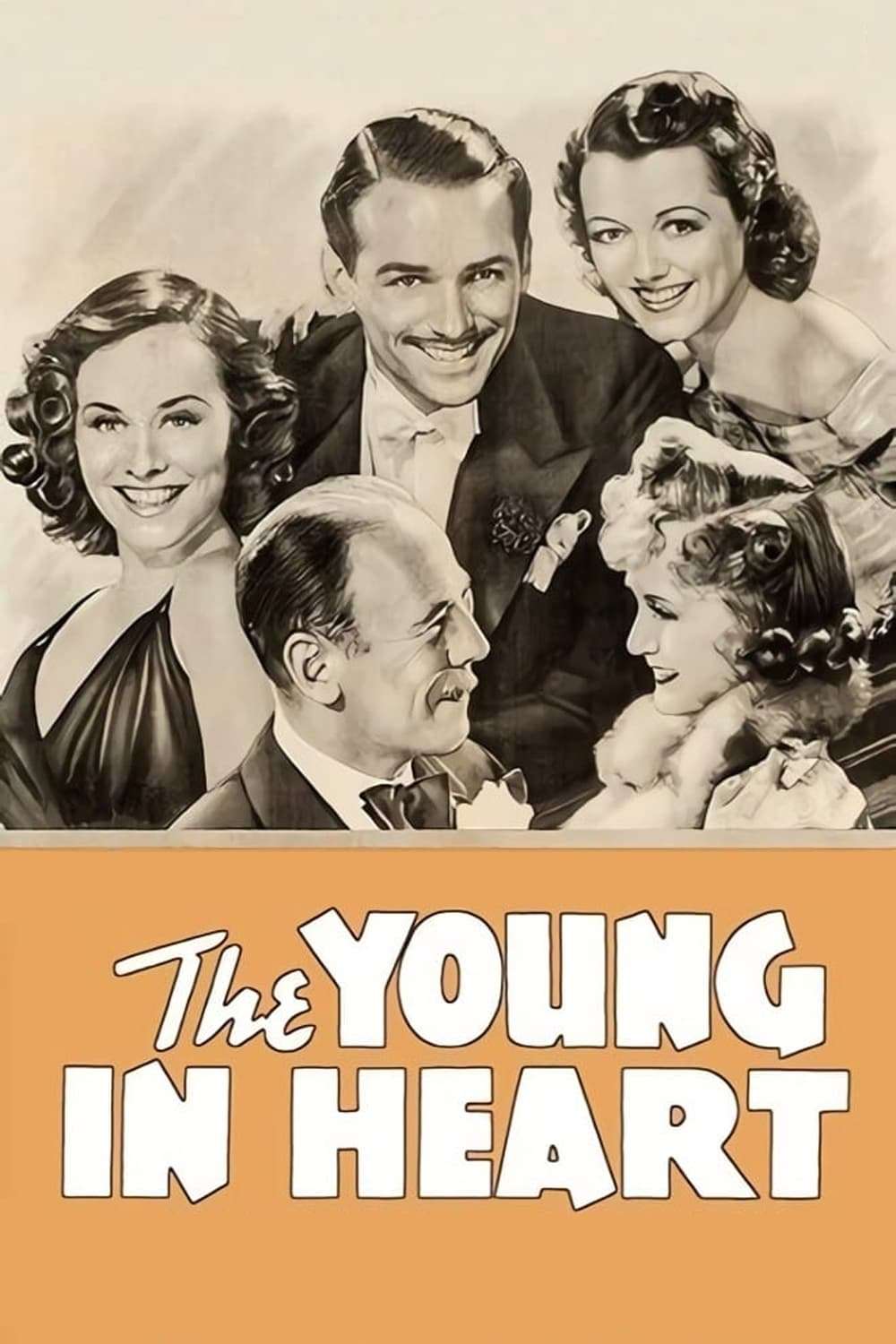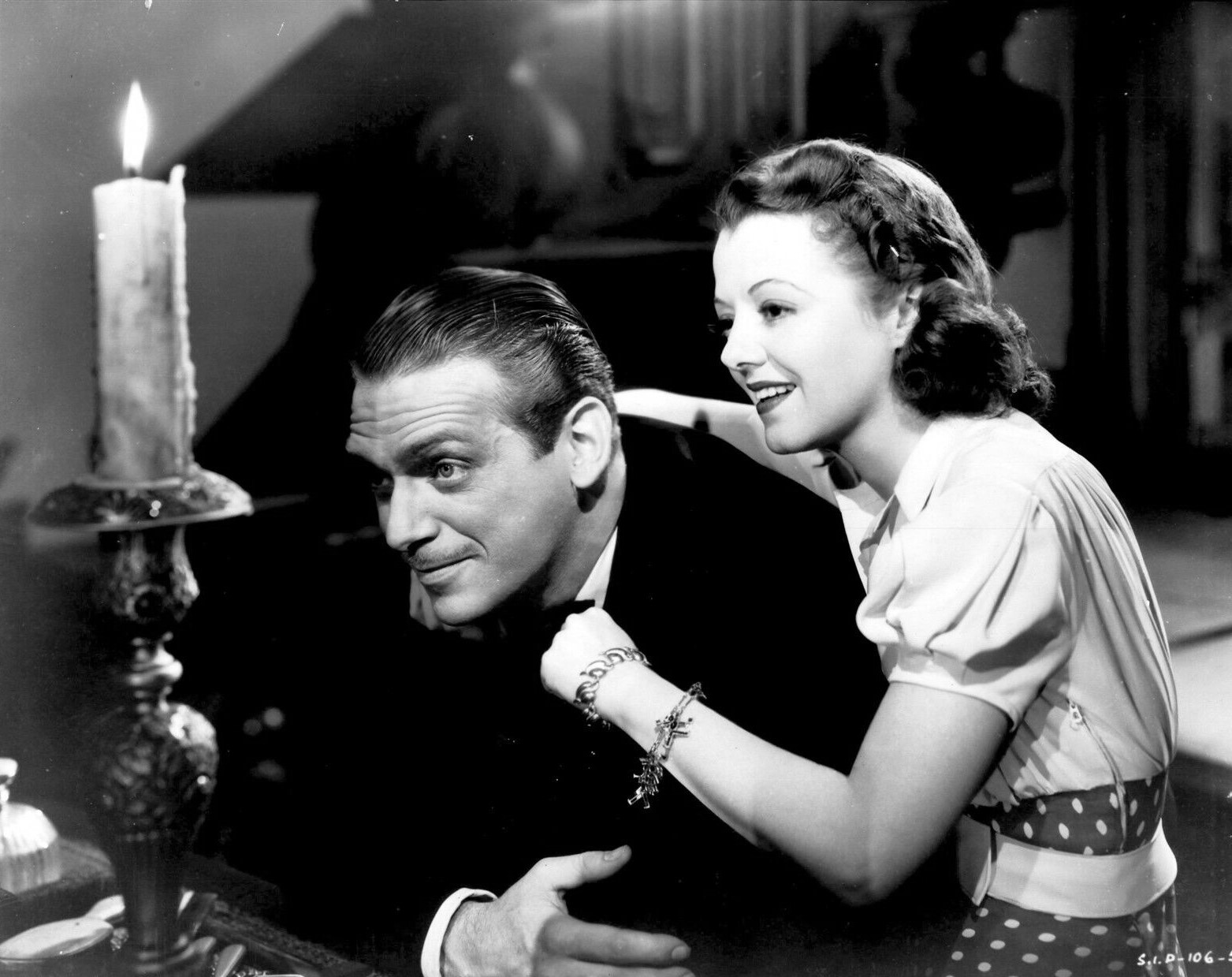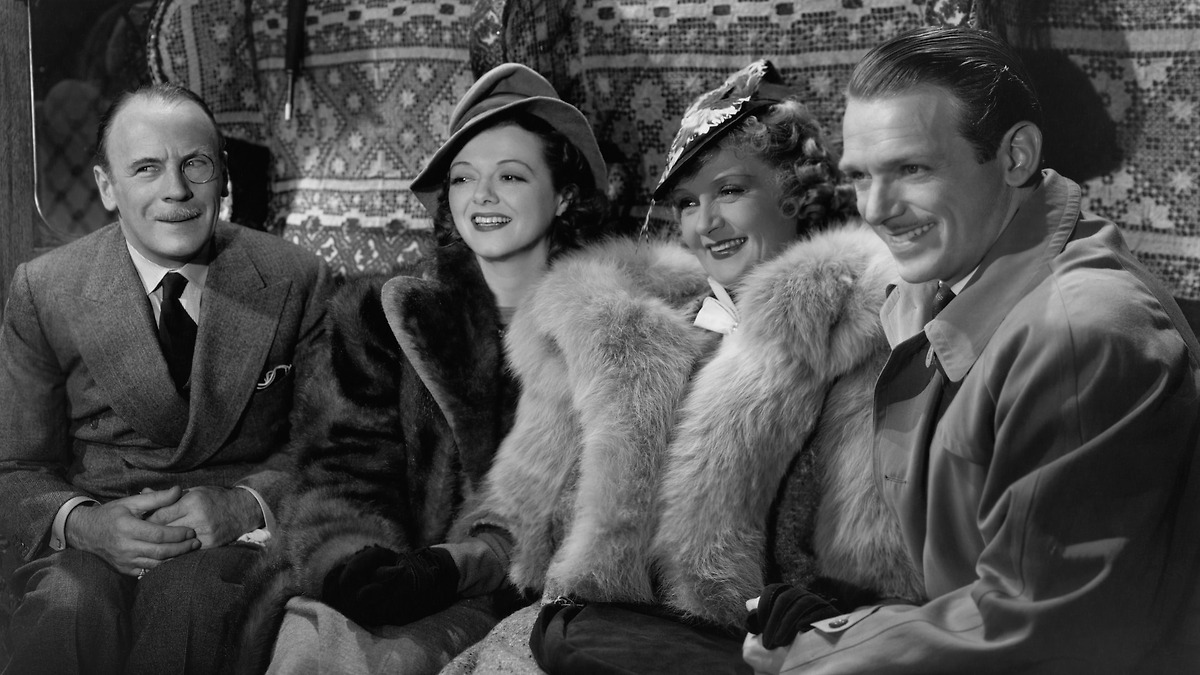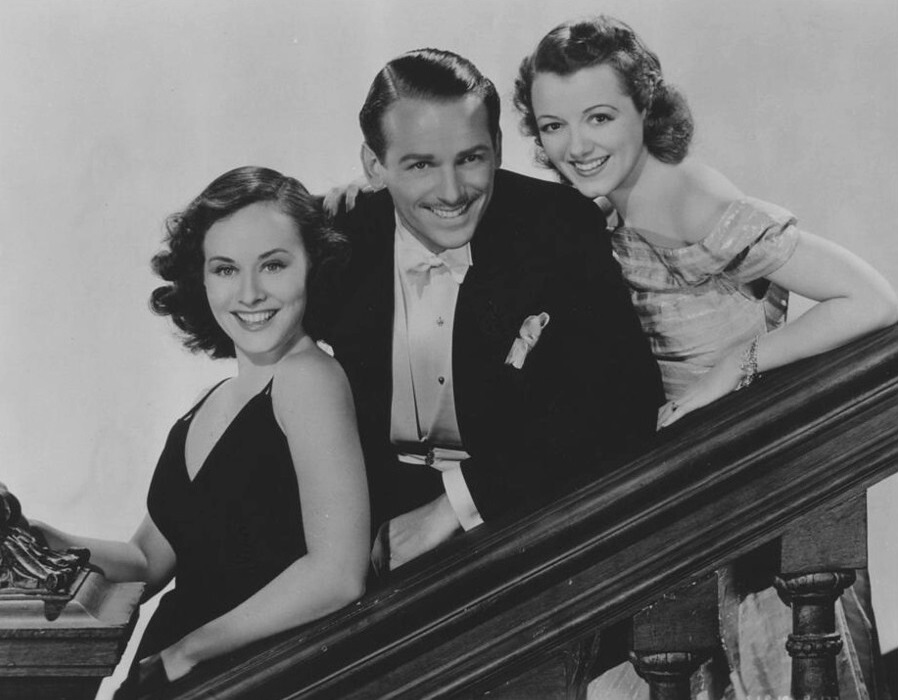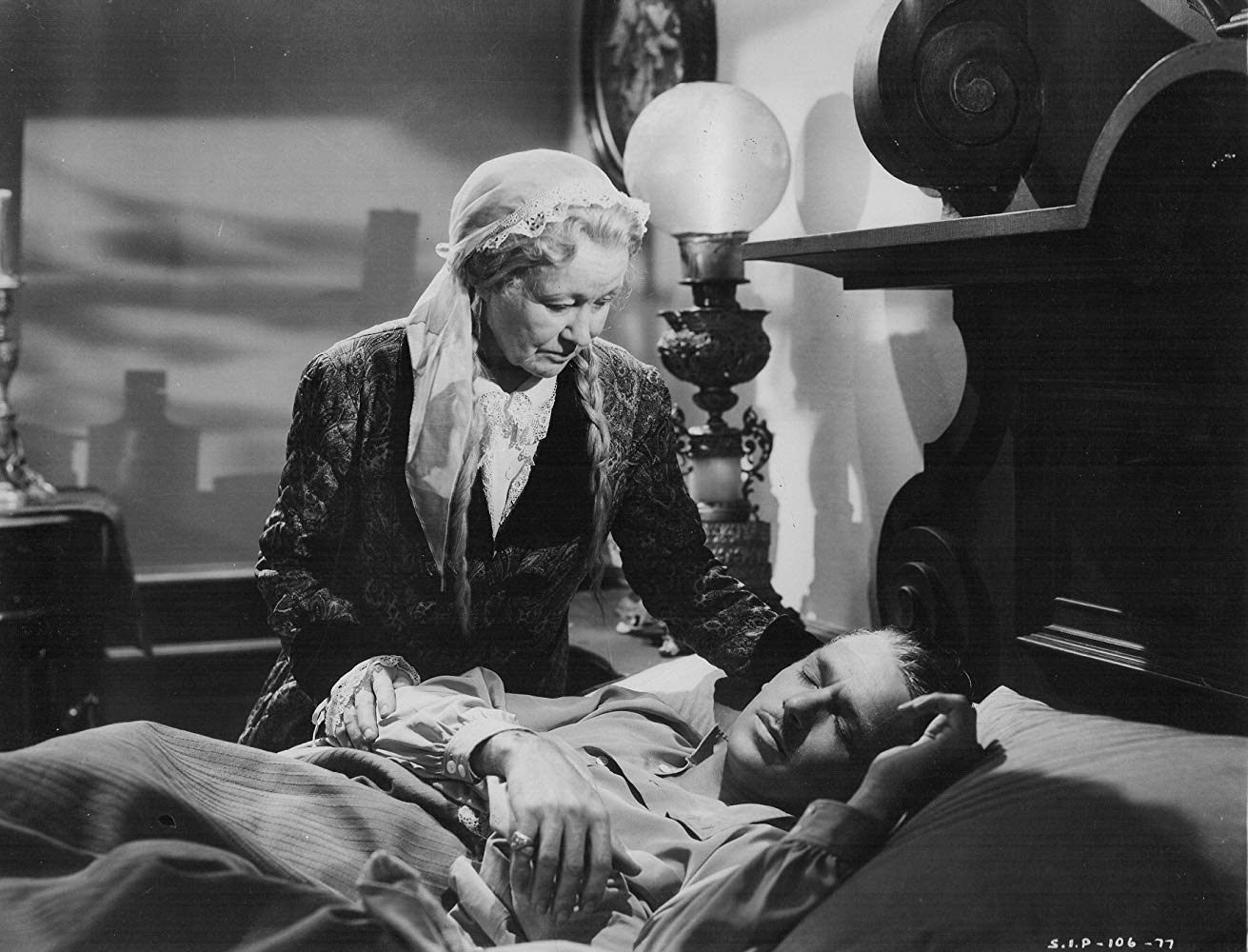
Summer of Angela: Gaslight (1944)

This summer I am watching Angela Lansbury movies for the Summer of Angela.

This week I watched Gaslight (1944), which was Angela’s first movie and also her first nomination for an Academy Award. I think I stated before that she won the Oscar, but she didn’t. Whoops!

She was 18 years old when she portrayed Nancy, the odd, boisterous and flirty housemaid of Ingrid Bergman’s character.

After I watched it, I knew this movie was going to be hard for me to write about without giving tons of spoilers and without expressing my strong desire for one particular character to die, or at least suffer greatly by the end of the film, but I am going to try not to in case any of you who haven’t watched it want to watch it later.

Ahem.

Sorry for being so blunt about wanting a character to die or suffer, but…. it is true.

This movie is about a woman who is made to believe she is insane.

That’s pretty much the description. Here is a little more from Google, though: “After the death of her famous opera-singing aunt, Paula (Ingrid Bergman) is sent to study in Italy to become a great opera singer as well. While there, she falls in love with the charming Gregory Anton (Charles Boyer). The two return to London, and Paula begins to notice strange goings-on: missing pictures, strange footsteps in the night and gaslights that dim without being touched. As she fights to retain her sanity, her new husband’s intentions come into question.”

It stars Ingrid Bergman as Paula Alquist, Charles Boyer as Gregory Anton, Angela Lansbury as Nancy Oliver, and Joseph Cotten as Brian Cameron. 

When I asked my 80-year-old mom if she wanted to watch the movie with me this week, she said, “No! Oh no!” and looked horrified.

That didn’t make me feel excited to watch it until she explained it wasn’t a bad movie, just somewhat dark and creepy. I told her that her response reminded me of how she might react if I asked her if she wanted to watch The Birds with me. The Birds is my mom’s least favorite movie.

When I was a child, she once came rushing into the house from mowing the lawn.

“The birds!” she cried waving her arms over her head, brushing at her hair. “The birds! They were swooping! Swooping down at me like in that movie! Swarming me! The Birds!! The Biiiiirds!”

Needless to say, that was not a movie I ever watched with her and won’t ask her to watch again.

Anyhow, Gaslight is based on a UK version of the movie, which was based on a play called Gas Light (two words). As far as I know, the American version is considered the better version since it was nominated for seven Oscars, winning two, including one for best actress for Ingrid.

Joseph Cotten portrays a police inspector, whose interest in an decade-old murder case is piqued when he sees a woman who looks like the victim. It turns out the woman is the niece of the murdered woman.

Cameron wants to know more about what is going on and why the niece never leaves the house, or if she does it is for a very short time and never without her husband. He finally gets his chance when Paula stands up to the controlling Gregory and tells him she wants to leave the house for an event they were invited to by a woman she knew as a child.

Throughout the movie her husband has been accusing her of stealing or moving things, suggesting she doesn’t remember when she does the these things and hinting, more than once, that she might be insane. Even at the event she finally is able to go to he accuses her of stealing his watch, which leads her to having a near mental breakdown in public.

As the movie goes on, we begin to wonder who is actually crazy, but we do know that her husband seems pretty horrid and abusive. We also know that one reason Paula thinks she is crazy is because she notices the brightness of the gaslights decreasing and increasing throughout the evening, something no one else in the house seems to notice.

I don’t want to give too much away, but this movie did have me on edge throughout the entirety. I felt such anxiety for Ingrid’s character and a lot of anger toward her husband, though I wasn’t sure what was really going on.

Angela’s character was evil and selfish. That’s the only way I know how to describe her. She definitely was brilliant in her role because she made me so uncomfortable. If I could describe her even more succinctly, I would say “what a trashy little tart.”

What Angela said about the movie:

Angela was 17 when she auditioned for the movie.

“As far as I was concerned, I was very consciousness at the age,” Angela said in an interview with the SAG-AFRTA Foundation. “So I went about learning my lines and listening to George Cukor direction and he directed the test . . .I did it with an actor called Hugh Marlow who played the part of Charles Boyer’s role (for the test) and we did a very extensive test.  I’m glad we did. Cukor took great care because I think he really wanted me although the first decision was that I wouldn’t play it, you know, I was too young. But I signed a contract anyhow because Albie Mayer saw my test when he came back from a trip back east to see his horses … and he saw my test and said ‘sign that girl.’”

Angela said she had a lot of interaction with L.B. Mayer, who ran Metro-Golden-Mayer (MGM) studios and that she was very fond of him. Not only did he sign her but also her mother and wanted to sign her twin brothers, but they decided not to let the twin sign. Instead, they later became writers for the movie and television industry.

After being nominated for Oscars for both Gaslight (1944) and The Picture of Dorian Gray (1945), Angela says she was never considered a starlet, always an actress. That made her job a little easier.

Angela said that she was glad in many ways that she didn’t win the Oscars she was nominated for because in her view many people who win Oscars second guess what their next steps will be. They often overthink what roles they need to take next because they are always thinking about being as good as an Oscar winning role, she said. She thinks that for her she didn’t have that pressure. She just went with whatever she wanted to do next, though she was a little disappointed that MGM didn’t have anything lined up for her so she could use the momentum of the success from her first two movies.

She went on with laughter in the interview saying that she was nominated for her first two movies and “it all went downhill from there.”

Angela was  nominated again, however, for The Manchurian Candidate in 1963 where she played the role of a mother to an actor who was only three years younger than her. She told the interviewer that she felt the fact she was given roles where she was playing older women showed her that she was always a character actor.

In a 2000 interview with NPR’s Fresh Air, Angela recalled how the audition for Gaslight really came about.

“Well, I was introduced to the studio, which was MGM, by a young man who was being considered for the role of Dorian Gray. His name was Michael Dyne. And he arranged that the casting director would see me, this young English girl, who at that time was – I think I was 17. And I went to the studio with my mother and was interviewed for the part of Sibyl Vane in “Dorian Gray.” And the head of casting, a man called Billy Grady, came into the room while I was sitting there. He said, sort of whispered in the ear of Mr. Ballerino, the man I was seeing, you know, you should suggest that this young lady meets George Cukor, who’s trying to cast the role of the maid in “Gaslight.” And so right then and there, I was whipped off to meet George Cukor. And so, well, the rest, as they say, is history.”

The interviewer asked Angela if she was aware of some of the darker elements of the film, or was she a little naïve because she was so young at the time.

“I can’t honestly say, except by my on-set demeanor,” she responded. “I think my on-set demeanor was a very, very careful, covered, rather shy attitude about what I was doing. And when I say that, I don’t mean that I was aware of that, but I know from my own uncertainty about my personal – you see; I’ve always been a very private person. When it comes to the work, I’m on solid ground. When it comes to the – Angela Lansbury the young woman, I was on very uncertain ground.”

She continued: “So, I had to marry those two rather carefully. And that’s why, as I say, I always felt that I had to, shall we say, tread rather warily from a personal point of view. Just listen and hear and do what I was told and asked to do. I could discuss it, but I – in most instances, I was pretty quick to pick up directorial indications from somebody like George Cukor because he was extremely clear and funny and helpful. And what he said I understood. So you could say I was fortunate in that I could understand what he wanted and then deliver it. This is what I do, and this is what I always maintained throughout my career – was that I had that ability to take direction and also to understand what the – what was required of the character.”

Angela turned 18 on the set and had this to say about that time: “Oh, it was required that there was a social worker with me until my 18th birthday, which I celebrated on the set of “Gaslight,” actually. And I always remember it because Ingrid and Charles and George Cukor were so wonderfully kind. And Ingrid gave me lovely bottles of Strategy, which was a lovely, smelly cologne, which – I’d never had anything as lovely as that – and powder, you know, sort of talcum powder and things that, you know, set. I always remember that. It’s interesting, the things you do remember.”

This part made me laugh so I had to include it: “And we celebrated. And I was able to take a cigarette out of a packet in my purse and smoke it, which I hadn’t been able to let on, that I had been smoking from the time I was, really, about 14 years old. I say that without any sense of pride at all. And I stopped smoking 30 years ago. But nevertheless – I don’t know if you remember, but I do smoke a rather long Cigarettello in the movie. And that was part of the business in the movie of “Gaslight.” But they only let me puff it. And I wasn’t allowed to inhale, as Mr. Clinton would say.”

As Mr. Clinton might say. Wahahaha! I remember that interview with him. He didn’t inhale and he didn’t have sexual relations with that woman…well, we all know how that second one went.

Anyhow,

You can read and listen to the full interview with Angela here https://www.npr.org/2022/05/27/1101435407/angela-lansbury-looks-back-on-her-great-performances-on-stage-and-screen

 It was fascinating to me.

A bit of trivia or facts:

  • According to TCM.com: “MGM head Louis B. Mayer, determined to eliminate the competition for what was expected to be one of the studio’s biggest hits of the year, ordered all prints of the 1939 British version purchased and destroyed. Prints, however, did survive, and the film turned up again in the 1950s, often under the title of the original 1938 stage production, Angel Street.”
  • MGM tried to sue Jack Benny in the 50s because he presented a spoof of the movie called Autolight. Benny played Charles Boyer’s character and Barbara Stanwyck performed as Bergman. The comedians lawyers argued the skit was in the realm of parody and therefore not a copyright violation and the suit was dropped.
  • Ingrid Bergman was filming The Bells of St. Mary’s when she won her Oscar for Gaslight. The star of the film, Bing Crosby, and the director, Leo McCarey, had previously won Oscars. In her acceptance speech Ingrid quipped: “I am particularly glad to get the Oscar this time because I’m working on a picture at the moment with Mr. Crosby and Mr. McCarey and I’m afraid if I went on the set tomorrow without an award, neither of them would speak to me.”
  • From TCM: “In the big confrontation scene between the chambermaid and the lady of the house, Lansbury was required to light a cigarette in defiance of her mistress’s orders. But because she was only 17, the social worker and teacher assigned to her would not allow her to smoke until she was a year older. When her 18th birthday arrived, Bergman and the cast threw her a party on the set, and the scene was done shortly after.”
  • Director George Cukor suggested that Ingrid Bergman study the patients at a mental hospital to learn about nervous breakdowns. She did, focusing on one woman in particular, whose habits and physical quirks became part of the character. (source IMdB)
  • The first time Ingrid Bergman encountered Charles Boyer was the day they shot the scene where they meet at a train station and kiss passionately. Boyer was the same height as Bergman, and in order for him to seem taller, he had to stand on a box, which she kept inadvertently kicking as she ran into the scene. Boyer also wore shoes and boots with two-inch heels throughout the movie. (source IMdB)
  • Charles Boyer‘s wife, Pat Paterson, was pregnant with what would be the couple’s only child. Boyer and Paterson had been trying to have a baby for many years, and Boyer was exceptionally nervous while making Gaslight. He rushed between takes to call and check on his wife’s health as the expected birth date grew nearer. The baby was expected to come after Boyer had finished working on this movie, but he arrived early. Boyer broke down in tears when he was notified, and he informed the rest of the cast and crew of his son’s birth. Production was halted for the day and the cast and crew opened up bottles of champagne to celebrate the birth. (source IMdB)
  • Angela had been working at Bullocks Department Store in L.A. before getting the part in Gaslight. When she told her boss that she was leaving, he offered to match the pay at her new job, expecting it to be in the region of her Bullocks salary of the equivalent of twenty-seven dollars a week. He was shocked to find out she’d be earning $500 a week. (source IMdB)

Cat from Cat’s Wire also watched the movie this week and you can read her thoughts here. She compared the British and American movie versions and a German televised version of the original play. I absolutely loved how she compared these three!

Here is my full schedule of movies I am watching for the Summer of Angela:

Blue Hawaii

The Manchurian Candidate

National Velvet

Bedknobs and Broomsticks

July 11 –  The Shell Seekers

July 18 – Murder She Wrote: The Celtic Riddle

July 25 – The Mirror Cracked

August 1 – The Court Jester

August 8 The Picture of Dorian Gray

August 15 – A Life At Stake

August 22 – All Fall Down

August 29 – Something for Everyone

Additional resources:

Angela Lansbury Looks Back on Her Great Performances on Stage and Screen:

https://www.npr.org/2022/05/27/1101435407/angela-lansbury-looks-back-on-her-great-performances-on-stage-and-screen

Gaslight Review: The Hollywood Reporter: https://www.hollywoodreporter.com/movies/movie-news/gaslight-review-1944-movie-999932/

From TCM: https://www.tcm.com/tcmdb/title/166/gaslight#articles-reviews?articleId=29976

The Essentials (Gaslight): https://www.tcm.com/tcmdb/title/166/gaslight#articles-reviews?articleId=89327

In the Good Old Days of Classic Hollywood, Gaslight: https://crystalkalyana.wordpress.com/2015/10/04/gaslight-1944/


Lisa R. Howeler is a blogger, homeschool mom, and writes cozy mysteries.

You can find her Gladwynn Grant Mystery series HERE.

You can also find her on Instagram and YouTube.

Summer of Angela: Bedknobs and Broomsticks (1971)

This summer I am watching Angela Lansbury movies. This week — well, last week — I watched Bedknobs and Broomsticks.

First, a movie description:

During the Battle of Britain, Miss Eglantine Price (Angela Lansbury), a cunning witch-in-training, decides to use her supernatural powers to defeat the Nazi menace. She sets out to accomplish this task with the aid of three inventive children who have been evacuated from the London Blitz. Joined by Emelius Brown (David Tomlinson), the head of Miss Price’s witchcraft training correspondence school, the crew uses an enchanted bed to travel into a fantasy land and foil encroaching German troops.

The children come to live with Eglantine Price not because she wants them to, mind you. She is sort of cohersed into it by a lady from the community who ran out of room for the other children who came from London.

Once there the children decide they are going back to London. Miss Price doesn’t eat normal food (she doesn’t eat any sausages at all!). Miss Price can’t let them go back to London because the city is being bombed but..oddly enough…later in the movie she takes them all back to London via a magical bed. Yes, you read that right. A magical, flying bed.

The movie is based on two novels by Mary Norton, The Magic Bed-Knob (1945) and Bonfires and Broomsticks (1957), about the adventures of an apprentice witch and the three children who come to stay with her to escape the bombing of London during World War II.

In some parts, the movie mixes live action and animation, similar to Mary Poppins.

Walt Disney (the man, not the company) purchased the rights to the first book the year it was published, but the movie wouldn’t be made until five years after his death, partially because of  Mary Poppins. It took Disney years and years to convince P.L. Travers to give the rights to Mary Poppins. Walt wanted to make a movie based on Bedknobs and Broomsticks but decided he’d hold on to that one if he couldn’t get Mary Poppins. Of course, he did get Mary Poppins so Bedknobs was pushed aside for a bit.

Walt said the stories were very similar, so he wanted to wait to make Bedknobs and Broomsticks, a title that combined both book titles, when the frenzy from Mary Poppins had died down a bit. In the end, Walt died before Bedknobs and Broomsticks was developed and released.

Observer.com says this about the movie: “Bedknobs and Broomsticks is just as unhinged as it sounds. The 1960s through the 1980s was a period of decline for Disney, and the internal drama at the studio plus the Mary Poppins-related delays are evident in Bedknobs and Broomsticks, a film that’s all over the place (ironic, as Lansbury called her performance “acting by the numbers;” each scene was storyboarded ahead of time). At first, it strikes the same chord as Chitty Chitty Chitty Bang Bang (1968), but then it veers into West Side Story (1961) territory with extended dance numbers (including dancers in brownface). The scenes where the group travels using Miss Price’s magical bed are bizarrely psychedelic à la the tunnel scene in Willie Wonka and the Chocolate Factory, which premiered the same year. And the arcs featuring a mix of live action and animation, particularly the soccer scene on the cartoon island of Naboombu, feel like precursors to future hits like Space Jam (1996).”


Who is in it:

The movie stars Angela Lansbury and David Tomlinson (the father in Mary Poppins, incidentally) and three wonderful child actors Ian Weighill, Roy Snart, and Cindy O’Callaghan.

Highlights for me:

The children in this movie were absolutely amazing. They were hilarious, quick-witted and delivered their lines perfectly.

In one scene, the oldest boy decides he’s going to blackmail Miss Price into giving them better food (not vegetarian food that she eats) by telling her that the kids know she’s a witch. They know this because when they were trying to sneak out of the house to go back to London, they saw her trying to ride a broom for the first time and falling off into a bush.

“What we have here is an opportunity,” he says when he sees her fall off her broom. “She don’t want us to tell anyone she’s a witch so….”

Oh gosh, the kid is so funny in his delivery. His sister isn’t very pleased with him trying to manipulate Miss Price, by the way, and Miss Price isn’t easily manipulated so it doesn’t really work.

Angela, of course, was very good in this movie. I have to agree with some reviews that said she wasn’t as animated in the movie as she could have been. However, later in life she talked about how technical these types of movies have to be, adding that it is hard to improvise or do anything that breaks too much from the script when the movie is storyboarded so exact for the technical aspects.

There was one song that sort of made my eyebrows raise: Portobello Road. Mainly because of the women who come up to the professor on Portobello Road and seem to be flirting with him. They are dressed in brightly colored dresses that have a certain “look” to them. These same women are in the background of the song flirting with the soldiers and even get their own break out dance moment. As my mom would say, “Oh. Oh my!”

I’m really surprised they put “those type of women” in the movie, which was, clearly, meant for children. I kept looking for any commentary online about this and did find some, but mainly from bloggers.

“I mean, it wasn’t until this viewing that I worked out that, yes, those are prostitutes attempting to pick up Professor Browne and not just friendly women,” Gillianred on The Solute.com wrote. “Which is . . . not something I expected from a Disney movie. But if you look at what they’re wearing and exactly how they size him up, it seems to me that, yup, they’re wondering if he’s got a few bob in his pocket to spare for a little bit of fun.”

I also enjoyed all the different cultures represented during the Portobello Road song. Soldiers who fought for the British during World War II were shown dancing in their own moments during the song, including Scottish, Indian, and  Jamaica.  Online there was at least one site that called this scene racist but I guess I didn’t see it that way. I just thought it was nice they were representing the other countries who fought with England.

 I also felt that the Jamaican section in particular was very respectful because they were dancing to traditional music, the Jamaican women had the best dresses of anyone else in the dance sequence and everyone around them was clapping and enjoying themselves.

The children were even enjoying watching the dances and weren’t making fun of them, but trying to mimic them and try to dance like the people. To me the sequence is a chance to talk to children about the differences between culture. While the depictions are not completely accurate, to me, they are an attempt to bring awareness to all of those different countries that fought with the British during that time.

Eglantine’s cat looked like it had died – so that was funny to see. It looked like the cat we had, who we loved dearly, but was 19 when she died and looked awful. She looked like an animatronic cat that had gone through a garbage disposal at that point.

What I thought overall:

I liked this movie a lot but I don’t know that I would watch it again and again. Maybe if I had watched it as a child and had a sentimental connection, I would have loved it. Instead, I only liked it.

I almost loved it, maybe that’s a better way to say it. This was a comfy, cozy movie for me, even if it wasn’t my favorite Disney film. Yes, I know comfy and cozy are essentially the same word. Just go with it.

I loved the humor of the children and how they made the movie. I loved the silliness and the absolute detachment from reality it had , something people in the 40s would have really needed. Since the movie was released in 1971 it would have provided some people a happier way to frame that period, which was so dark for the world, but especially British people.

I’m actually glad children back then couldn’t see movies like this or read books like the Narnia Chronicles. They might have thought they were all going to mansion with professors or witches where they would disappear into a magical land via a wardrobe or fly away to adventure on a bed.

Nazis showing up at the end of the film was awkward and I imagine would have been very scary for children who watched it when really young.

Mr. Brown dreaming of Angela in a revealing acrobat outfit was also…er…interesting.  Not inappropriate but a bit strange. In a funny way.

And, of course, the ending when — well, have you seen the film? I hate to give it away but I will say that a spell is cast and very exciting things happen to help make sure there is a happy ending.

If I were to boil down my overall opinion of the movie into one sentence I would say that it was a magical adventure for me that allowed me to escape life stresses and that is exactly what I think the makers of this movie wanted to do.

What Angela said about the movie:

I could not find the source for this again, but at some point, I was watching an interview with Angela and she said that what really made the movie was the children. Their acting was so good and, of course, children love to watch movies with other children in them.

In 1998 Disney released an extended version of the movie, adding in deleted scenes and musical numbers. Interviewed by Disney for the project, Angela said only those who acted in the movie knew what was missing all these years, but they were so glad to add those parts back.

“It was my passport to an entire generation of youngsters,” Angela said in the interview for Disney. “Now those children are all grown up and they are showing Bedknobs and Broomsticks to their kids.”

“To fly is everybody’s dream,” she continued in the interview. “And to have that experience of being suspended and moving freely through the air is a lovely feeling.”

Pullies and wires were used to help Angela and the other actors seem to fly but special effects also came into play.

“It has to do with make believe,” Angela said. “We had to understand that we were interacting with an animated creature, so your hand had to be in a certain position for  him to put his hand on yours in the final print.”

A bit of trivia or facts:

  • Julie Andrews was offered the role of Miss Price in the movie but declined. When she made up her mind she did want to do it, it was too late. Angela had been offered the role and had accepted.
  • The Beautiful Briny was actually written for Mary Poppins, but saved out and filmed for Bedknobs and Broomsticks instead.
  • The song A Step in the Right Direction was cut from the movie and the footage could never be found to restore it to the restored version of the movie. Disney did, however, clip together some images and present it on the Disney Channel before airing the movie with all the deleted scenes added back in. (https://youtu.be/J-VwRkQGkAw?si=QpQ0jjsfKoP5H9wa
  • In the establishing shot of the animated soccer game, a bear wearing a Mickey Mouse T-shirt can be spotted in the crowd on the right side of the picture.
  • There were differences between the books and the movie. For example, in the first book of the series, the warm is not explicitly mentioned and the children are not orphans but are instead sent to spend the summer with their aunt in the country. It’s heard they meet Eglantine Price, who gives them the magic bedknob in exchange for not revealing she is a witch. In the second book, set two years after the first, the children travel back in time to 1666 before the Great Fire of London and that’s where they meet Emelius Jones (not Brown) and bring him back with them to the future.
  • Another difference between the movie and book is that Eglantine ends up traveling back with him to his time and takes the bed with her, which means the children will not have any more adventures or trips.
  • From TCM.com: “In an interview filmed for the thirtieth anniversary of the film that was included as added content on the DVD release, Richard M. Sherman and Robert B. Sherman, the brothers who were the film’s composer-lyricists, stated that they were given the task to write songs for Bedknobs and Broomsticks while the studio awaited permission from author P. L. Travers to film Mary Poppins. In an interview reprinted in a modern source, the brothers reported that Disney assured them that he owned another story about magic for which their songs could be used if Mary Poppins was not produced. According to the Shermans, the song “The Beautiful Briny” actually was written for, but never used in, Mary Poppins.”
  • According to 1971 studio production notes, three blocks of Portobello Road as it looked in 1940 were reproduced on Disney Studio soundstages. Among the props used for this sequence were carts rented from A. Keehn, a company that had a monopoly on them, according to set decorator Emile Kuri, who stated that for over a hundred years the company had collected a shilling a day for each barrow rented by vendors on Portobello Road. (Source TCM.com).
  • All longer scenes with Roddy McDowall as the local pastor “Mr. Jelk,” were cut from the film and he ended up in only a three-minute clip in the original film.
  • The New York Times stated in their review that Angela projected a “healthy sensuality” in the movie. (*giggle*)
  • This was the last Disney movie released while Roy O. Disney was still alive. He died a week after its U.S. premiere.
  • The armor in the climactic battle with the Nazis was authentic medieval armor, previously used in Camelot (1967) and El Cid (1961). When any item of armor was to be destroyed, exact fiberglass replicas were created and used.
  • In this movie, the King of Naboombu’s name is Leo. In official merchandise guidebooks, his full name is King Leonidas, after the Spartan King who died at the Battle of Thermopylae in 480 B.C.
  • This was the last Disney-branded movie to receive an Academy Award until The Little Mermaid (1989). Others received nominations, and two Touchstone Pictures movies, The Color of Money (1986) and Who Framed Roger Rabbit (1988), received awards before that.

If you want to read a very fun review of this film, I enjoyed this one by Mutant Reviewers Movies: https://mutantreviewersmovies.com/2013/03/25/deneb-does-bedknobs-and-broomsticks/

Cat from Cat’s Wire also watched this one this week and you can find her thoughts here:

Up next in my Summer of Angela is Gaslight.

Here is my full schedule of movies I am watching:

July 4 – Gaslight

July 11 –  The Shell Seekers

July 18 – Murder She Wrote: The Celtic Riddle

July 25 – The Mirror Cracked

August 1 – The Court Jester

August 8 The Picture of Dorian Gray

August 15 – A Life At Stake

August 22 – All Fall Down

August 29 – Something for Everyone


Additional resources:

https://www.tcm.com/tcmdb/title/68329/bedknobs-and-broomsticks#notes

https://www.tcm.com/tcmdb/title/68329/bedknobs-and-broomsticks#articles-reviews?articleId=188901

https://www.tcm.com/tcmdb/title/68329/bedknobs-and-broomsticks#photos-videos

https://www.the-solute.com/disney-byways-bedknobs-and-broomsticks/#:~:text=I%20mean%2C%20it%20wasn’t,a%20little%20bit%20of%20fun.

https://www.imdb.com/title/tt0066817/trivia/


Lisa R. Howeler is a blogger, homeschool mom, and writes cozy mysteries.

You can find her Gladwynn Grant Mystery series HERE.

You can also find her on Instagram and YouTube.

Summer of Angela: National Velvet (1944)

This summer I am watching movies starring or co-starring Angela Lansbury.

Up this week I watched National Velvet, which Angela only has a very small part in. It was  her third movie and she was 19-years old.

This was after she had won an Oscar in her first movie, Gaslight. This was certainly not a film I would expect an Oscar-winning actress in, but it was a sweet, cozy, and wholesome film.

I find it funny that Angela was playing a character who was supposed to be younger than she actually was in real life.

Her character, Edwina Brown, was supposed to be 14 in the movie. She was the most mature 14-year-old I ever saw.

But let’s get back to what National Velvet is about.

Movie description:

When Velvet Brown (Elizabeth Taylor), an equine-loving 12-year-old living in rural Sussex, becomes the owner of a rambunctious horse, she decides to train it for England’s Grand National race. Aided by former jockey Mi Taylor (Mickey Rooney) and encouraged by her family, the determined Velvet gets her steed, affectionately called “The Pie,” ready for the big day. However, a last-minute problem arises with the jockey and an unexpected rider must step in as a replacement.


The movie, released in 1945 was based on the 1935 book, National Velvet, by Enid Bagnold. It was directed by Clarence Leon Brown.

It begins with Velvet Brown and her sisters at school. Her older sister is daydreaming about boys while Velvet is daydreaming about horses.

She wants to ride horses all of the time and on her way home from school she sees a horse after meeting wandering jockey Mi Taylor, who is actually on his way to see her mother. She doesn’t know Mi is a former jockey, but she thinks he is fascinating anyhow. The horse Velvet sees is called The Pie, or at least that is what she calls him. He’s wild and crazy and escapes the paddock where he is kept, leading an absolutely huge stone wall.

Mi is excited when he sees the jump but it isn’t until later that we will learn why.

Velvet stops The Pie from running and the owner says she should be more careful because he is wild. Velvet takes Mi home to her parents and he presents an autograph book to her mother. The book has her name in it and he wants to know how she knew his father.

She doesn’t tell him that night but we learn later in the movie how they knew each other. After some humorous moments, Mi is invited to stay with the family and later in the movie The Pie, a troublemaker horse, is auctioned off and the Brown family buys a ticket, hoping to win him for Velvet.

Highlights for me:

This movie had beautiful scenery.

It was supposed to take place in England but was actually filmed primarily in California and very few of the actors used British accents, other than a couple of actual English actors, including Angela.

I love watching The Pie race across the gorgeous hills with the backdrop of the ocean.

Angela wasn’t in the movie very long at all but when she was, she had some fun moments, and it was really fun to see her so young. I’m really looking forward to watching her in Gaslight, when she was even younger.

I loved Velvet’s mother. The actress (Anne Revere, who won an Oscar for her performance) pulled her off perfectly. She seemed stern at first, but she was truly the glue that held the family together and the motivation for Velvet to reach for her dreams.

Velvet’s mother crossed the channel when she was young, something no other woman had done before. When Velvet wants to race her horse in England’s Grand National, her mother wanted her daughter to have the same excitement she had with her accomplishment.

“We’re alike,” Mrs. Brown tells her. “I, too, believe that everyone should have a chance at a breathtaking piece of folly once in his life. I was twenty when they said a woman couldn’t swim the Channel. You’re twelve; you think a horse of yours can win the Grand National. Your dream has come early; but remember, Velvet, it will have to last you all the rest of your life.”

Mrs. Brown had quite a few good quotes in the movie actually. Here is another one:

“What’s the meaning of goodness if there isn’t a little badness to overcome?”

She was my favorite character.

What I thought of Angela in the movie

As I’ve mentioned above, Angela was in this movie very little. In the parts she was in she was very good and provided humor or sweet moments.

Here character, Edwina, was starting to get interested in boys and Velvet was excited to tell their teacher about Edwina meeting a boy later that night after the last day of school. Of course, when Edwina walks past the boy she intends to meet later she ignores him.

Velvet says she doesn’t understand why she did that and Edwina responds with, “Velvet, you’re too young to understand some things.”

The sisters, their arms around each other as they walk, talk about growing up.

“Haven’t you really felt keen about anything?” Edwina asks.

“Oh yes!” Velvet says looking at a horse as they pass.

“Horses!” Edwina says with an eyeroll. “What’s it feel like to be in love with a horse?”

“I lose my lunch,” Velvet says.

“Oh no,” Edwina says with a dramatic flourish, touching her hand to her throat and upper chest. “It’s here where you feel it. It skips a beat.”

And off she wanders to follow Teddy who has just ridden by on his bike.

Later, when Mr. Brown is tucking the three girls in at night, Edwina has just come in from seeing Teddy a bit earlier and is now in bed with the covers up to her chin. She’s “fast asleep” and her father is amazed she can sleep through all the noise.

Before he leaves the room he tells Edwina she’d better change into her nightclothes and Edwina is furious he found her out.

I’m guessing that she intended to sneak out that night.

Later in the movie she shows her true teenage self when she yells that she’s sick of hearing about Velvet’s horse and hopes he dies.

She apologizes for this outburst before Velvet leaves to go the Grand National, hugging her sister and telling her she should have never said it.

What I thought overall:

I didn’t expect to like this movie. Elizabeth Taylor’s little child voice was a bit annoying to me at first because it was almost as if it was overdone.

I just decided that was her voice and got used to it finally. Then I really enjoyed the movie, especially the humorous moments among the family members, including Velvet’s little brother Donald. He was hilarious and reminded me of kids I’ve met before.

This exchange was so cute:

Donald Brown: I was sick all night!

Mr. Herbert Brown: Donald, you told a story, didn’t you?

Donald Brown: Yes, sir, it was a story.

Mr. Herbert Brown: Well, you know what to do.

Donald Brown: What?

Mr. Herbert Brown: You say you’re sorry.

[Donald puts his head on his hand]

Mr. Herbert Brown: Well?

Mrs. Brown: He’s thinking.

Mr. Herbert Brown: [to Donald] Well, make up your mind.

Donald Brown: Alright, I’m sorry.

[continues eating his dinner]

Mr. Herbert Brown: Well, go on. Sorry for what?

Donald Brown: For being sick all night!

Mr. Herbert Brown: That boy will make a lawyer.

What Angela said about the movie:

At a Lifetime Achievement award ceremony for Elizabeth Taylor, Angela talked about meeting Elizabeth and how she (Angela) felt like she was superior to Elizabeth who was seven years younger.

“I had already done Gaslight and I was playing a 14-year-old, your sister and I thought I was really beyond that, you know, I was all of 18 and smoked cigarettes with Charles Boyer and worked with Ingred Bergman,” she said with a laugh.

In an interview with Studio 10 shortly before she died, Angela said she and Elizabeth remained friends from the time they met on National Velvet until Elizabeth died in 2011. Angela presented Elizabeth with the Jean Hersholt Humanitarian Award in 1993 and talked about Elizabeth’s impact on the industry and said when she first met her on the set of National Velvet she knew there was something special about her.

I couldn’t find many other interviews where Angela talked about National Velvet, but I am sure they are out there.

A bit of trivia or facts:


  • Elizabeth, 11 when filming started, did most of her own riding and stunts, bonding with the horse for months leading up to the film.
  • The Pie, real name King Charles, was gifted to Elizabeth Taylor for her birthday when filming was over.
  • Andy Rooney’s scenes had to be filmed first and in one month because he had been drafted by the Army and was expected to show up for duty June of 1944.
  • The movie was released during World War II, during a time when a wholesome story was really needed.
  • The equine star, The Pie, was played by a 7-year-old Thoroughbred called King Charles. A grandson of the legendary Man o’ War, King Charles was reportedly purchased by MGM for $800. 
  • Elizabeth was originally told she couldn’t have the role because she didn’t yet have boobs. Over the next few months Elizabeth, who loved the National Velvet book, started a special diet full of high protein, trained heavily, exercised and grew three inches from October to December. She returned to tell the producer who said she needed boobs that she had come back with boobs!
  • National Velvet won a total of five Academy Award nominations, including one for Brown as Best Director; and two Oscars — for Anne Revere as Best Supporting Actress as Velvet’s understanding mother and Robert Kern for Film Editing.
  • After the winners of the Oscars had been announced, an Academy spokesman said that Taylor had narrowly missed winning a special Oscar for best juvenile performance — an award that went instead to Peggy Ann Garner for A Tree Grows in Brooklyn (1944).
  • Anne Revere’s performance as Mrs. Brown was so entrancing that neither audiences nor critics pointed out that it was rendered with a pronounced New York accent.
  • King Charles, playing The Pie, was first-cousin of champion thoroughbred Seabiscuit, subject of two biopics. Both had Man o’ War as grand-sire.
  • From IMDb: “The story that Mi Taylor (Mickey Rooney) tells Donald Brown (Jackie ‘Butch’ Jenkins) about a shipwrecked horse is a legend based on fact. In 1904, a New Zealand-bred thoroughbred named “Moiffa” won the Grand National race. It was reported at the time that Moiffa had survived being shipwrecked on a deserted island. However, according to the Grand National’s web site, another horse named “Kiora,” who also ran in the Grand National that same year, was the shipwreck survivor. In January, 1901, a steamship bearing Kiora had gone down in a storm in the Cape of Good Hope. Kiora escaped the shipwreck, and swam to Mouille Point, a beach in Cape Town, South Africa, where he was rescued by local fishermen. In 1904, the newspaper reporters simply assumed that Moiffa, the Grand National winner, was also the shipwrecked horse. In 1979, Mickey Rooney starred in The Black Stallion (1979), which was about a shipwrecked horse that goes on to win a major race.”

Next week I will be writing Bedknobs & Broomsticks.

Other movies I will be watching (the dates are the day I will be writing about them):

July 4 – Gaslight

July 11 –  The Shell Seekers

July 18 – Murder She Wrote: The Celtic Riddle

July 25 – The Mirror Cracked

August 1 – The Court Jester


Additional Resources:

National Velvet Movie Facts: https://www.willowbrookridingcentre.co.uk/national-velvet-movie-facts/

National Velvet Trivia IMDb: https://www.imdb.com/title/tt0037120/trivia/

National Velvet article on TCM.com: https://www.tcm.com/tcmdb/title/84601/national-velvet#articles-reviews?articleId=12668


Lisa R. Howeler is a blogger, homeschool mom, and writes cozy mysteries.

You can find her Gladwynn Grant Mystery series HERE.

You can also find her on Instagram and YouTube.

Summer of Angela: The Manchurian Candidate

This summer I am watching movies starring or co-starring Angela Lansbury.

This week I watched The Manchurian Candidate (1962)

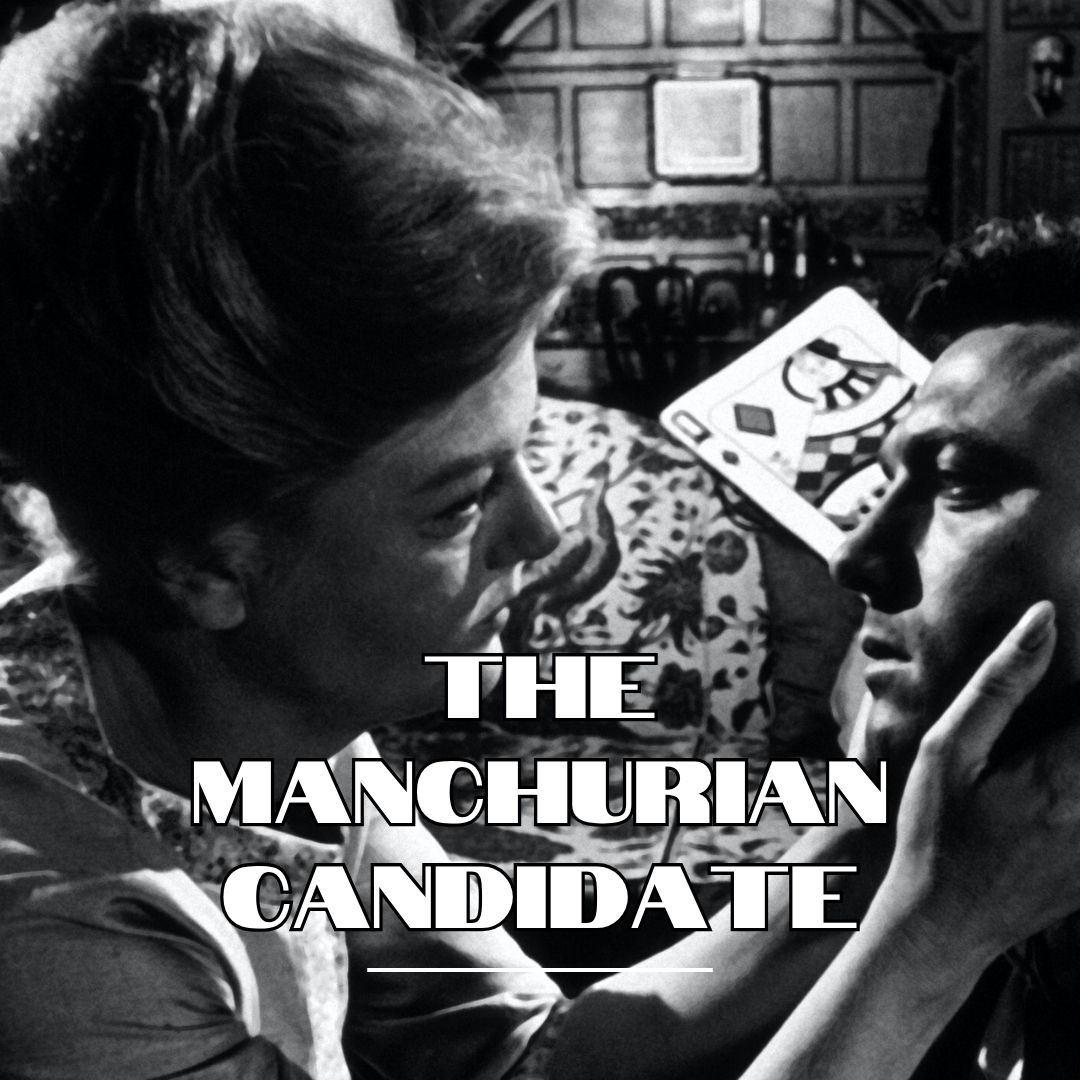
 Angela was nominated for an Oscar for best supporting actress for her performance as Eleanor Shaw and, wow, did she deserve that nomination.

First, a description of the movie from Google:

Near the end of the Korean War, a platoon of U.S. soldiers is captured by communists and brainwashed. Following the war, the platoon is returned home, and Sergeant Raymond Shaw (Laurence Harvey) is lauded as a hero by the rest of his platoon. However, the platoon commander, Captain Bennett Marco (Frank Sinatra), finds himself plagued by strange nightmares and, together with fellow soldier Allen Melvin (James Edwards), races to uncover a terrible plot.

Highlights for me:

The opening scenes are completely mental and crazy. Scary too. I don’t want to give too much away in case you’ve never seen this. So I won’t. All I can say is seeing one of the Baldwin sisters from the Waltons ask a man in her sing-song voice if he’s ever killed anyone messed me up just a bit.

An interesting cinematography tactic used a few times in this movie is to make the character closest to the camera blurred out and the person in back in focus. This is something photographers sometimes do, commonly by using the rule of thirds, but it is more common to have the forward subject in focus and the person in back blurred out. I find this director’s decision to film scenes this way very interesting and visually interesting.

Frank Sinatra’s acting is superb in this. I have never seen him in a serious role, so it threw me a bit, but he was so good.

I can’t recall if I have ever seen Laurence Harvey in a movie before, but he was very compelling as Raymond Shaw.

What I thought of Angela:

Angela was nominated for an Oscar for best supporting actress for her performance as Eleanor Shaw, the mother of Raymond Shaw.

Nothing about the character in this movie reminds me of the Angela who is in Murder She Wrote. Now, of course the woman played many roles, but I am most familiar with her on Murder She Wrote so I had to prepare myself for seeing someone completely different and that is exactly what I got. Eleanor Shaw is absolutely not Jessica Fletcher.

Eleanor Shaw is vindictive, mean, and hungry for money and power.

“It’s a horrible thing to hate your mother,” Raymond tells Bennett at one point. “I didn’t always hate her. As a child I just sort of disliked her.”

That was before she did something he could not forgive.

Eleanor is completely domineering with her second husband, Raymond’s stepfather, and a senator.

She tells him what to do, when to do it, and how to do it.

“I keep telling you not to think.” She tells him at one point in the movie. “You are very, very great at a great number of things, but thinking isn’t one of them, hon’.”

Eeek.

She gave me chills.

(photo)

Here is a clip of Angela as Eleanor.

What I thought overall:

I was so nervous during this movie. I was nervous they wouldn’t believe Frank’s character about the dreams he was having and that the movie would just keep going on this nightmare path of him trying to prove he wasn’t crazy.

It was just a total mind trip all the way through, and I kept wondering who was a spy or sleeper agent and who wasn’t.

I figured out the ending before it happened and I was certain what one of the final scenes would be but I was still biting my nails.

I was actually very excited when part of the ending I thought would happen did happen. I was a little sad at the part of the ending that I didn’t expect.

The acting in the movie was outstanding across the board. Of course the messaging was a bit too timely for today and that was unnerving.

A bit of trivia:

There was a rumor that this movie was pulled from ever being shown on TV because of how it featured similarities to the assassination of Kennedy and speculation by some that the idea for his assassination came from the movie. Some say that Frank Sinatra locked the movie up in his vault because he controlled the rights to it. Another movie he starred in that involved assassination, Suddenly (1954) also disappeared for years after the Kennedy assassination.

According to an article on TCM.com, “. . . Sinatra’s control only extended to the film’s rights after seven years. There is, however, apparently some truth to the story that after JFK was murdered a year after the picture was released, some exhibitors requested it be given another run to capitalize on the event but that United Artists refused.”

Another disputed theory involved  a financial and legal disagreement between United Artists and Sinatra but that was later said to not be true. Some even said Sinatra simply neglected to keep the movie in distribution. (Guess he was too busy with the mob, etc. *wink*). To this day there isn’t really a definitive answer on why the movie fell out of existence for so many years but I lean toward all of the fall out from Kennedy’s assassination.

“What is certain is that during its “lost years,” the film built up a great reputation,” the TCM article states. “’The movie went from failure to classic without passing through success,” noted its screenwriter, George Axelrod. When it was finally re-released in 1988, it was a big box office hit (as well as a success on its subsequent video/DVD release) and earned even more rave reviews as one of the best pictures of that year.”

I thought it was so odd that Kennedy was given a copy of the film to preview in 1962.

A few more trivia tidbits (some of these may not be totally accurate but I don’t have time to vet each one):

  • Frank Sinatra reputedly had a swimming pool designed with a large painting on the bottom of the Queen of Hearts playing cards  … I won’t say why in case you haven’t seen the movie.
  • Director John Frankenheimer once claimed The Manchurian Candidate didn’t do well financially because the studio chose to promote another Sinatra picture, The Pride and the Passion (1957), but that film had actually been released five years earlier.
  • Frank Sinatra broke the little finger of his right hand on the desk in the fight sequence with Henry Silva. Due to on-going filming commitments, he could not rest or bandage his hand properly, causing the injury to heal incorrectly. It caused him chronic discomfort for the rest of his life.
  • The movie was filmed in only 39 days (!!)
  • According to executive producer Howard W. Koch, the budget was $2.2 million. Of that amount, $1 million went for Frank Sinatra‘s salary, with another $200,000 for Laurence Harvey, leaving only $1 million for everything else.
  • The topic of this movie was considered politically so highly sensitive that it was censored and prohibited just before its theatrical release in many of the former “Iron Curtain” countries, such as Poland, Czechoslovakia, Hungary, Romania, Bulgaria – and even in neutral countries such as Finland and Sweden. The theatrical premiere for most of those countries was held after the collapse of the Soviet Union in 1993.
  • By his own admission, Frank Sinatra‘s best work always came in the first take. Writer, producer, and director John Frankenheimer always liked the idea of using the freshness of a first take – so nearly all of the key scenes featuring Sinatra are first takes, unless a technical problem prevented them from being used.
    (Sources, Imbd and TCM.com).

What Angela said about the movie:

Frank Sinatra actually wanted Lucille Ball for the roll of Eleanor Shaw.

“That would have been fascinating,” Angela said. “You wouldn’t believe that she could be this devil incarnate though.”

As for how she got the part she said, “I think Frankenheimer (the director) just put his foot down.”

“I had just finished working with John on We All Fall Down and he came into the room where we were looping some lines and he slapped this very heavy book on the table and he said to me, ‘There’s your next role.’”

He told her what the book was, who wrote it, who was going to write the screenplay and added, “You’ll be fabulous as the mother.”

Angela was actually only three years older than the man who played her son. Say what??!

To become an older woman she simply acted as she felt the character would act, without worrying about age, she said.

In an interview she said many people asked her what it was like to work with Frank Sinatra and she always tells them she doesn’t know because they didn’t have any scenes together other than a quick one where they were getting their coats on.

It wasn’t until later she learned that Frank Sinatra was an integral part of making sure the movie was made.

“I know that Frank wasn’t the easiest person for John to work with,” she said. “But they seemed to have an alliance. I think Frank understood what a tremendous opportunity it was for him to play this role. He knew that his friend (President) John Kennedy adored the book. Frank talked to JFK about the role and one of his questions oddly enough was ‘who’s playing the mother?’”

Of the suspense of the movie, Angela said, “You really didn’t know who anybody was.”

Of the movie overall she said, “I think we all knew we were in rather racy territory. We were doing something pretty unique and different. This is going to turn a few heads you know.”

“It was out of circulation for many, many years,” she said. “It came back in 1988 as a revelation to be had. The whole generation saw it, who recognized it for what it was and they absolutely took it to their hearts and it became the most important piece of work any of us had ever done. Suddenly John Frankenheimer was recognized, Frank Sinatra was recognized as an actor. I was recognized as an actress who played one of the most evil women in human history. I had a whole new acceptance from an audience who didn’t know who the devil I was. So I have great feelings of fondness for The Manchurian Candidate for that reason.”

Have you seen this movie?

I rented it on Amazon, but it is also streaming on Google Play, Pluto TV, Apple TV and Fandango. Or your local library might have it.

Later this week I will be writing about a totally different movie than The Manchurian Candidate, National Velvet.

Other movies I will be watching for this Summer of Angela are:

June 27 – Bedknobs & Broomsticks

July 4 – Gaslight

July 11 –  The Shell Seekers

July 18 – Murder She Wrote: The Celtic Riddle

July 25 – The Mirror Cracked

August 1 – The Court Jester

The Manchurian Candidate trailer:

____
Additional sources:

Trivia & Fun Facts About THE MANCHURIAN CANDIDATE (TCM) with spoilers!! :https://www.tcm.com/tcmdb/title/19293/the-manchurian-candidate#articles-reviews?articleId=136794

Angela Lansbury talks to Alec Baldwin about The Making of The Manchurian Candidate: https://youtu.be/Sjqs66SoTXQ?si=MeU5SbwFRMBnlRhP

Angela Lansbury looks back at the making of The Manchurian Candidate: https://youtu.be/kLwO-2_GIbM?si=cWQoMwa1ARwzzAX6

Join me for a Summer of Angela (Lansbury that is)

For fun I decided I am going to watch Angela Lansbury movies this summer.

This is the list I’ve come up with. It’s subject to change, of course.

You can join along and watch the movies or just read the blog posts about them. I won’t be offering spoilers for the movies. The dates are the dates I will be writing about the movie.

June 13th – Manchurian Candidate

June 20 – National Velvet

June 27 – Bedknobs & Broomsticks

July 4 – Gaslight

July 11 –  The Shell Seekers

July 18 – Murder She Wrote: The Celtic Riddle

July 25 – The Mirror Cracked

August 1 – The Court Jester

To kick off my Summer of Angela, here is a link to my impressions of Blue Hawaii, which she played Elvis’s mother in. I’ve updated it a bit with a little more information about Angela’s role in the film and what she thought of Elvis.


Lisa R. Howeler is a blogger, homeschool mom, and writes cozy mysteries.

You can find her Gladwynn Grant Mystery series HERE.

You can also find her on Instagram and YouTube.

Springtime in Paris: Charade

Erin from Still Life, With Cracker Crumbs and I have been watching movies that take place in Paris for the last couple of months.

For our last week, we watched Charade with Audrey Hepburn and Cary Grant.

Directed by Stanley Donen this movie was released in 1996 and tells the story of Reggie Lambert (Hepburn) and Peter Joshua (Grant) who meet briefly on vacation in the Alps. When Reggie returns home, she finds that the husband she’d planned to divorce has been murdered, but before he was murdered, he sold the contents of their apartment, including all of her possessions.

A mystery ensues and what follows is a movie that was good but was very confused about which genre it should be in.

When Reggie returns to Paris and her empty apartment, a police officer approaches her and tells her that her husband was found in his pajamas dead by the train tracks and that he was apparently trying to leave Paris quickly.

While Reggie was discussing her husband at the beginning of the movie with a friend, and we learned he was wealthy, we learned very little about him and now it is clear that Reggie also learned very little about him. As the police show her several different passports from different countries with his face on them, she begins to realize she didn’t know the man at all.

Reggie is bewildered later when Peter Joshua shows up to her empty apartment and says he read about the murder in the newspaper and wanted to check on her.

She believes the police think she murdered him.

Peter offers to find her a hotel room until she can find a new job and apartment.

Peter asks what she’s going to do now that her husband has been murdered and she says she’s going to try to get her old job as a translator back.

At his funeral, Reggie is even more bewildered, because there aren’t any guests other than her and her friend. Three American men (James Coburn, George Kennedy, and Ned Glass) show up and either spit on him, poke his body, hold a mirror to his nose, to make sure he is dead, or say something inappropriate. James Coburn approaches her and doesn’t offer condolences. He just says, “Charlie had no reason of doing it thatta way. No siree.” and walks away.

Um..okay…poor Reggie is even more bewildered.

A large man then approaches, handing her a letter requesting she visit the American embassy the next day to discuss the death of her husband.

She shows up to meet with Walter Matthau who seems to know her husband. He informs her that her husband was wanted by the CIA and his real name was Charles Voss. He also tells her that her life might be in danger.

He suggests that she somehow has the money her husband earned from selling all their possessions. That money is the same amount he stole from the United States government during World War II, he says. He instructs Reggie that she needs to find the money and return it to him before the other, dangerous men find her.  Looking for help and someone to talk to, Reggie contacts Peter, who decides one way to help is take her out for a night on the town to cheer her up. What results is a very strange game where people have to pass an apple down a line of people only using their chins and necks.

So..yeah..that was strange and uncomfortable to watch. *laugh* I am not sure how the actors did the scene without totally falling apart in laughter or embarrassment.

It was nice to see Cary’s familiar goofy expressions in this scene. I’ve noticed watching his later movies that he doesn’t loosen up the same way he did when he was younger which is natural, but also hard to watch sometimes.

The game leads Reggie and Peter in some compromising positions where they pause to look at each other for a long time and you can tell in that moment that Peter is thinking about what it would be like to kiss her and vice versa.

It’s all fun and games until all three men track Reggie down at the club and begin to threaten her for the money they think she has.

This movie is categorized as a comedy/thriller which makes it a little hard to figure out at times. I sometimes wondered if I was supposed to laugh or feel dread during certain scenes. There is a terrifying scene where one of the men (Coburn as Tex) keeps lighting matches and dropping them on her lap while she screams and cries and I couldn’t laugh at that scene so I don’t know what the director and writers were going for – maybe that was it — to have the viewer not sure what to think.

When Peter convinces Reggie to tell him what he is going on, he decides he will help her find out why she is being pursued and tells her that he will keep the men from hurting her. Now we viewers have to  decide with Reggie who Peter is and if he is really a good guy or not.

I read that Cary actually didn’t want this role at first because he said he felt like a predator, going after the younger Audrey.

That’s funny since he was in many movies in his older years where he was “going after” younger women and he married a woman much younger than him, but I digress….

Cary turned 59 during filming and it was this movie that made him decide it was time to stop playing the romantic lead. The reviews focusing on the 26 year age difference between him and Audrey was one big driving factor in this decision, he later said.

He was so uncomfortable with the idea of their age gap he asked for the script to be changed so screenwriter Peter Stone made Audrey the aggressor and Cary the man trying to fight her off.

Stone said he wrote things like “Can’t you just think of me as a woman?” and have Cary say, “I’m already about to get into trouble for transporting a minor above the first floor.”

He then says, “Come on, child, let’s go.”

Stone said, “Cary made me change the dynamic of the characters and make Audrey the aggressor. She chased him, and he tried to dissuade her. She pursued him and sat in his lap. She found him irresistible, and ultimately he was worn down by her. I gave him lines like “I’m too old for you, get away from me, little girl.’ And ‘I’m old enough to be your father.’ And in the elevator: ‘I could be in trouble transporting you beyond the first floor. A minor!’ This way Cary couldn’t get in any trouble. What could he do! She was chasing him.”

When I first started the movie, I was afraid I wasn’t going to like this film at all. Cary’s acting was stilted and “off” for me right from the start.

I found some parts of the movie confusing and odd because of its identity crisis, or inability to choose between being a comedy or a thriller, but I don’t want to spoil too much of the movie by commenting on which parts.

What I will say is that it was just weird to that Audrey’s character continued to throw herself at Cary’s character even when she isn’t sure who he really was. And this is just after her husband has been murdered and she is being pursued by people who want money her husband stole.

I enjoyed the action and the movie overall but really would have liked it the movie had picked a lane and stayed in it.

This was Cary’s chance to finally work with Audrey, by the way, after turning down leading roles in at least four movies she’d been in — Roman Holiday (1953), Sabrina (1954) and Love in the Afternoon (1957). He’d turned them all down because of the quarter-century age difference between them, according to TCM.com.

The rumor at the time was that he’d also turned down the role of Henry Higgins in My Fair Lady because he didn’t want to work with Audrey. This wasn’t true, but instead was a decision made out of respect of Rex Harrison who had created the role on Broadway.

The article on TCM.com reads: “In the Barry Paris biography, Donen recalled that “Cary thought he was going to do a picture with Howard Hawks called Man’s Favorite Sport? [so he] said no to Charade. Columbia said get Paul Newman. Newman said yes, but Columbia wouldn’t pay his going rate. Then they said get Warren Beatty and Natalie Wood. So I got them and Columbia decided they couldn’t afford them or the picture. So I sold Charade to Universal. In the meantime, Cary had read Hawks’s script and didn’t like it. So he called me and said he would like to do Charade.”

I want to share another quote from the TCM article because it is such a funny story: “ In Audrey Hepburn: A Biography by Warren G. Harris, the director recalled: “I arranged a dinner at a wonderful Italian restaurant in Paris. Audrey and I arrived first. Cary came in, and Audrey stood up and said, ‘I’m so nervous.’ He said, ‘Why?’ And she said, ‘Meeting you, working with you – I’m so nervous.’ And he said, ‘Don’t be nervous, for goodness’ sake. I’m thrilled to know you. Here, sit down at the table. Put your hands on the table, palms up, put your head down and take a few deep breaths.’ We all sat down, and Audrey put her hands on the table. I had ordered a bottle of red wine. When she put her head down, she hit the bottle, and the wine went all over Cary’s cream-colored suit. Audrey was humiliated. People at other tables were looking, and everybody was buzzing. It was a horrendous moment. Cary was a half hour from his hotel, so he took off his coat and comfortably sat through the whole meal like that.”

Despite that awkward first meeting, the pair apparently hit it off very well, even ad-libbing some of their lines.

Do you ever look up trivia like this for movies when you watch them or am I just the weirdo in the group?

Have you ever seen this one? What did you think of it?

You can read Erin’s thoughts here: https://crackercrumblife.com/2025/05/08/springtime-in-paris-charade/

If you wrote about today’s movie, or any of the movies we watched during this movie event, you can post your links below.

Also, thank you so much for participating and I hope you all had fun taking part! Do you have an idea for a themed movie event? Let us know in the comments!

I hope you will join us for the next one, though I am not sure when we will do it. Erin and I both have a lot going on in our personal lives with family health situations so we might not hold one until autumn. Not sure yet. We will have a meeting of the minds on it at some point.

We are, however, holding Drop In Crafternoons where we meet on Zoom and do crafts of any kind while chatting.

I had planned to try one this weekend but things are a bit up in the air right now with my parents’ health and the fact my whole family came down with a cold/virus and I am waiting to see if I am next, so we are sticking with one on May 24th for now.

You are invited to the Inlinkz link party!

Click here to enter
https://fresh.inlinkz.com/js/widget/load.js?id=c0efdbe6b4add43dd7ef

Springtime in Paris: Hugo

Erin from Still Life, With Cracker Crumbs and I have been watching movies that take place in Paris this spring.

Up this week was the movie Hugo.

I had vaguely heard of this one before, but really didn’t know what it was about until Erin suggested it. I don’t know how I didn’t know more about it since it was nominated for eleven Oscars, including best director and best picture, in 2012. It won five for things like cinematography and design. (Thanks to Cat from Cat’s Wire for letting me know I looked at the nomination list instead of the win list when I originally posted this. ooops! hahaha!)

This was a magical children’s movie with beautiful imagery and cinematography. It was much different than I expected based on the movie poster and trailer. I watched it before I read any descriptions. I often don’t read detailed descriptions of movies or books before I jump into them. It can make it either a pleasant or a disturbing surprise. Ha! This was a pleasant one.

First, a quick Google description of the movie: Orphaned and alone except for an uncle, Hugo Cabret (Asa Butterfield) lives in the walls of a train station in 1930s Paris. Hugo’s job is to oil and maintain the station’s clocks, but to him, his more important task is to protect a broken automaton and notebook left to him by his late father (Jude Law). Accompanied by the goddaughter (Chloë Grace Moretz) of an embittered toy merchant (Ben Kingsley), Hugo embarks on a quest to solve the mystery of the automaton and find a place he can call home.

This is one of those ensemble casts with several well-known actors including Ben Kingsley, Sascha Baron Cohen, Christopher Lee, Jude Law, Helen McCroy, Asa Butterfield, Chloe Grace Moretz, Emily Mortimer, Michael Stuhlbarg, and Richard Griffiths.

Directed by Martin Scorsese, the movie was released in 2011 and was based on the 2007 book The Invention of Hugo Cabret by Brian Selznick. The book sounds like a visual marvel. It has 284 illustrations mixed in 500 pages of a story.

Selznick once described the book “not exactly a novel, not quite a picture book, not really a graphic novel, or a flip book or a movie, but a combination of all these things.”

Though I’ve never seen the book, I did see some photos online (such as those pictured above) and Scorsese seems to have captured the magic of the illustrations almost exactly as they are in the book.

The cinematography, the costumes, and the sets in Hugo are gorgeous and magical. There are a variety of unique camera angles and filming techniques that give much of the film a soft and dreamlike feel. It is what some might call a visual smorgasbord.

Close-ups on Hugo’s (Asa Butterfield) big blue eyes are frequent, and draw the viewer into his world, making them wonder what he is thinking behind those eyes.

When the movie starts, Hugo is spying on the activity in the train station through the numbers in the clocks high up in the walls and a tower in the middle of the station.

We see that he seems to live in the walls behind these clocks, getting  food from vendors he steals from throughout the day to survive.

Eventually, we learn that he’s been living in these makeshift spaces since his father died and his alcoholic uncle took him in. It appears, though, that the uncle is no longer around, and it isn’t until later in the movie, we learn why. Hugo is continuing to keep the clocks running so a new clock repairer isn’t hired and he is discovered.

Towards the beginning of the film, we meet the toy maker who accuses Hugo of stealing from his booth. Hugo is indeed stealing small pieces of machinery from the toy maker’s booth. When the toymaker catches him, he makes Hugo empty his pockets and one of those pockets includes a small notebook with drawings inside about how to repair the automaton that his father found at the museum he was working at before he died.

The drawings trigger something in the toy maker, and he takes the notebook and refuses to give it back to Hugo. This leads to Hugo chasing the toy maker home to try to convince him to give the notebook back. The toy maker refuses but Hugo sees who he thinks is the toymaker’s granddaughter and begs her to ask her grandfather for the book back. He learns that the girl is not the man’s granddaughter, but his goddaughter who was taken in after her parents died.

We are never really told what actually happened to her parents. The girl’s name is Isabelle and she and Hugo become friends. She goes to work with her godfather and encourages Hugo to stand up to him to get his notebook back. Hugo does and the godfather tells him that if he will work for him in his shop then he will give him his notebook back.

Isabelle and Hugo become friends, and eventually Hugo will tell her about the automaton and how he needs a special key to turn it on.

Isabelle takes him to the library, where the librarian gives her books. Hugo looks bewildered as she talks about books, which prompts Isabella to ask Hugo, “Don’t you like books?”

He assures her he definitely does.

Books, movies, and art in general are very important to Hugo because they were things he and his father did together before his father passed away. His father was a clockmaker and repairer and also worked at a museum and was well educated. We learn toward the beginning of the film through flashbacks that Hugo has not only lost his father, but years before he had also lost his mother.

When Hugo isn’t working at the toy shop, he is avoiding the station master (Baren Cohen) who enjoys capturing orphans he catches in the station and then sending them back to the orphanage. At first glance the station master seems like a very angry bitter person but we will later learn there is a lot more to him than we realize.

This movie could be a real downer if it weren’t for the quirky characters and the constant striving of the movie (and the viewer) to get to an ending we hope will be full of some happiness for Hugo. Had this been any other Scorsese film, we might not have gotten that (like Hugo might have ended up at the bottom of the river. Ya’ know what I’m sayin’?), but without offering too many spoilers I can assure you there is a happy ending.

I loved the scenes where Isabelle and Hugo were walking around the old library, by the way. Oh, to walk in a library with books piled up high like that.

There are several little storylines going on throughout this movie. The big one we have is with Hugo, of course, as he tries to figure out how to get the automaton to work again and then find out what message it might be sending when it does work.

(He hopes it is a message from his father or from anyone to help him not feel so alone.)

Then we have the friendship between him and Isabelle and the antagonistic relationship Hugo has with her godfather. Then there is the godfather’s story and the story of the godmother. Then there are the characters who work inside the station and their relationships.

The story from the book and the movie does feature real life characters including the real life filmmaker named Georges Méliès. To avoid spoilers, I won’t share which character portrays Georges.

Have you ever seen this one? What did you think of it?

You can find Erin’s thoughts on it here.

You can learn more about Georges Melies on Cat’s blog here.
I can’t believe we are winding down with our Springtime in Paris feature!

Next week we are writing about The Intouchables, a French film with subtitles. It is rated-R for language and sexual discussions (but no on screen sex or violence…I previewed it *wink* Right now it is streaming for free if you have an Amazon Prime membership. You can also find it on DisneyPlus, Fandango, Plex, YouTubeTV, Google Play, AppleTV, and Hulu

The week after, on May 4, we are having a group watch of Charade with Audrey Hepburn and Cary Grant via Zoom, and then we will share our thoughts on the movie on our blogs May 8.

If you watch any of the movies on our list for this feature at any point before May 10th, you can find the link on this post below or at the link up in the menu at the top of the page. You don’t have to watch the movies the same weeks we do to write about them.

Other resources:

Wikipedia Georges Melies https://en.wikipedia.org/wiki/Georges_M%C3%A9li%C3%A8s

Wikipedia The Invention of Hugo Cabret book: https://en.wikipedia.org/wiki/The_Invention_of_Hugo_Cabret

More about Melies from Cat’s Wire: https://catswire.blogspot.com/2025/04/silent-movies-trip-to-moon.html

You are invited to the Inlinkz link party!

Click here to enter
https://fresh.inlinkz.com/js/widget/load.js?id=c0efdbe6b4add43dd7ef

Springtime in Paris: How To Steal A Million

For the months of April and May, Erin from Still Life, With Cracker Crumbs and I are watching movies set in Paris and rambling about them on our blog.

This week we watched How to Steal A Million with Audrey Hepburn and Peter O’Toole.

I actually think I watched this movie or part of it at some point over the last 20-some years but I couldn’t remember most of it, other than a few scenes.

The movie is about a con-man, Charles Bonnett (Hugh Griffith), who sells fake recreations of famous artist that he has painted. It isn’t something his daughter approves of so when he loans out a fake  “Cellini” Venus statue to a museum in Paris she is horrified and panicked. Her father assures her that because the item is only being loaned out and not purchased, no one will inspect it and actually find out it is a fake. Unfortunately, Charles signs a loan agreement with the museum without reading it and later learns it includes an inspection clause.

On the same night the statuette goes on display, a burglar named Simon Dermott (O’Toole), breaks into their house to try to steal Charle’s recreation of a Van Gogh painting.

Terrified, Nicole sneaks downstairs and grabs a collector gun off the wall to confront whoever is in the house. After some bantering back and forth, and knowing calling the police would lead to an investigation of all her father’s paintings, Nicole agrees to let him go. When she lays the gun down, though, it fires and grazes Simon’s arm.

This leads to an entertaining exchange where he makes her drive him home using his car and then she discovers she has no way to get home. He calls her a taxi, but not before he asks her to wipe his fingerprints off the painting he tried to steal so he won’t get caught.

She asks him what else she should do for him. Did he want to kiss her goodnight?

He lets her know that he’d rather like to do that and the bold fellow kisses her passionately right there by the taxi.

Nicole is, of course, a bit enamored with him, especially after that kiss, which is clear when she later tells  her father about what happened.

After she and Charles find out about the inspector who will come to look at the statuette at the museum so it can be insured for a million dollars, she worries that the inspection of the item — which her look alike grandmother posed for by the way — will lead to all of her father’s work being exposed as fakes and send him to jail. She tracks Simon down and asks him to help her steal the statuette, even though it is under very heavy security at the museum.

Much jocularity ensues.

Yes, I did just write that sentence.

But, a lot of fun does unfold at this point and the viewer already knows a bit about Simon and that he isn’t what  he seems but now we want to know what else we, and Nicole, will find out. As if things couldn’t get any crazier, we also have an American dealer Davis Leland (Eli Wallach) who is trying to buy the statuette and wants to marry Nicole.

I won’t provide any other spoilers in case you haven’t seen this one and want to.

This one was a fun one for me. Lots of funny, quirky moments and beautiful views of Paris. Of course, these actors were all supposed to be in Paris but sounded British, other than Audrey.

Audrey has never been my favorite actress but I enjoyed her more in this one than I thought I would.  I thought Peter O’Toole was a delight all around. He was…sigh….dreamy. Those impulsive kisses…whew!

I loved the ins and outs of the movie, the misdirection, etc.

Toward the beginning of the movie, Nicole is reading Hitchcock Magazine which made me wonder if she’d ever been in one of his films. After a quick search online, I learned that the answer is no. However, in her Oscar-winning performance as the princess in the 1953 movie Roman Holiday, Audrey is in bed reading a book about Hitchcock.

My husband says he never wanted Audrey in his movies because he liked actresses with talent. Ouch. It’s clear my husband is not an Audrey fan. He added that Hitchcock had a “type” and Audrey wasn’t it. Most of the actresses in his movies were blond. There you go.

There were rumors when the movie was made that Peter and Audrey had an affair during the filming but those were later squashed by the pair who said while that wasn’t true, it was true they became close friends after the movie.

Some trivia about the movie that I read about during my research:

After Nicole dresses up as a cleaning lady at one point in the movie, Simon Dermott says, “That does it. For one thing, it gives Givenchy a night off.” Hubert de Givenchy was Audrey Hepburn’s costume designer.

When Peter O’Toole first sets off the museum alarm, he says, “Ring out, wild bells.” This is the title of a poem by Alfred Lord Tennyson published in 1850, which was part of his work entitled “In Memoriam”. It was an elegy to his sister’s fiancé, Arthur Henry Hallam, who died at the age of 22.

The film was directed by William Wyler.

Have you ever seen this movie? What did you think of it?
If you wrote a blog post about it or choose to do so later, you can link up below anytime from today until May.

To read Erin’s thoughts on the movie, visit her blog here: https://crackercrumblife.com/2025/04/10/springtime-in-paris-how-to-steal-a-million/

Up next in our Springtime in Paris movie feature is Paris Blues, which you can find for free on YouTube here: https://www.youtube.com/watch?v=Zm8bCTSPD6U

Following that we will have:

Hugo (April 24)

The Intouchables (May 1)

Charade Group Zoom on May 4 – this is where you can all join us for a watch party! (writing about it May 8).

If you’re wondering where to find the movies streaming, for anyone who is participating in the event on where you can find the movies streaming:

Hugo: Amazon, Fandango at Home, Pluto TV, AppleTV

The Intouchables (warning that this is an R movie due to language): DisneyPlus, Amazon, Fandango, Plex, YouTubeTV, Google Play, AppleTV, and Hulu

Charade (pretty much everywhere): Crackle, Tubi, Plex, Amazon, AppleTV, GooglePlay, YouTube, YouTubeTV, The Roku Channel, Fubo.

You are invited to the Inlinkz link party!

Click here to enter
https://fresh.inlinkz.com/js/widget/load.js?id=c0efdbe6b4add43dd7ef

Classic Movie Impressions: That Touch of Mink

I needed something to distract me from every day life last week so I watched That Touch of Mink with Doris Day and Cary Grant. I am very certain I’ve watched either all or part of this movie before but it has been years so I didn’t remember much about it.

This is quite a modern movie for 1962.

Cary Grant is a no nonsense, yet still kind and understanding, businessman and Doris Day is a young woman from a small town living in a big city and trying to find a job.

This movie was meant to be a comedy, so I tried not to be too uptight about how Cary Grant was essentially trying to get into Doris Day’s pants without actually committing to a relationship for the entire movie.

I have to say that I didn’t really like Cary for most of this movie and my husband said it is probably because of the fact Cary really didn’t want to make the movie, according to articles he has read about it. While I didn’t find articles online specifically saying he didn’t like the film, I did find information that Doris Day wrote in her autobiography that Cary was polite and professional on set but that there was really no “give and take” between them.

First a little summary:

This movie takes place in 1962 starts with Doris Day walking down the street and getting splashed by a car that Cary’s character (Philip Shayne) is riding in. He feels bad but he can’t stop because he is on his way to a very important meeting. We find out later that Doris’s character (Cathy Timberlake) is looking for a job and Philip is a shrewd but also generous businessman with a friend, Roger, (played by Gig Young) who is a bit of a leach. Philip does actually feel awful about splashing Cathy and tells Roger he’d love to find the woman and apologize.

Luckily they are looking out the office window not long afterward and see Cathy walking into a diner across the street.

He orders Roger to take her some money to apologize. Roger is hoping the woman will want to tell Phillip off. He’s sick of Phillip getting all the women despite his flippant attitude. Cathy does want to tell Phillip off so Roger takes her to Phillip immediately.

Unfortunately for Roger, Cathy falls for Phillip immediately. Phillip sees this as a chance to sweep another woman off her feet by taking her on trips around the world.

He starts to do just that and Cathy wants him to like her so she goes along with him — flying to Baltimore for a speech he’s giving, then to Philadelphia for a quick dinner. One night he even takes  her to a New York Yankees game, into the dugout where we meet the real Roger Maris, Mickey Mantle, and Yogi Berra.

Soon though, Phillip wants her to go on vacation with him to Bermuda and she’s not sure if she means he wants her to stay in the same room with him or if they will have separate rooms. He definitely wants her to stay in the room with him, which causes her to breakout in a full body rash and skuttles his plans.

She’s a good girl from Sandusky, Ohio after all. Girls from Sandusky don’t go running off with men on vacation and sleep with them unless they have a ring on their finger and have said “I do” to marriage vows.

Cathy returns home disappointed in herself because she didn’t sleep with Phillip but also fairly annoyed at him for thinking she would after they’ve known each other for only a short time.

She wants to break out of her boring girl mold, though, and decides to try again — telling Phillip she’ll go with him again to Bermuda and she will give him what he wants. She doesn’t say exactly that but the viewer gets her drift.

Sadly, things don’t work out this time either but you will have to watch the movie to find out why.

The movie is a series of miscommunications, silly tropes, and goofy interactions. One of those miscommunications is between Roger and his therapist. Roger is sharing the story about Cathy and Phillip but the therapist walks out of the room and only hears part of the story, leading him to believe that Roger is becoming involved with another man, which I thought was a very progressive (for lack of a better word) joke for the early 1960s. That joke carries on throughout the movie with Roger continually trying to update the therapist on Phillip and Cathy but the therapist instead believing that Phillip has been trying to woo Roger instead.

I found it interesting that this movie was one of the last ones where Cary was a leading man.

It was his 69th movie and he was in his 50s. An article on TCM.com states that he must have known his time for playing leading men was waning.

“He made one more picture in which he was the dashing leading man, Charade (1963), opposite Audrey Hepburn,” the article reads. “After that, he appeared as a grizzled old beachcomber in Father Goose (1964), then as a British gentleman who plays Cupid for the young romantic leads in Walk Don’t Run (1966), his last film before retiring from the screen.

The article goes on: “Doris Day’s string of box office hits continued though with somewhat diminishing returns over the next six years in ten more films. After With Six You Get Eggroll (1968), the actress retired from the big screen. Her hit TV sitcom, The Doris Day Show, ran from 1968 to 1973, changing formats and storylines almost very season.”

As for my feelings on the film, I liked it overall but didn’t like the message that women should just go sleep with men they are not married to. The end of the movie would have feminists of today growling in anger but it was most likely what made most every day movie goers happy at the time.

I couldn’t figure out while I watched it if Cary was bored during the movie or if it was how he was playing Phillip Shayne. Maybe he wanted Phillip to have no real personality beyond seeming bored and like he expected women to fall in bed with him. The man didn’t even seem excited by the prospect of sex. He just seemed to expect that it would happen, and he would move on to the next woman.

Years ago, I was reading about Cary and his use of LSD as an attempt to help him with his depression and other mental issues. Many psychiatrists at the time prescribed LSD as part of psychological therapy. It wasn’t yet a recreational drug.

Both Gig Young and Cary used the therapy and as I researched for this film I read that Gig sadly killed his 31-year-old wife and then himself in 1978 when  he was 64. I wonder how much the drug affected his brain at the time and left him worse off than he had been. He was also an alcoholic, though, so that most likely played an even larger role than the LSD. Either way it is sad.

 I also sometimes wonder if the drug was why Cary seemed so blasé and uninterested in his movies during this particular time period.

I don’t think this is a movie I would watch again but it was a fun escape.

I should also  mention the other star of the movie: The Automat.

The Automat was an automatic-type diner where restaurant goers could go in and choose what they wanted by pushing a button on what looked like post office boxes and then could open a door and the food would be slid to them through the tiny hole. I had never seen anything like it before this movie. Cathy’s friend Connie worked at one and delivered the food. That’s where Cathy would go to talk to her. It seemed like a very busy job since Connie and only one or two other co-workers would have to slide the food into the little box for the people to retrieve.

Have you ever seen this movie? What did you think of it?