
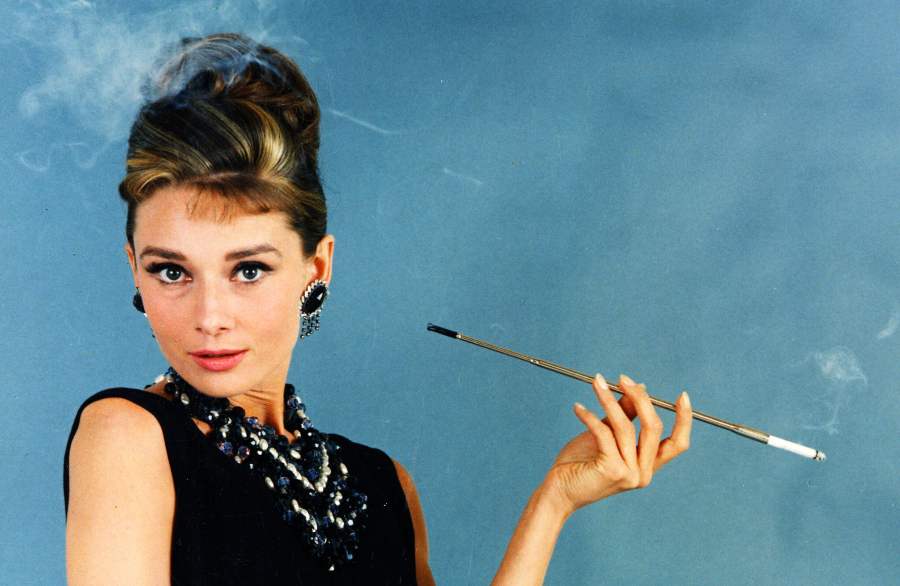
Classic movie impressions: Breakfast at Tiffany’s (with spoilers)

I have been exchanging classic movie suggestions with Erin from Still Life, With Cracker Crumbs this summer and I think we are going to continue doing it into the fall because it has been a lot of fun and a nice distraction from life stressors.

Today I am discussing Breakfast At Tiffany’s and Erin is discussing my suggestion of The Philadelphia Story.

You can find Erin’s post HERE.

On to my impressions of Breakfast At Tiffany’s:

I think this is the first movie I watched at Erin’s suggestion that I really didn’t enjoy as much as I hoped I would. I didn’t completely hate it by any means. In fact, there were aspects of it I liked very much, but I did not love this movie and I think it was because of one very specific reason — Audrey Hepburn’s accent.

I feel awful saying that, since I have never actually had an issue with her accent, but in this movie, she was supposedly a girl from the South running away from her problems but he had some odd European accent the entire movie. I mean, she couldn’t at least fake a Southern accent? Isn’t that what actresses are supposed to do? Except for Kevin Costner in Robin Hood, of course. Har. Har. In all the reviews of this movie I saw, not one of them seemed to have an issue with her accent for this character, so I’m pretty sure this is just a “me problem.”

The whole back story for Audrey’s character in this movie just wasn’t believable at all because of her accent, but I am sure it was more believable in the book by Truman Capote that it was based on. He released the book in 1958.

The idea behind this movie is that Audrey is a free-spirited young woman living alone in New York City when she meets Paul, played by George Peppard (who would later star in the A-Team), a gigolo who gets paid to sleep with a married socialite, living in her apartment the next floor up from Audrey.  He is supposed to be a writer, but that avenue has dried up so he’s earning money by selling his body. I think we, as movie watchers, are supposed to see this as normal behavior in some ways, but also see that it isn’t what he wants for his life — to be used and dragged along with the promise of a publishing career someday.

Audrey has reinvented herself as Holly Golightly, changing her name from Lulamae and leaving behind an extremely odd and rather inappropriate upbringing.

The entire movie is essentially about her making a number of bad decisions in an effort to be on her own, yet at the same time not having to support herself. She is always looking for a situation where an older, richer man will take care of her and let her live her laid-back life where she imagines going to Tiffany’s jewelry store and buying whatever she wants for her breakfast, so to speak.
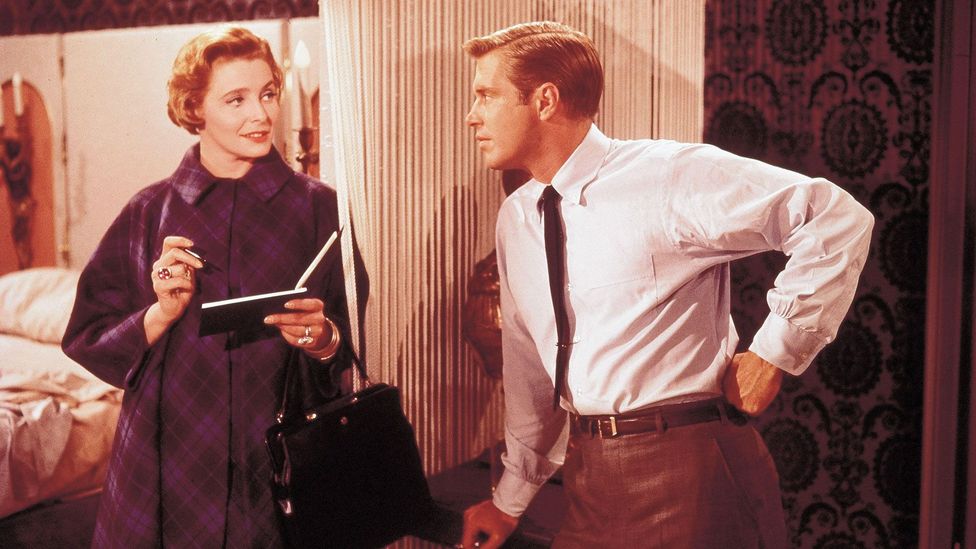
Honestly, I think Audrey’s character is a horrible brat, yet I don’t blame her for wanting to get away from the terrible situation she grew up in and I think that’s the point of the movie. She acts like a spoiled, selfish brat because she’s been traumatized. She’s not tied down to anything and she’s afraid to be because when she was tied down, she was told what to do at a very young age.

I really loved the end of the movie, but I won’t share it here in case someone reading this has never seen the movie  . . . . then again the movie is 61 years old this year and I did write a disclaimer in my headline that there would be spoilers so — [SPOILER ALERT ABOUT THE ENDING OF THE MOVIE AHEAD!!]

I love that at the end Holly realizes that Cat (which is her name for her cat, that she never really named because naming the cat would mean she has to commit to something and that is a very frightening idea for her based on her past childhood issues) is the one constant in her very unstable life. When she goes back to look for the cat – after she tosses him from a cab and tells him to get lost in the city – she also realizes that Paul is her other constant and she is ready to open herself up to at least a couple constants in her life.

This ending is not how the novel ends, however. In the book the reader is left with not actually knowing whatever happened with Holly

So it doesn’t sound like I totally hated Audrey’s portrayal of Holly, I do want to say that I loved how Audrey was so laissez-faire about life, even if that attitude was leading her into a life void of real love.

She reminded me a lot of a friend I had in college, except my friend wasn’t trying to run away from anything in her life, she was simply extremely laid back and casual about things. She was also a little bit ditzy and that could make her both aggravating and a blast to be friends with.

One quick warning too — this movie does contain an absolutely racist portrayal of an Asian person by Mickey Rooney. I didn’t even believe it was Mickey Rooney when my husband told me it was him.

The bottom line on Breakfast At Tiffany’s is that I do recommend it, even if I didn’t like that Audrey’s accent was not authentic.
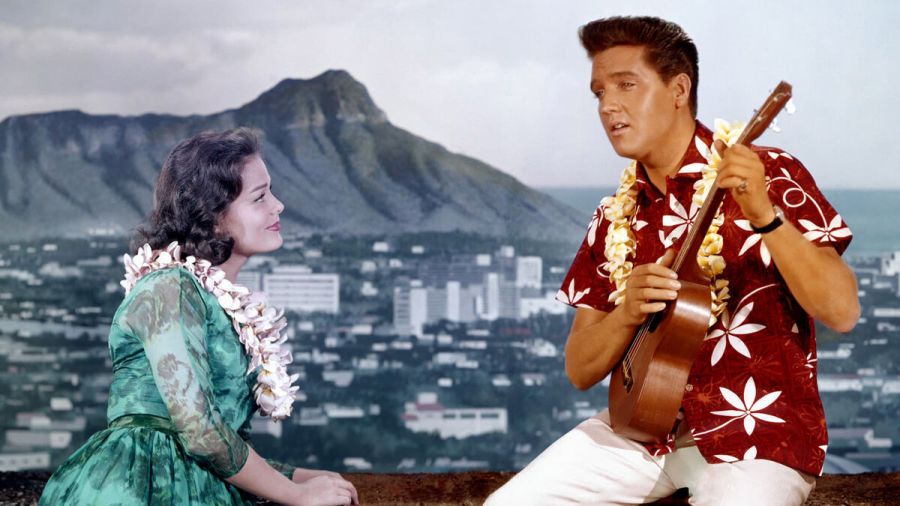

Classic Movie Impressions: Blue Hawaii

I have been trading classic movie suggestions this summer with Erin from Still Life, With Cracker Crumbs.

The movies we have given our impressions of so far have been

A Streetcar Named Desire

Cat on A Hot Tin Roof

The Thin Man

Double Indemnity

On her blog today, Erin is discussing To Catch A Thief, a favorite Hitchcock film of mine. I am going to be discussing Blue Hawaii, as the blog post title suggests.

When Erin suggested this movie, I was fine with it because I was sure it would be fun and if nothing else, the music would be good. Because my mom was always a huge fan of Elvis I knew quite a bit about him from a music stand point but I’ve only seen clips of his acting.

I do believe I saw part of this movie years ago. I expected it be a pretty big Cheese Fest, but I didn’t mind. With the way the world’s been lately, watching something light and cheesy is fine with me.

And yeah, there was some cheese to it, but it was also much better than I expected. Plus, Elvis’ voice on Can’t Help Falling in Love With You totally reminded me why so many people loved his singing and not just those swinging hips.

My mom was a huge Elvis fan when she was a teenager. She was raised by a strict, stereotypical Southern father who declared he would not have any of his daughters screaming about some boy swinging his hips. So one night when my mom and her sisters and their aunt (who is only a year older than my mom) were watching him on The Ed Sullivan Show, my mom said they tried to be very calm and not scream when he came on screen.

The bad thing was that her aunt grabbed my mom’s knee, and my mom can’t stand anyone to touch her knee because she’s very ticklish. She screamed when my aunt grabbed her knee, which brought my grandfather’s stern response of, “I will not have anyone screaming for that boy in my house!” My mom did her best to explain to him what had happened, but I’m not sure he believed her.

He must not have been too upset by my mom’s scream, though, because he took my mom and her sisters to see Elvis at a local high school at some point after he was on The Ed Sullivan Show. If you knew how my grandfather was back then, this would surprise you. I know it surprised me.

Anyhow, I digress. Blue Hawaii is a simple film about Elvis who returns to the island of Hawaii after serving in the military. His parents want him to work for his father in the pineapple business, but he wants to make it on his own, which, of course, causes tension. His quest for independence allows several opportunities for him to croon 14 different songs throughout the 1 hr 41 minute movie.

I wasn’t expecting Elvis to be a very good actor and he wasn’t stellar, but he also wasn’t that bad. He was certainly better than many of the actors of today. His long, dark eyelashes and pouty lips certainly didn’t hurt his appearance on screen.

This movie also stars Angela Lansbury as his mother. She portrays an over-the-top Southern mother who likes to remind everyone how rich they are. She’s also fairly racist, which is illuded to but not explicitly shown. She’s not a huge fan of her son’s girlfriend, a native girl who is bi-racial — part Hawaiian and part French. The suggestion is that one reason she’s not impressed with the girl is her background, but that’s only subtly suggested because the movie is very light for the most part. Plus, all of that is put aside as the movie moves on and the attitude of Elvis’ mother changes toward the girlfriend and his effort to make a way on his own.

Speaking of  his girlfriend in the movie (Joan Blackman), according to Express, which is a UK publication, Elvis fell in love with her and asked her to marry him. He met her in 1958, before they filmed Blue Hawaii, and chased her and begged her to be in the movie with him.

Joan said: When we first set eyes on each other (in 1957), there was a spark, a magic in the air… There was just that special something between us, sometimes so warm and wonderful you could almost reach out and touch it.”

In 1977 she told a magazine that she and Elvis had adjoining hotel rooms during the filming of the movie and essentially lived together for weeks. Of course Elvis was dating Priscilla at the time and she and Joan looked a lot alike.

I should add that this Express magazine site looks a bit like a gossip site, so take all of this with a grain of salt.

Back to the movie, because I have digressed again.

I loved the music and scenery in this movie. I wouldn’t say the movie is a super accurate portrayal of what Hawaii is really like, but it doesn’t mock the natives of the islands and instead brings the viewers attention to some of the more interesting aspects of the islands’ diverse cultures.

I will say that, according to this movie, Hawaii is a place where bare-chested men always ride the seas in little boats with a guitar so they can sing. I’ve never been there before so for those of you who have — is this true?!

In 2006, on an episode of Private Screenings on TCM, Angela spoke about working with Elvis.

“I was, obviously, awed by being in the presence (of him),” she said. “He was an awfully nice young man in those days. He was always a nice young man. Very caring person. He had his terrible problems of a very personal nature, but in those days, he had just come out of the Army, he was fit, slender and he was at the top of his form. And he couldn’t have been nicer to me. We had a wonderful time. He were on Kuai. I’ll never forget it. It was a wonderful time.”

She said they sat around and chatted while waiting for scenes.

“She was such a funny character,” she said of the mother. “She didn’t really understand her son at all.”

Angela said the character was an over-the-top Southern-belle type and that Elvis loved it and had a great time interacting with her in the role.

If you are looking for a deep plot, this movie is definitely not what you want to watch. It’s essentially one big concert movie with very little plot. That, however, is exactly what I needed when I watched it.

Have you ever seen Blue Hawaii? What did you think of it?