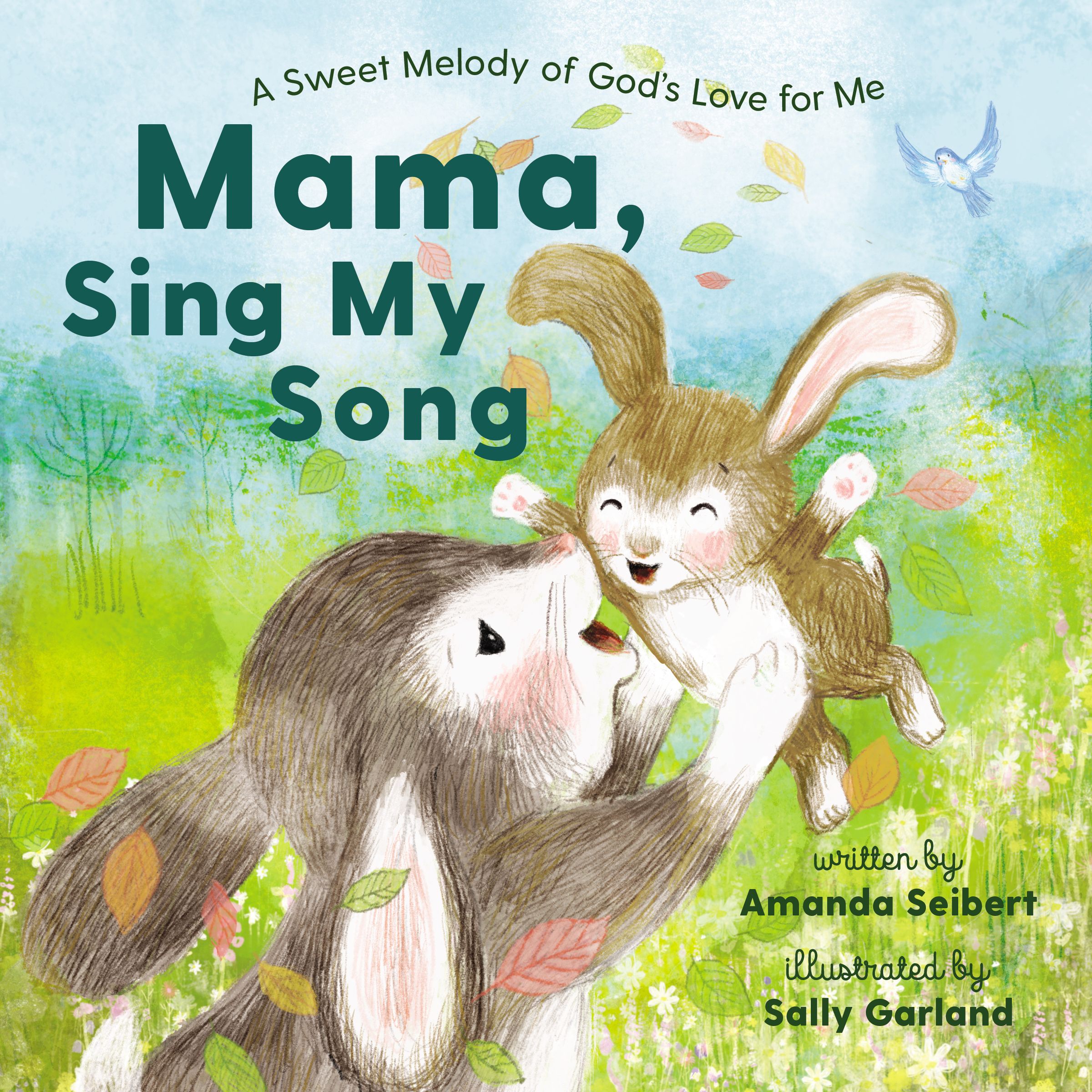
Mama, Sing My Song is a children’s book about God’s big love, giving families affirming words to shower on their kids, revealing the bright joy, deep care, and unending love they have in their hearts. Amanda Seibert, founder of Mama Sing My Song, the popular company that creates personalized songs for parents to gift to their children, knows that the words we speak over our little ones can shape them for years to come.
When we look at our children, we see those one-in-a-million grins, their crinkled noses, and sweet eyes looking back at us, which soften our hearts. God designed those babies uniquely, and Mama, Sing My Song is a celebration of all that is lovely and true about your child. Let your little ones know they are safe, loved, and cherished in your family.
This affirming book for 4- to 8-year-olds.
My review
This beautiful children’s book captured my heart and my and 7-year-old daughter’s attention with the beautiful words and beautiful illustrations. The message was heartwarming and instills such an important message in our children — that they are God’s work of art. No matter what others say about them, they are made in God’s image and God loves them, protects them, and watches over them.
I absolutely love how the front and back of the book provide spaces to personalize the book to your child with headings such as “wonderful qualities I see in you”, “my hopes and dreams for your life,” “the special meaning of your name,” etc.
This isn’t just a children’s book. It is a child’s keepsake, something I feel like children will hold on to remember that their parents love them, and God does as well.
I voluntarily reviewed a complimentary copy of this book which I received from the author. All views expressed are only my honest opinion.
What is my purpose? Why do I exist? A sense of self and belonging are two questions many of us struggle to answer.
And what if you are a foreigner in another land?
How does one adjust to a new culture? Discover their place in a new society?
For Mabel Ninan, born and raised in India and an immigrant in America shortly after marriage, the search for those answers sent her on a journey that led to an unexpected and exciting discovery.
God revealed she was not only an earthly immigrant but also a spiritual one, created with a unique calling to impact His kingdom. Mabel’s renewed perspective imbued her with joy and hope, urging her to share the message with others.
Drawing from her personal experiences and by examining the lives of biblical heroes, Mabel sheds light on what it means to live as a citizen of Heaven on earth. Far from Home will inspire you to:
Embrace your identity as a foreigner on earth.
Make your home with God.
Find community and common purpose with fellow sojourners.
Explore the intersection between culture, identity, and faith in this new release from an earthly immigrant who gained a spiritual perspective.
Far From Home by Mabel Ninan is a meaningful, inspirational, and powerful devotional written from the perspective of a woman who was a physical immigrant to the United States, but who also recognizes that humans are spiritual immigrants in a world we do not belong in.
Mabel Ninan moved to the United States from India in 2008 with her husband and was thrown into an unfamiliar world. There were days that her only comfort was Jesus who she’d known her whole life after being brought up in the church in a minority Christian community in India. Over the years, Mabel has lived in different countries and on different continents and no matter where she goes, she has found that Jesus is her one constant.
During her time of adjustment in the States in 2008, during her first move with her husband and family, she came to know Jesus in an even more intimate way, leaning on him during a time when she was lost, confused, and lonely.
The lessons she learned during that time are captured in this wonderful devotional that reminds all Christians about their need to call out and reach for Jesus instead of material things which will not sustain them during the hardest times in their lives.
The words of encouragement in this devotional came at the perfect time for me. I was given a free copy of the book in exchange for a review but was not required to give a positive review. I have no problem giving a positive review, however, because this devotional helped me remember that even when I feel like I don’t fit in with others, I do fit in with God.
This devotional’s main focus is to remind us that our identity is in Christ and not in what we, or others, believe our identity to be.
I thought I’d take a moment to share a personal reason for choosing to review this book. I had a good friend named Rev. Charles Reynolds who was a Christian missionary to India for over 50 years. He brought Indian tea home with him and had it stored in his and his wife Maud’s shed in a small town near where I grew up for years. One day I stopped by and I was suffering from a cold. He offered me a cup of tea and said tea solves a myriad of problems, including illness. I didn’t believe him but after a few moments of sipping the tea, I did actually feel better.
He often told me stories about his time in India, once raised money for victims of an earthquake there, kept in contact with the women’s medical school he helped build up when a missionary there, and wrote a book about he and his wife’s time there. Over the years his stories and mission somehow made me feel like I had a connection to the Indian people. I enjoyed reading about Mabel’s journey partially because of this, but also because of my own struggles to find my identity in an often chaotic and uncertain world.
About the Author
Born and raised in the minority Christian community in India, Mabel moved to the US in 2008 shortly after getting married. In nearly thirteen years of her marriage, her family has called ten different places across two continents and seven cities home. The challenges Mabel faced as an immigrant on the move led to a spiritual crisis that drew her nearer to God’s side where she learned valuable lessons about how to live as a citizen of heaven. Her mission is to inspire believers to embrace their pilgrim journey on earth and boldly pursue their heavenly calling.
A contributor to Guideposts’ All God’s Creatures: Daily Devotions for Animal Lovers 2022, Mabel’s writings have appeared in The Upper Room, CBN.com, Leading Hearts Magazine, and (in)courage.me. She hosts a YouTube podcast called Immigrant Faith Stories where she shares testimonies of immigrants, refugees, missionaries, and cross-cultural ministry leaders. She has been serving in various roles in women’s ministry for almost a decade.
Mabel enjoys reading, traveling, and dancing, but nothing gives her more joy than having conversations about the Bible.
Mabel is pursuing M.A. in Theological Studies from the Southern Baptist Theological Seminary. She lives with her husband, son, and Maltese pup in Northern California.
More from Mabel
When the idea of this book was birthed in 2018, I wanted to publish a collection of letters to my son. I wanted to keep a record of God’s faithfulness to me in a foreign country. How He became my all in all when I had nobody to call my own. How He gave me His all when I was empty. I hoped my stories and learnings would strengthen not only my son’s faith but also other immigrants like me. But God had a different plan for this book.
By 2019, the book underwent a complete change in its content and organization. It also targeted a different group of readers. I wrote for those who were coping with changes, those who wanted a deeper walk with God, those who found it difficult to belong or cling to hope in the midst of suffering, and those who were tired of going through the motions. My agent and I replaced the title of the book from This is not Home to Far from Home.
After facing rejecting from almost eight publishers, Far from Home found its home in Harambee Press, an imprint of Iron Stream Media that publishes ethnic writers. I was thrilled!
Far from Home is a nonfiction book but it is also part memoir. I’ve described what life was like growing up in India and I also recount a few experiences as an immigrant in the U.S. What makes Far from Home unique is also that the book introduces the reader to another culture, the Indian/South Asian culture. Some parts of the book read like a devotional while others are rich in biblical character studies and teaching.
Overall, I feel the book reflects who I am—an Indian, an America, an Indian-American, a storyteller, an immigrant, and a Bible teacher—though that was not my aim. I find it fascinating that I could be myself and tell my stories and use all aspects of my identity to declare the goodness and greatness of God.
There is a need for more diversity in our stories. I’m not saying this because diversity is the new buzz world these days. We need diverse voices and ways of worship because they reveal God’s power, beauty, and creativity. Testimonies from other cultures can open our eyes to a new way of experiencing God and His Word. They engage our brains and touch our hearts in a unique way. Reading books by diverse authors can enlarge our capacity for empathy, push back our defenses, and even turn our fear of the unknown into appreciation.
I hope my writing helps you see God from a different lens, a different angle. I hope it makes you want to read books by authors from varied cultures, races, and ethnicities.
And my desire, more than anything else, is that Far from Home convinces you that you’re never really far from home. In the triune God, you always have a home here on earth while you await a better one in heaven. A home that will be shared with people from all nations, tongues, and tribes.
To celebrate her tour, Mabel is giving away the grand prize package of a Paperback copy of book, customized notepad and bookmark (these eco-friendly products made by rural artisans in India help sustain endangered art forms and secure livelihoods), access to digital resources (recipe booklet, teaching videos, and audio prayers), and a $30 Amazon gift card!!
Be sure to comment on the blog stops for nine extra entries into the giveaway! Click the link below to enter.
Can their hearts overcome the darkness of the mountains?
To escape a forced marriage, Cora Taylor travels from England to the Blue Ridge Mountains in search of her brother, who is working as a teacher in a mission school. She hopes to find a place where her nursing skills and independent ideas will be accepted and appreciated, but nothing prepares her for the wild mixture of isolation, community, brokenness, and hope within these mountains…or in the person of Jeb McAdams.
Returning from the devastation of World War 1 emotionally damaged, Jeb McAdams struggles against the rampant mountain alcoholism to soothe his nightmares. It’s easy to hide within the mountains, or it was, before Cora Taylor arrived. Now, she seems to show up at every turn, bringing her modern ideas, curiosity, and beautiful eyes with her.
Bound by their shared war history, the pair develop an unlikely friendship, which unexpectedly hints to something more. But when Cora’s desire to help the women of the mountains crosses an unspoken line, will Jeb be able to protect this feisty flatlander from the wrath of the mountain men or will he end up losing much more than his heart?
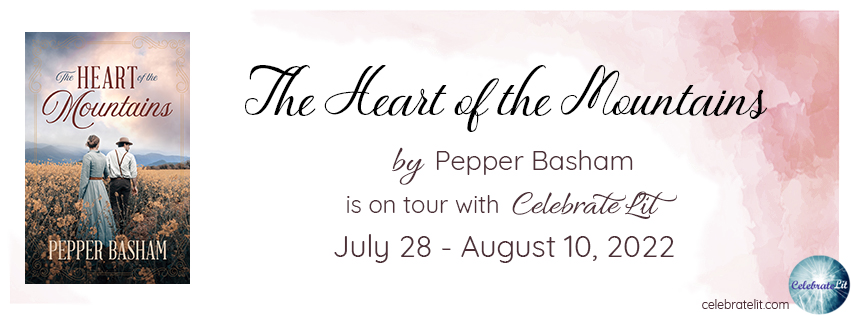
If you are a fiction of historical fiction and historical romance, then Pepper Basham is the author for you, and her latest, The Heart of the Mountains, will have you hooked from the beginning.
I connected with the two main characters early on and felt like I needed their lives to turn out okay after all they had been through before the book even started and then went through during the book.
There was non-stop action and a variety of interesting characters which transformed what could have been a simple run-of-the-mill, cookie-cutter inspirational romance book into a novel with depth, complexity, and heartfelt tenderness.
There were quite a few side characters in this two-person point of view book. Crisis after crisis popped up involving each of the side characters, which could have been a bit confusing at times but wasn’t because it kept the booking moving along at a speed just fast enough to hold my interest but not too fast to make my head spin in confusion. Basham kept the characters straight for the readers like a true professional, balancing subplots like a well-trained literary juggler.
About the Author
Pepper Basham is an award-winning author who writes romance peppered with grace and humor with southern Appalachian flair. Both her historical and contemporary novels have garnered recognition in the Grace Awards, Inspys, and ACFW Carol Awards. Her historical romance, The Thorn Healer, was a finalist in the 2018 RT Awards. Her historical romance novels, My Heart Belongs in the Blue Ridge and The Red Ribbon, and her contemporary novels, the Mitchell’s Crossroads and Pleasant Gap series, showcase her Appalachian heritage, as well as her love for humor and family. She currently resides in the lovely mountains of Asheville, NC where she is the mom of five great kids, a speech-language pathologist to about fifty more, and a lover of chocolate, jazz, hats, and Jesus.
You can learn more about Pepper at her website http://www.pepperdbasham.com or connect with her on FB, IG, or Twitter.
More from Pepper
It’s so interesting how one idea can influence an entire series, or…how one person’s story can.
The idea for The Heart of the Mountains started in Laurel’s Dream with a hint of a family history story about a girl named Kizzie. (Someday, I hope to bring Kizzie’s story to the pages of a book). From there, the idea began to grow out of a love for my Appalachian culture into a series of books which highlighted (and fictionalized) stories from my family history.
The main story in The Heart of the Mountains is about Jeb and Cora, two different people with similar servant hearts, but the secondary story that touched me so much was the one based on my great grandfather’s life. I write about it in the Author’s Note at the end of the novel, so I won’t go into detail about it. However, what I loved getting to do is bring the truth of God’s redemption in my great grandfather’s life…to life again.
I never knew “Papa Rat”. I only knew the stories handed down to me by my granny and my mama, but in writing this story, I feel as though I had a tiny opportunity to “meet” him in these pages. He was a gruff mountain man with a broken past which led him to make a whole lot of broken choices, but his story is incredibly encouraging, because it points to the God of broken people. My great grandpa wasn’t left in his brokenness, but, after years of running away from God, he would later recount that God pursued him. The beauty of Sam McAdams’ journey in The Heart of the Mountains is only a little glimpse into what I imagine my great grandpa’s redemption story looked like.
Because my great grandpa was forever changed when Jesus saved him (as any of us should be).
I think that’s what my granny and her siblings (and even “Papa Rat” himself) would want most -that his story would point to Jesus. I hope that’s what you see when you read about Sam McAdams in The Heart of the Mountains.
Have you ever read a book based on family history? One of my favorites is Catherine Marshall’s Christy.
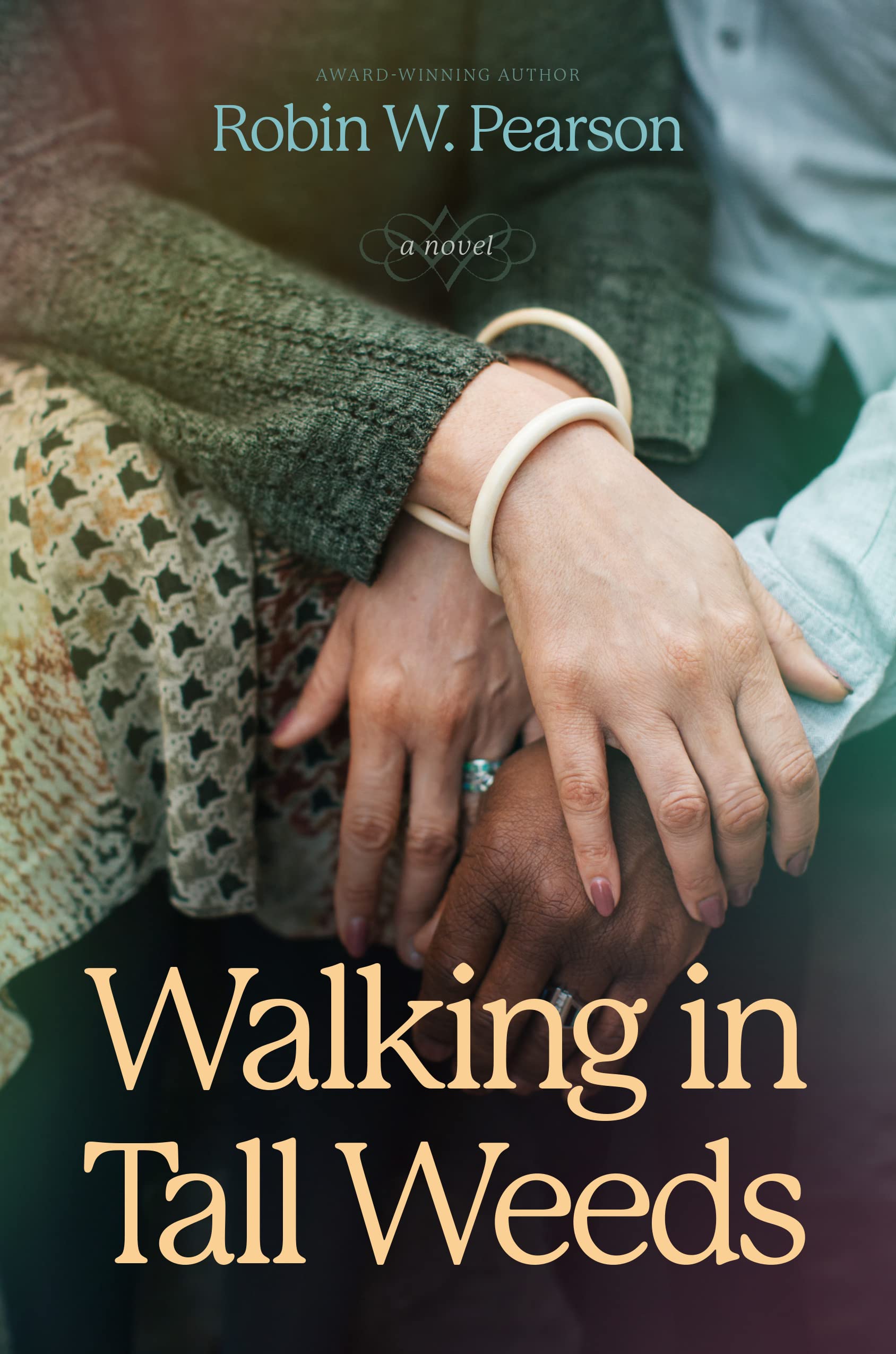
From award-winning author Robin W. Pearson comes a new Southern family drama about one family who discovers their history is only skin-deep and that God’s love is the only family tie that binds.
Paulette and Fred Baldwin find themselves wading through a new season of life in Hickory Grove, North Carolina. Their only son, McKinley, now works hundreds of miles away, and the distance between the husband and wife feels even farther. When their son returns home, his visit dredges up even more conflict between Fred and Paulette.
McKinley makes it no secret that he doesn’t intend to follow in his father’s footsteps at George & Company Fine Furnishings or otherwise. Fred can’t quite bring himself to accept all his son’s choices, yet Paulette is determined McKinley will want for nothing, least of all a mother’s love and attention—which her own skin color cost her as a child. But all her striving leaves Fred on the outside looking in.
Paulette suspects McKinley and Fred are hiding something that could change the whole family. Soon, she’s facing a whirlwind she never saw coming, and the three of them must dig deep to confront the truth. Maybe then they’ll discover that their history is only skin-deep while their faith can take them right to the heart of things.
My Thoughts:
With Walking in Tall Weeds, Robin W. Pearson once again takes readers on a journey with characters who are easy to love despite their flaws.
Walking in Tall Weeds is the third book I have written by Robin W. Pearson, which is fitting since it is the third book she has written.
Each time I read one of her books I am pulled into a world that I am both familiar and unfamiliar with. Her characters feel like people I know, partially because they are from the South and my mom’s family is from the South, but also because Robin is so amazing at writing characters who are multi-dimensional and well-rounded.
Robin details each part of her characters’ personalities in deeply personal and creative ways which creates a warm and nurturing environment for their stories to be told.
Each time I read one of Robin’s books, I am drawn to the main characters. In A Long Time Comin’ I related to Evelyn and felt like maybe Robin had been reading my private journals before she flushed out her character. In ‘Til I Want Not More I didn’t understand Maxine at first, but as I continued to read and think about her, I realized I was a lot like her as well. In Walking in Tall Weeds, though, I share so much of Paulette’s personality it was almost like looking in a soul mirror. When she did, said, or thought certain things I thought, “Oh my. That’s me.” This was both a good and a bad realization depending on the moment Paulette was in the midst of.
This book definitely touches on the evil of racism, but it is not overly dark or the only theme of this emotionally rich novel.
Robin has a way of dealing with the tough issues with a little bit of humor and a whole lot of love.
Walking In Tall Weeds is a book that intertwines a number of challenges — both family and social — but at the ultimate center of it all is how humans relate to each other.
Some readers might call this a book that focuses on a societal issue and yes, that is one aspect of this book, but the main, undercurrent focus of this book is relationships. To steal a quote from the author, this is a book that asks, “How do we love others well, through all the different stages of life? Husbands, wives, extended family, children, friends, enemies, co-workers, ourselves?”
Robin’s writing makes you think deeply about what her characters are going through but also how to tackle those same issues in your own life.
Giveaway:
If you’d like to win an autographed copy of Walking in Tall Weeds please enter the giveaway on my Instagram today through Friday.
Jenny Knipfer has a way of melodically weaving a story through well-written prose that takes you into the past, a world she easily strolls through in her latest historical novella Violet’s Vow.
The story of Violet takes the reader on an emotional journey as Violet navigates loss, anger, and love after the unexpected death of her husband, Roger. Violet knows how her husband died but throughout the book, she feels she must find out why her husband died. Was it truly an accident, or was there something more sinister at play? No matter the reason behind his death, his loss has left Violet insecure and unsure of her future, which she thought would involve running the flower shop she and Roger owned together, into their old age.
When Violet begins to receive love notes I was pulled into the mystery of who has feelings for her and why they aren’t telling her in person. As I continued the journey with Violet, I also began to wonder which man in her life I wanted to have written the letters, since each one seemed to have something suspect about their past. As in her other books, Jenny uses poetic language to create a story worth following to the end. There is heartbreak yet hope within the pages of each book she writes, and Violet’s Vow is no different.
Author: Lucinda J. Miller (Last name now Kinsinger)
Genre: Memoir
Release date: July 25, 2017
Plain? Yes. Simple? Well…
If you live in a conservative Mennonite community, edges are sewn shut and questions have answers. So if you’ve got a saucy tongue and a roving curiosity about the world, you’ve got a story to tell.
As a schoolteacher in a small Mennonite school in rural Wisconsin, Lucinda J. Miller wears long dresses and a prayer covering. But she uses a cell phone and posts status updates on Facebook. So why would a young woman with access to all these technologies remain in a sheltered community like the Plain Mennonites? How can someone with an eye for beauty and a sometimes sardonic wit stay within a tradition that values discipline and submission and uniformity?
Anything But Simple is the stirring memoir of a young woman’s rich church tradition, lively family life, and longing for a meaningful future within her Mennonite faith.
As I began to read Anything But Simple I saw so many similarities between the author Lucinda J. Miller and me that I found myself glued to the pages. Our life similarities include her ideas about writing, her experiences with her family, her view of her father, and her many questions and doubts about her faith, though she never left her faith and neither have I. I found those similarities despite the fact I did not grow up as a Mennonite and Lucinda did.
When I was reading this book, I saw another review for it where the reader said they were bothered the book didn’t offer any explanations of what the difference between the Amish and Mennonites was. I was baffled by this review because the book’s subtitle is “My life as a Mennonite.” I bring this up not to criticize the reviewer, who may have sure misunderstood the goal of the book, but to bridge into the issues Miller herself dealt with while writing the book.
When she was writing this book, she had a friend suggest she write about how Mennonites are “different from everyone else.” Miller doesn’t feel different from everyone else, other than how her faith shapes how she looks at life. In many ways, her family is the same as every other family, so her goal in this book is not to show how Mennonites are different from others but how they are the same.
This book does a very good job of showing how similar humans are no matter what faith they are a part of. The human condition isn’t something limited by the faith we were brought up in. Miller tells us her personal story in an entertaining way that delicately balances triumph and heartache. There are times I can’t help but feel heartbreak for the internal struggles she faced during her teen and early adult years, probably because they so closely mirrored mine. These struggles — the feeling she didn’t fit in and how she often felt shy and withdrawn — though tough, was what helped shape her foundation for a fulfilling adulthood. Seeing her spread her wings and step into a future as a writer, one she wasn’t sure she could have with the background she was brought up in, was very satisfying, again because I could relate so viscerally to what writing represents to her.
“Writers did not have to be pretty,” she writes. “They were very often odd-looking, according to their pictures. And the odder the writer, the better the writing. Reclusiveness, for a writer, was expected. Unhappiness was just a bonus that gave you something to write about and opened up the wells of passion within your being. If you were miserable, ugly, hated, alone, still you were okay. Because you still had the Dream. No one could take it from you.”
Some memoirs turn into a negative look back at their childhood, but Miller’s book doesn’t do that, or at least not often. For the most part, she looks back at her life as a Mennonite as a positive experience, not as something to be spurned or mocked. She writes about her journey through life, and how being a Mennonite affected that journey, but also about Mennonites in general and how they look at life and relate to others.
Miller’s prose is poetic, making what could have been a mundane retelling of a life feel more like a majestic journey into the mind of an intellectualist who has finally allowed herself to be an intellectual and not feel guilty about it.
About the Author
Lucinda J Miller Kinsinger has always viewed herself as a shy little Mennonite girl, but refuses to let that stop her from pursuing what she loves—whether that’s writing with honesty and vulnerability or traveling to a remote village in China. In 2019, she married Ivan, the love of her life, and moved from the flat, tree-lined fields of her childhood home in Wisconsin to the rolling hills of Garrett County, Maryland. The couple has a baby daughter, Annalise. Since the publication of Anything but Simple, Lucinda has published a second memoir, Turtle Heart: Unlikely Friends with a Life-Changing Bond. She is a columnist for Anabaptist World and blogs at lucindajkinsinger.com.
More from Lucinda
Me, and The People Who Shaped Me
My dad used to say that every person in your life is placed there by God for a reason. Even the ones you don’t like are there to teach you something.
Learn.
If you don’t, God may send someone else to teach you the same lesson you couldn’t learn the first time around.
Anything But Simple is my story, the story of a shy little Mennonite girl growing up to be a writer and asking questions along the way. It is also the story of the many people who enriched my life.
My dad, with his black hair and handsome face and stories from his past.
My mom, with her smooth sweaters and her sure and solid love.
My bishop with his mouth that turned down like a turtle’s.
My creative writing professor who loved words in a way I had never seen in anyone but myself.
Charlene.
Mara.
Deqo.
Jake.
From these people and alongside these people I arose, breathing, questioning, earnest.
Our journey, like the journey of all the squiggly and intricate humans that wander the face of the earth, is anything but simple.
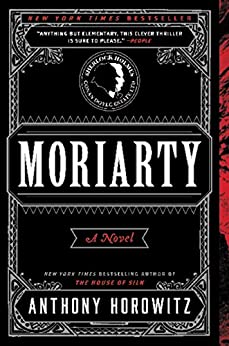
One recent Saturday I spent almost the entire day under a warm blanket with chocolate chip cookies dipped in Nutella and read Moriarty by Anthony Horowitz. It was very enjoyable, not only because it was the most relaxed I had been in a long time and I had chocolate, but because the book was such a good one.
My husband recommended the book so I was a bit leery at first. We don’t always like the same books, but lately, he’s been suggesting ones I have enjoyed, including the Walt Longmire Series by Craig Johnson. I’m also reading my first Donald Westlake book, Call Me A Cab, at his suggestion.
First, a little bit about Moriarty. For those familiar with Sherlock Holmes books and movies, you will recognize that name. The book opens, though, with Professor James Moriarty having died at Reichenbach Falls in Switzerland, which leaves the reader wondering about the title of the book.
The main characters of the book are Pinkerton agent Frederick Chase and Inspector Athelney Jones.
The description of the book:Sherlock Holmes is dead.
Days after Holmes and his arch-enemy Moriarty fall to their doom at the Reichenbach Falls, Pinkerton agent Frederick Chase arrives from New York. The death of Moriarty has created a poisonous vacuum which has been swiftly filled by a fiendish new criminal mastermind. Ably assisted by Inspector Athelney Jones, a devoted student of Holmes’s methods of investigation and deduction, Chase must hunt down this shadowy figure, a man much feared but seldom seen, a man determined to engulf London in a tide of murder and menace.
The game is afoot . . .
My view: The book is written like an old-fashioned Sherlock Holmes book so don’t expect there to be modern overdone descriptions of characters of scenes. For the most part the book is a fast paced, dialogue heavy and straight forward presentation. The focus is on the story, not the characters necessarily.
Horowitz takes the reader down into a dark world of crime, twisting around and around until there is a point you’re not sure who is who. Even though I tried to guess the ending and was right on one theory, the way Horowitz brought the story to its finality was still satisfying and fascinating. I honestly couldn’t put the book down once I got myself snuggled in that Saturday afternoon under the covers, and placed other books I was reading aside so I could finish it. I also stopped feeding my children and taking a shower, but that’s an entirely different issue. I’m kidding, of course. I took a shower. I’m not a monster.
Reading the book has encouraged me to move on to Horowitz’s other Sherlock Holmes book The House of Silk which was actually his first Sherlock Holmes-related book.
The House of Silk was the first book authorized as a new Sherlock Holmes novel by the Arthur Conan Doyle in 125-years.
Confession time: I have not actually read any original Sherlock Holmes books. My husband is a huge Sherlock Holmes fan, however, and we have watched many shows based on the books together.
How about you? Are you a big Sherlock Holmes fan? Have you read all of Arthur Conan Doyle’s books?
A veteran in need of a fresh start will get more than he bargained for…
Veteran Micah Holland’s scars go deeper than anyone knows. An inheritance from his mentor could be a new beginning—if he shares the inherited goat farm with fiercely independent Paige Watson. Now the only way they can keep the farm is to work together. But first Micah must prove he’s a changed man to keep his dream and the woman he’s falling for.
My review: When you read a lot of romance books, they can sometimes become stale and predictable (though Love Inspired books are not usually this way) so when I picked up His Road to Redemption, I wasn’t sure what to expect. I was pleasantly surprised at the way this story was laid out and the unique characters Lisa created. I absolutely loved Micah and his complexity. I loved his tenderness, hidden sometimes under a tough veneer, and I loved how he worked through the challenges of his life without being overly dramatic about it all.
When a character with a physical challenge is written about in some books, too much attention is focused on that challenge. In this book, Micah’s physical challenge was mentioned once or twice but didn’t need to be reiterated several times. This made his injury seem normal and part of his every day, which it was. Yes, he was injured at war, but he moved forward through his life and didn’t let it stop him from reaching his goals. Very often, an author tries too hard to push the idea of inclusivity instead of simply making the challenge part of who the person is.
After reading this book I will definitely be looking for more Love Inspired books, but especially more by Lisa Jordan. As someone who has met Lisa (but who was not asked to read or give a review of this book), I can tell you that her kind, caring and faith-filled personality comes across in this book. When I put it down, I not only felt good inside but satisfied and for a reader, a satisfying read is everything.
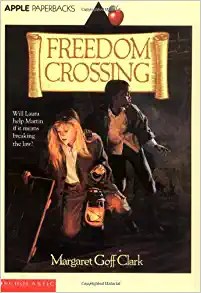
Description: Little Miss and I read Freedom Crossing by Margaret Goff Clark for her history/literature curriculum in the months of December and January. It is a Scholastic book published for children from 8 and up.
The book takes place in the mid-1800s, prior to the Civil War, and is about a young girl named Laura who moves back home with her brother and father, several years after the death of her mother. Originally she was sent to live with her aunt and uncle in the South, where slavery was a normal part of life. Her father asks for her to come home again, but once there she doesn’t know where she fits in.
The book opens with her father being gone on a business trip and her being home alone with her brother Bert when a young man named Joel, who Laura knew from her childhood shows up late at night. With him is a young African American boy, named Martin, who she soon learns is a runaway slave. Even more shocking to her is the fact her brother, father, and Joel are all part of the Underground Railroad and are planning to help Martin escape to Canada to join his family. Helping runaway slaves leave their masters and escape to freedom is something Laura’s family has been involved in for months now and she doesn’t know how to feel about it.
In her aunt and uncle’s home, African Americans were treated as slaves, but they were not treated cruelly. Being a slave isn’t that bad, is it? She doesn’t think so and at first, she refuses to help her brother and childhood friend smuggle the young boy to freedom. She wants to wait for her father to come home, but there’s no time. Martin needs to be taken to a meet-up location with other members of the Underground Railroad within a couple of days and their father won’t be home before then.
As slave hunters close in, Laura has to decide if she wants to obey the law in place that will send anyone to jail who helps a runaway slave or bring Martin to freedom.
REVIEW
Freedom Crossing is full of action, but also lessons. It teaches young children about the horrors and sadness of slavery without being graphic or too dark. Through Laura’s confusion and reluctance to help her family, children learn how easy it was at that time to believe slavery was normal. As the book progresses, though, it becomes clear that Laura is misguided in her understanding of what slavery truly is.
The reader is educated at the same time as Laura not only about how dehumanizing slavery was (and is) but how important the Underground Railroad and the abolitionist movement were to help thousands of slaves find freedom from abusive masters. Thanks to the nail-biting action in the book, it can be easy to forget the book is aimed at giving young readers a history lesson. In the end, though, the book uses the story of Martin, Laura, Bert, and Joel to make sure young people know the true story of slavery in the United States and the movement by many to put an end to it.