Did you know that there are actually four verses to The Star Spangled Banner, also known as the United States’ National Anthem?
Many of you probably do know that already, but it wasn’t until about five or six years ago that I learned Francis Scott Key actually wrote four verses, but we only sing the first. I mean, it would take a lot longer to get to the game if we had to sing four verses, right?
Many Americans know the history of the song, but for those who don’t, or for any who aren’t Americans, who want to know its history — here is the short version.
The Star Spangled Banner was written in 1814 during the war of 1812 (which in the end was not won by either side).
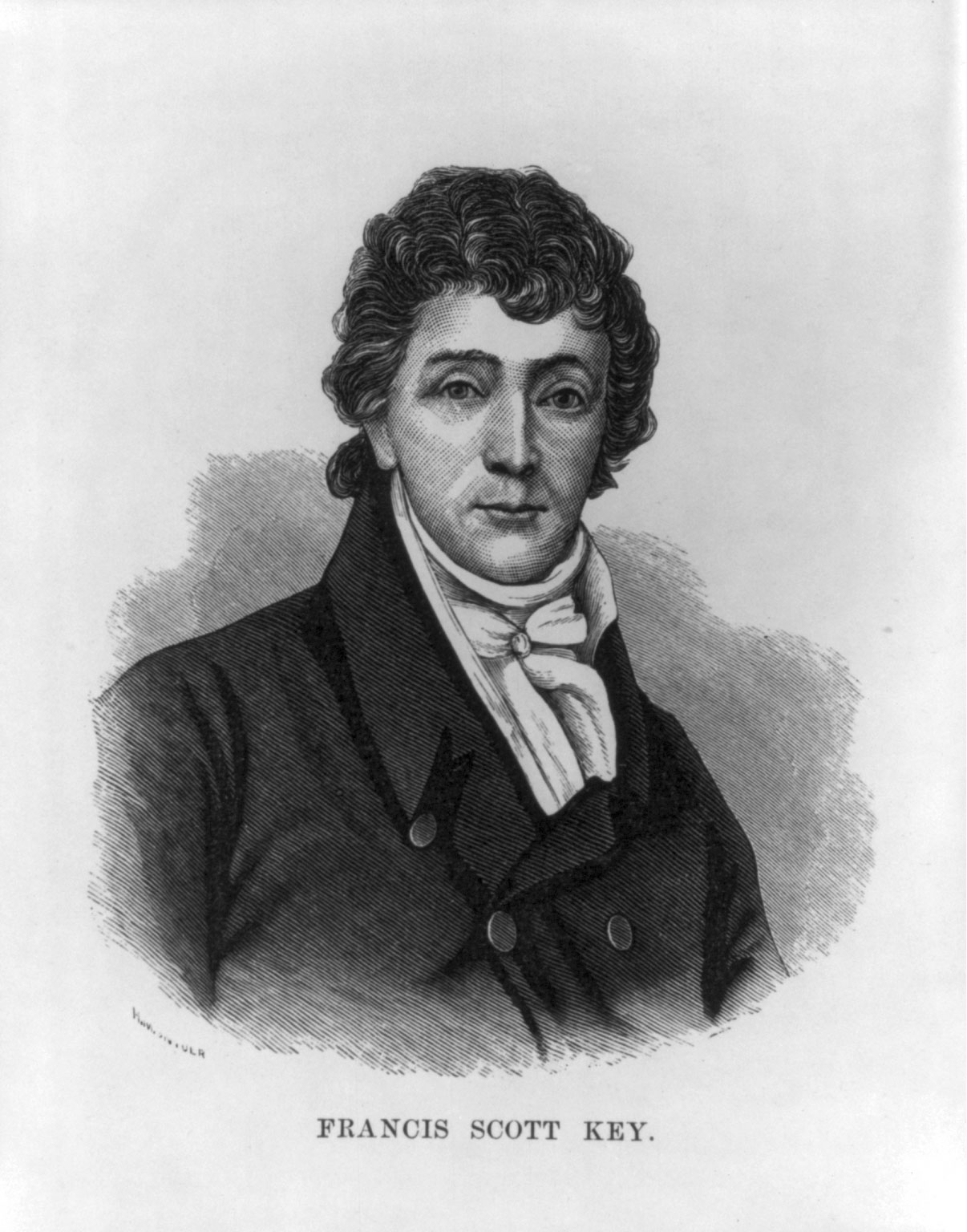
Francis Scott Key was an American lawyer and amateur poet. He was among many who were not happy with the U.S. attacking Great Britain. They felt that declaring war on the British war machine was a poor decision. Great Britain was the biggest trading partner of the U.S. at that time.
It wasn’t until 1814 when British forces raided Washington, D.C. and burned down the White House, the buildings that housed Congress, and several other government buildings, that Scott Key and others got behind the U.S. and started to get fired up about the war.
According to The Kennedy Center website: “On September 13, 1814, Key and a U.S. official rowed over to a British warship at the mouth of the Patapsco River outside of Baltimore, Maryland. Their mission was to seek the release of some American prisoners.
The meeting with the British officers went well, and they even dined together. But when it came time for Key and his companions to paddle home, their hosts said hold your rowboats. The Americans had seen too much. British ships were moving into position to blast the daylights out of Fort McHenry, about eight miles away. Once they captured the fort, British troops would then raid the city, like they had in Washington. The British could not let Key and the others report on what they had seen.”
Key and his friends were kept as prisoners and were made to watch the British forces send more than 1,500 canons at Fort McHenry.
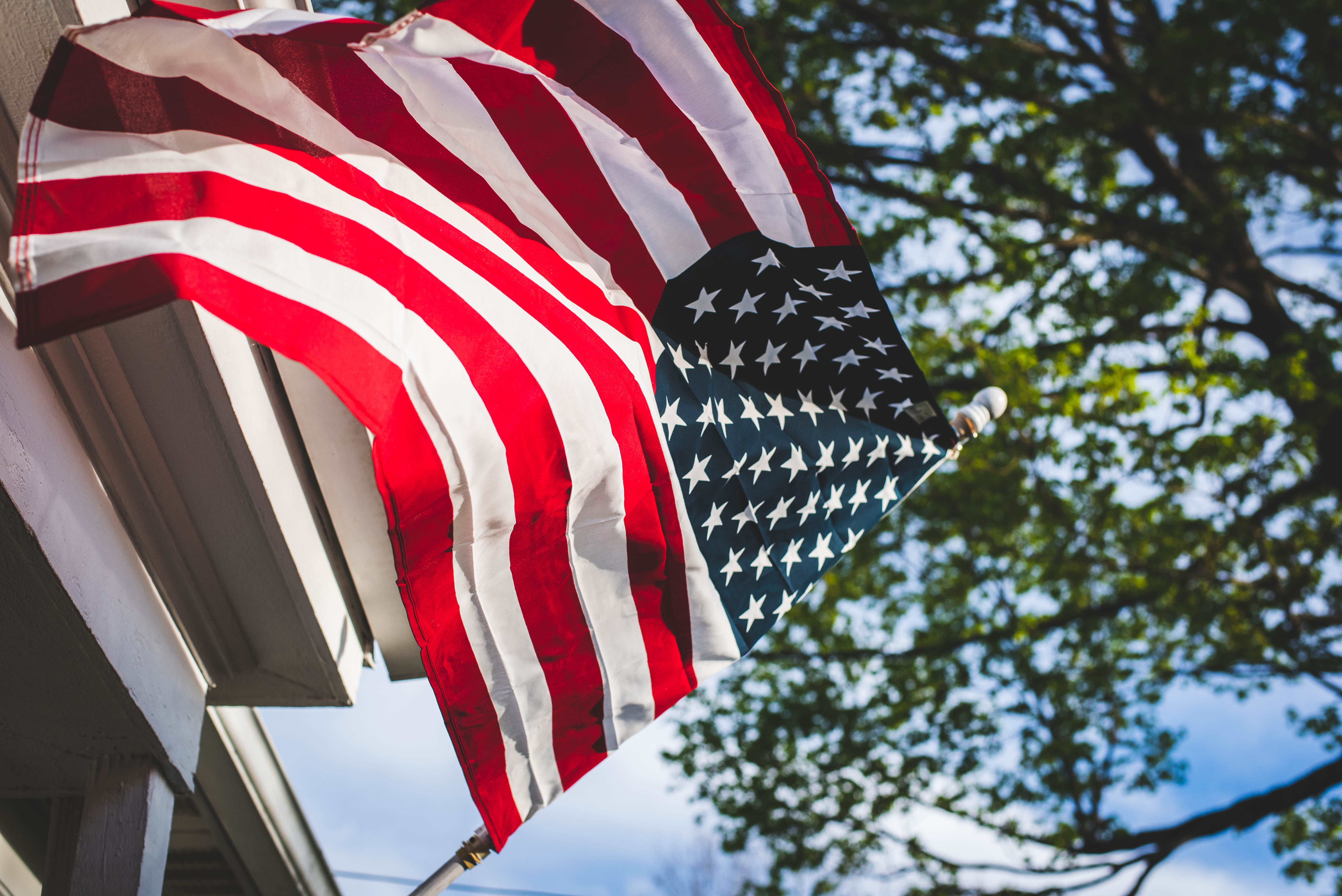
When morning came, Key was sure he would look through the smoke and see the British flag, but instead the American flag was still there, waving proudly.
Once released, he pulled out an envelope, or found one, and began to write a poem.
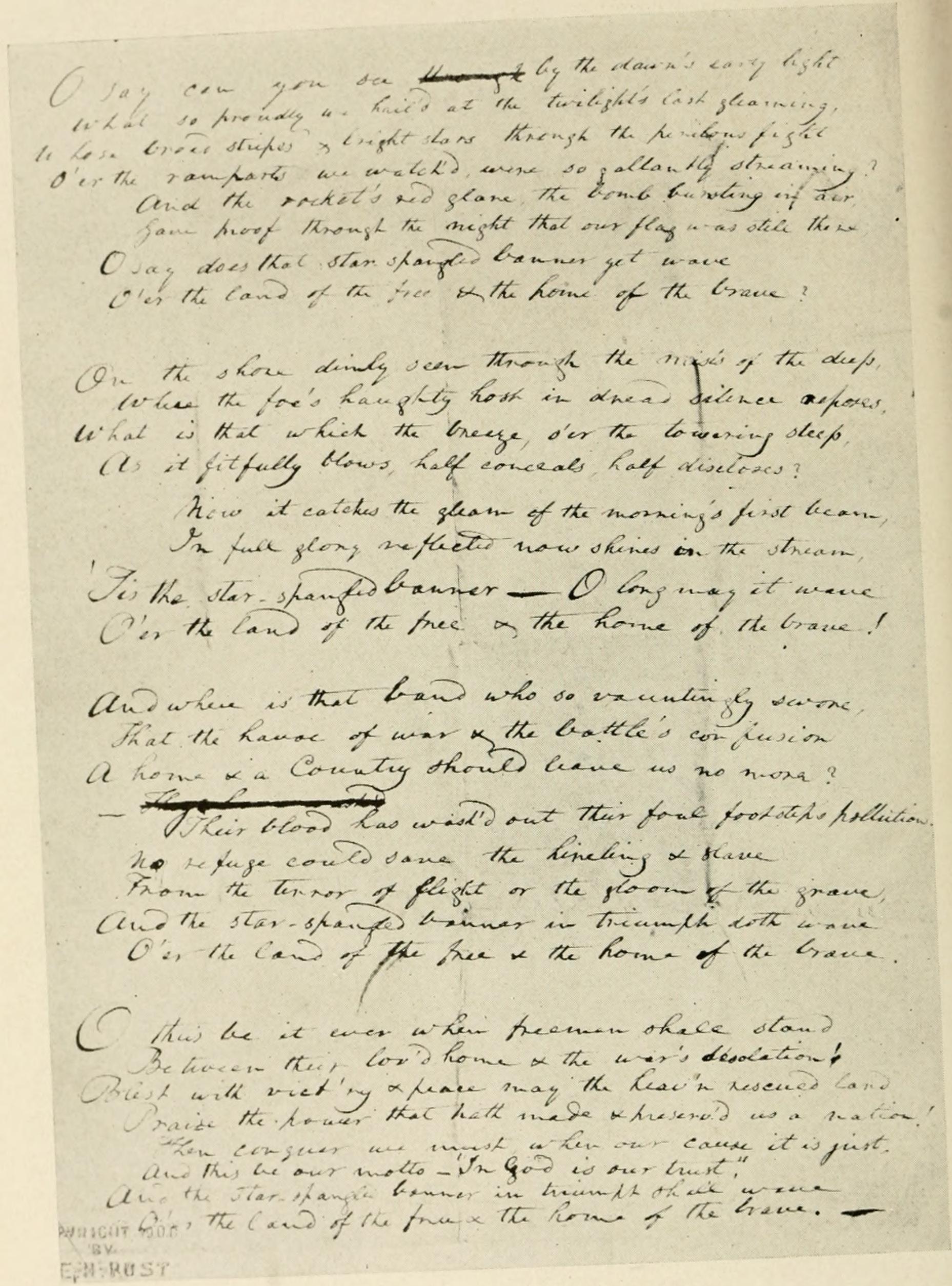
That poem was sent to the Baltimore Patriot and The American newspaper with a note to sing it to a certain tune.
What was that tune?
Ironically, the lyrics were set to the tune of a British drinking song, “To Anacreon in Heaven,” written by British composer John Stafford Smith, when it was first sung and the tune stuck.
It was Key’s brother-in-law, Joseph H. Nicholson, who recognized the lyrics would work with song. Hmmm…I wonder why he knew that. *wink*
You can hear that song here: https://www.kennedy-center.org/education/resources-for-educators/classroom-resources/media-and-interactives/media/music/story-behind-the-song/the-story-behind-the-song/the-star-spangled-banner/
Only a week after the battle the poem was printed under Key’s title, “Defence of Fort McHenry” in several newspapers all over the country. A music printer named Thomas Carr, of the Carr Music Store in Baltimore, put the music and lyrics together and rechristened it The Star-Spangled Banner.
The song did not become the national anthem until 1931 when Congressed passed the bill to make it the national anthem.
Since then there have been plenty of complaints about it — mainly that it is too hard for the average person to sing. Another complaint is that celebrates war and should only be sung at military ceremonies.
Some suggested replacements have been America the Beautiful, God Bless America, and This Land is Your Land.
Why do we play the first verse at sporting events? Thank, or blame, Major League Baseball, which started performing It before games during World War II.
And, finally, in case you are wondering, here are all four verses, as Key wrote them:
O say, can you see, by the dawn’s early light,
What so proudly we hailed at the twilight’s last gleaming?
Whose broad stripes and bright stars through the perilous fight,
O’er the ramparts we watched, were so gallantly streaming?
And the rockets’ red glare, the bombs bursting in air,
Gave proof through the night that our flag was still there;
O say does that star-spangled banner yet wave,
O’er the land of the free and the home of the brave?
On the shore dimly seen through the mists of the deep,
Where the foe’s haughty host in dread silence reposes,
What is that which the breeze, o’er the towering steep,
As it fitfully blows, half conceals, half discloses?
Now it catches the gleam of the morning’s first beam,
In full glory reflected now shines on the stream:
‘Tis the star-spangled banner, O long may it wave
O’er the land of the free and the home of the brave.
And where is that band who so vauntingly swore
That the havoc of war and the battle’s confusion,
A home and a country should leave us no more?
Their blood has washed out their foul footsteps’ pollution.
No refuge could save the hireling and slave,
From the terror of flight, or the gloom of the grave:
And the star-spangled banner in triumph doth wave,
O’er the land of the free and the home of the brave.
O thus be it ever, when freemen shall stand,
Between their loved home and the war’s desolation,
Blessed with vict’ry and peace, may the heav’n rescued land,
Praise the power that hath made and preserved us a nation!
Then conquer we must, when our cause it is just,
And this be our motto: “In God is our trust.”
And the star-spangled banner in triumph shall wave,
O’er the land of the free and the home of the brave!
In 1861, poet Oliver Wendell Holmes Sr. penned an unofficial fifth verse during the beginning of the American Civil War, looking hopefully at the emancipation of slaves.
When our land is illumed with Liberty’s smile,
If a foe from within strikes a blow at her glory,
Down, down with the traitor who dares to defile
The flag of her stars and the page of her story!
By the millions unchained when our birthright was gained,
We will keep her bright blazon forever unstained!
And the star-spangled banner in triumph shall wave
While the land of the free is the home of the brave!
If you have time, you might enjoy this video — I can not find who is narrating it but it sounds like Paul Harvey. As noted on the video, there some historical inaccuracies but people like the message behind it:
You might also want to listen to one of the most amazing versions by singer Sandi Patty, which includes a special second verse composed by Claire Clonninger for the Statue of Liberty Centennial Celebration in 1986. A note: when you think she can’t get her voice any higher – she does. Brace yourself.
Here is another iconic performance by Whitney Houston:
And another by Natalie Grant (notable here is she did it acapella):
One last, unique, one by Chris Stapleton:
There is your American History lesson for today.
And happy 250th America!
Sources:
The Star-Spangled Banner: The story behind the song
Wikipedia:
https://en.wikipedia.org/wiki/The_Star-Spangled_Banner
Discover more from Boondock Ramblings
Subscribe to get the latest posts sent to your email.

Having visited Fort McHenry, I’ll never forget sitting in the museum there facing a huge plate glass window which had a shade completely covering it. Suddenly, the shade lifted up and we viewed our star-spangled flag outside that window while the anthem played. Made me cry!!
LikeLiked by 1 person
Oh my goodness! What a cool gesture and way to reveal it. I love that.
LikeLike
First, I didn’t know the US attacked the British! Huh, you learn something new every day. Second, I did know there were additional verses, but until your post, I’ve never read them. And, of course, I sang them in my head! I don’t know how I feel about changing the national song. I don’t particularly think the other two options have that “hits you in the heartstrings” kinda feeling. Just because it’s difficult to sing doesn’t make it a bad thing…just don’t ask Rosanne Barr to ever sing it again (though I guess she had a reason…she wasn’t hearing it or was hearing it echoed back…something like that). Thanks for the history lesson, Lisa! I really enjoyed it.
https://marshainthemiddle.com/
LikeLiked by 1 person
Yes some people should not sing it.
LikeLike
That is an interesting history. On the water outside Fort McHenry there a buoy that marks where the ship Scott Key was being hold in. I got to sail passed it one time on my way to Baltimore.
LikeLike