
“Thousands who one year thought themselves in good circumstances are now as poor as beggars and who has caused all this but the men who are now the leaders of the Rebel forces and fighting against the best government on the face of the earth. They seem determined if they cannot rule this great nation to the interest of negro slavery to ruin it.”Letter from Charles Grant to John G. Grant, 1861
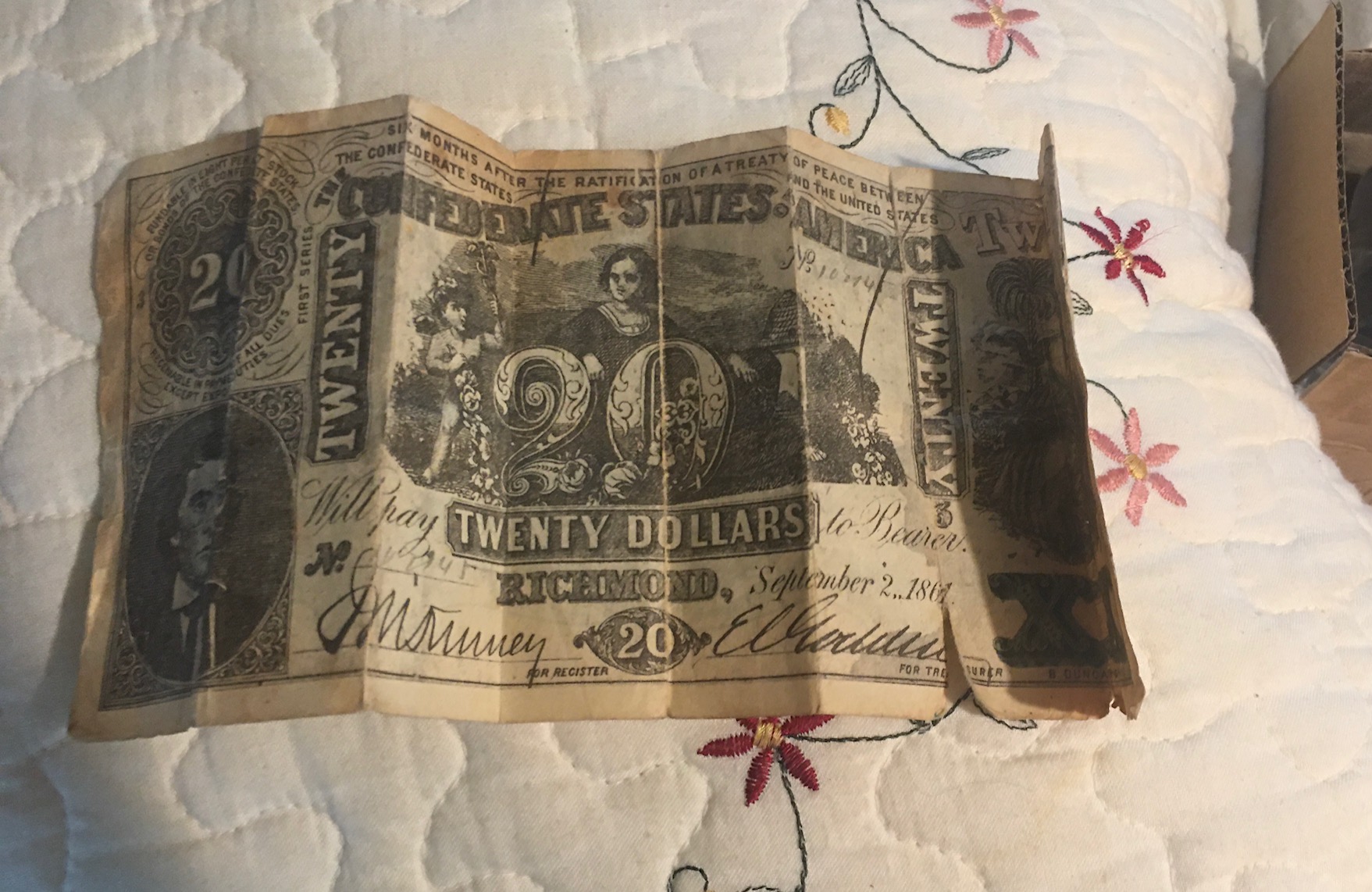
Growing up, I always knew that I had family members who had fought in the Civil War. For most of my life, I only knew about the family members on my paternal side. Last year I also found definitive proof that I had family members who fought on the Confederate side — ancestors from my mom’s family, as she is originally from North Carolina. I knew there was a connection to the Confederacy since we have Confederate money that was passed down and in the possession of my aunt.
My great-great-grandfather – John G. Grant – was one of the family members on my paternal side who fought during the Civil War and continued to serve in the Army well after the war was over. His two half-brothers – William and Charles – were the other two from my paternal side. They had the same father and different mothers, since William and Charles’ mother had died and their father, George, remarried and then had John with John’s mother, Abigail.
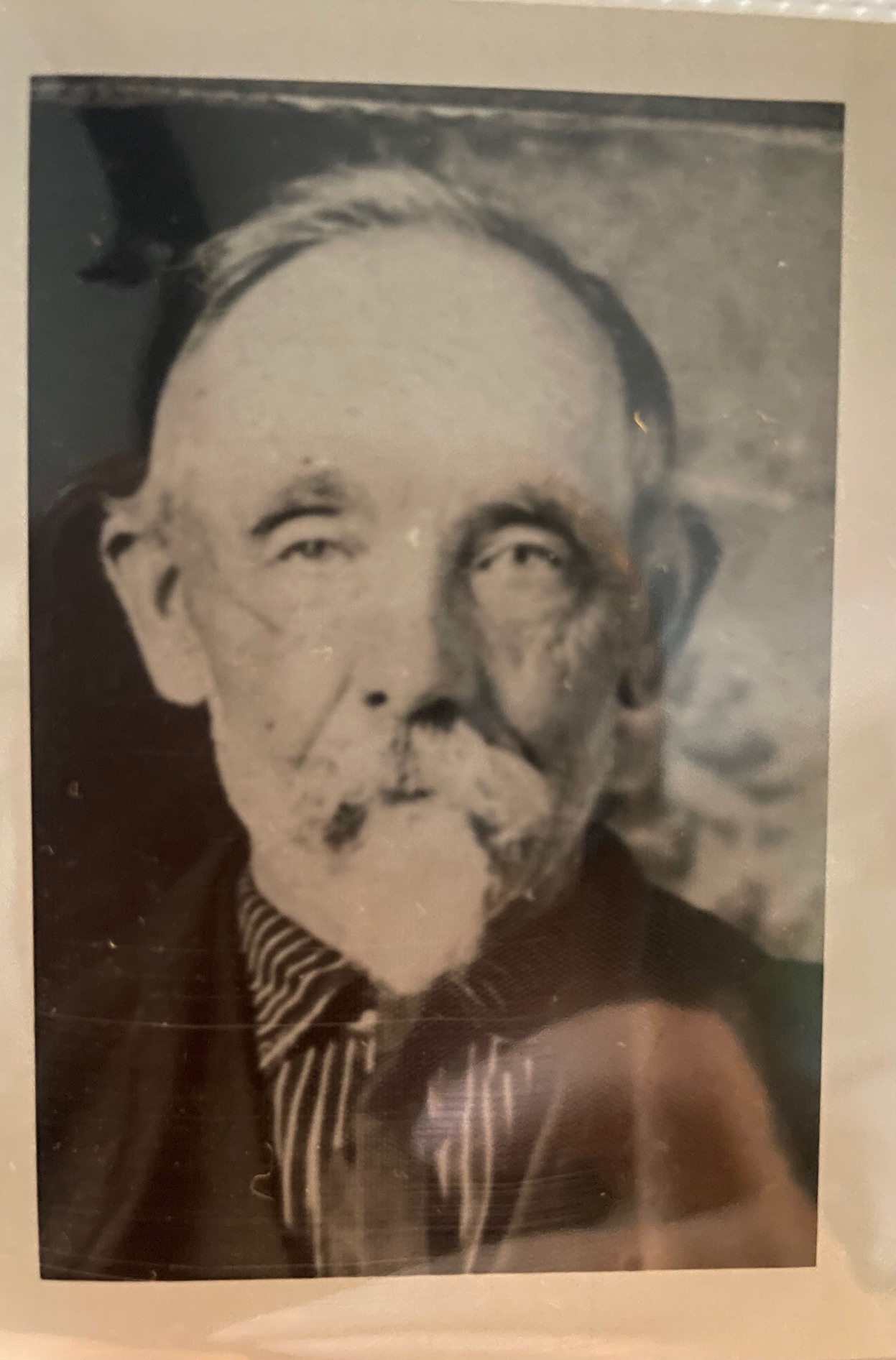
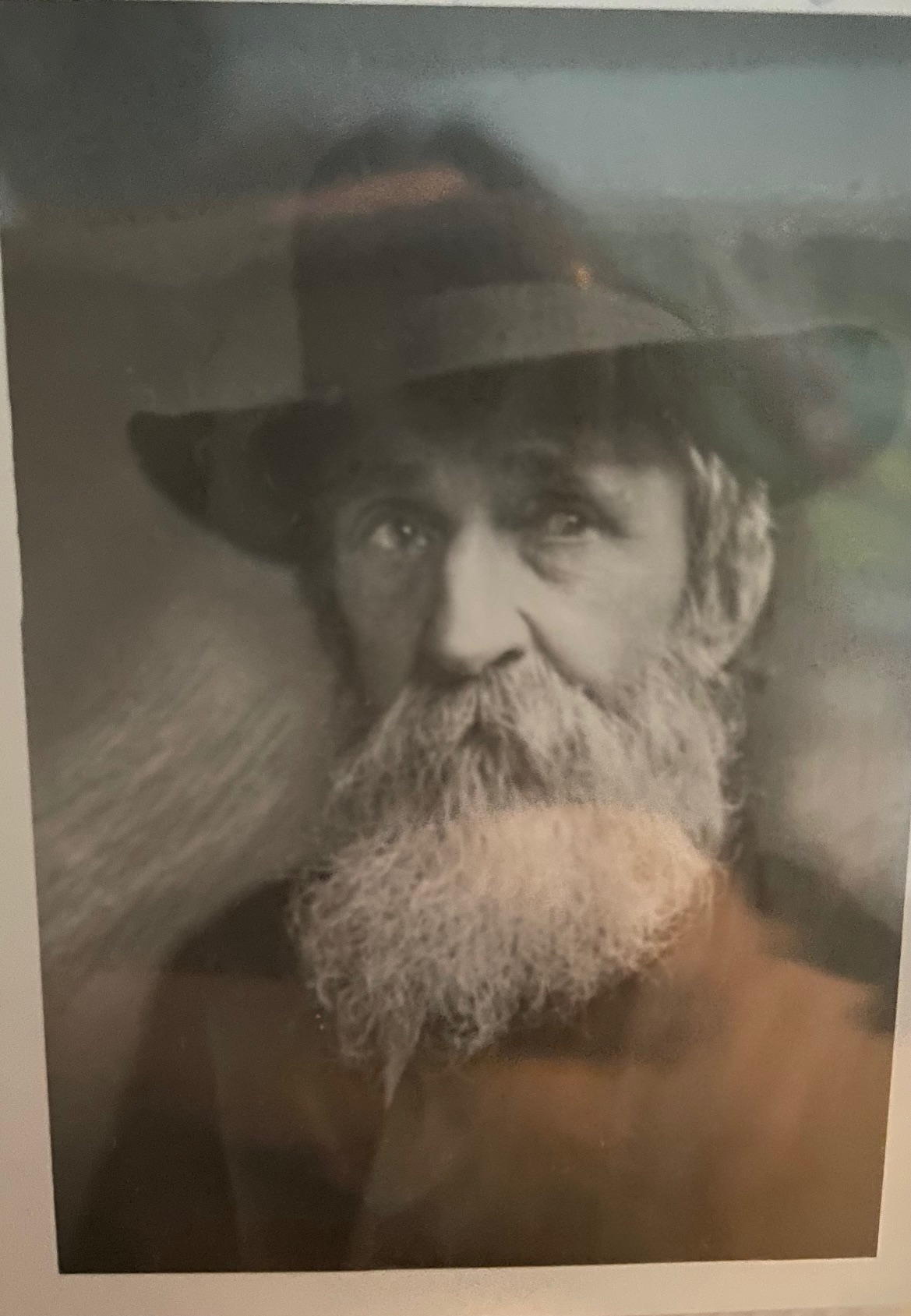
(John Grant, my great-great-grandfather is on the left and his brother William Grant is on the right.)
At some point, my aunt learned that someone from our extended family had handwritten letters between John, William, and Charles that were written to each other, their mother, other family members, and friends.
My aunt made copies of these letters on a copier and then transcribed them via a typewriter. I have no idea where the original letters are but I would love to see them one day.
The letters reveal fascinating tidbits about life in the mid-1800s and provide some interesting thoughts from my family of what was happening as the Civil War started, continued, drew to an end, and after it. Sometimes I forget that the Civil War went on for four years, and that other aspects of life continued even as the war raged in other parts of the country. I always seem to think life just ended and a war was fought.
In reality, people were living their everyday lives even as battles were being fought. Also, there weren’t battles being fought 24 hours, seven days a week, 365 days of the year.
Many people were building houses, growing families, expanding West, getting jobs, and experiencing life that wasn’t all about war. The effects of the war were felt strongly even by those who weren’t directly involved with it, of course, as we know from history books and letters between family members like mine.
While John Grants writes about battles and what was going on in the Army training camp near Germantown in some letters, in others he writes about visiting family and how they were doing. These would be family members that his mother and brothers probably hadn’t seen in years because of how difficult travel was at that time. They moved from Germantown (near Philadelphia) to the county I now live in(about a three hour drive) at some point before the war.
In one undated letter, Charles wrote to his brother John about how the war was affecting jobs and manufacturing in Pennsylvania. It is the only letter I have seen from Charles.
Dear Brother:
I received your letter dated July 3 last night and I was glad to hear that you are well. I am as well, as usual. I saw William about two weeks ago. He was well, but like many others, has nothing to do. Many of the machine shops and factories are shut up and the rest are working but two and three days a week, except those that are making supplies for the Army and Navy.
If things do not get better before next winter, there will be a great amount of suffering among the working people. The factory where I work is running but two and three days in a week and has been for the past two months and the hands are not making more than $10 or $12 a month and that amount will not go far down here.”
He then writes about how many of the savings institutions are failing and how he lost $100 he knows he will never get back.
“And so we go,” he continues in the letter. “Thousands who one year thought themselves in good circumstances are now as poor as beggars and who has caused all this but the men who are now the leaders of the Rebel forces and fighting against the best government on the face of the earth. They seem determined if they cannot rule this great nation to the interest of negro slavery to ruin it.”
“Let us hope, however, that they may not feel that they have undertaken a task that they cannot accomplish although they repulsed our forces in one fierce battle by fighting like Indians in bushes and behind earthworks and in greater numbers. It has only taught the North to make greater exertions to subdue them and bring their leaders to punishment.”
His letter continues to talk about the men and women who have enlisted in Conyngham, Pa.
“Most all the three months men have got home again — most of them are stouter and fatter and a good deal blacker than when they went. Many of them have enlisted for three years. I saw Col. Gearey’s regiment march through the city last Saturday on the road to Harpers Ferry. At their head was a Company A from Hazelton. The regiment was armed with the Lee-enfield rifle and the terrible looking sword bayonet about two feet long. May success attend them.”
John then wrote a letter to a friend or family member (the greeting is cut off on the version my aunt copied) and shared about life in the Army training camps near Germantown, Pa. I am not sure which camp it was. I didn’t see a year on the copy of the letter that I have, with the only date offered being November 14, but with a little research based on some information he shared in the beginning of the letter about a recent battle that had lifted the moral of the troops(the capture of Beaufort, South Carolina) , I figured out that it was written in November 1861.
While at the training camp, John (18 at the time if my math is right) was able to visit with family and see the sights — including young women, which he seemed particularly thrilled by.
“All is quiet in camp this evening, except the boys out cutting up as usual,” he writes in the undated letter. “We are not in want of company here because we have enough of our own besides hundreds come here from the city and other places to see us every day.”
He writes that he visits Germantown “pretty near every Sunday” and it appears to be girls he likes to visit there as evidenced by this line: “The girls down here are very good looking and as full of fun as they are nice.”
He decides he shouldn’t share too much about the girls, though, and goes on to write about a visit to Philadelphia to visit his brother William’s shop. I’m gathering William, who we know from family history to have worked several jobs to keep himself employed, was running a shop to support the Army with supplies.
“He has a great many knapsacks and saddle backs to make for the Army,” John wrote. “We started to have a walk about town. We went down Arch Street to the wharf on the Delaware and saw the steam ships coming into the city and then we went to Fifth and Arch to the great Continental Hotel, the greatest building in the Union, it covers a whole square.”
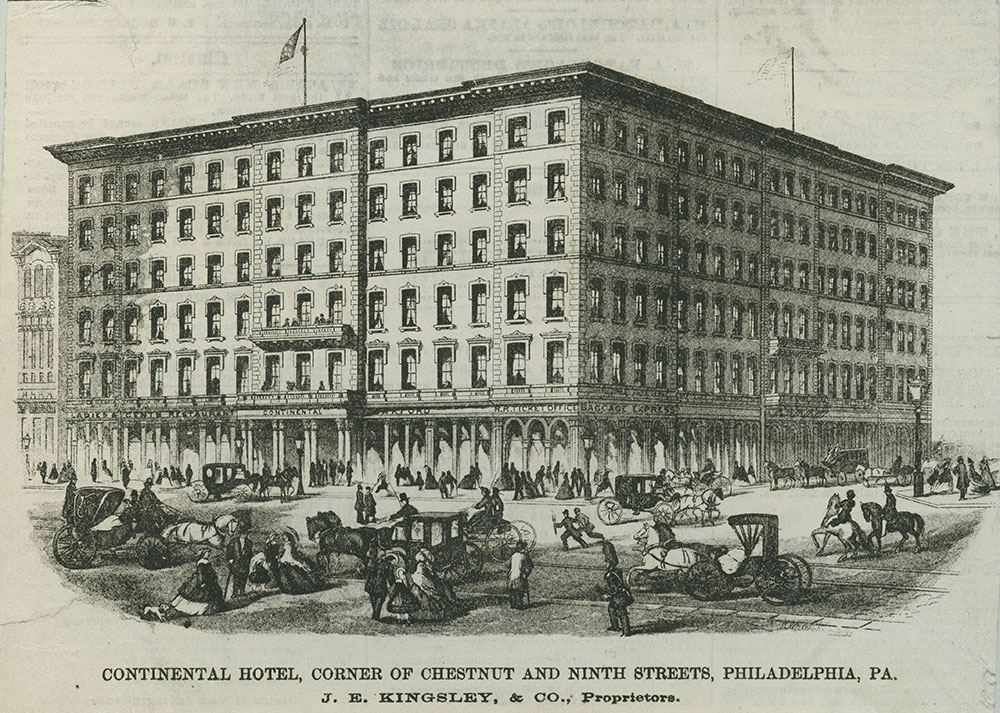
(Note: This hotel was demolished between 1923 and 1924 to make way for a more modern business structure. I can’t even imagine destroying such a beautiful work of art. It was built in 1860.)
John wrote that they then went to the Pennsylvania Hotel, which is where he stayed overnight. I couldn’t find much information about that hotel online but plan to dig around a little bit to see what I can find about it later on.
“The next morning, we went to South Street where we got our breakfast at the Franklin Eating Saloon,” he wrote. “We then, went to the Navy Yard to see the Regular troops and the great big cannons that are there. There are some that I can stick my head in and they look very heavy. They weigh several tons. They are used on ships or at forts they are building. Three very large steam ships are at the Navy Yard. Each of these is to take eight of the large cannons aboard and I think if they get a chance as some of the Rebel’s battery’s they will blow them to the other side of the Jordan.”
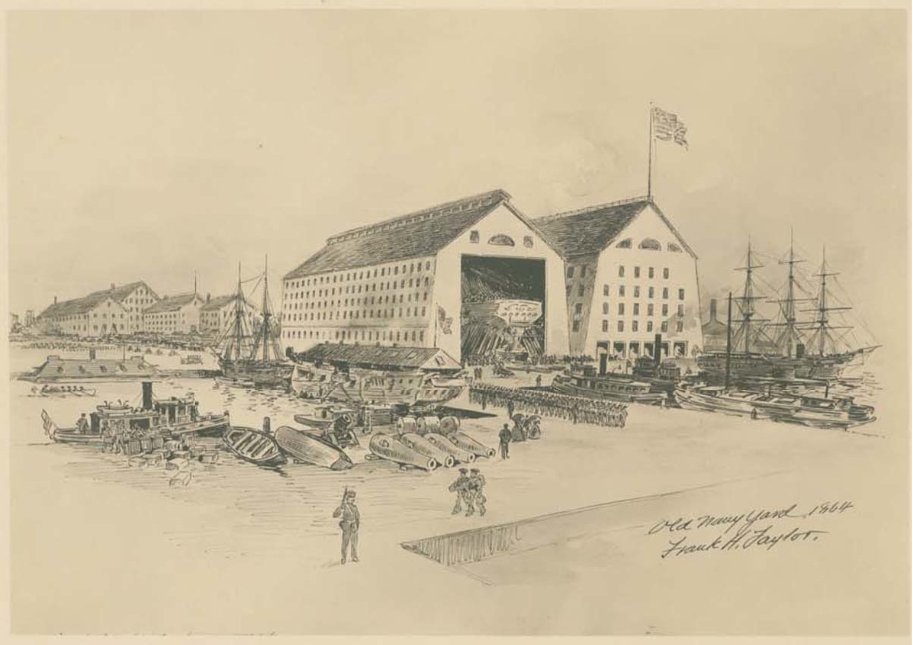
“It is a very fine sight to be in a Navy Yard. You can see most everything a going on that you wish to see. Building ships, casting cannons, cannon balls and shells and all kinds of machinery going on that you can think of. After we saw everything that we wished, we left the Navy Yard and went to the Hall of Independence to the place where the Declaration of Independence was declared in 1776. There you can see all the Patriots that was present at the signing of the Declaration of Independence. They look very near natural. After we saw all the pictures in the room where the Declaration was declared, we went up in the steeple to see the city.”
“A body can see from this steeple over in New Jersey, see the city of Camden, which is on the opposite side of the Delaware. After we saw all that, we wished, we then went to Walnut St. Hospital, or Pain Hospital as it is generally called, to see Charles.”
Now, I am gathering that this is my great-great-grandfather’s half-brother Charles. There was a 13-year age gap between John and Charles, so Charles would have been about 31 at this time. There was a 15-year age gap between William and John so John would have been 33.
Both Charles and William would go on to serve in the Union Army and I will share their journeys and fate in a future post, where I will also share what John G. thought about political issues that stemmed from the war.
“He has been there for a month or more to get his health restored,” John wrote in his letter. “He is getting so that he can be up and around but the doctor will not allow him to go outside of the hospital walls yet for a while. The complaint that he has is called the Grave. This was the first time that I saw him in eight years. He did not know me when I first stepped into this room. He said that he wouldn’t have known me if he would have seen me out on the street.”
John ends the letter by saying he must go to drill.
John did write about battles during the war as well, including this story to William in a Dec. 22, 1863 letter:
“On the 15th at 5 p.m. 100 of the 58th under the command of Captain T. Blakely left this place marched through swamps and waded creeks so as to avoid the rebel pickets until we reached within four miles of Greenville where we surprised a rebel camp of Calvary capturing 23 prisoners, one captain, one Lieutenant, 35 horses, all their arms and equipment – all this being done without firing a shot. On our return we captured their pickets at Chicora Bridge, which crosses Swift Creek five miles this side of where we surprised the camp and a half mile farther down the creek where we crossed when going out.”
“After we captured the picket we swam the creek to this side with our horses, while those on foot crossed on the bridge. I got wet all over as my horses, while those on foot crossed on the bridge. I got wet all over as my horse went in head over heels. The creek is very deep and swift. I captured two prisoners, one horse and two carbines but I have to turn them all over to Uncle Sam. After we all got safe on this side of the creek, we joined our cavalry and one section of the 23rd NY Battery who came up that far so as to cooperate with us in case we should have got into trouble.”
“We arrived at Washington at 2 o’clock the same day, making the whole march of over 40 miles in less than 20 hours from the time we left Washington.”
A quick internet search helped fill in some blanks about this particular story. From the site Civil War In the East:
Expedition from Washington to Chicora Creek
Captain Theodore Blakeley led Company B in surprising a Confederate camp and capturing a Captain and sixty men with their horses and equipment, all without loss.
Reading about life when my great-great-grandfather and his brothers were young and what they faced as the nation they lived in was at war with each other is honestly quite surreal.
The fact that they struggled to put food on the table yet also wanted to fight for what they felt was right for their nation and their family is a hard concept to wrap my mind around.
I’m sure there was part of John Grant who didn’t want to fight, yet part of him who also wanted to show his bravery and the love for the country he grew up in. Even young people seemed very old back then. John’s letters speak to me like someone who is much older than 18, but by the age of 18 he would have seen a lot. His father had died when he was only about 2-years-old.
His older brothers were most likely living other places to work. His mother then remarried and had a couple more children who did not live beyond infancy. He most likely had to start work very early to help support his family.
Then there was the war and the opportunity to be paid to be a soldier. It’s all such heavy stuff for someone so young. No wonder he sounds mature beyond his years. He had to be. So many people of that generation had to be. They had little time to be silly or contemplate anything other than how to survive from day to day.
It’s so different from what young people and even older people like me have to face today. Reading about their struggles reminds me how lucky I am to live where and when I do and how that privilege was made possible by the sacrifices they made for me.
Discover more from Boondock Ramblings
Subscribe to get the latest posts sent to your email.

Pingback: Saturday Afternoon Chat: Reading on the front porch – Boondock Ramblings
Pingback: The Lily Cafe Weekly Highlights – January 24, 2025 – The Lily Cafe
Pingback: Civil War Letters From My Ancestors Part II: The Fate of a Brother – Boondock Ramblings
What absolute treasures! Wow, I loved reading through those. Thank you so much for sharing.
LikeLike
Pingback: Refresh, reconnect, and reminisce – Still an unfinished person…
Pingback: Sunday Chat: So insanely cold, watching old shows because I’m always behind the times, and – Boondock Ramblings
These are such fascinating stories from real life history, Lisa! And to think you have ancestors from both sides of the war, it must have been like that at the time also! How difficult it all must have been to be so closely fought. It’s been many years since I read it, but “Across Five April’s” really moved me when I read it in Junior High! Your letters reminded me of that book.
LikeLike
I think this is so cool, that you have these. I don’t have much information or access to my ancestors, and everyone is gone to ask. I wish I knew more! I tried to find out more through Ancestry but too many paywalls right away!
LikeLiked by 1 person
That Ancestry drives me nuts! It’s so expensive!
LikeLike
Hi Lisa what a fascinating story and how wonderful you still have the letters. I have letters written from my grandmother to my mother when she was in hospital after the birth of my brother. It really gives me an insight into life back then as my grandmother died before I was born. Family history is so important isn’t it? x
LikeLiked by 1 person
Thank you! Yes, those old letters can truly be eye opening!
LikeLike
So very fascinating! You are so fortunate to have copies of these letters and to be able to know and tell the stories of your ancestors who served in the Civil War. I have ancestors who served not only in the Civil War but also the Revolutionary War, yet I know nothing about the stories of their lives other than facts.
LikeLiked by 1 person
We have ancestors who fought in both, but, yes, I know more about the ones who fought in the Civil War than the ones who fought in the Revolutionary War.
LikeLiked by 1 person
You know, I never really thought about the lives of non-soldiers during any war. You just get the idea that war is the only thing going on. These letters are so interesting. At least, you have the photocopies. Think how many of these kinds of things were just tossed into the trash after being read, or they were thrown away as time went on. Thanks for sharing them, Lisa.
https://marshainthemiddle.com/
LikeLike
Oh my goodness what a treasure you have. I am glad you still have it in your family. Thank you for sharing this.
LikeLike
Oh wow; how neat to have first hand account of what life was like during the war. That is amazing that they have stayed in the families’ possession for so long.
LikeLiked by 1 person
I really hope I can track down the distant relative that has them. One of my great-great grandfather’s daughter’s family had them but then some of them passed and moved and ….well, you know how it goes. I’m hoping to track them down and see the originals someday, if they still have them. If they don’t…well, that’s okay too. I think it would have been wonderful if they’d given them to the county historical society.
LikeLiked by 1 person
Yes. Or The Smithsonian or some other Civil War resource, maybe. But maybe your posts could be part of the historical record too. 🙂
LikeLike