Five Angela Lansbury movies I recommend

Last summer I watched Angela Lansbury movies for fun, and today I am sharing five of those movies that I recommend.

The Picture of Dorian Gray (1945)

This was Angela’s third movie and her second Oscar nomination. Spoiler alert, she did not win an Oscar but she was nominated three times. I am mentioning all three movies she was nominated for in this post, incidentally.

I had to sit and process this one for a bit and also watch a comedy or two afterward.

Wow, what a creepy, dark, and unsettling film.

Yes, unsettling is the perfect word for this movie and while I am glad to see the second film that Angela received an Oscar nomination for, I don’t plan to watch it again.

First, a quick description of the movie for those who are not familiar with it.

From TCM.com, this one-sentence description tells us what we need to know about the movie:

“A man remains young and handsome while his portrait shows the ravages of age and sin.”

The movie is based on the book of the same name by Oscar Wilde, written in 1898. There is even a moment where the main character quotes Wilde.

Starring in the film are Angela, Hurd Hatfield, George Sanders, Donna Reed, and Peter Lawford.

Dorian Gray is a young man without any family who gets mixed up with a man who is a bit of a chauvinist, cynical, jerk. This man, Lord Henry Wotton (George Sanders, who plays villains absolutely perfectly), comments on how awful it is to age when he is looking at a painting of Dorian being made by artist Basil Hallward.

Lord Henry, a man who enjoys manipulating the lives of others and talking down to women and everyone around him, says that youth is fleeting and that the pursuit of desire should be the only real goal in life.  Dorian, who seems super impressionable to me, thinks about what Lord Henry has said and says that he would give his soul if the painting would grow old while he remained forever young.

Lord Henry tells him to be careful about making such a wish in front of his Egyptian statue of a cat.

Dorian then decides to explore new places, experience new things, and later he visits a bar where he watches a beautiful young woman names Sibyl Vane (Angela) performing a song called Goodbye, Little Yellow Bird. He is enamored with her and her with him.

Consider yourself warned that Goodbye, Little Yellow Bird is an earworm. 

Dorian’s in love, but, again, Lord Henry is cynical and mean and tells Dorian to give Sibyl a challenge. Invite her to stay overnight, and depending on what she decides, Dorian will know if she is virtuous or not.

You’ll have to watch the movie to find out what happens.

You can read more about my thoughts on the movie here: https://lisahoweler.com/2025/08/09/summer-of-angela-the-picture-of-dorian-gray/

Gaslight (1944)

This was Angela’s first movie and also her first nomination for an Academy Award. She was 18 years old when she portrayed Nancy, the odd, boisterous and flirty housemaid of Ingrid Bergman’s character. She was nominated for best supporting actress.

A simple description of Gaslight is that it is about a woman who is made to believe she is insane.

Here is a little more from Google, though: “After the death of her famous opera-singing aunt, Paula (Ingrid Bergman) is sent to study in Italy to become a great opera singer as well. While there, she falls in love with the charming Gregory Anton (Charles Boyer). The two return to London, and Paula begins to notice strange goings-on: missing pictures, strange footsteps in the night and gaslights that dim without being touched. As she fights to retain her sanity, her new husband’s intentions come into question.”

It stars Ingrid Bergman as Paula Alquist, Charles Boyer as Gregory Anton, Angela Lansbury as Nancy Oliver, and Joseph Cotten as Brian Cameron. 

Angela’s character was evil and selfish. That’s the only way I know how to describe her. She definitely was brilliant in her role because she made me so uncomfortable. If I could describe her even more succinctly, I would say “what a trashy little tart.”

In a 2000 interview with NPR’s Fresh Air, Angela recalled how the audition for Gaslight really came about.

“Well, I was introduced to the studio, which was MGM, by a young man who was being considered for the role of Dorian Gray. His name was Michael Dyne. And he arranged that the casting director would see me, this young English girl, who at that time was – I think I was 17. And I went to the studio with my mother and was interviewed for the part of Sibyl Vane in “Dorian Gray.” And the head of casting, a man called Billy Grady, came into the room while I was sitting there. He said, sort of whispered in the ear of Mr. Ballerino, the man I was seeing, you know, you should suggest that this young lady meets George Cukor, who’s trying to cast the role of the maid in “Gaslight.” And so right then and there, I was whipped off to meet George Cukor. And so, well, the rest, as they say, is history.”

I don’t want to give too much away, but this movie did have me on edge throughout the entirety. I felt such anxiety for Ingrid’s character and a lot of anger toward her husband, though I wasn’t sure what was really going on.

You can read more of my thoughts on the movie here:

https://lisahoweler.com/2025/07/04/summer-of-angela-gaslight-1944/

The Manchurian Candidate (1962)

Angela was nominated for an Oscar for best supporting actress for her performance as Eleanor Shaw  and, wow, did she deserve that nomination.

First, a description of the movie from Google:

Near the end of the Korean War, a platoon of U.S. soldiers is captured by communists and brainwashed. Following the war, the platoon is returned home, and Sergeant Raymond Shaw (Laurence Harvey) is lauded as a hero by the rest of his platoon. However, the platoon commander, Captain Bennett Marco (Frank Sinatra), finds himself plagued by strange nightmares and, together with fellow soldier Allen Melvin (James Edwards), races to uncover a terrible plot.

Nothing about the character in this movie reminds me of the Angela who is in Murder She Wrote. Now, of course the woman played many roles, but I am most familiar with her on Murder She Wrote so I had to prepare myself for seeing someone completely different and that is exactly what I got. Eleanor Shaw is absolutely not Jessica Fletcher.

Eleanor Shaw is vindictive, mean, and hungry for money and power.

“It’s a horrible thing to hate your mother,” Raymond tells Bennett at one point. “I didn’t always hate her. As a child I just sort of disliked her.”

That was before she did something he could not forgive.

Eleanor is completely domineering with her second husband, Raymond’s stepfather, and a senator.

She tells him what to do, when to do it, and how to do it.

“I keep telling you not to think.” She tells him at one point in the movie. “You are very, very great at a great number of things, but thinking isn’t one of them, hon’.”

Eeek.

She gave me chills.

Here is the rest of what I thought about the movie:

https://lisahoweler.com/2025/06/16/summer-of-angela-the-manchurian-candidate/

The Pirates of Penzance (1983)

The Pirates of the Penzance is a crazy musical and a reproduction of the Joseph Papp’s Broadway production.

I will tell you upfront that halfway through the movie, I had to check that I wasn’t having a fever dream. I also realized I’m very old and my ears are in even worse condition than I thought because I had no idea what was being said in any of the songs. I even tried close captioning but because I watched it for free on YouTube, it didn’t work so well.

I also couldn’t figure out what was happening most of the time.  Still, I pushed forward and ended up enjoying it in places and being utterly baffled in other places.

A description from Google:

“Frederic (Rex Smith), who has spent his formative years as a junior pirate, plans to mark his 21st birthday by breaking free from the Pirate King (Kevin Kline) and beginning his courtship of Mabel (Linda Ronstadt). But because he was born on Feb. 29, a date that only arrives every fourth year, Frederic isn’t technically 21 — and the Pirate King is still his master. Unless something gives, Frederic will soon be on a collision course with the Pirate King’s new nemesis: Mabel’s father.”

 The movie starts with the people in town coming out of church, seeing the pirate ship off shore, and locking up all their doors.

Then we are on the pirate ship with Frederic and the Pirate King and the rest of the crew celebrating Frederic’s birthday. It is after all the singing that Frederic announces that now that he is 21 he can leave the ship and his service with the Pirate King.

This is when Ruth (Angela), Frederic’s nursemaid, tells him that all those years ago when his father wanted him to apprentice with a pilot and she heard “pirate” instead.

Frederic has a strong sense of duty, which is why he stayed with the pirates and committed crimes with them all those years. But now that he is no longer bound to them, he vows that when he leaves the ship, he will fight against the pirate and the criminal acts he and his crew try to commit.

“Individually, I love you all, with affection unspeakable. But collectively, I look upon you with a disgust that amounts to absolute detestation.”

Ruth wants to leave with Frederic and marry him, but Frederic isn’t so sure about it. He’s never really met other women and wants to know if Ruth is attractive. The pirate and crew assure him that she is, simply because they would like to get rid of her too.

Frederic agrees to take Ruth with him but discovers, when he sees a group of women frolicking together near a small pond, that she is not actually attractive and is instead just old.

He sends Ruth away and approaches the women, who turn out to be sisters, and asks which one of them would like to marry him.

Yeah….this musical is weird.

One thing I can say after seeing this is that Angela was so talented — it seems like there wasn’t anything she couldn’t do — acting, singing, dancing, producing, writing… wow. I’m still trying to figure out if she actually hit the high note in the one song but if she did…wow again!

The rest of my thoughts about the musical can be found here: https://lisahoweler.com/2025/07/11/summer-of-angela-the-pirates-of-penzance-1983/

The Long Hot Summer

This movie was on my radar originally because I was watching Paul Newman movies, but I watched it again when I did my Summer of Angela Lansbury movie feature last summer.

The Long Hot Summer is not an Angela Lansbury focused movie, but she is in it and fills the screen with her personality when she is on it. The main stars are, of course, Paul Newman and Joanne Woodward, but Angela provides some comic relief as Orson Welles’ mistress, Minnie Littlejohn.

Here is a quick description of the movie from online:

Handsome vagabond Ben Quick (Paul Newman) returns to the Mississippi town his late father called home, but rumors of his dad’s pyromaniac tendencies follow him as soon as he sets foot there. The proud young man’s determination eventually wins over civic leader Will Varner (Orson Welles), who decides Ben might be just the man for his daughter, Clara (Joanne Woodward) — much to the displeasure of Will’s gutless son (Anthony Franciosa) and Clara’s society boyfriend (Richard Anderson).

When we first meet Angela, she comes running out of the Littlejohn Boarding House and Hotel as soon as he pulls up, wearing a tight and tiny white dress, and throws her arms around him. Her Southern accent is so jarring being familiar with her original accent and the American one she ended up developing as the years went on.

He laughs and declares she seems to be getting fatter and blonder on him.

Oh yeah…Didn’t I mention what a charmer he is?

Angela’s plays a playful flirt in this film, not a dark femme fatale like A Life At Stake and she credited the director, Martin Ritt, for bringing that playfulness out in her.

“Martin Ritt had a wonderful enthusiasm and earthy sexy quality himself,” she said. “He loved the idea of the dirtiness of the carryings on, and he certainly brought every bit of kind of naughty sexuality out of me in that role.”

As for Orson Welles, Angela agreed with others who said he was used to getting his own way because he normally had control of his own projects. This project wasn’t his though.

“He was always nudging and pushing for things and wanted to change lines,” said Angela. “But had to be carefully handled so that he didn’t always get his way because his way wasn’t necessarily the best way for everybody else in the scene.”

You can read more about the movie and Angela in it here: https://lisahoweler.com/2025/08/22/summer-of-angela-the-long-hot-summer/

I just wanted to leave you with this wonderful acceptance speech I saw on YouTube, when Angela was awarded an Olivier Award for her work in theater, which is where she started. This is just such a sweet speech and it made me weepy to see everyone cheer her on.

Have you seen any of these movies? If so, which one and what did you think of it?

Winter of Cagney: White Heat (with some spoilers)

I’m watching James Cagney movies this winter and last week I watched one of his most acclaimed movies — White Heat (1949).

The movie is considered by film critics to be one of the best gangster films of all time.
As I often do, I’ll start this post with an online description of the movie:

“Gang leader Cody Jarrett (James Cagney) lives for his mother, planning heists between horrible headaches. During a train robbery that goes wrong, Cody shoots an investigator. Realizing Cody will never be stopped if he knows he’s being pursued, authorities plant undercover agent Hank (Edmond O’Brien) in Cody’s cell.”
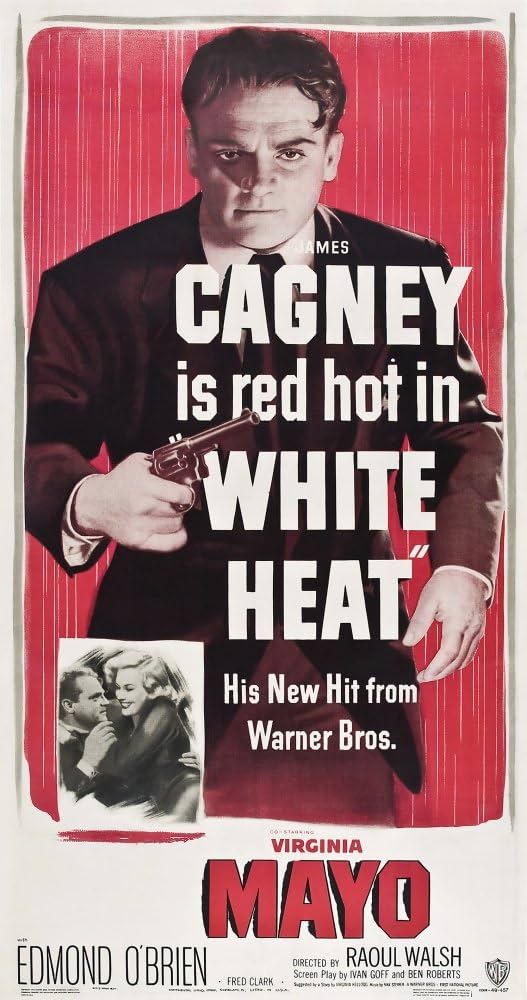
This description is wrong, though, because the investigator is shot after the robbery. But the conductor is shot by Cody.

All that aside, the robbery does go wrong, partially because a member of the gang is horribly burned. The gang has to hide out and we learn that Cody is very close to his mother, who helps him plan crimes. Closer than he is to his wife who is very lazy and sleeps a lot.

This isn’t an inappropriate relationship like Hamlet or Macbeth or whichever play that was, but Cody relies on Ma for a lot — including helping him when raging headaches hit him and practically debilitate him. The gang believes his headaches are the same mental illness his father had.

His mother doesn’t want him to let the gang see him that way because he will look weak.

It doesn’t matter if he looks week because his gang is ready to turn on him and take the money they stole from the train and cut him out of the deal no  matter what.

He doesn’t know this, but he does know they have to split so the police don’t find them.

They have an injured gang member whom Cody orders one of his men to shoot. The man can’t do it, though, and leaves the burned man. The man still dies, and when he is found it is reported to the police, who eventually connect him to the gang.

A police officer sees Cody’s mom out by chance and they try to follow her back to the motel Cody, his mom and wife are staying at. She loses them but the police eventually find her car and corner Cody who shoots the investigator in the arm.

Cody is able to escape with his mom and wife, but finally decides if he really wants to shake the police, he will have to give himself up. He’s not going to admit to the big crime, though. He’s going to say he committed another crime that another criminal he knows pulled. He’ll only get about two years for that crime and it will be his alibi for the other crime. He couldn’t have robbed the train if he was committing a less serious robbery in another state, he says.

His wife and mom don’t like the idea, for different reasons.
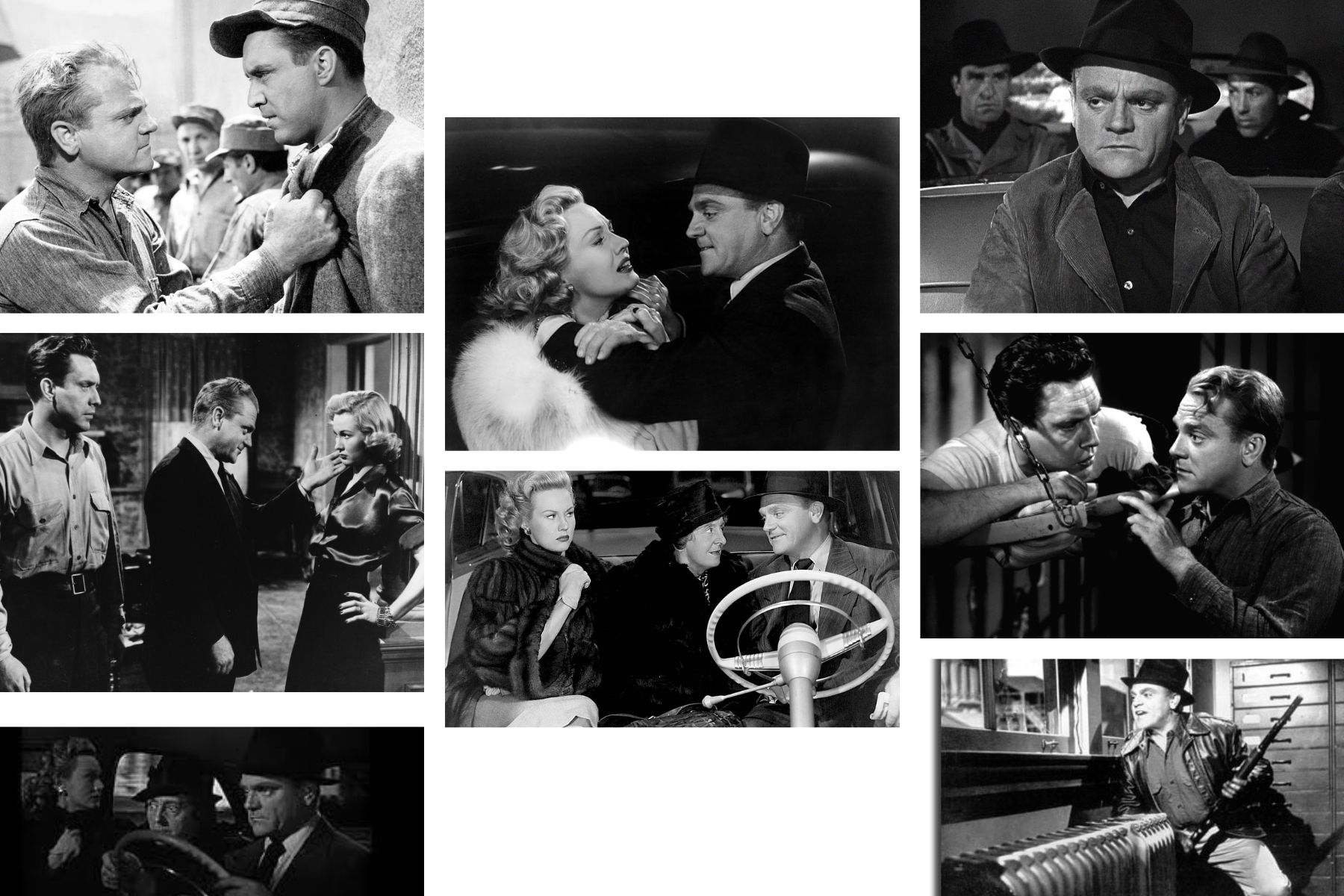
His wife likes the idea a lot more when she realizes that her husband being in jail in another state will give her time with her husband’s second hand man, who she’s been having an affair with.

Cody’s plan works — sort of. The police figure out what he is trying to do, though, and still want to pin the first crime on him so they send an undercover cop into jail with him to try to make friends with him and find out where he hid the money from the train heist.

I’ll leave it there, so I don’t spoil what happens, but I am going to have to give a big spoiler here to discuss in the paragraph following this next one so if you don’t want to know, you need to stop here.

This movie was dark, intense, and while Cody Jarrett was a horrible man and easy to hate, I also couldn’t help feeling a little sorry for him because he felt crime was the only way to make a living.

SPOILER ALERT!!
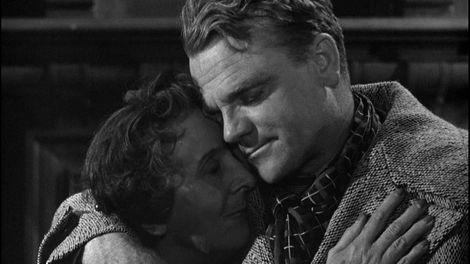

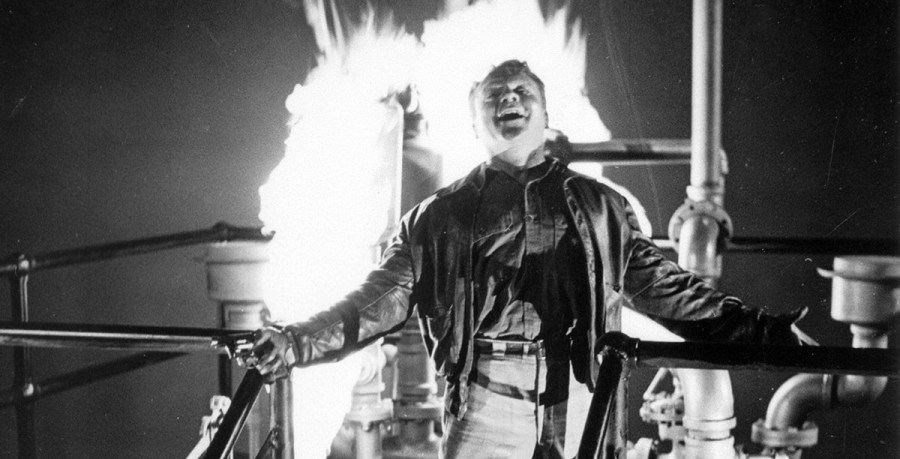
Also, the one person who loved him and he loved dies halfway through the movie. I won’t say how his mom dies but it is her death that leads to a much-talked-about scene where Cody absolutely flips out after he finds out she’s gone.

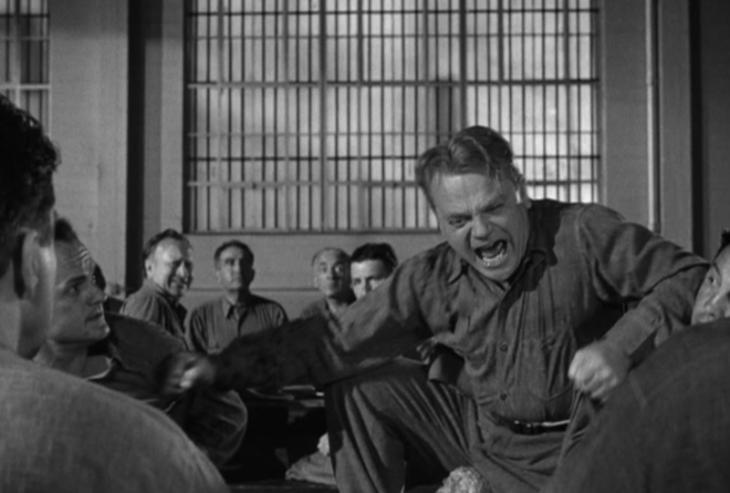
What is interesting about this scene is a couple hundred extras were used as the inmates inside the cafeteria and none of them were told what Cagney was going to do. Most of the shocked faces focused on during that scene were authentic because they were kept in the dark about Cagney’s plans. Some of them really thought Cagney had flipped out.
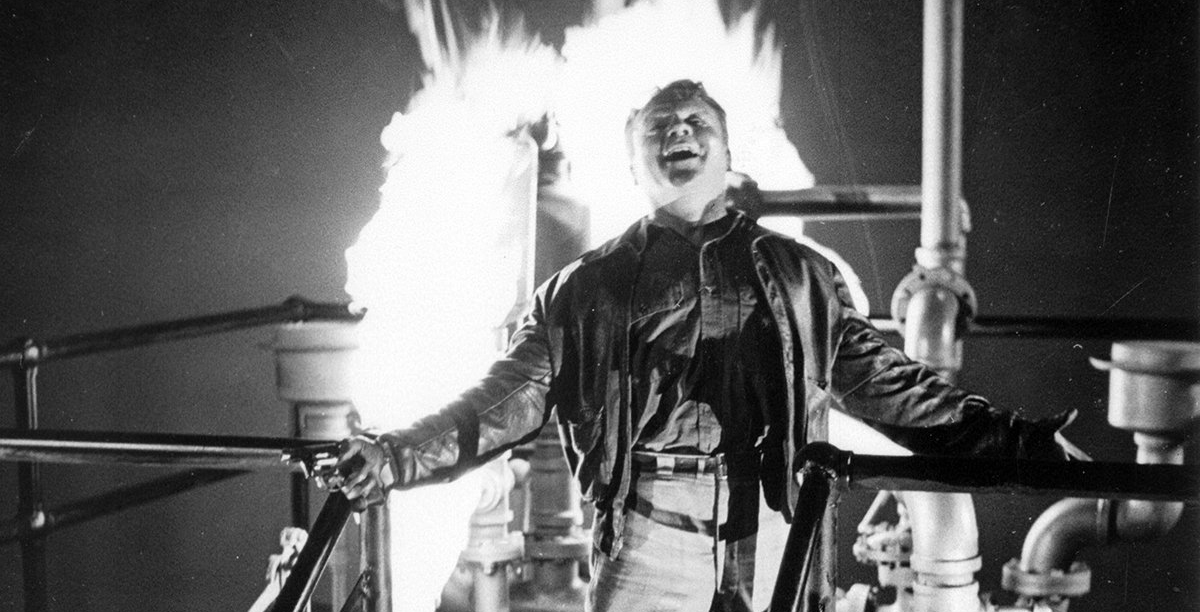
Another scene we need to talk about happens at the end. Throughout the movie Cody’s mom always ends their conversations by saying, “Top of the world, son! Top of the world!”

This is a line that has been used in pop culture references and parodies for years and I never knew what it was. Now I do and it’s honestly quite heartbreaking. There is so much Cody could have done with his life and not only did he choose crime but his own mother encouraged him to do so.

Cagney came back to Warner Brothers for this film after leaving for several years to start his own movie-making business with his brother. When that failed, he accepted an offer from Warner Brothers, even though Jack Warner really didn’t want him back — mainly because he needed the money.

Warner famously called Cagney, “that little b******.”

Cagney famously said of Warner in Rolling Stone Magazine, “I used to like to walk out on him, frankly, whenever my contract didn’t suit me. I’d cuss him out in Yiddish, which I had learned from Jewish friends in my days at Studyvesant High School. Drove him wild. ‘What’d he say?!’ he’d yell. ‘What’d he just call me?!’”

Their arguments mainly started over Cagney’s contracts in the 30s.

Rob Nixon wrote for TCM.com that White Heat is considered Cagney’s last good gangster film.

“An exciting, dynamic film in its own right, White Heat also stands out as the flaming finale to the era of stark, fast-paced crime films made famous by Warner Brothers and James Cagney (among other stars) from the 1930s on ­ films in which the focus was on the often violent but charismatic gangster rather than the law enforcement officials who hunt him,” Nixon wrote. “It was also the apotheosis of Cagney’s brilliant career, a kind of summing up of the memorable outlaw characters he had created. His projects that followed in the 1950s were mostly lackluster affairs, and the cocky, pugnacious star audiences had come to love was glimpsed infrequently in such films as Love Me or Leave Me and Mister Roberts (both 1955).”

The film was directed by Raoul Walsh and in addition to Cagney it starred Virginia Mayo, Edmond O’Brien, and Margaret Wycherly as Ma.

Many scenes, such as the one mentioned above were adlibbed by Cagney or Walsh.

One of those was when he got annoyed at Mayo (his wife) and he was supposed to just glare at her but instead Walsh told Cagney to kick her off the chair she was standing on. For me, this showed how nasty and heartless Cody really was  – as if the opening scenes hadn’t already shown that.

The story for the movie was written by Virginia Kellogg and she was nominated for an Oscar for it, but didn’t win and no one else was nominated. Over the years, though, the film has been praised and named as the fourth best gangster movie by the American Film Institute, has been quoted or parodied too many times to count and in  2003, the American Film Institute named Cody Jarrett in its list of the best heroes and villains of the past 100 years.

I have to be honest and say that the end of the movie annoyed me. I don’t want to give it away but it was a typical movie from the 40s and 50s with the whole idea of the bad guy suffering and the “good guys/cops” being the heroes was very cliché.

In many ways there was nothing good that was going to come for Cagney’s character, though, so things ending badly for him was probably the only way for things to go.
Next week I will be watching Angels With Dirty Faces with Cagney and Humphrey Bogart. To end the event I will be watching The Bride Came C.O.D. (which will move me into my Spring of Bette Davis).

You can read about the other movies I watched by clicking the links below:


 Yankee Doodle Dandy

Taxi

The Strawberry Blonde

Mister Roberts

The Public Enemy

Love Me or Leave Me


Sources:

https://www.tcm.com/articles/89404/the-essentials-white-heat

https://en.wikipedia.org/wiki/White_Heat


If you want to find clips and thoughts about vintage movies and TV, you can visit me on Instagram on my Nostalgically Thinking Account (https://www.instagram.com/nostalgically_thinking/) or on my YouTube account Nostalgically and Bookishly Thinking here: https://www.youtube.com/@nostaglicandbookish


If you enjoy the kind of content on my blog and all that goes into it, you can support my writing for $2.99 a month or a single donation. Learn more here: https://lisahoweler.com/support-my-writing/