Erin from Still Life, With Cracker Crumbs and I are hosting the Comfy, Cozy Cinema again this year.
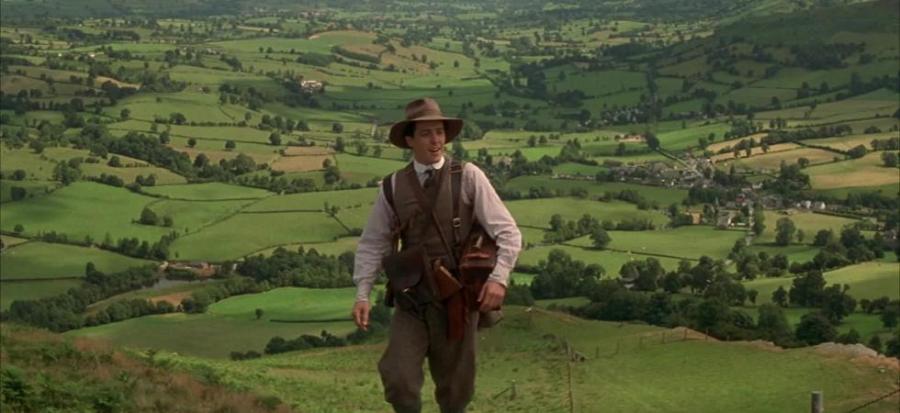
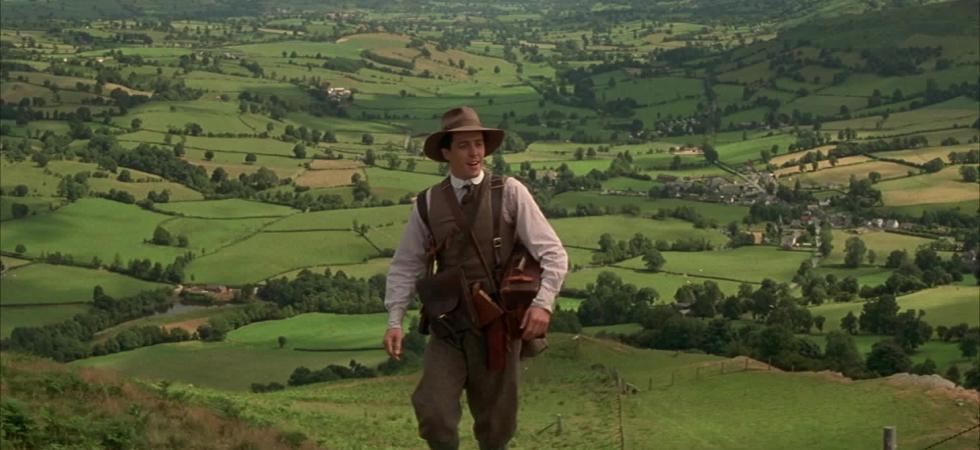
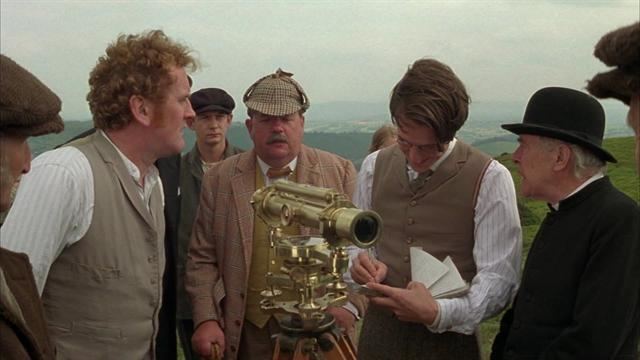
Our movie this week was The Englishman Who Went Up A Hill But Came Down A Mountain.
There are three things to know about this movie: It is based on a Welsh legend (but not actually true), it a romantic comedy, and it has the longest title of any movie I have ever watched.
First, let’s have a little description from online:
During the days of World War I, a small Welsh town relies on its local mountain as a source of pride. When two English cartographers, Reginald Anson (Hugh Grant) and George Garrad (Ian McNeice), arrive to measure the mountain, they discover the landmark is 16 feet short of achieving the official mountain classification. Disheartened that their mountain has been deemed a hill, the townsfolk devise a plan to make up those 16 feet. Meanwhile, Anson falls for a local woman (Tara Fitzgerald).
This movie has all the things I like — Quirky characters and story, beautiful views, dry British humor, and a bit of romance.
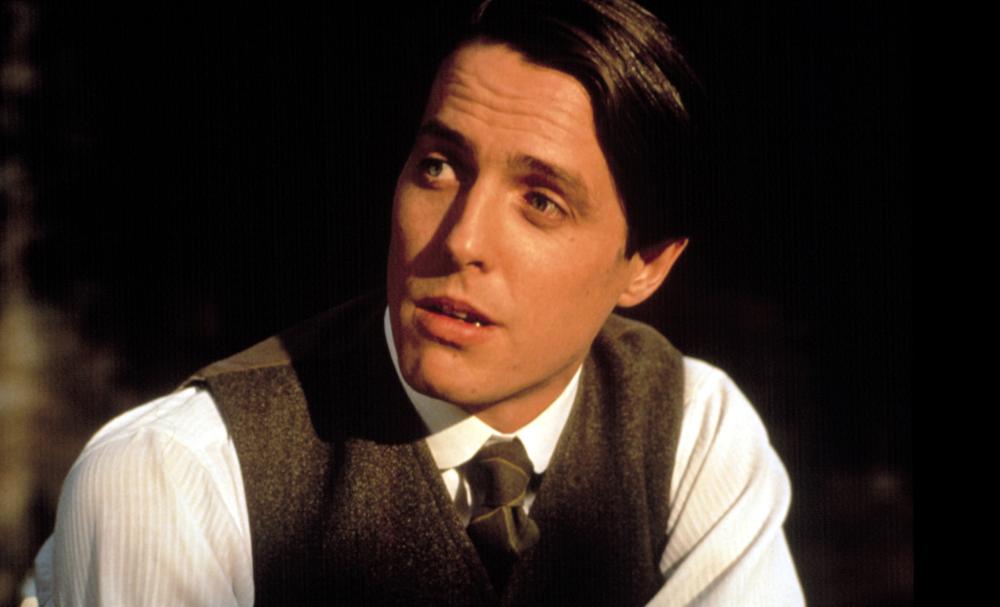
Hugh Grant is adorable in it and Colm Meany ads a bit of humor (even if he is a dirty scoundrel).
It is free of bad language, sex, or violence.
Well, let’s talk about the sex a bit. There are suggestions of it being engaged in, but none is shown.
The movie starts with the narrator explaining that a lot of people in Wales, where the movie takes place, have the same last name so people began to attach their occupation to their name. This is why a little boy wants to know why one man had a very long occupation attached to his name. He asks his grandfather and the grandfather begins to tell the story.
We then switch to Hugh Grant’s character, Reginald Anson (there is no way to say that name without using a British accent by the way. Try it. I dare you. It doesn’t sound right in an American accent) riding into a small village with another man, George Garrad, portrayed by Ian McNeice.
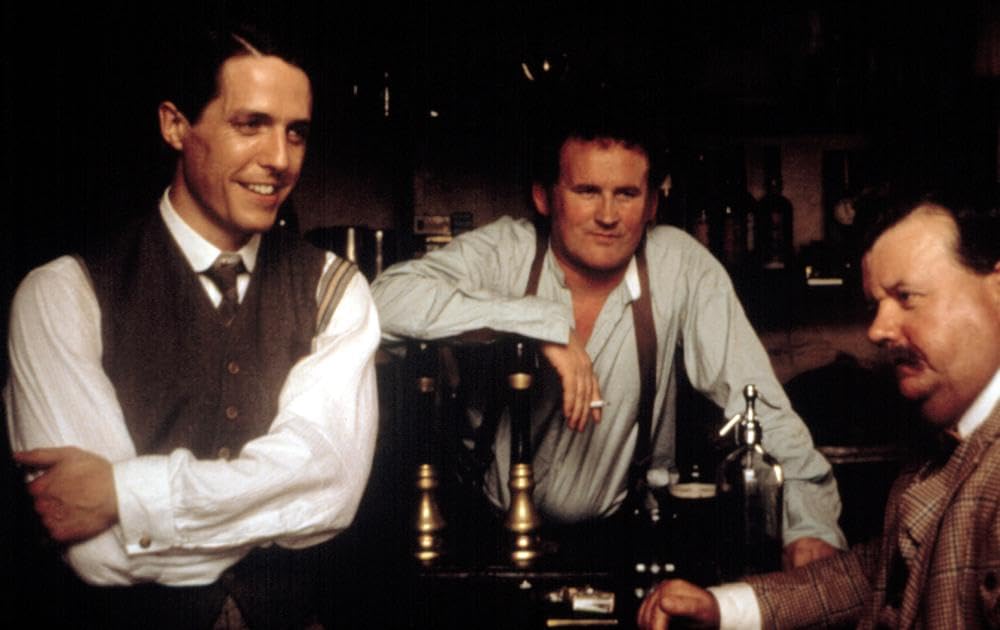
They pull up to a barn and inn, looking for a place to stay. The bar is owned by Colm Meany’s character.
Colm Meany is called Morgan the Goat. Why is he called this? Well, Morgan is taking advantage of the fact that man of the men of this village are in France fighting in the war. He’s keeping the wives of these men company, shall we say. This is why the church is full of babies that look a lot like Morgan, which absolutely infuriates the minister, Rev. Jones, portrayed by Kenneth Griffith.
So, Reginald and George explain to Morgan that they are there to conduct some surveys to record the topography of the area for the war effort because it is important to know the lay of the land in case the enemy invades.
If they are going to be checking out the local topography, Morgan suggests they check out the only mountain in Wales — Ffynnon Garw.
George a bit of a laugh but eventually they agree they will check the “mountain” out as part of their effort. The only problem is that they don’t really think it is a mountain. See, to be considered a mountain in the UK, the elevation has to be at least 1,000 feet. The cartagrophes don’t think that will be the case when they measure. This upsets the people of the town who have pride in the fact they have the only mountain in their country.
The reverend is especially riled up at the prospect of the mountain being classified as a hill.
When it is discovered that Ffynnon Garw isn’t a mountain, well, all hell breaks loose and many touching, ridiculous, and heartbreaking moments unfold as Morgan decides to delay Reginald and George from leaving while the town’s people find a way to make the hill a mountain.
The reverend and Morgan don’t get along at all but the reverend agrees that it is important to make the hill a mountain to boost morale of the village during the war.
Some of the fun or interesting characters in this movie are the twins with the same name, Johnny Shellshocked (who suffered PTSD in the war), William the Petroleum Man, and Davies the School.
One con of this movie, for me, though, I loved it, was the romance. It was late in the movie, no time for development and I felt like it was just thrown in as a last-minute idea. The posters for this movie with the actress and Hugh Grant on the front are baffling to me because she really wasn’t that important of a part of the movie for me.
Some trivia/facts about the movie:
This movie was written by Ifor David Monger, the grandfather of the director Christopher Monger who told his son about the real village of Taff’s Well, in the old county of Glamorgan, and its neighboring Garth Hill.
The narrator begins by remarking that “For some odd reason, lost in the mists of time, there’s an extraordinary shortage of last names in Wales.” Actually there is a known reason: as part of their increased domination of Wales in the 16th century, the English abolished the Welsh system of patronymics and introduced surnames arbitrarily. (source IMbd)
“Despite the implication in the film, and the real-life local legend, the story is fiction. Historians have determined that the mound at the summit of Garth Mountain (the inspiration for the movie) is a Bronze Age burial mound. In 1999, local officials and the History Society placed a sign on the mountain, telling the many climbers who’ve been coming there because of the movie’s popularity of the site’s real significance – and warning that they face two years in prison if they disturb the burial mound.” (source IMbd)
When Williams the Petroleum breaks a piece of the Englishmen’s car and pretends to discover it, he says he doesn’t know the English name for it, but in Welsh it’s called a “beth-yn-galw.” “Beth-yn-galw” translates more or less to “whatchamacallit”. (source IMbd)
To read what Erin thought about the movie, visit her blog:
Have you ever seen this one? What did you think of it?
You can see the rest of the list of movies in this cool graphic that Erin made:
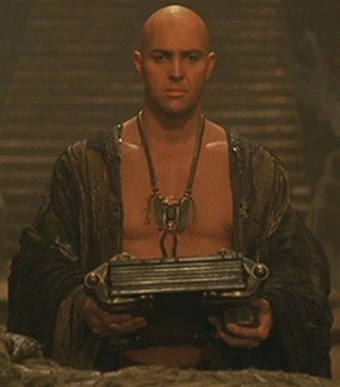
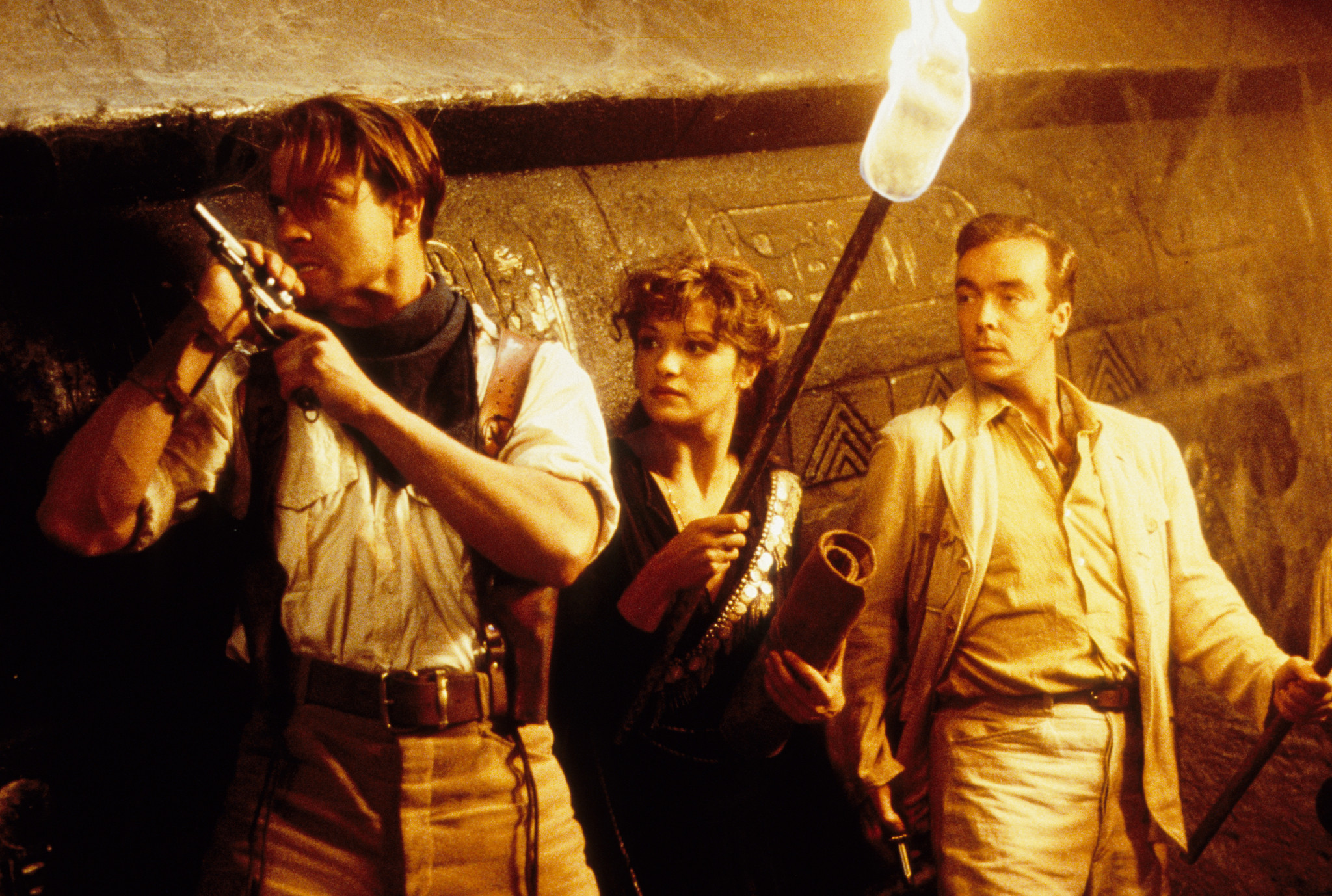
Erin from Still Life, With Cracker Crumbs and I are hosting Comfy, Cozy Cinema again this year and up this week was The Mummy!
The Mummy (1999) was a perfect watch for Halloween, though maybe not super comfy or cozy? I don’t know but we slip some creepier ones in for Halloweeeen too so it all evens out! This one isn’t super creepy all the way through, though, and oneee thing you should know is that The Mummy does not take itself too seriously.
Even though it isn’t really a horror film, it deals with the dead and ancient curses, gross bugs, the undead, and bringing people back from the dead and…., etc., etc.
And we also get to see when Brendan Frasier had a career. Ha! I kid. I kid. I know his career has been resurrected like some of the characters in this movie. I just thought it was a funny line.
This movie has become a cult classic after performing well in the theaters, but even better for video/DVD sales which raked in $1 billion for Universal in 2000. The movie’s success even led to a sequel, The Mummy Returns, which was must less successful and then yet another sequel, which was not a huge success either, if I remember right..
Even though I have seen this movie a couple of times, it’s been a long time since the last rewatch, so I rewatched it with my kids to remind myself of specific scenes, plot, etc.
Etc. is the word for today, by the way. I’m going to keep using it throughout this post just to be annoying, obnoxious, belligerent, etc. etc.
(I’m kidding about that too. I can’t keep that up for an entire post…..or can I?)
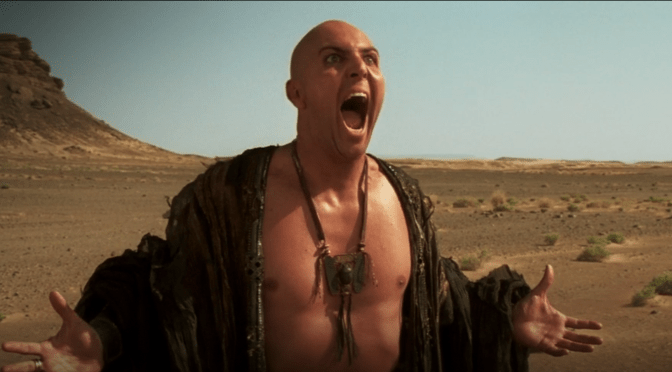
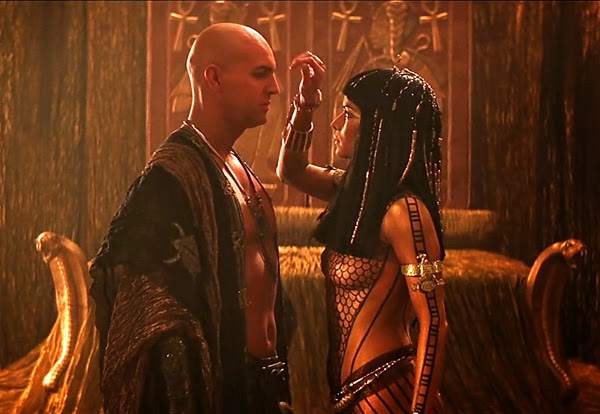
This movie starts with the affair between Imhotep and Anck-su-namun, the mistress of the Pharoah. No one was to touch Anck-su-namun other than the Pharaoh but I guess Imhotep missed that memo because he started an affair with her.
The two are caught by the Pharaoh, the Pharaoh is killed, the Pharaoh’s men come in, Imhotep escapes while Anck-su-namun reminds him that only he can resurrect her later so she kills herself before the Pharaoh’s men can.
Imhotep then steals Anck-su-namun body and tries to resurrect her but is interrupted by the pharaoh’s guard and is intombed with a bunch of creepy beetle things and buried alive “for all eternity.”
Ha. As if that line is going to stick. Of course, we know something is going to happen to disturb this dude’s resting place.
The Medjai, by the way, are sworn to prevent Imhotep’s return, as his resurrection would grant him immense power. They are guarding over him when Rick O’Connell (Brenden Frasier) is in the French Foreign Legion, fighting against an Arab Army, and finds the tomb, but runs away when the sand begins trying to attack him.
The Medjai decide not to kill him, but instead to “let the desert kill him instead.”
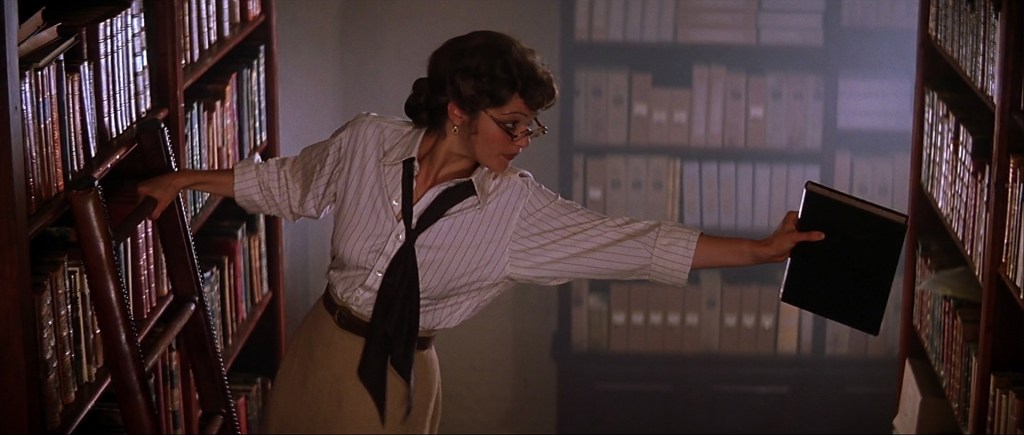
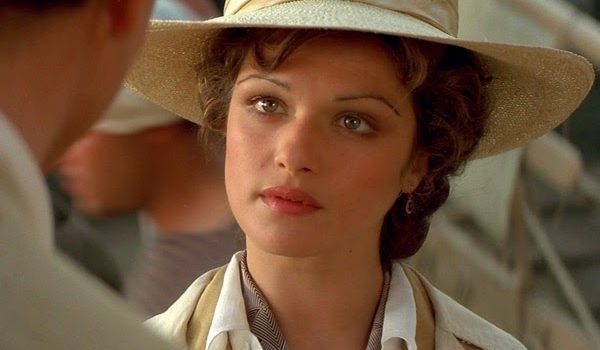
Bad idea because Rick lives and discovers an intricate box, which he takes home with him and has stolen by Jonathan Carnahan (John Hannah) who gives it to his sister, Evelyn (Rachel Weisz) a librarian and very green Egyptologist.
Evelyn finds a map inside the box that will lead them to buried Egyptian treasure but it is in the city of the dead. She takes it to her boss at the ancient library but he — oops — sets in it on fire. Was that an accident? Hmm…not so sure there.
Now Evelyn wants to know where Jonathan got it so they set off to find the man who Jonathan stole the box from.
Rick is in jail and actually looks way too clean to have been in jail and he agrees to help Evelyn get to the lost city of death if she will get him out of jail. She figures out a way, but the jailer says he is going to come along to keep an eye on his prisoner.
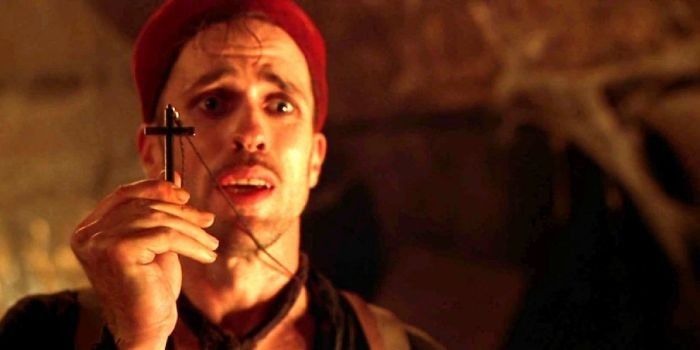
From there, hijinks ensue, especially when the group runs into a rival team also looking for the city and treasure and Rick runs into an old “friend” who always abandoned him at the most inopportune moments. That friend is Benji and he provides a lot of humor throughout the film, including an iconic scene where he uses symbols from several different religions to keep the mummy from attacking him.
This movie is a fun ride. My husband and I had seen this years ago in the theater when we were first dating — we think anyhow. Our memories are so fuzzy because we are so old.
The Boy said during this movie, “This movie is so fun. I’m really liking this.”
I could have sworn he’d seen this movie before, but he had not, and wanted to, so the timing was perfect, great, impeccable, etc. etc.
The movie is full of eye-candy for all with Rachel Weisz being pretty and Brenden and Oded Fehr and even Arnold Vosloo for those who like bald men.
As I mentioned above, The Mummy is not necessarily a “horror” film but there is a lot of grotesque scenes and moments involving — a bit of a spoiler here — the mummy trying to piece himself back together, which involves pulling other pieces off living humans.
The film was shot in Morocco and The United Kingdom. I found it interesting when I read that Universal took out kidnapping insurance on the crew and cast but didn’t tell them until filming was over. Yikes.
This is the movie where we almost lost Brendan Fraser to by the way
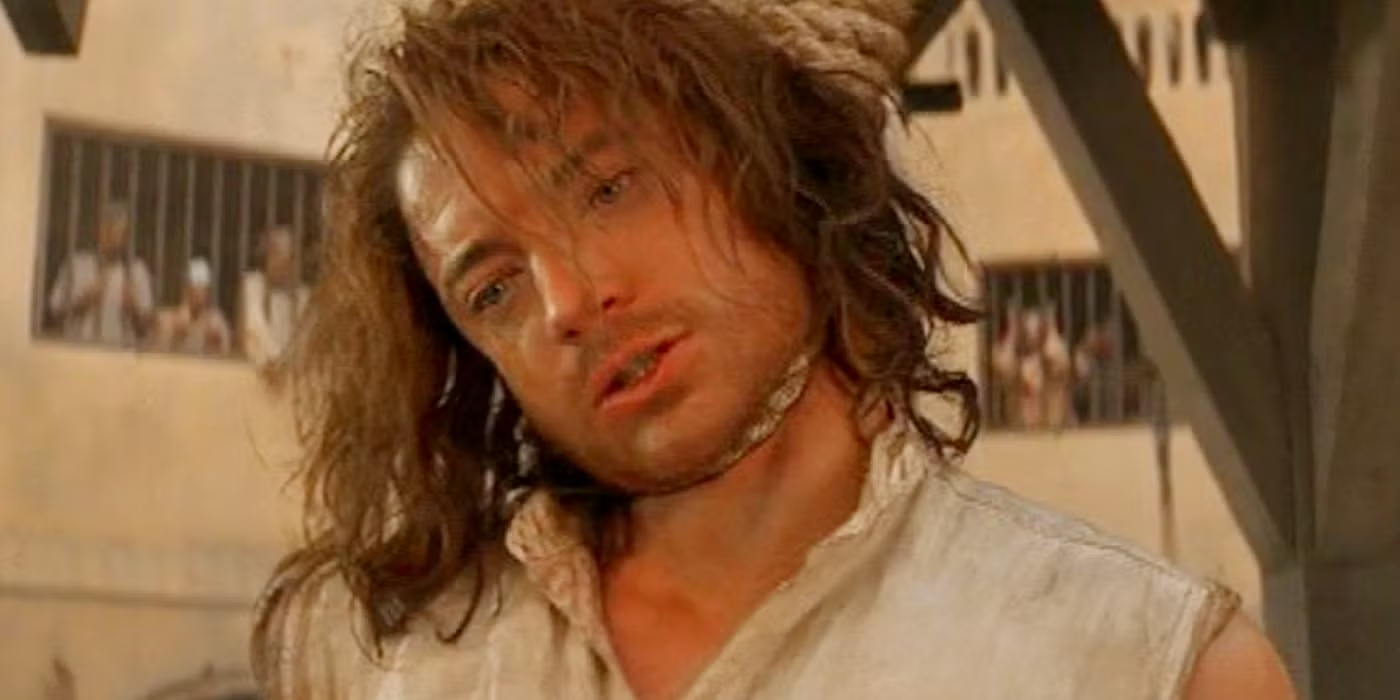
According to an interview with Brendan on The Kelly Clarkson Show, in the scene where Brendan is being hung, the director told him it wasn’t looking believable. Brendan pushed up on his tiptoes while the man who was holding the rope lifted up and Brendan had nowhere to go but try to push down.
“So he was pulling up and I was going down. And then the next thing I knew, my elbow was in my ear, the world was sideways and there was gravel in my teeth.”
He said the stunt coordinator was leaning over him clapping his hands and calling, “Brendan. Come on, Brendan.”
When he did, the coordinator told the actor, “‘Congratulations, you’re in the club — same thing happened to Mel Gibson on ‘Braveheart.’”
The Mummy became such a hit that there were two sequels and a spinoff. Yes, I saw the spinoff with Dwayne “The Rock” Johnson, The Scorpion King. No, I do not recommend it.
I never saw The Mummy: Tomb of the Dragon Emperor but I probably wouldn’t recommend it either.
This movie did get positive reviews when it came out, with most calling it lot of fun.
Roger Ebert of the Chicago Sun-Times gave the film a positive review, writing, “There is hardly a thing I can say in its favor, except that I was cheered by nearly every minute of it. I cannot argue for the script, the direction, the acting or even the mummy, but I can say that I was not bored and sometimes I was unreasonably pleased.”[
Trivia and facts:
*Disclaimer: always make sure to double check these as what I report is only as good as the sites I pull it from and they are not always accurate.
The library disaster in the beginning of the film was done in one take. It would have taken an entire day to re-shoot if a mistake had been made. (source IMdb)
The effects team was told “no gore” when designing the look of the Mummy. They actually did tests for “grossness threshold.” (source IMdb)
Erick Avari who portrayed Dr. Terence Bey now portrays Nicodemus on The Chosen. (source: me!)
With the exception of a loin cloth, a few pieces of jewelry, and pasties, Patricia Velasquez as Anck-su-namun, was nude except for body paint, which took four hours to apply. (source IMdb)
This movie is a remake of the 1932 film of the same name. (various sources, including my husband.)
The white nightgown Evelyn wore when the ship was attacked became transparent when it got wet and had to be digitally painted white during post production so the film could keep its PG-13 rating. (source IMdb)
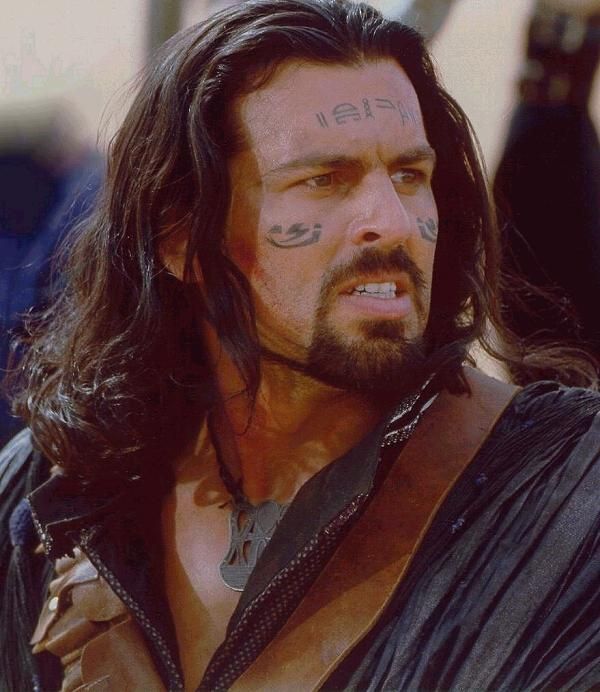
The Medjai were originally supposed to be tattooed from head to toe, but Stephen Sommers vetoed it because he thought Oded Fehr was “too good-looking” to be covered up. (source IMdb)
The crew could not shoot in Egypt because of the unstable political conditions. (source IMdb)
To avoid dehydration in the scorching heat of the Sahara, the production’s medical team created a drink that the cast and crew had to consume every two hours. (source IMdb)
Sandstorms were daily inconveniences. Snakes, spiders and scorpions were a major problem, with many crew members having to be airlifted out after being bitten. (source IMdb)
When Evelyn reads the inscription “He who shall not be named” on Imhotep’s sarcophagus, the hieroglyphs used are accurate. The inscription actually translates literally as “the one without a name.” (source IMdb)
The film is called The Mummy everywhere except Japan where it is called Hamunaptra: The Capital City of the Lost Desert. (source, TVTrops.org)
“John Hannah claimed in interviews that he didn’t have the best time shooting the film because he felt the character of Jonathan was pretty redundant: he had been hired as a comedic actor but Beni was far more prevalent as the comedy relief and he didn’t work as a sidekick either since Evy fulfilled that role as well. Whenever Hannah tried bringing this up to Stephen Sommers, the latter would just tell him to make something up. Luckily, later films in the series would give Jonathan a more focused role as the comic relief and give him more stuff to do.” (source, TVTrops.org)
“The original script’s opening had a number of edits. Imhotep was originally supposed to narrate, and following Seti’s murder Imhotep was supposed to lead the ritual to curse Anak-su-namun’s mummified body for her crime of regicide, only for Imhotep and his priests to dug up the body as soon as all the other witnesses were either dead or had left; in a scene mirroring Imhotep’s origin story in the original film, the diggers were to be killed by the soldiers after burying Anak-su-namun, and for the Med-jai to kill the soldiers afterwards in order to keep her grave a secret. During the ritual at Hamunaptra, Imhotep explains the ritual didn’t require a human sacrifice since Anak-su-namun’s organs were still fresh. When the Med-jai arrive to stop Imhotep, one of them smashes the jar containing Anak-su-namun’s heart, explaining why it it’s intact in one shot, and broken in the shot where her soul flees back to the underworld. Lastly, Imhotep explains how part of the Hom Dai works: the sacred scarabs would be able to enter his now tongue-free mouth and he’d be forced to consume them, cursing him, while the scarabs would become cursed as well upon consuming his flesh, creating a perversion of the cycle of life, death, and rebirth. Yes, the scarab swarms that plague our heroes later are all undead insects.” (source, TVTrops.org)
If you want to read Erin’s impressions of the movie, you can find it here
So, have you ever seen this one? What did you think of it?
Up next in our Comfy, Cozy Cinema will be The Englishman Who Went Up A Hill But Came Down a Mountain.
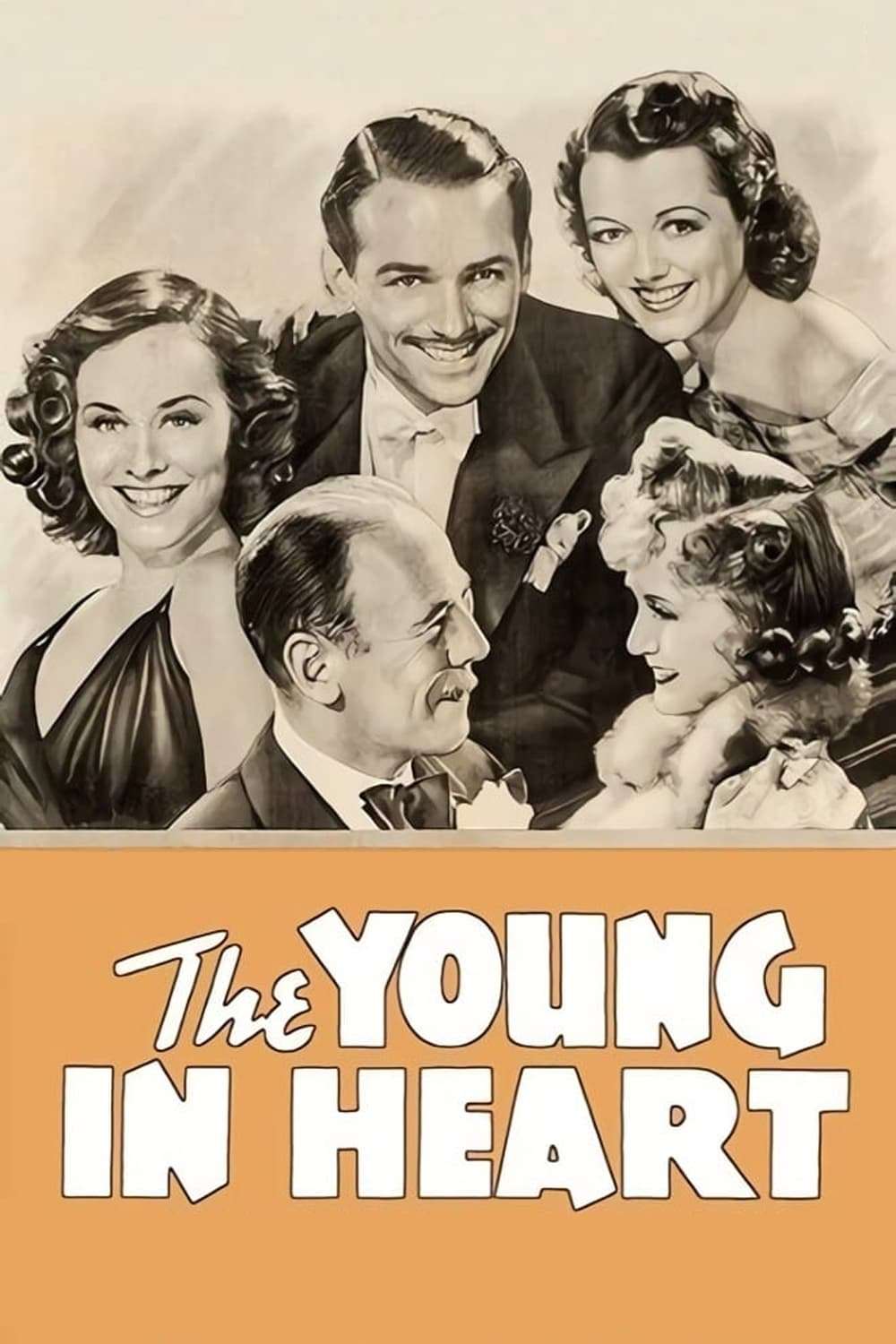
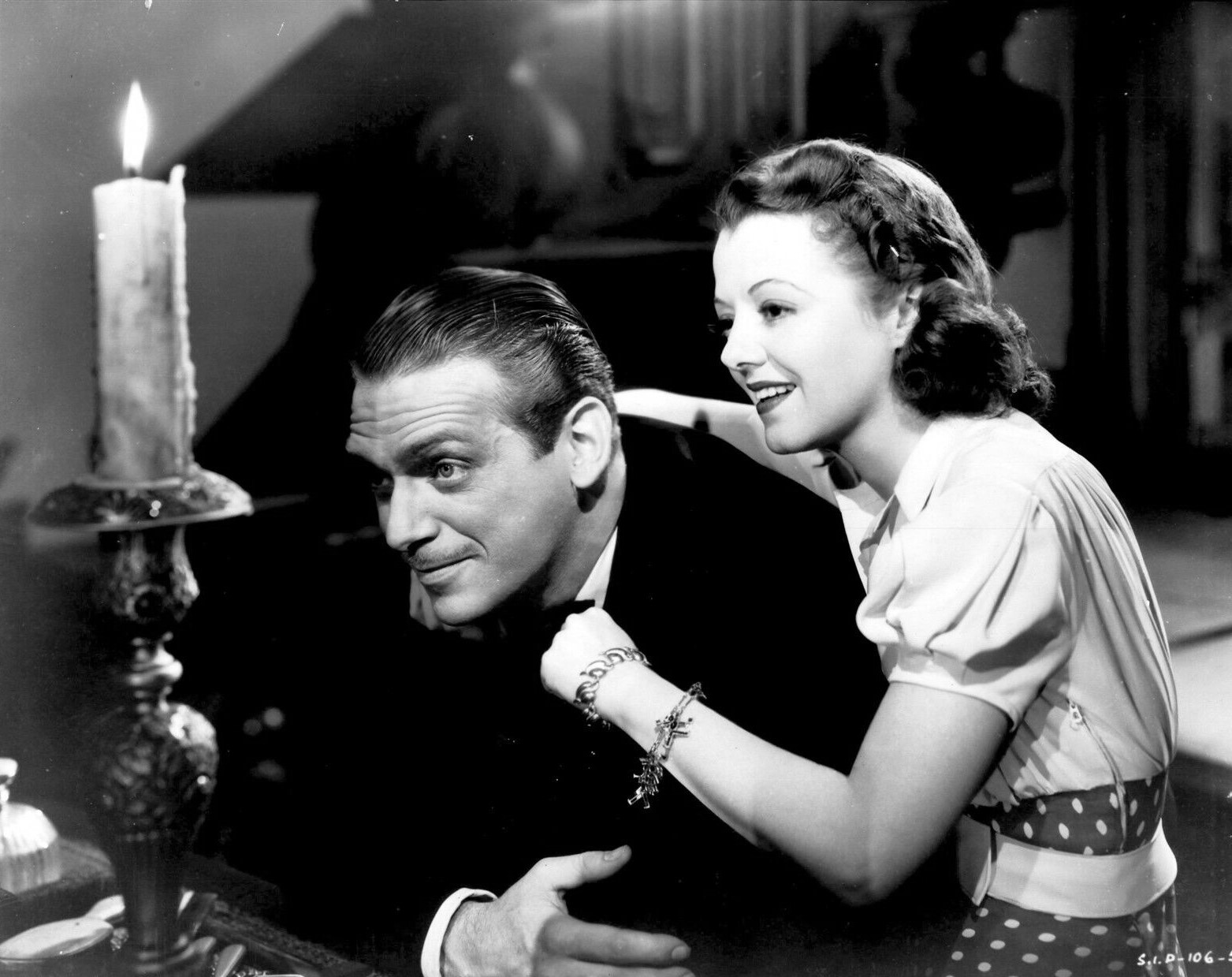
Erin from Still Life, With Cracker Crumbs and I are hosting Comfy, Cozy Cinema again this year and up this week was The Young In Heart.
And, yes, that title is the actual title: The Young IN Heart.
I feel like I cheated a little bit this week because not only have I watched this movie, but I also wrote about it when I watched it for the Winter of Douglas Fairbanks Jr. That means I had an advantage to Erin when it came to writing this week’s post because I am going to quote a lot of my original post.
This is part of what I wrote in that post: “I absolutely loved Douglas in this one. He played a more prominent role than in Gunga Din and was simply … shall I sound completely cheesy? Yes, I shall. He was completely delightful.
At one point, I texted my friend Erin that a drunk Douglas is adorable.”
Yes, I did text Erin this past January to tell her he was adorable. Yes, I am weird.
Before I forget, I found this one for free on YouTube.
So, let’s get to the movie.
The Carlton family, of which Douglas is a part of in this movie, are not a family you would want to know in real life. They are swindlers and grifters. They mooch off and manipulate people to scrape by in life.
We open the movie in the French Riviera with Douglas’s character (Rick) ready to marry a young woman whose father is rich.
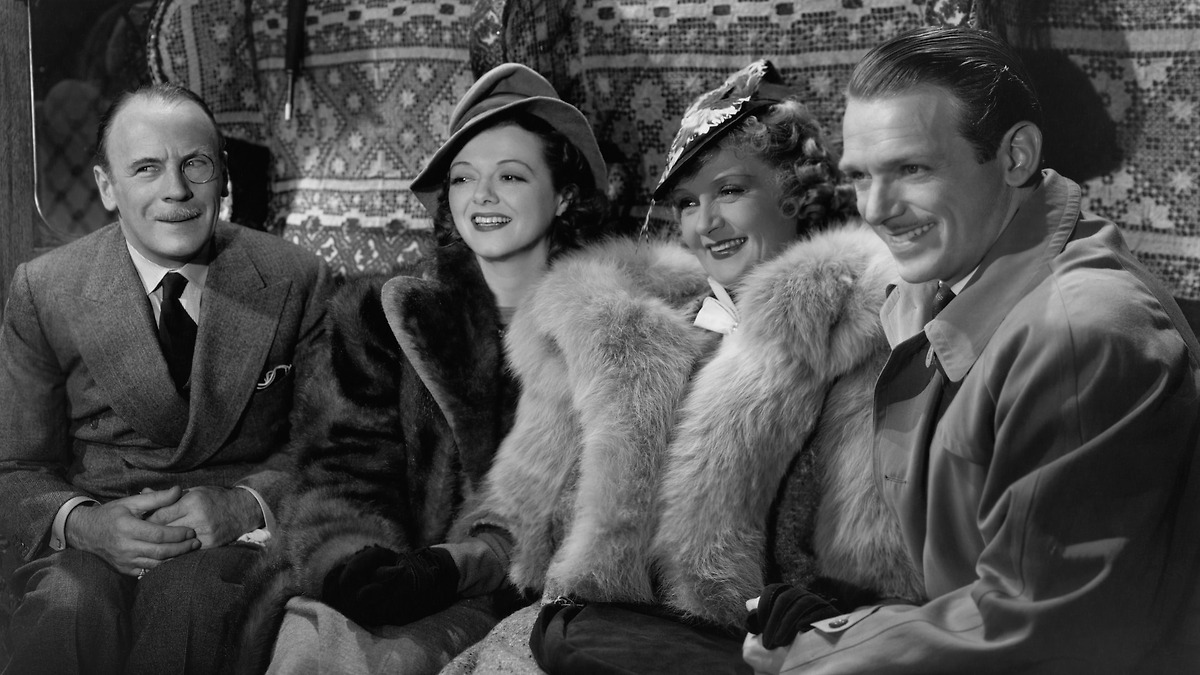
Everything falls apart, though, when the police find out about the family and reveal their conniving ways to the family of Rick’s future wife. The family is told to get out of France and end up on a train where they meet a ridiculously sweet woman (Minnie Dupree) who has only recently come into a great sum of money.
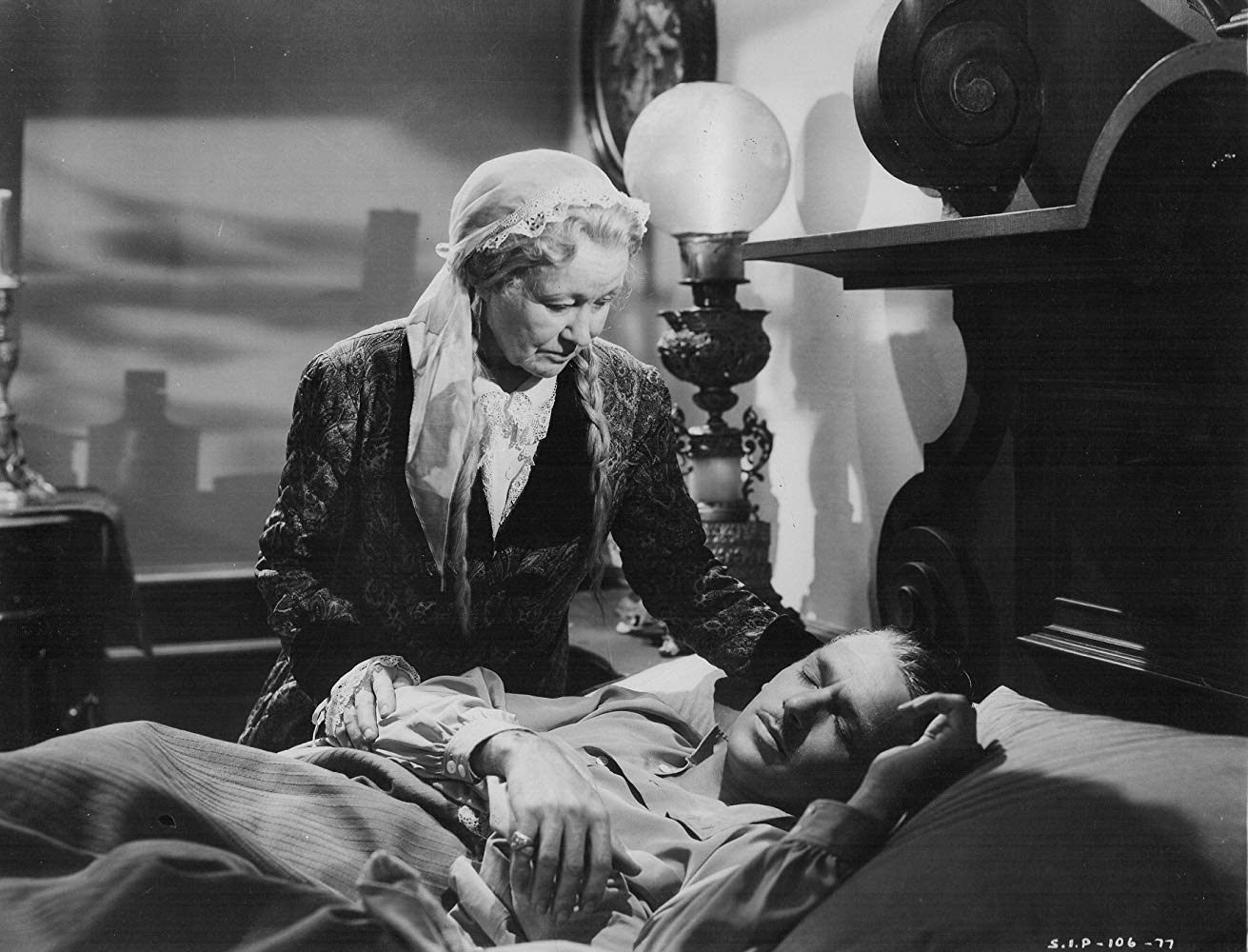
Ironically, her last name is Fortune. George-Anne sets out to swindle the woman out of paying for their lunch, but the plan expands as the woman explains she lives alone in a big mansion left to her by a former suitor. She is saying how lovely it would be if all of them came to stay with her when there is a train derailment. Their car tips and at first Rick and George-Anne believe the old woman has died. She’s still breathing so the siblings carry her from the car and George-Anne covers her with her own coat.
We begin to wonder if the family is rotten through and through and are still playing things up as the woman later recovers and invites the family to come live with her.
George-Anne suggests to the family that if Miss Fortune believes they are a respectable family she will be more willing to let them live there and maybe even leave them money when she leaves. To play up this ruse she suggests the men get actual jobs and she and her mother act like caretakers and women who don’t swindle people out of money.
This is all very baffling to the family who has always cheated and stole for a living. When the men decide George-Anne’s plan might work and go to look for jobs, the scenes that follow are some of the most hilarious tongue-in-cheek moments I’ve seen in a movie.
Spinning around in the background of the family’s drama is the romance between George-Anne and Duncan Macrae (Richard Carlson), who she originally considered marrying when she thought he was rich. Duncan learned she was a con-artist along with everyone else and was shattered but still ends up chasing her down on the train back to London to tell her he still loves her.
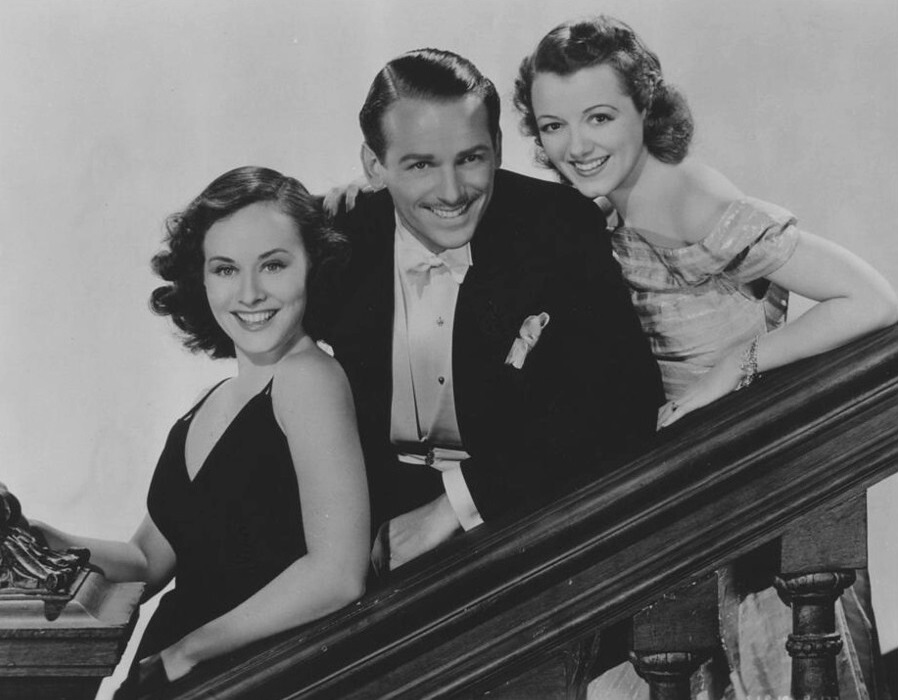
The rest of Rick’s family — father, Col. Anthony “Sahib” Carleton (Roland Young), mother Marmey Carlton (Billie Burke), and daughter George-Anne (Janet Gaynor) — are thrilled with this plan because they know it will also set them all up for a rich life. George Anne might be even more thrilled because then she can marry a poor Scottish man who she’s fallen in love with, and the rest of her family will support her financially.
She tells him to get lost, believing he’s much too good for her and . . . well, you’ll have to see where all that ends up.
Rick is also having his own romance with Leslie Saunders (Paulette Goddard), a secretary and the engineering business he applies at for a job.
This is the second – or shall I say third – movie I’ve watched in recent months with Billie Burke and there is no mistaking that voice if you have seen The Wizard of Oz.
Yes, she is Glenda the Good Witch.
The screenplay for this movie was written by Paul Osborn and adapted by Charles Bennett from the serialized novel, The Gay Banditti by I. A. R. Wylie. That title certainly would have had a different connotation in the modern day, eh?
Anyhow, the novel appeared in parts in The Saturday Evening Post from February 26 to March 26, 1938.
The movie was released in November of the same year. They certainly worked fast back then.
I found it interesting when I read that Broadway actresses Maude Adams and Laurette Taylor screen-tested for the role of Miss Fortune and that the footage is the only audio-visual samples that existed of both of them.
The movie was produced by – can you guess? Because it feels like every movie I write about lately is produced by him.
Yes. David Selznick. The man who produced what is considered one of the biggest movie triumphs in the world — Gone with the Wind.
This movie was one of many he produced leading up to Gone With The Wind. The Prisoner of Zenda, which I wrote about a couple of weeks ago, was another. Goddard was actually rumored to be being considered to play Scarlet O’Hara in Gone With The Wind, which later, of course, went to Vivien Leigh.
While I was watching the part of the movie where Mr. Carleton goes to apply for a job, I was fascinated by the fancy car they showed. It was spinning like a pig on a spit at the front of the building and it was a very modern looking car and a very modern looking set up altogether.
The six-passenger 2-door sedan Flying Wombat featured in that scene was actually the one-of-a-kind prototype Phantom Corsair. The Phantom Corsair concept car was built in 1938 and designed by Rust Heinz of the H. J. Heinz family and Maurice Schwartz of the Bohman & Schwartz coachbuilding company in Pasadena, California.”
I also found it interesting that this was Gaynor’s last movie before retiring while she was at the top of her career. She made one last movie in 1957 called Bernardine.
Like I said above, I loved this movie. It was just what I needed to watch this week with so much sadness going on in the world. There was a lot of humor from all the cast, but Douglas really had me smiling throughout. Not only because he is my latest old Hollywood star crush (watch out Paul Newman!).
Have you seen this one? What did you think of it?
You can read Erin’s impression of the movie on her blog.
Next week we will move into a bit of spooky with Coraline.
The rest of our movie list can be found on this graphic:
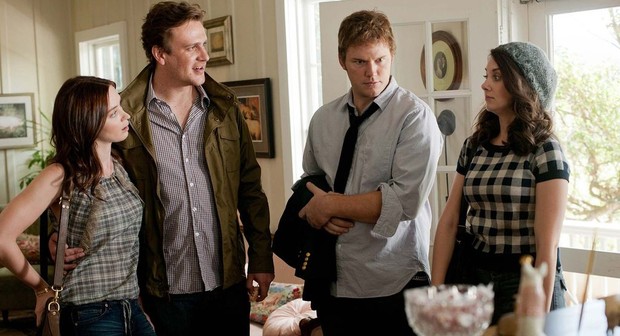
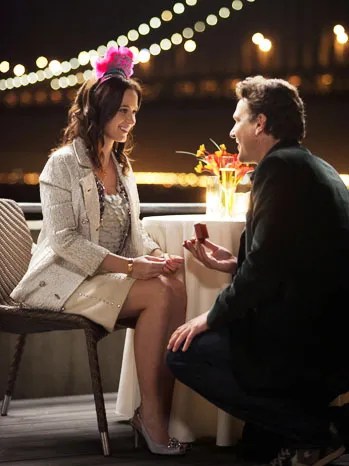
Erin from Still Life, With Cracker Crumbs and I are hosting Comfy, Cozy Cinema again this year and up this week was The Five-Year Engagement.
I am going to share right off the bat that this was not the movie for me. Erin enjoys it (though she had not watched in a long time and forgot some of the aspects of it) and you can find a more positive view of it on her blog.
Disclaimer: The fact I did not enjoy it is NOT an attack on anyone who did enjoy it. All views expressed here are my own opinions on the movie only. I don’t think anyone is awful for enjoying it. It simply was not my cup of tea.Everyone has different tastes.
I probably should have researched this one a little more when I agreed to watch it because it really wasn’t a movie I’d normally watch. It also was not cozy at all to me personally, but it probably has some sentimental value to others.
For my regular readers who know I usually recommend books and shows without a ton of swearing and crude “jokes” or references, you can know I don’t recommend this one because that’s the majority it.
When I did finally look up the movie this morning, I learned that it featured “more than 205 obscenities and profanities and lots of verbal sexual humor.”
Yeah. I really need to look this stuff up before I go into a movie. *wince*
I am not going to sit here and say that I do not swear. I certainly do. I wish I didn’t, but I do. I’m in a deep depression this week and have sworn about ten times already today (and asked God to forgive me).
Despite that personal flaw confessional moment, movies that throw swear words in for no reason aren’t my thing.
Here is a bit of a description of the movie from online:
“On their one-year anniversary, sous chef Tom Solomon (Jason Segel) plans to surprise his girlfriend, Violet Barnes (Emily Blunt), with an engagement ring. The lovers do end up engaged, but the fact that the proposal does not go exactly as planned proves to be a harbinger of things to come. Each time they try to set a date, various obstacles stand in their way. As more and more time passes, Tom and Violet begin to wonder if perhaps their marriage is not meant to be.”
The movie is rated R, so a lot of it the languag and sex scenes are to be expected but I just wasn’t comfortable with the level of crudeness or how many times I had to see Jason Segel having sex. Eek.
Also, Jason Segel plays pretty much the same character in every movie or TV show he has ever been in so if you like him in other movies or TV shows you should like this – just add a few more penis jokes, f-words, and views of his naked butt.
Again, Erin has more positive reasons she enjoyed the film (and I totally get her reasons!) so you can check out her views and more information on her blog here:
Next week we are writing about The Young In Heart (1938), starring Douglas Fairbanks Jr.
The other movies we will be watching are on this list:
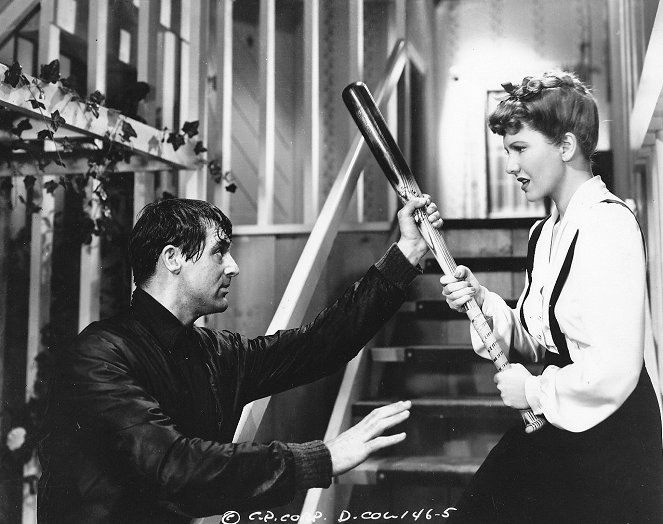
This past weekend I watched the movie The Talk of the Town with Cary Grant, Jean Arthur, and Ronald Colman. I found this movie, among many other good ones, free on Tubi. It is also currently free on YouTube.
I had seen it before as a suggested move but ignored it, thinking it was a drama. After watching it, I asked myself, “What took me so long to watch this one?!”
I loved this movie and while I always love Cary Grant, I once again loved Ronald Colman who I first saw in The Prisoner of Zenda earlier this year.
This movie starts with a fire at a factory where a man dies. Cary, portraying Leopold Dilg, is arrested for arson and murder.
Soon he’s breaking out of jail and escaping through the woods on a rainy night. He makes his way in the dark toward a small house while dogs hunt him down. The name of the house is Sweetbrook and there is a woman inside getting it ready — maybe for a guest.
Leopold breaks in the door, startling the woman.
“Miss Shelley,” he says. “Please…let me…” And then he faints and falls down the stairs.
Miss Shelley wakes him up with a bucket full of water and he asks if she can stay at the house, which he knows is a rental. She tells him he can’t stay because she knows he has escaped jail. There is a knock on the door before she can finish explaining and she tells him to run upstairs and hide.
There is a Professor Michael Lightcap at the door and he’s standing in the rain. He reminds her that he’s rented the house out and he’s here to stay. Miss Shelley, whose first name is Nora, panics because Leopold is hiding upstairs and she doesn’t want the professor to find him.
Things will get more complicated as she makes up an excuse to stay in the house overnight to make sure the professor doesn’t find Leopold.
Complications just keep arising as Nora offers to become the professor’s secretary and housekeeper during his stay, a senator arrives to tell Professor Lightcap he’s up for nomination to the United States Supreme Court, and Leopold walks down one morning to argue about the role of the law in society and Nora has to introduce him as the gardener.
This is a non-stop movie full of hilarious mix-ups, near misses, and a love-triangle that won’t be resolved until the very last minute, literally, of the movie.
As I said above, I loved this movie.
It was engaging, funny, witty, and captivating. Mixed in all the lighthearted moments were a few philosophical moments about law and justice.
Jean Arthur was delightful as Nora Shelley, always quickly rescuing the day just at the last moment, taking care of both Leopold and the professor.
Ronald Colman pulled off the staunch, uptight professor well and it was fun to see him “let down his hair” a bit later in the film. He didn’t let down his hair. It’s just a saying, of course.
Cary walked the line between an aggressive rebel and a falsely accused victim, putting his usual romantic charm on the backburner for most of the film and bringing it out in more subtle moments. This was a movie where he wasn’t a pursuing a woman as much as he was his own freedom and justice.
I spent much of the last half of the movie wondering which one of the men Nora was actually falling for and I think she was doing the same thing. She’d gathered affection for both of them but wasn’t sure if either of them had for her.
This movie was nominated for seven Oscars but it was about the same time that America started the war so more “patriotic” movies got the nod that year. Ironically the best picture went to Mrs. Minier, which was set in England, however.
According to TCM, even without the wins, The Talk of the Town “still marked an important moment in the careers of its stars Cary Grant and Ronald Colman.”
For Cary, it was a new movie after not working for a year and he was nominated for an Oscar as well. He didn’t win the Oscar but he did have his name legally changed his name from Archibald Alexander Leach, became an American citizen and married heiress Barbara Hutton.
Colman was 51 at the time and needed a spark to reinvent his career. The Talk of the Town worked and he went on to star in Random Harvest, which earned him another Oscar nomination. He lost that to James Cagney in Yankee Doodle Dandy, but still kept him at a high point in his career. Films such as Kismet (1944) and Champagne for Caesar (1950). He also finally earned his Oscar for portraying the delusional Shakespearean actor in A Double Life (1947).
I found it interesting to read that there was tension between Grant and Colman since both were used to being the lead actor and that tension was written into the script as they aggressively bantered back and forth with each other.
I also was fascinated to learn that two endings were filmed — one with Jean Arthur choosing Cary and the other with Colman. The director allowed the preview audiences to choose who she ended up with.
Trivia:
filming was to begin on January 17, 1942, the day Hollywood learned the sad news of Carole Lombard’s death in a plane crash. Stevens halted work on the set and sent both cast and crew home.
Screenwriter Sidney Buchman (who co-wrote the script with Irwin Shaw) was blacklisted in the 1950s. Consequently, Buchman, one of the men who penned Mr. Smith Goes to Washington (1939), left the U.S. and began working in Fox’s European division. Buchman would remain in France until his death in 1975.
When the professor is unconscious on the floor, Tilney (Rex Ingram) asks Sam if he is a doctor. Ironically, Rex Ingram was himself a trained physician in real life.
Cary Grant and Ronald Colman were both paid at least $100,000 for their work in the film. Jean Arthur, who was in Harry Cohn’s doghouse and just coming off suspension, was only paid $50,000.
Whilst many characters find Leopold Dilg’s penchant for adding an egg to his borscht unique (so much so that it becomes a means of determining his whereabouts), it was not an uncommon practice to add an egg to borscht in Poland and in Mennonite communities in Eastern Europe.
A radio theatre presentation of The Talk of the Town (1942) was broadcast on CBS radio on the Lux Radio Theatre on 5/17/1943 with Cary Grant, Ronald Colman, and Jean Arthur recreating their roles from the movie. It’s a 60-minute adaptation of the movie.
Nora tells the professor that he is, “as whiskered as the Smith Brothers.” This refers to a brand of cough drops with an illustration of the Smith Brothers on the front, both of whom have a beard. First introduced in 1852, they remained the most popular brand for a century.
Memorable quotes:
Well, it’s a form of self-expression. Some people write books. Some people write music. I make speeches on street corners.
– Leopold Dilg
What is the law? It’s a gun pointed at somebody’s head. All depends upon which end of the gun you stand, whether the law is just or not.
– Leopold Dilg
Stop saying “Leopold” like that, tenderly. It sounds funny. You can’t do it with a name like Leopold.
– Leopold Dilg
This is your law and your finest possession – it makes you free men in a free country. Why have you come here to destroy it? If you know what’s good for you, take those weapons home and burn them! And then think… think of this country and of the law that makes it what it is. Think of a world crying for this very law! And maybe you’ll understand why you ought to guard it. – Michael Lightcap
He’s the only honest man I’ve come across in this town in 20 years. Naturally, they want to hang him. – Sam Yates
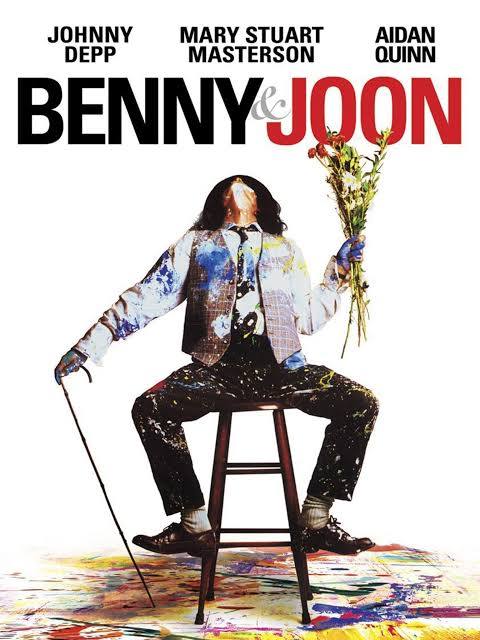
Erin from Still Life, With Cracker Crumbs and I are hosting Comfy, Cozy Cinema again this year and first up on our movie-watching list was Benny & Joon.
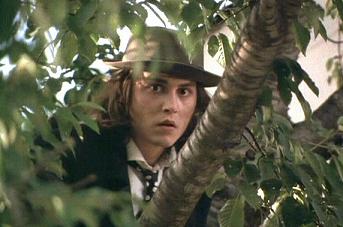
Benny & Joon (1993)is a quirky film I watched in 1990s and really enjoyed. It was when I first saw Johnny Depp because I never watched 21 Jump Street or anything else he was in back then.
I already knew Mary Stuart Masterson from Fried Green Tomatoes.
For the most part, the movie is funny, comfy, and sweet, but there are a couple of hard moments. In the end, though, (small spoiler ahead —–à) things actually turn out okay.
Let’s start with an online description of the movie:
Benny (Aidan Quinn), who cares for his mentally disturbed sister, Joon (Mary Stuart Masterson), also welcomes the eccentric Sam (Johnny Depp) into his home at Joon’s request. Sam entertains Joon while he dreams of a job at the video store. Once Benny realizes Joon and Sam have started a relationship, he kicks Sam out of the house. This leads to an altercation between brother and sister. Joon runs away with Sam, who soon realizes that she may need more support than he alone can provide.
This movie starts with someone painting and a train rolling across the tracks to the soundtrack of The Proclaimers singing I’m Gonna Be (500 miles). Yes, that very annoying song that is an earworm and was overplayed in 1993. Okay, it’s not actually annoying. I like it! But it won’t get out of my head once I’ve heard it. And I mean for more than a week!
Anyhow, back to the movie.
After we see a woman painting we are at Benny’s Car Clinic where we see Benny (Aiden Quinn) fixing a car and chatting with his friends when a call is made from his home. His sister Joon wants him to know that they are out of peanut butter Crunch cereal.
Later at Benny’s home we meet Joon who seem a little different but otherwise fairly sane and smart.
She’s clearly very intelligent with the way she uses large phrases and big words. Still, she also seems somewhat childlike.
As the movie goes on we will lean that Joon has mental issues and sometimes likes to light things on fire.
She rarely leaves the house alone, instead staying in the house and painting. Housekeepers take care of her during the day but on this day one of them, apparently one of many, is calling it quits.
Joon is out of control she tells Benny. That means Benny is without someone to sit with Joon during the day and he’ll have to miss his card game with his friends that night because Joon can’t be left home alone very much.
His friend, Eric (Oliver Platt), tells him just to bring Joon, but Benny hesitates.
“What’s the big deal?”Eric says. “She paints and she reads.”
“Yeah, she paints. She reads. She lights things on fire,” Benny responds.
As my Mom would say, “Oh. Oh. My.”
Once at the game, though, Joon does fairly well, even if she does like holding her hand over the flame of a candle a bit too much..
We learn that Benny’s friends place real items in the pot for their poker game and this will come into play later in the movie when Joon decides to play a round while Benny is outside and Benny’s friend Mike says if she loses the hand she has to take his eccentric cousin off his hands.
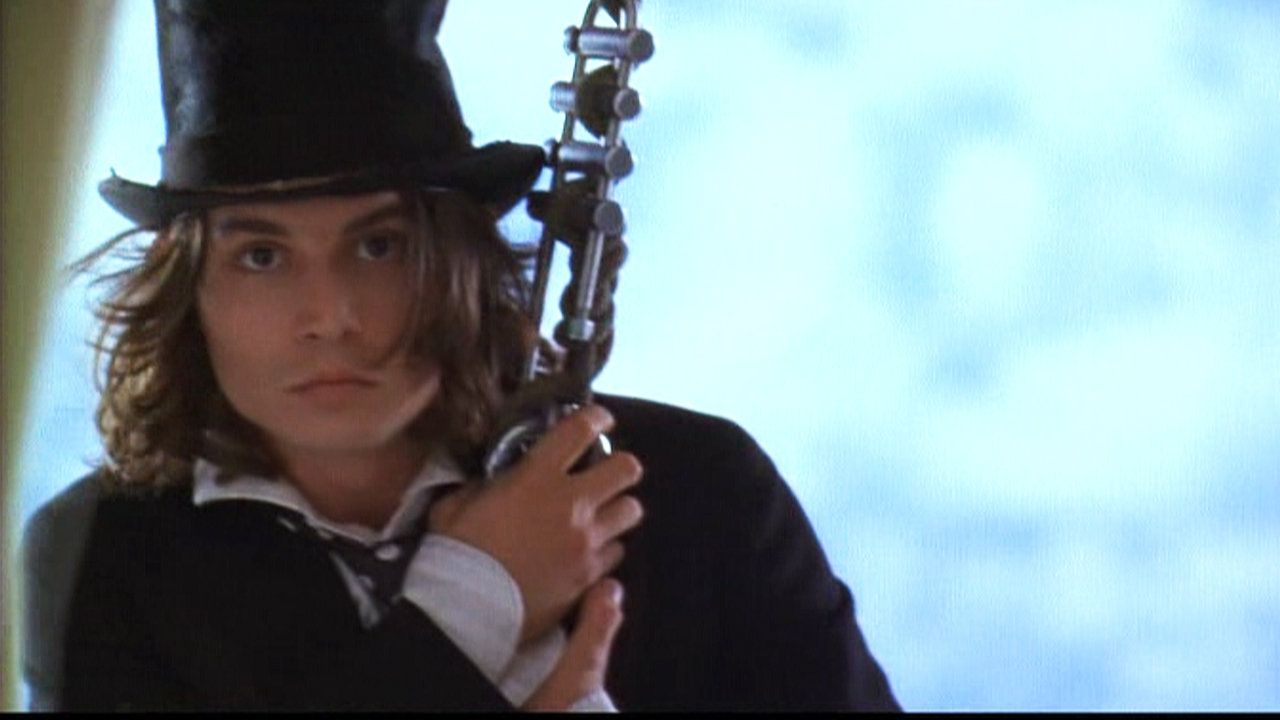
That cousin is a 26-year-old name Sam (Johnny Depp) who can’t read or write and doesn’t know what he wants to do with his life. He likes Buster Keaton and has been studying him, though, dressing like him and taking on his persona while being generally …. Weird.
At first Benny says he won’t take Sam but then he agrees and over time Sam becomes the housekeeper and a whole lot more to Joon who falls hard for him.
Before all of this, though, Joon’s doctor suggests that Benny have Joon placed in a group home where she will be among her peers.
Benny laughs. “She has a home.” Not only that but, “She hates her peers.”
The doctor sighs. “You might want to consider there are people more capable of handling these outbursts than you.”
Benny rejects this idea over and over again even though his whole life is put on hold so he can care for Joon. He doesn’t have a love life or any life outside of work.
There will come a time, though, when it does have to be seriously considered. I won’t give away anymore than all of this because this movie is worth a watch. It is actually sweet and when you think it is going some place you don’t want it to, it will change directions and pleasantly surprise you.
Don’t let the dark music that sometimes pops up scare you.
Mixed in with all the drama with Joon, by the way, is a potential romance between Benny and Ruthie, a local waitress who used to be in B-movies.
This movie has always charmed me. It’s made me laugh, smile, and enchanted me. I’m a big sucker for quirky movies with quirky characters.
As I watched the movie this time around (maybe my fifth time watching it), I realized that I think I am attracted to this movie because my great-aunt was schizophrenic and an artist. Maybe I saw some of her in Joon, even though I never met her. Mental illness has always frightened me. My great-aunt was sent to a mental hospital when she was in her 40s after years of acting odd. From what I understand she was diagnosed with schizophrenia and I always wondered if it might happen to me too. I liked art and I was even a little odd at times. Ha! So far I’m just depressed and have anxiety. No schizophrenia.
I should clarify that this movie never defines what Joon has but many viewers suspect a combination of conditions, including schizophrenia.
There are several classic scenes in this movie for me.
One is when Sam uses forks to make buns dance:
The other is when Sam reenacts Ruthie’s horrible acting in the B-movie (which can also be seen at the above clip)
Another is the absolute look of delight Sam gets when Benny says Joon sometimes hears voices in her head. That makes me crack up every time. It’s like he thinks the idea of her hearing voices is absolutely delightful.
Then there is Sam making grilled cheese sandwiches with an iron.
Then there is also a scene toward the end of the movie that you will have to see — you’ll know what it is when you see it.
There are also so many good quotes that come from either Joon or Sam too
When Sam is staring at Joon at one point she says, “Having a Boo Radley moment are we?”
As a huge fan of To Kill A Mockingbird, that one always cracks me up.
Later when she and Benny watch Sam make the grilled cheese sandwiches she says, “Some cultures are defined by their relationship to cheese.”
In the restaurant one day Joon picks the raisins out of her tapioca pudding and Sam asks her why she doesn’t like raisins.
“They used to be fat and juicy and now they’re twisted,” she says. “They had their lives stolen. Well, they taste sweet, but really they’re just humiliated grapes. I can’t say I am a big supporter of the raisin council.”
He then asks her if she saw those dancing raisins on TV and she says they scare her. That always cracks me up because they used to scare me too!
Some Trivia and Facts
I always wondered this so I looked it up and Johnny does do his own stunts and tricks when imitating Buster Keaton. This does not surprise me in the least.
Apparently, Wynonna Ryder was going to play Joon but she had Johnny had been dating at the time and broke up so she dropped out. I think I could actually see her playing Joon, even though Mary Stuart Masterson did great.
Johnny improvised a scene where he tasted the paint of one of Joon’s paintings. This also doesn’t surprise me.
From IMdb: “During the filming of the scene where Benny rushes to Joon’s aid after she is put into an ambulance, a house party was happening less than a block away from the shooting in Spokane’s Peaceful Valley area (it was a day scene actually filmed at night). After hours of re-takes, Jeremiah S. Chechik bribed the local revelers with a cornucopia of food from the crew’s food tent, which kept them pacified long enough to finish the scene (at around midnight).”
Though released in the UK and Australia in 1988, the song I’m Gonna Be (500 Miles) was not well-known in the United States until this movie. Once it was in the movie it reached number three on the Billboard Charts in the U.S. and was played ad nauseum until many people, such as me, were sick of hearing it. (Again, I do like the song. It was just overplayed that year.)
Another tidbit directly quoted from IMbD: “In the restaurant scene between Sam and Joon, as they are discussing raisins, Sam says, “It’s a shame about raisins.” This is a tongue-in-cheek reference to the video for the Lemonhead’s hit, “It’s a Shame about Ray,” which was released the year before and in which Johnny Depp starred. (At the end of the video, Johnny can be seen carrying a curved cane almost identical to Sam’s.)”
Of the film, Rogert Ebert (a famous movie critic back in the day) said, “Benny and Joon” is a film that approaches its subjects so gingerly it almost seems afraid to touch them. The story wants to be about love, but is also about madness, and somehow it weaves the two together with a charm that would probably not be quite so easy in real life.”
For once, he actually liked a film I liked and ended his review with this: ““Benny and Joon” is a tough sell. Younger moviegoers these days seem to shy away from complexities, which is why the movie and its advertising all shy away from any implication of mental illness. The film is being sold as an offbeat romance between a couple of lovable kooks. I was relieved to discover it was about so much more than that.”
Have you ever seen this one? What did you think if you did?
You can read Erin’s impressions of the movie here.
Up next in our Comfy, Cozy Cinema is: A Knight’s Tale.
You can see the rest of the list of movies in this cool graphic that Erin made:
This summer I am watching Angela Lansbury movies for the Summer of Angela.
This week I dropped the movie with Angela and Warren Beatty that seemed super dark and replaced it with The Long Hot Summer, which I actually watched in 2022 during my first ever movie marathon called The Summer of Paul (Newman that is). For the life of me, though, I could not find that I wrote a blog post about the movie, so I am starting from scratch here.
The Long Hot Summer is not an Angela Lansbury focused movie, but she is in it and fills the screen with her personality when she is on it. The main stars are, of course, Paul Newman and Joanne Woodward, but Angela provides some comic relief as Orson Welles’ mistress, Minnie Littlejohn.
First, a bit of background/description of the movie with the Google description:
Handsome vagabond Ben Quick (Paul Newman) returns to the Mississippi town his late father called home, but rumors of his dad’s pyromaniac tendencies follow him as soon as he sets foot there. The proud young man’s determination eventually wins over civic leader Will Varner (Orson Welles), who decides Ben might be just the man for his daughter, Clara (Joanne Woodward) — much to the displeasure of Will’s gutless son (Anthony Franciosa) and Clara’s society boyfriend (Richard Anderson).
The movie’s main focus is the sexual tension between Paul and Joan’s characters, which worked out fine since the two were having an affair before this and were on the cusp of being able to announce that since Paul Newman’s divorce was essentially final. Yes, I have always been a fan of Paul, but, no, I don’t like that part of his and Joanne’s story, and I have a feeling there were times they didn’t like it either.
Paul was always good at playing loners, sad men who don’t know who they are or what they want in life except the woman they set their sights on.
It’s the same in this movie, where Paul seems to want prestige but really just wants Clara to like him as much as he likes her. Clara is uptight, though. She does everything proper and never lets her guard down, especially around Ben Quick. She seems to have a feeling if she does let her guard down all of those feelings she’s been trying to protect all her life will spill out.
It’s no surprise since her daddy (Welles), is also pretty uptight and fights for control over everything in his life. That’s why he won’t marry Minnie, who desperately wants to be married.
The movie opens with Ben Quick being told to get out of a county because he is charged with burning a man’s barn because he got mad at the man. There was no proof, though, so instead of jailing him, the town tosses him out.
He rides a couple of steamers down the river to his family’s old town and when he’s hitch-hiking he’s picked up by sour Clara and her bubbly friend.
We find out how sour she is when he asks, “So you girls just take your fun wherever you can find it?” And Clara responds with, “Don’t jump to conclusions, young man, we’re giving you a ride and that’s all we’re giving you.”
The sparring between Clara and Ben kick off right from there and continue on in the movie.
The first sign we see is a welcome sign to Fishermen’s Bend, home to – well, everything owned by someone named Varner.
Ben tells the girls that it sounds like Varner is the man to see about work in that town and the bubbly girl says that he can see Mr. Varner every night at their house. He asks if they are connected to Varner and the girl giggles that they are indeed and then drive off and leave him there at the town hall.
Back at the Varner house, Eula, Clara’s sister-in-law, is gushing to her husband Jody about all the clothes she bought, and Clara is on the terrace sipping lemonade with her friend Agnes when Ben shows up again.
The ladies were talking about how they are single and lonely before Ben showed up. Agnes mentions how he might be an option and Clara quips that they haven’t gotten so desperate as to be turning to strangers.
Ben asks Jody about working one of the tenant farms to make some money off of. Jody agrees before running back upstairs to make out with Eula. The servant comments when he sees muddy footprints on the rug after Ben leaves, “Mister, you sure do leave your calling card.”
That’s a bit of foreshadowing and an understatement.
As the movie goes on Ben will work his way into the family in more ways than one, upsetting the apple cart, so to speak.
Clara walks the carpet back to Ben’s tenant house with a little black boy (yep, another servant down here in the South) and tells him you dirty it, you clean it.
What follows is some great dialogue, which continues throughout the movie.
“A lot of fuss to be making about a rug lady, if it’s the rug that’s bothering you.”
Clara tips her chin up. “What else would it be?”
Ben spits out a watermelon seed. “Well now you correct me if I’m wrong but I have a feeling I rile ya’. I mean me being so mean and dirty and all.”
“Mr. Quick, you being personal with me, I’ll be personal with you. I spent my whole life around men who push and shove and shout and think they can make anything happen just by being aggressive and I’m not anxious of ‘nother one around the place.”
Ben smirks. “Miss Clara, you slam a door in a man’s face before he even knocks on it.”
All Clara says is for him to have the rug at the house by 6.
It shows how bigger than life Varner is when he comes back into town in an ambulance or police car (not sure which ) with the sirens blaring. The people in town who watch him drive through talk about how he was in the hospital and had something cut out of him.
Then it’s time for Angela, the point of this here Summer marathon. She comes running out of the Littlejohn Boarding House and Hotel as soon as he pulls up, wearing a tight and tiny white dress, and throws her arms around him. Her Southern accent is so jarring being familiar with her original accent and the American one she ended up developing as the years went on.
He laughs and declares she seems to be getting fatter and blonder on him.
Oh yeah…Didn’t I mention what a charmer he is?
He tells her he will be back…later. *wink* *wink*
He greets his family at home, with a clear critical eye on his son who seems desperate to please his father. That will come to play in a big way in the movie.
Orson Welles’ color is so horrible in this film, and I don’t know if that is because he is supposed to look sick or if it was bad makeup or if Orson Wells was that color back then. Then again, a couple of the other men had that weird color to their skin too. Maybe it was just bad makeup or the film itself.
Despite his color, Minnie wants to marry Daddy Varner, and she lets him know that. He avoids her as much as possible, preferring to keep control of his world.
What Angela said about the movie:
Angela’s plays a playful flirt in this film, not a dark femme fatale like A Life At Stake and she credited the director, Martin Ritt, for bringing that playfulness out in her.
“Martin Ritt had a wonderful enthusiasm and earthy sexy quality himself,” she said. “He loved the idea of the dirtiness of the carryings on, and he certainly brought every bit of kind of naughty sexuality out of me in that role.”
As for Orson Welles, Angela agreed with others who said he was used to getting his own way because he normally had control of his own projects. This project wasn’t his though.
“He was always nudging and pushing for things and wanted to change lines,” said Angela. “But had to be carefully handled so that he didn’t always get his way because his way wasn’t necessarily the best way for everybody else in the scene.”
Welles would irritate his co-stars by overlapping his own lines with their dialogue, ad-libbing, and mumbling to the point where his lines were barely comprehensible, she added.
Despite him being annoying, Angela also said of him: “There was something you couldn’t resist about Orson.”
In a 2001 interview, quoted on TCM.com, Angela said of Paul and Joan: “They seemed to have such a total understanding of each other that they were able to work in scenes where they were at each other’s throats or falling under each other’s spell.”
My thoughts on the movie:
I like the Southern feel of this movie, the acting, the complex relationships. I love watching Ben try to break through Clara’s hard exterior. No matter how hard she tries to resists him or how many times she pushes him away he keeps trying.
I love how the women are very strong in the movie but not so strong that they are outright disrespectful, even though they probably should be in some cases.
Paul’s smirk works well in just about every movie he’s in but it really works in this one. It’s hard to read what his real motives are sometimes, but deep down I feel like he does want something better than what he’s had. I feel like he does want a family and to be successful on his own merit.
This movie has a Tennessee Williams feel to it even though it is based on one main story and other stories by William Faulkner. It did not have a Tennesse Williams’ ending, at least.
On a more shallow level, I don’t know what they were thinking with Joanne’s big eyebrows and those way too short bangs. Despite how much I didn’t like the look they went for, I really enjoyed watching her character develop and blossom and reveal herself to be different than who we think she is for the first half of the movie.
Watching the jealousy unfold in Jody as he desperately tried to be what his father wanted him to be was difficult to see. The poor guy has no idea how to be a man of his own and is always trying to be what he thinks his daddy wants him to be.
Orson really wasn’t good in this movie. He really wasn’t. I don’t know what happened to him or why he performed so awful but from what I read online it was flat out jealousy over his younger counterparts who were associated with the Actor’s Studio. I also read he was only 10 years older than Paul in this film – 42 years old – but he looks terrible! He wore a prosthetic nose which I can not figure out the point of.
As for Angela, she pulled off her part well and it was fun to watch her with a thick Louisiana accent. Every time I see her in one of her early movies, I really do find myself forgetting she was Jessica Fletcher. She would have been so much better in this one if she hadn’t had to act across from Orson who was way over acting.
Trivia and Facts:
Orson Welles always wore a fake nose when he worked, so when he would sweat on this film, his fake nose would slip. Make-up people had to keep applying material to keep the fake nose from falling. (source TCM.com)
The director was Marty Ritt and Paul filmed five other films with him including Hombre, Paris Blues, The Outrage, Hemingway’s Adventures of a Young Man, and Hud. (source, excerpt from Paul Newman biography on Lit Hub)
In his biography Paul Newman wrote of Orson: “Orson couldn’t understand screen generosity, where one actor allows another player in his scene to deservedly get the best camera shots. Screen generosity was not part of Orson’s vocabulary. After a number of retakes on a scene he did with me, Orson asked Marty if he could have a private word with him. They stepped away together, and seemed to be discussing something rather serious. When they came back, we did another take, and afterwards, I asked Marty what was going on.
“Orson thought you were submarining him,” he said; it was an actor’s way of saying someone was stealing his screen time.” (source, excerpt from Paul Newman biography on Lit Hub)
The director, ‘Martin Ritt’ , was forever known after this movie as the man who tamed Orson Welles. During filming Ritt drove Wells into the middle of a swamp, kicked him out of the car and forced him to find his own way back in the hot Louisiana heat. (various/several sources)
Joan and Paul were married in January 1958 and the movie released in March. (TCM.com)
When the movie was complete, the director and others watched it and noticed they could barely here Orson at times. The director felt sure Orson had purposely mumbled his lines to make the sound more difficult because he was unhappy with not having control.
From TCM.com: “The success of The Long, Hot Summer helped Martin Ritt reestablish himself as a major director following his 5-year blacklisting from Hollywood. It also showcased the talents of young up-and-comers Joanne Woodward and Paul Newman, who won Best Actor that year at the Cannes Film Festival for his portrayal of Ben Quick. It marked both the beginning of long and distinguished careers for the talented couple as well as the beginning of one of Hollywood’s longest and happiest marriages.”
The Long, Hot Summer was based on the works of southern writer William Faulkner, most notably his 1940 novel The Hamlet. (source: TCM.com)
The movie was turned into a television series in 1965. It starred Roy Thinnes as Ben Quick, Nancy Malone as Clara, and Edmond O’Brien as Will Varner. O’Brien eventually left the show and was replaced with Dan O’Herlihy. Legendary director Robert Altman directed the pilot. (source: TCM.com)
Copied directly from TCM.com’s article because I thought it was interesting and I didn’t want to summarize it: Although William Faulkner was best known as a novelist and short story writer, he did work as a screenwriter in Hollywood for 20th-Century-Fox during the thirties and forties. A good deal of his work went uncredited and he was never successful in adapting any of his own work for the screen (although he did do a screen treatment for “Barn Burning” but it was never produced). He did, however, receive credit for the screenplay adaptations of Ernest Hemingway’s To Have and Have Not (1944), Raymond Chandler’s The Big Sleep (1946) and a few other scripts such as Submarine Patrol (1938) for director John Ford and The Road to Glory (1936) for director Howard Hawks.
Other William Faulkner film adaptations include The Story of Temple Drake (1933, based on his novel Sanctuary), Intruder in the Dust (1949), The Tarnished Angels (1958, based on his novel Pylon), The Sound and the Fury (1959), Sanctuary (1961), The Reivers (1969), Tomorrow (1972, based on his story), and an uncredited Russian adaptation of Sanctuary entitled Cargo 200 (2007, aka Gruz 200).
Have you ever seen this one?
My last Angela movie will be Something for Everyone. I don’t know anything about it so I’m going into it blind.
If you want to read about some of the other movies I watched, you can find them here:
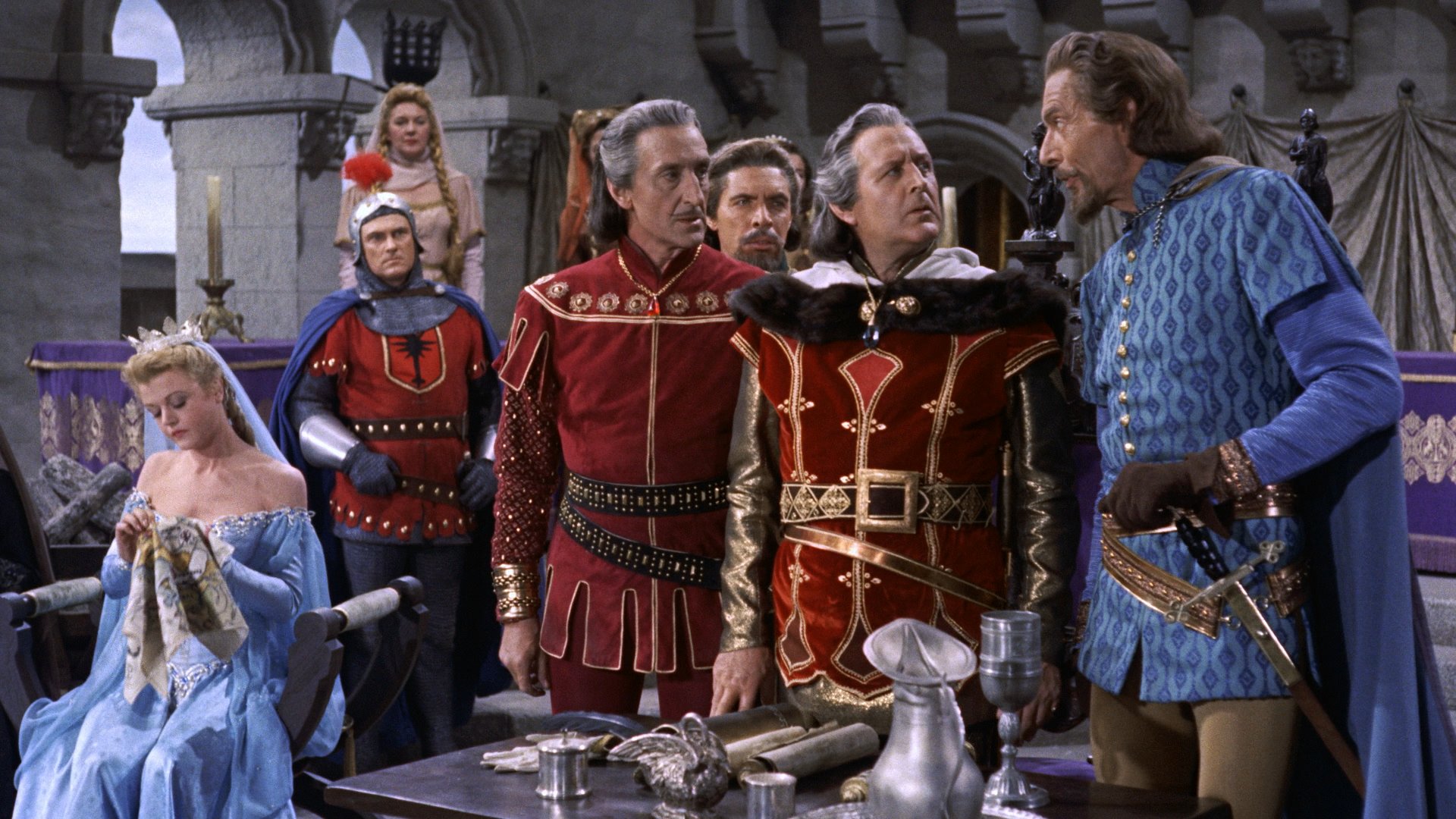
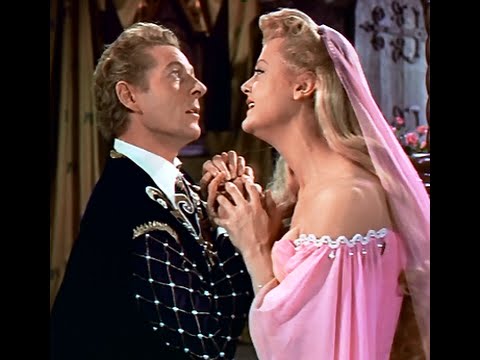
This week I watched The Court Jester (1955) with Angela, Danny Kaye, and Basil Rathbone. It is a musical/comedy.
The main words to describe this movie are silliness, ridiculousness, and peak Danny Kaye moments.
It really fell apart toward the end, I felt, but there were some hilarious moments that made up for it.
First, a bit of the plot with a description from Google:
“Former carnival performer Hubert Hawkins (Danny Kaye) and maid Jean (Glynis Johns) are assigned to protect the infant royal heir from tyrannical King Roderick I (Cecil Parker). While Jean takes the baby to an abbey, Hawkins gains access to the court by impersonating the king’s jester, unaware that the jester is really an assassin hired by scheming Sir Ravenhurst (Basil Rathbone). When Princess Gwendolyn (Angela Lansbury), falls for Hawkins, a witch secretly aids him in becoming a knight.”
This film is just a lot of craziness caused by misunderstandings, misdirection, and generalized oopsies.
We start the movie by learning that an entire royal family was killed so that the current King, King Roderick I, could take the throne. Actually, though, the entire family wasn’t killed, according to rumors anyhow. The rumors say an infant survived and bears upon his bottom a birthmark of a purple pimpernel.
The rumors further say the child is being cared for in the forest by an “elusive, dashing outlaw” known as the black fox. As if to prove these rumors, one of the king’s men is killed as they are riding near the forest and a note attached to the arrow announces that the child is alive and The Black Fox has him.
Not sure why this was being announced because I would think it would be better to keep this all a secret until the child is older and then they bring the child in to overthrow the usurper, but…what do I know?
After the note scene we are taken to the castle where the king’s advisor, Sir Ravenhurst (Rathbone), is stating the rumor about the child being in the care of the black fox is simply a silly story to scare the king. The other advisors say there is something to the rumor and to the power of the black fox. They feel that the king should form an alliance with Griswold of the North because he is strong and has men who can help them fight against The Black Fox.
Ravenhurst is against this and the other advisors say it is because Ravenhurst wants to be the king’s right hand man and have more power.
The king says even if he wanted to form an alliance he doesn’t have anything to offer Griswold to sweeten the deal. The one advisor says that the king does have something he could give Griswold — the hand of his daughter Gwendolyn — our fair Angela — in marriage.
Angela is gorgeous in this movie. She’s super skinny (not that she’s ever been big), tall and elegant.
My son told me recently that young Angela was beautiful and that even “old Angela” in Murder She Wrote wasn’t so bad. I can’t wait to show him her in this film (I watched it on my own) because this will further solidify his feelings.
Gwendolyn says she is not interested in marriage because the castle witch, Griselda, told her that a more dashing man than Griswold would be coming along to sweep her off her feet.
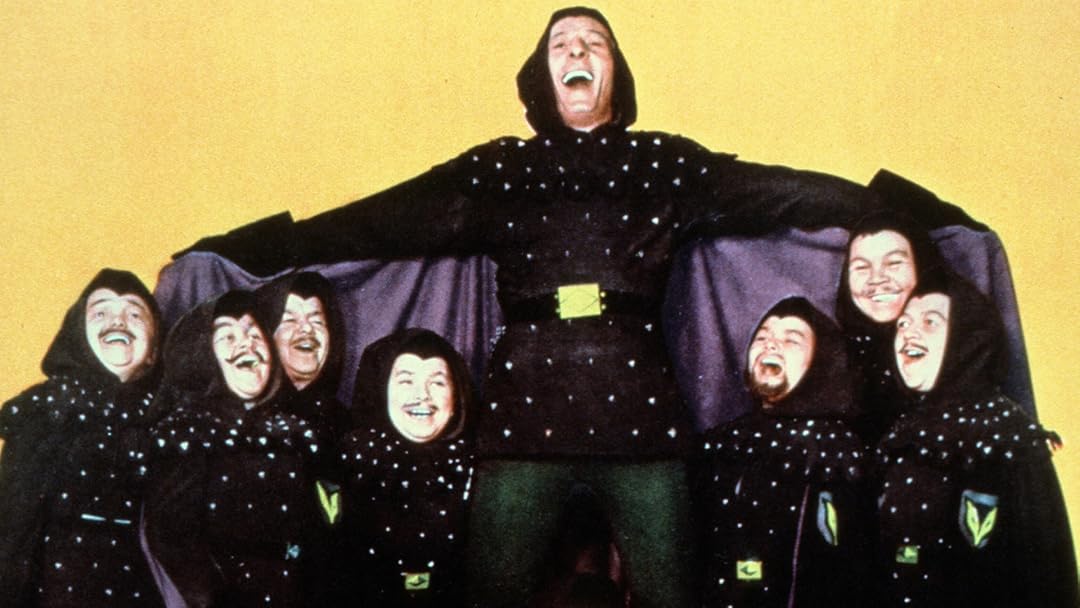
Now the scene switches to the lair of the black fox, where Hubert tells the black fox he has brought a group of midgets with him from the carnival (Hubert’s former job) to fight for The Black Fox. This brings me to one of the weirdest promo photos I’ve ever seen:
I’ll be seeing this one in my nightmares tonight.
It is the job of Danny’s character, Hubert, to care of the baby and he thinks it is a job that should go to a woman. Well! How rude.
But The Black Fox doesn’t agree and tells Hubert he will continue the job.
Hubert is a little more excited about having to take care of the baby when he is charged with traveling with the beautiful Jean to take the child to the abbey for protection.
When I was reading about the actors in this movie, I found out that Glynis Johns (Jean) also played the mother in Disney’s Mary Poppins. The first one, of course.
Anyhow, moving on — The pair stop for the night and that’s when they not only admit their feelings for each other (smoochy, smoochy) but a man stumbles into the small stable they are in and asks to stay with them for the night. He’s on his way to see the king, he says. He is a court jester and his name is Giacomo.
Ah-ha! Hubert and Jean were just talking about how it would be a good thing if they had a spy in the castle who could tell them if the king was coming after The Black Fox. How very fortuitous this unexpected meeting has been.
Giacomo is knocked out and Hubert steals his clothes and his wagon, which is emblazoned, for some weird reason, with Giacomo’s name across the back of it.
So Jean takes off toward the abbey and Hubert takes off toward the castle.
Sadly, Jean is captured by soldiers from the castle who are looking for good looking women for the king. The baby is hidden in a basket and she and the baby are taken to the castle where she manages to hide the baby away from the king and his men.
Meanwhile, Gwendolyn learns that Griselda lied to her about the dashing man and is about to have her killed when Hubert shows up on the road below and Griselda claims that he is the man that Gwendolyn is supposed to marry.
Whew. This plot is starting to get pretty twisted at this point. From here on out, things get pretty crazy with Griselda casting spells and poisoning people left and right. Ravenhurst also thinks that Giacomo (Hubert) is an assassin who is going to take out the three advisors who wanted to create the alliance with Griswold.
Before all is said and done there will be sword fights, a jousting match, fake and real romances, a midget army, and, of course, plenty of musical numbers by Mr. Kaye.
There is also the famous scene between Danny, Glynis Johns, and Mildred Natwick where they discuss which vessel the poison is in.
Here is a clip of it, in case you’ve never seen the movie:
I won’t share too much more in case you want to watch the movie yourself.
The movie was directed by Norman Panama and Melvin Frank.
According to an article on TCM.com, Panama and Frank formed a production company with Kaye called Dena Productions, named after Danny’s daughter, after Kaye’s success in 1947 with the film The Secret Life of Walter Mitty.
The idea behind the production company was to introduce the real Danny to film audiences. He had been acting on Broadway and in smaller productions on stage for years.
The Court Jester was the company’s second movie and proved to be a huge success but not right away. It actually bombed at the box office, despite it’s stellar cast. Years later though it was regarded as one of Danny’s finest films with, according to TCM, “comedy routines that have entered the annals of film history.”
Amazon features trivia and facts through their xray feature when you watch a movie there on a computer or device. I often forget that because I usually watch the movies on my TV but this time I watched part of the movie on my phone and bits of the trivia popped up.
One of them was a story from Danny’s daughter who said that fans often came up to him and recited the entire tongue twister scene for him.
What Angela said about the movie:
Angela had been playing mainly dramatic roles before this movie and was able to have some fun with the role. Part of that fun was watching Danny Kaye work she said in the Kaye bio Nobody’s Fool by Martin Gottfried.
“His use of hands was inspired by commedia dell’arte,” she said. “And in the way he moved, he was absolutely original; he was one off the mold.”
She added, “Danny wasn’t an ensemble player – he was the one around whom everyone danced, and we all dressed to him. We never stopped laughing. There was none of that moodiness he could have elsewhere, that abruptness, ignoring people. If something interested him, sparked him, he came alive. The minute that was over, he was closed for business, which I think is true of many of the great comic performers. They are constantly out to lunch. Where they are, I don’t know.”
Gottfried also wrote an autobiography on Angela and said of her role in the movie: “It allowed her to play not only a princess, but a princess her own age. She was made up to look young and lovely. She got to wear beautiful clothes that showed off her fine, slender figure.”
What I thought overall
This was a ton of fun. As I mentioned above, I wasn’t a huge fan of the ending when things started to fall apart in some ways and just descend into chaotic ridiculousness but that was a minor issue when there were so many other great moments and interactions in the film.
Angela wasn’t in this one a ton but she was in it enough to enjoy her mix of wide-eyed adoration of Danny’s character and her devious ways to get what she wanted. She truly was beautiful in the film as well.
I loved the wordplay and back and forth between the characters. None of the songs really stuck out to me but they were fun.
This is a great film to escape into and forget about your problems with. The bright and colorful outfits alone will distract you from the stresses of your days.
Trivia about the movie:
Basil Rathbone had made many movies where he was the sword-wielding villain so when it came to his role in this film, he was ready. He was 66 at the time, though, having already redefined Sherlock Holmes in 14 films from 1939 to 1946, and wasn’t ready for how quick Danny would be able to move the sword. A body double had to be called in to film some of the fencing scenes because Danny was moving so fast that Basil was almost injured. It was because of his superior fencing skills that no one was injured but he still couldn’t keep up with Danny’s fast, though less accurate, moves.
According to TCM.com. “(Basil’s) talents were carefully observed by Danny: With his quick reflexes and his extraordinary sense of mime, which enabled him to imitate easily anything seen once, Kaye could outfence Rathbone after a few weeks of instruction.” (various sources, including TCM.com.)
During the “Maladjusted Jester” sequence, King Roderick I (Cecil Parker) kicks Hawkins (Danny Kaye) every time he makes a mistake. It took 11 takes, and afterward, Kaye said he had bruises all over his hip. (source IMdB)
The “Now I can shoot and toot” speech during “The Maladjusted Jester” was previously said by Danny Kaye in Up in Arms (1944).
From IMdB: “This was composer Vic Schoen‘s first movie. He was not officially trained in the mechanisms of how music was synchronized to film, so he had to learn on the job. It took him a long time, but he was very proud of his work. Composer Igor Stravinsky listened to his score and later complimented Schoen, saying he had broken all of the rules.”
A U.S. Civil War reenactment group, The American Legion Zouaves of Richard F. Smith Post No. 29, Jackson, Michigan” performed the intricate high speed marching maneuvers during the knighting ceremony. (source, Classic Movie Hub)
Have you ever seen this movie?
What did you think?
Cat from Cat’s Wire shared her thoughts on the movie here..
Here is what is left of my Summer of Angela:
August 1 – The Court Jester
August 8 – The Picture of Dorian Gray
August 15 – A Life At Stake
August 22 – All Fall Down
August 29 – Something for Everyone
If you want to read about some of the other movies I watched you can find them here:
This summer I am watching Angela Lansbury movies for the Summer of Angela.
I switched some things up a couple of weeks ago and slid The Pirates of the Penzance and this week’s movie, Please Murder Me, in place of a couple of TV movies Angela was in. I do have an interest now in watching one of the ones I replaced, so I may do that on my own.
This week’s movie starred Angela with Raymond Burr. It was short, sweet, and to the point, and very good. My husband watched it with me and said this movie would be considered a “B-movie” back in the day, but it was a very good B-movie to me.
I have been remiss in sharing where I have found these movies to watch so I do want to share that this one is free on Tubi and YouTube. The reproduction quality isn’t the best because it is a “b movie” and is now in the public domain. This means people can put this movie up wherever they want and not get hit with a copyright claim. I’ve found a lot of cool movies that way through YouTube and Tubi.
The movie seems to show, no matter where you find it, lines down the middle and sides from the old film. I am not sure if there are cleaner copies out there or not.
The description of this movie is that Raymond Burr portrays a lawyer who finds out his client, who he just got off for murder, is actually guilty. There is a lot more to it than that, but that’s the bottom line.
According to TCM.com, the movie’s screenplay was based on a teleplay by E. A. Dupont and David Chantler on Big Town (CBS, 1954).
It was directed by Peter Godfrey.
The movie starts with Raymond walking down a street, going into an office, and then speaking into a tape recorder (reel-to-reel) telling whoever hears the recording that in 55 minutes he will be dead.
We then have a flashback that will encompass the bulk of the movie.
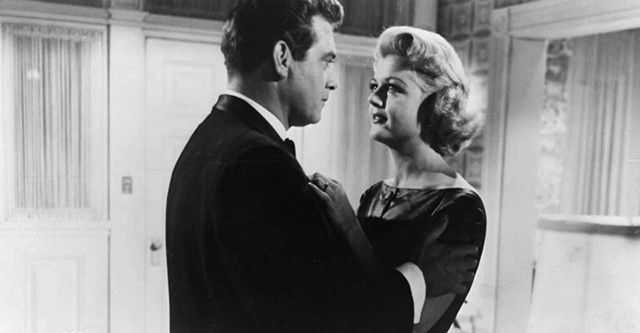
That flashback consists of us learning that Burr’s character, Craig Carlson, is in love with his best friend’s wife Myra Leeds (Angela). We find this out because Craig tells Joe Leeds (Dick Foran) and says that he and Myra are going to be married and Craig would like Joe to divorce her.
Joe is oddly calm about this and as he leaves Craig’s law office, says he needs some time to think.
Before long we are in the Leeds’ apartment and Joe Leeds has met his maker. He’s under a sheet and Myra is being questioned by a plain-clothes cop who clearly thinks her self-defense story is absolutely garbage.
Myra says that Joe lunged at her, furious that she told him she wanted a divorce, and that she, terrified that he was going to kill her, shot him.
Uh-huh. Are we, the viewers, buying this?
Well, yes, I was because I hadn’t read the synopsis of this film before I watched it so I thought she might actually be telling the truth but…..not really sure.
Craig has, of course, volunteered to be Myra’s defense attorney.
It isn’t too much of a spoiler to say (since all the descriptions online already say this) that after the trial Craig discovers that Myra wasn’t being very truthful.
The problem is that in the United States a defendant can’t be tried twice because of the concept of “double jeopardy.”
Now Craig has to figure out how to make Myra pay for what she did to her husband and his best friend. Craig already felt guilty about having an affair and now the guilt is insurmountable and has a hefty helping of betrayal piled on.
I have only seen Raymond Burr in the old Perry Mason episodes and Rear Window but have enjoyed his acting in both and I enjoyed his acting in this movie as well.
He mainly played villains in the beginning of his career.
Here he portrayed a bit of a darker Perry Mason or as the author at Heart of Noir stated “a three-dimensional, complex lead role” who is “both a home wrecker and a cuckold, which demands of him quite a balancing act of emotions.”
Overall, I liked this movie and I enjoyed both Raymond and Angela’s performance.
I read a piece of trivia that I will share below that involves Angela taking the job because she needed the money and she may have only done it for the money, but she seemed to put her all in it.
I really enjoyed her performance, even if it was toned down from what she would show in films such as The Manchurian Candidate. One might say this role was a good preparation Eleanor Shaw.
I loved the use of light and shadow in the film. I am a huge fan of black and white photography and films that use shadow and light to highlight what the photographer or director wants the viewer to focus on.
In this one, there was a lot of shadow around the subjects with light hitting their eyes or whole face during tense scenes when a secret was about to be revealed or a confrontation was had.
My husband and I agree on some points about the movie.
There could have been more explanation of the plot. There was some missing information throughout which led to rushed scenes.
“Instead of being only an hour and 14 minutes it could have been an hour and 45 minutes,” my husband said.
This would have given us time for a bit more background and exposition. We both agree that these minor issues didn’t take away from the overall story, however.
I like what Heart of Noir said about the movie: “From the pre-credits opening scene of an unidentified man walking the city sidewalk past scummy-looking bars and peep shows, the film oozes with economy, bland interiors and soupy darkness combining with overhead shots and Dutch angles to disorient the viewer and create an occasional dream-like feeling.”
I also enjoyed this assessment by PopOptiq: “The picture earns its fatalistic conclusion with a gut-punch plot resolution to Craig’s tireless mission to expose Myra. If anything, the film is yet another reminder of the range both Raymond Burr and Angela Lansbury had as actors. Both became legends through very different projects on television, making this reunion, before their popularity erupted, all the more interesting a time capsule.”
Trivia or facts:
According to Angela Lansbury’s authorized biography, this movie was filmed in an abandoned supermarket near Yucca and Franklin Streets in Los Angeles. Lansbury and her husband Peter Shaw were at a low financial point in their marriage and they needed the money. After the film was finished, she applied for unemployment insurance. (source IMdB) (An insert by me here: her husband was Peter Shaw and she played Eleanor Shaw in a movie? Like…weird!)
The film was made the same year that Raymond Burr auditioned for the role of Perry Mason.
Lamont Johnson’s who plays . . . well, I’m not going to tell you so I don’t spoil anymore of the story …. Is in this movie and this was his last movie as an actor before he became a full-time director. He mainly directed stage and television productions.
The opening credits featured the cast, writers, director and producers. The crew appeared in the closing credits. (source TCM.com)
Please Murder Me was the first film made by Gross-Krasne, Inc., which was run by executive producers Jack J. Gross and Philip N. Krasne. (source TCM.com)
A quote from the movie that I liked, “My whole life has meant just meant three things, my love for Joe, my work, and my love for you. You destroyed them all. How much more is left of me?”
Have you ever seen this one? If so, what did you think?
Cat from Cat’s Wire also watched the movie this past week and wrote about it on her blog here. For next week, I am switching The Mirror Cracked, based on an Agatha Christie book, for Death on the Nile, based on another Agatha Christie book. I’ve been reading that Death on the Nile is better than The Mirror Cracked..
Here is the full list of movies left to watch for this feature:
July 25: Death on the Nile
August 1 – The Court Jester
August 8 – The Picture of Dorian Gray
August 15 – A Life At Stake
August 22 – All Fall Down
August 29 – Something for Everyone
If you want to read about some of the other movies I watched you can find them here: