Is it just me or is it sort of weird and a bit sad that most of the classic romance authors of the 18th century never actually married?
Jane Austen?
Never married.
Emily and Anne Bronte?
Nope.
In fact, they died so young they never even had a chance to really have much of a life or enjoy their success in writing.
Yet all three women wrote about romance as if they knew all about it. I’m sure there are other classic romance authors who never married or had deep relationships either.
Of course, all three women may have known about romance and love even though they didn’t marry so it’s not like I believe you have to be married to fully understand love.
Also, before I get too into the topic of this post, let me explain a few things about my relationship with romances.
I’ve never been one to exclusively read or watch romances. I like romances but they aren’t my go-to genre.
I am a fan of romantic themes in a movie but strict romances often seem formulaic to me and I quickly lose interest – especially when it comes to books. This doesn’t mean I never watch or read romances. I certainly do. I get as giddy as the next girl when a couple finally professes their love to each other after pages and pages or two hours of dancing around their feelings.
At the same time, all the back and forth looks and touches and misunderstandings, etc. just get old to me at times, if not written or produced well. Listen, I’ve written four romances so I am in no way knocking romance stories, books, or movies.
My romances, however, have storylines in addition to the romance and I like books and movies that are similar. If I’m going to be honest, the idea of “keeping within the writing rules for a romance” became too much for me by book four and I decided I needed to write in a different genre – one that I read more of – cozy mysteries or mysteries in general. I will, however, be writing a book five of that series because I need to wrap up one character’s story. (Hello, Alex Stone, you’re getting your own book.)
One reason I don’t like reading a lot of romance is that I feel – and please read those words I feel again so you remember that this is an opinion — that they can create unrealistic expectations of love and romance for women and men, whether they want to admit it or not.
Some readers of romance books will say they don’t really believe that real-life love has to be the way it is written in the books but I feel that the idea of what romance should be is being subconsciously ingrained into their mind and many times they may judge their own lives on those books.
Thoughts like, “I know those books aren’t real life but if only my husband thought to bring me flowers like Patrick did in …” could creep in without them (us) even realizing it. Yes, even I have fallen prey to this way of thinking at times.
Now, even with all that being said, I don’t think all romance readers are this way. Sometimes they simply want a happy escape from life. They know the books aren’t realistic, but they are an idea of how life could be for them or others.
I also feel odd reading books that don’t have any romance at all in them. I like when a book has a romantic aspect to it – like a mystery with an underlying love story, so I am not, in any way, bashing romance itself or even strict romance books. There are some really good ones out there. I don’t endorse romance books with “smut” in them, of course, because that’s where the real unrealistic expectations of love lives set in.
One thing I’ve been noticing lately, though, is how at least three of the authors we consider the “founders” of romance books never married.
Does this make them frauds? No, I don’t think so.
Does it make them less reliable sources for the idea of romance? I don’t think so either.
I often wonder how hard it was for these women not to marry and have children, dreams they seem to have had and wrote about in their books. Though maybe it was just their characters that had these dreams of romance and marriage.
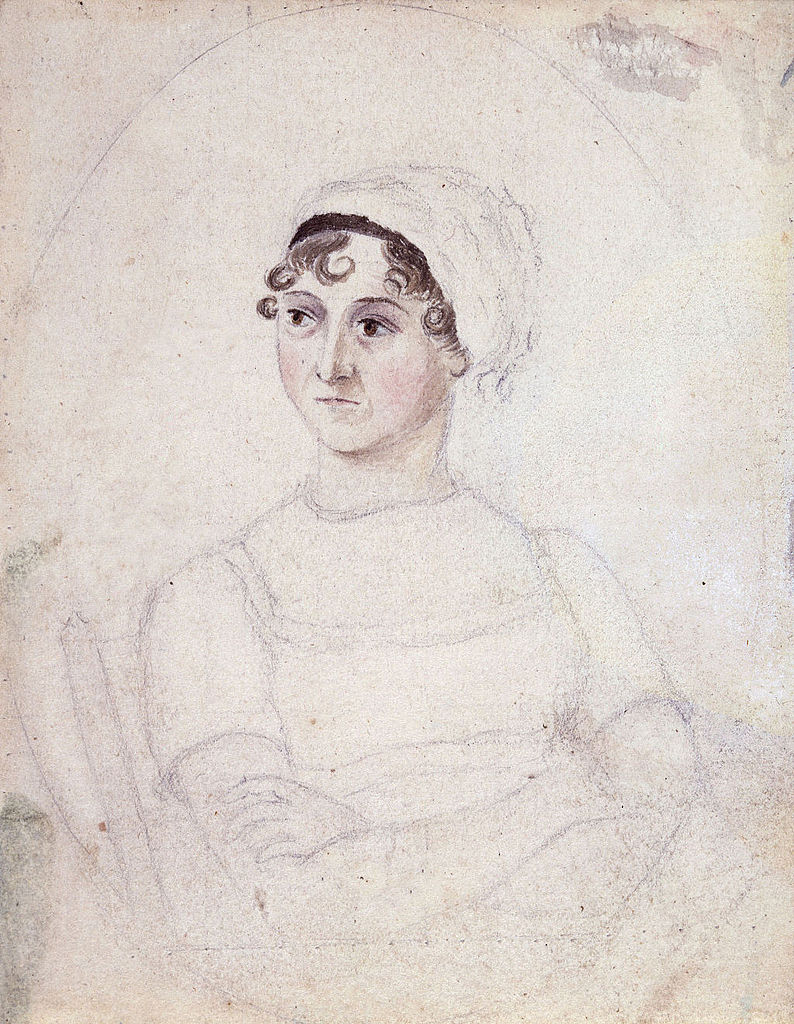
An amateur sketch of Jane by Cassandra Austen, Jane’s sister.
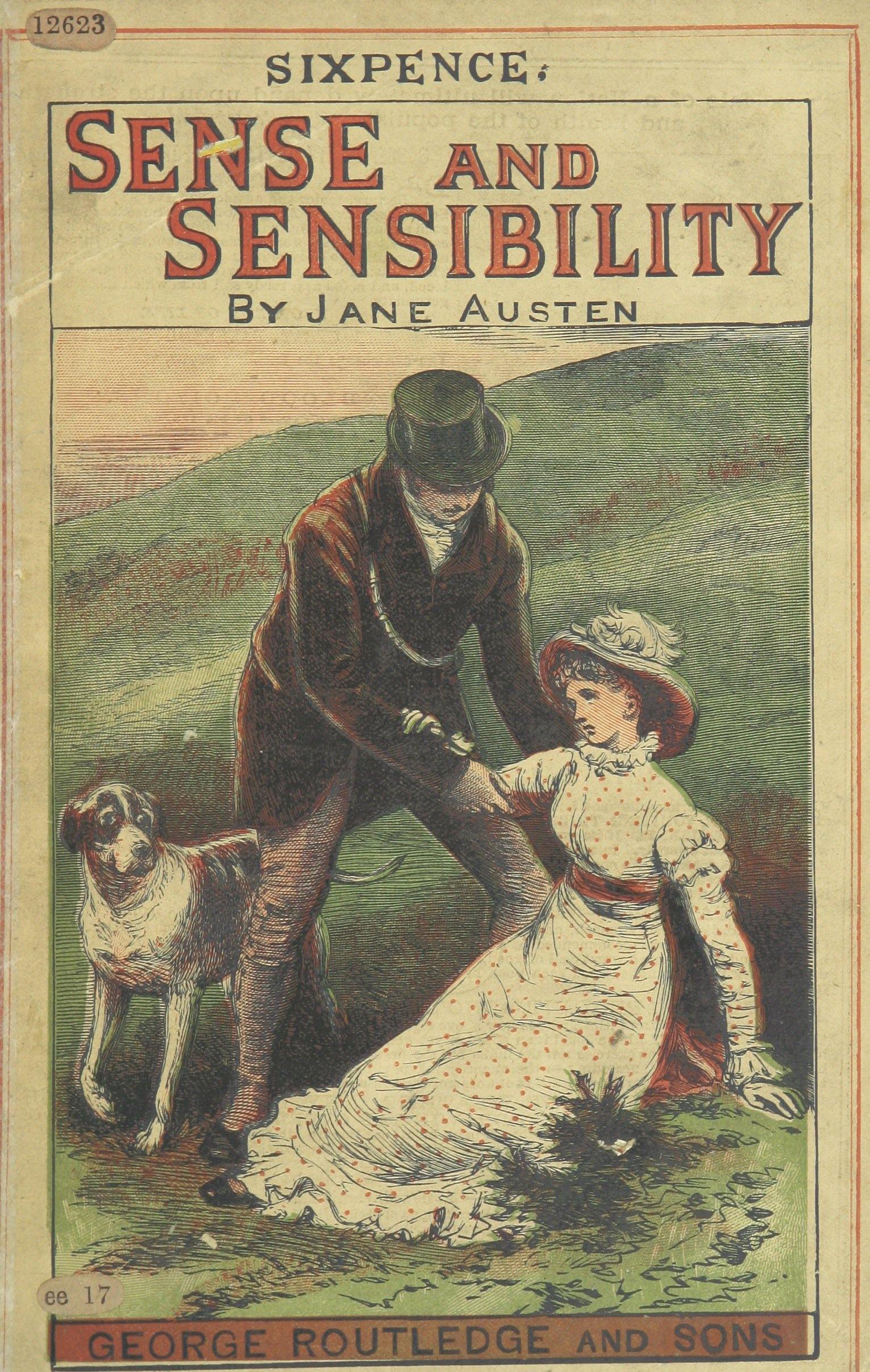
Jane Austen wrote about romance and how to find romance in books such as Sense and Sensibility and Pride and Prejudice, but she herself never married. There are different theories as to why and one of those theories is that she knew how to write about broken hearts because she absolutely had one.
Historians know from letters that Jane was proposed to once and she accepted it but then withdrew that acceptance a day later.
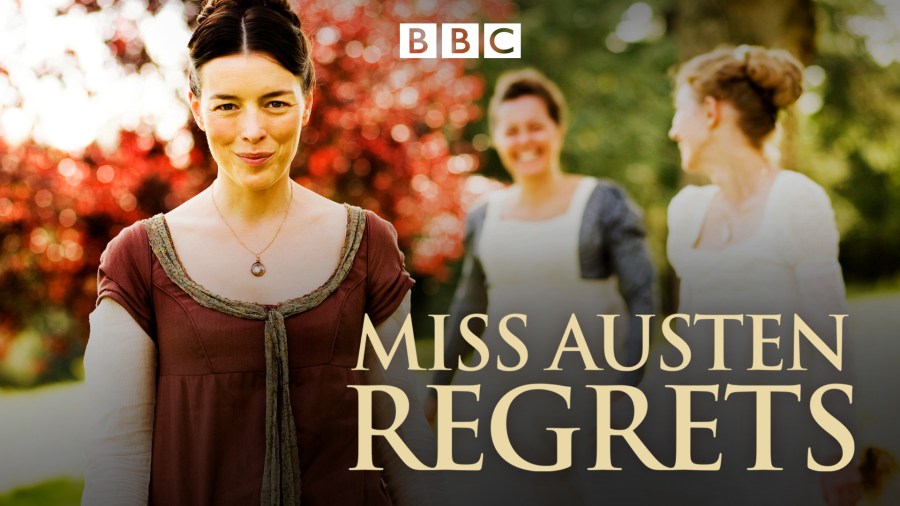
I wrote a bit about Jane’s love life in January when I wrote a review of the movie Miss Austen Regrets, which is very loosely based on letters between Jane and her sister Cassandra and her niece Fanny.
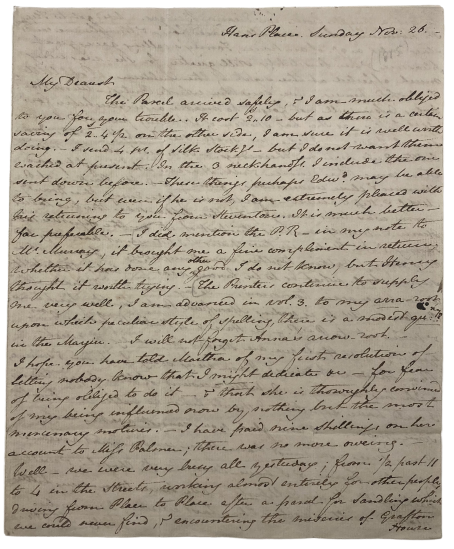
In that blog post, I mentioned that we don’t know a lot about Jane’s personal life because her sister burned tons of letters Jane sent to her. Some historians believe Jane wrote thousands of letters to her sister Cassandra over the years, but in the end, only about 150 survived and many of those were redacted or cut apart to keep certain information out of the public eye.
Some historians also surmise that Cassandra wanted to protect the privacy of her sister. Jane was known to be very blunt and straightforward in her commentary and it is possible she was a bit opinionated about some in the family or others the family knew. Cassandra didn’t want people to see those comments. Or she might have wanted to protect Jane’s love life from a curious family and public.
Either way, some vital information that would have shed even more light on who Jane was in her personal life is no longer available.
Some of those bits of information would have been about her love life – like if she really was going to marry Rev. Brooks Edward Bridges, who is mentioned in Miss Austen Regrets, or Tom LeFroy who is mentioned in her letters (and other movies).
According to an article on the Jane Austen Society website, in 1805 during a visit to Godmersham, Edward Austen’s estate in Kent, Austen wrote to her sister Cassandra: “[W]e could not begin dinner till six. We were agreeably surprised by Edward Bridges’s company to it. . . . It is impossible to do justice to the hospitality of his attentions towards me; he made a point of ordering toasted cheese for supper entirely on my account.”
While there are some who believe Bridges did propose to Jane and she may have turned him down, there is no evidence of this happening, mainly because of the above mentioned burning of the letters. Jane did, however, turn down an offer of marriage from the rich brother of a friend in 1802. She accepted, then rejected in one days time.
Someone else historians would like to know more about is Tom LeFroy who Jane was said to have flirted with quite often in her 20s. While some say Tom may have broken her heart at one point, some historians say they don’t believe so based on the lighthearted tones of letters she wrote to Cassandra that mentioned Tom.
Jane met Tom, an Irishman, in 1795 when he was studying law in London. They attended several balls and dances together but then he went back to law school and she went back to writing.
“We don’t even know if Jane wanted to marry, which would almost certainly have meant giving up any chance to be a writer,” reads an article on Jane Austen’s House. “She certainly didn’t pursue marriage at all costs, as some of her female characters do. . . Her great love was her writing. Her books were her children – she famously referred to Pride and Prejudice as her ‘darling child’.”
The Bronte sisters also didn’t marry, except Charlotte.
Left: Branwell Bronte’s ‘Pillar’ portrait of the Bronte sisters. It was hidden away and not seen by the public until 1914. Right: The collodion photo which dates from the 1850s. If these are the Bronte sisters then the photo is a copy of an 1840s daguerreotype. (credit: https://brontesisters.co.uk/)
The Bronte sisters are famous for the books: Jane Eyre, Villette, and The Professor by Charlotte, Wuthering Heights by Emily, and Agnes Gray by Anne.
Though she married, Charlotte died without ever having a child leaving no Bronte heir, though there were many who believed she was pregnant at the time of her death. Some historians now believe she died of hyperemesis gravidarum, which causes pregnant women to become very sick and constantly throw up, leading to dehydration and death if not treated.
There are rumors that Charolette’s younger sister Anne was in love with a local curate and he may have felt the same about her, but Emily was never linked to anyone romantically, despite the passion of one of the Bronte sister’s most popular books, Wuthering Heights.
While some base their assumptions that Emily had a romance with someone named William Weighton from a movie loosely based on Emily’s life (it isn’t easy to make a movie about her life that isn’t conjecture since she was a recluse who died at the age of 30), an article on the Digital Spy says that there is more evidence that William and Anne were actually the ones in love with each other.
“William Weightman was a real person, and he really was Patrick Brontë’s curate in the Haworth parish from 1839 until his death from cholera in 1842,” the article states. “He became good friends with all the Brontë siblings, and, in his eulogy, Patrick said he was like a son.”
In a letter to a friend, Charlotte Bronte wrote, “He sits opposite Anne at church sighing softly and looking out of the corners of his eyes to win her affection – and Anne is so quiet, her looks so downcast – they are a picture.”
Some believe that Anne’s best-known novel, Agnes Gray, was written about her feelings for William. She also wrote some very heartbroken poems after his untimely death.
While most reports say the deaths of Emily and Anne and their brother were caused by tuberculosis, some information suggests their deaths were both from the effects of tuberculosis (which claimed two other sisters years before) and a weakened immune system caused by their drinking water being tainted by decomposing bodies from the town cemetery. (Read more about that here and here.)
A drawing of Charlotte said not to do her justice.
Another one of Patrick Bronte’s curates fell for Charlotte Bronte and was married to her for the last nine months of her life, which I find so heartbreaking. Charlotte was 38 when she passed away. Her husband, Arthur Bell Nicholls lived until he was 87 years old. He cared for Patrick Bronte after Charlotte died because she was the last of Patrick’s children. Arthur eventually moved back to Ireland, left the ministry and remarried. There is a lot of debate over whether his marriage to Charlotte was really for love as well as how he handled her estate, including her manuscripts, after her death.
The love affair between him and Charlotte does seem legit, though, from what I’ve read. It almost didn’t happen because Patrick didn’t think a poor Irish curate should be asking his famous author daughter for her hand in marriage. Arthur apparently left the parish at one point because he could not marry Charlotte but continued to meet her in secret. He had originally asked Patrick for Charlotte’s hand in marriage in 1852 but it took Patrick until 1854 to allow them to marry.
Poor Charlotte was dead a year later.
Arthur ended up spending much of his life after her death defending her reputation and dealing with the fallout of it being announced that she was the real author of Jane Eyre. After Patrick died, he took the manuscripts and other personal items of the family and moved back to Ireland.
There is heartache in the stories of many people from the past but for some reason, I always seem to find the heartache of those who wrote about love — and either didn’t find it or found it for only a short amount of time — the saddest stories of all.
Maybe that’s just because as much as I don’t like reading strict romances, I am really a romantic at heart.
No, romantic love is not all that life is about.
There is family and friendship love, experiences like traveling and just having joy with those close to us, and a relationship with nature, wildlife, God, and the overall beauty of the earth.
But when a person writes about love as if they want to experience it or experienced it and lost it — that makes me sad. I hate to think about them missing out on what they wanted so much.
It’s time for our Sunday morning chat. On Sundays, I ramble about what’s been going on, whatthe rest of the familyand I have been reading and watching, andwhat I’ve been writing. Some weeks I share what I am listening to.
The Cat Who Went Into The Closet by Lilian Jackson Braun
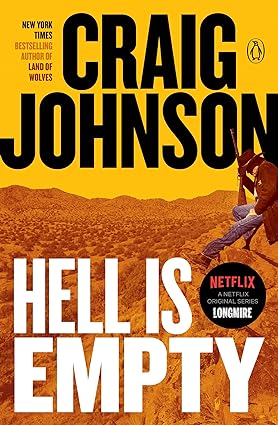
Hell is Empty by Craig Johnson
Do The New You by Steven Furtick
Recently Finished:
Sisterchicks Do the Hula by Robin Jones Gunn
This book wasn’t horrible but there wasn’t really an actual plot and that annoyed me. I kept waiting for something to happen – like a mystery or a trial they had to overcome or .. well, anything really. Like a plot maybe. Once I decided and accepted that was never going to happen it was much easier to skim ahead and just see what happened at the end and move on to the next book.
Update: I went back and read some of the parts I had skimmed and decided the book is actually very sweet. A bit slow but sweet and relaxing. I think I’m going to try the first book in the series, which I heard was better, and other books in the series as well. I was excited to see that they are now on Kindle Unlimited and it looks like the author updated some terms, etc. for now.
Up Next or Soon:
Hidden Figuresby Margot Lee Shetterly
Bury Your Deadby Louise Penny
Bats Fly At Duskby Erle Stanley Gardner
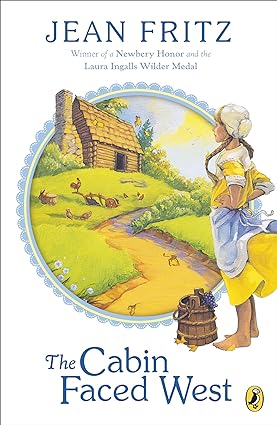
This week Little Miss and I finished The Cabin Faced West by Jean Fritz. I hope to finish The Borrowers with her this week but she’s been reading Fortunatly the Milk by Neil Gaiman to me.
What We watched/are Watching
This past week I watched Miss Austen Regrets and wrote about it on the blog. I really enjoyed it. The rest of the week I watched Lark Rise to Candleford and Miss Scarlet and the Duke. What I’m Writing
I’m plugging away on Cassie and hope to have it finished at the end of this month so I can start the third book in the Gladwynn Grant series.
Now it’s your turn! What have you been doing, watching, reading, listening to or writing? Let me know in the comments or leave a blog post link if you also write a weekly update like this.
For the month of January, Erin from Still Life, With Cracker Crumbs and I watched a movie adaptation of Jane Austen books for our link up for Jane Austen January (you can find the link to our past posts at the top of the page).
Erin has been unable to participate the last two weeks so this week I watched Miss Austen Regrets (2007) by myself.
I enjoyed this movie over any of the others we watched. The movie was the semi-biographical (biopic) story of Jane Austen — not the polished, proper, and fantasy versions we see in her books (though there is a great deal of realism in them as well). Of course, there was a lot of fiction in this movie as well, since there isn’t a ton of information known about Jane’s real life.
This movie follows Jane later in life, exploring why her chances at love like she wrote about were never fully realized. Those chances either slipped away or she pushed them away according to the movie and other accounts. Taking creative license, mixed in with some truth, the movie weaves in the story of Jane’s niece with her own. Fanny Knight a wide-eyed young woman who has romanticized love partially because of her aunt’s books.
Through Fanny and Jane’s interaction, we are led through a bittersweet journey that carries the viewers through a series of regrets by Jane, that she may or may not have really had in life.
The story was beautifully presented, not because of beautiful settings or scenes, though there were those too, but because of the emotions, we lived with a woman we know very little about other than what we read between the lines of fictitious prose. That prose within novels she wrote became so popular there is now a new cinema adaptation of her work every other year and thousands upon thousands of fan fiction based on the books she wrote and released in her short 41 years.
When this movie ended, I actually had to pause to process it all and to stop crying over the ending.
There is way too much about Jane’s history to share in one blog post or in one movie so this movie specifically focused on Jane’s later life and this blog post will do the same. One thing I should mention is that we don’t know a lot about Jane’s personal life because her sister burned tons of letters Jane sent to her. Some historians believe Jane wrote thousands of letters to her sister Cassandra over the years, but in the end, only about 150 survived and many of those were redacted or cut apart to keep certain information out of the public eye.
Some historians surmise that Cassandra wanted to protect the privacy of her sister. Jane was known to be very blunt and straightforward in her commentary and it is possible she was a bit opinionated about some in the family or others the family knew and Cassandra didn’t want people to see those comments. Or she might have wanted to protect Jane’s love life from a curious family and public.
Either way, some vital information that would have shed even more light on who Jane was in her personal life is no longer available.
What we have in Miss Austen Regrets is a fictionalized telling of what Jane may have been like, what may have happened between her and her family, and how she may have felt as she became ill.
I think that Jeremy Loverling who directed it and Gwenyth Hughes, who wrote the screenplay, did an amazing job weaving an imaginative story with a bit of historical facts that we do know mixed in.
One of the biggest messages of this movie, starring Olivia Williams as Jane, is that we shouldn’t confuse fiction with real life. This point is driven home several times but first when Jane tells her niece, portrayed by Imogen Poots (that’s an unfortunate last name, right?), “”My darling girl. The only way to get a Mr. Darcy is to make him up.”
The other message is that a woman should marry for love not for protection and wealth, like when Jane tells her niece, “Fanny, do anything but marry without affection.”
She tells Fanny this when Fanny asks Jane for advice on a man who she feels will propose to her – John Plumtre, who was played by a curly-headed blond Loki – er, I mean Tom Hiddleston. That was a bit shocking to me because I’m used to an older Tom with darker hair but here he was – all in his young, blond glory and totally out of character for me as an anxious 17th century man.
Jane tells her niece she likes to flirt and that’s why she never married. Viewers can tell there are a variety of reasons Jane never married and one of them is because she’s afraid she will no longer be able to write if she is married and taking care of children.
Later Jane runs into a man – Rev. Brook Edward Bridges, played by Hugh Bonneville — who reminds her that he wanted to marry her and would have cared for her, her sister, and her mother. He’s such a tender character and he becomes even more tender when he sees she is not feeling well later in the movie. It is clear that he has always loved her and still loves her, even though he is now married to someone else.
I had to find out more about him so I did a deep dive online and found this article about letters between Cassandra and Jane that hints Edward did propose at one time. It also mentions Edward’s wife who Jane wrote: “for her health, she is a poor Honey—the sort of woman who gives me the idea of being determined never to be well—& who likes her spasms & nervousness & the consequence they give her, better than anything else”
She used Edward’s wife as the basis for the sister of the main character in Persuasion – a woman who used her supposed illnesses for attention.
Ironically, Edward Bridges passed away five years after Jane at the age of 46. His wife lived another 40 years, despite all her “ailments”.
If rumors are true and similar to what happened in the movie, Jane didn’t have an easy go of it with her difficult mother who always held a grudge against her for not marrying someone wealthy to take care of them.
Watching this movie gave me an entirely different impression of the woman whose books I have resisted because of her fans who have what I saw as a silly obsession. Whether some aspects of the movie are true or not, I can now see that there were most likely many elements of Jane’s own life that she used for her books. Some of those were joyful moments, some heartbreaking, but all made up her life and allowed her to give readers a tiny glimpse into her life through her novels.
If some of what was shared is true, I think Jane believed that someday she would find love like she’d written about before her death. Before she could, though, she became sicker and too weak.
I have to agree with what Walter Scott wrote in his diary in 1926 after rereading Pride and Prejudice for the third time.
“That young lady had a talent for describing the involvements and feelings and characters of ordinary life, which is to me the most wonderful I ever met with. The Big Bow-wow strain I can do myself like any now going; but the exquisite touch, which renders ordinary commonplace things and characters interesting, from the truth of the description and the sentiment, is denied to me. What a pity such a gifted creature died so early!”
We really did lose her too soon.
If you want to read about where this made-for-TV movie (which I thought was better than most movies on the big screen) was filmed you can read the post from Joy from Joy’s Book Blog. This concludes our Jane Austen January. Thank you to everyone who participated in it! I hope you will check out the links at the link up above. The link party closes on Saturday.
Have you seen this movie? What did you think of it?
It’s time for our Sunday morning chat. On Sundays, I ramble about what’s been going on, whatthe rest of the familyand I have been reading and watching, andwhat I’ve been writing. Some weeks I share what I am listening to.
I rambled about last week in yesterday’s Saturday AfternoonChat post if you would like to catch up there. I will mention that today our weather doesn’t know what it wants to do as it is snowing and raining and switching back and forth. The weather has been warm this week so the ground isn’t as cold as it could be. It remains to see how much of the stuff will actually stick
What I/we’ve been Reading
Currently Reading:
Little Women by Louisa Mae Alcott and Sisterchicks Do The Hula by Robin Jones Gunn
Little Women is relaxing and enjoyable and I will have it done this week. I’ve been reading it very, very slow and only a chapter or two a day, in case you’re wondering why I keep saying I’m STILL reading it. (Since the end of November! Ha!). This week I’m just going to read it through and finish it up so I can move to another classic – which one I don’t know yet.
The Sisterchicks book is just a light, fun read that is a very nice distraction from life. I’m reading through it quickly so I will probably have it done this week as well.
Recently Finished:
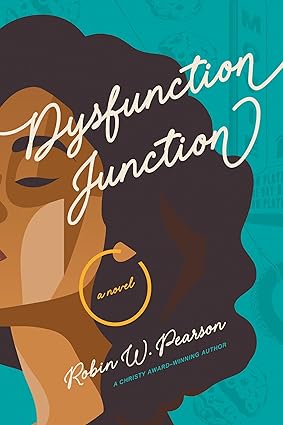
Dysfunction Junction by Robin W. Pearson
Up Next or Soon:
The Cat Who Went Into The Closet by Lilian Jackson Braun
Hell is Empty by Craig Johnson
The Bungalow Mystery (A Nancy Drew Mystery) by Carolyn Keene
Little Miss and I are reading: The Borrowers by Mary Norton and The Cabin Faced West by Jean Fritz
The Boy is reading: Lost Names: Stories from a Korean Boyhood by Richard Kim
The Husband is reading: Fury by Salaman Rushdie
What We watched/are Watching
Yesterday I started Agatha Christie’s Marple, the BBC show that ran from 2004 to 2013 and was based on the Miss Marple books by Agatha Christie. I have never wanted to watch anyone as Miss Marple other than Joan Hickson but after someone mentioned the show to me on Instagram, I decided to give it a try since The Husband had to work and the kids were doing other things.
There were so many actors in Season 1 Episode 3 who I recognized from other shows. The episodes, like the episodes from the Miss Marple series, were like mini-movies at 90 minutes each. Episode 3 was called What Mrs. McGillicuddy Sawbut was based on the novel 4.50 from Paddington.
The one actress I was most surprised to see in his episode was Amanda Holden who I’ve only seen as a judge on Britain’s Got Talent. I always wondered what the woman actually did to land her on that show as a judge. I had no idea she was an actual actress. I thought she was a talking head on a news show in addition to being a judge.
She wasn’t too bad of an actress but I kept waiting for her to say, “That was lovely. Good job.” And push the golden buzzer.
I also recognized Michale Landes who played an American in the British sitcom Miranda. When I saw him in that show, I thought he was British doing a horrible American accent. I looked him up while watching this because he was playing an American again and it turns out he has a horrible American accent despite being an American.
He has been acting since the late 1980s and has been on several shows, often as secondary or one-off characters.
He was really the weak link in this episode.
After I watched Marple, I watched a couple episodes of Lark Rise To Candleford. I had started to watch this show years ago but only made it to season three, I’m not sure why. I think there was some cast change I didn’t like. I don’t remember a lot of it so I am rewatching it and plan to go through all four seasons.
It’s a very nice distraction from life.
This upcoming week I will be watching Miss Austen Regrets for our last movie for Jane Austen January. The link up for Jane Austen January will still be up until Saturday if you want to add a post.
What I’m Writing
This week I worked on Cassie, which comes out in August of 2024. On the blog I shared:
I love it when Joy writes about the real-life places you can visit in the Jane Austen movies.
Now it’s your turn
Now it’s your turn. What have you been doing, watching, reading, listening to or writing? Let me know in the comments or leave a blog post link if you also write a weekly update like this.
This month Erin from Still Life, With Cracker Crumbs and I are watching movie adaptations of Jane Austen’s books for Jane Austen January. We are also offering a link-up for anyone who wants to discuss the movies, or anything else Jane-related, on their blogs.
I feel like Erin and I batted maybe not zero but around five this week by choosing to watch Emma. Both of our choices really weren’t very good and both of us agreed we didn’t want to see the 2020 version at all. We did want to watch the 2009 BBC miniseries but it would have been about four hours long. It might have been worth it to not to have to see the fifteen minutes of the 1996 televised version that I had to suffer through, however.
The 2009 version stars Romola Garai and to me it is very well done. Mr. Knightly is a mix of charming and playful, Emma is still a brat but shows a transformation more so than in the Paltrow version, and the characters are better developed. Of course, they had time to develop characters since they had two hours more than the other movies.
(Disclaimer: Please keep in mind that I have not read the book so I can’t say if any of the movies keep in line with the book or not.)
So, as I mentioned, Erin and I both abandoned our first choice of the 1996 televised movie with Kate Beckinsal after only about 15 minutes for me (maybe less for Erin. Ha.)
My word that version was so dull – in the acting and in their outfits. I don’t think I’ve ever seen a movie where everyone wore brown and white against a set of more brown and white. Ew.
Now, as for our decision to shift our choice to the 1996 big screen version with Gwyneth Paltrow, I want to say up front that I am not always a fan of Americans doing British accents – especially in period pieces.
I don’t know what that is about but I guess it takes me completely out of a story knowing that the actress is really from California and not Sussex. It seems less refined somehow, which is funny since people from Sussex aren’t necessarily all refined either.
I have also been taken out of a story when a British actor is doing a Southern accent and I know there isn’t one Southern thing about him.
With that one complaint about Gwenyth not actually being British behind us, lets get to the rest of the movie.
First, the story of Emma.
Emma is about Emma Woodhouse, a young woman who is constantly meddling in the love lives of other people. She lives with her hypochondriac father and they are both often visited by their good friend Mr. Knightly.
Emma’s meddling sometimes is successful and leads to marriage, but other times, it leads to heartache, confusion, and people being hurt. It also keeps Emma from focusing on her own love life, which is beneficial to her because she doesn’t have to commit but hurtful to the men who fall for her.
Emma uses various schemes and tactics to keep some couples apart and bring other people together. She’s actually very manipulative and it takes most of the story and her being told by Mr. Knightly – a man who is a close friend of the family and almost like a brother to her – that her schemes are ruining people’s lives.
Like Pride and Prejudice, this movie had a lovely dance scene between Emma and her friend, Mr. Knightly. One of those where their attention is on each other and no one else. It was a lovely scene.
Unlike Pride and Prejudice (2005) the scenery isn’t as pretty in this movie to me. For example, at one point Emma and Mr. Knightly are shooting arrows and the pond behind them is covered in algae. The director couldn’t have set the shot up better to remove that from the background or had the body of water treated? I felt completely shallow, but I couldn’t even pay attention to the argument happening between the two because I was staring at the dirty, green water.
The movie was directed by Douglas McGrath.
He wanted Gwyneth Paltrow, according to Wikipedia, because, “she did a perfect Texas accent. I know that wouldn’t recommend her to most people. I grew up in Texas, and I have never heard an actor or actress not from Texas sound remotely like a real Texan. I knew she had theater training, so she could carry herself.”
Um..okay? I guess that’s a good reason to cast her?
Anyhow, it did not surprise me at all that Harvey Weinstein the co-chairman of Miramax at the time gave the movie the greenlight but said Gwenyth had to be in the movie The Pallbearer first.
She then had a month to herself while recovering from wisdom-tooth surgery to research for the part by studying horsemanship, dancing, singing, archery, and dialect.
If you don’t know the story behind Weinstein, you can look it up online but needless to say he was a big jerk who manipulated and physically attacked women but also controlled actors and actresses careers.
I thought it was interesting to read that the characters of Mrs. Bates and Miss Bates in the movie were played by an actual mother and daughter – Phyllida Law and Sophie Thompson.
Thompson revealed that it was a coincidence that she and her mother were cast alongside each other, as the casting director had their names on separate lists. She was actually one of the funnier and more refreshing characters to me.
I had to giggle when I saw Ewan McGregor as Frank Churchill and apparently, he cringes and giggles a bit as well for the same reason – his hair.
He told The Guardian that he chose to star in Emma because he thought it would be something different from his previous role in Trainspotting (a movie about a heroin addict).
“My decision-making was wrong,” he said in the interview. “It’s the only time I’ve done that. And I learnt from it, you know. So I’m glad of that – because it was early on and I learnt my lesson. It’s a good film, Emma, but I’m just… not very good in it. I’m not helped because I’m also wearing the world’s worst wig. It’s quite a laugh, checking that wig out.”
When I looked online for reviews of this movie, I found that most people generally liked it, including Roger Ebert who called it “a delightful film–second only to “Persuasion” among the modern Austen movies, and funnier, if not so insightful.”
Back in 1996, though, some college students called the film obnoxious. I had to laugh at the review of the review by Ebert when he wrote that the young student’s review was “posted on the Internet.” Ah, the early days of the Internet.
The college student wrote: “a parade of 15 or 20 or 8 billion supporting characters waltzes through the scenes. Each is called Mister or Miss or Mrs. Something, and each of them looks and acts exactly the same (obnoxious).”
I don’t know if I agree that the movie was that bad, or that there were really that many characters to keep track of.
I do agree that some of them were obnoxious – including Emma herself but we also have to remember that Emma was supposed to be young (21) and still learning about herself and how not to meddle in the lives of other people.
Ken Eisner, writing for Variety, said of Gwyneth that she shone “brightly as Jane Austen’s most endearing character, the disastrously self-assured matchmaker Emma Woodhouse. A fine cast, speedy pacing and playful direction make this a solid contender for the Austen sweepstakes.”
Ebert also liked Gwyneth in the role, writing, “Gwyneth Paltrow sparkles in the title role, as young Miss Woodhouse, who wants to play God in her own little patch of England. You can see her eyes working the room, speculating on whose lives she can improve. “
If you want to read about the different versions of the Emma adaptations yourself, you can see some comparisons at the following sites:
This was the last of our book adaptations. Next week we will be watching Miss Austen Regrets, which focuses on the life of Jane Austen.
Erin didn’t get a chance to write about Emma today as she isn’t feeling well, but if you want to share your thoughts on the movie(s) or book Emma, or anything else related to Jane Austen, you can add a link to our link-up HERE.
Have you seen this version of Emma? Or the 1996 television version?
This month Erin from Still Life, With Cracker Crumbs and I are watching movie adaptations of Jane Austen books.
First up is Sense and Sensibility.
Sense and Sensibility was the first Jane Austen movie adaptation I ever watched. I started it, thinking I’d hate it but ended up falling in love with it.
I’ve now watched it three or four times.
I’ve decided to “live blog” this one as I watch it, similar to how I wrote about Persuasion and again I will not provide spoilers in case you’ve never seen the movie or read the book.
Erin joked that last week’s post was like a Mystery Science Theater 3000 post and I liked that comparison so consider this a blog version of Myster Science Theater or Rifftrax.
Before I start I will relay a couple paragraphs from Wikipedia about the basic plot of the book and film:
“It tells the story of the Dashwood sisters, Elinor (age 19) and Marianne (age 16½) as they come of age. They have an older half-brother, John, and a younger sister, Margaret (age 13).
The novel follows the three Dashwood sisters and their widowed mother as they are forced to leave the family estate at Norland Park and move to Barton Cottage, a modest home on the property of distant relative Sir John Middleton. There Elinor and Marianne experience love, romance, and heartbreak. The novel is set probably between 1792 and 1797 in Sussex, West England.”
So the movie opens with a man dying and he wants his second family taken care of and asks his son, John, to take care of his second wife and three daughters.
We know right away that the promise the son makes to his father on his father’s deathbed will not be kept because he already looks swarmy.
Op, yep. Swarmy to the core and his wife is even worse. She has the most evil ideas and a very pinched face. It’s no surprise her name is Fanny.
As we get to the young ladies who have been left behind, Marianne is playing a very sad song on the piano and we will be introduced to the humor injected into the film by Emma Thompson and her perfectly timed sarcasm and whit.
She asks Marianne to play something different because the music is making their mother weep even more over the death of their father.
Marianne tries a different song but it’s even more depressing than the first.
“I meant something less mournful, dearest,” Emma’s character (Elinor) quips from the other room.
It’s so funny to watch a family mourning yet feeling a bit like you want to giggle over the behavior of Marianne and the over dramatic mother who is flustered because they are being kicked out of their home by the cold and heartless half-brother and his wife.
It was an awful time, though – where men inherited everything and daughters were kicked out of their homes. These women will go from wealth to poverty very quickly which will be a shock to them but in some ways, I think they will be better off poor, without the stuck up rules of the rich back then.
Oh. Hugh Grant in his prime. Hello. Playing Edward Ferrars, Fanny’s brother.
Good grief those high collars look ridiculous, though.
He’s so polite. Unlike his sister. Odd how they were both raised in the same family and he is so much nicer.
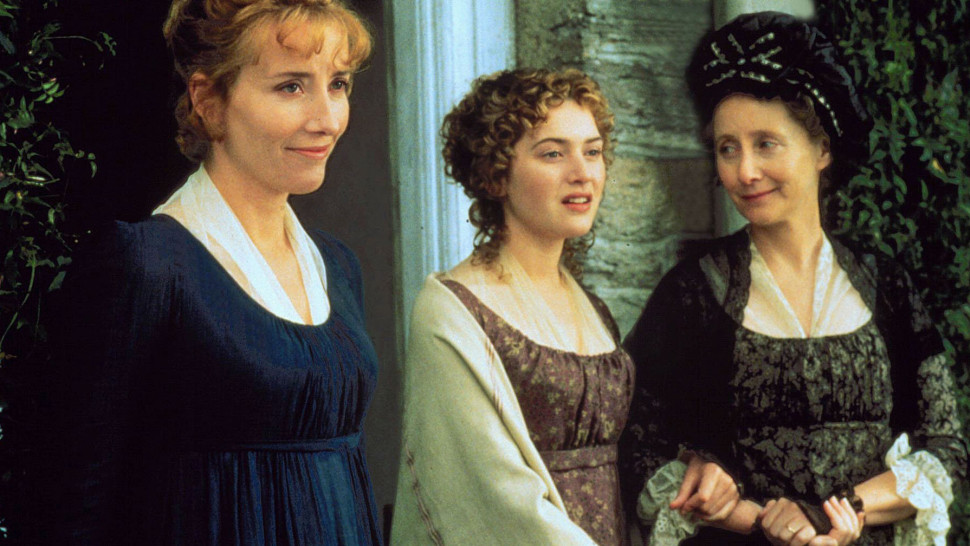
Gemma Jones, Elizabeth Spriggs, Emma Thompson, Alan Rickman, Kate Winslet, Hugh Grant, James Fleet, Greg Wise
And he and Elinor – well, I promised no spoilers but, well, the fact they get along so well is certainly making Edward’s evil sister very, very upset. It’s making Elinor’s mother hopeful because she’d love to get her house back again or at least a very nice house.
Honestly, they’re both a bit conniving. The whole idea back then that men could only marry those who were in their “class” is so disgusting and annoying. I love that Jane knew that and instead writes about marrying for love and not prestige.
Barton Cottage. Sigh. It’s so cute. So much nicer than those big, drafty mansions. Well, then again, they are shivering and grabbing extra blankets in the cottage to show how drafty it was as well.
Sir John offers the women the cottage. He is Mrs. Dashwood’s eccentric cousin with an even more eccentric wife.Yes, Sir JohnOr as I remember him – Siegfried Farnon from the original All Creatures Great and Small show from the 1980s or 70s. Whichever. I used to watch it on PBS with my mom.
Or as I remember him – Siegfried Farnon from the original All Creatures Great and Small show from the 1980s or 70s. Whichever. I used to watch it on PBS with my mom.
Ah. Colonel Brandon. Strangely attractive even though I’ve never had a thing for Alan Rickman.
Not sure how I feel about him looking at Kate Winslet. He’s probably old enough in real life to be her father. He’s probably supposed to be younger in the movie. Or not. Who knows. It was a different time.
The cinematography and scenery in this movie is so beautiful – like most of the Jane Austen movies. Sweeping landscapes and towering Victorian mansions, beautiful dresses, handsome men and women.
Enter another handsome character – John Willoughby. Alas, he might not be as dashing as we think. We will have to watch and see.
Hugh Laurie. I totally forgot he was in this. He’s the guy who played House and the man who my son says is weird to hear with an English accent and that he thinks that Hugh’s English accent is actually fake.
I can’t figure this Willoughby out. He seems so delightful and interested and invested in the family, not just Marianne, but … there’s something just not right. He wants Marianne and her family yet – I won’t say. You’ll have to watch the movie.
Again, though, the rules of class and who you could and could not date back then were just ridiculous.
Poor Elinor. She is the only stable one in the whole family it seems. Holding it all together.
Everyone around her seems completely crazy.
Lucy Steele. She breezes in and just adds to the crazy. You’ll see. Completely delusional.
I pretty much want to throttle Marianne through this entire movie.
Robert Ferrars. Eek. That is all.
Were people really this uptight in the 1700s or just the British? I know they weren’t always uptight but these period dramas just make them so…proper. I’m drawn to the characters who aren’t very proper in these movies.
Elinor seems proper in some ways, but real in others.
There are a lot of confusing twists and turns in this one.
A couple people need a good slap across the face.
One needs a right shake and wake up call, but she’s young so I’ll try to cut her some slack. Plus, there are a couple of scenes where my heart just melts for poor Marianne. She had such high hopes and fell so hard only to be rejected in such a public way.
An aside – get Colonel Brandon some blasted blankets too! He’s an old man! He could catch his death. My goodness.
Alan Rickman was such a good actor too. At one point when Marianne finally notices him – his expression from hesitant to touching. Sigh. Just swoon-worthy.
I won’t spoil the ending so I will wander off here for a bit to discuss the history of the book and some behind-the-scenes of the making of the movie.
The book was published in 1811 and was Austen’s first novel. It was not published under her name but instead, the title page simply read: written by “a lady.”
It was published in three volumes to begin with and the cost to publish them cost more than a third of Austen’s annual household income. She paid for the books to be published and barely made a profit off them. She made $178 on the 750 publications sold, which would be about $6,358 today. As a self-published author myself, I certainly feel her pain and relate/
I did not know until this week that the screenplay for the movie was written by Emma Thompson and she won an Oscar and Golden Globe for it. She was 35 at the time the film was made.
According to Wikipedia, Thompson spent five years between other projects working on the screenplay. Thompson had never written a screenplay before so many studios were not interested in taking on the project. Showing a bit of a novice writer she was, she almost lost the entire project in a computer failure.
From Wikipedia, “As Thompson mentioned on the BBC program QI in 2009, at one point in the writing process a computer failure almost lost the entire work. In panic Thompson called fellow actor and close friend Stephen Fry, the host of QI and a self-professed “geek”. After seven hours, Fry was able to recover the documents from the device while Thompson had tea with Hugh Laurie who was at Fry’s house at the time.”
The film was directed by Ang Lee, a Taiwanese director and Lindsay Doran, the producer, chose him because of his past films about complex families. He was not familiar with Jane Austen at all.
In an interview, Lee said, “I thought they were crazy: I was brought up in Taiwan, what do I know about 19th-century England? About halfway through the script, it started to make sense why they chose me. In my films, I’ve been trying to mix social satire and family drama. I realized that all along I had been trying to do Jane Austen without knowing it. Jane Austen was my destiny. I just had to overcome the cultural barrier.”
In case anyone is wondering about Thompson’s age compared to how old Elinor was supposed to be, that was a concern brought up by Thompson herself. For one, she wanted Natasha Richardson and her sister Joely to be cast as the sisters, not herself, but Lee and the studio wanted Thompson because she was becoming well known as an actress.
Thompson finally agreed but they increased Elinor’s age to 27 instead of 19 to make the idea she was a spinster more believable to modern audiences.
I think the very ending is very fitting and serves a certain person right. If you’ve seen it let me know what you think in the comments.
In case you are interested, here is Emma accepting her Golden Globe for the film.
And here you can watch the making of the film:
If you have YouTube Prime you can also watch the full movie here:
If you want to read Erin’s impression of the movie, you can read her post on her blog.
Up next week we will be watching the 2005 edition of Pride & Prejudice.
Have you seen this version of Sense and Sensibility? What did you think of it?
I’ve already mentioned here that I have not read any Jane Austen books but I have watched Jane Austen movie adaptations.
This month I will be watching three of those adaptations with Erin from Still Life, With Cracker Crumbs but this week I watched Persuasion by myself to kick off Jane Austen January. If you want to get in on the movie-watching action or share posts about Jane in any capacity, you can add links at the link up, which you can find at the top of the page.
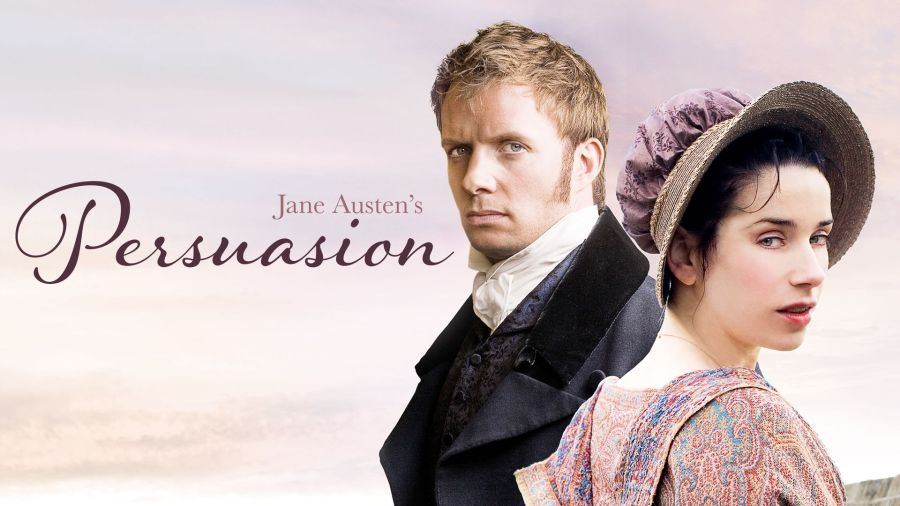
Today, I thought I’d offer you a little bit of a blow-by-blow of my thoughts as I watched the 2007 version of Persuasion but without spoilers. In other words, I will not share the ending of the film, even though it should be obvious how it ends because it is based on a Jane Austen book.
As the movie starts I can tell there are going to be a lot of close-ups on the actress who plays the main character – Anne Elliot (Sally Hawkins) and she will provide us many drawn-out contemplative and heartbroken expressions.
I also realize she’s the mom from the live-action Paddington movies. I realize this because she reminds me very much of the wife of a former pastor of mine and because my daughter loves the Paddington books and movies and we just watched Paddington 2 two weeks ago.
I already like the main character, though I do wish she had some more lines and less lackluster expressions. (Luckily – this changes later.)
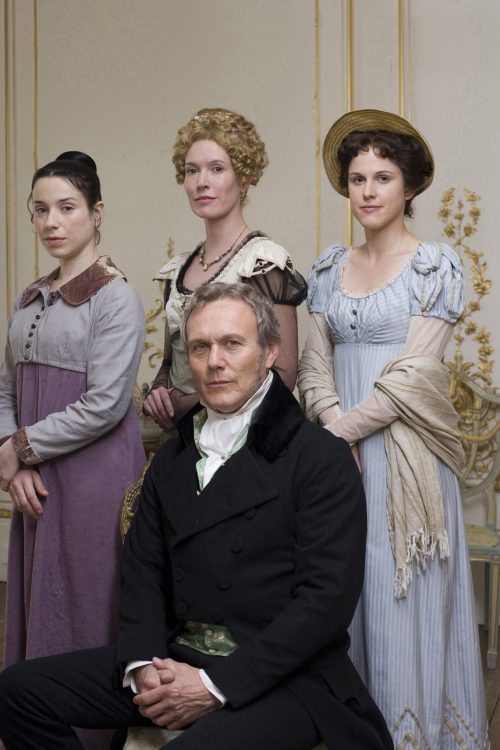
Oh my, her father and sister are — how shall I put this? Horrid.
They are horrid.
Wait. Isn’t that the guy who was in Buffy the Vampire Slayer (which I only watched a couple of times) and Jonathan Creek and a bunch of other stuff I probably saw him in but can’t remember.
I don’t stop to look his name up but later my husband tells me his name is Anthony Head. I promptly forget what he told me and two hours later I look it up again.
Here are some exclamations I made each time the man opened his mouth as Sir Walter Elliot: “Wow.” “Okay then.” “Well, he’s certainly a jerk.” “Good. Leave her behind because who would want to be with you anyhow?” “Yikes. Pompous much?”
The sister, Elizabeth, deserves a lot of the same exclamations and she receives those and a couple of “yikes.”
Now the father and sister are leaving and their house will be rented out by someone who is not a nobleman but a mere commoner, as Sir Walter Stucky Up Face says. That makes him very sour indeed.
Our main character is being left behind – not of her own will, of course – to stay with her hypochondriac sister Mary Musgrove. Lord have mercy, this woman is a piece of work.
We’ve already heard before Anne stayed behind that the house that Anne grew up in but will not be able to stay in because her father has leased it out to commoners will be visited by a Captain Frederick Wentworth (Rupert Penry-Jones – what a very British name, eh?)
Cue yet another long, shocked yet subdued expression by Anne. Alas, she has met him before we learn as she talks to her godmother. It isn’t a spoiler to say that the captain wanted to marry dear Anne but her father and godmother forbade it.
Oh, Anne’s mother is dead, by the way. Just figured that out.
Is this sister for real? She’s sick? Now come on. Really?
Oh. I see. She’s only sick when she feels like it and not when fancy-dancy people come to visit and want her to go see other fancy-dancy people.
Listen, lady, your kid just fell out of a tree. Don’t you think that is more important than some fancy dinner?
Anne doesn’t think the dinner is more important. She’s staying home with your kid and cares more about your kid than you do.
Oh, so we learn that he sisters didn’t know of the proposal once long ago from the captain but of course, this hypochondriac one wouldn’t have known since she only thinks of herself.
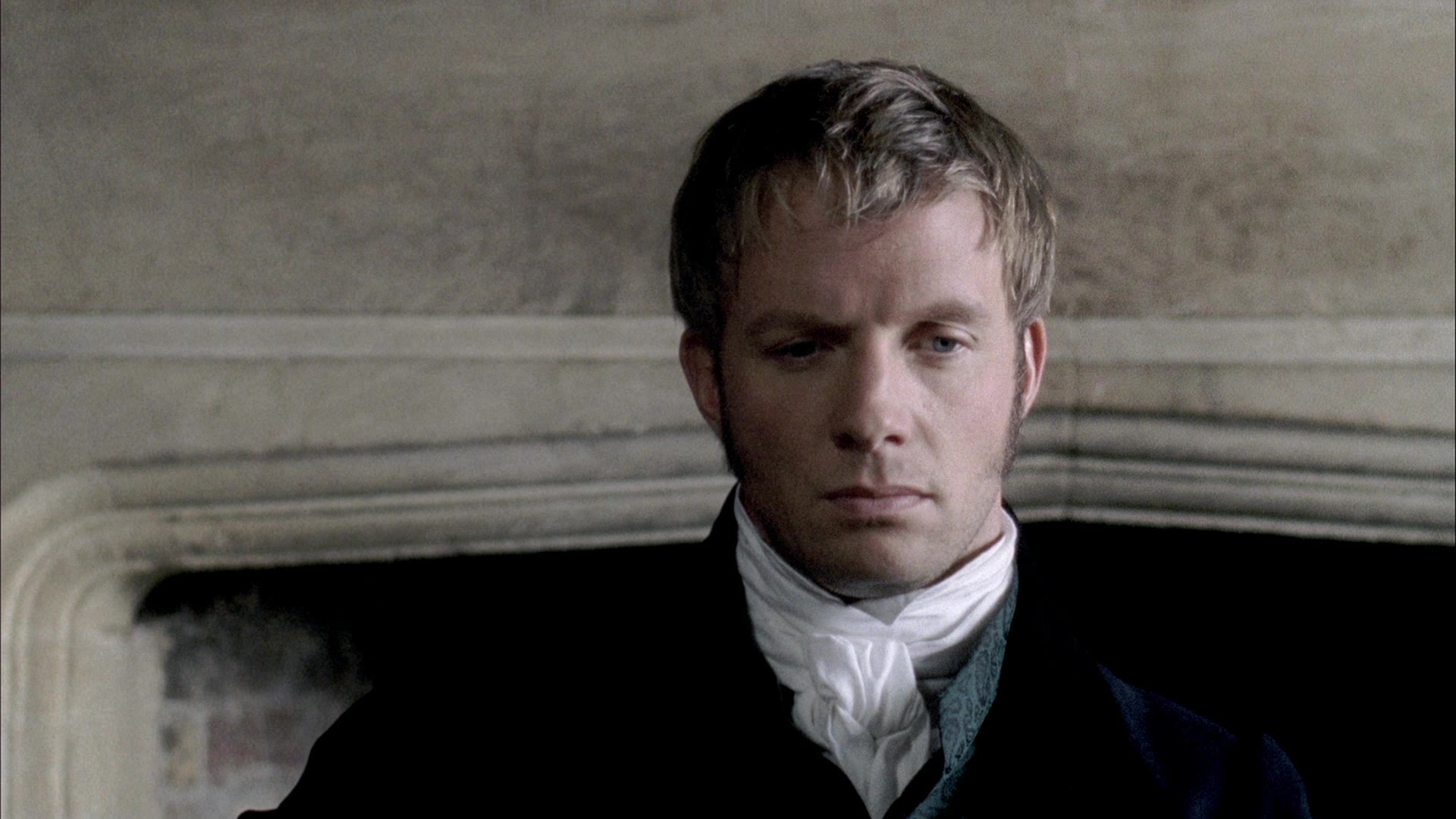
The captain is dreamy by the way.
I can see why Anne wanted to marry him.
Everyone has got to be clueless to miss the swoony looks they keep giving each other and how sad the captain looks as he looks at Anne.
Oh. They are clueless because they are so incredibly self-centered.
Seriously, 20 minutes in and all I can think is how awful and selfish all these people are.
All except Anne, of course.
Here is where I will cut off my internal dialogue and leave a screenshot of what I told Erin about my thoughts as the movie neared the end:
The novel Persuasion was originally written in 1817. There are at least four movie adaptations of the novel with the latest being last year. I have not heard good things about the latest. I’ve heard the best things about this adaptation.
The movie was part of three movies released in 2007 by ITV. The other movies were Mansfield Park and Northanger Abby. According to Wikipedia, Hawkins wasn’t sure about playing in the movie when asked but after re-reading some of Jane’s books, including Persuasion, she fell in love with her again after last having read her in high school. She even went as far as reading about Jane herself to learn more about the woman behind the book.
She told The Independent, “Jane was an incredible woman. She was only in her early forties when she died. I became convinced that Persuasion was about her own love life; Anne Elliot took the wrong advice and left the man who turned out to be the love of her life. She is the type of woman you’d like to be: reserved, refined, funny. I totally fell in love with her.”
This was Penry-Jones’ first period drama. In an interview, he said, “In modern drama, everything is so overt. In period drama it’s all held in. You have to find ways to show the feelings straining beneath the surface.”
(An aside by me: he did a remarkable job with this.)
I found it interesting when I read on Wikipedia that the costumes made for the movie, along with those used in Miss Austen Regrets (which Erin and I will watch at the end of the month) were eventually sold by the Jane Austen Centre at an auction. The costume designer, Andrea Galer allowed the items to be sold but said it was a hard thing to do because she had loved designing those costumes so much. The costumes were already on display at the Jane Austen Centre, which is located in Bath, England and focuses on Jane’s time in Bath and how it influenced her novels, including Persuasion. Galer sold them to encourage others to get in touch with the materials that used to make clothes since she used a lot of those to design the costumes.
I have to be honest that it felt a little weird to read that they were sold on Ebay of all places. I’m not sure who the proceeds benefited but I would guess the center.
Have you seen this version of Persuasion or the others? Which was your favorite? Have you read the book and what did you think of it?
Next week Erin and I will be watching Sense and Sensibility and will write about it on Thursday.
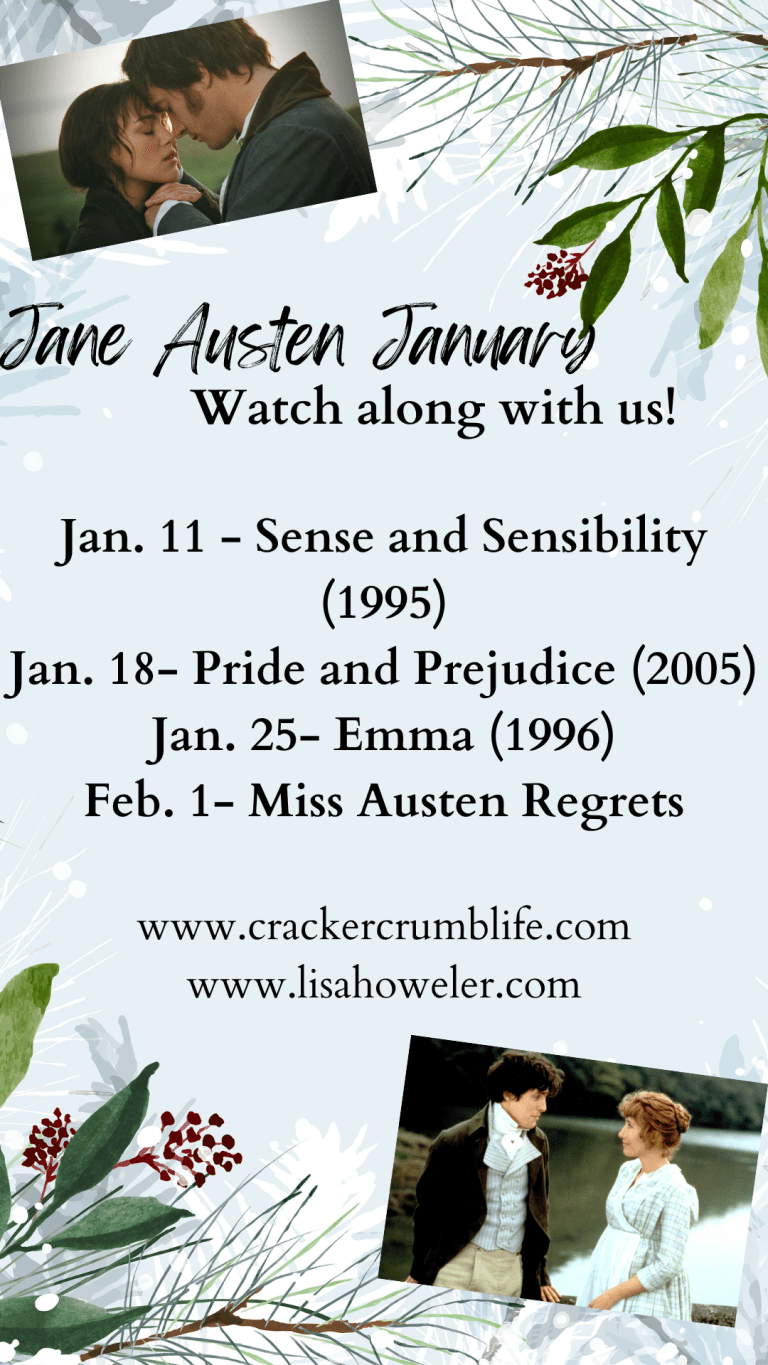
Here is our complete list:
Movies and the dates we will be writing about them:
Hey, can you come here for a minute? Yeah, lean in close. I have a secret to tell you that might shock you.
I’ve never – whoo-boy. Can’t believe I’m about to say this.
I’ve never read a Jane Austen book all the way through.
Wince.
I know! It’s a big-time reader sin – especially when you are a female.
I have the books on my shelves and intended to read Pride and Prejudice last year but never got there. Now I’m in the middle of A Tale of Two Cities by Dickens and Little Women by Alcott and I have two ARCs to read before February so I probably will not read a Jane Austen book in January.
I will, however, be watching movies based on Jane Austen’s books with Erin from Still Life, With Cracker Crumbs during the month of January. If you want to join in, we are inviting you to do so and to add any blog posts you write about Jane or the movies to our linky. The link up will be at the top of my page starting next week.
(As an aside, our Comfy, Cozy Christmas link up is still live if you want to add any Christmas-themed or related posts here.)
Here is the list of movies we are watching for the month and I do want to note that for Pride and Prejudice both of us prefer the 1995 BBC mini-series but it is much longer than a movie so we opted for the 2005 movie with Kiera Knightly and what’s-his-face. Sorry, but I don’t acknowledge anyone other than Colin Firth as Mr. Darcy. Even from the short bit I’ve read of the book, I know that he simply IS Darcy. (Edited to add that I originally called him Mark Darcy here because I was thinking of Bridget Jones’ Diary apparently. Wahahaha!)
Movies and the dates we will be writing about them:
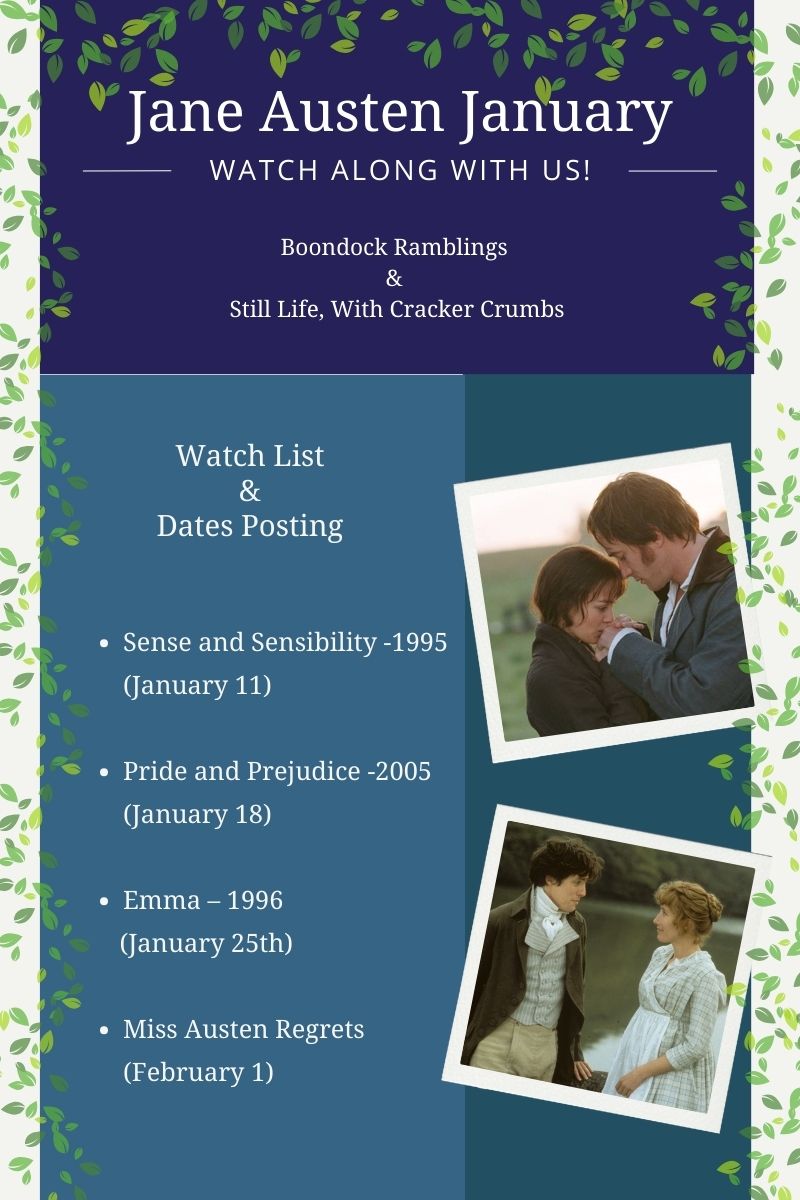
Sense and Sensibility – 1995 (January 11th)
Pride and Prejudice -2005 (January 18th)
Emma – 1996 (January 25th)
Miss Austen Regrets (February 1)
For fun and to kick off the month I will be watching Persuasion on my own and rambling about it on January 4.
Note: You do NOT have to write about the movies on the same days we do. If you watch a movie and write about it on any day you can still post in the link up. Any post about Jane Austen, not just these movies, is also allowed. So, posts about the books are absolutely allowed too!
Have fun with it. Ramble about your love or even your disdain for Jane. Okay, maybe don’t express too much vitriol about Jane. Ha! Ha! We’re trying to keep this fairly positive and fun!