Classic Movie Impressions: Singing In The Rain

I’ve written about a lot of different movies on this blog and what shocks me is that I’ve never written about my favorite movie – Singing in the Rain (1952).
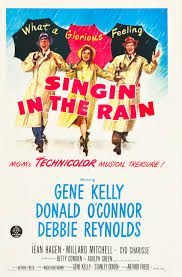
I have to be honest that I am actually nervous to do so because there is so much about this movie that I love, I am truly afraid I will forget to mention something important about it or it’s making or I will mess  up a fact.

When I was a kid, we didn’t have cable. We had one black and white TV and an antenna on the back porch that my dad would adjust to help us get four channels — an ABC affiliate, a CBS affiliate, an NBC affiliate, and PBS. Because we only had those four channels, I often found myself watching old movies on PBS. I was fascinated with them, the light and shadow, the framing, the cinematography, and the acting. It all mesmerized me. 

The stories seemed richer, more fascinating, deeper somehow, than the shows I would see on primetime or the cartoons on Saturday morning. As I grew older, my options grew, but I still always found myself turning that cable TV back to the classics, usually the black and white movies or a musical. To me, the writers of those old movies knew how to tell stories, not just make a movie for show or for special effects. Those great stories tied in with my love of reading and are probably what made me want to go into journalism (which I did for 14 years) and then write fiction books (which I do just for fun now).

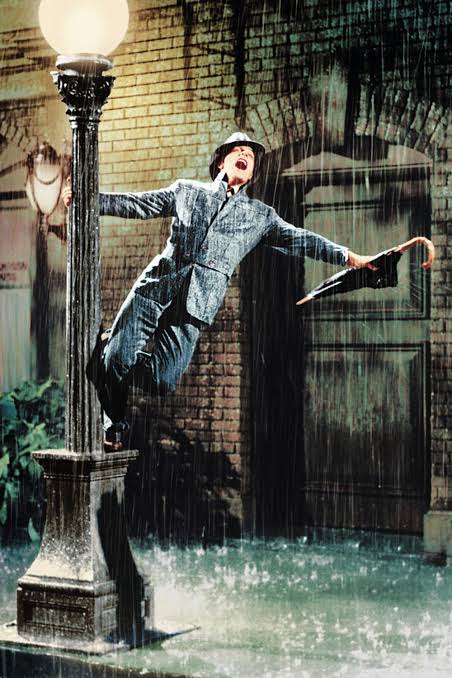
My favorite movie was Singing in the Rain and it’s remained so all these years. I used to dance around the living room saying, “And I can’t stand ‘im!” in Jean Hagen’s high-pitched voice, putting on a show for my family. I would dance around the room like I was on that street dancing in the rain in that iconic dance sequence with Gene Kelly.

I would recite good chunks of the movie whether it was on or not and my mom said I should go into drama. Luckily I was too shy to get into drama because I am pretty sure if I had gone into drama I would have mentally crashed and burned out fast. My introvert self is not cut out for the crazy world of acting.
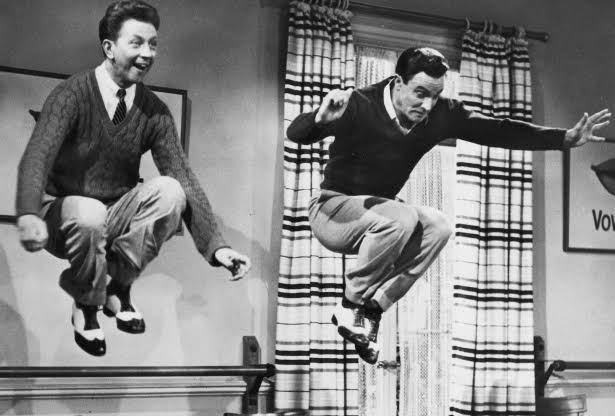
It wasn’t until my late teens, when my brother bought me a VHS copy of the movie, that I learned the movie was actually shot in Technicolor. I’d always watched it on that old black-and-white TV and now here it was in blazing, beautiful color.

Magnificent.

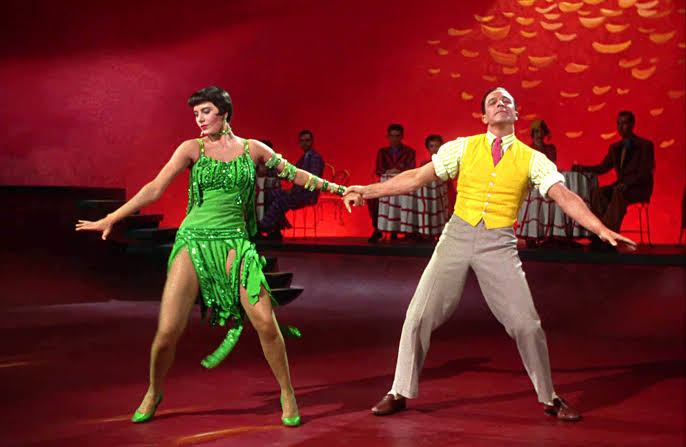
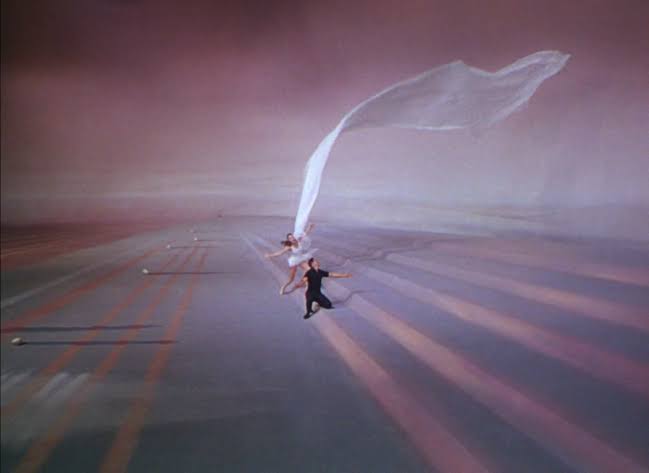
Singing in the Rain has so much going for it — an amazing story tied into the history of talking films replacing silent films, great songs, great actors with great performances, and amazing dance routines (though I maintain that the 20-minute one with Cyd Charisse is just a bit too long and a bit too much — yet also brilliant.)

For those who don’t know what Singing in the Rain is about — for shame! FOR SHAME!

Oh, I mean, please, let me tell you what it is about.

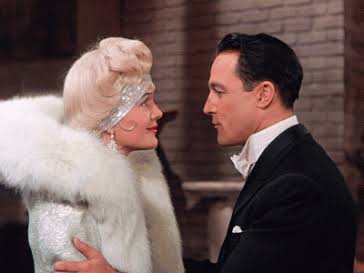
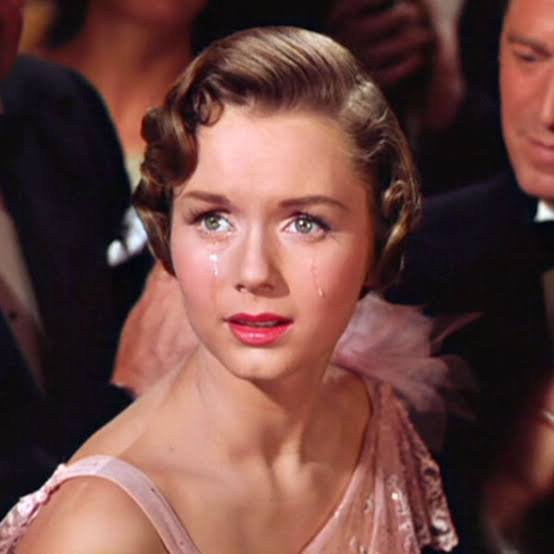
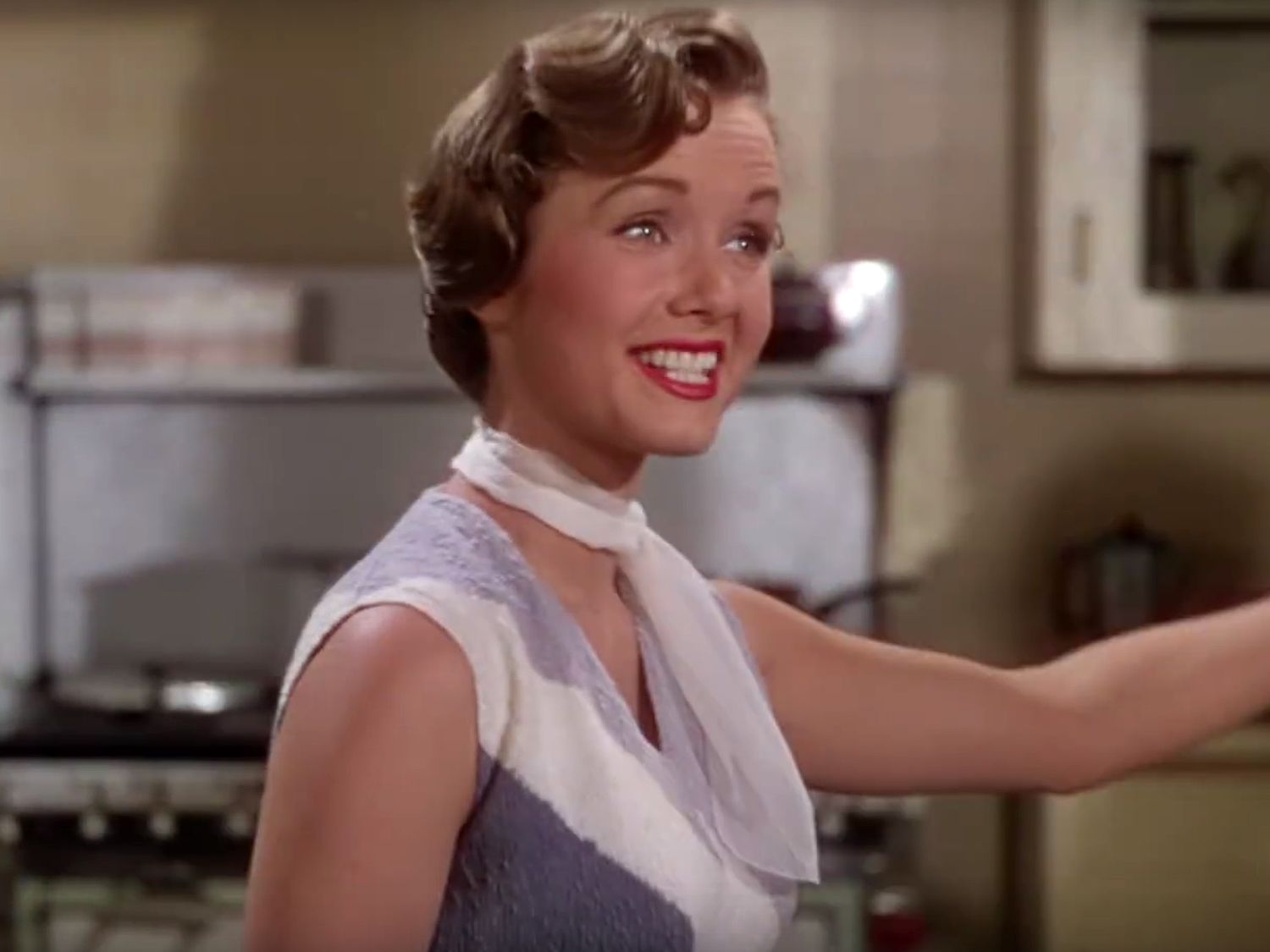
The movie, which takes place in 1927, has a couple underlying storylines. One is a love story between Gene Kelly’s character Don Lockwood and Debbie Reynold’s character, Kathy Selden.

The other is a historical story about the end of silent films and the beginning of talking films.

That’s the simple description, but there is so much more going on underneath the surface of this comedy/musical.

We start the movie with silent screen swashbuckler star Don Lockwood and his movie partner Lina Lamont (Jean Hagen) attending a  movie premiere. They are kind of like the Fred Astaire and Ginger Rogers of their time, only they are silent film stars of Victorian-era romance-adventures.
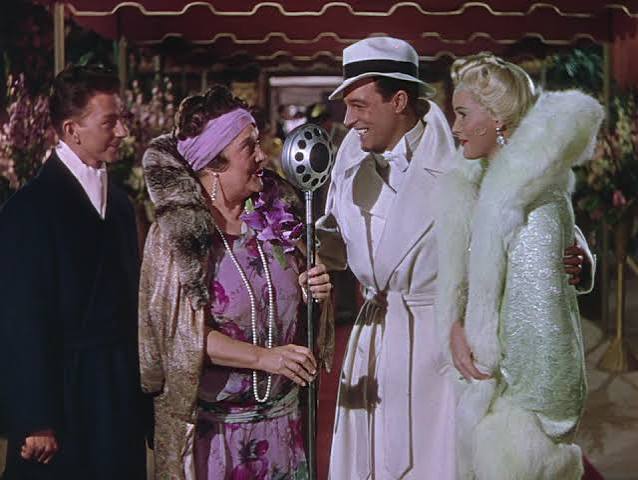
It is only Don and his friend Cosmo Brown (Donald O’Connor) — the musical accompaniest for the Lockwood and Lamont movies — who speak during the red carpet interview. It seems like the men are keeping Lina from speaking to the interviewer.

Don provides a sanitized version of how he and Cosmo got into show business and  how he and Lamont met, with his words not matching up to what we see on our screen. He says that his motto in his career was to always conduct himself with dignity and what we see is him and Cosmo doing crazy vaudeville acts or working as stuntmen when they were first starting out.

We also see how Don and Lina first met and though Don tells the audience at the premiere they had an immediate connection, moviegoers see her sticking her nose up at him when he was a stuntman but changing her tune when the head of the studio announces Don is going to be their next big star.

We go a full 20 or 30 minutes into the movie before we find out why no one would let Lina speak during the red carpet interview. I hate to ruin this for anyone who has not seen the movie but…. I’m going to so you have been warned.

You ready?

Don’t read on if you don’t want to know……

Lina has a very annoying, high pitched voice and says things like, “Why didn’t I get to talk out there. What do you think I am? Dumb or sumthin’…”
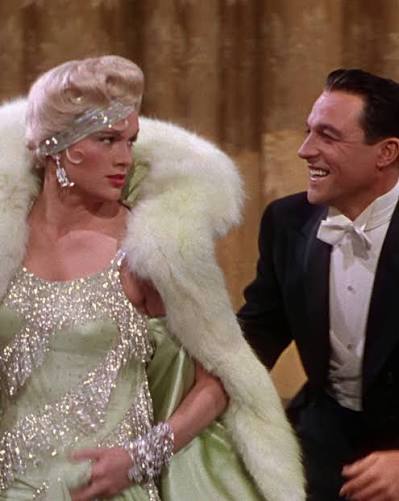
The studio executives, Cosmo, and Don do indeed believe, and know, that Lina is dumb. They also know that she thinks she and Don are really couple, when Don wants her to know they are not.

“There’s  nothing between us, Lina,” he tells her. “There never has been. Just air.”

After the premiere, Don and Cosmo are on their way to the after party when Cosmo’s car gets a flat tire. Don is spotted by a bunch of fans who swarm him and begin to demand autographs and souveniers, ripping off part of his  tuxedo jacket.

He runs away, through traffic, and ends up jumping into a car being driven by a shocked young woman named Kathy Selden.
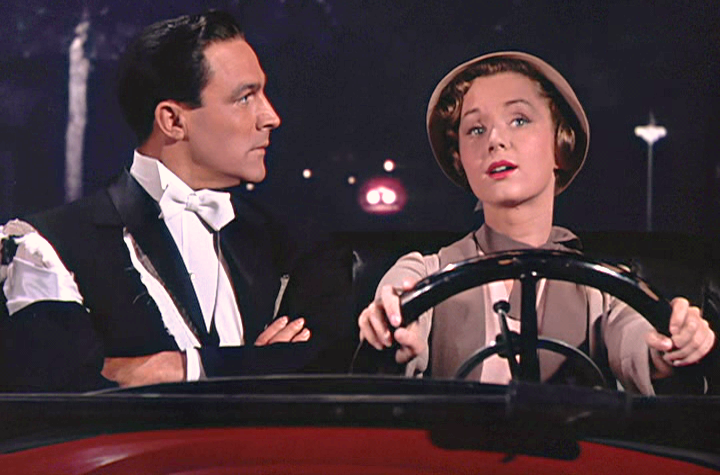
Kathy doesn’t recognized Don right away. Instead, she thinks she’s seen his photo on a Most Wanted poster at the post office and begins to scream. She stops and tells a police officer that this man just jumped into her car and the police officer says, “Why you’re Don Lockwood!”

Kathy becomes much more cordial then and asks Don if he’d like her to drop him off somewhere. He says he would like to get changed out of the tuxedo his fans ripped up and the conversation goes along smoothly until Don starts to flirt with Kathy.

She catches on to his schtick pretty fast and then pretends to be unimpressed with him. She’s an actor on the stage, which she claims is much more prestigious than acting on film.

She informs Don that all he is is a shadow up on the screen, not a real person. He just makes faces and doesn’t really speak, which is what she believes acting really is.

Don is, of course, quite offended by her mocking his professionn and when she pulls over to let him out,  now safe from the screaming fans, he leans toward her and says she shouldn’t be afraid of him. What can he do to her, after all, he’s but a mere shadow.

I pause in this recap to comment on how brilliant the acting is by both of them in this scene.

I’ve provided a clip here because it’s just so good. The quality of the clip is not good, however. It is all I could find online:

We flash forward to Don at the party with all the other stars and a bunch of other famous people. At the party, the studio owner R.F. Simpson (Millard Mitchell) shows everyone in attendance an example of talking film. Everyone is surprised but doesn’t think that it will ever replace silent films, or if it does it will be years off. R.F. disagrees and later on, after another studio releases the first talking picture, R.F. says that their studio is going to film its first talking film and their biggest stars, Don and Lina, will be the stars.

A second later, when Lina speaks, though, their hearts sink.

Lina can’t speak in the movie. Not with that voice.

This is all very ironic, of course, because in real life, Jean  Hagen has a lovely, sultry voice. Her real voice is actually used later in the movie where Kathy is supposedly dubbing Lina’s high voice with a more sultry one. Instead, that more sultry voice is Jean’s actual voice.

 I’ve jumped ahead a bit, so let me go back:  Cosos gets the brilliant idea for Kathy to dub Lina’s voice so Lina will sound like she looks in the talking movies.

What could go wrong, right?

Umm…wrong. Lina . . . well, you’ll have to watch to see why Lina isn’t a big Kathy Seldon fan and what she does about her lack of love for Kathy.

I can say that one reason Lina doesn’t like Kathy is because of what happened at that after party. After R.F.’s big announcement about talking films, a large cake is pushed into the room and suddenly out pops Kathy Selden, the “more refined” actress, who actually turns out to be a chorus girl.
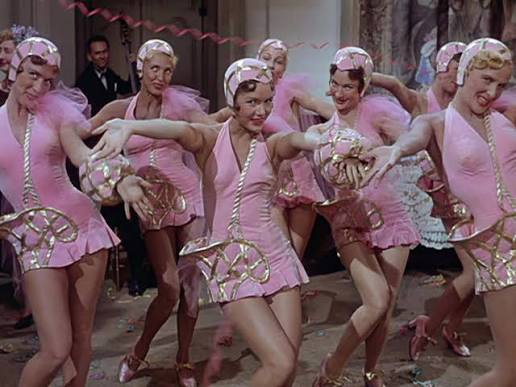
Don enjoys mocking her over this which prompts her to attempt to throw a pie in his face, which instead hits Lina square in the face.

Kathy is mortified by her behavior and runs from the room with Don behind her. She manages to escape and drive off before he can find her, though, and he spends several weeks trying to track her down after Lina gets her fired from her job.

An article on TCM says many critics and fans call Singing in the Rain the greatest musical ever made and I’d have to say I am one of those fans who feels that way.  There is just so much about this musical that is superior to all other musicals.

The songs are amazing, with well-written and witty lyrics.

The acting is amazing.

The dance sequences are amazing.

The comedy is spot on.

The masterful way the writers created characters mocking Hollywood films and actors all while making a Hollywood film with actors is brilliant.

It is also a visual spectacle.

There is so much talent shoved into this one movie that it almost creates sensory overload, but delightful sensory overload. Not the sensory overload that sends you running to a quiet room with your soft blanket and a white noise machine.

The most famous scene from the movie is, of course, Gene’s dancing in the rain in his hat and suit, with an umbrella.

I loved reading the following paragraph on TCM.com about the development and filming of the title song:

“While the film is chock full of musical highlights, Gene Kelly’s “Singin’ in the Rain” number is the genuine showstopper. Regarding his immortal solo number, Kelly later commented, quite graciously and modestly, on what made the scene work so well: “The concept was so simple I shied away from explaining it to the brass at the studio in case I couldn’t make it sound worth doing. The real work for this one was done by the technicians who had to pipe two city blocks on the backlot with overhead sprays, and the poor cameraman who had to shoot through all that water. All I had to do was dance.” The technicians’ efforts are all the more remarkable since there was a severe water shortage in Culver City, California, the day the sequence was shot.”

Here it is for your enjoyment (if WordPress lets the link work):

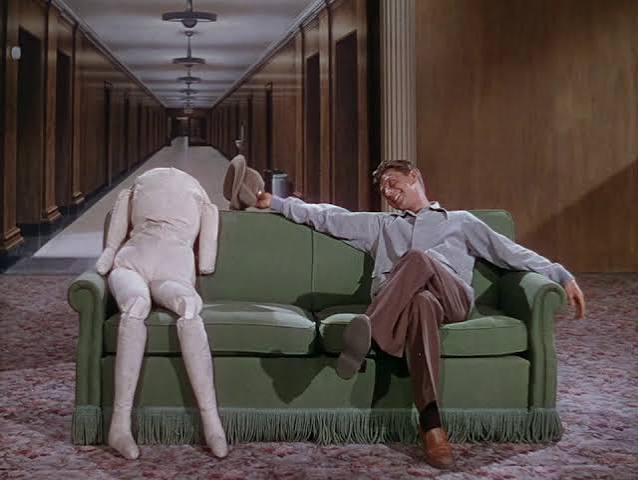
It is just about the best dance sequence I have ever seen in a movie but one can’t forget O’Connor singing and dancing (and participating in some serious slapstick/physical comedy) in “Make ‘Em Laugh” or Reynolds, Kelly, and O’Connor singing “Good Morning.”

This movie pokes fun at swashbuckling films and silent films and Kelly was all in, even though it poked some fun at him as an actor too.

The film was directed by Gene Kelly and Stanley Donan and Gene also choreographed mos of the dance sequences. Between all that and starring in the film, he must have been absolutely exhausted!

He’d started his career with the movie Cover Girl in 1944, revolutionizing the Hollywood musical with innovative and “free-flowing” dance routines.

After that movie,  he earned an Oscar nomination for Anchors Aweigh (1945, with Frank Sinatra and Kathryn Grayson and a cute, little Dean Stockwell. I liked this one.)

It was On The Town from 1949 that really sent his career flying. That movie was the first of three collaborations with Donen.

Debbie Reynolds was only 19 when she first started filming as Kathy Seldon (though I’ve read interviews where she said she was 17 and watched an interview where she said she was 18) and you may have read that there was quite a bit of tension between her and Kelly during filming because Gene was a perfectionist. He was also 39-40 during filming and may have kissed her a bit more passionately than she was ready for, according to an interview she gave with The Pittsburgh Gazette, where she said he “stuck his tongue down my throat.” When she ran off crying, he was much more  careful during future takes and  kissed her more gently, she said, though he was a bit “pissed about it”.
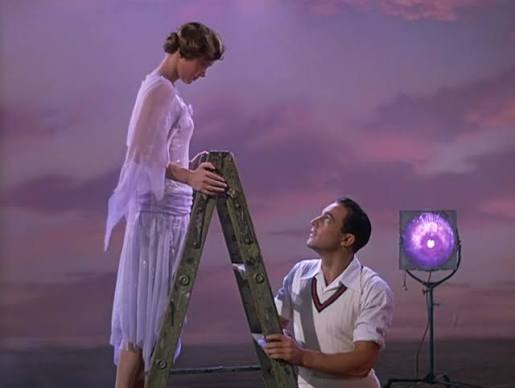
 Some say that Debbie called Gene abusive and she did refer to him in her 2013 memoir, Unsinkable, as a “cruel taskmaster”.  Despite writing this, Debbie also remembered how his pushing her helped her to become a better actress later and how the movie shot her into stardom.

“He is a perfectionist and a disciplinarian – the most exciting director I’ve ever worked for,” she said. “And he has a good temper. Every so often he would yell at me and make me cry. But it took a lot of patience for him to work with someone who had never danced before. It’s amazing that I could keep up with him and Donald O’Connor.”

Years later Kelly expressed regret at how hard he pushed her and said he was truly shocked she still spoke to him after all he’d put her through. So clearly, they did still speak to each other even if she thought he was rough on her during filming.

The other day I was looking at the Facebook page of Gene’s last wife (he was married three times, with his final wife being 31 and him being 78 at the time of their marriage in 1990) and she had written about how Jean Hagen was hired for the film.

“Gene told me that the only dispute he had with Producer Arthur Freed and co-director Stanley Donen in casting Singin’ in the Rain was over the role of Lina Lamont,” she wrote. “Freed and Donen did not think that Jean Hagen was glamorous enough to play the part. As Gene said, “Stanley was very strong for a young lady from Fox, who was very pretty and a nice actress. She looked like a movie star, but she didn’t have enough depth to do the role. Arthur Freed had a couple of favorites that he wanted to put in. But they were both thinking of girls that look like movie stars. Beautiful, glamorous girls. Arthur even once mentioned Lana Turner, who just couldn’t have played the role that way.”

Patricia writes that the issue was neither of the men had ever  seen Jean Hagen all dressed up and looking beautiful.
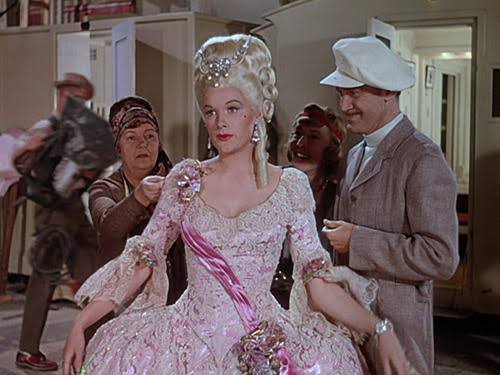
Kelly and Jean were friends and he thought she’d be wonderful in the role, according to Patricia.

“He did a test with her and the minute Freed and Done saw it, “they fell right in with it” and “when the first rushes came in on her, we were all mad about her.” Born Jean Shirley Verhagen in Chicago in 1923. She was nominated for an Oscar as Best Actress in a Supporting Role for Singin’ in the Rain but lost to Gloria Grahame in The Bad and the Beautiful. I have a feeling we can all agree with Gene that Jean Hagen was perfect for the role and, as he said, “she was the glue that held the picture together.” 

I could go on and on about this movie and all the background of it, so I guess I’d better stop here and instead link you to a few articles or YouTube videos with more information. I will also leave you with some trivia and quotes from the movie.
Some trivia *wink*:

  • Despite all of Debbie’s hard work on the “Good Morning” number, Kelly decided that someone should dub her tap sounds, so he went into a dubbing room to dub the sound of her feet as well as his own.
  • It cost $2.5 million to make the movie, which was $665,000 over budget. The movie earned $7.7 million upon its initial release. 
  • Donald O’Connor invited his brother to help him rehearse the stunt of running up the wall in Make ‘Em Laugh with a rope. O’Connor was smoking four packs of cigarettes day back thn and went to bed for a week after completing the scene. Sadly, an accident deleted all of his hard work and he had to reshoot the entire scene again later.
  • Cyd Charisse, who plays Gene Kelly’s dancing partner in the “Broadway Ballet” number, studied ballet in Los Angeles with Adolph Bolm and Bronislawa Nijinska. She danced with Ballets Russes under the name of Siderova. After World War II she was hired by Arthur Freed to be the resident ballet dancer at MGM.
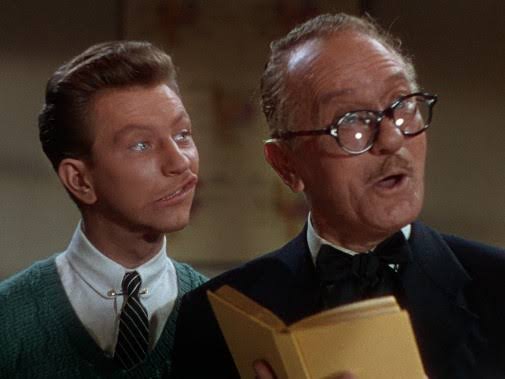
  • From TCM: “The comical bit that Donald O’Connor does in the “Make ’em Laugh” sequence, where he pushes and pulls on his face to make absurd faces, is known as “gurning.”
  • Gene Kelly had a 103 degree fever when he shot the Singing in the Rain dance sequence.
  • Debbie Reynolds’ voice was dubbed by Betty Royce for the scenes where Reynolds’ character dubs Lina Lamont’s singing and speaking voice. In addition, in the scene where Kathy Selden is dubbing Lina Lamont, Hagen is actually dubbing Reynolds dubbing Hagen on screen for just one line.

Some hilarious quotes from the movie:


Lina: Oh Donny! You couldn’t kiss me like that and not mean it just a teensy bit!
Don: Meet the greatest actor in the world! I’d rather kiss a tarantula.
Lina: You don’t mean that.
Don: I don’t— Hey Joe, get me a tarantula.

Lina: Gee, this wig weighs a ton! What dope’d wear a thing like this?
Roscoe: Everybody used to wear them, Lina.
Lina: Well, then everybody was a dope.

Cosmo: Talking pictures, that means I’m out of a job. At last I can start suffering and write that symphony.
Simpson: You’re not out of a job, we’re putting you in as head of our new music department.
Cosmo: Oh, thanks, R.F.! At last I can stop suffering and write that symphony.

Lina: Why, I make more money than – than – than Calvin Coolidge, put together!

Lina: “People”? I ain’t “people.” I am a – “a shimmering, glowing star in the cinema firmament.”

Lina: If we bring a little joy into your humdrum lives, it makes us feel as if our hard work ain’t been in vain for nothing.

[A dancer watching Lina Lamont in “The Royal Rascal”] Flapper: She’s so refined. I think I’ll kill myself.

Lockwood: What’s the matter with that girl? Can’t she take a gentle hint?
Cosmo: Well haven’t ya heard? She’s irresistible. She told me so herself.

Cosmo Brown: Lina. She can’t act, she can’t sing, she can’t dance. A triple threat.

Lina Lamont: What’s wrong with the way I talk? What’s the big idea? Am I dumb or something?

Lina Lamont: What’s wrong with the way I talk? What’s the big idea? Am I dumb or something?

Trailer:


Sources:

https://www.tcm.com/articles/afi-top-100/404767/singin-in-the-rain-1952

Donald O’Connor and Debbie Reynolds on Good Morning America talking about working together in 1986: https://youtu.be/hjHcGL_D5eY?si=eRyxk30EOANrg9wn

Patricia Ward Kelly talking about the dubbing in Singing in the Rain: https://youtu.be/pG6iCVFDlRc?si=Qs0KIU70_pmLKMdZ

Debbie Reynolds and Donald O’Connor talking about Singing in the Rain with TCM:

More trivia about Singing in the Rain:

https://www.tcm.com/articles/71662/trivia-singin-in-the-rain-1952
Winter of Cagney: The Bride Came C.O.D.

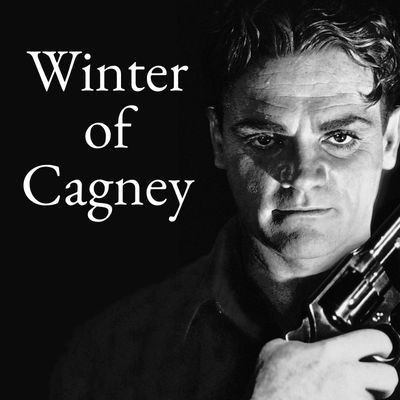
This Winter I’ve been watching James Cagney movies.

I’ve switched the movie I was going to write about last week with the one I was going to write this week because I was going to watch the DVD of Angels With Dirty Faces I picked up, but I’ve been waiting for a night to watch it with The Husband, and that hasn’t come.

In the end, I decided to wait to watch that movie with him because he would like to see it as well, and it will be fun to watch together.

Angels with Dirty Faces stars Cagney with Humphrey Bogart, and Bogie is one of my husband’s favorite actors.

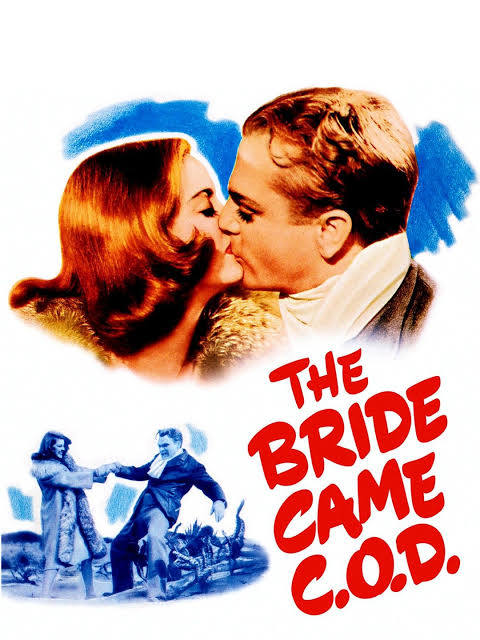
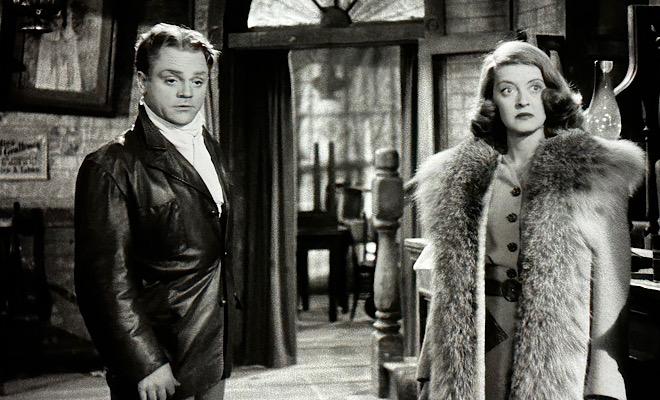
The Bride Came C.O.D. with Cagney and Bette Davis was a perfect substitute for this week, though.

It was a delightfully fun movie, and I needed it this week, so I’m glad I made the trade.

I will be watching this movie again with him soon, though, because it was just too much fun and should be watched with others.

This is a slapstick comedy where Cagney and Davis were both trying their acting talents at something a little different.

First, the premise: Davis is playing Joan Winfield, an heiress who makes impulsive decisions, and her latest impulsive decision is marrying Alan Brice (Jack Carson), a famous singer and band leader. The marriage announcement comes at just the right time for gossip and entertainment broadcaster named Hinkle who needs a big story.

He talks Brice into marrying Joan right away because it will make a great story for his broadcast.

The only issue is that Joan is on the phone with her father when Alan announces his engagement to Joan to the audience at the club and she is trying to work up the courage to tell her father she’s engaged.

Their call is cut short and she never tells him, but Hinkle arranges for her and Alan to go to a small airport to be flown by a private plane to Las Vegas where they can be married.

Steve Collins, a notorious womanizer who pretends  he is married with children so he doesn’t get roped into marriage by women who like to date married men,  owns the airport and the main plane. He’s never paid for the plane though and the finance company now wants it back.  Steve’s handy man, Pee Wee (George Tobias) tells him that Hinkle has arranged for their plane to take a famous couple to Las Vegas and Steve wonders if they will even have a plane to take them in.

Collins tries to think of a way to get the money and has no ideas until Joan’s father, oil tycoon Lucius K. Winfield (Eugene Pallette) calls the airport to try to reach his daughter and Collins strikes up a plan with Winfield to make sure his daughter doesn’t make it to Las Vegas to marry Alan Brice.

If Collins pulls off the delay, meeting Winfield with his daughter in tow in Texas instead, Winfield will pay Collins the money he needs to pay off the plane and keep the airport in business.

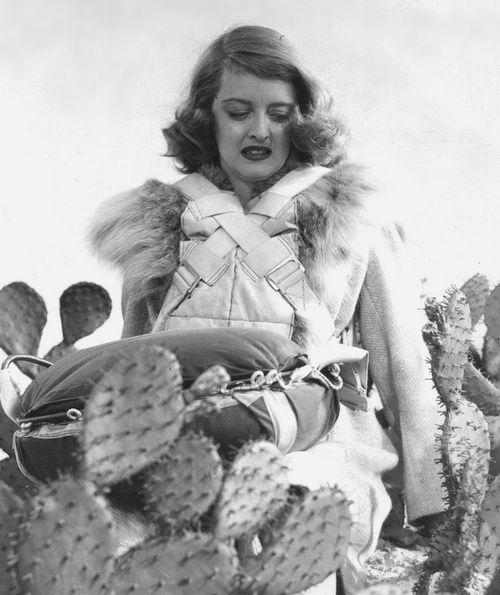
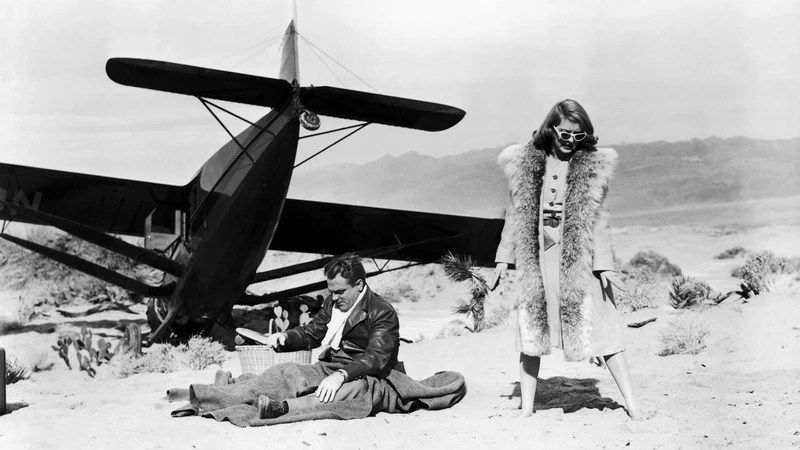
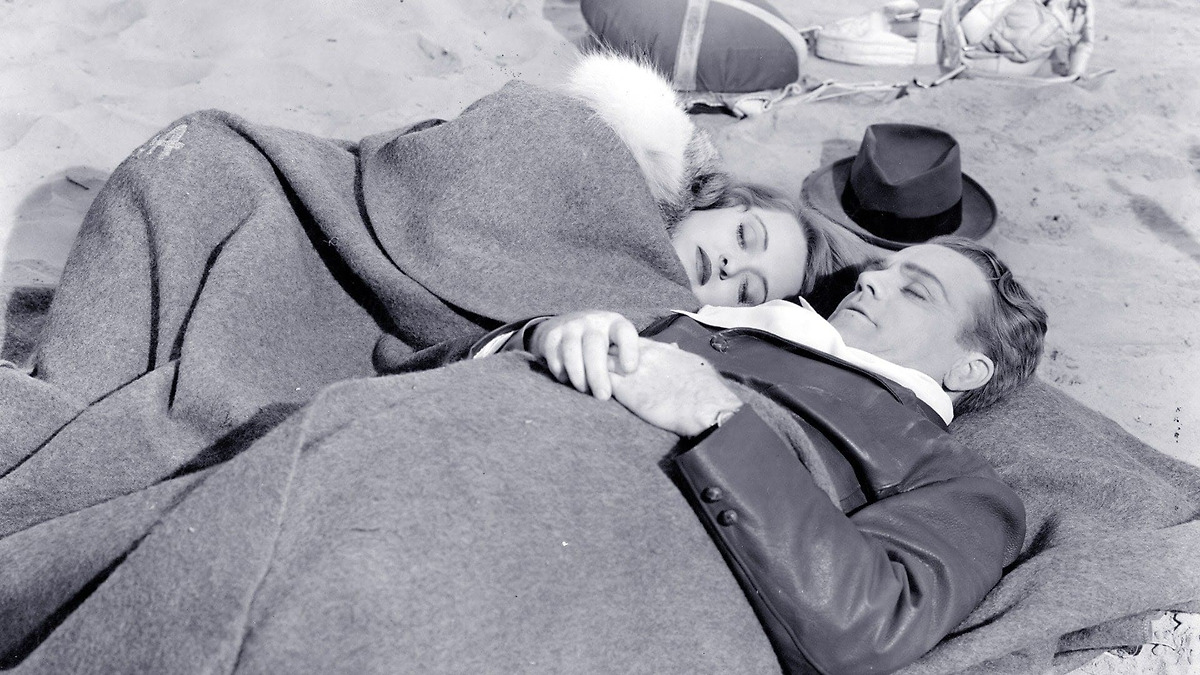
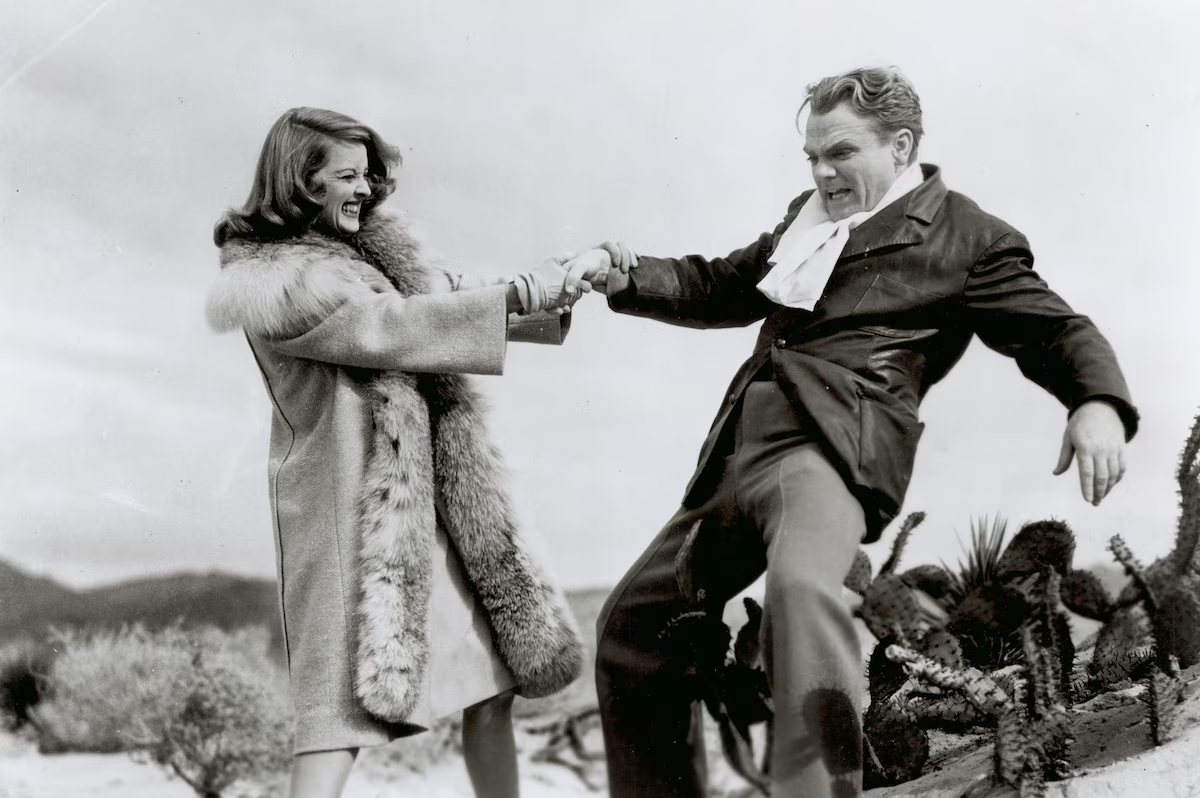
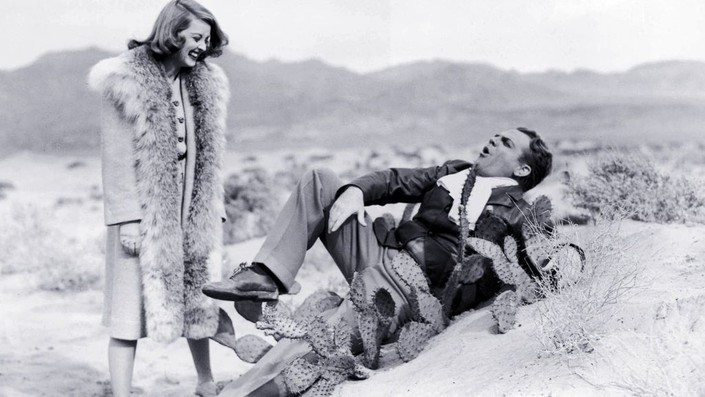
The first task at hand is to get rid of Hinkle and Alan which PeeWee helps Collins with. With them out of the way, Collins jumps in the plane and takes off with Joan, his plan to fly her to Texas. Unfortunately, Joan isn’t too happy with this arrangement and tries to escape, causing the plane to crash in the desert.

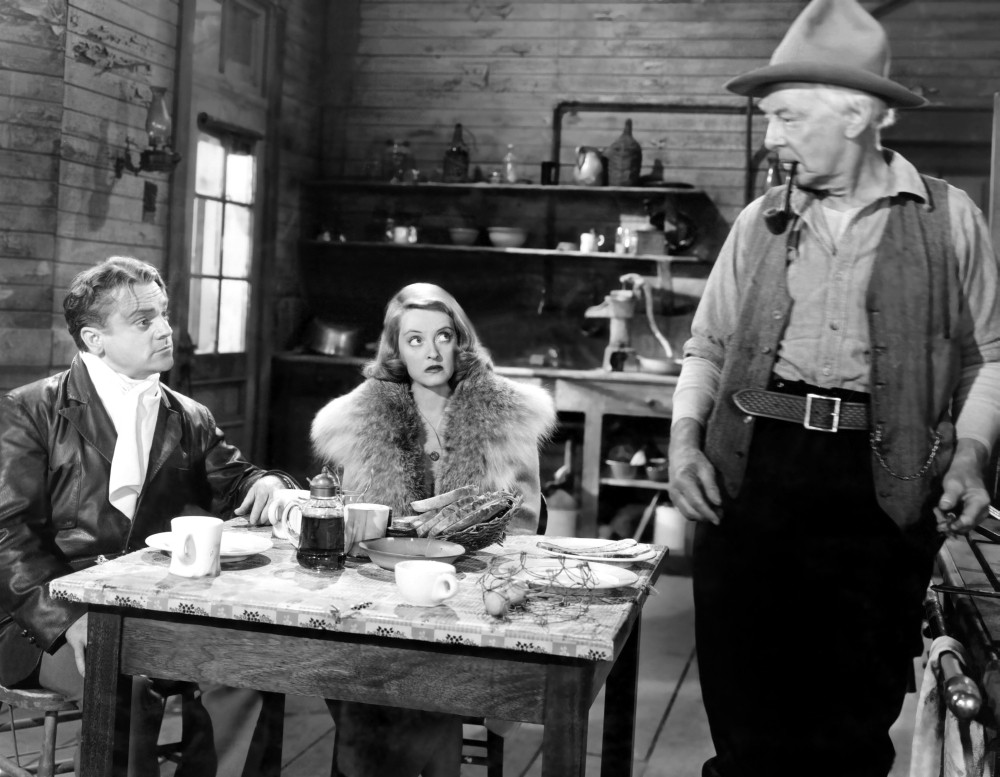
Here we will be introduced to Pop Tolliver (Harry Davenport), who I just loved.

I loved a lot about this movie.

It was very witty and fun, with some great lines.

Bette Davis was supposed to be 23 in the film which I found a little unbelievable but then again, Bette always looked older to me than she was.

She was actually 33 when this movie was made.

According to Frank Miller from TCM (yes, my go-to-source), Cagney made the movie on the heels of Strawberry Blonde because he wanted to break out of gangster roles.

Ann Sheridan, Ginger Rogers, and Rosalind Russell were considered for Davis’s role but when she expressed interest in trying out, Hal Willis, the producer of the movie, went to bat for her.

“In addition, she was eager to re-team with Cagney, who like her had a history of battles with the Warner Bros. management,” Miller wrote. “They had not worked together since 1934, when they teamed for the minor comedy Jimmy the Gent. Some biographers have suggested that the studio was punishing her with the film because of her notorious temperament, while others have suggested she may have wanted to emulate Katharine Hepburn, who had been equally successful in serious and comic roles. Also possible is that she was drawn to the film’s obvious similarities to It Happened One Night (1934), another tale of a runaway heiress saved from a bad marriage by the love of a simple working guy.”

There was a lot of trouble with the movie, including the writing and the fact Cagney wasn’t a fan of the sweltering heat at the shooting location of Death Valley.

Davis also wasn’t happy because while a stunt double was supposed to take the fall into a cactus for her, she had a fall of her own and ended up with 45 cactus quills having to be removed from her behind.

Neither actor was very fond of the movie years down the road and even critics bashed it with one saying, “Okay, Jimmie and Bette. You’ve had your fling. Now go back to work.” 

As for me, I found the film a lot of fun and ended up snickering at the silliness and the exchanges between our main characters.

And as I said above, Harry Davenport really added some charm to the film for me.

Have you ever seen this one?

I found it for rent on Amazon Prime but it is also available on HBO Max, Hulu, YouTube, and AppleTV.

Next week I’ll wrap up my Winter of Cagney with Angels With Dirty Faces and two weeks after that I’ll start a bi-weekly movie watch of Bette Davis films.

If you want to catch up on the other Cagney films I’ve watched this winter you can do so here:

Yankee Doodle Dandy

Taxi

The Strawberry Blonde

Mister Roberts

The Public Enemy

Love Me or Leave Me

White Heat


If you want to find clips and thoughts about vintage movies and TV, you can visit me on Instagram on my Nostalgically Thinking Account (https://www.instagram.com/nostalgically_thinking/) or on my YouTube account Nostalgically and Bookishly Thinking here: https://www.youtube.com/@nostaglicandbookish


If you enjoy the kind of content on my blog and all that goes into it, you can support my writing for $2.99 a month or a single donation. Learn more here: https://lisahoweler.com/support-my-writing/

Classic Movie Impression: The Thin Man (1934)

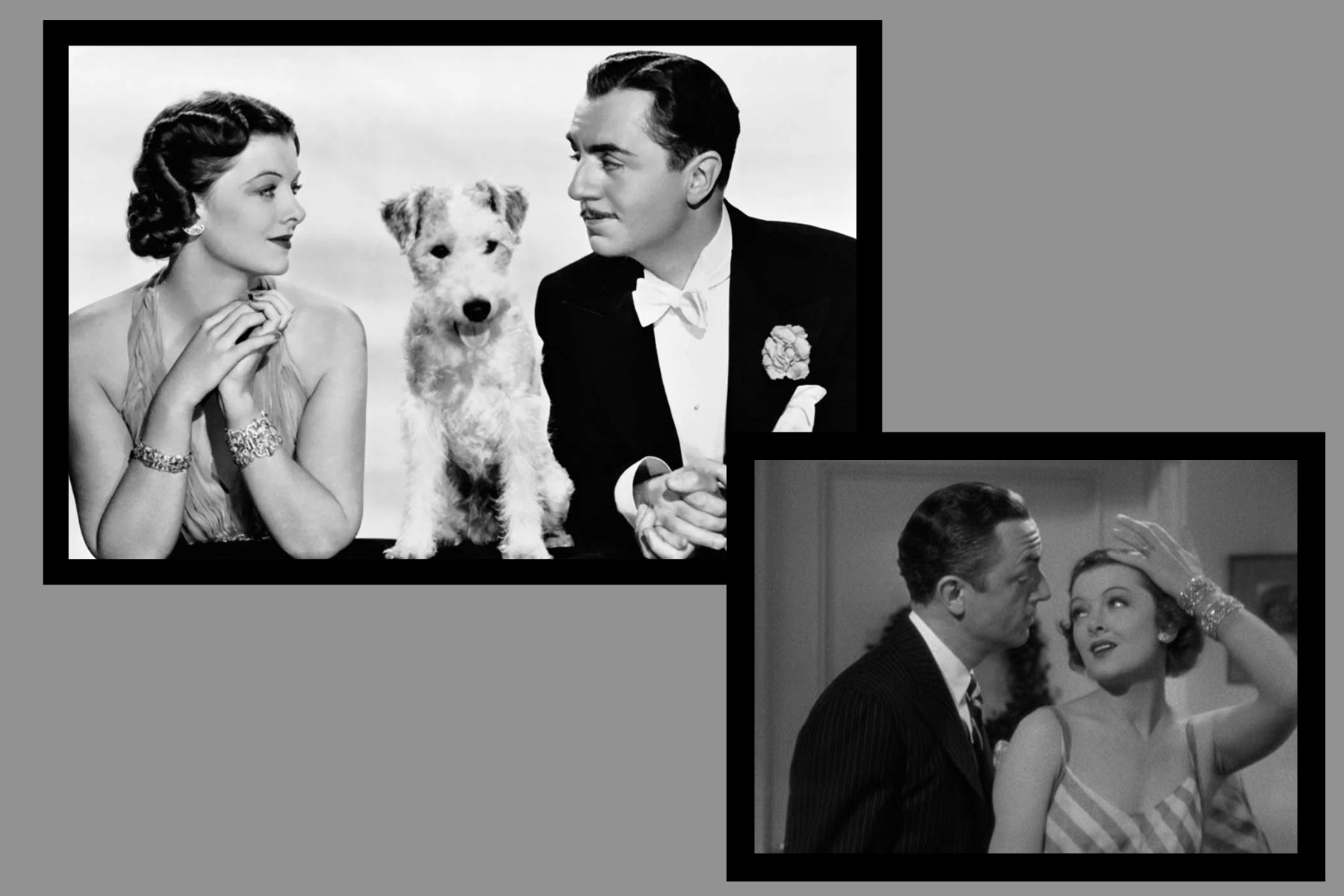
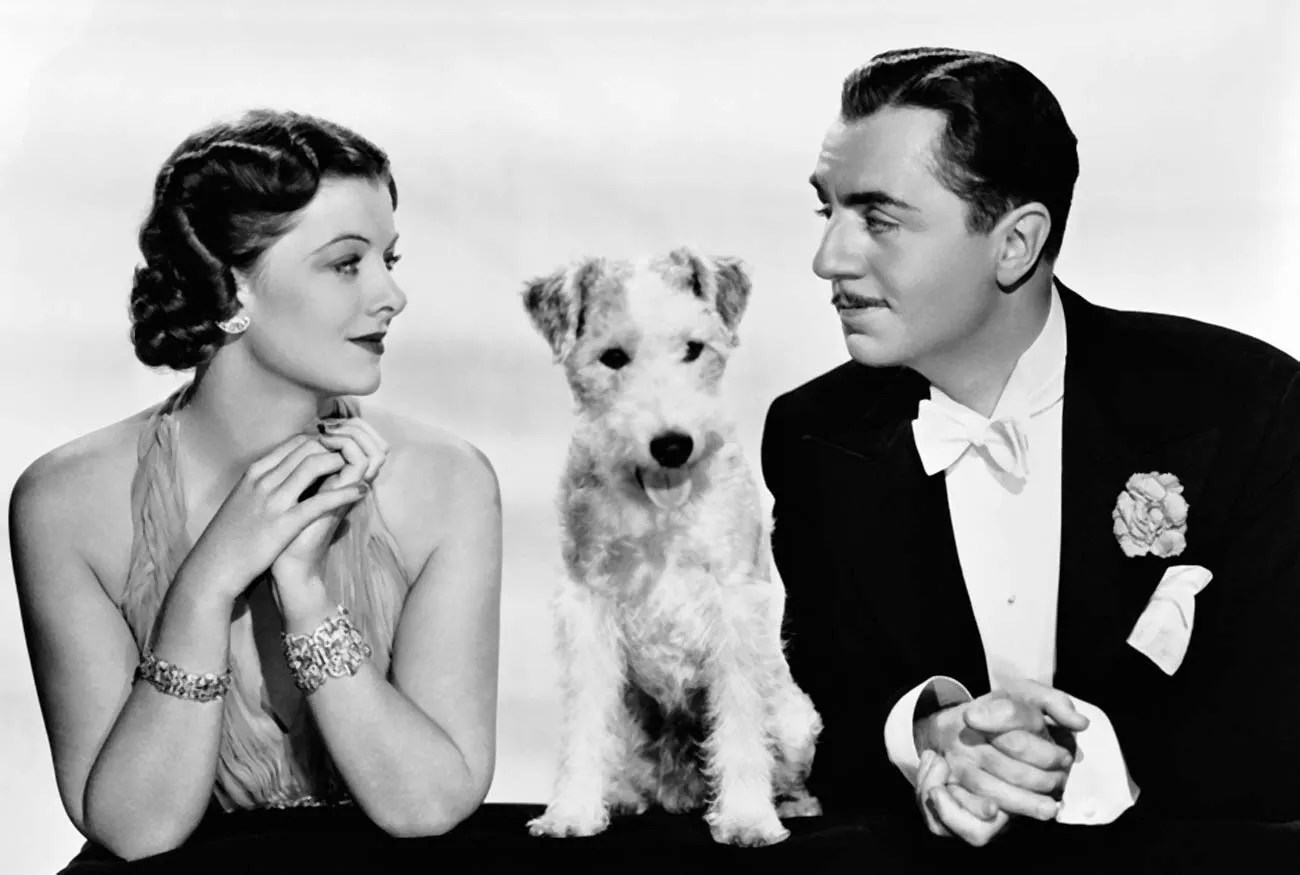
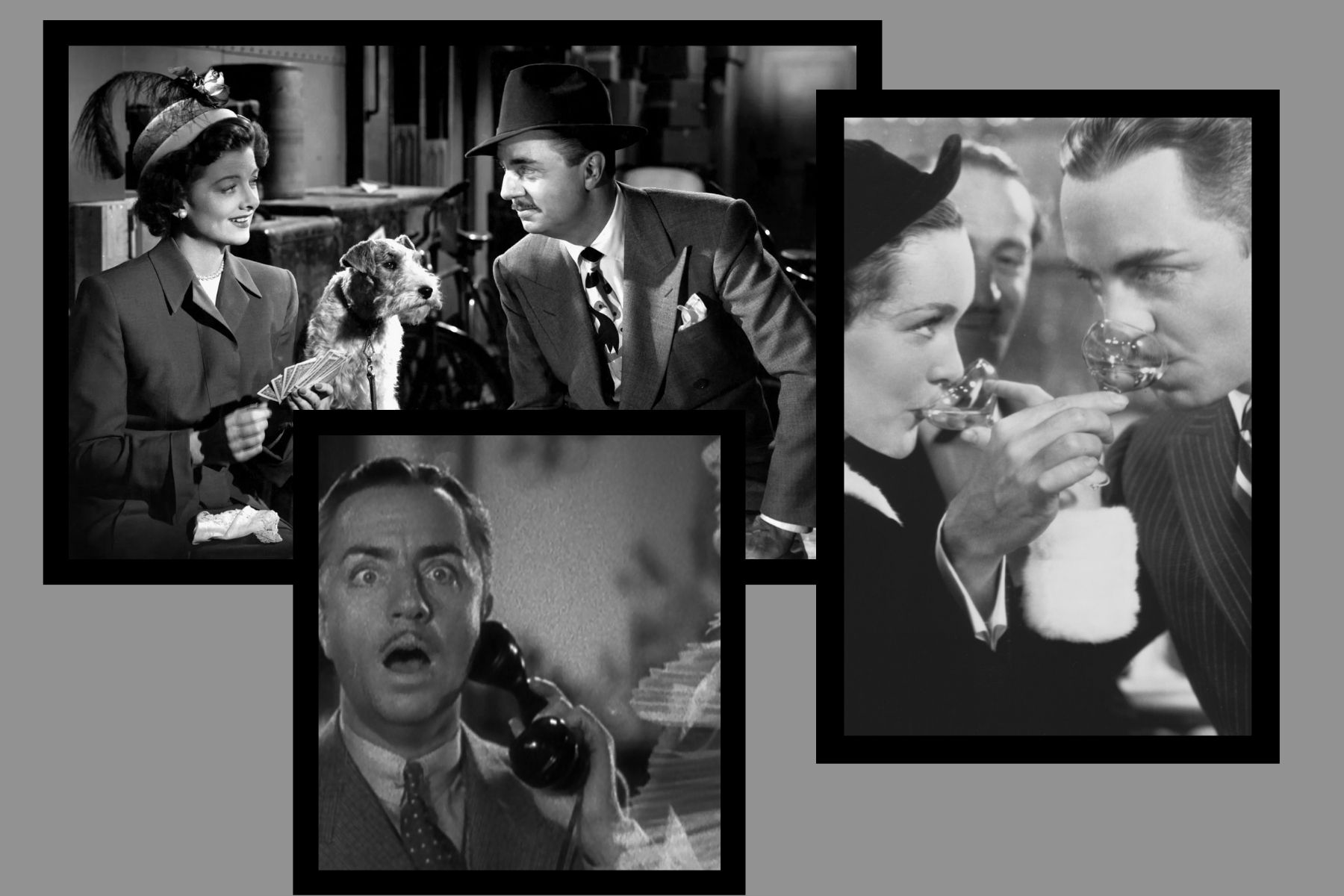
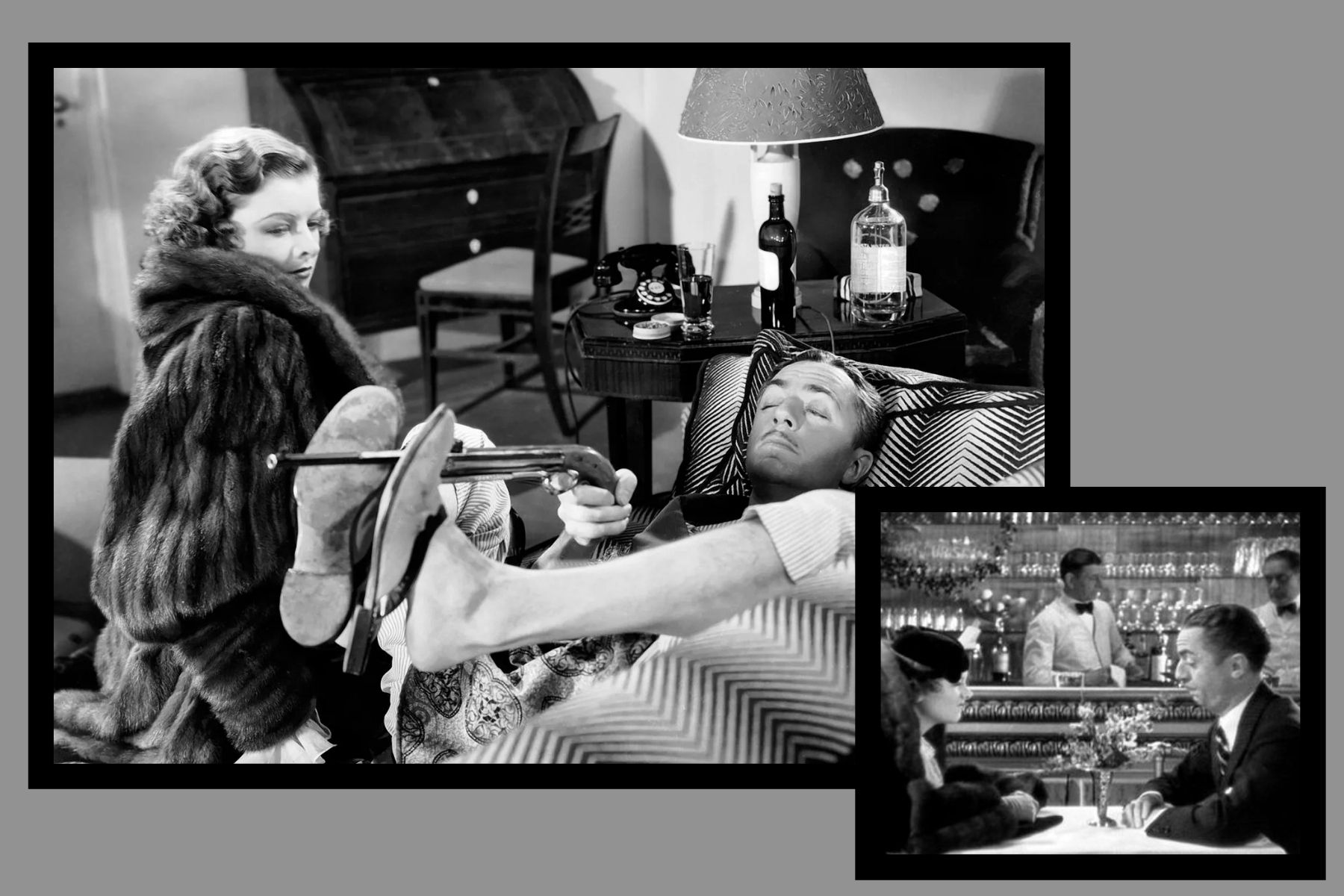
For the next month or so I will be sharing posts here and there about The Thin Man movies with William Powell and Myrna Loy.

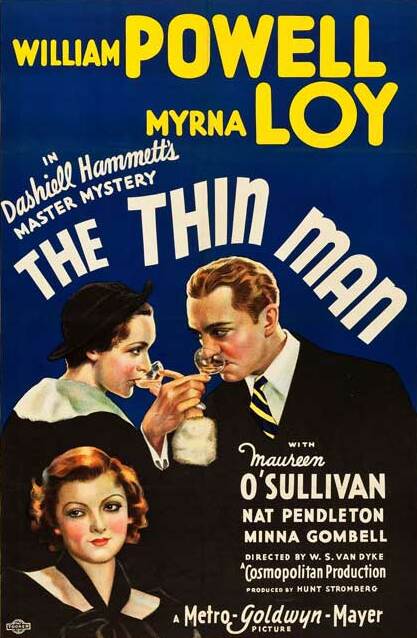
The series is my favorite movie series of all time. The six movies kick off with The Thin Man (1934).

The Thin Man will be 91 years old this year and, to me and many others, it still holds up.

This cozy mystery masterpiece has hit the Top 100 movies list from a variety of film organizations and critics over the years and for good reason. My family owns the DVD set of all six movies so we can watch any of the movies any time we want.

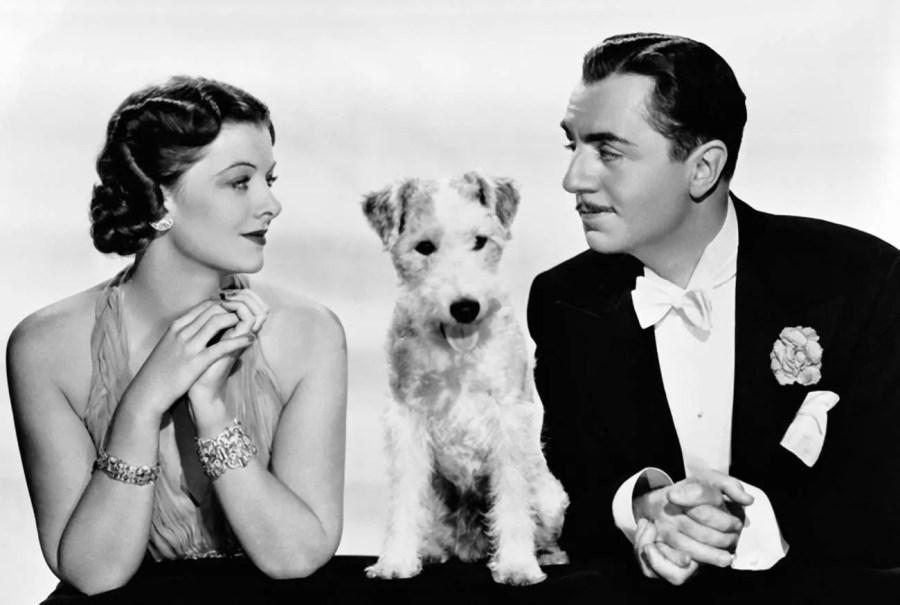
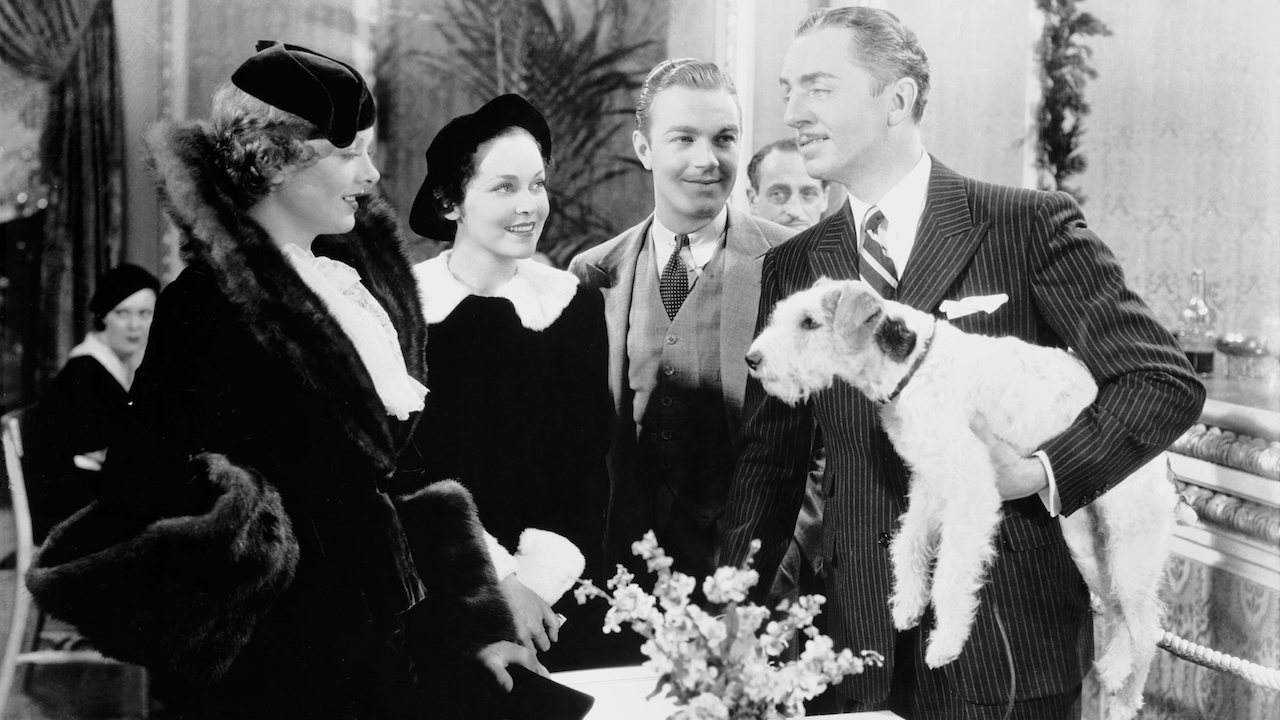
If you haven’t seen this movie or the five sequels involving witty, often intoxicated, private detective, Nick Charles (William Powell), and his equally witty and mouthy wife, Nora Charles (Myrna Loy), then you’re missing out.

Each of the six movies is full of mystery, zaniness, misunderstandings, mishaps, and hilarious interactions between Nick and Nora and everyone else. Oh and a crime or two is mixed in too.

The crimes themselves, and how they were committed, are a bit dark at times, but never graphic or gruesome and the darkness is always overshadowed by the Charles’ antics.

The pairing of Powell and Loy was the ticket for success in the 1930s as they were in a number of movies together and are still considered one of the best movie couples of all time.

Their first film was Manhattan Melodrama (1934) and directed by the same director of The Thin Man, W.S. “Woody” Van Dyke.

The Thin Man is based on a book by Dashiell Hammet and as the movie starts, we find Nick has retired from being a Private Investigator in New York City to help oversee Nora’s wealth as an heiress in San Francisco. This leaves Nick with a lot of time on his hand to go drinking, goof off and do some general carousing, though never with women because he is completely and utterly devoted to Nora.

Nora would like him to get back to work, though, so when they go back to New York for a visit and Nick’s former client, Clyde Wynant (who is later described as simply a thin man — hence the name of the book/movie), goes missing. His daughter Dorothy comes to Nick for help, Nora gently, and later not-so-gently, suggests he help.

What makes this movie such a fun one that might bring an occasional gasp from viewers is that it is a pre-Hays Code movie. That means it was filmed before a bunch of rules went into affect about what can and cannot be shown or said in movies. That’s why there were a couple comments from some of the characters in this that had me gasping and then laughing.

For example:


Nick: I’m a hero. I was shot twice in the Tribune.

Nora: I read where you were shot 5 times in the tabloids.

Nick: It’s not true. He didn’t come anywhere near my tabloids.

Before I forget, what makes these movies even more fun is the addition of Asta, the couple’s wife-fox terrier, who also acted in Bringing Up Baby with Cary Grant and Katherine Hepburn and The Awful Truth with Irene Dunn and Cary. He’s a fun addition who always adds  to a scene.  At one point Nick tells a  criminal, (Summarizing here): Stay right there or my dog will get you. He’s vicious.”

All the while Asta is finding a place to hide under a table.

Asta’s real name was Skippy, by the way, and there are some fun stories about him, but I will share more about Asta/Skippy in future posts about the series.

So back in the beginning of the movie, before we even see Nick  and Nora, Dorothy Wynant goes to her inventor father to tell him she’s getting married.

During that conversation we learn that Clyde cheated on Dorothy’s mother years ago with his secretary and they are now divorced. Later we will see that divorce really wasn’t such a bad thing because the ex-wife is absolutely batty.

Anyhow, shortly after Dorothy told her father she was getting married, we learn that Clyde Wynant’s former secretary and mistress, Julia Wolf, has stolen $50,000 worth of bonds from his safe. Those were going to go to Dorothy for her wedding gift. Clyde immediately suspects Julia, goes to her apartment, and finds her with a man named Joe Morelli.

Julia confesses she took the bonds, but she can’t give them back. She already spent $25,000 of them.

Clyde isn’t a very nice man and tells her she better get the $25,000 back or she’ll pay. He then leaves for a business trip and presumably never returns because three months later, Nick is out at a bar back in NYC for a visit when he runs into Dorothy who tells him her father is missing. She asks if Nick will help find him but Nick brushes her off by saying he’s sure her father will show up.

Things change later while Nick and Nora are throwing a party and Dorothy shows up to say Julia has been murdered and she truly feels her father is in danger. Now Nora pushes Nick to help out.

“You know, that sounds like an interesting case,” she says to Nick. “Why don’t you take it?”

Nick chuckles. “I haven’t the time. I’m much too busy seeing that you don’t lose any of the money I married you for.”

The really quirky and memorable characters show up when Dorothy goes to visit her mother, Mimi, who — like I said above — is crazy, but also is married to a loser, jobless husband named Chris. Living with her mother is her  Mama’s Boy macabre-obsessed brother  Gilbert.

Gilbert is a bit of a nerd who walks around with a book and shows everyone how smart he is by using very big words and even bigger theories about things. He’s also a smart mouth.

At one point, he asks one of the cops: “Could I come down and see the body? I’ve never seen a dead body.”

The cop asks why he’d want to, and he says, “Well, I’ve been studying psychopathic criminology and I have a theory. Perhaps this was the work of a sadist or a paranoiac. If I saw it, I might be able to tell.”

Dorothy’s mother,  Mimi, is self-focused and selfish and though she was cheated on and might have been a victim in any other movie, she’s a total mess in this movie. Her biggest worry is losing access to her ex-husband’s money, which she has been able to hold on to through alimony. When Julia is murdered, she sees an opportunity to get even more of her ex-husband’s money.

Going back to Nick and Nora … What makes them so memorable, beyond their amazing banter, is how they show that adventure, sex, and adoration doesn’t end after the wedding bells ring. I love how affectionate and playful they are throughout the series.

The writing for them is absolutely outstanding, which is probably because the screenwriters (Frances Goodrich and Albert Hackett) were told to focus less on Hammet’s story and more on the banter between the couple.

Some of my favorite exchanges:

Nora Charles: How many drinks have you had?

Nick Charles: This will make six Martinis.

Nora Charles: [to the waiter] All right. Will you bring me five more Martinis, Leo? Line them right up here.

——————

Nick Charles: Oh, it’s all right, Joe. It’s all right. It’s my dog. And, uh, my wife.

Nora Charles: Well you might have mentioned me first on the billing.

______________

Lieutenant John Guild: You got a pistol permit?

Nick Charles: No.

Lieutenant John Guild: Ever heard of the Sullivan Act?

Nora Charles: Oh, that’s all right, we’re married.

______________

Nora Charles: Pretty girl (about Dorothy Wynant)

Nick Charles: Yes. She’s a very nice type.

Nora Charles: You got types?

Nick Charles: Only you, darling. Lanky brunettes with wicked jaws.

_______________

Nora Charles: All right! Go ahead! Go on! See if I care! But I think it’s a dirty trick to bring me all the way to New York just to make a widow of me.

Nick Charles: You wouldn’t be a widow long.

Nora Charles: You bet I wouldn’t!

Nick Charles: Not with all your money…

According to information online, Hammett based Nick and Nora’s banter upon his rocky on-again, off-again relationship with playwright Lillian Hellman and the book itself on his experience as a union-busting Pinkerton.

MGM tried to prevent Myrna Loy from being cast in The Thin Man by telling director Van Dyke that he could have her “only if she was finished in three weeks to begin shooting Stamboul Quest (1934),” according to TCM. Van Dyke not only completed Loy’s scenes but all of the production somewhere between 12 and 18 days.

“Known as “One-Take Woody,” Van Dyke often did not bother with cover shots if he felt the scene was right on the first take, reasoning that actors “lose their fire” if they have to do something over and over,” Rob Nixon wrote for TCM. “It was a lot of pressure on the actors, who often had to learn new lines and business immediately before shooting, without the luxury of retakes, but Loy credited much of the appeal of The Thin Man to Van Dyke’s pacing and spontaneity.”

It was Van Dyke, with that whole desire of his to create natural reactions, who worked out Loy’s classic entrance into the bar and restaurant at the beginning of the movie — all her packages spilling on to the floor as Asta pulls her down the hall toward Powell.

Loy was told about the scene right before they shot it.

Van Dyke took a similar approach with Powell by telling him to take the cocktail shaker, go behind the bar, and walk through one of the early scenes while the crew checked lights and sound.

Powell did so and ad-libbed some comments to the crew as he worked out the scene. Before he knew it VanDyke yelled “That’s it! Print it!”

The director had had the cameras rolling the whole time.

He liked his actors as relaxed and natural as possible which is why a scene of Nick shooting the ornaments off the tree was added into the movie because “Powell playfully picked up an air gun and started shooting ornaments that the art department was putting up.”

I couldn’t find quotes from Powell about working with Van Dyke but there are quotes about working with Powell because he loved working with her.

“When we did a scene together, we forgot about technique, camera angles, and microphones. We weren’t acting. We were just two people in perfect harmony,” he said. “Myrna, unlike some actresses who think only of themselves, has the happy faculty of being able to listen while the other fellow says his lines. She has the give and take of acting that brings out the best.”

You can find plenty of opinions and articles about this movie online, most of them positive.

The Blonde at the Film wrote on her blog in 2014, “The Thin Man (1934) is a truly delightful mystery-comedy chock full of snappy dialogue, fantastic stars, art deco sets, magnificent costumes, enough mystery to make it suspenseful, and enough alcohol to give you a sympathy hangover.”

Christopher Orr wrote for The Atlantic: “As Nick and Nora, Powell and Loy subverted the classic detective film with comic aplomb and presented an impressively modern vision of marriage as an association of equals. They were also cinema’s most glamorous dipsomaniacs, a reminder of a bygone era when Hollywood could still imagine that charm, taste, and good humor might go hand-in-hand with the copious consumption of distilled spirits.”

His opinion of the mysteries in this movie and the others is fairly accurate, even though not altogether positive: “The mysteries themselves tend to be somewhat disappointing–needlessly convoluted, with solutions that often hinge on a last minute revelation or “clue” of dubious import (for example, whether or not someone announced themselves before opening a door). Rather, the chief pleasure of the films is in spending time with Nick and Nora as they tease, cajole, and romance their way toward the conclusion.”

Film critic Roger Ebert wrote of The Thin Man, “William Powell is to dialogue as Fred Astaire is to dance. His delivery is so droll and insinuating, so knowing and innocent at the same time, that it hardly matters what he’s saying.”

He continued: “Powell plays the character with a lyrical alcoholic slur that waxes and wanes but never topples either way into inebriation or sobriety. The drinks are the lubricant for dialogue of elegant wit and wicked timing, used by a character who is decadent on the surface but fundamentally brave and brilliant.”

Have you seen The Thin Man? What did you think of it?

Up next (at some point)  I will be writing about the next movie in the series, After The Thin Man.

__________

Sources:

https://www.theatlantic.com/entertainment/archive/2005/08/the-movie-review-the-thin-man/69449/

https://www.theatlantic.com/entertainment/archive/2005/08/the-movie-review-the-thin-man/69449/

https://en.wikipedia.org/wiki/The_Thin_Man_(film)

https://www.tcm.com/articles/behind-the-classics/133583/behind-the-classics-the-thin-man-1934

https://www.goldderby.com/film/2024/the-thin-man-william-powell-myrna-loy/


If you want to find clips and thoughts about vintage movies and TV, you can visit me on Instagram on my Nostalgically Thinking Account or on my YouTube account Nostalgically and Bookishly Thinking here: https://www.youtube.com/@nostaglicandbookish