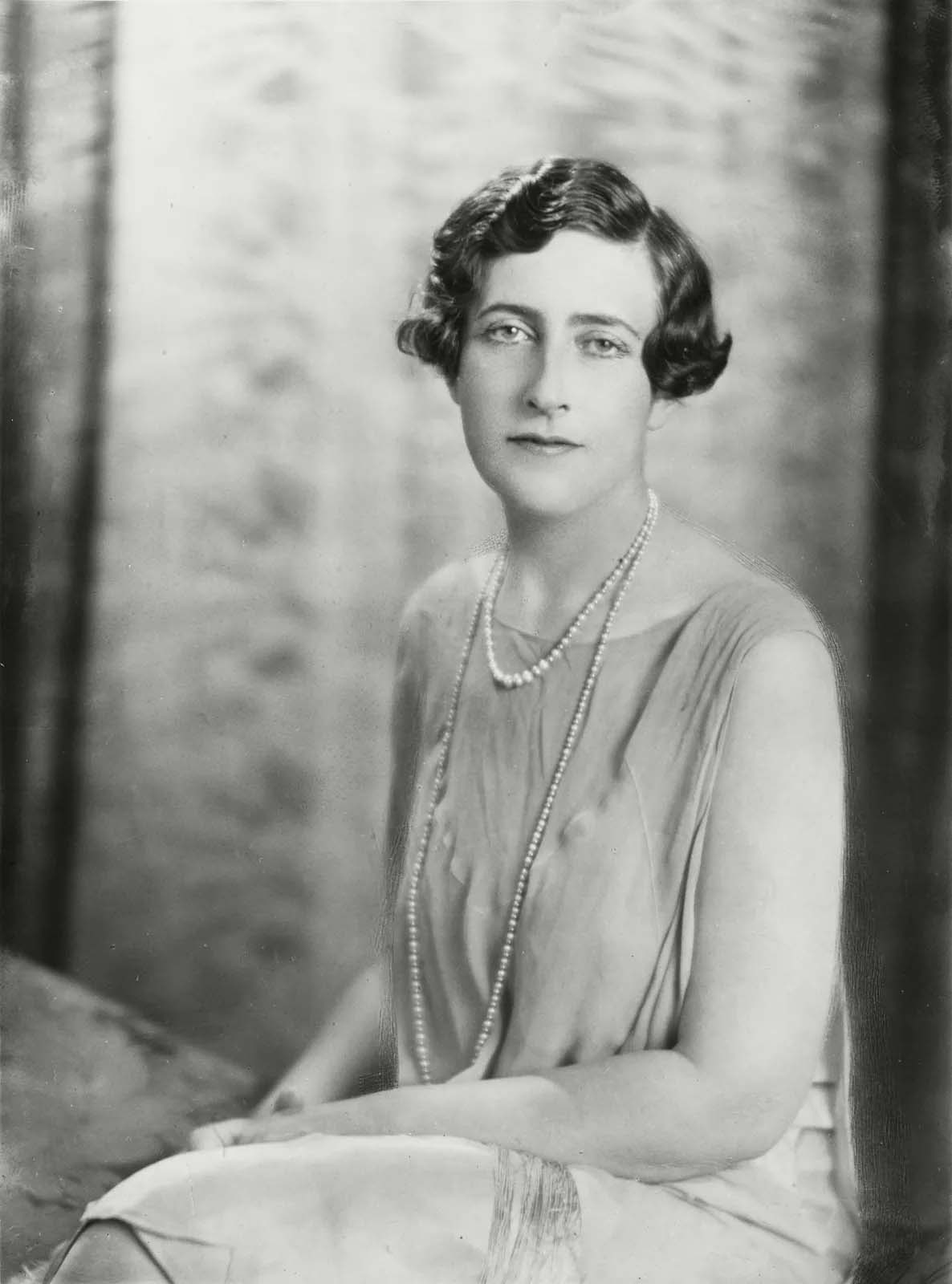
Book review/recommendation: Lord Edgware Dies: A Hercule Poirot Mystery by Agatha Christie and some thoughts about Agatha’s possible antisemitism

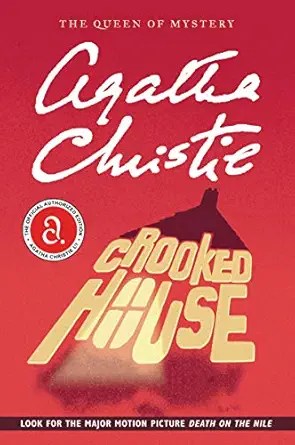
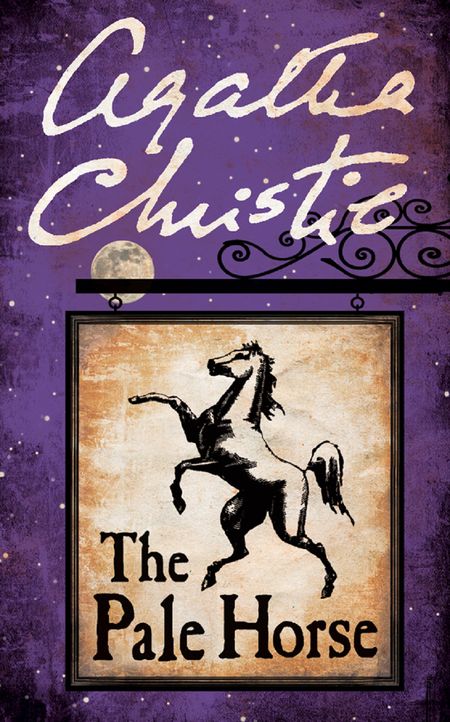
Lord Edgware Dies by Agatha Christie is a wild ride full of Hollywood starlets, mistaken identities, greed, trickery, and hilarious verbal sparring between Arthur Hastings and Poirot.

This is the second Poirot book I’ve read and I thoroughly enjoyed it.

This is the story of the death of Lord Edgware, whose wife – American actress Jane Wilkinson — declares she’d like to kill him – maybe hit him with her car so she can marry another man. The focus on the suspect flies right to her when he is found dead in his library the next day – stabbed in the neck.

There are other suspects in the play too, though – his nephew Ronald Marsh who wants his uncle’s fortune, his daughter who Lord Edgware wasn’t very nice to, an actress named Carlotta Adams who does an amazing impression of Jane Wilkinson, and even Lord Edgware’s secretary.

Jane is the obvious suspect, though, because she asked Poirot if he would go to her husband and ask him for the divorce she’s been asking for so she can remarry.

Originally, she wanted a divorce to marry an actor but now it is a duke. Poirot agrees to meet with Lord Edgware, who informs him that he’s already told Jane she could get a divorce.

The problem with Jane being the suspect is that she was seen at a dinner party the night her husband was killed and there is a witness who says he heard and saw her receive a phone call at exactly the time of the murder.

This spins the case right on its head.

Before the book is done there will be more than one murder, more than one suspect, and a big reveal scene at the end that twists and turns the reader to the answer.

Hastings reveals his affectionate aggravation with Poirot during the book, including how Poirot constantly talks about how he (Poirot) needs to go sit and use his “gray matter.”

“I have noticed that when we work on a case together, you are always urging me on to physical action, Hastings. You wish me to measure footprints, to analyse cigarette ash, to prostrate myself on my stomach for the examination of detail. You never realize that by lying back in an armchair with the eyes closed one can come nearer to the solution of any problem. One sees then with the eyes of the mind.”

“I don’t,” I said. “When I lie back in an armchair with my eyes closed one thing happens to me and one thing only!”

“I have noticed it!” said Poirot. “It is strange. At such moments the brain should be working feverishly, not sinking into sluggish repose. The mental activity, it is so interesting, so stimulating! The employment of the little grey cells is a mental pleasure. They and they only can be trusted to lead one through fog to the truth…”

While I enjoyed this book very much, I was bothered by the many negative or stereotypical references toward Jewish characters in the book. I apparently downloaded a copy to my Kindle where they hadn’t taken these references out since such references were edited out from some versions years ago.

A quick search online revealed a complicated relationship between Agatha and her views on Jews – views that partially came from the attitudes toward Jews of the wealthy class of people she was a part of in Great Britain. Agatha did indeed have some antisemitic views but also wrote about Jews being wealthy in a good way in her books – like that they were bright so that is how they were able to be so wealthy. She used a seriously disturbing number of tropes against them in this particular book, often calling them shrewd and money-hungry – but then seeming to say being shrewd was a good thing.

At one point in Lord Edgware Dies Poirot says, “Misfortune may always be waiting about to rush upon us. But as to your question, Miss Adams, I think, will succeed. She is shrewd and she is something more. You observed without a doubt she is Jewish?”

Hastings says he hadn’t but now that he thinks about it he does “see the faint traces of Semitic ancestry.”

Poirot continues, “It makes for success – that. Though there is still one avenue of danger – since its danger we are talking of.”

“You mean?” Hastings asks.

“Love of money,” Poirot tells him. “Love of money might lead such a one from the prudent and cautious path.”

So while we have a stereotype here, we also have a compliment, making it confusing what Agatha is really trying to say about  Jews. The fact she continues to negatively reference Jews throughout the book (one has the traditional big Jewish nose, one character comments), is awkward but she also seems to assign some positive elements to those characters, as well as showing admiration of those who are Jewish from other characters in the book.

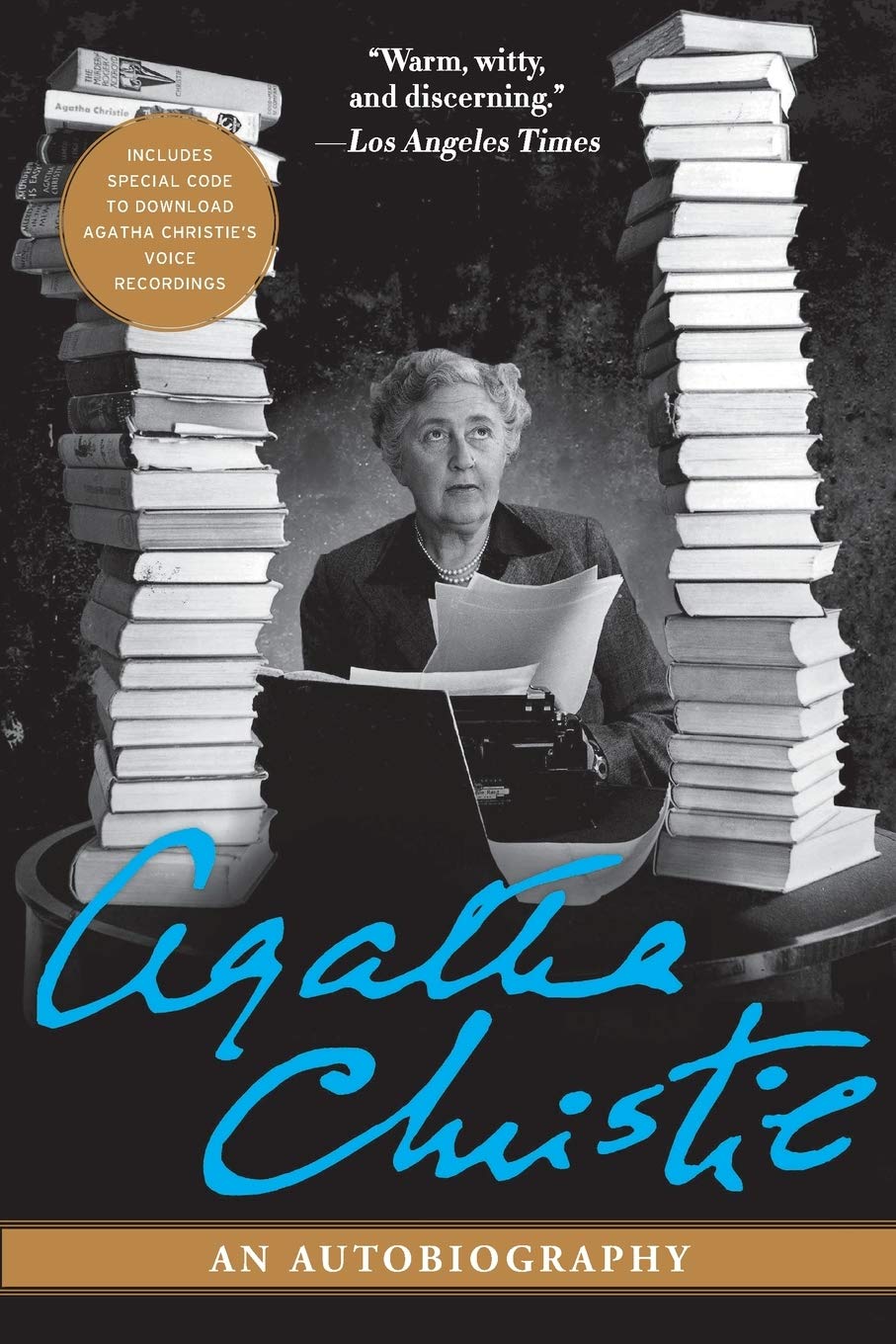
According to information I read online, an autobiography about Agatha details a few stories that point to her apparent antisemitism, including one during World War II when a high-ranking British official involved with the Nazi party commented that all Jews should be killed. This is said to be a moment when Agatha was shocked at the idea of killing anyone based on their ethnicity or faith and she was appalled at the comment. Her portrayal of Jews changed some after that incident. Nothing I read can definitively say that Agatha didn’t like Jews, blacks, or any other race she described in a stereotypical way in her books, plays, and short stories. Some critics, and even her own family members, feel that she was writing about how certain groups were described at that time, not that she herself felt hatred toward any group.

There are, however, repeated negative references to Jewish people in this particular novel and I struggled to be simply entertained by the story because of them. After feeling uncomfortable with the continued references, I did read a very interesting article by a writer named Benjamin Ivry on Forward.com. Forward.com is a site focused on Jewish culture. In summary, Ivery said that some of the language against Jews Agatha used in her writing was wrong and stereotypical but that many Jews still enjoy Agatha’s work, seeing it as a product of a time when many ethnicities were not respected. May of Jews can still see the brilliance in Agatha’s plots, while recognizing her propensity to overgeneralize Jewish stereotypes, he said.

In his article, he wrote: “Christie specialist Gillian Gill was unequivocal:

‘A kind of jingoistic, knee-jerk anti-Semitism colors the presentation of Jewish characters in many of her early novels, and Christie reveals herself to be as unreflective and conventional as the majority of her compatriots… Christie’s anti-Semitism had always been of the stupidly unthinking rather than the deliberately vicious kind. As her circle of acquaintances widened and she grew to understand what Nazism really meant for Jewish people, Christie abandoned her knee-jerk anti-Semitism. What is more, even at her most thoughtless and prejudiced, Christie saw Jews as different, alien, and un-English, rather than as depraved or dangerous – people one does not know rather than people one fears.”

Jane Arnold likewise observed that in Christie’s writings, “No particular Jewish characteristic is completely negative.” This ambiguity may have been due in part to an incident recounted in Christie’s autobiography. In 1933, she accompanied her husband, an archaeologist, to the Middle East for an excavation. There they met Julius Jordan, Germany’s Director of Antiquities in Baghdad. When someone mentioned Jews, Jordan retorted: “Our [German] Jews are perhaps different from yours. They are a danger. They should be exterminated. Nothing else will really do but that.”

Christie’s reaction was to stare at Jordan “unbelievingly” and observe to herself: “There are things in life that make one truly sad when one can make oneself believe them.” The UK National Archives website further explains that Julius Jordan was Nazi Party leader and propaganda director for Iraq. So Christie had encountered the local equivalent of Joseph Goebbels.

While Christie was shocked at the idea of Jews being killed, a Jewish journalist, Chrisopher Hitchens, later said when he attended a dinner with Christie and her husband in the 1960s the conversations about Jews was still “vividly unpleasant.”

Ivry says for many Jews, Agatha remains “a recreational delight.”

Indeed, in an article in the Canadian Jewish News, journalist Michael Taube writes: “Was Christie a racist or an anti-Semite? Her family and friends always denied it. They argued that most of the characters who made intolerant remarks were, in fact, seen in a negative light in her works. That’s true, which means she was more likely a product of her times than a hateful soul.”

As for my personal opinion, I enjoy Agatha Christie’s novels and plan to keep reading them. Since I was never able to speak to the woman herself and will never have the chance I will hold on to hope that the negative references she made toward Jews and other ethnicities were simply what others have said they were – ignorance or a reflection of the character saying them.

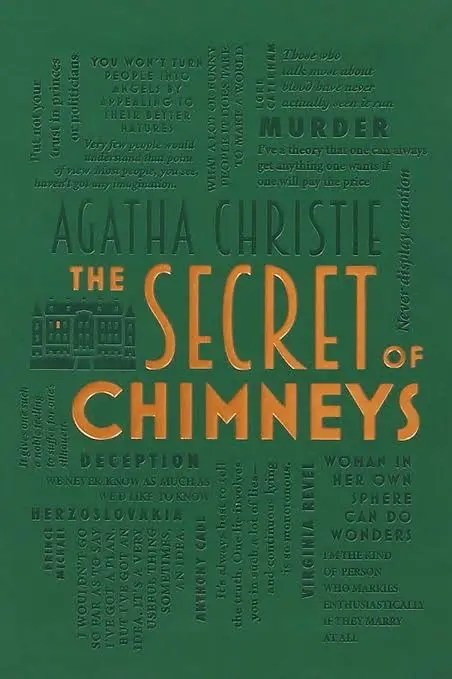
Top Ten Quotes by Agatha Christie

Top Ten Tuesday is hosted by That Artsy Reader Girl.

Today we were to share book quotes so I decided to share ten quotes from Agatha Christie’s books.

  • “You gave too much rein to your imagination. Imagination is a good servant, and a bad master. The simplest explanation is always the most likely.” —  The Mysterious Affair at Styles

  • “The young people think the old people are fools — but the old people know the young people are fools.”  — Murder at the Vicarage

  • Everyone is a potential murderer-in everyone there arises from time to time the wish to kill-though not the will to kill.” ―  Curtain

  • “There was a moment when I changed from an amateur to a professional. I assumed the burden of a profession, which is to write even when you don’t want to, don’t much like what you’re writing, and aren’t writing particularly well.” ― Agatha Christie: An Autobiography

  • “I often wonder why the whole world is so prone to generalize. Generalizations are seldom if ever true and are usually utterly inaccurate.” ― Murder at the Vicarage

  • The oth­ers went up­stairs, a slow unwilling pro­ces­sion. If this had been an old house, with creak­ing wood, and dark shad­ows, and heav­ily pan­elled walls, there might have been an eerie feel­ing. But this house was the essence of moder­ni­ty. There were no dark corners – ​no pos­si­ble slid­ing pan­els – it was flood­ed with elec­tric light – every­thing was new and bright and shining. There was noth­ing hid­den in this house, noth­ing con­cealed. It had no at­mo­sphere about it. Some­how, that was the most fright­en­ing thing of all. They ex­changed good-​nights on the up­per land­ing. Each of them went in­to his or her own room, and each of them automatical­ly, al­most with­out con­scious thought, locked the door….” ―  And Then There Were None

  • Now I am old-fashioned. A woman, I consider, should be womanly. I have no patience with the modern neurotic girl who jazzes from morning to night, smokes like a chimney, and uses language which would make a billingsgate fishwoman blush!”― The Murder on the Links

  • Mademoiselle, I beseech you, do not do what you are doing.” “Leave dear Linnet alone, you mean!” “It is deeper than that. Do not open your heart to evil.” Her lips fell apart; a look of bewilderment came into her eyes. Poirot went on gravely: “Because—if you do—evil will come…Yes, very surely evil will come…It will enter in and make its home within you, and after a little while it will no longer be possible to drive it out.”―  Death on the Nile

  • There is nothing so terrible as to live in an atmosphere of suspicion – to see eyes watching you and the love in them changing to fear – nothing so terrible as to suspect those near and dear to you – It is poisonous – a miasma.” ―  The A.B.C. Murders

  • “Yes, yes-you will give him the earth-because you love him. Love him too much for safety or for happiness. But you cannot give to people what they are incapable of receiving.” ―  After the Funeral

Have you read any of these books and any of them your favorites of hers?

What I Read in April and What’s Coming Up in May

I am a little late on this one but oh well. Life gets in the way of blogging. Gasp! I know. Shocking. *wink*

But seriously, I forgot that I wanted to write a post about what I read in April and what I “plan” on reading in May last week so I am doing it this week instead.

To explain, I always write what I plan to read in a certain month, but I almost never stick to my list of what I will read, as you can see if you ever look back on blog posts where I have shared what I plan to read.

First up, what I read in April:

The Cat Who Talked to Ghosts by Lilian Jackson Braun

I offered a longer review of this on the blog yesterday. You can find that HERE.

The short version, though, is that I liked this book and it became one of my favorites of the series for the different version of Jim Qwilleran, the fact they were investigating the death of a close friend (which made me sad) and just the humor offered between Qwill and a child and then Qwill and his girlfriend Polly’s new kitten.

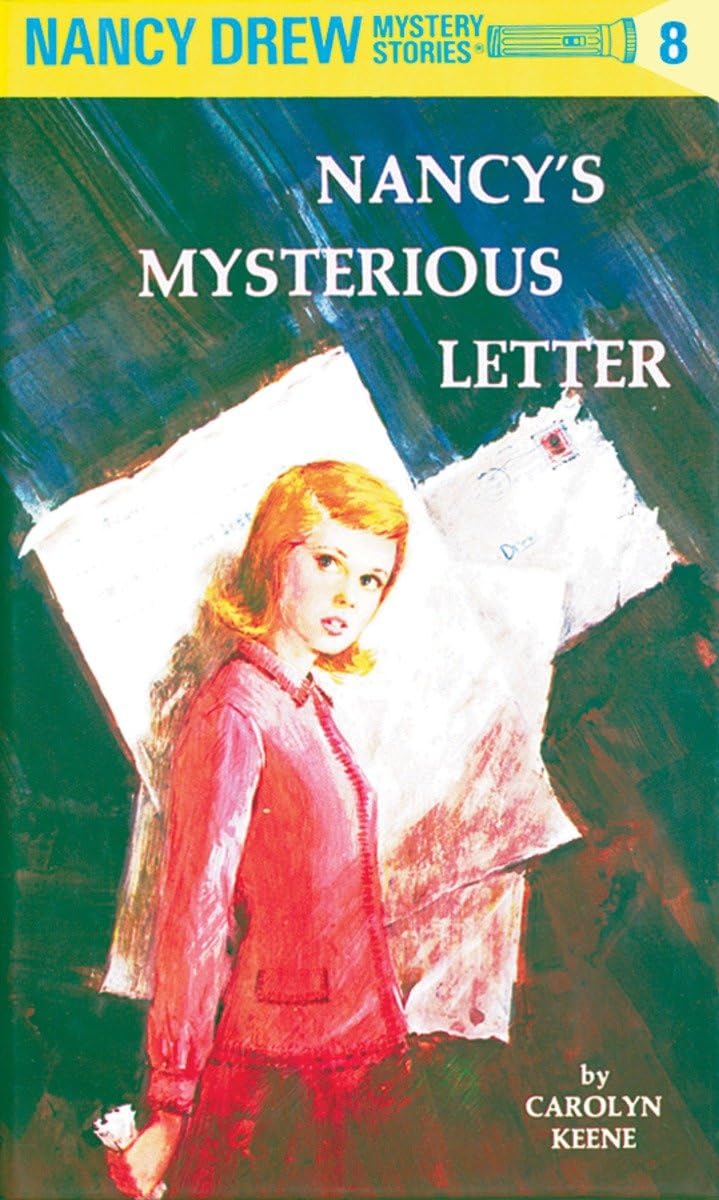
The Mystery at Lilac Inn by Carolyn Keene

Oh Nancy Drew, I do love you.

Even though so much of these books are completely unbelievable and silly. I can’t help reading them, though, because even with some silly plot points mixed in, the overall plots actually do hold up and are interesting. The books are like fluffy Angel Food Cake. They just melt in  your mouth – a quick and sweet treat that makes you roll your eyes and giggle and then reach for another one.

This one involved a mystery at an inn (obviously, by the title), Nancy’s identity being stolen, and missing jewels. And as always Carson Drew, Nancy’s father, gave her permission to chase after dangerous people and be nearly killed as long as she was “careful.”

A Troubling Case of Murder on the Menu by Donna Doyle

I shared a review of this one last week. It was cute and sweet without much bite or plot at all. And that was just fine with me. Sometimes we need something like that. The book was only about 100 pages and I’m sure I will read others in this cute and short series.

For a shortened version of the plot: a retired, older woman, decides to start blogging as a  hobby to fill her days now that her husband has passed away. In the process of visiting restaurants to blog about them she stumbles onto a dead body. Emily Cherry is a cute main character and her supporting characters include curious cat Rosemary and her overprotective family and a good friend, Anita.

Night Falls on Predicament Avenue by Jaime Jo Wright

I did not like this book. Let’s just get that out of the way. I liked parts of it and it moved along fast to start with.

Then it got repetitive.

The main character lives in an inn that is known to be haunted and has a history of death. There is a cemetery behind the old Victorian-house that houses the inn. Her sister was found dead near the inn. She is surrounded by death and constantly feels like the bony fingers of death are strangling her (we are told this at the beginning and end of almost every chapter after all) and her life is sad and hopeless because of her sister’s death. She has become almost a recluse. We are reminded of all these things about ten to twenty times throughout the book – in case we forgot the other ten or twenty times it was mentioned.

This is a dual timeline book so there is a mystery in the past and that got a little weird for me because the girl in the past seemed to be falling in love with a married man or a murderer or … who even knows at some points which is the good part of the mystery.

I might  have been able to push a 3.5 stars out for this one if it hadn’t been for the sick and twisted ending that made me want to throw up and gave me the ickiest feeling.

All of this might not have bothered me so much if it wasn’t for the book being promoted as Christian Fiction. I got scolded by a reader for having a long kiss but this book was demented and that same reader gushed over it. Christian readers can be really, really weird at times. Kissing bad. Demented murder and assault good. Ha. Ha. Weird, right?

The Divine Proverb of Streusel by Sara Brunsvold

This book was about a woman (Nikki) who finds out her father has cheated on her mother and is divorcing her and sort of has a mental breakdown.

Her entire foundation of what her family was and what love means is shaken. She is engaged to a man and worries the same could happen to their relationship one day. She takes off to her late grandmother’s house a couple of states away and stays with her uncle who she barely knows to try to find herself. Her uncle (who is her dad’s brother) is in the process of cleaning out his mother’s house. She finds an old cookbook filled with recipes but also wisdom and begins cooking her grandmother’s recipes as a way to distract herself. In the process she begins to learn about her family, including the difficult relationship that her father had with his father.

The bottom line is that I enjoyed this one and it had me thinking about it a couple days later even.

I will have a full review of it up tomorrow.

Murder in an Irish Village by Carlene O’Connor

This book follows the story of an Irish family who lost their parents a year before and are working hard to keep the family bistro/café running. The story is told from the perspective of Shioban O’Sullivan, the older sister who was going to go to college but couldn’t when her parents died and she was left to care for her siblings. While they are all trying to adjust to life without their parents, she walks downstairs one morning and finds a dead body in the bistro.

Shioban already has feelings for the Guarda (which is essentially a town cop in Ireland) and things get awkward when she decides she has to help solve the murder after her brother is accused.

I really enjoyed this one, which is the first in a series. The characters are either hilarious, sweet, or obnoxious in a good way and the Irish sense of humor is one I can relate to. There was some swearing in this one but no graphic violence or sex at all.

The Middle Moffat by Eleanor Estes

I read this middle-grade book in March and then read it again with Little Miss. The book is about Jane Moffat, the middle child in the Moffat family. She is a little girl who is being raised with her three other siblings by her mom. Her father has passed away.

The book begins with Jane deciding she would like to be introduced to people as The Middle Moffat. She meets the oldest inhabitant in town that day and a friendship forms when she slips and calls herself the Mysterious Middle Moffat. The oldest inhabitant is a 99-year-old Civil War veteran and thinks it is so funny that she calls herself mysterious and even when she tries to explain that she misspoke (she’d actually been trying to think of additional titles to add to the Middle Moffat) he continues to call her mysterious.

Each time he sees her he taps his nose and calls her mysterious. Jane, in turn, becomes concerned that something might happen to the man before he turns 100 and begins to try to protect him, including spending a day with him one day when it is really foggy because she is concerned he will walk out into the fog and be injured.

Each chapter is a type of story of it’s own, but there are always a few aspects that carry over, including the interactions with the oldest inhabitant.

We ended up reading this book around the same time as the solar eclipse and it worked out perfectly because there is also a chapter about Jane trying to see the solar eclipse with her friend Nancy. We also read a chapter about Jane having friend problems with Nancy around the same time Little Miss was having some issues with her friends.

There was only one chapter we didn’t like as much as felt like it dragged a bit.

I hope to read the other books in this series soon.

Coming up in May

I am already reading two books: Apple Cider Slaying by Julie Anne Lindsey and Operation Rescue by Kari Trumbo.

Apple Cider Slaying is a cozy mystery.

I don’t know that I really want to read Operation Rescue, to be honest, but I agreed to read it to review for Clean Fiction Magazine so it may surprise me and become one I like. It is a Christian Fiction book about a rehab center for people who have been rescued from human trafficking and I think there is going to be some romance mixed in between staff at the rehab center – not with any of the victims who are there for healing, thankfully.

I am reading The Secret Garden with Little Miss and we will finish it this month because we are more than halfway through it already.

I also plan to read The Mysterious Affair of Styles by Agatha Christie. It is the first Hercule Poirot book.

I don’t know if I will get to other books this month since I am a slow reader and am also listening to Around the World in 80 Days on Audible with The Boy but other books, I have on my list this month or next are:

Lost Coast Literary by Ellie Alexander

The Deeds of the Deceitful by Ellery Adams and Tina Radcliffe

Death At A Scottish Christmas by Lucy Connelly

The Women of Wyntons by Donna Mumma

The Real James Herriott by Jim Wight

And

Watership Down by Richard Adams

Right before I published this, though, Little Miss and I went to the library and I picked up The Strawberry Girl by Lois Lenski and Ginger Pye by Eleanor Estes so those two will probably get bumped in front of some of those in the above list.

How was your reading in April and do you have ideas of what you will read in May or will you just figure it out as you go (which is what I will probably do in the end because I am such a mood reader).