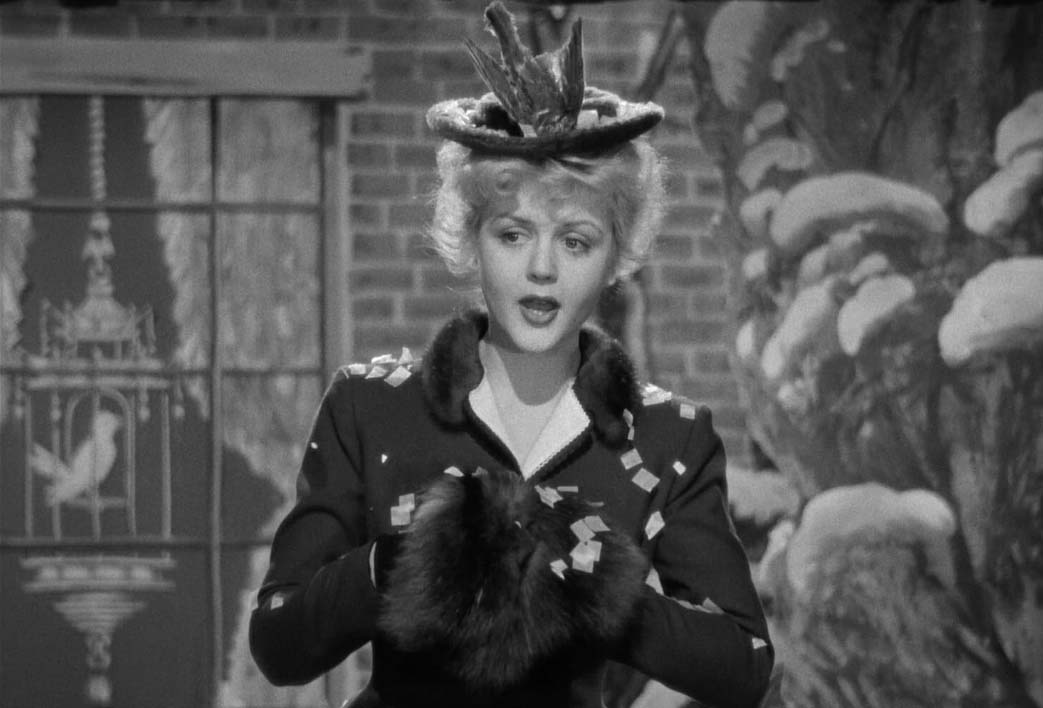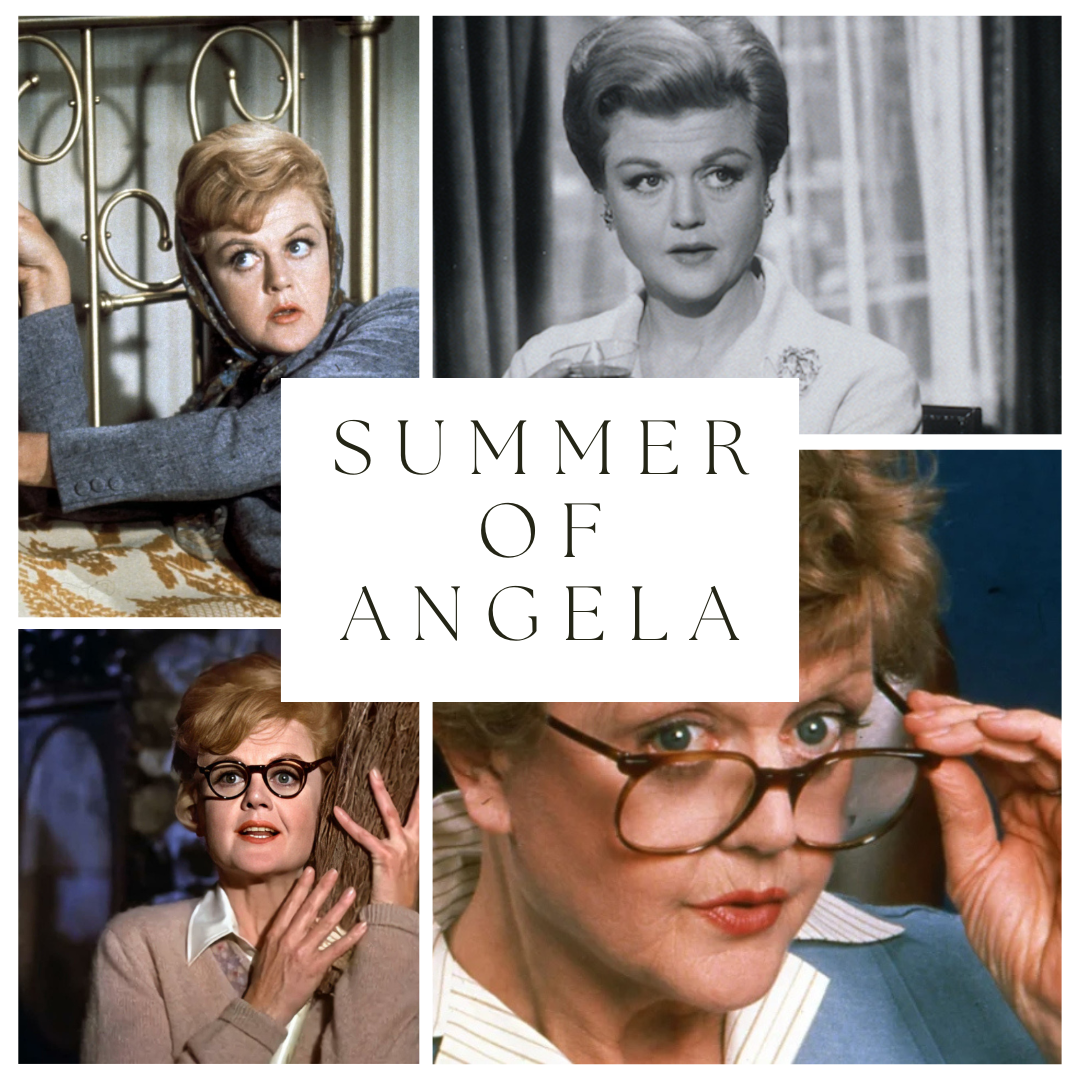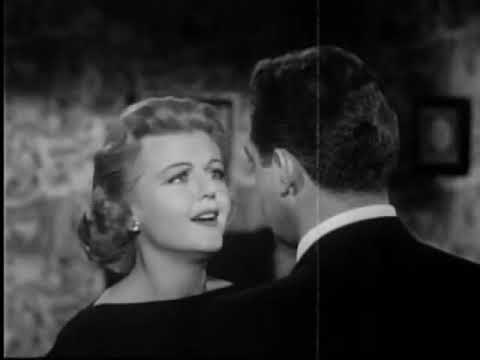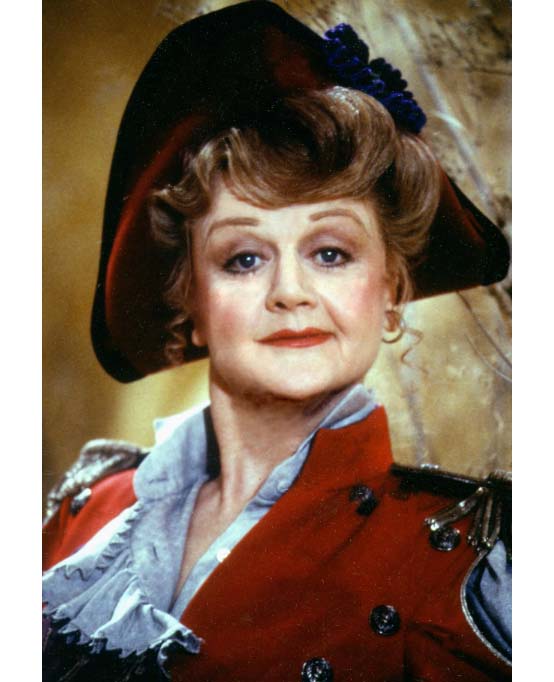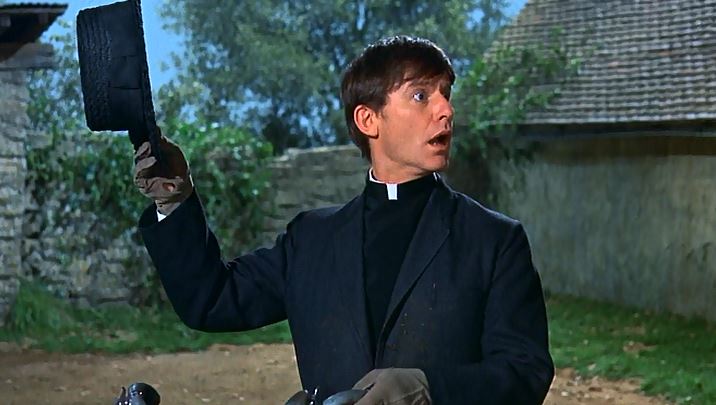
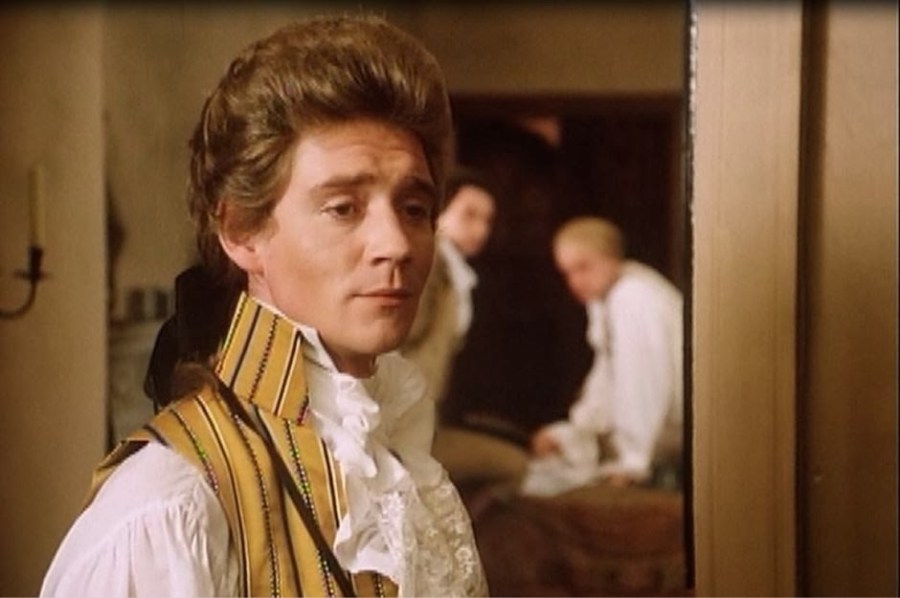
Summer of Angela: The Court Jester (with some spoilers but not the ending)

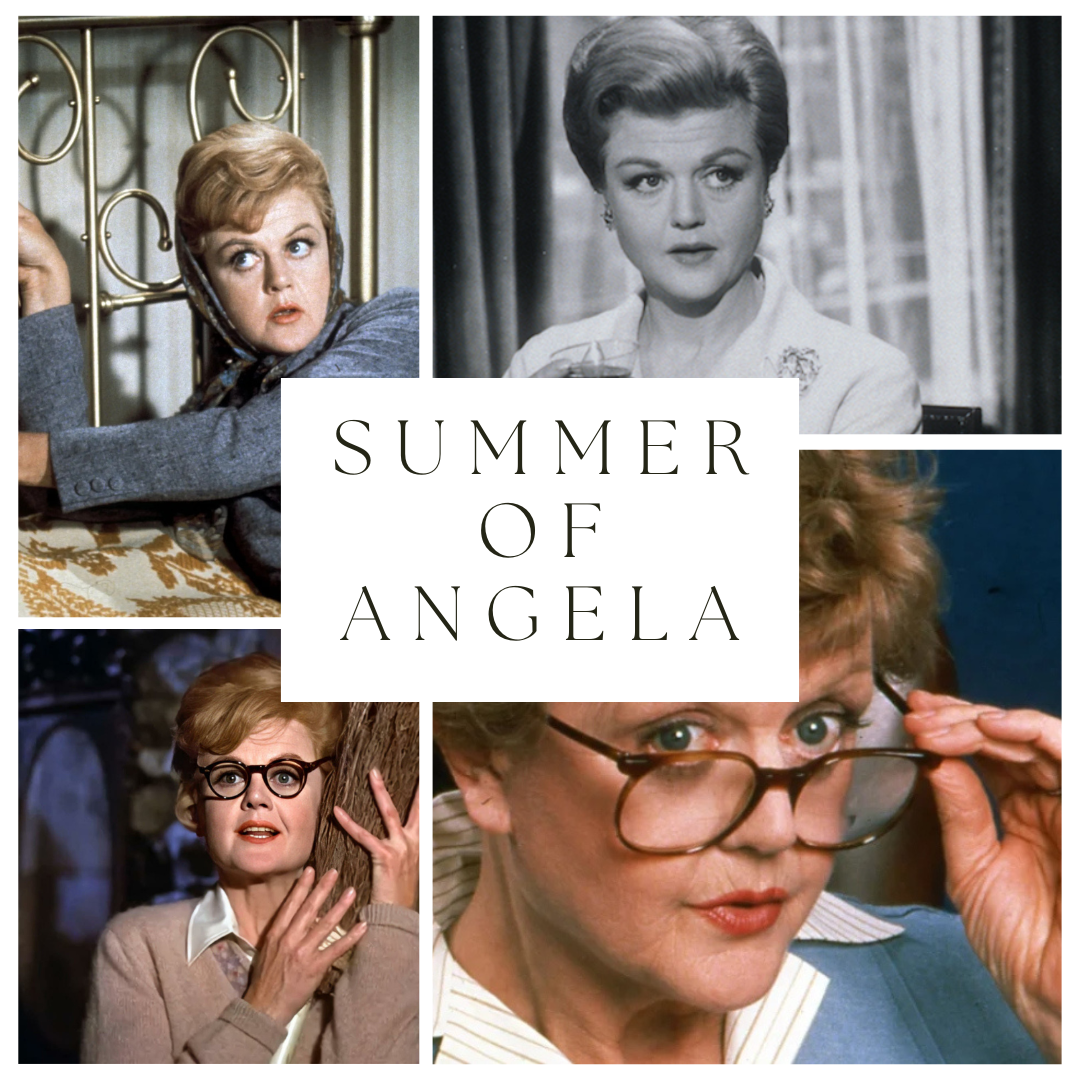
This summer I am watching Angela Lansbury movies.

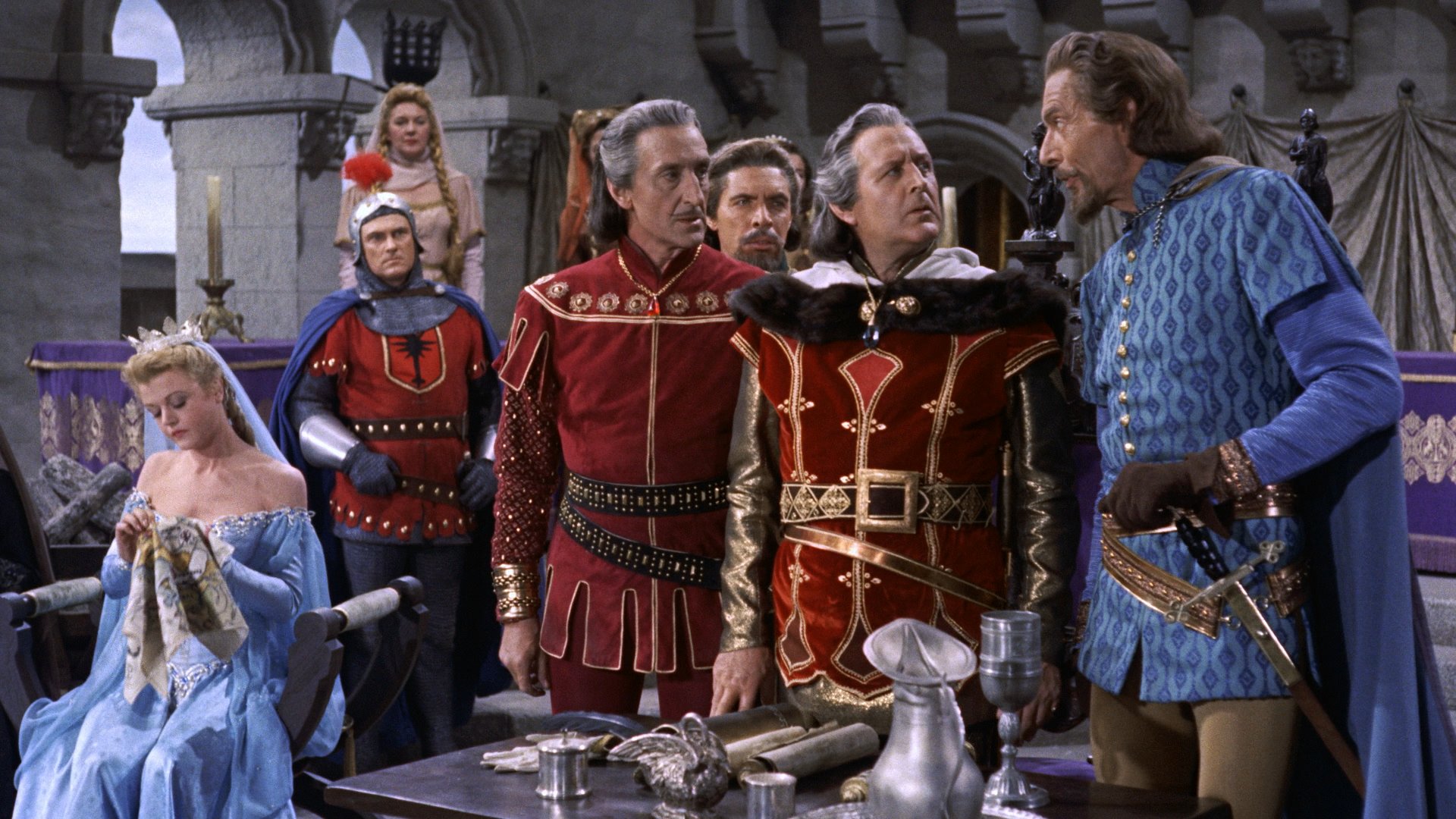
This week I watched The Court Jester (1955) with Angela, Danny Kaye, and Basil Rathbone. It is a musical/comedy.

The main words to describe this movie are silliness, ridiculousness, and peak Danny Kaye moments.

It really fell apart toward the end, I felt, but there were some hilarious moments that made up for it.

First, a bit of the plot with a description from Google:

“Former carnival performer Hubert Hawkins (Danny Kaye) and maid Jean (Glynis Johns) are assigned to protect the infant royal heir from tyrannical King Roderick I (Cecil Parker). While Jean takes the baby to an abbey, Hawkins gains access to the court by impersonating the king’s jester, unaware that the jester is really an assassin hired by scheming Sir Ravenhurst (Basil Rathbone). When Princess Gwendolyn (Angela Lansbury), falls for Hawkins, a witch secretly aids him in becoming a knight.”

This film is just a lot of craziness caused by misunderstandings, misdirection, and generalized oopsies.

We start the movie by learning that an entire royal family was killed so that the current King, King Roderick I, could take the throne.  Actually, though, the entire family wasn’t killed, according to rumors anyhow. The rumors say an infant survived and bears upon his bottom a birthmark of a purple pimpernel.

The rumors further say the child is being cared for in the forest by an “elusive, dashing outlaw” known as the black fox. As if to prove these rumors, one of the king’s men is killed as they are riding near the forest and a note attached to the arrow announces that the child is alive and The Black Fox has him.

Not sure why this was being announced because I would think it would be better to keep this all a secret until the child is older and then they bring the child in to overthrow the usurper, but…what do I know?

After the note scene we are taken to the castle where the king’s advisor, Sir Ravenhurst (Rathbone), is stating the rumor about the child being in the care of the black fox is simply a silly story to scare the king. The other advisors say there is something to the rumor and to the power of the black fox. They feel that the king should form an alliance with Griswold of the North because he is strong and has men who can help them fight against The Black Fox.

Ravenhurst is against this and the other advisors say it is because Ravenhurst wants to be the king’s right hand man and have more power.

The king says even if he wanted to form an alliance he doesn’t have anything to offer Griswold to sweeten the deal. The one advisor says that the king does have something he could give Griswold — the hand of his daughter Gwendolyn — our fair Angela — in marriage.

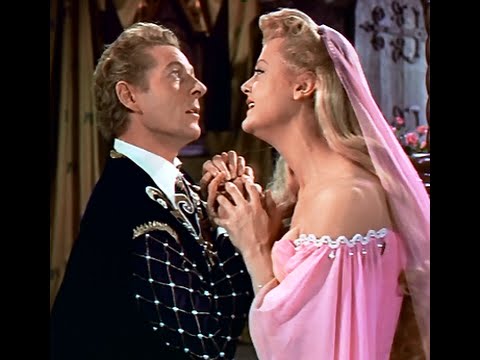
Angela is gorgeous in this movie. She’s super skinny (not that she’s ever been big), tall and elegant.

My son told me recently that young Angela was beautiful and that even “old Angela” in Murder She Wrote wasn’t so bad. I can’t wait to show him her in this film (I watched it on my own) because this will further solidify his feelings.

Gwendolyn says she is not interested in marriage because the castle witch, Griselda, told her that a more dashing man than Griswold would be coming along to sweep her off her feet.

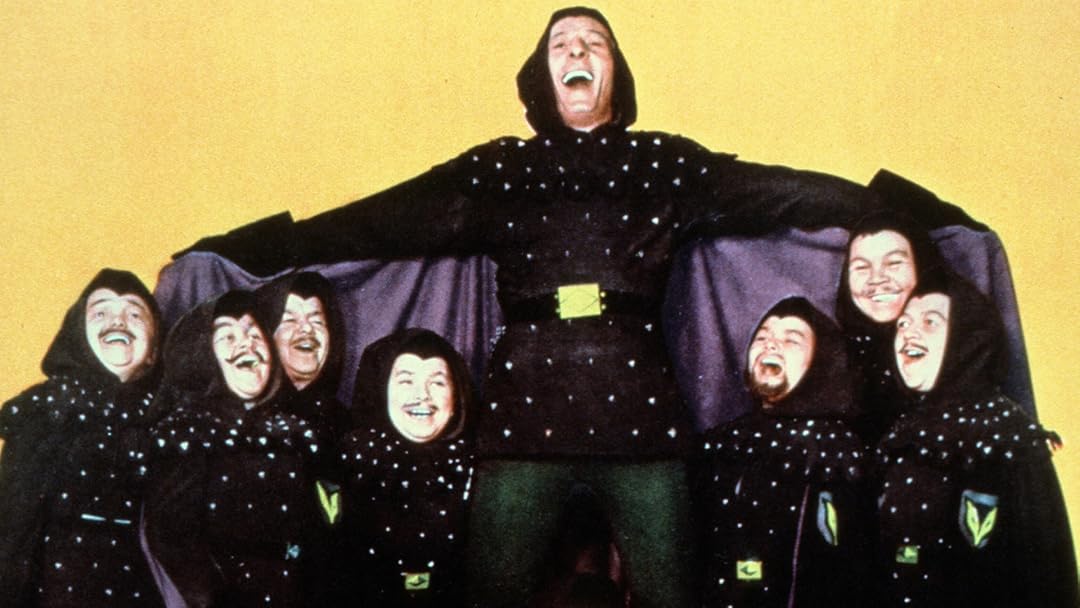
Now the scene switches to the lair of the black fox, where Hubert tells the black fox he has brought a group of midgets with him from the carnival (Hubert’s former job) to fight for The Black Fox. This brings me to one of the weirdest promo photos I’ve ever seen:

I’ll be seeing this one in my nightmares tonight.

It is the job of Danny’s character, Hubert, to care of the baby and he thinks it is a job that should go to a woman. Well! How rude.

But The Black Fox doesn’t agree and tells Hubert he will continue the job.

Hubert is a little more excited about having to take care of the baby when he is charged with traveling with the beautiful Jean to take the child to the abbey for protection.

When I was reading about the actors in this movie, I found out that Glynis Johns (Jean) also played the mother in Disney’s Mary Poppins. The first one, of course.

Anyhow, moving on — The pair stop for the night and that’s when they not only admit their feelings for each other (smoochy, smoochy) but a man stumbles into the small stable they are in and asks to stay with them for the night. He’s on his way to see the king, he says. He is a court jester and his name is Giacomo.

Ah-ha! Hubert and Jean were just talking about how it would be a good thing if they had a spy in the castle who could tell them if the king was coming after The Black Fox. How very fortuitous this unexpected meeting has been.

Giacomo is knocked out and Hubert steals his clothes and his wagon, which is emblazoned, for some weird reason, with Giacomo’s name across the back of it.

So Jean takes off toward the abbey and Hubert takes off toward the castle.

Sadly, Jean is captured by soldiers from the castle who are looking for good looking women for the king. The baby is hidden in a basket and she and the baby are taken to the castle where she manages to hide the baby away from the king and his men.

Meanwhile, Gwendolyn learns that Griselda lied to her about the dashing man and is about to have her killed when Hubert shows up on the road below and Griselda claims that he is the man that Gwendolyn is supposed to marry.

Whew. This plot is starting to get pretty twisted at this point. From here on out, things get pretty crazy with Griselda casting spells and poisoning people left and right. Ravenhurst also thinks that Giacomo (Hubert) is an assassin who is going to take out the three advisors who wanted to create the alliance with Griswold.

Before all is said and done there will be sword fights, a jousting match, fake and real romances, a midget army, and, of course, plenty of musical numbers by Mr. Kaye.

There is also the famous scene between Danny, Glynis Johns, and Mildred Natwick where they discuss which vessel the poison is in.

Here is a clip of it, in case you’ve never seen the movie:

I won’t share too much more in case you want to watch the movie yourself.

The movie was directed by Norman Panama and Melvin Frank.

According to an article on TCM.com, Panama and Frank formed a production company with Kaye called Dena Productions, named after Danny’s daughter, after Kaye’s success in 1947 with the film The Secret Life of Walter Mitty.

The idea behind the production company was to introduce the real Danny to film audiences. He had been acting on Broadway and in smaller productions on stage for years.

The Court Jester was the company’s second movie and proved to be a huge success but not right away. It actually bombed at the box office, despite it’s stellar cast. Years later though it was regarded as one of Danny’s finest films with, according to TCM, “comedy routines that have entered the annals of film history.”

Amazon features trivia and facts through their xray feature when you watch  a movie there on a computer or device. I often forget that because I usually watch the movies on my TV but this time I watched part of the movie on my phone and bits of the trivia popped up.

One of them was a story from Danny’s daughter who said that fans often came up to him and recited the entire tongue twister scene for him.

What Angela said about the movie:

Angela had been playing mainly dramatic roles before this movie and was able to have some fun with the role. Part of that fun was watching Danny Kaye work she said in the Kaye bio Nobody’s Fool by Martin Gottfried.

“His use of hands was inspired by commedia dell’arte,” she said. “And in the way he moved, he was absolutely original; he was one off the mold.”

She added, “Danny wasn’t an ensemble player – he was the one around whom everyone danced, and we all dressed to him. We never stopped laughing. There was none of that moodiness he could have elsewhere, that abruptness, ignoring people. If something interested him, sparked him, he came alive. The minute that was over, he was closed for business, which I think is true of many of the great comic performers. They are constantly out to lunch. Where they are, I don’t know.”

 Gottfried also wrote an autobiography on Angela and said of her role in the movie: “It allowed her to play not only a princess, but a princess her own age. She was made up to look young and lovely. She got to wear beautiful clothes that showed off her fine, slender figure.”

What I thought overall

This was a ton of fun. As I mentioned above, I wasn’t a huge fan of the ending when things started to fall apart in some ways and just descend into chaotic ridiculousness but that was a minor issue when there were so many other great moments and interactions in the film.

Angela wasn’t in this one a ton but she was in it enough to enjoy her mix of wide-eyed adoration of Danny’s character and her devious ways to get what she wanted. She truly was beautiful in the film as well.

I loved the wordplay and back and forth between the characters. None of the songs really stuck out to me but they were fun.

This is a great film to escape into and forget about your problems with. The bright and colorful outfits alone will distract you from the stresses of your days.

Trivia about the movie:

Basil Rathbone had made many movies where he was the sword-wielding villain so when it came to his role in this film, he was ready. He was 66 at the time, though, having already redefined Sherlock Holmes in 14 films from 1939 to 1946, and wasn’t ready for how quick Danny would be able to move the sword. A body double had to be called in to film some of the fencing scenes because Danny was moving so fast that Basil was almost injured. It was because of his superior fencing skills that no one was injured but he still couldn’t keep up with Danny’s fast, though less accurate, moves.

According to TCM.com. “(Basil’s) talents were carefully observed by Danny:  With his quick reflexes and his extraordinary sense of mime, which enabled him to imitate easily anything seen once, Kaye could outfence Rathbone after a few weeks of instruction.” (various sources, including TCM.com.)

During the “Maladjusted Jester” sequence, King Roderick I (Cecil Parker) kicks Hawkins (Danny Kaye) every time he makes a mistake. It took 11 takes, and afterward, Kaye said he had bruises all over his hip. (source IMdB)

The “Now I can shoot and toot” speech during “The Maladjusted Jester” was previously said by Danny Kaye in Up in Arms (1944).

From IMdB: “This was composer Vic Schoen‘s first movie. He was not officially trained in the mechanisms of how music was synchronized to film, so he had to learn on the job. It took him a long time, but he was very proud of his work. Composer Igor Stravinsky listened to his score and later complimented Schoen, saying he had broken all of the rules.”

A U.S. Civil War reenactment group, The American Legion Zouaves of Richard F. Smith Post No. 29, Jackson, Michigan” performed the intricate high speed marching maneuvers during the knighting ceremony. (source, Classic Movie Hub)

Have you ever seen this movie?

What did you think?

Cat from Cat’s Wire shared her thoughts on the movie here..

Here is what is left of my Summer of Angela:

August 1 – The Court Jester

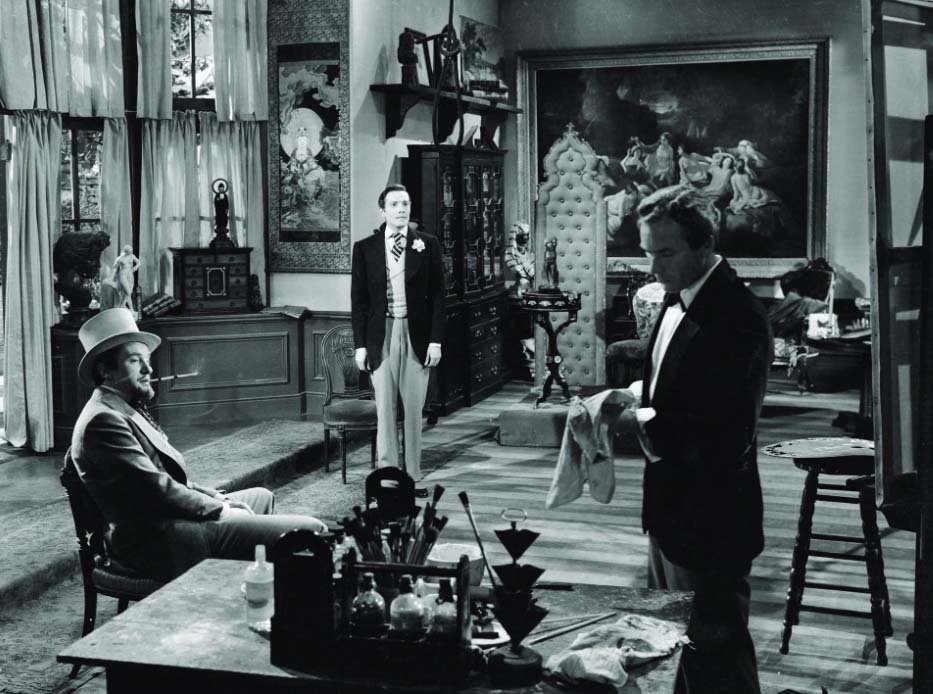
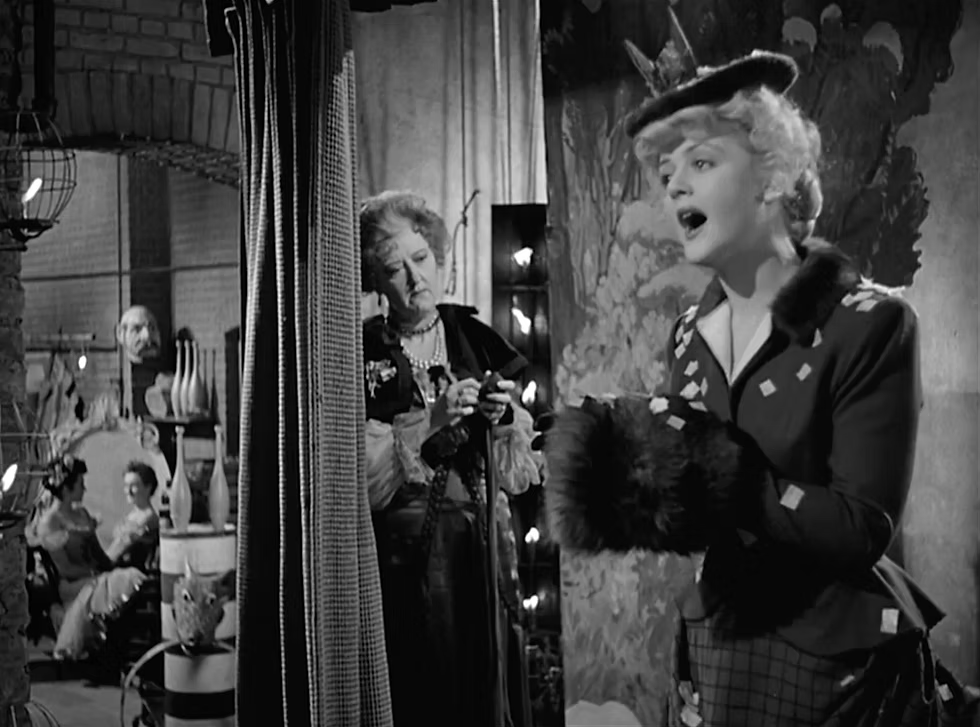
August 8 – The Picture of Dorian Gray

August 15 – A Life At Stake

August 22 – All Fall Down

August 29 – Something for Everyone

If you want to read about some of the other movies I watched you can find them here:

Bedknobs and Broomsticks

The Manchurian Candidate

National Velvet

The Pirates of Penzance

Gaslight

Please Murder Me

Death on the Nile


Sources:

TCM.com     https://www.tcm.com/tcmdb/title/4501/the-court-jester#articles-reviews?articleId=99293

Classic Movie: https://www.classicmoviehub.com/facts-and-trivia/film/the-court-jester-1956/#google_vignette

IMdB: https://www.imdb.com/title/tt0049096/?ref_=tttrv_ov_bk

Summer of Angela: Death on the Nile (1978) Without spoilers

Angela Lansbury once said in an interview that one of the more exciting moments of her career was working with Bette Davis in Death on the Nile (1978).

That’s the movie I watched this week for my Summer of Angela feature.

The movie is full of A-list movie stars: Angela, Bette, David Niven, Maggie Smith, Mia Farrow, and, of course, Peter Ustinov as Hercule Poirot.

I’m not a fan of Ustinov as Poirot since David Suchet plays the part so brilliantly, and I can’t see anyone else as Poirot, but the movie is still okay overall. I only added it to my watch list because Angela is in it. I had fun watching her be absolutely over the top as an eccentric romance writer and Maggie Smith be an overall jerk throughout, which is a role that she seemed to always play well.

Mia Farrow was …er…creepy as always.

Let’s talk about the plot a little for those who aren’t familiar with this one from either the book by Agatha Christie or the movie.

The online description:

“On a luxurious cruise on the Nile River, a wealthy heiress, Linnet Ridgeway (Lois Chiles), is murdered. Fortunately, among the passengers are famed Belgian detective Hercule Poirot (Peter Ustinov) and his trusted companion, Colonel Race (David Niven), who immediately begin their investigation. But just as Poirot identifies a motley collection of would-be murderers, several of the suspects also meet their demise, which only deepens the mystery of the killer’s identity.”

Angela portrays an eccentric romance writer named Salome Otterbourne who based a character in one of her books on Linnet. She and Linnet confront each other on the boat and Linnet tells Salome she’s going to sue her for libel. Just about everyone on the boat seems to have an issue with Linnet, which makes me wonder how they all ended up on the boat together. Planned or just coincidence, I don’t know, but they all seem to know each other and Linnet is angry with just about everyone and they are angry with her.

Salome is on the boat with her daughter Rosalie who is embarrassed by her mother’s behavior.

Angela’s character isn’t in the movie as much as other characters, but when she is, she certainly fills the screen with her crazy personality and outfits.

She makes all kinds of semi-suggestive comments about possible couples or what people need to do to feel more relaxed. Some of the characters refer to her books as “lurid.”

At one point, she and her daughter talk about whether or not Poirot would know her from her books. Rosalie says, “Somehow, I don’t think Monsieur Poirot is a very keen reader of romantic novels, Mother.”

Mrs. Otterbourne responds: “Well, of course he is! All Frenchmen are. They’re not afraid of good, strong sex!”

She is such an obnoxious character that after the murder occurs David Niven’s character comments to Poirot: “What a perfectly dreadful woman. Why doesn’t somebody shoot her, I wonder?

Poirot responds, “Perhaps one day, the subscribers of the lending libraries will club together and hire an assassin.”

The film was shot on location in Egypt so many of the experiences the characters had were actually had by the actors and actresses. I think some of the reactions that were filmed when they were climbing on the donkeys and camels were totally adlibbed because they were so authentic and funny.

According to TCM, makers of the film were trying to cash in on the success of the 1974 film Murder on the Orient Express, also based on an Agatha Christie book. That cast was also star-studded with Lauren Bacall, Ingrid Bergman, and Anthony Perkins.

Unfortunately, while Murder on the Orient Express brought in $27.6 million, this movie only grossed $14.5 million in the U.S. and Canada. Despite the lackluster success at the time it was released, many Christie fans see it as one of the better adaptations of the book — at least according to the many comments about it that I read online.

One thing that might have made the movie less of a success was the filming locations.

TCM.com stated this in an article about the movie: “Despite the exotic locale, split between Egypt and London, filming conditions for the movie were less than ideal. Filmed on a little boat called The Carnock, the actors took a speedboat back and forth each day from their hotel in Aswan down river to the shooting location. The Carnock was also apparently too small for all the actors to have their own dressing rooms. One unpleasant incident involved Bette Davis, Olivia Hussey and some Eastern chant records Hussey liked to play early in the morning. After Davis asked Hussey not to play her music, it was reported that the actresses did not speak to each other again while aboard The Carnock. If tensions weren’t high enough, the temperature climbed well above 100 degrees everyday and filming often was halted at noon.”

What Angela said about the movie:

As I mentioned in the beginning of this post, Angela remembers what a delight it was to work with Bette Davis.

“She was a very fascinating woman,” Angela told Studio Canal. “I got to know her quite well on that occasion. She had been a great, great Warner Brothers star and I had been a fan of hers as a child. She was a great deal older than me and I remembered her and all her great roles.”

Angela remembered Bette as being a “special and unique” actress.

“Unique looking and sounding and I was delighted to meet her and work with her.”

Angela also reflected on working with Ustinov who was her ex-brother-in-law.

“My role was such an interesting, farcical character anyways and there was so much comedy involved,” she said. “David Niven and Peter Ustinov and myself and my husband and I, we were all great friends and knew each other from other times.”

As for the conditions, Angela confirmed that they were not very nice at times.

“We were billeted in a hotel in the middle of the Nile,” she said. “To get to it, we had to get on a boat, having to cross water. We all lived in this luxury hotel in the middle of the Nile in Egypt and that was a special and wonderful experience I would say. I mean you couldn’t have been more comfortable. Swimming pools, wonderful food, everything  you could possibly want and then we would get 4 or maybe 3 in the morning because of the heat at the time in Egypt. We had to do the shooting before noon. Otherwise, it would be too hot. So, we were dealing with that and also an old riverboat we were working on which was trundling its way down the Nile, pulled by little boats and sometimes under its own steam.”

The boat made so much noise, though, that it was often tugged along by the little boats, she said.

The only dressing room in the bottom of the boat in a four-bed cabin.

“It was a bed up and a bed down, so the fittings had to take place between the two beds,” Angela said. “I remember that Bette would lie down on one bunk and Maggie Smith was on the other and I was on the third. We would take turns being fitted in the ‘well’, in the middle. It was one of those extraordinary circumstances where we forced to not be the stars we were supposed to be.”

The costumes in this movie were amazing and were designed by Anthony Powell, who won an Oscar for his work on the film (the film’s only award). Angela had nothing but praise for him.

“My costumes on that film I thought were absolutely extraordinary and quite original and marvelous,” she said. “They were built in New York City by my friend Barbara Matera and he worked with her and we all worked together and we came up with this extraordinary look but Anthony was at the root of it all.”

I have to agree that her costumes were dazzling and something else. Not sure I’d ever wear them, but they fit her character for sure.

You can see the full interview here:

My thoughts:

I watched this one in pieces because it comes in at a whopping 2 hours and 20 minutes!! I didn’t remember it being that long when I first watched it with my husband, but, thinking back, I seem to remember we watched one half one night and the other half the next night.

While I did enjoy the movie, and watching Angela’s antics when she was on screen, the movie was really too long for my taste. I know they needed to take us down some twists and turns to keep us guessing but two and a half hours? Gah!

Also, what always gets me about these movies is how a bunch of people can die (the number of deaths in this one was excessive if you ask me and I’d like to read the book to see if Agatha wrote that many deaths) and at the end everyone just shrugs it off. I won’t give it away but there was one death in particular that just got waved off as no big deal at the end with the characters smiling and walking away arm in arm. So bizarre and left me wondering if the person they said killed that person wasn’t actually someone else.

In addition to Angela’s performance, I loved the witty and sarcastic banter between Maggie Smith and Bette Davis’ characters.

Maggie’s character, Miss Bowers, was supposed to be Bette’s nurse and companion. Bette portrayed Marie Van Schuyler, a socialite. Maggie was horrible to Bette’s character, though! It was sort of crazy but also hilarious. They had some of the best exchanges.

Mrs. Van Schuyler: Come on, Bowers, time to go. This place is beginning to resemble a mortuary.

Miss Bowers: Thank God you’ll be in one yourself before too long, you bloody old fossil!

***

Mrs. Van Schuyler: Shut up, Bowers. Just because you’ve got a grudge against her, or rather her father, no need to be uncivil.

Miss Bowers: *Grudge*? Melhuish Ridgeway ruined my family!

Mrs. Van Schuyler: Well, you should be grateful. If he hadn’t, you would have missed out on the pleasure of working for me.

Miss Bowers: I could kill her on that score alone!

***

Mrs. Van Schuyler: How would a little trip down the Nile suit you?

Miss Bowers: There is nothing I would dislike more. There are two things in the world I can’t abide: it’s heat and heathens.

Mrs. Van Schuyler: Good. Then we’ll go. Bowers, pack.

Miss Bowers was definitely not a respectful employee, but I think that Mrs. Van Schuyler liked that.

One other observation: This movie seems to feature a lot of scenes of rich people sitting around in drawing rooms, all dressed up with nowhere to go. I’m very confused why they got all dressed up to sit around every night together and then just go to bed. Didn’t any of them own clothes that weren’t fancy? Of course, I’m teasing here because I really did love the outfits for the women. The dresses were all so eye-catching.

Trivia or Facts About the movie:

According to producer Richard GoodwinBette Davis brought her own make-up, mirrors, and lights to Egypt. (source IMdB)

Peter Ustinov was David Niven’s personal attendant during World War II. Ustinov was a private and Niven was a Lt. Colonel (various sources)

Location shooting in Egypt consisted of four weeks on the riverboat “S.S. Karnak” and three weeks filming in places such as Luxor, Cairo, Aswan, and Abu Simbel. (various sources)

Ustinov portrayed Poirot five more times. (various sources)

Albert Finney was initially asked to reprise his role as Poirot from Murder on the Orient Express (1974). However, he had found the make-up he had to wear for the first movie very uncomfortable in the hot interior of the train, and on realizing that he would have to undergo the same experience, this time in temperatures exceeding 100 degrees Fahrenheit (38 degrees Celsius), he declined the role. (source IMdB)

Angela Lansbury had never seen the finished film until she attended a 40th Anniversary screening on November 9, 2018.   (source IMdB)

Dancer Wayne Sleep, relatively unknown at the time, choreographed the tango scene. He reported in 2018, “I was being paid an hourly rate, which was great as nobody turned up to the rehearsal and I had to go and find David Niven and persuade him to come.” (source IMdB)

Producer John Brabourne said no telephones were available while on-location in Egypt. They had to communicate by telex. . (source IMdB)

Agatha Christie was inspired to write the source novel in 1937, during an Egyptian vacation. The hotel scenes were shot at the Old Cataract Hotel in Aswan, where Christie stayed. The hotel’s front had to be “redressed” to appear more 1930s, and the furniture on the hotel’s terrace was replaced with custom period-authentic pieces.  (source IMdB)

Notable quotes:

  • Jacqueline De Bellefort: Simon was mine and he loved me, then *she* came along and… sometimes, I just want to put this gun right against her head, and ever so gently, pull the trigger. When I hear that sound more and more…
  • Hercule Poirot: I know how you feel. We all feel like that at times. However, I must warn you, mademoiselle: Do not allow evil into your heart, it will make a home there.
  • Jacqueline De Bellefort: If love can’t live there, evil will do just as well.
  • Hercule Poirot: How sad, mademoiselle.

***

Mrs. Van Schuyler: [Remarking on Linnet’s pearls] Oh, they’re beautiful!

Linnet Ridgeway: Thank you.

Mrs. Van Schuyler: And extraordinary, if you know how they’re made. A tiny piece of grit finds it’s way into an oyster, which then becomes a pearl of great price, hanging ’round the neck, of a pretty girl like you.

Linnet Ridgeway: I never thought of it that way.

Mrs. Van Schuyler: Well, you should. the oyster nearly dies!

***

  • Jim Ferguson (to Rosalie): Karl Marx said that religion was the opium of the people. For your mother, it’s obviously sex.

***

Miss Bowers: I think a shot of morphia will meet the case. I’ve always found it very effective when Mrs Van Schuyler is carrying on.

***

Mrs Otterbourne: I suppose that uncouth young man will appear now and attempt to seduce you. Well, don’t let him succeed without at least the show of a struggle. Remember, the chase is very important.

Rosalie Otterbourne: Oh, mother!

Mrs Otterbourne: I tell you that I, Salome Otterbourne, have succeeded where frail men have faltered. I am a finer sleuth than even the great Hercule Porridge.

Have you seen this one? What did you think?

Here is what is left of my Summer of Angela:

August 1 – The Court Jester

August 8 – The Picture of Dorian Gray

August 15 – A Life At Stake

August 22 – All Fall Down

August 29 – Something for Everyone

If you want to read about some of the other movies I watched you can find them here:

Bedknobs and Broomsticks

The Manchurian Candidate

National Velvet

The Pirates of Penzance

Gaslight

Please Murder Me


Additional resources:

TCM.com

https://www.tcm.com/tcmdb/title/16698/death-on-the-nile/#articles-reviews?articleId=87814

Interview with Angela about the movie:

https://youtu.be/6vmY6_WMbeU?si=zZIs2jq3mVZGofZi

IMdB listing: https://www.imdb.com/title/tt0077413/trivia/


Lisa R. Howeler is a blogger, homeschool mom, and writes cozy mysteries.

You can find her Gladwynn Grant Mystery series HERE.

You can also find her on Instagram and YouTube.

Summer of Angela Summer of Angela: Please Murder Me (with tiny spoilers but not big ones)

This summer I am watching Angela Lansbury movies for the Summer of Angela.

I switched some things up a couple of weeks ago and slid The Pirates of the Penzance and this week’s movie, Please Murder Me, in place of a couple of TV movies Angela was in. I do have an interest now in watching one of the ones I replaced, so I may do that on my own.

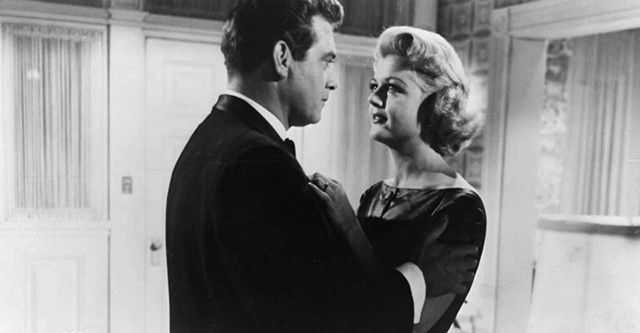
This week’s movie starred Angela with Raymond Burr. It was short, sweet, and to the point, and very good. My husband watched it with me and said this movie would be considered a “B-movie” back in the day, but it was a very good B-movie to me.

I have been remiss in sharing where I have found these movies to watch so I do want to share that this one is free on Tubi and YouTube. The reproduction quality isn’t the best because it is a “b movie” and is now in the public domain. This means people can put this movie up wherever they want and not get hit with a copyright claim. I’ve found a lot of cool movies that way through YouTube and Tubi.

The movie seems to show, no matter where you find it, lines down the middle and sides from the old film. I am not sure if there are cleaner copies out there or not.

The description of this movie is that Raymond Burr portrays a lawyer who finds out his client, who he just got off for murder, is actually guilty. There is a lot more to it than that, but that’s the bottom line.

According to TCM.com, the movie’s screenplay was based on a teleplay by E. A. Dupont and David Chantler on Big Town (CBS, 1954).

It was directed by Peter Godfrey.

The movie starts with Raymond walking down a street, going into an office, and then speaking into a tape recorder (reel-to-reel) telling whoever hears the recording that in 55 minutes he will be dead.

We then have a flashback that will encompass the bulk of the movie.

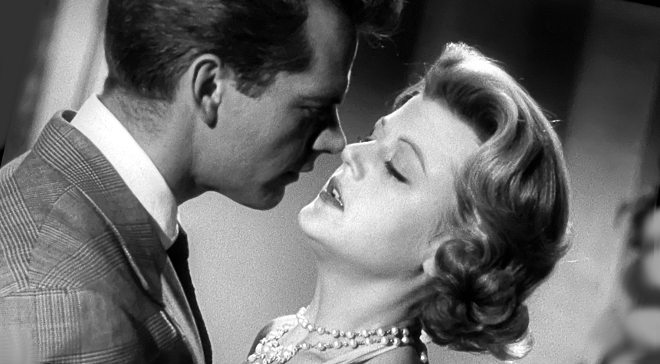
That flashback consists of us learning that Burr’s character, Craig Carlson, is in love with his best friend’s wife Myra Leeds (Angela). We find this out because Craig tells Joe Leeds (Dick Foran) and says that he and Myra are going to be married and Craig would like Joe to divorce her.

Joe is oddly calm about this and as he leaves Craig’s law office, says he needs some time to think.

Before long we are in the Leeds’ apartment and Joe Leeds has met his maker. He’s under a sheet and Myra is being questioned by a plain-clothes cop who clearly thinks her self-defense story is absolutely garbage.

Myra says that Joe lunged at her, furious that she told him she wanted a divorce, and that she, terrified that he was going to kill her, shot him.

Uh-huh. Are we, the viewers, buying this?

Well, yes, I was because I hadn’t read the synopsis of this film before I watched it so I thought she might actually be telling the truth but…..not really sure.

Craig has, of course, volunteered to be Myra’s defense attorney.

It isn’t too much of a spoiler to say (since all the descriptions online already say this) that after the trial Craig discovers that Myra wasn’t being very truthful.

The problem is that in the United States a defendant can’t be tried twice because of the concept of “double jeopardy.”

Now Craig has to figure out how to make Myra pay for what she did to her husband and his best friend. Craig already felt guilty about having an affair and now the guilt is insurmountable and has a hefty helping of betrayal piled on.

I have only seen Raymond Burr in the old Perry Mason episodes and Rear Window but have enjoyed his acting in both and I enjoyed his acting in this movie as well.

He mainly played villains in the beginning of his career.

Here he portrayed a bit of a darker Perry Mason or as the author at Heart of Noir stated “a three-dimensional, complex lead role” who is “both a home wrecker and a cuckold, which demands of him quite a balancing act of emotions.”

Overall, I liked this movie and I enjoyed both Raymond and Angela’s performance.

I read a piece of trivia that I will share below that involves Angela taking the job because she needed the money and she may have only done it for the money, but she seemed to put her all in it.

I really enjoyed her performance, even if it was toned down from what she would show in films such as The Manchurian Candidate. One might say this role was a good preparation Eleanor Shaw.

I loved the use of light and shadow in the film. I am a huge fan of black and white photography and films that use shadow and light to highlight what the photographer or director wants the viewer to focus on.

In this one, there was a lot of shadow around the subjects with light hitting their eyes or whole face during tense scenes when a secret was about to be revealed or a confrontation was had.

My husband and I agree on some points about the movie.

There could have been more explanation of the plot. There was some missing information throughout which led to rushed scenes.

“Instead of being only an hour and 14 minutes it could have been an hour and 45 minutes,” my husband said.

This would have given us time for a bit more background and exposition.  We both agree that these minor issues didn’t take away from the overall story, however.

I like what Heart of Noir said about the movie: “From the pre-credits opening scene of an unidentified man walking the city sidewalk past scummy-looking bars and peep shows, the film oozes with economy, bland interiors and soupy darkness combining with overhead shots and Dutch angles to disorient the viewer and create an occasional dream-like feeling.”

I also enjoyed this assessment by PopOptiq: “The picture earns its fatalistic conclusion with a gut-punch plot resolution to Craig’s tireless mission to expose Myra. If anything, the film is yet another reminder of the range both Raymond Burr and Angela Lansbury had as actors. Both became legends through very different projects on television, making this reunion, before their popularity erupted, all the more interesting a time capsule.”

Trivia or facts:

  • According to Angela Lansbury’s authorized biography, this movie was filmed in an abandoned supermarket near Yucca and Franklin Streets in Los Angeles. Lansbury and her husband Peter Shaw were at a low financial point in their marriage and they needed the money. After the film was finished, she applied for unemployment insurance. (source IMdB) (An insert by me here: her husband was Peter Shaw and she played Eleanor Shaw in a movie? Like…weird!)
  • The film was made the same year that Raymond Burr auditioned for the role of Perry Mason.
  • Lamont Johnson’s who plays . . . well, I’m not going to tell you so I don’t spoil anymore of the story …. Is in this movie and this was his last movie as an actor before he became a full-time director. He mainly directed stage and television productions.
  • The opening credits featured the cast, writers, director and producers. The crew appeared in the closing credits.  (source TCM.com)
  • Please Murder Me was the first film made by Gross-Krasne, Inc., which was run by executive producers Jack J. Gross and Philip N. Krasne. (source TCM.com)

A quote from the movie that I liked, “My whole life has meant just meant three things,  my love for Joe, my work, and my love for you. You destroyed them all. How much more is left of me?”

Have you ever seen this one? If so, what did you think?

Cat from Cat’s Wire also watched the movie this past week and wrote about it on her blog here.
For next week, I am switching The Mirror Cracked, based on an Agatha Christie book, for Death on the Nile, based on another Agatha Christie book. I’ve been reading that Death on the Nile is better than The Mirror Cracked..

Here is the full list of movies left to watch for this feature:

July 25: Death on the Nile

August 1 – The Court Jester

August 8 – The Picture of Dorian Gray

August 15 – A Life At Stake

August 22 – All Fall Down

August 29 – Something for Everyone

If you want to read about some of the other movies I watched you can find them here:

Bedknobs and Broomsticks

The Manchurian Candidate

National Velvet

The Pirates of Penzance

Gaslight

The Pirates of Penzance


Sources and additional resources:

Please Murder Me: https://heartofnoir.com/film/please-murder-me-1956/

Please Murder Me IBdB: https://www.imdb.com/title/tt0049621/trivia/?ref_=tt_dyk_trv

TCM.com: https://www.tcm.com/tcmdb/title/86833/please-murder-me/#overview

Wikipedia: https://en.wikipedia.org/wiki/Please_Murder_Me!

‘Please Murder Me’ sees underrated greats Lansbury and Burr go head-to-head: https://www.popoptiq.com/please-murder-me/

Summer of Angela: The Pirates of Penzance (1983)

This summer I am watching Angela Lansbury movies for the Summer of Angela. Up this week we have The Pirates of Penzance, which is a bit of a switch up from my original list. You can read more about that below, but first just a quick note —  Last week, Cat from Cat’s Wire watched Gaslight and talked about it on her blog. You can read her thoughts here. She compared the British and American movie versions and a German televised version of the original play, and I think the post is so much fun!

And now on to this week’s movie, which I switched around from my original plan. I was going to watch the TV movie, The Shell Seekers, but instead, I thought that I would watch one of Angela’s Broadway/musical performances for fun — The Pirates of Penzance with her and Kevin Kline. The movie is a reproduction of the Joseph Papp’s Broadway production.

I will tell you upfront that halfway through the movie, I had to check that I wasn’t having a fever dream. I also realized I’m very old and my ears are in even worse condition than I thought because I had no idea what was being said in any of the songs. I even tried close captioning but because I watched it for free on YouTube, it didn’t work so well.

I also couldn’t figure out what was happening most of the time.  Still, I pushed forward and ended up enjoying it in places and being utterly baffled in other places.

A description from Google:

“Frederic (Rex Smith), who has spent his formative years as a junior pirate, plans to mark his 21st birthday by breaking free from the Pirate King (Kevin Kline) and beginning his courtship of Mabel (Linda Ronstadt). But because he was born on Feb. 29, a date that only arrives every fourth year, Frederic isn’t technically 21 — and the Pirate King is still his master. Unless something gives, Frederic will soon be on a collision course with the Pirate King’s new nemesis: Mabel’s father.”

 The movie starts with the people in town coming out of church, seeing the pirate ship off shore, and locking up all their doors.

Then we are on the pirate ship with Frederic and the Pirate King and the rest of the crew celebrating Frederic’s birthday. It is after all the singing that Frederic announces that now that he is 21 he can leave the ship and his service with the Pirate King.

This is when Ruth (Angela), Frederic’s nursemaid, tells him that all those years ago when his father wanted him to apprentice with a pilot and she heard “pirate” instead.

Frederic has a strong sense of duty, which is why he stayed with the pirates and committed crimes with them all those years. But now that he is no longer bound to them, he vows that when he leaves the ship, he will fight against the pirate and the criminal acts he and his crew try to commit.

“Individually, I love you all, with affection unspeakable. But collectively, I look upon you with a disgust that amounts to absolute detestation.”

Frederic sees pirates as scum but if they are going to be actual pirates, he does wish they would attack people stronger than them instead of pretending they just don’t want to hurt anyone. Instead, they just don’t want to get beaten. There is also a whole song about how they won’t attack anyone who says they are an “orphan” because they are also orphans.

This word said in a British accent becomes important later in the movie when there is a whole hilarious debate about if they are saying “orphan” or “often.”

Anyhow, Ruth wants to leave with Frederic and marry him, but Frederic isn’t so sure about it. He’s never really met other women and wants to know if Ruth is attractive. The pirate and crew assure him that she is, simply because they would like to get rid of her too.

Frederic agrees to take Ruth with him but discovers, when he sees a group of women frolicking together near a small pond, that she is not actually attractive and is instead just old.

He sends Ruth away and approaches the women, who turn out to be sisters, and asks which one of them would like to marry him.

Yeah….this musical is weird.

What follows is a song where he hits an incredible note and does a little impression of Elvis.

A lot of silliness follows all this including the singing of the famous song “I Am The Very Model of a Modern Major General.” That was a lot of fun. I always wondered what the song came from. The speed which the nonsense for this song is spit out is insane.

Fun is the key word for this movie. The songs are fun – though I still don’t know what they were saying in half of them. Wait. I’ve mentioned it like ten times now that I didn’t know what they were saying half the time, didn’t I? Okay, I’ll stop doing that.

Also, I did finally look up the lyrics so I could follow along. They didn’t make much more sense that way, but, hey, at least I knew what was being said.

I should note that I did read that a lot of this musical is satire and making fun of some elements of British society during the time the original comedic opera was written in 1879, which is why it seems ridiculous at times.

One thing I can say after seeing this is that Angela was so talented — it seems like there wasn’t anything she couldn’t do — acting, singing, dancing, producing, writing… wow. I’m still trying to figure out if she actually hit the high note in the one song but if she did…wow again!

I am a huge fan of some musicals — Fiddler on the Roof, Singing in the Rain, South Pacific, etc., but this one? I didn’t know what to make of it at first, and from what I am reading, that is a bit of the point of Gilbert and Sullivan musicals.

Their musicals are, I guess, nonsensical at times, and that’s what makes them fun. After reading more about the musical/movie, I understood it more, watched parts again, and liked it more than I did with my first run through.

At first, I decided I’d never watch the movie or musical again, but it grew on me on the second time around — especially Kevin Kline and his unbuttoned shirt. I mean.. his musical and acting talent.

Rex Smith (who I’d never heard of before) was amazing. The pipes on him. WOW.

The resolution on this video is not great but the singing….sheesh!


I had to look him up to see if he had been in anything else and apparently, besides his stage work, he’s most well-known for starring in a show called Street Hawke in the 1980s as well as for being a popular singer in the late 70s with his song You Take My Breath Away.

I would be remiss if I didn’t mention Linda Ronsdadt. I really don’t think I had a clue she sang this amazingly. I don’t know a lot about her at all so her voice totally shocked me! I thought she was just a pop singer . . . I feel embarassed I didn’t realize her range.

The Pirates of Penzance was released on Pay TV at the same time it was released in the theater, which made it a flop at the box office because theater owners boycotted it as a form of protest. Boy, if the theater owners from back then could only see what’s going on these days with movie releases!

Because of the boycott, the film ended up making less than a $1 million total during it’s entire time in the theaters.

It also received mix reviews from critics, but over the years it has become a type  of cult classic among musical theater fans.

Those who have seen it over the years, especially when they were young, hold a special place in their heart for it.

Cat Smith of Film Obsessive had this to say about Angela replacing Estelle Parsons, who was in the original Broadway production:

“The movie version of the Papp production came out in 1983. It’s pretty much the same experience as the stage. The biggest differences are some superfluous cuts to the score and the upgrading of the character Ruth. No offense to Estelle Parsons (we love her), but let’s face it—Angela Lansbury would be an upgrade of pretty much anyone.”

Of when Ruth and the Pirate King return to find Frederic she writes: “Apparently, once officially rejected by Frederic, Ruth went back to the pirates who not only welcomed her, they got her a fabulous makeover to boot. Not going to lie, my boyfriend and I have this head canon in which the Pirate King and Ruth wind up together since he knows better than to be prejudiced against a hot older woman. They do their best to frump her up for Act 1 but let’s face it—Queen Angela. Need I say more?”

(Aside: I had considered watching Angela in Sweeney Todd for this movie-watching event, but — wince — that really isn’t my type of movie/Broadway musical. Maybe I’ll watch it at some point, though.)

In past posts I have shared with Angela thought of the movie she was in, but….I couldn’t find any interviews with her about this one so I don’t have that. I do, however, have some trivia/facts.

Trivia or facts:

  • Kevin Kline won the 1981 Tony Award (New York City) for Best Actor in a Musical for “The Pirates of Penzance” Broadway 1981 to 1982 production and re-created his role in this cinema movie. It was Kline’s second Tony Award after having won one for “On the Twentieth Century”. Kline also starred in the precursor New York Central Park stage production and that park production’s subsequent made-for-television movie, The Pirates of Penzance (1980).
  • Linda Ronstadt loved the musical so much when she read about it that she played the part of Mable first in Central Park and then on Broadway for $400 a week. She then played it in the movie. It was her only movie role. She was nominated for a Tony when she played it on Broadway.
  • In Act II, there is an extra song (“My Eyes Are Fully Open”) that is not originally from “The Pirates of Penzance.” It’s a modified version of a song from Sir W.S. Gilbert and Sir Arthur Sullivan‘s “Ruddigore”. The inclusion of this song required Kevin Kline, Dame Angela Lansbury, and Rex Smith to sing one of most dizzyingly rapid songs in the entire Gilbert and Sullivan catalogue. (source IMdB)
  • The source Broadway stage production was preceded by a 1980 Joseph Papp production of “Pirates of Penzance”, which was part of a “Shakespeare in the Park” series of free plays in New York City’s Central Park, which had the same cast of principals as the movie and the Broadway stage production (except for Ruth). (source IMdB)
  • Writer and Director Wilford Leach, with this movie, knew what kind of movie he wanted to make. Leach wanted to create an “illusion of reality” which actually was “reality askew”. Leach, according to the January-February 1983 edition of Coming Attractions Magazine, “tried to delineate a colorful and comic world that is always true to its own logic.” (source IMdB)

Have you seen this version of the musical or the musical itself anywhere?

Cat from Cat’s Wire shared her thoughts about the movie here.

Up next in my movie watching journey, I have switched things up again and have replaced the Murder She Wrote two-part movie with Please, Murder Me from 1951, starring Angela with Raymond Burr.

The rest of the list remains the same:

July 25 – The Mirror Cracked

August 1 – The Court Jester

August 8 The Picture of Dorian Gray

August 15 – A Life At Stake

August 22 – All Fall Down

August 29 – Something for Everyone

Additional resources:

The Pirates of Penzance: For Some Ridiculous Reason…

https://filmobsessive.com/film/film-analysis/film-genres/comedy-films/the-pirates-of-penzance-for-some-ridiculous-reason/

Wikipedia https://en.wikipedia.org/wiki/The_Pirates_of_Penzance_(film)

IBdB trivia: https://www.imdb.com/title/tt0086112/trivia/

Summer of Angela: Gaslight (1944)

This summer I am watching Angela Lansbury movies for the Summer of Angela.

This week I watched Gaslight (1944), which was Angela’s first movie and also her first nomination for an Academy Award. I think I stated before that she won the Oscar, but she didn’t. Whoops!

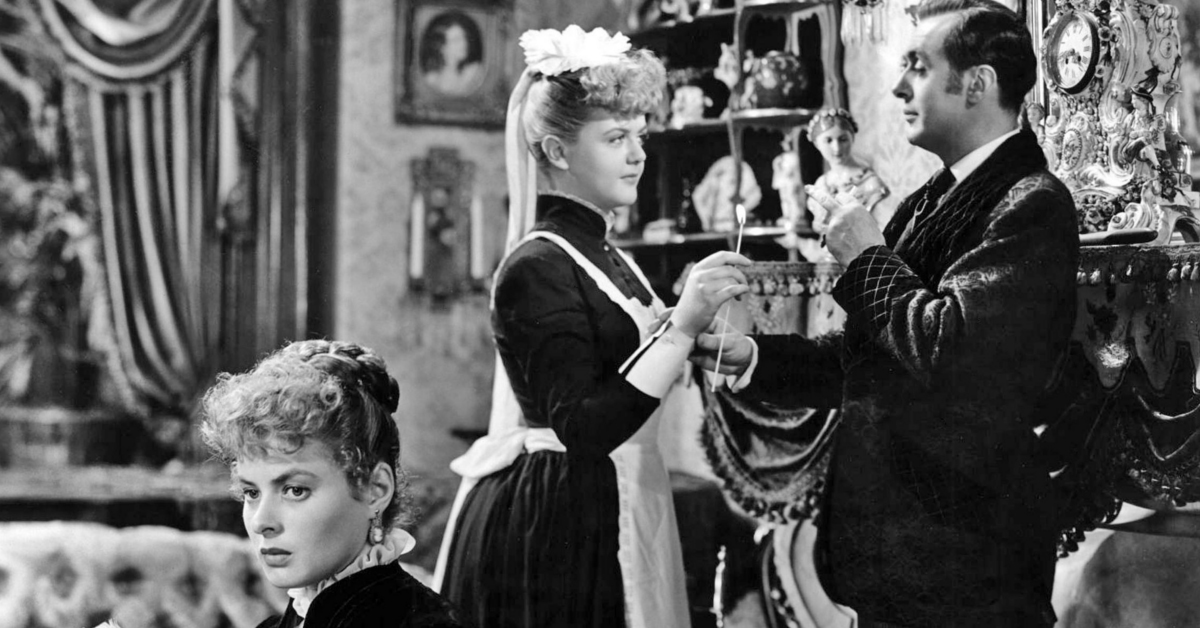
She was 18 years old when she portrayed Nancy, the odd, boisterous and flirty housemaid of Ingrid Bergman’s character.

After I watched it, I knew this movie was going to be hard for me to write about without giving tons of spoilers and without expressing my strong desire for one particular character to die, or at least suffer greatly by the end of the film, but I am going to try not to in case any of you who haven’t watched it want to watch it later.

Ahem.

Sorry for being so blunt about wanting a character to die or suffer, but…. it is true.

This movie is about a woman who is made to believe she is insane.

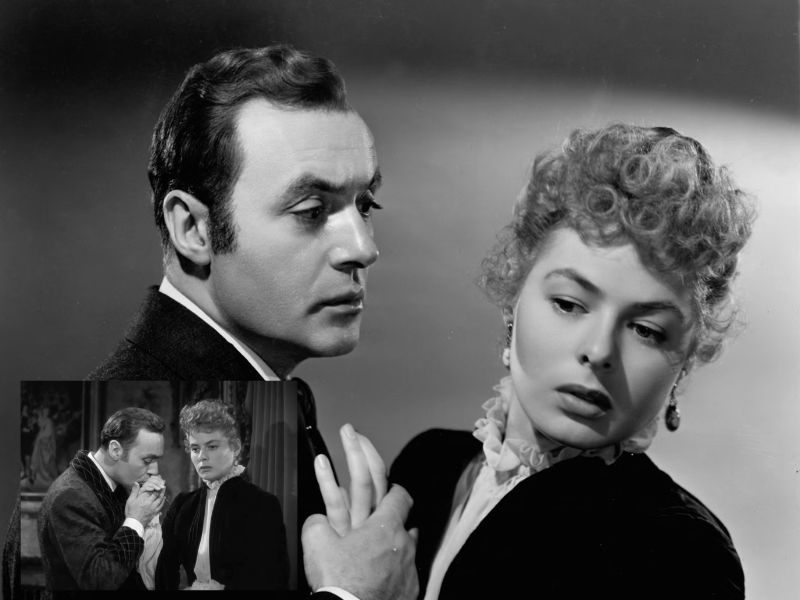
That’s pretty much the description. Here is a little more from Google, though: “After the death of her famous opera-singing aunt, Paula (Ingrid Bergman) is sent to study in Italy to become a great opera singer as well. While there, she falls in love with the charming Gregory Anton (Charles Boyer). The two return to London, and Paula begins to notice strange goings-on: missing pictures, strange footsteps in the night and gaslights that dim without being touched. As she fights to retain her sanity, her new husband’s intentions come into question.”

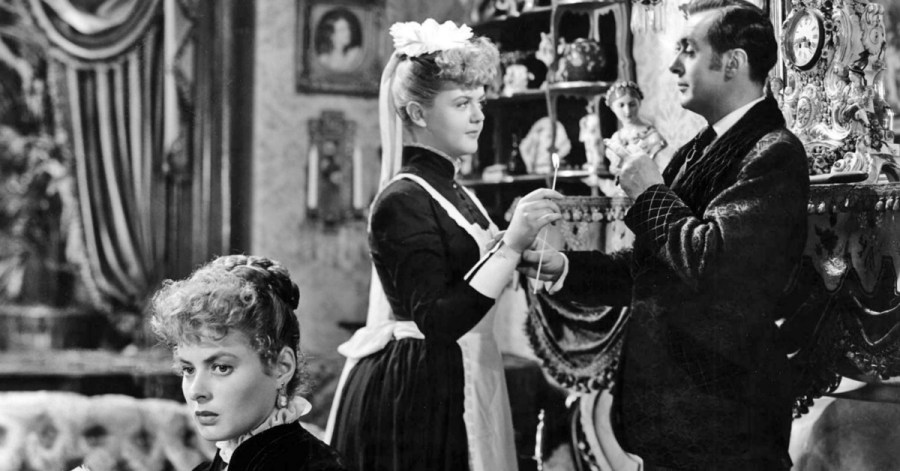
It stars Ingrid Bergman as Paula Alquist, Charles Boyer as Gregory Anton, Angela Lansbury as Nancy Oliver, and Joseph Cotten as Brian Cameron. 

When I asked my 80-year-old mom if she wanted to watch the movie with me this week, she said, “No! Oh no!” and looked horrified.

That didn’t make me feel excited to watch it until she explained it wasn’t a bad movie, just somewhat dark and creepy. I told her that her response reminded me of how she might react if I asked her if she wanted to watch The Birds with me. The Birds is my mom’s least favorite movie.

When I was a child, she once came rushing into the house from mowing the lawn.

“The birds!” she cried waving her arms over her head, brushing at her hair. “The birds! They were swooping! Swooping down at me like in that movie! Swarming me! The Birds!! The Biiiiirds!”

Needless to say, that was not a movie I ever watched with her and won’t ask her to watch again.

Anyhow, Gaslight is based on a UK version of the movie, which was based on a play called Gas Light (two words). As far as I know, the American version is considered the better version since it was nominated for seven Oscars, winning two, including one for best actress for Ingrid.

Joseph Cotten portrays a police inspector, whose interest in an decade-old murder case is piqued when he sees a woman who looks like the victim. It turns out the woman is the niece of the murdered woman.

Cameron wants to know more about what is going on and why the niece never leaves the house, or if she does it is for a very short time and never without her husband. He finally gets his chance when Paula stands up to the controlling Gregory and tells him she wants to leave the house for an event they were invited to by a woman she knew as a child.

Throughout the movie her husband has been accusing her of stealing or moving things, suggesting she doesn’t remember when she does the these things and hinting, more than once, that she might be insane. Even at the event she finally is able to go to he accuses her of stealing his watch, which leads her to having a near mental breakdown in public.

As the movie goes on, we begin to wonder who is actually crazy, but we do know that her husband seems pretty horrid and abusive. We also know that one reason Paula thinks she is crazy is because she notices the brightness of the gaslights decreasing and increasing throughout the evening, something no one else in the house seems to notice.

I don’t want to give too much away, but this movie did have me on edge throughout the entirety. I felt such anxiety for Ingrid’s character and a lot of anger toward her husband, though I wasn’t sure what was really going on.

Angela’s character was evil and selfish. That’s the only way I know how to describe her. She definitely was brilliant in her role because she made me so uncomfortable. If I could describe her even more succinctly, I would say “what a trashy little tart.”

What Angela said about the movie:

Angela was 17 when she auditioned for the movie.

“As far as I was concerned, I was very consciousness at the age,” Angela said in an interview with the SAG-AFRTA Foundation. “So I went about learning my lines and listening to George Cukor direction and he directed the test . . .I did it with an actor called Hugh Marlow who played the part of Charles Boyer’s role (for the test) and we did a very extensive test.  I’m glad we did. Cukor took great care because I think he really wanted me although the first decision was that I wouldn’t play it, you know, I was too young. But I signed a contract anyhow because Albie Mayer saw my test when he came back from a trip back east to see his horses … and he saw my test and said ‘sign that girl.’”

Angela said she had a lot of interaction with L.B. Mayer, who ran Metro-Golden-Mayer (MGM) studios and that she was very fond of him. Not only did he sign her but also her mother and wanted to sign her twin brothers, but they decided not to let the twin sign. Instead, they later became writers for the movie and television industry.

After being nominated for Oscars for both Gaslight (1944) and The Picture of Dorian Gray (1945), Angela says she was never considered a starlet, always an actress. That made her job a little easier.

Angela said that she was glad in many ways that she didn’t win the Oscars she was nominated for because in her view many people who win Oscars second guess what their next steps will be. They often overthink what roles they need to take next because they are always thinking about being as good as an Oscar winning role, she said. She thinks that for her she didn’t have that pressure. She just went with whatever she wanted to do next, though she was a little disappointed that MGM didn’t have anything lined up for her so she could use the momentum of the success from her first two movies.

She went on with laughter in the interview saying that she was nominated for her first two movies and “it all went downhill from there.”

Angela was  nominated again, however, for The Manchurian Candidate in 1963 where she played the role of a mother to an actor who was only three years younger than her. She told the interviewer that she felt the fact she was given roles where she was playing older women showed her that she was always a character actor.

In a 2000 interview with NPR’s Fresh Air, Angela recalled how the audition for Gaslight really came about.

“Well, I was introduced to the studio, which was MGM, by a young man who was being considered for the role of Dorian Gray. His name was Michael Dyne. And he arranged that the casting director would see me, this young English girl, who at that time was – I think I was 17. And I went to the studio with my mother and was interviewed for the part of Sibyl Vane in “Dorian Gray.” And the head of casting, a man called Billy Grady, came into the room while I was sitting there. He said, sort of whispered in the ear of Mr. Ballerino, the man I was seeing, you know, you should suggest that this young lady meets George Cukor, who’s trying to cast the role of the maid in “Gaslight.” And so right then and there, I was whipped off to meet George Cukor. And so, well, the rest, as they say, is history.”

The interviewer asked Angela if she was aware of some of the darker elements of the film, or was she a little naïve because she was so young at the time.

“I can’t honestly say, except by my on-set demeanor,” she responded. “I think my on-set demeanor was a very, very careful, covered, rather shy attitude about what I was doing. And when I say that, I don’t mean that I was aware of that, but I know from my own uncertainty about my personal – you see; I’ve always been a very private person. When it comes to the work, I’m on solid ground. When it comes to the – Angela Lansbury the young woman, I was on very uncertain ground.”

She continued: “So, I had to marry those two rather carefully. And that’s why, as I say, I always felt that I had to, shall we say, tread rather warily from a personal point of view. Just listen and hear and do what I was told and asked to do. I could discuss it, but I – in most instances, I was pretty quick to pick up directorial indications from somebody like George Cukor because he was extremely clear and funny and helpful. And what he said I understood. So you could say I was fortunate in that I could understand what he wanted and then deliver it. This is what I do, and this is what I always maintained throughout my career – was that I had that ability to take direction and also to understand what the – what was required of the character.”

Angela turned 18 on the set and had this to say about that time: “Oh, it was required that there was a social worker with me until my 18th birthday, which I celebrated on the set of “Gaslight,” actually. And I always remember it because Ingrid and Charles and George Cukor were so wonderfully kind. And Ingrid gave me lovely bottles of Strategy, which was a lovely, smelly cologne, which – I’d never had anything as lovely as that – and powder, you know, sort of talcum powder and things that, you know, set. I always remember that. It’s interesting, the things you do remember.”

This part made me laugh so I had to include it: “And we celebrated. And I was able to take a cigarette out of a packet in my purse and smoke it, which I hadn’t been able to let on, that I had been smoking from the time I was, really, about 14 years old. I say that without any sense of pride at all. And I stopped smoking 30 years ago. But nevertheless – I don’t know if you remember, but I do smoke a rather long Cigarettello in the movie. And that was part of the business in the movie of “Gaslight.” But they only let me puff it. And I wasn’t allowed to inhale, as Mr. Clinton would say.”

As Mr. Clinton might say. Wahahaha! I remember that interview with him. He didn’t inhale and he didn’t have sexual relations with that woman…well, we all know how that second one went.

Anyhow,

You can read and listen to the full interview with Angela here https://www.npr.org/2022/05/27/1101435407/angela-lansbury-looks-back-on-her-great-performances-on-stage-and-screen

 It was fascinating to me.

A bit of trivia or facts:

  • According to TCM.com: “MGM head Louis B. Mayer, determined to eliminate the competition for what was expected to be one of the studio’s biggest hits of the year, ordered all prints of the 1939 British version purchased and destroyed. Prints, however, did survive, and the film turned up again in the 1950s, often under the title of the original 1938 stage production, Angel Street.”
  • MGM tried to sue Jack Benny in the 50s because he presented a spoof of the movie called Autolight. Benny played Charles Boyer’s character and Barbara Stanwyck performed as Bergman. The comedians lawyers argued the skit was in the realm of parody and therefore not a copyright violation and the suit was dropped.
  • Ingrid Bergman was filming The Bells of St. Mary’s when she won her Oscar for Gaslight. The star of the film, Bing Crosby, and the director, Leo McCarey, had previously won Oscars. In her acceptance speech Ingrid quipped: “I am particularly glad to get the Oscar this time because I’m working on a picture at the moment with Mr. Crosby and Mr. McCarey and I’m afraid if I went on the set tomorrow without an award, neither of them would speak to me.”
  • From TCM: “In the big confrontation scene between the chambermaid and the lady of the house, Lansbury was required to light a cigarette in defiance of her mistress’s orders. But because she was only 17, the social worker and teacher assigned to her would not allow her to smoke until she was a year older. When her 18th birthday arrived, Bergman and the cast threw her a party on the set, and the scene was done shortly after.”
  • Director George Cukor suggested that Ingrid Bergman study the patients at a mental hospital to learn about nervous breakdowns. She did, focusing on one woman in particular, whose habits and physical quirks became part of the character. (source IMdB)
  • The first time Ingrid Bergman encountered Charles Boyer was the day they shot the scene where they meet at a train station and kiss passionately. Boyer was the same height as Bergman, and in order for him to seem taller, he had to stand on a box, which she kept inadvertently kicking as she ran into the scene. Boyer also wore shoes and boots with two-inch heels throughout the movie. (source IMdB)
  • Charles Boyer‘s wife, Pat Paterson, was pregnant with what would be the couple’s only child. Boyer and Paterson had been trying to have a baby for many years, and Boyer was exceptionally nervous while making Gaslight. He rushed between takes to call and check on his wife’s health as the expected birth date grew nearer. The baby was expected to come after Boyer had finished working on this movie, but he arrived early. Boyer broke down in tears when he was notified, and he informed the rest of the cast and crew of his son’s birth. Production was halted for the day and the cast and crew opened up bottles of champagne to celebrate the birth. (source IMdB)
  • Angela had been working at Bullocks Department Store in L.A. before getting the part in Gaslight. When she told her boss that she was leaving, he offered to match the pay at her new job, expecting it to be in the region of her Bullocks salary of the equivalent of twenty-seven dollars a week. He was shocked to find out she’d be earning $500 a week. (source IMdB)

Cat from Cat’s Wire also watched the movie this week and you can read her thoughts here. She compared the British and American movie versions and a German televised version of the original play. I absolutely loved how she compared these three!

Here is my full schedule of movies I am watching for the Summer of Angela:

Blue Hawaii

The Manchurian Candidate

National Velvet

Bedknobs and Broomsticks

July 11 –  The Shell Seekers

July 18 – Murder She Wrote: The Celtic Riddle

July 25 – The Mirror Cracked

August 1 – The Court Jester

August 8 The Picture of Dorian Gray

August 15 – A Life At Stake

August 22 – All Fall Down

August 29 – Something for Everyone

Additional resources:

Angela Lansbury Looks Back on Her Great Performances on Stage and Screen:

https://www.npr.org/2022/05/27/1101435407/angela-lansbury-looks-back-on-her-great-performances-on-stage-and-screen

Gaslight Review: The Hollywood Reporter: https://www.hollywoodreporter.com/movies/movie-news/gaslight-review-1944-movie-999932/

From TCM: https://www.tcm.com/tcmdb/title/166/gaslight#articles-reviews?articleId=29976

The Essentials (Gaslight): https://www.tcm.com/tcmdb/title/166/gaslight#articles-reviews?articleId=89327

In the Good Old Days of Classic Hollywood, Gaslight: https://crystalkalyana.wordpress.com/2015/10/04/gaslight-1944/


Lisa R. Howeler is a blogger, homeschool mom, and writes cozy mysteries.

You can find her Gladwynn Grant Mystery series HERE.

You can also find her on Instagram and YouTube.

Summer of Angela: Bedknobs and Broomsticks (1971)

This summer I am watching Angela Lansbury movies. This week — well, last week — I watched Bedknobs and Broomsticks.

First, a movie description:

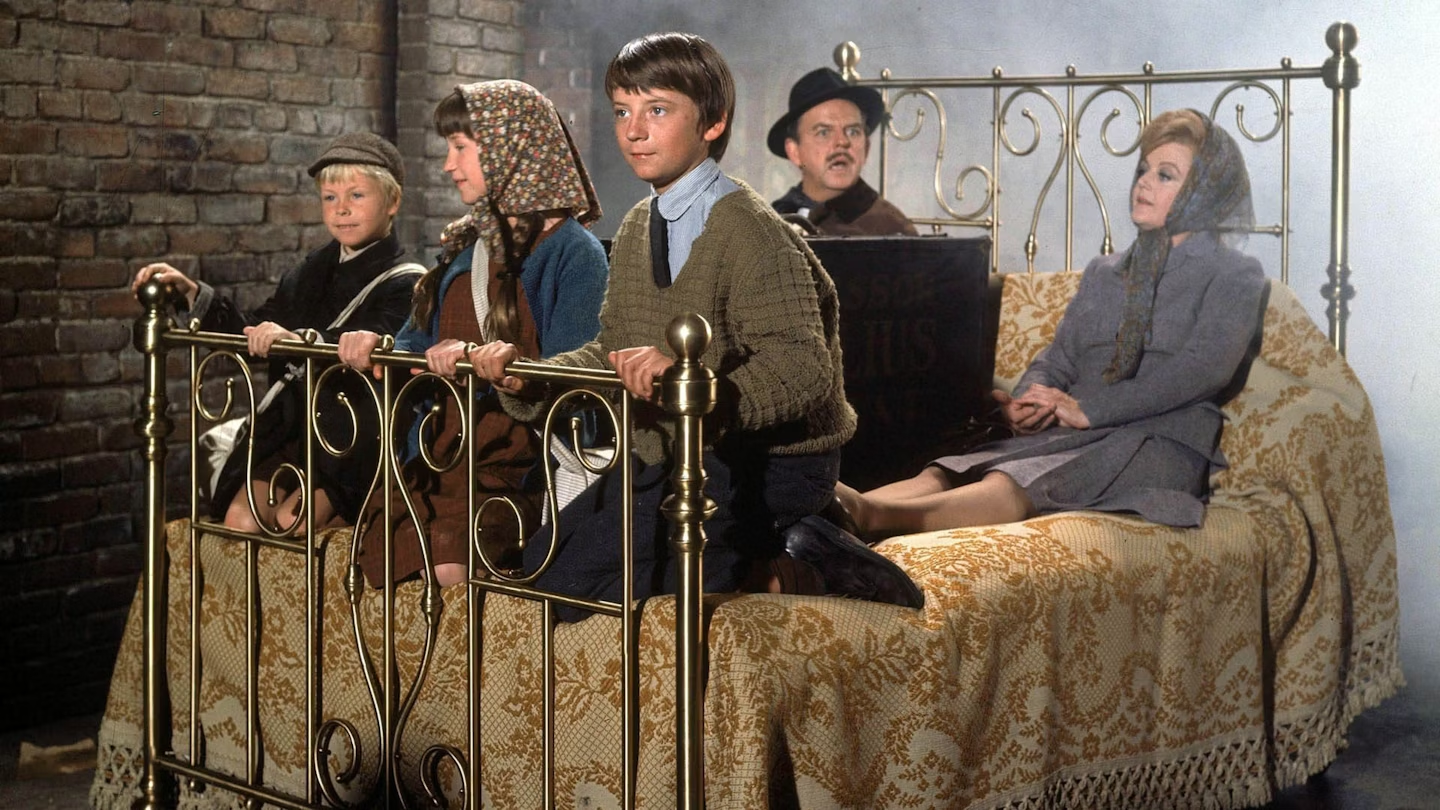
During the Battle of Britain, Miss Eglantine Price (Angela Lansbury), a cunning witch-in-training, decides to use her supernatural powers to defeat the Nazi menace. She sets out to accomplish this task with the aid of three inventive children who have been evacuated from the London Blitz. Joined by Emelius Brown (David Tomlinson), the head of Miss Price’s witchcraft training correspondence school, the crew uses an enchanted bed to travel into a fantasy land and foil encroaching German troops.

The children come to live with Eglantine Price not because she wants them to, mind you. She is sort of cohersed into it by a lady from the community who ran out of room for the other children who came from London.

Once there the children decide they are going back to London. Miss Price doesn’t eat normal food (she doesn’t eat any sausages at all!). Miss Price can’t let them go back to London because the city is being bombed but..oddly enough…later in the movie she takes them all back to London via a magical bed. Yes, you read that right. A magical, flying bed.

The movie is based on two novels by Mary Norton, The Magic Bed-Knob (1945) and Bonfires and Broomsticks (1957), about the adventures of an apprentice witch and the three children who come to stay with her to escape the bombing of London during World War II.

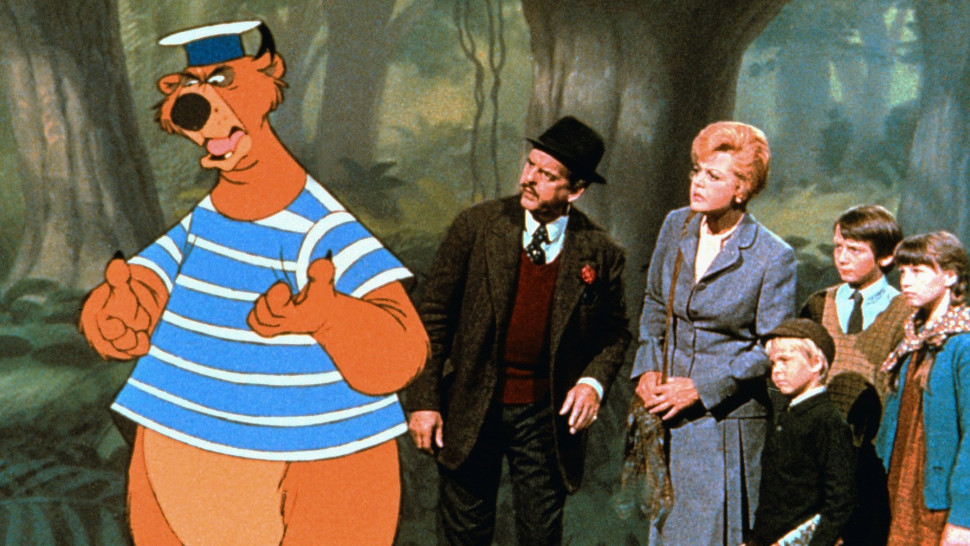
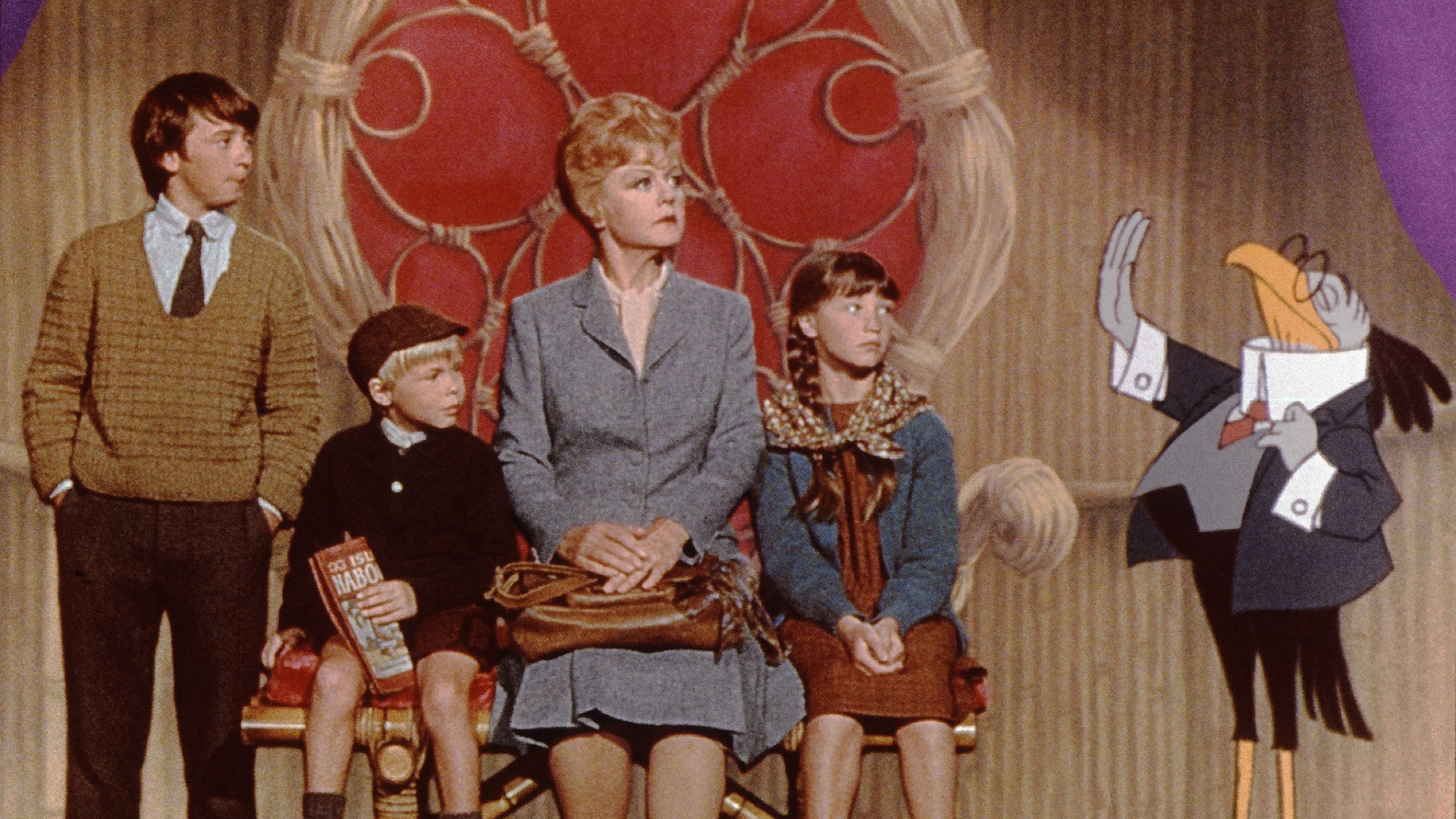
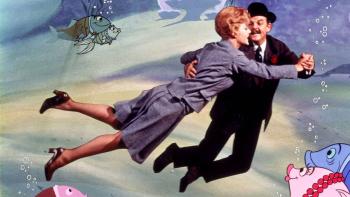
In some parts, the movie mixes live action and animation, similar to Mary Poppins.

Walt Disney (the man, not the company) purchased the rights to the first book the year it was published, but the movie wouldn’t be made until five years after his death, partially because of  Mary Poppins. It took Disney years and years to convince P.L. Travers to give the rights to Mary Poppins. Walt wanted to make a movie based on Bedknobs and Broomsticks but decided he’d hold on to that one if he couldn’t get Mary Poppins. Of course, he did get Mary Poppins so Bedknobs was pushed aside for a bit.

Walt said the stories were very similar, so he wanted to wait to make Bedknobs and Broomsticks, a title that combined both book titles, when the frenzy from Mary Poppins had died down a bit. In the end, Walt died before Bedknobs and Broomsticks was developed and released.

Observer.com says this about the movie: “Bedknobs and Broomsticks is just as unhinged as it sounds. The 1960s through the 1980s was a period of decline for Disney, and the internal drama at the studio plus the Mary Poppins-related delays are evident in Bedknobs and Broomsticks, a film that’s all over the place (ironic, as Lansbury called her performance “acting by the numbers;” each scene was storyboarded ahead of time). At first, it strikes the same chord as Chitty Chitty Chitty Bang Bang (1968), but then it veers into West Side Story (1961) territory with extended dance numbers (including dancers in brownface). The scenes where the group travels using Miss Price’s magical bed are bizarrely psychedelic à la the tunnel scene in Willie Wonka and the Chocolate Factory, which premiered the same year. And the arcs featuring a mix of live action and animation, particularly the soccer scene on the cartoon island of Naboombu, feel like precursors to future hits like Space Jam (1996).”


Who is in it:

The movie stars Angela Lansbury and David Tomlinson (the father in Mary Poppins, incidentally) and three wonderful child actors Ian Weighill, Roy Snart, and Cindy O’Callaghan.

Highlights for me:

The children in this movie were absolutely amazing. They were hilarious, quick-witted and delivered their lines perfectly.

In one scene, the oldest boy decides he’s going to blackmail Miss Price into giving them better food (not vegetarian food that she eats) by telling her that the kids know she’s a witch. They know this because when they were trying to sneak out of the house to go back to London, they saw her trying to ride a broom for the first time and falling off into a bush.

“What we have here is an opportunity,” he says when he sees her fall off her broom. “She don’t want us to tell anyone she’s a witch so….”

Oh gosh, the kid is so funny in his delivery. His sister isn’t very pleased with him trying to manipulate Miss Price, by the way, and Miss Price isn’t easily manipulated so it doesn’t really work.

Angela, of course, was very good in this movie. I have to agree with some reviews that said she wasn’t as animated in the movie as she could have been. However, later in life she talked about how technical these types of movies have to be, adding that it is hard to improvise or do anything that breaks too much from the script when the movie is storyboarded so exact for the technical aspects.

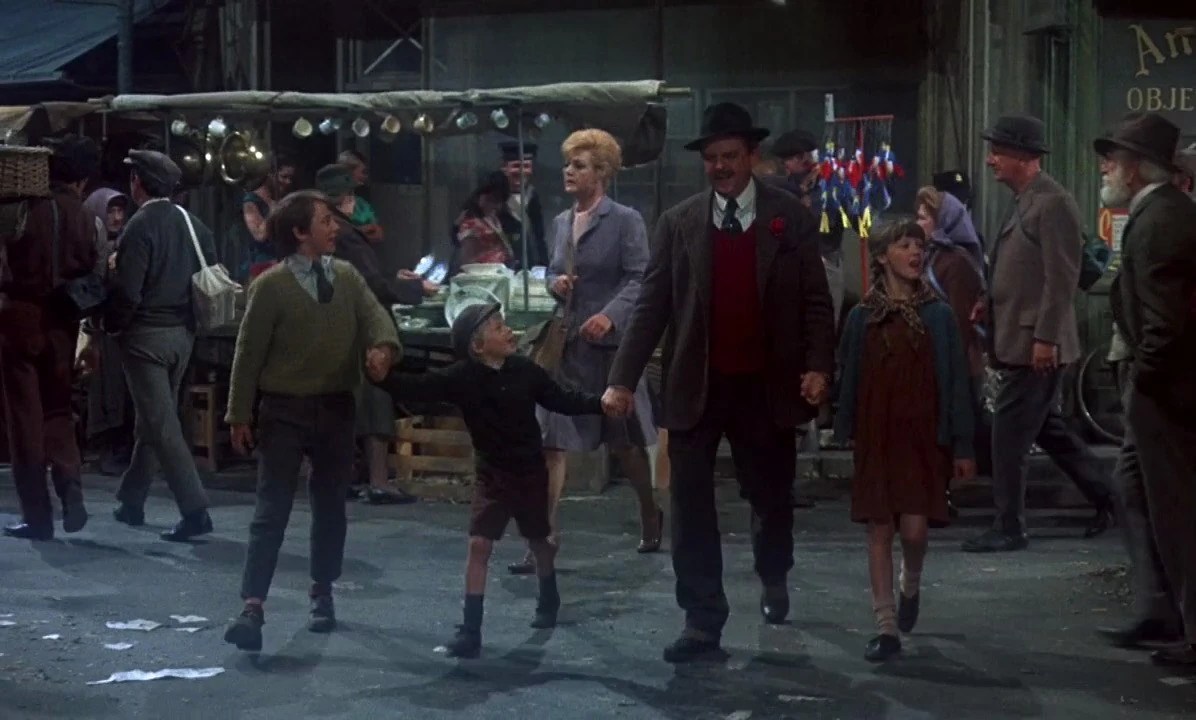
There was one song that sort of made my eyebrows raise: Portobello Road. Mainly because of the women who come up to the professor on Portobello Road and seem to be flirting with him. They are dressed in brightly colored dresses that have a certain “look” to them. These same women are in the background of the song flirting with the soldiers and even get their own break out dance moment. As my mom would say, “Oh. Oh my!”

I’m really surprised they put “those type of women” in the movie, which was, clearly, meant for children. I kept looking for any commentary online about this and did find some, but mainly from bloggers.

“I mean, it wasn’t until this viewing that I worked out that, yes, those are prostitutes attempting to pick up Professor Browne and not just friendly women,” Gillianred on The Solute.com wrote. “Which is . . . not something I expected from a Disney movie. But if you look at what they’re wearing and exactly how they size him up, it seems to me that, yup, they’re wondering if he’s got a few bob in his pocket to spare for a little bit of fun.”

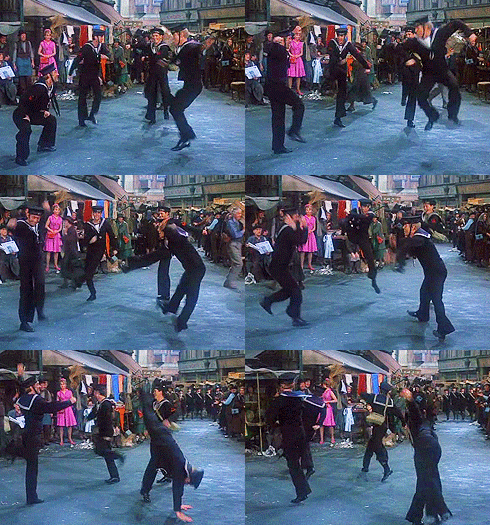
I also enjoyed all the different cultures represented during the Portobello Road song. Soldiers who fought for the British during World War II were shown dancing in their own moments during the song, including Scottish, Indian, and  Jamaica.  Online there was at least one site that called this scene racist but I guess I didn’t see it that way. I just thought it was nice they were representing the other countries who fought with England.

 I also felt that the Jamaican section in particular was very respectful because they were dancing to traditional music, the Jamaican women had the best dresses of anyone else in the dance sequence and everyone around them was clapping and enjoying themselves.

The children were even enjoying watching the dances and weren’t making fun of them, but trying to mimic them and try to dance like the people. To me the sequence is a chance to talk to children about the differences between culture. While the depictions are not completely accurate, to me, they are an attempt to bring awareness to all of those different countries that fought with the British during that time.

Eglantine’s cat looked like it had died – so that was funny to see. It looked like the cat we had, who we loved dearly, but was 19 when she died and looked awful. She looked like an animatronic cat that had gone through a garbage disposal at that point.

What I thought overall:

I liked this movie a lot but I don’t know that I would watch it again and again. Maybe if I had watched it as a child and had a sentimental connection, I would have loved it. Instead, I only liked it.

I almost loved it, maybe that’s a better way to say it. This was a comfy, cozy movie for me, even if it wasn’t my favorite Disney film. Yes, I know comfy and cozy are essentially the same word. Just go with it.

I loved the humor of the children and how they made the movie. I loved the silliness and the absolute detachment from reality it had , something people in the 40s would have really needed. Since the movie was released in 1971 it would have provided some people a happier way to frame that period, which was so dark for the world, but especially British people.

I’m actually glad children back then couldn’t see movies like this or read books like the Narnia Chronicles. They might have thought they were all going to mansion with professors or witches where they would disappear into a magical land via a wardrobe or fly away to adventure on a bed.

Nazis showing up at the end of the film was awkward and I imagine would have been very scary for children who watched it when really young.

Mr. Brown dreaming of Angela in a revealing acrobat outfit was also…er…interesting.  Not inappropriate but a bit strange. In a funny way.

And, of course, the ending when — well, have you seen the film? I hate to give it away but I will say that a spell is cast and very exciting things happen to help make sure there is a happy ending.

If I were to boil down my overall opinion of the movie into one sentence I would say that it was a magical adventure for me that allowed me to escape life stresses and that is exactly what I think the makers of this movie wanted to do.

What Angela said about the movie:

I could not find the source for this again, but at some point, I was watching an interview with Angela and she said that what really made the movie was the children. Their acting was so good and, of course, children love to watch movies with other children in them.

In 1998 Disney released an extended version of the movie, adding in deleted scenes and musical numbers. Interviewed by Disney for the project, Angela said only those who acted in the movie knew what was missing all these years, but they were so glad to add those parts back.

“It was my passport to an entire generation of youngsters,” Angela said in the interview for Disney. “Now those children are all grown up and they are showing Bedknobs and Broomsticks to their kids.”

“To fly is everybody’s dream,” she continued in the interview. “And to have that experience of being suspended and moving freely through the air is a lovely feeling.”

Pullies and wires were used to help Angela and the other actors seem to fly but special effects also came into play.

“It has to do with make believe,” Angela said. “We had to understand that we were interacting with an animated creature, so your hand had to be in a certain position for  him to put his hand on yours in the final print.”

A bit of trivia or facts:

  • Julie Andrews was offered the role of Miss Price in the movie but declined. When she made up her mind she did want to do it, it was too late. Angela had been offered the role and had accepted.
  • The Beautiful Briny was actually written for Mary Poppins, but saved out and filmed for Bedknobs and Broomsticks instead.
  • The song A Step in the Right Direction was cut from the movie and the footage could never be found to restore it to the restored version of the movie. Disney did, however, clip together some images and present it on the Disney Channel before airing the movie with all the deleted scenes added back in. (https://youtu.be/J-VwRkQGkAw?si=QpQ0jjsfKoP5H9wa
  • In the establishing shot of the animated soccer game, a bear wearing a Mickey Mouse T-shirt can be spotted in the crowd on the right side of the picture.
  • There were differences between the books and the movie. For example, in the first book of the series, the warm is not explicitly mentioned and the children are not orphans but are instead sent to spend the summer with their aunt in the country. It’s heard they meet Eglantine Price, who gives them the magic bedknob in exchange for not revealing she is a witch. In the second book, set two years after the first, the children travel back in time to 1666 before the Great Fire of London and that’s where they meet Emelius Jones (not Brown) and bring him back with them to the future.
  • Another difference between the movie and book is that Eglantine ends up traveling back with him to his time and takes the bed with her, which means the children will not have any more adventures or trips.
  • From TCM.com: “In an interview filmed for the thirtieth anniversary of the film that was included as added content on the DVD release, Richard M. Sherman and Robert B. Sherman, the brothers who were the film’s composer-lyricists, stated that they were given the task to write songs for Bedknobs and Broomsticks while the studio awaited permission from author P. L. Travers to film Mary Poppins. In an interview reprinted in a modern source, the brothers reported that Disney assured them that he owned another story about magic for which their songs could be used if Mary Poppins was not produced. According to the Shermans, the song “The Beautiful Briny” actually was written for, but never used in, Mary Poppins.”
  • According to 1971 studio production notes, three blocks of Portobello Road as it looked in 1940 were reproduced on Disney Studio soundstages. Among the props used for this sequence were carts rented from A. Keehn, a company that had a monopoly on them, according to set decorator Emile Kuri, who stated that for over a hundred years the company had collected a shilling a day for each barrow rented by vendors on Portobello Road. (Source TCM.com).
  • All longer scenes with Roddy McDowall as the local pastor “Mr. Jelk,” were cut from the film and he ended up in only a three-minute clip in the original film.
  • The New York Times stated in their review that Angela projected a “healthy sensuality” in the movie. (*giggle*)
  • This was the last Disney movie released while Roy O. Disney was still alive. He died a week after its U.S. premiere.
  • The armor in the climactic battle with the Nazis was authentic medieval armor, previously used in Camelot (1967) and El Cid (1961). When any item of armor was to be destroyed, exact fiberglass replicas were created and used.
  • In this movie, the King of Naboombu’s name is Leo. In official merchandise guidebooks, his full name is King Leonidas, after the Spartan King who died at the Battle of Thermopylae in 480 B.C.
  • This was the last Disney-branded movie to receive an Academy Award until The Little Mermaid (1989). Others received nominations, and two Touchstone Pictures movies, The Color of Money (1986) and Who Framed Roger Rabbit (1988), received awards before that.

If you want to read a very fun review of this film, I enjoyed this one by Mutant Reviewers Movies: https://mutantreviewersmovies.com/2013/03/25/deneb-does-bedknobs-and-broomsticks/

Cat from Cat’s Wire also watched this one this week and you can find her thoughts here:

Up next in my Summer of Angela is Gaslight.

Here is my full schedule of movies I am watching:

July 4 – Gaslight

July 11 –  The Shell Seekers

July 18 – Murder She Wrote: The Celtic Riddle

July 25 – The Mirror Cracked

August 1 – The Court Jester

August 8 The Picture of Dorian Gray

August 15 – A Life At Stake

August 22 – All Fall Down

August 29 – Something for Everyone


Additional resources:

https://www.tcm.com/tcmdb/title/68329/bedknobs-and-broomsticks#notes

https://www.tcm.com/tcmdb/title/68329/bedknobs-and-broomsticks#articles-reviews?articleId=188901

https://www.tcm.com/tcmdb/title/68329/bedknobs-and-broomsticks#photos-videos

https://www.the-solute.com/disney-byways-bedknobs-and-broomsticks/#:~:text=I%20mean%2C%20it%20wasn’t,a%20little%20bit%20of%20fun.

https://www.imdb.com/title/tt0066817/trivia/


Lisa R. Howeler is a blogger, homeschool mom, and writes cozy mysteries.

You can find her Gladwynn Grant Mystery series HERE.

You can also find her on Instagram and YouTube.

Summer of Angela: National Velvet (1944)

This summer I am watching movies starring or co-starring Angela Lansbury.

Up this week I watched National Velvet, which Angela only has a very small part in. It was  her third movie and she was 19-years old.

This was after she had won an Oscar in her first movie, Gaslight. This was certainly not a film I would expect an Oscar-winning actress in, but it was a sweet, cozy, and wholesome film.

I find it funny that Angela was playing a character who was supposed to be younger than she actually was in real life.

Her character, Edwina Brown, was supposed to be 14 in the movie. She was the most mature 14-year-old I ever saw.

But let’s get back to what National Velvet is about.

Movie description:

When Velvet Brown (Elizabeth Taylor), an equine-loving 12-year-old living in rural Sussex, becomes the owner of a rambunctious horse, she decides to train it for England’s Grand National race. Aided by former jockey Mi Taylor (Mickey Rooney) and encouraged by her family, the determined Velvet gets her steed, affectionately called “The Pie,” ready for the big day. However, a last-minute problem arises with the jockey and an unexpected rider must step in as a replacement.


The movie, released in 1945 was based on the 1935 book, National Velvet, by Enid Bagnold. It was directed by Clarence Leon Brown.

It begins with Velvet Brown and her sisters at school. Her older sister is daydreaming about boys while Velvet is daydreaming about horses.

She wants to ride horses all of the time and on her way home from school she sees a horse after meeting wandering jockey Mi Taylor, who is actually on his way to see her mother. She doesn’t know Mi is a former jockey, but she thinks he is fascinating anyhow. The horse Velvet sees is called The Pie, or at least that is what she calls him. He’s wild and crazy and escapes the paddock where he is kept, leading an absolutely huge stone wall.

Mi is excited when he sees the jump but it isn’t until later that we will learn why.

Velvet stops The Pie from running and the owner says she should be more careful because he is wild. Velvet takes Mi home to her parents and he presents an autograph book to her mother. The book has her name in it and he wants to know how she knew his father.

She doesn’t tell him that night but we learn later in the movie how they knew each other. After some humorous moments, Mi is invited to stay with the family and later in the movie The Pie, a troublemaker horse, is auctioned off and the Brown family buys a ticket, hoping to win him for Velvet.

Highlights for me:

This movie had beautiful scenery.

It was supposed to take place in England but was actually filmed primarily in California and very few of the actors used British accents, other than a couple of actual English actors, including Angela.

I love watching The Pie race across the gorgeous hills with the backdrop of the ocean.

Angela wasn’t in the movie very long at all but when she was, she had some fun moments, and it was really fun to see her so young. I’m really looking forward to watching her in Gaslight, when she was even younger.

I loved Velvet’s mother. The actress (Anne Revere, who won an Oscar for her performance) pulled her off perfectly. She seemed stern at first, but she was truly the glue that held the family together and the motivation for Velvet to reach for her dreams.

Velvet’s mother crossed the channel when she was young, something no other woman had done before. When Velvet wants to race her horse in England’s Grand National, her mother wanted her daughter to have the same excitement she had with her accomplishment.

“We’re alike,” Mrs. Brown tells her. “I, too, believe that everyone should have a chance at a breathtaking piece of folly once in his life. I was twenty when they said a woman couldn’t swim the Channel. You’re twelve; you think a horse of yours can win the Grand National. Your dream has come early; but remember, Velvet, it will have to last you all the rest of your life.”

Mrs. Brown had quite a few good quotes in the movie actually. Here is another one:

“What’s the meaning of goodness if there isn’t a little badness to overcome?”

She was my favorite character.

What I thought of Angela in the movie

As I’ve mentioned above, Angela was in this movie very little. In the parts she was in she was very good and provided humor or sweet moments.

Here character, Edwina, was starting to get interested in boys and Velvet was excited to tell their teacher about Edwina meeting a boy later that night after the last day of school. Of course, when Edwina walks past the boy she intends to meet later she ignores him.

Velvet says she doesn’t understand why she did that and Edwina responds with, “Velvet, you’re too young to understand some things.”

The sisters, their arms around each other as they walk, talk about growing up.

“Haven’t you really felt keen about anything?” Edwina asks.

“Oh yes!” Velvet says looking at a horse as they pass.

“Horses!” Edwina says with an eyeroll. “What’s it feel like to be in love with a horse?”

“I lose my lunch,” Velvet says.

“Oh no,” Edwina says with a dramatic flourish, touching her hand to her throat and upper chest. “It’s here where you feel it. It skips a beat.”

And off she wanders to follow Teddy who has just ridden by on his bike.

Later, when Mr. Brown is tucking the three girls in at night, Edwina has just come in from seeing Teddy a bit earlier and is now in bed with the covers up to her chin. She’s “fast asleep” and her father is amazed she can sleep through all the noise.

Before he leaves the room he tells Edwina she’d better change into her nightclothes and Edwina is furious he found her out.

I’m guessing that she intended to sneak out that night.

Later in the movie she shows her true teenage self when she yells that she’s sick of hearing about Velvet’s horse and hopes he dies.

She apologizes for this outburst before Velvet leaves to go the Grand National, hugging her sister and telling her she should have never said it.

What I thought overall:

I didn’t expect to like this movie. Elizabeth Taylor’s little child voice was a bit annoying to me at first because it was almost as if it was overdone.

I just decided that was her voice and got used to it finally. Then I really enjoyed the movie, especially the humorous moments among the family members, including Velvet’s little brother Donald. He was hilarious and reminded me of kids I’ve met before.

This exchange was so cute:

Donald Brown: I was sick all night!

Mr. Herbert Brown: Donald, you told a story, didn’t you?

Donald Brown: Yes, sir, it was a story.

Mr. Herbert Brown: Well, you know what to do.

Donald Brown: What?

Mr. Herbert Brown: You say you’re sorry.

[Donald puts his head on his hand]

Mr. Herbert Brown: Well?

Mrs. Brown: He’s thinking.

Mr. Herbert Brown: [to Donald] Well, make up your mind.

Donald Brown: Alright, I’m sorry.

[continues eating his dinner]

Mr. Herbert Brown: Well, go on. Sorry for what?

Donald Brown: For being sick all night!

Mr. Herbert Brown: That boy will make a lawyer.

What Angela said about the movie:

At a Lifetime Achievement award ceremony for Elizabeth Taylor, Angela talked about meeting Elizabeth and how she (Angela) felt like she was superior to Elizabeth who was seven years younger.

“I had already done Gaslight and I was playing a 14-year-old, your sister and I thought I was really beyond that, you know, I was all of 18 and smoked cigarettes with Charles Boyer and worked with Ingred Bergman,” she said with a laugh.

In an interview with Studio 10 shortly before she died, Angela said she and Elizabeth remained friends from the time they met on National Velvet until Elizabeth died in 2011. Angela presented Elizabeth with the Jean Hersholt Humanitarian Award in 1993 and talked about Elizabeth’s impact on the industry and said when she first met her on the set of National Velvet she knew there was something special about her.

I couldn’t find many other interviews where Angela talked about National Velvet, but I am sure they are out there.

A bit of trivia or facts:


  • Elizabeth, 11 when filming started, did most of her own riding and stunts, bonding with the horse for months leading up to the film.
  • The Pie, real name King Charles, was gifted to Elizabeth Taylor for her birthday when filming was over.
  • Andy Rooney’s scenes had to be filmed first and in one month because he had been drafted by the Army and was expected to show up for duty June of 1944.
  • The movie was released during World War II, during a time when a wholesome story was really needed.
  • The equine star, The Pie, was played by a 7-year-old Thoroughbred called King Charles. A grandson of the legendary Man o’ War, King Charles was reportedly purchased by MGM for $800. 
  • Elizabeth was originally told she couldn’t have the role because she didn’t yet have boobs. Over the next few months Elizabeth, who loved the National Velvet book, started a special diet full of high protein, trained heavily, exercised and grew three inches from October to December. She returned to tell the producer who said she needed boobs that she had come back with boobs!
  • National Velvet won a total of five Academy Award nominations, including one for Brown as Best Director; and two Oscars — for Anne Revere as Best Supporting Actress as Velvet’s understanding mother and Robert Kern for Film Editing.
  • After the winners of the Oscars had been announced, an Academy spokesman said that Taylor had narrowly missed winning a special Oscar for best juvenile performance — an award that went instead to Peggy Ann Garner for A Tree Grows in Brooklyn (1944).
  • Anne Revere’s performance as Mrs. Brown was so entrancing that neither audiences nor critics pointed out that it was rendered with a pronounced New York accent.
  • King Charles, playing The Pie, was first-cousin of champion thoroughbred Seabiscuit, subject of two biopics. Both had Man o’ War as grand-sire.
  • From IMDb: “The story that Mi Taylor (Mickey Rooney) tells Donald Brown (Jackie ‘Butch’ Jenkins) about a shipwrecked horse is a legend based on fact. In 1904, a New Zealand-bred thoroughbred named “Moiffa” won the Grand National race. It was reported at the time that Moiffa had survived being shipwrecked on a deserted island. However, according to the Grand National’s web site, another horse named “Kiora,” who also ran in the Grand National that same year, was the shipwreck survivor. In January, 1901, a steamship bearing Kiora had gone down in a storm in the Cape of Good Hope. Kiora escaped the shipwreck, and swam to Mouille Point, a beach in Cape Town, South Africa, where he was rescued by local fishermen. In 1904, the newspaper reporters simply assumed that Moiffa, the Grand National winner, was also the shipwrecked horse. In 1979, Mickey Rooney starred in The Black Stallion (1979), which was about a shipwrecked horse that goes on to win a major race.”

Next week I will be writing Bedknobs & Broomsticks.

Other movies I will be watching (the dates are the day I will be writing about them):

July 4 – Gaslight

July 11 –  The Shell Seekers

July 18 – Murder She Wrote: The Celtic Riddle

July 25 – The Mirror Cracked

August 1 – The Court Jester


Additional Resources:

National Velvet Movie Facts: https://www.willowbrookridingcentre.co.uk/national-velvet-movie-facts/

National Velvet Trivia IMDb: https://www.imdb.com/title/tt0037120/trivia/

National Velvet article on TCM.com: https://www.tcm.com/tcmdb/title/84601/national-velvet#articles-reviews?articleId=12668


Lisa R. Howeler is a blogger, homeschool mom, and writes cozy mysteries.

You can find her Gladwynn Grant Mystery series HERE.

You can also find her on Instagram and YouTube.

Summer of Angela: The Manchurian Candidate

This summer I am watching movies starring or co-starring Angela Lansbury.

This week I watched The Manchurian Candidate (1962)

 Angela was nominated for an Oscar for best supporting actress for her performance as Eleanor Shaw and, wow, did she deserve that nomination.

First, a description of the movie from Google:

Near the end of the Korean War, a platoon of U.S. soldiers is captured by communists and brainwashed. Following the war, the platoon is returned home, and Sergeant Raymond Shaw (Laurence Harvey) is lauded as a hero by the rest of his platoon. However, the platoon commander, Captain Bennett Marco (Frank Sinatra), finds himself plagued by strange nightmares and, together with fellow soldier Allen Melvin (James Edwards), races to uncover a terrible plot.

Highlights for me:

The opening scenes are completely mental and crazy. Scary too. I don’t want to give too much away in case you’ve never seen this. So I won’t. All I can say is seeing one of the Baldwin sisters from the Waltons ask a man in her sing-song voice if he’s ever killed anyone messed me up just a bit.

An interesting cinematography tactic used a few times in this movie is to make the character closest to the camera blurred out and the person in back in focus. This is something photographers sometimes do, commonly by using the rule of thirds, but it is more common to have the forward subject in focus and the person in back blurred out. I find this director’s decision to film scenes this way very interesting and visually interesting.

Frank Sinatra’s acting is superb in this. I have never seen him in a serious role, so it threw me a bit, but he was so good.

I can’t recall if I have ever seen Laurence Harvey in a movie before, but he was very compelling as Raymond Shaw.

What I thought of Angela:

Angela was nominated for an Oscar for best supporting actress for her performance as Eleanor Shaw, the mother of Raymond Shaw.

Nothing about the character in this movie reminds me of the Angela who is in Murder She Wrote. Now, of course the woman played many roles, but I am most familiar with her on Murder She Wrote so I had to prepare myself for seeing someone completely different and that is exactly what I got. Eleanor Shaw is absolutely not Jessica Fletcher.

Eleanor Shaw is vindictive, mean, and hungry for money and power.

“It’s a horrible thing to hate your mother,” Raymond tells Bennett at one point. “I didn’t always hate her. As a child I just sort of disliked her.”

That was before she did something he could not forgive.

Eleanor is completely domineering with her second husband, Raymond’s stepfather, and a senator.

She tells him what to do, when to do it, and how to do it.

“I keep telling you not to think.” She tells him at one point in the movie. “You are very, very great at a great number of things, but thinking isn’t one of them, hon’.”

Eeek.

She gave me chills.

(photo)

Here is a clip of Angela as Eleanor.

What I thought overall:

I was so nervous during this movie. I was nervous they wouldn’t believe Frank’s character about the dreams he was having and that the movie would just keep going on this nightmare path of him trying to prove he wasn’t crazy.

It was just a total mind trip all the way through, and I kept wondering who was a spy or sleeper agent and who wasn’t.

I figured out the ending before it happened and I was certain what one of the final scenes would be but I was still biting my nails.

I was actually very excited when part of the ending I thought would happen did happen. I was a little sad at the part of the ending that I didn’t expect.

The acting in the movie was outstanding across the board. Of course the messaging was a bit too timely for today and that was unnerving.

A bit of trivia:

There was a rumor that this movie was pulled from ever being shown on TV because of how it featured similarities to the assassination of Kennedy and speculation by some that the idea for his assassination came from the movie. Some say that Frank Sinatra locked the movie up in his vault because he controlled the rights to it. Another movie he starred in that involved assassination, Suddenly (1954) also disappeared for years after the Kennedy assassination.

According to an article on TCM.com, “. . . Sinatra’s control only extended to the film’s rights after seven years. There is, however, apparently some truth to the story that after JFK was murdered a year after the picture was released, some exhibitors requested it be given another run to capitalize on the event but that United Artists refused.”

Another disputed theory involved  a financial and legal disagreement between United Artists and Sinatra but that was later said to not be true. Some even said Sinatra simply neglected to keep the movie in distribution. (Guess he was too busy with the mob, etc. *wink*). To this day there isn’t really a definitive answer on why the movie fell out of existence for so many years but I lean toward all of the fall out from Kennedy’s assassination.

“What is certain is that during its “lost years,” the film built up a great reputation,” the TCM article states. “’The movie went from failure to classic without passing through success,” noted its screenwriter, George Axelrod. When it was finally re-released in 1988, it was a big box office hit (as well as a success on its subsequent video/DVD release) and earned even more rave reviews as one of the best pictures of that year.”

I thought it was so odd that Kennedy was given a copy of the film to preview in 1962.

A few more trivia tidbits (some of these may not be totally accurate but I don’t have time to vet each one):

  • Frank Sinatra reputedly had a swimming pool designed with a large painting on the bottom of the Queen of Hearts playing cards  … I won’t say why in case you haven’t seen the movie.
  • Director John Frankenheimer once claimed The Manchurian Candidate didn’t do well financially because the studio chose to promote another Sinatra picture, The Pride and the Passion (1957), but that film had actually been released five years earlier.
  • Frank Sinatra broke the little finger of his right hand on the desk in the fight sequence with Henry Silva. Due to on-going filming commitments, he could not rest or bandage his hand properly, causing the injury to heal incorrectly. It caused him chronic discomfort for the rest of his life.
  • The movie was filmed in only 39 days (!!)
  • According to executive producer Howard W. Koch, the budget was $2.2 million. Of that amount, $1 million went for Frank Sinatra‘s salary, with another $200,000 for Laurence Harvey, leaving only $1 million for everything else.
  • The topic of this movie was considered politically so highly sensitive that it was censored and prohibited just before its theatrical release in many of the former “Iron Curtain” countries, such as Poland, Czechoslovakia, Hungary, Romania, Bulgaria – and even in neutral countries such as Finland and Sweden. The theatrical premiere for most of those countries was held after the collapse of the Soviet Union in 1993.
  • By his own admission, Frank Sinatra‘s best work always came in the first take. Writer, producer, and director John Frankenheimer always liked the idea of using the freshness of a first take – so nearly all of the key scenes featuring Sinatra are first takes, unless a technical problem prevented them from being used.
    (Sources, Imbd and TCM.com).

What Angela said about the movie:

Frank Sinatra actually wanted Lucille Ball for the roll of Eleanor Shaw.

“That would have been fascinating,” Angela said. “You wouldn’t believe that she could be this devil incarnate though.”

As for how she got the part she said, “I think Frankenheimer (the director) just put his foot down.”

“I had just finished working with John on We All Fall Down and he came into the room where we were looping some lines and he slapped this very heavy book on the table and he said to me, ‘There’s your next role.’”

He told her what the book was, who wrote it, who was going to write the screenplay and added, “You’ll be fabulous as the mother.”

Angela was actually only three years older than the man who played her son. Say what??!

To become an older woman she simply acted as she felt the character would act, without worrying about age, she said.

In an interview she said many people asked her what it was like to work with Frank Sinatra and she always tells them she doesn’t know because they didn’t have any scenes together other than a quick one where they were getting their coats on.

It wasn’t until later she learned that Frank Sinatra was an integral part of making sure the movie was made.

“I know that Frank wasn’t the easiest person for John to work with,” she said. “But they seemed to have an alliance. I think Frank understood what a tremendous opportunity it was for him to play this role. He knew that his friend (President) John Kennedy adored the book. Frank talked to JFK about the role and one of his questions oddly enough was ‘who’s playing the mother?’”

Of the suspense of the movie, Angela said, “You really didn’t know who anybody was.”

Of the movie overall she said, “I think we all knew we were in rather racy territory. We were doing something pretty unique and different. This is going to turn a few heads you know.”

“It was out of circulation for many, many years,” she said. “It came back in 1988 as a revelation to be had. The whole generation saw it, who recognized it for what it was and they absolutely took it to their hearts and it became the most important piece of work any of us had ever done. Suddenly John Frankenheimer was recognized, Frank Sinatra was recognized as an actor. I was recognized as an actress who played one of the most evil women in human history. I had a whole new acceptance from an audience who didn’t know who the devil I was. So I have great feelings of fondness for The Manchurian Candidate for that reason.”

Have you seen this movie?

I rented it on Amazon, but it is also streaming on Google Play, Pluto TV, Apple TV and Fandango. Or your local library might have it.

Later this week I will be writing about a totally different movie than The Manchurian Candidate, National Velvet.

Other movies I will be watching for this Summer of Angela are:

June 27 – Bedknobs & Broomsticks

July 4 – Gaslight

July 11 –  The Shell Seekers

July 18 – Murder She Wrote: The Celtic Riddle

July 25 – The Mirror Cracked

August 1 – The Court Jester

The Manchurian Candidate trailer:

____
Additional sources:

Trivia & Fun Facts About THE MANCHURIAN CANDIDATE (TCM) with spoilers!! :https://www.tcm.com/tcmdb/title/19293/the-manchurian-candidate#articles-reviews?articleId=136794

Angela Lansbury talks to Alec Baldwin about The Making of The Manchurian Candidate: https://youtu.be/Sjqs66SoTXQ?si=MeU5SbwFRMBnlRhP

Angela Lansbury looks back at the making of The Manchurian Candidate: https://youtu.be/kLwO-2_GIbM?si=cWQoMwa1ARwzzAX6

Join me for a Summer of Angela (Lansbury that is)

For fun I decided I am going to watch Angela Lansbury movies this summer.

This is the list I’ve come up with. It’s subject to change, of course.

You can join along and watch the movies or just read the blog posts about them. I won’t be offering spoilers for the movies. The dates are the dates I will be writing about the movie.

June 13th – Manchurian Candidate

June 20 – National Velvet

June 27 – Bedknobs & Broomsticks

July 4 – Gaslight

July 11 –  The Shell Seekers

July 18 – Murder She Wrote: The Celtic Riddle

July 25 – The Mirror Cracked

August 1 – The Court Jester

To kick off my Summer of Angela, here is a link to my impressions of Blue Hawaii, which she played Elvis’s mother in. I’ve updated it a bit with a little more information about Angela’s role in the film and what she thought of Elvis.


Lisa R. Howeler is a blogger, homeschool mom, and writes cozy mysteries.

You can find her Gladwynn Grant Mystery series HERE.

You can also find her on Instagram and YouTube.