Springtime in Paris: How To Steal A Million

For the months of April and May, Erin from Still Life, With Cracker Crumbs and I are watching movies set in Paris and rambling about them on our blog.

This week we watched How to Steal A Million with Audrey Hepburn and Peter O’Toole.

I actually think I watched this movie or part of it at some point over the last 20-some years but I couldn’t remember most of it, other than a few scenes.

The movie is about a con-man, Charles Bonnett (Hugh Griffith), who sells fake recreations of famous artist that he has painted. It isn’t something his daughter approves of so when he loans out a fake  “Cellini” Venus statue to a museum in Paris she is horrified and panicked. Her father assures her that because the item is only being loaned out and not purchased, no one will inspect it and actually find out it is a fake. Unfortunately, Charles signs a loan agreement with the museum without reading it and later learns it includes an inspection clause.

On the same night the statuette goes on display, a burglar named Simon Dermott (O’Toole), breaks into their house to try to steal Charle’s recreation of a Van Gogh painting.

Terrified, Nicole sneaks downstairs and grabs a collector gun off the wall to confront whoever is in the house. After some bantering back and forth, and knowing calling the police would lead to an investigation of all her father’s paintings, Nicole agrees to let him go. When she lays the gun down, though, it fires and grazes Simon’s arm.

This leads to an entertaining exchange where he makes her drive him home using his car and then she discovers she has no way to get home. He calls her a taxi, but not before he asks her to wipe his fingerprints off the painting he tried to steal so he won’t get caught.

She asks him what else she should do for him. Did he want to kiss her goodnight?

He lets her know that he’d rather like to do that and the bold fellow kisses her passionately right there by the taxi.

Nicole is, of course, a bit enamored with him, especially after that kiss, which is clear when she later tells  her father about what happened.

After she and Charles find out about the inspector who will come to look at the statuette at the museum so it can be insured for a million dollars, she worries that the inspection of the item — which her look alike grandmother posed for by the way — will lead to all of her father’s work being exposed as fakes and send him to jail. She tracks Simon down and asks him to help her steal the statuette, even though it is under very heavy security at the museum.

Much jocularity ensues.

Yes, I did just write that sentence.

But, a lot of fun does unfold at this point and the viewer already knows a bit about Simon and that he isn’t what  he seems but now we want to know what else we, and Nicole, will find out. As if things couldn’t get any crazier, we also have an American dealer Davis Leland (Eli Wallach) who is trying to buy the statuette and wants to marry Nicole.

I won’t provide any other spoilers in case you haven’t seen this one and want to.

This one was a fun one for me. Lots of funny, quirky moments and beautiful views of Paris. Of course, these actors were all supposed to be in Paris but sounded British, other than Audrey.

Audrey has never been my favorite actress but I enjoyed her more in this one than I thought I would.  I thought Peter O’Toole was a delight all around. He was…sigh….dreamy. Those impulsive kisses…whew!

I loved the ins and outs of the movie, the misdirection, etc.

Toward the beginning of the movie, Nicole is reading Hitchcock Magazine which made me wonder if she’d ever been in one of his films. After a quick search online, I learned that the answer is no. However, in her Oscar-winning performance as the princess in the 1953 movie Roman Holiday, Audrey is in bed reading a book about Hitchcock.

My husband says he never wanted Audrey in his movies because he liked actresses with talent. Ouch. It’s clear my husband is not an Audrey fan. He added that Hitchcock had a “type” and Audrey wasn’t it. Most of the actresses in his movies were blond. There you go.

There were rumors when the movie was made that Peter and Audrey had an affair during the filming but those were later squashed by the pair who said while that wasn’t true, it was true they became close friends after the movie.

Some trivia about the movie that I read about during my research:

After Nicole dresses up as a cleaning lady at one point in the movie, Simon Dermott says, “That does it. For one thing, it gives Givenchy a night off.” Hubert de Givenchy was Audrey Hepburn’s costume designer.

When Peter O’Toole first sets off the museum alarm, he says, “Ring out, wild bells.” This is the title of a poem by Alfred Lord Tennyson published in 1850, which was part of his work entitled “In Memoriam”. It was an elegy to his sister’s fiancé, Arthur Henry Hallam, who died at the age of 22.

The film was directed by William Wyler.

Have you ever seen this movie? What did you think of it?
If you wrote a blog post about it or choose to do so later, you can link up below anytime from today until May.

To read Erin’s thoughts on the movie, visit her blog here: https://crackercrumblife.com/2025/04/10/springtime-in-paris-how-to-steal-a-million/

Up next in our Springtime in Paris movie feature is Paris Blues, which you can find for free on YouTube here: https://www.youtube.com/watch?v=Zm8bCTSPD6U

Following that we will have:

Hugo (April 24)

The Intouchables (May 1)

Charade Group Zoom on May 4 – this is where you can all join us for a watch party! (writing about it May 8).

If you’re wondering where to find the movies streaming, for anyone who is participating in the event on where you can find the movies streaming:

Hugo: Amazon, Fandango at Home, Pluto TV, AppleTV

The Intouchables (warning that this is an R movie due to language): DisneyPlus, Amazon, Fandango, Plex, YouTubeTV, Google Play, AppleTV, and Hulu

Charade (pretty much everywhere): Crackle, Tubi, Plex, Amazon, AppleTV, GooglePlay, YouTube, YouTubeTV, The Roku Channel, Fubo.

You are invited to the Inlinkz link party!

Click here to enter
https://fresh.inlinkz.com/js/widget/load.js?id=c0efdbe6b4add43dd7ef

Classic Movie Impressions: That Touch of Mink

I needed something to distract me from every day life last week so I watched That Touch of Mink with Doris Day and Cary Grant. I am very certain I’ve watched either all or part of this movie before but it has been years so I didn’t remember much about it.

This is quite a modern movie for 1962.

Cary Grant is a no nonsense, yet still kind and understanding, businessman and Doris Day is a young woman from a small town living in a big city and trying to find a job.

This movie was meant to be a comedy, so I tried not to be too uptight about how Cary Grant was essentially trying to get into Doris Day’s pants without actually committing to a relationship for the entire movie.

I have to say that I didn’t really like Cary for most of this movie and my husband said it is probably because of the fact Cary really didn’t want to make the movie, according to articles he has read about it. While I didn’t find articles online specifically saying he didn’t like the film, I did find information that Doris Day wrote in her autobiography that Cary was polite and professional on set but that there was really no “give and take” between them.

First a little summary:

This movie takes place in 1962 starts with Doris Day walking down the street and getting splashed by a car that Cary’s character (Philip Shayne) is riding in. He feels bad but he can’t stop because he is on his way to a very important meeting. We find out later that Doris’s character (Cathy Timberlake) is looking for a job and Philip is a shrewd but also generous businessman with a friend, Roger, (played by Gig Young) who is a bit of a leach. Philip does actually feel awful about splashing Cathy and tells Roger he’d love to find the woman and apologize.

Luckily they are looking out the office window not long afterward and see Cathy walking into a diner across the street.

He orders Roger to take her some money to apologize. Roger is hoping the woman will want to tell Phillip off. He’s sick of Phillip getting all the women despite his flippant attitude. Cathy does want to tell Phillip off so Roger takes her to Phillip immediately.

Unfortunately for Roger, Cathy falls for Phillip immediately. Phillip sees this as a chance to sweep another woman off her feet by taking her on trips around the world.

He starts to do just that and Cathy wants him to like her so she goes along with him — flying to Baltimore for a speech he’s giving, then to Philadelphia for a quick dinner. One night he even takes  her to a New York Yankees game, into the dugout where we meet the real Roger Maris, Mickey Mantle, and Yogi Berra.

Soon though, Phillip wants her to go on vacation with him to Bermuda and she’s not sure if she means he wants her to stay in the same room with him or if they will have separate rooms. He definitely wants her to stay in the room with him, which causes her to breakout in a full body rash and skuttles his plans.

She’s a good girl from Sandusky, Ohio after all. Girls from Sandusky don’t go running off with men on vacation and sleep with them unless they have a ring on their finger and have said “I do” to marriage vows.

Cathy returns home disappointed in herself because she didn’t sleep with Phillip but also fairly annoyed at him for thinking she would after they’ve known each other for only a short time.

She wants to break out of her boring girl mold, though, and decides to try again — telling Phillip she’ll go with him again to Bermuda and she will give him what he wants. She doesn’t say exactly that but the viewer gets her drift.

Sadly, things don’t work out this time either but you will have to watch the movie to find out why.

The movie is a series of miscommunications, silly tropes, and goofy interactions. One of those miscommunications is between Roger and his therapist. Roger is sharing the story about Cathy and Phillip but the therapist walks out of the room and only hears part of the story, leading him to believe that Roger is becoming involved with another man, which I thought was a very progressive (for lack of a better word) joke for the early 1960s. That joke carries on throughout the movie with Roger continually trying to update the therapist on Phillip and Cathy but the therapist instead believing that Phillip has been trying to woo Roger instead.

I found it interesting that this movie was one of the last ones where Cary was a leading man.

It was his 69th movie and he was in his 50s. An article on TCM.com states that he must have known his time for playing leading men was waning.

“He made one more picture in which he was the dashing leading man, Charade (1963), opposite Audrey Hepburn,” the article reads. “After that, he appeared as a grizzled old beachcomber in Father Goose (1964), then as a British gentleman who plays Cupid for the young romantic leads in Walk Don’t Run (1966), his last film before retiring from the screen.
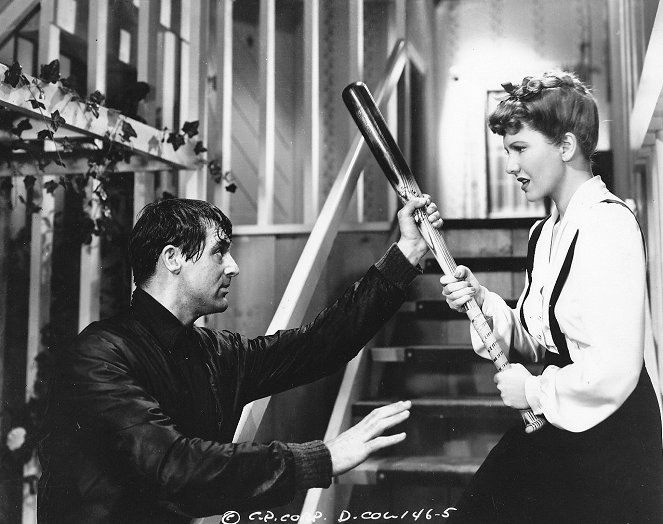
The article goes on: “Doris Day’s string of box office hits continued though with somewhat diminishing returns over the next six years in ten more films. After With Six You Get Eggroll (1968), the actress retired from the big screen. Her hit TV sitcom, The Doris Day Show, ran from 1968 to 1973, changing formats and storylines almost very season.”

As for my feelings on the film, I liked it overall but didn’t like the message that women should just go sleep with men they are not married to. The end of the movie would have feminists of today growling in anger but it was most likely what made most every day movie goers happy at the time.

I couldn’t figure out while I watched it if Cary was bored during the movie or if it was how he was playing Phillip Shayne. Maybe he wanted Phillip to have no real personality beyond seeming bored and like he expected women to fall in bed with him. The man didn’t even seem excited by the prospect of sex. He just seemed to expect that it would happen, and he would move on to the next woman.

Years ago, I was reading about Cary and his use of LSD as an attempt to help him with his depression and other mental issues. Many psychiatrists at the time prescribed LSD as part of psychological therapy. It wasn’t yet a recreational drug.

Both Gig Young and Cary used the therapy and as I researched for this film I read that Gig sadly killed his 31-year-old wife and then himself in 1978 when  he was 64. I wonder how much the drug affected his brain at the time and left him worse off than he had been. He was also an alcoholic, though, so that most likely played an even larger role than the LSD. Either way it is sad.

 I also sometimes wonder if the drug was why Cary seemed so blasé and uninterested in his movies during this particular time period.

I don’t think this is a movie I would watch again but it was a fun escape.

I should also  mention the other star of the movie: The Automat.

The Automat was an automatic-type diner where restaurant goers could go in and choose what they wanted by pushing a button on what looked like post office boxes and then could open a door and the food would be slid to them through the tiny hole. I had never seen anything like it before this movie. Cathy’s friend Connie worked at one and delivered the food. That’s where Cathy would go to talk to her. It seemed like a very busy job since Connie and only one or two other co-workers would have to slide the food into the little box for the people to retrieve.

Have you ever seen this movie? What did you think of it?

Winter of Fairbanks Jr.: The Sun Never Sets (1939)

This winter I watched Douglas Fairbanks Jr. movies for fun.

This week for the last movie of the series,  I watched The Sun Never Sets (1939) starring Douglas, Basil Rathbone, Barbara O’Neil and Virginia Fields.

It was directed by Rowland Lee.

Before I launch into my feelings about the movie, here is the plot, without spoilers, copied from Google:

Two British brothers (Douglas Fairbanks Jr., Basil Rathbone) squelch a radio-made dictator on the Gold Coast of Africa.

Oh. Well, that wasn’t much of a description.

A little more for you: This movie is about a brother (Douglas) who doesn’t want to go into the miliary like the rest of his family but is shamed into it by his grandfather who says what an honor it is to fight for the empire and by his brother who says there is no greater love than to leave ones family to fight for the empire.

Even his fiancé (Virginia Fields) begins to feel like her future brother and sister-in-law’s love is enviable because their relationship was strengthened during their time together on the Gold Coast.

So poor John Randolph (Douglas) is broken down and signs up for the military to take his brother, Clive Randolph’s (Basil Rathbone) place in Africa, which Clive’s wife hated. Once John agrees to capitulate and follow in the footsteps of all his family members, risking himself for the Empire, Clive is then called up for a secret mission and also has to return to the Golf Coast. He tells his wife she can’t come because she’s pregnant but she loves him and is determined to be with him.

Her pregnancy becomes a source of stress for poor ole Clive who must choose between being there for his wife when she gets sick from walking in the rain (because everyone knows that walking in the rain automatically means you get sick) and capturing a bad guy who wants to (I kid you not) take over the world.

For me this is a British propaganda movie similar to the American propaganda movies that actors like Cary Grant and Jimmy Stewart were in around World War II.

My overall view on the movie: It is about restoring ones reputation for the sake of the Empire when you choose to help your family instead of completing your mission for the British Army and furthering their take over of African nations.

The movie does touch on the difficulties of serving one’s country while also being there for their family but by the end we are reminded how important it is for a British man to have a reputation as a fine soldier even more so than having a reputation as a weak man who cares about his pregnant wife.

There is forgiveness between the brothers for the failings of one brother that cost Clive being able to capture a criminal and that was nice. Not sure if the forgiveness had been there if he had failed yet again though.

 “Failing the empire twice?! My God, John! Once I can understand but twice! You’ll have to work as a dirty businessman and get rich and stand on the heads of poor people in another way now!”

One review online said this movie was more focused on family relationships than anything else and I suppose that is true. But it was also wrapped up in making sure the men were loyal to the Empire, the King, etc. while also having a family.

I was absolutely baffled by the one part where a brother chooses to bring the other brother back from a mission because his wife is dying and then the first brother is ostracized by the sister-in-law he saves. Apparently, she’d rather be dead than go back to England with a husband shamed for failing his military assignment. Just … what?!

So, this movie really wasn’t my favorite of those I have watched as part of the Fairbanks Jr. marathon, though I didn’t hate it as much as I hated Gunga Din. This movie still made sure to remind us that the British were all-knowing and that the natives of the land wouldn’t have survived without them (har. Har.) but at least refrained from calling them all savages like they did in Gunga Din.

There are a couple of movies of Douglas’s that I wish I had chosen instead of this one but I’ve seen Rathbone in Sherlock Holmes movies so figured it wouldn’t hurt to see him in something else. He is a very good actor so saying I don’t like this movie is not a slight on him or any of the actors. They did a nice job. I just didn’t enjoy the movie overall. It was somewhat like an infomercial for British military recruitment.

The author of Basilrathbone.net enjoyed the movie and was able to overlook the flaws.

“While I can point out several flaws with the film, the fine performances by the cast brought the characters to life, making them very real. I really cared about what happened to the characters and I was so caught up in the drama, that I hardly noticed or cared that the plot was rather contrived. Rathbone and Douglas Fairbanks Jr. have some great scenes together.”

This was essentially a military recruitment film, though, the writer admits.

“Universal had high hopes for this story of the British Colonial Service. In 1939, when this film was made, the British civil services administered to more than 500 million people over territory that covered 13 million square miles all over the world.”

Time Magazine did not like the film at all based on this review:

“Only slightly more agonizing than young Mr. Fairbanks’ throes in putting this subversive two & two together is the sight of middle-aged Mr. Rathbone, as a sort of Imperial Rover Boy, lashing about the jungle in bush jacket and shorts, caught barekneed between Love & Duty.” —Time magazine, June 19, 1939

Ouch.

They weren’t alone in their dislike of the film based on the reviews posted on this article on Basilrathbone.net.

By the way, I enjoyed reading the article about this movie on this site. There is a ton of information about Basil and his other movies there as well so I will be exploring it more.

This ends my Douglas Fairbanks Jr. marathon. If you want to read my impressions of the other movies I watched you can find them here:

https://lisahoweler.com/movie-reviews-impressions/

Up next in April, Erin from Still Life, With Cracker Crumbs and I will be watching movies set in Paris. We will be announcing our movie list at a later date. Stay tuned!

Winter of Fairbanks Jr.: The Rise of Catherine The Great (1934)

This winter I am watching movies starring Douglas Fairbanks Jr.

This week I watched The Rise of Catherine The Great from 1934. The movie was also just called Catherine The Great at one point.

I watched it on YouTube and the reproduction of it wasn’t really very good at some points.

This movie, which takes place in 1745, was not a happy one for sure. I mean how could it be when it was about Catherine The Great Empress of all of Russia.

Douglas Fairbanks Jr. was definitely not a nice man in this movie. He portrayed  Peter III or Duke Peter, who Catherine the Great historically overthrew to become queen. This movie, like most history books, portrays Peter III as a bad guy, but in the 1990s questions about him really being that bad were raised, especially considering he attempted to make peace with many countries Russia was once at war with.

From what I have learned about royals over the years and during this marathon, many are degenerates who thrive on doing what they want no matter who it hurts, sleeping around, and having power, fame, and riches. This movie further sealed that opinion for me as I felt like I couldn’t sympathize with any of the characters.

They were all simply awful or broken people.

In this movie we are given the popular idea that Peter is the bad guy, and Catherine is the poor misunderstood young queen who feels she has to take over the kingdom after repeatedly being rejected by a mentally ill Peter. Peter  has mistresses and loves to flaunt them in front of his wife and anyone else who will listen.

At the beginning of the movie we have a young German princess named Princess Sophie Auguste Frederika (portrayed by Elisabeth Bergner), arriving at the castle as the woman who will marry Grand Duke Peter, at the order of Peter’s aunt, Empress Elizabeth (Flora Robson).

Flora Robson as Empress Elizabeth

The Grand Duke throws a fit about marrying her because he doesn’t want to be told what to do. The Empress wants him to marry her so the family line will continue since she didn’t have any children herself, or even a husband. Instead, she has many lovers.

Princess Frederika, soon to be Catherine (a name given to her by Empress Elizabeth who doesn’t like the name Frederika) is crushed by the Duke’s rejections and tries to flee the palace but gets lost and ends up telling who she thinks is a guard about her displeasure at being rejected by the Duke.

She says she has loved the Duke for years since she was told about him when she was a child. The man is, of course, actually the Duke and her saying she has loved him for years, even though they never met, impresses him and he decides to marry her.

Right before the wedding, though, a servant suggests that the future queen simply said she wanted to love him and not to have power over Russia, Peter’s heart hardens again, and he spends their wedding night with a mistress. What a catch. Har. Har.

Having mistresses and lovers one isn’t married to isn’t unusual in the family since his aunt has had many lovers over the years. In fact, when she demands Peter marry Catherine  she says if he won’t marry and father an heir then she will have to have a child. He laughs and asks which lover she’s going to make “an honest man.”

This movie shows Catherine doing all she can possibly do to win the love of Peter, even pretending she has many lovers after they are married to attempt to make him jealous, but later telling him she really had none. He apologizes for all the lovers he’s had, they fall into each other’s arms, and the camera pans away to an empty bed being prepared by the footman.

Hubba. Hubba.

This is a movie where there are all kinds of innuendo and hints toward what people are doing in their bedrooms.

It’s like, “Tell me you’re talking about sex the whole time without telling me you’re talking about sex.”

At one point Peter asks Catherine what she and her lover did together and she says they went for walks and then curled up in front of a fire to read together.

“Then what?” Peter asks.

Catherine giggles and says, “Well, eventually one does get bored of reading.”

At this point she’s making it all up, but it infuriates Peter. It’s fine for him to have lovers, but not for his wife to have them and make him look less of a man, I guess.

The acting in this movie was really well done.

Flora Robson’s portrayal of the self-focused, master manipulator Empress Elizabeth was chilling and unnerving. I’m not sure how this queen really was in real life but how she is portrayed here is absolutely psychotic.

Bergner, as Catherine was the perfect mix of sweet, broken, and conniving. I was never sure what was real and what wasn’t about her.

Douglas pulled off his role as Peter brilliantly and I honestly think it was one of his better performances of the movies I watched so far.

This movie was banned in Germany when it was released because the director Paul Czinner and Bergner, who was also his wife, had Jewish backgrounds.

This ban prompted a discussion in the House of Parliament in Britain during which it was asked, “Is it to be understood that no British film in which there is a Jewish actor or actress will be permitted to be shown in Germany in future?”

I’m going to guess the answer to that was an emphatic yes.

Reminds me of things happening these days.

According to TCM, this movie was unfortunately released the same year a much more famous movie —  Josef von Sternberg’s The Scarlet Empress — was released.

“Consequently, Catherine has become somewhat lost to film history,” the article on TCM.com states.

Marlene Deitrich was in The Scarlet Empress, a very dazzling movie, so her performance pushed Bergner’s out of the limelight, but article writer Jeremy Arnold says Bergner’s performance was still very good.

I think I may have to find this The Scarlet Empress and check it out to compare the two.’

The Rise of Catherine the Great was adapted from a 1912 play, The Czarina, by Lajos Biro and Melchior Lengyel. 

Douglas was 24 and virtually unknown when he landed the part.

“Now I would have a chance to show Hollywood’s producers what I could do with a real character-lead,” he later said in an autobiography. “No longer would I have to play nice young light comedies or listen to offers to ape my father’s swashbuckling fantasies.”

Although he would try his hand at swashbuckling fantasies later as we saw with The Exile and Sinbad the Sailor.

Douglas almost didn’t get the part, though. He had double pneumonia and had been forced to drop out of another movie before being offered the part. He was determined to be in the movie, even though his doctor warned he could develop tuberculosis if he took the part instead of resting.

Arnold writes in his article: “Fairbanks later wrote that the real Peter III “was stubby with a puffy, pockmarked face” and “I looked nothing at all like [him]. I wanted to create a real character in the part, but [director Paul] Czinner and Korda insisted our story was essentially romantic.” Camera tests followed with Fairbanks donning a wig, satin suits and knee britches, and wearing white makeup, lipstick and even beauty marks. “Had I not been so in love with my part and delighted with my good fortune in landing it, I might have been more stubborn, but I was afraid I would be paid off and replaced…. When Korda saw the tests, he said I looked all right, though ‘far too young and pretty.'” Fairbanks grew a mustache to counter this effect. “The result,” he wrote, “was inauthentic but apparently satisfactory.’”

There was plenty of praise for Douglas’s performance too.

“His definition of the fuming Peter is one of the best he has ever done,” Variety wrote in their review. “His appearance does much to help the authors mold the character away from repugnant and to make Catherine’s devotion to him reasonable.”

This was an interesting bit of trivia from the TCM article:  Sir Gerald du Maurier, father of novelist Daphne du Maurier and a giant on the British stage, had a small part in the movie.

Douglas was reportedly so thrilled to have a chance to work with du Maurier that when he found out that the man had only been given a small dressing room he removed his name tag off his door and switched it with du Maurier’s so he would have one of the larger rooms. Du Maurier never found out and he and Douglas remained good friends until the man passed.

Have you ever seen this one? What did you think of it?

Next week I’ll be writing about my last Douglas movie for the winter as we move toward Spring: The Sun Never Sets. I have no idea what to expect from this one which I could only find on an obscure website.

Winter of Fairbanks: Sinbad the Sailor. Not even my crush on Fairbanks Jr. could get me through this one.

This week for Winter of Fairbanks Jr. I watched Sinbad the Sailor.

Oh my, readers.

I watched this one with a face you make after you’ve taken gross tasting medicine.

Not even my crush on Fairbanks Jr. could get me through this one.

What was I even thinking? I really should have read up on it more or watched a preview first.

Cheesy? Check.

Sort of disrespectful to other cultures? Check.

Horrid, garish colors and really bad makeup jobs complete with darkened skin and dark eyeliner? Check.

A red-haired Irish woman who is supposed to be a Middle Eastern princess? Check.

There were so many yikes with this one, I just couldn’t wait for it to end. I wasn’t sure if it was supposed to be in the adventure or slapstick comedy genre. I found myself singing “It’s Sinbad the Sailor man” to the tune of Popeye’s theme song throughout much of it.

We’re supposed to believe this American man wearing blue eye shadow and dark eyeliner is a Muslim from Baghdad? Oh be still my horrified heart.

There is nothing like hearing a thick Irish accent say, “I am Shireen, Princess of Baghdad” to really emerse you into a movie about a middle-eastern folklore hero. *facepalm*

That darkened skin? They apparently got bored of using it about 15 minutes in because everyone miraculously appeared white again for a scene or two. No idea what that was about because a few scenes later they were dark again. I think there might have been only two or three actors in this movie who were actually not white. Anthony Quinn was one of them but not even he was middle-eastern since he was born in Mexico.

*I just want to add a clarification here (that wasn’t in here when I originally posted this): I do not mean to imply that the people making this movie or starring in it were racist at all. I just mean that it jarred me out of the story to have them be so clearly pale, American, and Irish, or with horrible makeup. I don’t think any ill-will was meant toward any culture. It was common in the early days of movies just to want to make something fun and not really think about how they might be slighting cultures. I am not excusing that but I also don’t think that movie makers set out to be offensive.

Another thing that always puzzles me about these old movies — couples meeting each other one day and already kissing each other that same day.

What was with that anyhow?

I’ve done my share of ranting about the movie so far so how about a little plot for you as presented by an article on TCM.com:

“Surrounded by friends, charming storyteller and adventurer Sinbad (Douglas Fairbanks, Jr.) regales his audience with a tale of his derring-do in exotic lands. In this particular adventure, his ocean journey with sidekick Abbu (George Tobias) pauses in the remote Daibul where nefarious auctioneers commandeer his ship. A bidding war erupts between rightful owner Sinbad and the feisty Shireen (Maureen O’Hara), resolved only through a bit of Sinbadian sleight of hand.”

“Meanwhile the powerful Emir (Anthony Quinn) notices Sinbad’s attentions towards the headstrong Shireen, who saves the sailor’s life before being captured by the Emir. This time salvation arrives in the form of Eastern sailor Melik (Walter Slezak) who enlists the couple’s aid in tracking down the elusive treasure of Deryabar, located beneath the palace of Alexander the Great. Loyalties and vows shift as the trio races to the treasure with the furious Emir hot on their heels.”

The film was shot in Technicolor so it is way out there with crazy colors from the paint on the ship to Maureen’s gaudy dresses.

TCM says Douglas was “famously ignored by his father as a child” but still wanted to make the movie in honor of his father’s swashbuckling movies. It was the first movie that Douglas Jr. made after returning from voluntarily serving in the United States Navy during World War II.

The writer of the article on TCM, Nathaniel Thompson, did have an “obsession” (as I’m sure many did) with what he called Maureen’s “exquisitely endowed bosom.”

He wrote, “which she was wisely but discreetly at pains to exploit and which I, ever an untiring student of such anatomical addenda, discreetly admired.”

Writing in his autobiography, A Hell of A War, Fairbanks wrote that he knew no one in a lead in the movie was Arab at all.

“After all, I was not exactly a typical Arab any more than Walter Slezak was even remotely (with his taped-up blue eyes) Oriental.”

 And I guess none of them really saw a problem with that. Sigh.

Anyhow…if you want to watch this movie simply to see how much you can cringe in 1 hr and 57 min (I felt like this movie would never end and fast forwarded a couple of times to get there), I would recommend it.

I am hoping my next choice, The Rise of Catherine The Great (1934), is a bit better. It is streaming for free on YouTube. At least in the United States.

After that I am watching  The Sun Never Sets (1939). It is available for free on PBS and I also found it here: https://archive.org/details/sun.-never.-sets.-1939

You can find my impressions of previous movies in the series, as well as other classic movies here: https://lisahoweler.com/movie-reviews-impressions/

Classic movie impressions: The Stranger (1946)

A few weeks ago, my husband suggested we watch an Orson Welles movie. Since I’ve liked other movies by and starring Orson, I agreed to it.

The Stranger was released in 1946 and tells the story of a war crimes investigator who tracks a high-ranking Nazi fugitive to a small Connecticut town.

Welles both directed and co-wrote the film but was uncredited for the writing, which was most likely part of the many concessions he made for the opportunity to direct it. This is a movie that some call his most conventional. It’s also one he wasn’t as fond of because so many changes were made to the final cut without his consultation.

The movie stars Welles, Edward G. Robinson, and Loretta Young.

The creepy undertone throughout the entire movie left me always waiting for the other shoe to drop.

Nazi fugitive, Franz Kindler (Welles), has done his best to assimilate into American society. He’s even about to marry the daughter of a justice of the U.S. Supreme Court.

Edward G. Robinson, playing war crimes investigator Mr. Wilson, follows one of the recently released followers of Kindler to the town, hoping he’ll lead him to Kindler. The man suddenly disappears though, and Wilson is certain he’s been murdered by Kindler, but still doesn’t know who Kindler actually is. Only that he is somewhere in the town.

We the viewer, know all along what happened to the man and who made it  It happens about 15 minutes into the movie, but Robinson has to spend much of the movie trying to figure it out and once he does figure it out, he spends the rest of the movie trying to make Kindler admit who he really is. The only thing Robinson’s character really knows when he comes to the town is that Kindler had an almost unhealth obsession with old clocks.

It’s a fantastic, stressful game of cat and mouse that had me literally biting my nails part of the time.

The music of the movie is very interesting – mixing in a creepy violin-based humming, with happier melodies to try to show the contrast between an innocent, happy world being infiltrated by pure evil.

It always amazes me how quickly movies were made back then. Filming for this movie took place from September to November of 1945 and was released July 2, 1946.

Originally the film was going to be directed by John Husten, but he entered the military and Welles begged producer Sam Spiegel (also called S.P. Eagle at the time) to let him direct the film. Spiegel agreed as long as Welles agreed to several concessions and to be let go as director if he stepped out of those perimeters. Welles would still have to continue on as the lead actor, even if he was let go as director, however.  

Welles agreed. He needed the job if he wanted to continue in Hollywood. Five years earlier Welles had been essentially backlisted with the release of Citizen Kane, which won 9 Academy Awards, including Best Director, Best Movie, and Best Actor for Welles. This should have made Welles a sought-after director and actor. Citizen Kane was based on the life of one of the most powerful men in the world at the time — William Randolph Hearst, a newspaper publisher and owner — though and Hearst wasn’t happy. In fact, he was furious. He made life very difficult for Welles and anyone else associated with the making of the movie, which is now considered the greatest movie all time thanks to its innovative filmmaking techniques, complex story, and influential impact on cinema history.

“In September 1945 Welles and his wife Rita Hayworth signed a guarantee that Welles would owe International Pictures any of his earnings, from any source, above $50,000 a year if he did not meet his contractual obligations,” an article on Wikipedia states. “He also agreed to defer to the studio in any creative dispute.”

This became a challenge when Editor Ernest J. Nims was given the power to cut any material he considered extraneous from the script before shooting began.

“He was the great supercutter,” Welles said, “who believed that nothing should be in a movie that did not advance the story. And since most of the good stuff in my movies doesn’t advance the story at all, you can imagine what a nemesis he was to me.”

Reading about all the cuts that were made from the script, and the final product helps me to understand why this movie feels so choppy at times. It feels like elements that would have helped to explain some of the plot better are missing.

What is really missing is building up Welles’ character and helping the viewer get to know who he is. As I read online, I found out that there were scenes removed from the beginning of the movie that would have given us more character development for Welles’ character.

I feel like Nims really overdid things and should probably be ashamed of chopping up Welles’ work.

I also thought that it was interesting that Welles wanted a female actress to portray the investigator.

“I thought it would be much more interesting to have a spinster lady on the heels of this Nazi,” Welles said. 

Welles would later say in interviews that nothing of The Stranger was his in the end. Biographer Frank Brady disagrees, “Welles has said, since the making of The Stranger—which he completed one day before schedule and under budget—that nothing in the film was his, this despite the fact that the unmistakable Wellesian moods, shadows, acute angles, and depth-of-focus shots are pervasive. Within the film is a second film, another Wellesian touch, consisting of snatches of documentary footage showing Nazi atrocities.”

One unique aspect of The Stranger is that it was the first commercial film to use documentary footage from the Nazi concentration camps.

Welles viewed Nazi Concentration Camps (1945), a film used as evidence in the Nuremberg Trials in early May 1945 as a correspondent and discussion moderator at the United Nations Conference on International Organization

One thing I didn’t remember until reading about it this week was that in the 1940s, many in the world simply couldn’t accept that the concentration camps were real.

Welles wrote about the footage in a column for the New York Post:

“No, you must not miss the newsreels. They make a point this week no man can miss: The war has strewn the world with corpses, none of them very nice to look at. The thought of death is never pretty but the newsreels testify to the fact of quite another sort of death, quite another level of decay. This is a putrefaction of the soul, a perfect spiritual garbage. For some years now we have been calling it Fascism. The stench is unendurable.”

Though the studio did not think The Stranger would be a success, it actually was and right out of the gate too. It cost $1 million to make and earned $2.25 million in U.S. rentals in its first six months. Fifteen months later had grossed $3.2 million.

I very much enjoyed the film, but I do wish that Kindler’s German accent would have come back as soon as his cover was blown. Having him keep the American accent he’s been using to keep his cover, even when under pressure, seemed unrealistic to me.

Despite that small issue, Welles is so deliciously evil in this. His excuses for his crimes against humanity were presented with a lecherous smile that sent shivers down my spine. The tension throughout the film is extreme. I never knew when Kindler would finally snap and reveal himself or worse — kill someone to keep his identity secret.

I found this one on YouTube for free, but it is also streaming in better quality on several streaming sites, including Amazon Prime.

Have you ever watched this one? What did you think?

Classic Movie Impressions: Winter of Fairbanks Jr., Angels Over Broadway

This winter I am watching movies starring Douglas Fairbanks Jr.

I had to switch movies for this week’s Winter of Fairbanks Jr. because I couldn’t find Chase a Crooked Shadow. Instead I chose Angels Over Broadway, which I found on YouTube.

It was a simple movie with a very sweet ending. It definitely had some plot holes and some vague back stories and some not great reviews online but I found it endearing.

Douglas (remember we are on a first-name basis now) plays a down-on-his-luck con man named Bill O’Brien who thinks he has found his way to fortune when he sees a man named Charles Engle (John Qualen) blowing cash left and right at a night club.

The issue is that Engle really isn’t loaded at all. He stole $3,000 from his business partner to make his wife happy and then his wife took the money to leave with another man.

Engle’s been confronted by his business partner and is ready to kill himself. Now he is spending one last night on the town before he ends it all.

Rita Hayworth is a lounge singer named Nina Barona who spots Engle and wonders if he might be a producer or director who can help her become famous.

O’Brien sees her and wonders if she might be someone that he can pull into one of his schemes. Also, you can tell he likes the look of her, if you know what I mean. *wink* *wink*

So, yes, we have a group of scammers ready to scam each other. O’Brien sees in Engle a quick buck because he’s going to talk him into going to an illegal poker game and throwing away some of his money and then getting a cut of whatever is taken from him. O’Brien’s main source of income is leading rich men to notorious gangster Dutch Enright (Ralph Theodore). Dutch then cheats them out of a fortune and gives Bill a cut of the profits for luring them in.

Thomas Mitchell portrays playwright Gene Gibbons (Thomas Mitchell….also known as Uncle Billy in It’s A Wonderful Life) whose last play fell on its face.

He’s intoxicated and handed the wrong coat when he goes to collect his. Its Engle’s coat and in the pocket is the suicide letter Engle has written for his partner and estranged wife to find after his death.

Gibbons reads the letter and asks who it belongs to. He doesn’t like the idea of someone killing themselves and tracks Engle down to try to talk him out of it.

Gibbons reveals himself to Engle to be a womanizer, adulterer, and a failure at success. He tells Engle he doesn’t want him to miss out on all the beautiful things in life so he decides to  help Engle get the $3,000 back. His plan to do that fails so in walks O’Brien, who learns Engle doesn’t actually have any money. Nina thinks this is hilarious and blurts out the scheme O’Brien tried to pull her into.

O’Brien is a bit ticked at her move to blather about the plan but Gibbons believes they can still pull the plan off by pretending Engle is rich.

Scam a gangster? Eek. O’Brien doesn’t like the idea but if Engle can win more than $3,000 in the game then O’Brien can take whatever is left.

The bulk of the movie is watching three people try to play each other or others to benefit themselves and then later having to decide if this is the person they really want to be.

Douglas is a bit of a jerk and a softy in this one. He does,  however, rescue Nina from a predatory man when she tries to use the man to get to an opportunity to make her famous. He also shows he’s not all about himself later in the movie.

I wasn’t sure what to make of his thick New York City accent in this one. All I know is that I kept talking like him for the rest of the night, including asking my kids, “Eh, you ready for dinner or what? You need me to wait to get dinner on the plates or do ya’ wants me to bring it to  you while it’s still warm?”

My children didn’t find any of this amusing, by the way.

Hayworth got the role after Jean Arthur turned it down and it was her first “A” list film. As we all know, she flew to fame after this by becoming a heartthrob of the 1940s and a pin-up girl during World War II.

Before this movie she was in 35 different movies starting in 1926, but in most of those movies she portrayed secondary characters.

Angels Over Broadway was directed by Ben Hecht and co-produced by Douglas, who convinced Harry Cohn, head of Columbia Pictures, to finance the rest.

“Cohn couldn’t figure out what the picture was about but neither could we,” Fairbanks was later quoted as saying about the film.

Samantha Richards from Musings of A Classic Film Addict writes on her blog, “The plot and theme are clear to audiences today, as the screenplay, which earned iconic screenwriter Ben Hecht an Academy Award nomination for Best Original Screenplay for 1940, has since been regarded as far ahead of its time by critics. I find it difficult to understand why this film isn’t universally recognized that way that I see it: as a strong and riveting drama that blends the realism of New York City life, with a touch of fantasy and the idealism that maybe good guys can sometimes win in the end. To answer my own question, Rita Hayworth is miles apart from the calculated femme fatale image that she would later be known for, with a mousey voice and a doe-eyed look that would make even diehard fans of hers puzzled.”

Richardson continues, “Each performance in Angels Over Broadway (1940) is spot on and impeccably cast, made up of wildly underappreciated actors like Douglas Fairbanks, Jr. and Thomas Mitchell, both of whom rank highly in my book. Jean Arthur could never have portrayed a role like Nina Barona, but I also doubt that even Rita herself could have pulled this part off after being transformed by the Hollywood machine after this film’s release.”

I feel Douglas was very good in this, but in some ways Mitchell stole the show as the intoxicated, and later repentant and sober, Gibbons. He seems to play drunk fellows well. I hope that wasn’t because he knew a lot about it in real life.

It did hit me as I was watching the movie that Douglas always has a small mustache, no matter what movie he is in — other than one of his first movies, The Power of the Press.

There isn’t a ton of information about this movie online, so you won’t have to read through paragraphs of history, behind the scenes stories, or trivia today.

I do have a couple tidbits of trivia I read on Imdb, including:

“The tagline on the original movie poster – “A HECTIC ROMANCE TO BLOW THE FUSES OUT ALONG MAZDA LANE” – refers to the Broadway theater district in New York City as “Mazda Lane.” Mazda was a brand of light bulbs common in the first half of the 20th century, with a name referencing an ancient Persian god of light and good. Broadway was and is known for its brightly lit marquees, and had many nicknames in its heyday.”

And:

“The working title for this film was Before I Die.”

So, there is one line from Douglas in this movie that made me swoon a bit. I’ve gone to the trouble of clipping it for you to share here and it was a bit of an ordeal to do so I hope you appreciate it. *wink* Let me know if you figure out what the line is.


I would guess that many of you have not seen this movie but if you have, what did you think?

I found this for free one on YouTube, by the way.

Up next for me in my Winter of Fairbanks Jr. marathon is Sinbad The Sailor (1947) and I did make sure this one is streaming somewhere.

After that I am watching The Rise of Catherine the Great and writing about it February 27. It is also streaming.

My last pick, The Sun Never Sets, 1939, is available for free on PBS and I also found it here: https://archive.org/details/sun.-never.-sets.-1939

You can find my impressions of previous movies in the series, as well as other classic movies here: https://lisahoweler.com/movie-reviews-impressions/

Winter of Fairbanks Jr.: The Exile (1947)

This winter I am watching movies starring Douglas Fairbanks Jr.

I had planned to watch Having Wonderful Time, this week but I couldn’t find it streaming anywhere. Instead, I watched The Exile from 1947 after I found it streaming on YouTube. It wasn’t great quality, but it was good enough that I could make out what was going on.

The movie tells the story of King Charles of England who was exiled to Holland in 1690 by Oliver Cromwell and The Roundheads. Douglas plays King Charle who stayed in Holland for years with a small band of supporters. Cromwell and The Roundheads find out where he is and his advisor, chief advisor, Sir Edward Hyde (Nigel Bruce), suggests he hide out somewhere where he can get information but where Cromwell’s assassins can’t get to him.

Charles decides to hide out on the small farm of a flower girl he met in the market square.

The flower girl, Katie, is played by Rita Corday, who was billed as Paule Croset in later films (I have no idea why but I suppose I will have to look that up one day. There wasn’t a lot of information about her online.)

Charles begins to help on the farm and the two fall in love. While working there a man arrives who says he is King Charles, which of course Douglas’s character knows is untrue, but he lets him continue the ruse as he stays at the inn on the farm.

The next visitor to arrive at the farm is Countess Anabella de Courteuil (María Montez), an old lover of Charles’s and an emissary from King Louis of France. This totally threw me off because I can not figure out how she found the king. Like did everyone know where this dude was hiding out?

Anyhoooo…Anabella gives Charles a music box from the king of France, talks to him while sitting naked in a enclosed bathtub  or sauna that looked like a spaceship to me, and sort of suggests they renew their past relationship.

The promo photos for this film were a bit crazy.

Charles, however, is focused on the music box because he wants to sell it and give the money to Katie to pay off her abusive cousin so she can own the farm and inn free and clear. Annabelle overhears his plan, which will come in handy later when Katie thinks Charles loves Annabell instead. Charles is also discovered by one of Cromwell’s men and ….

And……well, I will leave you to find out the rest if you watch the movie.  

I will tell you that there is at least one intense sword fight scene, which I think was always required in these type of adventure films. I do have to say, though, that it always cracks me up how these movies and books portray these kings as swashbuckling heroes who can wield swords and charm the pants (literally) off any woman.

In reality, they were probably overweight, out of shape, pampered and had no idea how to fight their way out of a paper bag, let alone fight against attackers or would-be-kidnappers.

Maria Montez is a secondary character in the movie and only appears in it about 15 minutes but she received top  billing because she had in her contracts with Universal that she would receive top billing no matter what movie she was in.

The film is based on the 1926 novel His Majesty, the King: A Romantic Love Chase of the Seventeenth Century by Cosmo Hamilton, which Douglas bought the rights to so he could make a movie similar to the movies his father, Douglas Fairbanks, used to make. His father’s movies were classic swashbuckler films and Douglas Jr. said he wanted this film to honor his father’s memory. He also planned to produce two other similar films but those other movies were never made.

“When people ask me if I’m following in my father’s footsteps, I tell them his footsteps were so light they didn’t leave a trace”, Douglas said when he announced in 1946 he would be producing and starring in the film. “The proof of it is that his pictures were so carefully tailored to him that no remakes by others have ever been entirely successful. Still I find myself drifting back to the kind of roles he played – by public demand, as it were… However my stunting is more of a piece de resistance than the thing itself, if you get what I mean. Now that I have my own company I’ll probably go in for the swashbuckling type of thing. I’m not necessarily wedded to it; our stories will be of varied dramatic content, but I find that I can whip up more enthusiasm for those of a romantic and slightly fantastic nature, like The Exile.”

Douglas purchased the rights to the book in 1941 but then went off to fight in World War II, where he became a very decorated soldier. This, of course, delayed the movie being made.

This movie was made under Douglas’s own production company, the Fairbanks Company.

It was directed by Max Ophuls and was his first Hollywood film. He was set to direct Vendetta with Howard Hughes but the two didn’t get along.

The original plan was to make the movie in technicolor, which would have been beautiful, but Douglas ran out of money for the production, and it was shot in black and white instead.

Overall, I enjoyed the film but it wasn’t as captivating as The Prisoner of Zenda or as engaging as The Young In Heart.

Have you ever seen this one? If so, what did you think?

Up next for me in my marathon of Douglas Fairbanks Jr. movies is Chase a Crooked Shadow.

After that I will be watching (in parentheses are the dates I’ll write about them):

Sinbad The Sailor (February 20)

The Rise of Catherine the Great (February 27)

The Sun Never Sets (March 6)

You can find my impressions of previous movies in the series, as well as other classic movies here: https://lisahoweler.com/movie-reviews-impressions/

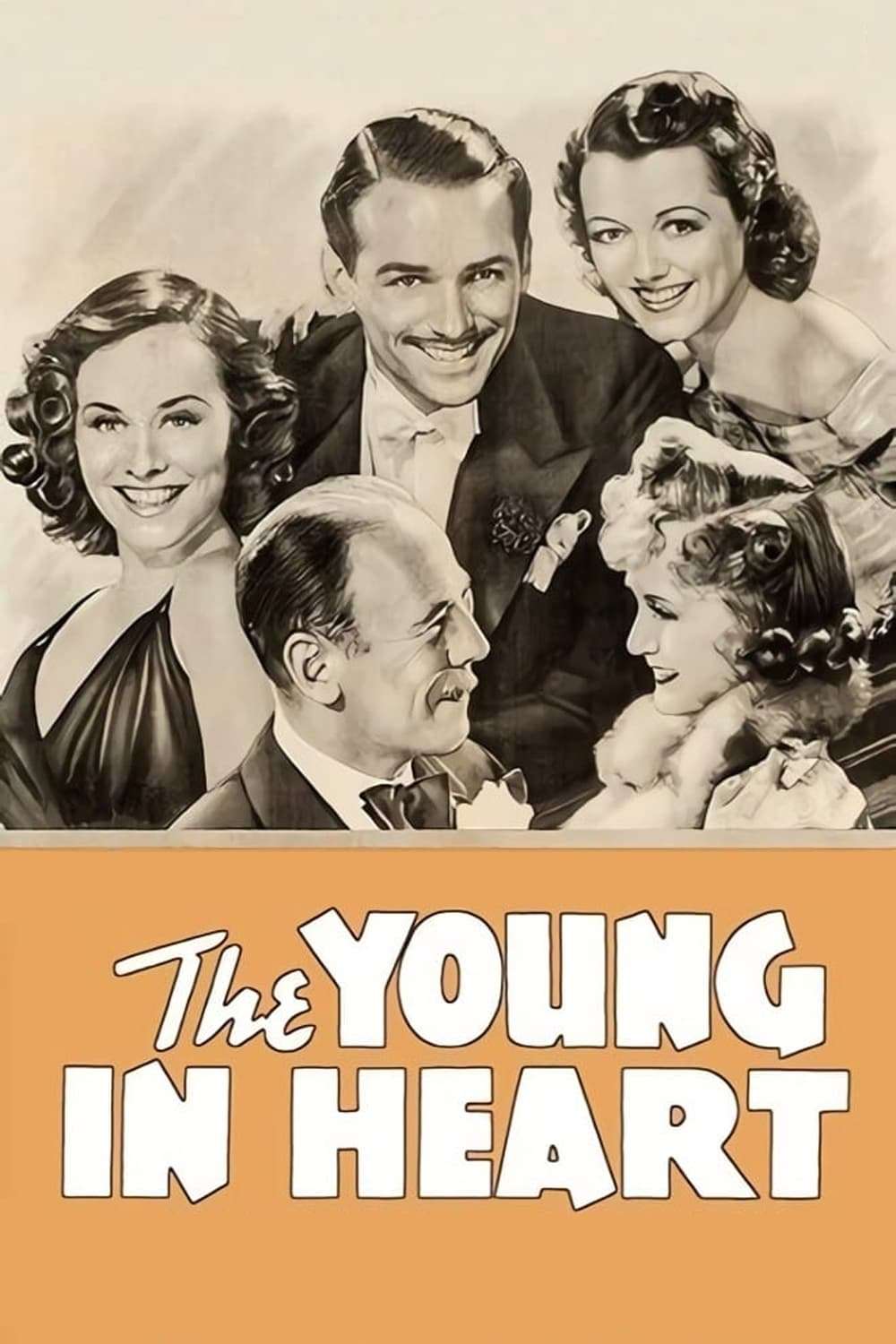
Winter of Douglas Fairbanks Jr.: The Young In Heart

This winter I am watching Douglas Fairbanks Jr. movies for fun and this week I watched The Young in Heart. It was such a refreshing change after the disaster I felt Gunga Din was last week.


This movie was full of hilarious moments, charming characters, sweet transformations, and hopeful overtones.

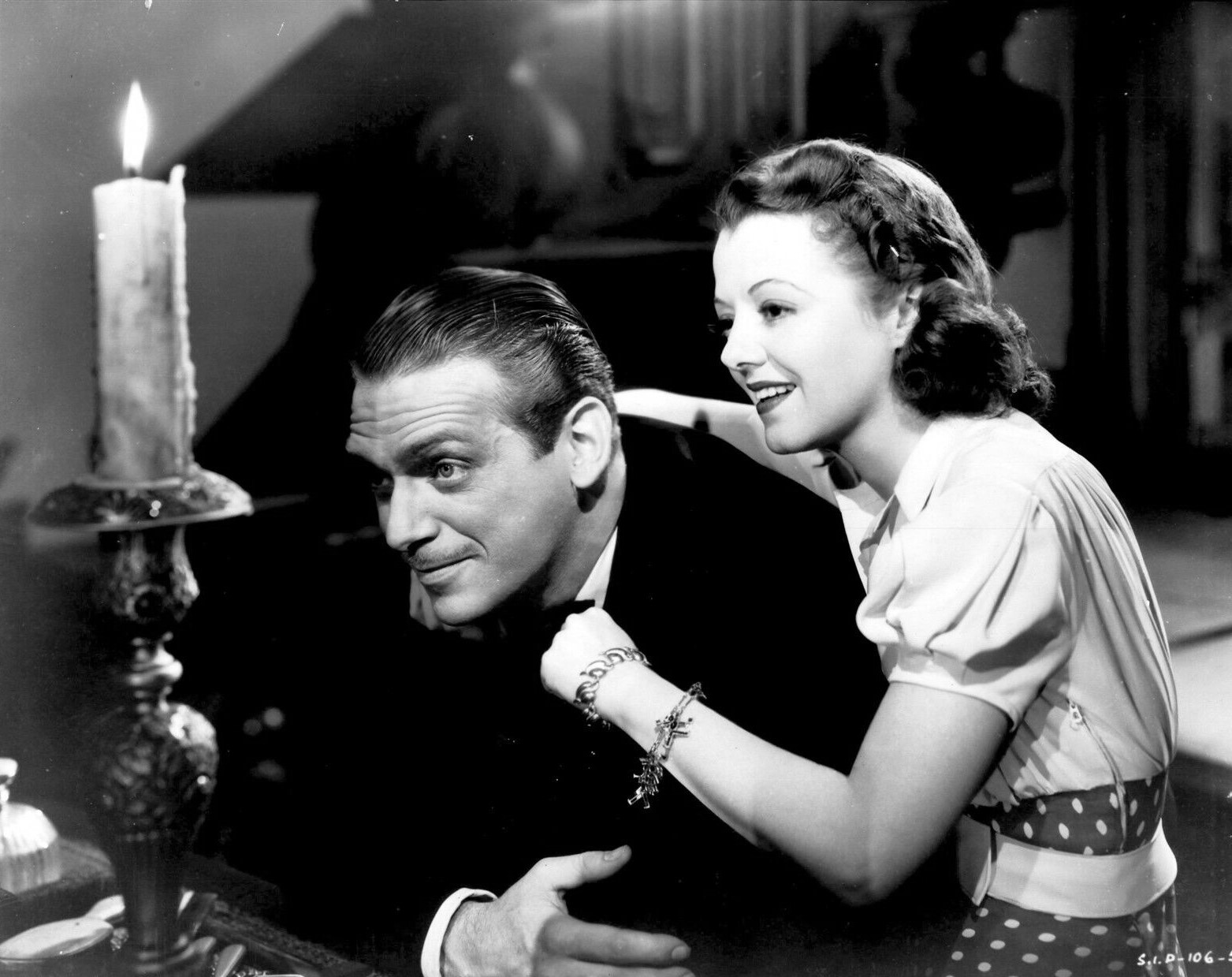
I absolutely loved Douglas in this one. He played a more prominent role that in Gunga Din and was simply … shall I sound completely cheesy? Yes, I shall. He was completely delightful.

At one point I texted my friend Erin that a drunk Douglas is adorable.

You’ll have to watch the movie to know what I mean. I found this one for free on YouTube.

The Carlton family, of which Douglas is a part of in this movie, are not people you would want to know in real life. They are swindlers and grifters. They mooch off and manipulate people to scrape by in life.

We open the movie in the French Riveria with Douglas’s character (Rick) ready to marry a young woman whose father is rich.

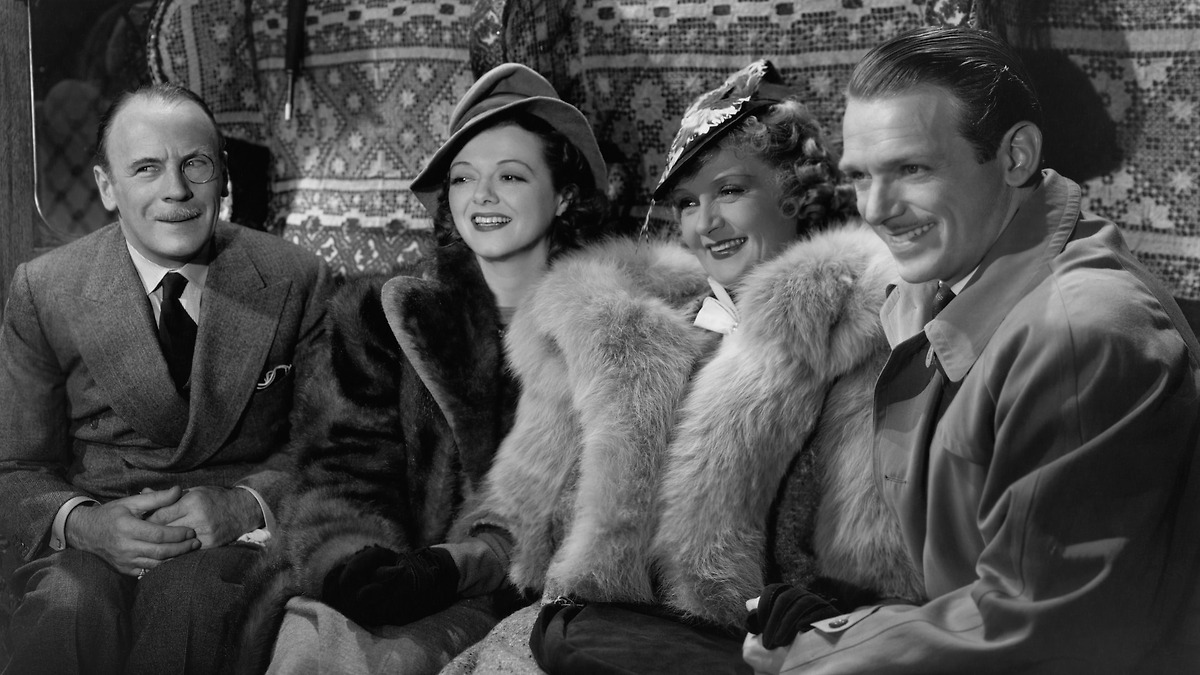
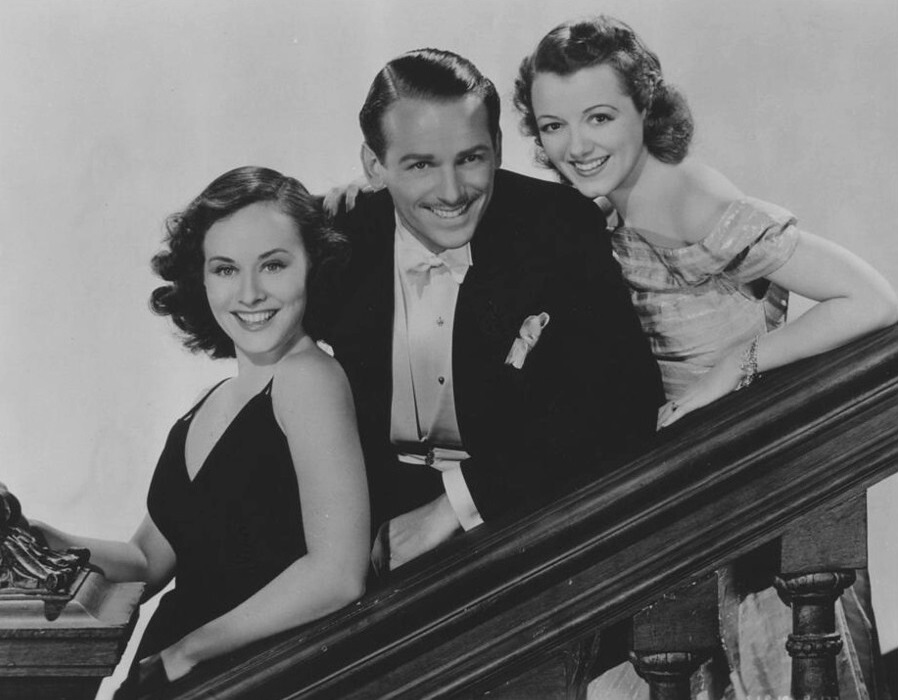
The rest of Rick’s family — father Col. Anthony “Sahib” Carleton (Roland Young), mother Marmey Carlton (Billie Burke), and daughter George-Anne (Janet Gaynor) — are thrilled with this plan because they know it will also set them all up for a rich life. George Anne might be even more thrilled because then she can marry a poor Scottish man who she’s fallen in love with, and the rest of her family will support her financially.

Everything falls apart, though, when the police find out about the family and reveal their conniving ways to the family of Rick’s future wife. The family is told to get out of France and end up on a train where they meet a ridiculously sweet woman (Minnie Dupree) who has only recently come into a great sum of money.

Ironically, her last name is Fortune. George-Anne sets out to swindle the woman out of paying for their lunch but the plan expands as the woman explains she lives alone in a big mansion left to her by a former suitor. She is saying how lovely it would be if all of them came to stay with her when there is a train derailment. Their car tips and at first Rick and George-Anne believe the old woman has died. She’s still breathing so the siblings carry her from the car and George-Anne covers her with her own coat.

We begin to wonder if the family is rotten through and through and are still playing things up as the woman later recovers and invites the family to come live with her.

They take her up on the offer and an odd friendship begins to form between them all. Soon George-Anne begins to feel guilty about what they are doing so she suggests to the family that if Miss Fortune believes they are a respectable family she will be more willing to let them live there and maybe even leave them money when she leaves. To play up this ruse she suggests the men get actual jobs and she and her mother act like caretakers and women who don’t swindle people out of money.

This is all very baffling to the family, which has always cheated and stolen for a living. When the men decide George-Anne’s plan might work and go to look for jobs, the scenes that follow are some of the most hilarious tongue-in-cheek moments I’ve seen in a movie.

Spinning around in the background of the family’s drama is the romance between George-Anne and Duncan Macrae (Richard Carlson), who she originally considered marrying when she thought he was rich. Duncan learned she was a con-artist along with everyone else and was shattered but still ends up chasing her down on the train back to London to tell her he still loves her.

She tells him to get lost, believing he’s much too good for her and . . . well, you’ll have to see where all that ends up.

Rick is also having his own romance with Leslie Saunders (Paulette Goddard), a secretary and the engineering business  he applies at for a job.

This is the second – or shall I say third – movie I’ve watched in recent months with Billie Burke and there is no mistaking that voice if  you have seen The Wizard of Oz.

Yes, she is Glenda the Good Witch.

The screenplay for this movie was written by Paul Osborn and adapted by Charles Bennett from the serialized novel, The Gay Banditti by I. A. R. Wylie. That title certainly would have had a different connotation in the modern day, eh?

Anyhow, the novel appeared in parts in The Saturday Evening Post from February 26 to March 26, 1938.

The movie released in November of the same year. They certainly worked fast back then.

I found it interesting when I read that Broadway actresses Maude Adams and Laurette Taylor screen-tested for the role of Miss Fortune and that the footage is the only audio-visual samples that existed of both of them.

The movie was produced by – can you guess? Because it feels like every movie I write about lately is produced by him.

Yes. David Selznick. The man who produced what is considered one of the biggest movie triumps in the world — Gone with the Wind.

This movie was one of many he produced leading up to Gone With The Wind. The Prisoner of Zenda, which I wrote about a couple of weeks ago, was another. Goddard was actually rumored to be being considered to play Scarlet O’Hara in Gone With The Wind, which later, of course, went to Vivien Leigh.

While I was watching the part of the movie where Mr. Carleton goes to apply for a job, I was fascinated by the fancy car they showed. It was spinning like a pig on a spit at the front of the building and it was a very modern looking car and a very modern looking set up altogether.

According to Ultimate Car Page and Wikipedia,

The six-passenger 2-door sedan Flying Wombat featured in that scene was actually the one-of-a-kind prototype Phantom Corsair. The Phantom Corsair concept car was built in 1938 and designed by Rust Heinz of the H. J. Heinz family and Maurice Schwartz of the Bohman & Schwartz coachbuilding company in Pasadena, California.”

I also found it interesting that this was Gaynor’s last movie before retiring while she was at the top of her career. She made one last movie in 1957 called Bernardine.

Like I said above, I loved this movie. It was just what I needed to watch this week with so much sadness going on in the world. There was a lot of humor from all the cast but Douglas really had me smiling throughout. Not only because he is my latest old Hollywood star crush (watch out Paul Newman!).

Have you seen this one? What did you think of it?

Up next for my Winter of Fairbanks Jr. is: Having Wonderful Time (February 6)

The rest of the movies I will be watching include:

Chase a Crooked Shadow (February 13)

Sinbad The Sailor (February 20)

The Rise of Catherine the Great (February 27)

The Sun Never Sets (March 6)

You can also find my impressions of previous movies in the series, as well as other classic movies here: https://lisahoweler.com/movie-reviews-impressions/

Thanks to Cat from Cat’s Wire watching along with me this week. She wrote about her impressions of the movie here: https://catswire.blogspot.com/2025/01/the-young-in-heart.html