I personally liked the peppermint bark, but not as much as plain peppermint.
The last couple of days we have been celebrating Little Miss as she turned 11 on Thursday. We didn’t mean to celebrate her for four days but that’s how it worked out because activities we wanted to do with her were spread out a bit.
On Thursday she wanted to have pancakes at a diner downtown so her brother and I took her down. She had chocolate chip pancakes and a fresh fruit cup. The owner sang happy birthday to her.
The diner was decorated very nicely for fall. This diner always does a very nice job at decorating, from what I understand, but I have only visited there twice. My dad and son have visited there more.
After breakfast, we hung out at home for a bit and then Little Miss and I headed to my parents’ for some pizza and to celebrate her birthday with them.
We played a board game called Aggravation and Little Miss won (with a little help from Grandma and me this time, but usually she wins outright on her own). What was funny was my dad was going to play but sat down in his room for a few minutes and drifted off to sleep. I decided I would play for him and for myself until he woke up, but in the end, he didn’t wake up until the game was almost over.
Dad usually wins at this game, and he almost won this time, even though he was asleep. He was three spots from winning when my mom sent him home again because she didn’t have any other moves she could make.
After we played board games, Little Miss had an animal club meeting on Zoom and then she went home and rode bikes with her brother and then …. Yes, there is more… they watched two Disney movies. She really wrung every last minute out of her birthday and crashed pretty hard that night.
The Husband had to work on her birthday but yesterday he took the day off and we all went out to dinner at a nice restaurant and then they all went in Walmart to pick out a new dog bed and a gifts for the dog because that is what Little Miss wanted to do for her birthday. She also picked out a gift for her friend who is coming for a sleepover today because that little girl’s birthday was this past Monday.
I stayed in the car due to a sore leg and read my book. It was very cozy.
Tomorrow we are headed to a reptile zoo called Reptileland because Little Miss loves reptiles.
We are already fairly tired from celebrating already. By tomorrow night The Husband and I will be virtually comatose. We will be this way because we are, as Little Miss has reminded us a few times this week — old.
She’s been watching YouTube Shorts making fun of life in the 1990s and early 2000s and asking us if that is what it was really like “back then.”
It is hard to accept those years are so long ago, so I just pretend they aren’t and ignore her. Ha!
To show how old I am and how I have failed at educating my children about the 1990s — I learned yesterday that neither of them knew who Whitney Houston was. They sort of rolled their eyes when I mentioned her. There was some meme that mentioned her and my almost 19-year-old son said, “I don’t even know who that is.”
I was horrified and pulled up YouTube to educate them. They did recognize “I Want to Dance With Somebody” and “I Will Always Love You,” but I also made them watch her doing the Star Spangled Banner and The Boy was blown away.
“Okay, yeah, she was amazing,” he told me.
I went to tell him how she threw her life away and it was so heartbreaking to me and started to cry. She shouldn’t have died so young. No matter her talent and her beauty, she never seemed to feel worthy enough to enjoy her life of happiness and health and that always broke my heart. Now all we have left of her is her music and memories and we should have had her for so much longer.
Thank God we still have her friend and my favorite female singer CeCe Winans.
I am going to have to show them videos of CeCe this week too.
Earlier in the week I saw a beautiful sunset and even though I’m having an issue with my sciatica and leg, I made it outside to take a photo. While I was there, two guys (probably about my age) riding bikes came by our house. We do have some bike or foot traffic on our street but it is a back street so we don’t as often as some streets.
I was startled a little by them but had to laugh when the one guy looked at the sunset, pumped his fist and yelled out “’Merica!”
The other guy, with a shirt or something wrapped around the top of his head, looked up at me smiling and said, “It’s beautiful, isn’t it?”
I said it was, and they kept going while smiling and left me smiling.
Later, Erin (Still Life, With Cracker Crumbs) told me she thought it was cool that we’d had that shared moment together. I hadn’t thought of it that way, and her comment made me think.
After weeks of anger, hatred, and just all out sadness in the world, it was nice to have that shared moment of joy while admiring a gorgeous sunset.
The photos do not do it justice.
How about you?
How was your week last week? Anything exciting coming up for this week?
This summer I have been watching movies that Angela Lansbury starred in or co-starred. This week I watched my last movie for this particular event.
Up next will be Comfy, Cozy Cinema for autumn with Erin from Still Life, With Cracker Crumbs. The list of movies we are watching is at the bottom of this post.
On Wednesday, I decided the movie I had picked all the way back at the beginning of this marathon wasn’t really something I was interested in at all. I had not looked the movie up or watched anything about it before I picked it and I should have. So, instead, I decided to cap off my Angela Lansbury movie watching marathon with a TV movie from the show that made her a household name — Murder, She Wrote.
When Murder, She Wrote was canceled in 1996, Angela Lansbury and loyal fans of the show were heartbroken. Lansbury was also angry and disappointed. One thing that soothed the shocking blow was when CBS agreed to make a series of TV movies featuring the character to appease Lansbury and fans.
Sadly, none of the movies took place in Cabot Cove with the original cast, but they at least featured Angela as Jessica.
The last of those movies, The Celtic Riddle, which I chose to watch for this week, aired in 2003.
I thought it was interesting that Angela’s son, Anthony Shaw, was the director and producer for all four of the films. This movie was also dedicated to the memory of Peter Shaw, Jessica’s husband, who died that same year. I thought it was also interesting that Amazon just put the movie up this past week. Perfect timing for me!
Here is a bit of description from online: Intrepid investigator Jessica Fletcher travels to Ireland to attend the reading of an old friend’s will, but a series of murders which follow have the police baffled. Jessica realizes that the will contains clues to the whereabouts of a secret treasure, as well as pointing to the real killer.
In the beginning of the movie, Jessica arrives at a mansion in a taxi and then rushes inside to the will reading. She sits down and receives several glares from the others in attendance. It’s clear she is not welcome but we don’t know yet why or even who the people are.
We slowly begin to learn about the family as a man gives his last will and testament on a video on a TV at the front of the room. The man has an Irish accent and it’s soon clear we — er, Jessica I mean — is now in Ireland.
There is a woman wearing sunglasses who looks sour, another sour-looking woman next to her, a free-spirited girl with a tortoise, a youngish man with spiked hair who is glaring, another young man, an older man who is drinking from a flask, a nervous-looking housekeeper, and another man who is sort of plain.
Each of those people will later either become suspects or victims after the man who passed away — Eamon Byrne — has his lawyer give each of them an envelope with a clue inside that will lead them to a treasure. His hope seems to be that they will work together to find out the meaning of the clues. That will be hard to do when each person seems to have a gripe against another person in the group.
The people in the room, it turns out, are his lawyer, his two daughters, his one daughter’s (Breeta’s) boyfriend, a man who wants to be Breeta’s boyfriend, a drunk man, and the housekeeper (Nora).
They will all have to join forces to find the treasure but before that can happen people in the group start dropping like flies. The saddest murder to me was the last one but I won’t spoil why.
Jessica isn’t very welcomed by the family and she especially isn’t welcome when Eamon leaves her Rose Cottage for once saving his life when he was visiting Cabot Cove. This is a small cottage on the property but not the main house, which his called, fittingly, Second Chance.
The problem is that Breeta (Sarah Jane-Potts) is living in Rose Cottage to be away from her money and power-hungry family members. While she’s at first hostile toward Jessica for being given the cottage, they eventually become friends as they try to figure out Breeta’s father’s riddle and who is killing people off.
An aside: The little cottage reminded me of the house my elderly friend Rev. Reynolds and his wife Maud lived in. Rev. Reynolds built his home to look just like an Irish cottage since he was from Northern Ireland. It was so cozy and warm. I loved visiting them there (except when he had another project for me) It brings tears to my eyes to think of it and the memories there. I’m so glad another couple is living there now and keeping the cozy feel of it alive. I need to go visit them soon since I met them through Rev. Reynolds.
Anyhow…back to the show:
The lead inspector in this movie, by the way, was quite amused by Jessica’s suspicions and deductions after the first murder. He looked like he was about to burst into laughter as she laid out her theory.
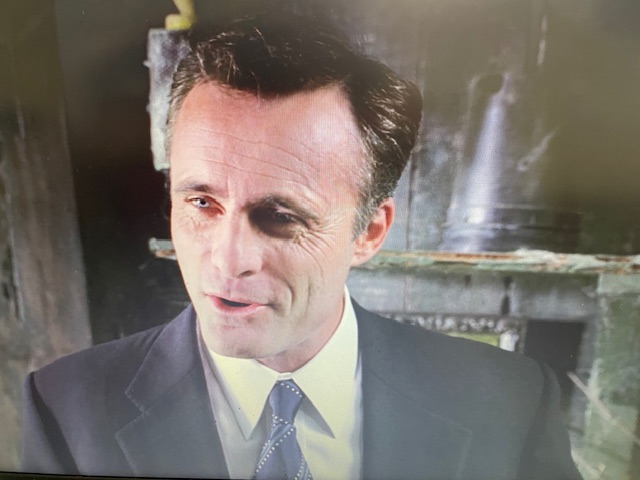
He seemed to think it was super cute that this old lady mystery writer thought the man might have been hit on the head. I really liked the actor — Timothy V. Murphy. I thought he played the part perfectly. I felt like he was saying in his mind, “Aw..she’s so cute. The mystery writer thinks she knows how to solve a real crime.”
(Excuse the reproduction here – it’s from my computer because there were not a lot of images online from the movie.)
Of course he had to eat his words when it turned out she was right and from then on, he treated her gently and seemed to want to take care of her and also believe every theory she had.
This video is also from my laptop so not the best reproduction:
The Irish accents in this were on point which made me look up the actors to see if they were actually Irish. With names like Cyril O’Reilly, Timothy Murphy, and Fionnula Flanagan how could they not have been Irish? I didn’t have time to research each actor but most of them did seem to actually be Irish and from Ireland.
I did recognize Fionnula Flanagan, but I’m not sure from what. I must have seen her in something or other, though. It will come to me eventually.
As in any Murder, She Wrote episode there were moments where I was like, “Well, that was a stupid move!” Like at one point Jessica runs out the door in the middle of her and Breeta and Breeta’s boyfriend, Paddy, (Cyril O’Reilly) brainstorming who the murderer is and she just says, “Wait here. I’m going to check something out.”
I literally said to the screen: “Jessica! Tell them where you are going! You can’t just run off places alone. That’s dangerous and you’re an old lady now!”
That’s the thing about these mystery shows —someone is always doing something dumb and the characters and us viewers just shrug it off like it is normal — well, after we yell at them of course. *wink*.
Also, Breeta’s boyfriend looked waaay too old for her. Like he could have been her dad old. When I looked up the actors, he was indeed 20 years older than her. Ick.
I feel bad in some ways, that Angela Lansbury, an Oscar-nominated actress, chose to be in these movies. They apparently didn’t have much of a budget because the rocks in the one scene were so clearly fake. Like plastic or Styrofoam fake. Eeek. Angela Lansbury loved Murder, She Wrote, though, and she liked the escape it gave people so I know that’s why she agreed to do them. I like watching the reruns for the same reason. She really gave us a gift by playing Jessica, even is she knew it wasn’t always “great TV” exactly.
Excuse the reproduction here – it’s from my computer because there were not a lot of images online from the movie.
Despite all those weird little quirks and fake rocks in the movie, the story itself and the acting wasn’t too bad.
I will say I guessed the killer about ten minutes into the show because of his expressions (smiling and five seconds later frowning menacingly) but the mystery may be harder for you. They did a good job of dropping red herrings throughout the show to distract me and others, though.
I don’t know that I’d watch this again and again or even … again once, but it was a fun little escape, much like the show. I think this autumn I might watch the other movies and see what I think of those too.
But for now, this is the end of my Summer of Angela.
If you’d like to read what I thought of the other movies I chose you can find the links to them here:
If you were to ask me which ones from this list were my favorites I’d have to say Gaslight and The Manchurian Candidate. The biggest surprise for me was The Pirates of Penzance and the films that made me forget Angela as Jessica Fletcher was The Manchurian Candidate followed by A Life at Stake and then The Picture of Dorian Gray.
Up next, Erin from Still Life, With Cracker Crumbs and I will be watching movies for Comfy, Cozy Cinema. Yes, we do know those two words are pretty much the same word and, no, we don’t care if that bothers anyone. *wink*
Here is the list of what we will be watching and the dates we will be writing about those movies:
You can also find impressions of movies we watched in the past Comfy, Cozy Cinemas HERE.
Have you ever seen this TV movie? What did you think of it?
Hello! Welcome to my blog. I am a blogger, homeschool mom, and I write cozy mysteries.
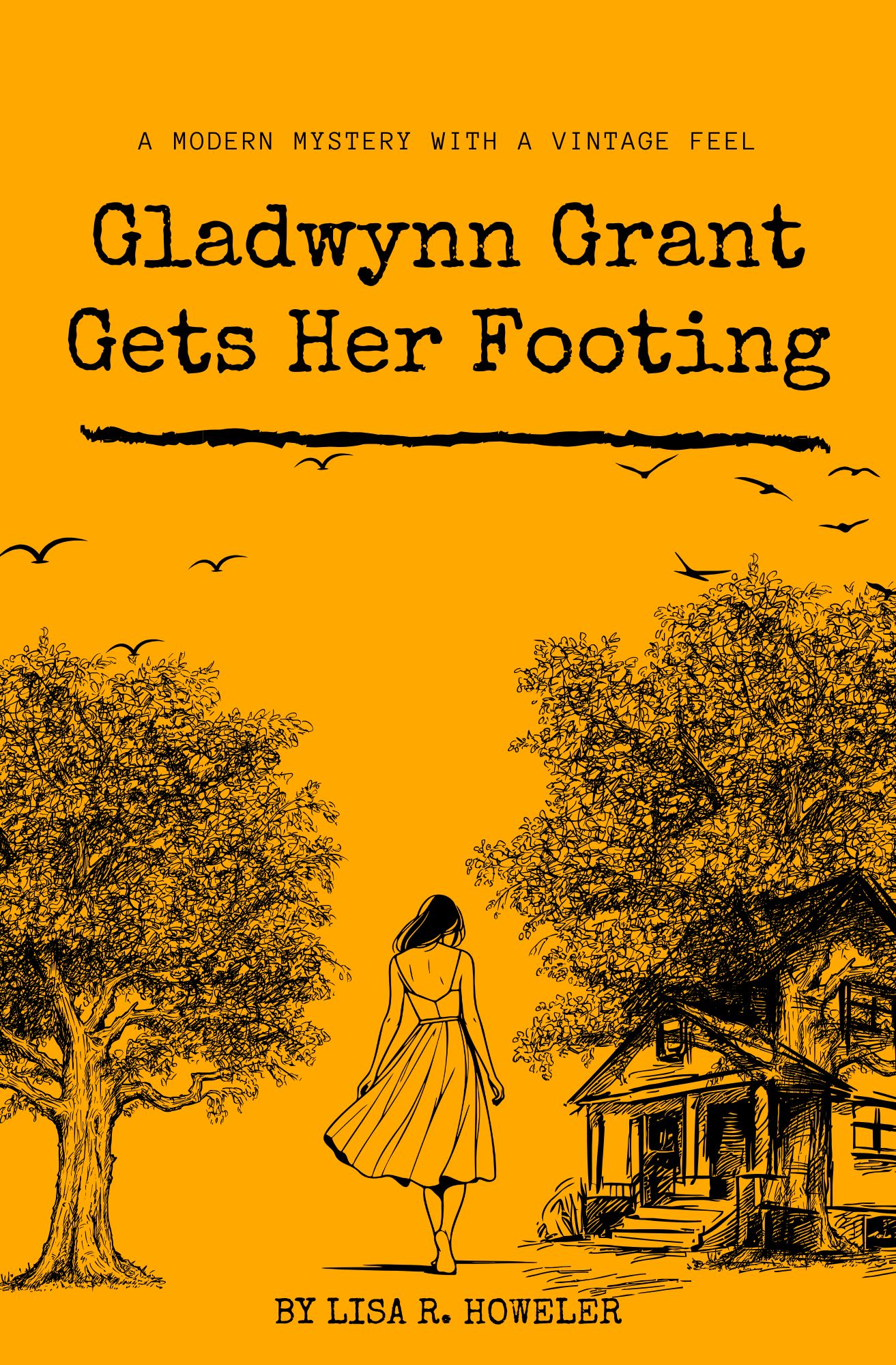
You can find my Gladwynn Grant Mystery series HERE.
Welcome to the A Good Book & A Cup of Tea (A Monthly Bookish Link Party) for book and reading posts or anything related to books and reading (even movies based on books!) Each link party will be open for a month.
This month I have an additional co-host: Erin from Still Life, With Cracker Crumbs! You can link up with either of us! Thank you for agreeing to co-host, Erin!
So, some guidelines.
1. For Bloggers, you can link unlimited posts related to books and reading. These can be posts about what you’re reading, book reviews, books you’ve added to your shelf, reading habits, what you’ve been reading, about trips to bookstore, etc. You get the drift.
2. Link to a specific blog post (URL of a specific post, not your website). Feel free to link up any older posts that may need some love and attention, too.
3. Please visit at least two other bloggers on this list and comment on their posts. Have fun! Interact! Get some book recommendations.
4. Readers can click the blue button below to visit blog posts.
5. If you add a link, you are giving me permission to share and link back to your post(s).
Here are some highlights from the links from last month:
This summer has brought a lot of changes, and I am not a person who adjusts well to changes.
Some of these changes I can’t write about because they aren’t my changes to talk about. One of them I can’t talk about because it hasn’t been made public in our area yet.
I can say that the changes and adjustments have involved employment situations, my aging parents’ health, and my own health.
Some of them are serious and scary, but I’m hopeful that my own health issues are something I can deal with by making even more adjustments to my diet and supplements.
One thing I do know with my health so far is that I do have some autoimmune issues going on. Doctors just aren’t sure which issues yet.
As for my parents, they are getting older and struggling with some issues, including whether they want to stay in their house or not. Their health and age is a big part of that decision.
As Summer draws to an end, though, I am looking forward to some cozy days this fall. I enjoy the weather when it is cooler. I function better physically and mentally on cooler days. I don’t function great on super cold days unless I am inside under a blanket with my warm rice packs.
I’m actually looking forward to those days. I get more writing done for my books in the fall and winter, which is probably why book four of the Gladwynn Grant Mysteries is going so slow.
In the Summer I feel like I have to be busy and do things because “it’s nice out”. This Summer whatever autoimmune condition I had got worse, though, so I couldn’t do that as much as I wanted. The symptoms that go so bad were mainly the exhaustion and achy legs, the dizziness and the anxiety. I learned I have to put more salt on things, drink electrolyte drinks, and simply eat more regular meals. I have this tendency to eat a protein but not add carbs or veggies to it. By the afternoon I feel like a wet noodle.
In the last couple of weeks I’ve cut out gluten, reduced sugar, and added more vegetables, though I’m still not at the level of veggies I should be at.
I’m reaching for grapes or apples instead of chocolate, but still have a square or two of the Aldi brand chocolate, which tastes so much better to me than most of our American brands. I’m taking four supplements — Iron (with B12, b6, and vitamin c), garlic, probiotics, and an elderberry gummy with elderberry, vitamin D, and vitamin C.
I’m noticing small changes. I still don’t have a ton of energy, but I do have a little bit more. My weak legs aren’t quite as weak on some days. My achy legs are a bit less achy. The anxiety was still there and intense at the beginning of this week but by mid-week it had actually faded some and on Thursday when I had a doctor appointment to discuss all his it had actually gone away. Praise the Lord!
Even without knowing what autoimmune issue I have (pretty sure it is thyroid related since I already have hypothyroidism), the diet change is helping immensely.
Shifting gears a little….
Have you ever watched those reunion videos with mothers hugging their sons or grandparents with their grandchildren after not seeing them for a long time? It’s always a surprise and everyone is crying and then I’m crying.
Sometimes I’m crying because it is so sweet and sometimes I am crying because I think about how wonderful it would be to hug my grandmothers or aunts again.
I think about how wonderful that feeling must be for those people and how wonderful it would be to feel the same. I know why the relatives of the soldiers who return are crying so hard. They thought that soldier might not return alive. They don’t say it out loud, but it is tucked there in the back of their mind and then when they are finally holding them in their arms it all breaks loose. They aren’t injured. They aren’t dead. They are here in their arms and all those worries and fears just rush out in that moment.
Shifting gears again…
Did I mention that the weather is cold right now?
Like, for instance, while I am working on this post at 11:30 in the morning it is 61 degrees out! In August!
I know that summer weather isn’t done with us yet, though. Pennsylvania has been known to drop temps in the 80s on us right up until October and sometimes into October so we are going to enjoy these nice cooler temps but not plan on them staying.
I can tell you, though, I am already gearing up for hot cocoa, apple cider, leaves crunching under my feet after they’ve fallen off the trees. The leaves are actually already falling but they are just brown and dead, which makes me nervous that we won’t have pretty fall foliage. We will just have to wait and see but even without it we can have all the fall feelings.
I’m definitely an autumn person. I love the chill in the air, the smell of the leaves, hayrides (or watching others go on them at least), reading books under a blanket on the front porch while colorful leaves fall around me.
I’m not a fan of pumpkin spice anything or Halloween, however. I don’t hate either but they aren’t what I look forward to most. However, I might actually try something with pumpkin spice this year just for fun.
This next week Little Miss and I will be doing school every day after Monday, so while we were easing into it before we are fully immersing ourselves this week.
We are studying Paleontology for science for the first half of the year. In English, we are reading The Good Master and will be tackling parts of speech and sentence diagramming.
In History, we are reading about the early days of our country, but later will begin moving into some more modern history through historical fiction. I’m not sure which book we are reading first but there is a list of them that I am looking forward to.
Math is being studied through CTC Math, an online program out of Australia, for now. Art is going to be fun this year since I purchased Little Miss a huge art set with all types of paint and canvases. I hope we will be able to take a few online classes.
It looks like we might not be joining a co-op this year since the co-op that was local might have dissolved, but I am still looking into that and 4-H classes.
How have you been doing? Have you done anything exciting to finish out your summer if you are in the northern hemisphere? If you are in the southern hemisphere, are you planning anything exciting for your spring?
Let me know in the comments. I love catching up with you all.
This week’s prompt was Non-bookish Freebie (The sky is the limit here. Make a top ten list on any topic of your choosing, bookish or not!)
So I decided to share ten movies I think all of you should watch at some point in your lives, but preferably right now. I have watched all of them and two of them are my favorites. Guess which two in the comments for fun!
The Third Man (1949)
Set in postwar Vienna, Austria, “The Third Man” stars Joseph Cotten as Holly Martins, a writer of pulp Westerns, who arrives penniless as a guest of his childhood chum Harry Lime (Orson Welles), only to find him dead. Martins develops a conspiracy theory after learning of a “third man” present at the time of Harry’s death, running into interference from British officer Maj. Calloway (Trevor Howard) and falling head-over-heels for Harry’s grief-stricken lover, Anna (Alida Valli).
A swank family of swindlers that includes father “Sahib,” (Roland Young), wife Marmy, son Richard (Douglas Fairbanks Jr.) and daughter George-Anne (Janet Gaynor), fall upon hard times in France and return home to London destitute. The family befriends a wealthy spinster, Miss Ellen Fortune, and after they rescue her when their train crashes, she invites them to stay with her. Initially planning to prey on Miss Ellen, the family is swayed by her goodness and begins to change in shocking ways.
3. The Quiet Man (1952)
Boxer Sean Thornton leaves America and returns to his native Ireland, hoping to buy his family’s homestead and live in peace. In doing so, he runs afoul of Will Danaher, who long coveted the property. Spitefully, Will objects when his fiery sister, Mary Kate, begins a romance with Sean, and refuses to hand over her dowry. Mary Kate refuses to consummate the marriage until Sean retrieves the money.
Near the end of the Korean War, a platoon of U.S. soldiers is captured by communists and brainwashed. Following the war, the platoon is returned home, and Sergeant Raymond Shaw (Laurence Harvey) is lauded as a hero by the rest of his platoon. However, the platoon commander, Captain Bennett Marco (Frank Sinatra), finds himself plagued by strange nightmares and, together with fellow soldier Allen Melvin (James Edwards), races to uncover a terrible plot.
5. The Thin Man (1934)
The story of a retired detective who, while spending much of his time managing his wife’s considerable fortune and consuming quantities of alcohol, is asked to follow the trail of a missing inventor. Although reluctant to interrupt his holiday in Manhattan, he is persuaded to investigate by his wife’s craving for adventure, and together they embark upon a case that leads to the disclosure of deception and murder.
Harried paleontologist David Huxley (Cary Grant) has to make a good impression on society matron Mrs. Random (May Robson), who is considering donating one million dollars to his museum. On the day before his wedding, Huxley meets Mrs. Random’s high-spirited young niece, Susan Vance (Katharine Hepburn), a madcap adventuress who immediately falls for the straitlaced scientist. The ever-growing chaos — including a missing dinosaur bone and a pet leopard — threatens to swallow him whole.
Charming scoundrel Johnnie Aysgarth (Cary Grant) woos wealthy but plain Lina McLaidlaw (Joan Fontaine), who runs away with him despite the warnings of her disapproving father (Cedric Hardwicke). After their marriage, Johnnie’s risky financial ventures cause Lina to suspect he’s becoming involved in unscrupulous dealings. When his dear friend and business partner, Beaky (Nigel Bruce), dies under suspicious circumstances on a business trip, she fears her husband might kill her for her inheritance.
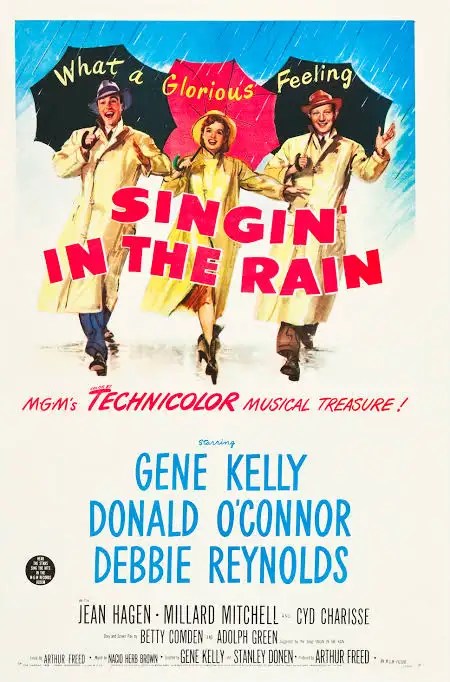
8. Singing in the Rain (1952)
When the transition is being made from silent films to `talkies’, everyone has trouble adapting. Don and Lina have been cast repeatedly as a romantic couple, but when their latest film is remade into a musical, only Don has the voice for the new singing part. After a lot of practise with a diction coach, Lina still sounds terrible, and Kathy, a bright young aspiring actress, is hired to record over her voice.
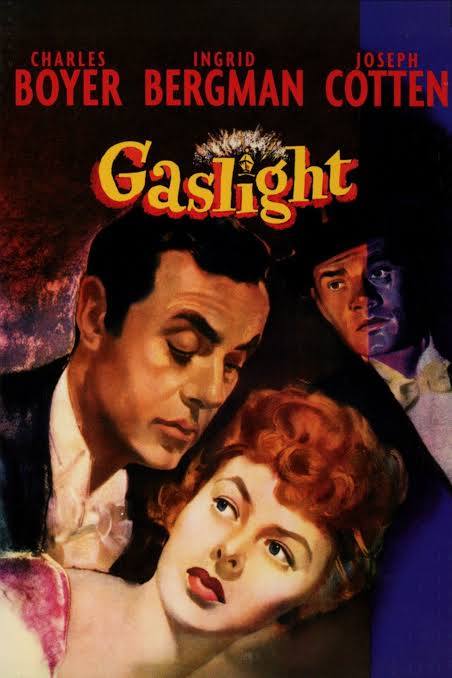
After the death of her famous opera-singing aunt, Paula (Ingrid Bergman) is sent to study in Italy to become a great opera singer as well. While there, she falls in love with the charming Gregory Anton (Charles Boyer). The two return to London, and Paula begins to notice strange goings-on: missing pictures, strange footsteps in the night and gaslights that dim without being touched. As she fights to retain her sanity, her new husband’s intentions come into question.
10. The Bachelor and the Bobby Soxer (1947)
Artist playboy Dickie Nugent (Cary Grant) appears before beautiful judge Margaret Turner (Myrna Loy) for fighting at a nightclub, and charms her into dismissing the charge. That same day, Dickie happens to lecture at a high school, where Margaret’s teenage sister, Susan (Shirley Temple), falls head-over-heels for him. Things get complicated when Susan sneaks away and is found in Dickie’s apartment, and downright zany when he is court ordered to date the teen as a way of easing her attraction.
Have you ever seen any of these movies? What did you think?
To find more movie suggestions or “reviews” click HERE.
Lisa R. Howeler is a blogger, homeschool mom, and writes cozy mysteries.
You can find her Gladwynn Grant Mystery series HERE.
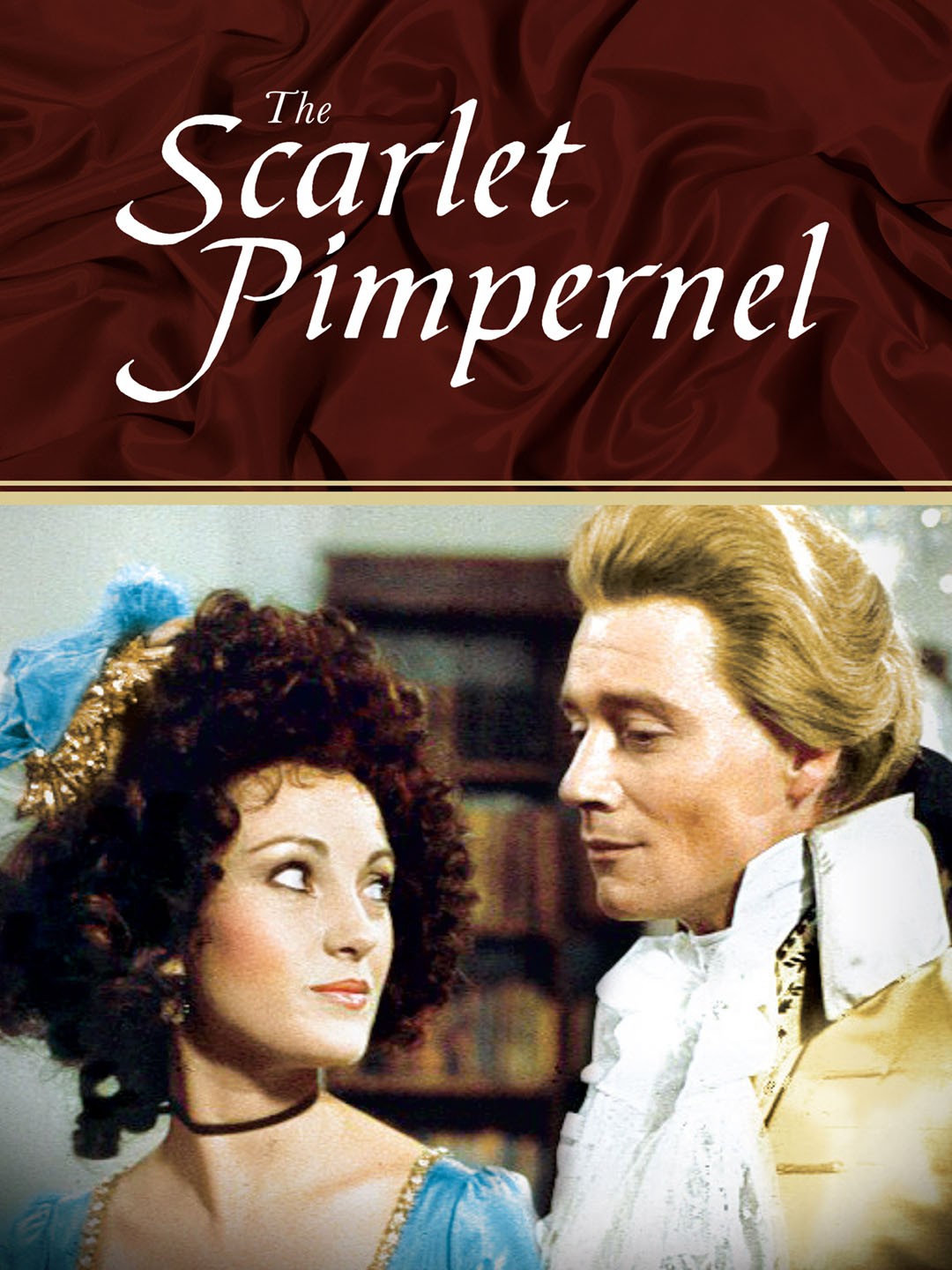
Last week I finished the book The Scarlet Pimpernel by Baroness Orczy.
I enjoyed the book so much that I looked forward to a couple chapters each night before bed just like I used to read books before there were all these devices and social media sites and everything else to distract me. Losing myself in the story completely forgetting about everything around me going on was exactly what I needed. Yes, the book could be a bit dramatic at times, but, come on, it was written in 1905!
I loved the hardcover copy I found too. It was printed about 30 years ago by Reader’s Digest but I love how it had a vintage feel to it.
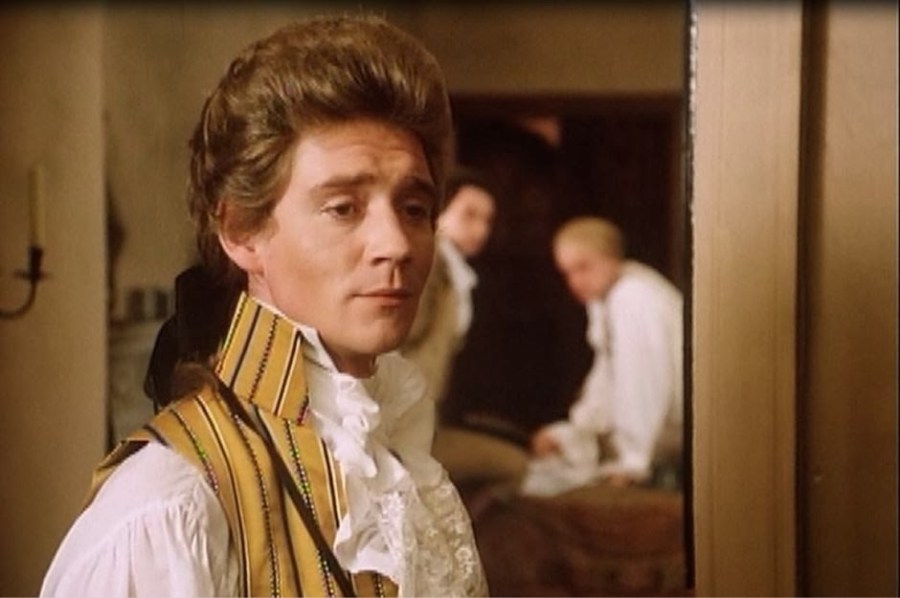
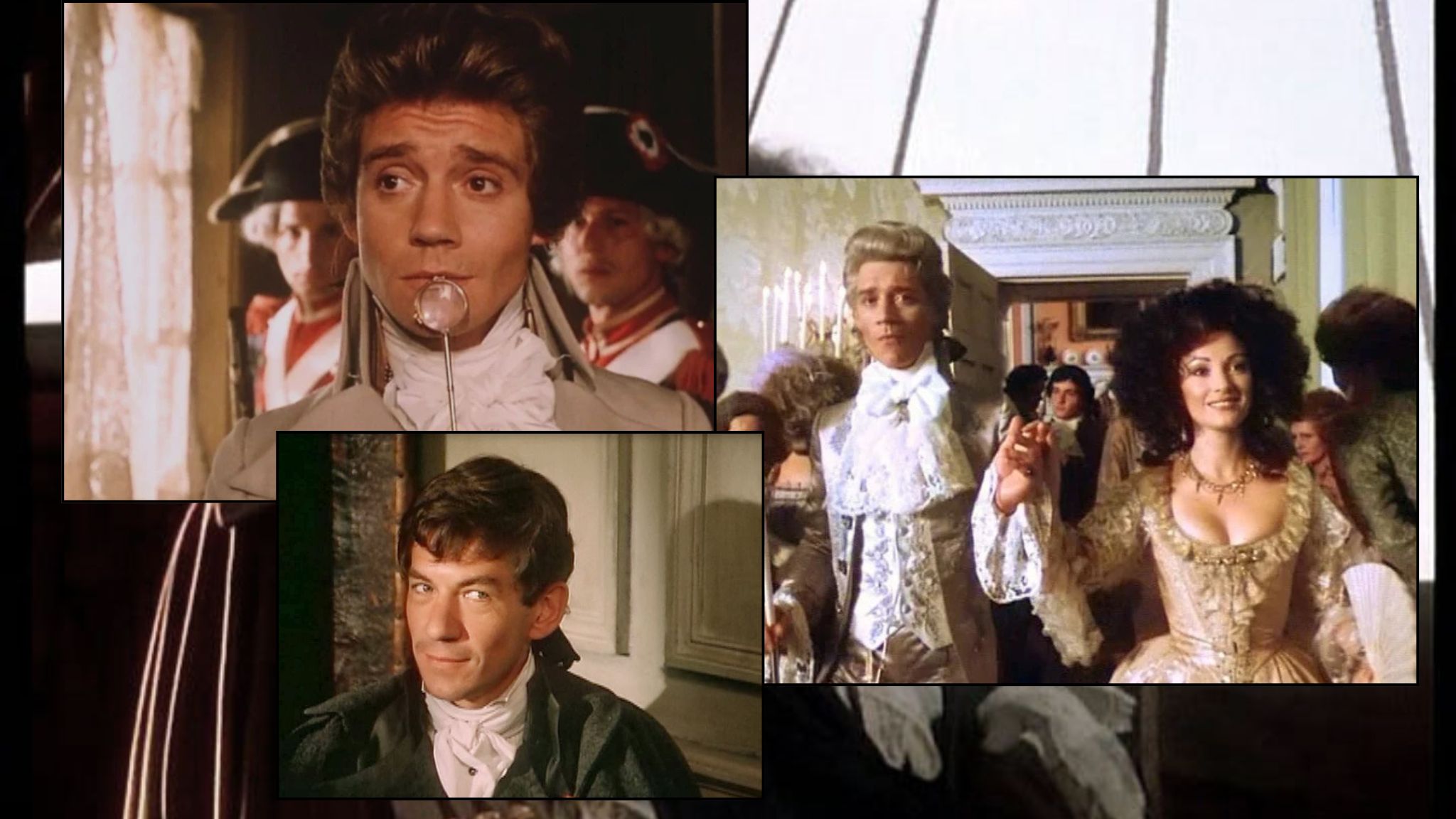
Even though I’ve seen the 1982 TV serial movie with Jane Seymour, Anthony Andrews, and Ian McKellen and therefore knew the story, I still wanted to read the book because I wanted to see if the book was different or the same.
The baroness (yes, she actually was one) wrote the play, The Scarlet Pimpernel, before she wrote the book. There are also several sequels to the book, and some don’t focus on the same characters.
First, a little description of the book and movie for those who might not be familiar with it.
Armed with only his wits and his cunning, one man recklessly defies the French revolutionaries and rescues scores of innocent men, women, and children from the deadly guillotine. His friends and foes know him only as the Scarlet Pimpernel. But the ruthless French agent Chauvelin is sworn to discover his identity and to hunt him down.
I first watched the movie version of The Scarlet Pimpernel years ago and then watched it again about a month ago. It was a CBS production with all British actors that ran three hours, maybe over a couple of nights, but I’m not sure.
After I watched the movie, I remembered I had found a hardcopy of the book by Baroness Orczy last year at a used book sale.
I couldn’t figure out how to write this without giving spoilers so … there will be spoilers. You have been warned.
First, let’s go to the book which begins with a French family being rescued from the guillotine. They’ve been brought to an inn in England by the band of men who work with The Scarlet Pimpernel. They’re exhausted but grateful. The mother in the family, referred to by the author as The Comtesse is also worried because her husband has remained in France and could be next to have his head cut off. While talking about who is who in England that she will be able to rub elbows with now that she is there, the name Lady Blakeny, formerly known as Marguerite St. Just comes up and the Comtesse balks. She doesn’t want to meet that woman because that woman turned in the Marquis de St. Cyr to the revolutionists and he and his entire family were guillotined.
The men in the inn are taken aback by this charge but don’t seem surprised the woman says it. What they are nervous about is that Lady Blakeny is currently on her way to the inn with her husband Sir Percy Blakeny, who is known as a lazy “fop”. He’s rich and simply putters his days away by hobnobbing with the Prince of Wales and other elites. He’s also terribly obnoxious. He met his wife in France and brought her back with him to live in England.
Unfortunately, the Comtesse sees Lady Blakeny and lets the woman know she wants nothing to do with her because of how she turned in the de St. Cyr family.
Lady Blakeny is confused by the charge and laughs it off.
It isn’t long before we learn that Marguerite did turn the family in but not on purpose. She dropped a hint that the Marquis was a traitor after the Marquis beat her brother Armand St. Just because he was in love with the Marquis’s daughter. She told her husband shortly after they were married and had returned to England what happened and it was after that he became very cold toward her and barely spoke to her in private, making their marriage more of a show than anything else.
The main plot of the book is a romantic one involving the misunderstandings between Marguerite and her husband.
Early on, Marguerite is approached by Citizen Chauvelin, an agent of the revolutionists in France, and he requests her to spy on those she associates with in England to see if she can find out who The Scarlet Pimpernel is.
The revolutionists want him stopped so he can no longer smuggle out aristocrats that the revolutionists want to murder.
Marguerite refuses but later in the book Chauvelin and his men find a letter that reveals her brother Armand is involved with The Scarlet Pimpernel and his men. In fact, Armand is on his way to France to set up arrangements to save another aristocrat family.
Chauvelin blackmails her, forcing her to help find out The Scarlet Pimpernel’s identity or he will have Armand killed.
She and Armand are very close because they lost their parents, and he helped to raise her so she reluctantly agrees to this plan.
Secretly Marguerite admires The Scarlet Pimpernel and his daring escapades to rescue aristocrats who are about to be killed. She harbors a ton of guilt for what happened to the Marquis and wants others to be rescued. Despite not wanting to stop The Scarlet Pimpernel, she agrees to spy in her husband’s circle of friends to see if she can learn anything about The Pimpernel’s identity, simply so Armand is not killed.
She does learn something at a future ball that the Prince of Wales is attending when she finds out that The Scarlet Pimpernel will be meeting with his men in the supper room at 1 a.m. that night. She tells Chauvelin this but when Chauvelin goes to wait all he finds is lazy, silly Sir Percy asleep on the couch.
Now in the book, Marguerite goes back to her home with Sir Percy and confronts him over how he’s been treating her. Sir Percy fights his emotions because he truly loves her despite what she did in France and believes it must have been a misunderstanding.
There is one big reason Sir Percy can’t show his love to her though. He can’t trust her and he needs to trust her because SPOILER ALERT!!!! Do not read further if you don’t want to know the truth ——
.
.
.
.
.
.
Sir Percy is actually The Scarlet Pimpernel!!! WHAT?! Now, when we watch the movie, we already know this and it makes the sexual tension even more heightened between Marguerite (Seymour) and Sir Percy (Andrews), especially after the scene where Chauvelin (McKellen) thinks he’s going to find The Pimpernel but instead only finds Sir Percy.
In the movie Marguerite runs to the dining room instead of home. The room is dark and she hears someone behind her, but she doesn’t turn around. She assumes it must be The Pimpernel so she tells him that Chauvelin is after him and trying to trap him.
This warning lets Sir Percy know that Marguerite truly supports the mission of The Scarlet Pimpernel and his band and his heart begins to melt. He steps forward, almost puts his hand on her shoulder, clearly wants to kiss her neck, but he steps back again. He doesn’t tell her who he is, preferring to protect her from any interrogation from Chauvelin.
In the book, Marguerite figures out who Sir Percy is after he leaves for France and the daughter of a man who could be killed says she heard that The Scarlet Pimpernel had left that very morning to rescue her father.
I feel like the TV movie actually fleshed some things out a bit better and added another layer which would have made the book even better.
In the movie, we see more of Lady and Sir Percy’s romance and then their marriage about halfway through. The coldness comes when Sir Percy finds out her involvement in the Marquis’s murder from someone else at their wedding reception. The person tells Sir Percy that her name was on the warrant for the Marquis’s arrest, but really we viewers know that it it is the villain Chauvelin who put her name on the arrest warrant.
Another difference between the book and the movie is that in the movie there is an underlying story of the Scarlet Pimpernel and his men trying to rescue Prince Louise XVII before he is killed in the tower, which is what happened in real life. Their goal is to smuggle the prince out of France to England and keep him there until he is older and can come back to France and take over the throne again.
There is no mention of the prince in the book and that would have been a fun layer to add.
In both the book and the movie, Marguerite sets off to rescue Percy when she learns who he is. She learns who he is the same way in the book and the movie — she runs into Percy’s office and notices there are pimpernels along the molding of the room and in other places, which helps her to put the pieces together. In the movie, though, Sir Percy leaves a note for her in his office/study, which indicates he hoped she’d figure it out. I didn’t get that in the book, but maybe I just missed that part.
Marguerite can’t bear the thought of Percy being captured and killed by Chauvelin. I liked that she went off to rescue him, which she sort of did in the movie but not in the same way.
In the book she was sneaking around and risking her life much more than she did in the movie.
I liked the show own in the movie, which didn’t happen in the book. In the book Sir Percy uses the many disguises he used to help smuggle aristocrats out to disguise himself and keep him from being discovered by Chauvelin. He disguises himself as a Jew, which seems to be a popular thing for the English to do back then. Jews were always looked down on as disgusting and dirty at that time so they were easily overlooked.
Disguised as a Jew, Percy tells Chauvelin he saw the man that might be the Scarlet Pimpernel and leads him on a wild goose chase so that his men have enough time to escae to Sir Percy’s ship.
Chauvelin believes The Scarlet Pimpernel is leaving on his ship so he leaves a bruised and beat up Marguerite behind with the bruised and beat up Jew. Of course, Sir Percy reveals himself to Marguerite once Chauvelin and his men are gone and they have a romantic reunion.
In the movie, Sir Percy is captured when Armand goes back to his lover to rescue her. In the book Armand didn’t have a lover to go back to. Chauvelin says he will only release Sir Percy if he gives the prince back, so Sir Percy leads him to a castle near the ocean. By then, though, the prince has been released.
Chauvelin is pissed off and sends Sir Percy out to be shot. Unfortunately for him, Sir Percy has managed to switch Chauvelin’s men for his own and that means Sir Percy returns to the castle unscathed, has a dual with Chauvelin and wins, and then they leave Chauvelin stranded at the castle before escaping on Sir Percy’s ship to England.
The ending to the movie was a lot more exciting to me with that added dual. I’m sure it was easier to have a dual than having to explain why the French thought Jews were so gross that they would have ignored Sir Percy who was dressed up as one. Not to mention the stereotypical description of Sir Percy’s makeup, etc. would have been — well…insensitive to say the least.
The bottom line is that while I loved the book, I also loved that the movie flushed the book out even more for me.
I do hope to read the other books in the series, even if I don’t get my satisfaction of the full story of Sir Percy and Lady Blakeny.
A bit of trivia/facts about the movie taken from various sources around the web, including articles, interviews, and IMdB:
This movie was produced by London Films and directed by Clive Donner.
Filming took place at various eighteenth century sites in England, including Blenheim Palace, Ragley Hall, Broughton Castle, and Milton Manor; also Lindisfarne.
The subplot with the Dauphin was taken from another one of Orczy’s novels, Eldorado, which was what the screenplay for the 1982 TV adaptation of The Scarlet Pimpernel was based on.
Timothy Carlton, who played the Count De Beaulieu, is the father of actor Benedict Cumberbatch and ironically, McKellen would appear with Benedict in the Hobbit trilogy – or at least was in the same movies that Benedict did the voice of Smaug for. Seems Timothy felt he’d better change that last name while Benedict knew his first and last name would be an attention getter, I guess.
Jane Seymour sometimes took her infant daughter with her to the set and had never seen the original movie from 1934 starring Leslie Howard, Merle Oberon, and Raymond Massey. (I hope to watch this in the fall or winter and compare it to the TV movie since many sources online say it is still considered the best adaptation. I saw part of it years ago, but do not remember finishing it.).
Julian Fellowes (Prince Regent) also played the Prince Regent (the future George IV) in Sharpe’s Regiment (1996)
London Films hoped that Andrews would one day star in a Scarlet Pimpernel series in the US, but this never occurred.
In his 2006 work Stage Combat Resource Materials: A Selected And Annotated Bibliography, author J. Michael Kirkland referred to the sword fight between Percy and Chauvelin as “nicely staged, if somewhat repetitious … but still entertaining.” Kirkland also observed that the weapons used were in fact German sabres, which were not used during the Napoleonic era. (source Wikipedia).
A little about the Baroness herself summarized from the back of the book:
She was born…get ready for this one! Baroness Emmuska Magdalena Rosalia Maria Josepha Barbara Orczy on Sept. 23 1865 in Tarna-Ors, Hungary. Her father was a notable composer and a nobleman and in 1868 the family was chased from Hungary during a peasant uprising, eventually settling in London when the Baroness was 15. Before that she attended schools in Paris and Brussels. She was once quoted as saying that London was her “spiritual birthplace.”
Emmuska learned to speak English quickly, fell in love with art and writing and eventually married illustrator Montaque Barstow. They had one son.
She and her husband wrote the play about Sir Percy Blakeny in 1903 based on a short story Emmuska had written. The play ran in London. Emmuska wrote the novelization and released it in 1905. The book was a huge success and she went on to write other stories about Sir Percy Blakeny and his friends, but she also wrote more plays, mystery fiction, and adventure romances.
Have you read the book and/or seen the movie of The Scarlet Pimpernel? If so, what did you think of them?
How about the Baroness’s other books – have you read any of them?
I found this movie for free on YouTube, but it is streaming on various other services, including Amazon, Sling TV, Roku, and Apple.
This summer I am watching Angela Lansbury movies for the Summer of Angela.
Up this week was A Life At Stake, another crime noir “B-movie” and another chance for Angela to show her evil side. Honestly, she’s been evil in a lot of the movies I watched with her throughout this summer, which cracks me up since a lot of people associate her with being sweet in kind from things like Murder She Wrote and Bedknobs and Broomsticks.
This movie was not the best I’ve ever seen plot-wise but the dialogue was actually very well written and the sexual tension was something I didn’t expect for a 1954 movie.
The movie is essentially about a man who is very paranoid and thinks everyone is out to get him. Or, as Google describes it: “After an out of work architect accepts a business proposition from a married woman, he soon begins to suspect her motives, and fear for his life.”
Edward Shaw, portrayed by Keith Andes had a business failing and now he’s been approached by a lawyer with the prospect of a new business.
Edward tells the lawyer he really doesn’t really want to get involved. He keeps a $1000 bill framed on his wall to remind him of his failures and encourage him to try again. I didn’t know there was such a thing as a $1,000 bill by the way.
Anyhow, I digress, the lawyer puts him in contact with Doris Hillman (Angela), wife of Gus Hillman (Douglass Dumbrille). Edward goes to Doris’s home and the housekeeper says he needs to call out before he goes to the pool because Doris has been known to swim in the nude. Edward quips back, “That’s okay. I’ve been known to swim in the nude too.”
Doris isn’t naked but she does tell Edward he should have called out. From their first meeting the flirting begins in earnest. Doris even covers herself with a towel but removes the top of her swim suit underneath it because she says it’s uncomfortable.
Eventually they get to business talks and Doris says Gus wants Edward to run the company, buying up property with money Gus will give him and for Doris to sell the property using her past real estate experience.
Edward is agreeable but feels suspicious about it all, especially when Doris says they will need to take an insurance policy out on him for half a mil. He doesn’t, however, seem to feel suspicious about Doris and later that night at home when he gets a call, he asks his land lady if it is a woman calling. It is clear he’s hopeful Doris will be calling soon and about a lot more than business.
Doris does call another day and asks him to meet her a hotel room. From there he’s laying it on heavy, flirting all over the place, but she lets him know she’s not interested. She’s only interested in business. Edward (sort of a horny jerk if you ask me) leaves but later that night Doris pulls up outside his apartment.
She says something flirty and then before we know it, he’s in the car practically shoving his tongue own her throat.
All is going well with their little liaisons and business dealings until Edward meets Doris’s sister, Madge (Claudia Barrett). Madge thinks he’s just lovely and starts hitting on him. She invites him to dinner in front of Doris and Gus and because he doesn’t want Gus to know about his affair with Doris, he agrees.
During dinner Madge drops a bombshell and says that Gus is Doris’s second husband because her first husband died a few years ago in an accident. What’s weird is that Doris and Gus were in a business with him too and when he died Gus and Doris got the insurance money since they’d taken out a policy on each of them for the business.
Edward is incensed. He had a feeling Doris and Gus were up to something and now he knows what it is. They really do want to kill him and get the money for the insurance policy they took out in his name.
He’s still thinking about this when Doris calls and says she wants to show him something.
He reluctantly agrees and she drives him up on a hill. She shows him some property she says will be great for development but when she goes to park, the brake slips and the car keeps rolling. She gets it in park and says she’s going to go get the property owner because he said he would show them around.
After she leaves, though, with Edward sitting in the passenger side, the car starts to roll toward a bank with a long drop and Edward just barely stops it.
That cinches it for him. Doris and Gus are in on this together and they are going to kill him.
I won’t give away the ending but most of the rest of the 70 minute movie (yes, it’s that short) will be Edward waffling back and forth between suspecting the couple and being in love with Doris while Madge is in love with Edward and knows all about the affair. Later she also knows about Edward’s suspicions.
This is a dark movie and it took the path I thought it might but I did think there might be more of a plot twist toward the end. Actually, there did seem to be a bit of a plot twist based on something said by a character right at the end but I wasn’t sure if I was reading too much into it or not.
I will share that I did read Cat’s review (found on her blog Cat’s Wire) before finishing this post up and I have to agree that I did not really connect with or like the main character.
I don’t think I would have cried much if he had been murdered (okay, so I gave a little away here…..he isn’t murdered). He was very unlikable and rude. He wanted to have his little fling with Doris but also keep her and her husband from killing him. He was sort of ruled by his privates to me and it severely affected his judgment. And though there were some good lines in this one – the writing overall was just not very strong.
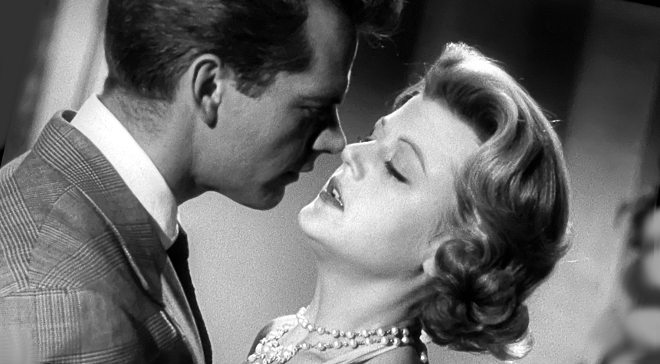
I’m sure this is just motion blur in the image, but all I can think of when I see Angela’s hand in this photo is that episode of Seinfeld when Jerry dates a woman with “man hands.”
I liked Angela’s performance and thought she succeeded once again in pulling off playing someone evil and making it hard for the viewer to figure out if she was really in love with Edward or not.
I listened to an interview with Angela last week when writing about The Picture of Dorian Gray, and she said she made a lot of not-so-great movies over the years. This may be one of them she was referring to.
The movie was directed by Paul Guilfoyle, for those who care about such things. The film was restored in 2021 and resulted in a few noir crime movie buffs blogging about it.
One of those, Michael Barrett from the site Pop Matters, wrote: “You’d have to know me to understand how unlikely it is that I’d never heard of this picture, but the commentary by scholar Jason A. Ney points out that this film is so obscure, it’s not listed in most noir references, despite the presence of a major star. So this might count as more of a rediscovery than restoration.”
About the acting and plot he writes, “The film runs only 76 minutes, but a bunch of stuff happens at a nice clip, sometimes too quickly for us to analyze how much adds up, with some elements more obvious than others. In a sense, everyone is clumsy and transparent, and that feels reasonably credible. The story mixes common sense (e.g., going to the cops and the insurance company) with devious cupidity and lust amongst tawdry, small-minded people.”
Glenn Erickson on Trailers from Hell wrote: “Filmed in 1954, producer Hank McCune’s A Life at Stake is notable for its fairly competent production and a decent if somewhat thrill-challenged screenplay — and the fact that it stars an actress one wouldn’t think would be associated with an 11-day cheapie thriller. The great Angela Lansbury is the odd star out on a list of creatives that reads like a call sheet for ambitious Hollywood underachievers, all thirsting for the right show to get their career in motion.”
I have to agree with Erickson when he writes: “The movie generates some tension but can’t quite convince us that Ed Shaw is as helpless as presented.”
I enjoyed Erickson’s entire review and background so if you would like to know even more about the film and Angela’s role in it, please check it out.
Some facts and trivia:
“The unusual convertible Doris Hillman (Dame Angela Lansbury) drove was a Kaiser Darrin. Only 435 production Darrins and six prototypes were built. Its entry doors slid on tracks into the front fender wells behind the front wheels, which was patented in 1946, had no side windows and a three-position Landau top. The car’s only criticism by enthusiasts was the front grill, which looked like it “wanted to give you a kiss.” (Source: imdb)
This was an independent feature produced by Hank McCune, who briefly starred in his own free-wheeling TV sitcom, The Hank McCune Show. (source: Pop Matters)
McCune created the story and hired people from his television series, including writer Russ Bender and supporting actor Frank Maxwell. (source: Pop Matters)
The director’s wife, Kathleen Mulqueen, plays Shaw’s mom-like secretary. (source: Pop Matters)
Directly from imbd.com: “In the first scene, Edward Shaw (Keith Andes) roams about his room in the boarding house wearing only form-fitting pajama bottoms and stripped to the waist, giving audiences ample chance to view his impressive musculature from every conceivable angle. In a comic twist, an attorney enters the room, and one of his first lines of dialogue to Edward is “Come now, you’re not the first man to lose his shirt!””
In order to please the Italian music unions, an agreed number of American films had to be re-scored by Italian composers for release in Italy. A bit of irony is that Les Baxter had his original music replaced by Costantino Ferri, Baxter himself would later join AIP and re-score over a dozen movies previously done by Italian composers. (Source: imbd)
When Edward Shaw (Keith Andes) gets into a taxi after leaving his office, in the background, the old Sunset Theatre is seen, which was located on Western Avenue just north of Sunset Boulevard; the double feature shown on the marquee is Da Vinci also Julius Caesar (with Marlon Brando) , which dates the shot as May 1954. The theatre no longer exists. The intersection has been redeveloped.
Left on my Summer of Angela list for August are:
August 22 – I’ve decided to substitute A Long Hot Summer for All Fall Down for a couple reasons — I’ve watched A Long Hot Summer before and it will allow me to admire Paul (Newman) again and I watched a preview for the film and this annoying kid kept calling the main character Barry-Barry and that just seemed super, super annoying. Plus, I’ve heard it is a dark film. I originally wanted to watch it because I’ve never seen a Warren Beatty film (don’t you dare ever remind me of Dick Tracy! Never! Ever! I would like to burn that memory out of my brain with the end of a cigarette! My brother and I walked out of that film and I have never attempted to watch it again and I still have PTSD!). I can always watch another Warren Beatty film instead.
August 29 – Something for Everyone
If you want to read about some of the other movies I watched, you can find them here:
“I made up my mind that I would pop back and do the strong, manly thing by lying low in my flat and telling Jeeves to inform everybody who called that I wasn’t at home.”
The Inimitable Jeeves was my first P.G. Wodehouse book and I enjoyed it so much I’m already reading another one in the Jeeves series.
This book was originally presented as a collection of short stories which appeared in The Strand magazine in the U.K. The stories were later compiled into a novel. The first collection of short stories was Carry On, Jeeves, which I am reading now.
A little background on this series of short stories/books first.
Bertie Wooster is a “English gentleman” who is considered one of the “idle rich.” He doesn’t have a job. He mainly lives off his rich aunt Agatha and, probably, a trust fund.
Jeeves is Bertie’s valet or male attendant, if you don’t know what valet means. I wasn’t totally sure of the meaning of the word “valet” myself when I first heard the term years ago.
Jeeves gets Bertie out of the many predicaments Bertie gets himself into by being too nice or too arrogant by thinking he can fix a situation. In this book Bertie gets himself in trouble in a variety of ways, including helping his old school chum Bingo who is in love with a new woman every other month.
He also has to try to dodge his Aunt Agatha who is always trying to marry him off because she feels he is simply too lazy.
“It is young men like you, Bertie, who make the person with the future of the race at heart despair,” she says at one point. “Cursed with too much money, you fritter away in idle selfishness a life which might have been made useful, helpful and profitable. You do nothing but waste your time on frivolous pleasures. You are simply an anti-social animal, a drone. Bertie, it is imperative that you marry!”
The tongue-in-cheek and sarcastic humor in this book was exactly what I needed right now. Honestly, it is a type of humor that I feel like I am going to need consistently from now on. Because the chapters are short stories all their own it makes it easy to read a chapter here or there, put it down for a bit, and then pick it back up and still know what is going on
I love how Jeeves not only always solves the problems that Bertie has but how he also gets away with lowkey (and sometimes not so lowkey) insulting Bertie throughout.
Speaking to a valet who was going to fill in for him when he was on vacation, Jeeves says of Bertie, “You will find Mr. Wooster an exceedingly pleasant and amiable young gentleman but not intelligent. By no means intelligent. Mentally he is negligible — quite negligible.”
Bertie is, of course, offended.
“I suppose, strictly speaking, I ought to have charged in and ticked the blighter off properly in no uncertain voice. But I doubt whether it’s humanly possible to tick Jeeves off. Personally, I didn’t even have a dash at it. I merely called for my hat and stick in a marked manner and legged it. But the memory rankled, if you know what I mean. We Woosters do not lightly forget. At least, we do somethings — appointments and people’s birthdays, and letters to post and all that, but not an absolute bally insult like the above. I brooded like the dickens.”
Insults or not, Jeeves is always there for Bertie, especially when he thinks Bertie is wearing the wrong outfit or the wrong piece of clothing for specific outfits.
“The cummerbund?” I said in a careless, debonair way, passing it off. “Oh, rather!”
“I should not advise it, sir, really I shouldn’t.”
“Why not?”
“The effect, sir, is loud in the extreme.”
I tackled the blighter squarely. I mean to say, nobody knows better than I do that Jeeves is a master mind and all that, but dash it, a fellow must call his soul his own. You can’t be a serf to your valet. Besides, I was feeling pretty low and the cummerbund was the only thing which could cheer me up.
“You know, the trouble with you, Jeeves,” I said. “is that you’re too — what’s the word I want? Too bally insular. You can’t realise that you aren’t in Piccadilly all the time. In a place like this a bit of colour and touch of the poetic is expected of you. Why, I’ve just seen a fellow downstairs in a morning suit of yellow velvet.”
“Nevertheless, sir —”
“Jeeves,” I said firmly, “my mind is made up. I am feeling a little low spirited and need cheering. Besides, what’s wrong with it? This cummerbund seems to me to be called for. I consider that it has a rather Spanish effect. A touch of the hidalgo. Sort of Vicente y Blasco What’s-his-name stuff. The jolly old hidalgo off to the bull fight.”
“Very good, sir,” said Jeeves coldly.
Oh gosh, I love their banter and how Bertie calls everyone “the blighter.” I now go around saying this to myself when thinking about certain people in my life.
I love Bertie’s struggle to be a proper English gentleman while also trying to have fun and rebel against the upper crust he is a part of. There is a lot of satirical commentary and digs on the rich of England in these stories.
I have been told there was a television show in the 1990s based on the stories, starring Hugh Laurie, but I’m not ready to watch it yet. I prefer to hold on to the versions of Bertie and Jeeves I have formed in my imagination for now.
As I mentioned earlier, I am currently reading Carry On, Jeeves and plan to read more of the stories and books in the series in the future.
According to the web site Fantastic Fiction, there are 15 books in the series:
My Man Jeeves (1919) The Inimitable Jeeves (1923) Carry on, Jeeves (1925) Very Good, Jeeves (1930) Thank You, Jeeves (1934) Right Ho, Jeeves (1934) The Code of the Woosters (1938) Joy in the Morning (1946) aka Jeeves in the Morning The Mating Season (1949) Ring for Jeeves (1953) aka The Return of Jeeves Jeeves and the Feudal Spirit (1954) Jeeves in the Offing (1960) aka How Right You Are, Jeeves Stiff Upper Lip, Jeeves (1963) Much Obliged, Jeeves (1971) aka Jeeves and the Tie That Binds Aunts Aren’t Gentlemen (1974) aka The Cat-Nappers
Have you ever read this book or any of the Jeeves books? How about any of Wodehouse’s other books?
Lisa R. Howeler is a blogger, homeschool mom, and writes cozy mysteries.
You can find her Gladwynn Grant Mystery series HERE.
I meant to add these highlights from the July A Good Book and A Cup of Tea link party when I posted the new link-up last week, but it slipped my mind, so I am sharing a separate post today. I’ll get better at this as the link-up goes on!