Erin from Still Life, With Cracker Crumbs and I have been watching movies that take place in Paris this spring.
Up this week was the movie Hugo.
I had vaguely heard of this one before, but really didn’t know what it was about until Erin suggested it. I don’t know how I didn’t know more about it since it was nominated for eleven Oscars, including best director and best picture, in 2012. It won five for things like cinematography and design. (Thanks to Cat from Cat’s Wire for letting me know I looked at the nomination list instead of the win list when I originally posted this. ooops! hahaha!)
This was a magical children’s movie with beautiful imagery and cinematography. It was much different than I expected based on the movie poster and trailer. I watched it before I read any descriptions. I often don’t read detailed descriptions of movies or books before I jump into them. It can make it either a pleasant or a disturbing surprise. Ha! This was a pleasant one.
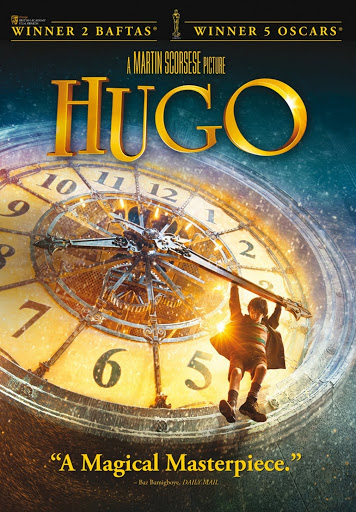
First, a quick Google description of the movie: Orphaned and alone except for an uncle, Hugo Cabret (Asa Butterfield) lives in the walls of a train station in 1930s Paris. Hugo’s job is to oil and maintain the station’s clocks, but to him, his more important task is to protect a broken automaton and notebook left to him by his late father (Jude Law). Accompanied by the goddaughter (Chloë Grace Moretz) of an embittered toy merchant (Ben Kingsley), Hugo embarks on a quest to solve the mystery of the automaton and find a place he can call home.
This is one of those ensemble casts with several well-known actors including Ben Kingsley, Sascha Baron Cohen, Christopher Lee, Jude Law, Helen McCroy, Asa Butterfield, Chloe Grace Moretz, Emily Mortimer, Michael Stuhlbarg, and Richard Griffiths.
Directed by Martin Scorsese, the movie was released in 2011 and was based on the 2007 book The Invention of Hugo Cabret by Brian Selznick. The book sounds like a visual marvel. It has 284 illustrations mixed in 500 pages of a story.

Selznick once described the book “not exactly a novel, not quite a picture book, not really a graphic novel, or a flip book or a movie, but a combination of all these things.”
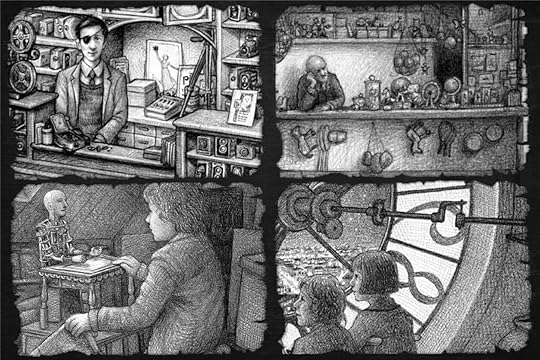
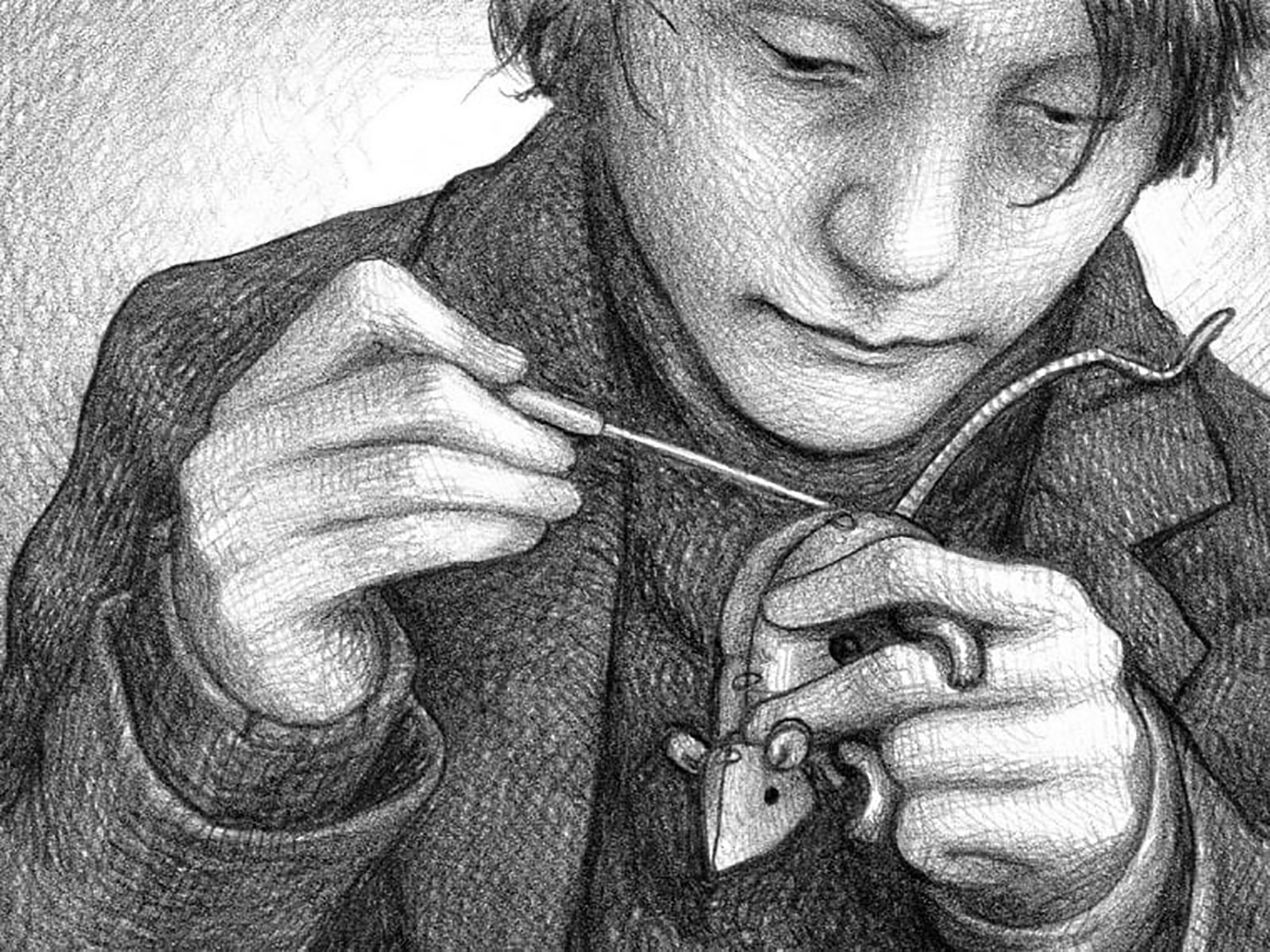

Though I’ve never seen the book, I did see some photos online (such as those pictured above) and Scorsese seems to have captured the magic of the illustrations almost exactly as they are in the book.
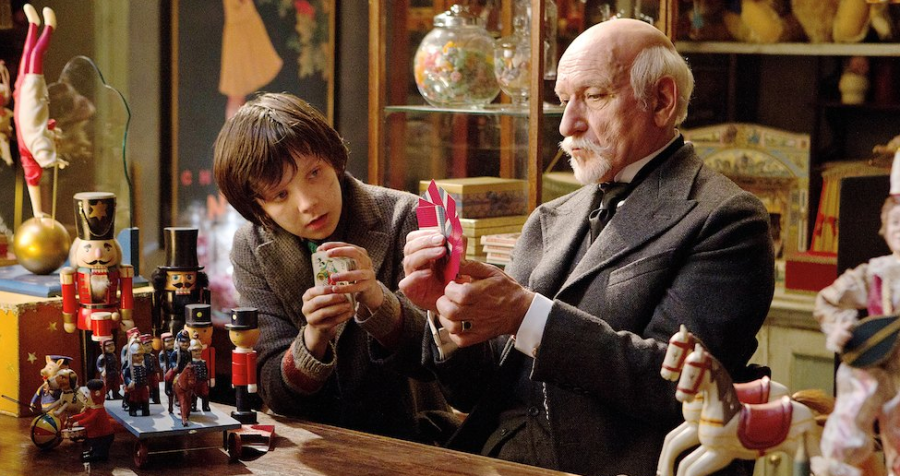
The cinematography, the costumes, and the sets in Hugo are gorgeous and magical. There are a variety of unique camera angles and filming techniques that give much of the film a soft and dreamlike feel. It is what some might call a visual smorgasbord.
Close-ups on Hugo’s (Asa Butterfield) big blue eyes are frequent, and draw the viewer into his world, making them wonder what he is thinking behind those eyes.

When the movie starts, Hugo is spying on the activity in the train station through the numbers in the clocks high up in the walls and a tower in the middle of the station.
We see that he seems to live in the walls behind these clocks, getting food from vendors he steals from throughout the day to survive.
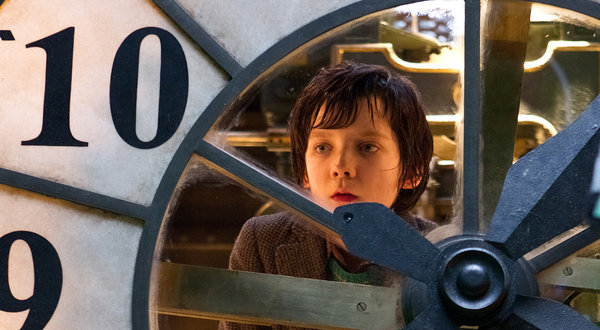
Eventually, we learn that he’s been living in these makeshift spaces since his father died and his alcoholic uncle took him in. It appears, though, that the uncle is no longer around, and it isn’t until later in the movie, we learn why. Hugo is continuing to keep the clocks running so a new clock repairer isn’t hired and he is discovered.
Towards the beginning of the film, we meet the toy maker who accuses Hugo of stealing from his booth. Hugo is indeed stealing small pieces of machinery from the toy maker’s booth. When the toymaker catches him, he makes Hugo empty his pockets and one of those pockets includes a small notebook with drawings inside about how to repair the automaton that his father found at the museum he was working at before he died.
The drawings trigger something in the toy maker, and he takes the notebook and refuses to give it back to Hugo. This leads to Hugo chasing the toy maker home to try to convince him to give the notebook back. The toy maker refuses but Hugo sees who he thinks is the toymaker’s granddaughter and begs her to ask her grandfather for the book back. He learns that the girl is not the man’s granddaughter, but his goddaughter who was taken in after her parents died.
We are never really told what actually happened to her parents. The girl’s name is Isabelle and she and Hugo become friends. She goes to work with her godfather and encourages Hugo to stand up to him to get his notebook back. Hugo does and the godfather tells him that if he will work for him in his shop then he will give him his notebook back.
Isabelle and Hugo become friends, and eventually Hugo will tell her about the automaton and how he needs a special key to turn it on.
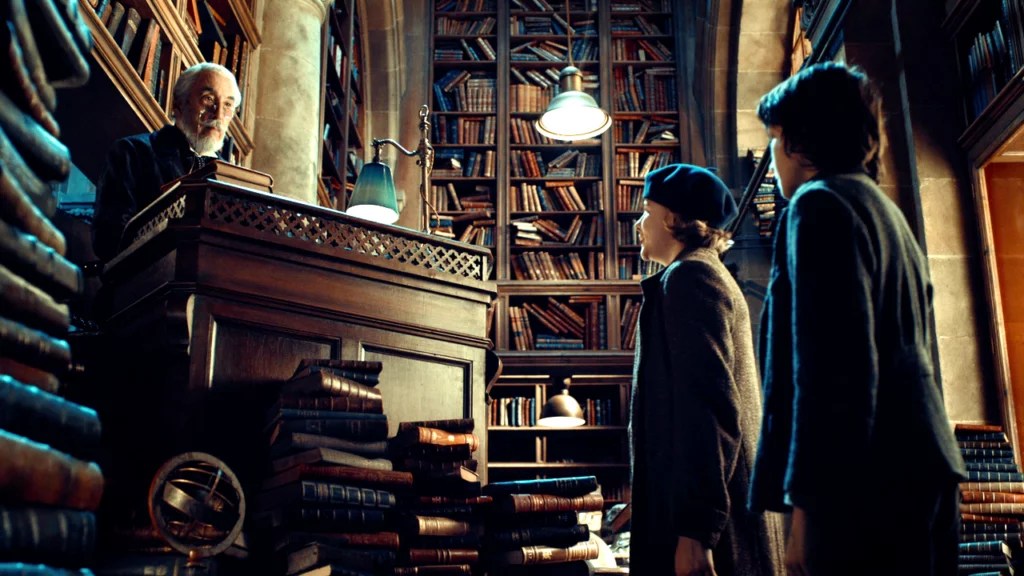
Isabelle takes him to the library, where the librarian gives her books. Hugo looks bewildered as she talks about books, which prompts Isabella to ask Hugo, “Don’t you like books?”
He assures her he definitely does.
Books, movies, and art in general are very important to Hugo because they were things he and his father did together before his father passed away. His father was a clockmaker and repairer and also worked at a museum and was well educated. We learn toward the beginning of the film through flashbacks that Hugo has not only lost his father, but years before he had also lost his mother.
When Hugo isn’t working at the toy shop, he is avoiding the station master (Baren Cohen) who enjoys capturing orphans he catches in the station and then sending them back to the orphanage. At first glance the station master seems like a very angry bitter person but we will later learn there is a lot more to him than we realize.
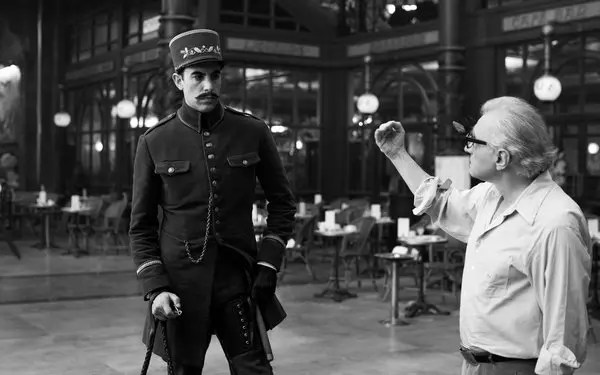
This movie could be a real downer if it weren’t for the quirky characters and the constant striving of the movie (and the viewer) to get to an ending we hope will be full of some happiness for Hugo. Had this been any other Scorsese film, we might not have gotten that (like Hugo might have ended up at the bottom of the river. Ya’ know what I’m sayin’?), but without offering too many spoilers I can assure you there is a happy ending.
I loved the scenes where Isabelle and Hugo were walking around the old library, by the way. Oh, to walk in a library with books piled up high like that.
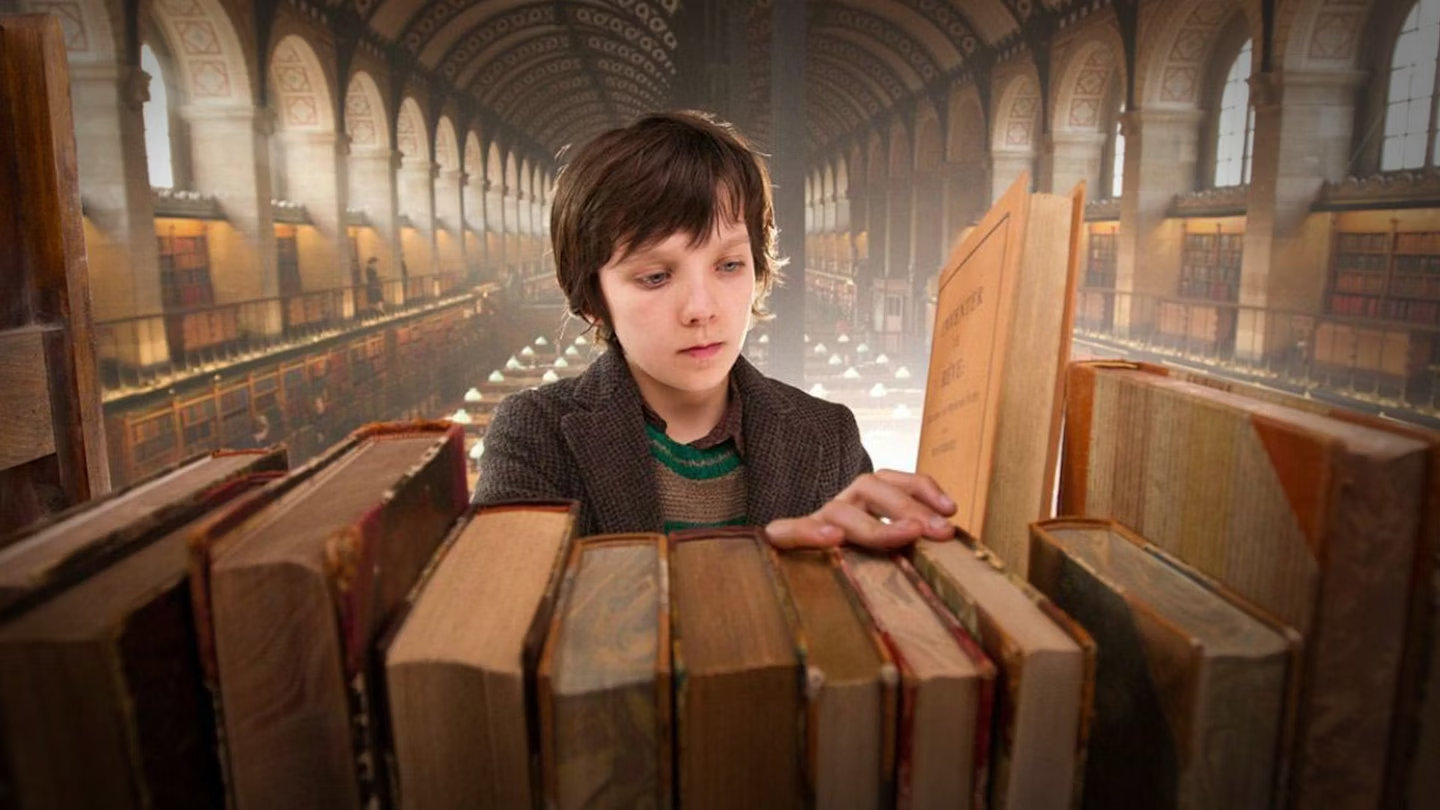
There are several little storylines going on throughout this movie. The big one we have is with Hugo, of course, as he tries to figure out how to get the automaton to work again and then find out what message it might be sending when it does work.
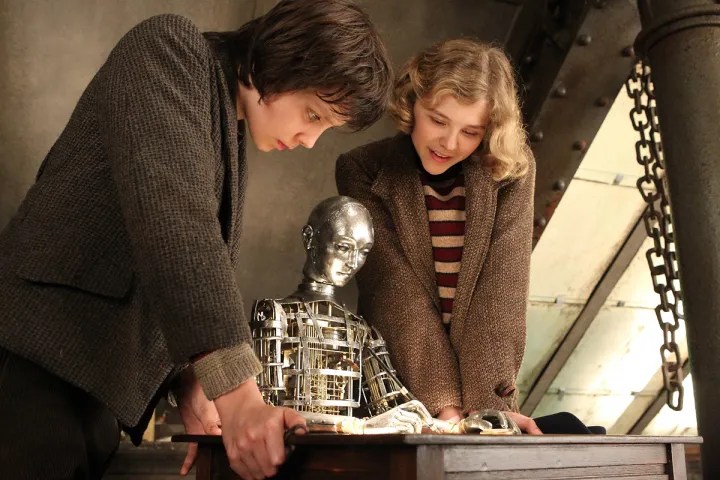
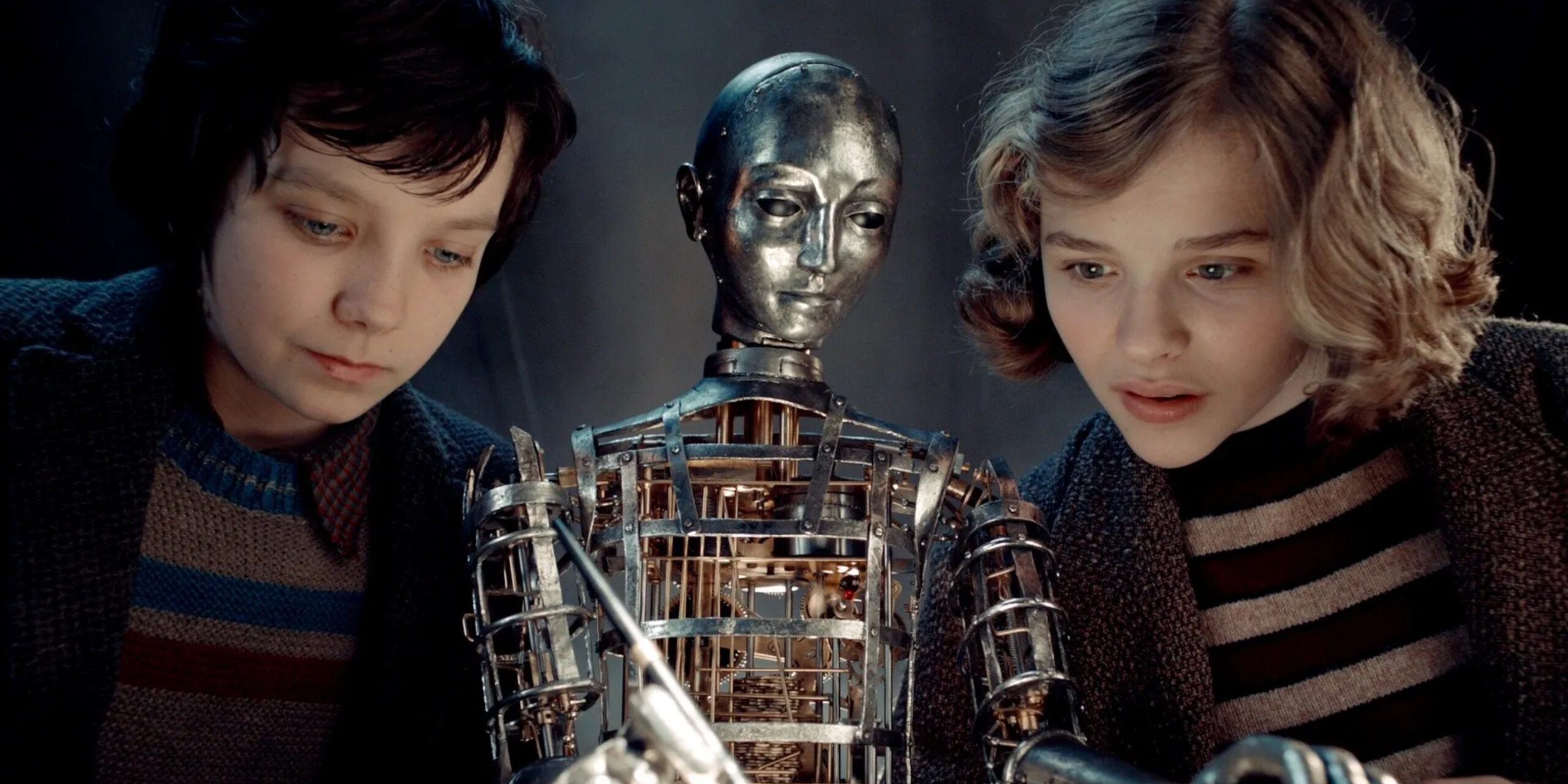
(He hopes it is a message from his father or from anyone to help him not feel so alone.)
Then we have the friendship between him and Isabelle and the antagonistic relationship Hugo has with her godfather. Then there is the godfather’s story and the story of the godmother. Then there are the characters who work inside the station and their relationships.
The story from the book and the movie does feature real life characters including the real life filmmaker named Georges Méliès. To avoid spoilers, I won’t share which character portrays Georges.
Have you ever seen this one? What did you think of it?
You can find Erin’s thoughts on it here.
You can learn more about Georges Melies on Cat’s blog here.
I can’t believe we are winding down with our Springtime in Paris feature!
Next week we are writing about The Intouchables, a French film with subtitles. It is rated-R for language and sexual discussions (but no on screen sex or violence…I previewed it *wink* Right now it is streaming for free if you have an Amazon Prime membership. You can also find it on DisneyPlus, Fandango, Plex, YouTubeTV, Google Play, AppleTV, and Hulu
The week after, on May 4, we are having a group watch of Charade with Audrey Hepburn and Cary Grant via Zoom, and then we will share our thoughts on the movie on our blogs May 8.
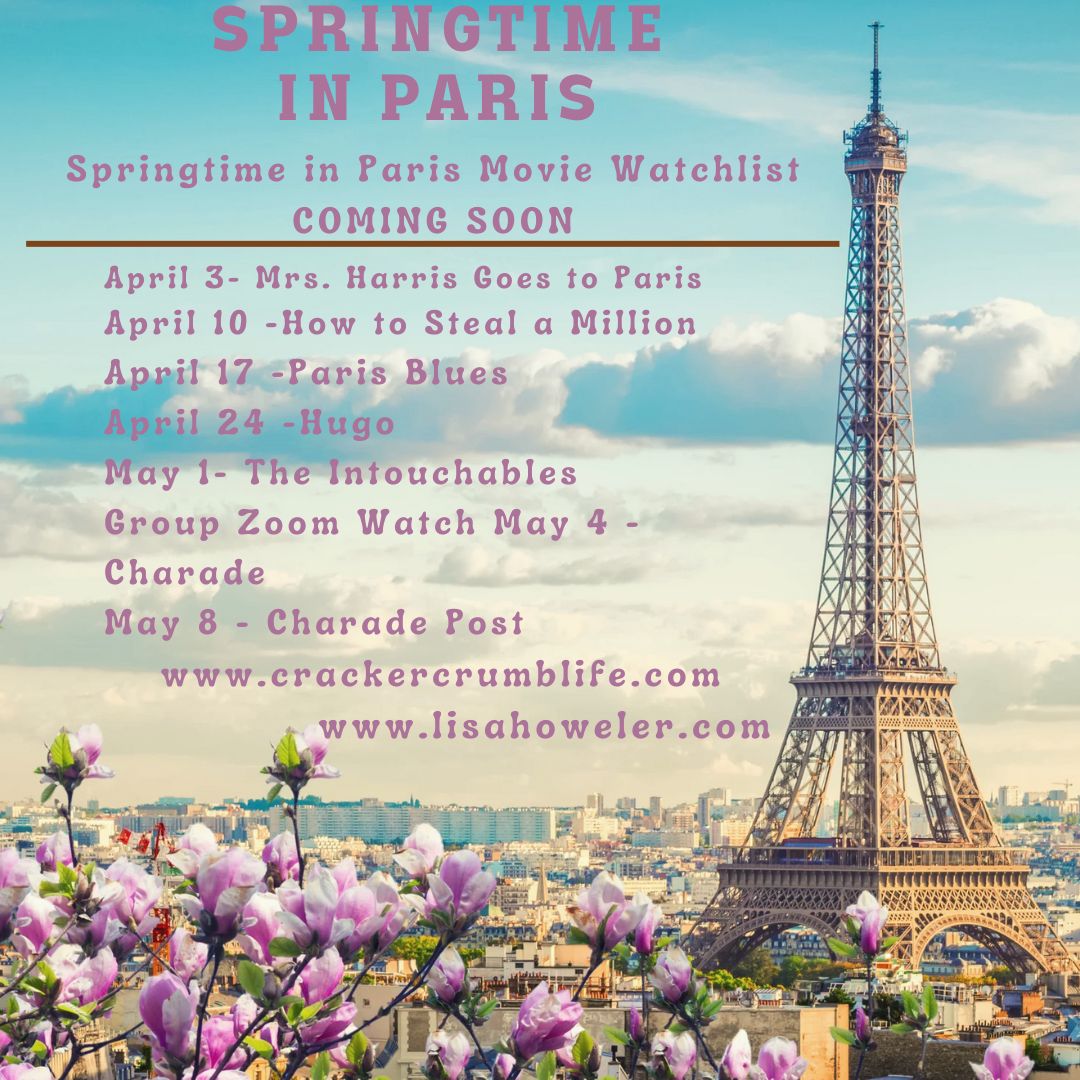
If you watch any of the movies on our list for this feature at any point before May 10th, you can find the link on this post below or at the link up in the menu at the top of the page. You don’t have to watch the movies the same weeks we do to write about them.
Other resources:
Wikipedia Georges Melies https://en.wikipedia.org/wiki/Georges_M%C3%A9li%C3%A8s
Wikipedia The Invention of Hugo Cabret book: https://en.wikipedia.org/wiki/The_Invention_of_Hugo_Cabret
More about Melies from Cat’s Wire: https://catswire.blogspot.com/2025/04/silent-movies-trip-to-moon.html
Discover more from Boondock Ramblings
Subscribe to get the latest posts sent to your email.

I watched Hugo this week and really liked it! It didn’t totally work for me, but I am also very glad that I watched it!
LikeLiked by 1 person
Oh good! Glad to hear you liked it. Yes, there were some parts that seemed off to me too but I liked it.
LikeLike
Pingback: Sunday Bookends: – Boondock Ramblings
I think the Hugo book is amazing, and I was quite taken with the movie when I first saw it some years back. I’ve checked it out from the library, but I’m not sure when I will get around to watching it—nature keeps calling right now, and I’m off today to volunteer at San Bernard National Wildlife Refuge.
LikeLiked by 1 person
I’m only skimming the reviews by you, Erin, and Cat. I really want to watch the movie. My gifted fourth graders (back when they were pulled out of class for additional teaching) used this book, but my other kids loved it just as much.
https://marshainthemiddle.com
LikeLiked by 1 person
The pictures in the book really look amazing and it looks. I really liked the sets, but unfortunately the movie itself just didn’t work for me.
By the way, Hugo got 11 nominations, but “only” 5 Oscars (which put it at the top together with “The Artist”), neither for best picture nor director. Those went to “The Artist” which also has to do with film history – the transition from silent film to talkies. I hope I’ll get the chance to watch that one sometime.
LikeLiked by 2 people
Oh! I looked at the nominations and not the wins! Oops! lol! Just like me. Thanks for letting me know!
LikeLike
Yeah, well, and I didn’t finish my first sentence, lol … “looks as if Scorsese did a fine job transferring them to the movie.”
I just knew about the Oscars because I had looked that up myself!
LikeLike
The Artist has been on my list to watch since it came out!
LikeLike
We were HUGE Selznick fans in our homeschool so we watched this movie shortly after finishing the book. We thought the movie did a great job bringing the book to life but I highly recommend getting your hands on a copy of the book too. The illustrations are incredible. As are the ones in his book Wonderstruck.
LikeLiked by 1 person