
This month Erin from Still Life, With Cracker Crumbs and I are watching movie adaptations of Jane Austen’s books for Jane Austen January. We are also offering a link-up for anyone who wants to discuss the movies, or anything else Jane-related, on their blogs.

Last week we watched Sense and Sensibility. The week before I watched Persuasion.
This week the movie was the 2005 version of Pride and Prejudice.
First a little bit about the story of Pride and Prejudice for those who might not know what it is about. The story follows Elizabeth Bennett and her three sisters – one older and two younger. Her older sister is beautiful and sought after by men but Lizzie is a bit mouthy and supposedly plainer, though I can’t tell in the movies since both girls are always beautiful to me.

During the book and movie, Elizabeth learns about the natural consequences of judging people without knowing the full story. Her father is the owner of Longbourn estate, but his property can only be passed to a male heir. Since his wife also lacks an inheritance, his family will become poor when he dies. Therefore it would be necessary for one of the daughters to marry someone wealthy so the entire family can be supported.
Mr. Bennett’s wife is obsessed with finding a rich heir. This obsession makes her, and two of her five daughters, very overbearing and lacking in social skills. Their overbearing behavior gets them into trouble often and one of them will get into a lot of trouble later in the movie.
With the idea that a wealthy marriage is needed, there is a lot of excitement when two wealthy bachelors enter the scene – Fitzwilliam Darcy and Charles Bingley.
I will admit that Erin had to practically drag me kicking and screaming to this particular movie adaptation after we agreed that the 1995 BBC mini-series, while superior in many ways, was simply too long to watch for our blog posts. It’s almost six hours all together.
In my mind, Colin Firth is the embodiment of Fitzwilliam Darcy and I struggle to see anyone other than him in this role so I really didn’t want to watch it for this buddy watch at first. I was like a pouty child, folding my arms over my chest and saying, “But I don’t want to. You can’t make me.”
In the end, she didn’t make me. I agreed to it.

I will say that after watching this 2005 version for the second time, I’ve decided Matthew Macfadyen does an okay job as Mr. Darcy. He often reminds me of a pouty emo teenager from the 1990s instead of Mr. Darcy, but he grew on me as the movie went on.
I am not a huge Kiera Knightly fan but she also grew on me as Lizzie Bennett and while I found her rude and snotty at times, she had a lot more life in her than Jennifer Ehl did in the 1995 version. What I lied about Ehl, though, is her subtle eyebrow raises or expression that showed her feelings more than anything she could have said.
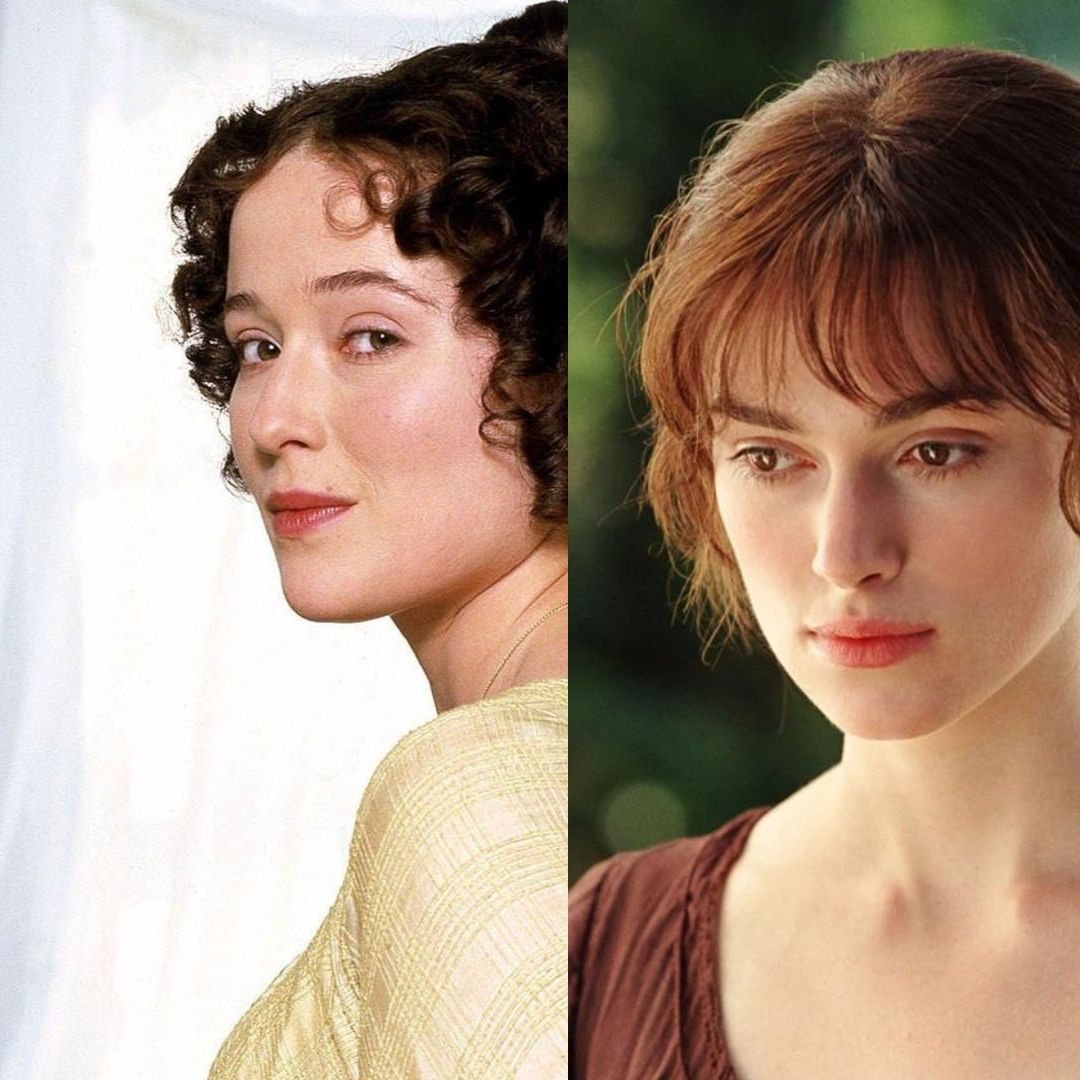
After watching the 2005 version again (I first saw it a few years ago), I’ve decided I don’t hate it as much as I thought I did. There are parts of it I might actually like a bit better than the 1995 mini-series.
For one, I find the actress who plays Jane in this version (Rosamund Pike) a bit prettier than the one in the 1995 version.
No matter which version I watch, though, I have to say that I don’t always like Elizabeth “Lizzie” Bennet. I know some see her character as being independent and bold and standing up in the face of oppressive patriarchy but I find her a bit rude quite honestly. Like a commenter said on my Instagram this week – I am actually shocked that Mr. Darcy speaks to her at all with how haughty she is.
That doesn’t mean I don’t like her at all, though, because I realize that the story follows her social development and her changes as a person. I do like that she stands up for herself and that she isn’t afraid to speak her mind.
I also like that she progresses from a bit of a stuck-up young woman with very high standards to a woman who learns from her mistakes of judging too quickly and believing the stories of people who she barely knows.
One thing I liked about the 2005 version is that it seemed livelier when the time for mutual affection shall we say. In this movie, we actually saw it, unlike the 1995 version where Lizzie and Mr. Darcy were very, very reserved when they finally shared their real feelings. I know that reservations are the theme of the time these books took place, but there was a bit more exuberance at the end of the movie from 2005 than in the one from 1995 without making it crude or out of line.
Included in this story are the characters Caroline and Charles Bingley, rich siblings, who come for a visit to the Bennet’s area and cause quite a stir in the little village because they are – uh – I guess because they are rich. I have no idea why people are so thrilled with them otherwise. The people of the village are also thrilled with Mr. Darcy because he is even richer but he looks at all of them with indifference and possible arrogance.

It’s so weird to see Kelly Reilly in the role of Caroline Bingley because I’m now more familiar with her as Beth in Yellowstone. I had to look at her more than once while rewatching this because I couldn’t place her at first.


She has the same smug look in both shows because both characters are smug and arrogant.
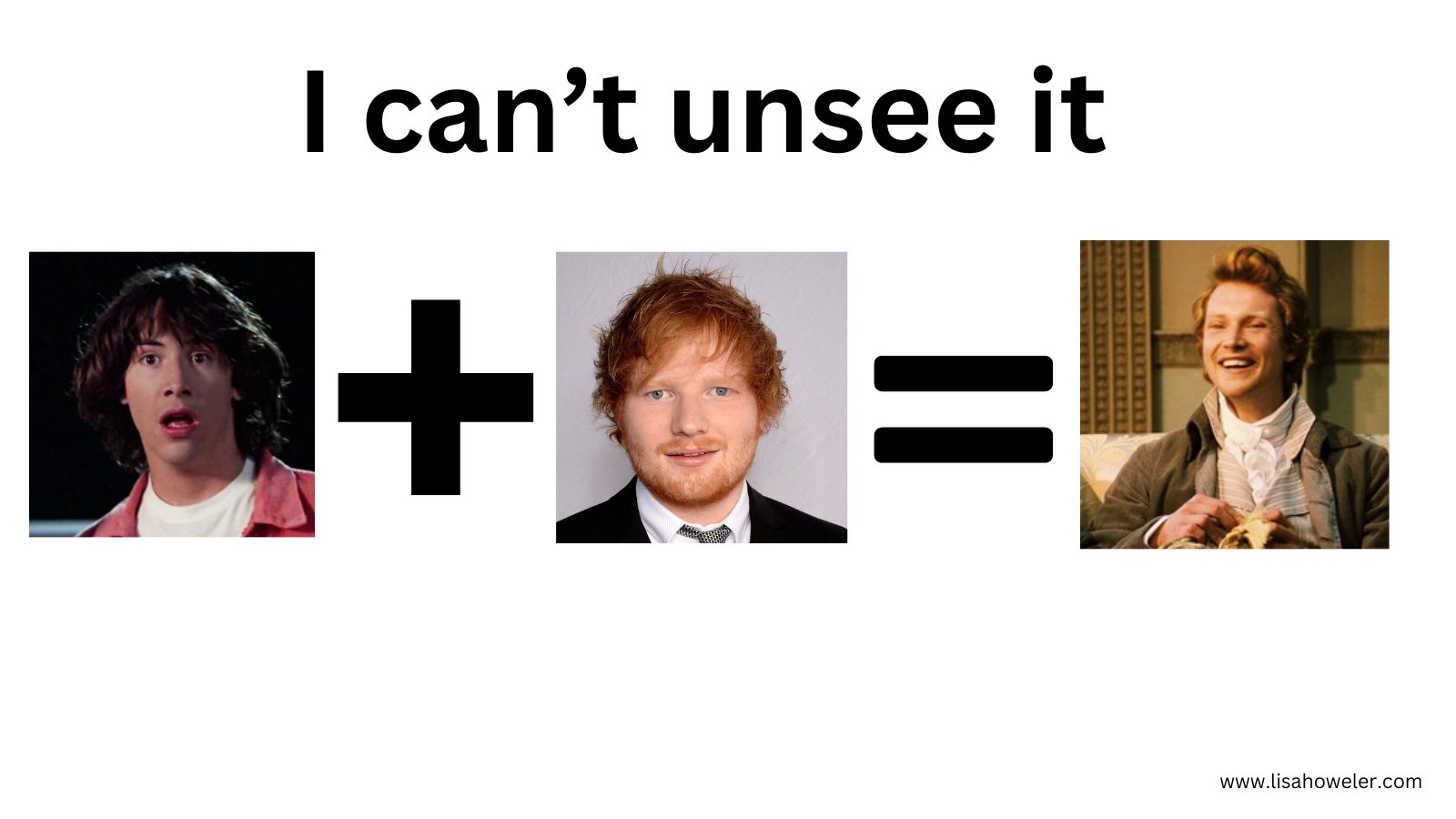
As for the man who plays Mr. Bingley, Sam Woods, I kept cracking up because he was like a cross between Ed Sheeran and Keanu Reeves in Bill and Ted’s Excellent Adventure.
Another character who emerges as an antagonist in every way is Lt. George Wickham.
At one point, Wickham leaves Elizabeth with a sad tale of how Mr. Darcy treated him abominably when they were young, leaving him out of a will because Mr. Darcy’s father liked Wickham better than Mr. Darcy.
If you’ve read the book or seen the movie you know what that is all about. If you haven’t seen it, I’ll let you find out but will say that something seems very off with that story, of course.
There is humor in the book and movie and in the movies that humor break is with Mr. Collins.
Oh my. What can we say about Mr. Collins? He’s the vicar who will inherit their family’s land so he’s interested in marrying one of the daughters, which will help the family remain in their home. Sadly, Mrs. Bennet is hoping for Jane to marry rich Mr. Bingley so Mr. Collins sets his eye on Lizzie, who is horrified at the prospect. Rightly so.
He’s the character with the infamous lines, ““What a superbly featured room and what excellent boiled potatoes! Many years since I’ve had such an exemplary vegetable. To which of my fair cousins should I compliment the excellence of the cooking?”
The standout performance for me in this version is Judi Dench as Catherine De Bourgh, Mr. Darcy’s aunt. She’s the perfect “bad guy” and, as usual, like with any movie she’s in, practically steals the show.
Like other Austen stories, there is a lot of ins and outs, misunderstandings/slight of hands, whatever you want to call it. There are also a lot of unsaid things that cause issues and heartbreak and confusion.
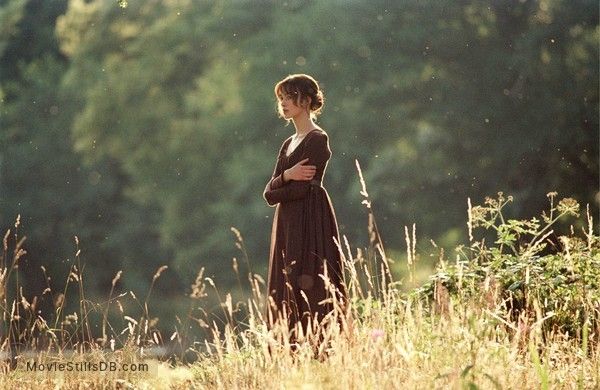
Also like other Austen movies, there is a lot of beautiful imagery and amazing cinematography both inside and outside.
One scene that stands out for me is the dance scene between Lizzie and Mr. Darcy. At one point everyone around them fades away and it’s just them focused on each other, which, of course, we know what that means – that they only see each other. Sigh.

Even people who haven’t seen this movie probably have seen the outside scene of Mr. Darcy walking through the mist with his coat open, his white shirt unbuttoned and looking, I guess, sexy. I wasn’t as thrilled with that scene as other women but that’s probably because I’m not as big of a fan of Macfadyen as I am Colin. When Colin came walking out of that lake, as subtle as it was, I must admit I swooned a bit. If you don’t know what I’m talking about just Google Colin Firth walking out of the lake in Pride and Prejudice.
I saw an interview with him this week and apparently, he was supposed to be shirtless in that scene, but the BBC didn’t approve of the movie being that suggestive.
As with every Austen book/movie, I find myself frustrated at how women were treated and how they had to rush to marry someone rich or who was an heir to a fortune, to ensure that they had a place to live.
Of course, I know that’s how it was back then and I like how Austen fought against that idea in her books. All great authors challenge societal “norms”, in my opinion.
Looking online this week for what others thought about the movie, I learned that this movie is not as close to the book as the 1995 version. For one, there was less focus on any subplots and more focus on Lizzie and Mr. Darcy’s romance in this movie. I hope to read the book in the spring, so I will see more of what an article in Screen Rant meant when it wrote that.
The director, Joe Wright, also changed the time period from 1813 to the 1790s because he liked the idea of the French Revolution going on at the same time since the revolution created an atmosphere of fear within the English aristocracy. I really don’t like when the entire time period or location of a book is changed for the movie, but I guess it works okay for this movie because I had no idea what the date was supposed to be.
An article on Screen Rant by Amanda Bruce mentioned what I did about the movie, which was that Keira Knightly’s version of Lizzie was more feisty – I actually would call it more snotty than feisty, but . . . Ms. Bruce can have her opinion and I can have mine.
Bruce didn’t exactly approve of the portrayal as a whole shown by how she wrote: “Knightley’s Elizabeth is comfortable pushing back on her parents — and in one scene, even shouting at them — while Austen’s Elizabeth might be headstrong, but she is never immature.”
The 2005 version of Pride and Prejudice, Bruce wrote was, “grounded in realism” and blended “traditional period-film traits with a modern approach.”
I mentioned above that I liked the ending of the 2005 version because there was more affection shown between Lizzie and Mr. Darcy. Another article on Screen Rant mentions that the end of the 2005 version was different in the United States than it was in Great Britain.
I almost wrote what the differences were but I’ll leave that off and let anyone who hasn’t seen this version or any version figure that out on their own. Apparently, the Great Britain audiences didn’t appreciate the extra affection shown at the end of the movie, which was extremely clean, just to clarify, despite what a comment by my daughter suggested.
“Eew, they’re sucking each other’s faces off,” she said, but that did not happen. As with many Jane Austen adaptations, there is nothing gratuitous in the film that will make you put your hands over your child’s eyes.
Have you seen this adaptation?
Have you read the book?
Did this adaptation meet your expectations?
Next week Erin and I are watching the 1996 TV adaption of Emma with Kate Beckinsale. Next week we will be writing about Miss Austen Regrets.
To read Erin’s impressions of this movie, visit her blog: https://crackercrumblife.com/
Discover more from Boondock Ramblings
Subscribe to get the latest posts sent to your email.

I love your descriptions of Mr. Bingley in this version — spot on! And definitely an odd choice for this character.
LikeLiked by 1 person
Yes it was strange! I mean he was funny but it was just odd in a period drama 😂
LikeLike
Pingback: Sunday Bookends: Cold temps, a winter booklist, and lots of shows to watch – Boondock Ramblings
I will have to admit to not seeing any of these versions. I did tell Erin I think I need a weekend at a hotel, holed up, ordering room service, and watching movies. That would be such a perfect thing…but I’d probably fall asleep and not watch the movies anyway.
I do love Colin Firth, shirtless or not!
Thanks for the review, Lisa!
https://marshainthemiddle.com/
LikeLike
The 2005 version is one of my favourite movies! I watched it today and I was mesmerized by the cinematography. And Matthew McFadyen is my favourite Darcy. But I do love the 1995 miniseries too!
LikeLiked by 1 person
Your favorite Darcy! What?! What?! *wink* Kidding. That is totally fine and understandable. He was very good and the cinematography really is gorgegous in this movie.
LikeLike
Yes, it’s a controversial opinion I know, ha ha!
LikeLike
I have to say that one of my favorite portrayals in this version was by Donald Sutherland as Mr Bennett. I am always so moved by the way his heart peeks thru from behind his indifference! Oh, and my hubby enjoyed the movie more than he thought he would!
LikeLiked by 1 person
Yes, I really liked him as well and I am annoyed I neglected to mention him. There were so many outstanding performances in this one and I feel like the veteran actors like him and Judi really made the movie.
LikeLiked by 1 person
Oh and I am glad you were able to convince your husband to watch!
LikeLiked by 1 person