
This summer I am watching Angela Lansbury movies for the Summer of Angela.

This week I watched The Picture of Dorian Gray (1945), which I had never seen before. I’ve also never read the book that it is based on.
I had to sit and process this one for a bit and also watch a comedy or two afterward.
Wow, what a creepy, dark, and unsettling film.
Yes, unsettling is the perfect word for this movie and while I am glad to see the second film that Angela received an Oscar nomination for, I don’t plan to watch it again.
I shuddered too many times while watching it.
First, a quick description of the movie for those who are not familiar with it.
From TCM.com, this one-sentence description tells us what we need to know about the movie:
“A man remains young and handsome while his portrait shows the ravages of age and sin.”
The movie is based on the book of the same name by Oscar Wilde, written in 1898. There is even a moment where the main character quotes Wilde.
The movie stars Angela, Hurd Hatfield, George Sanders, Donna Reed, and Peter Lawford.
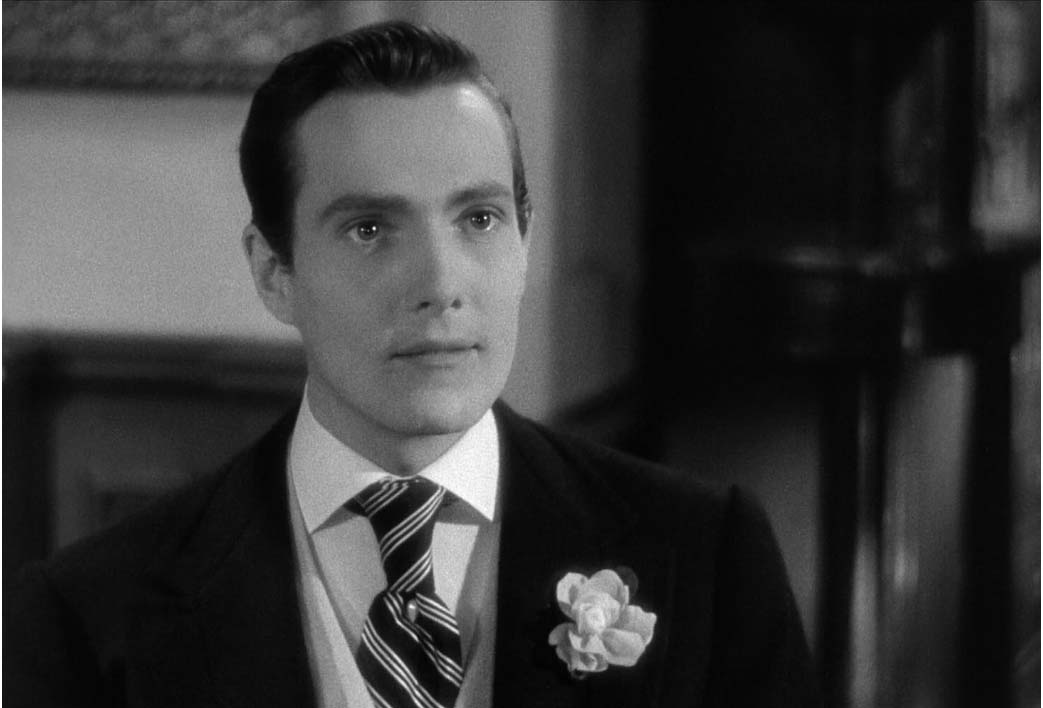
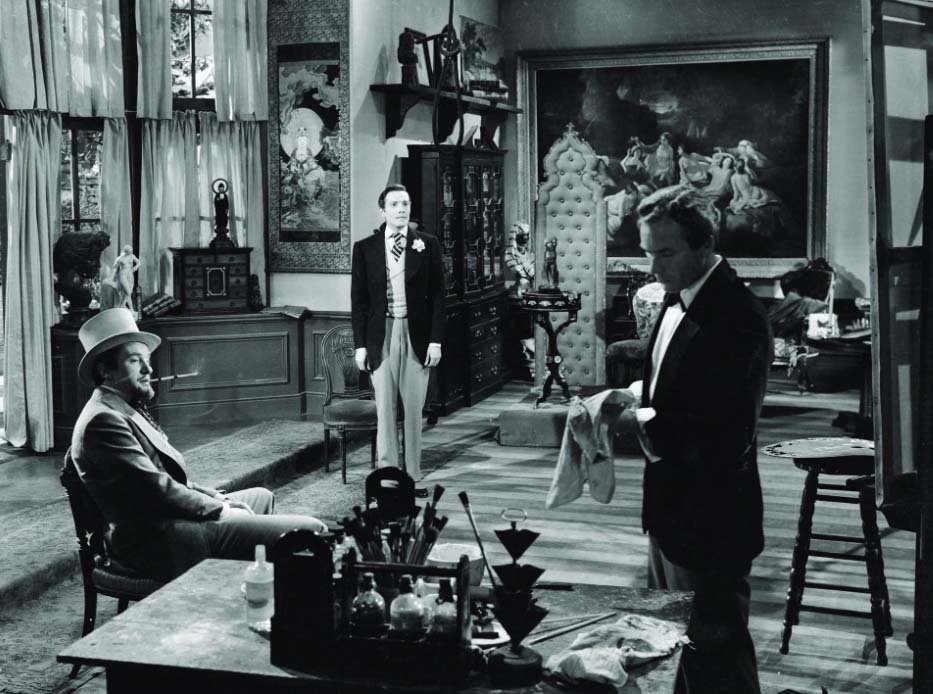
Dorian Gray is a young man without any family who gets mixed up with a man who is a bit of a chauvinist, cynical jerk. This man, Lord Henry Wotton (George Sanders, who plays villains absolutely perfectly), comments on how awful it is to age when he is looking at a painting of Dorian being made by artist Basil Hallward.
Lord Henry, a man who enjoys manipulating the lives of others and talking down to women and everyone around him, says that youth is fleeting and that the pursuit of desire should be the only real goal in life. Dorian, who seems super impressionable to me, thinks about what Lord Henry has said and says that he would give his soul if the painting would grow old while he remained forever young.
Lord Henry tells him to be careful about making such a wish in front of his Egyptian statue of a cat.
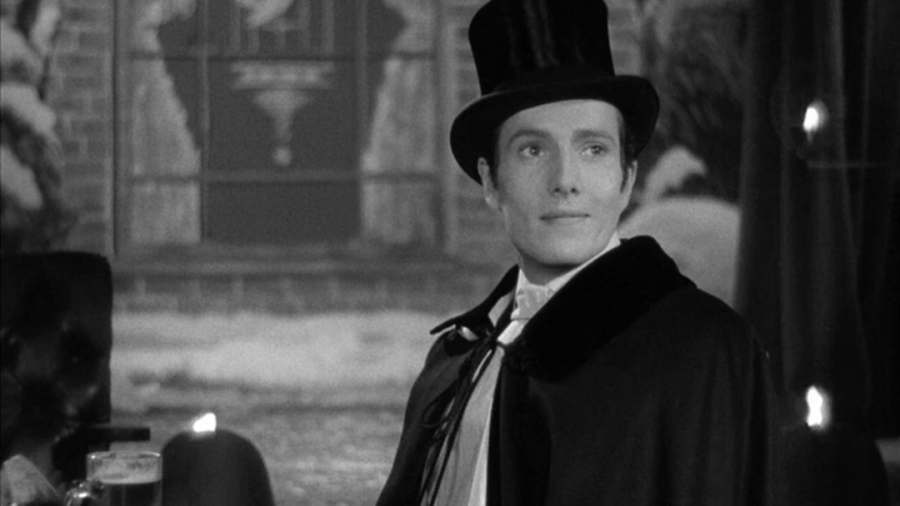
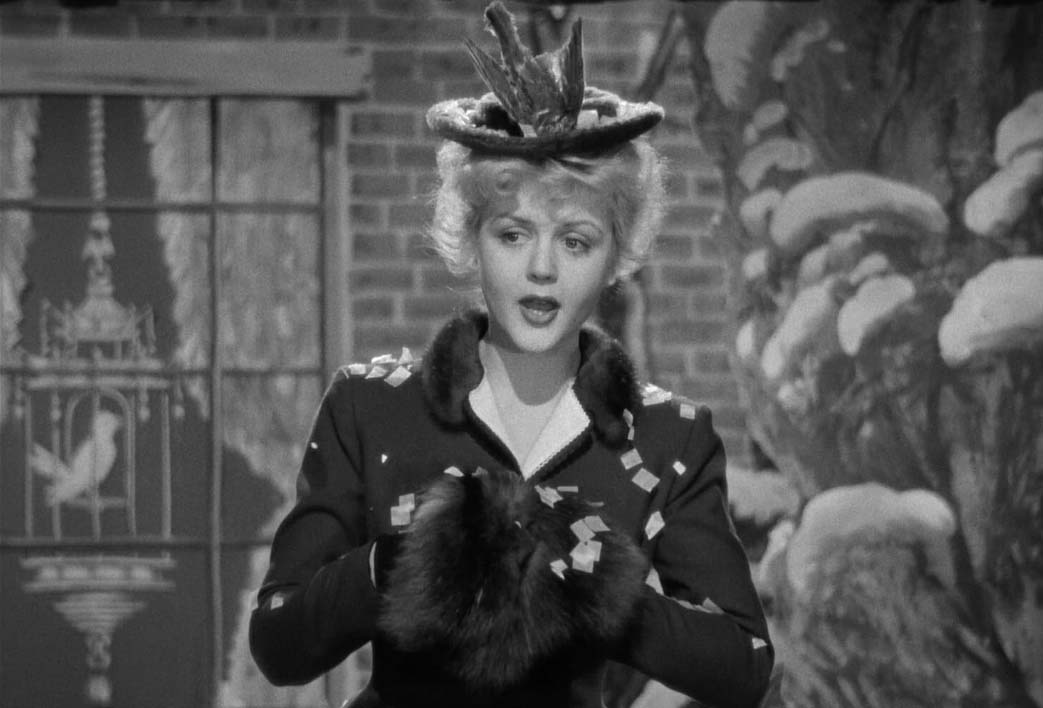
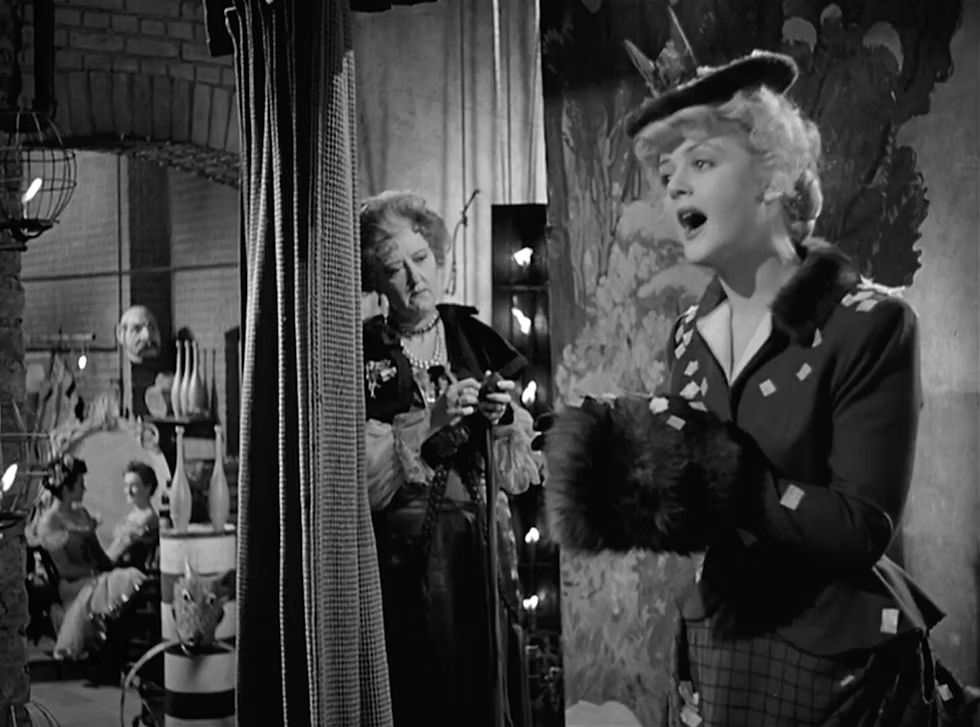
Dorian decides to explore new places, experience new things, and later he visits a bar where he watches a beautiful young woman names Sibyl Vane (Angela) performing a song called Little Yellow Bird. He is enamored with her and her with him.

Consider yourself warned that the song she sings, Goodbye, Little Yellow Bird, is an earworm. I’ve been humming the thing all week!
He’s in love, but Lord Henry is cynical and mean and tells Dorian to give Sibyl a challenge. Invite her to stay overnight, and depending on what she decides, Dorian will know if she is virtuous or not.
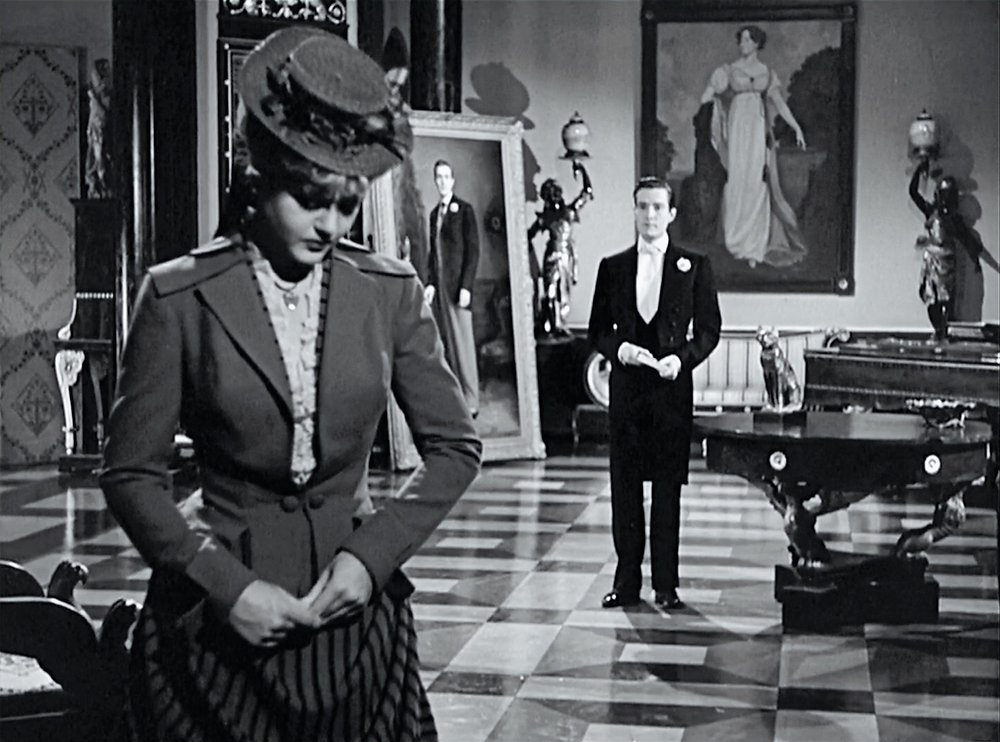
Things will go downhill for Dorian after the outcome of the challenge. Tragedy strikes, causing him to become hardened to the world. He decides that living only for his own pleasure, no matter who it hurts, is the way to go in life.
I won’t spoil the whole movie in case you haven’t watched the movie or read the book, but want to. I will say: be prepared to be fairly depressed by the end.
I will say that two additional characters were added to this movie that were not in the book — a woman named Gladys (Donna Reed) who has loved Dorian since she was a child, and her boyfriend David Stone (Peter Lawford). Gladys was terribly annoying and stupid to me. They should have left her and David out, quite frankly.

The part of Dorian Gray is played by Hurd Hatfield.
His absolutely creepy and dead-behind-the-eyes expression is the central reason I felt unsettled by the movie.
I saw his demeanor as perfect for this part but one critic I read said it resulted in his character feeling too one-dimensional and detached.

“On all accounts, (director Alfred) Lewin micromanaged Hatfield’s every gesture (to the point of not letting the actor perform after four o’clock in the afternoon, for fear fatigue would show), resulting in a central performance that is appropriately strange, but which never engages,” wrote Richard Harlin Smith on TCM.com. “One doesn’t see what others see in this Dorian Gray, who seems as inflexible as a mortician’s wax even in his mysteriously protracted youth.”
I thought not emotionally engaging with anyone is the point of a character who essentially gives up his soul, feelings, and love for anything, to be as nasty as he wants to be (yes, a bit of a spoiler there).
The movie was only Hatfield’s second film (his first being Dragonseed from 1944).
Smith wrote in his review of the film on TCM that, “Hurd Hatfield, in his second screen appearance, was so effectively evil in the title role that it actually handicapped his career with casting directors.”
According to Hurd Hatfield Luv on Tumbler, Angela once said that Lewin would stop rolling the cameras once Hatfield made an obvious expression on his face. This was frustrating to Hurd because his usual acting style was animated and he wanted to perform the character like he was written in the novel.
Lewin’s wishes always overrode the wishes of the actors, though.
“Also to point out, halfway through the film Dorian said he wanted to be in control of his emotions and refrain from yielding to them,” the author of the Tumbler site wrote. They continued: “Here’s another possible reason on why Lewin wanted Hatfield to act with little feeling in this film. Now this is actually my conjecture, but it makes sense with my research. As many would understand, making strong facial expressions would wrinkle the face. Smile lines and crows’ feet form when happy. Forehead creases when worrying. Eyebrows close in and skin folds in between when angry. Bursting up in tears crying gives out the most unflattering face of all. To put it short, it’s impossible to look extraordinarily “beautiful” without scrunching the face.”
Ronald Bergen wrote in The Guardian that he interviewed Hatfield on time about his role in the film The Diary of a Chambermaid and the actor said he was glad to speak about something other than Dorian Gray.
Hatfield called the role both a blessing and a curse.
“A blessing in that it gave him a reputation; a curse in that he found it difficult to escape,” Bergen wrote.
After the movie, he was cast mainly as handsome, narcissistic young men.
Hatfield was ambivalent about having played Dorian Gray, according to the magazine Films in Review, feeling that it had typecast him. “You know, I was never a great beauty in Gray…and I never understood why I got the part and have spent my career regretting it.”
The casting director for The Picture of Dorian Gray, Robert Alton, referred Angela to the casting director for Gaslight. He saw her in the role of Sibyl, but also felt she might work for the maid in Gaslight. That role as the maid led to her first Oscar nomination.
Angela’s role as Sibyl was her second Oscar nomination and came only a year after the first.
“Great send off,” she joked in an interview with the Screen Actors Guild Foundation. “Everything went down hill from there.”
By the time Angela worked on The Picture of Dorian Gray she had filmed Gaslight and National Velvet and had started to become used to working on a set. And she meant “working.” She said in the SAG Foundation interview that she was very conscientious as a young person. She was conscientious of how she needed to be professional for the sake of the other actors and the film overall.
This was both a good and a bad thing.
“I never had any fun. I never goofed off,” she said. “I missed a lot of fun along the way but perhaps in the end it contributed to me to being able to build such a very strong base for what would was to later become an enormously successful career.”
Facts and Triva about the movie:
Lansbury’s mother appears in the movie as “The Duchess” in the dinner scene at “Lady Agatha’s”. (source Jay’s Classic Movie Blog)
The hideous portrait of Dorian shown later in the movie was painted by Ivan Le Lorraine Albright. According to TCM.com, he was hired after director Lewin saw a painting of his at the Art Institute of Chicago entitled That Which I Should Have Done I Did Not Do. It is not owned by the Art Institute of Chicago.
A scene in the movie staged beneath a wildly swinging chain lamp was an effect that would be duplicated by Alfred Hitchcock in Psycho some fifteen years later.
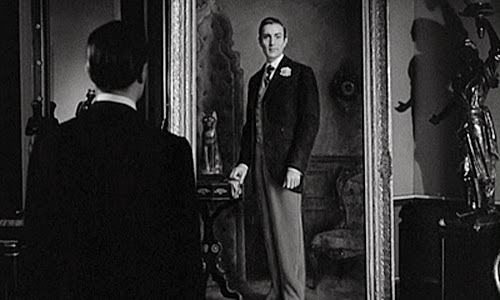
Several years after this movie premiered, a friend of Hurd Hatfield’s bought the Henrique Medina painting of young Dorian Gray that was used in this movie at an MGM auction, and gave it to Hatfield. On March 21, 2015, the portrait was put up for auction at Christie’s in New York City (from the Collection of Robert Hatfield Ellsworth) with a pre-auction estimate of between five thousand and eight thousand dollars. It sold for one hundred forty-nine thousand dollars. (source IMdB)
Oscar Wilde’s Dorian was blond-haired, blue-eyed, and highly emotional, but Writer and Director Albert Lewin’s conception of Dorian was of an icy, distant character.
The dark musical piece that is heard repeatedly is Frédéric Chopin’s “Prelude in D Minor”, the last of the twenty-four pieces of “Opus 28”. (Source IMdB)
Writer and Director Albert Lewin was obsessed with retakes. In this movie, he asked for one hundred and ten retakes and ended up using only one. (Source IMdB)
Basil Rathbone campaigned in vain for the part of Lord Henry Wotton and believed that his typecasting as Sherlock Holmes was the reason he failed to get it. MGM’s loaning of Rathbone to Universal Pictures to play Holmes was very profitable for the studio, another reason for not casting him. (Source IMdB)
According to Angela, a friend of hers, Michael Dyne, was considered for the role of Dorian Gray. Dyne suggested Lansbury for the role of Sibyl Vane. The casting director liked her for the part and suggested her to George Cukor for Gaslight (1944). She saw Cukor and Writer and Director Albert Lewin the same day and was cast for her first two movies. (source IMdb)
My overall view of the movie:
This movie creeped me out immensely and made me very sad. It was extremely thought-provoking. As I mentioned above, the movie left me with a very unsettled feeling. I didn’t really want to keep going at points but knew I had to find out how it ended.



The cinematography and the use of light and shadows was amazing. The best example of this is during a climatic turning point in the movie that involves a very dark action by Dorian. As the act is completed he stands with a light swinging back and forth above him and it’s casting light on his face, then it swings back and he’s in darkness. The shadows around and behind him move in the pattern of a monster’s mouth, as if signaling he’s been officially swallowed by and turned into a monster.
Another shocking part of this movie is the use of color. Yes, the movie was filmed and presented in black and white, but there are three scenes that are shown in brilliant, and later terrifying, technicolor. You have been warned because a couple of the images truly are terrifying.
I probably wouldn’t watch this movie again, but only because it disturbed me, not because it is a good movie. It is a good movie, and it is too good in presenting that icky, dark, and demoralizing feeling it’s meant to present.
Have you seen this movie? What did you think of it?
Cat from Cat’s Wire wrote about her views of it here and she does have spoilers, but it is such a good, interesting post. I loved it. If you’ve already seen the movie or read the book, definitely hop over to her blog.
Left on my Summer of Angela list for August are:
August 15 – A Life At Stake
August 22 – All Fall Down (keep an eye out. I might switch this one up.)
August 29 – Something for Everyone
If you want to read about some of the other movies I watched, you can find them here:
Sources:
Hurd Hatfield Luv/Tumbler: https://www.tumblr.com/hurdhatfieldluv/123743916003/hurd-hatfield-in-the-picture-of-dorian-gray
The Picture of Dorian Gray on TCM.com: https://www.tcm.com/tcmdb/title/2821/the-picture-of-dorian-gray#articles-reviews?articleId=214451
A second article on The Picture of Dorian Gray on TCM.com
https://www.tcm.com/tcmdb/title/2821/the-picture-of-dorian-gray#articles-reviews?articleId=508
Angela Lansbury Career Retrospective | Legacy Collection | SAG-AFTRA Foundation Conversations: https://youtu.be/vFFOVmCXy1o?si=uencecf3ZhFjWrib
Jay’s Classic Movie Blog: https://www.jaysclassicmovieblog.com/post/the-picture-of-dorian-gray-1945
