
*Updated May 2025
You Are My Sunshine is a happy song, right?
It’s talking about a person being someone else’s sunshine.
This is probably why my aunt used to sing the chorus to people she loved so often, especially my son (who I call The Boy for the sake of this blog) and me.
But if you look at the lyrics of the song, it seems it could have a bit of a sadder connotation than the upbeat music suggests.
My aunt Dianne sang the chorus of that song from the first time she met The Boy (the nickname for my son on this blog) right after he was born up until right before she passed away two days before 2018 kicked off.
She sang it in the fun “hillbilly” way the song was originally written in, her original Southern accent in full swing and even more pronounced. It was usually sung while she had an arm around our necks and she’d end the chorus with a sloppy wet kiss on our cheek and a good-natured laugh.
When she passed away, Mom asked me if I would pull some photos together to display for her funeral, as I had for my paternal grandmother. I went into Walmart for some supplies, deciding I’d put together a display on poster board and then some extra photos in a photo album. As I walked up and down the arts and crafts aisle, still very much in the throes of grief, feeling like a heavy weight was on my shoulders, I was frozen in place by a photo album sitting at the front of the album display.
The words on the front were written in bright yellow: You Are My Sunshine.
I broke down right there in the aisle, clutching the album to my chest, feeling like it was a sign from Dianne, telling me she loved me.
A woman asked me if I was okay.
I sobbed out some words about my aunt dying and how she’d always sung this song to my son and me. I mumbled something about the words on the album being a sign. I’m sure I didn’t make any sense at all. The woman agreed with me anyhow (probably because she was trying to appease a crazy woman).
The boy and I have a hard time hearing the song without everything inside us tightening up like the ropes on a ship’s sail, and we usually turn it off or move somewhere we can’t hear it.
There are more than 300 versions of the song, each artist interpreting it differently and with a different tone, which can convey a different feeling.
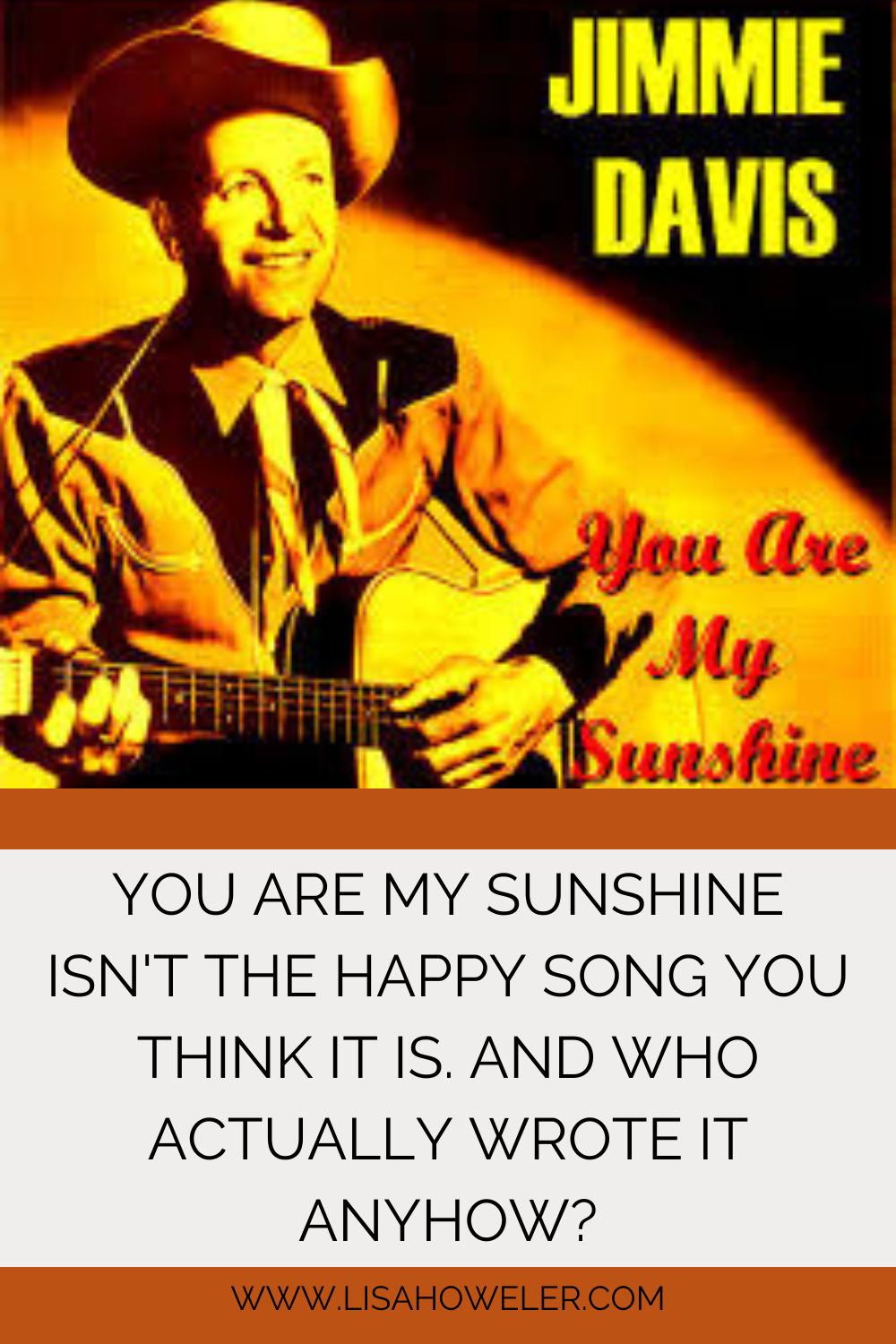
The more upbeat version of the song, like the one sung by one of the original performers of the song — Jimmie Davis — or the one in the movie O’ Brother Where Art Thou, is what most people are used to hearing. If you listen to the first verse, however, you’re already prepared for the song to be a little depressing.
The other night, dear
As I lay sleeping
I dreamed I held you in my arms
When I awoke, dear
I was mistaken
So I hung my head and I cried
The other day, I came across a version of it by a band called The Dead South, and for some reason, I kept listening. Their interpretation gives the song a darker, almost threatening tone.
I find it one of the more accurate versions, emotionally-wise, when paired with the lyrics. A distant cousin hilariously disagreed with me when I shared it on Facebook, writing that the band had virtually “murdered” the song. Her response made me giggle because she was right — to a point, anyhow. I think she felt it was a case of musical homicide because she was used to hearing my aunt and others sing it as a happy song.
Believe me, I totally understand, but for some reason, The Dead South version still appeals to me, though not as much as the version my aunt sang to me.
On its surface, You Are My Sunshine isn’t the saddest song ever, so it’s okay to sing it with a bit of an upbeat melody. If you look deeper, though, it’s clear that the point of view of the person singing it is practically begging the person they are singing to to stay with them.
You are my sunshine
My only sunshine
You make me happy
When skies are gray
You’ll never know, dear
How much I love you
Please don’t take my sunshine away
Even more unsettling are the subsequent verses:
I’ll always love you and make you happy
If you will only say the same
But if you leave me to love another
You’ll regret it all someday
It is this line — You’ll regret it all someday — that The Dead South lead singer delivers in a much more threatening way than most likely the author of the song originally intended.
This next verse isn’t much better:
You told me once, dear, you really loved me
And no one else could come between
But now you’ve left me and love another
You have shattered all my dreams
So, if the original lyrics are sung to this song, it is much more of a downer than the perky tune suggests.
I, however, won’t go as far as to say the singer means the person will regret it because they will hurt them.
There is quite a bit of debate on who actually wrote the song, even though two-time Louisiana Governor Jimmie Davis and a man named Charles Mitchell are credited with it. Davis recorded it in 1940. It is also Lousiana’s state song.
Research, however, led me to an article that I believe proves that a man named Robert Oliver Hood of Georgia actually wrote the song. Davis and Mitchell copyrighted it in 1940, though, after purchasing it from a man named Paul Rice, who Hood’s family said used to write with Hood.
Robert Mann, author of the book You Are My Sunshine, which was about the history of the song, says that the first recording of the song was by the Pine Ridge Boys in 1939 more than six months before Davis heard the song. He adds, in an interview with TownTalk.com, it was also recorded by the Rice Brothers’ Gang in New York City, who later performed it on the KWKH radio show in Shreveport. Davis, who was serving as the public service commissioner for the city, also had a show on KWKH.
“They’re both singing on the Saturday Night Round Up, which is the precursor to the Louisiana Hayride,” Mann said.
Mann says though Paul Rice claimed to have written the song, he actually didn’t own it. Still, he needed money for his wife’s medical bills, so Davis and his steel guitar player Charlie Mitchell gave Rice $35 for the song.
Davis recorded his version of the song in New York City afterward.
The song became a hit not because of Davis, Mann said, but because the Singing Cowboy Gene Autry sang it in movies, as did Crosby, making it a huge hit.
The article in The Town Talk states, “By the time Davis ran for governor, the song had been recorded more than a dozen times by other artists, Mann said. He used the notoriety of the song to help him, and he told people he was the author of the song. In early 1940, he and Mitchell got a copyright for the song and then maintained for the rest of his life that he wrote the song.”
To me, a 1990 article in Chronicles Magazine, by writer Theodore Pappas is the definitive source for this question. Pappas wrote that Robert Oliver Hood (always called Oliver), his grandfather, wrote the song and that his descendants back up this fact by saying he first sang it in 1933 at a Veterans of Foreign Wars convention in LaGrange.
It was a Japanese professor who sought in 1989 to find out who really wrote the song, Pappas says, and eventually found out the truth.
“Mr. Mitsui first went to the office of Georgia State University professor Wayne Daniel, who has long researched the history of American country music,” Pappas wrote in his article. Professor Daniel concluded in a 1984 article that the origin of the song would probably never be ascertained, a conclusion he repeats in his latest book, Pickin’ on Peachtree: A History of Country Music in Atlanta, Georgia (University of Illinois Press, 1990): “So like some of the works ascribed to Shakespeare, the authorship of ‘You Are My Sunshine’ probably will never be decided to everyone’s satisfaction.”
Daniels said, neither the Pine Ridge Boys nor Jimmie Davis ever claimed to have written “You Are My Sunshine,” but not so with Paul Rice; he claimed to have composed it in 1937.
“There are still people alive, however, who remember hearing the song long before 1937,” Pappas wrote in his article. “In particular, a mid-1930’s performance of the song by Riley Puckett himself—and what these people remember is the name of the musician with whom both Riley Puckett and Paul Rice played in the early 1930’s: Oliver Hood of La Grange, Georgia.”
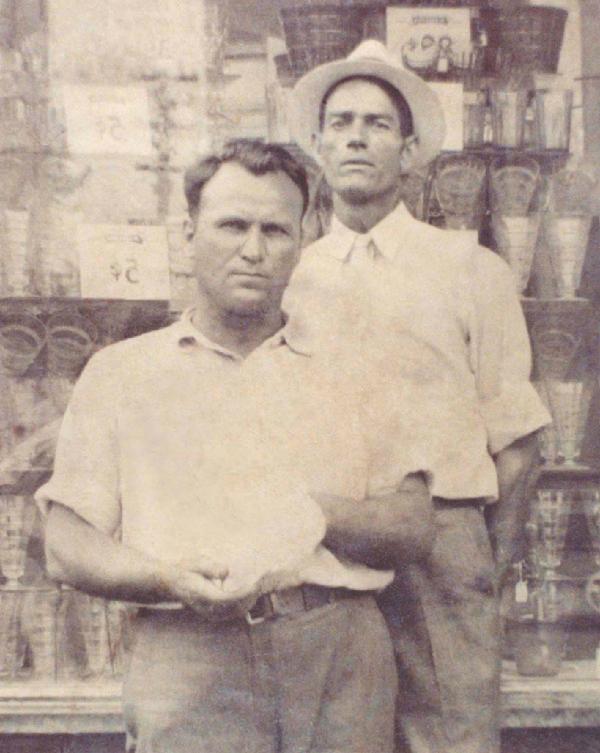
Later in the article Pappas writes: “Contrary claims notwithstanding, Oliver Hood wrote “You Are My Sunshine.” He wrote the words to the song on the back of a brown paper sack, which his children still possess, and he first performed the song at a VFW convention in LaGrange in 1933; he sang it through a megaphone out of a hotel window, and he sang no less than twenty verses, most of which are lost. Over the years he wrote hundreds of songs, as did all of his friends. To them, music was a not-for-profit venture, an act of love, something that transcended commercial consideration. Never did the thought of copyrighting their music ever come to mind—never, that is, until “You Are My Sunshine” rose to the top of the music charts in 1940. It was then that Oliver Hood began copyrighting his music—one song too late, as he so well knew. A poor cotton mill doffer doesn’t easily quit dreaming of the fame and fortune that might have been, and Oliver Hood went to his grave dreaming.”
In an interview with the Shreveport Times later in his life, Paul Rice again claimed he wrote the song in 1937 and based it on letters he had received from a girl in South Carolina who called him her “sunshine”.
Rice said in the newspaper article, “I wrote ‘You Are My Sunshine’ in 1937. Where I got the idea for it, a girl over in South Carolina wrote me this long letter—it was long about seventeen pages. And she was talking about how I was her sunshine. I got the idea for the song and put a tune to it.”
Rice lived until 101 and changed his story many times, though, according to various articles online. He doesn’t seem to have made any mention of Oliver Hood or how he knew him, from what I’ve seen.
Alice Bulmer, a musician, wrote on her site about the song:
“Jimmie Davis was a well-known country singer and politician. He recorded “You Are My Sunshine” in 1940, and the song propelled him to elected office in 1944 and again in 1960. He used it as his campaign theme, often singing it while riding a horse called Sunshine.
In 1960, Jimmie Davis was elected Louisiana governor on a segregationist ticket.
I think that might be why my American-born mother, Sue, didn’t sing “You Are My Sunshine” to her kids. In the USA in the early 1960s, it was strongly linked to a white segregationist politician.
However, it wasn’t exactly an anti-civil rights anthem – Ray Charles and Aretha Franklin and other black American singers also recorded it.”
The song, in fact, has been recorded by 350 artists and translated into 30 langauges.
In 1962, Ray Charles became one of the most popular artists to record it on the album Modern Sounds in Country and Western Music (it reached No. 7 on the Billboard Charts) and Jimmie Davis acknowledged that in a letter he wrote to Charles Sullivan of Sullivan’s Enterprises (for what purpose, I am not sure).
“Of course the Ray Charles version of You Are My Sunshine is far different to my version; and, incidentally, my version is more on the ‘cornfed’ side,” Davis wrote. “But, nevertheless, the tune itself is well established and planted in the minds of the people throughout the world. But now, to the Ray Charles version — I had a feeing when I heard his recording that it would be a nationwide hit and perhaps go to the No. 1 position. I had always felt that if it got the right kind of what I call the ‘wild treatment’, by the right artist, it couldn’t miss. And, frankly, I do not know of a person who is in a better position to give it this ‘wild treatment’, or the modern touch, or whatever you want to call it, than Ray Charles…”
In the end, no matter who wrote You Are My Sunshine (though I now believe it was Oliver Hood), the song still remains a favorite among many.
If you are a fan of the happier versions that have come out over the years, and are dead set against listening to a more serious one, you probably wouldn’t be interested in The Dead South’s version. But if you can bring yourself to listen to it, stick with it at least until the cello solo, which I think is lovely and saves the song for even the most stringent fan of the original version.
Here is The Dead South version if you want to hear it.
What each unique version of this one song shows is how much inflection and tone can affect meaning, whether in song or the spoken word.
Regardless of who sings the song and how they sing it, it will always hold a special meaning for me and my family and for the person who sang it to us — the woman who was our sunshine when skies were gray.
Additional resources:
You Are My Sunshine – the story behind the song
You Are My Sunshine – Wikipedia
Author Robert Mann sets out to tell background of ‘You Are My Sunshine’ in new book
The Theft of an American Classic
Letter from Jimmie Davis about the song “You Are My Sunshine”
Lisa R. Howeler is a blogger, homeschool mom, and writes cozy mysteries.


You can find her Gladwynn Grant Mystery series HERE.
