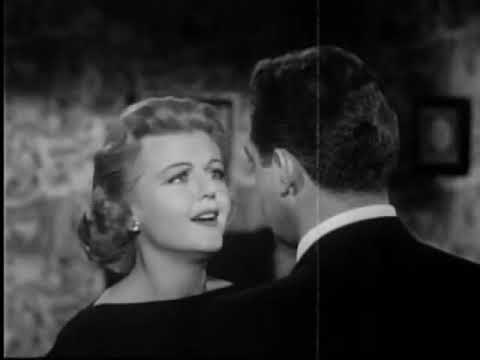
Classic Movie Impression: It Happened On Fifth Avenue

I’ve been watching less popular Christmas-themed movies around Christmas for the last couple of years. One of those movies was It Happened on Fifth Avenue (1947).

I truly thought I’d written about this movie in previous years, but I can’t find it when I search so I am writing about it now.

The movie is about a group of people who are sort of thrown together but it starts with a man named Alyosius T. McKeever (Victor Moore) who sneaks in the mansion of businessman Michael O’Connor (Charlie Ruggles) in New York City early in November when O’Connor goes to his home in Virginia for the winter.

McKeever is a “vagabond” or homeless man.

He lives in the home, wearing O’Connor’s clothes, and eating any food left at the house in the pantry.

The movie opens with him sneaking inside through the back fence and will later learn that he’s been doing this for some twenty years.

I, of course, am surprised that no one has ever seen him or seen the lights on in the house but, it’s a movie. Let’s suspend belief.

There are police who patrol the grounds, but McKeever has a system where he hides in the icebox (or a room they call the icebox) until the police have passed by. He also has the lights hooked up so they will shut off as soon as someone opens the front door.

One day McKeever meets Jim Bullock played by Don DeFore, sleeping on a park bench. Jim, a veteran, has been evicted from his apartment building because it is being torn down. Michael O’Connor is putting up an 80-story building in its place.

When Jim gets to the mansion and is settling in, he sees an award shaped like a boat with the name Michael O’Connor on it and accuses McKeever of taking over homes of people who can’t afford to live in family homes like his.

McKeever tells Jim he’s not really O’Connor, but a friend of his. Jim accepts this explanation easily

Jim isn’t sure what to think of this arrangement, but he needs a place to stay so he accepts it.

Soon we see Michael O’Connor, who is in Virgina having a board meeting. During the board meeting he gets a call from his daughter Trudy’s school and been told that it’s possible she’s run away.

Michael looks at a photo of two women and asks his assistant if he thinks that she has run off to her mother in Florida.

The man doesn’t know so Michael orders him to hire a private investigator and find his daughter (played by … get this name…Gale Storm).

His daughter, though, is already found for us viewers. She is at her father’s mansion looking for her clothes when Jim finds her. He demands to know what she’s doing there and suggests she is stealing from the mansion. He threatens to call the police.

Trudy, apparently smitten with Jim merely based on his appearance, decides not to tell him who she really is and tells him to go ahead and call the police.

McKeever pulls Jim aside and confesses all. He is not a friend of O’Connor, but is, instead, simply someone who takes advantage of the home being empty for a few months out of the year. When O’Connor leaves, he moves in and when O’Connor leaves Virginia, McKeever hitches his way to Virginia and moves in that house until it’s time to come back to New York.

(Again…suspend belief).

Jim isn’t sure what to make of the arrangement, but is amused and impressed that McKeever hasn’t been caught yet.

Trudy listens in and overhears what McKeever has been doing and smiles in an amused way. She decides she will find a way to stay on with the men since it will be a way to hide from her father for a while. She tells the men the truth, which is that she’s going to get a job at a music store so she can get back on her feet again. She then says she only broke into the house because she was hungry and desperate and then does a lovely fake faint to add to her story.

The men agree that she can stay. From here the movie will start to get a bit more complicated as more people are invited to stay at the mansion, including a family with small children. What could make all of this even more chaotic? Add in Michael O’Connor returning to New York to try to find his daughter and planning to return to the mansion.

One little thing that bothered me about this movie was how young Gale Storm looked and was supposed to be. She was supposed to be 18 but a romance develops between her and Jim and he seems considerably older than her. That was…awkward at times. However, I’m not sure how old Jim is actually supposed to be so maybe it isn’t so awkward. Gale was 22 at the time the film was made.

The screenplay for this movie was written by Everett Freeman. The original story was created by Herbert Clyde Lewis and Frederick Stephani.

Harry Revel wrote the songs “It’s A Wonderful, Wonderful Feeling.” “That’s What Christmas Means to Me” and “Speak My Heart” for the movie, according to the opening credits, but I wouldn’t call this movie a musical. One of the main characters simply sings a bit.

Gale Storm thought she’d be singing the parts in the film, but, unfortunately, she was told her voice would be dubbed over.

She later wrote in her memoir: “I couldn’t believe it. I thought that maybe the director didn’t know I’d been singing and dancing in films, and that if I spoke to him he’d let me do my own numbers. Well, I asked him, and he said no. I asked him to look at some of my musicals, and he said no. I asked him if I could sing for him, and he said no. His theory was that if you were a dancer, you didn’t sing; if you were a singer, you didn’t dance; and if you were an actor, you didn’t sing or dance. It was humiliating.”

Another song in the movie is “You’re Everywhere” sung by The King’s Men at 1930s/1940s barbershop quartet.

According to TCM.com, Frank Capra originally acquired the rights to the movie but passed it on to Allied Artists, a new subsidiary of Monogram Pictures, which used to develop B movies. It Happened on Fifth Avenue was the companies first major motion picture and was developed by Roy Del Ruth.

Not only was Gale upset about not being able to sing in the film, but she also was disappointed Capra didn’t direct it, according to the TCM.com article. She felt the movie was decidedly “Capra-esque” — “a warmhearted human story about the little guy with underlying social and political commetary. She said that she felt Del Ruth didn’t make the most of the story’s potential, but she may have been holding a grudge since he didn’t let her do her own singing.

Gale said Del Ruth wasn’t easy on anyone.

“I wasn’t the only one Del Ruth humiliated,” continued Storm in her biography. “Victor Moore was a dear, sweet old man who was kind to everyone; we all loved him. Except Del Ruth. Whatever Victor did, the director made him redo it — again and again. And Del Ruth never told the old man what he might have been doing wrong.”

Despite these complaints from Gale, the movie did well when it was released, with the actors receiving praise by reviewers and critics. It has now become a beloved classic as well.

Is this one you’ve ever seen? What did you think about it?


This post is part of the Comfy, Cozy Christmas feature hosted by me and Erin at Still Life, With Cracker Crumbs. If you have a blog post that you would like to share as part of this annual link-up, please find out more here.


If you write book reviews or book-related blog posts, don’t forget that Erin and I host the A Good Book and A Cup of Tea Monthly Bookish Blog Party. You can learn more about it here.
Summer of Angela Summer of Angela: Please Murder Me (with tiny spoilers but not big ones)

This summer I am watching Angela Lansbury movies for the Summer of Angela.

I switched some things up a couple of weeks ago and slid The Pirates of the Penzance and this week’s movie, Please Murder Me, in place of a couple of TV movies Angela was in. I do have an interest now in watching one of the ones I replaced, so I may do that on my own.

This week’s movie starred Angela with Raymond Burr. It was short, sweet, and to the point, and very good. My husband watched it with me and said this movie would be considered a “B-movie” back in the day, but it was a very good B-movie to me.

I have been remiss in sharing where I have found these movies to watch so I do want to share that this one is free on Tubi and YouTube. The reproduction quality isn’t the best because it is a “b movie” and is now in the public domain. This means people can put this movie up wherever they want and not get hit with a copyright claim. I’ve found a lot of cool movies that way through YouTube and Tubi.

The movie seems to show, no matter where you find it, lines down the middle and sides from the old film. I am not sure if there are cleaner copies out there or not.

The description of this movie is that Raymond Burr portrays a lawyer who finds out his client, who he just got off for murder, is actually guilty. There is a lot more to it than that, but that’s the bottom line.

According to TCM.com, the movie’s screenplay was based on a teleplay by E. A. Dupont and David Chantler on Big Town (CBS, 1954).

It was directed by Peter Godfrey.

The movie starts with Raymond walking down a street, going into an office, and then speaking into a tape recorder (reel-to-reel) telling whoever hears the recording that in 55 minutes he will be dead.

We then have a flashback that will encompass the bulk of the movie.

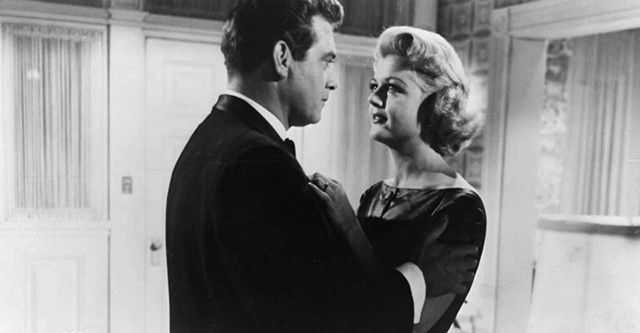
That flashback consists of us learning that Burr’s character, Craig Carlson, is in love with his best friend’s wife Myra Leeds (Angela). We find this out because Craig tells Joe Leeds (Dick Foran) and says that he and Myra are going to be married and Craig would like Joe to divorce her.

Joe is oddly calm about this and as he leaves Craig’s law office, says he needs some time to think.

Before long we are in the Leeds’ apartment and Joe Leeds has met his maker. He’s under a sheet and Myra is being questioned by a plain-clothes cop who clearly thinks her self-defense story is absolutely garbage.

Myra says that Joe lunged at her, furious that she told him she wanted a divorce, and that she, terrified that he was going to kill her, shot him.

Uh-huh. Are we, the viewers, buying this?

Well, yes, I was because I hadn’t read the synopsis of this film before I watched it so I thought she might actually be telling the truth but…..not really sure.

Craig has, of course, volunteered to be Myra’s defense attorney.

It isn’t too much of a spoiler to say (since all the descriptions online already say this) that after the trial Craig discovers that Myra wasn’t being very truthful.

The problem is that in the United States a defendant can’t be tried twice because of the concept of “double jeopardy.”

Now Craig has to figure out how to make Myra pay for what she did to her husband and his best friend. Craig already felt guilty about having an affair and now the guilt is insurmountable and has a hefty helping of betrayal piled on.

I have only seen Raymond Burr in the old Perry Mason episodes and Rear Window but have enjoyed his acting in both and I enjoyed his acting in this movie as well.

He mainly played villains in the beginning of his career.

Here he portrayed a bit of a darker Perry Mason or as the author at Heart of Noir stated “a three-dimensional, complex lead role” who is “both a home wrecker and a cuckold, which demands of him quite a balancing act of emotions.”

Overall, I liked this movie and I enjoyed both Raymond and Angela’s performance.

I read a piece of trivia that I will share below that involves Angela taking the job because she needed the money and she may have only done it for the money, but she seemed to put her all in it.

I really enjoyed her performance, even if it was toned down from what she would show in films such as The Manchurian Candidate. One might say this role was a good preparation Eleanor Shaw.

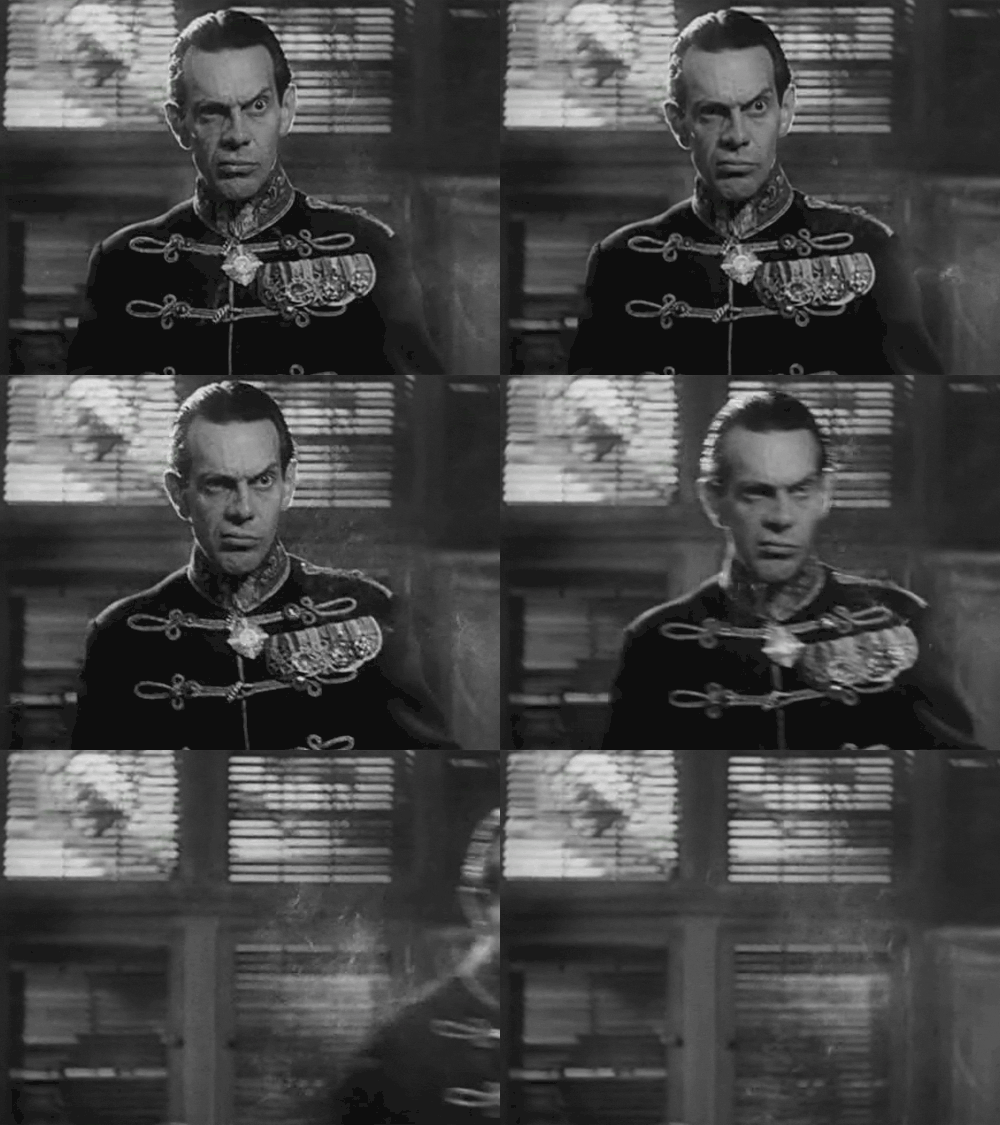
I loved the use of light and shadow in the film. I am a huge fan of black and white photography and films that use shadow and light to highlight what the photographer or director wants the viewer to focus on.

In this one, there was a lot of shadow around the subjects with light hitting their eyes or whole face during tense scenes when a secret was about to be revealed or a confrontation was had.

My husband and I agree on some points about the movie.

There could have been more explanation of the plot. There was some missing information throughout which led to rushed scenes.

“Instead of being only an hour and 14 minutes it could have been an hour and 45 minutes,” my husband said.

This would have given us time for a bit more background and exposition.  We both agree that these minor issues didn’t take away from the overall story, however.

I like what Heart of Noir said about the movie: “From the pre-credits opening scene of an unidentified man walking the city sidewalk past scummy-looking bars and peep shows, the film oozes with economy, bland interiors and soupy darkness combining with overhead shots and Dutch angles to disorient the viewer and create an occasional dream-like feeling.”

I also enjoyed this assessment by PopOptiq: “The picture earns its fatalistic conclusion with a gut-punch plot resolution to Craig’s tireless mission to expose Myra. If anything, the film is yet another reminder of the range both Raymond Burr and Angela Lansbury had as actors. Both became legends through very different projects on television, making this reunion, before their popularity erupted, all the more interesting a time capsule.”

Trivia or facts:

  • According to Angela Lansbury’s authorized biography, this movie was filmed in an abandoned supermarket near Yucca and Franklin Streets in Los Angeles. Lansbury and her husband Peter Shaw were at a low financial point in their marriage and they needed the money. After the film was finished, she applied for unemployment insurance. (source IMdB) (An insert by me here: her husband was Peter Shaw and she played Eleanor Shaw in a movie? Like…weird!)
  • The film was made the same year that Raymond Burr auditioned for the role of Perry Mason.
  • Lamont Johnson’s who plays . . . well, I’m not going to tell you so I don’t spoil anymore of the story …. Is in this movie and this was his last movie as an actor before he became a full-time director. He mainly directed stage and television productions.
  • The opening credits featured the cast, writers, director and producers. The crew appeared in the closing credits.  (source TCM.com)
  • Please Murder Me was the first film made by Gross-Krasne, Inc., which was run by executive producers Jack J. Gross and Philip N. Krasne. (source TCM.com)

A quote from the movie that I liked, “My whole life has meant just meant three things,  my love for Joe, my work, and my love for you. You destroyed them all. How much more is left of me?”

Have you ever seen this one? If so, what did you think?

Cat from Cat’s Wire also watched the movie this past week and wrote about it on her blog here.
For next week, I am switching The Mirror Cracked, based on an Agatha Christie book, for Death on the Nile, based on another Agatha Christie book. I’ve been reading that Death on the Nile is better than The Mirror Cracked..

Here is the full list of movies left to watch for this feature:

July 25: Death on the Nile

August 1 – The Court Jester

August 8 – The Picture of Dorian Gray

August 15 – A Life At Stake

August 22 – All Fall Down

August 29 – Something for Everyone

If you want to read about some of the other movies I watched you can find them here:

Bedknobs and Broomsticks

The Manchurian Candidate

National Velvet

The Pirates of Penzance

Gaslight

The Pirates of Penzance


Sources and additional resources:

Please Murder Me: https://heartofnoir.com/film/please-murder-me-1956/

Please Murder Me IBdB: https://www.imdb.com/title/tt0049621/trivia/?ref_=tt_dyk_trv

TCM.com: https://www.tcm.com/tcmdb/title/86833/please-murder-me/#overview

Wikipedia: https://en.wikipedia.org/wiki/Please_Murder_Me!

‘Please Murder Me’ sees underrated greats Lansbury and Burr go head-to-head: https://www.popoptiq.com/please-murder-me/

Classic Movie Impressions: The Prisoner of Zenda

The Prisoner of Zenda (1937) is a cinematic spectacle. Grand halls, sweeping ballrooms, wildly decorated courtyards, and captivating costumes.

I absolutely loved it and am so glad I stumbled on to Douglas Fairbanks Jr. and decided to do a marathon of his movies to learn more about him so that I could discover this movie.

Douglas Fairbanks Jr.  is not the leading man in this one but he steals the show in every scene he is in. He is deliciously evil.

The leading man, Ronald Colman, is absolutely amazing as well, especially since he is playing two parts in this one. He is so amazing I feel another marathon coming on but of his movies.

An article on TCM.com agrees with me about this version (Okay, I agree with the article).

“ . . . of all the dramatized versions of Anthony Hope’s 1894 tale of adventure, love and honor, the 1937 black-and-white movie version, produced by David O. Selznick for his Selznick International Pictures stands as the definitive adaptation.”

It is easy to see why this movie is called by critics one of the best “Swashbuckler” movies of all time. I say that since this is one of the original Swashbuckler movies without it we wouldn’t have Pirates of the Caribbean, The Princess Bride, and other more modern adventure movies.

 And without the 1894 novel — The Prisoner of Zenda: Being the History of Three Months in the Life of an English Gentleman by Anthony Hope — we wouldn’t have had the movie at all.  Anthony Hope Hawkins was a part-time lawyer who wrote the book in one month from what I read.  

The novel sold more than 30,000 copies in Britain and the U.S. and helped to establish the adventure genre that would later be explored even more by authors such as Sir Arthur Conan Doyle and H. Rider Haggard. The book, according to an article to TCM, has never gone out of print and has continued to sell thousands of copies each year.

The movie is the most referenced Swashbuckler film, TCM further states, which is probably why it was remade at least seven (!!) more times over the years, including one only about 15 years after the 1937 version, which was not the first. There were actually two silent movies of the book made before this version.

The 1952 version was shot frame for frame, according to articles I read online. I think I might watch the one released in 1952 later on and then compare the two, but I highly doubt that the 1952 movie or any of the others (including two made-for-TV movies and three television shows) will top the 1937 one, especially when it comes to Douglas’s performance. Yes, Doug and I are on a first-name basis now. I feel that we are getting to know each other enough now that we can dispatch with the formalities.

When I first saw Douglas in The Rage of Paris, I immediately thought how much he reminded me of Cary Elwes in The Princess Bride – his smile, his delivery, his expressions.

In this movie that similarity came even more into focus and especially during an amazingly well-choreographed and filmed fencing scene between him and Colman.

The two enjoyed a sparring of words while sparring with their swords, reminding me of the scene between Elwes and Mandy Patinkin on the Cliffs of Insanity in The Princess Bride. Perhaps Golding was influenced by the movie? I don’t know but if I research any more for this post, I’ll never publish it.

Let’s finally get to the plot of the movie. Finally…I know!

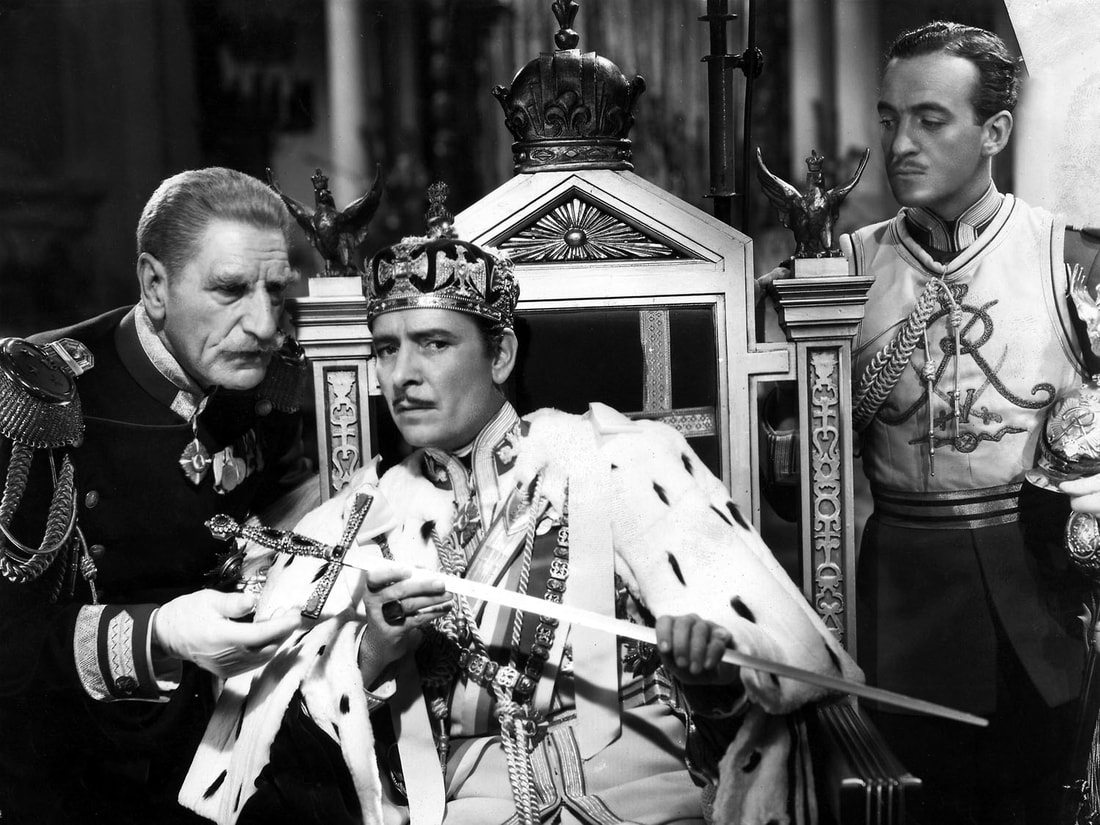
We have an Englishman named Rudolf Rassendyll (Colman) who has gone to a small country located somewhere between Vienna and Bucharest (not named in the film, but in the book it was called Ruritania). He has gone there for a fishing expedition at the same time the king of the country is being coronated. Zenda is a small area in this unnamed country where there is good fishing and boar hunting and where the king, Rudolph V (also portrayed by Colman), has a hunting preserve and cabin. RudolfV and his advisors Col. Zapt (C. Aubrey Smith) and Captain Fritz von Tarlenheim (David Niven, who I recognized immediately from other movies I’ve seen him in) run into Rassendyll in the woods and realize how much the two look alike.

I’m a little confused by the scene where Rassendyll tells the king they look alike because of their ancestors  — the king’s great-great-great grandfather and Rassendyll’s great-great-great grandmother — most likely had an illicit affair. In the beginning of the film, he acts like he’s coming to the country to hunt and knows nothing about the king or how much he looks like him but five minutes later in the film he’s telling the king he knows he looks like him and why. This is probably something that is explained better in the book.

All I can say is thankfully they both have the same British accent even though the King is from a kingdom in Eastern Europe, or they wouldn’t be able to understand each other.  Har. Har.

Minor complaint. Let us move on.

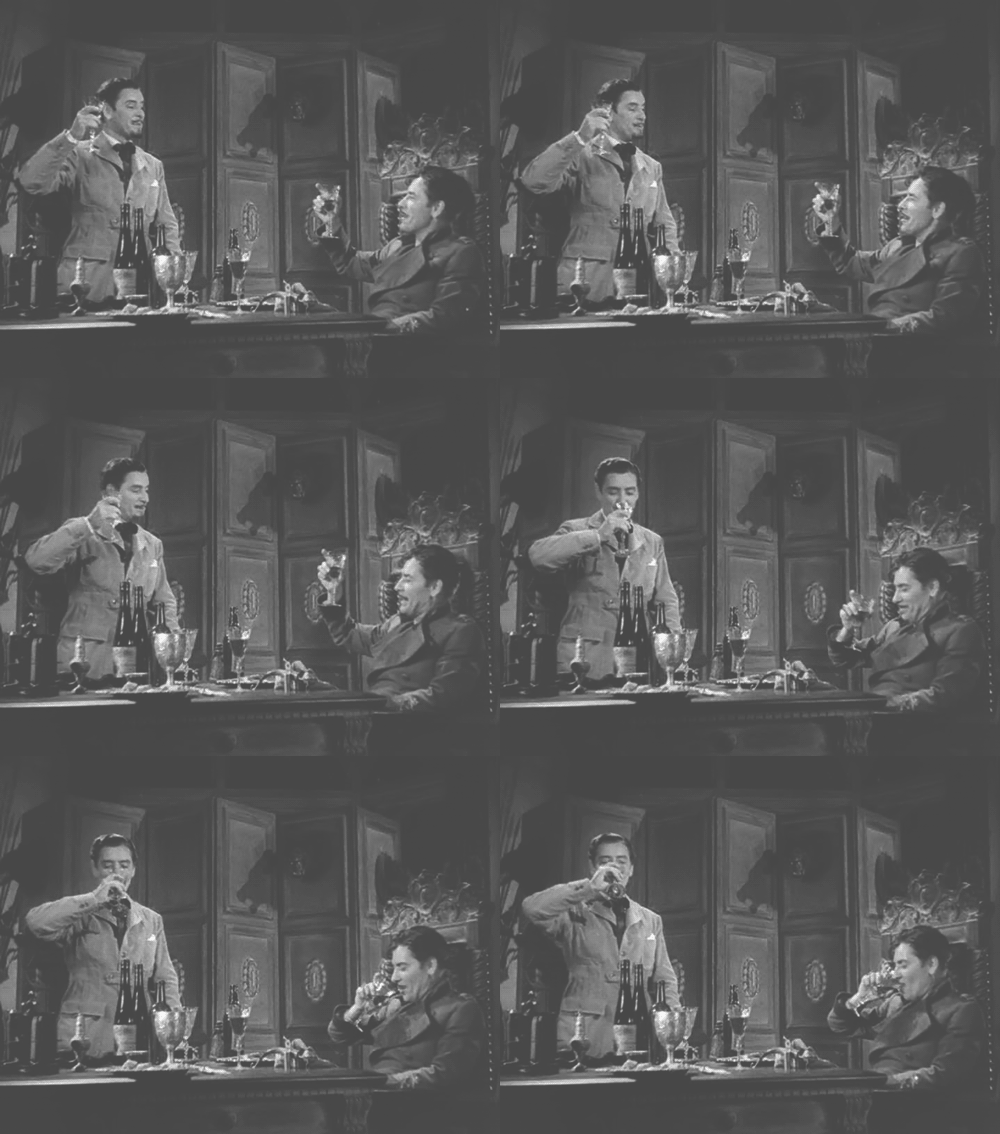
This news from Rassendyll about their probable relationship cracks the king up and he invites Rassendyll back to his hunting cabin where they get completely roaring drunk and Rudolftalks about his coronation scheduled for the next day and his half-brother Duke Michael, who hates him. He also speaks of his cousin Princess Flavia (Madeleine Carroll) who he will wed shortly after the coronation. After everyone else is unconscious from drinking too much, Rudolfdecides to drink a bottle of wine gifted to him by Michael.

 Uh-oh. Bad idea.

When Rassendyll wakes up the King is unconscious on the floor, drugged. The king’s advisor says the king isn’t dead, but he won’t be in any shape to be coronated that which means that Michael could be crowned instead. A plan is hatched to have Rassendyll pose as the king only for the coronation and then to be smuggled out of the country and sent back home.

Of course, we have foreshadowing here that tells us that all will not go as planned and, indeed, it does not.

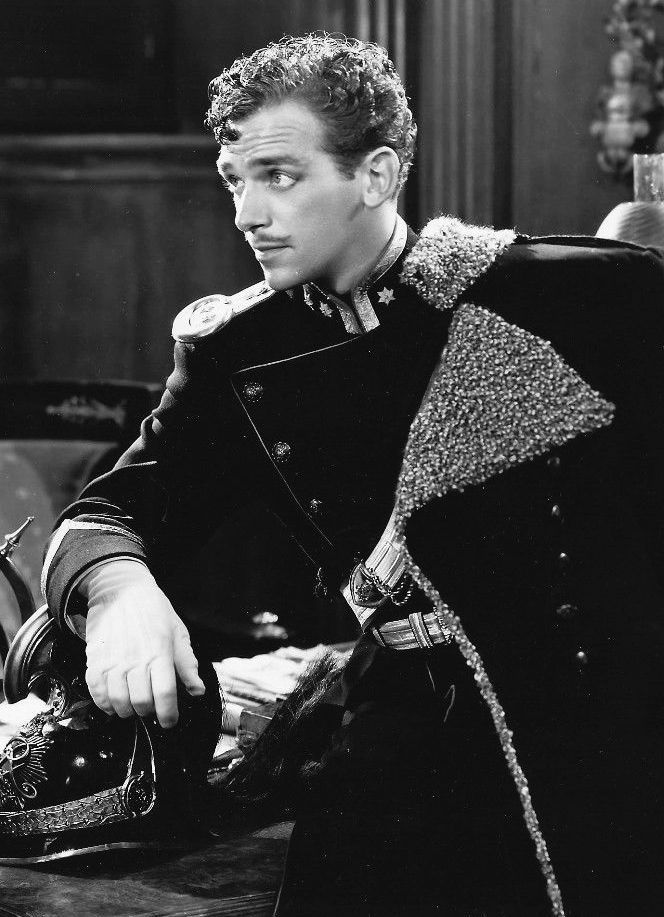
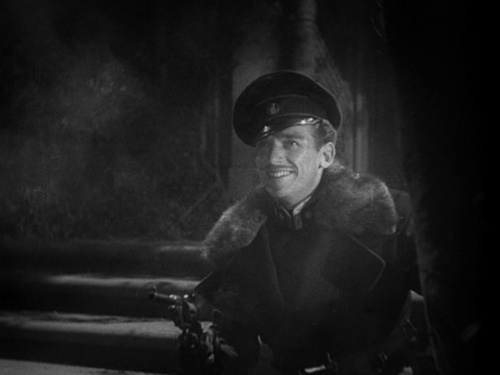
Douglas portrays Robert of Hentzau, the henchman (for lack of a better word) of Duke Michael, the king’s brother who wants to take over the throne.

He shows up for the first time with a crooked, mischievous smile, like in many of his movies, and lets us know immediately he is the comic relief and a completely swarmy cad. A very attractive cad, though, I must say.

Let’s put it this way —Hentzau is all frat boy, and I could not stop watching him when he was on screen.

There was a lot about this movie I could not stop watching — the acting, the scenery, and the exquisitely detailed and breathtaking costumes designed by Ernest Dryden.

The Prisoner of Zenda was originally going to be released by MGM, but was bought by Selznick for his own studio, right around the same time he was working on Gone With The Wind (1939).

If MGM had produced it, they were going to use it as a vessel for more money makers from power team William Powel and Myrna Loy of the Thin Man movies. A musical was also a possibility. That all went out the window when Selznick bought it.

“Zenda was already a proven commodity in print, on the stage and in previous film versions,” writes Roger Fristoe for TCM.com. “And the recent abdication of England’s Edward VIII led Selznick to think that a story of kings and coronations would be timely.”

John Cromwell, a former actor who had previously only directed romantic dramas, was chosen to direct, which some questioned.

Selznick explained the decision had to do with Cromwell’s experience with European audiences.

“In doing a picture like The Prisoner of Zenda, which is aimed at least fifty percent toward a foreign market,” he wrote in a memo. “It becomes important to get a director who at least has the judgment and taste to respect the sensibilities of audiences which are sensitive, particularly in England, about the behavior of royalty.”

Cromwell had a lot of complaints about the cast, though, including Niven and Douglas, who he called lazy and overindulged. He even dismissed Niven at one point because he didn’t find his humor humorous. Ha. But Selznick overruled him and brought Niven back, saying he was bringing life to an otherwise dull role.

 James Wong Howe was the cinematographer for the movie and his work was amazing, in my humble opinion. The various angles, the lighting, all of it.

Look at this fencing scene..the shadows on the walls..

The cinematography, great acting, and astounding costume and set design made this movie overwhelmingly enchanting.

There are a couple of scenes where Colman is filmed talking to himself and I was really interested to know how that was done before the days of digital special effects. Luckily the TCM article explained that for me.

“The special effects created by Howe included a subtle and convincing scene where Colman appears to shake hands with himself. A 3 X 4′ optical glass was placed in front of the camera, and Colman exchanged the handshake with a double, whose head and shoulders were subsequently matted out with masking tape on the glass. The scene was re-photographed with Colman in a different costume and everything matted out except his head and shoulders. When the images were combined, the effect was complete and quite realistic.”

Because I loved Douglas as Hentzau so much, I thought I’d close this post by sharing some quotes that show how delightfully jerky he is in the movie:

“I don’t like women who lie to me. They don’t usually do it, as a matter of fact. I usually do them to them.”

“Someone once called fidelity a fading woman’s greatest defense and a charming woman’s greatest hypocrisy. And you’re very charming. And Michael’s very busy and likely to be more so.”

[during his sword fight with Rupert, Rudolf Rassendyll “retreats” towards the drawbridge’s controls]: “You’d be a sensation in a circus. I can’t understand it. Where did you learn such roller skating?”

To Rassendyll: “Why don’t you let me kill you quietly?”

Rassendyll: Oh, a little noise adds a touch of cheer. You notice I’m getting closer to the drawbridge rope?

Henztau: You’re so fond of rope, it’s a pity to finish you off with steel. What did they teach you on the playing fields of Eton? Puss in the corner?

Rassendyll: Oh, chiefly not throwing knives at other people’s backs. (A reference to a previous scene).

Have you ever seen this version or any version of The Prisoner of Zenda?

What was your impression of it?

Up next in my series will be Gunga Din, one of his more famous movies, from what I’ve read.

The rest of the movies I will be watching include:

The Young At Heart (January 30)

Having Wonderful Time (February 6)

Chase a Crooked Shadow (February 13)

Sinbad The Sailor (February 20)

The Rise of Catherine the Great (February 27)

The Sun Never Sets (March 6)

You can also find my impressions of previous movies in the series, as well as other classic movies here: https://lisahoweler.com/movie-reviews-impressions/