Summer of Marilyn: The Misfits

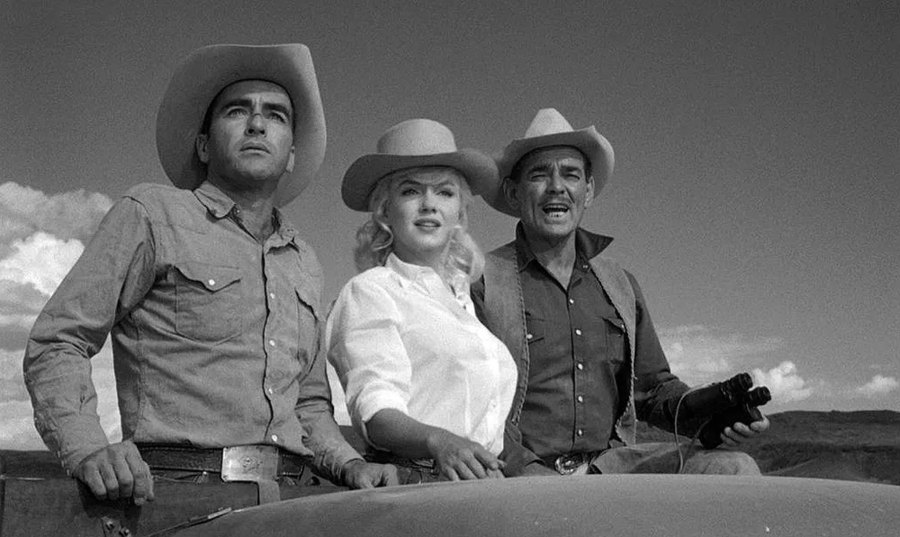
This week is my final week of Summer of Marilyn, where I watched Marilyn Monroe movies.  My final movie was The Misfits with Marilyn, Clark Gable, Montgomery Clift, and Eli Wallach.
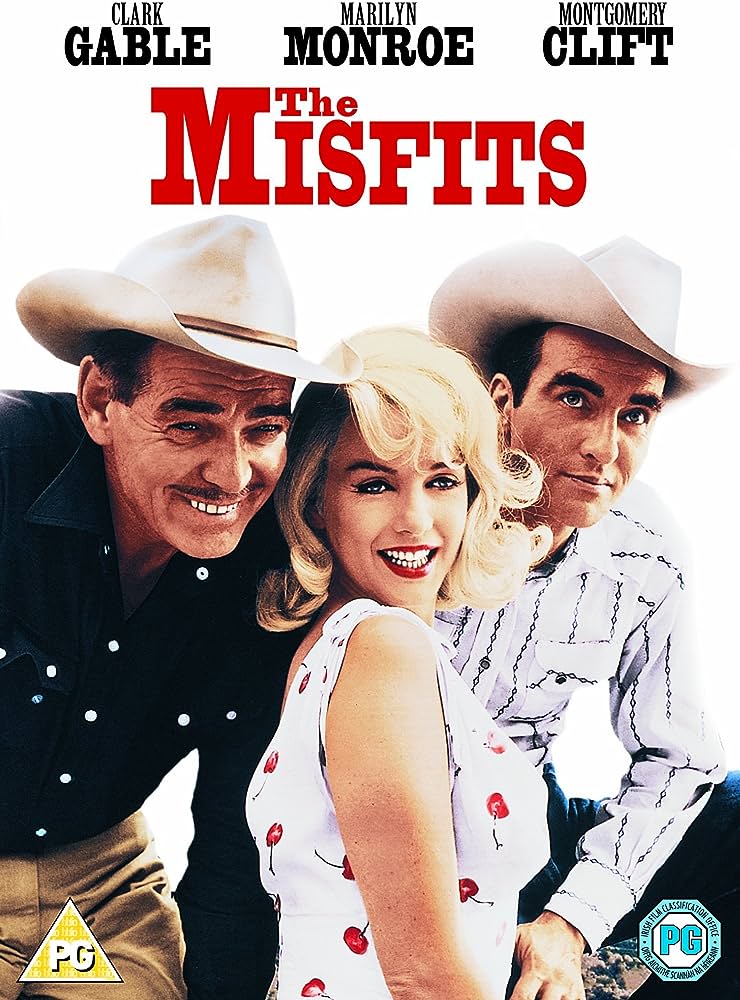
I’m going to be honest and admit right off the bat that I hated this movie in many ways. Part of me was confused why my husband recommended I add it to my list for my Summer with Marilyn feature. Once I watched the movie all the way through, I got why he suggested it but I still know I won’t watch this one again. It was too raw for me at this season in my life.

In other words, it isn’t that movie is bad – it’s that it is depressing with a capital D. Or most of it is. There are some moments toward the end where things start to look up.

I am so glad to be done with Marilyn movies – even if they were good. This capped off a depressing stagger through Marilyn movies that made me sad about her life.

My son says the same thing about Marilyn – watching her movies is sort of depressing when you think about how her life ended up and how used she was through her whole life.

I barely made it through this movie and found myself mentally tuning out  through a few scenes to emotionally protect myself from the darkness and depression.

This movie was shot documentary style and I liked that about it.
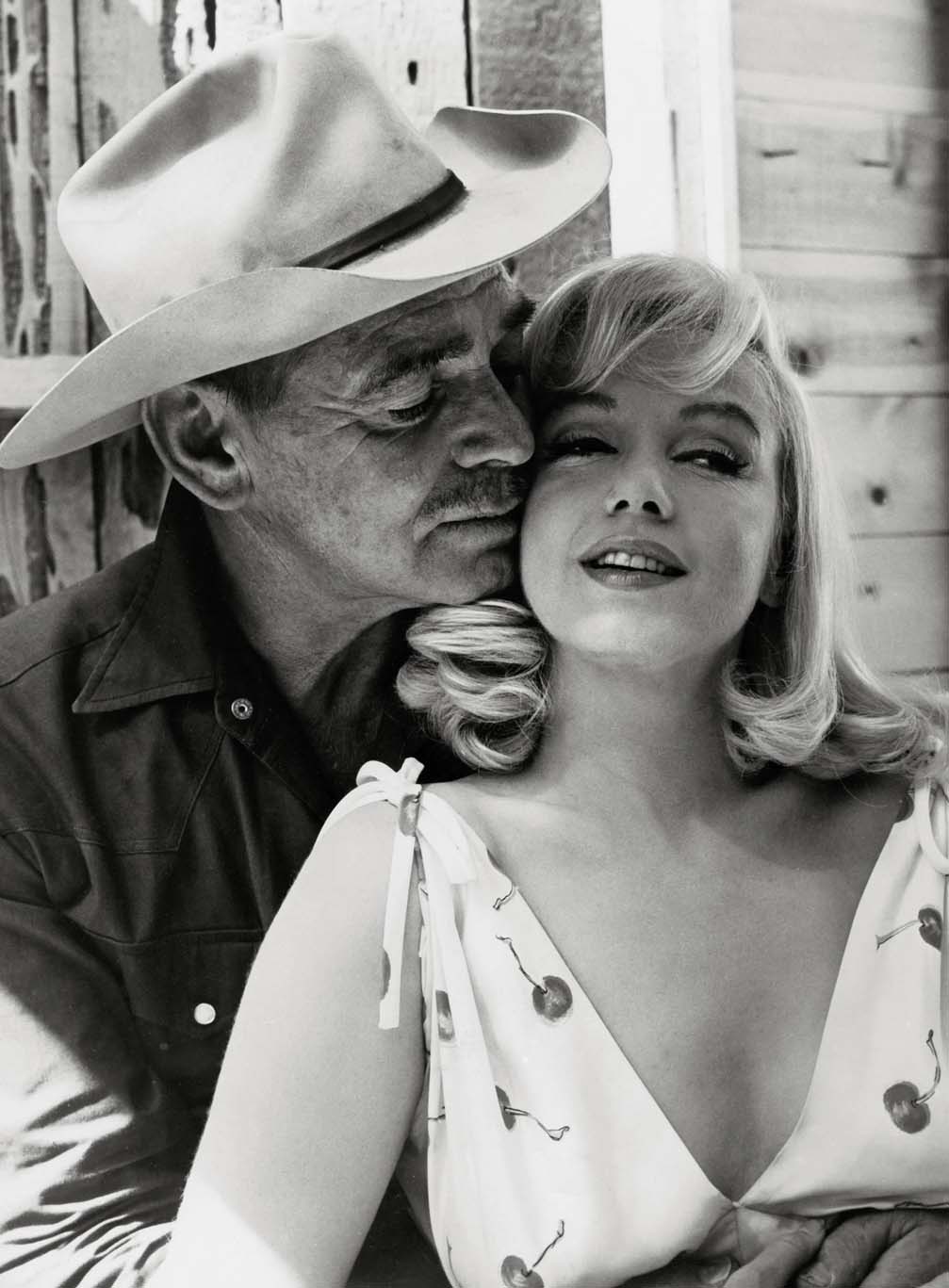
I read another review of this movie and agree with the writer that this is not a movie you can really figure out. You just have to take it as it is.

“Haunting. That’s the word that best describes “The Misfits”.” Jay’s Classic Movies Blog writes. “It sums up this film’s atmosphere, performances, story, visuals, and even its legacy. Filled with symbolic overtones, it is one of the very few films that is better to think about and feel than figure out.

Marilyn’s character is Roslyn Tabor.

Guido is the tow truck driver who drivers Roslyn and her friend Isabelle to town so Rosalyn can get a divorce to a man she’s only been married to a couple of years.

After the divorce hearing, Isabelle and Rosalyn go to get a drink and run into Guido and his womanizing cowboy friend played by Clark Gable. Clark’s character is Gay. No, I mean his name is Gay or Gaylord Langland actually.

I have no idea why but Isabelle and Rosalyn accept Guido’s invitation to go see the home Guido built for his late wife.

The movie is already a bit dark and depressing but gets worse when Guido shows Rosalyn his wife’s room where she died. She was pregnant at the time and both she and the baby died. Guido never finished the house but offers Gaylord and Rosalyn the place if they want to fix it up.

Again, all very weird because Rosalyn agrees and becomes connected to Gaylord who is like 20 years older than her in real life and in the movie.

There is a series of sad moments that finally lead to running into Montgomery Clift who is riding broncos and bulls to earn money but agrees to go up in the mountains with Gaylord to round up Mustangs which they will sell for dog and cat food.
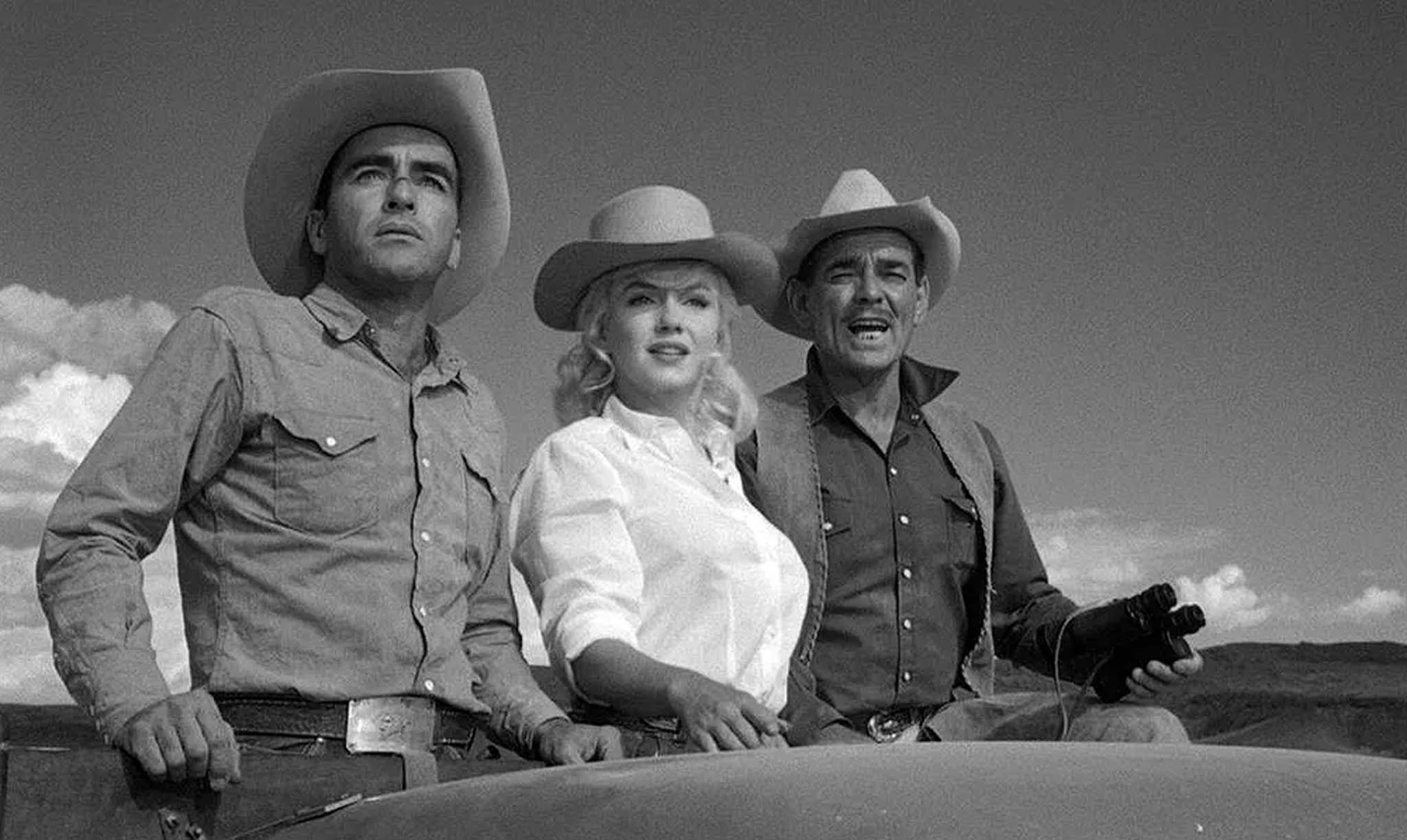
Rosalyn is completely devastated when she finds out they will be selling the horses to be made into dog food. It is just another reminder for her how cruel and awful life can be.

One thing I find super creepy about this movie is how all the men are attracted to Rosalyn and want to get in bed with her pretty much. They just leer at her most of the time and say things like, “Your eyes are so innocent. It’s like you were just born.”

It’s clear by some of the things she says that she’s been through a lot. She’s weird and deep and yet not deep all at the same time.

At one point she asks Guido if he danced with his wife. He says he didn’t because she wasn’t graceful.

“Why didn’t you teach her to be graceful?” Rosalyn asks.

“You can’t learn that,” Guido retorts.

“She died, she didn’t know you could dance,” Rosalyn says sadly. “To a certain extent you two were strangers. We’re all dying aren’t we? All the husbands and all the wives and we’re not teaching each other what we really know.”

And the sad thoughts and melancholy commentary continues from there.

The movie is based on a play by Arthur Miller, who Marilyn was married to at the time. She divorced him the same year and died a year later from a drug overdose.

Gable died before the movie came out. This movie was both of their final completed movies.
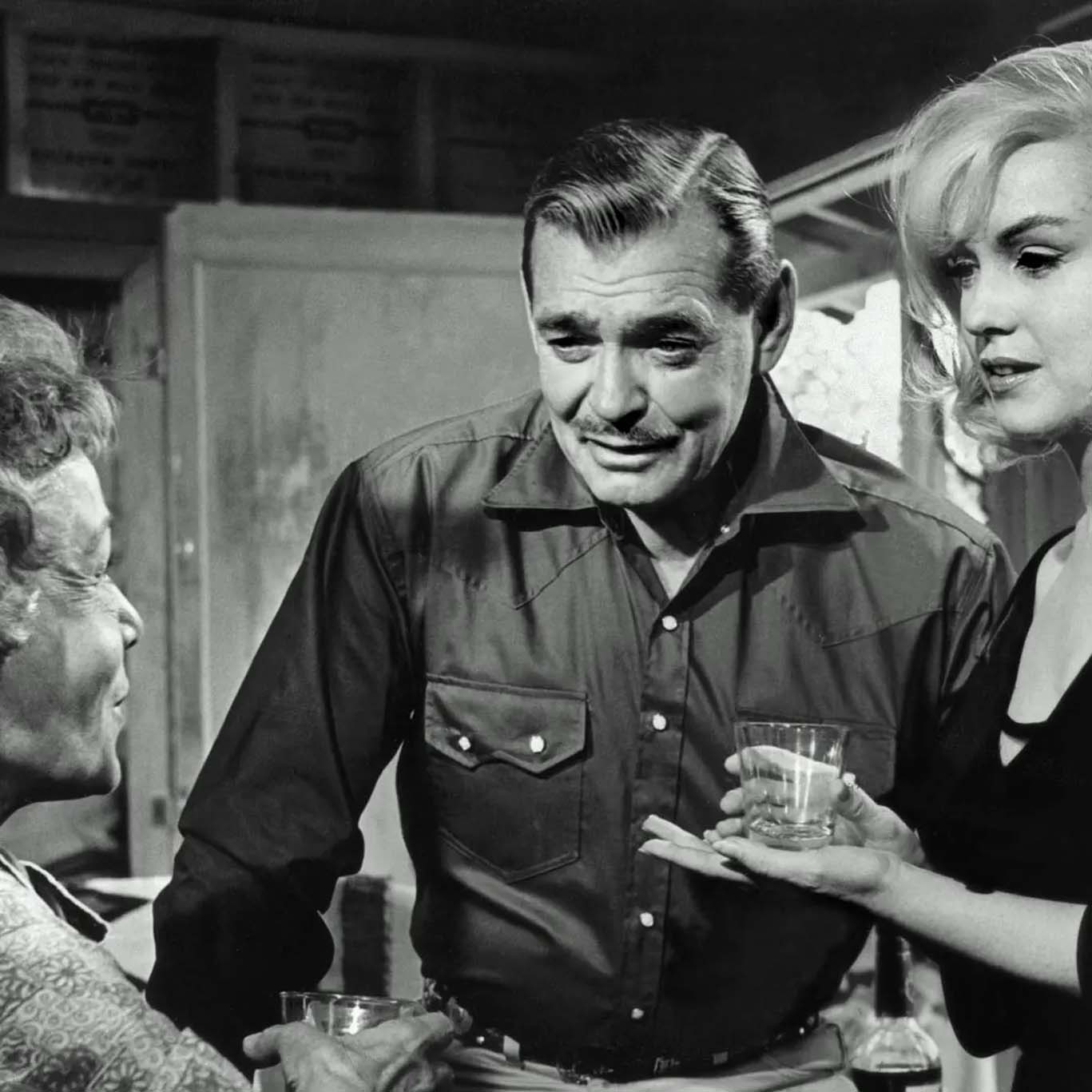
Everyone is very sad and broken in this movie. Like everyone. It’s very depressing. Clark Gable’s character is especially cruddy with no real feelings except for money.

Rounding up the wild horses in the end is like stomping down everything wild and free in life and Gaylord is all for that. He just can’t admit that it is the wrong thing to do. And Guido – well he just wants something in return for doing the right thing.

The best lines and the most intense acting Marilyn does starts when she turns to Guido in shock after he says he’ll stop the horses from being killed if she will consider getting together with him.

“You have to get something to be human? To do what’s right? You’ve never felt anything for anybody in your whole life. You could blow up the whole world and all you’d feel sorry for is yourself.”

Five minutes later she’s in the desert screaming “Murders! Liars! You’re only happy when you can see something die!”

It was like she was screaming at all of Hollywood in that moment and it was a kick in the gut for me.

There was way too much that was too close to Marilyn’s real life in this movie.

A woman used for her looks and her uncertainty and her lack of self-esteem to stand up for herself and decide what she wanted for her own life.

She seems so young in this film in some ways.

Young and hopeful and full of life, but inside she was truly dying – not just her physical body but her soul.

During the filming of this movie her co-stars felt she was on the way to doom and she was.

According to articles online, filming of the movie was hard because the weather was 100 degrees in Nevada, her marriage to Arthur Miller was failing, Miller was rewriting the film as it progressed, and at the end of the day she was drinking and taking pills to get through it all.

This movie might be the most honest movie I’ve seen her in – the way she doesn’t know what to do with her life, her confusion about life, her sadness, her melancholy chats about the meaning of life and the loss of life.

Like I said in the beginning, this whole marathon has made me hurt.

It’s made me hurt for Marilyn but also for all the people in the world who are beautiful on the outside and hurting on the inside. The people who search for their worth in the eyes of other people without realizing they were created for a bigger and better purpose – that life is worth living because there is a lot of good to be experienced, not simply because other people might see them as worthy.

I think sometimes it is better to watch movies and not know the personal lives of the actors in them.

Otherwise I find myself focusing too much on their personal lives and how they intersected with their movie roles.
If you want to see what I said about the other movies I watched, you can find the posts by visiting the search bar to the right and typing in “Summer of Marilyn.”

My next movie impressions will be with Erin from Still Life, With Cracker Crumb when we take on a variety of movies including noir, cozy, fun, and mysterious for autumn.
Summer of Marilyn: Monkey Business and All About Eve

A sinus thing that wasn’t exactly an illness but a weather change thing hit me last week so I ended up forgetting to finish watching my one Marilyn movie and watching the other one. In other words, I have a good excuse for being late on my Marilyn movie impressions.

I’m going to be sharing about two Marilyn Monroe movies this week since I have been so behind on watching and writing about them. They are two very, very different movies on different ends of the spectrum – Monkey Business and All About Eve.

First up: Monkey Business.

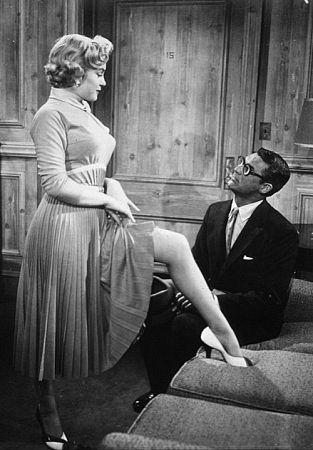
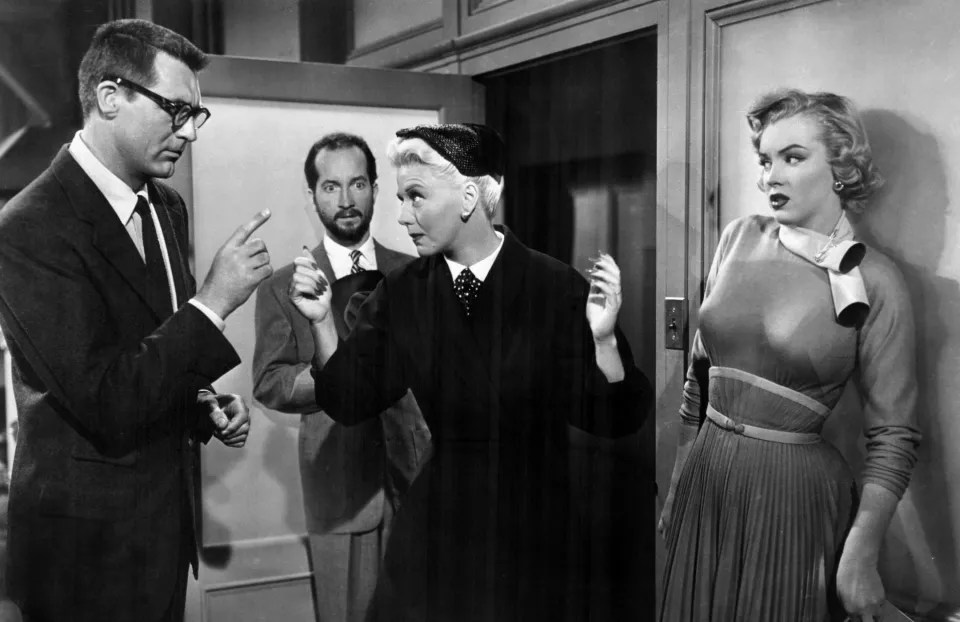
Cary Grant is an absent minded professor in this screwball comedy that he stars in with Marilyn and Ginger Rogers.

Ginger is the straight man (woman) in this one with Cary being more of the goofball with the biggest bottle cap glasses I have ever seen him in. They looked more like something Jerry Lewis would wear.

This is very early Marilyn, so she almost likes like Norma Jean probably looked before she became Marilyn, but not quite. She still has the pouty lips and short hair, but the hair looks darker to me in th is film.

Marilyn plays the secretary of Cary’s boss and in their first scene together she shows Cary the stockings he invented and how they look on her legs. Cary’s character, showing his true nerdy self, is more interested in the stocking than the legs they are covering, of course.

The premise of the movie is rather silly but silly is a wonderful escape from life so I liked that it was silly.

Cary is working on a formula that could help people look and feel younger. It also, apparently, makes them more virile – ahem. The monkey they test it on is very interested in the female monkey, despite being 84 in monkey years. The monkey Is also able to move around like a young monkey after taking the formula.

This is after many of the tests did not yield any results.

 
(As I side note here, I must say that I don’t know many other actresses who have a hip sway like Marilyn. I am completely jealous of it and the shape of her. Sigh.)

It’s the monkey that finally mixes the winning concoction for a type of youth formula and then proceeds to pour it in the water cooler. Cary and his fellow professors don’t know this, of course, so when Cary decides he’s going to be the guinea  pig and take his own formula and then wash it down with the water from the cooler. So Cary believes that his formula is what helps him when he suddenly can see without his glasses and then becomes like a teenager and runs off with Marilyn’s character to buy a new car.

After Ginger learns that Cary tested the formula on himself, she decides she should be the test subject and she takes the formula, which we know doesn’t work, but it tastes so awful she washes it down with the cooler water.

Now she becomes the young and crazy 20 something year old.

She ends up with teenage angst complete with crying and breaking down at Cary. It’s a hilarious but ridiculous scene. I have a feeling Ginger had a blast filming it.

Ginger even gets a chance to dance a bit in the film, even though that isn’t the main focus, when she’s feeling a lot younger.

The film is a low-key romance with the two of them realizing even under the influence of the formula how much they love each other.

Luckily the formula does wear off and when both have had it wear off, they decide the formula could cause more harm than good. Cary is going to destroy the formula and that’s when they decide to make a pot of coffee with the water from the cooler. Ah, yes, I’m sure you know where this is going. Craziness is about to ensue so hold on to your seats.

You’ll have to watch it to see what happens, which reminds me, you can watch it for free on YouTube here:

I pulled a bit of trivia off of IMbd about the movie and some of it was very interesting. Here are a few tidbits:

  • The exterior shots of the Oxly Chemical Co. office building where Barnaby works were actually shots of the Executive Building on the 20th Century Fox studio lot. The building is now known as the Old Executive Building.
  • The sports car used in the film was a red 1952 MG TD Roadster, which was put into storage by 20th Century-Fox after filming wrapped. It was purchased by Debbie Reynolds in a 1971 sale of Marilyn Monroe memorabilia (despite the fact Monroe herself never owned the car). It sustained a dent in the front bumper when Cary Grant hit a fence while driving it. Reynolds had the transmission rebuilt, then put it up for auction in 2011. It sold for $210,000.
  • Among the movie star photos Marilyn Monroe taped to her bedroom wall when she was a foster child were several of Cary Grant. She was thrilled to be co-starring with him in this film, a break-through role in her then fast-rising movie career.
  • Forty year old (forty-one at the time of release) Ginger Rogers was the oldest leading lady to ever star in a Howard Hawks picture.
  • Marilyn Monroe plays the character Lois Laurel. The real Lois Laurel is the only daughter of comedian Stan Laurel of the comedy team Laurel & Hardy.
  • Shares a title with the otherwise unrelated 1931 Marx Brothers comedy “Monkey Business,” though the films have some vague connections: Early in his career, Cary Grant was partly inspired by Zeppo Marx, the team’s parodic juvenile straight man. In addition, the 1931 film co-starred Thelma Todd, whose life, career, and mysterious death parallel Grant’s co-star here, Marilyn Monroe.

This movie was so much fun and I really did enjoy it. I mentioned above that Ginger must have had so much fun filming that one scene but I have a feeling they all had a ton of fun. It was absolute ridiculous and hilarious fun.

All About Eve

Now, Marilyn is not a main actress in this film, but it was one of her first movies and she was considered a standout in it, and my husband suggested it, so I included it in my list to watch this summer. Marilyn was 23 when the movie was made and just about to break her career wide open.

This movie was nominated for 14 Oscars and won six, including best picture. It is the only film in Oscar history to have four women nominated, including Bette Davis, Anne Baxter for actress and Celeste Holm and Thelma Ritter for supporting actress. Released in 1950, it made $3.1 million, more than half of it’s $1.4 million production costs.

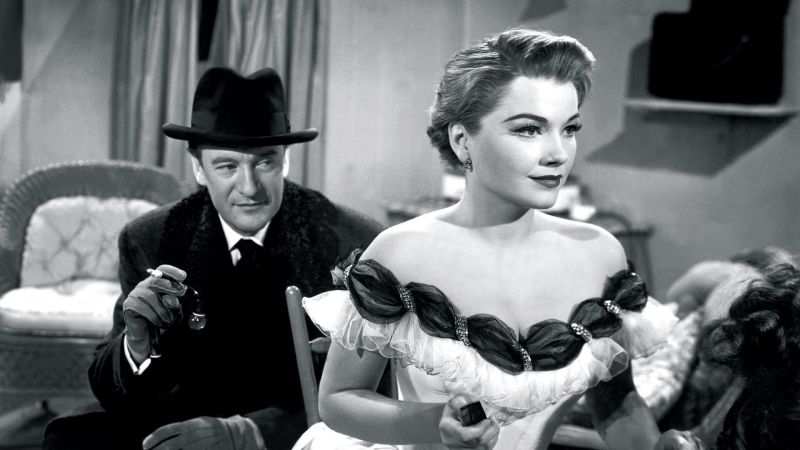
Bette Davis is a famous stage actress named Margo who Eve Harrington, played by Anne Baxter, goes to meet one night after watching her show every single night during its run.

This is my first movie with Bette, by the way, and it did not disappoint.

Eve is very peculiar to say the least as this movie starts. She tells the actress and the producer and writers about her sad life of losing her husband early in their marriage and staying in San Francisco to make a new life for herself and her love of acting and the theater.

You know right away that something just feels off about her, even though the movie starts with her being honored as a well-known actress. She really inserts herself into the lives of these people and weasels her way into the acting jobs she wants, pushing others out of the way for it.

With her sob story, Margo welcomes her into her home and she becomes her confidant, her assistant, and everything you can think of that requires Eve to wait on Margo. It’s clear that Eve wants Margo’s job and as time goes on it is clear she’ll find a way to get it, mainly by being Margo’s everything. Actually, she’s a little too everything. She starts doing things that Margo doesn’t ask her to do and making herself look better than Margo. It’s a very strange obsession.

Margo begins to notice how attentive Eve is to her boyfriend and everything else. She also begins to compare herself to Eve and feel old around her. To her it’s time for Eve to move on because she has a feeling Eve is much more interested in taking her place, not just waiting on her. |

Marilyn doesn’t come in until more than 40 minutes into the movie and I didn’t even recognize her. She was beautiful, sure, but her hair was styled differently and she was a minor character. It was clear she was ready for stardom though and George Sanders uttered a premonition of sorts when he said, “Well done. I can see your career rising in the east like the sun.”

And soon after this movie, it did just that.

Her character Miss Casswell has the middle name of the author of the short story that was never credited for her part in the movie – Mary Orr.

She’s so young looking in the movie – it’s crazy. And, of course, she’s sort of passed off as someone sent in to make producers and directors happy because she’s sexy and flirtatious.

I searched online to see what critics said of Marilyn’s performance and found a few opinions. Here s one:

Lyvie Scott on Slashfilms.com said Marilyn stole the scenes she was in in All About Eve and I’d have to agree. She had some of the best lines, such as where Eve says she doesn’t know what she’d talk about with Dr. Dewitt (George Sanders) and Marilyn says, “Don’t worry about it. You won’t even get a word in the whole time.” Or something along those lines.

A bit off topic here, but George Sanders always reminds me of John De Lancie who played Q on Star Trek.

Scott wrote of Marilyn, “Monroe’s role in “All About Eve,” though small, is one of the most memorable of the film. It’s difficult to focus on anyone but Monroe when she’s in the room. Knowing just how famous she would become, it all feels like a testament to her inescapable star power.”

Scott, of course, details what others detail about Marilyn on film sets throughout the years. She was often late and had a hard time nailing her lines and was a bit difficult to work with overall. Marilyn tried to blame her inability to remember her lines on nerves and that very well may have been the case since she was acting next to Bette Davis and the fact that she’d only come off the success of one other film, “The Asphalt Jungle” before this.

Davis wasn’t really buying her excuses. According to Scott’s article: “Unfortunately, Davis was less than impressed with Monroe. Famously temperamental on set, she was already put off by the younger actress’s tardiness. And after so many retakes for a scene which, to her, must have been a breeze, Davis apparently snapped — and Monroe had to excuse herself to vomit offstage.”

Read More: https://www.slashfilm.com/806889/filming-all-about-eve-was-more-than-marilyn-monroe-could-handle/

It’s just so humorous to me that in this movie they pan Marilyn’s audition to be the understudy of Bette’s character when she would rise to stardom faster than almost all of them, except Bette. She might not have been as good of an actress, especially when compared to Bette, but she still seemed to shoot up even faster – probably because of her looks (aka breasts and hips).

I’m talking more about Marilyn in this post because my feature is called Summer of Marilyn, but I should be talking about Anne Baxter and Bette Davis more, especially considering Marilyn was only in this movie about ten minutes, if that. Both of the other actresses were very good in this, even though I could not stand the way Anne Baxter talked and how overly dramatic and maudlin she was. That was, however, her character so, in other words, she was brilliant in making me hate her.

As for Bette – wow. She knocked it out of the park. Here is what Roger Ebert said about her performance on his site:

Growing older was a smart career move for Bette Davis, whose personality was adult, hard-edged and knowing. Never entirely comfortable as an ingenue, she was glorious as a professional woman, a survivor, or a b***** predator. Her veteran actress Margo Channing in “All About Eve” (1950) was her greatest role; it seems to show her defeated by the wiles of a younger actress, but in fact marks a victory: the triumph of personality and will over the superficial power of beauty. She never played a more autobiographical role.”

Besides Bette and Anne Baxter, George Sanders was absolute perfection at being a dirty, crooked journalist. His speech toward the end of the movie was just absolutely outstanding and  

She seems so innocent and idealistic but deep down she’s just pretty selfish to me. She wants a career and she doesn’t care whose coat tails she rides, or whose head she steps on, to get there. She’ll do it with big, watery eyes and a tipped head, of course.

The film is mainly about jealousy and ambition and the tangled web that both can weave, but it is also very much about the dread of getting older, especially for women. Margo feels that Eve is stealing everything from her because she is young. Off screen, Bette Davis was terrified of growing old and this part fit her well, as Ebert said. When she was talking about the dread of growing old in the movie, she was speaking from personal experience, not just from the experience of the character.

At one point she says, “Funny business, a woman’s career — the things you drop on your way up the ladder so you can move faster. You forget you’ll need them again when you get back to being a woman. That’s one career we gals have in common is being a woman.”

So far All About Eve has been one of the best films I’ve watched but not because of Marilyn, even though she was great in it. The best film I watched with her in it was a tie between Niagra and Some Like it Hot. We will see if The Misfits knocks one of those movies off the list when I watch it later this week.

Have you seen either of these movies? What did you think?

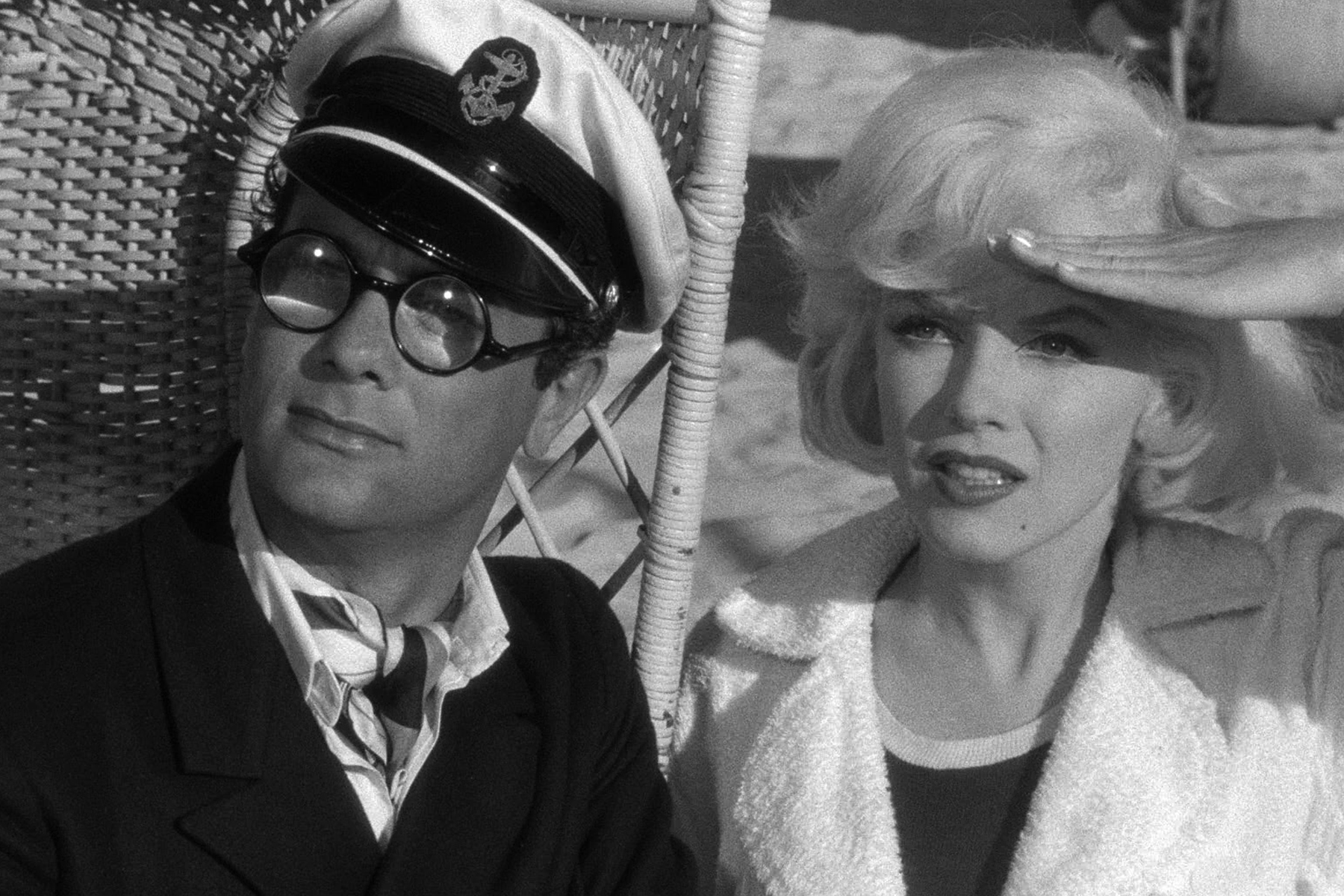
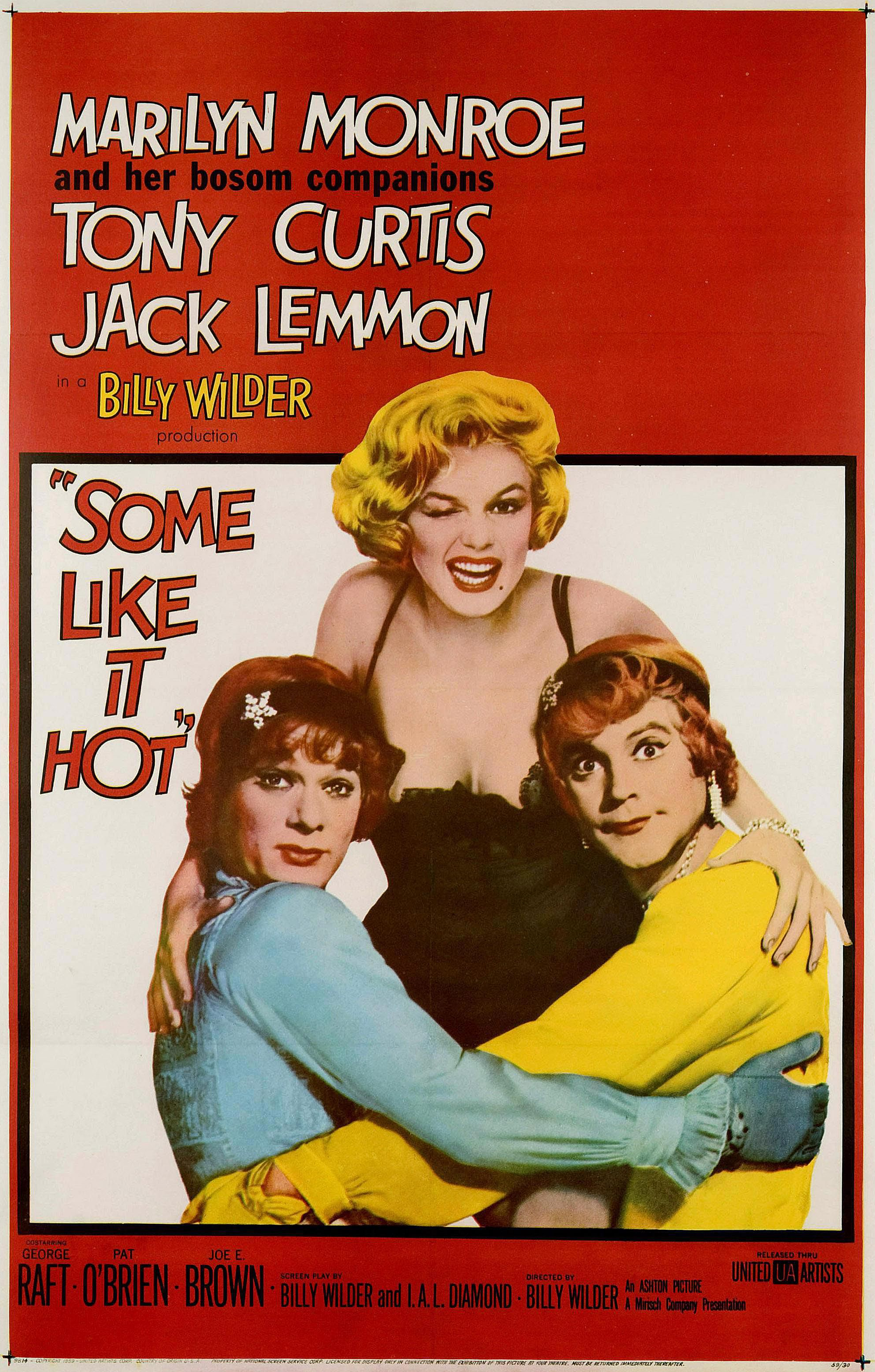
Summer of Marilyn: Some Like it Hot

Last week the days got away from me and I completely forgot to watch my Marilyn movie, let alone write about it.

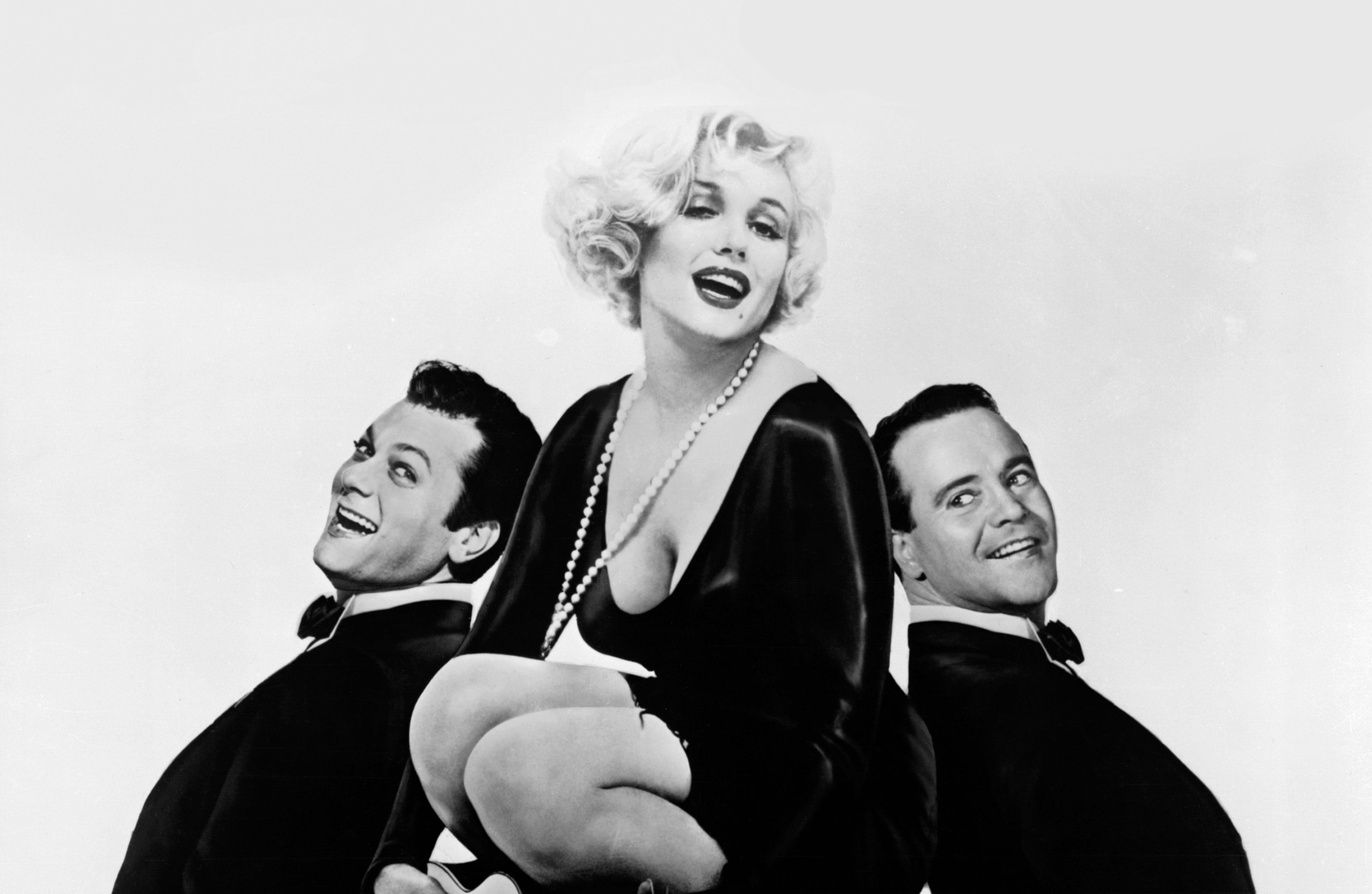
I’m back this week, though, talking about Some Like It Hot with Marilyn, Jack Lemmon, and Tony Curtis.

This was a crazy, hilarious, insane film that had me gasping and laughing through the entire thing. It was released in 1959 and directed by Billy Wilder.

It was something I needed as I’ve felt like my brain has been racing lately with worry and a rushed feeling.

The movie takes place in 1929 with booze being smuggled into a funeral home that is actually a speakeasy.

They are musicians – Jerry and Joe.

The speakeasy gets raided and they don’t get paid

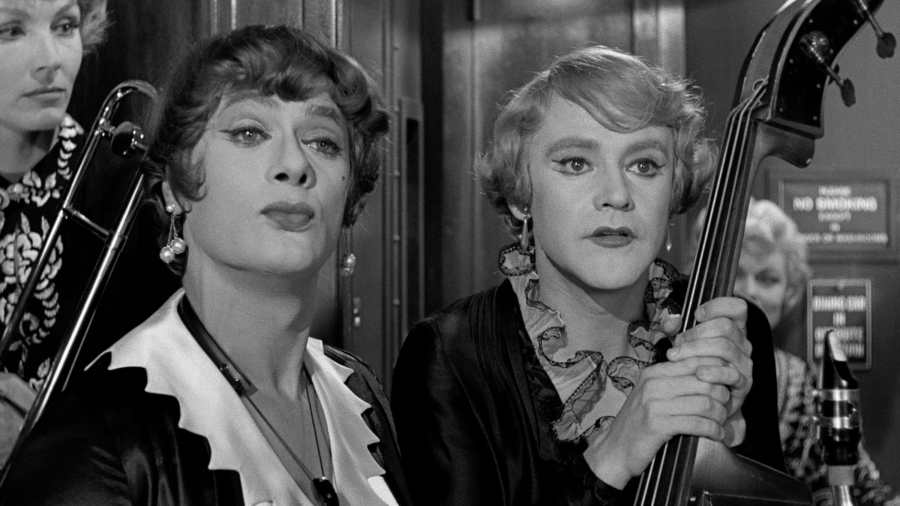
They need money so when they hear that a band needs a couple of replacement girls they decide they need to become women – or well, sort of anyhow. Tony nixes that idea though and says they need to take another job instead but when they go to pick up the car, they witness a mob murder. Now they are forced to dress as women and get as far away from Chicago as they can, which in their case is Florida with the female band.

They buy the clothes and the wig and the makeup and board the train.

That’s when they meet Marilyn, a.k.a. Sugar.

Sugar is a bit of a drinker and they can’t help checking her out, but trying to pretend they aren’t checking her out.

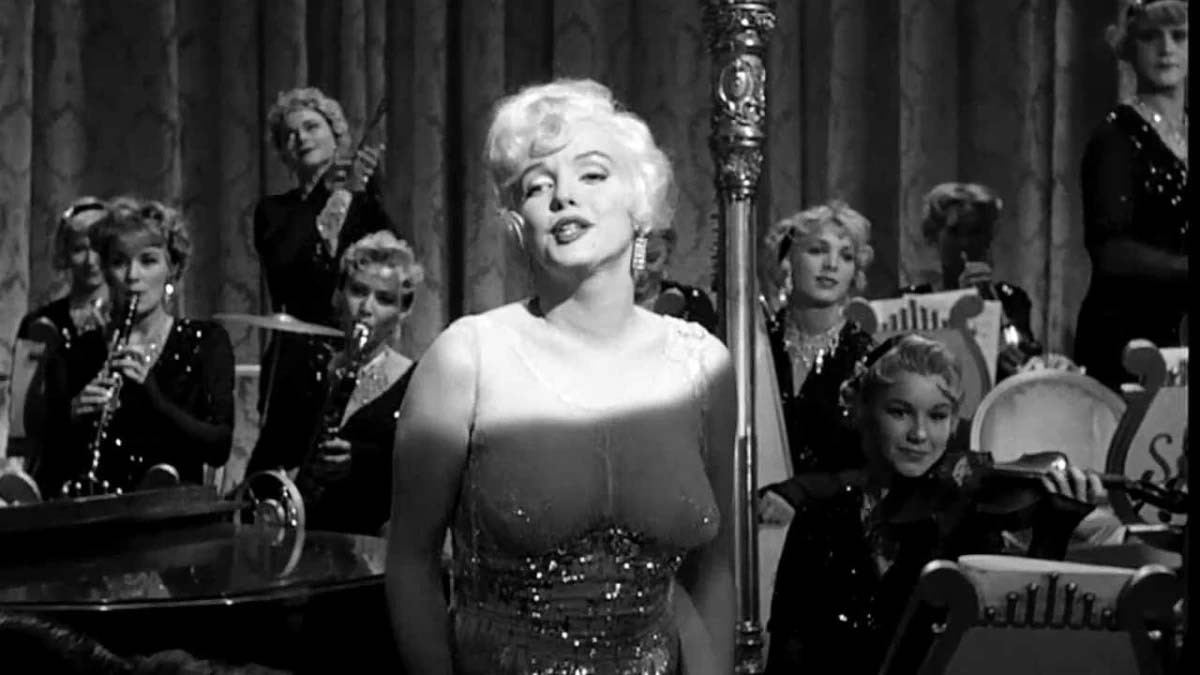
Marilyn sings and dances in this one and shakes a lot which Jack and Tony very much enjoy. Jack, in fact, says he would like to have a cup of that sugar. This is the movie where Marilyn sings, “I Want to be Loved By You” with THAT dress. The one that had to be filmed partially in the dark because it sort of looks like she’s half naked, even though there is fabric there.

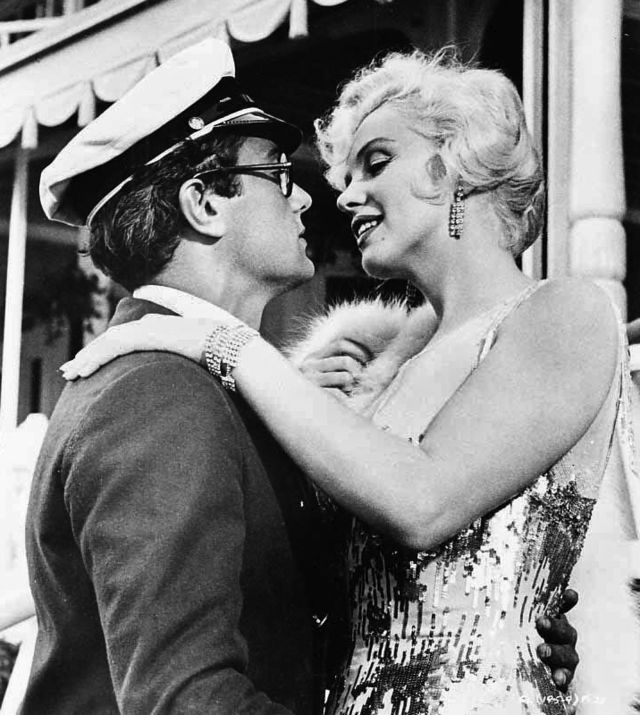
It is clear early on that Sugar is an alcoholic who needs her booze. At one point, she sneaks into Jack’s bed looking for booze, which, of course gets him hot under the collar. While it’s Tony that keeps reminding Jack that he is supposed to be a girl, Tony himself gets a bit attached to Sugar himself. When he learns that Sugar dreams of meeting and marrying a millionaire, he decides he’s going to find a way to be that millionaire for her.

While pretending to be a millionaire he does a hilarious impression of Cary Grant, which just cracked me up, especially when he said to Jack later something like, “Of course I’m faking it. No one really talks like that.”

On and on the craziness went on in this movie until my head was spinning with it all and with laughter.

There are a lot of sexual innuendos in the movie, including one where the band leader says,  “A reminder to all you boys out there, all my girls are virtuosos and I intend to keep it that way.”

When Tony reminds Jack that he’s a guy and not a girl, he tells him, “Jerry, there is another problem. Like what are you going to do on your honeymoon?”

That questions ends up being a bit rhetorical as Jack’s character says they haven’t decided where they will go on their honeymoon yet.

According to information online, the movie was made for $2.9 million and made $49 million. Overall since the time it was released, it has made $83 million internationally.

My husband said he read that Marilyn could not stand Jack Lemmon so I Googled to see if this was true. According to the site Slashfilm.com, it wasn’t really that she didn’t like Jack, she just didn’t like anyone at that time. She was lashing out at a lot of people and they got caught in the crosshairs. She was abusing medication at the time and dealing with depression. I guess it is fitting that her character was an alcoholic since she was one in real life at times too.

She was also pregnant during the making of the movie and later went on to have a miscarriage after filming ended. I believe she had a few during her career and I’m sure this was part of her issues during the filming.

She and Tony Curtis actually dated in 1949, which I found interesting. It was only for a couple of months, according to Curtis.

Jack said he liked Marilyn, but felt sorry for her because he could tell she was troubled. He had less scenes with her than Curtis and didn’t have to deal with her habitual lateness as much.

Wilder was completely frustrated with Marilyn through most of the filming because she often could only get through a small amount of dialogue part of the time, after showing up late, according to a couple of articles. She cost the production half a million dollars with all her delays and he made it clear to her he was not happy with her when he held a cast party when the filming was done and did not invite her. She decided she didn’t like him either and told his wife to tell him to do something very anatomically impossible for a person to do with himself.

Years later he said that he didn’t have issues with Marilyn as much as she had issues with herself. He also said that her discombobulated and erratic behavior actually led to some adlibbed moments that made the movie a classic. Still, I think he would have preferred they didn’t have to write her lines on the inside of drawers because her brain was so addled from drinking too much and taking pills.

Wilder and Marilyn did make up before she passed away, especially because he still considered her a brilliant actress despite the issues she had during filming.

A bit of trivia from IMBd:

  • Some people asked why Curtis was so much better at walking like a woman or having female mannerisms than Lemmon and he told an interviewer it was because he tried so hard to be a female he was very tightly wound and overthinking it. Lemmon, on the other hand, “ran out of his dressing room screaming like the Queen of the May,” kept much more of his masculine body language.”
  • Tony later said that he asked Wilder if he could imitate Cary for his stint as the millionaire in the movie. Wilder liked it and they shot it that way. Apparently, Grant saw the parody of himself and stated, jokingly, “I don’t talk like that.”
  • Marilyn wanted the movie to be shot in color (her contract stipulated that all her films were to be in color),but Wilder convinced her to let it be shot in black and white when costume tests revealed that the makeup that Tony and Jack wore gave their faces a green tinge.
  • Marilyn didn’t originally didn’t want to play Sugar. She said, “I don’t want to play someone who can’t tell Daphne and Josephine are really men dressed in drag.”

Another tidbit that I pulled off Wikipedia was that this movie was made without the approval of the Hayes Code, which was a code in the “old days” that determined what could and could not be in movies. It wasn’t long after this movie was released and became a huge success that the Hayes Code was discontinued.

Oh, and I did figure out that the name for the movie comes from the music when Tony asks if Marilyn plays her music hot and she says she does and he says he likes his music slower but “Some Like It Hot.”

Have you seen Some Like It Hot? What did you think of it if you have? Let me know in the comments.

Up next I’ll be watching The Seven Year Itch.

After that I will be watching:

July 20: Monkey Business (because it’s Marilyn and Cary together)

July 27: All About Eve

August 3: The Misfits

Summer of Marilyn: Gentlemen Prefer Blondes

I am watching Marilyn Monroe movies for the summer.

I have a confession.

I think she might annoy me a bit.

I know. Isn’t that awful?

It’s just that her breathy voice and the weird things she does with her mouth are so distracting to me. I know. Sacrilege to any hardcore Marilyn fan.

Maybe all her little gestures are annoying to me because I am a heterosexual woman and none of that does a thing for me.

Regardless, I’ve heard so much about her over the years, I figured I should actually watch her movies and see if she was any good or not.

So far, I have watched two of her movies all the way through and have decided that, yes, she was a good actress, but she was also put in a lot of stereotypical roles because of her large chest and pouty lips. I am hoping not all of her movies were like that, but these first two on my list here.

Of course, I have only watched the screwball comedies she was in so they would focus on her beauty as part of the plot points.

This week I watched Gentlemen Prefer Blonds with Marily and Jane Russell.

The movie starts with Marilyn getting proposed to – well, she’s getting a ring at least – by a bit of a nerdy man. That’s a theme in her movies – she’s always attracted to nerdy men with glasses.

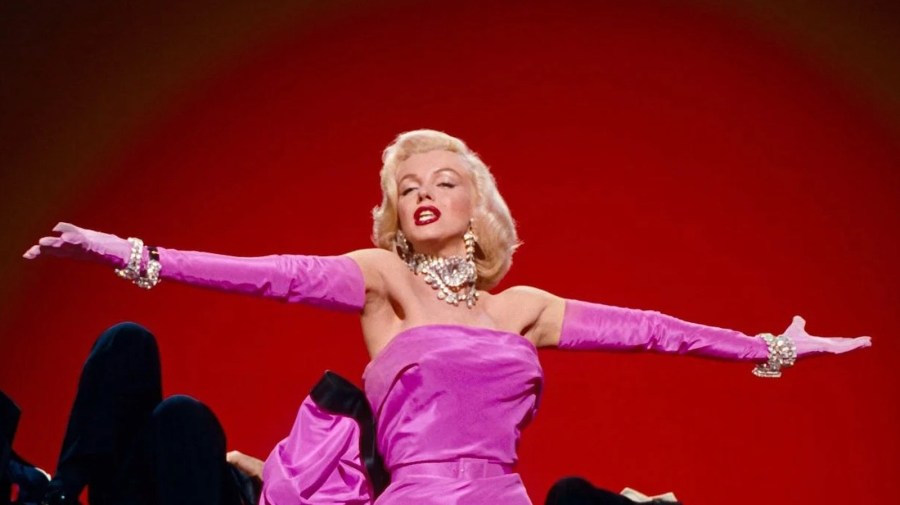
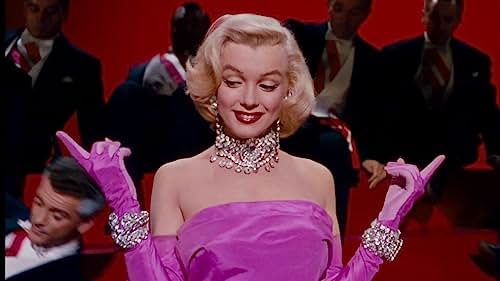
As I started to watch the movie, I remembered I have seen it before. It has been years since I have seen it, though, so I totally forgot it was a musical. I should have remembered since it is the movie where Marilyn performed Diamonds Are a Girl’s Best Friend.

Anyhow, the movie continues with Marilyn and Jane, who are showgirls, deciding to go on a cruise to Europe. The women are also best friends even though they are very different. Marilyn (Lorelei in the movie) likes a man to be rich and buy her diamonds while Jane (Dorothy) likes a man to be fit and doesn’t care about wealth.

HyperFocal: 0

They both like to make men watch them, however.

There is a lot of skin shown in this movie, including a scene where Jane dances with members of the Olympic team who are also traveling on the ship to Europe. They are wearing only tiny, skin-colored shorts, the entire time. Little Miss asked, “Why are those men naked?” I realized at that moment that watching the movie with her in the room might have been a bad idea, even though it is way more tame than the movies out today.

There are several ridiculous moments as a private detective follows Lorelei on behalf of the father of her fiancé, who thinks Lorelei is simply a gold digger. The private detective and Jane fall for each other, which, of course, complicates things. There is also this whole thing about Lorelei trying to con an old, rich, married man out of a diamond tiara and later being taken to court to answer for the theft of it. Then there is that sexy dance scene in court by Jane, which was totally bizarre to me, but supposed to be funny. I’m such a prude – I just found it disturbing.

When I watch Marilyn movies and see how absolutely gorgeous she is, I am one, jealous, but two, aware of what it took to get her to that place of beauty because I once read an article about all the plastic surgery, dental implants and other physical changes she had to read that perfection.

As I watched the movie I also wondered if her movie voice was really her voice. Like is that how she talked when she asked for a fresh towel at a hotel or asked her assistant to get her a cup of tea? Or did she yell at people with a thick accent – like a Brooklyn or Boston accent? “hey! I’m walkin’ here! Whatreya’ doin’”

I mean, why did she talk like that? Was it considered sexy back then? I find it a little annoying today but that’s probably because I’ve heard so many parodies of her voice.

After a Google search, I learned from Vogue magazine that the breathy, whisper she spoke in was something she used to overcome a childhood stutter. She kept it for her acting and it became her signature voice. So, yes. It was her real voice and she used it in her everyday life. Not like Michael Jackson who totally faked that high voice, but I digress….

Now, When I saw Marilyn sing that famous song, I wanted to know if it was her voice so I Googled that too. The answer was yes and no. She did most of the singing, but an actress and singer Marni Nixon actually supplied part of the notes – the higher notes – which are the notes I thought weren’t hers.

Jane Russell matched Marilyn in this movie with her talent and humor. I do believe she was the better singer, but she and Marilyn were such a fun pair and worked well together.

The bottom line is that I liked the movie, but, as a self-declared prude, there is a lot I could have done without. For one, I didn’t need to see Marilyn and Jane in such skimpy clothes so much. I definitely didn’t need to see all the cleavage and I found myself rolling my eyes more than once at these women essentially using their bodies and sexuality to get what they wanted. Men were portrayed in this movie as too stupid to think when the women were around because, according to the movie, they were both too hot to handle. Men couldn’t be around them without melting into a sexually aroused mess.

I know that some will say that a movie like this was needed to show that women can be in control too and use their sexual prowess to get what they want – like men have been doing for years – but I don’t like it when either sex does that. That doesn’t mean that I didn’t have some fun watching the movie. It just wasn’t my favorite movie because the whole theme of “Marilyn and Jane are hot so men will fall over them” just was overplayed and overused in my opinion.

If you would like to watch the movie I am sure you can find it streaming, but I also found it on Youtube here:

Next week I will be watching Some Like It Hot, which is another screwball comedy with Marilyn, Jack Lemon, and Tony Curtis.

If you would like to join in watching the movies with me, here is the rest of the schedule for the Summer of Marilyn:

July 6: Niagra

July 13: The Seven Year Itch

July 20: Monkey Business (because it’s Marilyn and Cary together)

July 27: All About Eve

August 3: The Misfits

Summer of Marilyn: How to Marry A Millionaire

Two weeks ago I watched How to Marry A Millionaire and decided that weekend I would watch Marilyn Monroe movies for the summer, similar to how I watched Paul Newman movies last summer.

How to Marry A Millionaire stars Marilyn, Lauren Bacall, and Betty Grable and was considered a screwball comedy.

It was released in 1953.

It follows the story of Schatze Page (Lauren), Loco Dempsey (Betty), and Pola Debevoise (Marilyn) who are all looking for ways to marry a rich man and live the high life.

Or at least that’s the goal when the movie starts.

As we progress into the movie, we see the goals of the women begin to shift based on the men who they end up meeting along the way.

Each woman works on snagging a rich man and to do that they need a home base, so Schatze finds a home to rent from a man who is out of the country. She’ll need money to pay for the rental, though, so she begins to sell off the fancy furniture in the home, even though it isn’t hers.

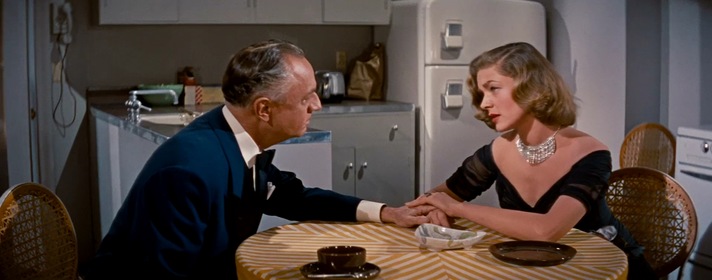
Eventually, she and the other women will meet men who they decide they can snag and marry. Schatze meets William Powell, one of my favorite “classic Hollywood” actors. He’s 30 years older than her and a widower. More importantly, he’s rich.

She sets out to make him her own, but there’s a man named Tom who is trying to get her attention. She wants nothing to do with Tom, though, since he’s poor and won’t support her high-end needs.

Marilyn’’s character meets a wealthy businessman who is also a crook and she’s about to run off with him when she gets on the wrong plane and meets the man who owns the apartment on the plane. The apartment owner, it turns out, is trying to escape the IRS.

Betty’s character meets a married man and thinks she’s on her way to a Elk’s Club meeting in Maine, but has actually been invited to his personal lodge. She tries to leave when she realizes what is going on, but comes down with the mumps and is quarantined. While there, and after the man she came with becomes ill himself, she meets a poor but charming forest ranger and has to decide if she wants to pursue love or money.

Betty was supposed to be the star of the film, according to some articles, but, of course, Marilyn ended up with top billing.

According to the blog, Classic Movie Hub, Fox created the movie using anamorphic lenses developed by Henri Chretien in France. These lenses “expanded the audience’s peripheral vision by creating a panoramic, curved screen triple the size of a conventional screen,” according to the blog. This was in an effort to combat the rise of televisions in the American home.

Fox had two things to compete with television with this movie – Marilyn and these new lenses. They made a movie called The Robe first with the technology, however, because they felt that movie would appeal more to a wider audience and was more family-friendly.

The Robe was about a Roman centurion who commanded the unit responsible for the crucifixion of Christ.

(I think it is interesting that the woman in this photo by Lauren’s name looks nothing like her.)

Marilyn originally wanted Betty’s role since that role had more “snappy lines.” Playing Pola would mean playing a nearsighted woman who felt insecure wearing her glasses and often slammed into walls when she took her glasses off. Marilyn wasn’t confident in her comedic skills and wanted to back out, but the director convinced her to continue and she managed to pull it off amazingly well.

Lauren Bacall was already a well-known actress at this point and I felt she really held the group together.

In some ways I felt Marilyn did overshadow the others with her performance and not just because of her beauty. She pulled off the quirky-plus-innocent role well.

I felt like Lauren was out of place in a comedy but that’s probably because I am used to watching her in Noir-type films with Humphrey Bogart (who she later married).

Betty impressed me with her comedic skills and matched Marilyn’s quirkiness. I guess Lauren was more of the “straight-man” in the trio.

I loved William Powell in this. None of the other men really stood out to me, but that may be because William was so sweet and doted on Lauren’s character even though he really should have known she was a gold digger. And because I have a soft spot for him after watching him in the Thin Man movies.

I won’t share the ending of the movie, but I will say that the women redeemed themselves from their selfishness as the movie progressed.

As for stories from the set, the Classic Movie Hub blog relayed that Lauren and Betty were annoyed that Marilyn was late on set a lot and there were other minor snits between the three women.

From the blog: “When the three female stars assembled on the soundstage for the first time, the press awaited a mushroom cloud of conflict and cattiness or, at least, Grable’s bitter resentment of Monroe. However, Grable immediately embraced Monroe and ceremoniously told her, “Honey, I’ve had mine. Go get yours. It’s your turn now.” In response to Bacall grumbling about Monroe’s tardiness, Grable said, “Honey, give it to her. Let’s listen to records until she gets here. It’s her time now. Let her have fun.” Before long, Bacall found herself also feeling protective of Monroe.

I think this is my first time watching a movie with Marilyn all the way through. I enjoyed it and am looking forward the other films, though I know at least a couple of them are much darker than this one.

The next movies I plan to watch and when I plan to write about them are:

June 22: Gentlemen Prefer Blonds

June 29: Some Like It Hot

July 6: Niagra

July 13: The Seven Year Itch

July 20: Monkey Business (because it’s Marilyn and Cary together)

July 27: All About Eve

August 3: The Misfits