Winter of Cagney: Taxi (1931)

This winter I’m watching movies with James Cagney.
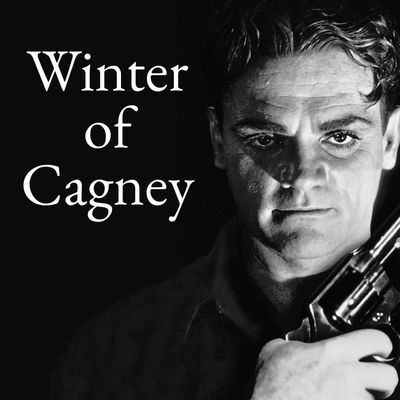
This week I was supposed to watch Man of Many Faces but, but unfortunately, I didn’t check to see if it was streaming anywhere before I decided to watch it (at my husband’s suggestion) and I couldn’t order a Blu-Ray, which seems to be the only format available to watch it on, before this week.

I am hoping to get a copy of it before the end of this feature so I can watch it and write about it.

What I ended up doing was just moving up my movies I had scheduled and placing Man of Many Faces at the end of the list.

Taxi was one of Cagney’s first breakout films, right after his actual breakout film, The Public Enemy.

This is the movie where he almost says the words everyone has always tried to say he said: “You dirty rat.”

What he actually says in the movie is, “”Come out and take it, you yellow-bellied rat! Or I’ll make you take it through the door!”

If you want to know why he said those words, you’ll have to watch the movie.

This is also the first time Cagney showed us he can dance as he participates in a dance competition during the movie.

According to TCM.com, “To play his competition on the dance floor, Cagney recommended his pal, fellow tough-guy-dancer George Raft. The scene culminates in Raft winning the contest and getting slugged by Cagney for his trouble. Within a year or so, Raft — uncredited here — would emerge as a Warner Bros. star in his own right.”

The story of this hour-and-nine-minute-long movie is pretty simple.
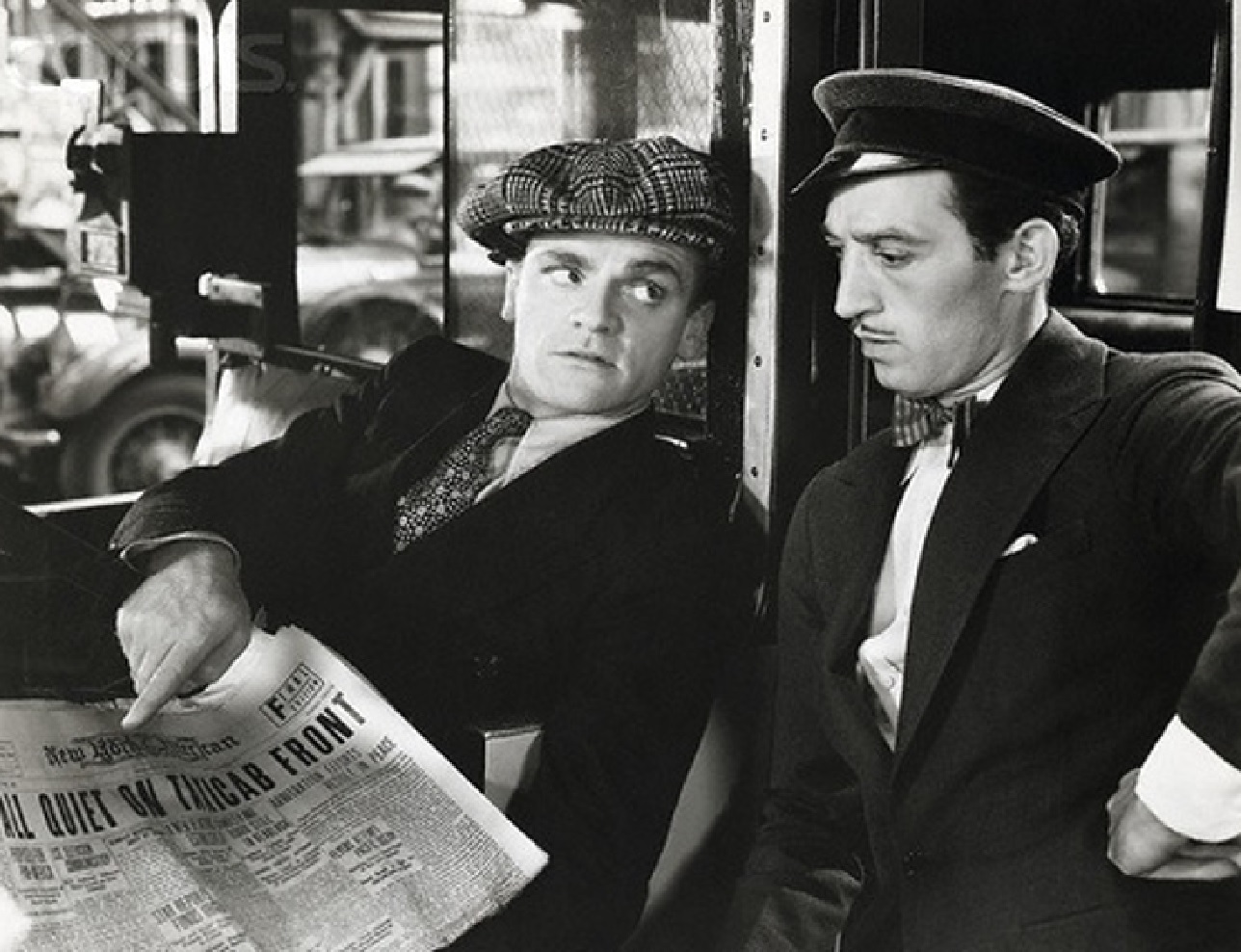
Cagney plays Matt Nolan, an employee of an independent cab company in New York  City during a time when a large cab corporation was trying to push independent cab companies out of business.

Matt wants to date Sue Riley (Loretta Young), the daughter of his boss who gets sent to jail after he shoots the man who trashed his cab in the cab war.

Nolan is a complex man with a temper but also a deep love for those who mean the most to him. A lot of the movie is him courting Sue and her telling him that he needs to get his temper in check.

I spent a lot of the movie telling Matt to chill out and telling Sue to dump Matt.
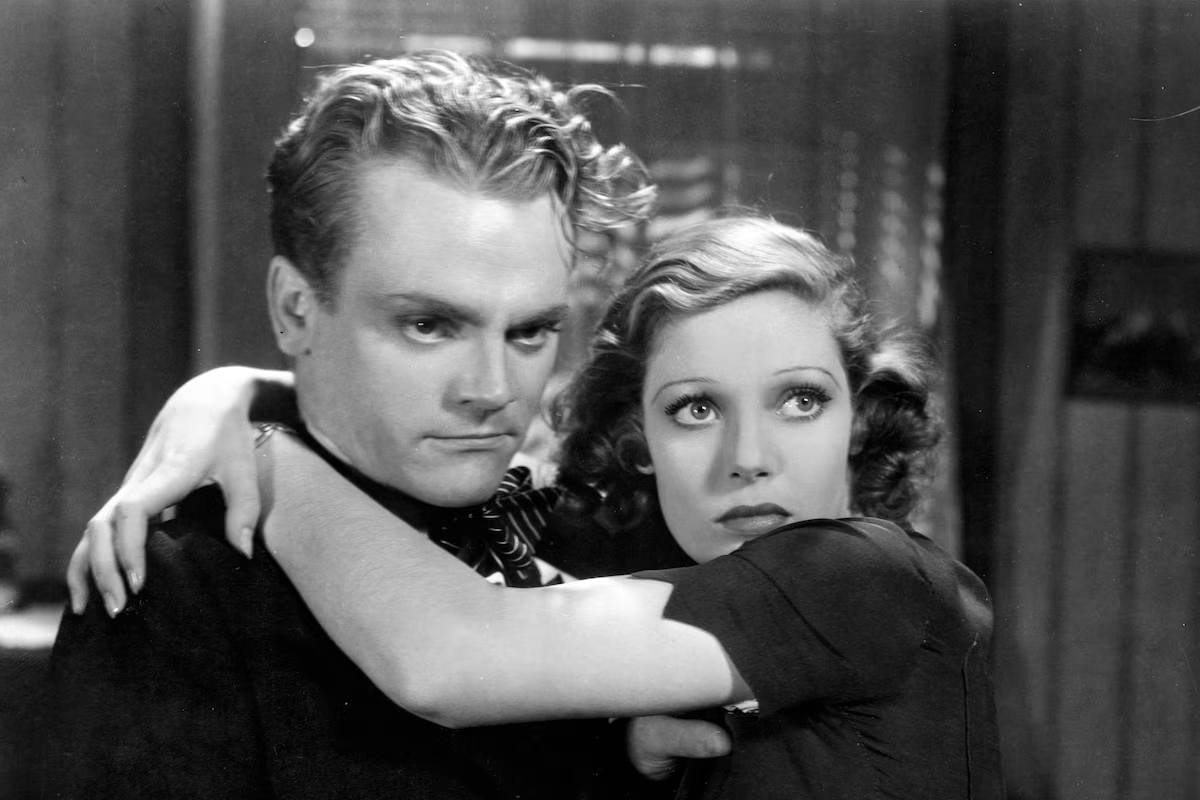
I won’t go into too much detail about the plot, but something tragic does happen part way through the movie, which will make Matt have to decide if he will let his temper rule him or not. You’ll have to watch to see what happens.

This movie was made before the Hays Code came into play. What is the Hays Code, you may ask?

Let Wikipedia explain: “The Motion Picture Production Code was a set of industry guidelines for the self-censorship of content that was applied to most motion pictures released by major studios in the United States from 1934 to 1968. It is also popularly known as the Hays Code, after Will H. Hays, president of the Motion Picture Producers and Distributors of America (MPPDA) from 1922 to 1945. Under Hays’s leadership, the MPPDA, later the Motion Picture Association of America (MPAA) and the Motion Picture Association (MPA), adopted the Production Code in 1930 and began rigidly enforcing it in 1934. The Production Code spelled out acceptable and unacceptable content for motion pictures produced for a public audience in the United States.”
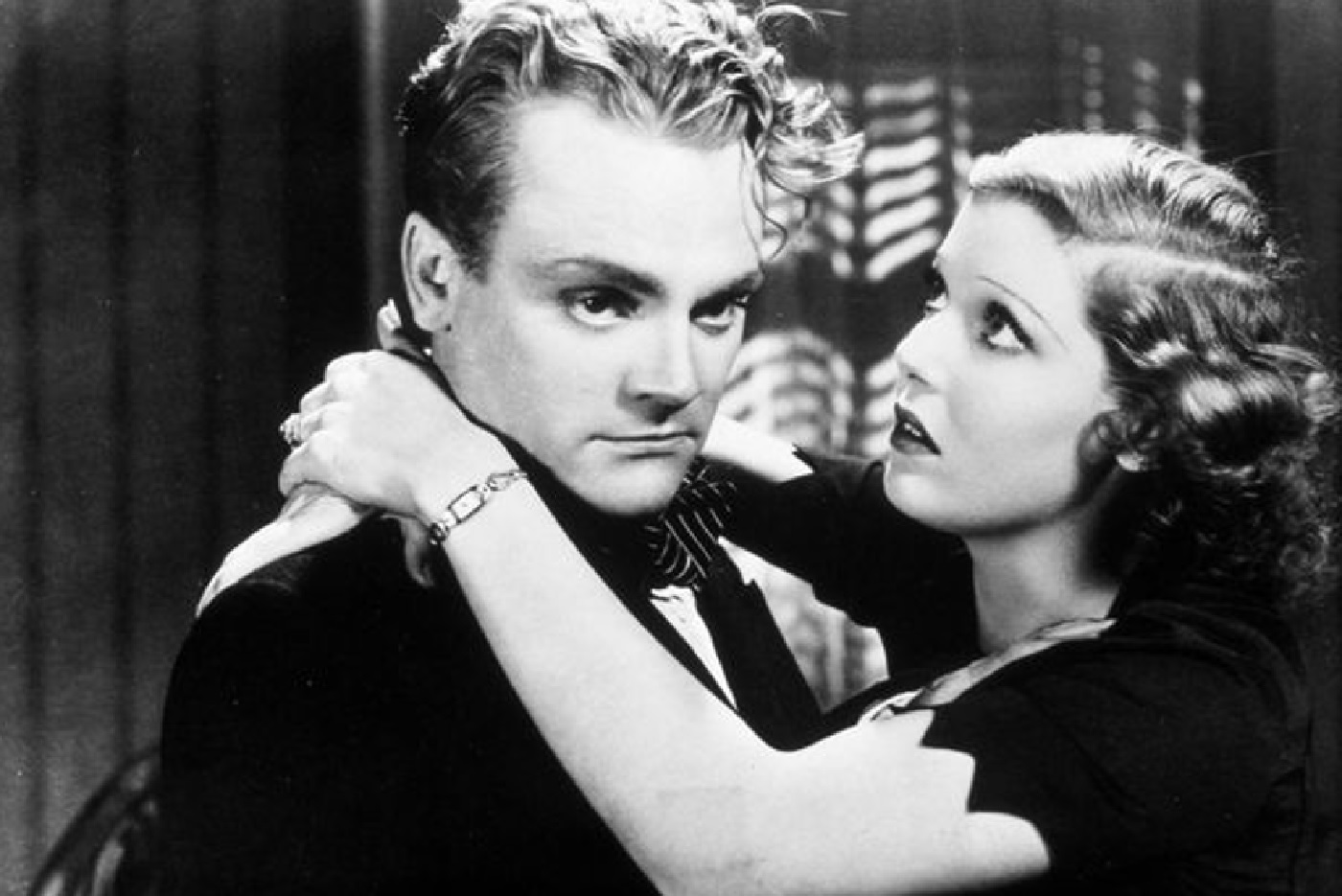
Loretta Young later confessed to having a crush on Cagney.

“I admired him so much, though I could never tell him so,” she revealed. “I remember having this romantic dream about him…in which I was drowning and he rescued me.”

She recalled that Cagney had “complete control over expressing the whole gamut of emotions with his eyes. He could accomplish with a glance what other actors need a whole bag of tricks to put over.”

I found this tidbit of information in the TCM article shocking: “As in The Public Enemy, several scenes in Taxi! involved the use of live machine-gun bullets. After a few of the slugs narrowly missed Cagney’s head, he outlawed the practice on future films.”

Have you ever seen this one?

What did you think of it?

If you would like to follow along with my Winter of Cagney and watch some of the movies yourself, here is my schedule for the winter:

 Yankee Doodle Dandy

Taxi

The Strawberry Blonde

Mister Roberts

Angels With Dirty Faces

Public Enemy

Love Me or Leave Me

White Heat

Man of A Thousand Faces

Bonus: The Seven Little Foys


If you want to find clips and thoughts about vintage movies and TV, you can visit me on Instagram on my Nostalgically Thinking Account (https://www.instagram.com/nostalgically_thinking/) or on my YouTube account Nostalgically and Bookishly Thinking here: https://www.youtube.com/@nostaglicandbookish
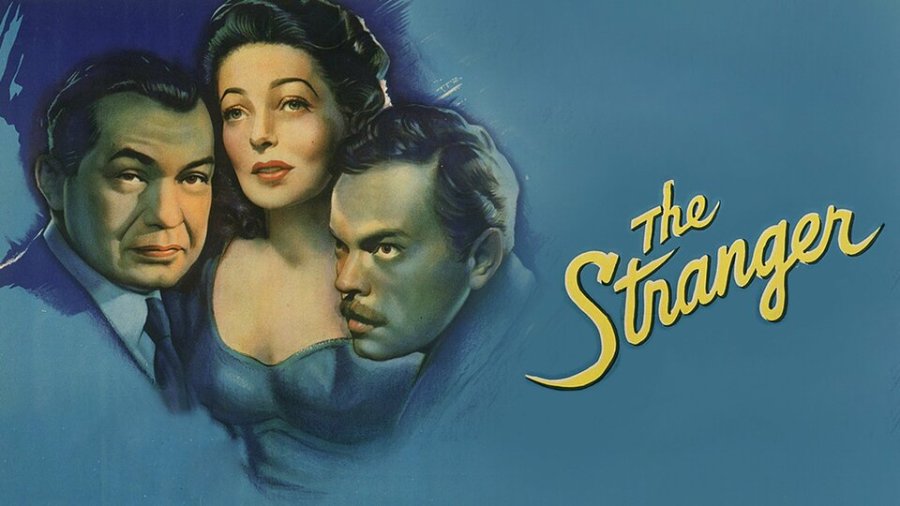
Classic movie impressions: The Stranger (1946)

A few weeks ago, my husband suggested we watch an Orson Welles movie. Since I’ve liked other movies by and starring Orson, I agreed to it.

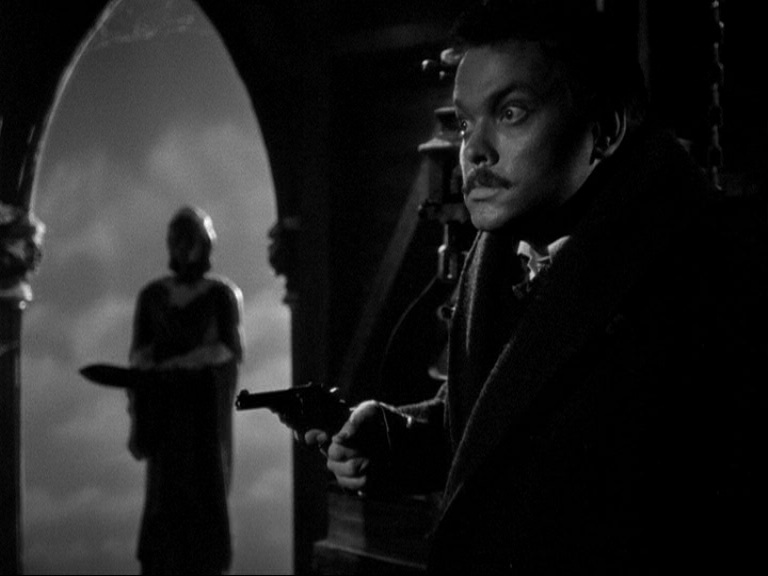
The Stranger was released in 1946 and tells the story of a war crimes investigator who tracks a high-ranking Nazi fugitive to a small Connecticut town.

Welles both directed and co-wrote the film but was uncredited for the writing, which was most likely part of the many concessions he made for the opportunity to direct it. This is a movie that some call his most conventional. It’s also one he wasn’t as fond of because so many changes were made to the final cut without his consultation.

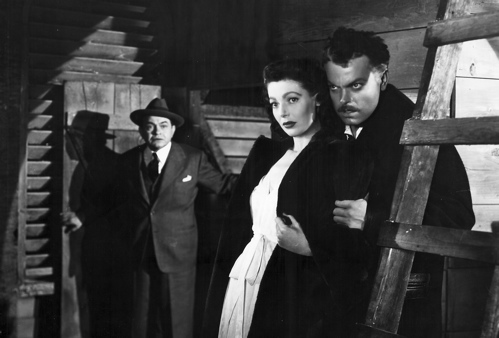
The movie stars Welles, Edward G. Robinson, and Loretta Young.

The creepy undertone throughout the entire movie left me always waiting for the other shoe to drop.

Nazi fugitive, Franz Kindler (Welles), has done his best to assimilate into American society. He’s even about to marry the daughter of a justice of the U.S. Supreme Court.

Edward G. Robinson, playing war crimes investigator Mr. Wilson, follows one of the recently released followers of Kindler to the town, hoping he’ll lead him to Kindler. The man suddenly disappears though, and Wilson is certain he’s been murdered by Kindler, but still doesn’t know who Kindler actually is. Only that he is somewhere in the town.

We the viewer, know all along what happened to the man and who made it  It happens about 15 minutes into the movie, but Robinson has to spend much of the movie trying to figure it out and once he does figure it out, he spends the rest of the movie trying to make Kindler admit who he really is. The only thing Robinson’s character really knows when he comes to the town is that Kindler had an almost unhealth obsession with old clocks.

It’s a fantastic, stressful game of cat and mouse that had me literally biting my nails part of the time.

The music of the movie is very interesting – mixing in a creepy violin-based humming, with happier melodies to try to show the contrast between an innocent, happy world being infiltrated by pure evil.

It always amazes me how quickly movies were made back then. Filming for this movie took place from September to November of 1945 and was released July 2, 1946.

Originally the film was going to be directed by John Husten, but he entered the military and Welles begged producer Sam Spiegel (also called S.P. Eagle at the time) to let him direct the film. Spiegel agreed as long as Welles agreed to several concessions and to be let go as director if he stepped out of those perimeters. Welles would still have to continue on as the lead actor, even if he was let go as director, however.  

Welles agreed. He needed the job if he wanted to continue in Hollywood. Five years earlier Welles had been essentially backlisted with the release of Citizen Kane, which won 9 Academy Awards, including Best Director, Best Movie, and Best Actor for Welles. This should have made Welles a sought-after director and actor. Citizen Kane was based on the life of one of the most powerful men in the world at the time — William Randolph Hearst, a newspaper publisher and owner — though and Hearst wasn’t happy. In fact, he was furious. He made life very difficult for Welles and anyone else associated with the making of the movie, which is now considered the greatest movie all time thanks to its innovative filmmaking techniques, complex story, and influential impact on cinema history.

“In September 1945 Welles and his wife Rita Hayworth signed a guarantee that Welles would owe International Pictures any of his earnings, from any source, above $50,000 a year if he did not meet his contractual obligations,” an article on Wikipedia states. “He also agreed to defer to the studio in any creative dispute.”

This became a challenge when Editor Ernest J. Nims was given the power to cut any material he considered extraneous from the script before shooting began.

“He was the great supercutter,” Welles said, “who believed that nothing should be in a movie that did not advance the story. And since most of the good stuff in my movies doesn’t advance the story at all, you can imagine what a nemesis he was to me.”

Reading about all the cuts that were made from the script, and the final product helps me to understand why this movie feels so choppy at times. It feels like elements that would have helped to explain some of the plot better are missing.

What is really missing is building up Welles’ character and helping the viewer get to know who he is. As I read online, I found out that there were scenes removed from the beginning of the movie that would have given us more character development for Welles’ character.

I feel like Nims really overdid things and should probably be ashamed of chopping up Welles’ work.

I also thought that it was interesting that Welles wanted a female actress to portray the investigator.

“I thought it would be much more interesting to have a spinster lady on the heels of this Nazi,” Welles said. 

Welles would later say in interviews that nothing of The Stranger was his in the end. Biographer Frank Brady disagrees, “Welles has said, since the making of The Stranger—which he completed one day before schedule and under budget—that nothing in the film was his, this despite the fact that the unmistakable Wellesian moods, shadows, acute angles, and depth-of-focus shots are pervasive. Within the film is a second film, another Wellesian touch, consisting of snatches of documentary footage showing Nazi atrocities.”

One unique aspect of The Stranger is that it was the first commercial film to use documentary footage from the Nazi concentration camps.

Welles viewed Nazi Concentration Camps (1945), a film used as evidence in the Nuremberg Trials in early May 1945 as a correspondent and discussion moderator at the United Nations Conference on International Organization

One thing I didn’t remember until reading about it this week was that in the 1940s, many in the world simply couldn’t accept that the concentration camps were real.

Welles wrote about the footage in a column for the New York Post:

“No, you must not miss the newsreels. They make a point this week no man can miss: The war has strewn the world with corpses, none of them very nice to look at. The thought of death is never pretty but the newsreels testify to the fact of quite another sort of death, quite another level of decay. This is a putrefaction of the soul, a perfect spiritual garbage. For some years now we have been calling it Fascism. The stench is unendurable.”

Though the studio did not think The Stranger would be a success, it actually was and right out of the gate too. It cost $1 million to make and earned $2.25 million in U.S. rentals in its first six months. Fifteen months later had grossed $3.2 million.

I very much enjoyed the film, but I do wish that Kindler’s German accent would have come back as soon as his cover was blown. Having him keep the American accent he’s been using to keep his cover, even when under pressure, seemed unrealistic to me.

Despite that small issue, Welles is so deliciously evil in this. His excuses for his crimes against humanity were presented with a lecherous smile that sent shivers down my spine. The tension throughout the film is extreme. I never knew when Kindler would finally snap and reveal himself or worse — kill someone to keep his identity secret.

I found this one on YouTube for free, but it is also streaming in better quality on several streaming sites, including Amazon Prime.

Have you ever watched this one? What did you think?