Remembering Little House on the Prairie on its 50th anniversary

When I was in elementary school, and probably a bit beyond, I would walk down the long driveway toward my home, knowing what waited for me there.

My mom would be in the kitchen, the smell of whatever she was cooking drifting to me as soon as I opened the door. That door opened into a dining room with one of the ugliest green carpets you have ever seen but I didn’t know it was ugly back then. In that room was a large dining room table to my left and in front of me was a dresser with a mirror.

To my right was the living room where our old black and white TV (later it was a color one our grandmother gave us when she got a new one) sat, ready to be turned on so I could flop down in front of it and eat a snack and watch Little House on the Prairie, which would come on around 4 on our local PBS channel. The show was based on the book series of the same name by Laura Ingalls Wilder.

This year marks the 50th anniversary of the show’s premiere so there has been a lot of talk about it. There was even a three-day festival recently held on the ranch where the show was filmed.

By the time I was watching the show in the mid-1980s, the show had been off the air for about three years so these were all reruns. I found it relaxing to watch a show about people living life in the later 1800s, experiencing life as pioneers on the prairie. I didn’t realize or comprehend some of the harsh conditions and darker storylines until I was older.

I was probably reading the books around the same time I was watching the show, but I can’t remember for sure. I do remember reading the books late into the night, sometimes pulling the covers over my head and using a flashlight to finish a chapter or two or three. They were paperback books that had a paper and ink smell that I credit for igniting my interest in all things printed – including the print media I would work in for almost 15 years.

Sadly we lost my set during our move four years ago and it still breaks my heart. I truly hope we find them packed away in some box somewhere in the house.

I remember Mom standing in my doorway one night on her way to bed saying, “Lisa, I love that you are reading but you’ll have to continue tomorrow because at this rate you’re going to have a very hard time getting up for school in the morning.”

I’m sure that the next morning was rough for me but I was not allowed to stay home because I’d been up late reading. Books later became an escape for me during school, which my introverted self was not a fan of. I read historical fiction throughout most of high school and I’d imagine that was because my first introduction into literature was through Laura’s historically-based books.

The Little House show wasn’t exactly like the books and that was fine with me. It was still fun seeing the characters come to life in a way through Melissa Gilbert and Michael Landon and all the other actors.

Watching clips of the recent 50th-anniversary festival on various social media outlets made me feel a type of connection with others who grew up watching the show. I did not, however, know as much about the show or remember as many of the episodes as some of those fans did. I was also not as obsessed as some of them, but, hey, they were having good, clean fun by dressing up as characters and waiting in long lines to get autographs from the actors who played the characters so more power to them.

I remember the earlier episodes the most, maybe because our PBS station only ran certain seasons before starting over again. I watched the rest of the seasons when I got older but remember them not being as magical to me as the earlier seasons.

Once Mary (spoiler alert) lost her eyesight and Laura lost her son in infancy, I started to get depressed and turn it off. It was all based on the true stories of the women, of course, but I still found it heartbreaking to watch. It was no longer the escape I thought I needed.

In real life, as detailed in the books and other historical sources, Mary Ingalls did lose her eyesight. Carolyn and Laura Ingalls both gave birth to baby boys that did not survive and, in fact, none of the Ingalls women could carry boys to term and in some cases they had no children at all.

Dean Butler, who played Almonzo Wilder, Laura’s husband, on the show spearheaded the effort for the festival, along with Alison Arngrim who played the easy-to-hate Nellie Olson.

It was nice to hear that, for the most part, the time filming that show was pleasant for the cast. While the woman who played Carolyn, Karen Grassle, has made some unpleasant accusations against show creator Michael Landon, the cast has still said that their experience filming the show and in the years afterward have been pleasant. Of course, Grassel didn’t have to make accusations about some things – many people know that Landon had an affair with a makeup artist while filming, something that destroyed his marriage. That affair resulted in his third marriage.

Grassel recently said in an interview that she was never able to clear the air, so to speak, with Landon about the issues between them (one large one having to do with Grassel’s lack of a pay raise while filming and another one having to do with jokes Landon would sometimes make on set) but she was able to talk to him before he passed away from pancreatic cancer in 1991 and they were able to get along well without bringing up the past.

What I learned from watching the retrospect of the cast members during the festival held a couple of weeks ago was that even with some of Landon’s failings many in the cast look back on their time on the set as a simpler time in their lives. They look to Landon as a father figure, who was not perfect, but who was still special and important to them.

Even with some hard moments between herself and Landon, I think even Grassel saw her life during those years as somewhat simpler, at least based on some of the memories she shared.

The set was relaxed and joyful and there was a lot of free time for the children to explore and simply be children. They played in the creeks and learned old-fashioned games and values that they carried with them throughout their lives.

Melissa Gilbert and I would not see eye-to-eye these days on some political or social issues, but we would see eye-to-eye on the idea of simple living. She spent many years in Hollywood working her way up the acting ladder, falling prey to the idea that to be happy in life you needed to work hard all of the time and look the way Hollywood said you should look. Now Melissa is in her 60s and she is embracing the simple pleasures of life. She’s let go of looking like a Hollywood starlet and she’s enjoying cooking on her own having a home in the country and just simply stepping away from the hustle and bustle of the rest of the world.

She co-runs a company called Modern Prairie and has fully embraced her past identity as the TV version of Laura Ingalls Wilder, even as some in the world want to criticize Wilder for the topics they feel she didn’t handle sensitively enough in her books.

Melissa’s brother Jonathan Gilbert played Willie Olson on the show and for years he didn’t attend fan events or even talk about his time on the show. He walked away from acting and became a stock broker for a few years. Now, though, as he moves through his 50s, he said at the festival that he sees his time on Little House as one of the times when he really feels like he was home.

There was a definite spiritual component to the show, spearheaded by Michael Landon’s faith. Some of you may remember he also developed and produced a show called Highway to Heaven starring himself as an angel who came to earth to help people. Victor French, who played Mr. Edwards on Little House, co-starred on Highway to Heaven with him.

Christianity was the main focus of the spiritual element, which could be seen in many of the episodes but especially the Christmas episodes and a two-parter called The Lord is My Shepherd. This is interesting because Landon was raised Jewish. His father was Jewish and his mother was Christian, but in interviews, he said the Christian holidays he celebrated were mainly for family time and not out of religious devotion. Michael was born Eugene Maurice Orowitz, by the way. He changed his name for acting purposes.

Ironically, after the divorce, his ex-wife, Lynn, did become a Christian and Michael’s son Michael Jr., became one as well and has since helped make some Christian movies and entertainment.

A couple of weeks ago I read a very interesting comment on social from someone who watched the show and picked up on the Christian undertones when they watched the show as a child, which led to an eventual life-changing experience.

“I had a realization as I was watching the Church service [at the festival] that I wanted to share,” Meryl Heilberg Jefferson wrote. “I was raised Jewish. My grandfather was actually a Rabbi. I was at my grandparents’ house every weekend from Friday until Sunday from the beginning of my memory. That being said, I was a voracious reader from a young age. Not to mention an AVID LHOTP reader and series watcher. I used to play LHOTP in the schoolyard, (It was vast like a prairie) across from my house. I had a SUNBONNET and prairie-style clothing. I was hard-core living the prairie life in the 1970’s. “

“In 2010 I became a Christian,” Jefferson continued. “(I had actually been attending churches long before, but afraid to say anything to anyone for fear of my family’s rejection.) I truly believe that one of my mustard seeds, God put MANY in my path, was my love for anything and everything that had to do with Laura Ingalls Wilder. Hearing Wendi Lou Lee (Hester Sue in the show) speak tonight really spoke to my heart and reminded me of some of the memories I had suppressed from my childhood. I think Michael Landon shared the Gospel with me. I wish he was here so I could thank him personally. It is one of the first things I will do when I see him in Heaven! I now wonder if that was his intent. Or, was he looking to put wholesome television in front of families.”

It may not have been Landon’s intention to bring a generation to Christ but in some cases, it was what he did.

I’ve seen people react in anger when someone says that the past was simpler, easier or more pleasant. People often shoot back with, “There was crime and war and horrors back then too. The time you lived in wasn’t so special.”

Yes, there was war, crime, sadness, heartache, and tragedy back when I was a child. The difference was that I didn’t have it shoved in my face all day long on my phone or computer, in the store, on TV, and anywhere else that I turn.

My parents didn’t shelter me but they also didn’t talk as openly about the sadness in the world, partially because it wasn’t something they could constantly learn about through computers, smartphones, or 24/7 news services.

So for me, it was a simpler time. It was a calmer time.

It was a time when I had a routine. I went to school and then no matter what kind of day I had I could count on coming home and my mom being there cooking dinner and me eating a snack (usually peanut butter on toast) while watching Little House on the Prairie reruns. Later the PBS station would switch between Little House and The Waltons so I also watched The Waltons. At 6 they would air either The Dick VanDyke Show or Burns and Allen.

These shows were comfort watches for me back then. Now that I am older, caught up in a world that seems to be spinning faster than ever, they have become even more important to me. They are now touching points for me — a point in my life I can reconnect with, find those simpler moments again, and escape, even if only briefly, from a world that makes less and less sense each day.


Here is an interview with Melissa Gilbert about the show three years ago.

And here is an interview with Alison Arngrim from the 50th-anniversary festival in California:

And here is one of my favorite scenes from the show:
Sunday Bookends: cozy mysteries, Little House on the Prairie marathon, and a few photos from the week


It’s time for our Sunday morning chat. On Sundays, I ramble about what’s been going on, what the rest of the family and I have been reading and watching, and what I’ve been writing. Some weeks I share what I am listening to.

This week I’m joining up with Kimba at Caffeinated Reviewer, Deb at Readerbuzz, and Kathyrn at The Book Date.

What’s Been Occurring

 It’s still been very cold this past week so we have been lighting a fire every other day.  We lit one last night as the temperature dropped to somewhere around 22 degrees. It looks like temps will warm up this week as we move into Good Friday and Easter.

I wrote a bit about our week last week in yesterday’s Saturday Afternoon Chat post if you want to catch up on other “events” of our week. Spoiler – there weren’t a lot of events actually.

What I/we’ve been Reading

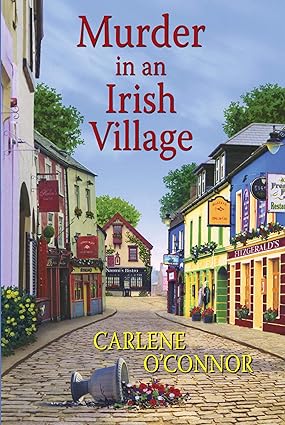
I’m reading A Murder in an Irish Village by Carlene O’Connor. It is very authentic Irish and I’m enjoying it.

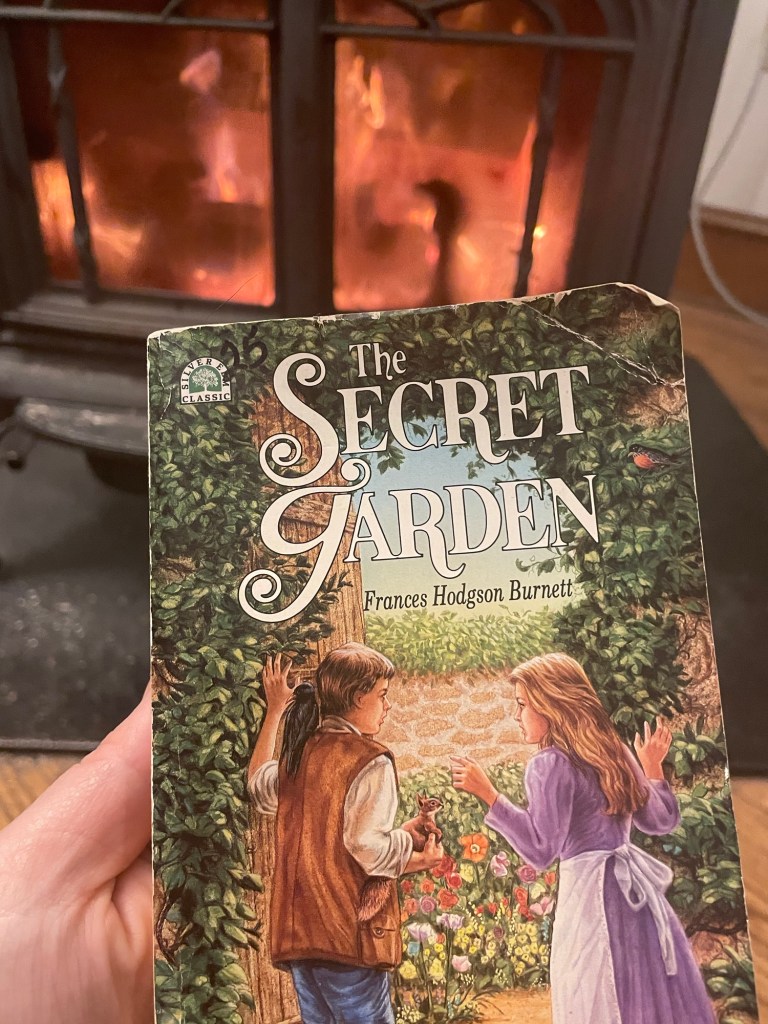
I just started The Secret Garden by Frances Hodgson Burnett but will probably read this one very slowly because of some books I’m reading for tours and to review for Clean Fiction Magazine. I already know the story of The Secret Garden from watching the movie.

I have also started Night Falls on Predicament Avenue by Jamie Jo Wright. This one is for a book tour in April. I honestly think it is going to be too creepy for me but I guess it is good to branch out once in a while.

Just Finished:

Murder Plainly Read by Isabella Alan and The Middle Moffat by Eleanor Estes.

Currently:

I enjoyed both of these books and will have reviews up soon.

Soon to be read:

The Divine Proverb of Streusel by Sara Brunsvold

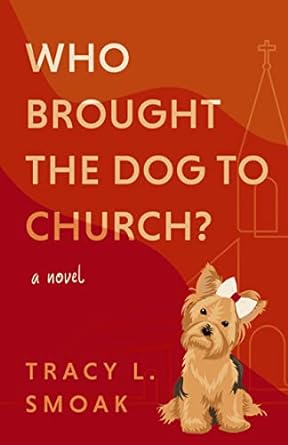
Who Brought The Dog to Church? By Tracy Smoak

When You Returned by Havelah Mclat

What others in the family are reading: The Boy is reading Horus Rising and listening to A Tale of Two Cities. Little Miss is listening to The Railway Children and we are reading The Middle Moffat together.

The Husband is reading Do the New You by Steven Furtick

What We watched/are Watching

This weekend I watched all things Little House on the Prairie. This year is the 50th anniversary of the debut of the show and they are holding a festival with many of the old cast members in California. I have been watching the show and some footage from the festival such as interviews with Melissa Gilbert and Dean Butler, etc.

I didn’t realize how attached I was to the show until I saw Melissa Gilbert come out in front of all her fans and begin to cry and then I began to cry as well. I have good memories of running home from the bus stop to watch the show when I was a kid. I’ll ramble about that in a future blog post.

Here is the video I watched of the Melissa Gilbert interview if you are interested:

My daughter and I watched a couple of the episodes based more directly on stories in the books, which we read over the last couple of years and then watched three more that were loosely based on stories. I, of course, had to watch with her the episode when Laura pushes Nellie down the hill to prove she has been lying about not being able to walk. After that one, Little Miss was hooked and asked to watch more.

Earlier in the week I always watched Dr. Quinn Medicine Woman and Lark Rise to Candleford.

Over the weekend I watched original Perry Mason episodes with The Husband.

What I’m Writing

I am on the epilogue of Cassie and then I will be beginning book three of the Gladwynn Grant mysteries.

On the blog this week:

What I’m Listening To

On Audible I am listening to A Tale of Two Cities by Dickens (Lord Jesus be with me. Literally.) and The Railway Children (with Little Miss).

Photos from Last Week

Blog Posts I Enjoyed This Past Week

Billyisms and Winnie the Pooh by Still Life, With Cracker Crumbs

This post cracked me up, especially this line: “This was all just to warm up to the topic of my husband being a human Winnie the Pooh, but one who wears pants of course.”

Now it’s your turn. What have you been doing, watching, reading, listening to or writing? Let me know in the comments or leave a blog post link if you also write a weekly update like this.

Saturday Afternoon Chat: Punxsutawney Phil is a Pathological Liar, stinky weather, and remembering the Little House on the Prairie show

It’s time all of you Americans know something and understand it — Punxsutawney Phil is a pathological liar. That little rodent has been lying to us for years and yet people still think they can believe him when he says we’re getting an early spring.

Maybe someone, somewhere is getting an early spring but in his home state of Pennsylvania, we are not getting an early spring.

I visited Punxsutawney one time and I can confirm that it is not like the cute little town you see in the movie Groundhog Day either. They didn’t even shoot the film in Punxsutawney because the place is not picturesque and because there are actual shrines to that nasty little lying varmint all over the place.

The thing is even pictured on the outside of the newspaper building, on the newspaper masthead, and there is a wood carving of him by the McDonalds. Or there was when we visited 22 years ago.

 Living in Pennsylvania means hearing about that dumb groundhog way too often. (Hopefully, you will take all these comments about Phil in the humorous way they are meant.)

It is raining today and is supposed to rain the rest of the day but mixed into the rain is ice and snow. It was like that off and on all week this past week. So no. We are not getting an early spring, even though last week I thought we might.

That was the week my daughter was riding her bike in front of the house and my son was taking long walks around town without a coat.

Pennsylvania’s weather is like this every year but it never makes it easier.

On Wednesday we had every single type of weather imaginable it seemed. One hour it was snowing, the next raining, the next sunny, and then windy and back around again. By Wednesday night, luckily, things started to settle down some so I could take Little Miss to the last night of Kid’s Club (a children’s program at a local church) and not worry about getting stuck in it all.

After Kid’s Club, I had to rush back home to lead my online Bible study, which made me a little nervous, but I survived. Thankfully the regular leader will be back this Wednesday.

On Thursday I took a relaxation day because the week had just been so rough with that one time I had to leave the house. Ha. Ha.

 On Friday the kids and I traveled 20 minutes to pick up our groceries at the local Aldi. We also stopped at a local convenience store that used to be a mansion owned by a family tied into the area’s local history and I think maybe the underground railroad. I need to look that last part up.

Because there are some historical photographs, letters, and other information at the site, I told the kids we could count the trip as a field trip if they would go look at those items with me.

I plan to write a blog post about the site at a later date. I think it will interest history buffs, even if they aren’t local themselves.

I also plan to write a post soon about watching the Little House on the Prairie 50th anniversary events in California this weekend and what the show has meant to me. I was literally sitting here crying earlier through an interview with Melissa Gilbert this afternoon. If any of you have sentimental connections to the show and would like to see the interview too, here it is:

I have been following Dean Butler (Almanzo Wilder) and Allison Arngrim (Nellie Olson)’s podcast to get ready for the festival off and on for a few months now. It’s brought back a lot of memories of watching the reruns when I was a kid and also reading the books, of course.

I’ll ramble more about my connection to the show in a separate post but will ask today if any of my readers have heard about the reunion and if you have been watching any of it?

I plan to have a cup of tea here soon and continue reading a book I signed up for through a blog tour, though now I’m second guessing it because the book is creepy.

I’ll hopefully be able to push through it and provide a fairly good review for the tour, but as for today, I’ll probably switch to a cozy mystery I am reading later on in the day.

My cat, Pixel, is curled up next to me on the couch on this rainy day. She’s dozing away. Both she and our younger cat Scout went outside for about 20 minutes later and then darted back in when I let Zooma the Wonder Dog out to use the bathroom. They’ve been doing that a lot all week. They’re missing being able to just hang out outside.

Scout is probably curled up somewhere else in the house. She’s been making the most of the short time she’s had outside. Yesterday The Boy found what was left of a dead bird out in the yard. We call Scout our bird killer so we are certain it is her.

Zooma the Wonder Dog is slowly recovering from not feeling well (she has a lot of stomach problems), but she is lying on her side and chilling out, instead of laying on her belly and looking like she is in pain like she did on other days during the week.

She will probably perk up even more when we visit my parents tomorrow for Sunday lunch.

So that was a bit of an update about my week.

How was your week this past week? Do anything exciting or relaxing? Let me know in the comments.

Charles “Pa” Ingalls: incessant wanderer or dedicated provider?

Disclaimer: This post is simply my pondering thoughts.


After re-reading the Little House series by Laura Ingalls Wilder as an adult, I have a different view of Charles “Pa” Ingalls than I once did.

In my child’s mind, Pa was fun and spontaneous and always looking for adventure.

As an adult, I still see Pa as those things, but also as a little bit irritating and maybe somewhat irresponsible at times. From what we read in the books, he was always looking for the next adventure or opportunity, instead of finding stability for his family. Then again, maybe traveling from place to place was how he was finding financial stability for his family – he had to go where the work and food was.

It had to have been hard for him to stay still, I realize that. He was a person who was always looking for a new experience. When more families pushed into the west to find new experiences, he wanted to join them.

Pa reminds me a lot of a family member of my husband’s who was always seeking a new opportunity that she was sure would bring her riches. Each scheme failed and she was left right where she started. In some ways, this is Pa.

He moves the family to the prairie, but the government threatens to move them out, so he leaves and moves on to Plum Creek. They are there several years, but as soon as Pa is offered another opportunity to build a new life in a new land, he’s gone again, moving his family hundreds of miles across the country.

Living with him must have been hard for his wife and children, more so for his wife Caroline. Even though the books are more fiction than non-fiction, it’s clear that Laura probably wrote some truth in the pages when it came to her parents and her father’s constant urge to move the family. There were many times Laura described her mother as worried or tired, and who wouldn’t be when their spouse is constantly coming home with a new idea, and when they live in unpredictable places where life can change on a whim?

The Ingalls family.

“Laura knew that Ma had never wanted to leave Plum Creek and did not like to be here now; she did not like traveling in that lonely country with night coming on and such men riding the prairie.” – On the Shores of Silver Lake.

When Pa did come back from his trips, he always had some crazy story about why he was delayed or what happened during the trip. The stories were most likely true — except that far fetched one on Plum Creek when he fell in a snowbank/cave and had to stay there for three days, living on the hard candy he bought for his kids, until he was able to dig his way out and then found out he was right up the hill from their house. Come on, Pa, really? You were in town hanging out with the blacksmith or the general store owner. Don’t lie, dude. *wink* (This is a joke, of course. I have no idea.)

He also left his family alone in some dangerous situations where angry Native Americans (I mean, the Ingalls were building homes on their land half the time, so of course they were angry), wolves, rowdy railroad workers, or other threats could have harmed them.

Charles and Caroline Ingalls

Despite Pa’s propensity to launch the family into an insecure situation, it was clear he loved them. I don’t believe he was always rushing off to something new simply for himself. Sometimes he might have been, but mainly he was taking new jobs, trying new things in farming, and moving to new places to help provide a better life for his family, not gain riches and fame for himself.

Even if he was doing it for his family, it couldn’t have been easy never knowing when he might come home and suggest they move again.

Luckily, Pa sacrifices his desire for adventure more than once for Caroline and his girls, something Laura touches on in The Shores of Silver Lake.

When Laura’s cousins leave to go further West, both she and Pa look after them wistfully, wishing they could follow them into adventure. Pa, however, says he won’t continue into the west because a town is being built where they are now, and with a town will come a school. Caroline always wanted her children to attend school and Pa says he promised her he would settle down so the children could be educated.

In the end, the love of Caroline and his girls kept him grounded.

There are a variety of different stories out there on the internet and in books about Charles Ingalls. Some of them paint a rather unpleasant picture of the man and accuse Laura of romanticizing her father for the books. Well, duh, if she did. Her books were written for children. She wasn’t looking to write an expose on Charles Ingalls.

In 2014, the Laura Wilder Trust gave permission for The Pioneer Girl, the Annotated Biography to be released. Some of the stories there, such as Charles Ingalls taking off in the middle of the night to avoid paying rent, upset readers of the Little House books. I understand that in a way, but the Little House series was fiction with some truth mixed in. Of course, there were some truths that were painted over for the sake of a lovely story. Not all of those stories were lovely if you read between the lines, anyhow.

What all of us fans of the children’s books need to realize is that life wasn’t easy back then. It wasn’t what we see inside the pages of a book or a polished Hollywood production. These were real people struggling to survive. They weren’t perfect. They made mistakes and took risks and judged harshly, like any of us are prone to do.

Decisions weren’t, most likely, made out of selfishness but for survival and to protect family members.

Pamela Hill Smith writes in her blog post Charles Ingalls: Driving Away in Darkness that after the grasshopper plague in Minnesota, which lasted four years (!!) (I think readers of that part in Laura’s book think it was only a short time), the Ingalls family was hit extremely hard. They lost everything. At one point a neighbor offered to adopt Laura and raise her as her own to help raise the economic burden off the Ingalls.

“With no opportunities left except the unthinkable—giving Laura up for adoption—Charles and Caroline decided to move west,” Pamela writes.

She continues to write about how Charles asked for an extension on their rent until they could move West but the landlord refused and then threatened to take their horses as payment.

What choice did Charles Ingalls have?  His wages in Burr Oak didn’t cover his family’s living expenses, his landlord wouldn’t agree to an extension on the rent, and if the Ingalls family lingered, they’d lose their team of horses—and still face the prospect of homelessness in the future.  There weren’t eviction moratoriums or rental assistance plans or unemployment insurance for victims of natural disasters in that time and place. 

To keep his family together, to try again to build a new life for themselves, Charles Ingalls did what he had to do:  “Sometime in the night we children were waked to find the wagon with a cover on standing by the door….  Pa put our bed in the wagon and hitched the horses on; then we climbed in and drove away in the darkness.”

I highly recommend reading her articles and others to help give a more rounded picture of the man many say Laura Wilder “romanticized.”

Have you ever read Laura Ingalls Wilder’s Little House series?

What is your impression of Charles Ingalls based on these books?

Was his desire for adventure a detriment or a benefit to his family?

Did he drag them all over the country too much, even if he did do it for the right reason?


Additional resources:

Charles Ingalls: Driving Away In Darkness by Pamela Smith

Pioneer Girl by Laura Ingalls Wilder

Charles Philip Ingalls from Laura Ingalls Wilder.com

Was Laura Ingalls Wilder racist?

As I have mentioned in my Sunday Bookends posts recently, Little Miss and I have been reading Little House on the Prairie by Laura Ingalls Wilder before bed. I read the books as a child and I didn’t understand how horrible the references to Native Americans in the book sounded back then. It is also possible my Mom explained to me what I have been explaining to my daughter this week, which is that the fear the Ingalls had of the Native Americans was really a fear of the unknown. They were drawing their views of the Native Americans from stories they had heard and not personally experienced in some cases.

This past week, I made reading the book an educational experience in addition to being an entertaining one. I also explored the reason behind what some would call “racist language” in Wilder’s books by doing what so many of us do these days — I Googled it.

As an adult re-reading Little House on the Prairie, I was taken aback by what Wilder wrote about the Native Americans. I didn’t remember the negative descriptions from when I read it all those years ago. Part of me had considered abandoning the book, so I didn’t have to discuss such a difficult topic with a 6-year-old, or at least skipping those sections. It was hard to skip the sections, however, since so much of the book is about the Native Americans and the Ingalls’s encounters with them. I’m glad I didn’t abandon the book, because then I would have missed those moments where the fictional version of Wilder challenges the views her mother and others living on the prairie have of the Native Americans.

One reason the real Laura couldn’t have questioned the negative views of the Native Americans when her family lived on the prairie is because she was actually only 2 when they moved to Kansas and around 4 or 5 when they left. In the fictional children’s book, she portrays herself as around 8 or 9. She also writes that baby Carrie was alive, but in reality, Carrie had not even been born yet.

 Laura Mclemore points out on The Little House on the Prairie website that it is important to understand the history behind Wilder’s story when considering how she writes about the Osage. For one, Wilder’s mother held a fear of the Osage people because of a massacre that occurred in Minnesota, near where the Ingalls had lived before moving to Kansas, around 1862. That massacre occurred when the Sioux and Dakota tribes rose up against the settlers after many of the men left to fight in the Civil War.  Laura’s mother and their neighbors, the Scotts, remember that massacre when they expressed anger and fear toward the Osage people, even though they are a different tribe.

It’s also important to remember that Wilder wasn’t actually writing an autobiography when she wrote her children’s books. While there were some authentic life experiences, as well as actual people in the books, Wilder was actually writing historical fiction using her real family as the basis for the stories.

In 2018, Wilder’s name was stripped of a literary award named after her by the American Library Association because many believed her depictions of both Native Americans and African Americans were racist. The decision to remove her name bothered some people, including Amy S. Fatzinger from the magazine The Atlantic.

“The books indeed include several pejorative passages about Native people that reflect ‘dated cultural attitudes.’” Fatzinger wrote. “At times, they also work to dispel myths about American westward expansion; some scenes illustrate the complexity of race relations on the frontier and remind readers that countless families like the Ingallses were illegally occupying Native lands. As a result, Wilder’s approach can leave readers with conflicting messages about Native characters, requiring a more nuanced consideration of the texts themselves.”

While reading the book this week to Little Miss, I could see what Fatzinger means about scenes showing the complexity of race on the frontier. The various descriptions of Native Americans are definitely shocking by today’s standards and show how misguided the Ingalls family and other settlers were about the tribes living around them.

While Wilder relayed some of the more prejudiced comments she heard about Native Americans while growing up, she also did something other writers of the time didn’t do, Fatzinger wrote, and that was to point out that white settlers had illegally moved onto land occupied by the Osages. Charles Ingalls tells his family they are moving to “Indian Country” because politicians in Washington had sent word that the land would soon be free of Native Americans. Yes, just like today, politicians were adept at stirring up trouble and leaving people hurt in the wake of their ineptitude.

“Even readers who find such scenes troubling might assume that Wilder was simply repeating the attitudes of her time,” Fatzinger wrote in her article. “A closer look, though, reveals that she usually presents misconceptions about frontier life only to later challenge them; similarly, negative views of Native people are often juxtaposed with more favorable ones. In Little House on the Prairie, young Laura listens to various perspectives about Native people uttered by the adults around her and questions them. Laura asks her Ma, for example, why they’re traveling to Indian Territory if she doesn’t like Indians. It’s a question that highlights the absurdity of the events that follow, like when the Ingallses huddle in their house petrified of the Osage neighbors whose land they are attempting to appropriate.”

Through questions she asks her parents, Wilder also shows that her younger self had doubts about whether the Native Americans were “evil”, even though she had a very obvious fear of them and referred to them as “wild”, “smelly,” and “savage.” She writes that Ma was always leery and upset by the Native Americans, especially when they entered the home uninvited but Pa was much more laid back, saying more than once, “As long as we are peaceful toward them, they will be peaceful toward us.” Of course, he also had a prejudiced view of them because at one point he almost calls them devils, but Ma cuts him off so he doesn’t make the children afraid.

I believe Wilder wrote her books from the perspective of a child who had a fear of the unknown which included Native Americans, but also from the perspective of a woman born in 1867.

Credit: Little House on the Prairie blog/site

Her writing mainly focuses on what others thought of Native Americans and she relays their views through the eyes of a child trying to make sense of it all. She doesn’t leave those racist ideas to sit there alone, without explanation. She addresses them again as you progress through the book. When the neighbors say, “The only good Indian is a dead Indian,” Laura’s father disagrees, especially when Soldat Du Chene, a member of the Osage tribe talks the rest of the Osage people out of declaring war on the white settlers.

“No matter what Mr. Scott said,” Laura writes. “Pa did not believe the only good Indian was a dead Indian.”  

Keeping in mind the need to offer context to Laura’s story and instead of throwing the baby out with the bath water, I took Mclemore’s suggestion to use the books as a teachable moment. One night before bed, I told Little Miss who the Native Americans were and how they lived in our country before the white Europeans.

I wasn’t sure how she would respond to my story of how the white Europeans chased many Native Americans off their land. I hoped she wouldn’t demonize either side.

Little Miss, 6, is sharp, though, so I really shouldn’t have been surprised when she said, “I’m guessing the white people started the war.”

Ouch.

I hadn’t even mentioned war. I would imagine she heard about that in a cartoon or in lessons I’ve taught her brother about similar subjects.

I told her that sometimes the white settlers started the war because they wanted the land and sometimes Native Americans started the wars because they were upset that the white settlers had taken their land and hurt their people.

I also explained that what the white Europeans did was wrong and that some of them may have been our ancestors (especially on my dad’s side where we have traced our family back to very early settlers in Connecticut), but that doesn’t mean we are to blame for what happened.

We do, however, need to remember that dark part of our history so we don’t repeat it. We also need to recognize that the land we now live on was land once occupied by people who settled this land long before our ancestors did.

After I told her that the land we lived on now was probably where members of the Iroquois nation lived and that we would study them soon in our history, her curiosity was piqued.

“You have hooked me,” she announced. “Now I want to know more.”

Five minutes later she was asleep with my promise that we would soon learn more about Native Americans. The next day we watched a video by a Native American woman on YouTube about the Native Americans of the Northeast and those of the Midwest.

Little Miss enjoyed it but looked up after the woman talked about the women of the tribe cooking and cleaning and scraping the buffalo hides and said, “I’m guessing this is when the men thought women couldn’t do the same thing that men could do, right?”

She’s a little too smart for her own good at times.

I agree with Mclemore’s suggestion for parents who would like to teach their young children about life in the 1800s and that is to not ignore Wilder’s books.

“I suggest that rather than banning books or refusing to read them, we use them as a platform for examining the history of the United States,” she writes. “What better way to learn our history than by reading a classic like Little House on the Prairie and using it as a platform for discussion?”

Incidentally, I am taking this same approach with To Kill A Mockingbird which I am reading with my 14-year-old son for his English class.

I also agree with Fatzinger that we shouldn’t remove Wilder’s references to Native Americans from her writing, or in fact, remove any references to races that we disagree with. By doing this we are effectively removing any mention of the race at all, which closes the door to discussions about why stereotypical views of a race are wrong.

You can learn more about Laura Ingalls Wilder at http://www.littlehouseontheprairie.com and more about Fatzinger’s view of Wilder’s work on The Atlantic site.