When I was in elementary school, and probably a bit beyond, I would walk down the long driveway toward my home, knowing what waited for me there.
My mom would be in the kitchen, the smell of whatever she was cooking drifting to me as soon as I opened the door. That door opened into a dining room with one of the ugliest green carpets you have ever seen but I didn’t know it was ugly back then. In that room was a large dining room table to my left and in front of me was a dresser with a mirror.
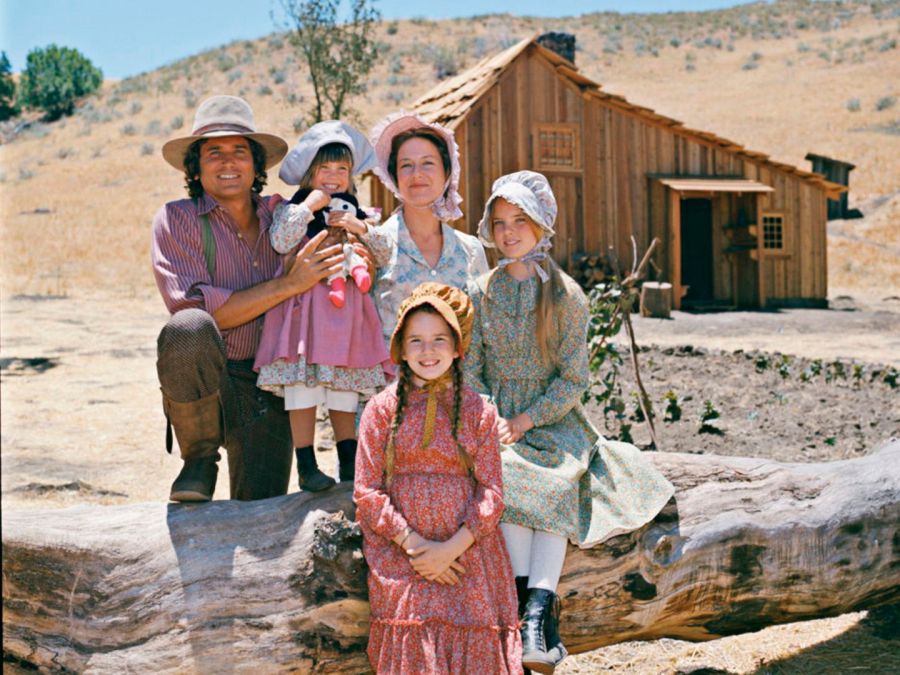
To my right was the living room where our old black and white TV (later it was a color one our grandmother gave us when she got a new one) sat, ready to be turned on so I could flop down in front of it and eat a snack and watch Little House on the Prairie, which would come on around 4 on our local PBS channel. The show was based on the book series of the same name by Laura Ingalls Wilder.
This year marks the 50th anniversary of the show’s premiere so there has been a lot of talk about it. There was even a three-day festival recently held on the ranch where the show was filmed.
By the time I was watching the show in the mid-1980s, the show had been off the air for about three years so these were all reruns. I found it relaxing to watch a show about people living life in the later 1800s, experiencing life as pioneers on the prairie. I didn’t realize or comprehend some of the harsh conditions and darker storylines until I was older.

I was probably reading the books around the same time I was watching the show, but I can’t remember for sure. I do remember reading the books late into the night, sometimes pulling the covers over my head and using a flashlight to finish a chapter or two or three. They were paperback books that had a paper and ink smell that I credit for igniting my interest in all things printed – including the print media I would work in for almost 15 years.
Sadly we lost my set during our move four years ago and it still breaks my heart. I truly hope we find them packed away in some box somewhere in the house.
I remember Mom standing in my doorway one night on her way to bed saying, “Lisa, I love that you are reading but you’ll have to continue tomorrow because at this rate you’re going to have a very hard time getting up for school in the morning.”
I’m sure that the next morning was rough for me but I was not allowed to stay home because I’d been up late reading. Books later became an escape for me during school, which my introverted self was not a fan of. I read historical fiction throughout most of high school and I’d imagine that was because my first introduction into literature was through Laura’s historically-based books.

The Little House show wasn’t exactly like the books and that was fine with me. It was still fun seeing the characters come to life in a way through Melissa Gilbert and Michael Landon and all the other actors.
Watching clips of the recent 50th-anniversary festival on various social media outlets made me feel a type of connection with others who grew up watching the show. I did not, however, know as much about the show or remember as many of the episodes as some of those fans did. I was also not as obsessed as some of them, but, hey, they were having good, clean fun by dressing up as characters and waiting in long lines to get autographs from the actors who played the characters so more power to them.
I remember the earlier episodes the most, maybe because our PBS station only ran certain seasons before starting over again. I watched the rest of the seasons when I got older but remember them not being as magical to me as the earlier seasons.

Once Mary (spoiler alert) lost her eyesight and Laura lost her son in infancy, I started to get depressed and turn it off. It was all based on the true stories of the women, of course, but I still found it heartbreaking to watch. It was no longer the escape I thought I needed.
In real life, as detailed in the books and other historical sources, Mary Ingalls did lose her eyesight. Carolyn and Laura Ingalls both gave birth to baby boys that did not survive and, in fact, none of the Ingalls women could carry boys to term and in some cases they had no children at all.
Dean Butler, who played Almonzo Wilder, Laura’s husband, on the show spearheaded the effort for the festival, along with Alison Arngrim who played the easy-to-hate Nellie Olson.


It was nice to hear that, for the most part, the time filming that show was pleasant for the cast. While the woman who played Carolyn, Karen Grassle, has made some unpleasant accusations against show creator Michael Landon, the cast has still said that their experience filming the show and in the years afterward have been pleasant. Of course, Grassel didn’t have to make accusations about some things – many people know that Landon had an affair with a makeup artist while filming, something that destroyed his marriage. That affair resulted in his third marriage.
Grassel recently said in an interview that she was never able to clear the air, so to speak, with Landon about the issues between them (one large one having to do with Grassel’s lack of a pay raise while filming and another one having to do with jokes Landon would sometimes make on set) but she was able to talk to him before he passed away from pancreatic cancer in 1991 and they were able to get along well without bringing up the past.
What I learned from watching the retrospect of the cast members during the festival held a couple of weeks ago was that even with some of Landon’s failings many in the cast look back on their time on the set as a simpler time in their lives. They look to Landon as a father figure, who was not perfect, but who was still special and important to them.

Even with some hard moments between herself and Landon, I think even Grassel saw her life during those years as somewhat simpler, at least based on some of the memories she shared.
The set was relaxed and joyful and there was a lot of free time for the children to explore and simply be children. They played in the creeks and learned old-fashioned games and values that they carried with them throughout their lives.
Melissa Gilbert and I would not see eye-to-eye these days on some political or social issues, but we would see eye-to-eye on the idea of simple living. She spent many years in Hollywood working her way up the acting ladder, falling prey to the idea that to be happy in life you needed to work hard all of the time and look the way Hollywood said you should look. Now Melissa is in her 60s and she is embracing the simple pleasures of life. She’s let go of looking like a Hollywood starlet and she’s enjoying cooking on her own having a home in the country and just simply stepping away from the hustle and bustle of the rest of the world.

She co-runs a company called Modern Prairie and has fully embraced her past identity as the TV version of Laura Ingalls Wilder, even as some in the world want to criticize Wilder for the topics they feel she didn’t handle sensitively enough in her books.
Melissa’s brother Jonathan Gilbert played Willie Olson on the show and for years he didn’t attend fan events or even talk about his time on the show. He walked away from acting and became a stock broker for a few years. Now, though, as he moves through his 50s, he said at the festival that he sees his time on Little House as one of the times when he really feels like he was home.
There was a definite spiritual component to the show, spearheaded by Michael Landon’s faith. Some of you may remember he also developed and produced a show called Highway to Heaven starring himself as an angel who came to earth to help people. Victor French, who played Mr. Edwards on Little House, co-starred on Highway to Heaven with him.

Christianity was the main focus of the spiritual element, which could be seen in many of the episodes but especially the Christmas episodes and a two-parter called The Lord is My Shepherd. This is interesting because Landon was raised Jewish. His father was Jewish and his mother was Christian, but in interviews, he said the Christian holidays he celebrated were mainly for family time and not out of religious devotion. Michael was born Eugene Maurice Orowitz, by the way. He changed his name for acting purposes.
Ironically, after the divorce, his ex-wife, Lynn, did become a Christian and Michael’s son Michael Jr., became one as well and has since helped make some Christian movies and entertainment.
A couple of weeks ago I read a very interesting comment on social from someone who watched the show and picked up on the Christian undertones when they watched the show as a child, which led to an eventual life-changing experience.
“I had a realization as I was watching the Church service [at the festival] that I wanted to share,” Meryl Heilberg Jefferson wrote. “I was raised Jewish. My grandfather was actually a Rabbi. I was at my grandparents’ house every weekend from Friday until Sunday from the beginning of my memory. That being said, I was a voracious reader from a young age. Not to mention an AVID LHOTP reader and series watcher. I used to play LHOTP in the schoolyard, (It was vast like a prairie) across from my house. I had a SUNBONNET and prairie-style clothing. I was hard-core living the prairie life in the 1970’s. “
“In 2010 I became a Christian,” Jefferson continued. “(I had actually been attending churches long before, but afraid to say anything to anyone for fear of my family’s rejection.) I truly believe that one of my mustard seeds, God put MANY in my path, was my love for anything and everything that had to do with Laura Ingalls Wilder. Hearing Wendi Lou Lee (Hester Sue in the show) speak tonight really spoke to my heart and reminded me of some of the memories I had suppressed from my childhood. I think Michael Landon shared the Gospel with me. I wish he was here so I could thank him personally. It is one of the first things I will do when I see him in Heaven! I now wonder if that was his intent. Or, was he looking to put wholesome television in front of families.”
It may not have been Landon’s intention to bring a generation to Christ but in some cases, it was what he did.
I’ve seen people react in anger when someone says that the past was simpler, easier or more pleasant. People often shoot back with, “There was crime and war and horrors back then too. The time you lived in wasn’t so special.”
Yes, there was war, crime, sadness, heartache, and tragedy back when I was a child. The difference was that I didn’t have it shoved in my face all day long on my phone or computer, in the store, on TV, and anywhere else that I turn.
My parents didn’t shelter me but they also didn’t talk as openly about the sadness in the world, partially because it wasn’t something they could constantly learn about through computers, smartphones, or 24/7 news services.
So for me, it was a simpler time. It was a calmer time.
It was a time when I had a routine. I went to school and then no matter what kind of day I had I could count on coming home and my mom being there cooking dinner and me eating a snack (usually peanut butter on toast) while watching Little House on the Prairie reruns. Later the PBS station would switch between Little House and The Waltons so I also watched The Waltons. At 6 they would air either The Dick VanDyke Show or Burns and Allen.
These shows were comfort watches for me back then. Now that I am older, caught up in a world that seems to be spinning faster than ever, they have become even more important to me. They are now touching points for me — a point in my life I can reconnect with, find those simpler moments again, and escape, even if only briefly, from a world that makes less and less sense each day.
Here is an interview with Melissa Gilbert about the show three years ago.
And here is an interview with Alison Arngrim from the 50th-anniversary festival in California:
And here is one of my favorite scenes from the show:


