Comfy, Cozy Cinema: Rebecca (1940)

For the rest of October and all of November, Erin from Still Life, With Cracker Crumbs and I will be watching cozy or comfy movies and some of them will have a little mystery, creepiness, or adventure added in.


This week we watched Alfred Hitchcock’s Rebecca from 1940 and, no, the movie isn’t comfy or cozy so we should have called this feature Comfy, Cozy, and Creepy. Regardless of what the feature is called, Rebecca is a bit of a creepy movie. Technically it is called a gothic psychodrama.

Whatever it is called — it has an eerie air about it all the way through.

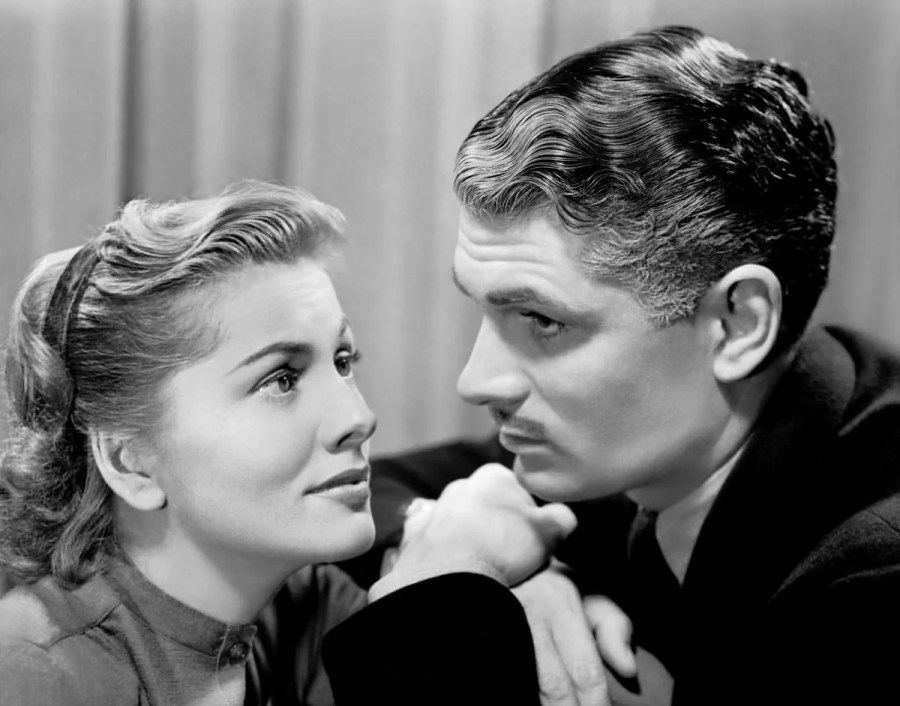
The story follows a woman (Joan Fontaine) who falls in love with Maximillian (Maxim) de Winter (Lauren Olivier), a brooding widower. Despite being told by her companion, Mrs. Van Hopper that Maxim is still obsessed with his dead wife Rebecca, this woman pursues a relationship with Maxim. The woman is also never named, apparently, that’s how unimportant she is to Maxim, I suppose. She’s simply ever called “the second Mrs. De Winter.” I find that odd, but anyhoo…

There are a lot of red flags when she is dating Maxim at first. Like his outbursts for one.

And the fact that Mrs. de Winter number two is completely obsessed with the man. Like desperately obsessed. Plus his proposal is a bit crazy. “I’m asking you to marry me, you fool.”

And that is only a short time after they meet. Insert wide-eyed face here. Can we say yikes?

Mrs. de Winter number two and Maxim get married very quickly and move to Maxim’s mansion, Manderley (because all rich people name their mansions and estates and I find that weird). Things start to get really creepy at the mansion because Maxim is even more broody there, but also because his housekeeper, Mrs. Danvers, is a real ghoul of a woman. Mrs. Danvers was a confidant of the first Mrs. de Winter, which she likes to tell the second Mrs. de Winter a lot. Mrs. Danvers has even kept Rebecca’s room like she had it before she died.

As the story continues, it is clear that the first Mrs. de Winters died under suspicious circumstances, even though Maxim told everyone she died by suicide.

Mrs. de Winter number two tries to cheer her new husband up by holding a house party but ends up wearing a dress Rebecca used to wear, which freaks Maxim all out. Of course, Mrs. Danvers told her to wear the dress.

It’s clear throughout this movie that Maxim needed some therapy after his first wife’s death but it will become even clearer that he needed that therapy for a reason other than her supposed suicide after a storm washes a boat ashore and –

Well, you will have to watch the movie to find out why.

Olivier is perfect in this movie as Maxim. He’s handsome, brooding, mysterious, and a bit jerky all at the same time. He reminds me of Cary Elwes in The Princess Bride, or Elwes reminds me of him actually since Elwes came afterward – you know what I mean.

Maxim is clearly in love with Mrs. de Winter number two (despite the fact she doesn’t have an identity apart from being his wife since her name is never used) but he can’t fully love her because of his past experience with wife number one.

This movie, by the way, is yet another adaptation of a book. Rebecca was originally written by Daphne du Maurier and producer David Selznick told Hitchcock he wanted the story of the movie to follow du Maurier’s story.

According to the American Cinematographers site, ” Kay Brown, East Coast story editor for Selznick, sent a synopsis to her boss with the highest recommendation (after reading the book). After consulting with his resident story editor, Val Lewton, the producer acquired the film rights to du Maurier’s book for a hefty $50,000.”

There was one huge difference between the book and the movie and it had to do with Hollywood codes and the ending, but I’ll leave you to figure that out on your own in case you have never seen the movie because it is a spoiler.

I did find it interesting to read during my research that du Maurier did not want Hitchcock to write the screenplay for this movie because she hated his adaption of Jamaica Inn, released in 1939. She said it reflected his cavalier attitude toward the original source material.

In the end, du Maurier didn’t have to worry because Selznick made Hitchcock keep the movie very close to the source material. It is interesting that the screenplay was written by Joan Harrison and Robert E. Sherwood and not Hitchcock.

Hitchcock told a magazine in 1938 that he planned to make the movie like he would a horror film.

Selznick and Hitchcock on the set of Rebecca,

“This is really a new departure for me,” he said in the November 5, 1938 edition of Film Weekly. “I shall treat this more or less as a horror film, building up my violent situations from incidents such as one in which the young wife innocently appears at the annual fancy-dress ball given by her husband in a frock identical to the one worn by his first wife a year previously.” (source American Cinematographer site: https://theasc.com/articles/du-maurier-selznick-hitchcock-rebecca). 

This was Hitchcock’s first time working with Selznick and it is clear that in some ways he didn’t like working with him since at the end of the movie Selznick wanted a large plume of smoke to form an “R” (having to do with the plot) but since Selznick was so busy with finishing Gone With the Wind, Hitchcock had the R on the pillow instead. Hitchcock also edited the film in-camera, which means he only shot the scenes he wanted in the final film. The idea behind this was to keep Selznick from being able to cut or rearrange things.

Selznick did, however, find a way to re-edit the film and add his own touches to it, including adding some of the music. As always in Hitchcock’s films, this movie included many incredible cinematography moments, including a reflection in a pool of water of couples dancing in one scene.

The film was nominated for nine Oscars and won for best picture and (no surprise) cinematography in 1940, but surpisingly no awards were given to the actors or the director.

According to one article I read, Selznick always lived in the shadow of Gone with the Wind, never feeling like anything he did afterward measured up to it. Rebecca was the only movie he felt came close to Gone With The Wind.

I also found it sad and interesting that the filming for the movie began on September 8, which was only five days after England declared war and eight days after the German Army invaded Poland.

They budgeted the production for 36 days, but in two weeks the company was five days behind schedule, partially because the cast and staff were so worried about the safety of friends and family.

I have a lot of positives about this movie, but one thing I didn’t like was the constant score in the background. I really found the constant playing of music in the background to be irritating. The movie could have been, and was, suspenseful without it.

Have you ever seen Rebecca? What did you think of it?
If you haven’t watched it, you can currently find it for free on YouTube:

To read Erin’s impression of the movie, visit her blog here: https://crackercrumblife.com/

If you wrote a blog post about the movie you can share it in our link up.

Coming up in our Comfy, Cozy feature:

Little Women (November 2)

Tea with The Dames (November 9)

A break for Thanksgiving

And

Sense and Sensibility (November 30th)

You are invited to the Inlinkz link party!

Click here to enter
https://fresh.inlinkz.com/js/widget/load.js?id=c0efdbe6b4add43dd7ef

Spring of Cary: Suspicion


Erin from Still Life, With Cracker Crumbs and Katja from Breath of Hallelujah and I have been watching Cary Grant movies this spring.

Up this week was Suspicion.

This one starred Cary and Joan Fontaine.

It was released in 1941 but takes place in 1938 and is based on a 1932 novel called Before the Fact by Frances Iles.

As soon as you see who directed the film – Alfred Hitchcock – you know this isn’t going to be your regular, happy-go-lucky Cary Grant film.

Here we are again with Cary playing a playboy named Johnnie , which I guess was the popular bad boy name back in the day. Or potential bad boy. This time he is Johnnie Aysgarth.

He meets Lina McLaidlaw (Fontaine) on a train by chance. Or is it by chance?


He sees her again at the horse track, where he is well known.

When he asks the women crowded around him who she is they tell him that she’s not really up his alley.

His response? “I’m a little bored with people up my alley.”

He’s clearly looking for a new conquest.

He’s very excited to meet her and she’s, of course, taken by him because, well, hello. It’s Cary Grant and he’s very delicious in this movie. He even knows she’s taken with him by the fact he finds a newspaper clipping featuring a photograph of him that she’s saved and placed inside the book she is reading.

(An aside: as a glasses wearer, I do think it is unnecessary that she keeps taking off her glasses to look more attractive. That is a minor issue, of course.)

At first it appears that Cary is really pursuing Joan in this film.

The question is why? He seems to have some underlying reasons for his apparent affection,

The movie seems very light hearted and he seems very charming and even full of humor.

But here seems to be something more sinister going on. You can feel it rumbling under the surface.

That rumble starts when Johnnie circumvents a trip to church by demanding she go on a walk with him instead. We immediately cut to a scene of them struggling.

“Now what did you think I was trying to do, kill you?” he asks. “Nothing less than murder could justify such a violent reaction.”

Whoa. Say what?

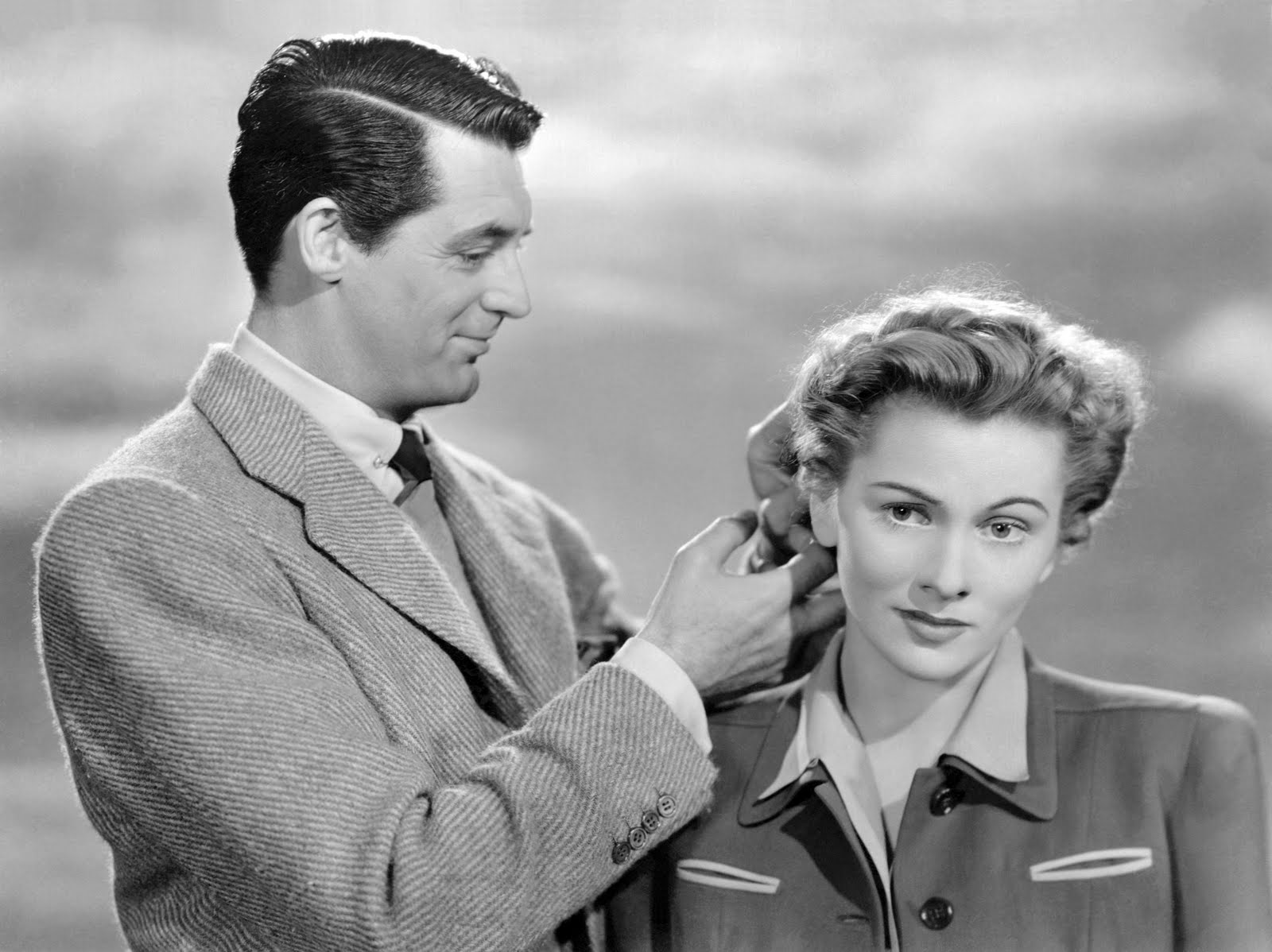
He claims he just wanted to touch and fix her hair. “Your hair has such exciting possibilities that I became passionate.”

Oh. Okay. Creepy.

He’s very handsy and touchy, even showing her first hand where her occipital maxillary bone is by reaching inside the top of her shirt to touch it. Like um…dude. Back off.

He even tries to kiss her on the hill outside the church and they barely know each other. Very forward and if I were her I would have slapped him but it’s clear the woman hasn’t had a lot of male attention in her life so she is wary, but is clearly eating up his pushy behavior. This is the first time he calls her “monkey face” which becomes his affectionate term for her throughout the movie. One I find irritating and degrading.

When he walks her back to her parents house he tells her he’ll see her at three that afternoon. She says she’s busy but then she hears her father saying she’ll never get married because she’s just not marrying material, she turns around and kisses him hard on the mouth.

From there her obsession begins and she starts pursuing him more than him pursuing her.

Now we, the viewers, are thrown onto a path of constantly wondering what this guy is really all about.


Her father suggests that he is wild and this seems to intrigue her even more. Now she wants him even more and begins calling him and sending letters. All of them go unanswered.

It’s actually a bit sad how desperate she becomes.

She finally meets up with him at a dance and all the girls rush to him but he has eyes only for her. He swings her out onto the dance floor and then out the door where they escape in his car.

“Have you ever been kissed in a car?” he asks.

“Never,” she says.

“Would you like to be?” he asks.

This all seems romantic for the most part, but, yet . . . something is just off.

He seems to be choosing someone who isn’t used to dating or attention from men for a purpose.

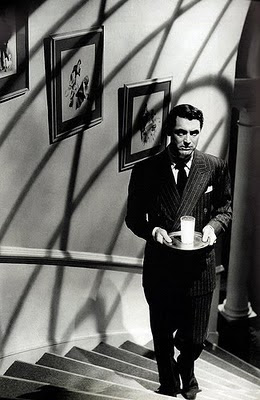
The camera angles in this movie are so well done – like all Alfred Hitchcock movies. Spinning cameras while they are kissing and panning out and in at the most interesting times. Then there is the play with light and shadows. They create such foreshadowing and a feeling of foreboding, especially toward the end of the movie when Lina really starts to question the motives of this man, who she incidentally marries.

After they marry, she’s whisked off to Europe for tours and excursions that blows the mind of her usually timid self.

Johnnie must have money, she thinks. He spent all this money and rented a beautiful home for them. But then Johnny asks for her help in paying a friend back $1,000 that he borrowed for the honeymoon and the red flags start flying everywhere. She ignores all those red flags and steps all over them.

I’m not going to give away too much about the movie in case you have never seen it but there is a lot of dark behavior by Cary in this movie and even though he is handsome and charming he is also inconsiderate of others and emotionally manipulative when it comes to his wife. Eventually he’s also outright abusive.

There is also way too much denial from this woman for most of the movie. I feel for her and how she was completely swept up by Cary’s charm, but I have to admit I might have done the same. I mean, that smile. Come on. So captivating.

One of the many odd things about this movie is apparently everyone is supposed to be British and it’s supposed to be in England but almost no one has a British accent.

I found it interesting that Fontaine won an Oscar for this movie and that it was the only Oscar won by any actor in a Hitchcock film. I was shocked that Cary didn’t win and wasn’t even nominated for his role because I really thought he did a phenomenal job of being both charming and creepy.

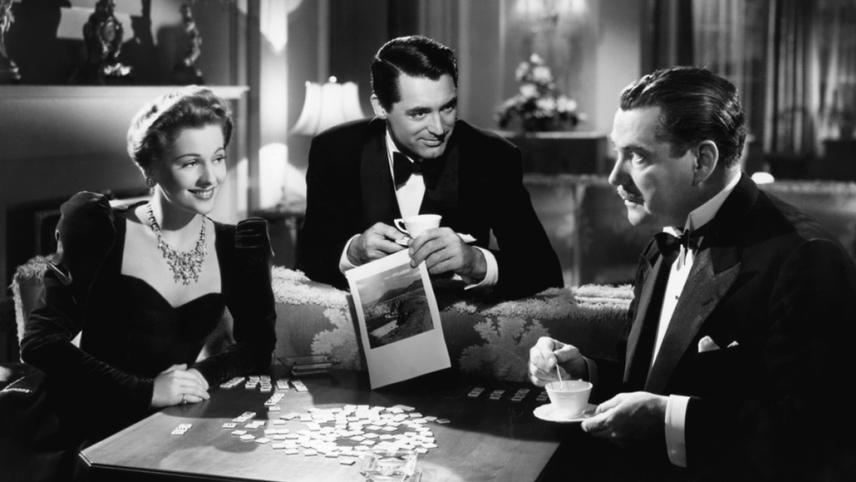
I also thought it was interesting to see a woman dressed as a man at one of the dinners with a local crime novelist (whose books Johnnie loves to read and that’s all I’m going to say about that. Ahem.), which was not common in movies back then. A blog says that the woman dressed as a man is the female novelist’s wife or partner, but I have no idea. I suppose that’s what is implied but it wasn’t the main focus of that scene.

The film, according to an article on Wikipedia, shows what happens when Hollywood transfers a novel to film because this film changed the intent of the book. The book’s message was about how a person feels knowing they might be murdered. Again, not to give away the end of the movie, this was changed in the film under pressure from the studio and it’s something that Hitchcock was not happy about and apparently complained about for years.

It was his own fault, though. He caved under the pressure and let the screenplay writers write the ending the studio wanted. It is not the same ending as the book and now I want to read the book and see how it differs.

This was definitely my favorite of the movies we watched other than Holiday.

Next week is Notorious, which is another Hitchcock film and that will round out our Spring of Cary features.

I don’t know if we will do a Summer of … whomever or not yet. I am considering doing one on my own but…I haven’t really committed yet.

So, if you want to read Erin’s impressions of Suspicion you can do so HERE and you can read about Katja’s views HERE.