‘It’s A Wonderful Life’ started as a novella written by a man born near my Pennsylvania hometown

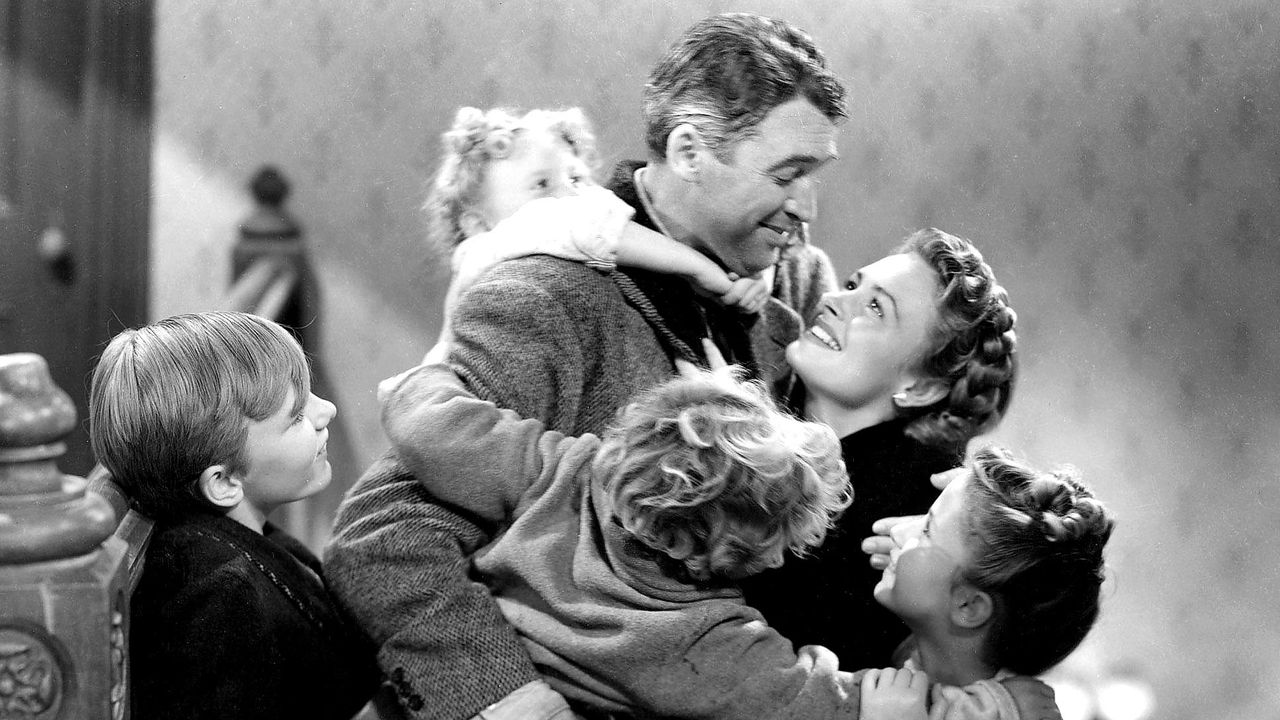
The main character of the iconic Christmas movie It’s A Wonderful Life, could have been named George Pratt instead of George Bailey.

That’s if scriptwriters had kept the original name of the main character in the novella that was used as the inspiration for the 1946 classic.

Version 1.0.0

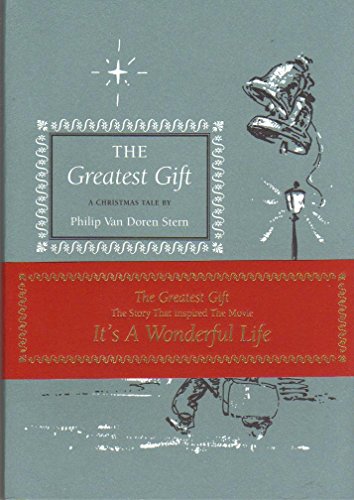
Most people in the United States know It’s A Wonderful Life only as a movie that airs at least once every December on NBC. Less known is that the movie is based on a novella that author Philip Van Dorne Stern couldn’t get a publisher to pick up, so he finally sent it out as Christmas cards to family and friends.

The novella (a novella is shorter than a novel but longer than a short story) was called The Greatest Gift and was first discovered by RKO Pictures, but later made its way to director Frank Capra. Capra bought the rights from RKO and expanded it to create the movie, which was once ranked the 20th most popular American movie of all time by the American Film Institute.

Stern published more than that novella, though. A graduate of Rutgers University, Stern was a writer and editor of more than 60 fiction and nonfiction books, including The Life and Writings of Abraham Lincoln, published in 1939.

According to Rutgers, The New York Times described his 1942 novel, Drums of Morning, as ”the long overdue fictional answer to Gone with the Wind.”

It was his small novella, though, that would become the basis for stage plays, radio plays, and the movie.

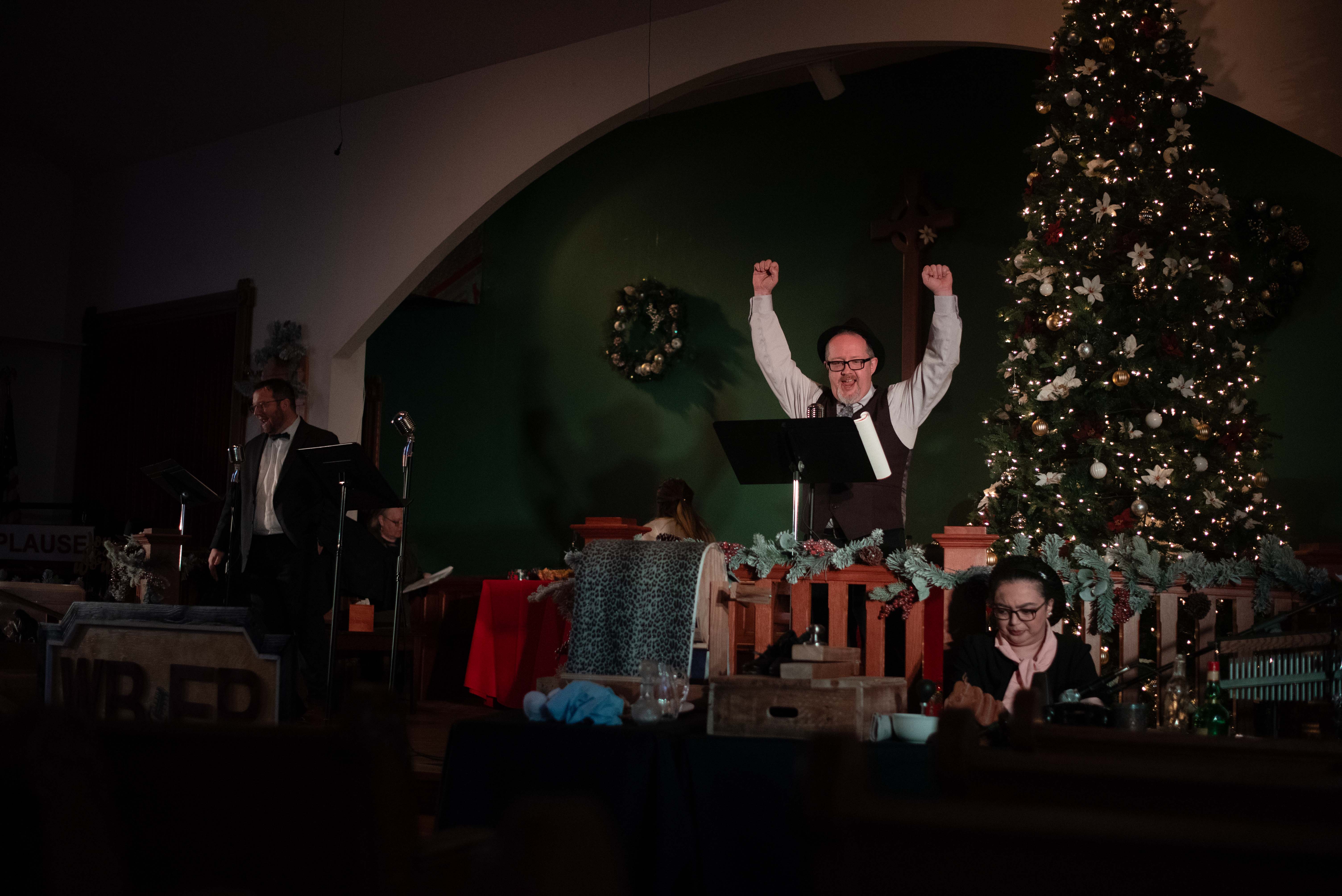
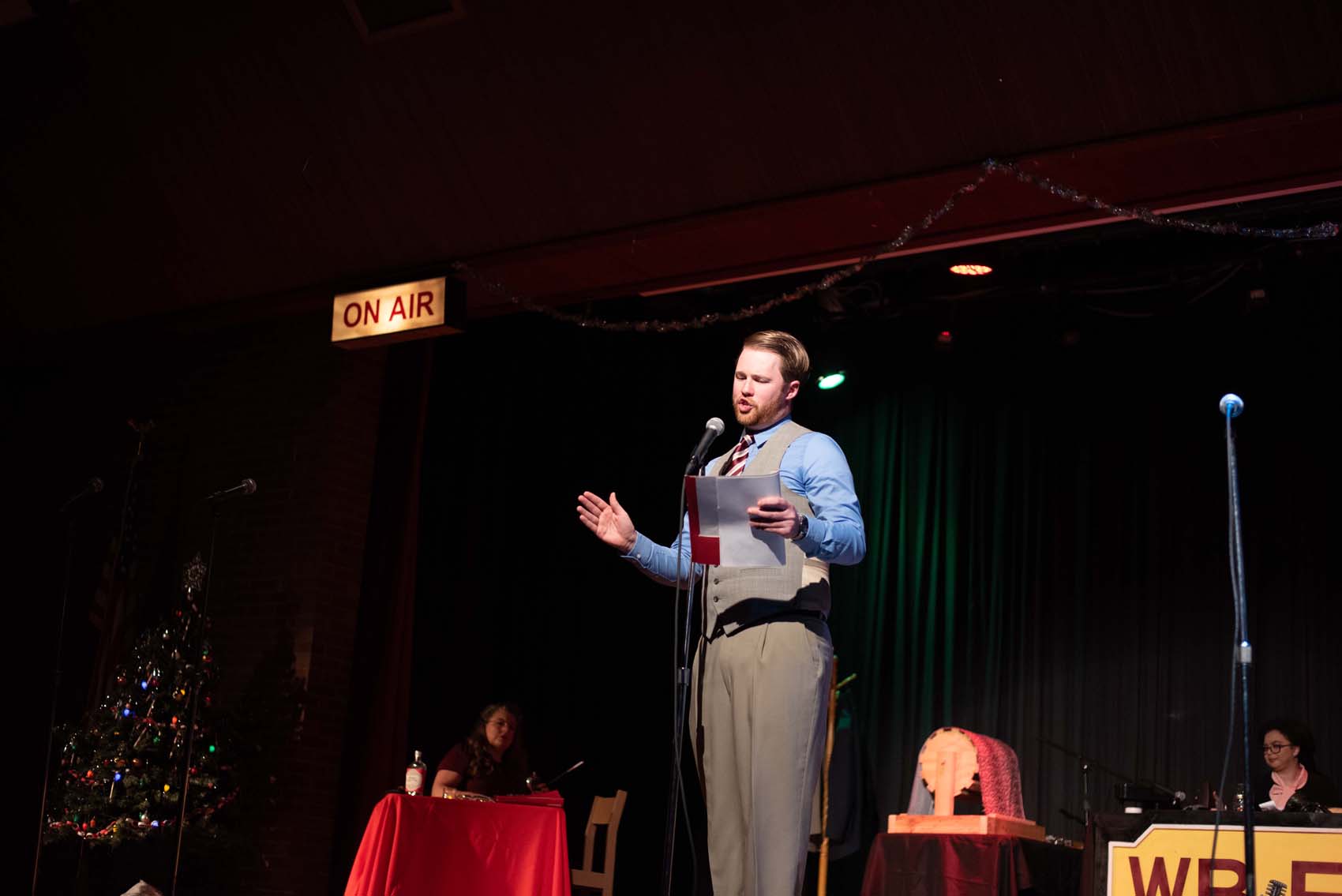
A few weekends ago, my husband participated in a radio play version of It’s A Wonderful Life.

A radio play is a play within a play, in case you are wondering. More about that in a minute.

At the end of the play, the director let everyone in attendance know that Stern was actually born in the little town the play was being held in — Wyalusing, Pa. (population 670).

As  far as anyone knows, Stern didn’t live very long in Wyalusing, but he was born there, as evidenced by most information you can find about him online, including the Rutgers website, which states: “Stern was born in Wyalusing, Pennsylvania, but grew up in New Jersey and lived in Newark while studying at Rutgers. After living most of his adult life in New York, he retired to Florida in the 1970s. He died in 1984 in Sarasota, Florida, shortly before his 84th birthday.”

According to another article on Rutgers, Stern, who graduated from the college in 1924, was shaving one morning in the winter of 1938, when he couldn’t shake the idea of a story about a man who rejects suicide and embraces life after a mysterious stranger allows him to see how the world would have been if he had never been born.

At that time, Stern was an author and publishing executive who had also worked as a typographer. He struggled to get the idea down on paper and it took another five years before he felt comfortable sharing the first draft with his agent.

He and his agent shopped it around to magazines to no avail, so Stern sent it to 200 people as a Christmas card.

“One evening [several months later], just as I arrived home, I heard the telephone ringing,” Stern said in a 1946 New York Herald Tribune article. “It was Western Union calling to read me a telegram from Hollywood, announcing that the story had been sold for $10,000.”

Now back to that radio play for a bit.

The radio play is sort of a story within a story because the actors (there are only about six of them) are playing radio personalities from the 1940s who are putting on a play.

This means that we are seeing them as if they are in the radio station building lone, performing the play with large microphones in front of them, with the tools for sound effects around them and all of them holding scripts to read from.

Imagine that scene in Annie when Oliver Warbucks takes her to the radio station to share about how she’s looking for her parents.

That’s what the play was like. Because the cast is small, some have to play more than one part, sometimes as many as three.

My husband played four roles with his main three being Freddie Filmore (the actor on the radio show), Mr. Potter and Uncle Billy.

There is also a woman in charge of the sound effects and she did an amazing job.

The idea with a radio show is that you can close your eyes while watching the play and still be able to know what is going on.

At the end of the first showing, my husband had a blind man tell him that the show came alive for him because he didn’t have to see what was going on, he could hear it all. He felt like he was apart of it all, which he probably doesn’t usually feel when he attends other plays.

Something interesting I read in the Rutger’s article was that Stern’s story was first sold to RKO pictures who was planning to have Cary Grant as the lead. I’m so glad Capra later got the rights and chose Jimmy Stewart as George. It was Jimmy’s first movie after returning from war and serving in the military. It was a stepping stone back into the acting world for a man who hadn’t been sure he could pull off acting again after all he’d gone through in the war.

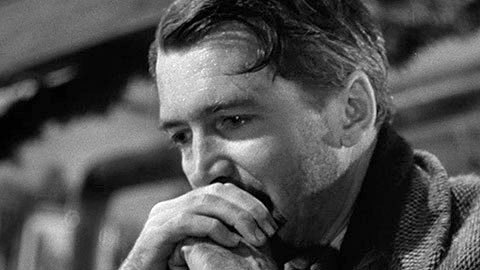
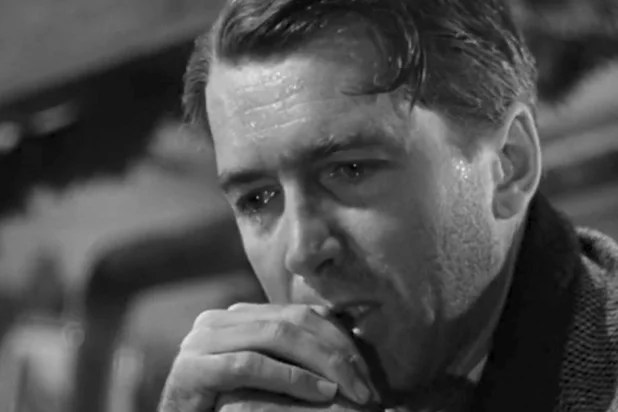
The war affected him so immensely that when he sat to film the scene in the bar where George asks God to help him, he broke down, thoughts of the hopeless in the world forefront on his mind. Capra had planned a wide shot for that scene so when Jimmy broke down he had the camera man kept rolling and had to “zoom in” on the negative of the film during editing, which is why, if you look closely, that part of the movie is slightly out of focus.

Jimmy actually wrote about this unscripted moment in Guidepost Magazine in 1987.

“In this scene, at the lowest point in George Bailey’s life, Frank Capra was shooting a long shot of me slumped in despair.

In agony I raise my eyes and, following the script, plead, “God… God…dear Father in heaven, I’m not a praying man, but if you’re up there and you can hear me, show me the way. I’m at the end of my rope. Show me the way, God…”

As I said those words, I felt the loneliness, the hopelessness of people who had nowhere to turn, and my eyes filled with tears. I broke down sobbing. This was not planned at all, but the power of that prayer, the realization that our Father in heaven is there to help the hopeless, had reduced me to tears.

Frank, who loved spontaneity in his films, was ecstatic. He wanted a close-up of me saying that prayer, but was sensitive enough to know that my breaking down was real and that repeating it in another take was unlikely. But Frank got his close-up.

The following week, he worked long hours in the film laboratory, repeatedly enlarging the frames so that eventually it would appear as a close-up on the screen. I believe nothing like this had ever been done before. It involved thousands of enlargements with extra time and money. But he felt it was worth it.”

In his 1971 autobiography, The Name above the Title, Capra wrote of Stern’s novella, “It was the story I had been looking for all my life! Small town. A man, a good man, ambitious. But so busy helping others, life seems to pass him by … Through the eyes of a guardian angel he sees the world as it would have been had he never been born. Wow! What an idea. The kind of an idea that when I get old and sick and scared and ready to die—they’ll still say, ‘He made The Greatest Gift.’ ”

The title was later changed to It’s A Wonderful Life, of course.

“Using Stern’s story as a starting point,” The Library of Congress blog reads. “Three teams of scriptwriters hired by RKO wrote three different film scripts, but none quite worked for the studio. In 1945, RKO sold the film rights to the story, along with the three scripts, for $10,000 to Frank Capra’s newly-formed film production company, Liberty Films. Capra hired husband-and-wife screenwriters Albert Hackett and Frances Goodrich to create a completely new script, which used some bits from the existing scripts, but also created a back-story with extra characters, filled in details, and made some minor story changes.”

After Stern had a contract for film rights, by the way, the magazines Reader’s Scope and Good Housekeeping both agreed to publish the story and then book publisher David McKay agreed as well.

According to the Library of Congress blog, “Good Housekeeping published a slightly longer and darker version with the title “The Man Who Was Never Born” using the pseudonym Peter Storme. The text of the story as it appeared in the original pamphlet was reproduced exactly in the McKay book and in magazines and anthologies that published the story in the following decades.”

It’s A Wonderful Life was not a big hit in 1946. So how did it become such a Christmas classic? It slipped into the public domain when the owner of it National Telefilm Associates, failed to renew the film’s copyright. This was great news for TV stations and home-video companies because they didn’t have to pay royalties, so they began to show the movie on television and make copies available on video for rental and sale.

In 1993, though, Republic Pictures bought out National Telefilm Association through a court action and had the copyright restored. The next year, they signed a long-term agreement with NBC to air It’s A Wonderful Life a few times a year, especially in December.

One of the things I like most about the story behind the making of It’s A Wonderful Life is how it started as something so small and innocent, a story idea that wouldn’t let Philip Van Doren Stern go and one he didn’t let go.

I don’t think he could have ever imagined what an impact that little idea, that short novella, would have on so many people. How it would inspire people to recognize how precious and important each individual life is.

More info and sources:

It’s A Wonderful Life: Rare Photos from the Set of a Holiday Classic

https://www.life.com/arts-entertainment/its-a-wonderful-life-rare-photos-from-the-set-of-a-holiday-classic/

Richest Man in Town

https://rutgersfoundation.org/news/alumni-profiles/richest-man-town-0

Inspiring A Holiday Classic

https://newbrunswick.rutgers.edu/inspiring-holiday-classic

James Stewart writes about It’s A Wonderful Life

https://guideposts.org/positive-living/entertainment/movies-and-tv/guideposts-classics-james-stewart-on-its-a-wonderful-life/


This post is part of the Comfy, Cozy Christmas feature hosted by me and Erin at Still Life, With Cracker Crumbs. If you have a blog post that you would like to share as part of this annual link-up, please find out more here.


If you write book reviews or book-related blog posts, don’t forget that Erin and I host the A Good Book and A Cup of Tea Monthly Bookish Blog Party. You can learn more about it here.

Reflecting on the connection of the Christmas classic ‘It’s A Wonderful Life’ to the town I went to high school in

For my husband, part of October and much of November were filled with rehearsals for a radio play version of It’s A Wonderful Life with the local community theater group.

The play is like a play within a play. The characters are all supposed to be radio stars from the days when radio was big who are performing a play for their listeners. This helps the local actors because they can read from the script instead of memorizing lines (which is more time consuming for people who are also working full time) and it also is fun because the viewer gets to imagine what it was like to record radio specials back in the day.

Last summer The Husband (my blog nickname for my husband, who has a real name that most people in my area know since he is the editor of the local newspaper), performed in The War of the Worlds, another radio play, and had a lot of fun.

That play was his first time really acting and he had a smaller part. This time around he had to do voices for 13 different characters with the main ones being – the angel Joseph, Uncle Billy, and Mr. Potter. At one point he even had to talk to himself, changing voices back and forth.

 He knocked every character he played out of the park, and I am not just saying that because I am his wife. He really did an amazing job and I’m so happy because I know how hard he worked trying to figure out how he would perform each voice. I’m also proud of him because he isn’t someone who usually puts himself out there in a creative way. For the most part he is like me – an introvert except when working for the paper when it is like we are playing the part of an extrovert.

The play had a cast of eight people all doing a few characters each, except for the woman who was performing the sound effects.

My parents, the kids and I went to the Sunday afternoon showing, and really enjoyed it.

I got teary-eyed more than once. The young man playing George Bailey’s character was fantastic and even sounded like Jimmy Stewart.

I’m sure almost everyone reading this post is familiar with the story of It’s A Wonderful Life. A quick summary: George Bailey always does everything right and for everyone else but every time he thinks he’s going to be able to pursue his own goals in life, something knocks him back – whether it be the sudden death of his father or a run on the building and loan company he ends up running after his father dies.

Before long all the hard luck really beats him down and he contemplates suicide. That plan is stopped by an angel named Clarence who then leads George down a path of seeing what the lives of everyone around him would be like if he wasn’t there anymore.

The movie is based on a short story written in 1939 by Philip Van Doren Stern, a well-respected author from the 1930s, 40s and 50s who was best known for books he wrote about The Civil War. According to the site Unremembered History, Stern tried to sell the short story but no one would pick it up so he printed up 200 Christmas card books and mailed them to friends and family.

“The card book and story somehow caught the attention of RKO Pictures producer David Hempstead who showed it to actor Cary Grant’s agent,” the site states. “In April 1944, RKO bought the rights but failed to create a satisfactory script. Grant went on to make another Christmas movie “The Bishop’s Wife.’ However, another acclaimed Hollywood heavyweight, Frank Capra, who already had three Best Directing Oscars to his name, liked the idea.  RKO was happy to unload the rights.

“The story itself is slight, in the sense, it’s short,” Capri said referring to Stern’s book. “But not slight in content.”

A lot was added to the movie to flesh it out, of course, but the basis for it all was the story.

It turns out that Stern was born in Wyalusing, Pa., which is the town I went to high school in and where my husband works at the paper.

Philip Van Doren Stern

The Husband’s boss, the publisher of the newspaper, published a column this past week about that connection.

According to him, it isn’t clear when Stern’s family moved from Wyalusing but it was confirmed through his daughter a few years ago when the paper contacted her, that he was born in the tiny town along the banks of the Susquehanna. So, it’s possible his connection to the small town may have given him some inspiration for the short story, which was called The Greatest Gift.

Stern’s father was a traveling salesman who came from Virgina to Wyalusing with his family. How he ended up in Wyalusing, since his wife was from New Jersey and there was no known connection to any other families in the town, is unknown.

According to local writer and actor Wes Skillings, Stern was born in Wyalusing because his family was renting a house there after his mother worked as a nurse for many years in Philadelphia. Skillings suggests in the information that was printed in the play program that Stern’s mother may have cared for patients who were originally from Wyalusing and formed a bond with the area. Wanting her son to be born somewhere safe and among people she knew, they moved to Wyalusing while she was pregnant.

Sometime after Stern was born, though, the family moved to New Jersey.

Wyalusing is a very small town with a population of 610 people.

If you blink driving through town, you will completely miss the business district. The town’s main attraction is an overlook just outside its border, which provides an amazing view of the Susquehanna River and a place known locally as French Azilum.

The site was meant to be the new home for French Queen Marie Antoinette. She was killed before she could arrive there, but her servants and other noblemen fleeing the guillotine helped settle the area by founding a village of about 250 people. Many returned to France 10 years later after Napoleon Bonaparte granted repatriation rights to those who had fled to escape persecution. Some stayed and settled the area.

There is no evidence that Bedford Falls, the name of the town in The Greatest Gift and It’s A Wonderful Life is based on Wyalusing. The movie version of Bedford Falls is actually modeled after Seneca Falls, N.Y. which is in the Finger Lakes region of Upstate New York. Director Frank Capra drove through Seneca Falls on his way back from New York City while coping out shooting locations for the movie.

But, as Skillings wrote, “Bedford Falls may not be Wyalusing, but without Wyalusing there would be no Bedford Falls.”

I wasn’t a fan of It’s A Wonderful Life when I was younger. I had seen several parodies of the movie and figured it was cliché, sappy, and silly. Several years ago, I watched it all the way through and realized it was much more than a simple Christmas movie. There are so many brilliant, emotional, profound scenes in it.

There are the fun scenes – George and Mary so involved in dancing that they don’t notice the gym floor has opened and they are about to fall into the swimming pool. The scene where Mary tries to run away from George, who is about to kiss her, and finds out he’s standing on her robe and now she has to hide in a prickly rose bush with no clothes on.

Then there is the scene where George tells Mary he doesn’t want to stay in Bedford Falls. He’s going to leave and there is nothing she can do about it. In the next few seconds, though, he’s kissing her and they are crying and we all know George isn’t going anywhere.

That scene was made even more emotional by the fact this was Jimmy Stewart’s first movie since returning from World War II and his emotions were raw, right at the surface. His emotional state is on display again when he’s sitting in the bar late in the move after a number of setbacks and he breaks down, asking God for help.

Jimmy wasn’t supposed to break down that way, but he did so organically – still shattered by all he’d seen during the war.

There are many messages in this story written so long ago. First there is a message about facing life’s disappointments with a healthy dose of gratitude mixed in. Life won’t always go the way we want it to. We need to be grateful for what is right in our life.

Another lesson is that tragedy and heartache will strike but what ultimately matters is the people we surround ourselves with. We may not have all the material items, wealth, or prestige we want, but what we do have — the love of our family and friends — is much more important.

At its core, though, is another, poignant message in the movie about our worth, value, and importance to the people around us.

We may feel small and insignificant, like a failure, or invisible, but the lack of our presence can create a monumental, life-changing ripple effect for those we love, beyond what we can imagine.

There are circumstances beyond our control that could remove us from the lives of our loved ones, but if the situation is in our control the best thing we can do is recognize that our worth is not dependent on our success or the opinion of others but on the love others have for us.  The love that God has for us.

No matter what circumstance or location inspired The Greatest Gift, Stern’s message lives on through our choice to embrace the belief that he had – that each life is worthy, that serving others is what makes life rich, and that how much love we have will always mean more than how much money we have.


*This post is also part of the Comfy, Cozy Christmas Link Up for 2024. If you have a Christmas/holiday post you would like to share you can find the link HERE or at the top of the page here on my blog.

Comfy, Cozy Cinema: Rear Window

“Nothing has caused the human race so much trouble as intelligence .” – Stella from Rear Window


Erin from Still Life, With Cracker Crumbs and I are watching Comfy, Cozy movies this September and October and this week we watched Alfred Hitchcock’s Rear Window – or rewatched for me.

Rear Window is one of Hitchcock’s more well-known and praised movies because of the intricacy of the story, the attention to detail, and the masterful storytelling that makes the viewer as desperate as the main character to find out what happens.

Laid up with a broken leg, our main character, photojournalist Jeff Jefferies (Jimmy Stewart) is stuck in a two-room apartment looking out on all his neighbors on the other side of his apartment complex.

It’s like he has a bunch of TV channels in each window to watch. There’s always something on. He uses a pair of binoculars to watch what they’re doing part of the time and part of the time he can see them with the naked eye.

There is a newlywed couple who are – ahem – getting to know each other; a couple who appear to be arguing; a woman who lowers her dog down to do his business in the little yard below each day; an athletic dancer who likes to stretch in front of her window; a lonely woman who eats her dinners alone; and many other characters for Jeff to watch.

One night he wakes up in his wheelchair, where he has been sitting for the whole movie, because he hears a scream and breaking class. He can’t figure out where the sounds came from and drifts back to sleep but later, when he wakes up again, he notices the one neighbor – the jewelry salesman who argued with his wife — acting very mysterious.

The neighbor in question, Lars Thorwald, (Raymond Burr) starts going in and out of his apartment with a suitcase. It’s around 2 a.m. when this starts at it’s pouring out. Jeff can’t figure out what that’s all about and struggles to stay awake to watch the man but finally succumbs to exhaustion.

I should mention that Jeff has a girlfriend, Lisa, (Grace Kelly) who is absolutely perfect, but he is making all kinds of excuses not to marry her and one of those excuses is that she won’t enjoy traveling with a journalist.

He tells his nurse (Thelma Ritter) and Lisa about it on their separate visits, but both seem to think he just has a bad case of cabin fever.

As he continues to ponder it all and notices that the man’s wife is no longer in the apartment, Jeff pulls out the zoom lens of his camera and watches the man cutting something up, putting it in bags, and carrying it out. Now he’s starting to really get antsy about what he’s witnessed.  It isn’t until Lisa is over one night and he’s telling her what he thinks that she begins to get a little interest as well. What piques both their interest is how the man is tying up a trunk and removing the mattress from the room.

Soon the nurse, Stella, is also pulled in, and all three of them begin to speculate what really happened.

Before long Jeff has Stella and Lisa acting as willing spies for him to find out what really happened.

If you want suspense then this the right movie for you. It is one of Hitchcock’s most suspenseful and nail biting movies.

The movie is based on a short story by Cornell Woolrich. I read an essay online (the author of which I couldn’t find, but it did say it wasn’t AI) that said this movie didn’t attempt to copy the story but instead recreated the plot based on the idea of it.

I did find a summary of the story and the ending is different in some ways to the movie, but with the final outcome being the same.

This writer, as other critics, point out that one aspect of this film that makes it so brilliant is that the viewer knows as much as Jeff does during the movie. We, the viewer, are watching it all unfold as he is and are seeing it from his same vantage point. We aren’t taken into apartments where he isn’t or into scenes that he isn’t looking at from his window. We are a participant in the film, so to speak.

Rear Window was filmed on a budget of $1 million but pulled in $36 million and became the top grossing film of 1954.

According to the site, All The Right Movies, the original story was based on a high-profile murder case in 1924 in Sussex England where a man named Patrick Mahon — committed a crime – well, I won’t tell you what happened in case you haven’t seen Rear Window.

Stewart had already been in one Hitchcock movie before this one (Rope) and would film two others afterward – Vertigo and The Man Who Knew Too Much.

For this film he was anxious to work with Hitchcock and said he wouldn’t take a salary but would take part of the film’s profits, which I think worked out very well for him. While the two got along, there were also times they spoke very little to each other, according to other actors who worked with them.

Wendell Corey, who played Detective Doyle in the movie, said, “Jimmy and Hitch would communicate in unspoken glances, and Jimmy would give him a steely look if Hitch said something he didn’t like. The only direction I ever saw Jimmy take was ‘the scene feels tired’ – there was steel under all that mushiness.”

Corey wasn’t a fan of Stewart in some ways. He was a nice guy, he said, but claimed he was also very arrogant on the set of Rear Window.

Others didn’t apparently didn’t hold this assessment and to me I think it was Corey who had the arrogance issue.

I thought it was interesting that Stewart’s wife asked to be on set during the filming of this movie because of Grace Kelly. According to trivia on All The Right Movies, “Grace Kelly may have been a little too friendly for some people, though – especially James Stewart’s wife. In 1954, Kelly had a reputation for having affairs with her leading men and, after she told a magazine she thought Stewart was one of the most attractive men she’d ever met, Stewart’s wife, Gloria, insisted on being on the set every day to keep an eye on things.”

Rear Window was Stewart’s favorite film of those he worked on Hitchcock with.

“The wonderful thing about Rear Window is that so much of it is visual,” he said in an interview. “You really have to keep your eyes open in the film, because it’s a complicated thing. This was my favorite film to make with Hitch.”

One more piece of trivia that had me snickering was that Hitchcock made the bad guy in this film (Again, I’ll keep it quiet on who the real bad guy is) look and act like David Selznick who produced Rebecca with Hitchcock. Hitchcock said Selznick interfered so much on that film he disowned it. In Rear Window he got his revenge by making the guilty party look like the producer he couldn’t stand.

I love the trivia behind the making of movies, as you know if you’ve read any of my previous posts, so I could go on and on about it. I won’t though. Instead, I’ll point you over to Erin’s blog for her views on it:

Keeping with the Hitchcock and Grace Kelly movies, we will be switching up our movie lineup next week and watching Dial M For Murder. To explain why we are choosing to watch this instead of Murder by Death, I’ll refer to Erin’s well-written explanation, which she also shares on her blog today: https://crackercrumblife.com/2024/10/17/comfy-cozy-cinema-rear-window/

“We were originally going to watch a movie I chose, Murder by Death. I chose it because I read that it was funny and because it has Maggie Smith in it but I didn’t do much research on it other than that.

 However, after doing some reading it looks like it could be considered problematic so we are going to scrap that one and trade it for Dial M for Murder instead. It is probably not a bad movie, but a movie that didn’t meet the goal of what was trying to be achieved – it was actually trying to shine a light on racism and homophobia, and no one mentions the ableism but I think I read that is in there too, that was prevalent in Hollywood and the world, but instead just looks like it is in fact all of those things itself.

Anyway, we decided to watch Dial M for Murder for Comfy Cozy Cinema, since we are trying to be cozy and snug with this fun movie watching challenge.  I think both of us plan on watching Murder by Death at some point though, whether it is together or just on our own.”

Here is the rest of the full list of movies we are watching or have watched.

I’m also including a link to my blog posts up from this year’s Comfy, Cozy Cinema, at the top of the page under the heading Movie Impressions.

Before I close out for today, I wanted to mention that we did pick a winner for our Comfy, Cozy Giveaway – Yvonne – and she has been notified! Thank you to all of you who entered the giveaway, followed our blogs, Etsy and Substack and I hope you will stick around and have some fun with us as we write about books, movies, and our lives.

If you end up writing about Rear Window or any of the other movies we are watching, please feel free to link up with our linky. You can add a link to the link if it is open, even if it is for a different movie.

Lisa H. 7:59 PM (1 hour ago) to me

You are invited to the Inlinkz link party!

Click here to enter
https://fresh.inlinkz.com/js/widget/load.js?id=c0efdbe6b4add43dd7ef